
LEAD ANALYST
Utkarsh Khirodkar is a Lead Market Research Analyst at MetaStat Insight, specializing in market intelligence, technology sector assessments, and competitive strategy.

Europe Bioethanol Market Size, Share, By Feedstock (Wheat, Corn, Sugar Beet, Sugar Syrup and Molasses, Agricultural Residues and Waste, Others (Wood and Lignocellulosic Residues)), By Generation (First Generation, Second Generation, Third Generation), By Application (Gasoline Blending (E5 and E10), High-Ethanol Transportation Fuels (E20, E85 and ED95), ETBE Production, Industrial Solvents and Chemical Feedstocks, Pharmaceuticals and Disinfectants, Cosmetics and Personal Care, Food and Beverage Processing, Others (Antifreeze, Windshield Fluids, Extraction Applications)), By Region (France, Germany, United Kingdom, Spain, Italy, Rest of Europe), Industry Analysis, Growth, Trends, and Forecast, 2026-2033
Report ID
MSI-5502
Published
October, 2026
Pages
250 Pages
Format
Historical
Base year
Forecast
Forecast period
Report Details
Market Valuation: Valued at $6,870.7 Million in 2025, projected to reach $8,774.3 Million by 2033 at a 3.1% CAGR.
Dominant Segment: First Generation bioethanol leads the market due to its established production processes and high acceptance in gasoline blending applications. This segment is driven by the automotive industry's focus on renewable energy sources and regulatory support for lower carbon emissions.
Geographic Lead: France is the largest market for bioethanol in Europe, supported by a strong agricultural base and favorable policies that facilitate bioethanol production. This region also benefits from significant demand for bioethanol in gasoline blending.
What's Inside: The report provides a comprehensive analysis of the Europe Bioethanol market, including competitive coverage, segment breakdowns by feedstock and generation, and a detailed forecast from 2026 to 2033.
Emerging Trends: There is a notable shift towards high-ethanol transportation fuels like E20 and E85, projected to grow at a CAGR of 6.3%. This trend reflects increasing consumer preference for sustainable fuel options and regulatory support for cleaner energy solutions.
Choose Your License
Europe Bioethanol Market
The Europe Bioethanol market was valued at USD 6,870.7 million in 2025 and is projected to reach USD 8,774.3 million by 2033, growing at a CAGR of 3.1% over the forecast period.
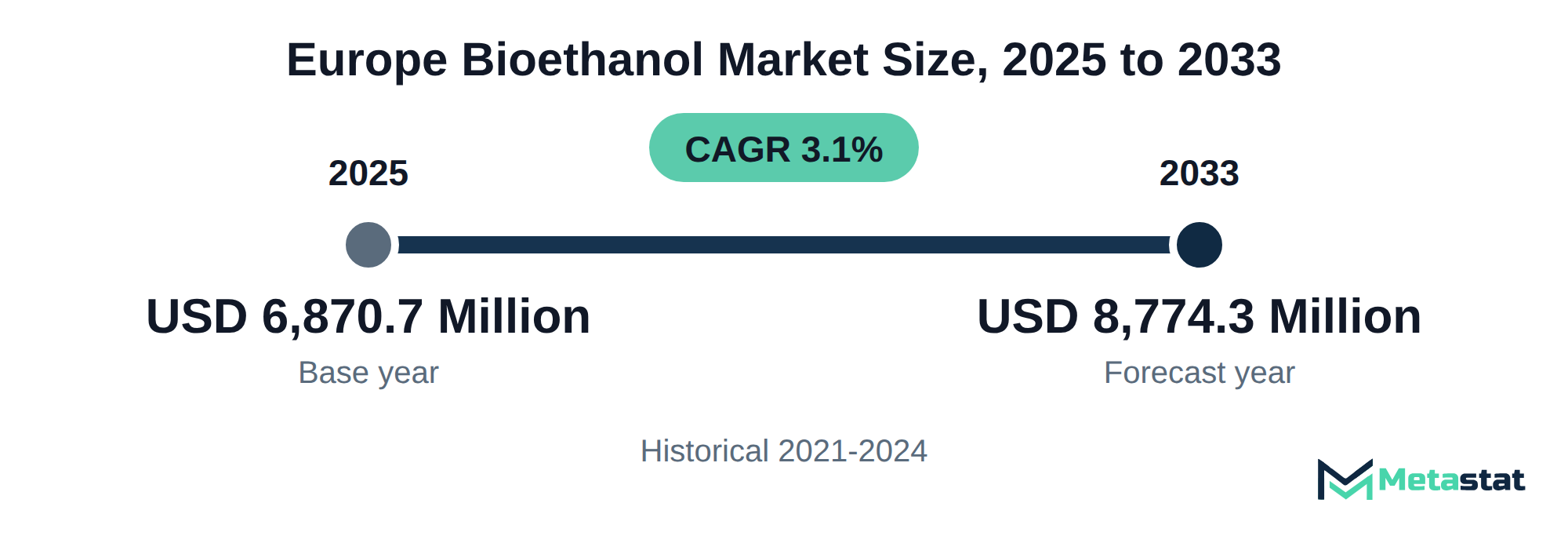
The Europe Bioethanol market encompasses the production and utilization of bioethanol, a renewable fuel derived from various feedstocks, primarily grains and sugar. Buyers, including fuel manufacturers and distributors, invest in bioethanol to comply with environmental regulations and meet the growing demand for sustainable energy solutions. The market supports the transition towards greener energy sources, driven by the need for reduced greenhouse gas emissions and energy independence.
Growth in the market is propelled by increasing consumer demand for cleaner fuels and government mandates promoting renewable energy use. Among the segments, First Generation bioethanol holds the largest market share, primarily due to its established production processes and widespread acceptance. France stands out as the region with the largest share within the Europe Bioethanol market, reflecting its strong agricultural base and supportive policy environment that enables bioethanol production.
One significant growth driver stems from the rising adoption of bioethanol in gasoline blending applications, particularly in the E5 and E10 formulations. These blends offer a viable solution for reducing carbon emissions in transportation, aligning with broader environmental objectives across Europe. This trend supports market expansion and improves the overall sustainability of the energy sector.
The growth of the Europe Bioethanol market is driven by several factors, with a significant emphasis on environmental sustainability and regulatory support for renewable energy sources. Buyers invest in bioethanol primarily for its potential to reduce greenhouse gas emissions when blended with fossil fuels. This transition aligns with the broader European Union objectives to enhance energy security and decrease reliance on conventional fuels.
Among the various segments, the gasoline blending category holds the largest value. Significant demand comes from countries like France, which contributes a notable share to the overall market. Increasing consumer awareness regarding climate change and the push for cleaner transportation fuels attract investment and innovation focused on enhancing production efficiency and expanding applications.
One of the main growth drivers in this sector is the rising demand for high-ethanol transportation fuels, including E20 and E85 blends. This trend reflects a shift towards more sustainable fuel options in the automotive industry, leading to broader adoption of bioethanol across various regions. The Europe Bioethanol market is expected to evolve further, driven by ongoing changes in consumer preferences and regulatory frameworks.
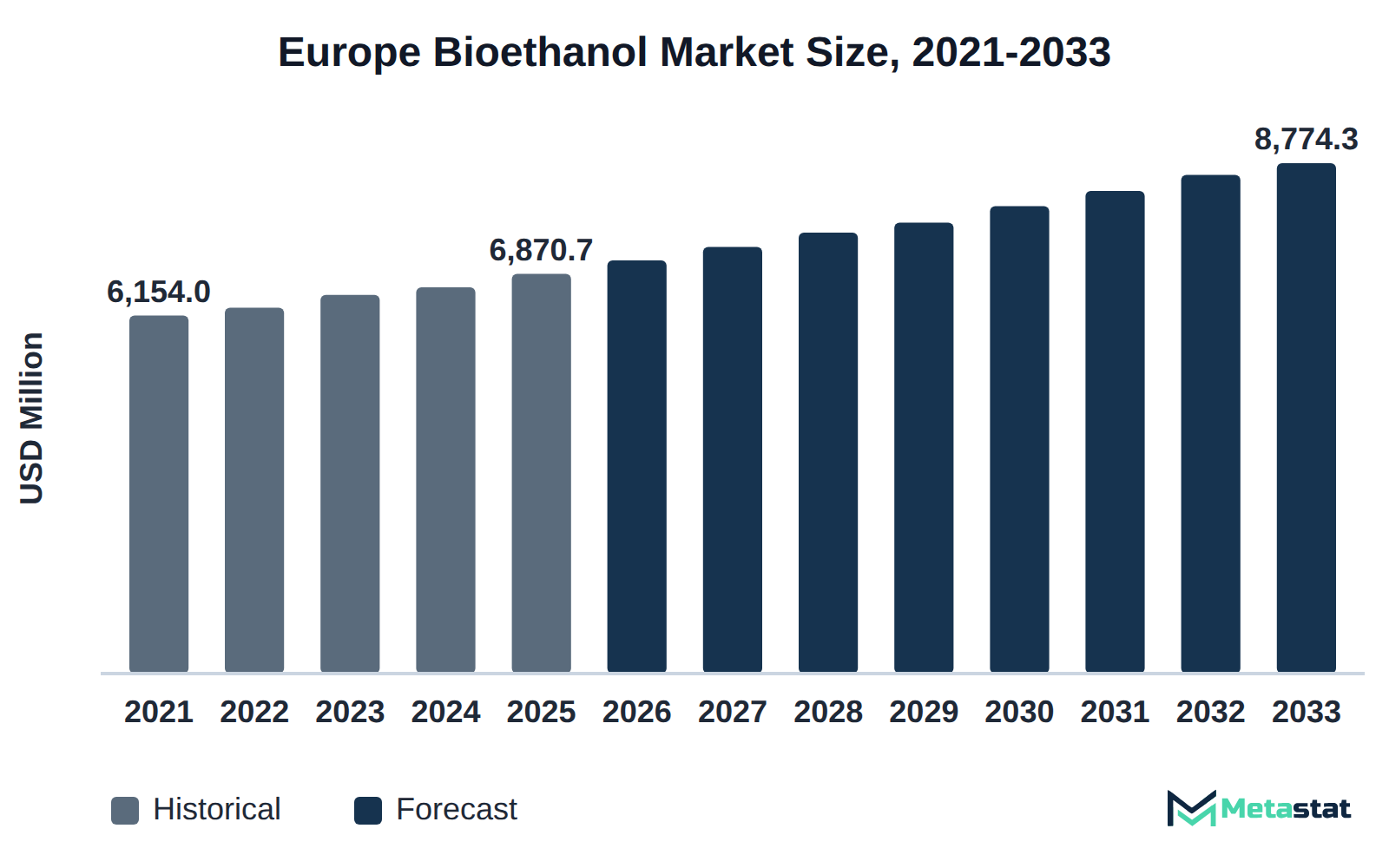
Recent trends in the Europe Bioethanol market indicate a significant shift towards high-ethanol transportation fuels, including E20, E85, and ED95. The forecast shows these fuels experiencing a compound annual growth rate (CAGR) of 6.3%, highlighting a growing preference among consumers and regulatory bodies for more sustainable fuel options. This transition is driven by increasing environmental regulations and the automotive industry's commitment to reducing carbon footprints.
High-ethanol transportation fuels offer a viable alternative to traditional fossil fuels, aligning with the broader push for cleaner energy sources. The anticipated growth in this segment reflects a response to pressures for innovation in fuel efficiency and sustainability. Consequently, suppliers in the market prioritize the development and distribution of high-ethanol blends, enhancing their competitive positioning while catering to evolving consumer demands.
While the market adapts to these shifts, investments in infrastructure for high-ethanol fuel production and distribution become increasingly critical. Companies that capitalize on this trend stand to gain significant market share, driving both revenue growth and an expanded consumer base. The integration of high-ethanol transportation fuels is influencing supply chain dynamics in the Europe Bioethanol market and creating opportunities for stakeholders involved in the biofuels sector.
The Europe Bioethanol market is experiencing a shift towards advanced bioethanol sourced from agricultural and lignocellulosic feedstocks. Fixed pricing contracts are becoming prevalent among buyers seeking to stabilize procurement costs associated with these bioethanol sources. These contracts typically lock in prices for extended periods, allowing buyers to manage budgeting effectively while mitigating risks associated with price fluctuations. In 2025, the market reached a value of USD 6,870.7 million, reflecting strong interest in bioethanol solutions.
The contract models adopted within the market often vary based on feedstock. For instance, advanced bioethanol derived from corn is projected to achieve a value of USD 2,642 million by 2033. Such pricing strategies promote long-term relationships between suppliers and buyers, encouraging investment in sustainable practices and bioethanol production technology. Buyers focused on sourcing bioethanol from lignocellulosic materials encounter different pricing dynamics, reflecting the specific processing and operational costs associated with these feedstocks. Overall, evolving purchasing strategies influence growth opportunities within the Europe Bioethanol market.
EU fuel policies significantly impact the consumption patterns within the Europe Bioethanol market. Stringent carbon reduction targets set by the EU drive a shift towards renewable energy sources, including bioethanol, which provides a cleaner alternative to fossil fuels. The increased emphasis on sustainability presents unique opportunities for sectors including transportation and agriculture, where bioethanol blends in fuels including E5 and E10 significantly lower carbon emissions.
Corporate fleets and transportation companies exhibit distinct needs in this changing landscape. These buyers prioritize fuels that comply with regulatory mandates while enhancing their sustainability profiles. For instance, gasoline blending is projected to grow from USD 3,668.9 million in 2026 to USD 4,274.9 million by 2033, highlighting the rising demand for bioethanol-based solutions. While companies strive to meet environmental goals, investments in bioethanol adoption are expected to increase, further reshaping the competitive dynamics of the market. The commercial implications for suppliers who cater to this segment are substantial, building long-term relationships and driving revenue growth.
Demand for bioethanol in Europe is evolving significantly beyond traditional gasoline blending applications. By 2033, the market anticipates the high-ethanol transportation fuels segment, which includes E20, E85, and ED95, reaching a value of USD 952.9 million. This growth reflects a shift in consumer preference toward cleaner and more sustainable fuel options, driven by increasing environmental regulations and a push for reduced greenhouse gas emissions.
The evolution of demand in the Europe Bioethanol market emphasizes the importance of diversifying applications beyond gasoline blending. The gasoline blending segment, while still dominant, is experiencing steady growth, with projections indicating a value of USD 4,274.9 million by 2033. This transition highlights broader acceptance of bioethanol across different sectors, creating opportunities for new market entrants and established players to innovate and diversify their offerings.
Investments in high-ethanol transportation fuels enhance market dynamics and contribute to the overall sustainability goals within the transportation sector. Stakeholders focusing on expanding production capabilities in this area stand to benefit from both increased market share and improved compliance with regulatory frameworks.
Technological innovations in bioethanol production processes enhance efficiency and reduce costs, significantly benefiting suppliers. First-generation processes dominate current production; however, advancements in second-generation technologies are gaining traction. These methods use agricultural residues and other non-food feedstocks, expanding resource availability and alleviating concerns about competition for food supply.
Investment in advanced conversion technologies increases, reflecting growing recognition of their potential. Developing second-generation bioethanol allows suppliers to access new markets and stay competitive within the industry. The Europe Bioethanol market experiences increased adoption of higher-yielding fermentation and enzyme biocatalysis processes, contributing to the overall growth trend while improving sustainability measures. Enhanced production capabilities support demand from various sectors, including automotive and industrial applications.
Overall, technological changes reshape bioethanol production in Europe, driving growth and positioning suppliers for future opportunities in the market. Increased efficiency and improved sustainability from these advancements position the market for continued expansion through 2033.
Fluctuating prices of feedstocks significantly influence the market's growth trajectory. Buyers in the transportation sector experience challenges in budget forecasting and cost management, leading to slower adoption rates of bioethanol, a renewable fuel source. The uncertainty surrounding raw material costs creates hesitance among consumers, resulting in smaller order volumes and delays in transitioning from conventional fuels. Operators in the industrial segment face difficulties in justifying investments in bioethanol production facilities when price stability remains unassured. This situation complicates the outlook for investments in capacity expansion and technological upgrades necessary for bioethanol production. Ongoing price volatility poses a challenge for market participants aiming to enhance bioethanol integration into existing fuel systems, potentially impacting overall market growth.
Rising input costs present a notable challenge for suppliers in the Europe Bioethanol market. Fluctuation in prices for feedstocks, particularly grains and sugar, significantly impacts overall production expenses. Suppliers experience margin pressure while striving to maintain profitability amid tight competition and rising operational costs. In response, many explore alternative feedstocks that offer lower price volatility or higher yield potential to mitigate these pressures. Suppliers focus on enhancing production efficiency through technological advancements that streamline processes and reduce waste. This adaptation supports long-term sustainability while managing immediate cost concerns, positioning suppliers to remain competitive in a challenging market environment.
Demand for high-ethanol transportation fuels continues to grow, reflecting a shift towards cleaner, renewable options. The segment is projected to achieve a compound annual growth rate (CAGR) of 6.3% through 2033, pointing to strong market potential. This growth is driven by increasing consumer awareness and regulatory support promoting sustainable transportation solutions. Buyers seeking to enhance their environmental performance will likely drive demand, benefiting from the availability of high-ethanol options. Investments in production technologies and supply chain improvements enhance accessibility and affordability for consumers. Addressing this opportunity could result in substantial market penetration and revenue growth within the Europe Bioethanol market.
The Europe Bioethanol market is segmented based on Feedstock, Generation, Application, and Region.
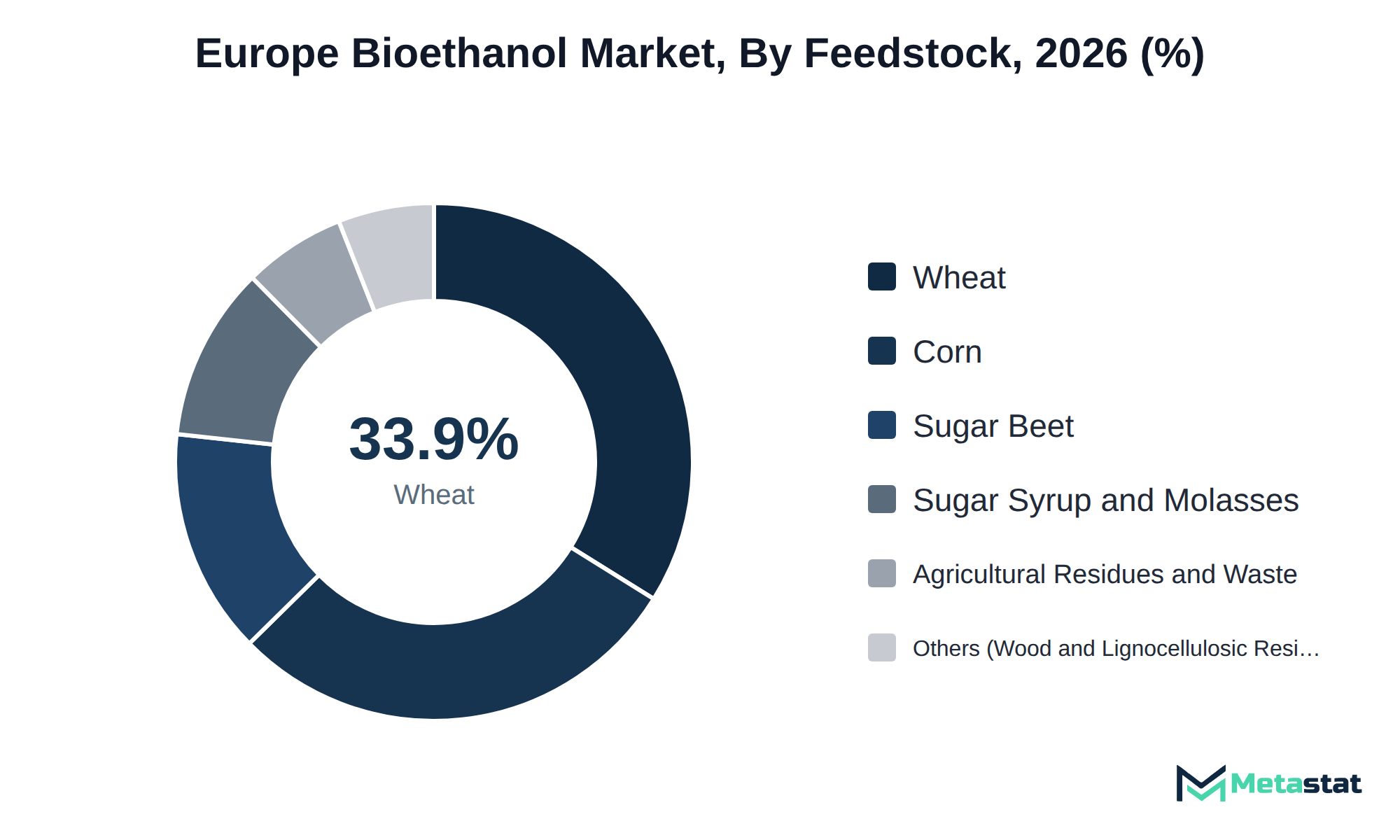
Wheat is valued at USD 2,390.4 million in 2026 and is projected to reach USD 2,756.9 million by 2033, at a CAGR of 2.1% during the forecast period. This feedstock serves as a primary source for bioethanol production, particularly in gasoline blending applications for transportation fuels. Significant demand arises from the automotive sector, where wheat-derived bioethanol blends enhance fuel efficiency and reduce carbon emissions. Key market dynamics impacting this segment include the increasing focus on sustainability, which drives demand for renewable fuels, and fluctuations in wheat prices that impact operational costs. Compared to other feedstocks like corn, which has a projected CAGR of 3.6%, wheat shows a more moderate growth trajectory, reflecting differences in agricultural yield and processing efficiencies. The market is influenced by regulatory incentives promoting biofuels and consumer preferences for greener alternatives.
Corn is a key feedstock for bioethanol production, with the segment estimated to reach USD 2,642 million by 2033, at a CAGR of 3.6% during the forecast period. This feedstock finds usage primarily in the manufacture of ethanol for gasoline blending and high-ethanol transportation fuels, attracting interest from manufacturers in the automotive and energy sectors. Demand for corn is driven by its availability and favorable cost structure compared to other feedstocks, providing a competitive advantage. In contrast to wheat, which has a CAGR of 2.1%, corn features a higher growth rate. This differentiation reflects shifting preferences among buyers toward cost-effective solutions for bioethanol production, further enhancing the appeal of corn in the market. The emphasis on sustainable fuel sources continues to influence production decisions, positioning corn prominently in the evolving renewable energy sector.
Sugar Beet segment is expected to reach USD 1,142.4 million by 2033. This feedstock type is a critical component in bioethanol production, primarily used in gasoline blending and other applications. The demand for sugar beet within the market is driven by its high sugar content, which leads to efficient fermentation processes, appealing to producers focused on maximizing yield. Compared to other feedstocks, including corn and wheat, sugar beet has a competitive edge due to its lower agricultural input requirements and adaptability to various soil conditions. The segment's growth rate remains steady, driven by increasing interest in sustainable energy sources. It does not match the rapid expansion seen in corn, which has a higher growth rate of 3.6%. This dynamic illustrates evolving preferences among producers and the strategic positioning of sugar beet in the overall Europe Bioethanol market.
Sugar Syrup and Molasses segment is projected to grow at a CAGR of 2.2% during the forecast period. This feedstock serves as an essential ingredient in bioethanol production, primarily for gasoline blending and in various industrial applications. Buyers include fuel manufacturers and chemical producers seeking to enhance their product offerings. Growth in this segment is influenced by increasing demand for renewable fuels, driven by environmental regulations aimed at reducing carbon emissions. Compared to other feedstock segments, Sugar Syrup and Molasses does not experience rapid growth, but stable demand from established industries ensures consistent market presence. This segment's characteristics, including cost and availability, differentiate it from wheat and corn feedstocks, which face more volatility in prices and supply dynamics.
Agricultural residues and waste provide a sustainable feedstock option in bioethanol production. This segment focuses on using biomass materials including straw, husks, and other organic waste, which are often underused or discarded in agricultural practices. Industries involved in biofuel production use these feedstocks to reduce waste and create value from otherwise discarded materials. Demand for this segment is driven by increasing regulatory support for sustainable practices and the need for cost-effective alternative feedstocks. Compared to other feedstock segments, agricultural residues and waste face slower growth due to challenges related to collection, processing, and variable quality. Despite these challenges, advancements in technology and processing methods are expected to enhance the viability of this segment, offering an alternative that aligns with sustainability goals while addressing feedstock diversity in the Europe Bioethanol market.
Wood and lignocellulosic residues refer to various agricultural and forestry by-products used for bioethanol production. This segment primarily serves industries seeking sustainable alternatives to traditional fossil fuels. Factors influencing this segment include environmental regulations advocating for renewable energy sources and increasing consumer demand for eco-friendly transportation options. The segment differentiates itself by using non-food feedstocks, which alleviates concerns about food supply and prices associated with food-based feedstocks like corn and wheat. While segments including corn and wheat experience steady growth driven by established agricultural practices, the unique positioning of wood and lignocellulosic residues offers potential for innovation and expansion in the market, appealing to a different group of buyers focused on sustainability and resource efficiency.
First Generation segment is valued at USD 6,602.5 million in 2026 and is projected to reach USD 7,775.8 million by 2033, at a CAGR of 2.4% during the forecast period. This segment mainly serves the transportation sector, providing fuel for gasoline blending in vehicles. Demand from auto manufacturers focusing on renewable energy sources, along with regulations favoring lower carbon emissions, drives growth in this area. Compared to Second Generation bioethanol, which is expected to experience a faster growth rate at a CAGR of 10.3%, First Generation remains relatively established but faces challenges from emerging technologies. The market shift towards advanced biofuels highlights the importance of innovation and efficiency improvements for maintaining competitiveness in the evolving market.
Second Generation segment is estimated to reach USD 924.8 million by 2033, at a CAGR of 10.3% during the forecast period. This segment employs non-food feedstocks including agricultural residues and waste to produce bioethanol, appealing to environmentally conscious consumers and industries. The growing emphasis on sustainability drives demand for this segment, with companies seeking alternatives to traditional feedstocks that raise food prices. In contrast to First Generation, which focuses on food-based crops, Second Generation benefits from a larger variety of feedstocks and improved conversion processes, contributing to its faster growth rate. The market recognizes the potential of Second Generation bioethanol, an advanced transportation biofuel, to support decarbonization efforts while addressing food security challenges.
Third Generation segment is expected to reach USD 73.7 million by 2033. This segment focuses on the production of bioethanol through advanced processes, targeting applications in specialty fuels and high-value chemical products. Industries using this bioethanol include pharmaceuticals, cosmetics, and industrial solvents. The increasing emphasis on sustainability and the desire for renewable energy sources drive growth in this segment. A notable aspect is the expected CAGR of 10.3%, significantly higher than the first generation segment, reflecting a growing preference for innovative production methods. Adopting technologies tailored for this segment often involves higher initial investment, but the long-term efficiency and sustainability benefits appeal to buyers seeking eco-friendly solutions. Such dynamics position this segment uniquely within the broader market.
Gasoline Blending (E5 and E10) segment is valued at USD 3,668.9 million in 2026 and is projected to reach USD 4,274.9 million by 2033, at a CAGR of 2.2% during the forecast period. This segment primarily serves the automotive industry, where bioethanol is blended with gasoline to enhance fuel performance and reduce emissions. The increasing regulatory support for renewable fuels, driven by environmental concerns, drives growth in this segment. Compared to other application segments, including High-Ethanol Transportation Fuels, which is projected to grow at a CAGR of 6.3%, Gasoline Blending shows slower growth. The distinctive growth dynamics highlight the ongoing transition toward sustainable fuel options in the Europe Bioethanol market, reflecting evolving consumer preferences and regulatory landscapes.
High-ethanol transportation fuels such as E20, E85, and ED95 mainly serve the transportation sector as alternatives to conventional gasoline, appealing to environmentally conscious consumers and fleet operators focused on reducing carbon emissions. Increased regulatory support for sustainable fuels drives demand for high-ethanol blends. Compared to other applications, this segment exhibits faster growth driven by heightened interest in renewable energy sources and advancements in vehicle technology compatible with higher ethanol concentrations. Other segments, including gasoline blending, grow at a slower rate, highlighting the distinctive position of high-ethanol transportation fuels in the Europe Bioethanol market.
ETBE Production segment is expected to reach USD 863.4 million by 2033. This segment focuses on the production of ethyl tert-butyl ether (ETBE), a clean and efficient oxygenate used primarily in gasoline blending as an octane booster that also reduces emissions. Key players in this sector include oil companies and fuel distributors that seek to meet stringent environmental regulations. Demand for ETBE is driven by increasing regulations aimed at reducing greenhouse gas emissions and improving air quality. Unlike other applications in the market, including gasoline blending with E5 and E10, ETBE production exhibits a higher growth rate, influenced by a rising preference for cleaner fuels. The segment's anticipated CAGR reflects a significant shift in consumer preferences toward more environmentally friendly transportation options, which supports growth in the Europe Bioethanol market.
Industrial Solvents and Chemical Feedstocks segment is projected to grow at a CAGR of 4% during the forecast period. This segment primarily serves industries requiring solvents for applications in chemical processes and manufacturing. Demand for bio-based solvents continues to rise due to increasing regulatory pressure for environmentally friendly alternatives to petrochemicals, particularly in sectors including pharmaceuticals and personal care. Compared to other segments, this segment's growth is moderate, influenced by the competitive pricing of conventional solvents. The market sees a shift toward sustainable products that meet stricter regulations, particularly in the European Union, creating a supportive environment for the adoption of bioethanol-derived solvents. The effectiveness of bioethanol in various applications positions it favorably among alternatives, further enhancing its appeal in the market.
Pharmaceuticals and Disinfectants include a variety of products used for medical and hygiene purposes. This segment caters primarily to pharmaceutical companies and manufacturers of cleaning and disinfecting agents. The growing emphasis on health and safety standards drives demand for these products, reflecting an increasing awareness of hygiene practices in both medical and public settings. Competition among manufacturers influences pricing strategies, with companies focusing on quality and efficacy to differentiate their offerings. While growth in this segment does not align with the more rapidly expanding segments like High-Ethanol Transportation Fuels, steady demand remains significant. The evolving regulatory environment regarding product formulations and safety standards further shapes the dynamics of this segment within the Europe Bioethanol market.
Cosmetics and Personal Care incorporates bioethanol, a key ingredient for various personal care products, including lotions, creams, and fragrances. This segment appeals to cosmetics manufacturing companies focused on producing environmentally friendly and sustainable formulations. Demand for natural and organic products drives growth in this area, with consumers increasingly preferring products with fewer synthetic chemicals. The cosmetics and personal care segment experiences rapid innovation, with brands adopting bioethanol for its versatility and effectiveness as a solvent and preservative. Compared to other applications in the market, this segment features different buyers, primarily beauty and skincare manufacturers, who prioritize quality and sustainability. While other segments focus on volume and price, cosmetics and personal care manufacturers emphasize premium ingredients and branding, influencing pricing strategies and growth trajectories.
Food and Beverage Processing involves the application of bioethanol in various food and drink products. This segment caters primarily to food manufacturers and producers who apply bioethanol for fermentation, flavor enhancement, and preservation purposes. Growth in this segment is driven by increasing consumer demand for processed foods and beverages that require bioethanol as an ingredient for quality and safety. Regulatory standards surrounding food safety and quality assurance further influence the segment's dynamics. Compared to other applications, this segment experiences slower growth due to stringent regulations and the need for compliance with food safety standards, distinguishing it from faster-growing segments including High-Ethanol Transportation Fuels. In the Europe Bioethanol market, companies serve this segment by ensuring the consistency and quality of bioethanol to meet the specific requirements of food and beverage production.
Others (Antifreeze, Windshield Fluids, Extraction Applications) involve various niche uses of bioethanol in the production of antifreeze products, windshield de-icers, and extraction solvents. Industries including automotive and cosmetics use this segment for manufacturing essential products that require high-purity ethanol. Demand for these applications is driven by a growing focus on environmentally friendly solutions, with end-users seeking sustainable alternatives to traditional petroleum-based products. This segment exhibits slower growth compared to others due to the specialized nature of the applications and limited volume requirements. However, the ongoing regulatory push for greener solutions increases interest among manufacturers aiming to meet environmental standards. In the Europe Bioethanol market, this segment distinguishes itself with specific buyer needs and lower overall price sensitivity compared to other applications.
France segment is valued at USD 1,743.3 million in 2026 and is projected to reach USD 2,054.1 million by 2033, at a CAGR of 2.4% during the forecast period. This segment primarily serves the fuel market, providing bioethanol for blending with gasoline in transportation. Key drivers include government policies promoting renewable energy sources and growing consumer awareness regarding environmentally friendly fuels. Compared to the Corn segment, which is projected to grow at a CAGR of 3.6%, the France segment exhibits slower growth. Such dynamics create distinct opportunities for stakeholders focusing on regional regulations and sustainability initiatives that support broader objectives within the market.
Germany segment is estimated to reach USD 1,874.2 million by 2033, at a CAGR of 2.6% during the forecast period. This segment primarily caters to gasoline blending applications, where bioethanol is an essential component in fuel formulations. Key industries including automotive and transportation heavily apply this bioethanol to meet regulatory standards for emissions and enhance fuel efficiency. The moderate growth rate in this segment reflects stable demand driven by ongoing government policies that promote renewable energy sources in Germany. Compared to other regions, Germany faces unique market conditions due to its robust infrastructure and advanced technology adoption. The market experiences distinct differentiation in pricing and regulatory frameworks, influencing buyer behavior and market dynamics within the Europe Bioethanol market.
United Kingdom segment is expected to reach USD 852.9 million by 2033. This segment primarily serves the automotive and industrial sectors, using bioethanol in gasoline blending and various chemical applications. A notable force driving growth in this segment involves regulatory support for renewable fuels, promoting the use of bioethanol to meet environmental targets. In comparison to other regional segments, the United Kingdom exhibits slower growth, focusing on established technologies rather than emerging innovations. The market experiences a CAGR of 2.6%, reflecting steady but gradual expansion in demand.
Spain's segment is projected to grow at a CAGR of 4% during the forecast period. This segment primarily focuses on the production of bioethanol, a renewable energy source, applied in various applications ranging from transportation fuels to industrial solvents. Key drivers include the increasing demand for sustainable energy solutions and the implementation of stricter environmental regulations that support biofuel adoption. Spain's growth trajectory reflects a steady increase in bioethanol consumption, driven by commitments to reduce greenhouse gas emissions. The market distinguishes itself through a growing awareness of the importance of biofuels among consumers and policymakers, which enhances its competitive edge in the Europe Bioethanol market.
Italy's segment emphasizes the use of bioethanol in various applications, particularly in gasoline blending and as a renewable fuel alternative. This region's demand is driven by the automotive sector's increasing focus on lower emissions and sustainable energy sources. Italian consumers and regulatory bodies advocate for cleaner energy solutions, significantly influencing the segment's growth. Compared to other segments in its group, Italy's market reflects a unique combination of strong governmental support for biofuels and a growing consumer preference for environmentally friendly products. Regional regulations promoting the adoption of bioethanol contribute to its competitive positioning against fossil fuels, improving the market's viability. These factors collectively enhance the potential for growth in the Italy segment, reinforcing its role within the Europe Bioethanol market.
Rest of Europe encompasses various countries participating in the bioethanol industry, contributing to both production and consumption. This segment serves multiple applications, including fuel blending and chemical feedstock production, attracting interest from automotive and industrial sectors. The segment experiences growth driven by increasing demand for sustainable energy alternatives and regulatory support aimed at reducing carbon emissions. Compared to First Generation and Second Generation segments, Rest of Europe presents a more diverse market landscape, with varying levels of infrastructure development and technology adoption across different countries. The distinct regulatory environments within this region influence market dynamics and adoption rates, leading to opportunities for innovative production methods and applications. Ongoing investments in bioethanol technology play a critical role in shaping competitiveness within the market.
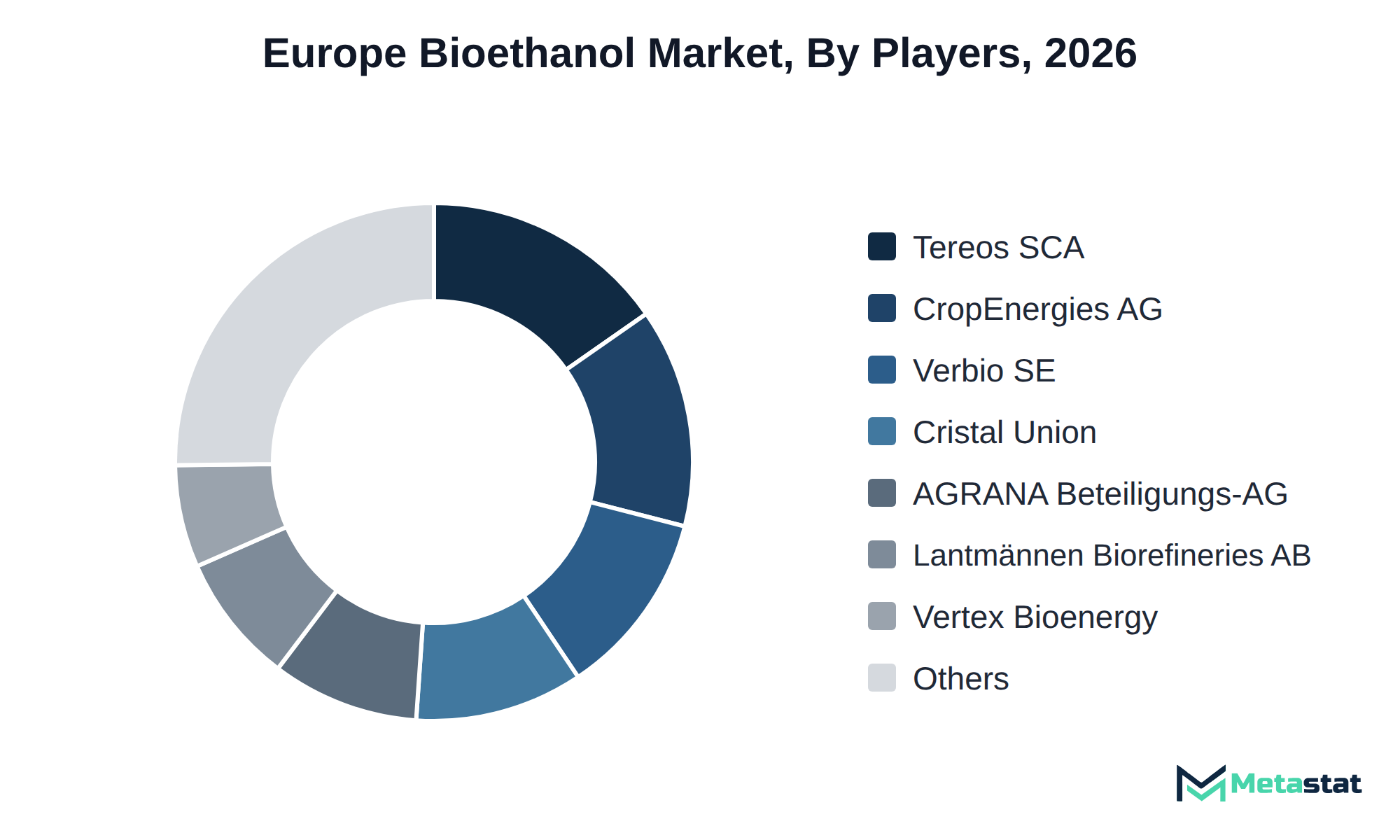
The competitive environment in the Europe Bioethanol market features a diverse array of companies focusing on different strategies to capture market share. Major players position themselves by product differentiation, emphasizing feedstock types and generation methods. Buyers often choose products based on price competitiveness, sustainability certifications, customization options, and overall service quality. The ability to provide an integrated ecosystem for bioethanol production significantly influences purchasing decisions.
CropEnergies AG emphasizes the use of wheat as a feedstock, aiming to enhance production efficiency and sustainability. Tereos SCA engages in a broad range of applications, including gasoline blending, which strengthens its portfolio in the bioethanol sector. Cristal Union focuses on agricultural residues, tapping into a niche market that uses waste material and offers economic advantages in production processes. These strategic approaches reflect a keen understanding of market demands and regulatory pressures within the bioethanol sector.
Other notable players, including Verbio SE and Lantmännen Biorefineries AB, explore innovations in second and third-generation bioethanol production methods, appealing to environmentally conscious consumers. Efforts to diversify feedstocks and enhance production capabilities position these companies competitively in the evolving market.
Growth in the Europe Bioethanol market relies on several key developments. First, increasing adoption of corn as a feedstock is expected to contribute significantly, with a projected CAGR of 3.6% through 2033. This trend reflects rising demand for bioethanol in gasoline blending applications, particularly in Germany, which is anticipated to enhance market dynamics.
Second, advancements in second-generation bioethanol production present substantial potential, with an expected CAGR of 10.3% by 2033. This technological innovation could attract investment, driving operational efficiencies and expanding production capacities. However, regulatory challenges and fluctuating commodity prices represent risks that could hinder market growth. These factors lead to volatility in feedstock supplies and production costs, impacting the overall outlook.
The future outlook for the market hinges on successful feedstock diversification, technological advancements in production processes, and effective management of risks associated with regulatory and economic fluctuations.
By Feedstock: Wheat, Corn, Sugar Beet, Sugar Syrup and Molasses, Agricultural Residues and Waste, Others (Wood and Lignocellulosic Residues)
By Generation: First Generation, Second Generation, Third Generation
By Application: Gasoline Blending (E5 and E10), High-Ethanol Transportation Fuels (E20, E85 and ED95), ETBE Production, Industrial Solvents and Chemical Feedstocks, Pharmaceuticals and Disinfectants, Cosmetics and Personal Care, Food and Beverage Processing, Others (Antifreeze, Windshield Fluids, Extraction Applications)
By Region: France, Germany, United Kingdom, Spain, Italy, Rest of Europe
The report strategically identifies and profiles the key market players and analyses their core competencies in each sub-segment of the Bioethanol market.
Report Attributes | Details |
Study Period | 2021-2033 |
Base Year | 2025 |
Estimated Year | 2026 |
Forecast Period | 2026-2033 |
Historical Period | 2021-2025 |
Growth Rate | CAGR 3.1% from 2026 to 2033 |
Revenue Unit | USD million |
Segmentation | By Feedstock, Generation, Application, Region, and Region |
Find answers to common questions about this report
The Bioethanol market size was valued at USD 6,870.7 million in 2025.
The market is projected to grow at a CAGR of 3.1% during the forecast period from 2026 to 2033.
The leading segment in the Bioethanol market is First Generation, with a value of USD 6,602.5 million in 2026. This segment surpasses others in terms of market size and revenue potential.
Heightened demand for high-ethanol transportation fuels, driven by consumer preferences for sustainable options and government incentives, supports market growth. technological advancements in bioethanol production processes enhance efficiency and reduce costs, benefiting suppliers and contributing to overall market expansion.
Fluctuating prices of feedstocks significantly influence market growth, creating challenges in budget forecasting and cost management for buyers in the transportation sector. Rising input costs exert pressure on suppliers, complicating investments in production facilities and technological upgrades necessary for bioethanol production.
Growing consumer awareness and regulatory support for sustainable transportation solutions favor adoption in the Europe Bioethanol market. The high-ethanol transportation fuels segment, including E20, E85, and ED95, is projected to achieve a compound annual growth rate of 6.3 percent through 2033, reflecting significant market potential.
The Bioethanol market is estimated to reach a valuation of USD 8,774.3 million by 2033.
Key players operating in the Bioethanol industry include CropEnergies AG, Tereos SCA, Cristal Union, Vertex Bioenergy, Lantmännen Biorefineries AB, AGRANA Beteiligungs-AG, and Archer Daniels Midland Company.
The high-ethanol transportation fuels segment, including E20, E85, and ED95, is projected to achieve a compound annual growth rate of 6.3 percent through 2033, indicating robust market potential.
Demand for bioethanol in the transportation sector is driven by consumer preferences for sustainable fuel options and government incentives promoting cleaner alternatives, resulting in increased volumes purchased.
The analysts below cover Chemicals and Materials research at Metastat Insights.
LEAD ANALYST
Utkarsh Khirodkar is a Lead Market Research Analyst at MetaStat Insight, specializing in market intelligence, technology sector assessments, and competitive strategy.

INDUSTRY CONSULTANT - CHEMICALS & ADVANCED MATERIALS
Chemicals and Materials · Machinery & Equipment · Packaging
Amit Gadhekar Consultant for Chemicals and Materials at MetaStat Insight, directing sector-specific intelligence, research, and strategic consulting across global chemical and processing markets.
When planning edge sensor rollouts across refinery environments, generic IoT reports typically miss the harsh-environment certification bottlenecks. MetaStat Insight gave an objective evaluation of ATEX and Class 1 Division 2 hardware availability, along with realistic five-year maintenance cycle cost projections. The comparison of wireless mesh versus private cellular backhaul helped our team pressure-test network reliability models for remote processing facilities.
In the biological seed treatment space, registration timelines vary drastically between the European Union, Brazil, and North America. The MetaStat Insight research handled these cross-border regulatory barriers with genuine nuance, mapping commercialization pathways alongside historical field adoption rates. The segmentation between microbial strains and biochemical active ingredients was particularly well structured.
Our team was tracking whether regional recycling infrastructure could realistically absorb the growing volume of lithium iron phosphate batteries over the next decade. The report did a solid job separating announced hydrometallurgical plant capacity from active, permitted operational throughput. That distinction made the feedstock availability projections and regional recovery rate models far more credible than standard commercial overviews.
Explore related market intelligence reports worth reading alongside this one.