
LEAD ANALYST
Utkarsh Khirodkar is a Lead Market Research Analyst at MetaStat Insight, specializing in market intelligence, technology sector assessments, and competitive strategy.

GCC Styrene-Butadiene Latex Market Size, Share, By Latex Type (Carboxylated Styrene-Butadiene (XSBR) Latex and Non-Carboxylated Styrene-Butadiene (SBR) Latex), By Butadiene Content (Low-Solids SB Latex (Below 45%), Medium-Solids SB Latex (45-55%) and High-Solids SB Latex (Above 55%)), By Application (Paper & Paperboard Coatings, Carpet & Artificial Turf Backing, Textile & Nonwoven Binding, Construction Mortar & Concrete Modification, Waterproofing & Protective Coatings, Adhesives & Lamination, Foam & Mattress Manufacturing, Tire Cord & Industrial Fabric Dipping, Asphalt & Bitumen Modification and Others (Footwear Impregnation, Abrasive Backing)), By Region (Saudi Arabia, United Arab Emirates, Kuwait, Qatar, Bahrain and Oman), Industry Analysis, Growth, Trends, and Forecast, 2026-2033
Report ID
MSI-5496
Published
October, 2026
Pages
269 Pages
Format
Historical
Base year
Forecast
Forecast period
Report Details
Market Valuation: Valued at $55.6 Million in 2025, projected to reach $82.2 Million by 2033 at a 5.0% CAGR.
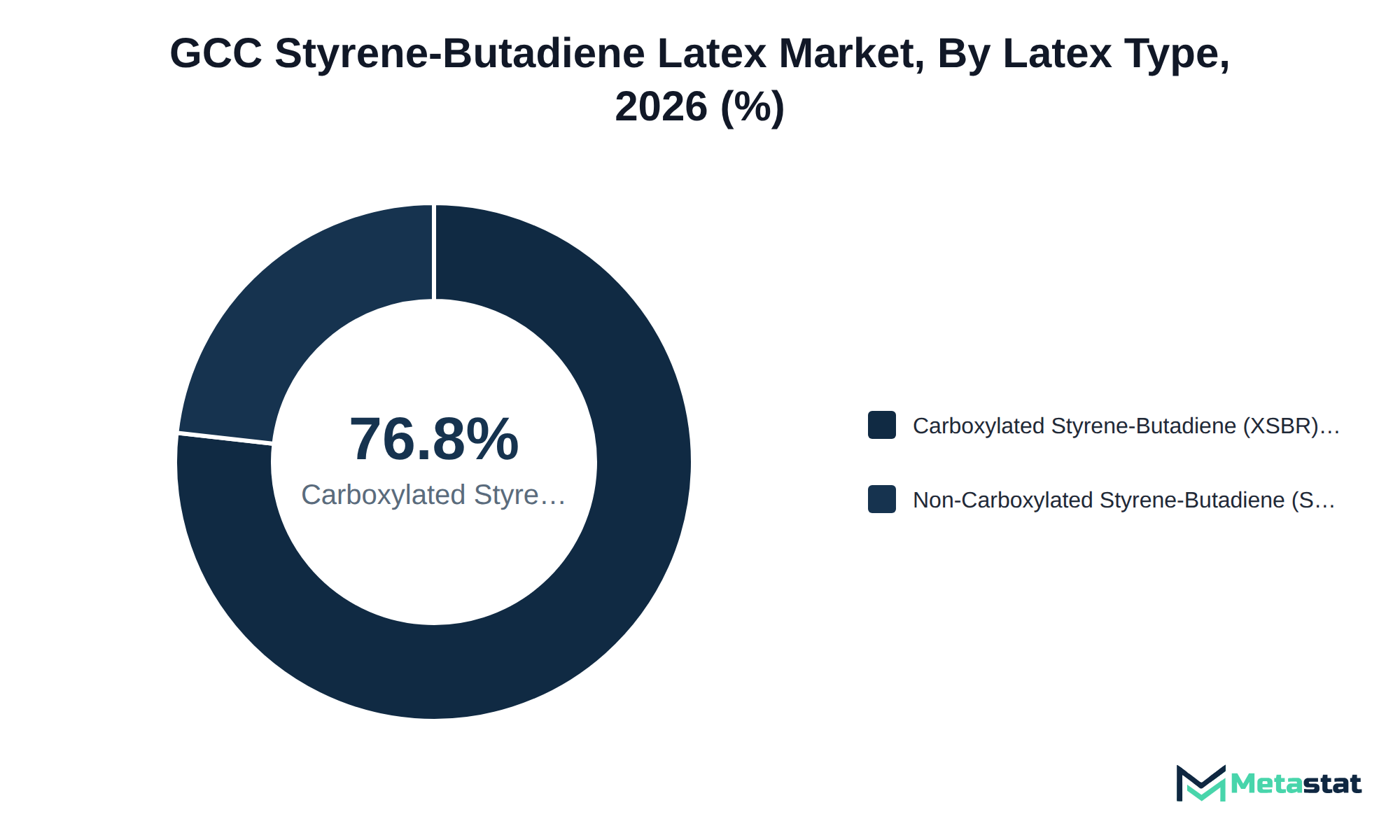
Dominant Segment: Carboxylated Styrene-Butadiene (XSBR) Latex leads the market, driven by its versatile applications and superior performance characteristics, particularly in coatings and adhesives.
Geographic Lead: Saudi Arabia dominates the GCC Styrene-Butadiene Latex market, projected to increase its consumption significantly due to robust industrial activities and a growing construction sector.
What's Inside: The report provides a comprehensive analysis of market dynamics, competitive landscape, and detailed forecasts from 2026 to 2033, covering various latex types, applications, and regional insights.
Market Trends: The market is experiencing a shift towards high-performance materials, with increasing demand for sustainable and eco-friendly latex formulations influencing growth across multiple sectors.
Emerging Applications: High-solids SB Latex is gaining traction in construction and automotive sectors, projected to reach USD 26.8 million by 2033, driven by demand for durable and flexible adhesives.
Choose Your License
GCC Styrene-Butadiene Latex Market
The GCC Styrene-Butadiene Latex market was valued at USD 55.6 million in 2025 and is projected to reach USD 82.2 million by 2033, growing at a CAGR of 5.0% over the forecast period.
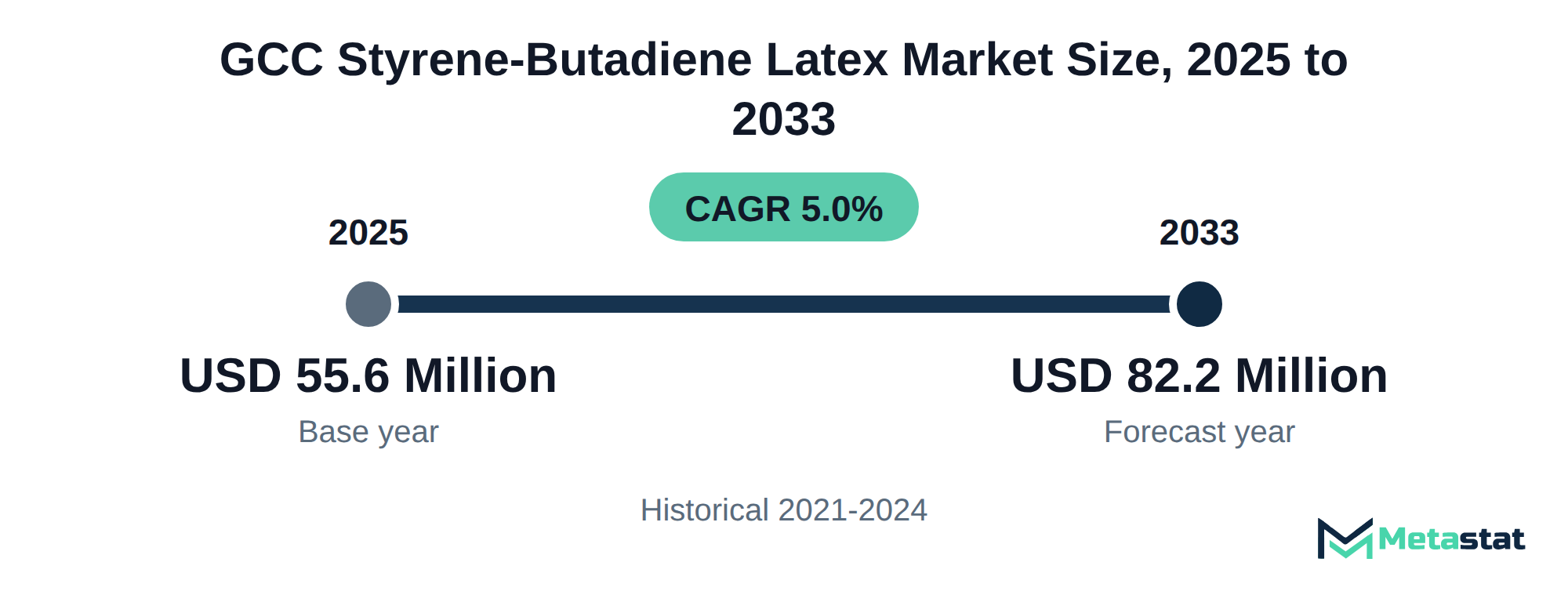
The GCC Styrene-Butadiene Latex market encompasses a range of products across various industries, primarily focusing on applications including coatings, adhesives, and textiles. Buyers invest in these materials due to their superior properties, including flexibility, durability, and adhesion qualities. These characteristics enhance the performance of end products, making them essential for manufacturers aiming to improve their offerings and meet consumer demands.
Growth in the market is driven by increasing demand for high-performance materials in the construction and automotive sectors. Among the segments, Carboxylated Styrene-Butadiene (XSBR) Latex stands out, representing the highest value due to its versatile applications and enhanced performance attributes. Saudi Arabia holds the largest share of the market, benefiting from robust industrial activities and expanding manufacturing capabilities.
One significant growth driver involves the rising focus on sustainable and eco-friendly products, leading to increased adoption of latex formulations that comply with environmental standards. This shift towards sustainability influences manufacturers to invest in innovative solutions, enhancing their competitive edge and ensuring compliance with regulatory requirements. This dynamic stimulates market growth.
Investment in the GCC Styrene-Butadiene Latex market largely stems from its application in high-performance products that require flexibility and durability. Industries including construction, textiles, and automotive leverage these materials for their superior binding properties. Significant expenditure occurs due to increasing demand for environmentally friendly and efficient products, positioning these latex formulations as essential components in production processes.
Growth in the market is driven by the expansion of the construction sector, particularly in emerging economies within the region. The demand for Carboxylated Styrene-Butadiene (XSBR) Latex represents the largest share, attributed to its applications in coatings and adhesives. Saudi Arabia holds the largest market share, benefiting from substantial investments in infrastructure and construction activities that increase the need for advanced materials.
Technological advancements and innovation in production processes support the market's trajectory, enabling manufacturers to meet evolving customer needs. The ongoing focus on sustainability further enhances market attractiveness, encouraging companies to adopt more eco-friendly practices. This alignment with environmental standards positions the GCC Styrene-Butadiene Latex market for continued growth in the coming years.
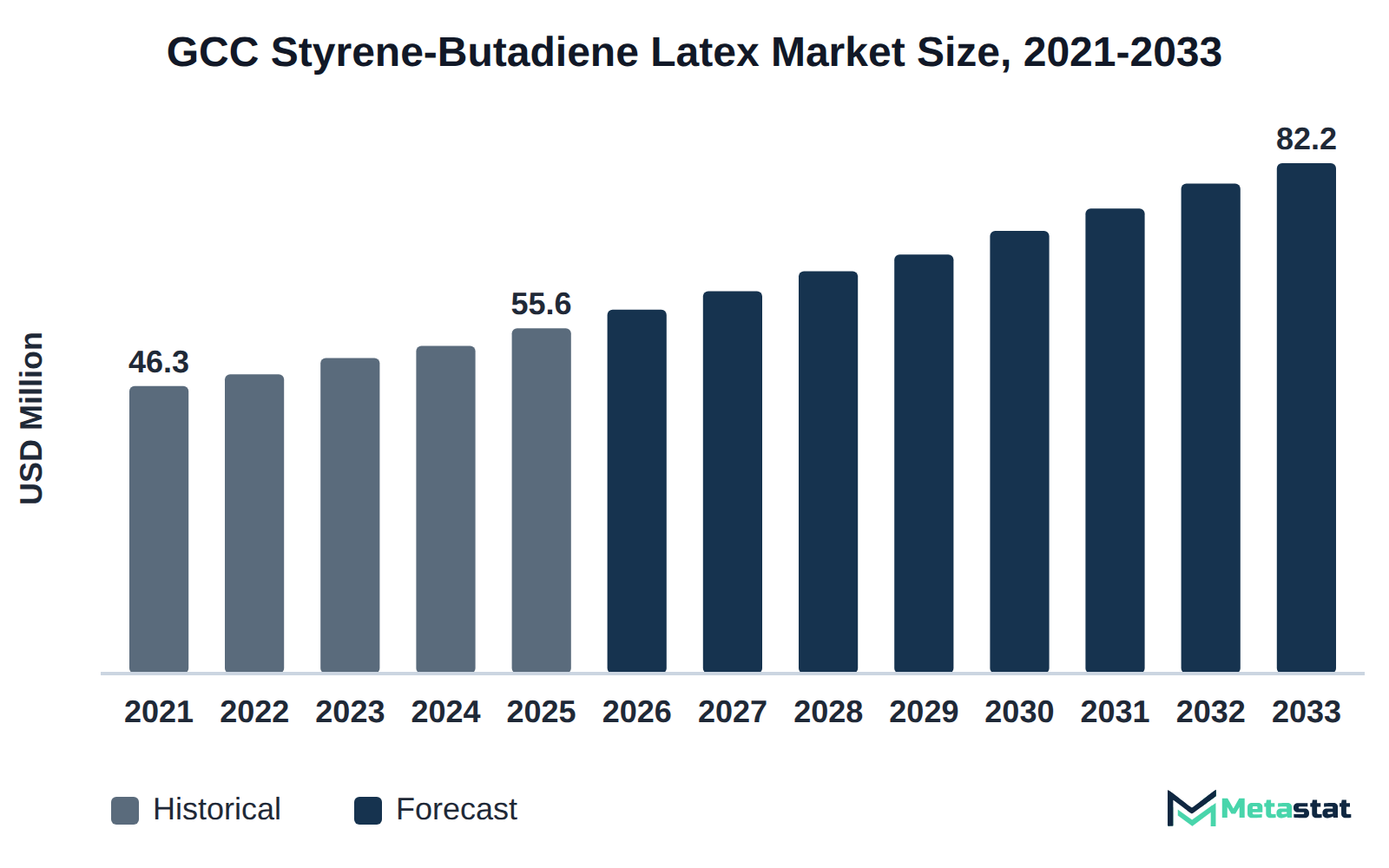
Carboxylated Styrene-Butadiene (XSBR) Latex exhibits significant demand within the GCC Styrene-Butadiene Latex market, particularly in the paper coatings and carpet backing sectors. This growth stems from the material's superior bonding properties and improved adhesion performance, which enhance the durability and quality of finished products. In the paper industry, for example, the market for Carboxylated SB Latex is projected to expand from USD 12.3 million in 2026 to USD 15.7 million by 2033, reflecting a compound annual growth rate (CAGR) of 3.5%. This expansion highlights the increasing reliance on high-performance latex in applications requiring robust coating solutions.
In carpet backing applications, the demand for Carboxylated SB Latex is anticipated to strengthen due to its excellent flexibility and resistance to environmental factors. The material’s capacity to improve the overall performance of synthetic carpets directly influences adoption rates among manufacturers aiming to meet evolving consumer preferences. This trend aligns with an industry push for enhanced product quality and sustainability, ensuring that suppliers who leverage these materials position themselves strategically within the GCC Styrene-Butadiene Latex market. Competition intensifies, and manufacturers focusing on innovative uses for Carboxylated SB Latex are likely to capture a larger market share.
The GCC Styrene-Butadiene Latex market experiences significant demand for construction-grade SB latex, particularly in waterproofing membranes and cement modification applications. In 2026, the segment for construction mortar and concrete modification is projected to expand at a compound annual growth rate (CAGR) of 6.5%. Buyers typically pursue long-term contracts to secure stable pricing and supply, driven by the need for consistent quality and performance in construction projects.
Pricing models often involve fixed-price agreements or variable pricing linked to raw material costs, reflecting fluctuations in the market. Suppliers negotiate contract terms based on project scope and anticipated volume, enabling both parties to manage budgetary constraints effectively. With waterproofing and concrete modification representing key applications, the importance of quality assurance remains significant, influencing buyer decisions. Ensuring compliance with industry standards further supports long-term supplier relationships.
While the GCC Styrene-Butadiene Latex market continues to grow, understanding pricing dynamics and procurement strategies enhances competitive positioning for suppliers. This detailed knowledge aids buyers in optimizing their procurement processes, ultimately impacting project timelines and costs.
Buyers of the GCC Styrene-Butadiene Latex market face significant challenges stemming from import dependence on feedstock materials. The region's reliance on imports for styrene and butadiene highlights vulnerabilities in supply chains, particularly in times of geopolitical instability or global economic fluctuations. Saudi Arabia experiences growth in its latex market, with a compound annual growth rate (CAGR) of 5.3% from 2026 to 2033. This growth reflects rising demand for raw materials, intensifying the pressure on buyers to secure a stable feedstock supply.
The pricing dynamics for styrene and butadiene, both petrochemicals, heavily influence operational costs for manufacturers within the market. Prices for these feedstock materials fluctuate due to changes in crude oil prices, regulatory policies, and international trade agreements. Rising costs decrease profit margins for producers, compelling them to pass on increased costs to buyers. This situation necessitates buyers to adopt strategic sourcing practices to mitigate risks associated with fluctuating prices and ensure supply chain resilience. Understanding these factors is essential for stakeholders aiming to navigate the complexities of the GCC Styrene-Butadiene Latex market effectively.
Saudi Arabia is projected to lead the GCC Styrene-Butadiene Latex market in consumption through 2033. The country is expected to increase its consumption from USD 23.4 million in 2026 to USD 33.6 million by 2033, reflecting a compound annual growth rate (CAGR) of 5.3%. This growth trajectory results from the expanding construction sector, which relies on styrene-butadiene latex for applications in construction mortar and concrete modification.
The United Arab Emirates follows closely, with consumption anticipated to reach USD 27.3 million by 2033. This growth stems from the active real estate and infrastructure projects, which drive demand for latex in various applications, including adhesives and lamination. Rising construction activity paired with the increasing focus on sustainable building materials enhances the attractiveness of the market for investors and suppliers alike.
Kuwait and Qatar represent additional opportunities for growth within the market, although at a different scale. Kuwait's consumption is projected to reach USD 8.6 million by 2033, while Qatar's growth reflects a CAGR of 4.4%. The development plans and industrial expansion strategies in these countries contribute positively to the overall GCC Styrene-Butadiene Latex market, presenting a favorable environment for stakeholders aiming for a competitive advantage in the region.
The shift toward high-performance applications among buyers drives increased demand for GCC Styrene-Butadiene Latex products. Industries including construction, automotive, and textiles prioritize the adoption of materials that offer enhanced performance attributes, including flexibility, durability, and resistance to environmental factors. This shift reflects a growing trend of incorporating advanced materials in manufacturing processes to improve product quality and longevity. For instance, the market anticipates a significant rise in consumption of Carboxylated Styrene-Butadiene (XSBR) Latex, projected to grow from USD 45.3 million in 2026 to USD 65.9 million by 2033, with a compound annual growth rate (CAGR) of 5.5%. Such growth results from heightened awareness of product performance and sustainability, with manufacturers seeking to meet evolving consumer expectations. Increased investment in research and development further supports this transition, leading to enhanced product offerings and driving market expansion.
The rising focus on performance-driven products facilitates higher spending among manufacturers and end-users, contributing to overall market growth.
The emergence of advanced formulations within the GCC Styrene-Butadiene Latex market significantly influences product performance across various applications. Suppliers focus on enhancing the properties of latex, leading to improved adhesion, flexibility, and durability, which are essential for industries including automotive, textiles, and construction. This technical advancement aligns with ongoing demand for high-performance products that require specific characteristics to meet consumer standards. The integration of innovative additives and processing techniques allows for tailored solutions that address unique application challenges. Manufacturers experience increased competitiveness in the market, along with the ability to command premium pricing for specialized products. Collaboration between suppliers and buyers aids the development of customized formulations, driving further adoption of these enhanced latex products. Overall, the trend toward advanced formulations continues to shape the GCC Styrene-Butadiene Latex market, expanding opportunities.
Price sensitivity among buyers restricts the market's growth potential. This challenge particularly affects industries relying on Styrene-Butadiene Latex for applications including coatings and adhesives, where budget constraints drive purchasing decisions. Higher production costs for raw materials often translate into inflated prices for final products, leading to decreased order sizes or delayed project timelines. This situation results in slower uptake of new formulations, hindering the adoption of innovative products that could enhance performance and efficiency. Buyers opt for more cost-effective alternatives or postpone investments in higher-quality latex offerings. Consequently, market players face significant pressure to balance quality and price, influencing competitive dynamics and overall revenue potential in the GCC Styrene-Butadiene Latex market.
Input cost fluctuations pose significant challenges for suppliers within the GCC Styrene-Butadiene Latex market. Rising raw material prices directly affect overall production expenses, leading to tighter profit margins. This situation compels suppliers to adopt strategies including optimizing production efficiency and negotiating better terms with raw material suppliers. Many companies invest in technology to enhance manufacturing processes, thereby reducing waste and improving yield. Suppliers focus on developing more cost-effective formulations that maintain performance while minimizing input requirements. Collaborations across the supply chain help mitigate cost pressures and improve sourcing strategies. These measures aim to stabilize pricing and maintain competitiveness in a market driven by evolving buyer demands and economic conditions.
High-solids styrene-butadiene latex (SBL) presents significant growth potential within the GCC Styrene-Butadiene Latex market, driven by increasing demand for durable and flexible adhesives and coatings. This segment, characterized by solids content above 55%, addresses the needs of various applications, including construction and automotive. The projected growth rate for high-solids SB latex is notable, with figures reaching USD 26.8 million by 2033. Emerging trends in infrastructure development and automotive manufacturing within the GCC region facilitate enhanced adoption of this latex type.
Market players focusing on high-solids SB latex possess opportunities to capitalize on advancements in formulation technologies, enabling enhanced performance metrics. In sectors including construction, demand for high-performance materials highlights the necessity for products with improved adhesion and weather resistance. The projected CAGR of 4.3% reflects the segment's importance within overall market dynamics.
The GCC Styrene-Butadiene Latex market is segmented based on Latex Type, Butadiene Content, Application, and Region.
This segment finds significant application in industries including paper coatings and adhesives, where flexibility and durability are essential. Growing demand for high-performance products in these sectors drives this segment's expansion. Unlike Non-Carboxylated SB Latex, which exhibits a lower growth rate, Carboxylated SB Latex benefits from its superior performance characteristics, reflected in its accelerated CAGR. Increasing use in the textile industry enhances its competitive positioning, ensuring significant growth within the GCC Styrene-Butadiene Latex market.
Non-Carboxylated Styrene-Butadiene (SBR) Latex segment is estimated to reach USD 16.3 million by 2033, at a CAGR of 3% during the forecast period. This segment finds extensive use in coatings, adhesives, and various industrial applications, appealing to manufacturers seeking cost-effective solutions. Demand for SBR Latex is driven by its versatile properties, including resilience and adhesion, making it suitable for diverse applications, particularly in the construction and automotive sectors. In contrast to Carboxylated Styrene-Butadiene Latex, which exhibits a higher CAGR of 5.5%, Non-Carboxylated SBR Latex experiences slower growth. This difference stems from varying buyer preferences and specific application requirements. The market strengthens due to increasing demand for durable adhesives, particularly in evolving construction technologies. Overall, the segment contributes to meeting the diverse requirements of various industries, supporting overall growth dynamics in the GCC Styrene-Butadiene Latex market.
Low-Solids SB Latex (Below 45%) segment is valued at USD 10.4 million in 2026 and is projected to reach USD 12.5 million by 2033, at a CAGR of 2.7% during the forecast period. This segment primarily serves applications in adhesives and coatings, appealing to manufacturers requiring lower viscosity and improved flexibility. Demand for low-solids formulations is driven by increasing interest in cost-effective solutions within the construction and textile industries. Compared to other butadiene content segments, including Medium-Solids SB Latex, which is expected to reach USD 42.9 million by 2033 with a CAGR of 4.3%, Low-Solids SB Latex growth remains relatively slower. The pricing dynamics reflect a more moderate cost approach for buyers, allowing for broader accessibility while limiting profit margins for suppliers. This segment's characteristics differentiate it distinctly within the GCC Styrene-Butadiene Latex market.
This type of latex finds application in diverse industries including construction, textiles, and coatings, where it enhances durability and flexibility. The demand for this segment is driven by its effectiveness in products requiring superior binding and adhesion properties. Compared to other segments, including Low-Solids SB Latex, which grows at a CAGR of 2.7%, Medium-Solids SB Latex demonstrates a more favorable growth trajectory due to increasing industrial requirements for medium solids content. This segment's price point generally aligns with performance expectations, attracting buyers focused on quality and reliability in their applications. Growth in the construction and textile sectors significantly influences the overall trajectory of the segment.
High-Solids SB Latex (Above 55%) segment is expected to reach USD 26.8 million by 2033. This segment finds applications primarily in industries requiring enhanced durability and strength, particularly in coatings and adhesives. The construction sector and automotive manufacturing increasingly rely on high-solids formulations due to their superior performance characteristics. Growth in this segment is driven by rising demand for high-quality adhesives and coatings that offer improved performance metrics. This segment exhibits a higher growth rate compared to others, with a CAGR of 4.3%. In contrast to lower solids segments, High-Solids SB Latex commands a premium price, reflecting its advanced formulation and superior performance. The market will continue to see significant interest from buyers seeking efficient solutions for demanding applications.
This segment serves applications in the production of coated paper and paperboard products, used by manufacturers seeking enhanced surface properties and printability. Demand is driven by rising production of packaging materials and the need for improved visual appeal in printed products. Compared to other segments, Paper & Paperboard Coatings experiences moderate growth, influenced by stable demand in the packaging sector. The relatively lower CAGR of 3.5% reflects a more mature market compared to segments like Construction Mortar & Concrete Modification, which achieves a CAGR of 6.5%. Buyers in this segment prioritize cost-effective and high-performance solutions, impacting pricing dynamics within the market.
Carpet & Artificial Turf Backing segment is estimated to reach USD 15.2 million by 2033, at a CAGR of 3.9% during the forecast period. This segment finds application in the production of carpets and artificial turf, primarily employed by flooring manufacturers and sports facility developers. The increasing demand for high-quality synthetic grass in landscaping and sports applications drives growth in this segment. Carpet & Artificial Turf Backing distinguishes itself from other applications through its moderate growth rate compared to segments including Construction Mortar & Concrete Modification, which experiences a higher CAGR of 6.5%. The market benefits from technological advancements in latex formulations that enhance durability and performance, appealing to end-users seeking long-lasting products. Investment in innovative solutions shapes buyer preferences, ultimately supporting expansion in the market.
Textile & Nonwoven Binding segment is expected to reach USD 8.3 million by 2033. This segment finds extensive application in the manufacturing of textiles, nonwoven fabrics, and related products, primarily serving textile manufacturers and converters. Increased demand for lightweight and cost-effective materials drives growth within this segment. The ongoing trend toward sustainable and eco-friendly products influences adoption, prompting manufacturers to seek binders that enhance durability and performance. Compared to other segments in the market, including Carpet & Artificial Turf Backing, which is projected to grow at a CAGR of 3.9%, the Textile & Nonwoven Binding segment shows steady growth patterns. This segment is characterized by moderate pricing dynamics, allowing it to cater to a diverse customer base seeking reliable and efficient binding solutions.
Construction Mortar & Concrete Modification segment is projected to grow at a CAGR of 6.5% during the forecast period. This segment serves crucial roles in enhancing the performance of concrete and mortar products, which are core building materials, particularly in construction applications. Key users include construction companies and contractors who prioritize product durability and flexibility. The increasing demand for high-performance materials significantly influences this segment. Technological advancements in formulations further drive growth, allowing for improved adhesion, water resistance, and overall strength. Compared to other segments, including Paper & Paperboard Coatings, this segment experiences faster growth due to rising construction activities across the GCC region. The market benefits from ongoing infrastructure projects, reflecting robust demand for effective construction materials.
Waterproofing & Protective Coatings serve critical functions in protecting surfaces from moisture and other environmental factors. Industries including construction and automotive frequently require these coatings for enhanced durability and longevity of materials. The demand for high-performance and long-lasting solutions drives market growth. Technological advancements and innovation in formulations have significantly improved the performance of these coatings, leading to increased adoption among manufacturers. Compared to other applications, this segment experiences different pricing dynamics due to its specialized nature and higher production costs. Growth for this segment aligns with the construction industry's expanding focus on sustainable and resilient building practices, highlighting its importance in the GCC Styrene-Butadiene Latex market.
Adhesives & Lamination involves the formulation and application of adhesive products using styrene-butadiene latex. This segment serves various industries, including construction, automotive, and packaging, where strong and durable bonding agents are essential. Demand for high-performance adhesives, driven by increased focus on product longevity and environmental compliance, significantly impacts this segment. Compared to other applications, Adhesives & Lamination experiences steady growth, supported by ongoing technological advancements in adhesive formulations that improve efficacy. Competing segments like Paper & Paperboard Coatings display different growth trajectories, with cost sensitivity acting as a more considerable barrier. Suppliers focus on developing specialized products that cater to evolving market needs, enhancing their competitive position.
Foam & Mattress Manufacturing enhances the durability and comfort of various foam products using styrene-butadiene latex. This segment caters to manufacturers focused on producing high-quality mattresses and cushioning materials. One driving force for this segment stems from increasing consumer preferences for comfortable and durable bedding solutions. This demand for premium quality in foam products positions the segment for stable growth. Unlike other applications where price sensitivity is a factor, foam and mattress manufacturers prioritize material performance and longevity. This focus on quality leads to a relatively higher pricing strategy compared to segments driven primarily by cost considerations. The market for foam and mattress manufacturing benefits from ongoing innovations in latex formulations, which enhance product characteristics including resilience and elasticity.
Tire Cord & Industrial Fabric Dipping involves the application of styrene-butadiene latex in the manufacturing of tire cords, including those used in automotive tires, and industrial fabrics. This segment serves various industries, including automotive and construction, where strong and flexible materials are essential. Demand for this segment increases due to the rising need for durable products that withstand heavy use. The segment differentiates itself from others within the application category by focusing specifically on the high-performance needs of industrial fabrics and tire manufacturing. In contrast to other segments, Tire Cord & Industrial Fabric Dipping experiences a slower growth rate, driven by specialized production techniques and competitive pricing pressures faced in the broader materials market. Buyers in this segment prioritize quality and performance metrics over cost, ensuring their products meet stringent industry standards.
Asphalt and bitumen modification involves the use of styrene-butadiene latex to improve the performance characteristics of asphalt products. This application finds substantial usage in road construction and maintenance, enhancing the durability and flexibility of asphalt mixtures. The growing emphasis on infrastructure development, particularly in emerging markets, drives demand for high-quality asphalt solutions. Demand for improved material strength drives the adoption of styrene-butadiene latex in this segment, differentiating it from others by focusing on specialized applications that require enhanced performance under varying environmental conditions. This segment experiences steady growth, influenced by ongoing investments in transportation infrastructure, while other segments focus on broader applications with diverse end-users. The GCC Styrene-Butadiene Latex market's emphasis on this segment reflects the sector's commitment to advancing construction material technology.
Footwear impregnation and abrasive backing serve niche applications within the styrene-butadiene latex landscape. Manufacturers engage this segment in the production of specialized footwear and abrasive materials, catering to industries focused on durability and performance. The demand for enhanced product longevity drives interest in this segment, particularly among manufacturers seeking to improve the quality of end products. While growth rates for other segments, including Carpet & Artificial Turf Backing, reach up to 3.9%, this segment differentiates itself through its targeted applications and specific buyer profiles. Competition intensifies, and innovation in formulation and performance characteristics will become crucial for suppliers. The GCC Styrene-Butadiene Latex market reflects increasing awareness of specialty applications, further highlighting the value of tailored solutions in meeting evolving consumer demands.
Saudi Arabia segment is valued at USD 23.4 million in 2026 and is projected to reach USD 33.6 million by 2033, at a CAGR of 5.3% during the forecast period. This segment is significant in various applications, primarily in construction, textiles, and coatings. The growth in construction activities within the region significantly influences demand, driven by ongoing infrastructure projects and urban development. Compared to other segments, the Saudi Arabia segment exhibits a faster growth rate, benefiting from substantial investments in construction and manufacturing. Such trends indicate strong market potential, differentiating this segment from others that do not experience similar levels of expansion. Overall, the GCC Styrene-Butadiene Latex market is positioned for growth, with specific regional strategies essential for capitalizing on emerging opportunities.
United Arab Emirates segment is estimated to reach USD 27.3 million by 2033, at a CAGR of 5.2% during the forecast period. This segment is significant in applications including paper coatings, carpet backing, and textile binding. Industries including packaging and construction use styrene-butadiene latex for its adhesion and binding properties. Strong demand in the UAE arises from ongoing construction projects and a growing paper industry. Compared to other segments, this segment exhibits moderate growth relative to more rapidly expanding segments like Carboxylated Styrene-Butadiene (XSBR) Latex, which has a CAGR of 5.5%. Higher usage in construction and packaging applications highlights a distinct characteristic that sets this segment apart, ensuring its position in the GCC Styrene-Butadiene Latex market.
Kuwait segment is expected to reach USD 8.6 million by 2033. This segment serves various applications, including construction and textile industries, where it is used for binding and coating purposes. Demand for styrene-butadiene latex in Kuwait is driven by the rising need for high-performance materials in these sectors. Compared to other regions, Kuwait experiences a slower growth trajectory, influenced by its smaller market size and limited manufacturing capacity. The CAGR for this segment reflects a more cautious pace, contrasting with the anticipated growth rates in larger markets. The GCC Styrene-Butadiene Latex market shows diverse potentials across regions, with Kuwait's development shaped by specific local industry demands and resources.
Qatar segment is projected to grow at a CAGR of 4.4% during the forecast period. This segment primarily finds use in various applications including construction and textiles, where its unique properties enhance product performance and durability. Demand for styrene-butadiene latex in Qatar is driven by increasing construction activities and growth in the textile industry. Compared to other regions, Qatar benefits from a relatively smaller market size but shows promising growth prospects. The focus on sustainable construction practices and high-quality textile production supports demand, positioning this segment for steady expansion in the coming years. With a growing emphasis on innovation within the GCC Styrene-Butadiene Latex market, Qatar's unique industrial landscape offers opportunities for suppliers to cater to specific market needs.
Bahrain represents a segment characterized by unique applications and demand dynamics within the GCC Styrene-Butadiene Latex market. The segment focuses on various industrial applications, including coatings and adhesives, catering primarily to local manufacturers. Key drivers influencing this segment include an increasing focus on product quality and performance across various industries, particularly in the construction and textile sectors. This market operates under distinct pricing structures compared to other regional segments, reflecting local market conditions and material costs. While several segments exhibit higher growth rates, Bahrain maintains steady demand growth driven by an expanding manufacturing base, differentiating it from other areas including Saudi Arabia and the United Arab Emirates, where larger market volumes exist. The segment's alignment with regional industrial trends suggests promising opportunities for continued expansion and innovation.
Oman represents a potential market for various applications of styrene-butadiene latex, including construction and textile industries. The region's demand is driven by ongoing infrastructure developments and a growing emphasis on construction quality. These factors increase interest in high-performance materials, enhancing the adoption of styrene-butadiene latex products.
Local manufacturers and suppliers focus on providing tailored solutions that meet specific project requirements, creating a unique buyer landscape in Oman. Compared to other regions, the growth rate remains moderate, influenced by distinct technological advancements and regional preferences in material selection. The dynamic construction sector relies on latex for its binding and durability properties, positioning Oman as a developing area within the broader GCC Styrene-Butadiene Latex market.
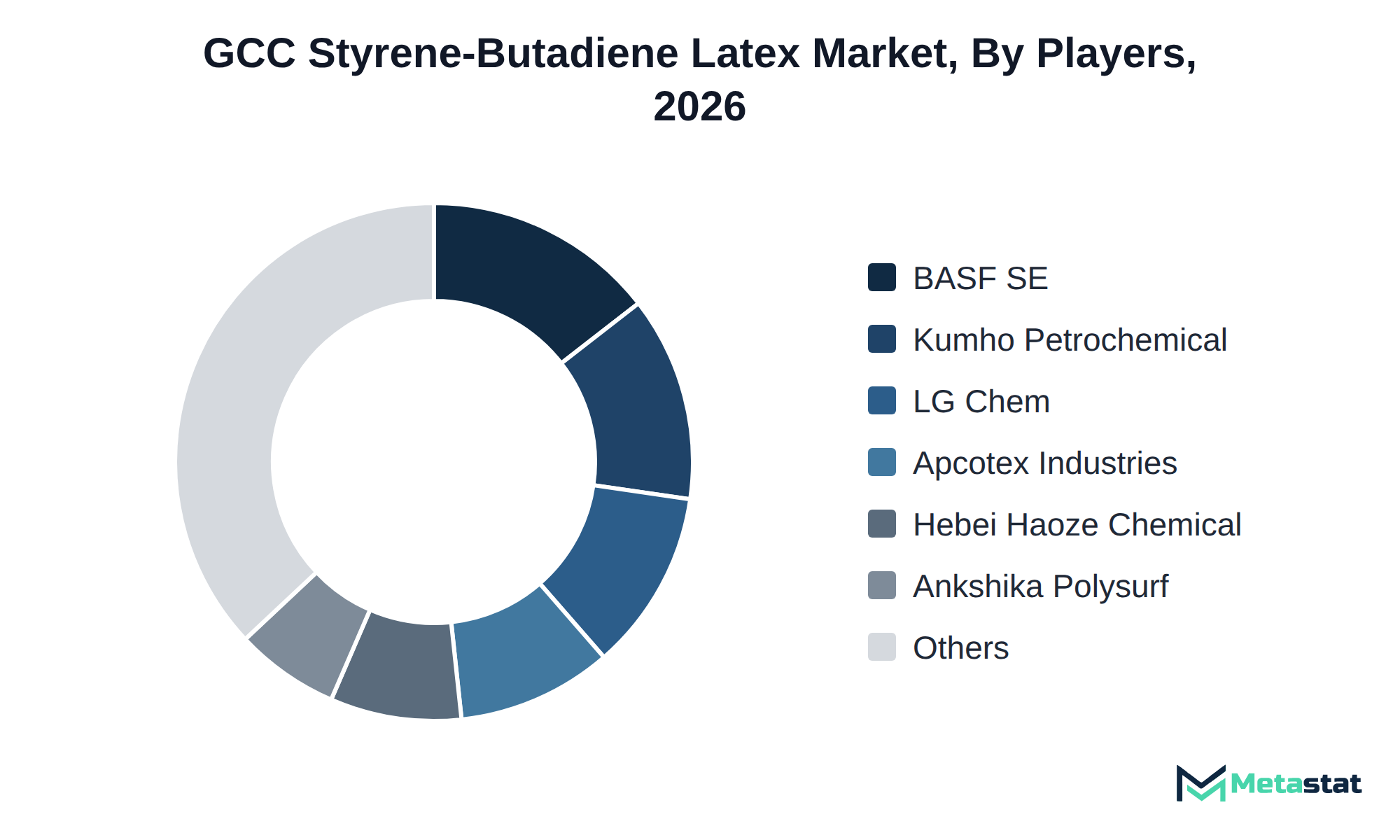
Competition within the GCC Styrene-Butadiene Latex market divides primarily along the lines of product specialization and application focus. Companies including BASF SE and Trinseo PLC emphasize their expertise in high-performance latex systems tailored for specific applications, attracting buyers seeking advanced performance characteristics. Meanwhile, players like Ankshika Polysurf Limited and EOC Group concentrate on developing customized solutions that appeal to sectors requiring unique formulations.
Buyers prioritize a combination of pricing, product certification, and customization options when selecting suppliers in the market. Companies like LG Chem, Ltd. and Kumho Petrochemical Co., Ltd. leverage their extensive product portfolios and proven quality standards to enhance their appeal. Regional players including Jubilant Agri & Consumer Products Limited focus on providing localized service and support, which influences buyer choices.
The growth relies on several key developments. First, the increasing demand for Carboxylated Styrene-Butadiene (XSBR) Latex, projected to expand from USD 45.3 million in 2026 to USD 65.9 million by 2033, drives substantial market growth, primarily fueled by the paper and textile industries. Second, the ongoing expansion of the construction sector supports the uptake of high-solids SB Latex, which addresses waterproofing and protective coating applications. A projected CAGR of 6.5% in this area highlights strong potential. Lastly, regional dynamics, particularly in Saudi Arabia, where the market is set to grow from USD 23.4 million in 2026 to USD 33.6 million by 2033, play a crucial role in overall expansion. Conversely, a significant risk exists regarding fluctuations in raw material prices, which could hinder production and increase operational costs. Thus, while the GCC Styrene-Butadiene Latex market shows positive trends, external economic factors could impact growth trajectories if not managed effectively.
By Latex Type: Carboxylated Styrene-Butadiene (XSBR) Latex, Non-Carboxylated Styrene-Butadiene (SBR) Latex
By Application: Paper & Paperboard Coatings, Carpet & Artificial Turf Backing, Textile & Nonwoven Binding, Construction Mortar & Concrete Modification, Waterproofing & Protective Coatings, Adhesives & Lamination, Foam & Mattress Manufacturing, Tire Cord & Industrial Fabric Dipping, Asphalt & Bitumen Modification, Others (Footwear Impregnation, Abrasive Backing)
By Region: Saudi Arabia, United Arab Emirates, Kuwait, Qatar, Bahrain, Oman
The report strategically identifies and profiles the key market players and analyses their core competencies in each sub-segment of the Styrene-Butadiene Latex market.
Report Attributes | Details |
Study Period | 2021-2033 |
Base Year | 2025 |
Estimated Year | 2026 |
Forecast Period | 2026-2033 |
Historical Period | 2021-2025 |
Growth Rate | CAGR 5.0% from 2026 to 2033 |
Revenue Unit | USD million |
Segmentation | By Latex Type, Butadiene Content, Application, Region, and Region |
Find answers to common questions about this report
The Styrene-Butadiene Latex market size was valued at USD 55.6 million in 2025.
The market is projected to grow at a CAGR of 5.0% during the forecast period from 2026 to 2033.
Carboxylated Styrene-Butadiene (XSBR) Latex leads the market with a projected value of USD 65.9 million by 2033, compared to Non-Carboxylated Styrene-Butadiene (SBR) Latex, which is expected to reach USD 16.3 million in the same year.
Key drivers for the Styrene-Butadiene Latex market include increased demand for high-performance applications in construction, automotive, and textiles industries. Heightened awareness of product performance and sustainability supports this trend, leading to greater investment in research and development.
Price sensitivity among buyers restricts market growth, particularly affecting industries that rely on Styrene-Butadiene Latex for coatings and adhesives. Input cost fluctuations present significant challenges for suppliers, leading to tighter profit margins and compelling them to optimize production efficiency.
The shift toward high-performance applications among buyers supports the adoption of GCC Styrene-Butadiene Latex products. Increased investment in research and development enhances product offerings, addressing evolving consumer expectations for flexibility, durability, and resistance to environmental factors.
The Styrene-Butadiene Latex market is estimated to reach a valuation of USD 82.2 million by 2033.
Key players operating in the Styrene-Butadiene Latex industry include Ankshika Polysurf Limited, Apcotex Industries Limited, BASF SE, Celotech Ruico, ENEOS Materials Corporation, Kumho Petrochemical Co., Ltd., LG Chem, Ltd., and Synthomer plc.
Carboxylated Styrene-Butadiene (XSBR) Latex is projected to grow from USD 45.3 million in 2026 to USD 65.9 million by 2033, with a compound annual growth rate (CAGR) of 5.5%.
The Construction Mortar & Concrete Modification application segment is expected to grow significantly, reflecting a compound annual growth rate (CAGR) of 6.5%.
The analysts below cover Chemicals and Materials research at Metastat Insights.
LEAD ANALYST
Utkarsh Khirodkar is a Lead Market Research Analyst at MetaStat Insight, specializing in market intelligence, technology sector assessments, and competitive strategy.

INDUSTRY CONSULTANT - CHEMICALS & ADVANCED MATERIALS
Chemicals and Materials · Machinery & Equipment · Packaging
Amit Gadhekar Consultant for Chemicals and Materials at MetaStat Insight, directing sector-specific intelligence, research, and strategic consulting across global chemical and processing markets.
Evaluating sovereign cloud deployments for core banking platforms demands a clear view of data residency regulations and migration exit strategies. MetaStat Insight delivered an exhaustive review of regional latency tolerances, mainframe decommission milestones, and third-party vendor concentration risk. The regulatory compliance mapping across European and Asian financial jurisdictions gave our team a dependable baseline for multi-cloud infrastructure discussions.
Replacing petrochemical surfactants with bio-based alternatives requires realistic timelines on industrial precision fermentation scaling. The market research broke down commercialization timelines, feedstock sugar price sensitivities, and regional cosmetic ingredient regulatory approvals in Europe and East Asia. That supplier readiness mapping gave our formulations team reliable context when comparing renewable chemical sourcing roadmaps.
Tracking ceramic matrix composite adoption in high-bypass aero engines requires strict attention to material qualification cycles and FAA airworthiness testing milestones. The MetaStat Insight team provided a detailed timeline of silicon carbide fiber manufacturing capacity and commercial foundry lead times. Having clear visibility into upstream thermal barrier coating supply helped us stress-test our long-term component procurement strategy.
Explore related market intelligence reports worth reading alongside this one.