
LEAD ANALYST
Utkarsh Khirodkar is a Lead Market Research Analyst at MetaStat Insight, specializing in market intelligence, technology sector assessments, and competitive strategy.

India Air Purifier Market Size, Share, By Product Type (Standalone Room Air Purifiers, HVAC and In-Duct Air Purifiers, Air Conditioner-Integrated and Retrofit Purifiers, Personal and Wearable Air Purifiers, Vehicle Air Purifiers and Others (Ceiling-Mounted Air Purifiers, Specialty Portable Purifiers)), By Purification Technology (HEPA and Mechanical Filtration, Activated Carbon and Molecular Filtration, Ionization and Electrostatic Precipitation, UV-C and Photocatalytic Purification, Biofiltration and Plant-Based Purification, Hybrid Multi-Technology Purification and Others (Plasma Purification, Nanofiber Filtration)), By Connectivity (Non-Connected Air Purifiers, Wi-Fi-Enabled Air Purifiers, Bluetooth-Enabled Air Purifiers, Voice Assistant-Enabled Air Purifiers and IoT-Integrated Air Quality Management Systems), By End-Use (Residential, Offices and Corporate Facilities, Healthcare Facilities, Educational Institutions and Others (Transportation Facilities, Industrial and Manufacturing Facilities)), Industry Analysis, Growth, Trends, and Forecast, 2026-2033
MSI-5450
October, 2026
264 Pages
Historical
Base year
Forecast
Forecast period
Report Details
Comprehensive Market Analysis And Insights
Market Valuation: Valued at $571.6 Million in 2025, projected to reach $1,574.7 Million by 2033 at a 13.5% CAGR.
Dominant Segment: Standalone room air purifiers hold the largest value share in the India Air Purifier market, accounting for 61.7% of total revenue, driven by their accessibility, ease of installation, and strong appeal among residential and small commercial buyers.
Geographic Lead: The northern region of India leads the market, reflecting higher pollution levels and a concentration of affluent buyers prioritizing air quality solutions in urban centers.
High-Growth Segment: Educational institutions are projected for the highest compound annual growth rate among end-use categories, reaching 16.1% through 2033, fueled by increased concern for children's respiratory health and enforcement of indoor air quality standards.
Technology Preference: HEPA and mechanical filtration technologies remain the preferred choice, with this segment projected to reach USD 555.4 million by 2033, reflecting sustained demand for proven efficacy against fine particulate pollution.
What's Inside: The report provides detailed segmentation by product type, purification technology, connectivity, and end-use, with market size and growth forecasts through 2033, as well as analysis of key drivers, trends, and competitive dynamics in the India Air Purifier market.
The India Air Purifier market was valued at USD 571.6 million in 2025 and is projected to reach USD 1,574.7 million by 2033, growing at a CAGR of 13.5% over the forecast period.
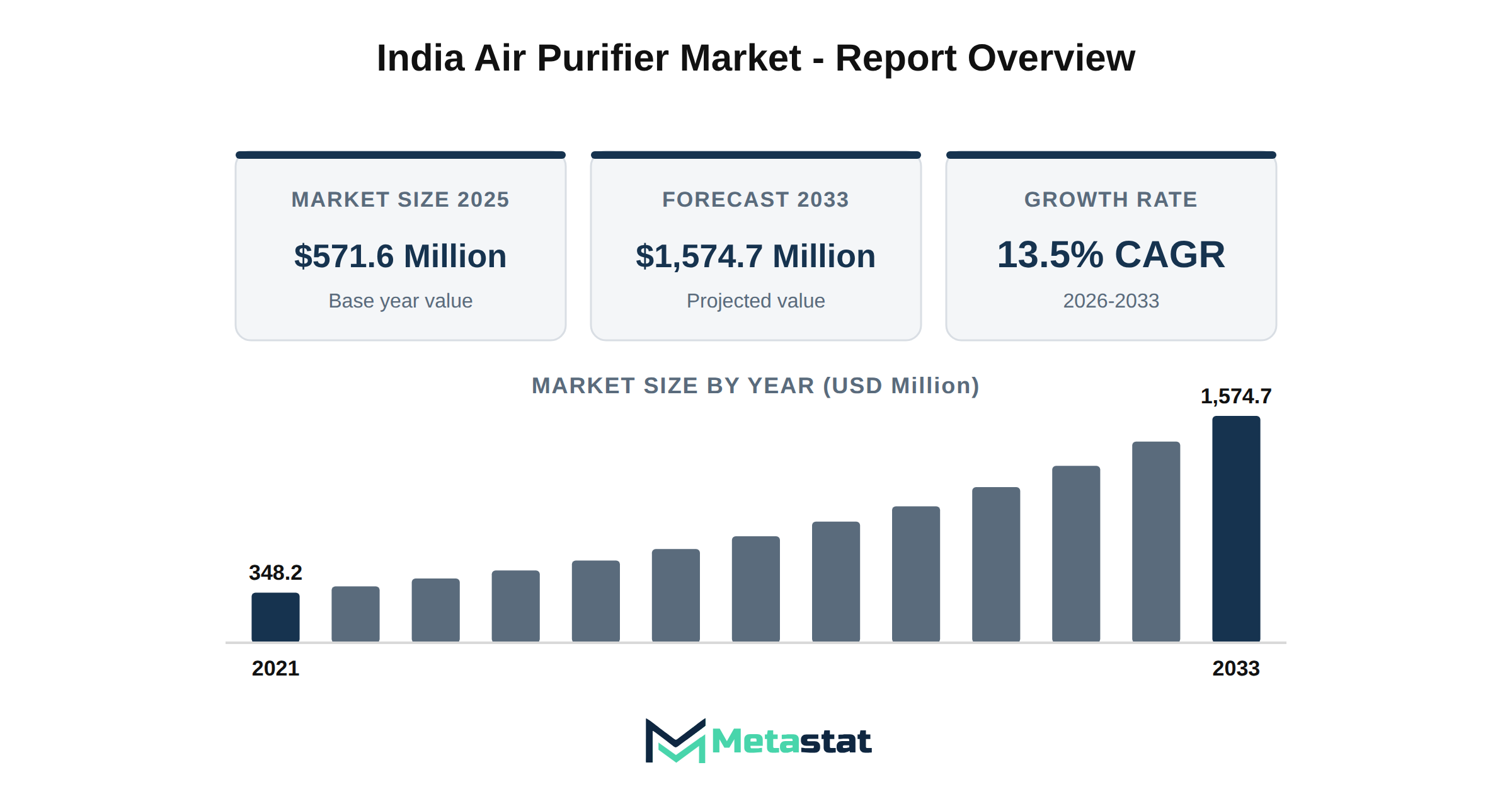
The India Air Purifier market covers devices designed to remove airborne pollutants, allergens, and particulate matter from indoor environments. Buyers invest in these products to address deteriorating air quality, growing health concerns, and the rising incidence of respiratory conditions linked to pollution exposure. Households, offices, and healthcare facilities represent the key buyer groups, each prioritizing clean air to improve well-being and meet safety expectations. Replacement of traditional ventilation with advanced purification systems drives ongoing purchases, reflecting heightened awareness of indoor air quality risks in urban and high-density regions.
Standalone room air purifiers hold the largest value share within the India Air Purifier market, accounting for 61.7 percent of the total. This segment outpaces others, including HVAC and in-duct solutions and personal or vehicle-specific devices, due to its accessibility, broad consumer appeal, and suitability for diverse residential and small commercial settings. The preference for standalone models is reinforced by their cost-effectiveness and ease of installation, making them the default option for first-time buyers and households seeking immediate improvements in indoor air conditions.
Growth is primarily driven by heightened public concern regarding air pollution and its impact on health, prompting a shift toward proactive air management in daily life. Urbanization and increased reporting of air quality indices stimulate demand, particularly among urban residents and commercial operators. The northern region of India stands out with the largest share, reflecting higher pollution levels and a concentration of affluent buyers willing to prioritize air quality solutions.
Consumers in India have become increasingly conscious of the health risks posed by indoor air pollution, leading to a shift in purchasing priorities. Air purifiers now serve not only allergy and asthma sufferers but have expanded into general household and workplace use. Buyers allocate more budget to these products to address the rising prevalence of respiratory conditions, particularly in urban areas where air quality is frequently compromised. The expanding product range - from compact personal units to advanced integrated systems - enables households, corporate offices, and healthcare facilities to tailor solutions to specific environmental and health requirements.
Standalone room air purifiers account for the most value among product segments, reflecting strong demand from residential and small commercial buyers. This segment held a 61.7% share, significantly higher than HVAC and in-duct solutions or personal and vehicle air purifiers. The preference for standalone devices is reinforced by their ease of installation, immediate efficacy, and suitability for apartments and small offices, which represent a large portion of urban real estate in India. Other segments, including wearable and vehicle purifiers, have registered growth but remain smaller in absolute market value.
The primary growth driver for the market is heightened awareness of the adverse effects of poor indoor air quality, supported by frequent public health advisories and media coverage. Northern regions, where air quality indices frequently spike during post-monsoon and winter months, represent the largest share of demand. This concentration of demand is tied to both the severity of local pollution and higher urban population density, leading suppliers to prioritize product launches and marketing initiatives in these cities.
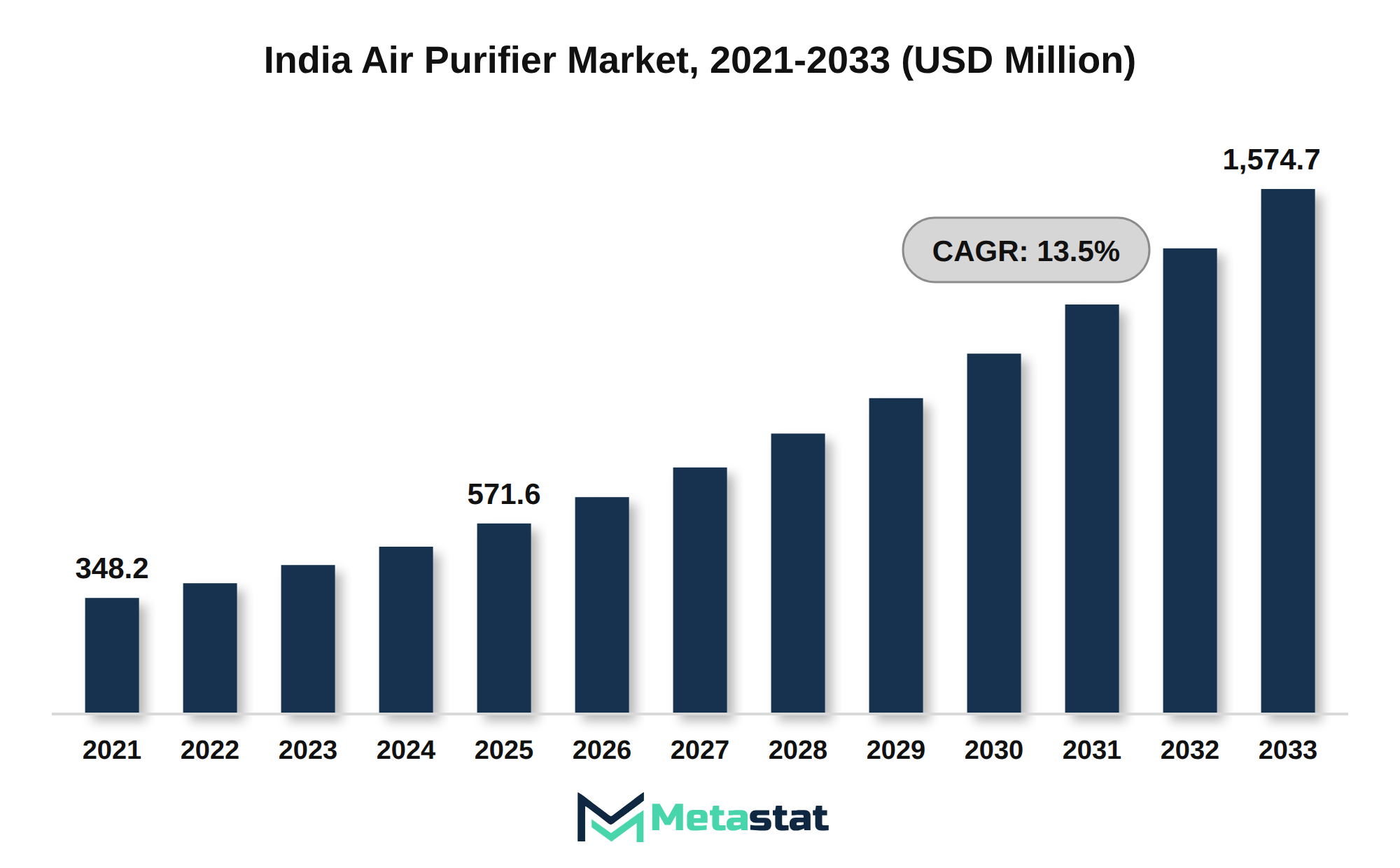
Tier-1 metro households in India are transitioning from short-term smog defense toward a consistent focus on indoor air quality management. This shift is driven by heightened consumer awareness about the health effects of particulate matter and volatile organic compounds, which linger indoors throughout the year rather than only during peak pollution months. Standalone room air purifiers are at the center of this behavioral change, now the preferred solution for urban households that experience chronic exposure to indoor air contaminants. In 2026, the standalone room air purifier segment is estimated to generate USD 396.8 million, reflecting the steady demand among metropolitan consumers who seek year-round protection.
Manufacturers are responding by emphasizing devices with continuous air quality monitoring, smart connectivity, and robust HEPA-based filtration. These features cater to buyers prioritizing real-time data and remote management, shifting the conversation away from temporary relief during smog periods toward integrated wellness solutions for everyday living. Product differentiation is increasing, with brands focusing on advanced features tailored to urban lifestyle requirements. This evolution in consumer expectations is shaping inventory strategies, pricing models, and after-sales service approaches, while manufacturers compete for retention in a segment where repeat purchase and upgrade cycles are lengthening. Manufacturers are recalibrating their value proposition to capture sustained household investment rather than episodic, crisis-driven demand.
Buyers in the India Air Purifier market are prioritizing devices with hybrid HEPA and activated carbon filtration systems, reflecting heightened sensitivity to both PM2.5 particulate pollution and volatile organic compounds (VOCs) in urban and semi-urban environments. Purchasing decisions increasingly hinge on the presence of advanced filtration, with demand strong among residential customers and institutional buyers seeking assurance of comprehensive removal of both fine particles and gaseous pollutants in a single device. Hybrid systems, which combine mechanical HEPA filtration and molecular-level carbon adsorption, offer a unique value proposition compared to single-technology devices, particularly in settings where the pollutant mix varies throughout the year.
HEPA and mechanical filtration devices are prominent in the India Air Purifier market, with this segment projected to reach USD 555.4 million by 2033. The preference for hybrid models encourages manufacturers to structure their pricing around premium features, often positioning these devices above conventional air purifiers in the residential and corporate procurement channels. While upfront prices are higher, institutional buyers and affluent households pay for longer filter lifecycles and enhanced removal of both particulates and VOCs, reducing ongoing maintenance costs and improving perceived value. This shift in purchasing behavior supports premiumization and justifies ongoing investment in product development focused on advanced filtration configurations, influencing both average selling price and revenue potential for suppliers throughout the forecast period.
The rapid expansion of smart commercial air purification solutions within Indian healthcare, hospitality, and co-working environments reflects a shift in institutional procurement priorities toward connected and technologically advanced systems. Facilities management teams within these sectors require filtration, monitoring, and operational control that integrate seamlessly with existing infrastructure and respond adaptively to fluctuating occupancy and air quality challenges. Wi-Fi-enabled air purifiers, projected to reach USD 581.4 million by 2033, represent the most prominent connected segment, with sustained growth driven by commercial buyers prioritizing data-driven, remote-controlled air quality management.
Across hospitals, hotels, and flexible workspaces, demand for HVAC and in-duct air purifiers is rising, with the segment expected to reach USD 290.1 million by 2033 and outpace standalone units in growth rate. These buyers select smart-enabled purification for its ability to support larger, multi-zone spaces and to automate air quality interventions based on real-time sensor feedback. Co-working operators and hospitality chains invest in these solutions to improve occupant confidence and maintain regulatory compliance, while healthcare providers focus on infection control and particulate removal in high-footfall and sensitive clinical areas. The commercial consequence is an upswing in specification complexity, premium product adoption, and long-term contracts for connected platforms, strengthening supplier relationships and supporting sustained revenue growth in institutional channels.
HEPA and mechanical filtration technologies deliver the highest efficacy against severe winter air pollution in India, a period when particulate concentrations surge to hazardous levels. Fine particulate matter (PM2.5 and PM10) dominates the pollution profile during winter, driven by a combination of crop residue burning, urban emissions, and weather inversions. HEPA filters are engineered to capture fine airborne particles, targeting the specific health risks that intensify during these conditions. In the India Air Purifier market, HEPA and mechanical filtration technology accounted for USD 264.9 million in 2026, reaching USD 555.4 million by 2033, reflecting sustained preference among buyers facing seasonal pollution peaks.
Activated carbon and molecular filtration technologies support the removal of gaseous pollutants, including volatile organic compounds and odors, but their commercial adoption in the India Air Purifier market remains more limited, at USD 317.8 million by 2033. Demand for ultraviolet-C (UV-C) and photocatalytic purification is rising, with a CAGR of 15.3 percent, yet these solutions address microbial contaminants rather than the concentrated particulate matter characteristic of winter months. The operational performance of HEPA and mechanical filtration translates into higher price tolerance among residential and institutional buyers directly affected by visible smog and health advisories during severe air quality episodes. Manufacturers prioritizing advanced HEPA-based systems gain commercial advantage by aligning their product portfolios with peak seasonal demand cycles, reinforcing their position in the India Air Purifier market.
Rising awareness of in-cabin air pollution is driving demand for dedicated vehicle air purifiers among urban commuters and city car owners. Traffic congestion and prolonged exposure to vehicular emissions in India’s largest cities have led buyers to seek portable filtration solutions tailored for automotive environments. The vehicle air purifiers segment reached a 3.8% share of overall revenue, indicating growing adoption of compact and vehicle-specific units. Suppliers targeting this segment are responding with models optimized for particulate and gaseous pollutant removal, addressing both daily commutes and longer journeys through polluted corridors.
This shift in purchase behavior is influencing average selling prices and product innovation cycles. Intensifying urban transportation patterns are attracting new entrants focused on mobility-integrated designs, further expanding the addressable urban consumer base and reinforcing recurring replacement demand.
Price sensitivity in the residential segment restricts broader penetration across Indian households. Premium standalone room air purifiers, which account for 61.7% of the India Air Purifier market’s unit share, carry an upfront cost that outpaces many families’ discretionary spending priorities. This dynamic slows uptake in Tier-2 and Tier-3 cities, where buyers opt for delayed purchases, smaller unit volumes, or lower specification products. Despite rising awareness of indoor air quality, consistent replacement of filters and maintenance costs introduce further financial hurdles. Market expansion outside major metros proceeds at a slower pace, limiting both volume and value growth for suppliers focused on residential buyers. The market’s ability to reach broader demographics depends on either ongoing cost rationalization or new financing models that align with household budgets.
Rising supplier cost pressure in the India Air Purifier market primarily stems from the import dependence on critical components, including high-performance filters and electronic sensors. Many local manufacturers rely on imported HEPA media, activated carbon beds, and precision air quality sensors, which are often subject to currency fluctuations and import duties. This dependency raises material costs, reducing profit margins and limiting pricing flexibility for suppliers. In response, several Indian suppliers have shifted procurement strategies, seeking partnerships with domestic component manufacturers and investing in localized filter assembly. These approaches support greater cost control and operational resilience, although initial investments and quality stabilization present short-term challenges. The market continues to experience volatility in supplier margins, particularly when global supply chains tighten or raw material prices surge unexpectedly.
Educational institutions represent a concentrated opportunity for suppliers targeting accelerated expansion in the India Air Purifier market. This end-use segment is projected for the highest compound annual growth rate among all categories, reaching 16.1% through 2033. Demand in this channel is supported by heightened concern over children's respiratory health and enforcement of indoor air quality standards in schools and colleges. Institutions face regulatory and reputational pressures to deliver safer indoor environments, particularly in regions affected by seasonal pollution spikes. Suppliers addressing this segment emphasize high-capacity, low-maintenance models with advanced monitoring features tailored for classrooms and communal spaces. Rising investment in educational infrastructure, together with parents and administrators prioritizing air quality, is expected to drive significant volume gains and an expanding share from this high-growth institutional buyer group.
The India Air Purifier market is segmented based on Product Type, Purification Technology, Connectivity, and End-Use.
Valued at USD 396.8 million in 2026 and projected to reach USD 871 million by 2033, this segment delivers a CAGR of 11.9%. Standalone room air purifiers serve individual homes, apartments, and small offices, providing localized air quality improvement for spaces where central systems are impractical or cost-prohibitive. In the market, this segment attracts urban consumers facing persistent particulate and allergen exposure in densely populated living environments. The primary driver is a rising preference for portable, easy-to-deploy purification solutions suited to rental properties or homes without ducted HVAC infrastructure. In comparison to HVAC and in-duct air purifiers, which advance at a faster CAGR of 15%, standalone models appeal to buyers seeking affordability, plug-and-play installation, and brand choice flexibility. Higher demand for this segment stems from households prioritizing immediate relief from poor indoor air quality during pollution spikes, supporting volume growth across Tier-2 and emerging metropolitan regions.
HVAC and In-Duct Air Purifiers segment is estimated to reach USD 290.1 million by 2033, at a CAGR of 15% during the forecast period. Demand from commercial buildings, corporate offices, and healthcare facilities that require centralized and large-scale air quality management drives adoption of these systems. Integration into pre-existing heating, ventilation, and air conditioning infrastructure appeals to buyers looking to address multiple zones or entire floors without deploying numerous standalone units. Compared with Standalone Room Air Purifiers, which grow at a CAGR of 11.9%, this segment expands more rapidly, reflecting institutional investment and regulatory pressure on corporate and healthcare environments to provide safer indoor spaces. Initial costs for installation and retrofitting are higher than for portable products, but buyers prioritize operational efficiency and reduced total cost of ownership over time. This dynamic positions the HVAC and In-Duct Air Purifiers sub-segment for faster volume and value growth, with commercial buyers increasing focus on centralized, scalable solutions.
Air Conditioner-Integrated and Retrofit Purifiers segment is expected to reach USD 202 million by 2033. Integrated and retrofit purifiers are designed for installation within new or existing air conditioning systems, targeting buyers who prioritize indoor air quality upgrades without replacing their HVAC infrastructure. Commercial buildings, retail complexes, and high-end residential projects are the primary adopters, driven by the appeal of centralized purification and streamlined building aesthetics. The ability to retrofit into both ducted and split systems enables facility managers and developers to improve occupant safety standards, especially in urban settings where outdoor air quality concerns persist throughout the year. Unlike standalone room air purifiers, which have a larger installed base, integrated solutions typically attract higher per-unit prices and are selected for their ability to deliver discreet purification at scale. Within the Product Type segmentation, this segment is positioned between standalone purifiers and HVAC in-duct systems, with demand fueled by the growing emphasis on smart infrastructure in metro and Tier-2 cities. Building specifications in India are evolving to include integrated wellness solutions, supporting this transition.
Personal and Wearable Air Purifiers segment is projected to grow at a CAGR of 15.8% during the forecast period. These compact devices are designed for individual use in transit, at workplaces, and in densely populated urban environments, where consumers seek continuous protection from particulate matter and airborne contaminants. The primary buyers include frequent commuters, office professionals, and urban residents who face higher exposure to outdoor and indoor pollutants during daily activities. Rising consumer mobility and increased attention to personal health have accelerated adoption, since these purifiers offer portability unavailable in larger installations. Compared to Standalone Room Air Purifiers, which grow at a CAGR of 11.9%, this segment expands at a faster rate, reflecting a shift in the market toward on-the-go air quality solutions. Price points remain more accessible than HVAC-integrated systems, drawing a younger, convenience-oriented demographic. This change in purchasing behavior supports higher volume growth and positions the segment to drive rapid innovation in portable purification solutions.
Air purification devices tailored for vehicles are designed for installation in passenger cars, commercial vehicles, and taxis to mitigate exposure to pollutants including PM2.5, volatile organic compounds, and allergens during commutes. Higher adoption is evident among urban consumers, ride-hailing service operators, and families in metros facing chronic outdoor pollution and traffic congestion. Purchases are influenced by acute health concerns linked to in-cabin air quality. These products differ from standalone room or HVAC-integrated units by focusing on compactness, portability, and compatibility with diverse vehicle interiors. Compared with segments including standalone room air purifiers, vehicle air purifiers reach a smaller share, reflected in their 3.8% contribution to the India Air Purifier market. Constraints for this segment include cost-consciousness among mass-market vehicle owners and a perceived lack of necessity outside major pollution episodes. Suppliers targeting this niche often compete through innovations in filter miniaturization and plug-and-play installation, which distinguish offerings in the India Air Purifier market from larger fixed-location products.
Ceiling-mounted air purifiers and specialty portable purifiers serve highly specific requirements in environments with unique air quality challenges or where floor and shelf space is limited. This segment attracts buyers in sectors including specialty healthcare clinics, premium hospitality, and niche commercial venues seeking discreet or targeted air purification. Facility managers and architects select ceiling-mounted units for integration in retrofit projects and new construction where aesthetics and unobtrusive operation hold priority. Demand for specialty portable purifiers stems from use cases including mobile healthcare operations, compact workspaces, and event venues where flexibility and rapid deployment outweigh capacity. Compared to standalone room devices and in-duct solutions, this segment addresses buyers willing to pay a premium for adaptability or design-driven features, rather than broad coverage or lowest cost. In India, suppliers innovate in this segment by introducing compact, modular designs and advanced filtration options to appeal to discerning buyers, especially where installation footprints or architectural constraints limit standard models. While overall share remains smaller, the segment supports the market’s ability to reach underserved applications and premium demand pockets.
HEPA and Mechanical Filtration segment is valued at USD 264.9 million in 2026 and is projected to reach USD 555.4 million by 2033, at a CAGR of 11.2% during the forecast period. This segment is defined by the use of high-efficiency particulate air filters and related mechanical barriers, primarily adopted in urban residential environments and healthcare settings where demand for particulate removal is highest. In this segment, buyers are drawn by proven filtration capability against fine airborne particles, which is especially relevant for families and individuals impacted by persistent dust and construction pollution in major cities. HEPA and mechanical filtration delivers a slower CAGR compared to UV-C and Photocatalytic Purification, which is projected at 15.3%, indicating that price-sensitive or tech-forward buyers increasingly evaluate alternatives that promise lower maintenance or added germicidal benefits. Mechanical filter units tend to be positioned at a higher price point than ionization or basic molecular filtration, attracting buyers seeking assurance of visible filter-based capture rather than relying on chemical or electrostatic processes.
Activated Carbon and Molecular Filtration segment is estimated to reach USD 317.8 million by 2033, at a CAGR of 12.7% during the forecast period. Activated carbon technology is widely adopted for its ability to target volatile organic compounds, odors, and gaseous pollutants that conventional mechanical filtrations struggle to address. Buyers selecting this segment often include households with members sensitive to chemical irritants, urban offices located near traffic corridors, and healthcare environments prioritizing odor removal and improved indoor comfort. Persistent urban air pollution, which includes not only particulates but a broad range of chemical contaminants produced by vehicles, construction, and household activities, drives uptake. In the context of the market, this segment grows faster than HEPA and mechanical filtration, which has a CAGR of 11.2%. This growth differential reflects a buyer preference for filtration solutions that extend beyond particulate capture, particularly in urban zones with complex air quality challenges.
Ionization and Electrostatic Precipitation segment is expected to reach USD 146.6 million by 2033. This technology employs charged particles to remove airborne contaminants and is adopted in environments where particulate and microbial control are critical but minimal filter replacement is preferred. Buyers in this segment include industrial and commercial facility operators prioritizing reduced consumable costs and uninterrupted operation. Compared to HEPA and mechanical filtration, which is projected to reach USD 555.4 million by 2033 with a CAGR of 11.2%, Ionization and Electrostatic Precipitation serves users seeking alternative purification without frequent filter changes, though it grows at a slower rate. The segment is adopted in scenarios where maintenance access is limited or consumable costs are scrutinized. Regulatory scrutiny on ozone emissions and the perceived efficacy gap against fine particulates present barriers for faster expansion, shaping the trajectory of Ionization and Electrostatic Precipitation in this segment.
UV-C and Photocatalytic Purification segment is projected to grow at a CAGR of 15.3% during the forecast period. These purification technologies target removal of airborne pathogens, bacteria, and volatile organic compounds through ultraviolet germicidal irradiation and catalytic oxidation. Adoption rises among healthcare providers and occupants of high-density public spaces seeking reduced transmission risk from bioaerosols and surface contaminants. Demand for UV-C and photocatalytic solutions is driven by end users prioritizing enhanced disinfection in clinics, hospitals, and premium commercial premises, especially where chemical-free air treatment is required. The segment’s projected CAGR of 15.3% outpaces HEPA and Mechanical Filtration (11.2%) and Activated Carbon and Molecular Filtration (12.7%), reflecting stronger uptake among institutional and high-traffic buyers rather than cost-focused mass residential segments. Increased acceptance is supported by heightened infection control standards and the search for maintenance-friendly, low-chemical alternatives in this segment.
Biofiltration and plant-based purification systems use living plants and soil microbes to absorb and break down airborne contaminants, prioritizing natural remediation over mechanical or chemical filtration. In the India Air Purifier market, this segment attracts buyers in eco-conscious commercial spaces, green-certified offices, boutique hotels, and premium residential projects looking to combine air quality improvements with visible biophilic design elements. Adoption is driven by the increasing prominence of sustainable building certifications and a growing preference for chemical-free air purification solutions. Compared to HEPA and activated carbon technologies, biofiltration is differentiated by its low operational noise and added aesthetic value, but uptake remains limited due to more intensive space requirements and slower pollutant removal rates. While other segments in the India Air Purifier market are favored by buyers requiring immediate, high-efficiency particle or gas removal, biofiltration appeals to users who prioritize long-term environmental impact and indoor well-being over rapid throughput.
Hybrid multi-technology purification integrates two or more core filtration or air treatment processes, typically combining HEPA, activated carbon, ionization, or UV-C modules in a single unit. This approach appeals to buyers seeking comprehensive removal of particulates, odors, volatile organic compounds, and biological contaminants in environments with diverse air quality threats. Adoption is prominent among premium residential buyers, healthcare facilities, and select corporate offices that prioritize occupant health and are willing to invest in advanced solutions. Suppliers in the market differentiate hybrid offerings by positioning them above single-technology models on both capability and price. Compared with standalone HEPA or activated carbon units, hybrid systems address a broader spectrum of pollutants, which supports premium pricing and targets a distinct customer segment. The market is experiencing supplier-driven innovation in this category, with manufacturers integrating smart monitoring and automated control features to support higher perceived value and user convenience.
Plasma purification and nanofiber filtration introduce specialist approaches to air treatment, targeting ultrafine particles and airborne pathogens through advanced physical and chemical processes. These technologies find application among institutional buyers and premium residential users who require higher removal efficiency for challenging contaminants. Demand in this segment is often driven by heightened awareness of viral transmission and industrial pollutants, leading certain healthcare and laboratory environments to specify these solutions. In the India Air Purifier market, these technologies appeal to buyers seeking differentiation beyond conventional HEPA or activated carbon filters. However, adoption remains limited compared to segments with established multi-year performance data or wider price accessibility. Adoption barriers stem from both a higher upfront cost and a lack of standardized performance benchmarks, with user preference in the India Air Purifier market still weighted toward filtration types with broad consumer recognition. Where regulatory or occupational safety standards demand enhanced air quality, these purification methods serve a targeted, rather than mass-market, role.
Valued at USD 262.7 million in 2026 and projected to reach USD 427.7 million by 2033, at a CAGR of 7.2% during the forecast period, non-connected air purifiers appeal to buyers prioritizing simplicity, affordability, and ease of maintenance. Households and small businesses often select non-connected models to address localized air quality issues without the complexity or higher cost linked to Wi-Fi-enabled or IoT-integrated devices. Price sensitivity shapes this segment, with buyers weighing initial purchase and long-term filter replacement costs against feature-heavy alternatives. Compared to Wi-Fi-enabled air purifiers, which are projected to reach USD 581.4 million by 2033 at a 15.3% CAGR, non-connected units grow at a significantly slower pace, reflecting the accelerating preference for connected solutions among urban and tech-savvy consumers. Limited integration with smart home systems and the lack of real-time air quality feedback result in slower adoption among buyers seeking advanced monitoring, but sustained demand from cost-conscious users underpins steady value growth in this segment.
This segment primarily appeals to tech-forward residential buyers and urban professionals, who prioritize real-time monitoring, automation, and remote control through connected devices. These buyers are responding to heightened concerns over poor indoor air quality and the convenience offered by smart home integrations. The 15.3% CAGR for Wi-Fi-Enabled Air Purifiers makes it one of the fastest-growing connectivity segments, outpacing non-connected air purifiers, which are projected at a 7.2% CAGR over the same period. Bluetooth-enabled models remain limited by range and typically target smaller spaces or personal zones, while Wi-Fi-enabled units serve whole-home or multi-room environments and stand out for their strong compatibility with digital ecosystems. In this segment, rapid adoption is further supported by the growing penetration of smartphones and smart home platforms in urban centers, which reinforce demand for connectivity-centric solutions. These trends position Wi-Fi-Enabled Air Purifiers as a central driver of volume and value growth.
Bluetooth-Enabled Air Purifiers segment is expected to reach USD 112.4 million by 2033. These devices offer wireless control through smartphones and tablets, supporting users seeking accessible operation without dependence on Wi-Fi infrastructure. Adoption is strongest among young urban residents and renters who prioritize mobility and simplicity, reflecting a demand for flexible solutions in apartments, smaller office suites, and temporary workspaces. Compared with Wi-Fi-Enabled Air Purifiers, which are projected to reach USD 581.4 million by 2033, Bluetooth-enabled options address a different use case by providing localized connectivity rather than remote management or integration with broader smart home systems. This segment appeals to cost-sensitive buyers for whom price and ease of setup outweigh advanced features. However, the absence of network-wide integration restricts uptake among buyers who require centralized air quality monitoring or automation, making this sub-segment slower-growing than Wi-Fi-enabled models.
Projected to grow at a CAGR of 19.3% during the forecast period, voice assistant-enabled air purifiers integrate smart home technologies to deliver hands-free control over air quality functions. This segment finds its primary user base among urban households and technology-savvy professionals who prioritize convenience and easy integration with existing smart ecosystems. Adoption in this segment is propelled by the increasing penetration of connected devices and rising consumer expectations for automation in home appliances. In contrast to non-connected and Bluetooth-enabled units, voice assistant-enabled models offer more advanced interaction, which supports a higher price point and encourages early adoption among premium buyers. Manufacturers leverage compatibility with popular voice platforms to differentiate their products as the market shifts toward digitally connected solutions. The faster CAGR compared to Wi-Fi-enabled air purifiers, which are projected at 15.3%, demonstrates that demand for intuitive, fully integrated air management is accelerating more rapidly within this segment.
IoT-Integrated Air Quality Management Systems combine sensor-driven air monitoring with networked controls and centralized data analytics, enabling real-time adjustments to indoor air purification processes. Facilities management firms and large enterprises deploy these systems to automate air quality maintenance across campuses, offices, and public infrastructure. Demand in this segment is driven by the prioritization of continuous, automated environmental compliance and the operational efficiencies achieved through remote diagnostics and analytics. Unlike Wi-Fi- or Bluetooth-enabled air purifiers, which typically serve residential or small-scale commercial buyers, IoT-integrated platforms are adopted by institutions seeking comprehensive, facility-wide oversight. Compared with non-connected purifiers, these systems require higher upfront investment, but buyers value the ability to track and optimize air quality across multiple locations. Rising adoption of building management platforms in India supports the trend toward scalable, centralized control for large properties. Product differentiation centers on interoperability with other smart building technologies, which sets the segment apart from simpler connected units in this market.
Urban households and multi-family residences drive demand for air purification devices to address persistent indoor pollutants and airborne allergens. Buyers in this segment typically prioritize solutions that balance affordability with advanced filtration to meet daily home air quality needs. Shifts in consumer behavior, including heightened health awareness and increased time spent indoors, have strengthened adoption, especially in metropolitan areas with higher pollution levels. Purchase decisions often center on product features including HEPA filtration and multi-stage purification, distinguishing residential buyers from commercial or institutional end-users who weigh regulatory compliance or large-area coverage. Compared to offices and corporate facilities, residential demand is influenced more by seasonal air quality concerns and the presence of children, elderly, or individuals with respiratory sensitivities. The segment reflects a broader price range and greater diversity of unit size, with buyers evaluating ongoing maintenance costs and ease of use against upfront investment. Adoption patterns differ from educational institutions and healthcare facilities, since households generally seek compact units tailored for bedrooms and living spaces rather than centralized or high-capacity systems.
Shared and leased office environments in India increasingly deploy air purification systems to support employee well-being and meet rising expectations for indoor air quality. Facility managers and corporate procurement teams specify these solutions for open-plan offices, meeting rooms, and collaborative spaces where occupancy density fluctuates throughout the day. Heightened awareness of airborne contaminants after recent health events has accelerated specification standards in this segment, with employers prioritizing devices that combine high-efficiency filtration with low operational disruption. Compared with residential buyers, commercial purchasers evaluate not just filtration efficacy but lifecycle cost, integration flexibility, and certification for occupational health compliance. Across end-use segments, offices and corporate facilities stand apart by integrating purification solutions into both new and retrofitted workspaces, and by favoring products that manage both particulate and gaseous pollutants in high-traffic settings. Adoption is supported by a regulatory environment that raises air quality benchmarks for commercial properties, while price sensitivity and the need for scalable solutions shape product selection in multi-tenant buildings.
In medical environments, air purification systems are procured to support patient safety, infection control, and maintain stringent indoor air standards. Healthcare administrators, hospital facility managers, and laboratory operators are primary buyers, prioritizing systems with proven filtration efficacy and certifications relevant to healthcare settings. Demand in this segment is influenced by the heightened sensitivity to airborne pathogens and particulate contaminants that pose risks to immunocompromised patients and staff. Unlike residential or office buyers, decision-makers in healthcare settings often specify multi-stage filtration, including HEPA or advanced molecular technologies, to address regulatory directives and clinical protocols. Price sensitivity tends to be lower, with purchase decisions driven by clinical requirements, compliance pressures, and risk mitigation rather than consumer preferences. Adoption barriers include the cost associated with high-specification devices and the integration of purification systems with existing HVAC infrastructure. Compared to educational institutions, where adoption accelerates at a faster rate, healthcare facility demand reflects the unique operational and regulatory priorities that shape procurement strategies in this end-use segment.
Primary and secondary schools, colleges, and universities in this segment deploy air purification devices to mitigate the impact of urban air pollution on student and faculty health. Education boards and institutional administrators drive procurement in response to rising awareness of indoor air quality and health-linked absenteeism. Compared to other end-use groups, buyers in education prioritize scalable systems that address classroom density and fluctuating occupancy, seeking solutions that balance cost controls with performance rather than premium features. Adoption in this segment is strongly influenced by calls for safer learning environments during high-smog periods, with decision-making driven by parent advocacy and periodic government advisories. Distinct from the residential segment, where purchase is often individual, procurement in education is typically centralized and subject to budgetary cycles. Barriers emerge around upfront system costs, particularly for institutions in lower-income regions, which limits penetration compared to commercial or healthcare settings. Despite these constraints, the segment demonstrates unique sensitivity to policy changes and public health campaigns, setting it apart from other end-use categories.
Industrial complexes, manufacturing plants, and transportation facilities deploy air purification solutions to mitigate exposure to process emissions, fine particulates, and chemical vapors where large volumes of people or goods move through enclosed environments. Factories and railway stations account for a distinct buyer group in this category, prioritizing equipment that integrates with HVAC infrastructure or withstands harsh operational conditions. Demand is triggered by compliance with sector-specific air quality standards and requirements to uphold worker safety or passenger health in transit environments. Compared to segments serving residential or office settings, buyers in this group often specify high-capacity filtration and robust construction, leading to different product selections and procurement cycles. Barriers to broader adoption include longer replacement intervals for industrial equipment and budget constraints in public transportation projects. These factors distinguish adoption patterns from faster-growing segments including educational institutions, where consumer rotation and public health awareness accelerate device turnover. Product differentiation is shaped by the need for custom engineering and durability in high-traffic or production-heavy venues, setting this segment apart within the end-use mix.
Competition in this sector centers on product innovation, price positioning, and feature-rich portfolios targeting a wide user base, from individual households to institutional buyers. Buyers differentiate products by filtration efficiency, connectivity, and after-sales support. Companies including Dyson, Xiaomi, Eureka Forbes Limited, LG Electronics India Limited, SHARP Business Systems (India) Pvt Ltd, and Coway emphasize different value propositions. Dyson focuses on advanced purification technologies and premium design, attracting urban consumers who prioritize performance and aesthetics. Xiaomi offers competitively priced models with smart connectivity, targeting cost-sensitive buyers seeking value and integration with smart home ecosystems. Eureka Forbes Limited addresses the need for comprehensive after-sales service, appealing to buyers valuing maintenance and support. For the market to reach USD 1,574.7 million, broader adoption among institutional and commercial sectors is required, particularly in offices and healthcare facilities where indoor air quality standards are tightening. Manufacturers are investing in R&D to address new air quality concerns and to differentiate their offerings in a crowded field. A principal risk remains price sensitivity among residential buyers, which could slow penetration of higher-priced or multi-technology solutions in price-conscious segments.
The report provides comprehensive coverage including key company market share, revenue, and position or ranking, key market players, full in-depth analysis of the parent industry, industry statistics, important changes in market and its dynamics, segmentation details of the market, historical, on-going, and projected market analysis, assessment of niche industry developments, market share analysis, key strategies of major players, company profiles of key players, unique selling propositions of key market players, emerging segments and regional growth potential, key strategic recommendations, and competitive benchmarking.
WHAT REPORT PROVIDES
Frequently Asked Questions
This outlook captures the aggregate value across all end-use categories, reflecting broad adoption spanning residential, commercial, healthcare, educational, and specialty environments. Buyers in this segment range from households to institutional facility managers, each prioritizing air quality improvement in their respective settings. Compared with segments including residential and offices, which are forecast individually, the composite future outlook rises at a CAGR of 13.5%, balancing both faster-growing groups including educational institutions and slower-expanding areas including non-connected or basic filtration product types. Growth in this forecast is influenced by heightened consumer health awareness and regulatory emphasis on indoor air quality standards. The outlook differs from specialized segments by aggregating both high-volume and high-growth categories, producing a blended rate that smooths out the peaks seen in faster-adopting institutional users. Slower uptake in price-sensitive or rural settings remains a limiting factor, creating disparity with rapid expansion in metro and urban commercial zones.
Market size is expected to reach USD 1,574.7 million by 2033 if three core developments materialize. First, institutional purchasing in sectors including education and healthcare sustains double-digit CAGR growth, reinforcing baseline demand across multiple end-uses. Second, technology upgrades - particularly in advanced filtration and smart connectivity - shift demand toward higher price points and recurring replacement cycles. Third, urban consumers drive volume through increased awareness and access, supported by product availability in both premium and value segments. The primary risk to this forecast is income sensitivity among rural and lower-middle urban buyers, which restricts penetration outside affluent or corporate settings and could dampen overall expansion if not addressed by affordability initiatives or policy support.
This market sees competition focused on product innovation, price positioning, and after-sales service differentiation. Buyers weigh filter replacement costs, smart feature integration, and brand reputation when selecting suppliers. Dyson emphasizes high-performance filtration and premium engineering, targeting the upper-market urban consumer. Xiaomi leverages affordable, connected air purifiers to appeal to digitally engaged value buyers. Eureka Forbes Limited and KENT RO Systems Ltd. both supply broad portfolios for households and small offices, highlighting cost efficiency and nationwide service networks. Coway and LG Electronics India Limited position offerings on advanced filtration and compact design for urban dwellings. Samsung India Electronics Pvt. Ltd. integrates purifiers with smart home ecosystems, matching demand for convenience among tech-savvy users.
Report Coverage
This section provides a forward-looking analysis of end-use segments, focusing on the interplay between institutional, residential, and commercial demand drivers. It evaluates how technology adoption, urbanization, and income distribution shape the projected uptake across categories, and interprets competitive positioning based on product differentiation and service strategies. The analysis identifies emerging opportunities in educational and healthcare settings, assesses the impact of affordability constraints, and outlines the implications for supplier investment and product development.
Frequently Asked Questions
How big is the Air Purifier market?
Market size is USD 571.6 million in 2025.
What is the Air Purifier market growth rate?
The CAGR is 13.5% from 2026 to 2033.
Which type segment leads the Air Purifier market?
Standalone Room Air Purifiers account for the highest share at 61.7%.
What are the key drivers for the Air Purifier market?
Rising consumer awareness regarding air quality and increasing adoption of advanced filtration and smart connectivity technologies both drive demand.
What factors are restraining the Air Purifier market growth?
High price sensitivity in non-metro and rural regions limits adoption. Low awareness outside Tier 1 cities presents a challenge.
What factors are favoring adoption in this industry?
Expanding urbanization and growing institutional investment in air quality improvement both create new opportunities for suppliers. Premium device launches targeting higher-income consumers and increased public sector procurement broaden the addressable market.
Who are the key players in the Air Purifier Market?
Dyson, Xiaomi, Coway, LG Electronics India Limited, Samsung India Electronics Pvt. Ltd., Eureka Forbes Limited, and KENT RO Systems Ltd. manufacture and supply core product lines in this sector.
Samsung India Electronics Pvt.
Report Coverage
Frequently Asked Questions
Key segments in this market address distinct end-use environments through tailored air purification solutions. Each segment targets a primary application, ranging from residential living spaces and corporate offices to specialized use in healthcare, education, or transportation. Usage trends and purchase triggers differ widely by segment. Residential buyers focus on compact units that control particulate pollution indoors, while office and institutional buyers prioritize advanced purification and larger coverage areas. Healthcare settings require medical-grade solutions designed to meet infection control standards. Demand in educational institutions is projected to accelerate faster than in other end-use segments, driven by a growing emphasis on safeguarding student health. Product price, certification, and ease of maintenance are primary decision factors, with institutional and healthcare purchases reflecting stricter performance and compliance criteria. Compared to standalone residential units, larger facility and specialty applications exhibit higher average selling prices and lower sales volumes, with procurement cycles shaped by regulatory or organizational mandates. Buyers in transportation and industrial settings seek robust, high-throughput systems that address unique air quality challenges not present in home or office environments.
Product type segmentation encompasses standalone room air purifiers, HVAC and in-duct air purifiers, air conditioner-integrated and retrofit purifiers, personal and wearable air purifiers, vehicle air purifiers, and specialty models for niche applications. Standalone room air purifiers account for the largest installed base in this group, frequently chosen by households and small offices for targeted room-level filtration and user-driven operation. HVAC and in-duct systems serve commercial buildings and large facilities, integrating directly with centralized ventilation and delivering whole-building coverage. Air conditioner-integrated and retrofit units are adopted by buyers seeking to upgrade existing cooling infrastructure with improved air quality, appealing to urban professionals and institutions managing legacy assets. Personal and wearable devices attract commuters and individuals in high-exposure zones, while vehicle air purifiers address concerns among frequent travelers and car owners. Growth rates differ: personal and wearable air purifiers and HVAC-integrated systems are projected to expand faster than standalone units, supported by rising awareness of personal health risks and regulatory attention on indoor air quality standards in work environments. Technology adoption, initial setup cost, and compatibility with building systems mark clear distinctions between product types, shaping both user uptake and long-term replacement cycles.
Standalone room air purifiers are portable units designed for use in individual spaces, including bedrooms, living rooms, or small offices, and are favored by residential buyers and occupants of rented properties. These devices appeal to price-sensitive consumers seeking an immediate solution to air pollution without permanent installation. Demand in this segment is driven by urban households responding to seasonal spikes in particulate matter and by consumers prioritizing ease of use and flexibility. Compared to HVAC and in-duct purifiers, standalone units require lower upfront investment and offer greater portability, making them accessible to a broad demographic. However, they typically cover smaller areas and are less suited for large-scale or commercial settings. Standalone room products deliver higher filtration capacity than personal and wearable air purifiers and serve primary roles in supporting family health and comfort. Adoption accelerates when awareness initiatives highlight health risks and product affordability rises, distinguishing this segment from more specialized or integrated alternatives.
Integrated directly into central air handling systems, HVAC and in-duct air purifiers serve offices, corporate facilities, hospitals, and upscale commercial environments where maintaining consistent air quality across large floor areas is a regulatory and operational priority. Buyers in this sub-segment typically include facility managers and institutional decision-makers who commit to higher capital expenditure for building-wide filtration. The decision to invest in these solutions is driven by the requirement to achieve uniform particulate control and odor management throughout multi-zone buildings, beyond what standalone or portable options deliver. This segment differs from standalone room air purifiers by targeting centralized control, retrofitting into existing ductwork, and providing tailored solutions for high-occupancy or sensitive facilities. Adoption is further influenced by the increasing stringency of indoor air quality standards, particularly in sectors where compliance impacts business continuity or public health outcomes. Compared to personal or portable units, in-duct systems attract users seeking operational efficiency over individual room control, supporting longer service intervals and reduced manual intervention.
Retrofitted into existing air conditioning units, air conditioner-integrated and retrofit purifiers extend particulate and gaseous filtration to environments where standalone units do not fit or where central HVAC systems are absent. Homeowners in apartments, small offices, and retail outlets use these solutions to address air quality challenges without installing entirely new purification infrastructure. Adoption is driven by owners seeking a cost-effective upgrade to air conditioning systems, particularly in areas where space constraints or architectural restrictions limit larger installations. This segment stands out for its retrofit approach, enabling buyers to enhance indoor air quality with minimal disruption to existing layouts. Compared to standalone room purifiers, these products target buyers prioritizing integration and discrete operation over portability. Large-scale infrastructure requirements are not present in this segment, which differentiates it from HVAC and in-duct solutions that often involve higher capital outlay and are designed for larger, centrally managed spaces. Product selection in this segment is influenced by ease of installation and compatibility with popular AC brands, since buyers seek to maximize the value of already-installed cooling assets while improving filtration performance.
Ultra-portable personal and wearable air purifiers target individual users seeking on-the-go protection from airborne pollutants. Commuters, frequent travelers, and urban professionals drive demand, prioritizing lightweight formats and discreet operation over coverage area. Increased awareness surrounding health risks linked to air pollution and heightened sensitivity to allergens support uptake, especially in cities with high particulate concentrations. Compared with other end-use segments, this category exhibits distinct buyer behaviors, with purchases influenced by acute exposure concerns and lifestyle needs rather than a focus on room-scale air improvement. Unlike larger units adopted by residential or institutional buyers, wearable devices generally command a premium on a per-user basis due to miniaturization and battery requirements, yet their total cost remains accessible for individual consumers. Adoption in this segment runs ahead of vehicle air purifiers and specialized portable formats, driven by strong urban demand and the emergence of new product lines emphasizing portability and fashion integration. Compact design, ease of use, and personal health messaging differentiate these devices from both traditional room units and large-scale facility solutions.
Compact units designed specifically for in-vehicle environments, vehicle air purifiers target private car owners, fleet operators, and commercial transport providers seeking to address airborne particulates and contaminants during transit. These products are selected primarily by urban commuters and families concerned about frequent exposure to traffic emissions and dust. Recent interest in this segment accelerated following heightened public attention to air quality and health, particularly during peak pollution seasons. Compared to standalone room or HVAC-integrated models, vehicle air purifiers reach a different buyer profile, focusing on portability, quick installation, and device compatibility with vehicle interiors.
Adoption depends on price sensitivity and perceived effectiveness within the confined space of a car, where buyers expect rapid removal of smoke, allergens, and odors. While price points for these devices generally fall below those for room-based solutions, the segment remains smaller in volume and faces substitution from simple cabin air filters already equipped in many vehicles. Limited awareness and the perception of vehicle air purifiers to be a discretionary upgrade restrict broader uptake, even though high-profile urban pollution incidents occasionally trigger spikes in demand from health-conscious consumers.
Ceiling-mounted air purifiers and specialty portable purifiers address environments where permanent installation or conventional floor-based units are impractical or restricted. Buyers for this segment include specialized commercial facilities, boutique hospitality spaces, and healthcare settings with non-standard layouts that require targeted solutions. Higher customization and integration complexity often distinguish these products from larger, fixed systems, resulting in a smaller share among end-use categories but allowing suppliers to capture premium pricing. Adoption is influenced by the need for discreet, space-efficient purification in architecturally constrained interiors and by regulatory or internal air quality mandates that standard categories do not fully address. Compared to personal or vehicle air purifiers, buyers of these units typically place greater emphasis on installation aesthetics and the ability to meet unique airflow patterns. Integration with building management systems is less prevalent in this segment, and purchasing decisions tend to favor performance specification and form factor over connectivity features. This niche appeals to facility managers and operators seeking tailored air quality interventions beyond the capabilities of standardized portable or in-duct options.
Purification technology segmentation covers a spectrum of air cleaning methods, including HEPA and mechanical filtration, activated carbon and molecular filtration, ionization and electrostatic precipitation, UV-C and photocatalytic purification, biofiltration and plant-based purification, hybrid multi-technology purification, and others including plasma purification and nanofiber filtration. Demand in this segment is driven by buyers seeking targeted removal of particulates, allergens, bacteria, viruses, and chemical pollutants. Institutional buyers including hospitals and laboratories prioritize advanced purification technologies for environments where infection risk and air quality compliance are critical, while commercial and high-end residential users often select solutions based on filtration effectiveness and maintenance costs. HEPA and mechanical filtration are generally adopted for robust particulate control, whereas activated carbon-based systems are chosen for enhanced removal of gases and odors. UV-C and photocatalytic purification gain traction in healthcare settings where microbial deactivation is required, and hybrid solutions attract buyers wanting multi-layered protection. This segment stands out from product type segmentation in that purchasing decisions hinge on specific contaminant profiles and regulatory requirements, not solely on room size or installation format. Adoption barriers include higher upfront costs for advanced or multi-stage technologies and limited awareness of newer filtration methods outside urban centers.
High-efficiency particulate air (HEPA) and mechanical filtration systems are specifically engineered to capture fine particulate matter, allergens, and airborne pathogens from indoor environments. Buyers in healthcare facilities, corporate offices, and high-density residential complexes prioritize these solutions, driven by the requirement for reliable removal of PM2.5 and bio-contaminants. HEPA and mechanical filtration stands apart from other purification technologies by focusing on particle filtration through dense fiber arrangements without introducing chemical or ionizing agents, which makes them preferred in settings where air quality certification and safety are central considerations. Compared to alternatives like ionization, which lack clear regulatory or medical endorsement, HEPA and mechanical solutions achieve deeper market penetration among institutions sensitive to regulatory compliance and occupant health. Decision-makers in this segment emphasize long-term operating cost, filter replacement intervals, and proven performance under sustained usage. Adoption is influenced by the growing presence of patients, employees, or residents with allergies or respiratory illnesses, fueling ongoing investment in robust particulate filtration over purely molecular or hybrid approaches.
Activated carbon and molecular filtration removes volatile organic compounds, odors, and certain gases from indoor spaces by adsorbing them onto highly porous surfaces. Commercial office buildings, hospitals, and premium residential projects use this filtration method to address airborne chemical pollutants that particulate filters do not capture. Demand is shaped by rising concerns over toxic gases and persistent odors in urban environments, with corporate and hospitality buyers prioritizing air systems that address both particulate and molecular-level pollutants. Compared to HEPA and mechanical filtration, activated carbon and molecular filtration focuses on chemical contaminants rather than fine dust or allergens, appealing to buyers managing air quality for sensitive occupants and high-traffic facilities. Adoption is particularly supported by urban institutional buyers who invest in advanced indoor air quality improvements to comply with stricter wellness standards or to differentiate their buildings. This segment stands apart from ionization and electrostatic precipitation by offering a non-ionic, passive removal process, attracting organizations where ozone generation or secondary emissions present a concern. Cost sensitivity remains higher among smaller enterprises, resulting in more frequent uptake by buyers for whom odor and chemical removal are business-critical.
Ionization and electrostatic precipitation systems deploy active ion generation or high-voltage electrostatic fields to remove airborne contaminants that standard mechanical filtration misses. These technologies are adopted by buyers prioritizing reduced filter replacement costs and the ability to address sub-micron particles, volatile organic compounds, and certain pathogens. Commercial office spaces, high-traffic public venues, and industrial environments where particulate and gaseous pollution converge are primary application zones for this segment. The push for lower ongoing maintenance and longer operational cycles often draws in organizations with large or complex facilities, where conventional filter-based solutions incur higher recurring expenses. In contrast to HEPA and mechanical filtration, which is supported by a CAGR of 11.2%, ionization and electrostatic precipitation do not always require regular physical filter changes, offering operational cost advantages. However, the adoption rate remains influenced by buyer concerns over the production of ozone and the verification of air quality outcomes, which restricts penetration among health-focused buyers or in settings with strict air quality compliance. This segment stands apart from faster-growing categories including UV-C and photocatalytic purification, which leverage their stronger growth profile by targeting institutional and healthcare settings that prioritize proven microbe inactivation over cost savings alone.
Ultraviolet-C (UV-C) and photocatalytic purification systems employ light-driven processes to neutralize airborne microbes and break down volatile compounds, often targeting settings where continuous pathogen control is critical. These solutions are adopted by buyers including hospitals, biotechnology labs, and high-traffic commercial premises that prioritize germicidal effectiveness beyond particulate filtration. Growth in this sub-segment is fueled by heightened concern over viral and bacterial transmission in densely occupied indoor spaces and the pursuit of advanced air hygiene protocols. UV-C and photocatalytic units are positioned distinctly from HEPA and mechanical filtration, which focus primarily on particle capture, and from activated carbon systems, which address chemical vapors and odors. While price points for UV-C and photocatalytic technologies typically exceed those for standard mechanical or molecular filters, buyers in medical and scientific applications justify the investment for the added antimicrobial performance. Adoption is further shaped by evolving public health advisories and workplace safety standards that encourage continual improvement in air sanitation technologies. Competitive differentiation rests on the proven efficacy of disinfection rates, consistency of performance in real-world use, and evidence of low byproduct generation, all of which are scrutinized by institutional procurement teams.
Plant-based biofiltration systems introduce living plants and soil-based media into indoor environments to absorb and break down airborne pollutants through natural biological processes. These solutions are favored by buyers who prioritize sustainability and natural aesthetics, including eco-conscious residential users, boutique hospitality operators, and wellness-focused commercial spaces. Interest in this approach stems from a desire for chemical-free air purification and added biophilic design benefits, attracting a niche but growing clientele. Unlike HEPA and mechanical filtration, which is selected for high-efficiency removal of fine particulates and pathogens, biofiltration is distinguished by low ongoing maintenance and the ability to degrade gaseous contaminants without generating filter waste. Adoption is influenced by perceptions of natural air quality improvement and lower operating costs over time, but limited technical certification and slower pollutant removal rates restrict uptake among large institutional buyers. Compared to faster-growing segments like UV-C and photocatalytic purification, biofiltration advances at a more gradual pace due to these technical and awareness barriers. Buyers in this segment frequently value wellness enhancement and environmental stewardship over regulatory compliance or maximal removal efficiency.
Hybrid multi-technology purification combines multiple filtration and contaminant removal processes within a single unit, often integrating mechanical, molecular, and advanced chemical or biological technologies. This configuration appeals to institutional buyers and premium residential users who require broad-spectrum protection against a wide range of pollutants, including particulates, volatile organic compounds, microbes, and allergens. Demand in this sub-segment is propelled by environments where single-technology solutions prove inadequate, especially in urban settings with fluctuating air quality and mixed sources of indoor pollution. Hybrid systems tend to be positioned at a higher price point compared to standard HEPA or activated carbon units, reflecting both their engineering complexity and value proposition for critical-use cases. Unlike segments focused solely on particulate or gas removal, hybrid multi-technology purification is differentiated by its adaptability to diverse contaminant profiles and preference among buyers seeking comprehensive indoor air management. Adoption is strengthened by heightened air quality awareness in sectors where occupant health or process integrity cannot be compromised, prompting a shift toward more advanced and integrated purification platforms.
Filtration solutions in the “Others (Plasma Purification, Nanofiber Filtration)” category address air quality challenges using advanced material science and electrochemical processes. These systems are selected by buyers operating in environments where ultrafine particulate control or specific sterilization needs are critical but standard HEPA, ionization, or carbon filters are not the preferred approach. Research institutions, niche manufacturing, and high-value asset protection settings form the main customer base for these technologies, prioritizing innovation and application specificity. Demand for plasma purification and nanofiber-based filtration is influenced by the pursuit of next-generation removal efficiency and reduced maintenance intervals. Unlike high-volume segments with established CAGRs, this group competes on functional differentiation rather than price or broad adoption. Adoption barriers stem from higher acquisition costs, specialized maintenance requirements, and limited end-user awareness compared to more mature filtration categories. These systems stand apart from HEPA and molecular filtration by offering solutions for contaminant classes or operational profiles where other methods underperform, attracting customers with unique technical requirements and willingness to trial emerging technologies.
Connectivity segmentation covers non-connected air purifiers, Wi-Fi-enabled air purifiers, Bluetooth-enabled models, voice assistant-enabled devices, and IoT-integrated air quality management systems. Buyers in this segment range from individual households to technology-focused commercial organizations seeking real-time monitoring, automation, and integration with smart home ecosystems. Demand is strongly influenced by a shift in consumer preference toward convenient, app-controlled devices and the adoption of smart infrastructure in urban residential and office environments. Wi-Fi-enabled air purifiers advance at a higher CAGR than non-connected models, reflecting the premium buyers place on remote monitoring and system integration capabilities. Voice assistant-enabled air purifiers, while newer, stand out with the fastest projected CAGR among connectivity types, driven by rising adoption of voice-activated smart appliances. In contrast, non-connected models appeal to cost-sensitive buyers or those in regions with limited digital infrastructure, typically at lower price points. This segment is distinguished by its focus on both enhanced user engagement and data-driven air quality management, setting it apart from non-connected alternatives where manual operation remains standard.
Manual air purifiers without connectivity are purchased by consumers who prioritize simplicity, privacy, or lower device cost over digital features. These units appeal to buyers seeking basic filtration for bedrooms, small offices, or rental properties where integration with smart home systems is not a priority. Demand in this segment is influenced by cost-conscious households and buyers in regions with inconsistent internet connectivity or limited technology adoption. Compared to Wi-Fi-enabled or voice-assistant models, non-connected units generally remain at a lower price point, attracting first-time or budget-focused users who seek immediate air quality improvement without advanced controls. While other segments see faster growth supported by interest in health monitoring and automation - including Wi-Fi-enabled air purifiers with a CAGR of 15.3% - non-connected units retain relevance by offering straightforward installation and minimal maintenance requirements. Product selection in this segment is shaped by ease of use and upfront affordability, distinguishing it from higher-priced and feature-rich smart models.
Wi-Fi-enabled air purifiers integrate wireless connectivity, enabling users to monitor and control air quality remotely via smartphone applications or centralized management platforms. Urban professionals and technology-focused households drive this segment, seeking real-time data access and automated operation tailored to health concerns or environmental triggers. Product differentiation comes through remote scheduling, air quality analytics, and integration with broader smart home ecosystems. Compared to non-connected air purifiers, adoption in this segment reflects a premium price point and greater appeal among buyers prioritizing convenience and digital lifestyles. While voice assistant-enabled units are projected to grow at a faster CAGR within connectivity-based segmentation, Wi-Fi-enabled models remain the primary choice for buyers who require both advanced features and compatibility with existing home automation solutions. Resistance to adoption centers on concerns about data privacy and incremental costs, but rising urban digital adoption and heightened awareness of indoor air quality continue to drive purchasing behavior in this category.
Bluetooth-enabled air purifiers deliver wireless device pairing for convenient, short-range control via smartphones or tablets without relying on internet connectivity. These units are typically selected by buyers seeking flexibility in smaller spaces - including individual offices, hotel rooms, or compact apartments - where simple setup and direct interaction are priorities. Product adoption is influenced by growing user expectations for personalization and smooth integration with existing smart home or workspace technology, appealing to tech-savvy urban professionals and hospitality operators aiming to differentiate guest experiences. In contrast with Wi-Fi-enabled air purifiers, Bluetooth models serve buyers who do not require remote monitoring or advanced cloud features, and often compete in a lower price band due to their streamlined capabilities. Compared to non-connected purifiers, Bluetooth models attract a segment that values digital control but prefers to avoid network configuration steps. Within the connectivity category, Bluetooth-enabled units do not match the rapid growth rate of Wi-Fi or voice assistant-enabled sub-segments, which draw demand from enterprises and high-end residential projects seeking advanced automation and real-time data integration. Product differentiation in this segment centers on user interface design, reliability of pairing, and compatibility with a range of mobile operating systems.
Voice assistant-enabled air purifiers incorporate smart home integration, allowing users to control filtration levels, scheduling, and operational status through spoken commands or digital assistants. These products appeal strongly to urban consumers who prioritize convenience and intuitive device interaction within connected home environments. Adoption is driven by rising penetration of smart speakers and voice-activated platforms, particularly among tech-savvy residential buyers and premium office environments seeking streamlined air quality management. Compared to Wi-Fi or Bluetooth-enabled models, voice assistant-enabled units target a different segment of buyers who value hands-free control and integration with broader home automation systems. This segment stands out for rapid innovation in user interface and ecosystem compatibility, often at a higher price point than standard connected products. While rapid adoption is occurring in urban metropolitan areas, the segment faces slower uptake in price-sensitive or infrastructure-limited regions where consumers still prefer manual or basic connected models. Products in this category distinguish themselves through features supporting multi-device integration, personalized automation routines, and compatibility with leading smart home platforms.
IoT-integrated air quality management systems connect air purification hardware with sensor networks, cloud analytics, and automated controls, creating a data-driven approach to indoor air management. These solutions are adopted by technology-driven enterprises, facility managers, and organizations that operate in high-occupancy commercial buildings or sensitive environments including data centers and laboratories. The primary demand driver is the requirement for continuous, real-time monitoring and optimization of indoor air quality parameters, particularly in locations where well-being, compliance, and productivity are tied to environmental standards. Unlike non-connected or basic Wi-Fi-enabled devices, this sub-segment incorporates multi-device coordination, predictive maintenance, and integration with building management systems, which appeals to buyers prioritizing operational efficiency and advanced reporting. While consumer price sensitivity limits uptake in cost-driven settings, buyers in this category focus on long-term value from energy savings and health risk reduction. This sub-segment targets organizations seeking high scalability, regulatory compliance, and measurable air quality outcomes, setting it apart from segments addressing smaller-scale or residential needs.
End-use segmentation distinguishes air purifier adoption across residential homes, offices and corporate facilities, healthcare environments, educational institutions, and specialized facilities in transportation or industry. Residential use dominates in volume, driven by urban air quality concerns and growing consumer awareness about indoor pollution. Households often prioritize HEPA and mechanical filtration, seeking solutions that address particulate matter and allergens. Offices and corporate facilities tend toward larger HVAC and in-duct air purifiers, reflecting stricter indoor air quality standards and higher usage intensity. Healthcare and educational institutions show distinct demand patterns, favoring units verified for pathogen removal and operational reliability. Educational settings are projected to grow faster than other end-use categories, indicating a shift in institutional purchasing priorities. Product differentiation in this segment stands out with tailored features to match usage context. High CADR ratings are prioritized in offices, while automated filter alerts are valued in schools and clinics. End-use installations generally require higher upfront investment and longer operating life than vehicle and personal air purifiers. Compliance and health-driven purchasing triggers shape decision-making in this segment.
Competitive dynamics among air purifier industry players in India are shaped by a mix of technology portfolio, product differentiation, and brand positioning. Buyers in this segment evaluate providers on advanced filtration performance, smart connectivity options, after-sales service, and price-value balance. Dyson targets premium households and offices with high-efficiency particulate air (HEPA) and multi-stage purification, appealing to consumers who prioritize both air quality and sleek design. Xiaomi focuses on affordable smart-enabled models, integrating Wi-Fi control and air quality monitoring to address the needs of value-driven and tech-savvy urban consumers. Coway and Blueair emphasize patented filtration technologies and robust build quality, targeting allergy-sensitive users and environments where reliability is critical. Ltd. compete through integration with home automation platforms and aesthetic product lines. Camfil India and Magneto CleanTech supply advanced solutions for specialized commercial or institutional settings, reflecting adoption by buyers with demanding air purity standards. The field divides by target customer, ranging from cost-sensitive households to large organizations with strict compliance requirements, rather than by region or product scale. Achieving USD 1,574.7 million depends on rising consumer awareness in metropolitan areas, ongoing product innovation, and successful targeting of air quality concerns in public and private spaces. A key risk is slower adoption in price-sensitive segments if awareness and affordability do not progress at the required pace.
Industry participants differentiate through their focus on specific end-use segments and technology integration. Premium brands emphasize advanced filtration and design, while value-focused suppliers expand access through affordable smart models. Commercial and institutional buyers drive demand for high-capacity or specialized units, often prioritizing regulatory compliance and operational reliability. This segmentation shapes competition and directs investment toward innovation, distribution, and customer education tailored to each buyer group.
WHAT REPORT PROVIDES
Frequently Asked Questions
What is the Air Purifier market growth rate?
The compound annual growth rate is 13.5% from 2026 to 2033.
What are the key drivers for the Air Purifier market?
Rising awareness of urban air pollution triggers higher adoption by residential and institutional buyers. Demand growth is further supported by innovation in smart and connected purification systems.
What factors are restraining the Air Purifier market growth?
Price sensitivity among entry-level buyers limits uptake. Replacement filter costs present a further challenge for potential users.
What factors are favoring adoption in this industry?
Penetration remains low in secondary cities and rural districts, presenting an opportunity for expansion with the acceleration of distribution and education. Growth prospects improve when institutional procurement prioritizes indoor air quality for health and regulatory compliance.
Ltd., Blueair, Camfil India, Magneto CleanTech, and Eureka Forbes Limited operate in this market.
Dyson supplies air purification systems designed for premium residential, office, and personal spaces, focusing on advanced mechanical and HEPA filtration, low-noise operation, and integrated smart controls. Buyers for this segment include higher-income urban households, technology-forward offices, and professionals seeking improved indoor air quality and integrated product functionality. Price sensitivity is less pronounced in this segment, with purchasing decisions guided by product design, efficacy against airborne particulates, and connectivity features, rather than entry-level cost. Dyson’s offerings differentiate from core residential or office purifiers by emphasizing user experience, filter performance, and proprietary airflow technology. Compared to standard models from Coway or Xiaomi, Dyson targets customers who prioritize aesthetics, automation, and brand reputation. Adoption in this segment is advanced by rising consumer awareness of air pollution’s health impacts and the desire for integrated home devices. Compared to segments focused on basic standalone or HVAC-integrated units, Dyson’s buyers show greater willingness to pay for feature-rich, connected solutions that deliver both wellness benefits and status value.
Xiaomi delivers air purification products focused on accessibility and value-driven features, targeting urban households and first-time buyers who prioritize affordability and ease of use. Its product range emphasizes practical filtration and connected device controls, appealing to cost-conscious consumers often purchasing entry or mid-tier models. Xiaomi’s adoption in residential settings results from rising awareness of particulate pollution and a younger demographic that shops through online channels and values mobile app integration. Unlike premium suppliers, Xiaomi concentrates on rapid scale and wide distribution rather than high-margin differentiation, which positions its products at a lower average price point within the segment. In contrast to brands emphasizing advanced HEPA filtration or custom design, Xiaomi emphasizes smart features and competitive pricing. The company’s approach supports increased adoption among middle-income households, particularly in metropolitan areas where air quality concerns and digital shopping both influence purchasing behavior. Xiaomi’s segment is shaped by the balance between cost accessibility and the growing expectation of connected, user-friendly solutions.
Coway supplies air purifiers that target buyers focused on effective particulate filtration and ease of use, with adoption driven by urban households and wellness-conscious professionals. Products from Coway are positioned for users prioritizing reliability, energy efficiency, and straightforward maintenance, appealing to a different profile compared to brands emphasizing premium design or advanced connectivity. Decision factors in this segment often include filter replacement intervals, noise levels, and verified HEPA performance, which distinguish Coway’s offerings among cost-sensitive and value-driven consumers. In contrast, competitors including LG Electronics India Limited and Samsung India Electronics Pvt. Ltd. focus more heavily on integrated smart features and multifunctional systems, drawing a separate segment of buyers seeking connectivity and brand prestige. Coway’s approach stands out through accessible price points and a reputation for consistent performance, supporting buyer confidence in residential and small office environments where affordability and dependable purification drive repeat purchases. This positioning enables adoption among first-time urban buyers, differentiating Coway from brands anchored in the premium or multifunctional end of the spectrum.
LG Electronics India Limited delivers air purification systems positioned for both residential and commercial buyers, with a product portfolio that covers standalone units and integrated solutions. Demand for these offerings is primarily driven by brand recognition, product reliability, and the integration of smart features that appeal to urban middle-class households and offices seeking enhanced air quality without high maintenance requirements. LG Electronics India Limited differentiates its products through proprietary filtration technologies and energy-efficient designs, which align with evolving buyer preferences for automated control and low running costs. Compared to competitors focused on niche segments or luxury design, LG Electronics India Limited targets a broader customer base, balancing advanced features with accessible pricing. In this segment, adoption is further influenced by the company's service network and visibility in high-traffic retail channels, distinguishing its approach from brands that limit distribution to online or premium outlets. Buyers in this category are primarily motivated by value, warranty coverage, and the assurance of after-sales service, setting this offering apart from more specialized or higher-priced alternatives.
SHARP Business Systems (India) Pvt Ltd offers air purification solutions tailored to consumers seeking effective particulate and odor removal in residential and institutional environments. The company focuses on delivering products that balance advanced filtration technology and user-friendly operation, appealing to households and smaller organizations that prioritize ease of maintenance and reliability. SHARP emphasizes HEPA and activated carbon filtration, meeting demand from buyers who require high performance in pollution-prone urban areas. This approach distinguishes SHARP from competitors focusing on premium integration or budget-oriented features, with the brand positioned on proven filtration effectiveness and consistent after-sales support. Adoption is supported by the rising visibility of air quality issues, with buyers making choices based on technology credibility and ongoing service. Compared with other brands in the group that pursue Wi-Fi or voice integration, SHARP centers its offering on established purification techniques and straightforward controls, targeting buyers who value tangible performance over advanced connectivity. By focusing resources on these priorities, SHARP differentiates its segment without competing directly on price or high-end features.
Eureka Forbes Limited supplies air purification products that appeal to household buyers prioritizing reliability and post-sale support. Its portfolio addresses indoor air quality concerns for families seeking devices that combine mechanical filtration and accessible maintenance. One of the main forces shaping this segment is brand recognition among residential users, who often select air purifiers based on established distribution networks, visible service presence, and trusted after-sales programs. In contrast to segments that emphasize corporate procurement or advanced facility integration, Eureka Forbes Limited attracts price-sensitive households and first-time buyers rather than institutional or commercial accounts. This differentiates the company within the end-use group, where adoption patterns are influenced by direct-to-consumer outreach and the availability of financing options, rather than bundled procurement typical in the offices or healthcare segments. Within this context, the company responds to shifting demand by updating its product features and service models, adjusting to the greater frequency of replacement cycles seen in residential ownership compared to commercial settings.
Qubo by Hero Group offers air purification products tailored for digitally connected consumers seeking smart home integration. These devices are typically purchased by urban buyers who prioritize compatibility with existing IoT ecosystems and value user-friendly interfaces. Integration with mobile applications and Wi-Fi connectivity stands out as a critical differentiator for Qubo by Hero Group, distinguishing its portfolio from non-connected or basic models preferred by traditional buyers. Demand in this segment is shaped by the growing adoption of smart appliances in metropolitan households and the shift toward automation in residential environments. Compared with other end-use segments, buyers choosing Qubo by Hero Group place greater emphasis on real-time monitoring and remote control, rather than on high-end filtration performance or medical-grade certification. Adoption is supported by the trend of integrating wellness features into daily living through technology, which appeals to tech-forward families and younger professionals. Unlike healthcare or office buyers, users in this segment respond strongly to value-added connectivity and ease of integration rather than to stringent regulatory or institutional requirements.
uBreathe delivers air purification systems built around biofiltration and plant-based purification technologies. These solutions target residential and office settings where buyers seek visible green elements, natural purification, and differentiated wellness offerings. uBreathe appeals to urban professionals, health-conscious families, and commercial spaces aiming for eco-friendly credentials and visual impact. In contrast to electronic and mechanical filtration competitors, uBreathe’s approach relies on living plants and bioactive substrates, which attract buyers prioritizing sustainability and aesthetics over rapid, high-volume particulate removal. Adoption in this segment reflects increased awareness of indoor air quality and demand for biophilic design, particularly in premium office interiors and homes pursuing wellness certification. The offering stands apart from segments led by standalone HEPA purifiers or connected digital solutions by combining air cleaning with interior design considerations rather than prioritizing automation or filtration speed. Cost structure, ongoing maintenance requirements for living components, and a focus on design-forward buyers define this segment’s unique position in the India Air Purifier market.
AIRTH focuses on solutions that integrate biofiltration and plant-based purification into indoor air management, differentiating its offering from conventional mechanical or electronic purifiers. These systems attract buyers in residential and institutional environments where natural purification methods and sustainability are valued. Several decision makers select AIRTH products to address demand for chemical-free, low-energy purification, particularly in wellness-focused households and educational or childcare facilities. Unlike segments driven by advanced HEPA or activated carbon filtration, which often command higher pricing and target buyers prioritizing rapid or fine particulate removal, AIRTH appeals to customers looking for visible, living purification elements alongside functional performance. Several buyers want a system that is both functional and visually engaging.
Adoption in this segment is driven by environmental sensitivity and the preference for products that align with green building certifications or healthy building initiatives. Uptake diverges from faster-growing technology-driven segments. Limited consumer awareness and the smaller installed base for plant-based solutions influence growth. In comparison to HEPA or UV-C segments, which benefit from broad familiarity and institutional procurement, AIRTH faces the challenge of educating buyers about long-term operational outcomes and maintenance requirements associated with living systems. This results in a distinct buyer profile and a differentiated value proposition among end-use segments.
O₂Cure addresses buyers with a preference for hybrid purification approaches that integrate plant-based biofiltration with advanced mechanical or molecular technologies. Buyers interested in O₂Cure products include wellness-focused households and small commercial spaces seeking visible, low-maintenance solutions that add biophilic elements to indoor environments. Distinct from more conventional HEPA or activated carbon units, O₂Cure devices appeal to users who prioritize natural air improvement processes and visual integration with interior decor. Demand in this segment is influenced by growing health awareness among urban residents and expanding interest in sustainable and toxin-free living spaces. Compared to segments dominated by traditional filter-based purifiers, adoption is shaped by the differentiation of living plant integration, which attracts a different set of buyers and commands a premium for perceived natural benefits. Product education and buyer perception remain primary hurdles, since households unfamiliar with plant-based filtration often view these options less proven than established HEPA or UV-C systems. Regulatory standards for indoor air quality exclude biofiltration, creating a requirement for O₂Cure to substantiate efficacy through performance demonstrations and consumer trust-building.
Smart Air delivers air purification units that appeal to buyers who prioritize performance transparency and independent air quality testing. Buyers in this sub-segment include urban professionals and institutional purchasers attentive to third-party verification of air purification claims, distinguishing Smart Air from brands that focus primarily on lifestyle positioning or smart home integration. Demand for Smart Air products is supported by heightened public awareness regarding particulate matter and indoor air health, with consumers increasingly requesting devices that publish on-device measurement data and provide validated filtration outcomes. Unlike segments targeting first-time buyers or those emphasizing connectivity, Smart Air prioritizes clarity in clean air delivery rates and filter replacement schedules, targeting informed consumers prepared for a modestly higher total cost of ownership in exchange for measurable results. Barriers to broader adoption include limited channel presence in certain regions and buyer hesitation where premium branding or design is a stronger purchase trigger. In comparison to sub-segments led by aggressive marketing or ecosystem integration, Smart Air positions itself through technical transparency and evidence-based product claims, supporting its appeal among health-focused consumers and institutional specifiers.
IQAir delivers advanced air purification solutions developed for environments where high-efficiency particulate and molecular filtration are required by institutional and commercial buyers. Products from IQAir are widely adopted in healthcare facilities and specialized cleanroom applications, where buyers prioritize proven removal of ultrafine particles and airborne pathogens. This segment is influenced by the technical performance of HEPA and molecular filtration technologies, which support compliance with strict air quality standards in critical environments. Buyers in this segment justify higher expenditure based on assurance of clinical outcomes and regulatory conformity, distinguishing IQAir from segments including residential or general corporate buyers who weigh factors like price or connectivity features more heavily. Compared to personal or wearable purifier segments, IQAir addresses a client base that values system reliability and documentation of performance, driving procurement decisions in medical, laboratory, and high-risk commercial settings. Competing on certification and efficacy, IQAir positions its offerings for customers requiring advanced air quality management beyond the reach of most consumer-focused brands.
Camfil India supplies advanced air purification solutions that emphasize high-efficiency particulate and molecular filtration for institutional and industrial buyers. Its portfolio focuses on applications where air quality standards are stringent, including healthcare environments, laboratories, and critical manufacturing facilities. Demand in this segment is driven by the requirement for reliable removal of ultrafine particles, hazardous gases, and airborne pathogens, making Camfil India distinct from segments supplying broader consumer or residential needs. Buyers in this segment typically prioritize compliance with regulatory air quality norms and long-term filter performance over initial acquisition cost, which often results in higher purchasing criteria compared to the consumer and office segments. Camfil India's differentiation lies in its engineering focus on specialized filtration technologies rather than multi-functional consumer features. Compared to broader segments, its adoption hinges on institutional procurement cycles and project-based installations, setting it apart from faster-moving consumer-oriented sales channels. The need for robust documentation and validation of performance further distinguishes procurement in this segment, with buyers frequently accountable to facility-level standards and audit requirements.
Prana Air develops air purification solutions for users who prioritize advanced monitoring and customizable air quality management in diverse environments. Its product portfolio addresses demands from urban professionals, health-aware families, and organizations seeking continuous air quality data and control functions for interior spaces. Interest in Prana Air offerings is driven by increasing awareness of airborne pollutants in metropolitan areas and the adoption of connected devices that provide real-time monitoring and alerts. Buyers often compare Prana Air with segments focused on traditional mechanical filtration or smart home integration, selecting Prana Air when transparent performance metrics and active air quality feedback are priorities. Product differentiation from other segments is evident through emphasis on sensor-driven features and tailored reporting, attracting those who seek greater control over indoor air conditions. Unlike wearable or entry-level purifiers, Prana Air appeals to buyers who value both technological depth and the ability to monitor air quality across multiple parameters, setting it apart in a field where price sensitivity and basic functionality typically guide decisions.
Magneto CleanTech delivers filtration systems targeted to commercial and institutional buyers seeking scalable air purification for large-format environments. Adoption trends in this segment reflect demand from offices, healthcare facilities, and educational institutions where centralized air quality management is prioritized over decentralized, residential units. Magneto CleanTech differentiates itself by focusing on magnetic and hybrid filtration technologies aimed at improving particulate and microbial removal across larger spaces that require rigorous compliance standards. This approach stands apart from segments focused on standalone room air purifiers or personal devices, which draw volume from households or mobile consumers and are characterized by lower average selling prices. Buyers in Magneto CleanTech’s segment evaluate solutions on filtration efficiency, coverage area, and ease of integration into existing HVAC infrastructure, with regulatory compliance acting as a key purchasing trigger in institutional settings. This segment addresses usage needs that differ from small-scale or residential applications, focusing on operational reliability and lifecycle cost efficiency. High-value contracts with organizational buyers drive market dynamics in this area, and sensitivity to upfront investment is balanced by the long-term focus on air quality and compliance requirements in the institutional sector.
Atovio offers air purification products developed for buyers prioritizing tailored solutions to specific indoor air quality challenges. Products in this segment appeal to both institutional and individual buyers who require customizable features or integration with existing ventilation infrastructure. Demand for Atovio products is influenced by a rising emphasis on personalized air quality management, particularly in environments where standard units do not address localized contamination sources or specialized air treatment requirements. Buyers often differentiate Atovio solutions by their flexibility and the ability to target unique airborne pollutants not effectively managed by traditional standalone or HVAC-based purifiers. This focus on customization and integration distinguishes Atovio from segments dominated by volume-driven or cost-sensitive purchases, including personal or wearable air purifiers, where demand is shaped primarily by price and portability. Ongoing product differentiation and the response to new contaminant concerns drive adoption, while the need for technical compatibility and user adaptation limits uptake compared to plug-and-play consumer offerings.
Blueair supplies air purification products targeting buyers who emphasize Scandinavian design, advanced mechanical filtration technologies, and premium positioning. Their solutions are typically chosen by urban professionals and health-focused households seeking high particulate removal efficiency and low-noise operation, distinguishing Blueair from segments oriented toward connectivity or biofiltration. Buyers in this sub-segment prioritize product aesthetics, certification for clean air delivery, and performance in tackling fine particulate pollution. Unlike product types that focus on smart integration or plant-based filtration, Blueair’s approach centers on mechanical HEPA-based purification, with a strong value proposition in urban environments with high PM2.5 concentrations. The premium pricing of Blueair units differentiates this offering from mass-market alternatives, limiting adoption to consumers willing to pay a higher price for perceived quality, branded reliability, and international design credentials. Compared to other suppliers, Blueair appeals to a segment less influenced by digital connectivity and more by tangible filtration performance and quiet operation in residential and small office settings.
Crusaders Technologies India Private Limited supplies air purification systems designed for Indian consumers seeking both residential and commercial air quality solutions. Buyers turn to this company for products that incorporate a range of purification technologies, including HEPA and activated carbon filtration, to address particulate matter and chemical contaminants commonly found in dense urban environments. Distinct from manufacturers focused on either plant-based solutions or high-end institutional integrations, Crusaders Technologies India Private Limited positions its offerings to attract value-conscious buyers who balance performance with affordability. Demand for the company’s products is influenced by heightened public awareness of air pollution and regulatory attention to indoor air quality standards, which drives adoption in cities with acute seasonal pollution spikes. Compared to segments with high growth rates, including educational or large-scale commercial deployments, buyers in this segment prioritize dependable performance and post-sale service over advanced automation or connectivity features. This focus on core filtration efficacy enables Crusaders Technologies India Private Limited to supply accessible air purification technology for a broad user base, setting it apart from firms specializing in niche or luxury applications.
Sharply rising adoption across offices and corporate facilities is projected to drive segment expansion, with a forecast CAGR of 15 percent reflecting a shift to healthier building standards in urban India and greater investment in employee well-being. Broader household penetration supports volume expansion in the residential segment, which is expected to reach USD 790.2 million by 2033, with consumer awareness and pollution levels driving purchase intent. However, the main risk to achieving USD 1,574.7 million lies in continued cost-sensitivity among price-conscious buyers, particularly those outside major urban centers, which restricts uptake for higher-priced and advanced models. Growth remains tied to affordability and the ability of brands to address unique needs across end-use channels.
The India Air Purifier market report delivers comprehensive coverage across product type, purification technology, connectivity options, and end-use applications. The analysis covers HEPA and Mechanical Filtration, Activated Carbon and Molecular Filtration, Ionization and Electrostatic Precipitation, UV-C and Photocatalytic Purification, and other technology categories. Market share, revenue positions, and ranking of key players including Dyson, Xiaomi, Coway, LG Electronics India Limited, Samsung India Electronics Pvt. Ltd., and Daikin Airconditioning India Pvt. Ltd. are profiled. Additional parameters include competitive benchmarking, major player strategies, historical, ongoing, and projected analysis, assessment of niche developments, regional growth potential, and unique selling propositions.
WHAT REPORT PROVIDES
1. End-use segment-specific market share and revenue analysis
2. Competitive strategies and positioning by application
3. In-depth review of product and technology adoption by end-use
4. Segment-level industry statistics
5. Analysis of changes in end-user demand and market dynamics
6. Detailed segmentation of end-use categories
7. Historical, ongoing, and projected analysis by end-use
8. Assessment of emerging trends and developments within end-use applications
9. Share analysis by end-use segment
10. Key strategies of major suppliers in each channel
11. Company profiles with a focus on end-use presence
12. Unique selling propositions for each end-use segment
13. Identification of emerging applications and regional growth opportunities
14. Segment-specific strategic recommendations
15. Benchmarking of end-use performance across competitors
Frequently Asked Questions
What is the growth rate of the India Air Purifier market?
The CAGR is 13.5 percent from 2025 to 2033.
Which product type segment leads the India Air Purifier market?
Standalone Room Air Purifiers lead with a 61.7 percent share.
What are the key drivers for the India Air Purifier market?
Urbanization and heightened public awareness of air quality drive demand. Expanding smart home integration encourages adoption of advanced connected models.
What factors are restraining growth?
High product cost limits access for price-sensitive buyers. Lower awareness in rural and semi-urban regions restricts total addressable demand.
What opportunities support adoption?
Growth in institutional and corporate facilities creates new avenues for volume expansion. Increasing health concerns and regulatory discussions around indoor air quality standards support long-term penetration.
Who are key players in the India Air Purifier market?
Companies active in this sector include Dyson, Xiaomi, Coway, LG Electronics India Limited, Samsung India Electronics Pvt. Ltd., and Daikin Airconditioning India Pvt. Ltd.
Realizing the projected expansion from USD 571.6 million in 2025 to over USD 1,574.7 million by 2033 depends on continued urbanization and rising awareness of air quality, which drive residential and institutional adoption, especially in cities with persistent pollution concerns. Segment growth depends on demand from offices and corporate facilities, which are projected to expand at a CAGR of 15 percent, and educational institutions, where demand is expected to grow at 16.1 percent CAGR. The primary risk to reaching USD 1,574.7 million lies in the cost sensitivity of first-time buyers and slower penetration into price-driven regions. Outlook for this segment hinges on new product introductions that address affordability and energy efficiency for both residential and commercial buyers. Regional growth potential is strongest in urban centers, where recurring pollution events raise buyer urgency and sustain premium pricing for advanced features. The market is influenced by the expansion of Wi-Fi-enabled and voice assistant-enabled air purifiers, with smart connectivity features differentiating product offerings and supporting higher price realization.
Segment analysis covers end-use demand patterns, technology adoption rates, and the impact of smart connectivity on buyer preferences. The section evaluates how purification technology, product type, and connectivity trends shape adoption across residential, commercial, and institutional buyers. It highlights the influence of regulatory shifts, pricing strategies, and the emergence of new buyer groups in driving future segment expansion. Competitive benchmarking identifies how manufacturers and distributors position their offerings to capture growth in both established and emerging regions, while analysis of import-export trade patterns provides insight into supply dynamics and market entry opportunities.
Frequently Asked Questions
What drives market growth?
Urbanization and growing health awareness fuel higher adoption among residential and institutional buyers. Expansion in smart, connected air purifier offerings accelerates replacement demand and price differentiation.
What challenges restrict market growth?
Price sensitivity among first-time buyers limits penetration in cost-driven regions. Awareness gaps about advanced air purification technologies challenge faster adoption in smaller cities and rural areas.
What opportunities favor adoption in this industry?
Rising demand for smart and connected devices enables product differentiation and higher value realization. Product innovation aimed at affordability and low maintenance supports entry into new user segments.
Ltd., KENT RO Systems Ltd., and Haier Appliances India Pvt. Ltd. manufacture and supply core products in the India Air Purifier market.
Competition in this sector is shaped by a wide range of companies, each targeting distinct buyer preferences and performance requirements. Dyson focuses on design-driven air purification systems tailored for premium residential and office buyers who prioritize aesthetics and advanced technology. Xiaomi appeals to cost-aware urban consumers seeking smart connectivity features and integration with mobile ecosystems. Coway is recognized for its emphasis on filtration efficacy and reliability, attracting buyers who prioritize proven air quality results. LG Electronics India Limited targets both home and institutional segments, offering connectivity-enabled and energy-efficient products. Samsung India Electronics Pvt. Ltd. addresses demand for smart-enabled appliances, integrating air purification with broader home automation solutions. KENT RO Systems Ltd. leverages its brand reputation in water purification to cross-sell air purification systems to health-conscious families. Buyers in this segment differentiate providers by price, filter life, after-sales service, and compatibility with smart home infrastructure. The sector is characterized by this diversity, where both established multinational brands and local innovators compete on product specialization, pricing strategies, and service reliability.
Realizing the projected outlook depends on three developments. First, rapid expansion in demand from institutional and commercial end-users, reflected in the projected CAGR for offices and corporate facilities, is expected to accelerate total uptake beyond the residential segment. Second, technology adoption - including Wi-Fi-enabled and voice assistant-enabled air purifiers - widens the addressable base among urban and tech-focused consumers, supporting higher average selling prices and ecosystem integration. Third, growth in the personal and wearable air purifier segment introduces portable air quality solutions, appealing to buyers in cities with acute pollution events. The main risk to this forecast is delayed consumer adoption in non-urban areas, where price sensitivity and limited awareness persist relative to metropolitan centers.
End-use buyers evaluate providers by product specialization, after-sales service, and integration with existing infrastructure. The segment’s competitive dynamic is shaped by the ability to address varying needs across residential, commercial, and institutional settings, with each provider leveraging distinct strengths in technology, pricing, or brand reputation to capture share.
Frequently Asked Questions
What are the key drivers for the Air Purifier market? Rapid urbanization increases exposure to indoor pollutants. Growing health awareness among urban and semi-urban consumers fuels demand for cleaner indoor environments.
What factors are restraining the Air Purifier market growth? High initial product cost restricts adoption among price-sensitive buyers. Limited consumer awareness in non-metropolitan regions remains a challenge.
What factors are favoring adoption in this industry? Rising pollution levels in Indian cities and expansion of smart-enabled product offerings support increased demand. Enhanced air quality standards in commercial and institutional buildings further favor adoption.
What is the forecasted size of the Air Purifier market by 2033? Forecasted size is over USD 1,574.7 million by 2033.
Ltd., and KENT RO Systems Ltd. operate in this sector.
What are the key emerging segments and regional growth trends? Personal and wearable air purifiers and Wi-Fi-enabled air purifiers show the fastest growth rates. Regional demand is concentrated in metro and tier-1 cities, with expansion opportunities in institutional and commercial buyers.
This segment covers consumer and institutional purchases of air purifiers across residential, commercial, and specialty environments. End-users include households seeking protection from rising urban air pollution, offices and corporate facilities adopting air quality management for employee wellbeing, and healthcare or educational institutions addressing stricter environmental requirements. Demand growth in this segment is driven by increasing urbanization and heightened awareness regarding health risks associated with particulate matter and airborne contaminants. Among all end-use categories, residential buyers generate strong demand, reflecting the urgency of addressing indoor air quality at home. Compared to other segments including offices or healthcare, the residential category shows higher purchase volume, yet often at a lower average unit price. Institutional and commercial buyers, by contrast, prioritize advanced filtration and compliance features, often selecting higher-value products. This segment faces price sensitivity in the mass market, while premium and specialty units see steadier growth among buyers with specific air quality or regulatory requirements.
The Air Purifier market is projected to grow at a CAGR of 13.5% during the forecast period from 2026 to 2033. Heightened public awareness around urban air quality and health drives adoption among residential and institutional buyers. Demand is increasingly concentrated in metropolitan regions, where air pollution events and population density are most severe. This growth rate reflects expansion across both residential and commercial buyers, including healthcare facilities and offices, who seek to address occupational health requirements and patient safety. Standalone Room Air Purifiers are projected at a CAGR of 11.9%, which highlights broader demand across multiple applications and environments for the overall segment. Slower-moving segments, including Non-Connected Air Purifiers with a CAGR of 7.2%, indicate that integrated and technology-driven solutions are more actively adopted. Price sensitivity remains. The drive for cleaner indoor environments and regulatory standards continues to fuel consistent volume gains.
Standalone room air purifiers account for the largest share among product types, driven by broad uptake in residential environments and small offices. This segment appeals primarily to urban households, apartment dwellers, and individual office users seeking immediate air quality improvement without major infrastructure changes. Purchasers in this group display sensitivity to convenience, pricing, and ease of installation compared to users of HVAC and in-duct models, which require larger initial investments and professional integration. The dominance of standalone room units is reinforced by their accessibility and the prevalence of short-term indoor air quality solutions in dense population centers, where buyers seek portable systems to address episodic or seasonal air pollution. While HVAC and in-duct air purifiers achieve a higher compound annual growth rate, standalone models maintain the lead in volume due to their entry-level pricing and minimal installation barrier. Distinct from wearable or personal purifiers, which attract niche demand from commuters and frequent travelers, standalone room units benefit from a broader addressable market and proven user familiarity with plug-and-play appliances.
Two structural forces are shaping growth for this segment: rising public concern over particulate air pollution and a measurable shift in buyer priorities among urban and institutional users. In the India Air Purifier market, demand is heavily influenced by heightened awareness of airborne health risks and recurring pollution episodes in major cities. Households, educational institutions, and healthcare facilities are driving adoption, pursuing air quality gains for vulnerable populations including children and the elderly. Distinct from other end-use segments, corporate and institutional buyers are accelerating replacement cycles and prioritizing solutions that support strict indoor air quality standards. Regulatory scrutiny and high-profile media coverage of air quality indices have further incentivized both residential and commercial investment in filtration technology. Suppliers targeting the India Air Purifier market are competing on demonstrable air purification performance, filter life, and ongoing maintenance cost - critical factors in markets where price sensitivity and proven health benefits guide procurement. The segment’s growth has outpaced those focused solely on vehicle or wearable devices, reflecting broader adoption in settings where shared air and regulatory oversight drive demand for robust, stationary solutions.
Adoption in this segment faces several structural barriers that slow penetration among target buyers. Upfront costs for advanced air purification systems remain significant for both residential and institutional users, limiting access for price-sensitive demographics and small offices. Buyers compare the market’s leading room-based solutions, which hold a 61.7% share, with lower-cost alternatives, and often delay purchases until air quality concerns escalate. In addition, awareness of product efficacy and long-term maintenance expenses restricts demand, with buyers wary of recurring filter replacement and energy costs. Distinctions in purchasing patterns are evident between households, where discretionary budget limits uptake, and offices or healthcare facilities, where procurement cycles and compliance requirements shape buying criteria. Compared to segments like offices and corporate facilities, which are forecast to grow at a 15% CAGR, residential demand advances more slowly, reflecting differences in replacement cycles and budget allocation. These factors combine to limit demand growth in this segment, especially among first-time buyers.
Adoption in this segment is shaped by heightened awareness among health-conscious urban residents and businesses, driving greater willingness to invest in advanced filtration products. Purchases in metropolitan areas are triggered by worsening seasonal air quality and sustained concerns regarding exposure to particulate matter and allergens. These trends have shifted decision-making toward solutions that address both daily and episodic air pollution, increasing demand for devices with HEPA and multi-stage filtration capabilities. Buyers in this segment compare features on filter type, maintenance intervals, and the presence of smart monitoring or automation, reflecting a preference for convenience and assurance of effective air quality management. Residential buyers adopt compact models for bedrooms and living spaces, while offices, clinics, and premium education facilities prioritize integration with building management systems and centralized air handling infrastructure. Unlike segments driven solely by price, buyers in this category are more likely to associate value with measurable filtration outcomes and long-term performance. This differentiates adoption patterns from those in vehicle or wearable purifier segments, where portability and one-off purchase cost have stronger influence.
The Air Purifier market is estimated to reach a valuation of USD 1,574.7 million by 2033. This segment encompasses products purchased by both households and organizations to address indoor air quality, with demand fueled by persistent concerns over urban pollution levels and the increased prioritization of health among urban populations. Residential buyers remain the dominant group, responding to visible air quality alerts and seasonal pollution spikes. Offices and corporate facilities, however, are accelerating adoption at a faster pace, benefiting from a 15 percent CAGR which outpaces the 11.7 percent CAGR observed in residential end use. In contrast to healthcare facilities, which require stringent air quality standards but operate in a more regulated procurement environment, residential and office segments are more sensitive to consumer awareness campaigns and shifts in discretionary spending. Barriers including product pricing and replacement filter costs influence adoption cycles across all categories, but especially affect first-time buyers in less affluent urban regions. Product differentiation through connectivity features and filtration technology remains a key decision point for buyers seeking both convenience and measurable performance improvements.
Achieving this projected value depends on sustained growth in mid-tier urban markets, continued investment in consumer education, and product innovation focused on price-to-performance ratios. Faster adoption among offices and corporate facilities, where air quality compliance and employee wellness initiatives are prioritized, is expected to have a disproportionately high impact on total value. The primary risk to this forecast is driven by affordability barriers, particularly in price-sensitive residential segments, which restrict penetration despite heightened pollution awareness.
End-use adoption patterns reveal that while residential buyers drive volume, commercial and corporate segments are expanding their share through higher-value purchases and compliance-driven procurement. Manufacturers are responding with a broader range of models tailored to specific user needs, including smart connectivity and multi-stage filtration. These trends are expected to influence product development priorities and marketing strategies through 2033.
WHAT REPORT PROVIDES
FREQUENTLY ASKED QUESTIONS
Which type segment leads the Air Purifier market?
Standalone room air purifiers account for the largest share among product types, driven by broad uptake in residential environments and small offices.
What are the key drivers for the Air Purifier market?
Growth is driven by sustained public concern regarding particulate air pollution. Increasing urban demographic with higher disposable incomes prefers advanced indoor air quality solutions.
What factors are restraining the Air Purifier market growth?
High initial purchase costs and recurring maintenance expenses restrict adoption among sensitive buyer segments. Limited consumer awareness outside major urban centers remains a persistent challenge.
What factors are favoring adoption in this industry?
Greater awareness of the health impacts of poor air quality is creating new opportunities among both institutional and residential buyers. Demand for smaller, portable, and connected devices is supporting expansion into untapped user groups.
What is the forecasted size of the Air Purifier market by 2033?
The Air Purifier market is estimated to reach a valuation of USD 1,574.7 million by 2033.
Ltd., and Eureka Forbes Limited.
Competition in this segment is shaped by a diverse supplier field, with companies differentiating on air purification technology, connected features, and buyer experience. Buyers in India weigh choices based on performance certifications, filtration standards, product reliability, and after-sales support, with residential, office, and institutional end users prioritizing distinct needs. Dyson focuses on high-efficiency devices with distinctive product design and advanced filtration, appealing to urban consumers seeking both technology and aesthetics. Xiaomi emphasizes affordability and smart connectivity, targeting value-sensitive buyers seeking Wi-Fi or app-enabled air purifiers for small homes and offices. Coway delivers core filtration performance and ease of maintenance, favored by buyers interested in consistent air quality and simple user interfaces. Ltd. compete through integrated air purification in broader appliance portfolios, integrating air quality management with existing consumer electronics ecosystems. SHARP Business Systems (India) Pvt Ltd supplies models leveraging proprietary plasma cluster technology to differentiate on purification efficacy. KENT RO Systems Ltd. and Eureka Forbes Limited extend established residential appliance brands into air purification, leveraging distribution and service footprints to reach volume buyers. Strategic positioning in the market depends on balancing pricing, product features, and brand trust, with preferences shifting between cost performance and advanced capabilities.
Table of Content details the structure and logical flow of analysis that guides users through the India Air Purifier market study. This section organizes the range of topics, segmentations, and analytical frameworks presented in the report, supporting market researchers, strategic planners, and procurement professionals seeking comprehensive, evidence-based insights. Unlike buyer- or product-focused segments, the Table of Content serves in a navigational role rather than a source of primary data or direct market sizing. It addresses the specific demand for systematic review and analytical completeness, appealing to stakeholders who evaluate the full spectrum of solutions, emerging segments, and competitive dynamics. Its inclusion distinguishes the India Air Purifier market report from briefer industry summaries by outlining the depth of segmentation, historical benchmarks, competitive benchmarking, and strategy review. This structure differs from core product or end-use segments by not tracking its own growth or pricing, instead improving the usability and credibility of the market intelligence for consulting, investment, and policy applications.
Demand in this segment is led by households, commercial offices, and specialized facilities seeking to reduce airborne contaminants and allergens from indoor air. Primary demand comes from buyers who prioritize improved air quality due to health concerns or regulatory requirements, with individual consumers and institutional buyers driving adoption for both daily use and compliance. This segment is distinguished from others in the group by a broad application base, covering everything from residential flats to hospitals, educational institutions, and hospitality venues with varying occupancy and air quality needs. Structural demand is influenced by urban air pollution levels, combined with a growing awareness of particulate and chemical exposure risks indoors. Unlike personal or vehicle-focused segments, this category serves settings with larger volumes and more stable, long-term use patterns. Price sensitivity remains a factor for residential buyers, while institutional purchasers focus on filtration efficiency and service life. Product selection in this segment often centers on proven technologies and certifications, and aftersales support that meets the needs of both home and facility managers.
Expanding adoption among institutional and residential buyers, along with ongoing product differentiation aligned with India's distinct pollution, climate, and usage patterns, is shaping growth in this segment. Heightened awareness of indoor air quality, particularly among buyers in urban centers, is driving higher demand for standalone room air purifiers and HVAC-integrated solutions. To reach broader adoption, product development emphasizes filtration efficiency and addresses local air quality concerns, while balancing affordability for price-sensitive segments. The emergence of connected purification devices and integration with building infrastructure is strengthening uptake in offices, healthcare facilities, and educational institutions. Price sensitivity remains the main risk, particularly in lower-tier cities, where budget constraints and limited sustained awareness delay purchases. Slower adoption in these regions could limit the segment’s full forecast potential.
This section examines the distinct end-use patterns shaping demand, including the influence of institutional procurement cycles, the impact of urban air quality crises on residential purchasing, and the role of infrastructure upgrades in commercial and public buildings. It analyzes how product positioning, pricing strategies, and technology integration differ across residential, commercial, and industrial buyers. The analysis highlights the unique adoption barriers and growth opportunities for each end-use category, supporting strategic decisions for suppliers targeting specific buyer groups.
WHAT REPORT PROVIDES
1. Key Market Players
3. Full In-Depth Analysis of the Parent Industry
4. Industry Statistics
5. Important Changes in Market and Its Dynamics
6. Segmentation Details of the Market
7. Historical, On-Going, and Projected Market Analysis
8. Assessment of Niche Industry Developments
9. Market Share Analysis
10. Key Strategies of Major Players
11. Company Profiles of Key Players
12. Unique Selling Propositions of Key Market Players
13. Emerging Segments and Regional Growth Potential
14. Key Strategic Recommendations
15. Competitive Benchmarking
FREQUENTLY ASKED QUESTIONS
How big is the India Air Purifier market?
The India Air Purifier market size was valued at USD 571.6 million in 2025.
What are the key drivers for the India Air Purifier market?
Rising public concern over particulate air pollution influences both consumer and institutional purchasing decisions. A measurable shift in buyer priorities among urban and suburban populations favors indoor air quality investments.
What factors are restraining the India Air Purifier market growth?
Adoption in this segment faces several structural barriers that slow penetration among target buyers. High price sensitivity in non-metro regions and limited awareness affect the pace of uptake.
What factors are favoring adoption in this industry?
Growing health awareness among urban residents and businesses supports demand for advanced filtration. Modern infrastructure projects and green building standards encourage installation of integrated purification systems.
Who are the key players in the India Air Purifier market?
Key companies include Dyson, Xiaomi, Coway, LG Electronics India Limited, SHARP Business Systems (India) Pvt Ltd, Eureka Forbes Limited, and Blueair.
What segmentation details are included?
The report covers segmentation by Product Type, Purification Technology, Connectivity, and End-Use, with detailed coverage for each major and emerging segment.
What unique insights does the report provide?
It delivers competitive benchmarking, analysis of unique selling propositions, and tracks both emerging and mature product categories to identify market opportunities.
Defining end-use segments draws clear boundaries around how different buyer groups approach filtration purchases and operational integration. In practice, residential buyers value simplicity and discrete design, with uptake often driven by heightened awareness of indoor air quality concerns and increasing pollution in urban centers. By contrast, offices and corporate facilities prioritize unit performance metrics and serviceability, reflecting higher footfall and the need for compliance with workplace wellness standards. Healthcare facilities turn to advanced purification technologies to address stricter microbial and particulate control, while educational institutions focus on cost-effectiveness and ease of implementation to address larger room sizes and tight procurement budgets. This segmentation diverges from product type and connectivity, where technical configuration or digital features drive purchasing. Demand in end-use segments responds to the balance between buyer priorities and regulatory environment, rather than only to technological advancement or price point shifts. The India Air Purifier market draws clear distinctions among these groups, with each segment influenced by unique adoption triggers and barriers. For the India Air Purifier market, end-use segmentation enables suppliers to tailor both product and go-to-market strategies to maximize reach among their most relevant customer types.
Market Scope covers the full range of end-use environments where air purification solutions are deployed, from homes and offices to healthcare and specialized industrial facilities. This segment is defined by its breadth, capturing demand from both mass-market residential buyers and institutional or commercial customers seeking advanced filtration and air quality management. Uptake in Market Scope reflects shifts in buyer priorities, with urban pollution, health risks, and regulatory attention driving organizations and homeowners to invest in air purification. Compared to specific end-use segments, Market Scope includes both slow-growing and fast-adopting categories, including educational institutions with a CAGR of 16.1% and residential settings at 11.7%. Buyers in this segment select solutions based on application requirements, targeting either basic particulate removal for homes or advanced multi-stage purification for sensitive environments. Market Scope, therefore, captures the evolving expectations around indoor air quality and technology integration across all user types, setting it apart from narrower, single-application segments in the India Air Purifier market.
Research methodology in the context of the India Air Purifier market addresses the structured approach adopted to evaluate industry trends, segment performance, and buyer preferences across key end-use categories. This process is used by market participants, analysts, and manufacturers to inform product development and commercial strategy. In comparison to end-use sub-segments that focus on direct demand or technology adoption, research methodology stands out for its role in defining the benchmarks and data collection frameworks that underpin all other segment analyses. Its influence is indirect, impacting decision quality rather than driving sales or adoption rates. Major companies in the India Air Purifier market, including Dyson, Xiaomi, Coway, LG Electronics India Limited, and Eureka Forbes Limited, rely on transparent and systematic research practices to validate market sizing, understand consumer behavior, and monitor competitive positioning. Methodological rigor supports more accurate segmentation and enables firms to prioritize between rapidly growing segments, including educational institutions, and slower-moving end-use groups. This approach differs from direct product or service offerings by focusing on information accuracy and analytical reliability that inform every subsequent commercial action.
Primary research covers direct engagement with buyers, industry professionals, and channel partners to capture current purchasing behaviors, evolving expectations, and drivers of adoption for air purification solutions. Organizations and research firms depend on this approach to validate trends or introduce new product concepts, focusing on feedback from residential, institutional, and commercial buyers. In contrast to segments including healthcare facilities or educational institutions, primary research does not generate end-user demand but informs suppliers’ strategies and product adaptations. Shifts in consumer preferences, especially among urban households and corporate facility managers, are identified early through interviews and surveys, supporting manufacturers in refining their feature sets and positioning. Barriers to adoption, including price sensitivity or limited awareness, are often highlighted through these interactions, giving suppliers insights for market entry or expansion. Compared to secondary data collection, primary research delivers nuanced, real-time findings that differentiate fast-growing sub-segments like offices and corporate facilities from slower-moving categories. This approach enables companies to align offerings more closely with purchasing triggers across the market.
Secondary research provides a foundation for evaluating trends, growth patterns, and buyer behavior in the India Air Purifier market by drawing from published data and existing literature. Industry analysts, consulting firms, and corporate strategists rely on secondary research to benchmark market size, track the diffusion of emerging technologies, and assess competitor presence across product and end-use segments. Well-structured secondary research aggregates insights from sources including market financials, trade publications, and company reports to distill intelligence for both incumbents and new entrants. This segment differs from others in the research process group by emphasizing breadth of data coverage and triangulation of third-party findings, rather than collecting fresh primary responses. While the market experiences rapid adoption of Wi-Fi-enabled and voice assistant-enabled purifiers, secondary research enables stakeholders to map adoption rates in relation to regulatory shifts and forecasted demand. The accuracy and timeliness of insights produced depend on the availability of relevant, transparent, and up-to-date information from industry and government bodies, which proves challenging in fragmented or fast-changing markets.
Assumptions and exclusions delineate the specific boundaries and limitations applied to the analysis of end-use segments, clarifying exactly which usage environments, technology types, or buyer groups are included or omitted. This sub-segment addresses the criteria that determine whether a certain application, facility type, or technology falls within scope, supporting transparency for buyers and stakeholders interpreting the India Air Purifier market data. For example, commercial and industrial sites with atypical air purification requirements are excluded from mainstream end-use modeling, while mainstream residential, office, healthcare, and educational settings form the bulk of modeled demand. Applying assumptions and exclusions during end-use segmentation ensures that highly specialized or niche installations, including those in hazardous industrial processes or temporary event venues, do not distort broader volume or pricing benchmarks established for core buyer groups. Compared to other end-use sub-segments, assumptions and exclusions function in a supporting capacity rather than a direct participant in market expansion, influencing how accurately the market reflects actual purchasing dynamics and segment performance.
Industry analysts and suppliers depend on secondary data sources to compare end-use demand, map supplier presence, and benchmark technology adoption against competitors. These sources aggregate published financials, government reports, and third-party databases, enabling buyers and manufacturers to assess air purifier purchases by segment and region without direct engagement. Corporate strategy teams at companies including Eureka Forbes Limited and Blueair reference secondary data to track the competitive field and identify growth opportunities outside their core customer base, while smaller players including Prana Air and AIRTH use industry datasets to refine product positioning for specialized end-use environments. Compared to primary data collection, this segment allows faster access to broad historical trends and competitive moves, but lacks the tailored detail on user preferences found in direct surveys. In the market, demand for secondary data sources grows in line with supplier expansion and the increasing complexity of segmentation, particularly when new purification technologies and connectivity standards are introduced.
Ongoing expansion in demand is driven by urban households and institutions seeking to address deteriorating indoor air quality, with product adoption influenced by both regulatory shifts and lifestyle changes. Standalone room purifiers attract residential and small commercial buyers prioritizing ease of use and installation flexibility, while HVAC and in-duct systems appeal to larger offices and high-end facilities requiring integrated solutions. Educational institutions increasingly select advanced filtration products with higher efficiency, given their above-average CAGR, supported by heightened awareness around student health. Price sensitivity shapes volume in the personal and wearable segment, where consumers select entry-level devices for mobility and supplementary protection. The India Air Purifier market is distinctly segmented by end-use requirements, with each group influenced by unique performance needs, price points, and decision drivers that separate them from industrial or transportation-focused users. Adoption barriers include initial investment and maintenance costs, most pronounced among small-scale buyers and first-time users evaluating long-term value.
Companies compete by targeting segment-specific needs and differentiating through technology features, price, and service. Dyson stands out for innovation and premium design, drawing interest from urban households and premium offices. Xiaomi focuses on value-driven offerings that reach mass-market buyers seeking affordable air quality solutions. LG Electronics India Limited addresses corporate and institutional clients with advanced filtration and connectivity features. Eureka Forbes Limited and KENT RO Systems Ltd. supply broad product portfolios positioned across both entry-level and mid-tier buyers, while Blueair and Coway target those prioritizing high-performance filtration. Buyers weigh factors including filter efficiency, smart connectivity options, and after-sales support in selecting suppliers.
Expansion to USD 1,574.7 million depends on three main developments. First, continued urbanization and health risk awareness are expected to support volume growth in residential and office end-use segments. Second, product innovation - particularly adoption of HEPA and multi-technology filtration - drives differentiation and pulls affluent buyers toward higher-margin offerings. Third, institutional uptake is anticipated to accelerate, especially in educational and healthcare settings, reflecting both regulatory motivation and public health investment. The main risk to this trajectory is price sensitivity in mass-market segments, which could restrict conversion among first-time buyers if cost reductions and financing options lag expectations.
This report covers comprehensive analysis of the India Air Purifier market, including segmentation by product type, purification technology, connectivity, and end-use. The assessment includes historical, current, and projected market performance, market share analysis, and detailed company profiles. It evaluates industry statistics, major market developments, key strategies of principal players, competitive benchmarking, regional growth trends, and emerging segments. Buyers benefit from insight into unique selling propositions of prominent suppliers, strategic recommendations, and niche industry advancements. The report provides full in-depth analysis of the parent industry, detailed segmentation, and assessment of market dynamics and important changes shaping long-term outlook.
WHAT REPORT PROVIDES
Frequently Asked Questions
What are the key drivers for the Air Purifier market?
Rising demand among urban households and commercial buildings supports sustained expansion. Product innovation and multi-stage filtration drive premiumization and repeat purchases.
What factors are restraining the Air Purifier market growth?
Price sensitivity restricts conversion in mass-market segments. High maintenance and replacement costs limit adoption, especially among first-time buyers.
What factors are favoring adoption in this industry?
Improved accessibility of entry-level products and tailored financing make air purifiers more appealing to new buyers. Expanding awareness of health and wellness benefits further strengthens demand.
Segmentation and scope provide a detailed structure for analyzing how the India Air Purifier market addresses diverse user environments and operational contexts. This segment groups end-use settings into categories spanning residential, offices and corporate facilities, healthcare institutions, educational settings, transportation, and industrial sites. Each environment brings distinct air purification requirements, shaped by population density, exposure to pollutants, and user health priorities. Residential buyers commonly seek solutions that balance compactness with effective removal of particulates and allergens, while commercial and institutional users prioritize larger capacity and compliance with building standards. Compared to technology-based or connectivity axes, segmentation by end-use clarifies the specific adoption patterns driven by indoor air quality regulations, evolving health standards, and replacement cycles. In high-density urban locations, regulatory changes and increasing consumer awareness accelerate shifts in both product selection and deployment scale. Differentiation within the segment emerges through buyers’ sensitivity to long-term operational cost, filtration efficiency, and adaptability to changing indoor environments, enabling companies to refine product portfolios and channel strategies for each end-use category.
Segmenting by end-use reveals how adoption patterns shift in response to urbanization, regulatory changes, and consumer awareness. Urban residential and office buyers increasingly drive demand for compact, high-efficiency units, while institutional and industrial users require larger systems to meet compliance and operational needs. The expansion of Wi-Fi-enabled and voice assistant-enabled products reflects the growing importance of smart home compatibility and remote monitoring. However, affordability constraints limit penetration among price-sensitive buyers, slowing replacement cycles and restricting volume growth in the mass market. Suppliers who address cost and maintenance challenges across these varied user groups are positioned to capture broader adoption.
Within end-use categories, companies refine their product and channel strategies to address the specific requirements of each environment. For example, residential buyers value low-noise operation and ease of use, while healthcare and educational institutions prioritize high filtration efficiency and compliance with health standards. Industrial and transportation settings demand robust performance and adaptability to fluctuating pollutant loads. This segmentation enables suppliers to tailor offerings, improve channel reach, and respond to evolving regulatory and consumer expectations.
Frequently Asked Questions:
What is the Air Purifier market growth rate?
The CAGR is 13.5% between 2025 and 2033.
What are the key drivers for the Air Purifier market?
Urbanization and rapid growth in air pollution levels drive demand. Evolving consumer preferences for advanced filtration and smart features support premium product adoption.
What factors are restraining the Air Purifier market growth?
Price sensitivity challenges adoption in cost-conscious segments. Replacement and maintenance costs restrict penetration in middle- and lower-income households.
What factors are favoring adoption in this industry?
Awareness of health impacts from indoor and outdoor air quality is rising. Regulatory action in densely populated regions incentivizes investment in advanced air filtration.
Ltd., and Eureka Forbes Limited.
What is the fastest-growing segment by end-use?
Educational institutions are projected to grow at the fastest CAGR among end-use categories.
What are the unique selling propositions of key market players?
Core players differentiate through advanced filtration technologies, integration of smart connectivity, and strong after-sales service networks.
Urbanization and rising pollution levels have shifted buyer priorities, with demand increasingly coming from institutional users in offices, healthcare, and educational settings. Unlike residential buyers, these commercial and public sector entities drive adoption through mandatory indoor air quality compliance and the pursuit of certifications that support employee well-being and operational continuity. Educational institutions are projected to grow at a 16.1% CAGR, outpacing both residential and office segments where available figures show slower expansion. This surge reflects stricter air quality requirements for student safety and a higher rate of procurement by large campus facilities. Healthcare facilities, while essential users, differ by focusing on advanced multi-stage filtration and sterilization, often at a higher price point than standard residential models. Compared to residential buyers who select entry- to mid-range models, institutional and healthcare purchasers prioritize reliability and filtration performance over cost, segmenting the market by application and technology requirements. This dynamic leads to a competitive environment in which suppliers tailor portfolios for high-specification buyers, pushing innovation in purification technologies and connectivity features to meet differentiated demand across end-use categories.
Commercial and institutional buyers have increased spending in response to stricter indoor air quality standards becoming a procurement priority in offices, healthcare, and education. Businesses are responding to heightened demands for occupant health assurance, installing advanced purification systems that support daily operations. In offices and corporate facilities, growth outpaces the residential segment, with a CAGR of 15 percent compared to 11.7 percent for residential, reflecting an urgent focus on employee well-being and regulatory guidance for ventilation upgrades. Educational institutions are projected to expand at an even faster CAGR of 16.1 percent, driven by the requirement to maintain safe classroom environments. This shift in adoption patterns has prompted manufacturers to tailor product lines and certification support for non-residential buyers, offering scalable solutions and service contracts. Compared with the residential segment, institutional buyers are more likely to specify technical standards and reliability, leading to increased demand for modular systems and advanced monitoring capabilities. Heightened compliance requirements and public health concerns have contributed to a sustained investment cycle in the segment, influencing product design and supplier competition.
Barriers to adoption in this segment often stem from high upfront equipment costs and recurring maintenance expenses, restricting broader penetration among price-conscious buyers. While residential and small business customers seek improved indoor air quality, the purchase decision is frequently delayed by a perceived lack of necessity versus alternatives including basic filtration fans or routine ventilation. Compared to rapid growth segments like educational institutions - with a CAGR of 16.1% - adoption in environments facing budget constraints lags behind, with demand skewed toward basic models rather than advanced, feature-rich solutions. Regulatory requirements for air purification remain limited outside critical healthcare facilities, which further reduces urgency among offices and commercial end-users. In contrast, healthcare facilities purchase air purification to comply with strict hygiene and infection control standards, while offices and homes often view it as discretionary. This contrast in buyer mindset and budget allocation accounts for a slower uptake among general commercial and residential segments relative to institutional and healthcare settings.
Increasing adoption of high-performance air purification solutions by public-sector facilities stands out in this segment, with government buildings, clinics, and transport hubs pursuing compliance with stricter air quality protocols. Demand in these environments is driven by a combination of regulatory shifts and the push for healthier indoor spaces, supporting broader deployment of advanced filtration technologies. Buyers in this segment prioritize solutions that offer multi-stage purification, sustained operational efficiency, and compatibility with large or complex spaces. Compared to residential and commercial office buyers, public-sector and institutional facility managers evaluate offerings based on proven effectiveness in reducing particulate and microbial loads, long-term maintenance costs, and the ability to integrate with existing building systems. This segment differs from others in its strong alignment with policy-driven requirements and bulk procurement cycles, which shape product customization and supplier qualification standards. Growing public investment in infrastructure upgrades and health-oriented facility design sustains a differentiated opportunity for suppliers able to demonstrate technical compliance and verifiable outcomes in high-traffic environments.
Competitive intensity in this segment is shaped by a mix of established global brands and innovative domestic suppliers, each targeting distinct buyer preferences. Buyers prioritize filtration efficiency, price-performance ratio, after-sales support, and the availability of features like connectivity or multi-stage purification. Dyson emphasizes advanced engineering and design, appealing to premium residential consumers seeking high-grade filtration and distinctive aesthetics. Xiaomi focuses on affordability and smart connectivity, attracting younger urban buyers who value app-enabled monitoring and integrated smart home compatibility. Eureka Forbes Limited has built its presence around extensive distribution and robust after-sales support, appealing to households and small offices seeking dependable service. Coway and LG Electronics India Limited target users who require proven filtration technologies and energy efficiency, leveraging strong brand equity and broad retail access. Product positioning divides this field - premium, value-focused, or service-centric - with each company aligning its offering to match the needs of its target segment. Buyers often weigh long-term operational cost. Ease of filter replacement and integration with existing infrastructure influence purchase decisions, driving suppliers to differentiate on both technology and service delivery.
Leading suppliers address end-use requirements by differentiating offerings across technology, price, and user experience. Buyers in India evaluate products on the strength of air quality improvement, ongoing maintenance costs, and the ability to address specific pollutant concerns. Competition intensifies in urban markets where indoor air quality challenges drive preference for advanced filtration technologies and connectivity features. Dyson emphasizes design-focused solutions for residential buyers and premium segments. Philips and Samsung India Electronics Pvt. Ltd. target urban families and offices with a blend of HEPA filtration and smart controls. Eureka Forbes Limited and KENT RO Systems Ltd. focus on cost-conscious segments with broad distribution and value-driven models. LG Electronics India Limited and Coway develop compact, energy-efficient systems for both residential and corporate clients, while SHARP Business Systems (India) Pvt Ltd targets institutions and shared spaces with high-capacity models. Buyers increasingly select suppliers offering certified filtration performance and post-sale service support, with ecosystem compatibility and digital monitoring now driving procurement priorities for offices and healthcare facilities. Distinctions across suppliers rest on technology mix, channel focus, and ability to meet regulatory or corporate air quality standards.
Product type segmentation distinguishes offerings by design, user environment, and operational integration. Standalone room air purifiers target residential and small office buyers seeking immediate indoor air quality improvement through portable, plug-and-play units. HVAC and in-duct air purifiers appeal to commercial properties, institutions, and large-format buildings integrating purification within their centralized ventilation. Air conditioner-integrated and retrofit purifiers attract buyers upgrading existing climate control systems for enhanced filtration. Personal and wearable air purifiers serve highly mobile individuals prioritizing on-the-go protection. Vehicle air purifiers focus on private car owners and professional drivers. Several options are highly specialized. Ceiling-mounted and specialty portable purifiers address the requirements of conference centers or temporary venues.
Demand in this segmentation responds to rising public awareness of health impacts linked to air pollution. Residential purchasers often prioritize cost and convenience. Institutional buyers in offices or transit facilities emphasize coverage area and integration with building systems. HVAC and in-duct solutions post a faster CAGR than standalone room units, reflecting stronger growth among large infrastructure projects. Personal and wearable types grow even faster, indicating rising demand from health-conscious urban dwellers and commuters. Each segment differs in buyer profile, price sensitivity, and preferred technology, setting distinct adoption trajectories and competitive dynamics.
End-use segmentation divides air purification solutions by the environments and organizations that deploy them, shaping both product requirements and adoption drivers. This segment covers a broad spectrum, including residential, offices and corporate facilities, healthcare facilities, educational institutions, transportation, and industrial settings. Buyers span from individual households seeking to address indoor air pollutants to enterprises and institutions prioritizing employee well-being, regulatory compliance, or the protection of sensitive populations. Demand in each end-use segment reflects distinct triggers: healthcare facilities and educational institutions, for example, prioritize infection control and air quality for vulnerable groups, whereas industrial and transportation facilities focus on operational continuity and regulatory standards. Adoption patterns vary across segments, with educational institutions projected to outpace others at a CAGR of 16.1%, while residential and corporate segments record lower growth rates based on the available data. Compared to the residential segment, which is driven by consumer awareness and lifestyle factors, institutional and commercial buyers often require larger-scale, integrated systems with multi-technology or centralized control. Differentiation between segments comes from unique operational demands, budget constraints, and compliance regimes governing air quality across India's varied end-use environments.
Demand in the India Air Purifier market depends on three main developments. First, rising public awareness of the health impacts of poor indoor air quality drives purchases across both residential and institutional end-users. Sustained consumer education campaigns and growing visibility of air pollution episodes in major Indian cities prompt a higher share of households and organizations to invest in air purification, increasing demand for standalone and integrated systems. Second, accelerated adoption in offices and corporate facilities is enabled by increasingly stringent workplace wellness standards. Employers allocate greater budgets toward environmental health measures, which supports volume growth in commercial segments. Third, product innovation in connectivity - particularly Wi-Fi-enabled and voice assistant-integrated units - raises the perceived value of advanced models, allowing suppliers to target higher price points and increase average revenue per unit. The main risk to achieving the USD 1,574.7 million total is continued price sensitivity among entry-level buyers, which restricts the adoption of premium and feature-rich models in cost-conscious segments, especially outside major urban centers.
Purification technology within air purifiers covers a spectrum of filtration and contaminant removal methods, tailored for environments with specific air quality requirements. HEPA and mechanical filtration appeal to users seeking reliable particulate removal, including urban households and healthcare settings where fine particulate matter is a primary concern. Activated carbon and molecular filtration attract buyers looking to address odors and volatile organic compounds, which is often preferred by commercial spaces and high-density residential complexes. Ionization and electrostatic precipitation find application in environments where maintenance simplicity and energy efficiency are valued more than absolute particle removal. UV-C and photocatalytic purification, with the fastest documented CAGR within the group, draw demand from institutions and businesses that prioritize biological decontamination and reduction of airborne pathogens.
This segment stands apart from others in its group through the diversity of user priorities and the technical sophistication required. HEPA and mechanical filtration exhibit a slower growth rate than UV-C and photocatalytic solutions, reflecting the shift in institutional segments toward advanced biological protection. Higher pricing aligns with sophisticated, multi-stage purifiers, while entry-level buyers favor simpler mechanical or activated carbon models. Adoption barriers for advanced technologies often stem from higher upfront costs and the need for ongoing maintenance, particularly within budget-constrained public institutions or smaller enterprises. Suppliers differentiate on filter life, certification, and after-sales support, each factor weighing differently depending on whether the buyer prioritizes compliance, performance, or total cost of ownership.
Connectivity in air purification systems covers a spectrum from traditional non-connected models to advanced devices featuring Wi-Fi, Bluetooth, and voice assistant integration. Demand for connected air purifiers is driven by technology-focused buyers seeking real-time monitoring, remote control, and integrated air quality management. Residential users, tech-savvy households, and premium office environments have shown preference for Wi-Fi-enabled and voice assistant-compatible models, reflecting a willingness to pay for convenience and smart home compatibility. Devices with Wi-Fi and voice assistant integration are projected to outpace non-connected units, with Wi-Fi-enabled air purifiers forecast to reach USD 581.4 million in 2033 and voice assistant-enabled units registering the fastest growth at 19.3% CAGR, while non-connected models expand at a slower 7.2% CAGR. Unlike basic models, connected purifiers bring higher upfront costs, but buyers accept these in exchange for feature-rich solutions and app-based ecosystem integration. This segment stands apart by targeting early adopters and premium buyers, while non-connected units remain popular among cost-conscious segments and traditional users prioritizing simplicity or basic air quality improvement.
Hospitals, clinics, and medical laboratories in this segment source air purification devices to meet clinical air cleanliness requirements and support infection control protocols. Healthcare buyers prioritize advanced filtration technologies, including HEPA and UV-C purification, to reduce airborne pathogens and maintain regulatory compliance in critical care and patient areas. Compared to educational institutions, which are forecast for faster expansion based on segment CAGR data, healthcare facilities display steadier adoption, influenced by stringent operational standards and the continuous need for high-efficiency contaminant removal. Budget constraints and lengthy procurement cycles present adoption barriers that distinguish healthcare facilities from faster-moving commercial end users. In comparison with offices and corporate facilities, healthcare buyers evaluate performance specifications for infection control and maintenance requirements more rigorously, which results in a focus on reliability and long-term safety rather than rapid deployment or cost savings.
Manufacturers, technology integrators, and solution providers active in the company profile segment deliver a diverse set of air purification solutions tailored to the needs of commercial, institutional, and residential buyers. Buyers in this segment evaluate options based on operational reliability, alignment with national and international air quality standards, and the ability to address specific application requirements. Dyson emphasizes advanced engineering and product design to target premium residential and commercial buyers seeking performance and aesthetic integration. Koninklijke Philips N.V. leverages its healthcare and consumer electronics expertise to offer devices positioned for both domestic and clinical use. Xiaomi focuses on affordability and wide distribution, making its offerings accessible for budget-focused households. Coway and LG Electronics India Limited prioritize air quality monitoring and targeted allergen removal, addressing the concerns of health-conscious families and offices. Differentiation in product line breadth, technology integration, and aftersales support shapes buyer decisions in this segment, leading to frequent shifts in brand preference when new models and features become available. Compared with other end-use segments, company profile competition centers less on initial price and more on lifecycle value, technological innovation, and reputation for indoor air quality improvement.
Competitors in this segment include global consumer brands, electronics conglomerates, and specialized air purification technology firms. Buyers in India compare product offerings by price, filter replacement cost, after-sales service, and the integration of features including Wi-Fi connectivity and smart monitoring. Dyson focuses on engineering-driven design and premium specifications, aiming at urban professionals seeking performance and aesthetics. Xiaomi differentiates its portfolio with digitally connected purifiers targeting cost-sensitive and tech-oriented households. Eureka Forbes Limited and KENT RO Systems Ltd. serve a broad base of residential buyers by prioritizing accessibility and reliability, while LG Electronics India Limited and Samsung India Electronics Pvt. Ltd. reach consumers by combining air purification with broader home appliance ecosystems. Coway and Blueair position product lines around filtration technology and allergen removal, appealing to buyers with heightened health concerns. Daikin Airconditioning India Pvt. Ltd. and Carrier Airconditioning & Refrigeration Ltd. supply air purification solutions that integrate with HVAC and ducted systems, supporting adoption in commercial and institutional settings. Each supplier responds to distinct end-user priorities, whether design, price, technology inclusion, or service support, and this segmentation shapes purchasing decisions across the field.
Premium air purification offerings from Dyson include advanced filtration products engineered for residential and office buyers seeking high performance and distinctive design. These products address heightened expectations for particulate and chemical removal, leveraging technologies that target fine dust, allergens, and urban air pollution in densely populated areas. High-income homeowners and executives in urban centers drive demand for these product categories, favoring features including HEPA-standard filtration, real-time air quality monitoring, and multi-functionality. Compared to segments focused on entry-level or basic non-connected units, Dyson’s product line typically situates at a higher price point and emphasizes design integration with home and workplace interiors. Buyers attach particular value to proven efficacy, low noise profiles, and ease of maintenance, marking a departure from segments where price sensitivity dominates purchasing decisions. This positioning appeals to a distinct demographic that prioritizes both health benefits and lifestyle enhancement, setting this category apart from standard offerings.
Dyson Financial Performance tracks the commercial outcomes achieved by Dyson in the high-end segment, reflecting its focus on design-driven product innovation and premium pricing. Buyers for Dyson’s offerings tend to be urban, affluent consumers and organizations prioritizing advanced filtration, energy efficiency, and integrated smart features. Distinct from value-oriented manufacturers, Dyson positions its products at the upper end of the price spectrum, appealing to those who weigh brand reputation, technology, and aesthetic integration in purchasing decisions. Competitive dynamics in this segment arise from sustained investment in R&D, which enables new filtration technologies and quiet operation. Cost remains a barrier for middle-income buyers, contrasting with mid-market brands like Xiaomi or Eureka Forbes Limited that target broader access through cost-optimized models. In the India Air Purifier market, Dyson’s performance is shaped by the premiumization trend and shifting consumer expectations, setting it apart from manufacturers that emphasize affordability or basic utility. Unlike healthcare or institutional end-users, Dyson’s financial outcomes depend on discretionary consumer spending and preferences for home or office environments where design and advanced capability are valued.
Achieving the projected USD 1,574.7 million size depends first on accelerating adoption among non-residential buyers, particularly corporate and healthcare facilities, which are forecast to increase investment in advanced purification technologies. Uptake in these segments is triggered by heightened corporate responsibility for indoor air quality and rising employee health expectations, especially in urban business districts. The second development required is the rapid expansion of connected and IoT-enabled air purification solutions, which drive premium pricing and broaden use cases in commercial environments. Wi-Fi-enabled air purifiers are set to outpace non-connected units, supported by a 15.3% CAGR, reflecting a shift in buyer preference toward real-time air quality monitoring and integration with building management systems. The main risk to reaching USD 1,574.7 million lies in price sensitivity among institutional buyers, particularly in the public sector, where upfront device costs and ongoing filter replacement expenses restrict larger-scale deployments and delay replacement cycles.
Competitive activity in this market centers on product differentiation, brand trust, and technology integration. Buyers evaluate suppliers on criteria including filter technology, device reliability, smart connectivity, and after-sales service. Dyson focuses on advanced filtration and low-noise operation, targeting premium buyers with integrated features. Koninklijke Philips N.V. emphasizes HEPA filtration and multi-stage purification, appealing to health-conscious households and clinics. Xiaomi drives growth in the affordable segment by offering Wi-Fi-connected models with app control, attracting tech-savvy urban customers. Coway and SHARP Business Systems (India) Pvt Ltd. promote filter longevity and energy efficiency, while Eureka Forbes Limited competes through distribution reach and value-based propositions. Ltd. strengthen their portfolios with air quality sensing and IoT capabilities. This segmentation of supplier focus enables buyers in the India Air Purifier market to select based on functionality, price point, and ecosystem compatibility.
Uptake diverges from faster-growing technology-driven segments.
The India Air Purifier market features a diverse group of manufacturers, importers, and innovators, with competition shaped by product differentiation, distribution reach, and brand strength. Global consumer electronics brands including Dyson, Xiaomi, and Koninklijke Philips N.V. have established broad product lines aimed at both residential and institutional buyers. These companies emphasize filter performance, energy efficiency, and premium design, targeting urban buyers concerned with air quality and willing to pay for advanced features. Regional players including Eureka Forbes Limited, KENT RO Systems Ltd., and Blueair focus on affordability and local channel partnerships, making their products accessible across more cities and smaller towns.
Strategic positioning among suppliers reflects evolving consumer preferences and use environments. Ltd., and Panasonic India Pvt. Ltd. integrate air purification into other home appliances or offer connectivity-enabled models, addressing demands for convenience and smart home compatibility. Niche firms like uBreathe and Magneto CleanTech direct efforts toward institutional and commercial air purification, including solutions suitable for offices and healthcare settings. Meanwhile, specialist manufacturers including Camfil India and Crusaders Technologies India Private Limited deliver products tailored for industrial, healthcare, and high-containment settings, where strict air quality standards drive adoption of advanced filtration technologies.
Innovation and regulatory compliance remain central to supplier strategies, reflecting buyer demand for proven efficacy against particulate and molecular pollutants. The market is expected to see rising investment in hybrid multi-technology systems, IoT integration, and compact, wearable devices. Companies that adapt portfolios to local air quality needs, increase channel presence, and deliver cost-effective filter replacements are positioned to capture additional share during the forecast period.
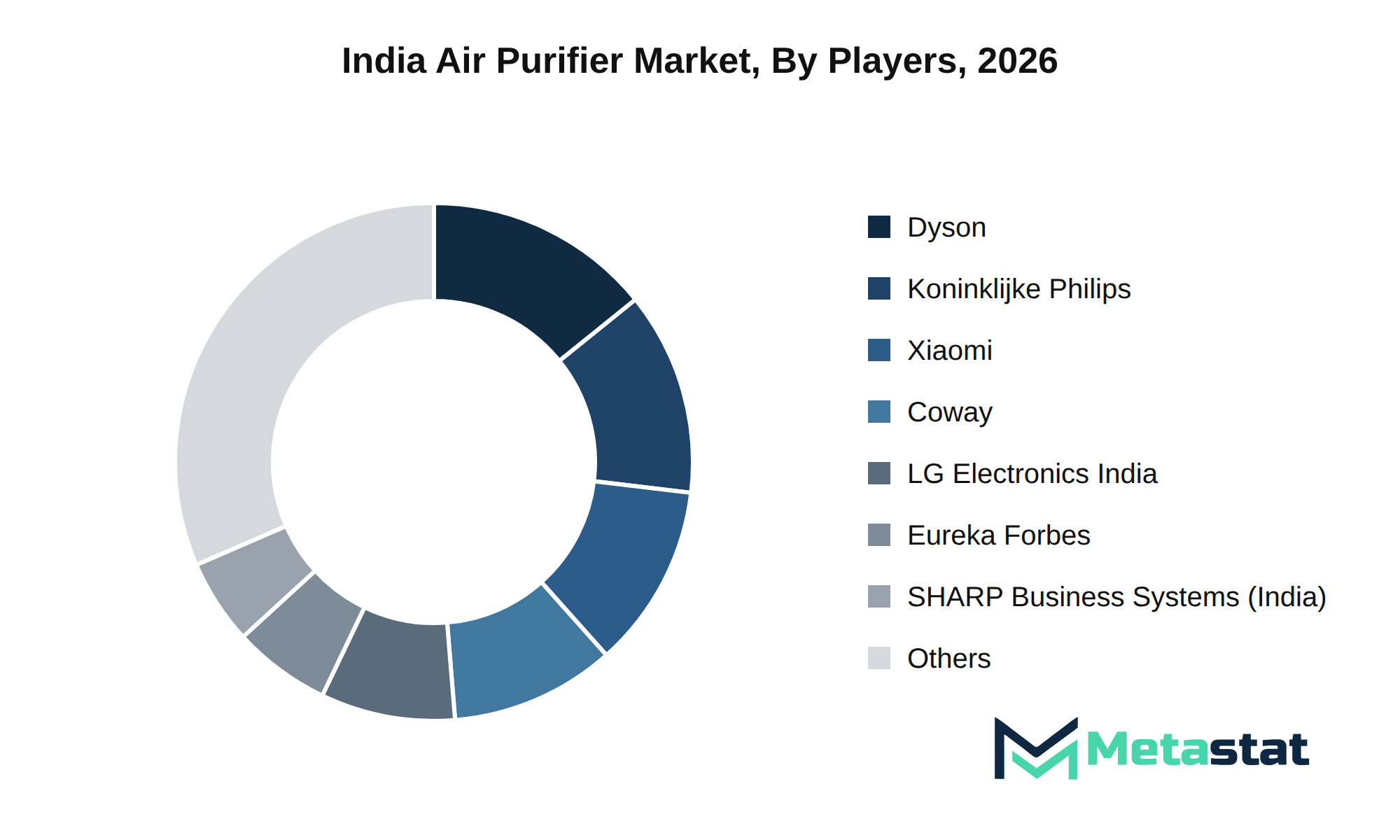
Rapid adoption among residential buyers drives unit volume and shapes feature demand. Uptake in this segment reflects growing awareness of air quality and a willingness to invest in standalone room air purifiers. Expansion of smart connectivity in air purifiers is expected to accelerate value growth. Wi-Fi-enabled and voice assistant-enabled models are projected to capture increasingly higher revenue. Urban consumers seek integration with home automation systems, supporting this trend.
Institutional adoption influences overall momentum. Offices, healthcare facilities, and educational institutions move toward higher-grade HVAC and in-duct solutions. This shift supports the premiumization of the product mix and encourages investment in advanced filtration technologies. The primary risk to the India Air Purifier market meeting the projected forecast involves price sensitivity in lower-tier urban and rural regions. Slower replacement cycles or budget constraints limit penetration in these areas. A slower pace of infrastructure upgrades or delays in commercial sector recovery would temper growth in the higher-value segments.
The report strategically identifies and profiles the key market players and analyses their core competencies in each sub-segment of the Air Purifier market.
Report Attributes | Details |
Study Period | 2021-2033 |
Base Year | 2025 |
Estimated Year | 2026 |
Forecast Period | 2026-2033 |
Historical Period | 2021-2025 |
Growth Rate | CAGR 13.5% from 2026 to 2033 |
Revenue Unit | USD million |
Segmentation |
Find answers to common questions about this report
The Air Purifier market size was valued at USD 571.6 million in 2025.
The projected CAGR is 13.5% for the forecast period from 2026 to 2033.
Standalone Room Air Purifiers lead by share, accounting for 61.7 percent of the total. This segment holds the highest revenue and volume compared to other product types.
Rising awareness of in-cabin air pollution is driving demand for dedicated vehicle air purifiers among urban commuters and city car owners. Heightened concern over children's respiratory health and enforcement of indoor air quality standards are accelerating adoption in educational institutions.
Educational institutions are increasing adoption driven by heightened concern over children's respiratory health and stricter enforcement of indoor air quality standards in schools and colleges. Regulatory and reputational pressures, combined with investment in high-capacity, low-maintenance models, are accelerating uptake in this industry.
The Air Purifier market is estimated to reach a valuation of USD 1,574.7 million by 2033.
Key players in the industry include Dyson, Koninklijke Philips N.V., Xiaomi, Coway, LG Electronics India Limited, Samsung India Electronics Pvt. Ltd., SHARP Business Systems (India) Pvt Ltd, and Daikin Airconditioning India Pvt. Ltd.
Standalone room air purifiers lead with a 61.7 percent share of the India Air Purifier market’s unit revenue, reflecting strong adoption among urban households and offices.
Suppliers are partnering with domestic component manufacturers and investing in local filter assembly to reduce reliance on imported HEPA media and sensors, aiming for greater cost control and operational resilience.
Vehicle air purifiers account for 3.8 percent of overall revenue, reflecting increased demand from urban commuters seeking in-cabin pollution control solutions.
Choose Your License
India Air Purifier Market
The analysts below cover Consumer Goods research at Metastat Insights.
LEAD ANALYST
Utkarsh Khirodkar is a Lead Market Research Analyst at MetaStat Insight, specializing in market intelligence, technology sector assessments, and competitive strategy.
Evaluating calorific value requirements and air permit compliance across municipal waste facilities requires localized data. Metastat Insight structured their analysis around operational throughput capacity and feedstock composition variations in Latin America and Eastern Europe. Their competitive mapping of sorting equipment vendors helped clarify technology differences between optical separators and heavy media systems. The study provided an objective baseline during our capital expenditure reviews.
Decarbonizing industrial thermal processes hinges on refrigerant regulations and compressor efficiency limits. Metastat Insights delivered a thorough market analysis that evaluated natural refrigerants like CO2 and hydrocarbons against synthetic low-GWP alternatives. The breakdown of utility incentives and grid capacity constraints across key European manufacturing hubs offered valuable perspective. The follow-up conversation with their sector analysts addressed our specific questions on mechanical vapor recompression systems efficiently.
Assessing 200mm wafer transition schedules and substrate supply bottlenecks requires precise technical intelligence. MetaStat Insight supplied an actionable breakdown comparing planar and trench MOSFET architectures across automotive and industrial drive markets. The regional capacity estimates for Asia-Pacific foundries helped clarify lead-time uncertainties during our strategic planning session. When we needed additional clarification on high-purity raw material sourcing, their analyst team responded with helpful context within twenty-four hours.
Explore related market intelligence reports worth reading alongside this one.