
LEAD ANALYST
Utkarsh Khirodkar is a Lead Market Research Analyst at MetaStat Insight, specializing in market intelligence, technology sector assessments, and competitive strategy.

LFP Cathode Material Market Size, Share, By Type (Nano-LFP Cathode Material and Common-LFP Cathode Material), By Application (Electric Vehicles, Energy Storage Systems, Consumer Electronics, Power Tools, and Others), By End User (Automotive, Electronics, Energy Sector, Industrial, and Aerospace), Industry Analysis, Growth, Trends, and Forecast, 2026-2033
Report ID
MSI-4743
Published
May, 2026
Pages
316 Pages
Format
Report Details
Choose Your License
LFP Cathode Material Market
Global LFP Cathode Material market size is valued at USD 5.7 billion in 2025 and projected to grow at a CAGR of 10.3% during the forecast period, reaching USD 12.5 billion by 2033.
Global LFP Cathode Material market valued at USD 5.7 billion in 2025, growing at a CAGR of 10.3% through 2033, with potential to exceed USD 12.5 billion.
North America accounts for 16.5% of the market in 2025, with the United States holding the leading share within the region.
Nano-LFP Cathode Material segment accounts for a market share of 39.5% in 2026.
Key trends driving growth: Rapid EV adoption and large-scale grid storage deployments propel demand for cost-efficient and thermally stable LFP battery chemistry, along with strategic shift toward cobalt-free and low-cost battery chemistries supports accelerated LFP production capacity expansion.
Opportunities include expansion of stationary energy storage projects and entry of global OEMs into LFP platforms create strong long-term commercialization potential.
Key insight: Rapid EV penetration and grid-scale storage expansion position the Global LFP Cathode Material Market for strong volume growth driven by cost efficiency and safety advantages.
The Global LFP Cathode Material Market operates within the lithium-ion battery materials industry, where electrochemical performance, supply security, and cost competitiveness define strategic positioning. Over the forecast period, the market will move beyond capacity additions and volume targets toward stronger sourcing alignment, deeper vertical integration, and improved technology optimization. Producers are increasingly integrating upstream iron phosphate processing with lithium refining to improve margin stability and secure long-term supply agreements with cell manufacturers.
Manufacturers are focusing on particle morphology engineering, surface coating optimization, and nano-structuring techniques to improve ionic conductivity without compromising thermal stability. These advances support next-generation battery architectures designed for high-cycle applications in grid storage, industrial mobility fleets, and two- and three-wheeler electrification across developing economies. The safety profile of LFP chemistry is also supporting broader adoption in stationary energy storage projects, where predictable degradation patterns and operating reliability are prioritized over peak energy density.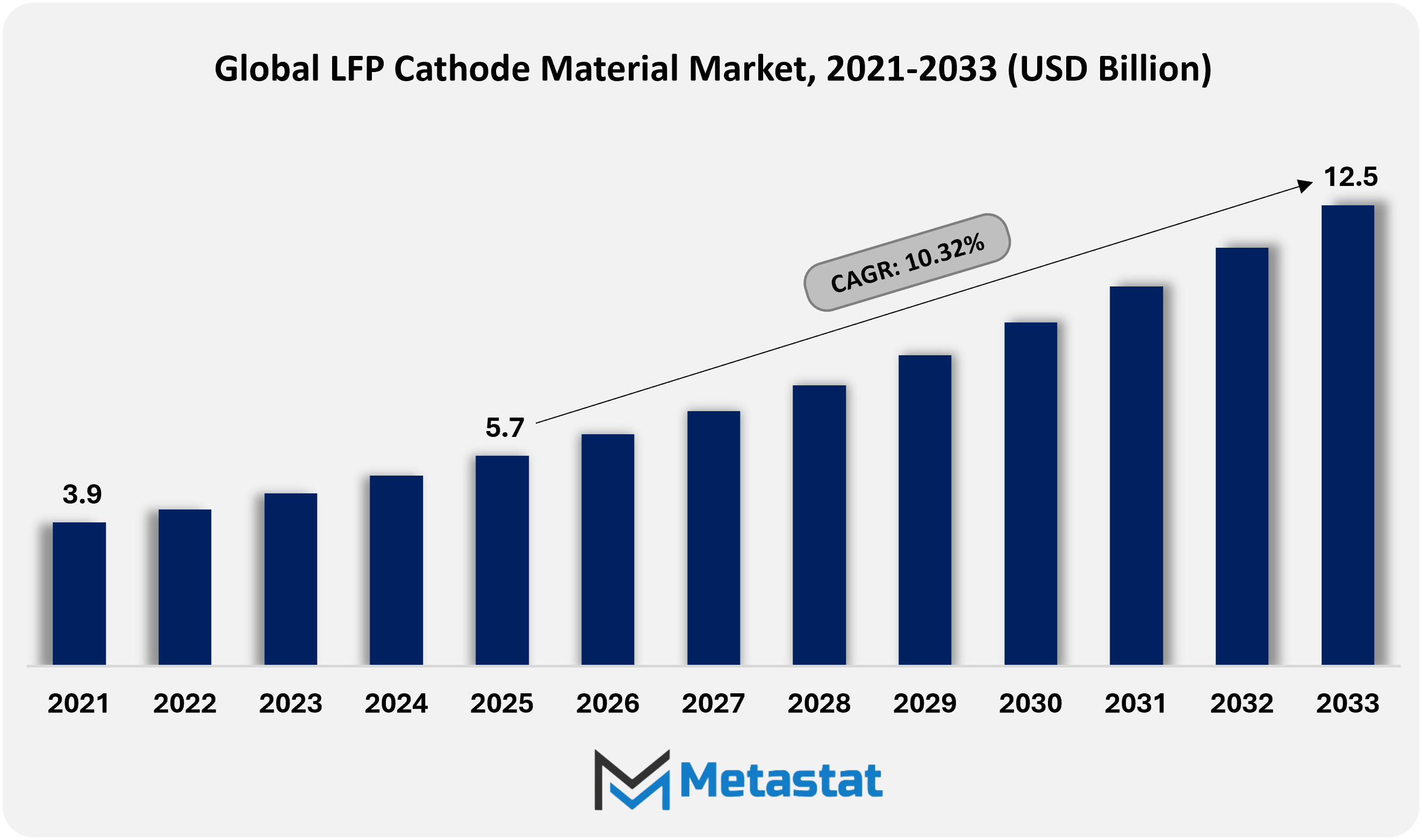
Rapid EV adoption and large-scale grid storage deployments propel demand for cost-efficient and thermally stable LFP battery chemistry.
Rising electric vehicle penetration across passenger and commercial segments is increasing demand for cost-effective battery systems. Grid-scale energy storage expansion linked to renewable integration is further strengthening reliance on stable battery chemistries. The Global LFP Cathode Material Market is gaining traction owing to strong safety performance, long cycle life, and improved cost predictability supporting mass electrification targets.
Strategic shift toward cobalt-free and low-cost battery chemistries supports accelerated LFP production capacity expansion.
Battery manufacturers are shifting toward cobalt-free formulations to reduce exposure to ethical sourcing concerns and volatile metal prices. Production facilities are expanding across multiple regions to strengthen supply continuity. The Global LFP Cathode Material Market is benefiting from localization strategies, vertical integration initiatives, and process improvements that enhance yield efficiency and material consistency.
Lower energy density compared to NMC and NCA chemistries limits adoption in long-range premium EV segments.
Lower energy density remains a key limitation for LFP chemistry in high-performance electric vehicles requiring extended driving range. Premium automakers focused on compact battery packs and higher mileage will continue favoring alternative chemistries. The Global LFP Cathode Material Market will witness slower penetration in luxury EV segments despite ongoing improvements in cell-to-pack architecture and structural battery design.
Price volatility of lithium carbonate and supply chain concentration in key raw material processing regions impacts margin stability.
Volatility in lithium carbonate pricing creates uncertainty in production planning and long-term contracting. Concentration of raw material processing in selected geographies increases exposure to trade policy shifts and logistical bottlenecks. Participants in the Global LFP Cathode Material Market are therefore prioritizing upstream partnerships, localization, and recycling integration to improve margin stability and material security.
Expansion of stationary energy storage projects and entry of global OEMs into LFP platforms create strong long-term commercialization potential.
Utility-scale renewable energy projects require durable battery systems capable of supporting extended operating cycles. The entry of major automotive OEMs into LFP-based platforms is also validating the chemistry across mass-market vehicle categories. The Global LFP Cathode Material Market will witness sustained commercialization momentum supported by policy incentives, electrification programs, and infrastructure modernization.
The Global LFP Cathode Material market is classified based on Type, Application, End User.
Nano-LFP Cathode Material segment is valued at USD 2.5 billion in 2026 and is projected to reach USD 5.7 billion by 2033, at a CAGR of 12.6% during the forecast period.
Nano-LFP Cathode Material will witness stronger adoption owing to improved conductivity, faster ion transfer, and better thermal stability. Advanced battery manufacturers are increasingly using nano-structured particles to improve charging efficiency and lifecycle performance. Future production strategies will focus on cost control, uniform particle distribution, and scalable synthesis methods to support expanding electrification demand.
Common-LFP Cathode Material segment is valued at USD 3.8 billion in 2026 and is projected to reach USD 6.8 billion by 2033, at a CAGR of 8.7% during the forecast period.
Common-LFP Cathode Material will maintain steady demand owing to affordability and reliable electrochemical performance. Large-scale battery plants will continue using conventional formulations for applications requiring durability and safety. Manufacturing optimization, localized supply chains, and material recycling initiatives will strengthen long-term viability across mid-range electric mobility and stationary storage applications.
Electric Vehicles segment is projected to reach USD 6.6 billion by 2033, at a CAGR of 12% during the forecast period.
Electric Vehicles will remain the leading application in the Global LFP Cathode Material Market owing to safety benefits, long cycle life, and lower dependence on expensive metals. Automotive battery systems are increasingly adopting LFP chemistry to support mass-market electrification goals. Expansion of charging infrastructure, fleet electrification programs, and government-backed emission reduction policies will continue to accelerate material consumption.
Energy Storage Systems segment is projected to reach USD 3.1 billion by 2033, at a CAGR of 11.6% during the forecast period.
Energy Storage Systems will expand material consumption in the Global LFP Cathode Material Market through grid balancing, renewable integration, and backup power applications. Utility-scale storage installations increasingly rely on LFP chemistry owing to thermal safety and long lifecycle performance. Rising renewable capacity additions and the growth of decentralized energy networks will support steady procurement of cathode materials over the forecast period.
Consumer Electronics segment is projected to reach USD 1.4 billion by 2033, at a CAGR of 6.5% during the forecast period.
Consumer Electronics will generate moderate growth in the Global LFP Cathode Material Market, particularly in devices where battery longevity and operational safety are important. Manufacturers are evaluating LFP integration in portable devices where thermal control and recharge stability remain critical. Cost-effective battery modules designed for extended usage cycles will gradually support adoption across selected electronics categories.
Power Tools segment is projected to reach USD 0.8 billion by 2033, at a CAGR of 6.6% during the forecast period.
Power Tools will create targeted opportunities in the Global LFP Cathode Material Market through demand for durable and fast-charging battery packs. Industrial-grade tools benefit from improved thermal resistance and reliable discharge performance. Growth in construction activity and professional equipment upgrades will sustain cathode material demand in high-drain operating environments.
Others segment is projected to reach USD 0.5 billion by 2033, at a CAGR of 3.7% during the forecast period.
Other applications include marine systems, backup mobility devices, and small-scale transport solutions. Specialized battery modules designed for safety and reliability will incorporate LFP chemistry in these use cases. Product diversification strategies and niche electrification programs will gradually broaden the application scope of the market.
Automotive segment is projected to reach USD 7.0 billion by 2033.
Automotive end users will account for significant consumption in the Global LFP Cathode Material Market owing to rising electric vehicle production volumes. Battery cell manufacturing facilities are expanding capacity to meet regulatory emission targets and growing consumer adoption. Strategic investments in localized battery ecosystems will strengthen supply security and long-term procurement stability.
Electronics segment is projected to reach USD 1.8 billion by 2033.
Electronics manufacturers in the Global LFP Cathode Material Market are prioritizing battery safety, longer lifecycle, and cost efficiency. Portable equipment, smart devices, and backup systems will adopt LFP-based batteries to reduce overheating risk. Gradual innovation in compact battery pack design will support continued integration across multiple electronics product lines.
Energy Sector segment is projected to reach USD 2.3 billion by 2033.
Energy Sector participants are increasing their engagement in the Global LFP Cathode Material Market to stabilize renewable power supply and improve grid resilience. Utility operators are deploying LFP-based storage units for peak shaving and load balancing applications. Long-term energy transition programs will continue to support procurement momentum across public and private infrastructure projects.
Industrial segment is projected to reach USD 0.9 billion by 2033.
Industrial operations will contribute to the Global LFP Cathode Material Market through adoption in heavy equipment, warehouse automation, and backup systems. Demand for reliable and low-maintenance battery solutions is increasing the integration of LFP chemistry in industrial mobility applications. Expansion of automation and electrified machinery upgrades will further support future material demand.
Aerospace segment is projected to reach USD 0.5 billion by 2033.
Aerospace applications will focus on safety-oriented energy storage solutions for auxiliary systems and lightweight ground operations equipment. Research initiatives are working to improve energy density while maintaining stable thermal performance. Gradual electrification of support vehicles and onboard backup systems will support specialized cathode material development.
Based on geography, the Global LFP Cathode Material market is divided into North America, Europe, Asia-Pacific, South America, Middle East, and Africa.
North America LFP Cathode Material Market is set to expand at a CAGR of 10.3% within the forecast period, reaching a market size (TAM) of USD 1.8 billion by the end of 2033.
In North America, rising electric vehicle production and domestic battery gigafactory investments are strengthening demand across the LFP Cathode Material Market.
In Europe, decarbonization targets, battery value chain localization, and increasing deployment of energy storage systems are supporting LFP cathode material adoption.
In Asia Pacific, fast expansion of electricity storage systems and cost-centered EV manufacturing is creating large-scale opportunities in the LFP Cathode Material Market.
Across the Middle East, Africa, and South America, rising renewable electricity integration, mining quarter improvement, and early-degree EV adoption are step by step positioning the LFP Cathode Material Market for long-term expansion.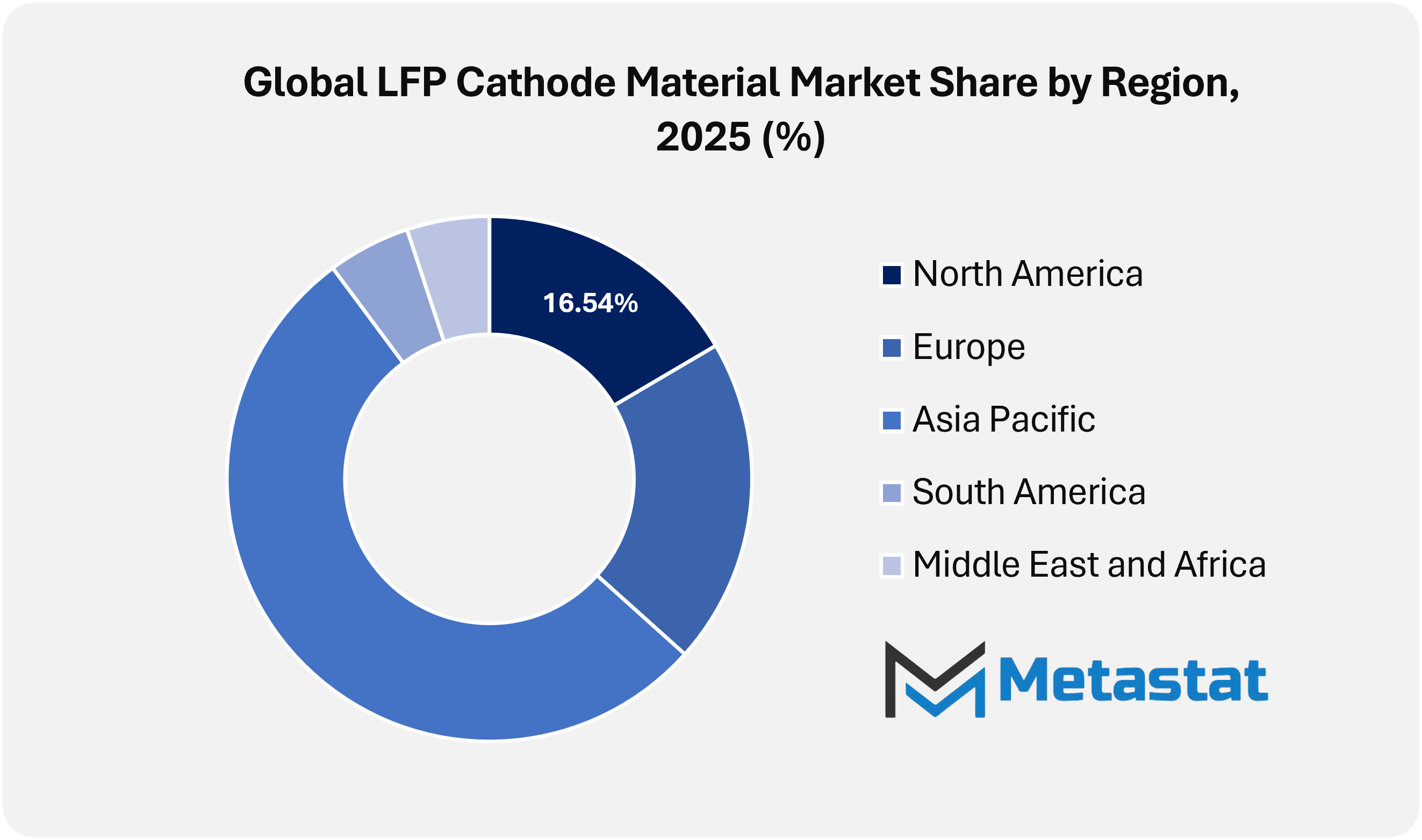
The Global LFP Cathode Material Market is expanding steadily as demand for lithium iron phosphate batteries rises across electric vehicles, energy storage systems, and selected electronics applications. LFP chemistry is widely valued for its thermal stability, long cycle life, and cost efficiency compared with several other lithium-ion chemistries. As governments promote cleaner mobility and manufacturers focus on safer battery platforms, production capacity for LFP cathode materials will increase further. The shift toward localized battery supply chains in Asia, Europe, and North America is also supporting investment in processing facilities and raw material sourcing.
China remains the dominant manufacturing base, with companies such as Ronbay Technology Co., Ltd. and Hunan Yuneng New Energy Battery Material Co., Ltd. playing a major role in scaling production. Firms including Shenzhen Dynanonic Co., Ltd. and Jiangsu Lopal Tech Co., Ltd. continue to strengthen supply capabilities through technology upgrades and partnerships with battery manufacturers. Other notable participants such as Guizhou Anda Technology Energy Co., Ltd. and Hubei Wanrun New Energy Technology Co., Ltd. are expanding production lines to meet growing domestic and export demand. Their strategies are focused on improving material performance while maintaining cost competitiveness.
Additional Chinese producers such as Beijing Pulead Technology Industry Co., Ltd., Fulin Precision Co., Ltd., and Gotion High-Tech Co., Ltd. are investing in research to improve material performance. Companies including Chongqing Terui Battery Materials Co., Ltd. and Xiamen Tungsten New Energy Materials Co., Ltd. are focusing on production efficiency and vertical integration. Meanwhile, China Minmetals New Energy Materials (Hunan) Co., Ltd. and Wanhua Chemical Group Co., Ltd. are strengthening raw material supply linkages. Shandong Fengyuan Chemical Co., Ltd. and Yibin Tianyuan Group Co., Ltd. also contribute to market expansion through material processing expertise.
Outside China, global chemical and advanced materials companies are expanding their presence in the market. BASF SE is developing cathode materials with a focus on sustainability and localized supply in Europe. IBU-tec advanced materials AG and IBUvolt GmbH are building LFP manufacturing capabilities to support European cell manufacturers. Companies such as Aleees and Prayon SA are contributing technical expertise in phosphate-based materials. In North America, firms such as Nano One Materials Corp. and 6K Energy are advancing process innovation to improve cost efficiency and reduce environmental impact.
A broader set of specialty chemical and supply companies also participates in the market ecosystem. Himadri Speciality Chemical Ltd and Allox Group are supporting supply linkages for raw inputs and processing solutions. Distributors and research-focused firms such as Targray Technology International Inc., American Elements, MTI Corporation, MSE Supplies LLC, Ossila Ltd, NEI Corporation, Stanford Advanced Materials, and SkySpring Nanomaterials Inc. support research laboratories and pilot-scale manufacturing worldwide. As battery demand rises across electric mobility and grid storage, these companies will continue to strengthen supply networks and technology standards across the Global LFP Cathode Material Market.
Market size is forecast to rise from USD 5.7 billion in 2025 to over USD 12.5 billion by 2033.
Technological competition with high-nickel chemistries will remain strong, yet LFP is expected to secure a strategic position in entry-level electric vehicles, commercial fleets, and mass-market energy storage. By the end of the forecast period, the Global LFP Cathode Material Market is expected to be defined by disciplined capital deployment, vertical integration, and performance-driven customization aligned with differentiated end-use requirements.
This research report categorizes the LFP Cathode Material market based on key segments and regions, forecasts revenue growth, and analyses trends in each submarket. The report analyses the key growth drivers, opportunities, and challenges influencing the LFP Cathode Material market. Recent market developments and competitive strategies such as expansion, product launch, partnership, merger, and acquisition have been included to draw the competitive landscape in the market.
The report strategically identifies and profiles the key market players and analyses their core competencies in each sub-segment of the LFP Cathode Material market.
|
Report Attributes |
Details |
|
Study Period |
2021-2033 |
|
Base Year |
2025 |
|
Estimated Year |
2026 |
|
Forecast Period |
2026-2033 |
|
Historical Period |
2021-2025 |
|
Growth Rate |
CAGR 10.3% from 2026 to 2033 |
|
Revenue Unit |
USD billion |
|
Sales Volume Unit |
Kilotons |
|
Segmentation |
By Type, Application, End User, and Region |
|
By Type |
|
|
By Application |
|
|
By End User |
|
|
By Region |
North America (By Type, Application, End User, and Country)
|
|
Europe (By Type, Application, End User, and Country)
|
|
|
Asia Pacific (By Type, Application, End User, and Country)
|
|
|
South America (By Type, Application, End User, and Country)
|
|
|
Middle East and Africa (By Type, Application, End User, and Country)
|
Find answers to common questions about this report
Top players operating in the LFP Cathode Material industry include Ronbay Technology Co., Ltd., Hunan Yuneng New Energy Battery Material Co., Ltd., Shenzhen Dynanonic Co., Ltd., Jiangsu Lopal Tech Co., Ltd., and Guizhou Anda Technology Energy Co., Ltd.
Global LFP Cathode Material market is estimated to reach USD 12.5 billion by 2033.
Asia Pacific region dominates the market.
Lower energy density compared to NMC and NCA chemistries limits adoption in long-range premium EV segments. will hamper the market growth within the forecast period.
The Metastat Insights analysis shows that the North America LFP Cathode Material market size is estimated to be USD 1.8 billion by 2033.
The Global LFP Cathode Material market is expected to grow at a CAGR of 10.3% over the forecast period (2026-2033).
The Common-LFP Cathode Material is the leading type segment in the Global market.
The Metastat Insights study shows that the Global LFP Cathode Material market size was USD 5.7 billion in 2025.
Rapid EV adoption and large-scale grid storage deployments propel demand for cost-efficient and thermally stable LFP battery chemistry. and Strategic shift toward cobalt-free and low-cost battery chemistries supports accelerated LFP production capacity expansion. are key driving factors, boosting the market.
The analysts below cover Chemicals and Materials research at Metastat Insights.
LEAD ANALYST
Utkarsh Khirodkar is a Lead Market Research Analyst at MetaStat Insight, specializing in market intelligence, technology sector assessments, and competitive strategy.

INDUSTRY CONSULTANT - CHEMICALS & ADVANCED MATERIALS
Chemicals and Materials · Machinery & Equipment · Packaging
Amit Gadhekar Consultant for Chemicals and Materials at MetaStat Insight, directing sector-specific intelligence, research, and strategic consulting across global chemical and processing markets.
Evaluating sovereign cloud deployments for core banking platforms demands a clear view of data residency regulations and migration exit strategies. MetaStat Insight delivered an exhaustive review of regional latency tolerances, mainframe decommission milestones, and third-party vendor concentration risk. The regulatory compliance mapping across European and Asian financial jurisdictions gave our team a dependable baseline for multi-cloud infrastructure discussions.
Replacing petrochemical surfactants with bio-based alternatives requires realistic timelines on industrial precision fermentation scaling. The market research broke down commercialization timelines, feedstock sugar price sensitivities, and regional cosmetic ingredient regulatory approvals in Europe and East Asia. That supplier readiness mapping gave our formulations team reliable context when comparing renewable chemical sourcing roadmaps.
Tracking ceramic matrix composite adoption in high-bypass aero engines requires strict attention to material qualification cycles and FAA airworthiness testing milestones. The MetaStat Insight team provided a detailed timeline of silicon carbide fiber manufacturing capacity and commercial foundry lead times. Having clear visibility into upstream thermal barrier coating supply helped us stress-test our long-term component procurement strategy.
Explore related market intelligence reports worth reading alongside this one.