
LEAD ANALYST
Utkarsh Khirodkar is a Lead Market Research Analyst at MetaStat Insight, specializing in market intelligence, technology sector assessments, and competitive strategy.

Global Macramé Products Market Size, Share, By Product Type (Wall Hangings and Tapestries, Plant Hangers and Planter Holders, Curtains, Room Dividers and Backdrops, Furniture and Seating, Soft Furnishings, Lighting and Lampshades, Tabletop and Utility Décor, Bags and Purses, Jewelry and Wearable Accessories), By Application (Home Décor, Event and Wedding Decoration, Fashion Accessories, Commercial and Hospitality Décor, Outdoor and Garden Décor), By Distribution Channel (Brand-Owned Online Stores / D2C, Online Marketplaces, Specialty Home Décor and Handicraft Stores, Fashion and Lifestyle Retail Stores, Department Stores and Mass Merchandisers, Independent Boutiques and Artisan Markets, B2B Wholesale and Contract Sales), By Material (Cotton, Jute), Industry Analysis, Growth, Trends, and Forecast, 2026-2033
Report ID
MSI-5164
Published
September, 2026
Pages
261 Pages
Format
Historical
Base year
Forecast
Forecast period
Report Details
Choose Your License
Global Macramé Products Market
The global Macramé Products market was valued at USD 2,700.1 million in 2025 and is projected to reach USD 5,073.9 million by 2033, growing at a CAGR of 8.2% over the forecast period.
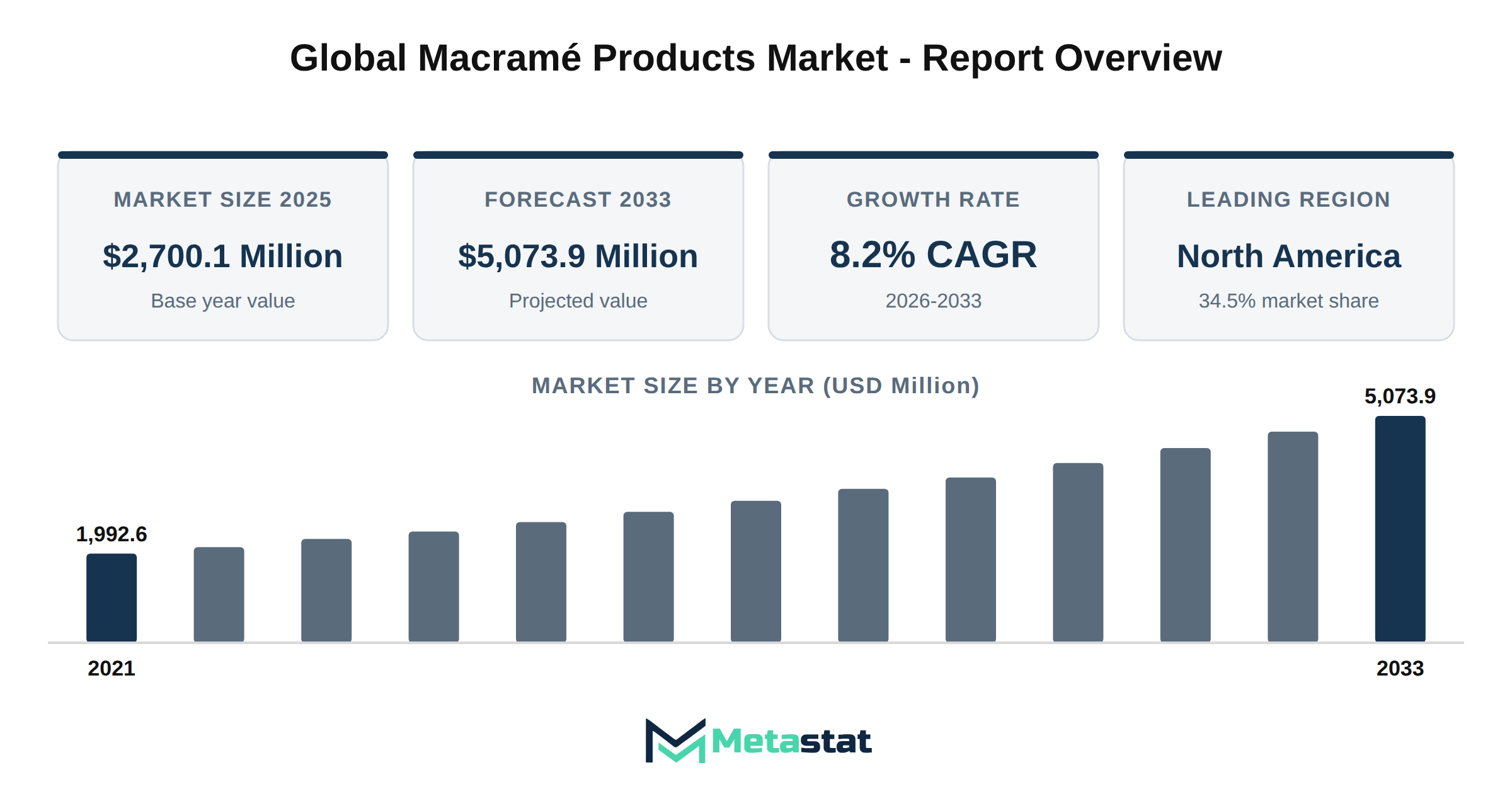
The global Macramé Products market reached a valuation of USD 2,700.1 million in 2025, reflecting a steady trajectory of growth since its historical valuation of USD 1,992.6 million in 2021. The market is projected to achieve a value of USD 5,073.9 million by 2033, indicating a compound annual growth rate (CAGR) of 8.2% during the forecast period, 2026 to 2033.
Market dynamics reflect a diverse range of products, applications, and distribution channels. In terms of product types, wall hangings and tapestries, along with plant hangers and planter holders, contribute significantly to overall revenue. The home décor application segment leads the market, with growth from USD 1,638.9 million in 2026 to USD 2,638.4 million by 2033, achieving a CAGR of 7%.
Competition exists between mass-market offerings and artisan brands. This competition influences pricing strategies and product positioning across various channels, including brand-owned online stores, online marketplaces, and specialty home décor shops. Key players in the market, including Home Decor Inc., Swing Saga, and The Macrame Shop, shape market trends and consumer preferences.
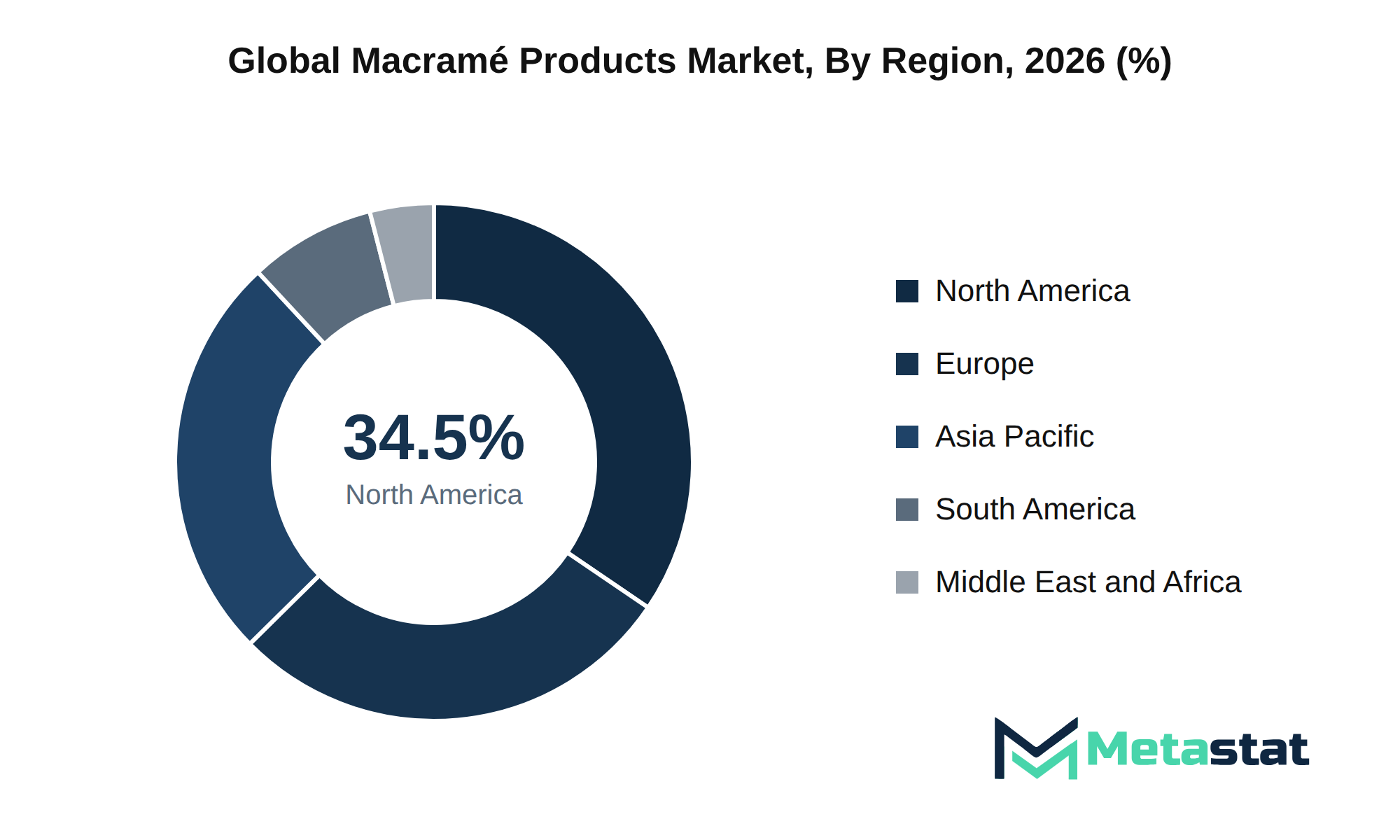
Regional analysis indicates that North America commands the largest share, accounting for 34.5% of the market. The region is projected to reach USD 1,618.6 million by 2033, with a CAGR of 8.2%. Europe and Asia Pacific follow closely, representing 28.1% and 25.5%, respectively, of the overall market share.
The Macramé Products market experiences a significant transformation driven by evolving consumer preferences towards artisanal and sustainable products. Long-tail artisan brands emerge owing to critical players, offering unique and handcrafted items that cater to niche markets. These brands effectively differentiate themselves through their distinct product offerings and storytelling, appealing to consumers seeking authenticity and craftsmanship.
In terms of product portfolio breadth, leading companies in the market focus on expanding their range of offerings to include various product types, including wall hangings, plant hangers, and decorative accessories. This diversification enables brands to capture a wider audience and respond to changing consumer demands.
Price-point and positioning analysis shows a competitive landscape where mass-market products coexist with artisan offerings. While mass-market brands emphasize affordability and accessibility, artisan products command higher prices, reflecting their craftsmanship and unique designs. This segmentation allows companies to target different consumer demographics effectively.
The market landscape faces challenges related to regulatory compliance, particularly concerning environmental standards and labor practices. Companies adapt to these regulations to maintain competitiveness and ensure sustainable practices throughout their supply chains. The focus on sustainability drives innovation, with brands investing in next-generation materials and methods that align with consumer expectations for eco-friendly products.
Supply chain dynamics play a crucial role in shaping the market. Efficient logistics architecture and sourcing strategies are essential for brands to optimize costs and minimize lead times. Companies that navigate these complexities effectively enhance their competitive positioning and customer satisfaction.
The market experiences fragmentation, with numerous players vying for market share. This fragmentation creates opportunities for mergers and acquisitions, because companies seek to enhance their capabilities and expand their reach. Strategic capital allocation and infrastructure investments become vital for brands aiming to scale operations and meet growing demand.
The future strategic outlook for the Macramé Products market emphasizes the importance of aligning corporate imperatives with consumer trends. High-value recommendations include leveraging sustainable practices, enhancing product innovation, and building direct-to-consumer relationships to drive growth and capture market opportunities.
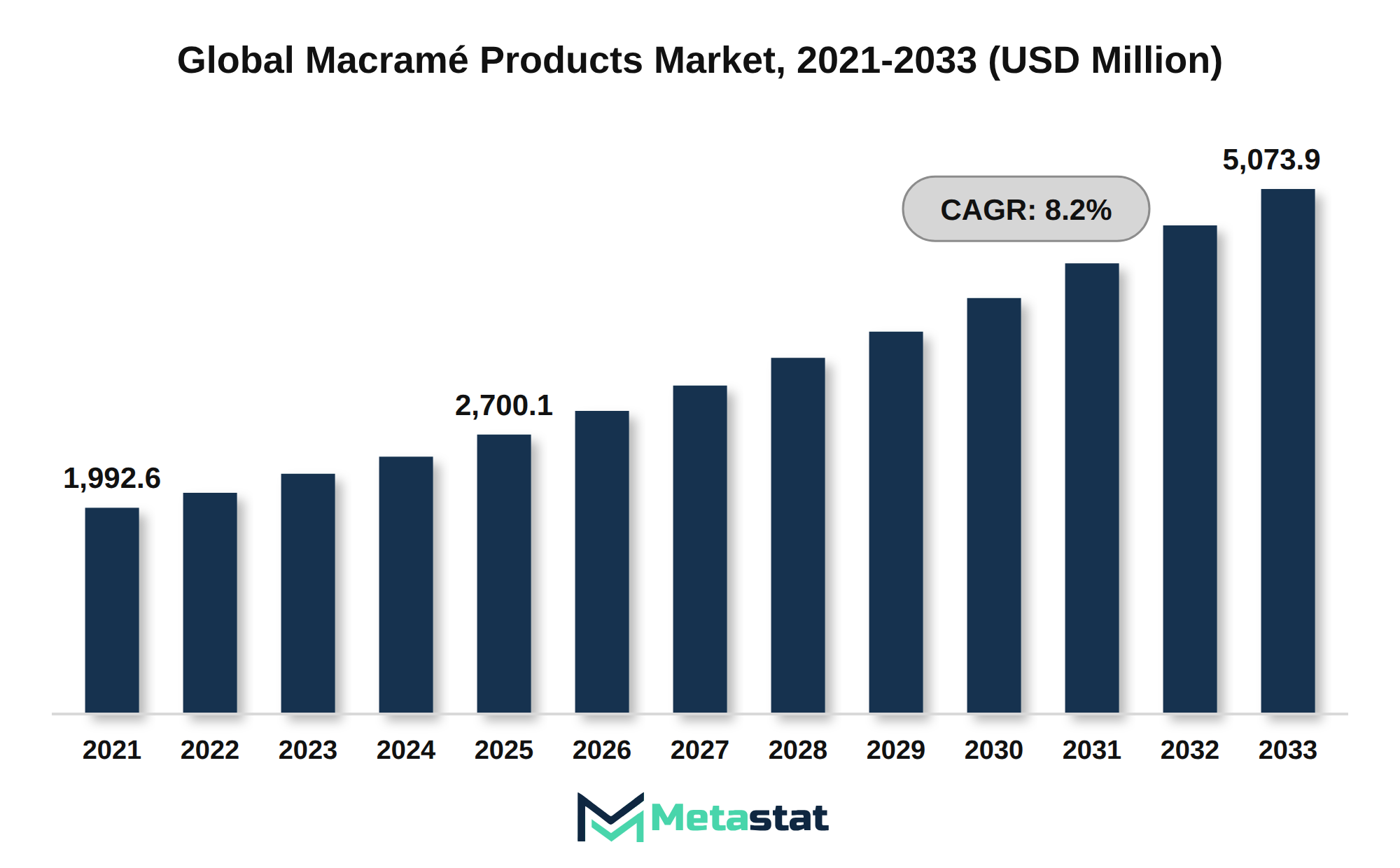
The shift towards online shopping significantly influences the Macramé Products market, driven by changing consumer behaviors and preferences. Increasing internet penetration and smartphone adoption facilitate access to e-commerce platforms, enhancing customer engagement and convenience. The rising trend of remote work and lifestyle changes encourages consumers to invest in home décor, including macramé products, for personal spaces. This trend reflects a broader inclination towards unique and personalized items, supporting the growth of the market.
Digital channels, including brand-owned online stores and online marketplaces, expand significantly, driven by primary distribution channels for these products. The expected compound annual growth rate of 10.1% in sales through online marketplaces emphasizes the importance of digital platforms in reaching consumers effectively. Brands that optimize their online presence and enhance user experience achieve greater visibility and accessibility, leading to increased sales and market share.
This dynamic retail environment creates opportunities for manufacturers and retailers to innovate and diversify product offerings, catering to the evolving preferences of consumers. The increased focus on sustainability and ethical sourcing further aligns with the market's growth, because consumers seek products that reflect their values. Overall, the growing influence of online shopping drives the expansion of the Macramé Products market, creating pathways for brands to engage with a broader audience and enhance their competitive positioning.
The Macramé Products market benefits from heightened consumer interest in sustainable practices, driving demand for eco-friendly products. The shift toward environmentally conscious purchasing reflects a growing recognition of ethical consumption among buyers. This trend arises from broader societal movements that prioritize sustainability, influencing consumer behaviors across various demographics.
While consumers increasingly seek products that align with their values, manufacturers respond by integrating sustainable materials and processes. Macramé products made from natural fibers, including cotton and jute, become more appealing to environmentally aware consumers. This shift positively impacts the market, contributing to revenue growth and expanding market share.
The focus on sustainability encourages innovation in product development. Companies invest in research and development to create unique designs that incorporate eco-friendly materials. This commitment to sustainable practices enhances brand loyalty and attracts a customer base that prioritizes environmentally responsible products. The combination of consumer interest and innovative practices drives significant growth in the Macramé Products market, reinforcing its position in the home décor sector.
Escalating operating costs pose significant challenges within the Macramé Products market. Producers face increasing expenses due to higher raw material prices, labor costs, and logistics, impacting profit margins. This cost structure results in higher retail prices, which reduces consumer demand.
Supply chain disruptions contribute to market instability, affecting the timely availability of materials and components necessary for production. Geopolitical tensions and trade restrictions complicate procurement processes, leading to delays and increased costs for manufacturers.
Technological obsolescence presents a challenge. Manufacturers invest continuously in updated equipment and processes to remain competitive. Failure to adopt new technologies results in reduced efficiency and a lower competitive position in the market.
Resource scarcity presents a critical constraint, particularly concerning sustainable materials including cotton and jute. Limited availability of these resources drives prices higher, making it difficult for producers to maintain competitive pricing while ensuring quality.
Market fragmentation creates obstacles for standardization and consistency in product offerings. This lack of cohesion confuses consumers and hinders brand loyalty, affecting overall growth within the Macramé Products market.
Cultural barriers and regional adoption resistors limit market expansion in certain areas. Different consumer preferences and practices influence the acceptance of macramé products, impacting sales in diverse markets.
Slowing downstream demand from sectors including retail and hospitality hinders market growth. Economic fluctuations and changing consumer priorities affect purchasing decisions, leading to decreased demand for decorative items, including macramé products.
Geopolitical fragmentation significantly impacts the Macramé Products market, leading to trade deficits and tariff friction. These challenges create operational hurdles for manufacturers and suppliers, particularly those reliant on international trade for raw materials and finished products. Disruptions stemming from political tensions limit access to vital resources and introduce unpredictability in costs, resulting in increased operational expenses and potential delays in product availability.
Technological disruptions further complicate the market. Rapid advancements require ongoing investments in research and development, resulting in complex integrations that strain financial resources. Companies face difficulties adapting to evolving technologies, which hinders competitiveness and innovation efforts, ultimately affecting their market positioning.
Supply chain instability remains a pressing concern. Fluctuations in feedstock and component availability create bottlenecks, delaying production schedules and increasing costs. Logistics disruptions, including transportation challenges, exacerbate these issues, impacting timely delivery to customers and potentially leading to lost sales opportunities.
Pricing compression and margin pressures pose additional challenges. Rising input costs, particularly for materials like cotton and jute, impact profit margins. Companies in the Macramé Products market navigate these fluctuations while maintaining affordability for consumers, leading to potential market saturation and reduced profitability.
Workforce skill gaps and talent retention pressures contribute to operational inefficiencies. Companies struggle to find skilled labor capable of handling the intricacies of macramé production. This challenge leads to increased reliance on automation, complicating workforce dynamics and potentially affecting product quality.
Environmental lifecycle footprints and sustainability demands influence market strategies. Growing consumer expectations for eco-friendly products require manufacturers to adapt their processes, potentially increasing operational costs. Compliance with tightening global regulatory standards adds to this complexity, necessitating investments in sustainable practices that further strain financial resources.
Ultimately, the combination of geopolitical fragmentation, supply chain instability, and evolving market demands creates a challenging environment for the Macramé Products market. Companies strategically address these issues to remain competitive and meet consumer expectations while navigating a rapidly changing environment.
The Macramé Products market experiences rapid growth due to emerging digital procurement shifts that reshape consumer purchasing behaviors. The transition towards online platforms enhances accessibility and convenience, allowing consumers to explore diverse product offerings. Significant investments in e-commerce infrastructure facilitate efficient transactions, expanding reach to a broader audience. This digital transformation aligns with evolving consumer expectations for instant fulfillment and personalized shopping experiences.
Strategic consolidation within the sector advances market presence. Mergers and acquisitions encourage resource sharing and innovation, enhancing product offerings and accelerating market penetration. The integration of next-generation technologies, including artificial intelligence and data analytics, enables suppliers to better understand consumer preferences and optimize inventory management. Improved operational efficiency and a more responsive supply chain result from these advancements.
Sustainability imperatives and eco-friendly compliance initiatives further influence the Macramé Products market. A growing consumer preference for sustainable materials drives manufacturers to adopt greener practices throughout the product lifecycle. This focus on sustainability attracts environmentally conscious consumers and enhances brand loyalty. The emphasis on sustainability opens new opportunities for product diversification and niche application growth, reinforcing market competitiveness.
The combination of these factors positions the Macramé Products market for sustained expansion. A robust digital infrastructure coupled with evolving consumer trends creates favorable conditions for innovative product development. This environment supports ongoing growth and reinforces the significance of agility in strategic planning and execution.
The Global Macramé Products market is segmented based on Product Type, Application, Distribution Channel, and Material.
Valued at USD 690 million in 2026, the Wall Hangings & Tapestries segment is projected to reach USD 1,090.9 million by 2033, at a CAGR of 6.8% during the forecast period. Demand for decorative and functional wall hangings continues to rise, driven by shifts in consumer preferences toward personalized home décor. The growing trend of interior design, particularly in residential spaces, highlights the importance of aesthetic appeal, pushing consumers towards unique macramé products that reflect individual tastes.
The expanding real estate sector contributes to heightened demand for macramé wall hangings and tapestries. New home construction and renovations serve because catalysts for interior design enhancements, which include macramé applications. The popularity of social media platforms promotes visually appealing interiors, leading to increased awareness and desire for distinctive decorative items, including macramé wall hangings.
Sustainability considerations drive consumers towards natural materials like cotton and jute, widely used in macramé production. Environmentally conscious consumers seek products that align with their values, enhancing the market's appeal. The evolution of home-based lifestyles, particularly following recent global events, increases the demand for versatile home décor solutions that combine functionality with artistic expression.
The trend of home-related events, including weddings and gatherings, fuels the need for decorative items that enhance aesthetic value. The role of wall hangings in creating inviting atmospheres during such occasions supports segment growth. In this market, established suppliers are investing in innovative designs and collaborations to create new product lines, addressing the evolving tastes of consumers.
The Wall Hangings & Tapestries segment within the Macramé Products market benefits from strong consumer demand, driven by trends in home décor, sustainability, and social media influence. These factors contribute to the segment's projected growth and continued relevance in the broader market.
Growth in the Plant Hangers & Planter Holders segment derives from increasing consumer interest in home gardening and interior decoration. This trend aligns with the rising awareness of sustainable living and the preference for eco-friendly products. Adoption of plant hangers and planter holders integrates seamlessly into various home and garden aesthetics, appealing to both casual and dedicated gardeners.
Investment in product innovation drives segment expansion, with manufacturers focusing on unique designs and functional enhancements. This evolution targets diverse consumer segments, including urban dwellers with limited space for traditional gardening methods. The market for these products benefits from the rising trend of biophilic design, which emphasizes the connection between indoor environments and nature.
Pricing strategies reflect the competitive landscape, with brands emphasizing quality and aesthetic appeal to justify premium pricing. Consumers willing to invest in stylish, sustainable options contribute to overall revenue growth. The segment reaches USD 659.6 million by 2033, at a CAGR of 6.5% during the forecast period.
Distribution channels play a crucial role in segment expansion, with brand-owned online stores and online marketplaces gaining prominence. This shift enables effective reach to target demographics, ensuring accessibility and convenience for consumers. The market emerges because a dynamic segment within the broader Macramé Products market, capitalizing on evolving consumer preferences and lifestyle trends.
Increasing interior design trends drive demand in the Curtains, Room Dividers & Backdrops segment of the Macramé Products market. Consumers prioritize unique and artisanal décor items, which enhances the appeal of macramé because a decorative solution. The rising interest in sustainable and eco-friendly materials further supports growth, because cotton and jute, primary materials for macramé products, align with consumer preferences for sustainability.
Market expansion reflects changing consumer lifestyles, emphasizing personalized home environments. The segment is expected to reach USD 482 million by 2033. Emerging online retail channels facilitate increased accessibility and visibility for these products, enabling consumers to explore a range of choices. The popularity of DIY home projects contributes to heightened interest, encouraging consumers to incorporate macramé in their living spaces.
Technological advancements in textile production enhance the quality and variety of macramé products available in the market. Continuous product evolution, including innovative designs and finishes, attracts a broader audience. Retailers focusing on customization options offer unique products that cater to individual preferences, creating a competitive edge within the market. Overall, these factors combine to create an optimistic growth trajectory for the Curtains, Room Dividers & Backdrops segment.
Growth in the Furniture & Seating (Swings, Hammocks, Chairs) segment is driven by increasing consumer preference for comfortable and aesthetically pleasing home environments. The rise of remote work has intensified demand for versatile furniture options, particularly those that blend functionality with style. The trend influences both residential and commercial applications, leading to expanded market opportunities. Noteworthy is the segment's projected growth at a CAGR of 7.5% during the forecast period, indicating a strong trajectory for investment and innovation.
Shifts in consumer behavior highlight a preference for sustainable and eco-friendly materials, boosting the demand for macramé products made from natural fibers including cotton and jute. These materials appeal to environmentally conscious consumers, propelling manufacturers to enhance product offerings that align with sustainability trends. The integration of next-generation designs and customization options further increases market appeal, enabling brands to cater to specific consumer tastes and preferences.
Technological advancements in production processes enhance efficiency and enable the introduction of innovative designs within the Furniture & Seating segment. This evolution allows manufacturers to optimize cost structures while maintaining quality standards. The market benefits from robust supply chain resilience, ensuring a steady flow of raw materials and minimizing disruption risks. Competitive pricing strategies will remain critical because brands strive to capture market share during shifting consumer demands.
Continuous investment in product development and marketing strategies will play a vital role in shaping the outlook for the Furniture & Seating segment within the Macramé Products market. The intersection of aesthetic appeal, functionality, and sustainability will further drive growth, establishing a dynamic environment for market participants. Overall, the combination of favorable market conditions and consumer trends positions the Furniture & Seating segment for substantial growth in the coming years.
Consumer demand for soft furnishings including cushions, rugs, and throws reflects a broader trend toward personalized and aesthetically pleasing home environments. This segment benefits from the growing emphasis on home décor, with consumers seeking unique and handmade items to enhance their living spaces. A significant driver of this interest stems from the rise in social media platforms where interior design inspiration is readily shared, encouraging consumers to invest in decorative items that express individuality.
The market experiences an increasing shift toward sustainable materials, with many consumers favoring macramé products made from natural fibers including cotton and jute. This preference aligns with a global movement toward eco-friendly products and conscious consumerism. The evolution of styles and designs within the segment keeps it relevant, appealing to diverse tastes and preferences across different demographics.
Technological advancements in production methods streamline the manufacturing of soft furnishings, enabling quicker turnaround times and greater customization options. These innovations enhance the ability of suppliers to respond to changing consumer preferences, promoting further growth in the market. The combination of aesthetic appeal, sustainability, and technological evolution positions this segment favorably within the broader macramé products market.
Growing interest in unique and aesthetically pleasing home décor fuels demand for lighting and lampshades made from macramé. Consumers increasingly seek products that reflect personal style and enhance interior spaces, driving market expansion. This segment benefits from rising adoption among environmentally conscious buyers who prefer sustainable materials, including cotton and jute, often used in macramé production.
Technological advancements contribute to the evolution of lighting and lampshades, enabling innovative designs and improved functionality. Customization options appeal to a broader audience, encouraging more individuals to incorporate macramé products into their homes. Events including weddings and parties employ these decorative items, further broadening their market reach.
Price volatility in raw materials affects overall production costs, compelling manufacturers to explore cost-effective sourcing strategies. However, the overall appeal of unique, handcrafted products maintains strong consumer interest, creating strategic opportunities for manufacturers. While macramé products gain popularity, the market experiences heightened activity, leading to increased competition among suppliers aiming to capture consumer attention with distinct offerings.
End-use dynamics indicate a shift towards functional and decorative lighting solutions within various environments, including residential and commercial spaces. The ongoing demand for versatile home décor items supports sustained growth in the macramé products market, creating a dynamic ecosystem of innovative suppliers and creative designers.
Growing consumer preferences for unique and functional home accessories fuel interest in Tabletop & Utility Décor products, including coasters, runners, baskets, and holders. These items enhance both aesthetic appeal and utility within home settings, appealing specifically to individuals seeking to create personalized environments. The rise of social media platforms featuring interior design ideas supports the adoption of these products, influencing purchasing decisions among a younger demographic focused on style and practicality.
Shifts in consumption patterns toward environmentally friendly materials enhance opportunities for growth in the market. Increasing awareness of sustainable practices drives demand for items made from natural fibers including cotton and jute, aligning with consumer values related to environmental responsibility. This trend encourages manufacturers to innovate product offerings to meet changing consumer expectations.
Investment in product evolution and design enhancements plays a critical role in stimulating demand. Brands prioritizing next-generation upgrades, including multifunctional designs or customizable options, attract consumers seeking unique and versatile solutions. This focus on innovation creates strategic opportunity windows for companies aiming to differentiate themselves in a competitive environment.
Cost structures associated with raw material sourcing influence pricing strategies for Tabletop & Utility Décor products. Fluctuations in raw material prices affect overall profitability and operational margins for manufacturers. Companies maintaining strong supply chain resilience are better positioned to manage these cost pressures while meeting consumer demand effectively.
Regulatory compliance standards concerning material safety and environmental impact influence product development and market entry strategies. Adhering to these standards ensures that products are acceptable to consumers and retailers, reducing the risk of market entry barriers. Companies navigating these regulations successfully position themselves advantageously in the Macramé Products market.
Growing interest in unique fashion accessories drives demand for bags, purses, and clutches within the Macramé Products market. The ability of these products to blend aesthetics with functionality attracts consumers seeking both style and utility. Increasing emphasis on sustainable and handcrafted goods enhances the appeal, positioning macramé items because a sought-after choice among environmentally conscious shoppers.
Innovation in design and application expands the market scope for bags, purses, and clutches. Trends in personalized and customizable products facilitate consumer engagement, leading to higher adoption rates. Strategic marketing efforts targeting specific demographics, including young adults and fashion enthusiasts, enhance market penetration and brand loyalty.
The evolution of retail channels significantly impacts the accessibility of macramé bags, purses, and clutches. Expansion into online marketplaces broadens reach, ensuring convenience for consumers. This shift aligns with the increasing preference for online shopping, particularly among younger demographics who prioritize convenience and variety.
Rising prices for raw materials pose potential margin pressures in the production of macramé accessories. However, the unique selling proposition of handcrafted goods often allows for premium pricing strategies, enabling brands to maintain profitability despite cost fluctuations. Quality assurance remains vital, because consumer expectations for durability and craftsmanship continue to rise within the market.
Overall, the bags, purses, and clutches segment stands poised for significant growth within the Macramé Products market. Leveraging trends in sustainability, innovative design, and effective marketing strategies will be essential for capitalizing on emerging consumer preferences.
Growing consumer preference for personalized and handcrafted items drives interest in macramé jewelry and wearable accessories. This segment benefits from the increasing trend of sustainable fashion, with many buyers seeking eco-friendly materials. The shift toward unique and artisanal products positions this segment favorably within the broader Macramé Products market.
Technological advancements in production techniques improve the quality and variety of macramé jewelry. Enhanced design capabilities enable artisans to create intricate patterns, attracting a wider audience. This evolution aligns with changing consumer tastes, where demand for unique accessories continues to rise.
End-use dynamics reflect a growing acceptance of macramé jewelry in both casual and formal settings. Social media platforms play a significant role in promoting these products, further driving demand among younger demographics. The influence of online influencers and fashion bloggers contributes to a shift in consumption patterns, increasing interest in handcrafted items.
Regulatory compliance and certification standards, particularly concerning material sourcing and environmental impact, shape the operational landscape for this segment. Brands focusing on sustainable practices benefit from increased consumer trust and loyalty, enhancing their market positioning. This focus on ethical production aligns with the broader trend of responsible consumerism, reinforcing the appeal of macramé jewelry.
Competitive dynamics within the market highlight the importance of strategic partnerships and collaborations. Artisans and brands exploring unique designs and materials strengthen their market presence. This collaboration encourages innovation, leading to new product launches that engage consumers seeking distinctive accessories.
The growing popularity of events and gatherings, including weddings and festivals, enhances the visibility of macramé jewelry. Market players capitalize on these occasions by offering custom pieces, creating opportunities for higher margins. This segment's expansion reflects a broader acceptance of artisanal products, with consumers increasingly valuing craftsmanship and originality.
Investment in marketing strategies focused on storytelling and brand heritage improves consumer perception of macramé jewelry. Highlighting the artisanal process and unique designs connects with consumers, leading to increased engagement. This strategic focus drives sales and cultivates a loyal customer base within the Macramé Products market.
Rising consumer interest in personalized decorative items influences demand in the Others (Decorative Mirrors, Keychains, Bookmarks, Ornaments) sub-segment of the Macramé Products market. This trend aligns with the broader shift toward unique and custom home décor and accessory options, appealing to buyers seeking distinctiveness in their purchases. Expanding e-commerce platforms provide opportunities for artisans and small producers to reach wide audiences, thereby enhancing visibility and sales potential.
Product evolution in this sub-segment results from innovative designs and adaptations to changing consumer preferences. Enhanced aesthetics and functionality drive the development of decorative mirrors and keychains, which serve both practical and decorative purposes. Consumers increasingly prioritize home environments that reflect personal styles, positioning these products favorably in the market.
Adoption of sustainable materials contributes positively to market dynamics. Artisans increasingly incorporate eco-friendly fibers and materials, attracting environmentally conscious consumers. This strategic alignment with sustainability significantly influences purchasing choices and builds brand loyalty.
Market expansion opportunities exist through collaborations and partnerships among producers, retailers, and designers. Joint efforts to create unique collections enhance product offerings and maximize market reach, while special events and pop-up shops create direct consumer engagement. This collaborative approach enables small businesses to thrive and strengthens overall segment growth.
Valued at USD 1,638.9 million in 2026, the Home Décor segment is projected to reach USD 2,638.4 million by 2033, at a CAGR of 7% during the forecast period. The increasing popularity of home aesthetics, combined with the desire for sustainable and handmade products, drives significant demand within this segment. Consumers exhibit a strong preference for unique, artisanal items that enhance their living spaces, leading to a surge in macramé products in home décor applications.
Shifts in consumption patterns toward personalized and eco-friendly designs enable growth opportunities in this market. Rising interest in home improvement and customization further supports the expansion of the Home Décor segment. Macramé products fit well within current trends, providing decorative solutions for various applications including wall hangings, plant hangers, and textiles.
Continuous innovation within product design, alongside technological maturation in manufacturing processes, enhances the competitiveness of macramé offerings. The market's resilience against economic fluctuations contributes to steady growth, supported by strategic opportunities arising from evolving consumer preferences. While the market expands, investment in sustainable sourcing and production methods becomes increasingly important, ensuring alignment with the environmental values embraced by consumers.
Event and Wedding Decoration experiences robust demand driven by increasing consumer interest in personalized and unique décor options for special occasions. The growing trend towards bespoke event styling enhances market traction, with macramé products serving because focal points in various decorative settings. This segment is estimated to reach USD 583.5 million by 2033, at a CAGR of 9.9% during the forecast period. The shift towards sustainable and artisanal décor increases the significance of macramé, appealing to environmentally conscious consumers seeking handcrafted products.
Downstream application dynamics indicate heightened adoption within the event planning sector, where macramé products contribute to creating visually captivating environments. Wedding decorations, in particular, show a notable increase in demand for macramé, because organizers leverage these items to enhance the aesthetic value of venues. The ongoing evolution of design preferences, alongside the influence of social media trends, drives a continuous influx of innovative uses for macramé in the market.
Pricing strategies play a crucial role in segment growth, with competitive pricing for high-quality macramé products attracting a wider client base. The market benefits from a diverse range of distribution channels, including online platforms and specialty stores, which facilitate broader access to consumers. The increasing variety of macramé designs further enriches the market, allowing event organizers to select products that align with their thematic concepts and client requirements.
Increasing consumer interest in unique and stylish fashion accessories drives market growth within the Macramé Products market. This segment is projected to reach USD 761.1 million by 2033, reflecting robust demand for handcrafted items that emphasize personalization and artistry. Shifts toward sustainable fashion fuel adoption, with consumers seeking eco-friendly alternatives in their accessory choices. High-quality, visually appealing designs attract consumers, leading to a rise in handcrafted macramé bags, jewelry, and wearables.
This market benefits from evolving fashion trends that prioritize individuality. Designers and retailers focus on offering distinctive macramé pieces, appealing to consumers' desire for originality. This segment enjoys strong sales through various distribution channels, including brand-owned online stores and specialty home décor shops, enhancing accessibility and visibility. Consistent innovations in macramé techniques and materials further support market expansion, ensuring a steady flow of new products that cater to diverse fashion preferences.
Rising demand for unique and aesthetically appealing environments drives growth in the Commercial & Hospitality Décor segment. This segment benefits from a trend toward personalized spaces, where macramé products serve because key decorative elements in hotels, restaurants, and event venues. The increasing emphasis on creating inviting atmospheres within commercial settings enhances the appeal of macramé items, which offer an organic touch that aligns with contemporary design preferences. A strong focus on customer experience in the hospitality sector drives investment in decorative elements, leading to higher demand for artfully crafted macramé products.
Commercial & Hospitality Décor segment is projected to grow at a CAGR of 9.6% during the forecast period. The expansion reflects the evolving landscape of consumer expectations, where establishments aim to differentiate themselves through distinct decor. This segment's growth is further supported by the rising popularity of eco-friendly and sustainable materials, aligning with consumers' increasing environmental consciousness. Macramé products, often crafted from natural fibers, align with this shift, enhancing their desirability in commercial applications.
Technological advancements contribute to product evolution, allowing for innovative designs and new applications of macramé in commercial settings. These developments enable manufacturers to create more intricate and durable products, positioning the market for substantial growth. The increasing adoption of macramé in hospitality highlights the segment's critical role in shaping the overall dynamics of the Macramé Products market.
Interest in outdoor living spaces increases demand for macramé products within the Outdoor & Garden Décor segment. Consumers seek unique and decorative items to enhance their gardens and patios, driving a shift toward personalized outdoor settings. This trend aligns with broader lifestyle changes that emphasize wellness and relaxation in outdoor environments.
Adoption of environmentally friendly materials supports growth in this segment. The macramé products market benefits from sustainable practices and consumer preferences for ethically sourced materials. Manufacturers focus on using natural fibers, including cotton and jute, which appeal to environmentally conscious consumers.
Market expansion hinges on innovations in design and functionality. New product offerings, including macramé plant hangers and decorative wall hangings designed for outdoor use, address consumer needs for versatility and aesthetic appeal. The market evolves in response to trends that emphasize outdoor aesthetics and comfort, positioning it well for future growth.
End-use dynamics reflect a significant shift toward outdoor entertainment and leisure. The increasing popularity of outdoor gatherings and social events drives demand for visually appealing macramé products that enhance the ambiance. This trend signifies a broader cultural shift toward outdoor living, where aesthetics and functionality converge to improve outdoor experiences.
Strategic opportunity windows arise from the potential for collaboration with garden centers and outdoor lifestyle retailers. By aligning with these channels, brands reach a larger audience and leverage synergies within the macramé products market. While outdoor spaces gain importance in consumer lifestyles, this segment stands to capture substantial market share.
Interest in workspace, vehicle, and specialty décor reflects broader consumer trends towards personalization and unique aesthetics. This segment appeals to consumers seeking distinctive decorative solutions for various environments, enhancing both functionality and style. Factors driving these trends include a growing appreciation for artisanal craftsmanship and the desire for tailored decorative items that enhance personal and professional spaces.
The Macramé Products market benefits from increased consumer engagement with home improvement and customization projects, with individuals pursuing creative expression in their living and workspaces. The integration of macramé products into vehicle interiors and specialized settings signifies a shift towards more personalized and inviting atmospheres, illustrating the versatility of these decorative items.
Prominent influences on this segment encompass the rising demand for eco-friendly materials and sustainable production practices. Consumers prioritize products that reflect their values, aligning purchasing decisions with environmental consciousness. This trend supports growth within the segment and shapes the overall direction of the market.
Innovative design and evolving consumer preferences create strategic opportunity windows for manufacturers, encouraging investments in new product developments that cater to niche markets. Companies are exploring creative applications of macramé, expanding their offerings to meet the diverse needs of consumers. Emphasizing adaptability and resourcefulness proves essential for capitalizing on growth in the workspace, vehicle, and specialty décor segment.
Increasing consumer preference for online shopping significantly influences the growth of the Brand-Owned Online Stores / D2C segment within the Macramé Products market. E-commerce platforms provide consumers with convenient access to a range of macramé products, contributing to rising sales. This segment is valued at USD 556.9 million in 2026 and is projected to reach USD 1,090.9 million by 2033, reflecting a CAGR of 10.1% during the forecast period.
Investment in digital marketing strategies enhances brand visibility and consumer engagement. Direct-to-consumer approaches enable brands to establish a stronger connection with their customer base, facilitating personalized shopping experiences. Consequently, this shift encourages higher customer loyalty and repeat purchases.
Growing interest in home décor trends promotes the use of macramé products in various spaces. The versatility of macramé items appeals to consumers seeking unique and stylish decorative solutions for their homes. While online platforms streamline the purchasing process, the market for macramé products continues to expand, attracting diverse consumer demographics.
Increasing reliance on digital platforms for purchasing influences the growth of the Online Marketplaces segment within the Macramé Products market. Retailers leverage these platforms to reach a broader audience, significantly expanding their customer base. The rise of e-commerce has transformed consumer shopping behaviors, where convenience and accessibility play crucial roles in purchasing decisions. Enhanced user experiences, coupled with competitive pricing and vast selections, drive consumer engagement in this segment.
The Online Marketplaces segment is projected to reach USD 1,370 million by 2033, with a CAGR of 10.1% during the forecast period. Growing demand for home décor and personalized items leads consumers to seek unique and handcrafted macramé products through these platforms. This segment benefits from the trend towards online shopping, which allows consumers to compare products and prices across various suppliers easily.
Strategic improvements in logistics and fulfillment within online channels support market expansion, allowing quicker delivery times and improved customer satisfaction. Continuous evolution of technological solutions, including mobile apps and AI-based product recommendations, enhances the shopping experience and encourages repeat purchases. Advancements in the digital retail space significantly impact the overall attractiveness and competitiveness of the Macramé Products market.
Consumer demand for unique home goods continues to drive the growth of the Specialty Home Décor & Handicraft Stores segment. This segment is closely tied to trends emphasizing personalization and artisanal craftsmanship, leading to increased consumer interest in handmade macramé products. Retailers in this segment leverage the rise of e-commerce to enhance product visibility and reach broader audiences, further fueling market expansion.
Specialty Home Décor & Handicraft Stores segment is expected to reach USD 710.3 million by 2033. The growth trajectory aligns with a shift in consumer purchasing behavior toward distinctive and meaningful décor items that reflect individual tastes. The segment benefits from collaborations with local artisans, which enhances product authenticity and appeals to consumers seeking unique items. This approach strengthens its position within the larger Macramé Products market.
Strategically curated product offerings and a focus on quality materials, including cotton and jute, contribute to the segment's competitive advantage. Enhanced distribution channels, particularly online marketplaces, play a crucial role in increasing accessibility to these products, supporting the overall market growth. The evolving landscape of consumer preferences strengthens the Specialty Home Décor & Handicraft Stores segment, reflecting a vital component of the Macramé Products market.
Consumer engagement in unique fashion and lifestyle products enhances the appeal of macramé items within retail spaces. This segment thrives due to increasing demand for visually appealing, handcrafted products that align with consumers' preferences for individuality and style. Retailers increasingly display macramé products, reflecting contemporary design trends that prioritize artisanal craftsmanship, thereby creating a distinctive shopping experience.
The Fashion & Lifestyle Retail Stores segment is projected to grow at a CAGR of 7.5% during the forecast period. This anticipated growth aligns with broader trends in the Macramé Products market, where consumers increasingly seek unique, decorative pieces that complement their personal style. Retailers focusing on this trend often curate selections that highlight the aesthetic and functional versatility of macramé items, driving sales and enhancing customer loyalty.
Shifts in consumer behavior, including a preference for sustainable and ethically sourced products, contribute to the expansion of the market. Retailers prioritizing eco-friendly materials and production methods effectively meet consumer expectations while differentiating their offerings. This alignment with consumer values drives traffic to stores and enhances brand reputation, ultimately supporting long-term growth within the segment.
Consumer preferences shift towards convenience and variety, driving demand in the Department Stores & Mass Merchandisers segment of the Macramé Products market. The availability of a diverse range of macramé products through these channels enhances customer experience and boosts purchasing frequency. Retailers focusing on integrating sustainable and ethically sourced products attract environmentally conscious consumers, aligning with broader market trends that promote eco-friendly practices.
Technological advancements in inventory management and supply chain optimization enable retailers to respond swiftly to changing consumer preferences. Improved logistics and efficient stock management result in reduced operational costs, enhancing profitability for retailers. This efficiency contributes to competitive pricing strategies that appeal to cost-sensitive consumers.
End-use dynamics reflect growing trends in home décor and lifestyle changes, leading to increased consumer interest in unique and handcrafted items. The market experiences heightened seasonal demand, particularly during festive periods when consumers seek distinctive decorative pieces. Continuous innovation in product design and materials encourages retailers to adapt their offerings, maintaining relevance in the evolving market.
Strategic opportunity windows arise for retailers to collaborate with local artisans and designers, enriching product lines while supporting community craftsmanship. These partnerships reinforce brand identity and connect with consumers seeking authenticity in their purchases. Such initiatives contribute to the long-term sustainability of the market, supporting growth and resilience in the retail sector.
Independent boutiques and artisan markets contribute significantly to the macramé products market by catering to a niche audience seeking unique, handcrafted items. These channels attract consumers who prioritize quality and individuality in their purchases, resulting in growing demand for macramé products that align with personal aesthetics and values. The focus on artisanal craftsmanship creates a competitive edge that enhances consumer loyalty and encourages community engagement.
The expansion of independent boutiques and artisan markets coincides with a broader trend toward sustainable and locally sourced products. This alignment with consumer values around ethical consumption drives interest in macramé items crafted from natural materials. Increased consumer awareness emphasizes the importance of supporting small businesses and local artisans, benefiting the market.
Technological advancements in online retailing further enable these boutiques to reach a wider customer base. Enhanced digital marketing strategies and e-commerce platforms allow independent retailers to present their unique macramé offerings effectively, attracting both local and international customers. This online presence increases brand visibility and facilitates direct-to-consumer sales, contributing to overall market growth.
Overall, independent boutiques and artisan markets represent a vital segment of the macramé products market, driven by consumer demand for distinctiveness and quality. The combination of these factors shapes the market's future, positioning it for sustained growth and innovation.
Growing retailer interest in unique and artisanal products drives demand in the B2B Wholesale & Contract Sales segment. Businesses increasingly seek distinctive macramé items to differentiate their offerings and enhance customer experiences. This demand aligns with broader trends toward customization in home and event décor, attracting businesses focused on providing tailored solutions for their clients.
Strategic partnerships between macramé product manufacturers and retailers improve product availability and visibility in the market. Collaboration on exclusive designs reinforces brand loyalty and captures consumer interest in innovative décor solutions. Companies that prioritize quality and craftsmanship strengthen their competitive edge in a crowded marketplace.
Increased focus on sustainability influences procurement strategies within B2B Wholesale & Contract Sales. Retailers prioritize suppliers offering eco-friendly materials, enhancing brand appeal to environmentally conscious consumers. This shift toward sustainable sourcing contributes to the overall growth of the macramé products market.
Businesses adapt to changing consumer preferences, and the demand for macramé products continues to evolve, driven by the need for unique and personalized decorative solutions. Retailers responding to these trends establish themselves because leaders in the competitive landscape, positioning themselves for sustained growth within the market.
Consumer interest in gift shops and garden centres reflects a growing trend towards unique and artisanal home décor. This sub-segment thrives on the changing preferences of consumers who seek distinctive decorative items that enhance their living spaces. Gift shops often feature a curated selection of handcrafted macramé products, creating an appealing shopping experience for those looking for special gifts or personal touches for their homes. Similarly, garden centres capitalize on the increasing popularity of outdoor aesthetics, offering macramé plant hangers and decorative items that complement garden environments.
The market observes significant growth opportunities driven by the rising trend of personalization in home décor. Shoppers frequently seek products that align with their individual tastes, leading to increased demand for bespoke macramé items available in gift shops. Meanwhile, garden centres benefit from seasonality, experiencing peak sales during spring and summer months when outdoor living spaces receive heightened attention. This dynamic indicates that both gift shops and garden centres will continue to play an essential role in the macramé products market, catering to the evolving preferences of consumers.
Strategic partnerships between macramé suppliers and these distribution channels will likely enhance market visibility, allowing for a broader reach to potential customers. Retailers investing in visually appealing displays and knowledgeable staff effectively engage consumers, influencing purchasing decisions. The integration of online shopping options for brick-and-mortar stores further supports growth, providing consumers with convenient access while maintaining the charm of in-store experiences. This multi-channel approach strengthens the market's resilience against fluctuations and changing consumer behaviors.
Growing adoption of cotton in the Macramé Products market reflects its versatility and natural appeal. This segment is valued at USD 1,975.4 million in 2026 and is projected to reach USD 3,312.2 million by 2033, at a CAGR of 7.7% during the forecast period. Increasing consumer preference for sustainable and eco-friendly materials supports the demand for cotton products. Enhanced awareness regarding environmental impact drives manufacturers to use cotton, contributing to its expanding market share.
Shifts in consumer preferences toward organic and biodegradable materials influence product development within the segment. Cotton macramé products appeal to a wide range of end-users, including residential, commercial, and hospitality sectors. This broad applicability enhances growth opportunities, especially within home décor and event decoration applications.
Price stability in cotton sourcing and production enhances cost structures, providing competitive advantages for manufacturers. Innovative product designs and the introduction of next-gen upgrades that cater to evolving consumer tastes reinforce the segment's growth. The market's resilience against supply chain vulnerabilities strengthens its position, promoting ongoing investment and development.
With strategic opportunity windows arising from the increasing popularity of handcrafted goods, cotton macramé products are expected to capture a larger share of the overall market. Innovations in production techniques and product evolution will further support the segment’s expansion, creating a favorable environment for growth.
Interest in sustainable and eco-friendly materials drives growth in the jute segment of the Macramé Products market. The versatility of jute facilitates its use in various applications, from home décor to fashion accessories, appealing to a broad demographic of environmentally conscious consumers. Jute offers an attractive price point, enhancing its competitiveness against synthetic alternatives, which encourages adoption in both retail and commercial settings.
The jute segment is projected to reach USD 1,268.5 million by 2033, at a CAGR of 9.7% during the forecast period. This growth reflects the increasing incorporation of jute in event and wedding decorations and its rising popularity in home décor, where unique texture and eco-friendliness align with consumer preferences. The market's expansion signifies substantial opportunities for manufacturers to innovate and develop new products that cater to evolving consumer tastes.
Raw material sourcing plays a critical role in the jute segment's dynamics. Sustainable harvesting practices and the ability to scale production in response to demand shifts enhance supply chain resilience. Manufacturers that prioritize ethical sourcing and maintain transparency in their supply chains gain a competitive edge, particularly among environmentally aware consumers. This strategy aligns with broader trends of sustainability in the Macramé Products market.
Growing consumer interest in versatile and sustainable materials contributes to the expansion of the Others (Acrylic, etc.) segment within the Macramé Products market. This segment benefits from the increasing incorporation of synthetic fibers, offering durability and a variety of colors and textures that appeal to fashion-forward consumers. The ability to replicate traditional macramé aesthetics while providing improved performance characteristics supports acrylic products in a diverse range of applications, including home décor and fashion accessories.
The segment is expected to reach USD 493.2 million by 2033. Rising popularity of eco-friendly options drives demand for alternative materials, promoting growth in the macramé sector. Retailers actively seek innovative products that align with contemporary design trends, facilitating the expansion of this sub-segment. Consumers prioritize unique and personalized items, enhancing the attractiveness of macramé products crafted from synthetic materials.
While the market evolves, product evolution remains a crucial factor in supporting the Others (Acrylic, etc.) segment. Innovations in manufacturing processes enable the creation of new textures and patterns, enhancing the appeal of acrylic macramé. Strategic partnerships between suppliers and designers facilitate access to advanced technologies that enhance product offerings and meet consumer expectations in a competitive environment.
Based on geography, the Global Macramé Products market is divided into North America, Europe, Asia-Pacific, South America, Middle East, and Africa.
The Macramé Products market in North America demonstrates substantial potential for growth, driven by unique consumer preferences in home décor and fashion accessories. The United States, Canada, and Mexico exhibit a combined market share of 34.5% in 2025, highlighting the region's prominence in the global market. Expansion aligns with increasing interest in sustainable and artisanal products, which strongly appeals to local consumer demographics.
Projected growth at a CAGR of 8.2% during the forecast period positions the market to reach a size of USD 1,618.6 million by the end of 2033. This growth reflects the region's adaptability to trends in personalized and handcrafted items, creating opportunities for local artisans and manufacturers. Enhanced distribution channels, particularly brand-owned online stores and specialized home décor retailers, facilitate direct access to consumers, thereby driving market penetration.
Emerging trends in localized manufacturing densities and supply chain regionalization contribute to the increasing accessibility of macramé products. Consumers favor products that reflect local craftsmanship, enhancing cultural significance. Brands that effectively capitalize on these regional preferences and engage with customers through digital platforms gain competitive advantages in the evolving market.
The Macramé Products market demonstrates significant potential for growth in Europe, driven by a combination of cultural appreciation for handcrafted items and rising interest in home décor aesthetics. Countries including Germany, France, the UK, Italy, Spain, and Russia exhibit a strong inclination towards decorative elements, creating opportunities for producers.
Emerging trends in sustainability and eco-conscious consumption influence purchasing behaviors, leading to increased demand for organic and naturally-sourced materials. The preference for cotton and jute, prevalent in macramé products, aligns with the market's trajectory toward environmentally friendly offerings.
The market benefits from a robust distribution network, including brand-owned online stores and specialized home décor retailers. This accessibility enhances consumer engagement, driving growth across various segments, particularly in home décor and event decoration applications.
Competitive dynamics in Europe include a mix of established players and innovative newcomers, intensifying the race for market share. Localized procurement strategies and vendor consolidation trends contribute to a more resilient supply chain, positioning businesses to respond effectively to shifting consumer demands.
With a share of the global market at 28.1% in 2025, Europe stands because a significant contributor to the overall macramé products landscape. Strategic investment in local manufacturing and compliance with regional regulations will play a crucial role in enhancing competitive advantages and capturing emerging opportunities.
The Asia-Pacific region contributes 25.5% to the global Macramé Products market in 2025. Rapid urbanization in countries like China and India stimulates interest in home décor, particularly in urban areas where aesthetic enhancements play a crucial role in living spaces. The growing trend of using macramé in home interiors aligns with cultural preferences for artisanal craftsmanship, further increasing demand.
Emerging market front-runners including Southeast Asia and Australia reflect a shift toward sustainable and handmade products. Local consumers increasingly value eco-friendly materials, with cotton and jute gaining prominence. The rise in disposable income in these countries allows for greater spending on home décor, contributing to incremental growth vectors in the market.
The expansion of e-commerce platforms in the region facilitates access to a wider range of macramé products, enhancing consumer purchasing options. Brand-owned online stores and online marketplaces experience significant growth, driven by a preference for direct-to-consumer purchasing models. This trend increases competition among local and international players, enhancing the overall market dynamics.
Localized manufacturing densities in countries like South Korea and India provide a favorable environment for production and supply chain regionalization. Investments in infrastructure modernization improve the availability of resources necessary for macramé production, further enhancing market competitiveness. Domestic market participants leverage these advantages to establish a strong presence, capitalizing on local consumer preferences.
Overall, the Asia-Pacific region stands poised for growth in the Macramé Products market, driven by cultural nuances, increasing consumer engagement, and a shift toward sustainable materials. Strategic entry barriers and foreign direct investment flows into this segment signal a promising outlook for companies operating within the region.
The Macramé Products market in South America reflects unique growth dynamics influenced by cultural preferences and regional trends. Brazil and Argentina serve because primary markets, characterized by a strong inclination toward artisanal and handcrafted items, creating an environment for macramé products to thrive. The ongoing adoption of sustainable materials aligns with consumer preferences for environmentally friendly décor, enhancing market demand.
Economic conditions, including urbanization and rising disposable incomes, contribute to the expansion of the market. Increased interest in home décor among the population drives growth, particularly in Brazil, where customers actively seek distinctive and aesthetically pleasing products. The presence of local artisans enhances the customization of offerings, catering to regional tastes.
Infrastructure development in the region supports the distribution of macramé products. Increased connectivity between urban centers facilitates improved access to markets, allowing suppliers to reach a broader audience. Local compliance mandates and trade policy shifts play a crucial role in shaping market dynamics, influencing both production and import processes.
The competitive landscape includes a mix of domestic players and international brands, each striving to capture market share. Vendor consolidation trends emerge because companies seek to enhance operational efficiency and expand their product offerings. The Macramé Products market in South America illustrates a sector ripe for innovation and continued investment, positioning the region because a significant player in the global market.
The Macramé Products market in the Middle East and Africa reflects emerging demand driven by cultural nuances and local buying behaviors. Regional growth stems from increasing consumer interest in decorative and functional products and a rise in home décor spending. Countries including Saudi Arabia and the UAE show significant potential due to their growing retail sectors and consumer affluence.
Infrastructure modernization influences market dynamics. Improved transportation networks and retail environments facilitate access to macramé products, supporting market expansion. South Africa, with its diverse demographic, demonstrates a growing appreciation for macramé in both home décor and fashion accessories.
Domestic players enhance their offerings to meet local preferences, positioning themselves to capture a larger market share. The Macramé Products market in this region features a blend of traditional craftsmanship and modern design, appealing to a wide range of consumers. While competition intensifies, localized manufacturing and procurement strategies emerge, driving efficiency and responsiveness to market demands.
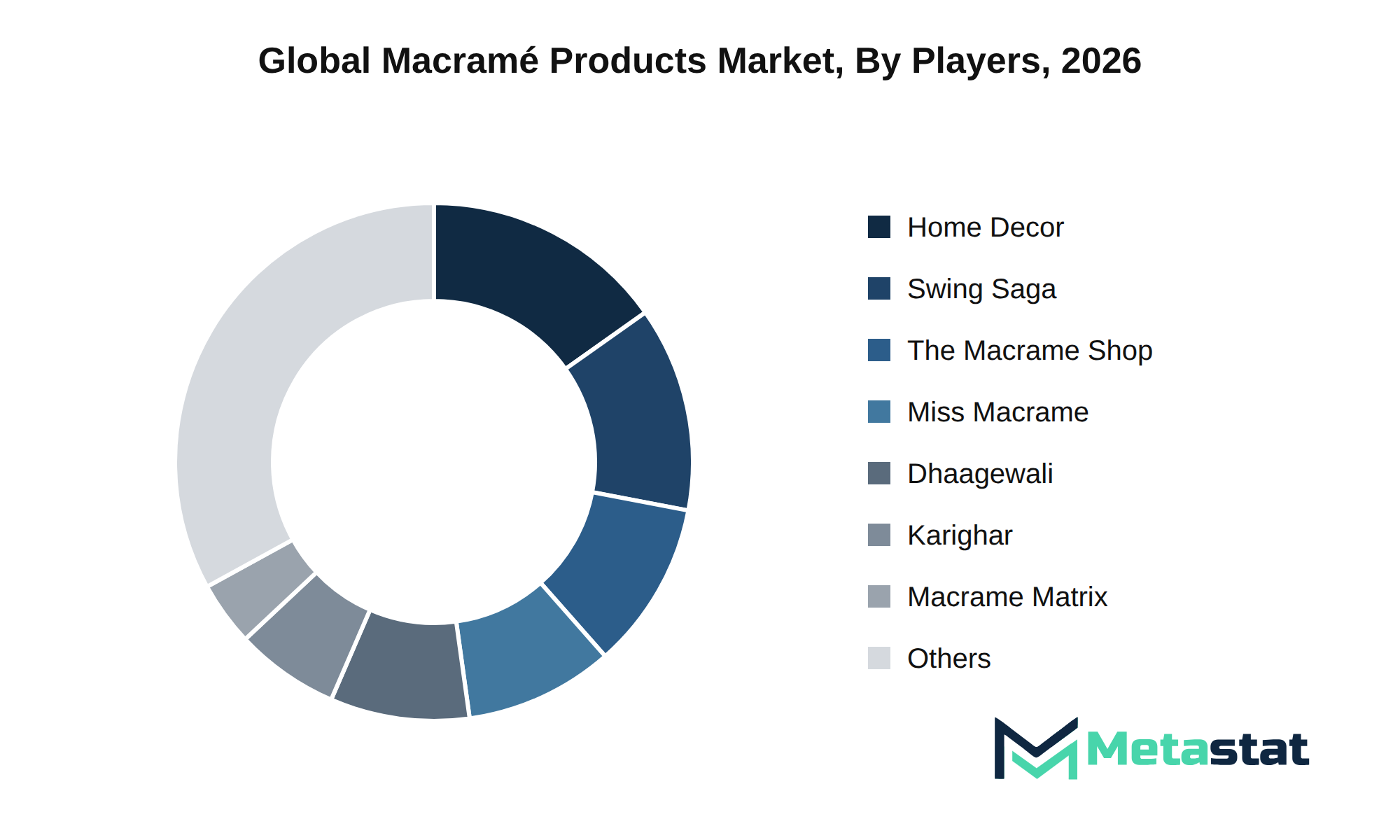
The competitive landscape of the Macramé Products market features a diverse range of companies actively engaging in various strategic behaviors. Firms emphasize product differentiation through unique designs and applications, catering to the growing demand for home décor and fashion accessories. Brand leaders including Home Decor Inc., Swing Saga, and The Macrame Shop focus on enhancing brand equity through innovative marketing strategies and customer retention efforts.
Strategic alliances and partnerships play a significant role in shaping the market dynamics. Companies like Pottery Barn and Urban Outfitters leverage their extensive distribution networks to reach a broader customer base, while specialized players like Macraworks and Hemptique concentrate on niche markets through targeted product offerings. The market experiences continuous evolution due to new entrants and disruptive startups, necessitating established companies to adapt their go-to-market strategies and pricing architectures to maintain competitive advantage.
Intellectual property portfolios serve because crucial assets in the Macramé Products market, with firms investing in research and development to create proprietary technologies that enhance their product offerings. The competitive outlook indicates a positive growth trajectory, with key players prepared to navigate challenges posed by barriers to entry and shifts in consumer preferences. Mergers and acquisitions further reshape the landscape, enabling companies to consolidate resources and strengthen their market positions.
Market size is forecast to rise from USD 2,700.1 million in 2025 to over USD 5,073.9 million by 2033. The base case reflects a growth trajectory at a compound annual growth rate (CAGR) of 8.2%. Factors contributing to this growth include increasing consumer interest in home décor, particularly in sustainable and handcrafted items. The trend toward personalization in home environments supports demand across various buyer segments, particularly in North America and Europe.
In the bull case, accelerated growth in the Macramé Products market could arise from significant technological advancements that enhance production capabilities and supply chain efficiencies. This scenario includes an influx of innovative products that cater to evolving consumer preferences, particularly within the fashion accessories segment. The potential for increased disposable income in emerging markets could further drive demand.
Conversely, the bear case suggests potential headwinds, including fluctuating raw material costs and supply chain disruptions. Regulatory changes concerning sustainable practices could impose additional compliance costs on manufacturers, affecting overall market growth. Demand could exhibit volatility if economic cycles shift, leading to decreased consumer spending in discretionary categories.
Overall, strategic capital allocation, infrastructure commitments, and effective supply chain management will play critical roles in navigating the Macramé Products market. Identifying emerging white-space opportunities will prove essential for stakeholders aiming to capitalize on high-growth pockets within the sector.
The report strategically identifies and profiles the key market players and analyses their core competencies in each sub-segment of the Macramé Products market.
Report Attributes | Details |
Study Period | 2021-2033 |
Base Year | 2025 |
Estimated Year | 2026 |
Forecast Period | 2026-2033 |
Historical Period | 2021-2025 |
Growth Rate | CAGR 8.2% from 2026 to 2033 |
Revenue Unit | USD million |
Segmentation | By Product Type, Application, Distribution Channel, Material, and Region |
By Region | North America (By Product Type, Application, Distribution Channel, Material, and Country)
|
Europe (By Product Type, Application, Distribution Channel, Material, and Country)
| |
Asia Pacific (By Product Type, Application, Distribution Channel, Material, and Country)
| |
South America (By Product Type, Application, Distribution Channel, Material, and Country)
| |
Middle East and Africa (By Product Type, Application, Distribution Channel, Material, and Country)
|
Find answers to common questions about this report
The Macramé Products market size was valued at USD 2,700.1 million in 2025, according to the Metastat Insights study.
The Macramé Products market is projected to grow at a CAGR of 8.2% during the forecast period from 2026 to 2033.
The North America Macramé Products market size is estimated to reach USD 1,618.6 million by 2033.
The leading segment in the Macramé Products market is Home Décor, with a projected value of USD 2,638.4 million by 2033. This segment surpasses others in terms of revenue generation.
Key drivers for the Macramé Products market include the shift towards online shopping, increasing consumer interest in sustainable practices, and the demand for unique home décor items. The growth of digital platforms enhances customer engagement, while a focus on eco-friendly materials aligns with evolving consumer values, driving market expansion.
North America holds the dominant share of the Macramé Products market, with a projected value of USD 1,618.6 million in 2033, representing 34.5% of the total market.
Escalating operating costs, including higher raw material prices and logistics expenses, significantly restrain the Macramé Products market growth. Supply chain disruptions and geopolitical tensions further complicate procurement processes, leading to increased costs and reduced profit margins. Cultural barriers and regional adoption resistors limit market expansion in certain areas.
The shift towards online shopping significantly influences product adoption in the Macramé Products market. Increased internet penetration and smartphone adoption enhance access to e-commerce platforms, while a growing consumer interest in sustainable and eco-friendly products drives demand for macramé items made from natural fibers.
The Macramé Products market is estimated to reach a valuation of USD 5,073.9 million by 2033.
Key players operating in the Macramé Products market include Home Decor Inc., Swing Saga, Dhaagewali, The Macrame Shop, Miss Macrame, and Pottery Barn.
The analysts below cover Consumer Goods research at Metastat Insights.
LEAD ANALYST
Utkarsh Khirodkar is a Lead Market Research Analyst at MetaStat Insight, specializing in market intelligence, technology sector assessments, and competitive strategy.
Tracking maintenance cycle demand for secondary flight display units and terrain collision avoidance systems across regional jet fleets involves complex aftermarket dynamics. MetaStat Insight provided practical analysis separating airline retrofit programs from OEM forward-fit production schedules in North America and Southeast Asia. The supplier matrix highlighted component obsolescence timelines without resorting to vague generalizations. The dataset served as a dependable reference during our annual program review meetings.
Evaluating secondary resin quality across post-consumer packaging streams requires reliable technical segmentation. MetaStat Insight delivered an objective assessment that distinguished between extrusion-grade flake pricing and optical sorting throughput limitations across Western Europe. The competitive positioning breakdown for licensed depolymerization technology providers answered several questions during our feedstock feasibility audit. Their team clarified regional trade restrictions on mixed plastic scrap quickly when our team submitted follow-up requests.
Evaluating sovereign cloud deployments for core banking platforms demands a clear view of data residency regulations and migration exit strategies. MetaStat Insight delivered an exhaustive review of regional latency tolerances, mainframe decommission milestones, and third-party vendor concentration risk. The regulatory compliance mapping across European and Asian financial jurisdictions gave our team a dependable baseline for multi-cloud infrastructure discussions.
Explore related market intelligence reports worth reading alongside this one.
Starting from
$2950