
LEAD ANALYST
Utkarsh Khirodkar is a Lead Market Research Analyst at MetaStat Insight, specializing in market intelligence, technology sector assessments, and competitive strategy.

Global Nonprofit Fundraising Market Size, Share, By Offering Type (Fundraising Software and Platforms and Fundraising Services), By Fundraising Channel (Online Fundraising, Offline Fundraising and Omnichannel Fundraising), By End-User Sector (Human Services and Social Welfare, Education, Healthcare and Medical Research, Religion, International Development and Humanitarian Relief, Environment and Animal Welfare, Arts, Culture, and Heritage and Others (Community Recreation, Amateur Sports)), Industry Analysis, Growth, Trends, and Forecast, 2026-2033
Report ID
MSI-5427
Published
October, 2026
Pages
310 Pages
Format
Historical
Base year
Forecast
Forecast period
Report Details
Market Valuation: Valued at $11 Billion in 2025, projected to reach $22.2 Billion by 2033 at a 9.2% CAGR.
Dominant Segment: Fundraising Software and Platforms is the fastest-growing segment, driven by nonprofits adopting digital tools for donor management, campaign analytics, and multi-channel outreach.
Geographic Lead: North America holds 48.0% of the market in 2025, with the US leading in 2026 due to a mature nonprofit ecosystem, high digital adoption, and strong institutional donor bases.
Channel Shift: Online Fundraising is projected to reach USD 7.7 billion by 2033, growing faster than offline channels as organizations and donors increasingly prefer digital engagement and streamlined giving processes.
End-User Dynamics: Human Services and Social Welfare is the leading end-user sector, forecast to reach USD 5.4 billion by 2033, reflecting strong donor engagement linked to expanding social mandates and crisis response.
What's Inside: The report provides detailed analysis by offering type, fundraising channel, and end-user sector, with regional breakdowns, competitive landscape, and forecasts through 2033.
Choose Your License
Global Nonprofit Fundraising Market
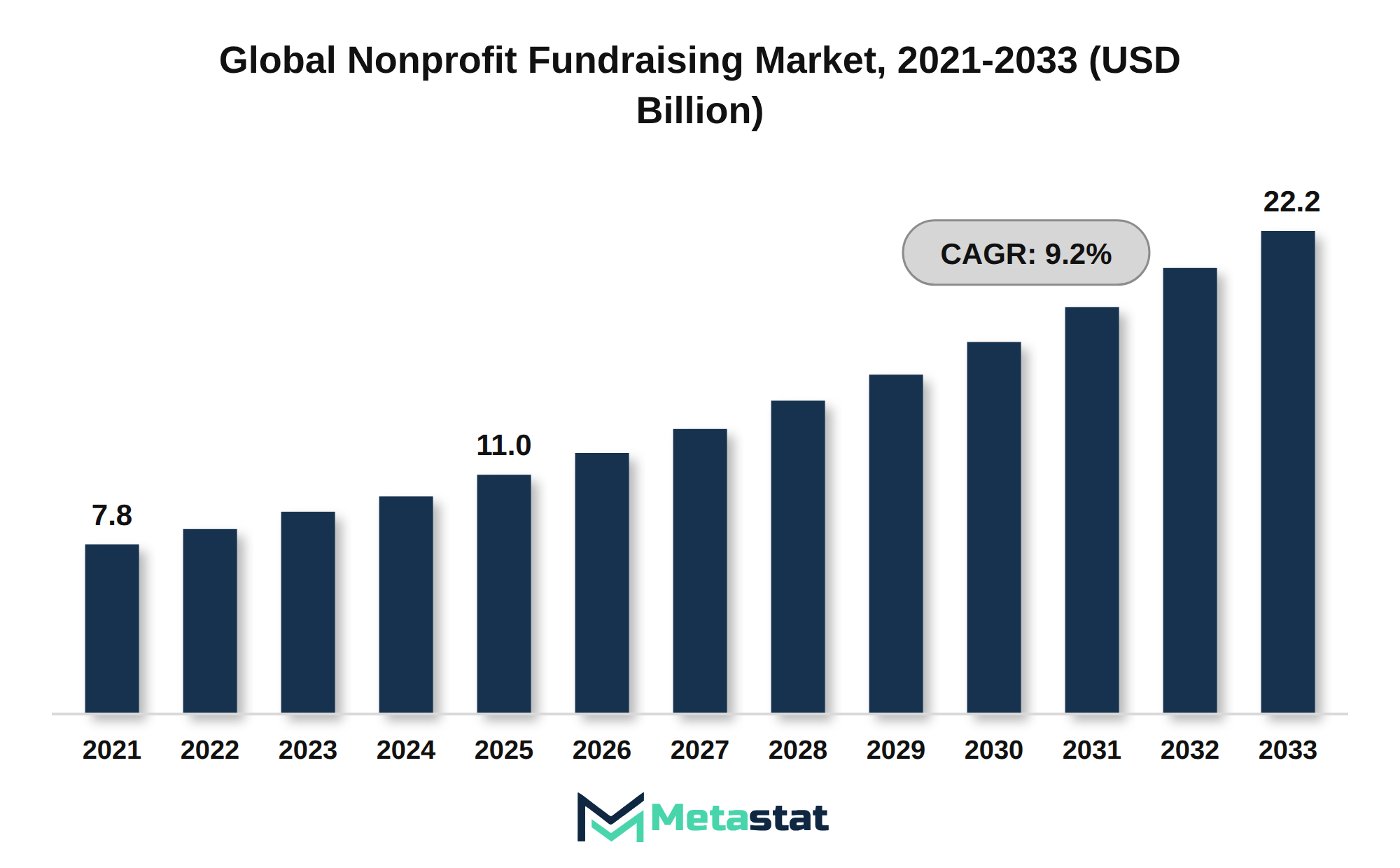
The global Nonprofit Fundraising market was valued at USD 11 billion in 2025 and is projected to reach USD 22.2 billion by 2033, growing at a CAGR of 9.2% over the forecast period.
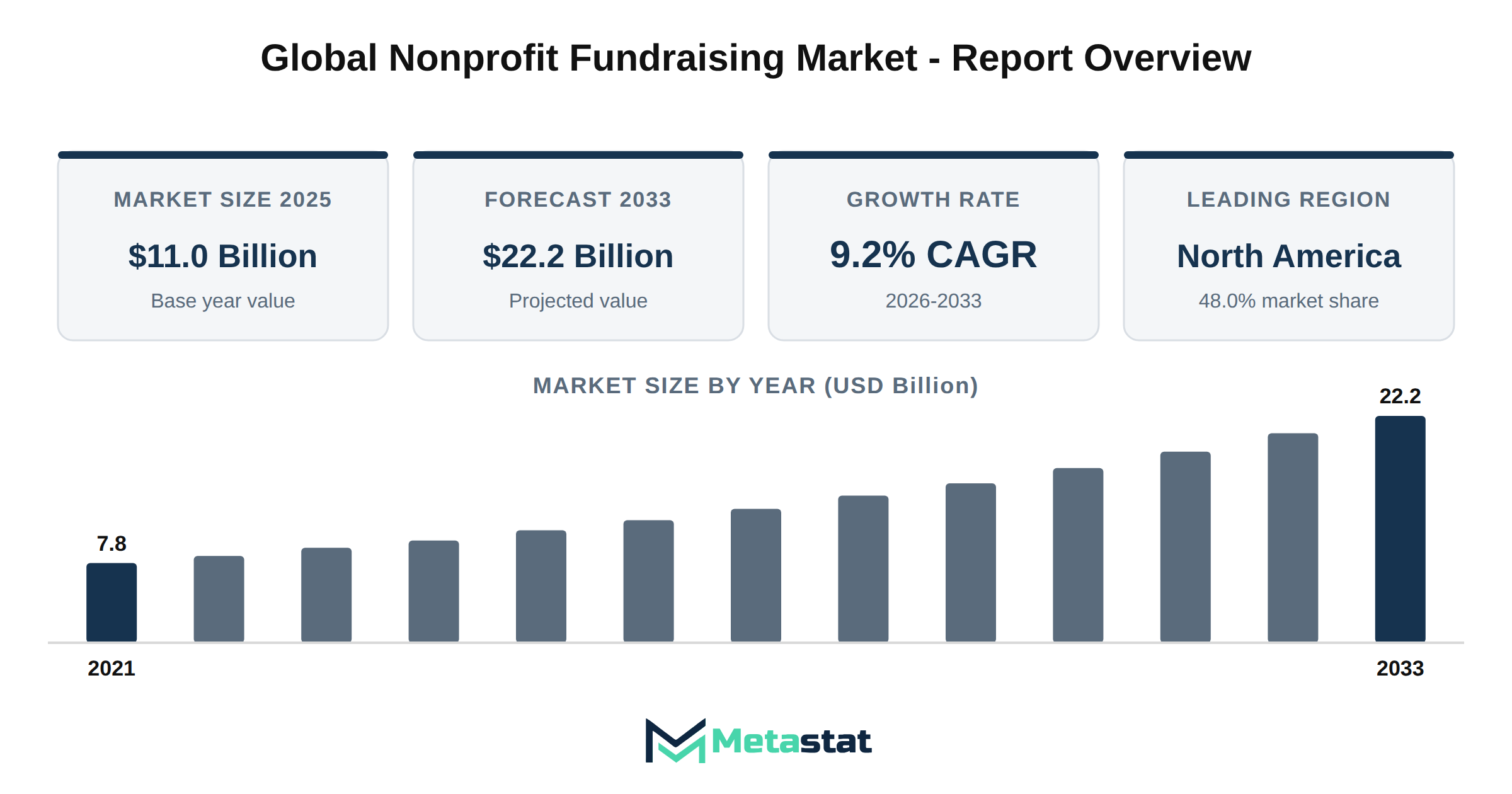
The Nonprofit Fundraising market covers platforms, services, and channels that enable organizations to collect donations and manage supporter engagement. Buyers include human services agencies, educational institutions, and healthcare providers seeking to expand their impact and reach through more effective fundraising. Digital transformation and the adoption of integrated software solutions have altered how organizations approach donor management, campaign tracking, and multi-channel outreach. In structuring these data-driven omnichannel donor funnels, nonprofits frequently adapt conversion methodologies established within retail marketing consulting services.
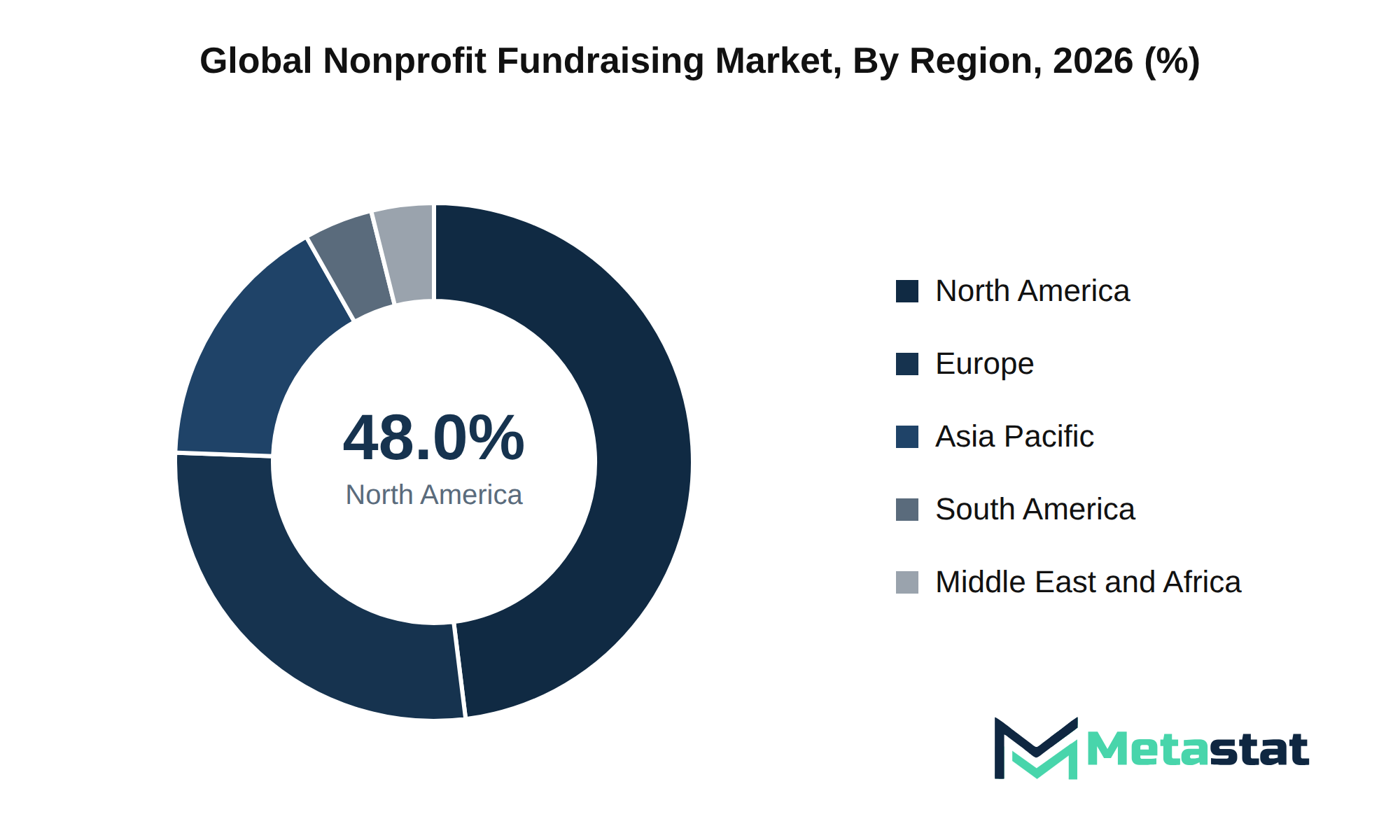
Fundraising Services form the segment with the most value, reflecting demand for consultancy, event management, and strategic campaign execution. North America holds 48.0% of the market in 2025, with the US leading in 2026. A mature nonprofit ecosystem, high digital adoption, and a strong base of institutional donors concentrate activity in this region. Europe ranks second in share. Asia Pacific, South America, and the Middle East and Africa follow.
Growth is driven by the shift to online engagement, supported by the rapid expansion of fundraising software and platforms. Organizations increasingly invest in digital solutions to streamline donation processes. Reaching younger donor demographics through partnerships on creator economy platforms and optimizing campaign performance in real time have become priorities. This transition supports higher transaction volumes and broadens donor participation across regions.
Buyers in the Nonprofit Fundraising market prioritize solutions that streamline donor management and expand access to diversified funding channels. Several organizations invest in advanced fundraising software and platforms to reach wider audiences and track campaign performance in real time. The market covers both technology-based offerings and professional fundraising services, addressing the operational and strategic requirements of nonprofits across sectors including education, healthcare, and human services.
Fundraising Software and Platforms represent the segment with the most value, reflecting a shift toward digitalization and automation of outreach and reporting processes. These platforms enable integration of multiple fundraising channels. Nonprofits seeking scalable tools to optimize donor engagement and adapt to evolving giving patterns drive demand in this segment.
North America holds 48.0% of the market in 2025. The US leads in 2026. Adoption accelerates in this region on the strength of established donor bases and early technology uptake. Rising preference for digital fundraising channels enables organizations to extend their reach and efficiently engage supporters across geographies.
Emerging funding mechanisms and innovative service delivery models are reshaping the nonprofit fundraising landscape, providing organizations with new avenues to generate revenue and enhance their impact. The rise of social entrepreneurship and hybrid organizational models has significantly influenced fundraising strategies. These models combine traditional nonprofit missions with commercial activities, allowing organizations to create sustainable revenue streams while addressing social issues. For instance, companies like TOMS Shoes exemplify this approach by integrating profit with social impact, thereby fostering innovation and resilience within the sector. This shift not only diversifies funding sources but also attracts impact investors seeking to align their financial returns with social outcomes.
As the nonprofit sector evolves, cross-border collaborations and global partnerships have become increasingly essential. Globalization has expanded the reach of nonprofit organizations, enabling them to tackle transnational challenges such as climate change, public health crises, and humanitarian emergencies. Organizations like Médecins Sans Frontières demonstrate the power of international networks in mobilizing resources and expertise across borders, allowing for rapid response to urgent needs. Digital communication tools and international funding platforms facilitate these collaborations, enabling nonprofits to leverage diverse funding sources and share best practices. This interconnectedness enhances the capacity of organizations to implement large-scale projects that can drive significant social change.
The integration of technology plays a critical role in these transformational trends. Nonprofits are increasingly adopting digital platforms that streamline donation processes and enhance donor engagement. Advanced fundraising software and data analytics tools allow organizations to optimize their outreach efforts, track campaign performance in real time, and tailor their messaging to resonate with specific donor demographics. This technological evolution not only improves operational efficiency but also fosters a culture of transparency and accountability, which is crucial for building donor trust and sustaining long-term funding relationships.
Furthermore, the regulatory landscape is evolving to support these innovative models. Enhanced transparency mandates and tax incentives are encouraging donor participation and organizational accountability. As nonprofits adapt to these changes, they must also navigate the complexities of compliance while maximizing their fundraising potential. The emphasis on outcome-based reporting and impact measurement is becoming a standard practice, enabling organizations to demonstrate their effectiveness and attract sustained funding.
In summary, the nonprofit fundraising market is experiencing a paradigm shift characterized by the emergence of hybrid models, cross-border collaborations, and technological advancements. These trends present significant opportunities for organizations to diversify their funding sources, enhance their operational capabilities, and increase their overall impact. As the sector continues to evolve, nonprofits that embrace these transformational changes will be better positioned to thrive in an increasingly competitive landscape.
Rapid adoption of purpose-built fundraising software and advanced donor CRM systems is transforming operational efficiency for nonprofit organizations. Nonprofits are increasingly shifting from manual or legacy tools to digital platforms that streamline donor management, automate communications, and centralize record-keeping. In the Nonprofit Fundraising market, the Fundraising Software and Platforms segment is projected to expand from USD 4.2 billion in 2026 to USD 9.1 billion by 2033, reflecting an 11.8 percent CAGR. Organizations drive this transition by seeking platforms that enable personalized donor engagement, recurring giving programs, and sophisticated analytics for campaign optimization.
Integration of donor CRMs with fundraising software lets organizations track donor journeys, segment outreach, and develop targeted strategies that improve retention and response rates. Nonprofits capture and analyze data across all engagement points, refining appeals and optimizing event planning. This results in higher lifetime value per donor. Digital giving channels are growing more prominent. CRM integration supports multichannel outreach and real-time performance monitoring. This capability benefits organizations serving diverse donor bases or running simultaneous campaigns across online and offline channels.
Commercially, the adoption of integrated fundraising solutions enables operational scaling without proportional increases in administrative cost. Organizations in the Nonprofit Fundraising market improve stewardship, boost donor satisfaction, and enhance reporting transparency, which supports greater donor trust and sustained funding inflows. This technology shift is influencing both vendor strategies and end-user purchasing criteria, with demand rising for platforms that deliver flexible integration, robust data security, and user-friendly automation. Because centralized donor databases hold sensitive payment details and personal donor records, organizations simultaneously evaluate cyber security insurance to mitigate data breach liabilities.
Nonprofits are increasingly adopting recurring giving models to secure predictable and sustainable revenue streams. This approach shifts the traditional one-time donation model toward monthly or quarterly contributions, enabling organizations to plan programs with greater financial certainty. Growth in fundraising software and platforms, projected to expand from USD 4.2 billion in 2026 to USD 9.1 billion by 2033, reflects expanded adoption of automated payment systems that simplify recurring giving for donors and organizations. Donors are responding to streamlined online processes and flexible payment options. These features lower barriers to supporting causes over extended periods.
Recurring giving directly affects both donor retention and average lifetime value, allowing nonprofits to forecast annual revenue more accurately. Donors attracted to subscription-style giving often represent younger or digitally-engaged demographics. This trend increases the average donation frequency even when individual amounts are smaller. The model reduces fundraising costs over time by decreasing the reliance on costly one-off campaigns. Recurring giving enables organizations to allocate resources more efficiently, supporting long-term initiatives and strengthening overall financial health. Buyer preference is shifting toward solutions that facilitate recurring contributions. Suppliers focused on integrating secure card payment processing solutions and automating recurring donor engagement are positioned to capture a larger share of future growth.
Corporate partnerships and payroll giving programs have emerged as strategic channels for nonprofit organizations seeking sustained donor engagement and reliable revenue streams. Organizations across sectors including Human Services and Social Welfare, Education, and Healthcare and Medical Research increasingly tailor their fundraising approaches to align with corporate social responsibility priorities and employee engagement objectives. In this environment, payroll giving - allowing employees to direct a portion of their salary to a nonprofit - enables corporations to support philanthropic initiatives while differentiating their employer brand. These workplace giving initiatives increasingly connect with modern HR tech platforms that manage payroll deductions and employee benefits administration.
Recurring, low-friction giving channels are expanding in volume and influence. For example, Online Fundraising is projected to reach USD 7.7 billion by 2033, reflecting the strong adoption of digital solutions that simplify the payroll giving process for both employers and employees. Leading fundraising software providers in the market, including Blackbaud, Inc., Bonterra, and Neon One, now offer integration features that streamline corporate giving campaigns and support automated payroll deductions, making participation easier and more transparent. This technological alignment reduces administrative overhead for nonprofit clients and increases visibility into donation impact for corporate partners.
Rising demand for workplace giving leads organizations to invest in payroll donation platforms and build strong corporate alliances, securing more predictable funding and deepening donor loyalty. Growing interest in employer-supported giving is supporting further innovation in employer-facing fundraising solutions and intensifying competition among vendors seeking to capture enterprise accounts.
Omnichannel nonprofit fundraising strengthens donor retention by providing a consistent experience across both digital and traditional giving channels. Organizations that combine online, offline, and blended fundraising approaches engage donors at multiple touchpoints, creating more opportunities for personalized communication and relationship-building. The segment’s commercial relevance is reflected in the forecast that omnichannel fundraising is expected to reach USD 7.6 billion by 2033, showing adoption across a wide range of organizations seeking to improve donor loyalty and lifetime value.
Integrated campaigns supported by specialized digital marketing and social media agency services connect email, social networks, events, and direct mail, allowing nonprofits to track donor preferences and respond to behaviors in real time. This level of engagement reduces attrition by reaching donors when and where they are most receptive, avoiding missed connections that occur when efforts remain siloed. Nonprofits investing in omnichannel strategies report higher repeat giving rates, since donors feel recognized and valued through coordinated messaging and consistent branding. The shift toward omnichannel approaches supports retention and justifies higher annual investments in technology and platforms, enabling organizations to maximize both short-term campaign returns and long-term donor commitment.
Widespread uptake of mobile giving solutions and digital wallets is rapidly expanding access for individual donors, particularly younger demographics. The increasing prevalence of smartphones and mobile payment platforms allows donors to complete contributions in seconds, regardless of location. This shift is reducing friction in the giving process and raising overall participation rates, especially for impulse and event-driven donations.
Organizations benefit from higher donation conversion and retention through digital wallets, which provide streamlined recurring giving features and built-in reminders. The market is responding to heightened expectations for convenience by prioritizing mobile-optimized campaigns and integrated payment experiences. Adoption of these digital channels removes barriers to entry and delivers enhanced flexibility, resulting in a notable increase in donation frequency and average gift size, supporting expanded fundraising capacity for organizations of all sizes.
Nonprofit organizations serving older donor bases or operating in regions with limited digital infrastructure encounter reduced uptake of advanced fundraising software and online channels. These groups often rely on traditional offline fundraising due to limited familiarity with digital tools and lower trust in online transactions. Slower adoption within these segments results in smaller average donation volumes and delayed migration to more efficient digital platforms. For fundraising software and platforms, lower digital literacy curbs potential revenue growth, with organizations hesitating to invest in new technology that their staff or supporters find challenging to use. The market experiences a pronounced gap between digitally mature nonprofits and those constrained by digital skill shortages, leading to uneven growth and inconsistent donor engagement levels across end-user sectors.
Growing demand for integrated user experiences is driving suppliers to invest heavily in combining multiple fundraising tools, donor management systems, and payment gateways within their offerings. For providers in the Nonprofit Fundraising market, these integrations often require ongoing customization, technical support, and regular upgrades to keep pace with evolving digital expectations among nonprofits and their donors. Each new integration or feature increases development time and raises operational expenditure, which compresses margins for both software and service suppliers. In response, vendors in the Nonprofit Fundraising market are prioritizing modular architectures and low-code configuration tools, aiming to shorten deployment cycles while managing development costs. This shift helps suppliers accommodate diverse nonprofit requirements without incurring the full expense of bespoke development for every client, yet it restricts their ability to compete on exclusivity or highly tailored functionality, making it more challenging to differentiate offerings in a crowded market.
This segment addresses the shift among nonprofits toward digital-first donor engagement and management tools, appealing to organizations seeking to scale outreach and optimize campaign analytics. Increased reliance on streamlined platforms to track giving, personalize communications, and automate donor journeys is increasing demand, particularly among larger nonprofits and those expanding their online presence. Platform providers introducing scalable cloud-based solutions and integrations with payment gateways support this trend, creating new revenue streams for suppliers. Heightened competition and product innovation within software and platforms are reshaping how organizations approach donor development and engagement strategies.
Generative AI is emerging as a transformative force in the nonprofit fundraising landscape, enhancing donor engagement and optimizing fundraising strategies. By leveraging advanced algorithms, nonprofits can create highly personalized communication tailored to individual donor preferences and motivations. This capability not only increases donor retention but also enhances the lifetime value of contributions. The ability to generate compelling narratives and targeted messaging allows organizations to resonate more deeply with potential donors, fostering a stronger emotional connection and driving higher engagement rates. As nonprofits seek to differentiate themselves in a competitive market, the integration of generative AI into their outreach efforts becomes increasingly vital.
Digital transformation is a key driver reshaping the nonprofit sector, as organizations increasingly adopt technology to streamline operations and enhance stakeholder engagement. The proliferation of digital communication channels has expanded outreach capabilities, enabling nonprofits to engage broader audiences and diversify funding streams. This shift is further fueled by heightened stakeholder expectations for transparency and accountability. Donors, particularly those from younger generations, are demanding more detailed information regarding the impact of their contributions. As a result, nonprofits are compelled to implement robust monitoring and evaluation systems, integrated impact dashboards, and transparent reporting practices. The emphasis on accountability not only builds trust but also influences funding decisions, making impact-focused metrics central to organizational valuation.
Regulatory changes are also playing a significant role in shaping operational practices within the nonprofit sector. Enhanced transparency mandates and compliance requirements are driving organizations to adopt stricter governance frameworks. For instance, the updated guidelines from regulatory bodies necessitate comprehensive disclosure standards that nonprofits must adhere to, influencing their operational agility. Organizations lacking dedicated legal and compliance teams may face challenges in meeting these requirements, risking penalties or potential loss of registration. Additionally, the increasing focus on environmental, social, and governance (ESG) criteria further complicates compliance landscapes. Nonprofits must invest strategically in legal expertise and compliance infrastructure to navigate these complexities effectively. As the regulatory environment continues to evolve, organizations will need to adapt their operational practices to align with these new standards, ensuring that they remain accountable and transparent to their stakeholders.
The Global Nonprofit Fundraising market is segmented based on Offering Type, Fundraising Channel, and End-User Sector.
Platforms in this segment provide nonprofit organizations with digital tools for campaign management, donor engagement, and analytics, supporting both day-to-day initiatives and large-scale giving drives. Demand is strongest among large nonprofits and institutions that require robust automation, reporting, and multi-channel donor communication, reflecting a drive for efficiency and scalability. This segment is growing faster than Fundraising Services, which carries a lower 7.6% CAGR. Cloud-based delivery, rapid onboarding, and API integrations have made software platforms attractive for organizations seeking to scale outreach and personalize donor journeys. These capabilities distinguish the segment from Fundraising Services, which remains more labor-intensive and less responsive to rapid shifts in donor preferences. Digital fundraising is becoming standard, driving continued expansion of software capability and a widening buyer base across regions with high digital adoption rates.
Fundraising Services segment is estimated to reach USD 13.1 billion by 2033, at a CAGR of 7.6% during the forecast period. This segment covers consultancy, campaign management, donor relations, and outsourced solutions delivered by third-party specialists or purpose-built agencies. Organizations in education, healthcare, social welfare, and arts sectors rely on Fundraising Services for tailored campaign execution and strategic advice, particularly when in-house capacity or expertise is limited. Fundraising Services attract established institutions and large-scale campaigns, often with complex compliance, donor reporting, or multinational requirements. Compared to Fundraising Software and Platforms, which is projected to grow faster at an 11.8% CAGR, Fundraising Services expand at a steadier pace, reflecting sustained demand from organizations prioritizing high-touch, relationship-driven engagement over technology-led automation. This segment faces competition from digital tools but retains appeal where personal networks, bespoke donor strategies, and sector-specific knowledge determine campaign outcomes.
Online Fundraising segment is valued at USD 3.7 billion in 2026 and is projected to reach USD 7.7 billion by 2033, at a CAGR of 10.9% during the forecast period. Nonprofit organizations use this channel to engage donors quickly and expand their reach through digital campaigns, social media promotions, and peer-to-peer fundraising. Younger and tech-savvy donors drive demand by favoring internet-centric giving and expecting immediate, transparent donation experiences. Online Fundraising grows faster than Offline Fundraising, with a 10.9% CAGR compared to 5.3%, highlighting the rapid shift to digital platforms. Pure online channels appeal to organizations seeking lower operational costs and streamlined data analytics, while Omnichannel Fundraising blends physical and digital strategies. Rising digital literacy and widespread mobile device use accelerate adoption, leading to higher transaction volumes and recurring giving models. Payment security concerns and challenges with platform integration restrict uptake among legacy institutions. Suppliers respond by prioritizing user-friendly interfaces and automation, which shapes ongoing competition.
Offline fundraising is estimated to reach USD 6.9 billion by 2033, reflecting a compound annual growth rate of 5.3 percent during the forecast period. Charities and nonprofit organizations that rely on traditional donor bases, including religious groups and community service providers, continue to operate legacy face-to-face, event-driven, and mail-based fundraising programs. Offline fundraising remains a preferred channel in regions where personal interaction and trust are central to donor engagement, and digital access is less widespread. Growth in this segment is slower than online fundraising, which posts a 10.9 percent compound annual growth rate. Offline fundraising often commands higher transaction costs due to in-person logistics and event planning, resulting in higher operational overhead. Offline channels serve donor demographics less likely to engage through digital means, supporting sustained participation from older supporters and communities valuing in-person connection.
Nonprofit organizations depend on this segment to unify digital and offline donation touchpoints, targeting supporters who prefer flexibility in how they engage and give. Large institutions and national charities serving diverse age groups adopt omnichannel strategies to drive higher participation and donor lifetime value, especially during peak campaigns. Unlike Online Fundraising, which is projected to reach USD 7.7 billion by 2033 at a 10.9% CAGR, Omnichannel Fundraising is favored by organizations that wish to bridge gaps between in-person events and digital appeals, reducing the risk of donor churn resulting from single-channel fatigue. Donors have responded positively to campaigns that blend email, social media, direct mail, and physical events that require specialized event logistics, reinforcing the segment's relevance. This approach stands out for its adaptability to changing donor expectations and its appeal to organizations seeking deeper engagement rather than pure digital scale.
Valued at USD 2.8 billion in 2026 and projected to reach USD 5.4 billion by 2033, this segment is forecast to expand at a compound annual growth rate of 9.5 percent. Human Services and Social Welfare organizations rely on fundraising to deliver community programs, support vulnerable populations, and respond to crises. Demand in this segment is driven by philanthropic giving from individuals, foundations, and corporate donors responding to social needs and humanitarian imperatives. Growth outpaces the Education segment, which is projected to reach USD 4.5 billion by 2033 at a slower CAGR of 8.7 percent. Buyers in Human Services and Social Welfare include both large national nonprofits and smaller community-based organizations seeking diversified funding to address expanding social mandates. Compared with other end-user sectors, this segment benefits from strong donor engagement linked to urgent social causes, supporting higher fundraising targets and sustained campaign activity. Digital donation tools and storytelling campaigns further accelerate revenue growth in this sector, reinforcing its position among the leading areas of investment.
Education segment is estimated to reach USD 4.5 billion by 2033, at a CAGR of 8.7% during the forecast period. Participants in education include private and public schools, universities, and scholarship foundations seeking to supplement budgets and expand access through endowments, annual giving, and alumni engagement programs. Increasing donor interest in educational equity and technology-enabled learning drives institutions to diversify appeals and adopt more sophisticated fundraising tools. Compared with Human Services and Social Welfare, which is forecast at USD 5.4 billion by 2033 and a CAGR of 9.5%, education moves at a slightly slower pace, reflecting stiffer competition for donor attention and often higher fundraising targets. Education buyers often require specialized campaign management features and donor CRM integration, reflecting the complexity of long-term alumni relationships and capital campaigns.
Healthcare and Medical Research segment is expected to reach USD 4.4 billion by 2033. This segment supports philanthropic initiatives that fund medical research, hospital improvements, patient care programs, and disease awareness campaigns. Hospitals, medical research foundations, and health advocacy groups drive fundraising efforts to finance breakthrough treatments and expand access to care. Rising public concern for emerging health risks and the demand for advanced therapies has led to increased individual, corporate, and institutional giving in this segment. Compared to Human Services and Social Welfare, which is forecast to grow at a compound annual rate of 9.5%, Healthcare and Medical Research does not match this pace but remains one of the highest-revenue end-user sectors. Donors in this category often prioritize projects with measurable impact, favoring digital channels for transparency and engagement. Continued advances in medical technology and a growing emphasis on healthcare equity further influence fundraising strategies and donor priorities in this segment.
Religious organizations seeking to support faith-based programs and sustain community outreach are projected to increase their fundraising activity at a compound annual growth rate of 7% during the forecast period. The market includes a distinct cohort of faith communities, congregations, ministries, and religious institutions that prioritize donor engagement for initiatives including worship facilities, charity drives, education, and humanitarian missions. This segment stands out for its dependence on traditional donor networks and regular giving patterns, often rooted in community trust and longstanding personal relationships. Growth for religion-focused fundraising is slower than Human Services and Social Welfare (9.5% CAGR over the same period), reflecting varying adaptability to digital donation technologies and demographic shifts among core donor bases. Demand is influenced by continued commitment to regular giving among older donors, while digital fundraising adoption in religious sectors remains more gradual compared to education or healthcare, where online channels have accelerated revenue expansion.
International Development and Humanitarian Relief organizations rely on fundraising to support disaster response, poverty alleviation, food security, and global health initiatives. This segment serves international NGOs, multilateral agencies, and charitable foundations operating across borders and relying on donor engagement from both individuals and institutional partners. Demand in this segment is influenced by the increasing frequency of humanitarian crises and heightened global awareness around issues including refugee displacement and climate-driven emergencies. Contributors in this segment tend to include governments, diaspora communities, and multinational donors, which sets it apart from sectors including Arts, Culture, and Heritage that draw support from local or national patrons. The adoption of advanced fundraising technology in International Development and Humanitarian Relief is driven by the need for transparency and rapid fund deployment to regions with limited infrastructure, distinguishing it from Education or Religion, where recurring local giving and established donor networks prevail. Growth in this segment is shaped by both regulatory compliance requirements for cross-border transfers and the volatility of donor sentiment linked to global events. This area differs in its emphasis on scalability and international reach, requiring platforms that facilitate currency conversion and multilingual campaigns.
Organizations focused on environmental protection and animal welfare direct fundraising efforts toward conservation, habitat restoration, wildlife rescue, and advocacy for sustainable practices. These buyers include national and international NGOs, local charities, and grassroots initiatives, each relying on public donations, grants, and corporate partnerships to support their missions. Fundraising in this segment responds strongly to donor priorities that shift with heightened awareness of climate change, biodiversity loss, and animal rights issues. Digital engagement enables rapid mobilization of supporters, with younger donor demographics showing increased willingness to contribute through online campaigns and peer-to-peer platforms. Compared to segments like Religion or Healthcare and Medical Research, these organizations often attract donors based on personal values and urgent environmental events rather than ongoing service delivery. Regulatory changes, including new transparency requirements and sustainability reporting standards, require organizations to document outcomes more rigorously, influencing grant access and donor confidence in this segment.
Preservation groups, museums, and cultural institutions rely on fundraising to sustain operations, curate exhibitions, and support restoration efforts. These organizations typically attract donors with a strong affinity for heritage and the arts, including individuals, philanthropies, and corporate sponsors seeking to demonstrate community engagement. In this segment, demand is shaped by cyclical giving patterns linked to major capital campaigns, event-driven donations, and public grant opportunities, which differ from the recurring donation streams common in social welfare or healthcare. Major donors and local patrons often value transparency and impact reporting, prompting organizations to invest in specialized donor management tools that track project outcomes. Compared to other end-user sectors, arts, culture, and heritage organizations often experience greater sensitivity to economic shifts, with discretionary giving fluctuating more than in segments including healthcare or education, where donor commitment tends to remain stable during downturns.
Sports clubs, community centers, and recreation leagues serve diverse groups seeking to expand access to local facilities, youth programs, and amateur events. Fundraising by these organizations frequently targets grassroots donors and relies on a mix of small-scale campaigns, event sponsorship, and volunteer-driven initiatives. This sub-segment is driven by hyper-local engagement, with organizations prioritizing personal outreach and in-person events over digital-first strategies that dominate segments including Education or Healthcare and Medical Research. Barriers include limited access to national grant networks and lower average donation sizes, which restrict the scale of funded projects compared to larger end-user sectors. Compared to sectors with dedicated fundraising staff, organizations in this category depend more heavily on volunteer labor and seasonal drives, resulting in highly variable resource flows and shorter fundraising cycles. This dynamic creates a distinct operational rhythm that sets it apart from higher-growth, professionally managed segments.
Based on geography, the Global Nonprofit Fundraising market is divided into North America, Europe, Asia-Pacific, South America, Middle East, and Africa.
Charitable giving in the United States, Canada, and Mexico draws strength from a high concentration of large nonprofit organizations and established philanthropic networks. Digital adoption among donors and institutions has accelerated, with advanced fundraising software and platform providers gaining traction in response to growing expectations for transparency and efficient donation experiences. The region’s regulatory standards for nonprofit governance, especially in the United States, increase trust and encourage higher-value contributions, enabling organizations to attract support for large-scale campaigns. Corporate philanthropy and employee matching programs further increase resources, leading to greater fundraising volumes. With North America projected to reach USD 10 billion by the end of 2033 and accounting for 48% of global revenue in 2025, donor engagement strategies that prioritize data-driven outreach and recurring giving models are supporting sustained growth in the region. Leading platform vendors, including Blackbaud, Inc., GoFundMe, and Salesforce, Inc., serve a growing base of both institutional clients and grassroots campaigns, supporting broad penetration of fundraising solutions.
Europe accounted for 27.5 percent of global revenue in the Nonprofit Fundraising market in 2025, reflecting strong demand from established nonprofit organizations, foundations, and institutional donors. Charitable giving in the region is influenced by a tradition of cross-border philanthropy and the involvement of large foundations, particularly in Germany, France, and the UK. Foundations and NGOs adapt to evolving donor expectations for transparency and measurable outcomes, which shapes technology adoption and fundraising models. Regulatory transparency requirements and compliance standards drive investment in digital fundraising infrastructure, impacting both software providers and nonprofit operators. The market in Europe is further shaped by a mature donor base with a preference for recurring giving and multi-year commitments, sustaining higher average donation values and supporting the stability of annual fundraising cycles.
Rising digital adoption across China, India, and Southeast Asia is intensifying the demand for solutions that support remote giving and mobile-based donor engagement. The region is experiencing rapid digitization of payment infrastructure and widespread smartphone use, which supports the expansion of digital fundraising activities. In India, the expansion of digital payment systems is supporting smaller organizations in reaching donors outside their traditional networks. Australia and South Korea see increased collaboration between philanthropic organizations and corporate partners, particularly in response to disaster relief and education funding shortfalls. Social enterprises and grassroots initiatives in Southeast Asia are gaining prominence, supported by cross-border partnerships and community-driven campaigns. In Asia-Pacific, a diverse mix of end-user priorities shapes commercial activity, with technology adoption accelerating access and participation among younger donor segments. Technology providers and platform operators pursue product localization and multilingual interfaces tailored for regional audiences, sustaining competitive differentiation in the region.
Brazil and Argentina are home to several market participants among grassroots organizations and local NGOs, with many focusing on community development and poverty alleviation. The Nonprofit Fundraising market in South America accounted for 4.3 percent of global revenue in 2025, reflecting moderate but stable expansion. Donor engagement in this region often depends on personal relationships, regional networks, and in-person events, with digital fundraising platforms seeing slower uptake compared to other regions. Limited access to advanced fundraising technology, especially outside major urban centers, restricts the pace at which nonprofits transition to fully digital campaigns. Economic volatility in Brazil and Argentina influences charitable giving patterns, placing added emphasis on cost-effective campaign execution and stewardship of funds. Demand for affordable and flexible fundraising services is increasing, shaping competition and encouraging providers to tailor offerings to local realities.
Donor engagement in Saudi Arabia, UAE, and South Africa reflects a combination of traditional giving patterns and a rising interest in digital outreach. Humanitarian organizations and education-focused nonprofits in this region increasingly shift toward online campaigns and mobile-based donations, responding to a younger demographic and broader smartphone access. The region remains a comparatively smaller but progressively diversifying contributor base, with local organizations and international partners expanding digital initiatives. Regulatory environments in key countries continue to shape operational flexibility for cross-border giving and international partnerships, affecting both service providers and technology platform adoption. While infrastructure challenges remain in parts of the region, urban centers and digitally connected populations are driving adoption of fundraising platforms and virtual events. These structural differences create distinct commercial conditions, with both opportunity and variance in growth by country and sector.
The landscape of nonprofit fundraising is evolving, with the rise of social enterprises emerging as a significant new segment. Social enterprises operate at the intersection of nonprofit missions and commercial activities, leveraging market-driven approaches to generate revenue while addressing social issues. This model not only diversifies funding sources but also attracts a new breed of impact investors who are increasingly interested in aligning their financial returns with social outcomes. As these organizations gain traction, they challenge traditional fundraising paradigms and introduce innovative strategies that can enhance sustainability and scalability within the sector.
In addition to the emergence of social enterprises, there are notable shifts in donor demographics that are reshaping engagement strategies. Younger generations, particularly millennials and Gen Z, are increasingly influential in the nonprofit sector. These demographics prioritize transparency, social justice, and digital engagement, seeking authentic connections with the causes they support. Their preferences for engagement are driving nonprofits to adopt more sophisticated fundraising strategies that emphasize storytelling, personalized communication, and interactive experiences. This demographic shift compels organizations to rethink their approaches to donor relations, ensuring they resonate with the values and expectations of a more socially conscious audience.
The impact of digital channels on segment growth cannot be overstated. The proliferation of online platforms has transformed how nonprofits engage with donors, allowing for more immediate and efficient communication. Digital fundraising strategies, including social media campaigns, peer-to-peer fundraising, and crowdfunding, have become standard practices. These channels not only broaden outreach but also enable organizations to tap into previously inaccessible donor pools. Nonprofits are increasingly utilizing data analytics to refine their strategies, optimize donor journeys, and enhance engagement. The ability to track donor behavior and preferences in real-time enables organizations to tailor their approaches, fostering deeper connections and ultimately driving higher retention rates.
Moreover, the integration of advanced technologies such as artificial intelligence and automation is further revolutionizing fundraising efforts. Nonprofits are leveraging AI-driven tools to analyze donor data, predict giving patterns, and create personalized content that resonates with individual motivations. This technological advancement streamlines operational workflows, allowing organizations to allocate resources more efficiently while enhancing the overall donor experience. As the sector continues to embrace these innovations, the potential for increased fundraising success and donor engagement expands significantly.
In summary, the emergence of social enterprises, shifting donor demographics, and the growing influence of digital channels are critical trends shaping the future of nonprofit fundraising. These developments necessitate a proactive approach from organizations aiming to remain competitive and relevant in a rapidly changing environment. By adapting to these trends, nonprofits can enhance their fundraising strategies, foster deeper relationships with supporters, and ultimately drive greater impact in their communities.
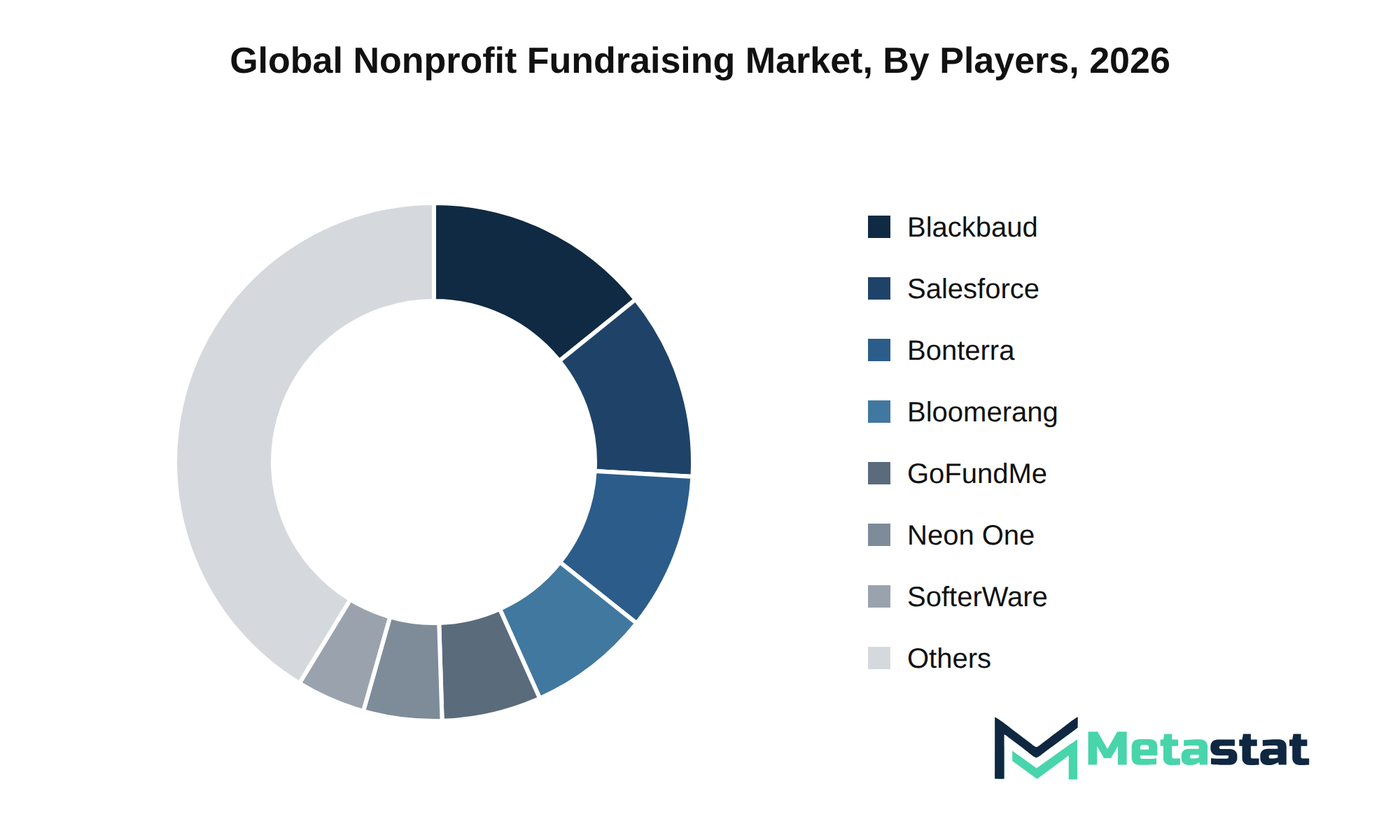
The Nonprofit Fundraising market attracts a diverse set of competitors, with firms differentiating their offerings through technology integration, breadth of platform capabilities, and sector-specific customization. Solution providers including Blackbaud, Inc., Bloomerang, and Salesforce, Inc. focus on comprehensive fundraising software and platforms that support digital engagement, data analytics, and omnichannel donor management. An 11.8% CAGR for fundraising software and platforms signals a strong shift toward digital tools that streamline donation processes and improve campaign effectiveness, as organizations seek scalable and efficient solutions.
Buyers select providers based on platform scalability, ease of integration with existing systems, and support for varied fundraising channels. Price sensitivity influences smaller organizations, while large institutions value advanced analytics and custom reporting. Companies including GoFundMe and Givebutter prioritize user-friendly online fundraising solutions, targeting organizations seeking rapid deployment and broad donor reach. SofterWare, Inc. and FrontStream emphasize service-driven models, delivering fundraising services that complement digital platforms with hands-on support and sector expertise. This competitive field remains dynamic, with investments in software enhancements and sector specialization shaping buyer decisions.
The integration of emerging technologies is fundamentally reshaping competitive strategies within the nonprofit fundraising landscape. As organizations increasingly adopt sophisticated digital tools, vendor differentiation is becoming more pronounced. Providers are leveraging technology not only to enhance their service offerings but also to streamline operations and improve user experiences. For instance, the incorporation of cloud-based CRM systems and data analytics capabilities allows organizations to tailor their fundraising approaches to specific donor segments, thereby driving engagement and maximizing contributions. This technological integration is essential for nonprofits aiming to stand out in a crowded market, as it enables them to offer unique value propositions that resonate with their target audiences.
AI-driven fundraising tools are at the forefront of this transformation, providing significant competitive advantages to organizations that embrace them. These tools facilitate personalized donor engagement through advanced data analysis, allowing nonprofits to craft tailored communication strategies that align with individual donor motivations. The use of predictive analytics enhances the ability to forecast fundraising trends and donor behavior, enabling organizations to allocate resources more effectively. As a result, nonprofits that adopt AI technologies can not only improve their fundraising outcomes but also foster deeper relationships with their donors, ultimately leading to increased loyalty and long-term support.
The growing emphasis on data transparency and accountability is another critical factor reshaping market positioning within the nonprofit sector. Stakeholders, including donors and regulatory bodies, are demanding higher levels of transparency regarding how funds are utilized and the impact of various initiatives. This shift has prompted organizations to invest in robust monitoring and evaluation systems that provide clear metrics on program effectiveness and resource allocation. By adopting these practices, nonprofits can enhance their credibility and build trust with their stakeholders, which is increasingly vital for securing funding in a competitive environment. The focus on transparency not only meets stakeholder expectations but also positions organizations favorably within the market, as they can demonstrate their commitment to accountability and measurable impact.
In summary, the integration of emerging technologies, particularly AI-driven tools, is revolutionizing the competitive strategies of nonprofits. This technological evolution enables organizations to differentiate themselves through enhanced donor engagement and operational efficiency. Additionally, the increasing demand for data transparency and accountability is reshaping market dynamics, compelling nonprofits to adopt rigorous evaluation practices. Collectively, these trends are fostering a more agile and responsive nonprofit sector, capable of adapting to the evolving landscape and meeting the needs of diverse stakeholders.
Achieving this projected growth depends on sustained expansion in digital giving channels, with Online Fundraising expected to reach USD 7.7 billion by 2033. This growth reflects the sector’s transition toward data-driven engagement, automation, and scalable donor management tools, which streamline operations for organizations in Human Services and Social Welfare and Education - two sectors with strong forecasted demand.
North America remains central to overall market progress, projected to account for USD 10 billion by 2033, reflecting a mature ecosystem for both technology-enabled and traditional giving channels. This regional leadership supports steady adoption rates and encourages investment across other regions. However, the main risk to the outlook stems from economic volatility, particularly in regions with more limited digital infrastructure, including South America or parts of the Middle East and Africa. Economic slowdowns or regulatory uncertainty in these areas restrict fundraising capacity and slow market expansion, placing downward pressure on the forecast CAGR of 9.2% through 2033.
As the nonprofit fundraising landscape evolves, anticipated shifts in donor behavior will be significantly influenced by technological advancements. The integration of artificial intelligence, blockchain, and advanced data analytics is transforming how organizations engage with potential donors. These technologies enable nonprofits to create highly personalized experiences that resonate with individual motivations, thereby enhancing donor retention and lifetime value. Furthermore, as younger generations, particularly millennials and Gen Z, become more prominent in the donor pool, their expectations for transparency and social justice alignment will drive nonprofits to adopt more authentic engagement strategies. This shift towards digital-first approaches will not only streamline operations but also redefine the overall donor experience, fostering a more engaged and loyal support base.
However, the nonprofit fundraising market must navigate potential impacts stemming from economic volatility. Fluctuations in the economy can lead to decreased philanthropic giving, as individuals and corporations reassess their financial commitments during downturns. Such economic pressures may compel organizations to adapt their fundraising strategies, focusing on diversifying income streams and developing sustainable financial models to mitigate risks associated with funding dependency. The ability to pivot in response to economic conditions will be crucial for nonprofits aiming to maintain operational stability and fulfill their missions amidst uncertainty.
In addition to economic factors, future regulatory developments will play a pivotal role in shaping nonprofit operations. As governments worldwide enact stricter compliance standards and emphasize data privacy, financial accountability, and anti-fraud measures, nonprofits will need to invest in robust legal frameworks and compliance infrastructure. These regulatory changes are designed to enhance transparency and protect donor interests, but they also necessitate a shift in how organizations allocate resources. Nonprofits lacking the capacity to navigate complex regulatory environments risk penalties, reputational damage, and potential loss of funding eligibility. As such, a proactive approach to compliance will become integral to organizational strategy, ensuring that nonprofits can adapt to evolving regulatory landscapes while maintaining focus on their core missions.
Ultimately, the interplay of technological innovation, economic fluctuations, and regulatory evolution will define the future of the nonprofit fundraising market. Organizations that embrace these changes, leveraging technology to enhance donor engagement and adapting to economic realities while ensuring compliance, will be better positioned to thrive in this dynamic environment. By fostering resilience through diversified funding strategies and robust operational frameworks, nonprofits can continue to fulfill their missions and create meaningful impact in the communities they serve.
By Offering Type: Fundraising Software and Platforms, Fundraising Services
By End-User Sector: Human Services and Social Welfare, Education, Healthcare and Medical Research, Religion, International Development and Humanitarian Relief, Environment and Animal Welfare, Arts, Culture, and Heritage, Others (Community Recreation, Amateur Sports)
The report strategically identifies and profiles the key market players and analyses their core competencies in each sub-segment of the Nonprofit Fundraising market.
|
Report Attributes |
Details |
|
Study Period |
2021-2033 |
|
Base Year |
2025 |
|
Estimated Year |
2026 |
|
Forecast Period |
2026-2033 |
|
Historical Period |
2021-2025 |
|
Growth Rate |
CAGR 9.2% from 2026 to 2033 |
|
Revenue Unit |
USD billion |
|
Segmentation |
|
|
By Region |
North America (By Offering Type, Fundraising Channel, End-User Sector, and Country)
|
|
|
|
Asia Pacific (By Offering Type, Fundraising Channel, End-User Sector, and Country)
|
|
|
|
|
Middle East and Africa (By Offering Type, Fundraising Channel, End-User Sector, and Country)
|
Find answers to common questions about this report
The Nonprofit Fundraising market size was valued at USD 11 billion in 2025.
The projected CAGR is 9.2% for the forecast period from 2026 to 2033.
The North America Nonprofit Fundraising market size is estimated to reach USD 10 billion by 2033.
Fundraising Services leads by value, reaching USD 13.1 billion in 2033, compared to Fundraising Software and Platforms at USD 9.1 billion in the same year. This ranking is based on the 2033 forecast values for each type segment.
Widespread uptake of mobile giving solutions and digital wallets is expanding donor access and increasing donation frequency, especially among younger demographics. Demand for integrated digital fundraising tools, donor management systems, and payment gateways is increasing supplier investment and product innovation.
North America holds the dominant share with 48 percent of global revenue. This region is projected to reach USD 10 billion by 2033, the highest value among all regions.
Nonprofit organizations serving older donor bases or operating in regions with limited digital infrastructure encounter reduced uptake of advanced fundraising software and online channels. Lower digital literacy among staff and supporters curbs potential revenue growth, as organizations hesitate to invest in technology that is challenging to use.
Widespread adoption of mobile giving solutions and digital wallets is increasing donor participation and supporting higher donation frequency. Growing expectations for convenient, mobile-optimized giving experiences are prompting organizations to invest in integrated fundraising platforms and digital engagement tools.
The Nonprofit Fundraising market is estimated to reach a valuation of USD 22.2 billion by 2033.
Companies active in nonprofit fundraising solutions include Blackbaud, Inc., Bonterra, Bloomerang, SofterWare, Inc., Neon One, Salesforce, Inc., GoFundMe, and Virtuous Software.
The nonprofit fundraising market is projected to grow from USD 11 billion in 2025 to USD 22.2 billion by 2033, with a CAGR of 9.2%. This growth is driven by the shift to online engagement and the adoption of integrated fundraising software and platforms, which enhance operational efficiency and donor management. North America holds the largest market share at 48%, followed by Europe at 27.5%, indicating a mature nonprofit ecosystem in these regions. The increasing focus on digital solutions and recurring giving models is helping organizations secure predictable revenue streams and improve donor retention. Additionally, corporate partnerships and payroll giving are emerging as strategic channels to enhance donor engagement and support fundraising efforts.
The analysts below cover Professional Services research at Metastat Insights.
LEAD ANALYST
Utkarsh Khirodkar is a Lead Market Research Analyst at MetaStat Insight, specializing in market intelligence, technology sector assessments, and competitive strategy.

PRINCIPAL CONSULTANT - ENTERPRISE AI & EMERGING TECHNOLOGIES
Banking & Finance · Electronics and Semiconductor · Energy and Power · Healthcare IT · Information & Technology · Professional Services
Vijay Gunti is a Principal Consultant at MetaStat Insight, bringing over two decades of experience across enterprise digital transformation, technology strategy, and intelligent systems.

PRINCIPAL CONSULTANT - QUALITY SYSTEMS & COMPLIANCE
Electronics and Semiconductor · Machinery & Equipment · Professional Services
Omkar Phadtare is an Industry Consultant at MetaStat Insight, specializing in quality systems, regulatory compliance, and standards benchmarking to drive data-driven market intelligence and strategic industry research.

LEAD CONSULTANT - COMMUNICATION, TELECOM, AND IT
Electronics and Semiconductor · Information & Technology · Machinery & Equipment · Professional Services
Ravindra Sathe Consultants for Communication, Telecom, and IT at MetaStat Insight. He leads the firm's industry research initiatives across telecommunications infrastructure, digital connectivity, enterprise networking, and emerging information technology domains.
In the biological seed treatment space, registration timelines vary drastically between the European Union, Brazil, and North America. The MetaStat Insight research handled these cross-border regulatory barriers with genuine nuance, mapping commercialization pathways alongside historical field adoption rates. The segmentation between microbial strains and biochemical active ingredients was particularly well structured.
Our team was tracking whether regional recycling infrastructure could realistically absorb the growing volume of lithium iron phosphate batteries over the next decade. The report did a solid job separating announced hydrometallurgical plant capacity from active, permitted operational throughput. That distinction made the feedstock availability projections and regional recovery rate models far more credible than standard commercial overviews.
Tracking capacity expansion in single-use bioprocessing requires dependable data on raw material availability and cleanroom-grade polymer supply chains. The competitive landscape chapter gave a grounded evaluation of secondary component suppliers across North America and Asia-Pacific rather than simply reprinting press releases. Having that level of supplier benchmarking helped clarify dual-sourcing considerations for our clinical pipeline planning.
Explore related market intelligence reports worth reading alongside this one.