
LEAD ANALYST
Utkarsh Khirodkar is a Lead Market Research Analyst at MetaStat Insight, specializing in market intelligence, technology sector assessments, and competitive strategy.

Patient Centric Healthcare App Market Size, Share, By Type (Phone-Based Apps, Web-Based Apps, and Others), By Category (Diseases & Treatment Management, Wellness Management, and Others), By Operating System (Android, iOS, Windows, and Others), Industry Analysis, Growth, Trends, and Forecast, 2026-2033
Report ID
MSI-2313
Published
February, 2026
Pages
303 Pages
Format
Report Details
Choose Your License
Patient Centric Healthcare App Market
Patient centric healthcare apps can be installed in devices such as mobiles, tablets, and laptops to provide health-related services. Patient centric healthcare apps are used by patients to monitor various aspects such as diseases & treatment management, wellness management and others.
The rising prevalence and incidence of chronic diseases is booting the wearable patch market. For instance, according to the World Health Organization, the chronic disease had risen by 57% in 2020. According to the National Health Council, chronic diseases affect around 133 million Americans, representing more than 45% of the total population in 2018. According to the European Commission, Chronic diseases together account for over 86% of deaths in the European Union. Further, the increasing use of smartphones in healthcare is a key driving factor of the market. In Smartphones, the healthcare app helps to improve the efficiency of care delivery, reduce healthcare costs, and enable greater access to high-quality care through telemedicine. Apps for healthcare in smartphone helps to empower patients and take more responsibility for their own health and provide the ability to interface and collaborate more with their providers. The apps in smartphones enable patients to track their fitness, heart rate and single-lead ECGs, record calorie and diet information, enter medication reminder alarms, manage diabetes, and access their lab results, reports and even provide their electronic medical records (EMR). However, the risk of data security might hamper market growth. Moreover, increasing collaboration among healthcare providers and app developers would provide lucrative opportunities for the market in the coming years.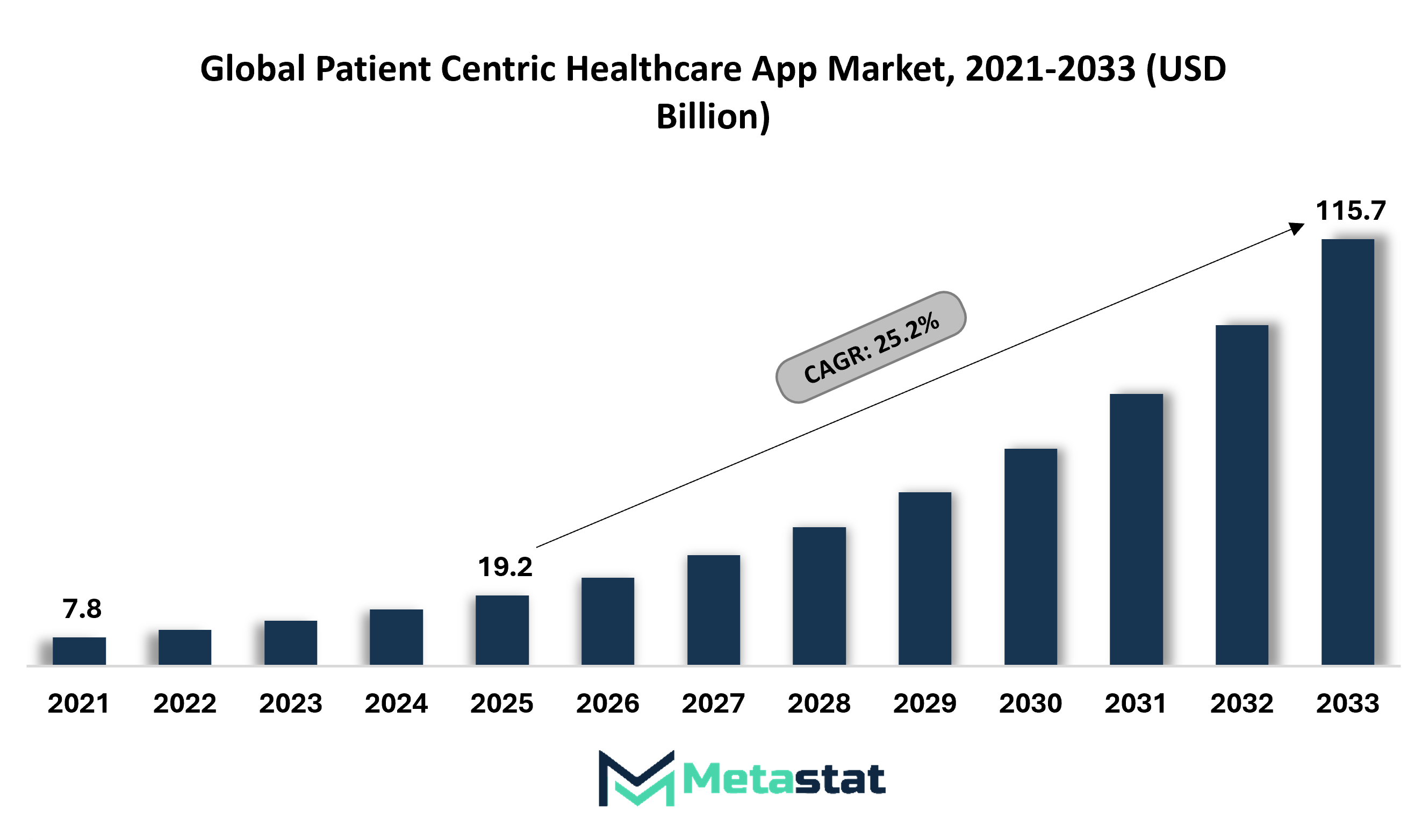
Global patient centric healthcare app market is mainly classified based on type, category, and operating system. Type is further segmented into Phone-Based Apps, Web-Based Apps, and Others. By category, the market is divided into Diseases & Treatment Management, Wellness Management, Others. By operating system, the market is further divided into Android, iOS, Windows, and Others.
Based on type, phone-based apps showed significant growth in 2020, owing to the increasing development of phone-based health apps. For instance, around 165,000 published phone-based health apps available, and the U.S. Food and Drug Administration (FDA) recently developed guidelines for regulating the small fraction of these clinical-grade apps. Moreover, increasing regulatory approval for phone-based health app is booting the patient centric healthcare app market. For instance, The US Food and Drug Administration has approved reSET-O, a mHealth app developed by Pear Therapeutics that offers a 12- week treatment plan that delivers cognitive behavioral therapy and fluency training to reinforce proficiency. The digital health platform is available to providers as a prescription-based digital therapeutic alongside the standard of care for OUD treatment.
Based on geography, the global patient centric healthcare app market is divided into North America, Europe, Asia-Pacific, South America, and Middle East & Africa. North America is further divided into the U.S., Canada, and Mexico, whereas Europe consists of the UK, Germany, France, Italy, and Rest of Europe. Asia-Pacific is segmented into India, China, Japan, South Korea, and Rest of Asia-Pacific. The South America region includes Brazil, Argentina, and the Rest of South America, while the Middle East & Africa is categorized into GCC Countries, Egypt, South Africa, and Rest of Middle East & Africa.
North America was dominating the patient centric healthcare app market in 2020 due to the increase in adoption of smartphones, growing awareness of newer technologies, increase in consumer preferences toward healthy lifestyles, rising prevalence and incidence of chronic diseases, and partnership between companies to develop patient centric healthcare app. For instance, UnitedHealth Group and Microsoft Corp. have partnered to introduce the ProtectWell app. The ProtectWell app includes an AI-powered health care bot that asks the users a series of questions to screen for COVID-19 symptoms or exposure.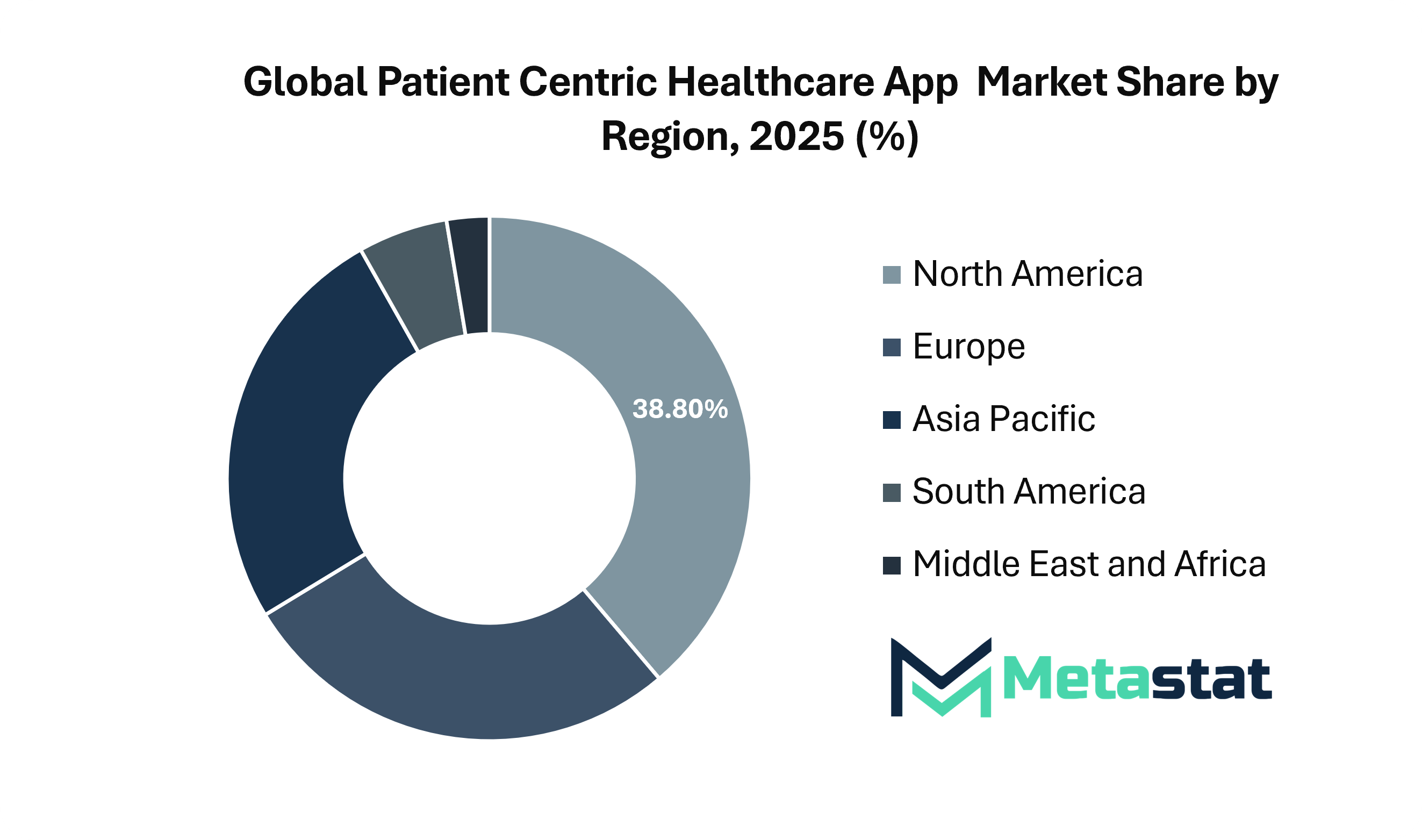
Major players operating in the patient centric healthcare app industry include IBM, F. Hoffmann-La Roche Ltd, Merck & Co Inc., Koninklijke Philips NV, Fitbit, Inc., MobileSmith, Inc., Klick, Inc., Apple, Inc., Siemens AG, and Pfizer Inc.
Rising investment for the development of patient centric healthcare app, the collaboration between companies to develop patient centric healthcare app and expand their market presence, commercialization of new patient centric healthcare app, and strategic agreement between companies to expand its presence for patient centric healthcare app internationally are some of the major strategies adopted by the players. For instance, on December 8, 2020, Tilak Healthcare has signed an agreement with Novartis Pharma AG for the international promotion of Tilak Healthcare’s first clinically validated mobile app for patient remote vision monitoring, OdySight. OdySight is a smartphone app that helps to engage and monitor patients with chronic eye diseases associated with aging. The OdySight app is available by prescription and includes accurate vision tests and fun puzzles to boost patient engagement.
|
Report Attributes |
Details |
|
Study Period |
2021-2033 |
|
Base Year |
2025 |
|
Estimated Year |
2026 |
|
Forecast Period |
2026-2033 |
|
Historical Period |
2021-2025 |
|
Growth Rate |
CAGR 25.2% from 2026 to 2033 |
|
Revenue Unit |
USD billion |
|
Sales Volume Unit |
Thousand Units |
|
Segmentation |
By Type, Category, Operating System, and Region |
|
By Region |
North America (By Type, Category, Operating System, , and Country)
|
|
|
Europe (By Type, Category, Operating System, , and Country)
|
|
|
Asia Pacific (By Type, Category, Operating System, , and Country)
|
|
|
South America (By Type, Category, Operating System, , and Country)
|
|
|
Middle East and Africa (By Type, Category, Operating System, and Country)
|
Find answers to common questions about this report
The Patient Centric Healthcare App market is projected to grow at a CAGR of 25.2% during the forecast period from 2026 to 2033.
According to Metastat Insights analysis, the North America Patient Centric Healthcare App market size is estimated to reach USD 40.6 billion by 2033.
The Metastat Insights study reveals that the Patient Centric Healthcare App market size was valued at USD 19.2 billion in 2025.
The analysts below cover Healthcare IT research at Metastat Insights.
LEAD ANALYST
Utkarsh Khirodkar is a Lead Market Research Analyst at MetaStat Insight, specializing in market intelligence, technology sector assessments, and competitive strategy.

LEAD PRINCIPAL ANALYST, PHARMA AND HEALTHCARE
Food and Beverages · Healthcare · Healthcare IT · Medical Devices
Ajay Devgire is the Lead Healthcare Analyst at MetaStat Insight, leading strategic research and market intelligence initiatives across the global healthcare domain.

PRINCIPAL CONSULTANT - ENTERPRISE AI & EMERGING TECHNOLOGIES
Banking & Finance · Electronics and Semiconductor · Energy and Power · Healthcare IT · Information & Technology · Professional Services
Vijay Gunti is a Principal Consultant at MetaStat Insight, bringing over two decades of experience across enterprise digital transformation, technology strategy, and intelligent systems.
Ambulatory surgical centers have very different purchasing cycles for robotic-assisted surgery platforms than major hospital networks. The MetaStat Insight study focused squarely on capital expenditure depreciation, procedural reimbursement pathways, and surgeon training overhead. That operational clarity made it much simpler to validate multi-year procedure growth forecasts against actual ambulatory center adoption patterns.
When planning edge sensor rollouts across refinery environments, generic IoT reports typically miss the harsh-environment certification bottlenecks. MetaStat Insight gave an objective evaluation of ATEX and Class 1 Division 2 hardware availability, along with realistic five-year maintenance cycle cost projections. The comparison of wireless mesh versus private cellular backhaul helped our team pressure-test network reliability models for remote processing facilities.
In the biological seed treatment space, registration timelines vary drastically between the European Union, Brazil, and North America. The MetaStat Insight research handled these cross-border regulatory barriers with genuine nuance, mapping commercialization pathways alongside historical field adoption rates. The segmentation between microbial strains and biochemical active ingredients was particularly well structured.
Explore related market intelligence reports worth reading alongside this one.