
LEAD ANALYST
Utkarsh Khirodkar is a Lead Market Research Analyst at MetaStat Insight, specializing in market intelligence, technology sector assessments, and competitive strategy.

Semiconductor Lead Frame Market By Thickness (4 mil, 8 mil, 20 mil, 25 mil, 30 mil, and 40 mil), By Type (Stamping Process Lead Frame and Etching Process Lead Frame), By Application (Integrated Circuit, Discrete Device, and Others), Industry Analysis, Size, Share, Growth, Trends, and Forecast, 2023-2030
Report ID
MSI-2525
Published
February, 2026
Pages
256 Pages
Format
Report Details
Choose Your License
Semiconductor Lead Frame Market
MARKET OVERVIEW
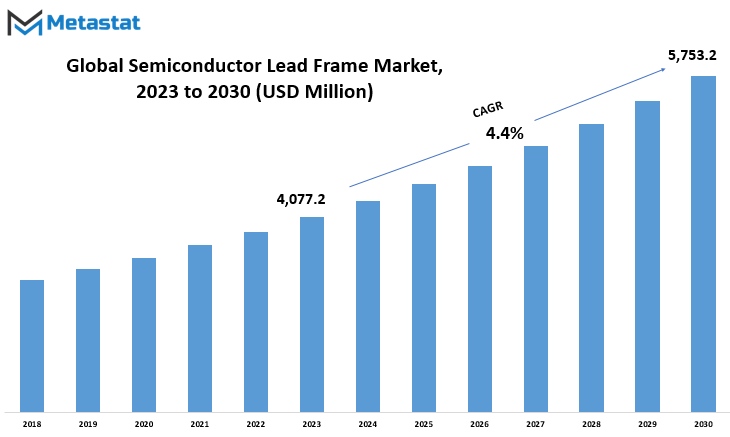
The Global Semiconductor Lead Frame market is estimated to reach $5,753.2 Million by 2030; growing at a CAGR of 4.4% from 2023 to 2030.
The Global Semiconductor Lead Frame market within the broader landscape of semiconductor manufacturing. A semiconductor lead frame serves as a critical component in the assembly of semiconductor devices, playing a pivotal role in the overall functionality and reliability of electronic circuits. It represents more than just a mechanical support for the semiconductor chip; rather, it is an integral element that connects the chip to the external environment, enabling efficient electrical conductivity and signal transmission.
The semiconductor lead frame is not merely a passive structure; it is a conduit for electrical signals, contributing significantly to the overall performance of semiconductor devices. As electronic devices continue to shrink in size while demanding higher functionality, the significance of lead frames becomes even more pronounced. Their role extends beyond mechanical support to include thermal management, electrical connectivity, and the overall structural integrity of semiconductor packages.
In semiconductor manufacturing, the importance of lead frames cannot be overstated. They are the unsung heroes that facilitate the seamless integration of semiconductor chips into various electronic applications, ranging from consumer electronics to automotive systems. The design and material composition of lead frames are critical factors that influence the thermal and electrical performance of the final semiconductor package.
One of the key aspects that make the Global Semiconductor Lead Frame market noteworthy is its adaptability to diverse applications. Lead frames are customized to meet the specific requirements of different semiconductor devices, considering factors such as size, power dissipation, and electrical characteristics. This versatility is a testament to the industry's commitment to innovation and precision engineering.
Furthermore, the market's significance is amplified by its close association with the ever-evolving landscape of semiconductor technology. As semiconductor manufacturers push the boundaries of what is technologically feasible, lead frames must keep pace with the demands of cutting-edge semiconductor devices. The market is not only about meeting current needs but also about anticipating future trends and requirements in the semiconductor industry.
The Global Semiconductor Lead Frame market is a dynamic and indispensable segment of the semiconductor industry. Beyond being a mechanical support structure, lead frames play a crucial role in ensuring the electrical functionality, thermal management, and overall reliability of semiconductor devices. As electronic technologies continue to advance, the market remains at the forefront, adapting and innovating to meet the evolving demands of the semiconductor industry. Its significance lies not only in the present but also in its ability to shape the future of electronic devices and applications.
GROWTH FACTORS
The global semiconductor lead frame market experiences growth driven by certain key factors. These factors play a crucial role in shaping the market dynamics. On the flip side, there are challenges that may impede the growth trajectory of the market. Additionally, opportunities arise, presenting a promising outlook for the market's future. The growth of the global semiconductor lead frame market can be attributed to several key driving factors. These factors act as catalysts, propelling the market forward. They contribute to the overall positive trend observed in the market. The specifics of these driving factors might vary, ranging from technological advancements to increasing demand for semiconductor products.
However, it is essential to acknowledge the challenges that the market faces. Certain factors have the potential to hinder the growth of the global semiconductor lead frame market. These obstacles may vary, ranging from regulatory hurdles to economic uncertainties. Understanding and addressing these challenges becomes imperative for stakeholders to navigate the market effectively.
Despite the hurdles, there exist opportunities that can be leveraged to foster the market's growth in the coming years. Identifying and capitalizing on these opportunities is crucial for businesses operating in the semiconductor lead frame market. Opportunities can emerge from various sources, such as emerging markets, technological innovations, or shifts in consumer preferences.
The global semiconductor lead frame market experiences a dynamic interplay of growth factors, challenges, and opportunities. Recognizing the significance of these elements is pivotal for market participants. By navigating through challenges and capitalizing on opportunities, stakeholders can position themselves advantageously in the evolving landscape of the semiconductor lead frame market.
MARKET SEGMENTATION
By Thickness
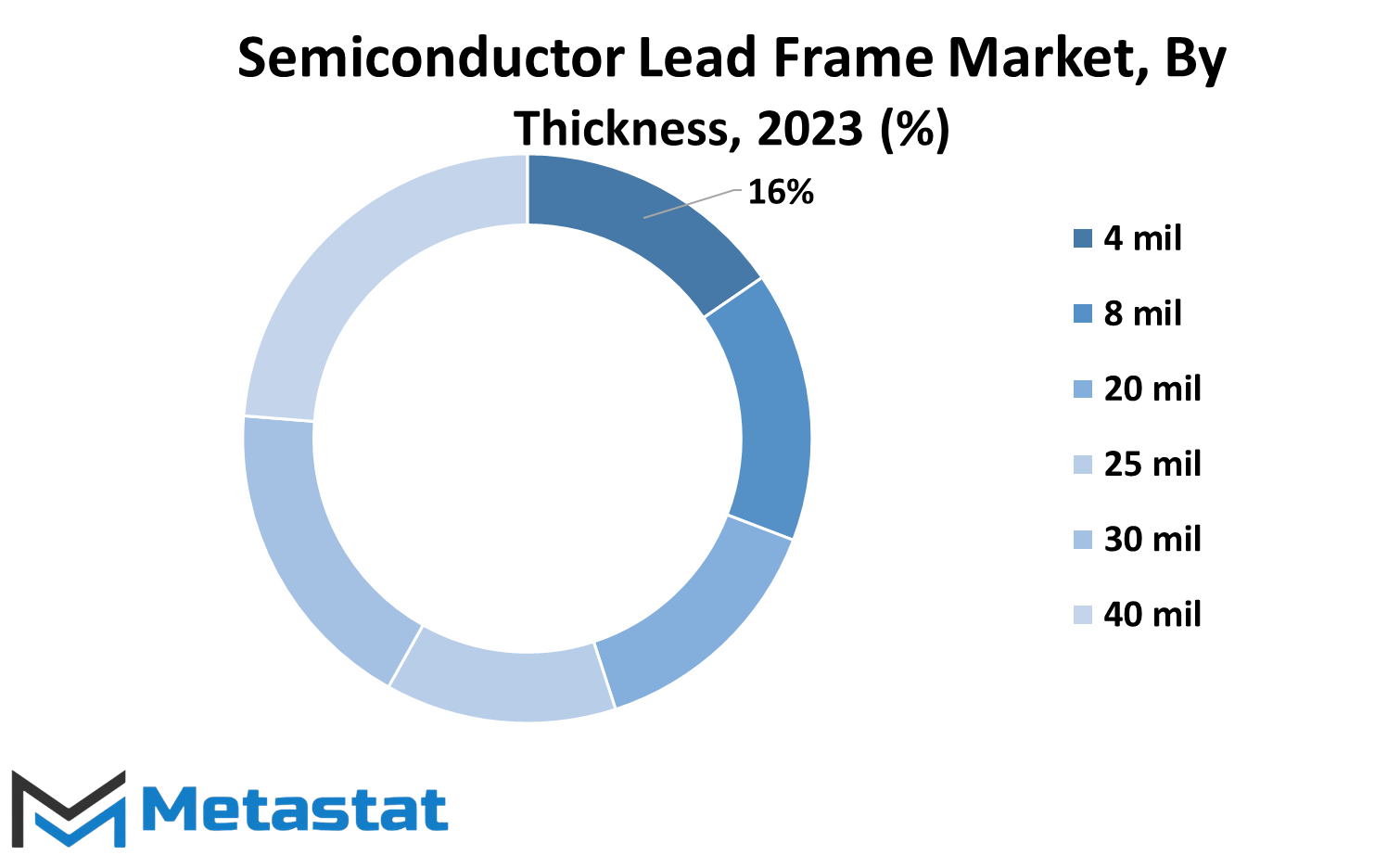
The Global Semiconductor Lead Frame market is divided based on thickness, with further subdivisions into specific mil categories. In 2022, the 4 mil segment held a value of 602.9 USD Million. Similarly, the 8 mil segment was valued at 602.3 USD Million, while the 20 mil segment saw a valuation of 554.2 USD Million. The 25 mil category recorded a value of 516 USD Million, and the 30 mil segment reached a valuation of 707.7 USD Million. Lastly, the 40 mil segment stood out with a substantial value of 924.6 USD Million in the year 2022.
This segmentation by thickness provides a detailed insight into the market dynamics, indicating the varied values associated with different mil categories. The 4 mil and 8 mil segments, with values in the 600s, suggest a comparable significance in the market. On the other hand, the 20 mil segment, although slightly lower in value, still maintains a substantial worth of 554.2 USD Million.
Moving down the thickness scale, the 25 mil segment demonstrates a decrease in value compared to its predecessors, standing at 516 USD Million. The trend, however, takes a turn with the 30 mil segment, which exhibits an increase in valuation, reaching 707.7 USD Million. This shift in value indicates a potential shift in market demand or product preferences within these mil categories.
The 40 mil segment stands out as the highest-valued category, registering an impressive 924.6 USD Million. This suggests a notable market demand or prominence for semiconductor lead frames with a thickness of 40 mil.
The market segmentation by thickness in the Global Semiconductor Lead Frame market unveils a nuanced landscape, showcasing diverse values for different mil categories. This detailed breakdown aids in understanding the market dynamics, providing valuable insights for stakeholders and industry observers alike.
By Type
The Global Semiconductor Lead Frame market is categorized into two main types: Stamping Process Lead Frame and Etching Process Lead Frame. These two types define the market landscape, each offering distinct approaches in producing semiconductor lead frames. The Stamping Process Lead Frame involves the creation of lead frames through a stamping technique. This process utilizes machinery to cut and shape the lead frames from a flat sheet of metal. It's a widely adopted method due to its efficiency and cost-effectiveness. Stamping allows for the mass production of lead frames with consistent quality, making it a preferred choice for many manufacturers.
On the other hand, the Etching Process Lead Frame employs a different method. In this approach, lead frames are created by selectively removing metal from a sheet using chemical etching. This precision-oriented technique is favored for producing intricate designs and shapes. Although it may be slightly more intricate than the stamping process, it offers flexibility in design and is suitable for applications demanding a higher level of intricacy.
The choice between Stamping and Etching processes depends on the specific requirements of the semiconductor application. Manufacturers weigh factors such as cost, production volume, and design intricacy to determine the most suitable method for their needs.
As the semiconductor industry continues to advance, the demand for lead frames persists, driven by the increasing use of semiconductors in various electronic devices. This dual classification of Stamping Process Lead Frame and Etching Process Lead Frame reflects the diverse approaches employed by manufacturers, showcasing the adaptability of the market to different production methods.
The Global Semiconductor Lead Frame market is marked by the coexistence of Stamping and Etching processes, each contributing to the industry's overall dynamism. The choice between these methods depends on factors such as cost efficiency, production volume, and design requirements, underlining the importance of flexibility in meeting diverse market needs.
By Application
The global semiconductor lead frame market plays a significant role in the electronics industry. It serves various applications, with a focus on Integrated Circuits, Discrete Devices, and other related areas. Integrated Circuits, commonly known as ICs, are a vital component in electronic devices. They integrate multiple electronic components onto a single semiconductor chip, enhancing the efficiency and functionality of devices. The semiconductor lead frames used in ICs contribute to the structural support and electrical connectivity, ensuring seamless performance.
However, Discrete Devices are standalone electronic components that perform specific functions. These devices, such as transistors and diodes, have distinct roles in electronic circuits. The lead frames in this context provide a framework for these discrete components, facilitating their integration into electronic systems.
The Others category encompasses various applications beyond ICs and Discrete Devices. It could include emerging technologies or specific electronic components that don't fit precisely into the mentioned categories. The semiconductor lead frames in this diverse category adapt to the specific needs of various applications, showcasing the versatility of their usage.
The global semiconductor lead frame market thrives on its role in supporting and enhancing the functionality of electronic components. The differentiation based on applications, specifically Integrated Circuits, Discrete Devices, and Others, reflects the adaptability of lead frames to different technological needs. As electronic devices continue to advance, the demand for efficient and specialized semiconductor lead frames is expected to grow, contributing further to the dynamic landscape of the electronics industry.
REGIONAL ANALYSIS
The global Semiconductor Lead Frame market is analyzed through a regional lens, categorizing its reach into North America, Europe, and beyond. This geographical segmentation allows for a nuanced understanding of how the market operates across different parts of the world. North America stands as a key player in the Semiconductor Lead Frame market. The region showcases a robust presence in technological advancements and semiconductor manufacturing. With a well-established infrastructure and a tech-savvy consumer base, North America plays a pivotal role in shaping the dynamics of the market.
Moving across the Atlantic, Europe emerges as another significant contributor to the Semiconductor Lead Frame market. The region boasts a diverse industrial landscape, and its semiconductor sector is no exception. European countries exhibit a keen interest in innovation and technology, fostering an environment conducive to the growth of the semiconductor industry.
This regional analysis sheds light on the distinct characteristics and trends within each geographical domain. It highlights how the Semiconductor Lead Frame market is influenced by the unique economic, technological, and cultural factors prevalent in North America and Europe. The interplay of these elements shapes the market landscape, dictating demand, supply, and overall market dynamics.
Understanding the regional nuances is paramount for comprehending the global Semiconductor Lead Frame market. The distinct features of North America and Europe contribute significantly to the overall market scenario, showcasing the intricate interplay between geography and industry dynamics. This regional perspective enriches our comprehension of the Semiconductor Lead Frame market, paving the way for informed decision-making and strategic planning within this dynamic sector.
COMPETITIVE PLAYERS
The Global Semiconductor Lead Frame market is marked by the active participation of key players, contributing to the dynamics of the industry. Among these players, prominent names such as Mitsui High-tec, Inc. and SHINKO ELECTRIC INDUSTRIES CO. stand out. These companies play a pivotal role in shaping the landscape of the Semiconductor Lead Frame sector. Mitsui High-tec, Inc. is a significant player in the industry, making substantial contributions to the development and manufacturing of semiconductor lead frames. Their expertise and presence in the market have established them as a noteworthy entity, impacting the competitive dynamics of the sector.
Similarly, SHINKO ELECTRIC INDUSTRIES CO. is another key player in the Semiconductor Lead Frame industry. Their active involvement and contributions to the market underscore their importance in the overall framework of semiconductor lead frame production and distribution. The company's role in the competitive arena further emphasizes the significance of established players in steering the course of industry trends. These key players not only bring their technical prowess to the table but also contribute to the innovation and advancement of semiconductor lead frame technologies. Their influence extends beyond individual market shares, as they actively shape the trajectory of the entire industry.
The presence and influence of key players like Mitsui High-tec, Inc. and SHINKO ELECTRIC INDUSTRIES CO. plays a crucial role in the competitive landscape of the Global Semiconductor Lead Frame market. Their contributions, expertise, and market presence collectively contribute to the ongoing evolution and dynamics of the Semiconductor Lead Frame industry.
Semiconductor Lead Frame Market Key Segments:
By Thickness
By Type
By Application
Key Global Semiconductor Lead Frame Industry Players
WHAT REPORT PROVIDES
Find answers to common questions about this report
Global Semiconductor Lead Frame market is valued at $4,077.2 million in 2023.
Global Semiconductor Lead Frame market is estimated to grow with a CAGR of 4.4% from 2023 to 2030.
Global Semiconductor Lead Frame market is estimated to reach $5,753.2 million by 2030.
Top players operating in the Semiconductor Lead Frame industry includes Mitsui High-tec, Inc., SHINKO ELECTRIC INDUSTRIES CO., LTD., Chang Wah Technology Co., Ltd., and others.
The analysts below cover Electronics and Semiconductor research at Metastat Insights.
LEAD ANALYST
Utkarsh Khirodkar is a Lead Market Research Analyst at MetaStat Insight, specializing in market intelligence, technology sector assessments, and competitive strategy.

PRINCIPAL CONSULTANT - ENTERPRISE AI & EMERGING TECHNOLOGIES
Banking & Finance · Electronics and Semiconductor · Energy and Power · Healthcare IT · Information & Technology · Professional Services
Vijay Gunti is a Principal Consultant at MetaStat Insight, bringing over two decades of experience across enterprise digital transformation, technology strategy, and intelligent systems.

PRINCIPAL CONSULTANT - QUALITY SYSTEMS & COMPLIANCE
Electronics and Semiconductor · Machinery & Equipment · Professional Services
Omkar Phadtare is an Industry Consultant at MetaStat Insight, specializing in quality systems, regulatory compliance, and standards benchmarking to drive data-driven market intelligence and strategic industry research.

ENERGY & INFRASTRUCTURE INDUSTRY CONSULTANT
Automotive and Transportation · Electronics and Semiconductor · Energy and Power · Machinery & Equipment
Saurabh Vasant Ganvir consults for Energy & Infrastructure Industry at MetaStat Insight, specializing in renewable energy, solar EPC, and electric vehicle (EV) infrastructure markets.

LEAD CONSULTANT - COMMUNICATION, TELECOM, AND IT
Electronics and Semiconductor · Information & Technology · Machinery & Equipment · Professional Services
Ravindra Sathe Consultants for Communication, Telecom, and IT at MetaStat Insight. He leads the firm's industry research initiatives across telecommunications infrastructure, digital connectivity, enterprise networking, and emerging information technology domains.
Evaluating sovereign cloud deployments for core banking platforms demands a clear view of data residency regulations and migration exit strategies. MetaStat Insight delivered an exhaustive review of regional latency tolerances, mainframe decommission milestones, and third-party vendor concentration risk. The regulatory compliance mapping across European and Asian financial jurisdictions gave our team a dependable baseline for multi-cloud infrastructure discussions.
Replacing petrochemical surfactants with bio-based alternatives requires realistic timelines on industrial precision fermentation scaling. The market research broke down commercialization timelines, feedstock sugar price sensitivities, and regional cosmetic ingredient regulatory approvals in Europe and East Asia. That supplier readiness mapping gave our formulations team reliable context when comparing renewable chemical sourcing roadmaps.
Tracking ceramic matrix composite adoption in high-bypass aero engines requires strict attention to material qualification cycles and FAA airworthiness testing milestones. The MetaStat Insight team provided a detailed timeline of silicon carbide fiber manufacturing capacity and commercial foundry lead times. Having clear visibility into upstream thermal barrier coating supply helped us stress-test our long-term component procurement strategy.
Explore related market intelligence reports worth reading alongside this one.