
LEAD ANALYST
Utkarsh Khirodkar is a Lead Market Research Analyst at MetaStat Insight, specializing in market intelligence, technology sector assessments, and competitive strategy.

Transportation Plastic Crates Market By Material Type (PP, PE, PVC, and Other), By Product Type (Stackable, Nestable and Collapsible), By Application (Food, Beverages, Pharmaceuticals, Retail, Industrial, and Others), Industry Analysis, Size, Share, Growth, Trends, and Forecast, 2023-2030
Report ID
MSI-2719
Published
February, 2026
Pages
255 Pages
Format
Report Details
Choose Your License
Transportation Plastic Crates Market
The Global Transportation Plastic Crates market is estimated to reach $13,977.9 Million by 2030; growing at a CAGR of 5.8% from 2023 to 2030.
The Global Transportation Plastic Crates market stands as a dynamic sector within the broader spectrum of the logistics and supply chain industry. As the world becomes increasingly interconnected, the demand for efficient and sustainable transportation solutions has paved the way for the prominence of plastic crates in the global market. These crates play a pivotal role in the seamless movement of goods across various industries, offering a robust and versatile packaging solution.
At the heart of the industry lies the recognition of the unique advantages that plastic crates bring to the table. Unlike traditional packaging materials, plastic crates offer a lightweight yet durable alternative, ensuring the protection of goods during transit. This characteristic proves to be particularly advantageous in the transportation of fragile items, as the crates act as a reliable shield against potential damage.
One of the key driving forces behind the surge in demand for plastic crates in the global transportation market is the heightened emphasis on sustainability. As the world grapples with environmental concerns, industries are seeking eco-friendly alternatives to traditional packaging. Plastic crates, being reusable and recyclable, align with the growing environmental consciousness. This shift towards sustainability not only reduces the carbon footprint associated with packaging but also resonates with consumers who are increasingly inclined towards supporting eco-friendly practices.
The versatility of plastic crates further contributes to their widespread adoption in the transportation sector. These crates come in various sizes and designs, catering to the diverse needs of different industries. Whether transporting fresh produce, electronics, or pharmaceuticals, plastic crates can be customized to provide optimal protection and organization. The ease of handling and stacking adds an extra layer of convenience, streamlining the loading and unloading processes in the supply chain.
The global transportation plastic crates market is characterized by a competitive landscape with numerous players vying for a significant share. Manufacturers are constantly innovating, developing crates with enhanced features to meet the evolving needs of the industry. From improved ventilation for perishable goods to specialized designs for specific industries, the market witnesses a continuous influx of innovations aimed at staying ahead in this dynamic landscape.
The Global Transportation Plastic Crates market emerges as a crucial player in the logistics and supply chain industry. Its significance lies not only in providing a robust packaging solution for the transportation of goods but also in contributing to the global shift towards sustainability. As industries recognize the advantages of plastic crates – from durability to eco-friendliness – the market is poised for sustained growth, shaping the future of efficient and responsible transportation on a global scale.
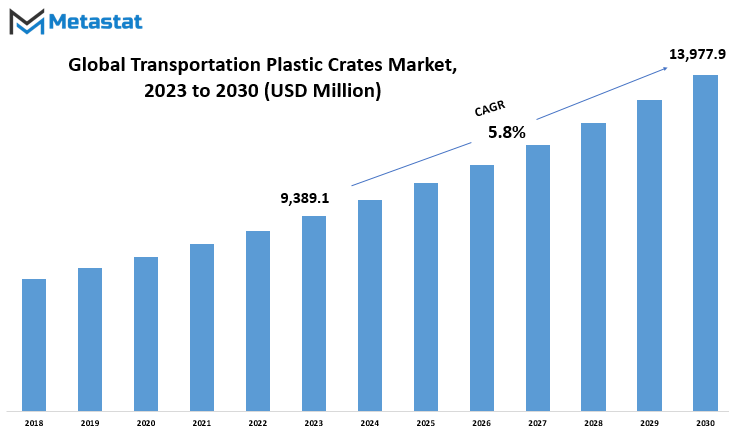
The global transportation plastic crates market is influenced by various factors that drive its growth, while also facing challenges that hinder its development. One significant driver is the expanding e-commerce and logistics industries. As these sectors continue to flourish, the need for efficient and durable packaging solutions, such as plastic crates, becomes increasingly evident. The versatile nature of plastic crates allows them to withstand the harsh conditions often encountered during transportation, making them a preferred choice for many in the supply chain.
However, the market encounters restraints, mainly in stricter government regulations on plastic use. Governments worldwide are emphasizing environmental concerns and imposing regulations to curb the environmental impact of plastic. This has led to a push for alternative materials, such as wooden crates or paper-based packaging, which poses a competitive challenge to the plastic crate market.
Despite these challenges, there exists an opportunity for growth in the rising demand for reusable packaging. With an increasing focus on sustainability, businesses and consumers alike are seeking packaging solutions that can be reused, reducing the overall environmental footprint. Plastic crates, with their durability and reusability, align well with this growing trend and present a promising avenue for market expansion.
The global transportation plastic crates market is shaped by the interplay of drivers, restraints, and opportunities. The surge in e-commerce and logistics, coupled with the durability of plastic crates, propels market growth. However, stringent government regulations and competition from alternative materials pose challenges. On the flip side, the escalating demand for reusable packaging opens up new possibilities for the plastic crate market to thrive amidst evolving market dynamics.
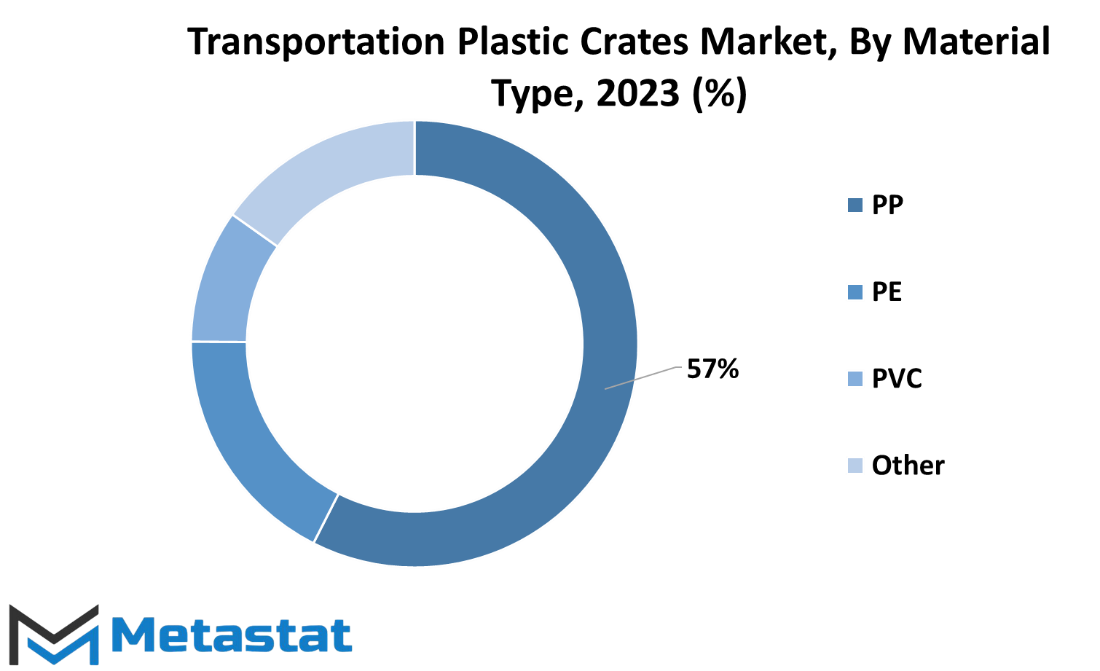
The global market for transportation plastic crates is divided based on material types, specifically polypropylene (PP), polyethylene (PE), polyvinyl chloride (PVC), and other materials. This segmentation enables a more detailed analysis of the industry, providing insights into the diverse materials used in manufacturing plastic crates for transportation.
Polypropylene (PP) stands out as one of the primary materials in this market. Known for its durability and resistance to wear and tear, PP ensures that plastic crates maintain their structural integrity during transportation. The widespread use of PP in manufacturing indicates its reliability and suitability for the transportation industry's demanding conditions.
Polyethylene (PE) is another crucial material segment in the transportation plastic crates market. Renowned for its flexibility and ability to withstand various temperatures, PE contributes to the adaptability of these crates. This flexibility is a key factor in ensuring that plastic crates can accommodate different shapes and sizes of goods, catering to the diverse needs of the transportation sector.
Polyvinyl chloride (PVC) holds its own significance in the market, providing a balance of strength and affordability. PVC-based plastic crates offer a cost-effective solution without compromising on the essential attributes required for secure transportation. This affordability factor makes PVC a popular choice, especially in industries where cost considerations play a pivotal role in decision-making.
Apart from these major material types, there is a category labeled as Other. This encompasses a range of materials that are less commonly used but may offer unique properties or advantages in certain situations. The inclusion of this category reflects the dynamic nature of the transportation plastic crate market, where innovation and experimentation with materials are ongoing processes.
The global transportation plastic crates market, when examined through the lens of material types, reveals a nuanced landscape. The dominance of polypropylene, the flexibility of polyethylene, the cost-effectiveness of polyvinyl chloride, and the potential of other materials collectively shape an industry that caters to the diverse and evolving needs of the transportation sector. This segmentation allows stakeholders to make informed decisions, considering the specific qualities and characteristics of each material in the context of their transportation requirements.
In the vast world of global transportation, plastic crates play a significant role. These crates come in various types, and understanding their distinctions is crucial. The market categorizes them into three main types: stackable, nestable, and collapsible.
Stackable crates are designed to be easily stacked on top of each other, providing efficient use of storage space. On the other hand, nestable crates are crafted to fit within one another, making them space-saving when not in use. Lastly, collapsible crates offer flexibility as they can be folded down when empty, reducing their size for convenient storage.
This diversification in plastic crate types caters to the diverse needs of the transportation industry. Each type serves a specific purpose, whether it’s optimizing storage, saving space, or offering flexibility in handling. This market segmentation reflects the practical considerations that businesses in the transportation sector take into account when choosing the right plastic crates for their operations.
The global transportation plastic crates market, it becomes evident that these distinctions contribute to the adaptability and efficiency of supply chains worldwide. The stackable, nestable, and collapsible plastic crates, each with its unique functionality, offer solutions to logistical challenges faced by companies engaged in transportation.
The evolution of plastic crate design reflects the constant innovation in response to the evolving demands of the transportation sector. This adaptability is not only a testament to the industry’s resilience but also a practical solution for businesses aiming to streamline their logistics. The global market’s recognition of these different crate types underscores their importance in the seamless flow of goods across the transportation network.
The global transportation plastic crates market demonstrates how simple, yet functional innovations contribute significantly to the efficiency of logistics. The categorization into stackable, nestable, and collapsible types offers businesses tailored solutions for their storage and transportation needs. As industries continue to seek practical and effective ways to enhance their operations, plastic crates remain a pivotal component in the ever-evolving landscape of global transportation.
By Application In today's interconnected world, the global market for transportation plastic crates plays a significant role in various industries. These crates find applications across diverse sectors, including Food & Beverages, Pharmaceuticals, Retail, Industrial, and others.
The widespread use of transportation plastic crates can be observed in the Food & Beverages industry, where they serve as efficient containers for transporting and storing a variety of products. From perishable goods to packaged items, these crates contribute to the smooth flow of goods within the supply chain.
Similarly, the pharmaceuticals sector benefits from the practicality of transportation plastic crates. These containers provide a secure and organized means of transporting pharmaceutical products, ensuring their integrity throughout the distribution process.
In the Retail industry, the demand for transportation plastic crates remains high. Retailers utilize these crates for the efficient handling and transportation of goods, whether it's moving merchandise within the store or along the supply chain.
The Industrial sector also embraces the utility of transportation plastic crates. These crates are employed for the safe and secure transport of industrial materials and components, contributing to streamlined logistics operations.
Beyond these specific sectors, transportation plastic crates find applications in various other areas. Their versatility makes them a go-to solution for diverse transportation needs, reflecting their importance in our everyday lives.
As we consider the global transportation plastic crates, it becomes evident that their impact is far-reaching. Industries around the world rely on these crates to facilitate the movement of goods, highlighting their integral role in our interconnected and dynamic global market.
In terms of geography, the global Transportation Plastic Crates market is categorized into two main regions: North America and Europe. The division of the market based on these regions provides a valuable insight into the dynamics influencing the industry on a regional level.
North America, being one of the key players in the global market, holds a significant share in the Transportation Plastic Crates sector. The region's robust economy, coupled with a well-established logistics and transportation infrastructure, contributes to the growth and demand for plastic crates. Factors such as efficient supply chain management and a high level of industrialization further drive the market in North America.
However, Europe also plays a pivotal role in shaping the global Transportation Plastic Crates market. The region boasts advanced manufacturing capabilities and a widespread network of distribution channels. European countries, with their emphasis on sustainable practices, have been increasingly adopting plastic crates for transportation, contributing to the market's expansion.
The regional analysis sheds light on the unique factors influencing the Transportation Plastic Crates market in North America and Europe. While North America benefits from a robust economy and well-established infrastructure, Europe's emphasis on sustainability and advanced manufacturing practices sets it apart. Understanding the regional dynamics is crucial for stakeholders in the industry, as it allows for targeted strategies and a nuanced approach to cater to the specific needs and trends within each region.
The division of the global Transportation Plastic Crates market into North America and Europe offers valuable insights into the regional nuances shaping the industry. This understanding is instrumental for businesses and stakeholders, enabling them to tailor their approaches and strategies to capitalize on the distinctive dynamics of each region.
In the vast landscape of the global Transportation Plastic Crates market, various competitive players shape the industry's dynamics. These key players play a pivotal role in defining the trends and influencing the market trajectory. Among the notable entities in this sector are Brambles Ltd, Craemer UK Limited, Didak Injection, Dolav UK Limited, ENKO PLASTICS LTD, Gamma-Wopla nv, IPL Plastics Inc., Mpact Plastic Containers, Myers Industries Inc., Nilkamal Limited, Ravensbourn Limited, Rehrig Pacific Company Inc., RPP Containers, Schoeller Allibert Services B.V., Shenzhen Xingfeng Plastic, Supreme Industries Limited, TranPak Inc, Xiamen Haosen Plastic Products, and Zhejiang Zhengji Plastic Industry Co., Ltd.
Brambles Ltd stands out as a prominent player, contributing significantly to the industry's growth. The company's impact is evident in its innovative approaches and commitment to sustainability. Similarly, Craemer UK Limited and Didak Injection bring their unique strengths to the table, adding diversity to the competitive landscape. These players are not merely participants but drivers of change, continuously adapting to market demands.
Dolav UK Limited and ENKO PLASTICS LTD showcase resilience and adaptability, embodying traits crucial for success in this competitive market. Their contributions extend beyond the mere manufacturing of plastic crates; they actively shape the market through strategic initiatives and customer-centric approaches.
In the competitive industry, Nilkamal Limited and Ravensbourn Limited stand out for their innovative product offerings and forward-thinking strategies. These companies bring a fresh outlook, contributing to the evolution of the transportation plastic crates market.
Rehrig Pacific Company Inc. and RPP Containers, with their strategic insights, play a vital role in shaping industry norms. Their contributions extend beyond their individual market shares, influencing the collective direction of the market. Further, Xiamen Haosen Plastic Products and Zhejiang Zhengji Plastic Industry Co., Ltd., through their strategic initiatives, contribute to the diversity and vibrancy of the transportation plastic crates market. Their roles extend beyond mere market presence, as they actively participate in shaping the industry's future.
The global Transportation Plastic Crates market is a dynamic arena shaped by the contributions of various competitive players. The key entities mentioned above are not only instrumental in meeting market demands but also in driving innovation, sustainability, and customer-centric approaches that define the industry's trajectory. The collaboration and competition among these players create a rich tapestry that forms the backbone of the transportation plastic crates market.
Find answers to common questions about this report
Global Transportation Plastic Crates market is valued at $9,389.1 million in 2023.
Global Transportation Plastic Crates market is estimated to grow with a CAGR of 5.8% from 2023 to 2030.
Global Transportation Plastic Crates market is estimated to reach $13,977.9 million by 2030.
Top players operating in the Transportation Plastic Crates industry includes Brambles Ltd, Craemer UK Limited, Didak Injection, Dolav UK Limited, ENKO PLASTICS LTD, and Others.
The analysts below cover Chemicals and Materials research at Metastat Insights.
LEAD ANALYST
Utkarsh Khirodkar is a Lead Market Research Analyst at MetaStat Insight, specializing in market intelligence, technology sector assessments, and competitive strategy.

INDUSTRY CONSULTANT - CHEMICALS & ADVANCED MATERIALS
Chemicals and Materials · Machinery & Equipment · Packaging
Amit Gadhekar Consultant for Chemicals and Materials at MetaStat Insight, directing sector-specific intelligence, research, and strategic consulting across global chemical and processing markets.
Decarbonizing industrial thermal processes hinges on refrigerant regulations and compressor efficiency limits. Metastat Insights delivered a thorough market analysis that evaluated natural refrigerants like CO2 and hydrocarbons against synthetic low-GWP alternatives. The breakdown of utility incentives and grid capacity constraints across key European manufacturing hubs offered valuable perspective. The follow-up conversation with their sector analysts addressed our specific questions on mechanical vapor recompression systems efficiently.
Assessing 200mm wafer transition schedules and substrate supply bottlenecks requires precise technical intelligence. MetaStat Insight supplied an actionable breakdown comparing planar and trench MOSFET architectures across automotive and industrial drive markets. The regional capacity estimates for Asia-Pacific foundries helped clarify lead-time uncertainties during our strategic planning session. When we needed additional clarification on high-purity raw material sourcing, their analyst team responded with helpful context within twenty-four hours.
Tracking maintenance cycle demand for secondary flight display units and terrain collision avoidance systems across regional jet fleets involves complex aftermarket dynamics. MetaStat Insight provided practical analysis separating airline retrofit programs from OEM forward-fit production schedules in North America and Southeast Asia. The supplier matrix highlighted component obsolescence timelines without resorting to vague generalizations. The dataset served as a dependable reference during our annual program review meetings.
Explore related market intelligence reports worth reading alongside this one.