United States Poultry Market Size, Share, By Species (Chicken, Turkey, Duck and Others), By Product Category (Fresh Poultry, Frozen Poultry, Processed Poultry and Ready-to-Eat Poultry), By End Use (Household and Foodservice Sector), By Household Distribution Channel (Supermarkets/Hypermarkets, E-commerce/Online Grocery, Specialty Meat Retailers and Convenience Stores), By Foodservice Distribution Channel(Foodservice Distributors, Direct Manufacturer, Others (Local & Regional Distributors, Government/Institutional Procurement), Industry Analysis, Growth, Trends, and Forecast, 2026-2033
Report ID
MSI-4620
Published
April 15, 2026
Pages
320 Pages
Format
Market Size 2021
$46.8 Billion
Historical
Market Size 2025
$50.8 Billion
Base Year
Market Price
$2,160.2/Ton
Average Price
Market Volume 2025
23.52 M Tons
Base Year Volume
Report Details
Comprehensive Market Analysis And Insights
Market Overview
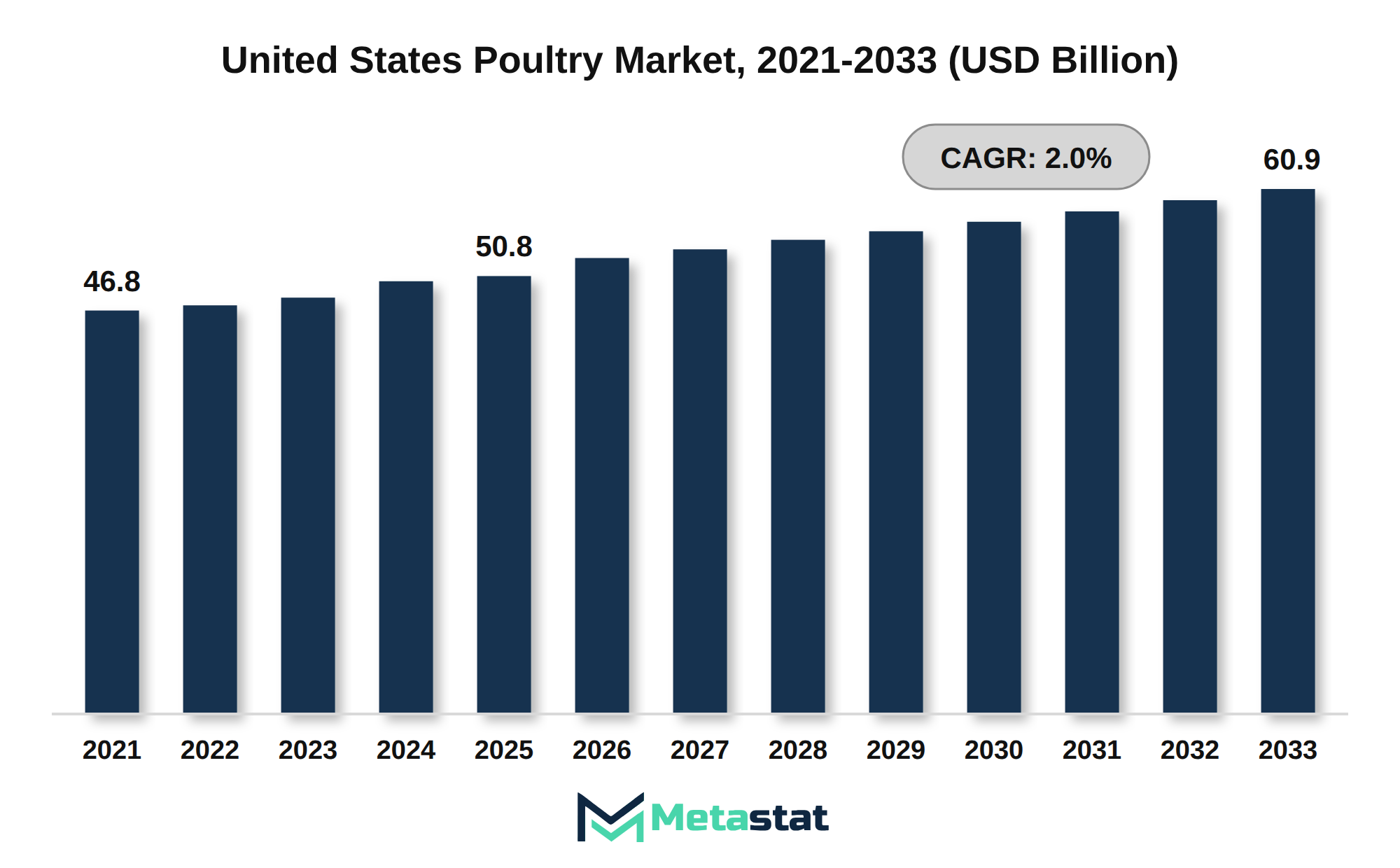
The United States Poultry market was valued at USD 50.8 billion in 2025 and is projected to reach USD 60.9 billion by 2033, growing at a CAGR of 2.0% over the forecast period.
United States Poultry Market: Comprehensive Data-Driven Market Analysis and Strategic Outlook
Key trends driving growth: Higher Chicken Penetration in Quick Service Restaurants and Foodservice Menus, Increased Retail Pull for Convenient, Value-Added, Ready-to-Cook Poultry Formats
Opportunities include premium, Antibiotic-Free, Animal Welfare, and Traceability-Led Product Positioning.
Key insight: High consumption stability combined with premium product demand positions the United States poultry market for consistent value-driven growth despite cost pressures.
The United States Poultry market is expected to evolve beyond conventional production and consumption patterns toward a more systems-oriented and compliance-driven operating structure. Over the forecast period, the industry will be increasingly shaped by downstream integration, with processors, distributors, and foodservice buyers aligning operations around traceability, animal welfare verification, and data-backed sourcing practices. Poultry supply chains will move beyond volume output and place greater emphasis on consistency in feed inputs, flock health records, and logistics accountability.
Processing infrastructure will continue shifting toward automation-intensive facilities designed to meet stricter labor, sanitation, and inspection standards. Advanced deboning, portioning, and packaging technologies will be deployed not only to improve throughput but also to stabilize margins under tighter regulatory oversight. Contract farming models are also expected to be recalibrated, with growers adopting standardized monitoring systems that integrate directly with processor platforms. These changes will reshape how operational risk and compliance responsibility are distributed across the value chain.
Market Dynamics
Growth Drivers:
Higher Chicken Penetration in Quick Service Restaurants and Foodservice Menus.
Higher chicken penetration across quick-service restaurants and large foodservice menus will support steady volume expansion in the United States Poultry market. Menu strategies centered on affordability, flavor variety, and protein-led offerings will sustain demand. Long-term contracts, standardized cuts, and scalable supply models will reinforce consistent purchasing behavior across urban and suburban outlets.
Increased Retail Pull for Convenient, Value-Added, Ready-to-Cook Poultry Formats
Increased retail demand for convenient, value-added, ready-to-cook poultry products will reshape purchasing patterns. Retailers will prioritize marinated, portion-controlled, and heat-and-eat offerings aligned with time-efficient meal preparation. Packaging innovation, cold-chain reliability, and longer shelf life will strengthen category visibility while supporting faster turnover across organized retail and online grocery channels.
Restraints and Challenges:
Avian Influenza and Biosecurity Disruptions Across Flocks and Processing Networks
Avian influenza outbreaks and biosecurity disruptions across flocks and processing networks will continue to create operational uncertainty. Preventive surveillance, controlled farm access, and tighter processing safeguards will increase compliance costs. Temporary supply interruptions, export restrictions, and capacity underutilization will pressure margins while requiring stronger coordination across veterinary, logistics, and regulatory systems.
Feed Input Cost Volatility Across Corn and Soy Supply Chains
Feed input cost volatility across corn and soybean supply chains will affect production economics. Climate variability, trade movements, and acreage shifts will influence pricing stability. Limited cost pass-through at retail and foodservice levels will compress profitability, encouraging efficiency-driven feed optimization, alternative sourcing strategies, and forward-contracting discipline.
Opportunities:
Premium, Antibiotic-Free, Animal Welfare, and Traceability-Led Product Positioning
Premium, antibiotic-free, animal welfare, and traceability-led product positioning will unlock long-term value creation. Consumer preferences increasingly favor transparent sourcing, verified farming standards, and ethical production. Digital traceability tools, certification partnerships, and brand-led differentiation will support pricing resilience while strengthening export credibility and domestic trust.
Market Segmentation Analysis
The United States Poultry market is segmented by Species, Product Category, End Use, and Distribution Channel.
By Species, the market is further segmented into:
Chicken
Valued at USD 46.7 billion in 2026, the chicken segment is projected to reach USD 54 billion by 2033, achieving a CAGR of 2.1% during the forecast period. Demand drivers for this segment include an increasing preference for poultry over red meat, driven by health consciousness among consumers. The market for chicken benefits from a shift towards convenient meal solutions, promoting the growth of ready-to-eat products. The evolution of chicken products includes innovative offerings that cater to diverse consumer tastes, which enhances market appeal.
Chicken represents the largest species segment, supported by high production efficiency and steady demand across household and commercial channels. Future growth will be supported by improved breeding programs, feed optimization, and automation in processing facilities. Expansion of value-added poultry offerings will also help sustain market stability while meeting nutrition-focused consumption preferences.
Turkey
Anticipated growth in the Turkey segment of the United States Poultry market results from rising consumer preference for lean protein options. Health-conscious consumers drive demand, leading to increased turkey consumption associated with various dietary trends. This segment is projected to reach USD 6.2 billion by 2033, at a CAGR of 1.7% during the forecast period.
Turkey holds an important market position, supported by seasonal consumption and institutional demand. Future momentum will depend on product diversification, portion-controlled formats, and broader retail availability. Advances in cold-chain logistics and processed turkey offerings will help improve year-round demand across foodservice and packaged protein categories.
Duck
By 2033, the duck segment is projected to reach USD 0.5 billion, indicating solid expansion within the United States Poultry market. Increased investments in breeding technologies and improved supply chain management contribute to this positive trajectory. Enhanced product offerings, including ready-to-cook and pre-marinated options, cater to evolving consumer preferences and facilitate market growth.
Duck remains a niche segment with gradual expansion potential. Future demand will be supported by culinary diversification, specialty retail penetration, and premium protein positioning. Controlled farming practices and targeted distribution strategies will improve availability while maintaining pricing stability across urban consumption centers.
Others
Growth in the Others (Geese, Guinea Fowl, etc.) segment reflects unique consumer preferences and culinary diversity within the United States Poultry market. Increased demand for specialty poultry products, driven by rising tourism and interest in global cuisine, supports segment expansion. The segment is projected to grow at a CAGR of 0.3% during the forecast period, indicating a steady but modest increase in consumer interest. Diverse applications in gourmet and ethnic recipes enhance its appeal to niche markets. Limited competition and a focus on premium quality products present strategic opportunities for producers. Shifts in consumption patterns toward organic and free-range options enhance market potential. Overall, the segment contributes to the market's variety, providing options and meeting specific consumer demands in the United States.
By Product Category, the market is divided into:
Fresh Poultry
Fresh Poultry maintains strong relevance through daily consumption cycles and broad retail acceptance. Future performance will depend on cold storage efficiency, traceability systems, and rapid replenishment models. Retail partnerships and freshness assurance protocols will strengthen consumer confidence and support steady turnover across metropolitan and regional markets.
Valued at USD 19.7 billion in 2026, the Fresh Poultry segment is projected to reach USD 22.5 billion by 2033, exhibiting a CAGR of 1.9% during the forecast period. Increasing consumer preferences for fresh products drive market growth. Health-conscious consumers prioritize the nutritional benefits of fresh poultry, fueling demand across both household and foodservice sectors. Enhanced food safety and quality standards further contribute to this trend, compelling suppliers to meet stringent regulatory requirements.
Frozen Poultry
Frozen Poultry supports inventory stability and export readiness. Growth will be driven by longer shelf-life requirements, institutional procurement, and food reserve stocking. Advances in freezing technology will preserve product quality while supporting large-scale distribution and long-distance transportation efficiency.
Growth in the frozen poultry segment reflects a shift in consumer preferences towards convenience and longer shelf-life products. Factors driving this demand include an increase in working populations and busy lifestyles, leading to higher consumption of frozen foods for meal preparation. The segment is projected to reach USD 14.6 billion by 2033, at a CAGR of 1.8% during the forecast period.
Processed Poultry
Processed Poultry is expected to record steady growth, supported by convenience demand and portion standardization. Product innovation, controlled seasoning profiles, and packaging efficiency will support demand from urban households and commercial kitchens. Regulatory compliance and clean-label expectations will continue to influence purchasing behavior across organized retail formats.
Forecasts indicate that the processed poultry segment is expected to reach USD 16.8 billion by 2033, reflecting strong growth potential. Continued innovation, consumer demand for convenience, and adherence to regulatory standards position this segment for sustained expansion within the broader United States Poultry market.
Ready-to-Eat Poultry
Ready-to-Eat Poultry segment is projected to reach USD 6.9 billion by 2033, at a CAGR of 3.4% during the forecast period.
Ready-to-Eat Poultry reflects rising demand driven by time-efficient consumption habits. Expansion will depend on food safety innovation, microwave-friendly packaging, and balanced nutrition positioning. Growth will remain concentrated in urban retail environments and premium convenience formats.
By End Use, the market is further segmented into:
Household
Foodservice Sector
Household
Household consumption of poultry products in the United States market shows strong growth potential. Valued at USD 29.4 billion in 2026, this segment is projected to reach USD 33.3 billion by 2033, at a CAGR of 1.8% during the forecast period. Increasing consumer awareness about health benefits, coupled with the growing trend of cooking at home, drives demand within this segment. These factors lead to substantial shifts in purchasing decisions, impacting the types of poultry products that gain popularity among households.
Several distribution channels significantly influence the dynamics of the household segment. Supermarkets and hypermarkets dominate the market, providing easy access to a variety of poultry options. E-commerce platforms have emerged owing to a strong competitor, enabling convenience for consumers seeking to purchase poultry online. Specialty meat retailers and convenience stores contribute to the overall distribution framework, catering to diverse consumer preferences and enhancing market accessibility.
Next-generation upgrades in product offerings respond to evolving consumer preferences. Innovations in packaging and preservation techniques enhance product shelf life and freshness, meeting the demands of health-conscious buyers. The trend of ready-to-eat poultry options aligns with the busy lifestyles of consumers, driving sales in this sub-segment.
Regulatory compliance and safety standards play a crucial role in shaping the market. Strict quality control and food safety measures implemented by producers ensure consumer trust and product integrity. Ongoing certification processes further enhance market competitiveness, because brands strive to meet the expectations of increasingly discerning consumers.
Overall, the household segment within the United States Poultry market demonstrates robust potential for growth. With increasing consumer adoption of various poultry products, coupled with advancements in product offerings and distribution channels, this segment is expected to thrive in the coming years.
Foodservice Sector
Growth in the Foodservice Sector reflects a significant increase in demand for poultry products within restaurants, catering services, and other foodservice operations. The rising trend of dining out and increased consumer interest in diverse culinary experiences contribute to this demand. Enhanced menu offerings, including ready-to-eat and convenience meals, support expansion in this sector. Technological maturation in food preparation and presentation improves product quality and safety, benefiting establishments focused on enhancing customer experiences.
Factors influencing pricing volatility include the cost of raw materials and shifts in consumer preferences towards premium and organic poultry options. Margin pressures arise from increased competition and the need for foodservice providers to maintain pricing competitiveness while ensuring quality. Strategic opportunity windows exist for suppliers that align their product offerings with upcoming food trends, including sustainability and health-conscious choices.
The Foodservice Sector segment is projected to reach USD 27.6 billion by 2033, at a CAGR of 2.4% during the forecast period. This growth indicates a robust outlook for the United States Poultry market, driven by evolving consumer habits and the continuous expansion of foodservice channels.
By Household Distribution Channel, the market is further segmented into:
Supermarkets/Hypermarkets
E‑commerce / Online Grocery
Specialty Meat Retailers
Convenience Stores
Supermarkets/Hypermarkets
Shifts in consumer behavior toward convenient shopping experiences significantly enhance the role of supermarkets and hypermarkets in the United States Poultry market. The increasing tendency of shoppers to select one-stop shopping options contributes to greater demand for poultry products in these retail formats. This trend aligns with evolving consumer preferences for ready-to-eat and processed poultry offerings.
Changes in dietary habits, particularly the growing inclination towards protein-rich diets, drive supermarkets and hypermarkets to expand their poultry product selections. This evolution in product offerings includes fresh, frozen, and processed poultry, addressing diverse consumer needs. Retailers adopt strategies to optimize their inventory with a focus on high-quality and diverse poultry options, reinforcing their competitive position in the market.
Regulatory compliance requirements and certifications from food safety authorities influence the procurement and merchandising strategies within supermarkets and hypermarkets. These retail channels navigate complex regulations while emphasizing sourcing high-quality poultry products, aligning with consumer expectations for safety and quality assurance. This strategic focus on compliance builds consumer trust and loyalty.
Pricing dynamics within supermarkets and hypermarkets play a crucial role in shaping consumer purchasing patterns. Fluctuations in raw material costs and market pricing volatility directly affect the pricing strategies of poultry products. Retailers leverage promotions and discounts to attract customers while maintaining margins, balancing cost management with competitive pricing.
Technological advancements in supply chain management enhance the efficiency of poultry distribution within these retail formats. Innovations in logistics and inventory management systems enable supermarkets and hypermarkets to respond swiftly to changing consumer demand, ensuring the availability of fresh poultry products. This responsiveness to market dynamics positions these channels favorably for future growth in the United States Poultry market.
E‑commerce / Online Grocery
Growth in the E‑commerce / Online Grocery segment of the United States Poultry market arises from significant shifts in consumer behavior toward online shopping. Increased smartphone penetration and the expansion of internet access have driven the popularity of digital channels for grocery shopping, particularly among younger consumers who prioritize convenience. This segment's expansion aligns with a broader trend toward the digitization of retail, making poultry products more readily available to a larger audience.
The ongoing evolution of technological solutions enhances the online shopping experience, facilitating ease of use and accessibility. Retailers benefit from investing in user-friendly platforms that streamline the purchasing process, thereby enhancing customer satisfaction and loyalty. The rising demand for contactless delivery options further encourages online grocery shopping, allowing consumers to maintain convenience while adhering to health protocols.
Increased competition among online grocery platforms leads to price optimization strategies that benefit end consumers. Price sensitivity remains a key factor in consumer choice, with competitive pricing structures driving higher adoption rates in the online market. Enhanced promotional strategies, including discounts and bundled offers, attract a broader customer base, expanding market reach.
Shifts in consumption patterns reflect a growing preference for ready-to-cook and pre-packaged poultry products among online shoppers. These changes align with busy lifestyles, whereby consumers seek quick meal solutions without sacrificing quality. The trend toward health-conscious eating influences purchasing decisions, with consumers favoring organic and hormone-free poultry options available through e-commerce channels.
Regulatory compliance and certifications play a significant role in building consumer trust within the online grocery space. Ensuring that poultry products meet safety and quality standards enhances brand reputation, strengthening customer loyalty. This focus on regulatory compliance supports sustainable growth in the segment, driven by consumers increasingly seeking transparency regarding product sourcing and handling.
Looking ahead, strategic opportunity windows exist for businesses willing to innovate within the e-commerce landscape. Investments in logistics and supply chain resilience will enhance the capacity to meet rising demand without compromising service quality. By capitalizing on these trends, stakeholders in the market position themselves favorably for future growth.
Specialty Meat Retailers
Increasing consumer preference for high-quality and specialty products fuels demand within the specialty meat retailers segment of the United States Poultry market. Shifts in dietary preferences toward organic and locally sourced poultry products drive consumers toward specialty retailers, promoting a more diverse selection of poultry offerings. These changes enhance retailer strategies focused on providing unique products and catering to health-conscious consumers while creating a robust shopping experience.
Cost structures specific to specialty meat retailers reflect higher sourcing costs due to the emphasis on quality and sustainability certifications. Retailers absorb these costs while implementing pricing strategies that align with consumer willingness to pay for premium products. This pricing volatility influences margins. Effective inventory management remains crucial to maintain profitability.
Supply chain resilience emerges from a key factor for specialty meat retailers, where sourcing raw materials from trusted suppliers ensures product quality and reduces logistical vulnerabilities. Strategic partnerships with local farms and processors enhance supply chain stability and allow retailers to offer fresh products, thereby meeting consumer demand for transparency in sourcing.
Technological maturation within the retail space enables specialty meat retailers to adopt next-generation upgrades, including e-commerce platforms and enhanced point-of-sale systems. These upgrades streamline operations, improve customer engagement, and facilitate better inventory management. Consequently, specialized online offerings expand market reach and appeal to a broader customer base seeking convenience.
Strategic opportunity windows arise from increasing awareness of health and nutrition, prompting retailers to adapt product offerings to evolving consumer preferences. Continuous innovation in product evolution, including ready-to-eat poultry options, aligns with consumer trends favoring ease of preparation and healthy meal solutions. The market environment supports ongoing investment in specialty meat retailers, driving growth through targeted marketing initiatives and product diversification.
Convenience Stores
Consumer behavior increasingly favors convenience and accessibility, driving growth in the convenience store segment of the United States Poultry market. Busy lifestyles lead shoppers to seek quick meal options, resulting in higher demand for ready-to-eat and pre-packaged poultry products. Convenience stores play a vital role in meeting this demand, offering a variety of poultry items that cater to on-the-go consumers.
Expansion in this segment is buoyed by the increasing presence of convenience stores in urban areas, enhancing accessibility for consumers. The trend toward smaller, local shopping venues aligns with the desire for quick purchases without the need for extensive planning. This evolution in shopping habits encourages poultry suppliers to enhance their product offerings in convenience stores.
Technological advancements facilitate improved inventory management and shelf-life of poultry products, enabling convenience stores to maintain freshness and quality. Enhanced product labeling and marketing strategies contribute to higher consumer awareness and encourage purchases. Regulatory compliance shapes the product choices available in convenience stores, influencing both the types of poultry offered and the pricing strategies employed by retailers.
Cost structures within the convenience store segment reflect the competitive landscape, with pricing volatility impacting margins. Suppliers navigate these challenges while ensuring product quality and compliance with regulations. The presence of major players in this segment encourages competitive pricing and innovation, ultimately benefiting consumers through improved offerings.
Strategic opportunities exist for poultry suppliers targeting convenience stores, particularly in product evolution and next-gen upgrades. Introducing healthier and more sustainable options enables suppliers to meet changing consumer preferences and expand market reach. This adaptability positions the convenience store segment for sustained growth within the broader United States Poultry market.
United States Poultry Market Average Price, by Species (USD/Ton), 2021-2026
2021
2022
2023
2024
2025
2026
Chicken
1,839.8
1,987.1
2,056.2
2,127.3
2,076.1
2,101.5
Turkey
2,368.6
2,556.0
2,642.6
2,285.1
3,226.6
3,193.4
Duck
1,998.8
2,146.1
2,207.4
2,193.7
2,221.1
2,184.6
Competitive Landscape and Strategic Insights
The United States Poultry market will continue to hold a strong position inside the broader meals industry because of steady demand for cheap, protein-rich products. Poultry remains a daily staple throughout families, foodservice retailers, and institutional customers, driven by changing eating habits and a developing recognition of balanced diets. Consumers increasingly prefer chicken and turkey owing to their versatility, shorter cooking time, and perceived health benefits. This regular consumption pattern will assist strong manufacturing volumes while encouraging businesses to refine processing efficiency and product quality.
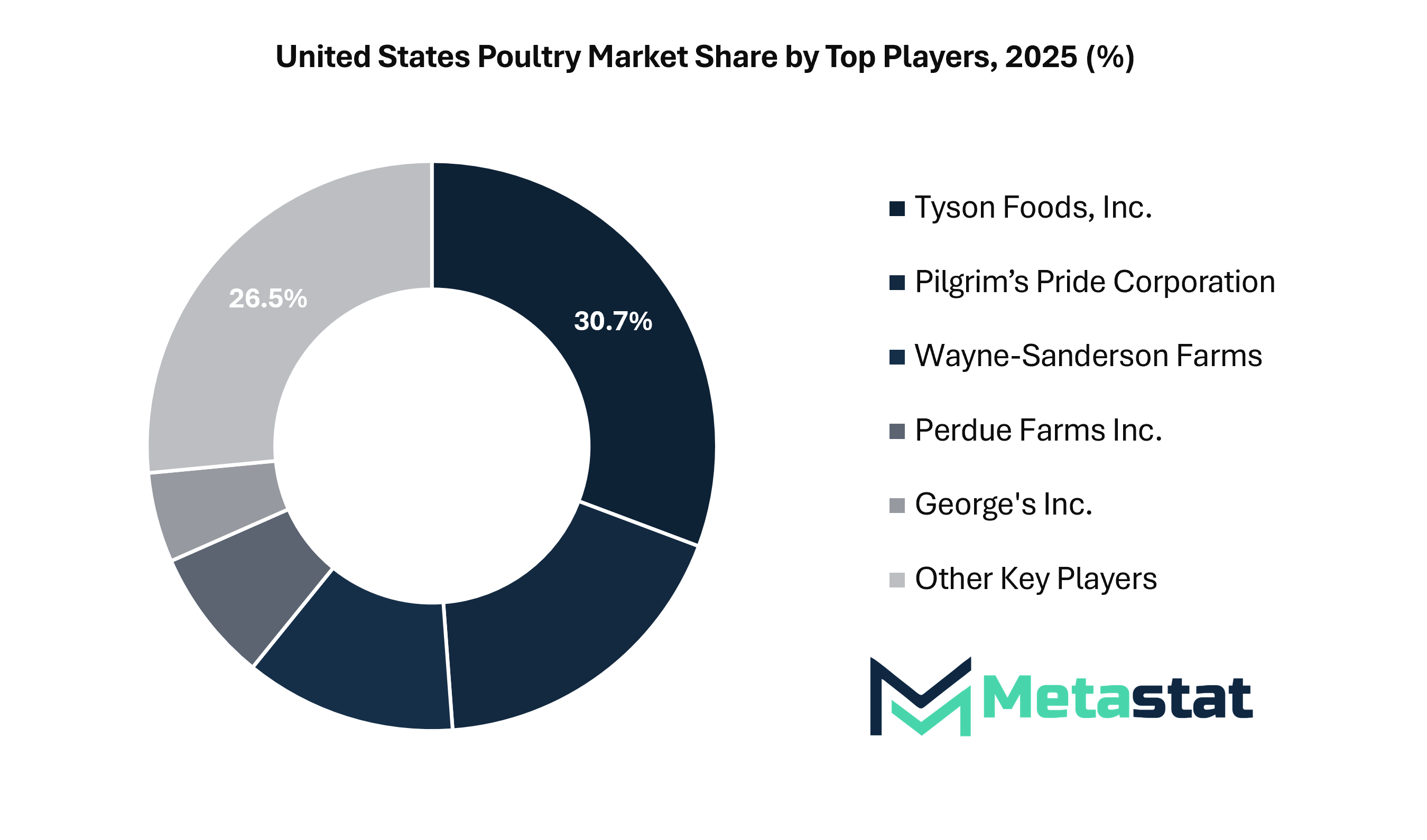
Large integrated producers, along with Tyson Foods, Inc., Pilgrim’s Pride Corporation, Wayne-Sanderson Farms, Perdue Foods, Mountaire Farms, Inc., Koch Foods, Inc., and Simmons Foods, Inc. Play a prime role in shaping supply chains across the USA. These companies manage multiple stages of production, from feed and farming to processing and distribution, helping control costs and ensure reliable output. Firms including Peco Foods, Inc., Foster Farms, Lincoln Premium Poultry, FreeBird Chicken, and Amick Farms, Inc., recognize both traditional and value-added offerings, responding to retail and foodservice desires with portioned, marinated, and equipped-to-prepare dinner merchandise.
Mid-sized and nearby players add intensity to the market by way of serving unique geographic regions. Companies, along with Miller Poultry, Claxton Poultry Farms, Mar-Jac Poultry, Inc., Allen Harim Foods, Inc., Harrison Poultry, Inc., Cooper Farms, Dakota Provisions, Barber Foods, and Gerber’s Poultry, support local sourcing and shorten shipping timelines. Turkey-focused brands like Jaindl Turkey Sales, Inc., Shady Brook Farms, and Jennie-O Turkey Store aim to support seasonal and year-round demand, retaining strict quality and safety requirements that will remain crucial for patron acceptance.
The market also reflects a clear shift toward transparency, animal welfare, and clean-label practices. Brands such as Bell and Evans, Farmer Focus, Murray’s Chicken, Empire Kosher Poultry, Inc., and Jamaica Broilers Group Ltd. Spotlight ethical sourcing and traceability, appealing to conscious buyers. At the same time, assorted food giants, consisting of Hormel Foods Corporation and Cargill Protein, use scale, generation, and distribution power to aid long-term growth. As intake styles evolve, United States fowl producers will stabilize efficiency with obligation, ensuring the market remains resilient and competitive in the years ahead.
Forecast and Future Outlook
Market size is forecast to rise from USD 52.1 billion in 2025 to over USD 61.4 billion by 2033.
The United States Poultry market will no longer be evaluated only through output volumes or consumption trends. Its future position will be defined by how effectively the industry aligns production discipline, regulatory readiness, and buyer-driven accountability into a cohesive operating framework that supports long-term stability.
This research report categorizes the Poultry market based on key segments, forecasts revenue growth, and analyses trends in each submarket. The report analyses the key growth drivers, opportunities, and challenges influencing the Poultry market. Recent market developments and competitive strategies such as expansion, product launch, partnership, merger, and acquisition have been included to draw the competitive landscape in the market.
The report identifies and profiles key market players and analyzes their core competencies across each sub-segment of the United States Poultry market.
Report Attributes
Details
Study Period
2021-2033
Base Year
2025
Estimated Year
2026
Forecast Period
2026-2033
Historical Period
2021-2025
Growth Rate
CAGR 2.1% from 2026 to 2033
Revenue Unit
USD billion
Sales Volume Unit
Kilotons
Segmentation
By Species, Product Category, End Use, Distribution Channel
Historical, On-Going, and Projected Market Analysis
Assessment of Niche Industry Developments
Market Share Analysis
Key Strategies of Major Players
Company Profiles of Key Players
Unique Selling Propositions of Leading Market Players
Emerging Segments Growth Potential
Key Strategic Recommendations
Competitive Benchmarking
Import-Export Trade Statistics
End of Report Overview
Frequently Asked Questions
Find answers to common questions about this report
The Poultry market size in the United States was valued at USD 50.8 billion in 2025.
The Poultry market is projected to grow at a CAGR of 2.0% during the forecast period from 2026 to 2033.
Chicken leads the United States Poultry market, with a projected value of USD 54 billion by 2033. This figure represents a significant increase from USD 46.7 billion in 2026, reflecting a compound annual growth rate of 2.1 percent.
Key drivers for the United States Poultry market include technological integration, which enhances operational efficiency and supports growth, alongside rising consumer demand for convenience and healthier options. capital investment environments and the focus on sustainability further stimulate market expansion.
Regulatory compliance, macroeconomic challenges, supply chain disruptions, and workforce issues restrain growth in the United States Poultry market. Stricter regulations increase operational costs, while inflation and labor shortages limit profit margins and efficiency, affecting overall market expansion. Geopolitical factors further complicate trade dynamics and sourcing stability, impacting production continuity.
Technological integration significantly favors product adoption in the United States Poultry market. Automation and artificial intelligence enhance operational efficiency, enabling producers to streamline processes and reduce costs. The shift towards data-driven decision-making aligns with consumer preferences for quality and transparency, driving demand for poultry products.
The Poultry market is estimated to reach a valuation of USD 60.9 billion by 2033.
United States Poultry market size is 23.52 million tons in 2025 and projected to grow at a CAGR of 1.1% during the forecast period, reaching 26.26 million tons by 2033
Global Confectionery market size was USD 228.4 billion in 2025 and is projected to reach USD 320 billion by 2033, growing at a CAGR of 4.3%. Full analysis.