
LEAD ANALYST
Utkarsh Khirodkar is a Lead Market Research Analyst at MetaStat Insight, specializing in market intelligence, technology sector assessments, and competitive strategy.

USA Frac Tanks Market Size, Share, By Tank Configuration (Closed-Top Frac Tanks, Open-Top Frac Tanks, Weir/Separation Frac Tanks, Mixing/Agitated Frac Tanks, Double-Wall Frac Tanks, Gas-Buster/Flowback Frac Tanks, Mini/Roll-Off Frac Tanks, Vertical/Upright Frac Tanks, Acid/Chemical-Service Frac Tanks and Others), By Tank Capacity (Below 10,000 Gallons, 10,000-14,999 Gallons, 15,000-18,999 Gallons, 19,000-20,999 Gallons, 21,000 Gallons / 500 BBL and Above 21,000 Gallons), By End-Use Industry (Upstream Oil & Gas, Midstream & Pipeline Operations, Refining & Petrochemicals, Chemical Manufacturing, Environmental Remediation & Waste Management, Water & Wastewater, Construction & Infrastructure, Power & Utilities, Mining & General Industrial and Others), By Commercial Model (New Equipment Sales, Refurbished & Used Equipment Sales, Short-Term Rental, Long-Term Rental & Leasing and Turnkey Fluid-Management Services), Industry Analysis, Growth, Trends, and Forecast, 2026-2033
Report ID
MSI-5130
Published
September, 2026
Pages
250 Pages
Format
Historical
Base year
Forecast
Forecast period
Report Details
Choose Your License
USA Frac Tanks Market
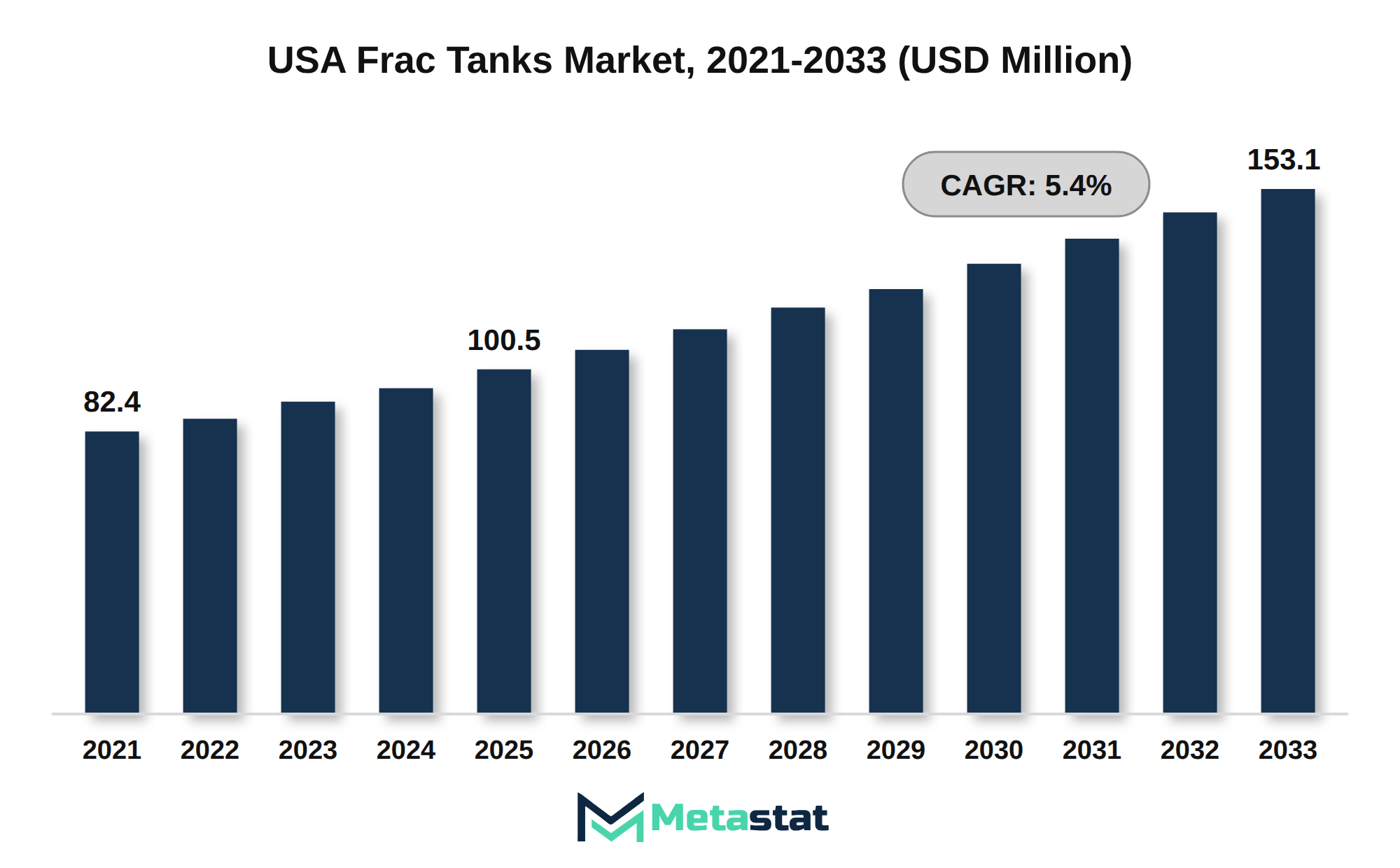
The USA Frac Tanks market was valued at USD 100.5 million in 2025 and is projected to reach USD 153.1 million by 2033, growing at a CAGR of 5.4% over the forecast period.
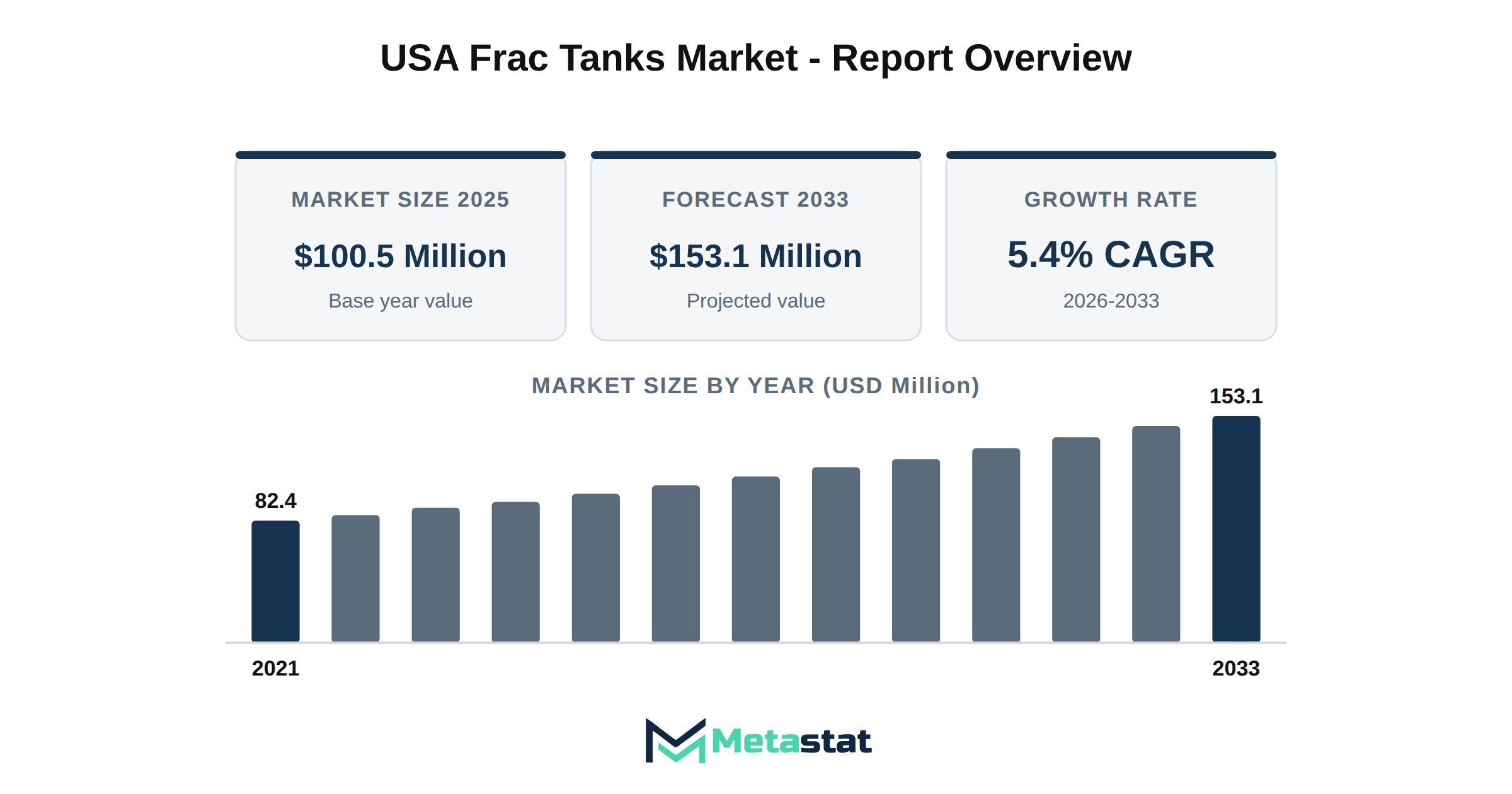
The USA Frac Tanks market is projected to grow from USD 100.5 million in 2025 to USD 153.1 million by 2033, reflecting a compound annual growth rate (CAGR) of 5.4%. Historical data indicates a steady increase in market value, starting at USD 82.4 million in 2021 and reaching USD 95 million by 2024. This upward trend illustrates the increasing adoption and reliance on frac tanks within various sectors, particularly in upstream oil and gas operations.
Market dynamics are influenced by factors including capital allocation, which focuses on investments in infrastructure and technology to enhance efficiency. The sector experiences competition from different tank configurations, including closed-top, open-top, and weir/separation frac tanks, with closed-top frac tanks holding the largest market share at 36.8%. The significance of research and development trajectories is evident, with innovations in tank design and materials driving improvements in safety and performance, ultimately shaping the future of the USA Frac Tanks market.
The USA Frac Tanks market faces various challenges and opportunities that significantly influence its trajectory. Regulatory compliance remains a crucial factor, driven by evolving environmental regulations that impact operational procedures and costs for manufacturers and end-users. Adherence to these standards ensures sustainability while minimizing environmental impact, thereby supporting market growth.
Geopolitical risk frameworks contribute to market dynamics, affecting supply chain stability and pricing structures. Fluctuations in geopolitical conditions disrupt supply chains, leading to inflationary pressures that increase operational costs for players within the market. Strategic planning and risk mitigation become essential for companies to navigate these uncertainties effectively.
Research and development trajectories focus on next-generation innovations, including advancements in frac tank technology that enhance efficiency and safety. These innovations drive competitive differentiation, enabling companies to capture a larger market share while responding to evolving customer demands.
Sustainable transformation and decarbonization initiatives are gaining traction within the market, with firms increasingly prioritizing environmentally friendly practices. The integration of circular economy dynamics enhances resource efficiency and waste reduction, contributing to a more sustainable operational model and appealing to environmentally conscious clients.
The supply chain landscape experiences ongoing developments, owing to companies optimizing logistics architecture and sourcing strategies. Efficient procurement processes and strategic partnerships enhance operational resilience, ensuring a steady flow of materials and equipment vital for market operations.
Market fragmentation presents both challenges and opportunities, with numerous players competing in various segments. This fragmentation encourages innovation and competitive pricing while complicating market entry for new entrants. Understanding customer journey dynamics becomes vital for companies aiming to improve service delivery and customer satisfaction.
Capital allocation strategies evolve to align with infrastructure investments targeting long-term growth. Companies focus on expanding their capabilities and enhancing their product offerings, creating a competitive edge in the market. Infrastructure investments, particularly in technology and equipment, support productivity improvements and operational efficiency.
The USA Frac Tanks market navigates a complex landscape influenced by regulatory compliance, geopolitical factors, and evolving customer expectations. Companies that strategically address these dynamics will position themselves for sustained growth and success in the coming years.
Growing production activity in the upstream oil and gas sector drives substantial demand for the USA Frac Tanks market. This increase in demand stems from heightened exploration and production operations, which employ frac tanks for the storage and transportation of water, chemicals, and other fluids necessary in hydraulic fracturing processes. The expansion of shale oil and gas extraction has particularly intensified this need, aligning with ongoing efforts to enhance domestic energy production and reduce dependency on foreign energy supplies.
Investment in new drilling technologies and methods further contributes to market growth. Companies operating in the upstream oil and gas industry seek to improve efficiency and reduce operational costs through advanced fluid management solutions. This trend encourages the adoption of frac tanks for their ability to optimize fluid handling and minimize environmental impacts. Consequently, demand for closed-top frac tanks and other specialized configurations is projected to rise, reflecting a strategic shift towards more efficient and sustainable operations.
While operators focus on maximizing productivity, the market is anticipated to expand in response to these evolving operational needs. The USA Frac Tanks market stands to benefit from sustained capital investment in the oil and gas sector, reinforcing the importance of frac tanks in the broader context of resource management and operational efficiency.
Rising capital investment in infrastructure significantly influences the USA Frac Tanks market. Economic growth increases public and private spending on projects requiring frac tanks for storage and transportation of fluids. This investment momentum stems from various factors, including GDP growth and favorable interest rates, creating an environment where infrastructure development thrives.
Investment in infrastructure enhances the demand for frac tanks, particularly in the upstream oil and gas sector. This sector relies heavily on efficient fluid management solutions, which frac tanks provide. The growing need for storage solutions during drilling, completion, and production phases drives market expansion, encouraging firms to invest in new tank configurations and capacities.
Technological advancements in automation and digital solutions further enhance operational productivity and cost efficiency. These innovations streamline processes and reduce overhead, enabling firms to optimize investments in frac tanks. Enhanced efficiency reduces operational costs and supports the market's growth trajectory, aligning with ongoing trends in infrastructure development and asset modernization.
The USA Frac Tanks market benefits from these macro-economic factors, which create a resilient investment environment. Continued focus on infrastructure and technological integration positions the market for sustainable growth, meeting the evolving needs of various end-use industries.
Regulatory compliance presents significant challenges for the USA Frac Tanks market, influencing operational costs and adoption rates. The emphasis on environmental regulations regarding emissions and waste management affects equipment specifications, prompting suppliers to invest in advanced technologies to meet compliance requirements. Increased compliance costs pressure both manufacturers and end-users, limiting market growth.
High capital investment requirements hinder new entrants from accessing the market. Establishing a frac tank operation entails substantial financial commitments, including the acquisition of equipment and compliance infrastructure. This situation contributes to market fragmentation, where smaller players struggle to compete against established firms with greater resources. Overall market dynamics are influenced.
Inflationary pressures complicate market conditions by increasing the costs of materials and labor. Rising operational expenses reduce profit margins for companies operating within the USA Frac Tanks market. Cautious spending on expansion or innovation initiatives follows. Supply chain disruptions stemming from geopolitical instability or resource scarcity delay projects and create bottlenecks in equipment availability.
Market saturation presents another challenge, with established players dominating the market. The abundance of available rental options, coupled with the increasing use of alternative solutions, complicates the decision-making process for potential buyers. This saturation leads to intensified competition, driving down prices and pressuring companies to differentiate their offerings to secure market share.
Geopolitical fragmentation significantly impacts the USA Frac Tanks market by creating uncertainties around trade agreements and tariffs. Trade deficits lead to increased costs for imported components and materials, affecting pricing structures across the industry. Suppliers face challenges in sourcing materials efficiently, which raises operational costs and hampers overall market stability.
Technological disruptions compound these challenges. Rapid advancements require ongoing investments in research and development. Companies encounter difficulties integrating new technologies into existing operations, leading to increased expenses and extended timelines for product deployment. This situation detracts from the capacity to respond effectively to shifting market dynamics.
Logistics disruptions further complicate supply chains, impacting timely delivery of frac tanks and associated equipment. Inconsistencies in availability create pressure on manufacturers and service providers, resulting in lost revenue opportunities and customer dissatisfaction. These logistical challenges hinder the market's ability to meet growing demand.
Workforce skill gaps contribute to operational inefficiencies, making it difficult for companies to implement advanced technologies and processes. Talent retention pressures arise from competitive industries vying for skilled labor, resulting in added costs related to recruitment and training. These factors collectively challenge market growth and profitability.
Environmental lifecycle footprints and sustainability demands shape market strategies, creating additional regulatory pressures. Companies navigate evolving legal liabilities while investing in sustainable practices, which strain financial resources. The USA Frac Tanks market adapts to these multifaceted challenges to maintain its growth trajectory amid an increasingly complex operational environment.
Technological disruptions significantly shape the USA Frac Tanks market, with advancements in material science and design enhancing tank performance and efficiency. Innovations including improved coatings and structural materials increase durability and reduce maintenance costs, appealing to buyers in the oil and gas sector. These developments align with sustainability imperatives, reflecting companies' efforts to minimize environmental impact while maximizing operational efficiency.
The focus on digital transformation facilitates the integration of smart technologies in frac tanks, enabling real-time monitoring and data analytics. Enhanced operational yield maximization achieved through these technologies provides a competitive edge, attracting investments from upstream oil and gas companies. Digital procurement shifts reflect evolving buying behaviors, where companies prioritize suppliers offering integrated solutions that support their operational goals.
Geographical expansion into underserved regions presents opportunities for growth in the USA Frac Tanks market. Emerging regional demands driven by increased exploration and production activities create a favorable environment for market participants. The strategic consolidation of suppliers, along with cross-industry mergers, enhances market reach and offers diversified product portfolios, catering to niche application growth.
Asset life-cycle extensions and maintenance upgrades contribute to sustained demand for frac tanks, driven by companies' focus on maximizing the value of existing assets while ensuring compliance with eco-friendly standards. Value-chain optimization through process automation enhances operational efficiencies, thus driving market growth. Overall, these factors position the USA Frac Tanks market for continued expansion through 2033.
The USA Frac Tanks market is segmented based on Tank Configuration, Tank Capacity, End-Use Industry, and Commercial Model.
Valued at USD 38.8 million in 2026, the Closed-Top Frac Tanks segment is projected to reach USD 52.2 million by 2033, reflecting a CAGR of 4.4% during the forecast period. Demand for Closed-Top Frac Tanks stems from their ability to provide effective containment solutions for various liquids, particularly in upstream oil and gas operations. These tanks minimize environmental impact and enhance safety by preventing spills and leaks, aligning with increasing regulatory pressures across the industry.
Expanding production activities in the oil and gas sector contribute to the growth of this segment. The introduction of advanced technologies and materials enhances the durability and efficiency of Closed-Top Frac Tanks, attracting investments and encouraging adoption across diverse applications. The evolution of market preferences toward more robust and environmentally compliant solutions supports segment growth.
Regulatory compliance standards significantly influence investment in Closed-Top Frac Tanks. Operators prioritize the use of tanks that meet stringent environmental regulations, driving demand for high-performance solutions. Consequently, manufacturers encounter opportunities to innovate and improve product features, ensuring compliance while optimizing operational efficiencies.
Pricing dynamics in the market affect consumer choices. Fluctuations in raw material costs lead to margin pressures for manufacturers, compelling them to implement cost-effective strategies. Strategic partnerships and collaborations enhance supply chain resilience, enabling players to navigate potential vulnerabilities and maintain competitiveness in the evolving landscape of the USA Frac Tanks market.
Open-Top Frac Tanks segment is estimated to reach USD 23.7 million by 2033, at a CAGR of 3.6% during the forecast period. Increasing demand for environmentally compliant solutions in the upstream oil and gas sector drives the adoption of open-top configurations. These tanks provide advantages in terms of quick access for maintenance and monitoring while ensuring effective waste management during fluid extraction and transport activities. The trend toward operational efficiency supports the growth of this segment. End-users seek solutions that reduce downtime and enhance productivity.
Technological advancements facilitate the development of next-generation open-top frac tanks, integrating features including enhanced safety measures and improved material durability. These innovations cater to the specific end-use requirements of industries including upstream oil and gas and chemical manufacturing. Consequently, the evolution of these tanks aligns with industry dynamics emphasizing sustainability and regulatory compliance. While tightening environmental regulations, open-top frac tanks offer a viable option for companies focused on minimizing their environmental footprint while maintaining operational effectiveness.
Investment in innovative tank designs enhances market competitiveness, encouraging players to explore strategic partnerships and collaborations. Such initiatives promote the introduction of advanced materials and technologies, further enhancing the open-top frac tanks' market position. The USA Frac Tanks market reflects a situation where continuous improvement and adaptation to evolving industry standards remain critical for sustained growth.
Demand for Weir/Separation Frac Tanks is driven by advancements in oil and gas extraction techniques, particularly in environments where efficient fluid management is crucial. These tanks play a significant role in the upstream oil and gas sector, providing effective solutions for the separation of produced fluids, which enhances operational efficiency and safety.
Adoption of Weir/Separation Frac Tanks is facilitated by the increasing emphasis on environmental compliance and sustainability across the sector. The regulatory landscape emphasizes the need for secure and efficient management of fluids, resulting in heightened demand for such specialized equipment. Consequently, this sub-segment is projected to reach USD 16.1 million by 2033.
Technological advancements contribute to the evolution of Weir/Separation Frac Tanks, leading to enhanced designs that meet the rigorous demands of modern operations. Continuous innovations in materials and tank configurations support product development, aligning with the market's need for more efficient solutions. This focus on technological maturation ensures that the segment remains competitive and addresses changing requirements in fluid handling.
Downstream applications for Weir/Separation Frac Tanks extend beyond traditional oil and gas use, with sectors including chemical manufacturing increasingly recognizing their value. Rising consumption in these industries influences production strategies, compelling manufacturers to focus on developing versatile and adaptable tank solutions.
Overall, the dynamics within the USA Frac Tanks market reflect a complex relationship of demand drivers, technological progress, and regulatory compliance, all of which shape the growth trajectory of the Weir/Separation Frac Tanks segment. Strategic investments in this area promise to enhance its significance in the broader market.
Growing interest in Mixing/Agitated Frac Tanks stems from their essential role in various operations, particularly in upstream oil and gas exploration and production. The segment is projected to grow at a CAGR of 7.4% during the forecast period, reflecting increasing demand for effective mixing solutions in fracturing processes. This demand arises from the need for enhanced efficiency in fluid management, where precise agitation improves the homogeneity of the mixtures, ultimately leading to better performance in hydraulic fracturing applications.
Investment in technological advancements drives the evolution of Mixing/Agitated Frac Tanks, promoting upgraded designs that improve mixing efficiency and operational reliability. Manufacturers focus on incorporating innovative features and materials that enhance performance while reducing maintenance costs. This product evolution not only meets user expectations but aligns with broader industry trends toward sustainability and energy efficiency.
End-use dynamics significantly influence the growth of this segment within the USA Frac Tanks market. The upstream oil and gas industry, which represents a vital sector for Mixing/Agitated Frac Tanks, accounts for a substantial portion of the overall market value. Increasing activity in oil and gas exploration and production contributes to the demand for efficient mixing solutions, thus supporting market expansion.
Pricing volatility in raw materials presents challenges to manufacturers, affecting cost structures and profit margins. Fluctuations in the prices of steel and other essential inputs impact the overall pricing strategy. Effective supply chain management becomes crucial to mitigate risks associated with cost fluctuations, ensuring the segment remains competitive.
Strategic opportunity windows arise for players specializing in Mixing/Agitated Frac Tanks, driven by the growing focus on operational efficiency and environmental compliance. Enhanced product offerings supported by robust capital investment will likely strengthen market positions and cater to evolving customer needs. While the market progresses, manufacturers that emphasize innovative solutions and maintain cost-effective operations will position themselves favorably in the competitive environment.
Demand for Double-Wall Frac Tanks reflects an emphasis on enhanced safety and environmental compliance in various applications. These tanks feature a secondary containment structure, which reduces the risk of leaks and spills and aligns with stringent regulatory standards in the USA Frac Tanks market.
Adoption of these tanks involves projects requiring robust containment solutions, particularly in the upstream oil and gas sector. End-users prioritize durability and reliability, leading to a trend towards using advanced materials and designs that improve the operational lifespan and safety of the tanks.
Technological maturation contributes to innovation within this segment, with manufacturers focusing on next-generation upgrades that enhance functionality and efficiency. Integration of smart technologies facilitates monitoring and management of tank conditions, providing operators with real-time data that improves decision-making.
Downstream applications in environmental remediation and chemical manufacturing expand the use of Double-Wall Frac Tanks, driven by the demand for enhanced safety measures. The need for effective hazardous material handling stimulates growth in this sub-segment, promoting investment in double-wall technology.
Pricing volatility in raw materials influences cost structures, impacting procurement strategies for manufacturers. Effective supply chain resilience ensures that producers source necessary materials without significant disruptions, supporting stable pricing and availability for end-users.
Strategic opportunity windows emerge owing to evolving regulations towards stricter environmental standards. Companies investing in innovative containment solutions gain competitive advantages, positioning themselves favorably within the USA Frac Tanks market.
In the USA Frac Tanks market, Gas-Buster/Flowback Frac Tanks play a critical role in managing the flowback of fluids during the hydraulic fracturing process. Demand for these tanks arises from the handle large volumes of fluids and solids produced during well completion. Upstream oil and gas activities intensify, and the adoption of Gas-Buster/Flowback Frac Tanks increases to ensure efficient fluid management and environmental compliance. Technological advancements in tank design and functionality enhance their performance, making them integral to frac operations.
The expansion of the Gas-Buster/Flowback Frac Tanks segment hinges on trends in the upstream oil and gas sector, particularly driven by operators seeking reliable solutions for managing flowback challenges. Regulatory compliance standards regarding environmental protection drive the utilization of these tanks, compelling operators to invest in efficient fluid management systems. Firms focusing on the innovative design and deployment of Gas-Buster/Flowback Frac Tanks position themselves favorably within the competitive landscape.
Cost structures associated with Gas-Buster/Flowback Frac Tanks influence operational dynamics in the market. Efficient resource allocation and capable supply chain management enhance the profitability of operators deploying these tanks. Demand for these solutions increases, and firms that continuously improve their tank offerings through technological maturation and next-gen upgrades stand to capture a more significant market share. The market outlook remains positive, driven by an emphasis on effective fluid management solutions.
Mini/Roll-Off Frac Tanks exhibit a growing relevance in the USA Frac Tanks market, driven by their flexibility and utility in various applications. Adoption within segments requiring temporary storage solutions highlights their appeal among operators seeking efficient resource management. Many industries, including upstream oil and gas, increasingly rely on these tanks owing to their mobility and ease of deployment, which support rapid response to operational demands.
The market experiences expansion catalysts including technological advancements that enhance the design and functionality of Mini/Roll-Off Frac Tanks. Innovations in materials and engineering have led to improved durability and reduced maintenance costs, positively affecting operational efficiency. Downstream applications include the management of wastewater and chemicals, necessitating reliable containment solutions that these tanks provide.
End-use dynamics reflect a shift towards more sustainable practices, with operators prioritizing environmental compliance. This trend highlights the importance of regulatory standards in shaping the demand for Mini/Roll-Off Frac Tanks. While industries evolve, the focus on minimizing environmental impact remains significant, influencing procurement strategies and equipment choice.
Cost structures and pricing volatility present challenges, particularly in sourcing raw materials and maintaining competitive pricing. Strategic opportunity windows arise owing to manufacturers optimizing production processes to mitigate these pressures. Enhanced supply chain resilience becomes increasingly crucial for companies aiming to capitalize on the expanding demand within the market.
Demand for Vertical/Upright Frac Tanks within the USA Frac Tanks market stems from their specific applications in various industries, particularly in oil and gas operations. These tanks support effective storage and transportation of fluids essential for drilling and production processes, making them critical to upstream activities. The segment benefits from an increasing focus on efficiency and safety standards, which drives the adoption of storage solutions that comply with regulatory requirements.
Technological maturation influences the evolution of Vertical/Upright Frac Tanks. Advanced materials and manufacturing techniques enhance tank durability, allowing these units to withstand harsh operational environments. This technological evolution complements growing industry emphasis on sustainability, pushing operators to adopt more efficient and environmentally friendly tank solutions. Consequently, the segment aligns with broader market trends focused on minimizing environmental impact.
Strategic opportunities exist for manufacturers and suppliers within the Vertical/Upright Frac Tanks segment. Investment in next-generation upgrades and innovations improves product offerings and meets emerging consumer demands. The ongoing evolution of tank design and functionality presents avenues for suppliers to differentiate their products and expand market share in a competitive landscape.
Consumption shifts towards Vertical/Upright Frac Tanks in various end-use dynamics highlight their relevance in the market. Increasing operational complexities in oil and gas extraction necessitate the utilization of robust storage solutions, which reinforces demand for these tanks. Aligning with the market's trajectory towards higher efficiency and compliance drives the selection of Vertical/Upright Frac Tanks by industry players.
Acid/Chemical-Service Frac Tanks serve critical roles in various chemical manufacturing processes, where managing storage and transportation of hazardous materials remains essential. The increasing complexity of chemical production drives demand for highly durable and specialized frac tanks designed to withstand corrosive substances. This sub-segment benefits from advancements in material technologies, leading to the development of tanks that ensure both safety and efficiency in handling aggressive chemicals.
Growing regulatory standards surrounding environmental protection and workplace safety significantly impact product design and operational protocols. Manufacturers prioritize compliance with stringent regulations, boosting the demand for specially designed frac tanks that meet these standards. The evolution of regulatory frameworks shapes market dynamics, compelling producers to innovate and enhance product offerings to align with compliance requirements.
The market experiences shifts in consumption patterns stemming from the need for efficient and safe transport of chemicals. Companies within the chemical sector increasingly seek reliable solutions that minimize risks associated with chemical spills and environmental contamination. Vendors responding to these needs position themselves favorably in a competitive environment, contributing to overall market growth.
Investment in next-generation upgrades ensures that Acid/Chemical-Service Frac Tanks incorporate advanced features including enhanced pressure ratings and improved safety mechanisms. These innovations reflect a trend towards smarter, more efficient equipment that aligns with the evolving requirements of chemical processing industries. Focus on product evolution enhances competitive advantages, enabling suppliers to capture greater market share.
Strategic opportunity windows exist for companies willing to invest in research and development aimed at refining tank designs and exploring new materials. Continuous capital investment drives innovation and expands the capabilities of Acid/Chemical-Service Frac Tanks, addressing specific customer needs within the market. The ongoing evolution of this sub-segment presents avenues for increased penetration and operational efficiency across the chemical manufacturing landscape.
Specialty tanks, including insulated and stainless-steel variants, fulfill unique requirements in the USA Frac Tanks market, driven by their durability and specific application needs. These tanks are often used in demanding environments where temperature control and chemical resistance are essential. Their design supports various end-use dynamics, particularly in sectors that prioritize safety and regulatory compliance.
The evolution of technology enhances the performance of insulated and specialty tanks. Innovations in materials and manufacturing processes contribute to improved efficiency and longevity, attracting investments focused on next-generation upgrades. This segment experiences heightened interest owing to industries seeking reliable solutions that address stringent safety standards and operational challenges.
Cost structures surrounding specialty tanks reflect the high-quality materials and advanced technology involved in their production. Pricing volatility often emerges from fluctuations in raw material costs, impacting overall market dynamics. Strategic opportunity windows exist for manufacturers that effectively balance performance with competitive pricing, ensuring sustained demand within the market.
Substitution risks remain a consideration, because emerging alternatives in the market present competitive challenges. However, the established track record of insulated and stainless-steel tanks in critical applications reinforces their position. Overall, the USA Frac Tanks market shows promising indicators for continued growth in this specialized segment, driven by evolving industry needs and technological advancements.
In the USA Frac Tanks market, the Below 10,000 Gallons segment is valued at USD 8.8 million in 2026 and is projected to reach USD 13.8 million by 2033, at a CAGR of 6.6% during the forecast period. Several primary demand drivers contribute to this segment's growth, including increased activity in the upstream oil and gas industry, which employs smaller capacity tanks for efficient fluid management. Adoption of these tanks aligns with market trends focused on smaller-scale operations, enhancing logistical efficiency and reducing costs for various end-users.
Technological maturation of frac tanks enhances functionality, allowing operators to achieve optimal performance levels. Innovations in materials and manufacturing processes lead to improved durability and efficiency, which increases the segment's appeal among buyers. The segment experiences expansion catalysts due to rising environmental regulations that emphasize effective waste management solutions, strengthening demand for smaller tanks tailored for specific applications.
Downstream applications, particularly in the upstream oil and gas sector, drive consumption shifts toward tanks below 10,000 gallons, aligning with the industry's focus on sustainability and operational efficiency. Regulatory compliance standards require enhanced management of liquids, increasing the need for effective solutions within this segment. The evolving market environment necessitates strategic opportunity windows, where capital investment in advanced technologies yields competitive advantages.
Pricing volatility and margin pressures create challenges specific to the segment, influencing supplier strategies and operational decision-making. Fluctuations in raw material costs impact the overall pricing structure of these tanks, necessitating adaptability among manufacturers. The emphasis on supply chain resilience further highlights the importance of managing sourcing and logistics efficiently to mitigate potential disruptions.
Growing demand for frac tanks in the 10,000-14,999 Gallons segment stems from the increasing requirements of the upstream oil and gas industry. This segment is estimated to reach USD 12.3 million by 2033, at a CAGR of 4% during the forecast period. Enhanced operational capabilities and the need for efficient fluid management solutions reinforce the appeal of these tanks within various applications, particularly in hydraulic fracturing processes. Anticipated investment in oil and gas exploration and production activities drives the market, leading to heightened adoption of equipment that supports complex operations.
Technological advancements in frac tank designs further contribute to the segment's growth. Innovations aimed at improving safety, reducing environmental impact, and enhancing fluid management capabilities attract end-users, prompting a shift towards modernized equipment. The market benefits from emerging regulations that promote higher standards for environmental compliance, compelling industry players to upgrade their equipment to align with these standards. Increased focus on efficiency and sustainability in operations influences purchasing decisions, encouraging investments in frac tanks within this capacity range.
Projected growth in the 15,000-18,999 Gallons segment highlights its increasing importance within the USA Frac Tanks market. Adoption of these tanks stems from their suitability for various applications in the oil and gas sector, where operational efficiency and effective fluid management are critical. Demand is driven by the ongoing expansion of upstream oil and gas projects, requiring reliable and versatile storage solutions. Regulatory compliance standards further push industry players towards advanced frac tank options, which align with environmental and safety protocols.
The segment is expected to reach USD 16.8 million by 2033. Sustained investments in infrastructure and increasing exploration activities will reinforce this upward trajectory. Cost structures for manufacturers will evolve owing to improvements in raw material sourcing and production methodologies, enabling competitive pricing strategies. Technological advancements will lead to enhanced tank durability and functionality, addressing evolving industry needs. This dynamic environment positions the segment for robust performance in the coming years.
Projected growth for the 19,000-20,999 Gallons segment stands at a CAGR of 4% during the forecast period. Increased utilization in upstream oil and gas operations drives this growth, aligning with heightened exploration and production activities. The need for efficient transportation and storage solutions enhances demand for frac tanks in this category.
Market participants focus on innovation and product evolution to meet the unique requirements of operators. Enhancements in tank design and materials cater to specific regulatory compliance and safety standards, further supporting adoption. While oil and gas exploration expands, operators seek reliable and versatile solutions. This positioning benefits the 19,000-20,999 Gallons segment within the USA Frac Tanks market.
Growth in this segment reflects broader trends in the market, driven by technological advancements and evolving end-use dynamics. The demand for frac tanks that accommodate larger capacities indicates a shift towards operational efficiency and increased productivity in the industry.
In the USA Frac Tanks market, the 21,000 Gallons / 500 BBL segment experiences growing interest due to its adaptability for various applications in the oil and gas industry. This segment benefits from advancements in tank design, allowing for enhanced transport efficiency and operational flexibility. Increased activity in upstream oil and gas operations drives adoption, supported by the reliable storage and transport solutions these tanks provide for fluids used in hydraulic fracturing processes.
Regulatory compliance and the push towards environmentally sustainable practices strongly influence demand dynamics within this segment. Companies prioritize tanks that meet stringent environmental standards, ensuring minimal risk of contamination. The ongoing evolution of technologies and materials contributes to the development of more efficient and durable tanks, promoting further adoption in market applications.
Investments in infrastructure and technological maturation significantly enhance the segment's growth prospects. While the market expands, the focus on next-generation upgrades and innovations ensures that 21,000 Gallons / 500 BBL tanks remain relevant. This evolving landscape reflects broader trends and shifts in consumption patterns across the entire USA Frac Tanks market.
Increasing requirements for large capacity tanks drive demand in the Above 21,000 Gallons segment of the USA Frac Tanks market. Industries focused on significant fluid storage and transportation, particularly in oil and gas applications, prioritize these tanks for their efficiency and capability. Technological advancements enable these tanks to handle complex fluid management tasks, enhancing their appeal in demanding environments.
Adoption of larger frac tanks by upstream oil and gas operators aligns with the industry's ongoing expansion. The ability to store and manage substantial volumes of hydrocarbons fuels interest in these solutions. The segment benefits from evolving regulatory compliance standards, which emphasize safety and environmental considerations.
Developments in materials and design enhance the durability and functionality of tanks exceeding 21,000 gallons. Innovations including improved insulation and corrosion resistance ensure that these products meet the rigorous demands of various end-use applications. With a robust pipeline of upcoming projects in the oil and gas sector, the market is projected to experience continued growth in this segment.
Price stability and strategic cost management contribute to the attractiveness of larger frac tanks. Manufacturers focus on optimizing production processes to mitigate margin pressures, ensuring competitive pricing without compromising quality. This strategic positioning of suppliers plays a critical role in capturing market share in the Above 21,000 Gallons segment.
Overall, the Above 21,000 Gallons sub-segment within the USA Frac Tanks market is anticipated to develop, driven by robust demand, evolving technologies, and an emphasis on regulatory compliance.
Valued at USD 49.9 million in 2026, the Upstream Oil & Gas segment is projected to reach USD 65.8 million by 2033, at a CAGR of 4% during the forecast period. Major demand drivers for frac tanks in this segment include the ongoing expansion of oil and gas exploration and production activities, which create a heightened requirement for effective fluid management solutions. Enhanced focus on operational efficiency and stringent regulations surrounding environmental compliance influence equipment adoption, promoting the use of frac tanks designed to meet specific industry standards.
Investment in technological advancements within the frac tank sector contributes to the segment's growth. Upstream oil and gas operators increasingly pursue next-generation upgrades to ensure compliance with various regulatory frameworks, enhancing safety and efficiency. This trend is expected to drive demand for more sophisticated frac tank models capable of addressing contemporary challenges in fluid management.
Adoption of frac tanks in upstream oil and gas operations reflects a shift towards greater sustainability and efficiency. Operators seek to minimize operational costs while maximizing productivity, positioning frac tanks because an essential component of modern fluid management strategies. Consequently, the USA Frac Tanks market experiences steady expansion, supported by ongoing innovations and evolving industry needs.
Interest in frac tanks within Midstream & Pipeline Operations continues to strengthen, driven by the increasing need for efficient fluid management solutions in pipeline construction and maintenance. The segment is projected to reach USD 15.3 million by 2033, at a CAGR of 4.3% during the forecast period. This growth reflects the expansion of pipeline infrastructure, particularly in response to rising demand for oil and gas transportation. Enhanced regulatory requirements further drive adoption, resulting from companies seeking compliance with safety and environmental standards.
Technological advancements in frac tank design contribute significantly to market dynamics. Innovations including improved materials and smart monitoring systems streamline operations, reduce environmental impact, and enhance safety. These developments influence the segment's expansion, ensuring that operators manage fluids effectively and minimize risks. End-use dynamics highlight a shift towards integrated solutions that address operational challenges while optimizing efficiency.
The USA Frac Tanks market benefits from strategic investments in infrastructure, with stakeholders prioritizing robust supply chain management to mitigate potential disruptions. Increased focus on sustainable practices emphasizes the importance of optimizing resource utilization, further enhancing the appeal of frac tanks in Midstream & Pipeline Operations. Capital investment outlook remains positive, indicating a favorable environment for growth and development in this segment.
Increasing focus on refining and petrochemical processes drives demand for frac tanks in the USA Frac Tanks market. Companies in this sector require efficient containment solutions for various chemicals and byproducts generated during refining processes. Regulatory compliance regarding environmental safety and efficiency enhances demand for specialized frac tanks designed to meet stringent standards.
The refining and petrochemicals segment is projected to reach USD 11.5 million by 2033. This growth reflects ongoing investments in upgrading existing facilities to improve efficiency and reduce environmental impact. Enhanced operational capacities and a focus on sustainability contribute to a competitive landscape, driving the adoption of advanced frac tanks.
The continuous evolution of technology within the refining sector influences product development. Next-generation frac tanks equipped with advanced monitoring and automation features support enhanced operational efficiency and safety. Companies investing in these technologies strengthen their market positions while addressing emerging consumer and regulatory expectations.
Overall, the USA Frac Tanks market for the refining and petrochemicals segment demonstrates resilience, with strategic opportunities arising from technological advancements and regulatory compliance. This growth trajectory signals robust demand for frac tanks tailored specifically for the needs of the refining and petrochemical industries.
Investment in frac tanks for the Chemical Manufacturing segment drives a growth trajectory within the USA Frac Tanks market. The segment is projected to grow at a CAGR of 6.5% during the forecast period, reflecting heightened demand for efficient fluid management solutions in chemical processing. Increasing production rates and stringent regulatory compliance standards necessitate advanced storage and transportation options for various chemicals. Technological advancements in frac tank designs enhance operational efficiency, ensuring safety during the handling of hazardous materials.
The expansion of petrochemical facilities and the rising prevalence of specialty chemicals increase the demand for frac tanks tailored to chemical applications. Fluctuations in raw material prices and the need for cost-effective operations influence purchasing decisions, driving manufacturers to seek reliable and economical storage solutions. Strategic investments in sustainable practices within the chemical sector further increase demand for frac tanks, driven by companies prioritizing environmental compliance.
Demand for innovative tank configurations and sizes supports the ongoing evolution of the market. Companies in the chemical manufacturing sector increasingly adopt new technologies that improve the functionality of frac tanks, enabling integration into existing processes. A competitive landscape characterized by ongoing product evolution and adaptation to market needs positions frac tanks because essential components in the chemical manufacturing supply chain.
Environmental remediation and waste management play significant roles in the USA Frac Tanks market. The increasing focus on environmental protection and stringent regulatory compliance drives demand for frac tanks in this sector. Companies involved in remediation activities rely on these tanks for the safe storage and transportation of hazardous materials. This segment demonstrates a commitment to sustainability, with emerging technologies enhancing the efficiency of waste management processes.
Adoption of advanced frac tank technologies improves operational efficiency and promotes compliance with environmental standards. Investment in next-generation upgrades, including automated monitoring systems, enhances safety and reduces the risk of leaks during transport and storage. These developments position companies strategically within the market, allowing them to respond effectively to evolving environmental regulations.
Downstream applications within the environmental remediation sector, particularly in oil spill cleanups and hazardous waste removal, significantly influence demand for frac tanks. Consumption shifts towards environmentally friendly practices create opportunities for market growth. Increased emphasis on sustainability ensures that frac tanks remain integral to the waste management process, providing safe and efficient solutions for companies operating in this space.
Cost structures and pricing dynamics within the environmental remediation and waste management segment emphasize the importance of efficiency. Fluctuations in raw material prices impact overall costs, prompting companies to seek innovative solutions that enhance profitability. Strategic opportunity windows arise from the need for reliable products that comply with regulatory standards, reinforcing the relevance of frac tanks in this evolving market.
Overall, environmental remediation and waste management present a vital part of the USA Frac Tanks market, characterized by ongoing advancements and a strong alignment with sustainability goals. Companies prioritizing compliance, efficiency, and innovation significantly contribute to the sector's growth and resilience.
Investment in the Water & Wastewater segment drives interest in frac tanks, particularly for their effectiveness in managing fluids used in treatment processes. Increasing regulatory compliance around water quality and environmental sustainability encourages sectors to adopt advanced storage solutions. Adoption of frac tanks achieves performance standards while ensuring safety in fluid management, supporting operational efficiency and compliance with industry regulations.
Technological maturation in the frac tank industry enhances performance and reliability, benefitting applications in water treatment and wastewater management. The market sees ongoing interest in next-generation upgrades that improve efficiency and reduce operational costs. This trend opens strategic opportunity windows for manufacturers focusing on innovative product designs and enhanced functionalities, increasing market competitiveness and driving adoption among end-users.
Shifts in consumption patterns toward sustainable practices influence demand across various industries, including construction and agriculture, where effective water management becomes essential. Regulatory pressures around wastewater management contribute to the integration of frac tanks into broader environmental strategies, driving further adoption and reinforcing the importance of compliance in operational practices.
Market participants face pressures related to cost structures due to fluctuating material prices and increasing operational expenses. Maintaining supply chain resilience remains critical amid these challenges. Strategic sourcing and logistics management are essential for optimizing costs. Substitution risks from alternative storage solutions necessitate continuous product evolution to meet the changing needs of the market and ensure competitive positioning.
Continued investments in construction and infrastructure projects create significant opportunities for the USA Frac Tanks market. The expansion of urban areas, coupled with increasing governmental and private sector funding for infrastructure development, drives demand for efficient fluid management solutions. Adoption of frac tanks in construction applications facilitates effective management of water and other fluids, essential for various activities including site preparation and drilling operations.
Emerging technologies, including advanced tank designs and enhanced materials, contribute to the evolution of frac tanks, facilitating their integration into construction processes. Regulatory compliance standards related to environmental protection and safety ensure that frac tanks meet necessary guidelines, further supporting their use in this sector. Demand for sustainable practices in construction accelerates the need for effective fluid management solutions, positioning frac tanks because vital assets in construction and infrastructure undertakings.
Market participants actively pursue strategic opportunities. Innovations in tank designs, including modular units and tailored capacities, enhance the versatility of frac tanks, meeting the diverse needs of the construction industry. Enhanced efficiency and reduced operational costs associated with modern frac tanks are critical considerations for stakeholders aiming to optimize their fluid management processes.
Overall, the construction and infrastructure segment represents a dynamic area within the USA Frac Tanks market, characterized by evolving demand drivers and opportunities for growth. Investments in this sector continue to generate momentum, reinforcing the importance of frac tanks in supporting the fluid management needs of construction projects.
Increasing investment in renewable energy sources drives demand for frac tanks within the Power & Utilities sector. Regulatory compliance standards surrounding energy production and waste management necessitate advanced containment solutions. The emphasis on sustainability and environmental protection influences consumption patterns and drives innovation in frac tank technologies. Enhanced performance characteristics and technological maturation of these tanks support their adoption across various utility applications.
Growth in the Power & Utilities segment aligns with broader trends in energy efficiency and regulatory compliance. The market experiences heightened interest in solutions that facilitate effective fluid management and minimize environmental impact. Strategic opportunity windows arise from the transition to cleaner energy sources, prompting investment in next-generation equipment designed to meet stringent environmental regulations.
Ongoing advancements in frac tank designs and materials contribute to their increased utility in the sector. Companies in the USA Frac Tanks market refine their product offerings to enhance reliability and performance. This evolution ensures that these tanks satisfy the specific needs of utility companies, supporting the overall growth of the market.
Increased interest in mining activities significantly impacts the demand for frac tanks within the Mining & General Industrial segment. Companies operating in this sector seek efficient solutions for fluid management, particularly for water and chemical storage. The growing emphasis on sustainable mining practices necessitates investments in reliable equipment that meets stringent regulatory compliance standards.
Technological advancements drive the evolution of frac tanks for this segment, with innovations enhancing safety and efficiency in fluid handling. Next-generation upgrades focus on improving material resilience and design flexibility, catering to the specific requirements of mining operations. This trend enables operators to mitigate environmental impacts while optimizing resource utilization.
Demand dynamics in the mining sector indicate a shift toward more efficient, environmentally friendly practices, aligning with broader industry trends. Ongoing investments in infrastructure and technology create strategic opportunity windows for frac tank suppliers aiming to capture market share in this growing field. Suppliers enhance their offerings to meet the increasing demand for sustainable solutions.
The USA Frac Tanks market benefits from these developments, with stakeholders in the mining sector increasingly prioritizing sustainable and efficient solutions. Heightened awareness of environmental regulations shapes consumption patterns, compelling companies to adopt technologies that align with eco-friendly practices.
Interest in the Others segment, which includes agriculture, marine applications, and emergency response, reflects a growing awareness of the diverse uses of frac tanks. Demand arises from the need for temporary fluid storage solutions in agricultural practices, particularly during planting and harvesting seasons. In marine applications, frac tanks provide essential fluid management for offshore operations, enhancing environmental safety by preventing spills and leaks.
The emergency response sector increasingly relies on frac tanks for rapid deployment in disaster scenarios, including oil spills or hazardous material containment. These applications highlight the importance of flexibility and reliability in frac tank design. The market benefits from technological advancements that enhance tank durability and ease of transport, enabling quicker response times in critical situations.
Market dynamics indicate a shift toward sustainable practices, influencing product evolution within this segment. Environmental regulations drive the need for frac tanks that comply with stringent standards, ensuring safe containment and disposal of fluids. This regulatory landscape creates opportunities for manufacturers to innovate and cater to these emerging requirements.
Strategic opportunity windows arise from increased governmental and institutional investment in infrastructure aimed at disaster preparedness and environmental safety. The combination of public and private sector collaboration creates a resilient supply chain, ensuring that frac tanks are available and ready for deployment when needed. Overall, the Others segment within the USA Frac Tanks market presents a unique blend of applications, regulatory influences, and technological advancements driving growth and innovation.
Valued at USD 21.7 million in 2026, New Equipment Sales is projected to reach USD 27.6 million by 2033, at a CAGR of 3.5% during the forecast period. Demand drivers for this segment include the increasing focus on efficiency and the adoption of advanced technologies in the USA Frac Tanks market. The trend towards environmentally sustainable operations influences end-users to invest in new equipment, enhancing operational capabilities and compliance with regulatory standards.
Technological maturation pushes manufacturers to innovate, resulting in next-generation frac tanks that provide superior features. The evolution of products, including enhanced safety measures and improved material durability, attracts buyers looking for long-term reliability. Equipment featuring advanced monitoring systems increases operational efficiency and reduces downtime.
End-use dynamics reflect a growing demand for new equipment within the upstream oil and gas sector, where operators seek to optimize production processes and reduce operational costs. Companies emphasize capital investment to upgrade existing fleets and incorporate new technologies. The market observes significant consumption shifts driven by operators prioritizing high-quality, reliable equipment that supports increased production while adhering to rigorous environmental standards.
Pricing volatility in raw materials affects cost structures, influencing the pricing strategies of manufacturers. Suppliers strive for cost control through enhanced supply chain resilience, sourcing high-quality materials while managing logistics vulnerabilities. The segment experiences strategic opportunity windows for investment, particularly because operators expand their portfolios to meet increasing demand in the market.
Valued at USD 6.1 million by 2033, the Refurbished & Used Equipment Sales segment exhibits a CAGR of 2.8% during the forecast period. Demand for refurbished and used frac tanks arises from cost containment strategies employed by operators in the oil and gas industry. Reduced capital investment requirements for clients seeking economical alternatives drive growth within this segment. Operators prioritize sustainability, prompting a focus on reusing and refurbishing equipment to minimize waste and maximize resource efficiency.
Technological advancements contribute to the segment's expansion, enhancing the reliability and performance of refurbished equipment. Increased availability of refurbished frac tanks aligns with the growing demand across various applications, including upstream oil and gas operations. This trend encourages operators to opt for pre-owned options, supporting the market's overall growth trajectory. Investment in refurbished tanks aligns with broader economic trends emphasizing cost efficiency and sustainability, reinforcing dynamics within the USA Frac Tanks market.
Short-Term Rental segment is anticipated to reach USD 50.5 million by 2033. This growth aligns with the increasing preference for flexible equipment leasing solutions among end-users in various industries, particularly within the oil and gas sectors. The trend towards on-demand access to frac tanks without the commitment of purchase significantly influences market dynamics.
Diverse operational requirements drive demand for short-term rental options, driven by companies facing fluctuating project demands. This approach enables users to avoid the costs associated with ownership while ensuring access to the necessary equipment for specific project durations. Consequently, businesses realize cost efficiencies and operational flexibility, supporting growth in the market.
Regulatory compliance standards and the need for efficient waste management further enhance the appeal of short-term rental solutions. Many operators prefer to rent equipment that meets current environmental regulations, reducing concerns regarding asset management and compliance risks. This shift emphasizes the importance of rental services within the USA Frac Tanks market.
Technological advancements in frac tank design and functionality enhance the attractiveness of short-term rentals. Modern frac tanks offer improved features, including enhanced safety protocols and better containment measures, which are crucial for operators focusing on safety and efficiency. The availability of these advanced units in the rental market aligns with industry demands for high-quality equipment.
Overall, the Short-Term Rental segment's growth reflects the changing operational landscape, where businesses prioritize flexibility, cost efficiency, and compliance. This segment plays a significant role in the broader USA Frac Tanks market, encouraging continued investment and interest in rental solutions.
Long-Term Rental & Leasing segment is projected to grow at a CAGR of 6.4% during the forecast period. This growth stems from the rising preference for flexible equipment solutions, allowing firms to optimize operational capital. Clients in the upstream oil and gas sector, particularly, benefit from lower upfront investments while accessing necessary resources for diverse projects. The demand for long-term rental options aligns with shifts toward cost-effective strategies, enabling companies to manage financial pressures more effectively. Increased regulatory compliance standards regarding environmental protection and safety further drive the adoption of rental solutions, because businesses seek to maintain operational efficiency without incurring significant capital expenditures. The USA Frac Tanks market continues to evolve with these trends, positioning the Long-Term Rental & Leasing segment because a critical driver in future market dynamics.
Demand for Turnkey Fluid-Management Services reflects the growing complexity of fluid management needs within the USA Frac Tanks market. Clients increasingly seek comprehensive solutions that encompass the entire lifecycle of fluid management, from procurement to disposal. This shift towards turnkey services arises from a desire to streamline operations and reduce downtime, leading to enhanced efficiency in fluid handling processes.
Adoption of these services is propelled by ongoing advancements in technology and system integration. Companies invest in next-generation upgrades that enable real-time monitoring and management of fluid systems. Such technological maturation enhances operational capabilities, facilitating better decision-making and improved resource allocation.
End-use dynamics indicate that sectors including Upstream Oil & Gas heavily rely on these services due to critical fluid handling requirements. While upstream activities expand, the demand for effective fluid management solutions is expected to increase significantly. Consumption shifts towards more efficient and sustainable practices create favorable conditions for service providers in this segment.
Regulatory compliance standards further influence the growth of Turnkey Fluid-Management Services. While regulations become more stringent, companies face pressure to adopt services that ensure adherence to environmental and safety standards. This aspect not only mitigates risks associated with non-compliance but enhances the reputation of firms committed to sustainable practices.
Pricing volatility and margin pressures specific to this segment require providers to develop flexible pricing strategies. Cost structures adapt to fluctuations in raw material prices and service demands, ensuring that offerings remain competitive while maintaining profitability. Companies focusing on strategic opportunity windows capitalize on emerging trends, enhancing their market position.
Overall, Turnkey Fluid-Management Services represent a crucial component of the USA Frac Tanks market, addressing evolving customer needs while navigating challenges posed by changing regulations and market dynamics.
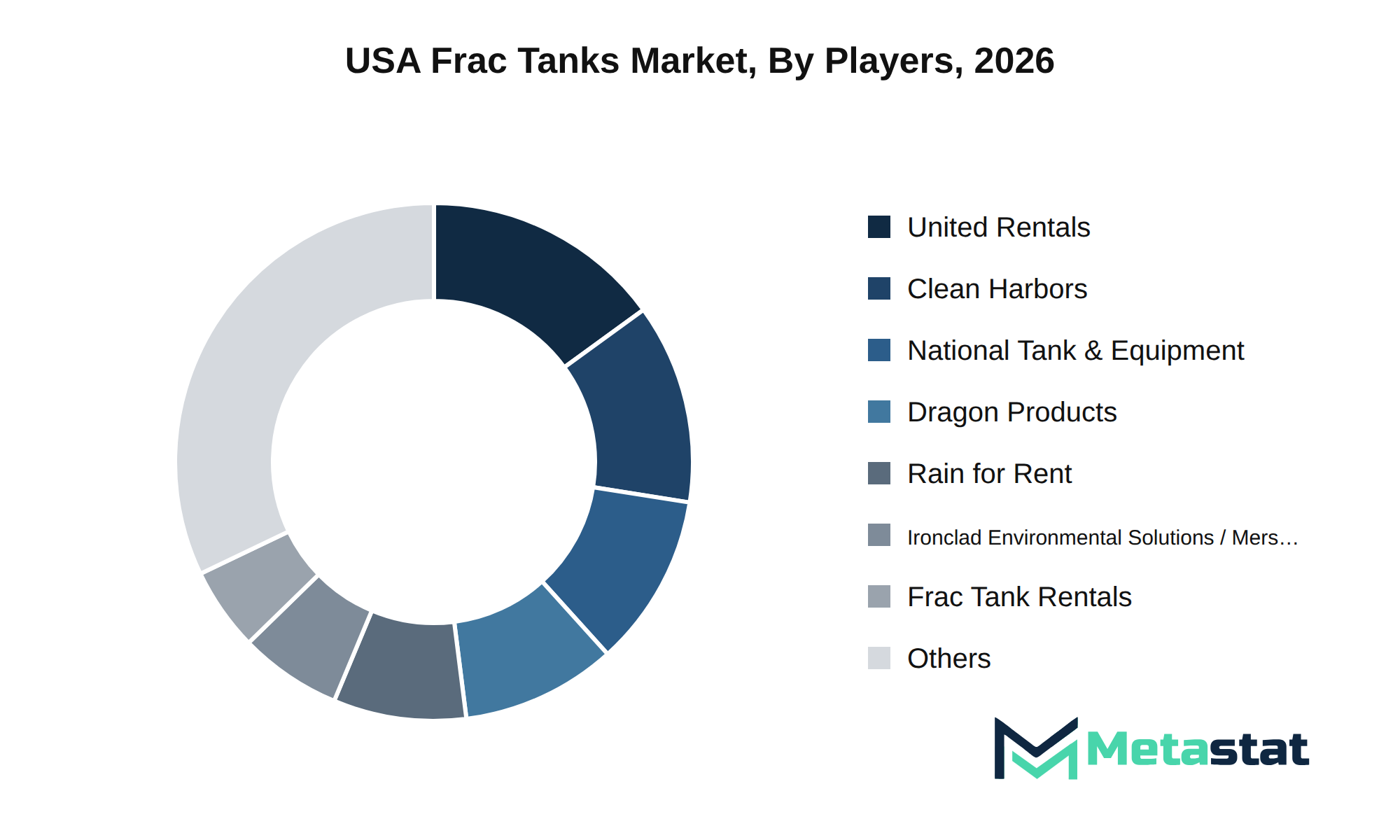
The USA Frac Tanks market features a diverse set of players, actively engaging in strategic consolidation and collaboration to enhance competitiveness. Companies including United Rentals, Inc and Rain for Rent focus on expanding their market share through mergers and acquisitions, while others like Ironclad Environmental Solutions / Mersino and National Tank & Equipment invest in technology and product differentiation to strengthen their positions.
Pricing strategies play a significant role in securing customer retention and brand equity. Firms like Clean Harbors, Inc and Dalbo Holdings, Inc (DHI) leverage procurement leverage to optimize costs while maintaining value chains. The competition faces barriers to entry, with established entities including Frac Tank Rentals, LLC and T&C Tank Rentals creating strong customer relationships that act because deterrents for new entrants in the USA Frac Tanks market.
Strategic alliances and joint ventures contribute to enhanced capabilities, exemplified by companies like Dragon Products, LLC and Sabre Manufacturing, LLC. The focus on R&D pipelines and technological advancements ensures that existing players maintain competitiveness, with firms like Pinnacle Manufacturing, LLC and Wastequip, LLC investing in proprietary technology to create competitive moats. Overall, the future competitive outlook for the market hinges on the ability of these companies to adapt to evolving demand dynamics while pursuing defensive imperatives for sustained growth.
Market size is forecast to rise from USD 100.5 million in 2025 to over USD 153.1 million by 2033. The base case anticipates growth at a 5.4% CAGR, driven by increasing demand from sectors including upstream oil and gas, which is expected to account for a large share of the market. Other end-use industries, including midstream operations and chemical manufacturing, contribute to this upward trend.
In a bullish scenario, heightened investment in next-generation technologies and infrastructure commitments leads to accelerated market growth. Enhanced R&D commercialization timelines and the introduction of innovative frac tank designs stimulate adoption across various industries. A bearish outlook arises from economic downturns or regulatory shifts that impose compliance challenges, restraining growth.
Strategic capital allocation plays a crucial role in shaping the USA Frac Tanks market landscape. Companies focusing on operational efficiency and meeting emerging enterprise needs capitalize on high-growth pockets. Identifying unmet requirements and adapting product offerings enhances competitive positioning and drives demand throughout the forecast period.
Geopolitical realignments and evolving trade corridors impact supply chain dynamics, influencing pricing and availability of frac tanks. Maintaining flexibility in supply chain strategies and aligning with regional trends remains vital for companies operating in the market. Overall, a combination of technological advancement, regulatory evolution, and strategic foresight dictates the market's trajectory over the next several years.
The report strategically identifies and profiles the key market players and analyses their core competencies in each sub-segment of the Frac Tanks market.
Report Attributes | Details |
Study Period | 2021-2033 |
Base Year | 2025 |
Estimated Year | 2026 |
Forecast Period | 2026-2033 |
Historical Period | 2021-2025 |
Growth Rate | CAGR 5.4% from 2026 to 2033 |
Revenue Unit | USD million |
Segmentation | By Tank Configuration, Tank Capacity, End-Use Industry, Commercial Model, and Region |
Find answers to common questions about this report
The Frac Tanks market size in the USA was valued at USD 100.5 million in 2025.
The Frac Tanks market is projected to grow at a CAGR of 5.4% during the forecast period from 2026 to 2033.
Closed-Top Frac Tanks lead the USA Frac Tanks market with a share of 36.8% in 2025. This segment's dominance reflects its significant adoption in various applications within the industry.
Growing production activity in the upstream oil and gas sector significantly drives demand for the USA Frac Tanks market. This demand arises from heightened exploration and production operations, alongside increased capital investment in infrastructure, which enhances fluid management efficiency and operational productivity.
Regulatory compliance poses significant challenges for the USA Frac Tanks market, increasing operational costs and affecting adoption rates. High capital investment requirements and inflationary pressures further restrain market growth, limiting new entrants and reducing profit margins for existing companies. supply chain disruptions and market saturation intensify competition, complicating decision-making for potential buyers.
Growing production activity in the upstream oil and gas sector drives demand for frac tanks, because they are essential for storing and transporting fluids used in hydraulic fracturing. Investment in new drilling technologies and a focus on efficient fluid management solutions further support product adoption, enhancing operational efficiency and reducing costs.
The Frac Tanks market is estimated to reach a valuation of USD 153.1 million by 2033.
Key players in the USA Frac Tanks market include United Rentals, Inc, Rain for Rent, Ironclad Environmental Solutions / Mersino, National Tank & Equipment, Clean Harbors, Inc, and Halliburton.
The closed-top frac tanks segment is projected to grow at a compound annual growth rate of 4.4% from 2026 to 2033.
The upstream oil and gas industry generates the highest demand for frac tanks, with a projected increase from USD 49.9 million in 2026 to USD 65.8 million by 2033.
The analysts below cover Energy and Power research at Metastat Insights.
LEAD ANALYST
Utkarsh Khirodkar is a Lead Market Research Analyst at MetaStat Insight, specializing in market intelligence, technology sector assessments, and competitive strategy.

PRINCIPAL CONSULTANT - ENTERPRISE AI & EMERGING TECHNOLOGIES
Banking & Finance · Electronics and Semiconductor · Energy and Power · Healthcare IT · Information & Technology · Professional Services
Vijay Gunti is a Principal Consultant at MetaStat Insight, bringing over two decades of experience across enterprise digital transformation, technology strategy, and intelligent systems.

ENERGY & INFRASTRUCTURE INDUSTRY CONSULTANT
Automotive and Transportation · Electronics and Semiconductor · Energy and Power · Machinery & Equipment
Saurabh Vasant Ganvir consults for Energy & Infrastructure Industry at MetaStat Insight, specializing in renewable energy, solar EPC, and electric vehicle (EV) infrastructure markets.
Floating offshore wind feasibility relies heavily on specialized installation vessel availability and port crane limits, which most broad renewable energy forecasts ignore. The report delivered a thorough analysis of dry dock capacity, mooring chain supply constraints, and raw material pricing trends for deepwater anchor installations. It served as a solid independent sanity check for our offshore project capital expenditure assumptions.
Assessing commercial microgrid software adoption requires looking past top-level installation numbers and examining utility interconnection queues. The research provided verifiable data on average permitting timelines, tariff structures, and battery storage integration costs across regional utility territories. That grounded perspective was valuable for our team when building five-year demand projections for industrial microgrid controllers.
Ambulatory surgical centers have very different purchasing cycles for robotic-assisted surgery platforms than major hospital networks. The MetaStat Insight study focused squarely on capital expenditure depreciation, procedural reimbursement pathways, and surgeon training overhead. That operational clarity made it much simpler to validate multi-year procedure growth forecasts against actual ambulatory center adoption patterns.
Explore related market intelligence reports worth reading alongside this one.