
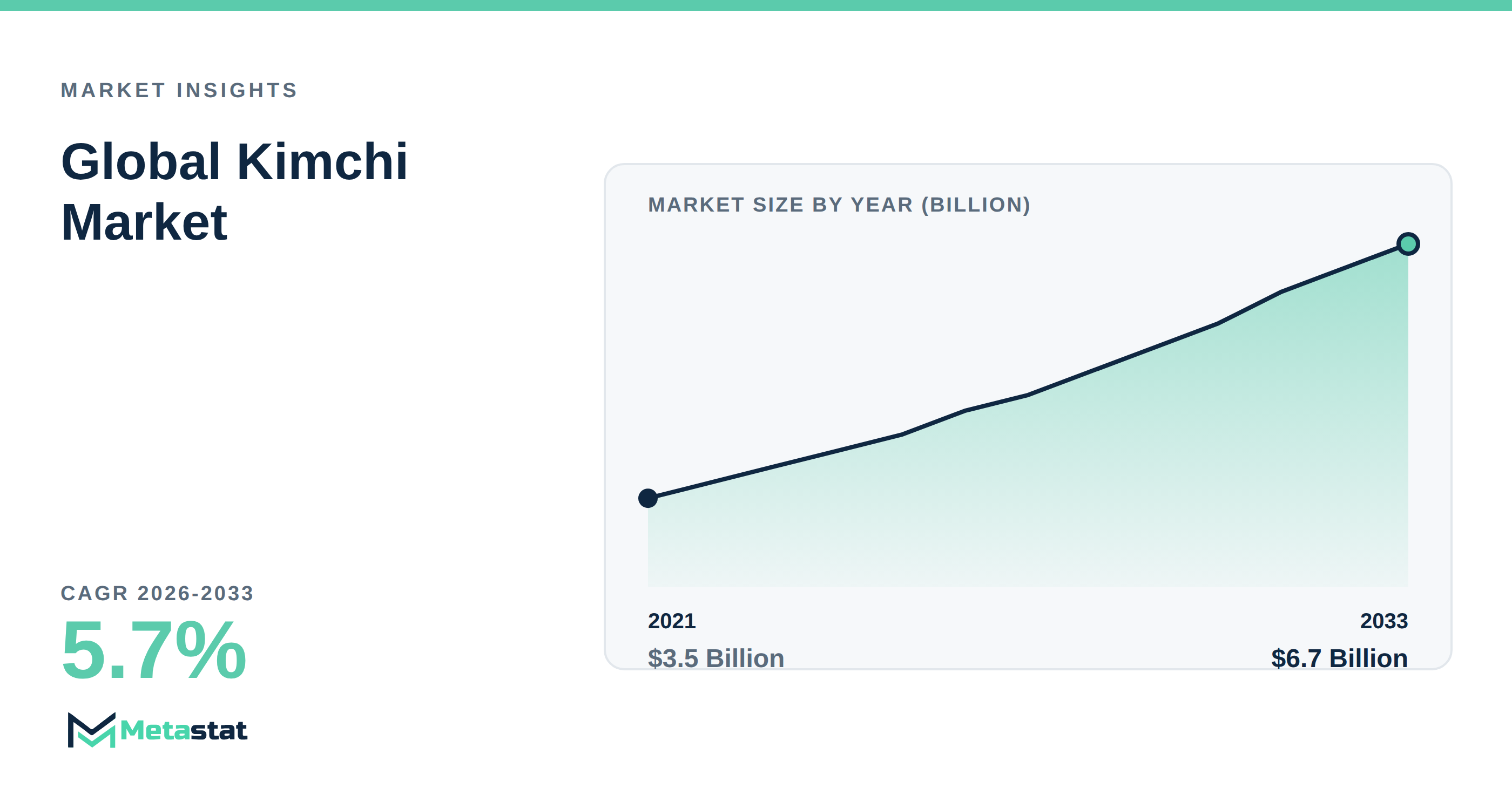
Explore key factors transforming the Kimchi market, from health consciousness to e-commerce growth. Discover how these elements drive demand and shape the industry.
The Kimchi market is experiencing a notable transformation driven by consumer preferences shifting towards healthier, fermented food options. This growth results from increasing health awareness and a rise in the popularity of traditional cuisines. Below are several forces reshaping the dynamics of the Kimchi market.
1. Rising global demand for fermented foods
Global interest in fermented foods continues to rise because consumers become more aware of their health benefits. The probiotic properties of kimchi enhance gut health and support immunity, appealing to a diverse demographic. This trend is especially prominent in North America and Europe, where health-conscious consumers seek authentic, health-oriented products. The growing popularity of traditional Korean cuisine further fuels this demand, indicating robust growth potential for kimchi manufacturers.
2. Asia Pacific remains the dominant market player
The Asia Pacific region dominates the global Kimchi market, accounting for 74.6% of total market share. This prominence is driven primarily by cultural significance and traditional consumption patterns in countries including South Korea. The region's culinary heritage influences global food trends, establishing it because a critical player in boosting demand. With rising interest in ethnic foods, manufacturers in Asia Pacific have opportunities to expand into international markets, reinforcing their lead.
3. Health consciousness among consumers
Increasing awareness of the health benefits of fermented foods significantly impacts market dynamics. Health-minded consumers actively seek products that promote gut health, which directly influences kimchi sales across various demographics. This evolving consumer behavior presents opportunities for manufacturers to innovate and diversify their product offerings, resulting in heightened competition and improved quality within the Kimchi market.
4. Packaging innovation enhances market accessibility
Innovative packaging solutions greatly influence the Kimchi market, enhancing product accessibility for consumers. The Bottles and Jars segment is projected to grow from USD 2.2 billion in 2026 to USD 3.1 billion by 2033, highlighting a shift towards convenience and portability in food packaging. Sustainable packaging options attract environmentally conscious consumers, enabling brands to align with consumer expectations and enhance their market appeal.
5. Economic pressures challenge market growth
Economic factors, including inflation and compliance costs, present challenges for the Kimchi market. Rising production costs impact pricing strategies and profit margins for manufacturers, ultimately affecting market dynamics. Producers face pressure to sustain competitive pricing while adhering to stringent food safety standards. Companies implement effective capital allocation strategies to navigate these economic uncertainties while pursuing growth.
6. E-commerce emerges because a key distribution channel
The rise of e-commerce is reshaping the distribution landscape of the Kimchi market, offering consumers easy access to a broad range of products. This shift toward online retail enhances market penetration to accommodate the growing demand for convenient purchasing solutions. While consumers increasingly prefer to shop online, manufacturers investing in digital platforms are likely to gain a competitive edge, capitalizing on changing purchasing behaviors in the Kimchi market.
Understanding these forces reshaping the Kimchi market is essential for stakeholders seeking to capitalize on emerging opportunities. The market's growth is supported by evolving consumer preferences and innovative strategies, ensuring its continued relevance in the dynamic food industry. For a comprehensive analysis, refer to the Global Kimchi Market.
Tags
About the Authors

LEAD ANALYST
Utkarsh Khirodkar is a Lead Market Research Analyst at MetaStat Insight, specializing in market intelligence, technology sector assessments, and competitive strategy.

LEAD PRINCIPAL ANALYST, PHARMA AND HEALTHCARE
Food and Beverages · Healthcare · Healthcare IT · Medical Devices
Ajay Devgire is the Lead Healthcare Analyst at MetaStat Insight, leading strategic research and market intelligence initiatives across the global healthcare domain.

SENIOR RESEARCH ANALYST
Biotechnology · Food and Beverages · Medical Devices · Packaging
Snehal Pasalkar is a Research Analyst at MetaStat Insight, operating at the intersection of life sciences research, competitive strategy, and market intelligence.