
Explore the crucial trends driving growth in the Brazil Fertilizers market, including rising demand for sustainable solutions, advancements in application methods, and infrastructure investments.
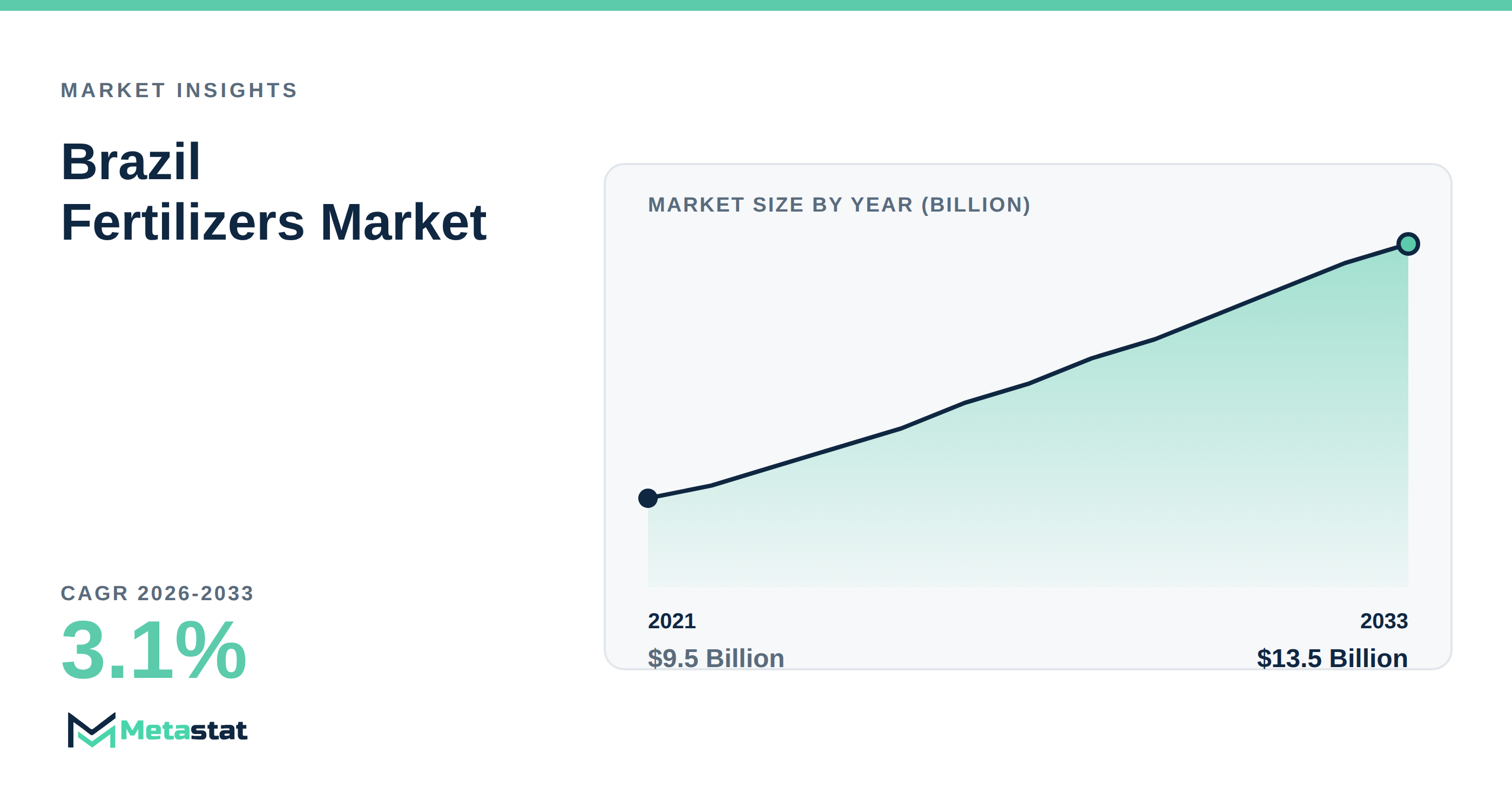
The Brazil Fertilizers market is experiencing significant changes, propelled by evolving agricultural practices and an emphasis on sustainability. The market is set to grow from USD 10.6 billion in 2025 to a projected USD 13.5 billion by 2033, fueled by various factors influencing its dynamics. Are six key trends that stakeholders should monitor in this developing sector.
1. Increasing demand for organomineral fertilizers
The segment for organomineral fertilizers is expected to exhibit notable growth, with a compound annual growth rate (CAGR) of 5.4 percent throughout the forecast period. This increase is primarily driven by a heightened focus on sustainable agriculture and soil health. Farmers increasingly appreciate the benefits of integrating organic and inorganic fertilizers to optimize nutrient availability and enhance crop yields. The growing inclination towards eco-friendly products strengthens the position of this segment in the market and encourages innovations that enhance nutrient efficiency while reducing environmental impacts.
2. The push for higher productivity in oilseeds and cereals
Oilseeds and cereals are pivotal segments in the Brazil Fertilizers market, with forecasts indicating growth for oilseeds from USD 4.3 billion to USD 5.1 billion and a CAGR of 4.2 percent for cereals. This growth reflects the surging global demand for vegetable oils and grains, prompting farmers to adopt fertilizers tailored to maximize crop yields while adhering to sustainability principles. Enhanced fertilizer formulations facilitate better nutrient uptake, ensuring optimal growth conditions and driving overall market expansion.
3. Transition towards efficient application methods
Changes in the application methods of fertilizers are underway, with foliar application projected to rise from USD 1.2 billion in 2026 to USD 1.6 billion by 2033. Fertigation, a targeted application method, is anticipated to achieve USD 1.4 billion during the same timeframe. This evolution towards more precise application techniques reflects a broader trend in modern agriculture that seeks to optimize resource use while minimizing waste. Improved application methods not only enhance crop responses but align with sustainable farming practices, promoting higher production efficiency.
4. Growth of biofertilizers driven by sustainability
The biofertilizers segment is set for substantial growth, with a projected CAGR of 12.7 percent driven by rising consumer interest in sustainable agricultural practices. More farmers are adopting biofertilizers because they significantly enhance soil health and crop productivity while adhering to eco-friendly practices. This trend supports the advancement of agricultural sustainability goals, prompting manufacturers to invest in research and development aimed at optimizing the benefits of biofertilizers for various crop types.
5. Infrastructure investments enhance market competitiveness
Infrastructure investment is vital for the growth of the Brazil Fertilizers market, enhancing logistics and distribution networks. Improved transportation systems facilitate better access to fertilizers for producers in diverse regions. Allocating capital towards modernizing facilities streamlines operations and reduces both delivery times and costs. This upgraded infrastructure attracts not only local producers but international entities to the Brazil Fertilizers market, strengthening overall competitiveness and ensuring an effective response to growing agricultural demands.
6. Navigating regulatory challenges and geopolitical risks
Regulatory compliance and geopolitical tensions present substantial challenges in the Brazil Fertilizers market. Adhering to diverse regional regulations increases operational costs, which limit innovation and growth opportunities. Geopolitical factors disrupt trade and inflate production costs due to higher tariffs on imported raw materials. Companies remain agile and adaptable to navigate these challenges, ensuring competitiveness and sustainable growth in this ever-changing market.
These trends highlight the evolving nature of the Brazil Fertilizers market, emphasizing the importance of sustainability, strategic investments in infrastructure, and the need for adaptability to regulatory challenges. Stakeholders in the sector should stay informed and responsive to capitalize on the opportunities on the horizon. For a detailed examination of market dynamics, refer to the Brazil Fertilizers Market report.
Tags
About the Author

LEAD ANALYST
Utkarsh Khirodkar is a Lead Market Research Analyst at MetaStat Insight, specializing in market intelligence, technology sector assessments, and competitive strategy.