
Explore the critical factors influencing pricing in the Building Materials market, including raw material costs, labor expenses, and competition.
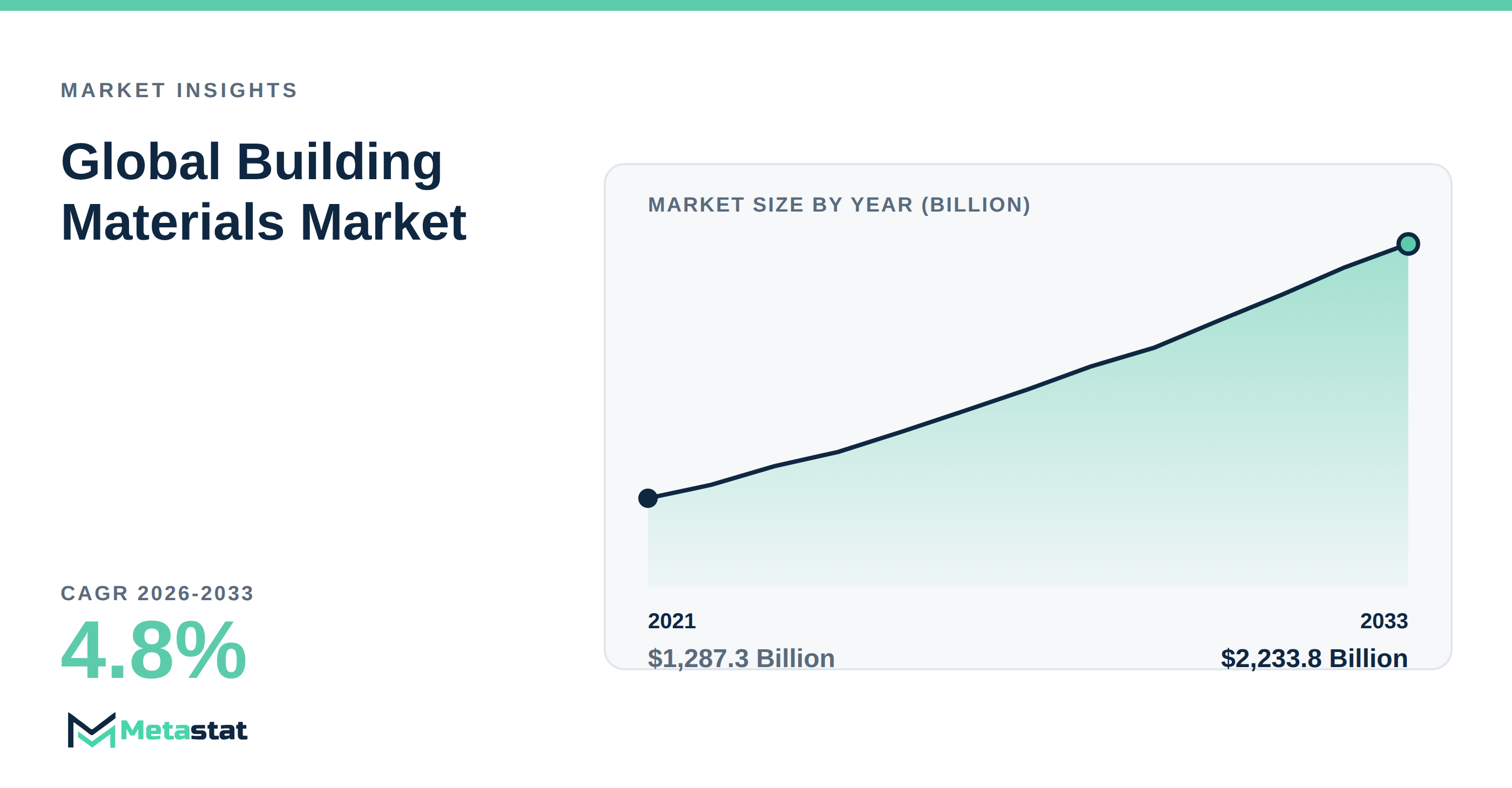
Pricing in the Building Materials market is shaped by various factors that buyers navigate to optimize costs. The market anticipates significant growth, expanding from USD 1,534.7 billion in 2025 to USD 2,233.8 billion by 2033. Understanding the underlying costs is crucial for stakeholders involved in this dynamic industry.
1. Raw Material Availability Drives Costs
Raw materials constitute the backbone of construction projects, significantly influencing pricing. Fluctuations in availability directly impact costs, particularly for essential materials like cement, aggregates, and metals. Manufacturers encounter challenges stemming from supply chain disruptions and extraction difficulties, which escalate expenses. Buyers should actively monitor local supply conditions and engage with reliable suppliers to navigate potential increases in material costs effectively.
2. Labor Costs Affect Pricing Strategies
Labor costs represent a substantial portion of overall construction expenses. Rising wages and labor shortages influence operational costs for suppliers in the Building Materials sector. While companies adapt to these pressures, many often pass a portion of these costs onto customers. Buyers leverage partnerships with suppliers that prioritize efficient workforce management, potentially securing better pricing and availability because a result.
3. Transportation Expenses Impact Market Prices
Transportation expenses play a critical role in determining final pricing for building materials. Deliveries affected by rising fuel costs and logistical challenges lead to significant price increases. Efficient logistics architecture becomes essential for suppliers aiming to minimize these costs while maintaining timely deliveries. Buyers should consider local sourcing options to reduce transportation expenses, which enhance cost-effectiveness in their projects.
4. Compliance with Regulatory Standards Influences Costs
Regulatory compliance presents a financial burden on manufacturers within the Building Materials market. Adhering to environmental and safety standards often results in increased operational costs. While necessary for ensuring sustainability, these expenses contribute to higher prices for consumers. Buyers should stay informed about regulatory changes and prefer suppliers who proactively manage compliance to potentially mitigate associated costs.
5. Demand Trends Shape Pricing Dynamics
Demand within various construction segments, particularly residential and commercial construction, drives material prices. Increased urbanization and population growth lead to heightened demand for building materials, which contributes to inflationary pressures in the market. Understanding local demand patterns allows buyers to make informed purchasing decisions and develop procurement strategies that align with market dynamics, securing more favorable pricing.
6. Technological Innovations Affect Cost Structures
Technological advancements in production processes often lead to improved efficiencies and reduced costs. Suppliers who adopt new technologies lower material costs, which positively influences pricing for buyers. Continuous investments in research and development enable firms to introduce innovative products that meet market demands more effectively. Buyers should prioritize partnerships with suppliers that emphasize technology-driven solutions, offering potential cost advantages.
7. Market Competition Impacts Pricing Strategies
The competitive landscape of the Building Materials market influences pricing strategies significantly. Established players and emerging companies vie for market share, resulting in price adjustments based on competitive pressures. Buyers benefit from this dynamic by exploring various supplier options and negotiating contracts that reflect competitive pricing. Building strong relationships with multiple vendors enhance leverage in obtaining favorable rates, ultimately optimizing procurement processes.
Understanding these factors provides vital insights into the dynamics of the Building Materials market. Buyers equipped with this knowledge makes strategic decisions that optimize their procurement processes while navigating the complexities of pricing. For more detailed insights, refer to the Global Building Materials Market.
Tags
About the Authors

LEAD ANALYST
Utkarsh Khirodkar is a Lead Market Research Analyst at MetaStat Insight, specializing in market intelligence, technology sector assessments, and competitive strategy.

INDUSTRY CONSULTANT - CHEMICALS & ADVANCED MATERIALS
Chemicals and Materials · Machinery & Equipment · Packaging
Amit Gadhekar Consultant for Chemicals and Materials at MetaStat Insight, directing sector-specific intelligence, research, and strategic consulting across global chemical and processing markets.