
This blog explores the dynamics influencing the analog switches market, focusing on technology, regional trends, and buyer behavior.
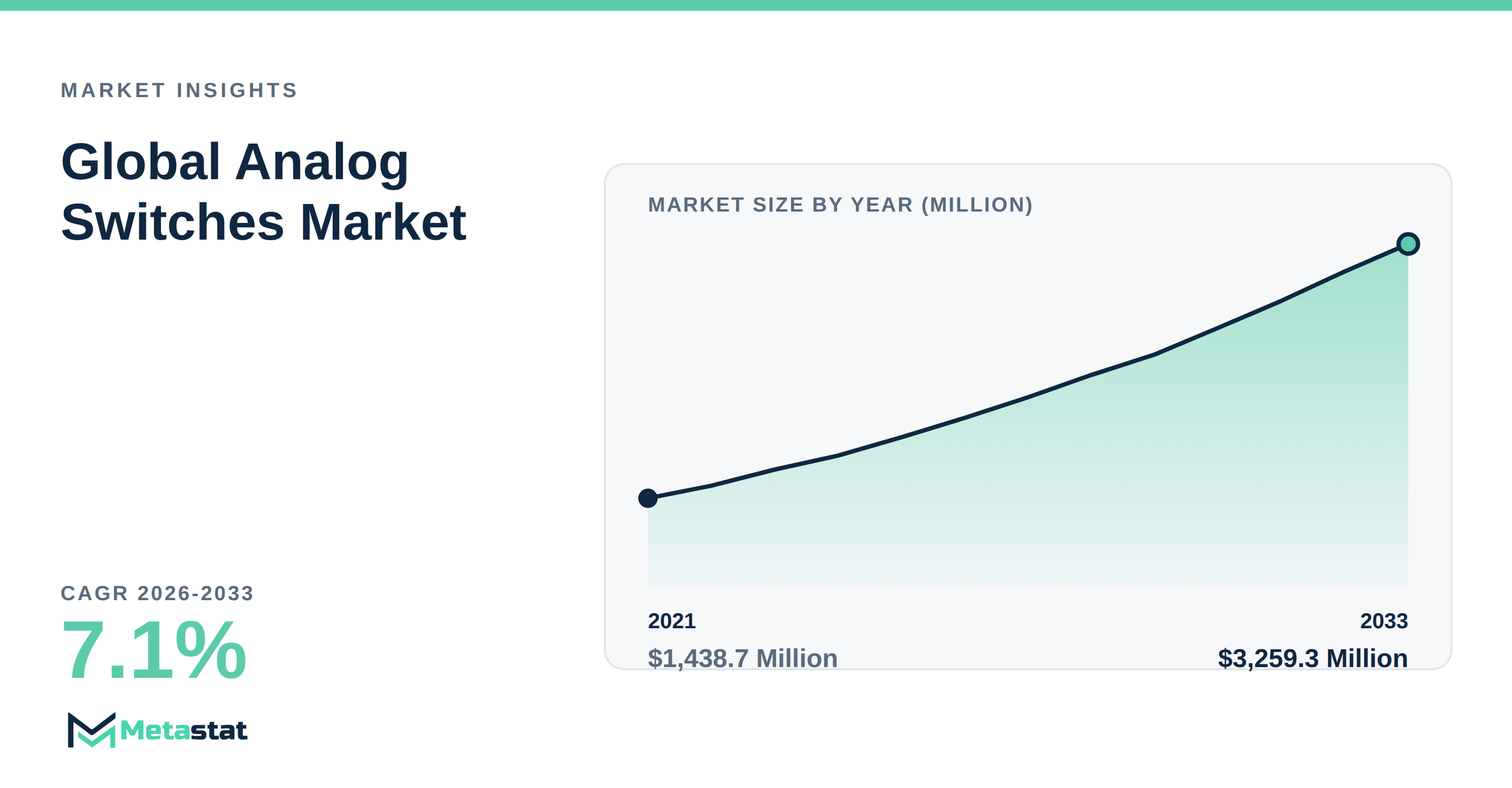
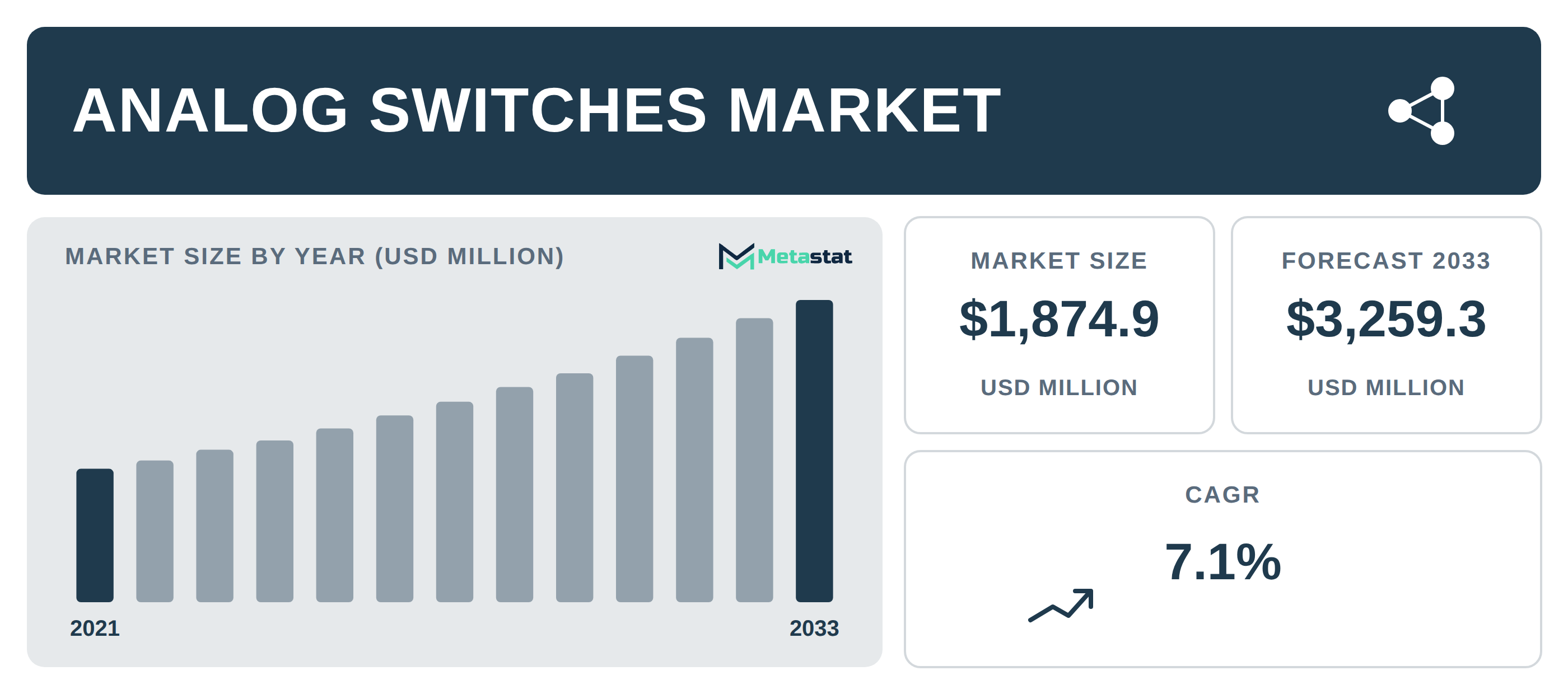
The demand for analog switches in various industries is often misunderstood. Many stakeholders overlook key factors that influence buying decisions, leading to misinformed strategies. This post clarifies critical aspects of the market for analog switches by examining growth dynamics, technological advancements, and the impact of regional trends. The full figures are in our Analog Switches market size and forecast report.
What drives investment in analog switches?
Several factors fuel investment in analog switches, yet the most significant is the increasing demand for enhanced performance in electronic devices. Industries including consumer electronics and automotive focus on high-quality signal management, which is essential for proper handling of audio, video, and data signals. This push for improved performance directly influences purchasing decisions, as manufacturers prioritize analog switches that ensure reliability and integrity in signal transmission, particularly in complex systems. Stakeholders recognize this trend to align their strategies with evolving market demands.
How technology is shaping the market for analog switches
Technological advancements play a crucial role in influencing buyer preferences. Innovations including CMOS and Silicon-on-Insulator (SOI) technologies improve the performance capabilities of analog switches. Buyers increasingly seek these advanced technologies as they allow for enhanced efficiency and reduced power consumption. This shift highlights the importance of incorporating innovative solutions into product offerings, enabling manufacturers to maintain a competitive edge while fulfilling the needs of customers in sectors like telecommunications and automotive.
Regional differences in analog switches adoption
The Asia Pacific region leads in demand for analog switches, holding a significant share of the market. Countries including China and India drive this demand due to their rapidly expanding economies and a strong emphasis on electronics manufacturing. Recognizing these regional dynamics is vital for companies looking to penetrate new markets. By understanding the unique characteristics of regional buyer behavior, manufacturers tailor their product offerings to align with local needs, enhancing their chances of success.
The importance of low-RON switching in various applications
Low-RON (on-resistance) switches have gained popularity, particularly in automotive and industrial applications, due to their efficiency in minimizing power losses. This trend illustrates a clear buyer preference for components that enhance overall system performance. Manufacturers focusing on developing low-RON solutions position themselves advantageously in the market, particularly as energy efficiency becomes a crucial concern across industries. Understanding this trend allows companies to create products that not only meet current demands but anticipate future requirements in signal management.
How price sensitivity impacts buyer decisions
Price sensitivity remains a significant factor influencing the adoption of analog switches, especially in the consumer electronics sector. While manufacturers encounter rising costs, they often turn to more affordable alternatives, impacting overall market dynamics. Companies navigate these price pressures by ensuring their offerings deliver the perceived value that buyers seek. Emphasizing performance and reliability in marketing and product development proves essential for suppliers operating in this environment.
Conclusion: Strategic insights for navigating the market
Understanding the complexities of the market for analog switches requires a keen focus on the relationships among technology, regional trends, and buyer behavior. Stakeholders should prioritize investments in innovative solutions and adapt their strategies to meet evolving consumer demands. By leveraging insights into market dynamics, companies position themselves for success in a competitive landscape. The insights gained from this analysis will help decision-makers develop informed strategies that align with the future needs of the market for analog switches.
Tags
About the Authors

LEAD ANALYST
Utkarsh Khirodkar is a Lead Market Research Analyst at MetaStat Insight, specializing in market intelligence, technology sector assessments, and competitive strategy.

PRINCIPAL CONSULTANT - ENTERPRISE AI & EMERGING TECHNOLOGIES
Banking & Finance · Electronics and Semiconductor · Energy and Power · Healthcare IT · Information & Technology · Professional Services
Vijay Gunti is a Principal Consultant at MetaStat Insight, bringing over two decades of experience across enterprise digital transformation, technology strategy, and intelligent systems.

PRINCIPAL CONSULTANT - QUALITY SYSTEMS & COMPLIANCE
Electronics and Semiconductor · Machinery & Equipment · Professional Services
Omkar Phadtare is an Industry Consultant at MetaStat Insight, specializing in quality systems, regulatory compliance, and standards benchmarking to drive data-driven market intelligence and strategic industry research.

ENERGY & INFRASTRUCTURE INDUSTRY CONSULTANT
Automotive and Transportation · Electronics and Semiconductor · Energy and Power · Machinery & Equipment
Saurabh Vasant Ganvir consults for Energy & Infrastructure Industry at MetaStat Insight, specializing in renewable energy, solar EPC, and electric vehicle (EV) infrastructure markets.

LEAD CONSULTANT - COMMUNICATION, TELECOM, AND IT
Electronics and Semiconductor · Information & Technology · Machinery & Equipment · Professional Services
Ravindra Sathe Consultants for Communication, Telecom, and IT at MetaStat Insight. He leads the firm's industry research initiatives across telecommunications infrastructure, digital connectivity, enterprise networking, and emerging information technology domains.