
The VoIP Services market is set to grow significantly, reaching USD 379.1 billion by 2033. This blog explores key trends and emerging technologies driving this expansion.
The VoIP Services market is on a trajectory of significant growth, anticipated to rise from USD 162.1 billion in 2025 to a remarkable USD 379.1 billion by 2033. This 11.2% compound annual growth rate (CAGR) signals a major shift in how organizations communicate, driven by technological advancements and evolving business needs.
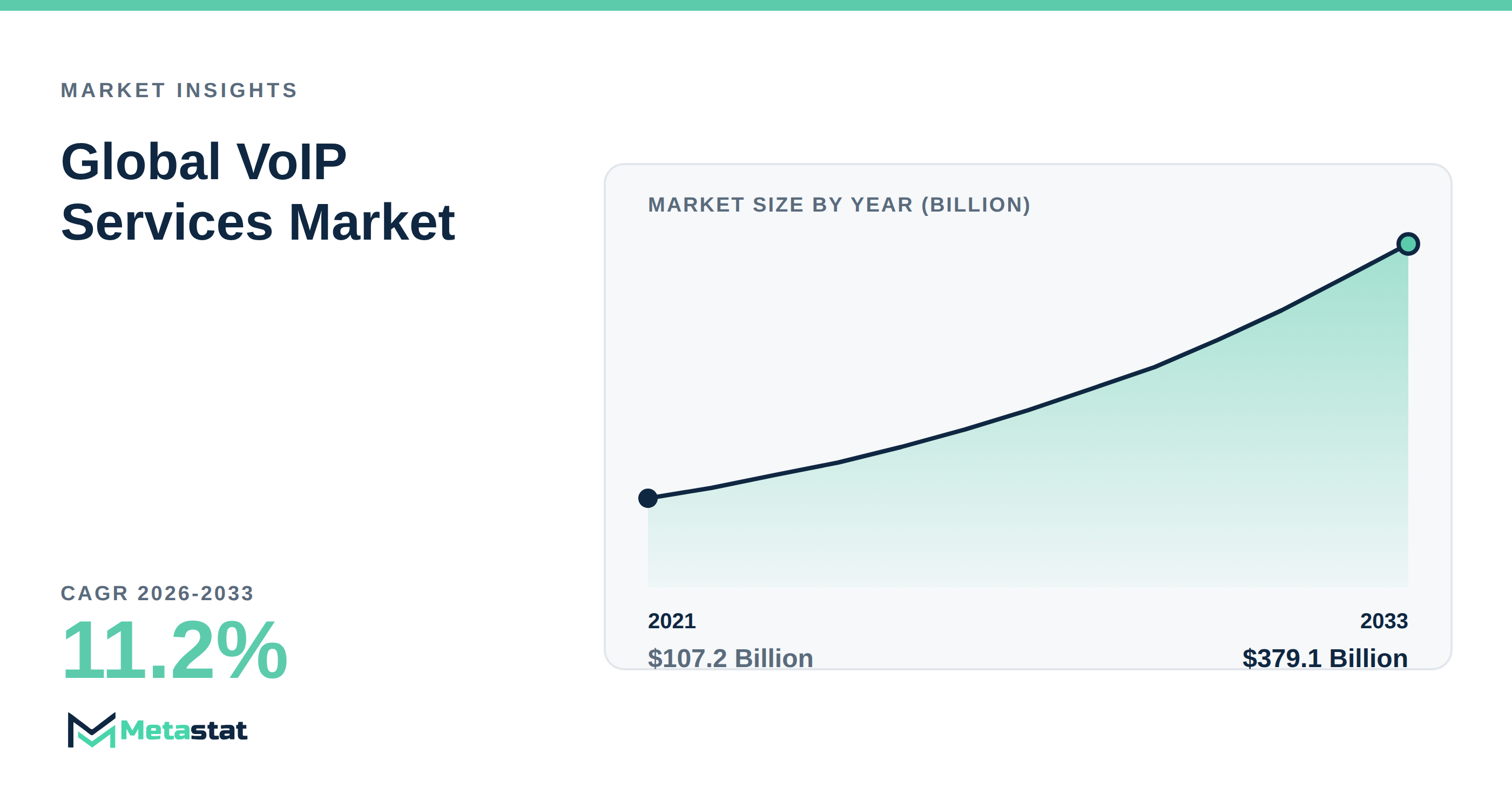
Technological innovation is reshaping the VoIP landscape, with cloud technologies at the forefront. While organizations adopt remote and hybrid work models, the necessity for efficient and scalable communication tools increases. Integration with platforms including Microsoft Teams Direct Routing exemplifies this trend, enabling businesses to streamline communication processes effectively. Companies leveraging these technologies not only enhance collaboration but significantly reduce operational costs, making them more competitive in their respective markets.
By 2033, the hosted business VoIP and cloud PBX services segment is expected to account for USD 132.7 billion of the VoIP market. This growth indicates a clear trend toward flexibility and cost-effectiveness in organizational communications. While firms implement these solutions, they benefit from features like enhanced security and integrated collaboration tools, which further boost productivity and operational efficiency.
SIP trunking services will see robust growth, projected to generate USD 94.8 billion by the end of the forecast period. Companies increasingly prioritize cost-efficient telecommunications, leading to a surge in demand for SIP trunking solutions. This trend is further enhanced by the technological advancements in SIP, which improve integration capabilities and interoperability with existing systems.
Regional dynamics highlight the importance of geographical factors in shaping the VoIP Services market. North America leads with a market share of 34.2%, expected to generate USD 119.4 billion by 2033. This dominance is driven by a solid technological infrastructure and high rates of VoIP adoption among businesses. Meanwhile, Europe and Asia Pacific represent 27.7% and 26% of the market respectively, showcasing diverse growth trends influenced by varying local conditions.
In the banking, financial services, and insurance (BFSI) sector, demand for VoIP solutions is projected to rise from USD 25.2 billion in 2026 to USD 51 billion by 2033. The sector emphasizes secure communication channels, reflecting its priority for operational efficiency and compliance. Similarly, the IT and telecommunications industries are expected to reach USD 68.2 billion by 2033, supported by the need for reliable communication solutions. The retail and e-commerce sectors are set for substantial contributions, anticipated to generate USD 43.6 billion by the same year.
Emerging technologies, including Low Earth Orbit (LEO) satellites and Very Small Aperture Terminal (VSAT) systems, are enhancing VoIP quality and reliability. These advancements offer stable connections, particularly in remote or underserved areas, driving greater adoption of VoIP solutions. Providers are increasingly focusing on integrating such technologies to meet the rising demand for dependable services across various sectors.
However, navigating the regulatory landscape poses challenges for VoIP service providers. Compliance requirements create operational burdens, potentially hindering market growth. Geopolitical factors and macroeconomic pressures complicate the environment, impacting investment decisions necessary for upgrading infrastructure to support VoIP deployment.
Organizations should remain vigilant regarding these evolving trends. The growing importance of programmable voice and voice API services signifies a shift toward greater customization within communication strategies. While businesses look for innovative ways to enhance customer engagement, these technologies will significantly influence future communication practices.
For companies to succeed in this dynamic environment, investment in infrastructure supporting next-generation VoIP technologies is essential. Addressing regulatory standards proactively and embracing emerging technologies will be crucial for maintaining a competitive edge in the VoIP Services market.
For an in-depth analysis of the trends and projections affecting this dynamic market, refer to the Global VoIP Services Market.
Tags
About the Authors

LEAD ANALYST
Utkarsh Khirodkar is a Lead Market Research Analyst at MetaStat Insight, specializing in market intelligence, technology sector assessments, and competitive strategy.

PRINCIPAL CONSULTANT - ENTERPRISE AI & EMERGING TECHNOLOGIES
Banking & Finance · Electronics and Semiconductor · Energy and Power · Healthcare IT · Information & Technology · Professional Services
Vijay Gunti is a Principal Consultant at MetaStat Insight, bringing over two decades of experience across enterprise digital transformation, technology strategy, and intelligent systems.

LEAD CONSULTANT - COMMUNICATION, TELECOM, AND IT
Electronics and Semiconductor · Information & Technology · Machinery & Equipment · Professional Services
Ravindra Sathe Consultants for Communication, Telecom, and IT at MetaStat Insight. He leads the firm's industry research initiatives across telecommunications infrastructure, digital connectivity, enterprise networking, and emerging information technology domains.