
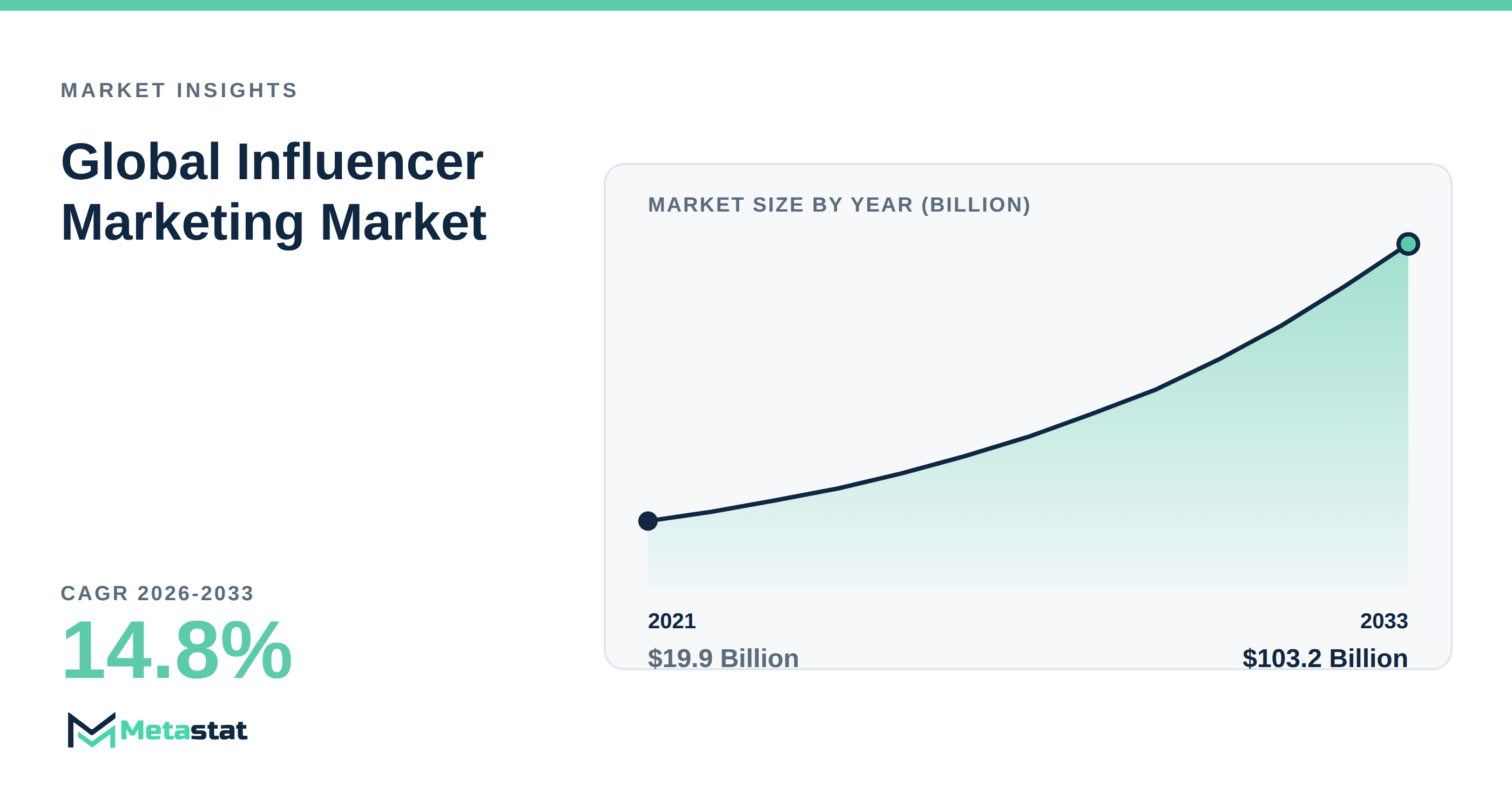
The Influencer Marketing market is set to grow from USD 34.2 billion in 2025 to USD 103.2 billion by 2033. Explore key trends, challenges, and emerging platforms that will shape future strategies.
The Influencer Marketing market is on a growth trajectory, with a projected expansion from USD 34.2 billion in 2025 to USD 103.2 billion by 2033. This increase at a compound annual growth rate (CAGR) of 14.8% emphasizes the rising importance of digital strategies and creator partnerships in contemporary marketing.
What are the key drivers of growth in the Influencer Marketing market?
Several significant factors drive the growth of the Influencer Marketing market. Digital transformation acts because a critical force, enabling brands to adopt advanced technologies that enhance their marketing strategies. Organizations increasingly invest in data analytics to gain insights into consumer preferences and behaviors, leading to more precise campaign targeting. The heightened focus on personalized content and genuine interactions aligns with evolving consumer expectations, compelling brands to prioritize collaborations with influencers who effectively connect with their audiences.
The entertainment sector emerges because a notable area of influence within this landscape. Influencers in this industry play a central role in shaping consumer perceptions, prompting brands to recognize their potential in driving engagement. Over time, businesses have shifted from traditional advertising methods to adopting influencer-driven strategies that create deeper connections with target audiences. This transition underscores the significance of authentic storytelling, fostering meaningful interactions that resonate with consumers.
How are consumer behaviors influencing marketing strategies?
Shifts in consumer behaviors significantly influence strategies within the Influencer Marketing market. Modern consumers increasingly favor authentic and personalized interactions, leading brands to adapt their marketing approaches accordingly. Younger demographics, particularly millennials and Gen Z, display a strong inclination toward influencer-driven content, which encourages brands to invest more in influencer collaborations.
Sustainability and ethical practices are gaining prominence because key considerations. Brands are more frequently aligning with influencers who advocate for social responsibility, positively influencing purchasing decisions. Comprehending these consumer dynamics is critical for organizations seeking to strengthen their market positions through influencer partnerships.
What challenges lie ahead for the Influencer Marketing market?
Despite its substantial growth potential, the Influencer Marketing market faces noteworthy challenges, particularly concerning regulatory compliance. Brands and marketing agencies encounter heightened scrutiny regarding advertising practices and transparency, which create barriers to entry for new participants. Compliance frameworks necessitate significant investments that divert resources from essential marketing activities.
Macroeconomic variables, particularly inflationary pressures, intensify operational costs within the industry. Budget constraints compel brands to reassess their influencer partnerships, affecting overall demand. Addressing these compliance and financial challenges will be pivotal for organizations aiming to thrive in the competitive influencer marketing environment.
What emerging trends should stakeholders watch for?
Stakeholders in the Influencer Marketing market should closely monitor several emerging trends poised to shape its future. An emphasis on next-generation innovations and technologies will significantly enhance influencer marketing effectiveness. Organizations are investing in analytics tools and performance measurement systems to ensure campaigns yield measurable outcomes.
The integration of sustainability initiatives into marketing strategies is becoming increasingly prevalent. Brands aligning their messaging with eco-friendly practices will enhance their appeal to environmentally conscious consumers. This shift influences spending and marketing strategies while opening new avenues for collaboration with like-minded influencers.
Market fragmentation is characteristic of the influencer marketing ecosystem, with numerous players competing for attention. This dynamic environment requires companies to pursue strategic mergers and acquisitions to enhance their service offerings. Organizations investing in research and development are well-positioned to succeed by delivering innovative solutions that align with the evolving demands of the market.
What role do platforms play in shaping marketing dynamics?
The choice of platforms significantly influences the effectiveness of influencer marketing strategies. Instagram, YouTube, TikTok, and Facebook each play distinct roles, offering unique capabilities for brand engagement. For example, Instagram's emphasis on visual content appeals to younger audiences, while YouTube's video format enhances narrative storytelling.
Brands continue to explore each platform's features, aligning strategies with audience preferences. The rising trend of adopting TikTok for short-form content is particularly noteworthy, creating deeper connections between brands and consumers. Monitoring these platform dynamics will be essential because companies seek to optimize their influencer marketing efforts.
The Influencer Marketing market is poised for substantial growth driven by evolving consumer behaviors and the strategic incorporation of technology. By understanding these dynamics and adjusting their strategies accordingly, brands enhance engagement, optimize marketing initiatives, and secure a stronger position within this competitive market. For detailed insights on the trends, challenges, and key players in the Influencer Marketing market, the full report is available at Global Influencer Marketing Market.
Tags
About the Author

LEAD ANALYST
Utkarsh Khirodkar is a Lead Market Research Analyst at MetaStat Insight, specializing in market intelligence, technology sector assessments, and competitive strategy.