
LEAD ANALYST
Utkarsh Khirodkar is a Lead Market Research Analyst at MetaStat Insight, specializing in market intelligence, technology sector assessments, and competitive strategy.

Global 3D Animation Market Size, Share, By Service Type (Concept Development and Previsualization, 3D Modeling, Texturing and Asset Creation, Rigging and Character Setup, 3D Animation Production, Lighting and Rendering, FX, Simulation and Compositing, Post-Production and Finishing, Others (Matchmoving and Rotoscoping)), By Format (Feature Films, Episodic and Streaming Series, Advertising and Branded Content, Game Cinematics and Trailers, Short Films and Digital/Social Content, Corporate and Explainer Videos, Immersive AR/VR/XR Content, Others (Theme-Park Media and Music Videos)), By Customer Type (Film and Television Studios and Production Houses, OTT Platforms and Broadcasters, Game Developers and Publishers, Advertising Agencies and Brands, Corporate Enterprises, Architecture and Real Estate Companies, Education and Training Organizations, Healthcare and Life Sciences Organizations, Others (Events, Government and Nonprofits)), Industry Analysis, Growth, Trends, and Forecast, 2026-2033
Report ID
MSI-5278
Published
September, 2026
Pages
308 Pages
Format
Historical
Base year
Forecast
Forecast period
Report Details
Market Valuation: Valued at $30.8 Billion in 2025, projected to reach $80.8 Billion by 2033 at a 12.8% CAGR.
Dominant Segment: The 3D Animation Production segment leads the market, driven by the increasing demand for high-quality animated content across entertainment platforms. This growth is supported by technological advancements that enhance production quality and efficiency.
Geographic Lead: The Asia Pacific region is experiencing rapid growth in the 3D Animation market, fueled by investments in local production studios and a rising demand for animated content in entertainment and education sectors.
What's Inside: The report provides a comprehensive analysis of the global 3D Animation market, including detailed segmentation by service type, format, and customer type, along with insights into market dynamics and competitive landscape.
Emerging Technologies: The integration of artificial intelligence and real-time rendering technologies is driving innovation in the 3D Animation market, enhancing production efficiency and expanding applications across various industries.
Choose Your License
Global 3D Animation Market
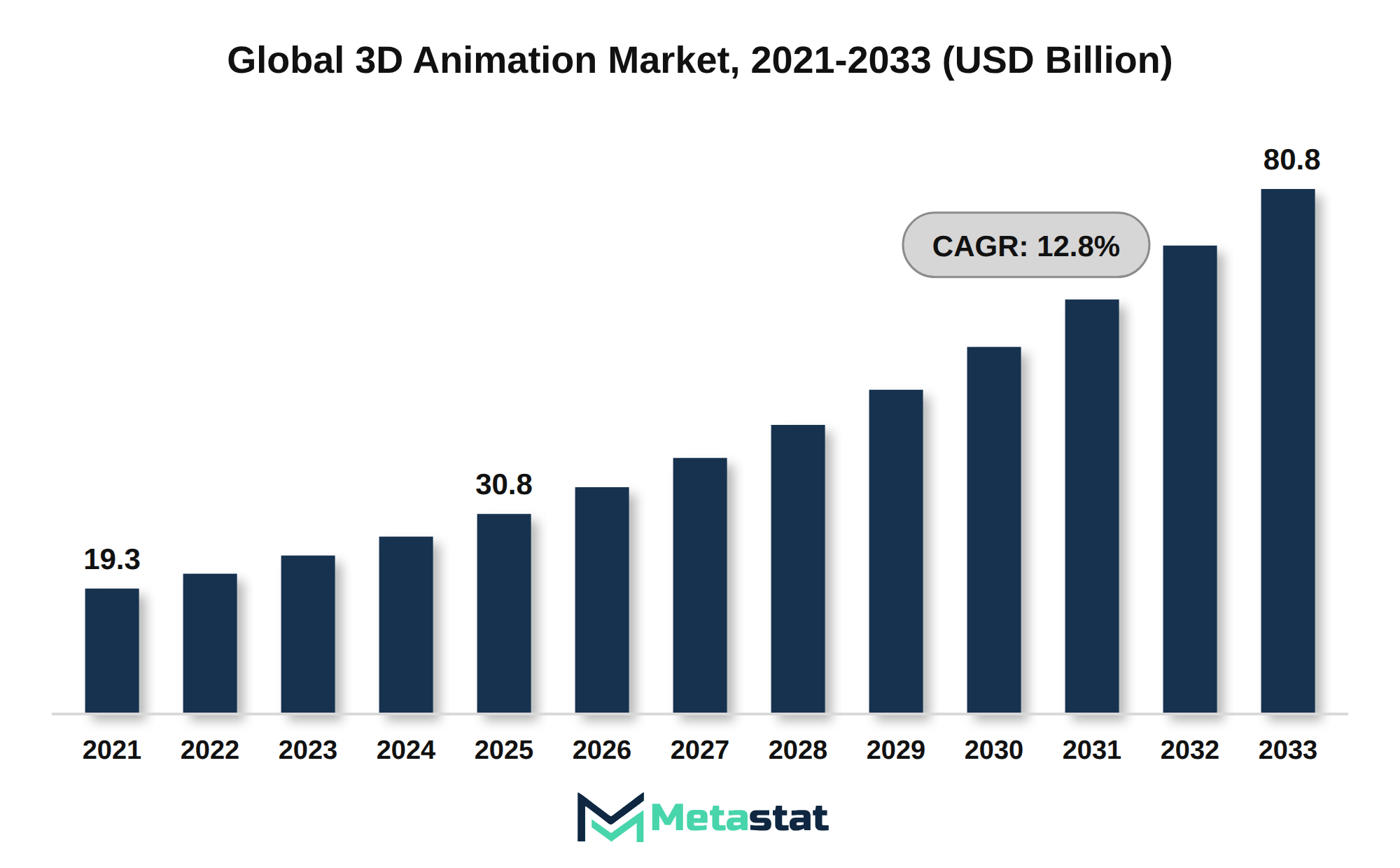
The global 3D Animation market was valued at USD 30.8 billion in 2025 and is projected to reach USD 80.8 billion by 2033, growing at a CAGR of 12.8% over the forecast period.
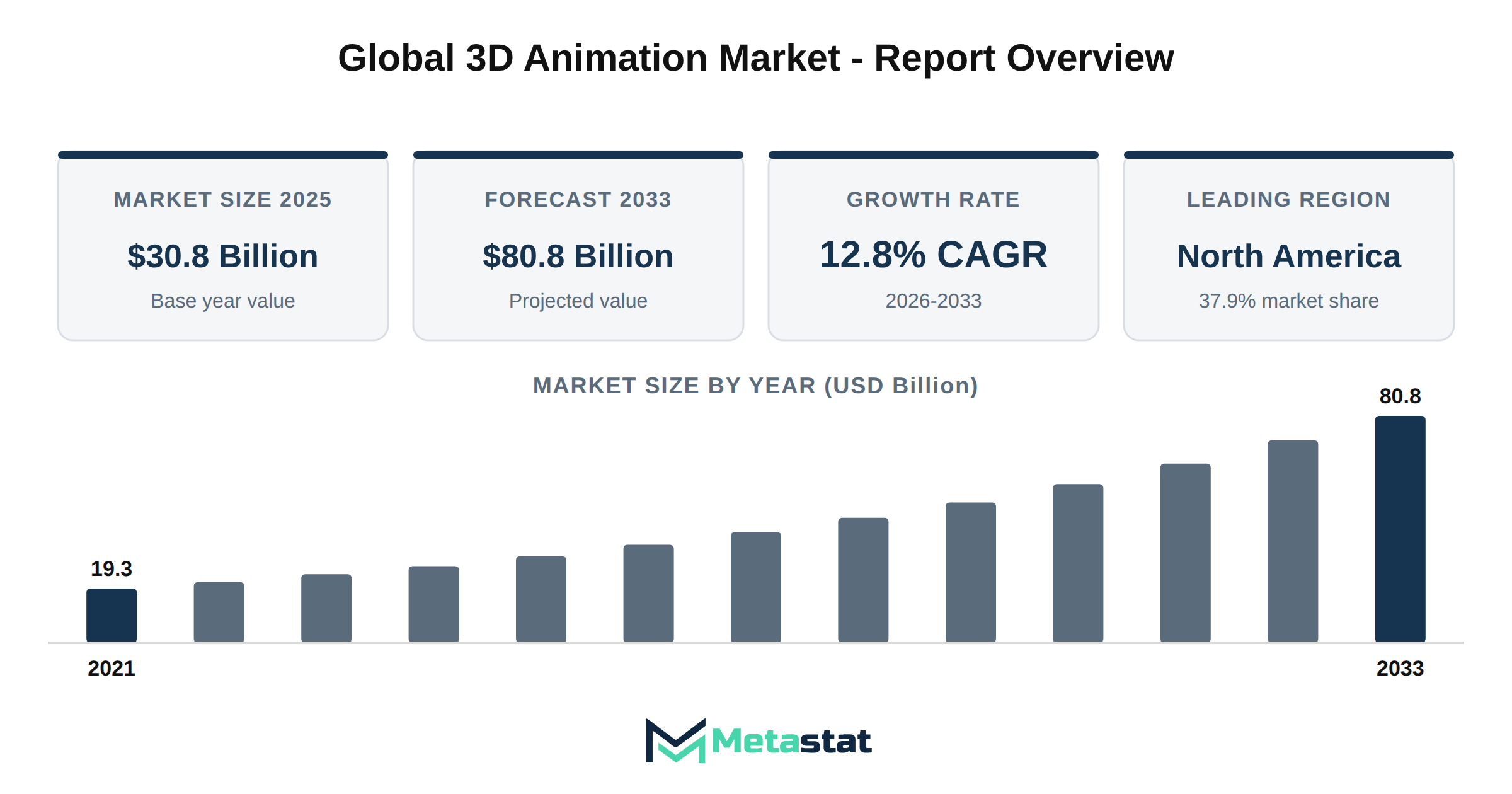
The global 3D Animation market reached USD 30.8 billion in 2025, with forecasts projecting an increase to USD 80.8 billion by 2033. This growth reflects a compound annual growth rate (CAGR) of 12.8%. The market expands due to several trends reshaping content production and digital media, including the increasing adoption of generative AI in workflows, which enhances efficiency and creativity in 3D animation processes.
Real-time rendering and virtual production techniques transform the landscape of 3D animation by enabling faster and more dynamic content creation. Demand for 3D animation spans various sectors, including film, streaming, and gaming, where immersive storytelling becomes essential. The market experiences significant growth in advertising and branded content, driven by businesses leveraging visually compelling animations to engage audiences.
Game cinematics and interactive entertainment drive demand for animation, with developers seeking innovative ways to enhance user experiences. The expanding use of 3D animation in augmented reality (AR), virtual reality (VR), and extended reality (XR) experiences highlights the technology's versatility and appeal. Cloud-based production and remote collaboration trends reshape how animation studios operate, allowing for flexible workflows and access to global talent.
Advancements in motion capture and character animation technologies contribute to the market's evolution, enabling more lifelike and expressive animations. Innovations in 3D modeling, rigging, and asset creation enhance the quality and efficiency of animation production. Rendering automation and GPU acceleration significantly reduce production times and costs, making high-quality animation more accessible to a broader range of creators.
The outsourcing and globalization of 3D animation production services provide studios with opportunities to cut costs and tap into specialized skill sets. Pricing trends indicate a competitive environment, with studios seeking to balance quality and affordability in their offerings. Talent availability presents challenges for animation studios, driven by the demand for skilled professionals continuing to rise amid industry growth.
The 3D Animation market experiences significant trends that shape content production and digital media, driven by advancements in technology and changing consumer preferences. Generative AI adoption within 3D animation workflows streamlines processes, enhancing creativity and efficiency. This technology allows artists to focus on innovative aspects while automating repetitive tasks, leading to faster project completion and improved output quality.
Real-time rendering and virtual production techniques transform the animation landscape, providing immersive experiences and enabling creators to visualize scenes instantly. This shift attracts investments and encourages collaboration among various industries, enhancing storytelling capabilities across platforms.
Rising demand for 3D animation across film, streaming, and gaming sectors reflects the growing appetite for visually engaging content. Production houses increasingly incorporate animation to enhance narrative depth and audience engagement, contributing to the market's expansion.
The growth of 3D animation in advertising and branded content emerges due to brands recognizing the effectiveness of animated visuals in capturing consumer attention. Advertisers leverage animation to create memorable campaigns that connect with target audiences, driving higher engagement rates and brand recall.
Game cinematics and interactive entertainment significantly drive animation demand, with gaming companies investing heavily in high-quality visuals for immersive experiences. This trend positions 3D animation because a critical element in the gaming industry, influencing consumer preferences and market dynamics.
Expanding use of 3D animation in augmented reality (AR), virtual reality (VR), and extended reality (XR) experiences highlights its versatility across various applications. These technologies enhance training, education, and marketing efforts, further propelling market growth.
Cloud-based 3D animation production enables remote collaboration among teams, reducing geographical barriers and promoting creativity across borders. This trend enhances operational efficiency and allows studios to tap into global talent pools.
Advances in motion capture and character animation technologies enhance the realism and expressiveness of animated characters. This innovation draws audiences into animated narratives, increasing viewer engagement and satisfaction.
Rendering automation and GPU acceleration improve production timelines and reduce costs, allowing studios to allocate resources more effectively. This efficiency contributes to the overall growth of the market, enabling studios to pursue more ambitious projects.
Outsourcing and globalization of 3D animation production services continue to reshape the industry landscape, because companies seek cost-effective solutions while maintaining high-quality standards. This trend encourages collaboration among global studios, promoting innovation and creativity.
Pricing and production cost trends in 3D animation services reflect the evolving market dynamics, with studios adapting to changing client expectations and competitive pressures. Understanding these trends is essential for studios to remain profitable while delivering high-quality content.
Talent availability and workforce challenges in 3D animation studios create hurdles for production companies. The demand for skilled animators outpaces supply, necessitating strategies for attracting and retaining top talent within the industry.
Competitive dynamics among global 3D animation studios intensify because players seek to differentiate themselves through innovation and unique offerings. Strategic alliances and collaborative projects emerge because effective methods for enhancing capabilities and expanding market reach.
Investment and M&A activity in the 3D animation industry signal stakeholder confidence in the market's future potential. Companies pursue strategic acquisitions to enhance their service offerings and strengthen their competitive positions.
Growing adoption of 3D animation in corporate and explainer content reflects its effectiveness in conveying complex information in an engaging manner. Businesses leverage animation to create compelling narratives that connect with audiences, further highlighting its importance in various sectors.
3D animation opportunities in architecture and real estate visualization gain traction, because stakeholders recognize the benefits of visualizing projects before construction. This trend enhances decision-making processes and supports effective marketing strategies.
Healthcare and education applications expand demand for 3D animation, with organizations employing animated visuals to facilitate understanding and enhance learning experiences. This growth contributes to the market's diversification and creates new opportunities for animation studios.
The Asia Pacific region emerges because a key 3D animation production hub, driven by increasing investments in technology and a growing talent pool. This development enhances the region's competitive positioning within the global market.
North America continues to lead demand for 3D animation across entertainment and digital media, with established studios and emerging companies driving innovation. This region's strong creative ecosystem fosters collaboration and growth opportunities within the market.
Intellectual property creation and original animated content strategies serve because vital components for studios aiming to differentiate themselves in a crowded marketplace. Establishing unique narratives and characters enhances audience engagement and loyalty.
Sustainability and rendering efficiency in 3D animation production play crucial roles in shaping industry practices. Studios increasingly prioritize eco-friendly processes and technologies, aligning with broader sustainability goals.
Future growth opportunities in immersive and AI-assisted 3D animation present exciting possibilities for studios seeking to push creative boundaries. Innovations in technology and storytelling will continue to drive market expansion through 2033.
The ongoing focus on digital transformation significantly influences the 3D Animation market, with various industries adopting advanced technologies to enhance operational efficiency and user engagement. Businesses prioritize investments in automation, artificial intelligence, and software solutions to modernize legacy processes. This transformation generates demand for innovative animation techniques that improve content delivery and viewer experience.
Industries including film production, gaming, and advertising actively pursue 3D animation to create visually compelling narratives that connect with audiences. Leveraging advanced animation technologies enhances storytelling capabilities, attracts more viewers, and ultimately increases revenues. The demand for immersive experiences fuels growth within the market, highlighting the critical role digital transformation plays in shaping content creation strategies.
Investment in digital infrastructure and creative technologies further strengthens the market's trajectory. Companies seeking to remain competitive increasingly allocate resources toward research and development that drives innovation in 3D animation. This ongoing commitment to technological advancement demonstrates a clear link between digital transformation and market expansion, emphasizing the importance of adopting forward-thinking strategies to capture emerging opportunities.
The drive for operational productivity significantly influences the 3D Animation market, with advancements in automation and software integration enhancing efficiency. Businesses increasingly adopt technologies that streamline processes, reduce production times, and optimize resource allocation. This trend arises from rising demand for high-quality content and the stay competitive in an evolving environment.
Companies invest in digitizing legacy processes, leading to lower operational costs and improved output quality. Enhanced productivity generates cost savings and enables firms to allocate resources toward innovation and creative development, further driving market expansion. The integration of artificial intelligence into production workflows represents a critical advancement, allowing creators to automate repetitive tasks and focus on high-value activities.
The shift toward a more productive operational framework allows organizations across various sectors, including film and television, gaming, and advertising, to respond rapidly to changing consumer preferences. This adaptability enhances the overall effectiveness of production houses and studios, contributing to a positive growth trajectory for the market. Ultimately, increased operational productivity creates an environment conducive to innovation, ensuring that the 3D Animation market remains dynamic and competitive.
Regulatory compliance presents ongoing challenges for the 3D Animation market, leading to increased operational costs for organizations. Firms face the necessity to invest in compliance measures, diverting resources from core activities including innovation and production. These costs impact smaller studios more acutely, limiting their competitive edge and influencing overall market dynamics.
Macroeconomic headwinds, including inflationary pressures, exacerbate the situation by increasing costs across the supply chain. Rising prices for materials and labor force organizations to adjust budgets, often resulting in reduced investment in technology and resources. This creates a ripple effect, leading to slower growth in the market because companies prioritize cost containment over expansion.
Geopolitical instability contributes to uncertainty, affecting investment decisions and driving market fragmentation. Fluctuations in international relations disrupt supply chains, making it difficult for firms to secure necessary resources and talent. Certain regions experience slower adoption rates, hindering the growth of the 3D Animation market.
Infrastructure gaps and connectivity deficits hinder the implementation of advanced technologies, limiting the potential of firms within the market. Inadequate infrastructure stalls production timelines and increases operational challenges, ultimately affecting service delivery and market growth. Without adequate investment in infrastructure, the ability to leverage 3D animation capabilities remains constrained.
Talent gaps represent another significant restraint, with a shortage of skilled professionals in the industry. Organizations struggle to find qualified personnel to meet the growing demand for complex animation projects. This shortage slows down project timelines and raises costs, compelling firms to reevaluate their operational strategies in an increasingly competitive environment.
Current geopolitical fragmentation and trade tensions present notable challenges for the 3D Animation market. Disruptions in international trade lead to increased tariffs and trade deficits, affecting the cost structures of companies operating within this space. The resulting tariff friction escalates operational costs, impacting profit margins and pricing strategies.
Technological disruptions and rapid shifts in market demands create significant pressure on firms to adapt their offerings. Complex research and development integrations often become necessary to maintain competitive advantages. This requirement for continuous innovation, coupled with fluctuating input costs and supply chain instability, strains resources and hinders growth.
The market faces challenges from a tightening global regulatory framework, which introduces compliance overhead and evolving legal liabilities. Companies in the 3D Animation market navigate these complexities while maintaining their market positioning. Workforce skill gaps and talent retention pressures impede the ability to execute advanced projects, further complicating operational dynamics.
Environmental considerations, including sustainability demands and decarbonization mandates, influence production methods and operational strategies. Companies balance these expectations against economic viability, which alters investment decisions. Intense competition and market saturation increase urgency, compelling firms to innovate while managing costs effectively.
Emerging technologies significantly influence the 3D Animation market, driving innovation and expanding applications across various industries. The integration of artificial intelligence, machine learning, and real-time rendering capabilities enhances the efficiency and quality of 3D animation production. These advancements appeal to sectors including gaming, film, and advertising, where high-quality visuals are critical for engaging audiences.
Geographical expansion contributes to the market's growth owing to developing regions investing in modernizing their digital infrastructures. Countries in Asia Pacific actively embrace 3D animation technologies, driven by an increase in local production studios and a growing demand for animated content in entertainment and education sectors. This trend highlights the potential for significant economic benefits, including job creation and enhanced local capabilities.
Technological disruptions in the form of digital transformation initiatives enable businesses to streamline operations and optimize workflows. Companies increasingly adopt cloud-based solutions to enhance collaboration and reduce production costs, resulting in a more competitive landscape. Consequently, this shift encourages smaller firms to enter the market, further diversifying offerings and increasing competition.
Strategic consolidation among key players influences market dynamics, enabling companies to pool resources and expertise. Mergers and acquisitions facilitate the sharing of innovative technologies and talent, allowing firms to enhance service capabilities and expand their market reach. Such activities contribute to a more robust and resilient market structure.
The increasing emphasis on sustainability and eco-friendly practices shapes consumer preferences and influences purchasing decisions. Companies that align their operations with environmental, social, and governance (ESG) criteria gain a competitive edge, appealing to socially conscious consumers and investors. This alignment supports the market's growth by encouraging responsible practices and promoting investments in sustainable 3D animation solutions.
Downstream market diversification opens new avenues for revenue generation because companies explore niche applications of 3D animation. Industries including healthcare, education, and architecture increasingly adopt 3D animation for training, simulations, and presentations. This diversification enhances the market's resilience and offers expanded opportunities for companies to capture value in emerging sectors.
The Global 3D Animation market is segmented based on Service Type, Format, and Customer Type.
Valued at USD 3.1 billion in 2026, the Concept Development & Previsualization segment is projected to reach USD 7.6 billion by 2033, at a CAGR of 13.7% during the forecast period. Key demand drivers include the rapid evolution of visual storytelling in film and television, alongside a growing interest in immersive experiences across various formats. This trend stimulates investments in previsualization techniques, allowing creators to visualize complex scenes before full production, ultimately enhancing workflow efficiency and reducing costs.
The trajectory of this segment benefits from advancements in technology, including improvements in rendering software and hardware capabilities. These enhancements facilitate more detailed and accurate visualizations, attracting a broader range of customers, including film studios and advertising agencies, eager to leverage high-quality previsualization for compelling content. The market's growth aligns with the increasing complexity of modern storytelling, necessitating sophisticated planning and visualization techniques to meet audience expectations.
End-use dynamics reflect a shift towards collaborative processes within creative teams, where previsualization serves because a critical tool for aligning artistic visions and technical requirements. Regulatory compliance, particularly concerning content standards and safety measures, influences production timelines and budget allocations, further emphasizing the importance of efficient previsualization practices. Overall, the increasing demand for high-quality animated content across various mediums positions the Concept Development & Previsualization segment because a crucial component of the growth within the 3D Animation market.
Driving factors in the 3D Animation market include the increasing demand for high-quality visuals across various industries, particularly in gaming, film, and advertising. This demand for enhanced content quality drives advancements in 3D modeling, texturing, and asset creation. Various industries seek to deliver captivating experiences to their audiences, resulting in a strong emphasis on visual storytelling.
The segment is estimated to reach USD 14.7 billion by 2033, at a CAGR of 13.3% during the forecast period. Technological maturation plays a critical role in this growth, with advancements in software and hardware enabling more efficient workflows. Next-generation upgrades in rendering techniques and real-time graphics contribute to increased creativity and realism, further enhancing the value of 3D modeling, texturing, and asset creation within the market.
End-use dynamics exhibit a shift toward immersive experiences, driven by the rise of virtual reality (VR) and augmented reality (AR). These technologies necessitate sophisticated 3D assets that meet users’ expectations for interactivity and engagement. Consequently, industries increasingly invest in high-quality 3D content to remain competitive.
Cost structures reflect the complexity of 3D asset creation, with investments in skilled personnel and advanced technology impacting pricing strategies. Despite potential pricing volatility, organizations recognize the long-term value derived from high-quality 3D assets, leading to sustained demand. This segment of the market demonstrates resilience amid fluctuating economic conditions and evolving consumer preferences, reinforcing its position because a vital component of the broader 3D Animation landscape.
Technological advancements in animation software and tools significantly contribute to the growth of the Rigging & Character Setup segment within the 3D Animation market. The demand for higher quality animations drives studios to invest in sophisticated rigging techniques, enhancing character movements and expressions. This investment improves storytelling, particularly in feature films and gaming, making the segment critical for creating immersive experiences.
Investment in next-gen upgrades, including artificial intelligence and machine learning, streamlines the character setup process. These innovations enhance efficiency and accuracy in rigging, resulting in faster production timelines and reduced costs for animation studios. The ability to create complex character rigs without extensive manual input influences studios' competitive advantages, leading to broader adoption across various media platforms.
The Rigging & Character Setup segment is expected to reach USD 6 billion by 2033. This growth reflects the increasing integration of animation in diverse industries, including film, television, and gaming. The expanding application of animated content in marketing and advertising further accelerates demand, driven by brands seeking to engage audiences through captivating visual narratives.
Regulatory compliance in terms of intellectual property rights and content standards shapes the operational dynamics within the segment. Studios navigate these regulations while maintaining artistic innovation, creating a balancing act that influences project timelines and costs. Companies that successfully align their processes with these standards gain a strategic advantage in the competitive environment.
Overall, the Rigging & Character Setup segment shows strong growth potential driven by technological maturation and evolving end-user demands within the 3D Animation market. With a focus on enhancing production capabilities and adapting to market trends, investments in this segment are likely to yield significant returns for industry players.
Growth in the 3D Animation Production segment aligns with heightened demand for high-quality animated content across various entertainment platforms. This demand stems from the increasing consumption of animated features in film and television, creating a robust market environment. The segment is projected to grow at a CAGR of 13.5% during the forecast period, indicating strong investment interest from studios and production houses.
Technological advancements play a critical role in this segment's expansion. Innovations in animation software and rendering techniques enhance the quality and efficiency of production processes, enabling creators to develop more intricate animations. This progression attracts a diverse range of customers, including film and television studios, OTT platforms, and game developers, all seeking to deliver captivating content to audiences.
The shift towards digital streaming platforms significantly influences consumption patterns, with increased budgets allocated for high-quality content production. While audiences demand more engaging visual experiences, studios invest in 3D animation to differentiate their offerings in a competitive market. Such investments reflect strategic opportunities that enhance the overall growth potential within the 3D Animation market.
Evolving consumer preferences towards immersive storytelling and interactive content drive the expansion of the segment. The growing popularity of animated series on OTT platforms and streaming services has led to increased collaborations between animation studios and content distributors. This trend creates a supportive ecosystem for 3D Animation Production, ensuring a steady flow of projects that further drive growth.
By 2033, the market anticipates significant revenue contributions from the 3D Animation Production segment, driven by its evolution alongside technological innovations and changing audience expectations. These dynamics position the segment favorably within the broader 3D Animation market, creating avenues for sustained investment and development.
Continued investment in visual storytelling drives demand for the Lighting & Rendering sub-segment within the 3D Animation market. Increased attention on high-quality graphics and realistic visual effects enhances viewer engagement across various platforms, including film, television, and gaming. Technological maturation, characterized by advanced rendering software and powerful computing hardware, enables artists to create intricate lighting scenarios that accurately reflect real-world conditions.
Next-gen upgrades, including real-time rendering technologies, improve production efficiency while maintaining high visual fidelity. These advancements allow creators to experiment with lighting techniques dynamically, leading to innovative approaches in project execution. The evolution of products in this sub-segment reflects a growing trend toward user-friendly interfaces and intuitive workflows, catering to both seasoned professionals and emerging talent.
End-use dynamics illustrate a shift toward immersive experiences, particularly in virtual and augmented reality applications. Lighting and rendering play a crucial role in crafting believable environments, enhancing user interaction and satisfaction. Regulatory compliance standards for content quality and safety emphasize the importance of reliable lighting and rendering solutions in the market.
Pricing volatility remains a challenge, influenced by the continuous development of new tools and technologies, which lead to fluctuating costs for service providers. Margin pressures arise from competition and the necessity to stay updated with the latest industry standards. Strategic opportunity windows exist for firms that leverage emerging technology while ensuring cost-effective solutions for clients.
The Lighting & Rendering segment demonstrates a strong trajectory within the 3D Animation market, supported by ongoing innovation and a clear demand for high-quality visual content across various media. Continuous investment in technology and adaptation to industry trends drives future growth in this vital area of animation.
Demand for FX, Simulation & Compositing in the 3D Animation market stems from advancements in visual effects technologies, which enhance storytelling across various media formats. Adoption reflects the growing need for immersive experiences in films, video games, and advertising. Studios increasingly invest in sophisticated tools to create realistic simulations and compositing effects, driving creativity and innovation in visual presentations.
Segment expansion is fueled by the rise of streaming platforms and digital content consumption, which increases the demand for high-quality visual effects. The importance of compelling visuals in differentiating content has prompted production houses to prioritize FX, Simulation & Compositing services. While competition among content creators intensifies, studios seek to push the boundaries of creativity through advanced visual effects, making this segment critical for industry growth.
Technological maturation in computer graphics and animation software has significantly enhanced the capabilities of FX, Simulation & Compositing. Continuous upgrades in hardware and software tools support the development of more complex and realistic effects, enabling studios to deliver higher-quality content. This evolution attracts new entrants into the market, leading to increased competition and innovation.
End-use dynamics reflect a shift towards interactive media and augmented reality applications, which demand advanced compositing techniques. The gaming industry increasingly relies on FX and simulation to create engaging experiences that captivate audiences. This segment adapts to meet the changing preferences of consumers for more interactive and visually compelling content.
Overall, FX, Simulation & Compositing remains a vital component of the 3D Animation market, driving growth and innovation through technological advancements and shifting consumer expectations. Strategic investment in this segment positions companies to capture emerging opportunities and enhance their competitive edge in an evolving digital environment.
Significant advancements in animation technology drive the adoption of Post-Production & Finishing services within the 3D Animation market. With increasing demand for high-quality visual effects and smooth transitions, production houses prioritize these services to enhance storytelling and viewer engagement. The shift toward streaming platforms increases this demand, driven by content creators seeking to differentiate their offerings through superior post-production techniques.
Investment in advanced software solutions contributes to the evolution of Post-Production & Finishing capabilities. Enhanced rendering processes and AI-driven tools improve workflows, allowing studios to enhance efficiency and reduce turnaround times. This technological maturation creates an environment where innovative techniques thrive, enabling the creation of more complex and engaging content.
The competitive landscape influences pricing structures, requiring firms to balance quality and cost-effectiveness in their service delivery. Increasing project expectations from clients place pressure on margins, compelling studios to invest in top-tier talent and technology. Consequently, firms engage in strategic partnerships and collaborations to enhance service offerings and expand market reach.
Demand for high-quality content spans various industries, including film, television, and video games, highlighting the versatility of Post-Production & Finishing services. While consumer preferences shift toward immersive experiences, firms pivot to accommodate these trends, investing in tools and techniques that improve the final product. This adaptability positions the market for sustained growth because it responds to evolving consumer expectations.
The Post-Production & Finishing segment plays a key role in the 3D Animation market's evolution. Ongoing investments in technology and strategic partnerships enable firms to deliver high-quality services, meeting the demands of a competitive landscape. The focus on quality, efficiency, and innovation will continue to shape the future of this vital segment.
Demand for specialized animation services like matchmoving and rotoscoping drives continuous development in the 3D Animation market. These techniques enhance visual fidelity by integrating live-action footage with animated elements, a requirement in high-quality productions. The growing appetite for immersive content across industries including film, gaming, and advertising necessitates precise blending of real and animated visuals.
Technological advancements in tracking systems and image processing software facilitate more efficient workflows in this segment. Increased use of virtual reality (VR) and augmented reality (AR) in entertainment and training applications boosts the relevance of these services. Stakeholders in film and television, particularly those focusing on effects-heavy projects, prioritize high-quality matchmoving and rotoscoping to meet strict production timelines and creative demands.
This segment benefits from a broadening understanding of animation across various platforms. Brands enhance their engagement strategies with compelling visual narratives, driving market expansion for matchmoving and rotoscoping. Adoption of these techniques improves overall production value, appealing to audiences seeking innovative content experiences.
Valued at USD 9.5 billion in 2026, the Feature Films segment is projected to reach USD 20.2 billion by 2033, at a CAGR of 11.3% during the forecast period. This growth is driven by the increasing popularity of animated films across various demographics and the rising demand for high-quality visual effects that enhance storytelling. Animation studios invest in advanced technologies that improve production quality and streamline the creative process, supporting the segment's expansion. Collaborations between film studios and streaming platforms create new distribution channels, further driving demand within the market. The evolution of consumer preferences towards immersive and engaging content aligns with the strategic opportunities available in this segment. Continued advancements in animation software and techniques support the competitive landscape by enabling studios to deliver innovative and captivating narratives that connect with audiences globally. Overall, the strong growth trajectory of the Feature Films segment contributes significantly to the overall growth of the 3D Animation market.
Episodic & Streaming Series segment is estimated to reach USD 20.1 billion by 2033, at a CAGR of 14.7% during the forecast period. Demand for animated content within streaming platforms drives significant growth in this segment. Increasingly, OTT platforms invest in original series that leverage high-quality animation to engage audiences. The expanding consumer preference for diverse and immersive entertainment experiences supports this trend, prompting studios to enhance storytelling through advanced animation techniques.
Technological maturation influences the segment, with innovations in animation software and production tools streamlining workflows and reducing production times. Enhanced capabilities in visual effects and real-time rendering allow creators to produce high-quality content efficiently. This shift enables production houses to meet rising consumer expectations while maintaining cost-effectiveness.
Pricing volatility and margin pressures shape the competitive landscape. With the rapid growth of the 3D Animation market, studios face pressure to manage budgets effectively while delivering compelling content. Strategic partnerships and collaborations among industry players facilitate resource sharing and risk mitigation, enhancing operational resilience in this dynamic environment.
Growing interest in immersive experiences drives significant demand for the Advertising & Branded Content sub-segment within the 3D Animation market. Brands increasingly invest in high-quality animated content to capture audience attention in a crowded media landscape, enhancing customer engagement and improving brand perception. This trend aligns with the rise of digital platforms and social media, where visually striking content performs exceptionally well. The segment is expected to reach USD 11.1 billion by 2033.
Technological advancements in animation techniques and software facilitate the creation of visually compelling content tailored to specific audiences. Enhanced animation capabilities allow for the production of engaging advertisements that connect with viewers on a personal level. The increasing sophistication of tools enables advertisers to produce higher-quality animations at a reduced cost, driving further investment in this segment.
Emerging trends including personalization and interactivity in advertising drive innovation and expand the capabilities of animated content. Marketers leverage data analytics to create targeted campaigns that feature engaging animations, resulting in higher conversion rates. This evolution reflects a broader shift towards data-driven strategies that prioritize consumer preferences and behaviors within the market.
Growth in OTT platforms and streaming services significantly influences the Advertising & Branded Content segment, driven by brands seeking to capitalize on the growing viewership. Advertisers recognize the potential of animated content to enhance storytelling and improve viewer retention. This strategic focus on animation aligns with broader consumption shifts, where audiences increasingly favor dynamic and engaging content.
Growth in the Game Cinematics & Trailers segment aligns with increasing demand for high-quality visual content in the gaming industry. The gaming sector's expansion, driven by the rise of immersive experiences and storytelling, fuels investments in high-fidelity trailers and cinematic sequences. With the segment projected to grow at a CAGR of 14.4% during the forecast period, studios prioritize advancement in animation techniques to enhance engagement and attract a broader audience.
Next-generation upgrades in gaming hardware and software further increase the importance of superior cinematics, allowing developers to present their creative visions. This evolution creates a competitive edge, compelling studios to allocate resources towards the production of visually striking trailers that connect with consumers. The market experiences heightened activity, facilitating innovative collaborations among animation studios, game developers, and marketing agencies.
Increased focus on cross-platform gaming raises the significance of Game Cinematics & Trailers, driven by creators seeking to present cohesive narratives that appeal across diverse platforms. This strategic alignment not only enhances consumer engagement but positions the segment for substantial revenue growth within the larger 3D Animation market. The continued emphasis on storytelling in games highlights the necessity for high-quality animation, ensuring the market remains dynamic and responsive to emerging trends.
Investment in marketing strategies leveraging cinematic trailers reflects recognition of their potential to drive pre-release excitement and consumer anticipation. This trend results in a vibrant ecosystem where collaboration between developers and animation studios flourishes, further strengthening the segment's role in shaping consumer perceptions and experiences. Overall, the Game Cinematics & Trailers segment stands because a critical component of the evolving 3D Animation market, marked by innovation, strategic partnerships, and heightened consumer demand.
Increased accessibility to animation tools enhances the appeal of Short Films & Digital/Social Content among content creators. This democratization allows independent filmmakers and digital creators to produce high-quality animated content without significant upfront investment. Utilization of social media platforms for distribution further fuels demand, driven by engaging animated content that generates higher viewer interaction and shareability.
The growing trend of bite-sized content for platforms like TikTok and Instagram Stories creates a substantial opportunity for animated short films. This responsive content format aligns with shifting consumer consumption patterns, emphasizing brevity and visual engagement. The expansion of short-form storytelling in the digital space drives innovation in animation techniques, resulting in increased viewer engagement and retention.
Technological advancements, particularly in mobile applications and cloud-based solutions, streamline the production process for short films and digital content. These innovations enable creators to work collaboratively from various locations, enhancing the speed and efficiency of project completion. Enhanced tools and platforms provide opportunities for rapid prototyping and iteration, leading to improved final products that connect with audiences.
While content consumption trends continue evolving, regulatory compliance regarding intellectual property and copyright regulations becomes crucial. Creators navigate these challenges to ensure their work adheres to established standards. This focus on regulatory compliance influences content development strategies and creates a more robust ecosystem for creative expression within the 3D Animation market.
Investment in marketing strategies specifically tailored for Short Films & Digital/Social Content helps creators reach wider audiences. These strategies leverage analytics to optimize content for specific viewer demographics and interests. While audience expectations evolve, creators increasingly prioritize customization and personalization in their content offerings, enhancing viewer loyalty and engagement.
Corporate and explainer videos have gained prominence within the 3D Animation market, driven by the demand for engaging visual content that effectively communicates complex ideas. Increasing usage of digital platforms for marketing and education supports growth in this segment, highlighting a shift towards more dynamic and visually appealing presentations. Businesses leverage animated videos to enhance branding and storytelling efforts, creating a competitive edge in their respective industries.
Adoption of corporate and explainer videos occurs across various sectors, including education, corporate training, and marketing. Organizations prioritize high-quality animation to convey messages succinctly while maintaining viewer engagement. This emphasis on quality leads to expanded investment in advanced animation techniques and technologies, ensuring that content remains relevant and effective.
Technological maturation plays a critical role in the segment's expansion. Advancements in animation software and tools facilitate the production of high-quality corporate and explainer videos that cater to evolving consumer preferences. Enhanced digital capabilities enable creators to deliver visually stunning and informative content, supporting broader adoption among businesses.
Next-generation upgrades, including artificial intelligence and machine learning, provide opportunities for innovation within the segment. These technologies improve efficiency and streamline production processes, driving down costs and enhancing creative possibilities. Organizations recognize the potential of animated content in enhancing viewer retention, further reinforcing its role in the overall marketing strategy.
End-use dynamics show a preference for corporate and explainer videos in various applications, including product demonstrations, training modules, and promotional materials. The versatility of animated content appeals to a diverse audience, making it an essential tool for effective communication across industries.
Consumption shifts towards digital formats reflect changing audience behaviors, with businesses increasingly prioritizing video content in their marketing strategies. This shift encourages investment in corporate and explainer videos, further reinforcing their importance within the 3D Animation market. Regulatory compliance standards and certifications related to content production and distribution continue to shape the landscape, influencing organizational strategies for video production and dissemination.
Overall, the corporate and explainer videos segment significantly contributes to the growth of the 3D Animation market by meeting the increasing demand for engaging and informative visual content. Continued focus on technological advancements and evolving consumer preferences drives further expansion in this vital segment.
Growing interest in immersive experiences significantly drives demand for immersive AR/VR/XR content within the 3D Animation market. This segment benefits from advancements in hardware and software technologies, enabling developers to create more engaging and realistic content. Enhanced user engagement promotes adoption across various industries, including gaming, education, and healthcare, where immersive content enhances training and simulation experiences.
Investment in next-generation upgrades and product evolution supports the expansion of immersive content offerings. The integration of AR and VR technologies into mainstream applications encourages developers to explore new creative avenues, resulting in diverse content types that cater to evolving consumer preferences. Downstream applications further enhance the segment's relevance, because businesses seek innovative ways to leverage immersive experiences for marketing and brand engagement.
Regulatory compliance standards and certifications play a crucial role in shaping the development of immersive AR/VR/XR content. Adhering to these standards ensures content safety and accessibility, which boosts consumer confidence in new technologies. Companies increasingly seek partnerships and collaborations to enhance their content portfolios and broaden market reach, creating strategic opportunity windows.
Pricing volatility and margin pressures specific to this segment warrant careful consideration from developers. Balancing the costs associated with high-quality production and technological investments while maintaining competitive pricing influences market dynamics. The resilience of the supply chain and raw material sourcing strategies will significantly impact the ability to deliver immersive content. Strategic planning is essential in the evolving landscape of the 3D Animation market.
Innovation in the entertainment industry significantly influences the Others (Theme-Park Media, Music Videos) segment, with an increasing emphasis on high-quality visuals and immersive experiences. The ongoing demand for unique content in theme parks and music videos increases the need for advanced animation techniques that enhance storytelling and audience engagement. This evolution creates a competitive environment for studios focusing on delivering visually captivating experiences, positioning them to utilize advanced technology to attract audiences.
Advancements in animation software and tools streamline production processes, enabling quicker turnaround times for projects. Greater accessibility to sophisticated animation technology enables both established and emerging studios to experiment with creative ideas, driving creativity and diversification in offerings. This trend aligns with evolving consumer preferences for innovative content, stimulating growth in the 3D Animation market.
The segment faces pressures related to cost structures and pricing volatility, necessitating strategic planning among production houses to balance quality and budget constraints. Regulatory compliance standards in various regions impact content production, requiring studios to adapt to local regulations while maintaining creative integrity. Such dynamics create strategic opportunity windows for firms willing to invest in compliance and innovation, resulting in a more resilient supply chain.
Valued at USD 10.3 billion in 2026, the Film & Television Studios and Production Houses segment is projected to reach USD 21.4 billion by 2033, at a CAGR of 11.1% during the forecast period. Increased demand for high-quality visual content drives this growth, with studios focusing on delivering engaging narratives through enhanced animation techniques. The ongoing evolution of technology, including the integration of artificial intelligence and machine learning, allows studios to streamline production processes, thereby increasing operational efficiency and reducing time-to-market. Greater investment in original content by streaming platforms fuels demand for advanced animation services, compelling studios to adopt innovative solutions that cater to evolving viewer preferences.
While the market matures, studios increasingly prioritize collaboration with specialized animation firms to leverage expertise in areas including character development and visual effects. This trend not only enhances the quality of production but expands creative possibilities, allowing for more sophisticated storytelling. The rise of digital platforms increases competition, pushing studios to adopt next-gen upgrades and strategies that position them because leaders in content creation. Factors including regulatory compliance and evolving consumer expectations necessitate continuous adaptation, prompting studios to invest in advanced training and technology to ensure they remain competitive in the market.
Market dynamics indicate a significant shift toward interactive and immersive storytelling experiences, which require substantial investment in 3D Animation market capabilities. This demand for innovation compels studios to explore various distribution channels, including virtual reality and augmented reality applications, thus expanding their audience reach. Studios are increasingly focusing on developing proprietary content and establishing strategic partnerships with technology providers to enhance their competitive edge. Overall, the Film & Television Studios and Production Houses segment significantly shapes the future of the 3D Animation market, driving growth through innovation and adaptation to consumer trends.
Significant growth in the OTT Platforms & Broadcasters segment reflects the increasing demand for high-quality animation content. Rising subscriptions to streaming services drive the need for diverse programming, pushing companies to invest in 3D animation for original series and films. This segment reaches USD 18 billion by 2033, at a CAGR of 15.2% during the forecast period.
Adoption of 3D animation technologies enhances content offerings and viewer engagement, essential for platforms competing for audience attention. With advancements in rendering technologies, animation studios focus on producing visually captivating narratives, fueling the growth of the market. Strategic partnerships between OTT platforms and animation studios facilitate the development of exclusive content, creating new revenue streams and increasing market penetration.
Investment in next-gen upgrades, including augmented reality and virtual reality experiences, aligns with changing consumer preferences for immersive content. This evolution attracts a wider audience and positions platforms because leaders in delivering innovative entertainment solutions. Overall, the growing demand for animated content across various genres reflects the broader trends influencing the 3D Animation market.
Increasing demand for high-quality graphics and immersive experiences drives growth within the Game Developers & Publishers segment. Developers prioritize realistic animations and engaging narratives to enhance user experience, leading to higher investments in 3D animation technologies. The sector reports an anticipated value of USD 13.2 billion by 2033, driven by evolving consumer preferences and industry competition that encourage innovation and advanced production techniques.
Technological advancements significantly influence product evolution in this segment. Game developers leverage advanced tools and software to produce visually stunning content, improving both gameplay and storytelling. The integration of advanced animation techniques, including motion capture and real-time rendering, enhances the overall quality of game titles, attracting diverse audiences and increasing market penetration.
Strategic opportunities for investment arise from the expanding user base for gaming across various demographics. While gaming becomes a mainstream form of entertainment, developers aggressively pursue new projects that incorporate sophisticated 3D animations, aiming to capture the attention of a broader audience. The market reflects a growing trend toward collaboration between animation studios and gaming companies, encouraging innovative approaches to storytelling and interactive experiences.
Emerging trends, including the rise of virtual and augmented reality gaming, create additional catalysts for expansion. These technologies rely heavily on high-quality 3D animation to deliver engaging user experiences. The demand for specialized animations in these formats pushes game developers to invest further, establishing a resilient ecosystem that supports long-term growth within the 3D Animation market.
Valued at USD 10.3 billion in 2026, the Advertising Agencies & Brands segment shows strong potential within the 3D Animation market. Primary demand drivers for this segment include the increasing reliance on animated content for brand storytelling and marketing campaigns. The rise of digital platforms and social media increases the need for engaging visual content. This growth aligns with evolving consumer preferences for dynamic advertising formats, pushing agencies to invest in high-quality animation services.
Technological maturation enhances production capabilities for this segment. Advancements in animation software and tools facilitate more efficient workflows, enabling agencies to deliver content faster and with higher quality. The shift towards real-time rendering and augmented reality integrations creates opportunities for innovative advertising solutions. Positive capital investment outlook exists, with firms seeking strategic partnerships to enhance their creative offerings and meet market demands.
The Advertising Agencies & Brands segment is projected to grow at a CAGR of 11.1% during the forecast period. This growth trajectory signifies strong market confidence, driven by increasing client demand for compelling visual narratives. Agencies focusing on personalized and immersive experiences connect with audiences, further enhancing their competitive advantage within the market. The continuous evolution of consumer engagement strategies compels brands to leverage advanced animation techniques to maintain relevance in a rapidly shifting environment.
Growing engagement in corporate communications drives demand for 3D animation among Corporate Enterprises. Organizations leverage 3D animation for enhanced storytelling in advertising, training, and promotional materials. Increased investment in visual content highlights a shift in strategies to engage audiences effectively.
Technological maturation in animation tools enhances production quality and efficiency. Companies embrace advancements including real-time rendering and cloud-based collaboration, which streamline workflows. This evolution allows enterprises to produce high-quality animations with shorter turnaround times, optimizing project costs.
Next-generation upgrades contribute to segment expansion by enabling innovative applications in marketing and employee training. Businesses adopt immersive technologies, including augmented and virtual reality, to create interactive experiences that captivate audiences. This trend encourages greater investment in content creation, reflecting a shift toward engaging digital narratives.
Consumer preferences shift toward visually compelling content in corporate messaging. Organizations recognize the impact of 3D animation on viewer retention and brand loyalty. This realization encourages enterprises to allocate budgets toward high-quality animation production, enhancing their competitive positioning in the market.
Supply chain resilience ensures consistent animation quality. Companies prioritize reliable partnerships with animation studios that offer specialized services tailored to their unique needs. This strategic alignment ensures timely delivery of projects, reinforcing brand messages through effective visual storytelling.
Regulatory compliance standards influence production processes, particularly in industries like healthcare and finance. Companies navigate these requirements while ensuring that animations adhere to industry-specific guidelines. Compliance builds trust with audiences, enhancing the overall effectiveness of visual content in corporate communications.
Strategic opportunity windows emerge because enterprises explore new applications for animation in digital marketing and internal communications. While businesses adapt to changing consumer behaviors, demand for customized animation solutions continues to expand within the 3D animation market. Ongoing capital investment reflects commitment to leveraging animation because a core component of corporate strategy.
Growing recognition of the value of 3D animation among Architecture and Real Estate Companies drives demand for sophisticated visualization tools. These companies increasingly adopt 3D animation techniques for architectural presentations, virtual walkthroughs, and real-time renderings, enhancing client engagement and decision-making processes. Advancements in rendering technology enable high-quality graphics that accurately depict design concepts, supporting market growth.
The shift towards digital marketing and online platforms necessitates visually compelling content, pushing companies to leverage 3D animation for promotional materials. This demand for strong visuals drives competition among firms to innovate and differentiate their offerings in the market. Integration of augmented and virtual reality further shapes consumption patterns, allowing clients to experience designs in immersive environments, enhancing overall engagement.
Investment in 3D animation technology reflects a strategic move by Architecture and Real Estate Companies to remain competitive. Enhanced capabilities lead to improved project presentations, ultimately influencing client satisfaction and retention rates. The evolving regulatory landscape around digital content and building design standards shapes market dynamics, impacting how companies approach 3D animation adoption.
Growing emphasis on advanced educational methodologies fuels demand for 3D animation within Education & Training Organizations. This segment leverages immersive learning experiences, enhancing student engagement and retention rates. The integration of 3D animation into curricula supports interactive training modules, providing a dynamic alternative to traditional teaching methods.
Investment in next-gen upgrades, including virtual reality (VR) and augmented reality (AR), drives the segment's evolution. These technologies enable educators to create simulations that enhance practical skills, particularly in fields like healthcare and engineering. Strong interest from educational institutions in adopting these innovative solutions drives growth in the 3D Animation market.
Regulatory compliance and accreditation requirements further shape the landscape, pushing organizations to adopt advanced animation tools to meet educational standards. Such compliance not only improves educational outcomes but positions institutions favorably in a competitive market.
Cost-effectiveness remains a crucial consideration, with organizations seeking to balance quality and expenditures. Effective implementation of animation technologies optimizes resource allocation, allowing for more efficient training programs without significant financial burdens. This strategic approach aligns with the trend of enhancing educational delivery through innovative technologies.
Overall, the evolving demands and expectations within educational frameworks establish the role of 3D animation because a vital component. This segment's growth trajectory reflects a broader shift toward more engaging and effective educational experiences, positioning it well for sustained expansion within the 3D Animation market.
Increasing adoption of 3D animation within Healthcare & Life Sciences Organizations stems from the growing need for high-quality visual content for medical training, patient education, and marketing. Immersive simulations enhance understanding of complex medical procedures, significantly benefiting healthcare professionals and patients alike. Demand for 3D animation expands alongside advancements in technology, particularly driven by virtual reality and augmented reality, which play a crucial role in delivering engaging training experiences. This evolution in technology drives organizations to integrate animated content into their operations, strengthening communication and educational strategies.
Heightened regulatory compliance standards and the necessity for accurate, clear representations of medical information further reinforce the need for 3D animation within this sector. The ability to create precise and visually appealing content assists in conveying critical information to diverse audiences, including patients, medical staff, and potential investors. The ongoing evolution of products and services within healthcare fuels consumption shifts towards digital formats, with animation providing an effective means to convey essential messages efficiently.
Investment in 3D animation technologies and services contributes to a strategic opportunity window for organizations aiming to differentiate themselves in a competitive landscape. By leveraging advanced animation techniques, Healthcare & Life Sciences Organizations enhance their marketing efforts, improve patient engagement, and ultimately drive growth in the 3D Animation market. Continuous innovation in this field signals a robust outlook for future applications and collaborations across the industry.
Organizations within the events, government, and nonprofit sectors increasingly recognize the potential of 3D animation to enhance communication and engagement. Utilizing this technology enables these organizations to produce visually compelling content that conveys messages, educates audiences, and promotes initiatives. The versatility of 3D animation facilitates tailored solutions that meet diverse objectives, including awareness campaigns and training programs.
Technological advancements shape the adoption landscape. Enhanced accessibility to sophisticated animation software lowers entry barriers for organizations with limited budgets, allowing them to create high-quality content without significant investment. This trend leads to wider acceptance of 3D animation across various applications, including educational outreach and community engagement.
Strong demand for compelling visual narratives drives segment expansion within the 3D Animation market. Organizations prioritize storytelling that connects with audiences, resulting in higher engagement rates. Incorporating 3D animated content enhances outreach efforts while effectively communicating complex ideas in an engaging manner.
Collaborations with creative agencies offer strategic opportunities for organizations seeking to maximize impact. Partnering with experienced animation studios allows government entities and nonprofits to apply innovative techniques and ensure that produced content aligns with specific goals. Such partnerships enhance overall production quality, streamline processes, and optimize cost structures.
The evolving landscape of the events, government, and nonprofit sectors highlights the importance of 3D animation. Organizations continue to adapt to changing communication needs, and integrating advanced visual techniques is essential for maintaining relevance and building deeper connections with audiences within the 3D Animation market.
Based on geography, the Global 3D Animation market is divided into North America, Europe, Asia-Pacific, South America, Middle East, and Africa.
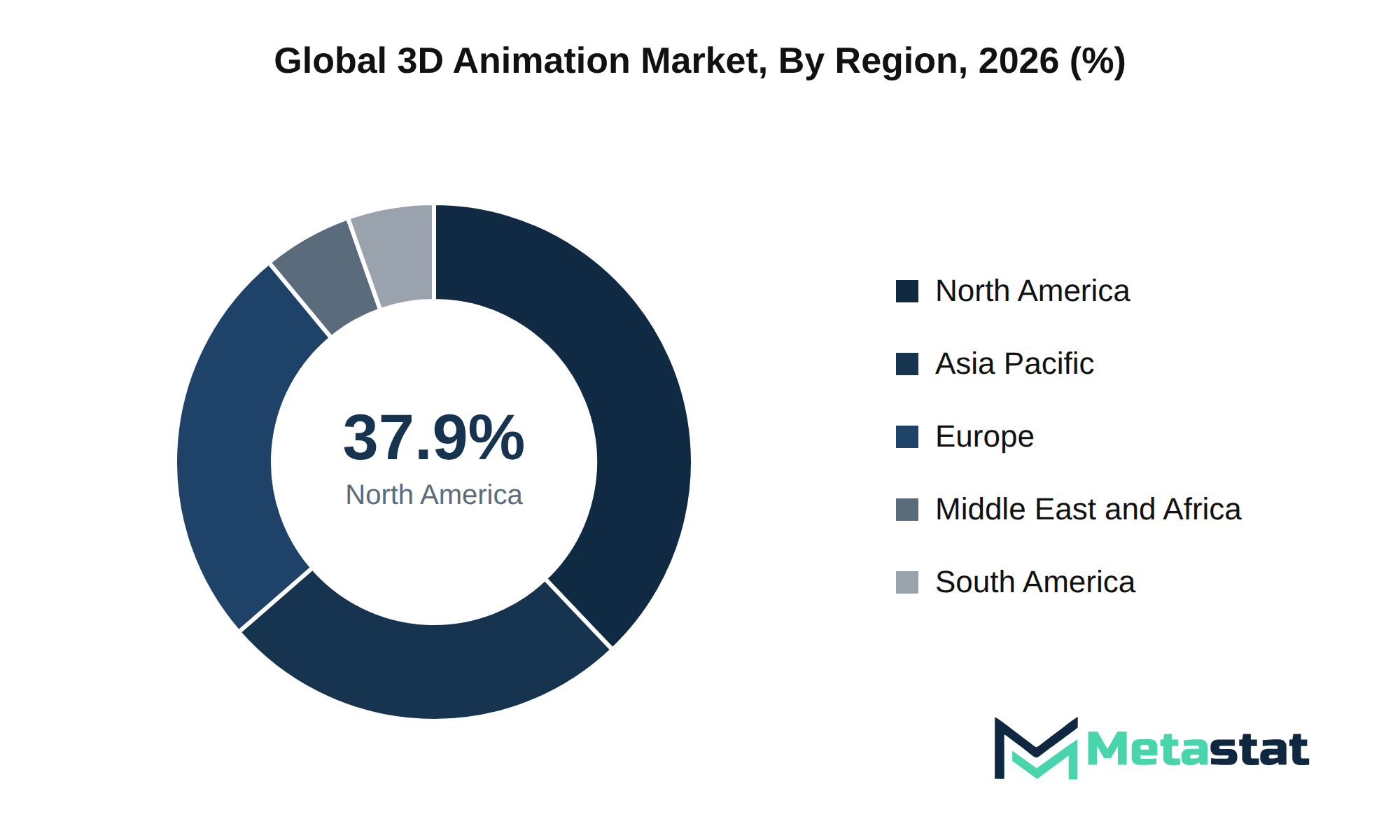
North America stands because a significant player in the 3D Animation market, with a projected market size of USD 27.6 billion by 2033, expanding at a CAGR of 12.8% within the forecast period. The region accounts for 37.9% of the global market share in 2025, highlighting its critical role in driving industry growth.
The digital content creation landscape in the United States, Canada, and Mexico demonstrates robust demand for 3D animation, driven by advancements in technology and increasing consumer expectations for high-quality visual content. Key sectors benefiting from this trend include film and television, advertising, and gaming, with substantial investments directed toward innovative animation techniques and production enhancements.
Localized production capabilities and a diverse talent pool create competitive advantages for market players. The presence of prominent animation studios and firms in North America drives advancements in creative services, contributing to an environment ripe for innovation and collaboration. Strategic partnerships and investments within the region further enhance the operational landscape, ensuring sustained growth.
Emerging trends, including the rise of OTT platforms and the demand for dynamic content, facilitate the expansion of the 3D Animation market. Industry players adapt to changing consumer behaviors and technological advancements, positioning the region's animation sector for incremental growth, characterized by high-value replacement cycles and evolving production paradigms.
The European 3D Animation market benefits from a strong presence of established film and television industries across key nations, including Germany, France, the UK, Italy, and Spain. The region's market share is projected at 25.4% in 2025, reflecting significant demand for animated content in feature films, episodic series, and advertising. High-quality production capabilities and skilled labor contribute to the attractiveness of local studios, enhancing the region's competitive edge.
Rapid advancements in technology and infrastructure modernization support the expansion of 3D animation services. Investment in localized manufacturing and supply chain regionalization promotes efficiency and responsiveness to market needs. Producers deliver innovative content to meet the evolving preferences of audiences in Europe.
Emerging opportunities arise from increasing collaborations between local studios and global content distributors. Strong demand from OTT platforms and broadcasters fuels growth, with several players aiming to capture market share through strategic partnerships. Cultural nuances and regional B2B buying behaviors shape procurement dynamics in the 3D Animation market.
Regulatory frameworks and local compliance requirements influence operational strategies for companies operating in the region. Domestic market participants adapt to these environments, ensuring alignment with local mandates while capitalizing on growth vectors. The consolidation of vendors enhances competitive positioning, allowing firms to leverage resources more effectively and drive innovation within the market.
The 3D Animation market in Asia-Pacific demonstrates robust potential driven by a combination of technological advancements and increasing demand across various sectors. Countries including China, Japan, and India lead the way in adoption due to their substantial investments in media and entertainment, and the rapid growth of the gaming industry. The region benefits from a youthful demographic that embraces digital content, creating a greater appetite for innovative 3D animation applications.
Infrastructure modernization serves because a significant catalyst for growth, with enhanced digital connectivity facilitating access to 3D animation tools and resources. Southeast Asia, in particular, shows promising developments in localized manufacturing densities, allowing for faster production cycles and tailored content creation. The strategic entry of foreign direct investment (FDI) into these emerging markets further accelerates the expansion of the market.
With 3D animation technology becoming more affordable, small and medium-sized enterprises increasingly adopt these solutions for branding and marketing. This shift contributes to a more competitive landscape, where local vendors aim to meet the rising expectations of clients seeking high-quality visual content. Overall, the region's combination of market dynamics, cultural nuances, and resource availability positions it because a vital player in the global 3D Animation market.
The 3D Animation market in South America reflects a developing environment, characterized by increasing interest in animation technologies driven by various sectors, including film, television, and advertising. Brazil and Argentina emerge because the primary contributors to market growth, fueled by a rise in local production capabilities and demand for high-quality animated content. Investments in infrastructure modernization enhance the capacity for 3D animation production, facilitating the creation of engaging visual experiences.
The growing digital economy contributes to the expansion of the market, with advertising agencies focusing on 3D animation to create compelling marketing campaigns. Localized procurement dynamics and cultural nuances influence buying behaviors, promoting the adoption of advanced animation techniques within the region. This trend aligns with global shifts towards digital storytelling, positioning South America because an important player in the international 3D Animation market.
Regional competitive dynamics feature both domestic market leaders and international players, resulting in a diverse ecosystem for collaboration and innovation. Increased foreign direct investment supports the entry of new technologies and creative talent, further enhancing the market's growth potential. The segment expansion within South America indicates a strategic opportunity for 3D animation firms, because they leverage local expertise and resources to meet the evolving demands of various industries.
The 3D Animation market in the Middle East and Africa experiences gradual development, driven by increasing investments in infrastructure modernization and digital content creation. Countries including Saudi Arabia and the UAE exhibit a strong push towards enhancing their entertainment sectors, fueled by governmental support and a growing appetite for high-quality visual content.
In South Africa, the market benefits from a rich cultural landscape, providing a unique backdrop for storytelling through animation. The demand for local content production stimulates growth, attributed to both domestic and international studios seeking to capitalize on the creative talent available in the region.
Emerging market front-runners within the Middle East and Africa leverage localized procurement dynamics and cultural nuances to enhance their competitive advantage. The regional focus on developing a robust supply chain and improving cross-border trade corridors facilitates the entry of global players into the market.
While the 3D Animation market evolves, regional vendor consolidation trends contribute to competitive pricing and improved service delivery. Domestic market leaders increasingly collaborate with international firms, ensuring access to advanced technologies and best practices in animation production.
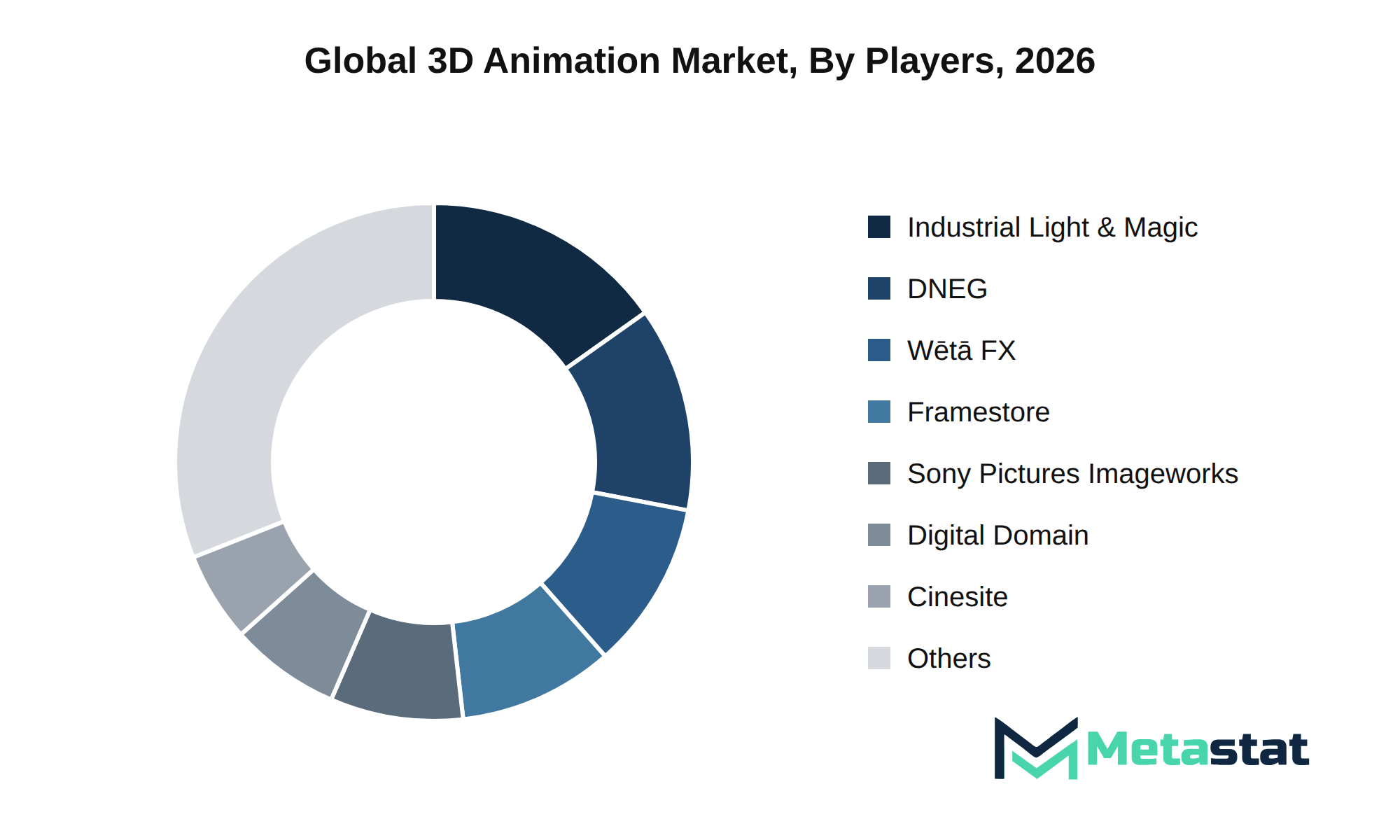
The 3D Animation market features several prominent players, each focusing on distinct strategies to maintain competitive advantage. Companies including DNEG, Framestore, and Wētā FX emphasize product differentiation through innovative animations and high-quality visual effects, establishing strong brand equity and customer loyalty.
Strategic alliances and joint ventures have become prevalent among industry leaders, facilitating collaborative efforts on large-scale projects. For instance, partnerships between Digital Domain and iconic studios enhance creative capabilities while allowing shared resources. Industry restructuring through mergers and acquisitions continues to shape the competitive dynamics, driven by firms seeking to strengthen their market positions and expand service offerings.
Investment in research and development remains critical for maintaining technological superiority. Companies like Industrial Light & Magic and Sony Pictures Imageworks prioritize proprietary technology moats, enabling unique animation processes that distinguish their output in the market. While the industry evolves, the threat of new entrants and startup disruption dynamics will influence the competitive landscape, prompting established players to reinforce their market positions.
The future competitive outlook for the 3D Animation market hinges on effective customer retention strategies, barriers to entry, and the ability to adapt to changing consumer preferences. Firms will leverage their intellectual property portfolios to safeguard innovations while optimizing pricing architectures to meet diverse customer demands.
Market size is forecast to rise from USD 30.8 billion in 2025 to over USD 80.8 billion by 2033. This growth trajectory reflects a robust 12.8% CAGR, driven by several macroeconomic factors and industry dynamics.
Economic cycles and downstream demand fluctuations significantly influence the 3D Animation market. Economic expansion typically enhances demand for animated content across various industries, including entertainment, advertising, and education. Conversely, economic downturns lead to reduced budgets for creative projects, impacting overall market growth.
The maturation of core industries adopting 3D animation creates both challenges and opportunities. Established sectors, including film and television, experience increased competition and evolving consumer preferences, driving innovation and the integration of next-generation technologies. This shift necessitates continuous research and development efforts to remain relevant and meet changing audience expectations.
Regulatory evolution and compliance timelines shape industry dynamics, particularly in content distribution and intellectual property rights. Adherence to emerging regulations affects operational costs and project timelines, prompting strategic capital allocation to ensure compliance. Upcoming policy changes emphasize the necessity for companies to adapt quickly to maintain market positioning.
Geopolitical realignments and evolving trade corridors impact global supply chains, affecting the availability of resources and talent in the 3D Animation market. These shifts create strategic imperatives for companies to reassess supply chain management and explore partnerships that mitigate risks associated with international trade.
Emerging white-space opportunities, including augmented reality and virtual reality applications, present high-growth pockets for the market. Addressing unmet enterprise needs in sectors like healthcare, education, and real estate drives innovation and revenue generation. Executives within the industry should prioritize strategic initiatives that align with evolving consumer demands and technological advancements.
The report strategically identifies and profiles the key market players and analyses their core competencies in each sub-segment of the 3D Animation market.
Report Attributes | Details |
Study Period | 2021-2033 |
Base Year | 2025 |
Estimated Year | 2026 |
Forecast Period | 2026-2033 |
Historical Period | 2021-2025 |
Growth Rate | CAGR 12.8% from 2026 to 2033 |
Revenue Unit | USD billion |
Segmentation | By Service Type, Format, Customer Type, and Region |
By Region | North America (By Service Type, Format, Customer Type, and Country)
|
Europe (By Service Type, Format, Customer Type, and Country)
| |
Asia Pacific (By Service Type, Format, Customer Type, and Country)
| |
South America (By Service Type, Format, Customer Type, and Country)
| |
Middle East and Africa (By Service Type, Format, Customer Type, and Country)
|
Find answers to common questions about this report
The 3D Animation market size was valued at USD 30.8 billion in 2025, according to the Metastat Insights study.
The 3D Animation market is projected to grow at a CAGR of 12.8% during the forecast period from 2026 to 2033.
The North America 3D Animation market size is estimated to reach USD 27.6 billion by 2033.
The segment leading the 3D Animation market is "3D Modeling, Texturing & Asset Creation," with a projected value of USD 14.7 billion by 2033. This segment demonstrates significant growth potential compared to others in the market.
The key drivers for the 3D Animation market include the ongoing focus on digital transformation, which enhances operational efficiency and user engagement across industries. Increased investments in automation and artificial intelligence facilitate innovation in animation techniques, leading to improved content delivery and viewer experiences.
North America holds the dominant share of the 3D Animation market, with a value of USD 27.6 billion projected for 2033, representing 37.9 percent of the total market.
Several factors restrain the growth of the 3D Animation market, including regulatory compliance challenges that increase operational costs, talent shortages that slow project timelines, and macroeconomic pressures that limit investment in technology. Geopolitical instability further complicates market dynamics by disrupting supply chains and increasing costs due to tariffs.
The ongoing focus on digital transformation and advancements in automation significantly favor product adoption in the 3D Animation industry. Businesses prioritize investments in innovative technologies to enhance operational efficiency and user engagement, driving demand for high-quality content and improved storytelling capabilities across sectors including film, gaming, and advertising.
The 3D Animation market is estimated to reach a valuation of USD 80.8 billion by 2033.
Key players in the 3D Animation market include DNEG, Framestore, Wētā FX, Industrial Light & Magic, Sony Pictures Imageworks, and DreamWorks Animation.
The analysts below cover Information & Technology research at Metastat Insights.
LEAD ANALYST
Utkarsh Khirodkar is a Lead Market Research Analyst at MetaStat Insight, specializing in market intelligence, technology sector assessments, and competitive strategy.

PRINCIPAL CONSULTANT - ENTERPRISE AI & EMERGING TECHNOLOGIES
Banking & Finance · Electronics and Semiconductor · Energy and Power · Healthcare IT · Information & Technology · Professional Services
Vijay Gunti is a Principal Consultant at MetaStat Insight, bringing over two decades of experience across enterprise digital transformation, technology strategy, and intelligent systems.

LEAD CONSULTANT - COMMUNICATION, TELECOM, AND IT
Electronics and Semiconductor · Information & Technology · Machinery & Equipment · Professional Services
Ravindra Sathe Consultants for Communication, Telecom, and IT at MetaStat Insight. He leads the firm's industry research initiatives across telecommunications infrastructure, digital connectivity, enterprise networking, and emerging information technology domains.
Evaluating secondary resin quality across post-consumer packaging streams requires reliable technical segmentation. MetaStat Insight delivered an objective assessment that distinguished between extrusion-grade flake pricing and optical sorting throughput limitations across Western Europe. The competitive positioning breakdown for licensed depolymerization technology providers answered several questions during our feedstock feasibility audit. Their team clarified regional trade restrictions on mixed plastic scrap quickly when our team submitted follow-up requests.
Evaluating sovereign cloud deployments for core banking platforms demands a clear view of data residency regulations and migration exit strategies. MetaStat Insight delivered an exhaustive review of regional latency tolerances, mainframe decommission milestones, and third-party vendor concentration risk. The regulatory compliance mapping across European and Asian financial jurisdictions gave our team a dependable baseline for multi-cloud infrastructure discussions.
Replacing petrochemical surfactants with bio-based alternatives requires realistic timelines on industrial precision fermentation scaling. The market research broke down commercialization timelines, feedstock sugar price sensitivities, and regional cosmetic ingredient regulatory approvals in Europe and East Asia. That supplier readiness mapping gave our formulations team reliable context when comparing renewable chemical sourcing roadmaps.
Explore related market intelligence reports worth reading alongside this one.