
LEAD ANALYST
Utkarsh Khirodkar is a Lead Market Research Analyst at MetaStat Insight, specializing in market intelligence, technology sector assessments, and competitive strategy.

Global Aircraft Hangar Infrastructure Market Size, Share, By Hangar Construction Type (Pre-Engineered Steel Hangars, Conventional Steel Hangars, Fabric Membrane Hangars, Reinforced Concrete Hangars, Inflatable Hangars, and Hybrid-Structure Hangars), By Application (Aircraft Storage and Parking, Aircraft Maintenance, Repair and Overhaul (MRO), Aircraft Manufacturing and Assembly, Aircraft Painting and Refinishing, and Aircraft Testing and Modification), By End User (Business and General Aviation, Commercial Passenger Airlines, Air Cargo Operators, Maintenance, Repair and Overhaul (MRO) Providers, Aircraft Manufacturers, Military and Government Aviation, and Fixed-Base Operators (FBOs) and Airport Developers), By Business Model (Hangar Development and Construction, Dedicated Long-Term Hangar Leasing, Shared and Community Hangar Leasing, and Short-Term and Transient Hangar Rental), Industry Analysis, Growth, Trends, and Forecast, 2026-2033
Report ID
MSI-5478
Published
October, 2026
Pages
264 Pages
Format
Historical
Base year
Forecast
Forecast period
Report Details
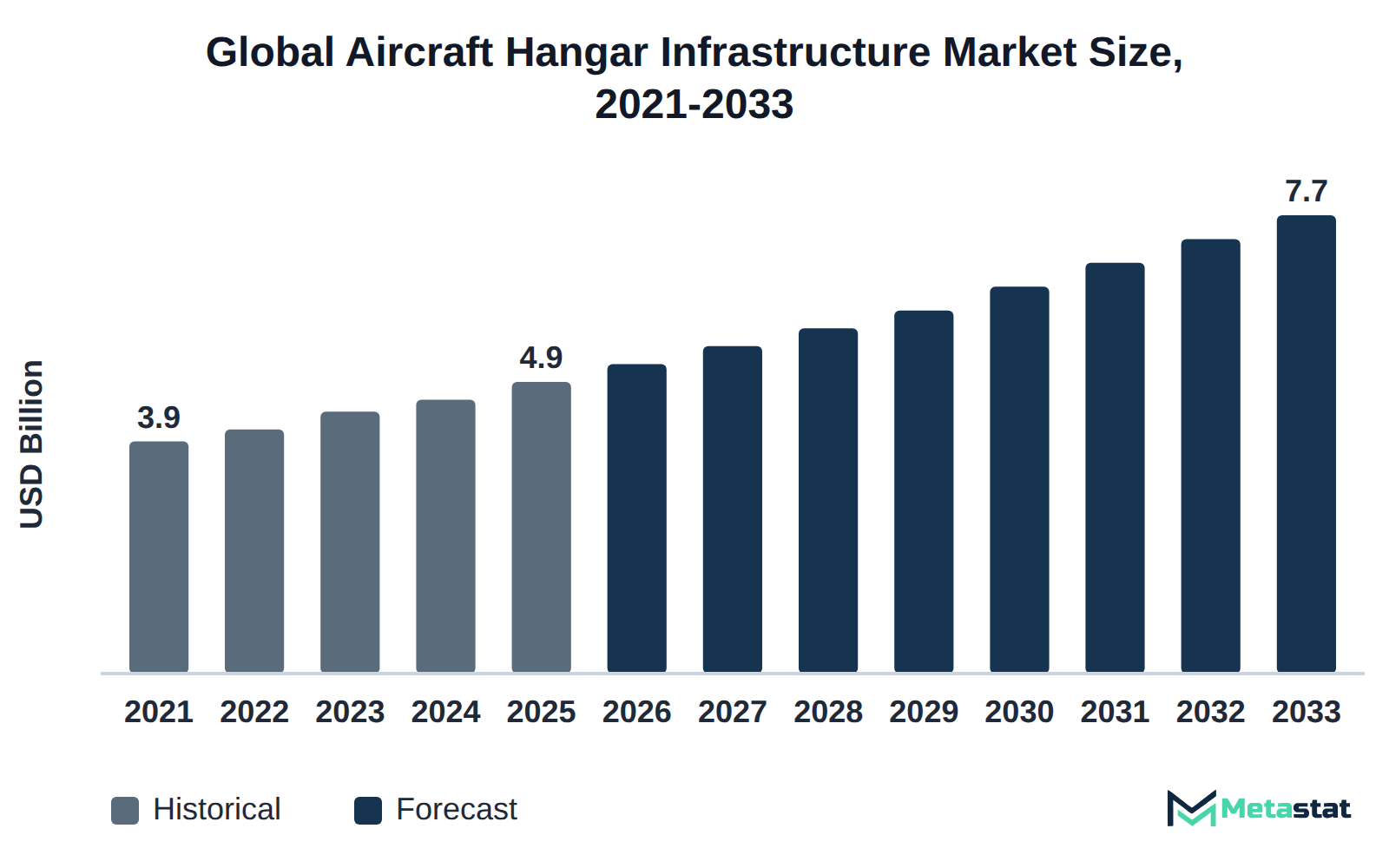
Market Valuation: Valued at $4.9 Billion in 2025, projected to reach $7.7 Billion by 2033 at a 5.8% CAGR.
Dominant Segment: Pre-Engineered Steel Hangars lead the Aircraft Hangar Infrastructure market, driven by their cost-effectiveness and rapid construction capabilities, appealing to various end users including business and general aviation.
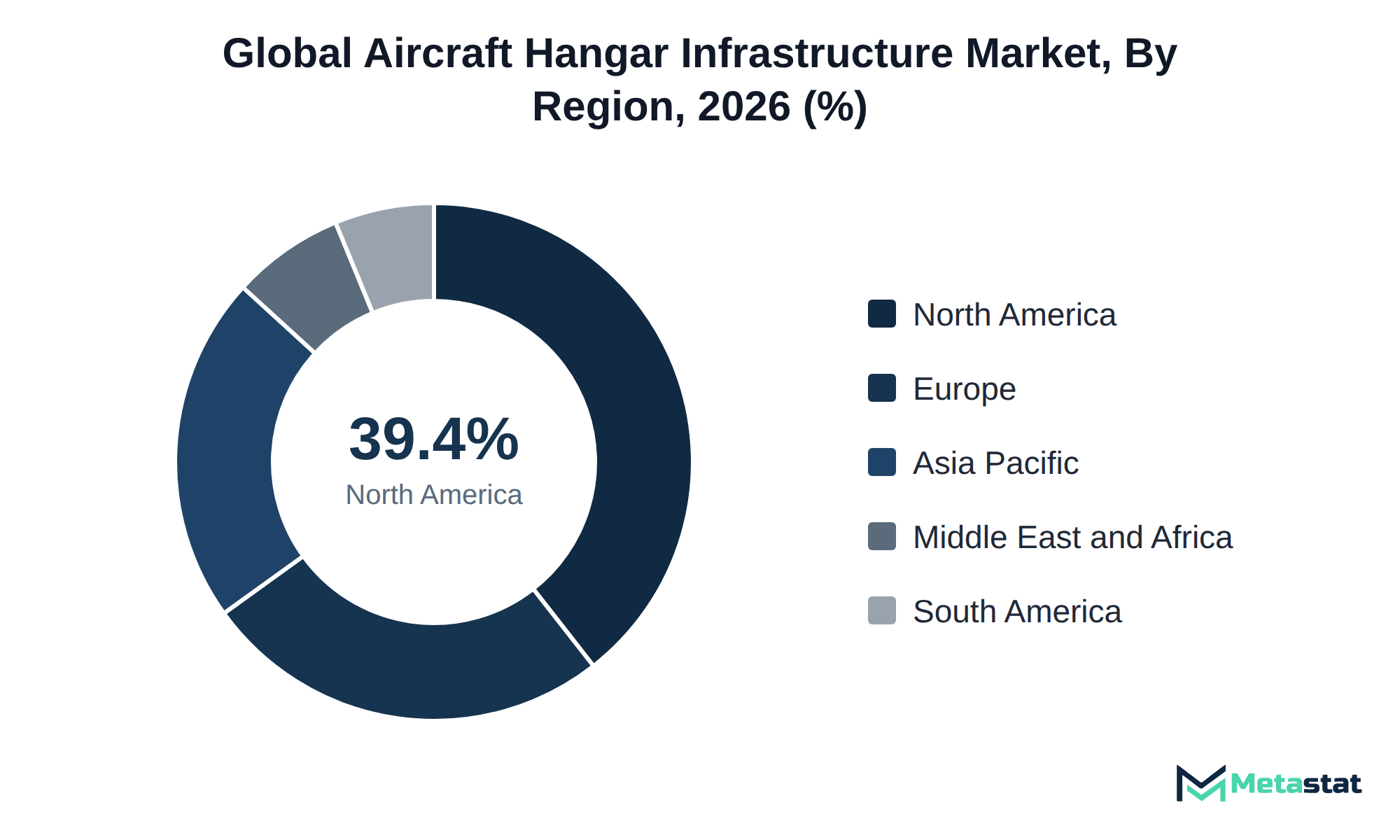
Geographic Lead: North America dominates the market, accounting for 39.4% in 2025, with the US projected to maintain its leadership due to its extensive aviation infrastructure and growing demand for hangar facilities.
What's Inside: The report provides a comprehensive analysis of the Aircraft Hangar Infrastructure market, including competitive coverage, segment breakdowns by construction type, application, end user, and business model, along with growth forecasts through 2033.
Rising Demand for Private Aircraft Hanga: The market is experiencing significant growth in private aircraft hangars, with dedicated long-term leasing expected to reach USD 4.4 billion by 2033, driven by increasing disposable incomes and interest in private aviation.
Technological Advancements Driving Effic: Innovative construction techniques, particularly modular systems, enhance hangar development efficiency, appealing to buyers seeking to optimize operational capabilities and reduce costs.
Choose Your License
Global Aircraft Hangar Infrastructure Market
The global Aircraft Hangar Infrastructure market was valued at USD 4.9 billion in 2025 and is projected to reach USD 7.7 billion by 2033, growing at a CAGR of 5.8% over the forecast period.
The Aircraft Hangar Infrastructure market encompasses various structures designed for the storage, maintenance, and operation of aircraft. Buyers invest in this market to ensure efficient operations, safety, and compliance with regulatory standards. Key customers include commercial airlines, general aviation, and cargo operators, all of which rely on advanced hangar facilities to support their activities and enhance operational efficiency.
Growth in the market is driven by an increasing demand for aircraft storage and maintenance solutions, reflecting the expanding aviation sector. Among the various segments, Pre-Engineered Steel Hangars represent the highest value, supporting the construction of durable and cost-effective facilities. North America holds 39.4% of the market in 2025, with the US leading in 2026, highlighting the region's significant role in driving demand due to its extensive aviation infrastructure.
Investment in the Aircraft Hangar Infrastructure market is expected to rise significantly, fueled by the growing need for advanced maintenance, repair, and overhaul (MRO) capabilities. These facilities play a significant role in maintaining the operational efficiency of aircraft fleets, driving both safety and performance. The market's continued expansion is anticipated to attract further investments, particularly in regions exhibiting robust aviation growth.
The Aircraft Hangar Infrastructure market includes diverse construction types that cater to various applications within the aviation sector. Investment in this market is primarily driven by the need for secure storage, efficient maintenance, and streamlined operations for aircraft. Buyers, including general aviation, commercial airlines, and cargo operators, prioritize hangar infrastructure to enhance operational efficiency, reduce downtime, and ensure compliance with industry regulations.
Growth in the market is supported by increasing air traffic and the expansion of both commercial and private aviation. Among the segments, Pre-Engineered Steel Hangars represent the highest value, reflecting their cost-effectiveness and rapid construction capabilities. This regional dominance stems from strong demand for hangar infrastructure driven by a robust aviation sector and significant investments in airport facilities.
The market's expansion aligns with advancements in construction technologies and materials. Enhanced durability, energy efficiency, and design flexibility contribute to a growing preference for innovative hangar solutions. Ongoing developments in the aviation industry, including the increase in air cargo activities and the rise in general aviation operations, further support demand for modern hangar facilities.
The Aircraft Hangar Infrastructure market experiences significant growth in private aircraft hangars and long-term leasing arrangements. By 2033, dedicated long-term hangar leasing is projected to reach USD 4.4 billion, reflecting a robust compound annual growth rate of 6.1%. This surge in demand stems from an increasing number of private and general aviation users seeking secure and efficient storage solutions for their aircraft. Factors contributing to this trend include rising disposable incomes and an expanding interest in private aviation for both leisure and business purposes.
In the context of the market, long-term leasing offers financial advantages for operators, reducing the burden of upfront capital investments required for ownership. This model enables users to adapt to fluctuating demand while providing flexibility in operational costs. The growth of the private aviation sector increases the need for customized and secure hangar solutions tailored to individual client requirements. Such advancements support the expansion of specialized facilities, enhancing overall market appeal and driving investment in infrastructure development.
Pre-engineered steel construction significantly shapes procurement strategies within the Aircraft Hangar Infrastructure market. This construction type, anticipated to grow from USD 2.5 billion in 2026 to USD 3.8 billion by 2033, offers a cost-effective and efficient solution for hangar development. The streamlined assembly process of pre-engineered steel structures leads to reduced construction times, driving down labor costs and enabling quicker project delivery. Buyers increasingly favor this model due to its affordability and ability to meet stringent timelines.
Contract models for pre-engineered steel hangars often involve fixed-price agreements, providing transparency and predictability regarding project costs. This pricing structure appeals to various buyers in the market, including business and general aviation operators, who seek to manage budget constraints effectively. With a projected compound annual growth rate of 6.1% for pre-engineered steel hangars, the successful integration of this construction model influences operational efficiency and overall demand in the Aircraft Hangar Infrastructure market.
The demand for large-span hangars is increasing significantly due to the expansion of Aircraft Maintenance, Repair, and Overhaul (MRO) infrastructure. This growth stems from the rising number of aircraft in operation and the need for enhanced maintenance capabilities. The market for Aircraft Hangar Infrastructure is expected to generate substantial investment, particularly in dedicated MRO facilities, which require larger spaces to accommodate various aircraft types and maintenance activities.
Investment in large-span hangars is anticipated to focus on the Aircraft Maintenance, Repair and Overhaul (MRO) segment, projected to reach USD 2.4 billion by 2033. This segment's growth reflects the industry's shift towards more comprehensive maintenance solutions, allowing operators to streamline operations and improve turnaround times. With increasing complexity in aircraft technology, MRO providers seek advanced hangar solutions that facilitate efficient workflows and safety compliance.
The growth in MRO infrastructure directly influences the Aircraft Hangar Infrastructure market by driving demand for innovative designs and construction methods. This trend presents significant opportunities for suppliers and developers who specialize in large-span hangar construction, ensuring they capitalize on the evolving needs of MRO providers.
Airport land constraints significantly limit the availability of space for new aircraft hangars, creating challenges for leasing and development. In major regions, including North America, where the market represents 39.4% of the global share, high demand for aviation services exacerbates these constraints. Rising construction costs further complicate the situation, leading to increased expenses for developers and operators. The Aircraft Hangar Infrastructure market experiences pressure on profit margins due to these factors.
In terms of specific applications, the segment for Aircraft Storage and Parking is projected to grow from USD 2.8 billion in 2026 to USD 4.1 billion by 2033, reflecting a compound annual growth rate (CAGR) of 5.3%. This growth highlights the need for efficient space utilization strategies among hangar operators, particularly in urban areas where land availability is critical. Developers face pressure to innovate with pre-engineered steel hangars, which offer a cost-effective and efficient solution to site limitations. Consequently, effective management of land constraints and construction costs remains essential for maintaining competitive positioning within the market.
Significant growth in private aviation drives increased investment in hangar infrastructure. Business and general aviation customers recognize the value of dedicated facilities for aircraft storage, maintenance, and operational needs. A shift in consumer behavior, combined with an expanding wealth demographic, boosts the demand for personalized aviation solutions. The increase in private aircraft ownership results in heightened pressure for purpose-built hangars to accommodate varied aircraft types. The Aircraft Hangar Infrastructure market reflects this trend, with the segment for business and general aviation expected to reach USD 2.5 billion by 2033, growing at a compound annual growth rate of 6.5%. This pattern highlights the changing landscape of aviation, where convenience and personalization dominate purchasing decisions, ultimately shaping demand for tailored hangar solutions.
Innovative construction techniques significantly enhance the efficiency of hangar development. The introduction of modular construction systems enables faster assembly and greater flexibility in design. These advancements cater to various applications, including aircraft storage and maintenance, where higher operational efficiency is vital. Enhanced materials, including pre-engineered steel and reinforced concrete, provide durability while minimizing costs associated with long-term maintenance.
Rapid advancements in technology, including automated systems for hangar operations, improve workflow and reduce labor costs. This efficiency attracts various buyer groups, including business and general aviation, seeking to optimize their operational capabilities. While the Aircraft Hangar Infrastructure market evolves, ongoing technological improvements are expected to play a crucial role in shaping construction methods and operational practices, ultimately influencing investment decisions and market growth.
Investment in advanced construction technologies reflects a broader trend towards more sustainable and efficient infrastructure solutions, critical for meeting the growing demands of aviation stakeholders. The continuously evolving landscape of construction technology represents a significant driver for expansion in the market.
High construction costs significantly limit growth potential within the Aircraft Hangar Infrastructure market. Rising material prices, labor shortages, and supply chain disruptions contribute to overall increased expenses for hangar development. This situation primarily affects businesses and general aviation users, who face challenges in funding new projects or upgrades. Many operators delay investment decisions or opt for smaller-scale projects that do not fully meet their operational needs. The financial burden of construction leads to slower uptake of advanced hangar solutions, impacting overall market expansion. Commercial passenger airlines experience reduced demand for leasing or purchasing larger hangar facilities due to budget constraints. These constraints hinder the ability to modernize and expand facilities, directly impacting competitiveness and operational efficiency within the sector.
Challenges related to talent acquisition and retention present significant hurdles within the Aircraft Hangar Infrastructure market. The specialized skill set required for hangar construction, maintenance, and management increases competition among suppliers for a limited pool of qualified professionals. Rising labor costs exert pressure on margins, impacting profitability. Companies in the market respond by investing in training programs to enhance the skill levels of existing employees, thereby reducing dependence on external recruitment. Collaborative partnerships with educational institutions are established to create a pipeline of talent, ensuring a steady influx of skilled workers into the industry. By addressing these challenges proactively, suppliers sustain growth and maintain operational efficiency in a competitive landscape.
Rapid expansion of pre-engineered steel hangars presents a notable opportunity within the market. This segment is projected to achieve a compound annual growth rate (CAGR) of 6.1% from 2026 to 2033, rising from USD 2.5 billion in 2026 to USD 3.8 billion by the end of the forecast period. The increasing preference for these hangars stems from their cost-effectiveness and efficient construction timelines, appealing to various end users, including business and general aviation and commercial passenger airlines. The growing demand for flexible and scalable structures enables market players to attract investment and enhance their service offerings. Pre-engineered steel hangars address the rising requirements for aircraft storage and maintenance, creating a favorable environment for expansion. This segment's growth aligns with broader trends in the Aircraft Hangar Infrastructure market, emphasizing the need for innovative construction solutions to meet evolving industry demands.
The Global Aircraft Hangar Infrastructure market is segmented based on Hangar Construction Type, Application, End User, and Business Model.
These structures primarily serve the aviation industry for aircraft storage, maintenance, and repair needs, targeting business and general aviation, commercial passenger airlines, and MRO providers. The increasing preference for rapid construction timelines and cost efficiency drives demand in this segment, distinguishing it from conventional steel hangars, which exhibit a slower CAGR of 4.4%. Pre-engineered steel hangars offer superior adaptability and reduce construction costs, appealing significantly to operators focused on maximizing operational efficiency. The growth trajectory reflects substantial investment, emphasizing the importance of innovative construction methods to meet the rising demand in the Aircraft Hangar Infrastructure market.
Conventional Steel Hangars segment is estimated to reach USD 1.7 billion by 2033, at a CAGR of 4.4% during the forecast period. This construction type serves various purposes including aircraft storage, maintenance, and operational activities. Primarily used by commercial passenger airlines and maintenance, repair, and overhaul (MRO) providers, these hangars offer a balance between durability and cost-effectiveness. Demand for this segment is driven by the growing need for efficient aircraft management in the aviation sector. Compared to other types, including pre-engineered steel hangars, the growth rate of conventional steel hangars is slower, reflecting a CAGR of 4.4% against 6.1% for pre-engineered steel hangars. The competitive pricing of conventional steel hangars positions them favorably for operators seeking cost-effective solutions while ensuring the necessary structural integrity required for aviation operations.
Fabric Membrane Hangars segment is expected to reach USD 1 billion by 2033. This type of hangar uses lightweight fabric technology, providing a flexible and cost-effective solution for aircraft storage and operations. Primarily used by general aviation and smaller aircraft operators, these hangars offer quick setup and relocation capabilities. The segment's growth is driven by increasing demand for economical and versatile hangar solutions, particularly in regions with limited space and resources. Compared to other construction types, including Pre-Engineered Steel Hangars, which exhibit a CAGR of 6.1%, Fabric Membrane Hangars experience more moderate growth, reflecting unique buyer preferences for cost and operational flexibility. The overall trend towards sustainable and adaptable structures enhances the appeal of this segment in the Aircraft Hangar Infrastructure market.
Reinforced Concrete Hangars segment is projected to grow at a CAGR of 3% during the forecast period. These structures serve primarily for aircraft storage, maintenance, and operations, catering to various aviation entities including commercial airlines and general aviation operators. This segment attracts investment due to its durability and ability to withstand harsh weather conditions, which is essential for long-term aircraft protection. While growth in the market remains steady, reinforced concrete hangars experience slower growth compared to other construction types, including Pre-Engineered Steel Hangars, which are expected to achieve a CAGR of 6.1%. The higher initial investment associated with reinforced concrete construction, along with the preference for quicker-to-build alternatives, influences its demand dynamics. Overall, reinforced concrete hangars contribute to a stable infrastructure base, appealing to entities prioritizing longevity and safety in aircraft operations.
Inflatable hangars offer a unique solution for aircraft storage and maintenance, providing flexibility and rapid deployment. These structures primarily serve businesses focused on general aviation, military operations, and temporary facilities requiring quick setup and dismantling. The demand for inflatable hangars arises from their cost-effectiveness and adaptability in various environments. Unlike conventional hangar types, inflatable hangars typically feature lower initial investment requirements and faster installation times, appealing to users facing urgent space constraints. This segment differs from traditional hangars, which involve longer construction times and higher material costs. While the market anticipates significant growth in other hangar types, the distinct advantages of inflatable hangars position them as a specialized option for specific operational needs within the Aircraft Hangar Infrastructure market.
Hybrid-structure hangars represent a versatile solution combining multiple construction techniques to create efficient and adaptable spaces. These hangars serve varied purposes, including aircraft storage, maintenance, and operational facilities, catering to diverse end users including business and general aviation operators. Adoption hinges on rising demand for flexible hangar solutions, particularly among smaller aviation enterprises that require customized spaces without extensive capital investment. This segment differs from others in the hangar construction type category, primarily due to its adaptability and potential lower upfront costs, appealing more to price-sensitive operators. The market experiences pressure from both supply chain constraints and evolving technological advancements, impacting construction timelines and material costs, which drives innovation in design and functionality.
This segment serves essential purposes for various stakeholders, including business and general aviation, commercial passenger airlines, and air cargo operators. Demand for efficient aircraft storage solutions drives investment in infrastructure, reflecting the expansion of aviation services and the increasing number of aircraft in operation. The Aircraft Storage and Parking segment experiences faster growth compared to other applications in the market, driven by rising air travel demand and the need for accessible parking spaces. This segment's growth contrasts with Aircraft Manufacturing and Assembly, which exhibits a slower growth trajectory. Investment in sustainable and efficient storage solutions influences market dynamics, positioning the segment for robust expansion in the coming years.
Aircraft Maintenance, Repair and Overhaul (MRO) segment is estimated to reach USD 2.4 billion by 2033, at a CAGR of 6.8% during the forecast period. This segment focuses on maintaining aircraft operational efficiency and safety through various services, attracting commercial passenger airlines and MRO providers. Growth within this segment is driven by the increasing demand for regular maintenance and repair services, reflecting rising air traffic and fleet expansion among airlines. The MRO segment experiences a faster growth trajectory compared to other applications in the Aircraft Hangar Infrastructure market, partly due to heightened emphasis on aircraft safety and compliance with stringent regulations. Technological advancements in inspection and repair processes enhance the operational efficiency of MRO activities, establishing it as a vital component within the market.
Aircraft Manufacturing and Assembly segment is expected to reach USD 0.6 billion by 2033. This segment focuses on the construction of specialized hangars designed for the manufacturing and assembly of aircraft, primarily used by aircraft manufacturers and assembly facilities. Growth in this area is driven by increasing demand for new aircraft, reflecting the expansion of commercial and military aviation sectors. Unlike other applications, including Aircraft Maintenance, Repair and Overhaul (MRO), which has a CAGR of 6.8%, this segment exhibits a slower growth rate, primarily due to the high capital investment involved in setting up manufacturing facilities. The unique requirements of this segment necessitate tailored solutions, distinguishing it from others that prioritize flexibility and rapid deployment. The market continues to evolve, responding to advancements in aerospace technology and shifts in production methodologies.
Aircraft Painting and Refinishing segment is projected to grow at a CAGR of 6.2% during the forecast period. This segment enhances aircraft aesthetics and protects surfaces from environmental damage. It is primarily used by maintenance, repair, and overhaul (MRO) providers, serving commercial airlines and general aviation operators. The increasing focus on aircraft appearance and maintenance standards drives demand for painting and refinishing services. This segment experiences faster growth due to rising passenger expectations for aircraft condition and safety compared to other applications. The market benefits from evolving paint technologies that improve durability and reduce environmental impact, enhancing its appeal to customers seeking compliance with stringent regulations. In this landscape, the Aircraft Hangar Infrastructure market adapts, driving innovations tailored to meet the specific needs of the painting and refinishing sector.
Aircraft Testing and Modification focuses on enhancing aircraft performance and safety through dedicated processes within hangar environments. This segment caters primarily to aircraft manufacturers and maintenance, repair, and overhaul (MRO) providers who require specialized facilities for testing and modifying aircraft systems. Key factors driving this segment include the increasing demand for advanced aircraft technologies and regulatory requirements for safety and performance upgrades. Compared to other applications, this segment experiences a slower growth rate due to the complexity and costs associated with specialized testing equipment and expertise. The Aircraft Hangar Infrastructure market evolves in response to these needs, ensuring that appropriate facilities are available for rigorous testing protocols.
This segment primarily serves private pilots and charter operators, accommodating their storage and maintenance needs for various aircraft types. The increasing demand for private aviation directly influences growth in this segment, driven by rising disposable income and preferences for personalized travel experiences. Compared to other segments, Business and General Aviation exhibits a faster growth trajectory; its CAGR of 6.5% surpasses the 4.6% CAGR expected for Commercial Passenger Airlines. This differentiation highlights the segment's growing importance in the Aircraft Hangar Infrastructure market, reflecting a broader trend in the aviation industry with consumer preferences shifting towards personalized and flexible flying options.
Commercial Passenger Airlines segment is estimated to reach USD 1.2 billion by 2033, at a CAGR of 4.6% during the forecast period. This segment supports the operation of various airlines by providing infrastructure for aircraft storage, maintenance, and operational readiness. Key drivers include the increasing demand for commercial air travel and the need for efficient maintenance facilities to ensure aircraft availability. Compared to other segments, this segment experiences steady growth, influenced by regulatory requirements and technological advancements in aircraft maintenance. The demand for reliable hangar facilities directly correlates with the expansion of commercial fleets, distinguishing it from other segments that have different growth rates or operational focuses. The market continues to evolve, responding to the increasing complexities of modern aviation operations.
Air Cargo Operators segment is expected to reach USD 0.6 billion by 2033. This segment supports logistics and transport operations for freight, catering primarily to companies involved in cargo transport. Demand for dedicated hangars arises from the increasing reliance on air freight for timely delivery, driven by e-commerce growth and global trade expansion. Unlike other segments in the market, Air Cargo Operators experience a specific demand surge due to heightened efficiency in cargo handling and management, evidenced by the anticipated growth rate. This segment exhibits a unique dynamic, influenced by the necessity for specialized infrastructure to accommodate diverse aircraft types and volumes, highlighting an increasing investment focus on dedicated hangar facilities.
Maintenance, Repair and Overhaul (MRO) Providers segment is projected to grow at a CAGR of 6.7% during the forecast period. This segment includes services focusing on the upkeep and restoration of aircraft to ensure safety and compliance. Key players in this segment include maintenance, repair, and overhaul facilities that service various aircraft types. Demand in this segment is influenced by increasing air travel, leading to a higher requirement for MRO services. This growth in demand contrasts with other segments, including Aircraft Manufacturing and Assembly, which holds a smaller value of USD 0.6 billion by 2033. The MRO Providers segment is critical for maximizing aircraft longevity and operational efficiency, contributing significantly to the overall Aircraft Hangar Infrastructure market through ongoing service contracts and maintenance agreements.
Aircraft Manufacturers represent a critical user group, focusing on the design and production of aircraft for various applications. This segment is employed by companies engaged in aircraft design, assembly, and production, which require specialized spaces for manufacturing processes. One significant force driving growth in this segment involves increasing demand for new aircraft due to rising passenger numbers and air travel activity. Unlike segments including Aircraft Maintenance, Repair and Overhaul (MRO) Providers that exhibit faster growth rates, the Aircraft Manufacturers segment operates under different market dynamics, including longer project timelines and substantial capital requirements. The need for advanced manufacturing technologies plays an essential role in shaping the operations of this segment, pushing manufacturers to adopt innovative solutions that enhance efficiency and product quality. The Aircraft Hangar Infrastructure market continues to evolve, driven by these developments and the growing complexity of aircraft manufacturing processes.
Military and Government Aviation involves the specialized hangars used for the storage, maintenance, and operations of military aircraft and government-owned aviation assets. This segment serves military organizations and government agencies that require secure facilities for their aircraft. The demand for advanced hangar infrastructure is driven by the maintain operational readiness and safeguard national security assets. Increasing investments in defense and military modernization initiatives significantly influence this segment. Compared to other segments, Military and Government Aviation typically incurs higher costs due to stringent security requirements and advanced technology needs, resulting in slower growth relative to commercial aviation segments. The Aircraft Hangar Infrastructure market reflects this divergence, presenting unique challenges and opportunities for suppliers targeting this niche.
Fixed-Base Operators (FBOs) and Airport Developers play a crucial role in the aviation sector, focusing on providing essential services and facilities to aircraft owners and operators. These entities are responsible for managing airport infrastructure, including hangars, fueling services, and maintenance operations. Demand for these services increases with the expansion of air travel and rising aircraft registrations. The segment experiences unique dynamics compared to others, driven by operational requirements and regulatory compliance specific to airport operations. This segment is expected to exhibit steady growth due to ongoing investments in airport infrastructure and the need for reliable service providers. Unlike segments catering specifically to commercial airlines or cargo operations, FBOs and airport developers cater to a diverse clientele, including private and corporate aviation, which influences pricing and service offerings.
Hangar Development and Construction segment is valued at USD 0.9 billion in 2026 and is projected to reach USD 1.2 billion by 2033, at a CAGR of 5.1% during the forecast period. This segment serves a variety of users, including aviation companies and airport developers, focused on creating infrastructure that accommodates aircraft. Growing demand for efficient hangar solutions drives investment in this area, particularly among dedicated long-term hangar leasing entities. Compared to other segments, this sub-segment experiences moderate growth, influenced by increasing air travel and the rising need for advanced facilities. While segments like Dedicated Long-Term Hangar Leasing see higher growth rates of 6.1%, Hangar Development and Construction offers unique opportunities for tailored solutions that address specific regional needs within the Aircraft Hangar Infrastructure market.
This leasing model serves various users, including commercial airlines, private aviation operators, and fixed-base operators seeking dedicated facilities for their aircraft. Factors driving growth in this segment include increasing demand for reliable storage solutions and the trend toward long-term contracts that provide stability for operators. Compared to other segments, this category shows a higher growth rate, distinguishing itself from short-term rental options that experience fluctuations driven by seasonal demand. The consistent demand for dedicated spaces supports investment in infrastructure, ensuring the market remains competitive.
Shared and Community Hangar Leasing segment is expected to reach USD 1.5 billion by 2033. This segment serves aircraft owners looking for flexible and cost-effective storage solutions. Typically used by private aircraft owners and small aviation businesses, this model promotes lower barriers to entry in the aviation sector by allowing access to essential hangar services without the high upfront costs associated with traditional ownership. A significant driver of this segment includes the increasing demand for affordable hangar space, particularly among growing general aviation sectors. Compared to other business models like Dedicated Long-Term Hangar Leasing, which is projected to reach USD 4.4 billion by 2033, Shared and Community Hangar Leasing presents a more economical option, supporting small-scale operators and individual aviators. The market continues to evolve, reflecting shifts in ownership preferences and storage necessities across various user groups.
Short-Term and Transient Hangar Rental segment is projected to grow at a CAGR of 7.1% during the forecast period. This segment primarily serves airlines, cargo operators, and private aviation clients requiring flexible hangar space. The demand for short-term rentals is driven by increased air travel and the need for temporary storage during maintenance or transit. Unlike other segments, this one offers pricing structures suited for short durations, making it appealing for operators needing immediate but flexible access to hangar facilities. Competitive pricing and availability of hangar space significantly influence market dynamics, setting it apart from dedicated long-term leasing options that show slower growth at a CAGR of 6.1%. The Aircraft Hangar Infrastructure market continues to evolve, with this segment addressing the immediate needs of various aviation entities.
Based on geography, the Global Aircraft Hangar Infrastructure market is divided into North America, Europe, Asia-Pacific, South America, Middle East, and Africa.
Strong demand for the Aircraft Hangar Infrastructure market in North America emerges from the region's extensive aviation sector, characterized by a high concentration of business and general aviation activities. The United States, Canada, and Mexico contribute significantly to this market due to increasing investments in aviation infrastructure and the growing need for modern hangar facilities. North America's robust regulatory environment supports investments in aircraft maintenance, repair, and overhaul services, driving demand for specialized hangars. By 2033, North America is projected to reach USD 2.8 billion. The market's growth reflects ongoing efforts to enhance operational efficiencies and safety across various aircraft operations, ensuring continuous expansion of hangar infrastructure tailored to meet industry demands.
Demand for the Aircraft Hangar Infrastructure market in Europe stems from a diverse range of industries, including commercial passenger airlines and general aviation. Countries like Germany and France contribute significantly to this demand due to their advanced aviation sectors and strategic locations within the continent. Infrastructure investments, particularly in airport expansions and upgrades, enhance the market by providing modern facilities suited for aircraft maintenance and parking. By 2025, Europe is projected to hold a 25.6% share of the global market, with key players focusing on innovative hangar solutions that meet evolving industry requirements. Growth in this region reflects a commitment to enhancing operational efficiency and safety within aviation infrastructure.
The Asia-Pacific region accounts for 21.7% of the global market in 2025. In this region, demand for Aircraft Hangar Infrastructure arises from growing aviation activities, particularly in countries like China, India, and Japan. The expansion of commercial passenger airlines and rising business aviation activities drive the need for enhanced hangar facilities. Strong investments in airport infrastructure and government support for aviation-related projects contribute to market growth. The increasing focus on efficient aircraft maintenance and repair solutions has led to higher demand for MRO facilities within hangars. Australia and South Korea feature substantial aviation markets, with various ongoing initiatives aimed at improving infrastructure capabilities. Overall, the market in Asia-Pacific is poised for continued growth, supported by increasing passenger traffic and rising air cargo demands.
Interest in the Aircraft Hangar Infrastructure market in South America is driven by the growing demand from both Brazil and Argentina, which represent significant aviation markets within the region. The fast-expanding commercial aviation sector requires enhanced infrastructure solutions, leading to increased investment in hangar facilities. Specific challenges, including infrastructure development costs and regulatory constraints, impact market dynamics. The market share in South America is projected at 6.2% in 2025, indicating a notable presence among global competitors. Demand from business and general aviation sectors highlights the region's focus on improving operational efficiency and expanding service capacities. The growth of the market offers opportunities for local firms to develop innovative hangar solutions tailored to the unique needs of aviation operators in this region.
In the Middle East and Africa, the market benefits from growing demand driven by the aviation sectors in Saudi Arabia, UAE, and South Africa. Recent investments in airport infrastructure and the expansion of airline services support this growth. The region's share of the global market stands at 7.0% in 2025, reflecting the increasing focus on enhancing aircraft storage and maintenance capabilities. Strong interest in Aircraft Hangar Infrastructure from both government and private sectors indicates a commitment to improving aviation standards. Regional economic diversification efforts emphasize the aviation industry, creating opportunities for new hangar developments and upgrades. The market growth in this region aligns with broader trends in aviation expansion and modernization.
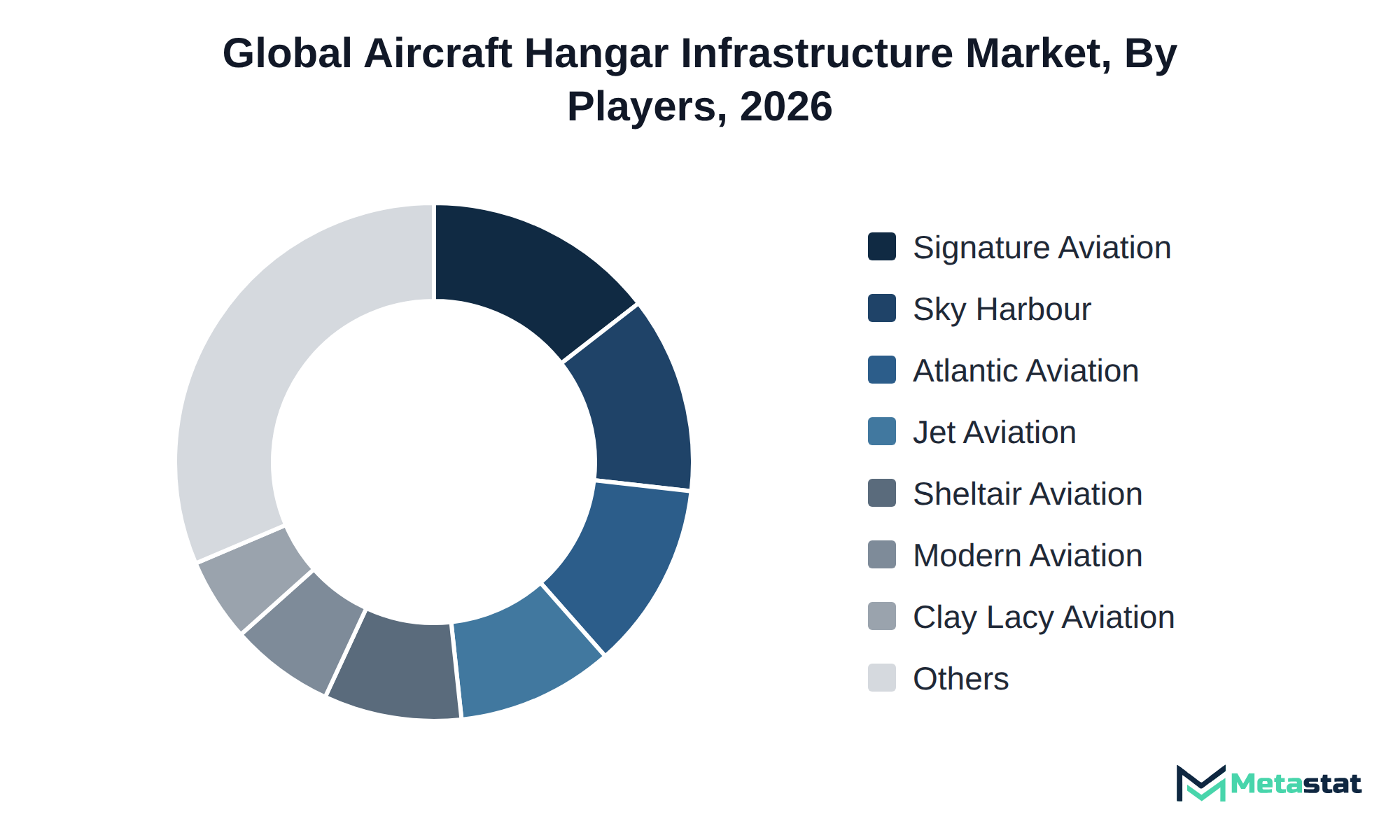
The Aircraft Hangar Infrastructure market exhibits a diverse competitive environment, with significant players adopting various strategic approaches to capture market share. Companies differentiate themselves primarily through the types of hangars they offer, including pre-engineered steel hangars, conventional steel hangars, and fabric membrane hangars. This diversity allows buyers to select products based on specific requirements, including price, customization, and service quality.
Sky Harbour Group Corporation and Signature Aviation focus on hangar development and construction, targeting business and general aviation sectors. In contrast, Nucor Buildings Group and Butler Manufacturing emphasize pre-engineered steel hangars, appealing to customers seeking durable and cost-effective solutions. Rubb Group and Sprung Structures prioritize innovative designs, catering to clients interested in customized hangar solutions. Overall, the competitive dynamics in the market highlight the importance of specialization and customer-centric strategies.
Achieving this target relies on several key developments within the Aircraft Hangar Infrastructure market. Increased investment in the aviation sector, particularly in North America, will drive demand for pre-engineered steel hangars, projected to grow at a CAGR of 6.1% from USD 2.5 billion in 2026 to USD 3.8 billion by 2033. The application of hangars for maintenance, repair, and overhaul (MRO) services is anticipated to see substantial growth, with a CAGR of 6.8%, reaching USD 2.4 billion by 2033. However, rising construction costs coupled with supply chain disruptions present significant risks that could hinder market expansion. These factors particularly affect the conventional steel hangar segment, which is expected to achieve a value of USD 1.7 billion by 2033 but requires a stable economic environment to flourish. Overall, the trajectory for the market is set, contingent on strategic developments and operational stability within the industry.
By Hangar Construction Type: Pre-Engineered Steel Hangars, Conventional Steel Hangars, Fabric Membrane Hangars, Reinforced Concrete Hangars, Inflatable Hangars, Hybrid-Structure Hangars
By Application: Aircraft Storage and Parking, Aircraft Maintenance, Repair and Overhaul (MRO), Aircraft Manufacturing and Assembly, Aircraft Painting and Refinishing, Aircraft Testing and Modification
By End User: Business and General Aviation, Commercial Passenger Airlines, Air Cargo Operators, Maintenance, Repair and Overhaul (MRO) Providers, Aircraft Manufacturers, Military and Government Aviation, Fixed-Base Operators (FBOs) and Airport Developers
By Business Model: Hangar Development and Construction, Dedicated Long-Term Hangar Leasing, Shared and Community Hangar Leasing, Short-Term and Transient Hangar Rental
The report strategically identifies and profiles the key market players and analyses their core competencies in each sub-segment of the Aircraft Hangar Infrastructure market.
Report Attributes | Details |
Study Period | 2021-2033 |
Base Year | 2025 |
Estimated Year | 2026 |
Forecast Period | 2026-2033 |
Historical Period | 2021-2025 |
Growth Rate | CAGR 5.8% from 2026 to 2033 |
Revenue Unit | USD billion |
Segmentation | By Hangar Construction Type, Application, End User, Business Model, and Region |
By Region | North America (By Hangar Construction Type, Application, End User, Business Model, and Country)
|
Europe (By Hangar Construction Type, Application, End User, Business Model, and Country)
| |
Asia Pacific (By Hangar Construction Type, Application, End User, Business Model, and Country)
| |
South America (By Hangar Construction Type, Application, End User, Business Model, and Country)
| |
Middle East and Africa (By Hangar Construction Type, Application, End User, Business Model, and Country)
|
Find answers to common questions about this report
The Aircraft Hangar Infrastructure market size was valued at USD 4.9 billion in 2025.
The market is projected to grow at a CAGR of 5.8% during the forecast period from 2026 to 2033.
The North America Aircraft Hangar Infrastructure market size is projected to reach USD 2.8 billion by 2033.
Pre-Engineered Steel Hangars lead the Aircraft Hangar Infrastructure market, with a projected value of USD 3.8 billion by 2033. This segment outpaces others in growth, driven by a compound annual growth rate of 6.1 percent.
Significant growth in private aviation drives increased investment in hangar infrastructure. High construction costs significantly limit growth potential within the market.
North America holds the dominant share of the Aircraft Hangar Infrastructure market, with a value of USD 2.8 billion projected for 2033, representing 39.4 percent of the total market. This region surpasses others in market share, including Europe at 25.6 percent and Asia Pacific at 21.7 percent.
High construction costs significantly limit growth potential in the Aircraft Hangar Infrastructure market. Rising material prices, labor shortages, and supply chain disruptions contribute to increased expenses. Challenges related to talent acquisition and retention further hinder market progress, increasing competition for qualified professionals.
Rapid expansion of pre-engineered steel hangars drives adoption in the Aircraft Hangar Infrastructure market. Their cost-effectiveness and efficient construction timelines appeal to various end users, enhancing investment attraction and service offerings.
The Aircraft Hangar Infrastructure market is estimated to reach a valuation of USD 7.7 billion by 2033.
Key players operating in the Aircraft Hangar Infrastructure market include Sky Harbour Group Corporation, Signature Aviation, Atlantic Aviation, Sheltair Aviation, Jet Aviation, Modern Aviation, and Clay Lacy Aviation.
The analysts below cover Aerospace and Defense research at Metastat Insights.
LEAD ANALYST
Utkarsh Khirodkar is a Lead Market Research Analyst at MetaStat Insight, specializing in market intelligence, technology sector assessments, and competitive strategy.
Transitioning ultra-class mining haul trucks to alternative power requires concrete data on remote hydrogen refueling infrastructure economics. The report evaluated megawatt-scale electrolyzer installation expenses, onsite storage safety mandates, and heavy-duty fuel cell stack degradation under continuous duty cycles. That technical rigor helped our engineers benchmark realistic total operating cost horizons for off-highway fleet decarbonization.
Enterprise zero-trust network rollouts are often slowed down by multi-cloud transit latency and proprietary hardware retirement schedules. This study provided realistic total cost of ownership models comparing cloud-delivered security edge solutions against traditional hardware refreshes. The analysis of contract renewal lengths and software maintenance fees gave us clear visibility into enterprise replacement cycles over the next three to five years.
Scaling antibody-drug conjugate manufacturing hinges on contract manufacturing availability for high-potency active ingredients. The MetaStat Insight analysis looked closely at global cleanroom slot constraints, bioconjugation batch failure rates, and supply chain redundancies between the US, Europe, and India. The supplier capability matrix proved genuinely useful for our team when mapping secondary source options across our clinical pipeline.
Explore related market intelligence reports worth reading alongside this one.