
LEAD ANALYST
Utkarsh Khirodkar is a Lead Market Research Analyst at MetaStat Insight, specializing in market intelligence, technology sector assessments, and competitive strategy.

Audience Measurement Systems Market Size, Share, By Product Type (Audio Measurement System, Cross-Media Measurement System, Digital Measurement System, Streaming Measurement System, TV Measurement System, and Others), By Deployment Mode (On‑Premises, Cloud, and Hybrid), By Technology (People Meter Systems, Set-top Box Metering, Return Path Data, Audio Watermarking, and Others), By End-use Industry (Television Broadcasting, Radio Broadcasting, Digital Media, OTT, Advertising, Marketing, and Others), Industry Analysis, Growth, Trends, and Forecast, 2026-2033
Report ID
MSI-4665
Published
April, 2026
Pages
315 Pages
Format
Report Details
Choose Your License
Audience Measurement Systems Market
Global Audience Measurement Systems market size is valued at USD 5,719.3 million in 2025 and projected to grow at a CAGR of 8.5% during the forecast period, reaching USD 10,978.2 million by 2033.
Global Audience Measurement Systems market valued at USD 5,719.3 million in 2025, growing at a CAGR of 8.5% through 2033, with potential to exceed USD 10,978.2 million.
North America holds the leading 36.1% market share in 2025, with the U.S. leading the regional market.
Audio Measurement System segment accounts for a 9.9% market share in 2025.
Key trends driving growth: Cross-platform planning and de-duplicated reach requirements across TV, streaming, and digital video, Acceleration of connected TV and platform-fragmented viewing that increases the need for unified audience currencies
Key Opportunities include hybrid panel plus big data measurement via privacy-safe data collaboration, delivering cross-media comparability at scale
Key insight: Cross-platform data integration and privacy-centric analytics redefine competitive positioning in Global Audience Measurement Systems market.
The Global Audience Measurement Systems market is moving beyond conventional ratings frameworks into a more advanced phase shaped by identity resolution, consent-led data architecture, and probabilistic modeling. Traditional panel-based measurement is gradually being complemented by unified data environments where television exposure, connected TV impressions, social engagement, gaming interactions, and retail media signals are integrated through interoperable identifiers. Measurement is no longer limited to audience counts and reach estimation, as platforms increasingly evaluate behavioral pathways, cross-device frequency, engagement quality, and content resonance in near real time.
Over the coming years, broadcasters, streaming platforms, and advertisers will increasingly require interoperable standards that function across walled gardens while preserving proprietary datasets and regulatory compliance. Secure data clean rooms are becoming core infrastructure for privacy-safe collaboration, allowing market participants to match and analyze audience signals without exposing raw user-level information. Audience measurement providers are also adopting synthetic data generation and advanced modeling techniques to address blind spots created by signal loss, fragmented identifiers, and reduced third-party tracking, while predictive scenario tools help advertisers evaluate audience shifts before campaigns go live.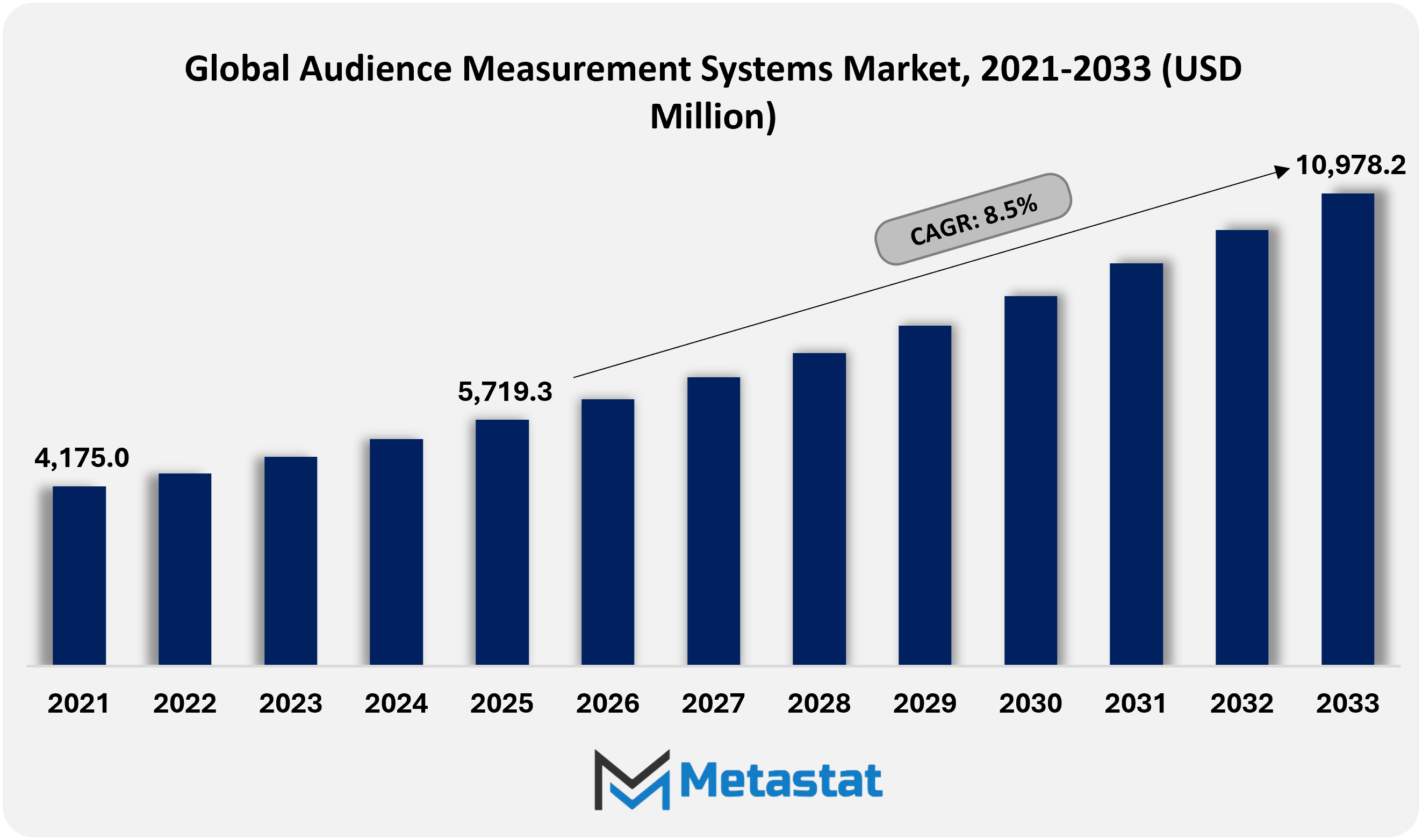
Cross-platform planning and de-duplicated reach requirements across TV, streaming, and digital video.
Expansion in media consumption across television, streaming platforms, and digital video is increasing the need for unified planning and measurement frameworks. Advertisers are placing higher importance on de-duplicated reach, frequency control, and comparable performance metrics across screens to reduce media waste and improve campaign efficiency. The Global Audience Measurement Systems market is advancing through integrated datasets and cross-platform analytics capabilities that support consistent audience evaluation across fragmented viewing environments.
Acceleration of connected TV and platform-fragmented viewing that increases the need for unified audience currencies
Rapid adoption of connected TV devices and increasingly fragmented viewing behavior across platforms are strengthening the requirement for standardized audience currencies. Media buyers and sellers are seeking harmonized reporting systems that compare impressions, completion rates, and engagement across television, streaming, and digital channels through a common framework. The Global Audience Measurement Systems market is evolving toward unified measurement models that consolidate signals from multiple platforms into transparent and comparable performance benchmarks.
Privacy regulation, identity loss, and cookie deprecation reducing deterministic audience linkage and comparability
Tighter privacy regulations, reduced identifier availability, and ongoing cookie deprecation are weakening deterministic audience matching across media environments. These shifts are making cross-platform audience linkage less consistent and reducing the reliability of direct user-level comparability in many markets. The Global Audience Measurement Systems market is becoming increasingly dependent on modeled datasets and inferred identity frameworks, which can create variation in accuracy and raise concerns among advertisers and publishers seeking stable and auditable benchmarks.
Platform data access constraints and measurement disputes that limit independent, transparent cross-platform reporting
Restricted platform-level data access and ongoing measurement disputes continue to limit independent and transparent cross-platform reporting. Closed media ecosystems often control both impression delivery and reporting access, which makes third-party validation and unified reconciliation more difficult for advertisers and agencies. The Global Audience Measurement Systems market must address governance, transparency, and standardization challenges to maintain trust and industry-wide alignment.
Hybrid panel plus big data measurement via privacy-safe data collaboration, delivering cross-media comparability at scale
The integration of panel-based methodologies with large-scale anonymized datasets is creating a strong opportunity for privacy-safe and scalable cross-media comparability. Clean rooms, encrypted data matching, and hybrid measurement frameworks are enabling providers to combine statistical representativeness with digital-scale granularity across television, streaming, mobile, and online channels. The Global Audience Measurement Systems market stands to benefit from these hybrid models, as they strengthen confidence in unified audience reporting while supporting regulatory compliance and broader media accountability.
The Global Audience Measurement Systems market is segmented based on Product Type, Deployment Mode, Technology, and End-use Industry.
Audio Measurement System segment is valued at USD 616.2 million in 2026 and is projected to reach USD 1,024.3 million by 2033, at a CAGR of 7.5% during the forecast period.
Audio Measurement Systems are gaining strategic relevance through advancements in passive audio recognition, signal matching, and listener behavior analytics across broadcast radio, streaming audio, podcasts, and connected devices. Market development is being supported by demand for real-time audience tracking, privacy-compliant data handling, and stronger integration with cross-platform reporting environments. Continued innovation in this segment will improve listening attribution, campaign validation, and audience profiling across both traditional and digital audio ecosystems.
Cross-Media Measurement System segment is valued at USD 955.5 million in 2026 and is projected to reach USD 1,813.6 million by 2033, at a CAGR of 9.6% during the forecast period.
Cross-Media Measurement Systems are becoming central to the market as advertisers and media owners seek unified reporting across television, streaming, digital, audio, and social platforms. These systems combine data fusion, identity matching, and standardized metric frameworks to create a single view of audience exposure and campaign performance. Adoption is being propelled by the need for de-duplicated reach, cross-channel attribution, and consistent valuation of media inventory across fragmented consumption environments.
Digital Measurement System segment is valued at USD 1,105.4 million in 2026 and is projected to reach USD 1,949.7 million by 2033, at a CAGR of 8.4% during the forecast period.
Digital Measurement Systems continue to expand in relevance with rising internet penetration, mobile engagement, and performance-driven advertising strategies. These platforms support granular audience tracking, campaign optimization, behavioral analysis, and conversion measurement across websites, apps, social channels, and ad-supported digital ecosystems. Artificial intelligence and machine learning are improving segmentation, forecasting, and reporting precision, strengthening the role of digital measurement in the broader Global Audience Measurement Systems market.
Streaming Measurement System segment is valued at USD 1,281.7 million in 2026 and is projected to reach USD 2,496.4 million by 2033, at a CAGR of 10% during the forecast period.
Streaming Measurement Systems are witnessing strong adoption with the continued expansion of subscription-based and ad-supported video platforms. These solutions help content owners, broadcasters, and advertisers track viewing duration, completion behavior, ad exposure, and engagement across smart TVs, mobile devices, and connected streaming environments. Market momentum in this segment is being supported by the increasing need for transparent monetization metrics, standardized reporting, and stronger comparability between streaming and linear media performance.
TV Measurement System segment is valued at USD 1,811.3 million in 2026 and is projected to reach USD 2,900.4 million by 2033, at a CAGR of 7% during the forecast period.
TV Measurement Systems remain a major component of the Global Audience Measurement Systems market, supported by the continued importance of television in advertising allocation and media planning. The segment is evolving through the integration of smart TV analytics, return path data, and connected device monitoring that improve precision beyond traditional panel models. Future competitiveness will depend on the ability to combine legacy ratings credibility with digital-scale data inputs that reflect modern viewing behavior across linear and connected television environments.
Others segment is valued at USD 429.3 million in 2026 and is projected to reach USD 793.7 million by 2033, at a CAGR of 9.2% during the forecast period.
Other product categories include specialized measurement solutions designed for emerging content formats, interactive media, out-of-home environments, and niche engagement channels. Innovation in these offerings is focused on flexible analytics, customizable reporting, and compatibility with broader audience intelligence platforms. Market adoption will be supported by the growing need to measure evolving consumer attention patterns across increasingly diversified media formats.
On‑Premises segment is projected to reach USD 2,922.4 million by 2033, at a CAGR of 5.1% during the forecast period.
On-Premises deployment remains relevant among organizations that prioritize direct control over data governance, regulatory compliance, and internal analytics infrastructure. Broadcasters, measurement firms, and enterprise users with strict security requirements continue to invest in dedicated systems that support secure processing, proprietary model management, and custom reporting workflows. Segment stability is supported by the need for data sovereignty, controlled system integration, and long-term infrastructure oversight.
Cloud segment is projected to reach USD 5,735 million by 2033, at a CAGR of 10.4% during the forecast period.
Cloud deployment is expanding rapidly through scalable architecture, subscription-based delivery models, and improved accessibility for distributed analytics teams. Media organizations and advertisers increasingly prefer cloud-based audience measurement environments for faster deployment, continuous software upgrades, and easier integration with real-time dashboards, clean rooms, and cross-platform data sources. Strong adoption in this segment is being propelled by flexibility, operating efficiency, and the ability to manage large and continuously evolving audience datasets.
Hybrid segment is projected to reach USD 2,320.8 million by 2033, at a CAGR of 9.1% during the forecast period.
Hybrid deployment models are gaining traction as organizations seek to balance data control with the scalability and speed of cloud-based analytics. These environments allow sensitive data assets and proprietary systems to remain under local governance while advanced reporting, modeling, and cross-platform analysis are conducted through cloud-enabled infrastructure. Market demand for hybrid deployment is being supported by the need for security, interoperability, and operational flexibility across complex audience measurement workflows.
People Meter Systems segment is projected to reach USD 2,342.7 million by 2033.
People Meter Systems continue to play an important role in audience measurement by providing structured household and viewer-level data that support demographic profiling and long-term trend analysis. Improvements in recognition tools, device connectivity, and calibration methods are strengthening audience representation and reporting consistency. Their relevance remains strong in markets where panel-based measurement is valued for methodological transparency and comparability.
Set-top Box Metering segment is projected to reach USD 2,172.6 million by 2033.
Set-top Box Metering provides large-scale viewing data directly from connected distribution infrastructure, offering strong visibility into channel behavior, tuning patterns, and time-based content consumption. Its value lies in the ability to capture actual viewing activity across extensive user bases and translate it into more granular reporting frameworks. Continued adoption is being supported by the demand for high-volume data sources that enhance measurement depth and strengthen media planning accuracy.
Return Path Data segment is projected to reach USD 3,389 million by 2033.
Return Path Data has become increasingly valuable in modern audience measurement, as it enables continuous feedback from connected viewing devices and supports near real-time analysis of content exposure and audience behavior. The technology improves visibility into tuning activity, viewing duration, and program-level engagement while also supporting more responsive campaign evaluation. Market relevance is rising with the expansion of connected television ecosystems and the need for scalable audience intelligence.
Audio Watermarking segment is projected to reach USD 1,721.4 million by 2033.
Audio Watermarking supports precise content identification through embedded audio signals that can be detected across television, radio, streaming, and digital playback environments. The technology improves measurement reliability by helping platforms verify when and where content has been exposed to audiences across different devices. Ongoing innovation in this segment is focused on stronger signal resilience, faster detection, and greater compatibility with cross-platform reporting systems.
Others segment is projected to reach USD 1,352.5 million by 2033.
Other technologies in the market include biometric tracking, artificial intelligence-based modeling, computer vision, and predictive analytics frameworks that enhance audience interpretation beyond conventional exposure metrics. These technologies are being adopted to improve measurement depth, attention analysis, and content performance forecasting while supporting more adaptive and privacy-aware data practices. Their importance will increase as media ecosystems become more interactive, personalized, and analytically complex.
Television Broadcasting segment is projected to grow at a CAGR of 6.2% during the forecast period.
Television Broadcasting remains a key end-use segment, supported by established advertising structures, long-standing audience trading practices, and the continued importance of verified viewership metrics. Broadcasters are modernizing their measurement environments by combining traditional panel systems with connected viewing datasets and advanced reporting layers. Greater focus on transparency, cross-screen comparability, and advertiser accountability is strengthening demand for upgraded audience measurement capabilities in this segment.
Radio Broadcasting segment is projected to grow at a CAGR of 4.9% during the forecast period.
Radio Broadcasting continues to rely on audience measurement systems to assess listening behavior, improve programming decisions, and strengthen advertiser confidence across both terrestrial and digital audio channels. Measurement platforms are becoming more capable of capturing time spent listening, device-based usage, and regional audience variation across live and on-demand formats. Integration with broader cross-platform analytics is improving the segment’s ability to position audio within multi-channel advertising strategies.
Digital Media and OTT segment is projected to grow at a CAGR of 11.2% during the forecast period.
Digital Media and OTT represent one of the most dynamic end-use areas in the Global Audience Measurement Systems market, supported by rapid platform expansion, rising viewer fragmentation, and growing demand for real-time performance visibility. Streaming services, digital publishers, and ad-supported video platforms require advanced measurement tools to evaluate audience engagement, content consumption, ad delivery, and subscriber behavior across devices. Strong momentum in this segment is being propelled by the need for scalable analytics, better attribution, and stronger monetization transparency.
Advertising and Marketing segment is projected to grow at a CAGR of 9.2% during the forecast period.
Advertising and Marketing organizations are increasingly using audience measurement systems to improve targeting precision, validate campaign outcomes, and optimize media allocation across fragmented channels. Data-driven planning now requires unified visibility into reach, frequency, engagement, and conversion impact across television, streaming, digital, and audio environments. Wider adoption in this segment is being supported by the need for accountable spending, standardized reporting, and more accurate campaign attribution.
Others segment is projected to grow at a CAGR of 1.5% during the forecast period.
Other end-use segments include research institutions, public communication bodies, enterprise content teams, and organizations that require audience intelligence for planning, evaluation, and stakeholder engagement. These users are adopting customized dashboards, predictive reporting tools, and targeted analytics environments to support more informed communication strategies. Market penetration in this area will remain selective, though relevant, as audience accountability expands across a wider set of communication functions.
Based on geography, the Global Audience Measurement Systems market is divided into North America, Europe, Asia-Pacific, South America, Middle East, and Africa.
North America Audience Measurement Systems Market is set to expand at a CAGR of 8.5% within the forecast period, reaching a market size (TAM) of USD 3,756.7 million by the end of 2033.
North America drives growth in the Audience Measurement Systems market through speedy adoption of cross-platform analytics throughout streaming, virtual, and linked TV ecosystems.
North America strengthens the Audience Measurement Systems market as sturdy advertiser spending and advanced statistics integration abilities among media networks.
Europe represents a significant market for audience measurement systems, supported by advanced broadcast markets, strong digital media adoption, and increasing emphasis on privacy-compliant measurement frameworks.
Asia Pacific provides opportunities inside the Audience Measurement Systems market through growing OTT penetration and increasing mobile-first patron bases.
Asia Pacific creates new opportunities in the Audience Measurement Systems market pushed via digital marketing expansion throughout emerging economies and nearby content material systems.
Middle East, Africa, and South America show gradual enlargement in the Audience Measurement Systems market supported by using digital infrastructure development and developing hobby in measurable marketing overall performance.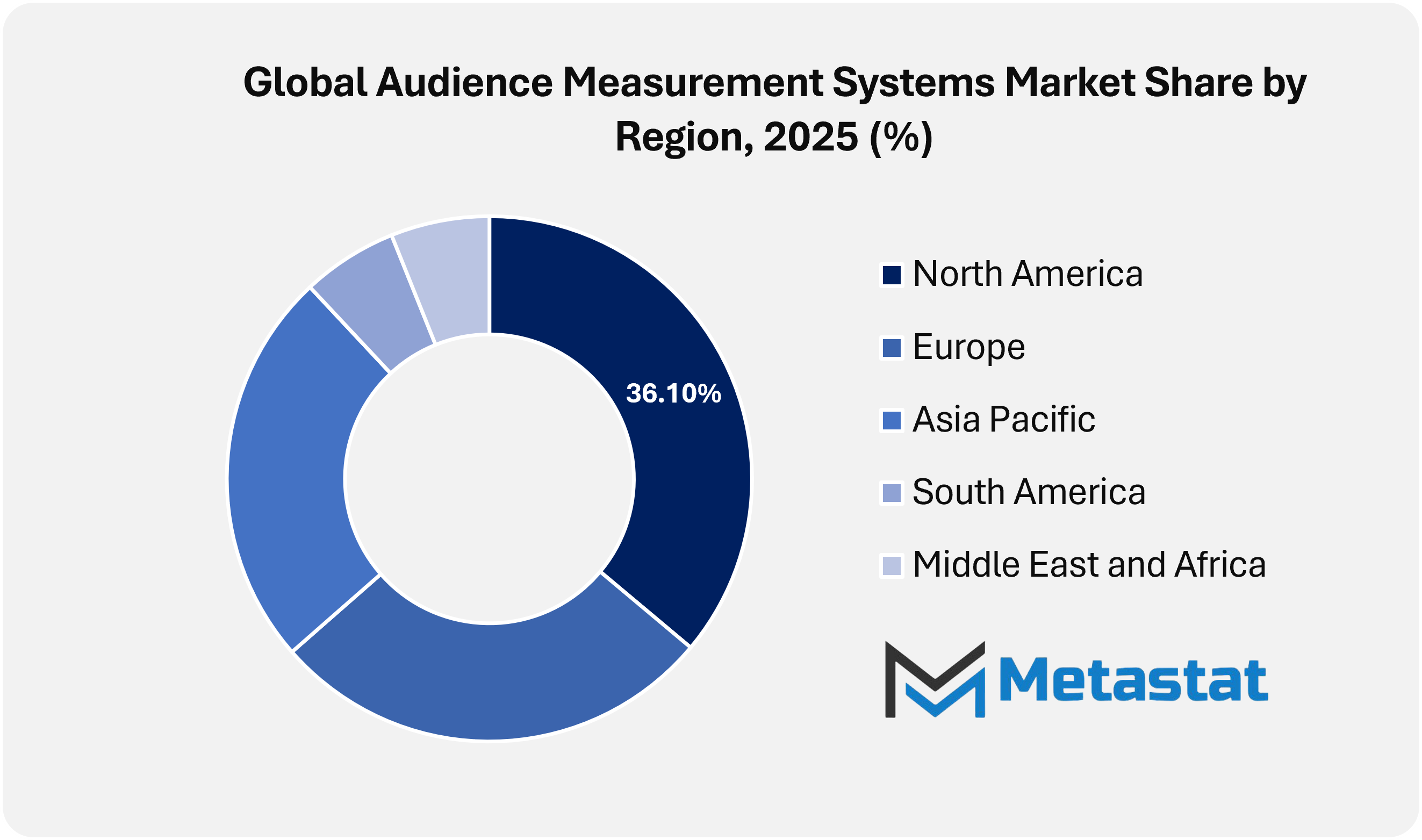
The Global Audience Measurement Systems market is formed with the aid of a mixture of long-established studies firms and digital-first analytics companies that tune how human beings engage with media across television, online platforms, mobile apps, and linked gadgets. Demand for correct audience records will continue to grow as advertisers and media owners search for clean proof of campaign overall performance and viewer behavior. Companies focus on amassing, verifying, and analyzing large volumes of statistics so that customers can make knowledgeable selections. The market reflects a shift from conventional ratings fashions to more distinct pass-platform dimension that connects linear TV, streaming, social media, and virtual marketing into a single view.
Well-recognised companies like Nielsen, Kantar Group, GfK SE, Ipsos S.A., YouGov PLC, AGF Videoforschung, and Numeris Inc, have built their reputations on panel-based data and large-scale surveys. These corporations offer depended on scores and consumer insights that media shoppers and broadcasters depend on making plans and reporting. PwC (PricewaterhouseCoopers) and Veitch Lister Consulting Pty Ltd contribute of advisory, helping organizations interpret statistics and refine their approach. Dynata also performs a position through its global information collection capabilities, supporting manufacturers that need focused target audience comments. The setup methods will continue to serve customers who require solid, comparable metrics across markets.
At the same time, digital analytics specialists are redefining how audience data is captured and processed. Comscore, Inc., Quantcast Corporation, VideoAmp, Inc., iSpot.Tv, Inc., Samba TV, Inc., Gemius S.A., Triton Digital, and The Trade Desk, Inc. are strongly focused on digital signals, programmatic marketing, and superior attribution models. These organizations use automatic data series from gadgets, apps, and online systems to offer real-time insights. Tubular Labs and Innovid Corp. provide video intelligence and ad transport analytics, while Piano Software Inc. supports publishers with subscription and content analytics equipment. System1 provides creative effectiveness and audience response measurement capabilities that help brands assess how content will influence consumer response.
Other specialized competitors bring area of interest that help precise sectors. Quividi develops target audience analytics for virtual signage environments, and Actus Intelligent affords media tracking equipment for broadcast content. ABV International and Spectrio LLC make contributions and offerings linked to performance tracking and consumer engagement analytics.
The competitive landscape reflects a balance between legacy research institutions and technology-driven companies. Traditional size providers will support their digital capabilities, even as more recent entrants will refine identity decision and privacy-secure facts matching. Partnerships between analytics platforms, broadcasters, streaming services, and advertisers will deepen in the coming years. As media consumption patterns shift, these industry players will compete on data quality, speed of reporting, cross-platform integration, and compliance with privacy standards. The organizations indexed above keep outlining how audiences are counted, understood, and valued in a records-driven advertising environment.
Market size is forecast to rise from USD 5,719.3 million in 2025 to over USD 10,978.2 million by 2033.
Strategic partnerships among cloud vendors, telecom operators, and media networks will reshape data ownership structures. Independent verification bodies will refine audit methodologies to sustain trust among advertisers demanding transparent attribution. The discussion will expand from measurement accuracy to measurement accountability, positioning the market as a cornerstone of decision intelligence across advertising, content investment, and brand strategy.
This research report categorizes the Audience Measurement Systems market based on key segments and regions, forecasts revenue growth, and analyses trends in each submarket. The report analyses the key growth drivers, opportunities, and challenges influencing the Audience Measurement Systems market. Recent market developments and competitive strategies such as expansion, product launch, partnership, merger, and acquisition have been included to draw the competitive landscape in the market.
The report strategically identifies and profiles the key market players and analyses their core competencies in each sub-segment of the Audience Measurement Systems market.
|
Report Attributes |
Details |
|
Study Period |
2021-2033 |
|
Base Year |
2025 |
|
Estimated Year |
2026 |
|
Forecast Period |
2026-2033 |
|
Historical Period |
2021-2025 |
|
Growth Rate |
CAGR 8.5% from 2026 to 2033 |
|
Revenue Unit |
USD Million |
|
Segmentation |
By Product Type, Deployment Mode, Technology, End-use Industry, and Region |
|
By Region |
North America (By Product Type, Deployment Mode, Technology, End-use Industry, and Country)
|
|
Europe (By Product Type, Deployment Mode, Technology, End-use Industry, and Country)
|
|
|
Asia Pacific (By Product Type, Deployment Mode, Technology, End-use Industry, and Country)
|
|
|
South America (By Product Type, Deployment Mode, Technology, End-use Industry, and Country)
|
|
|
Middle East and Africa (By Product Type, Deployment Mode, Technology, End-use Industry, and Country)
|
Find answers to common questions about this report
Top players operating in the Audience Measurement Systems industry include AGF Videoforschung, Comscore, Inc., GfK SE, Kantar Group, and Nielsen.
Privacy regulation, identity loss, and cookie deprecation reducing deterministic audience linkage and comparability will hamper the market growth within the forecast period.
Global Audience Measurement Systems market is estimated to reach USD 10,978.2 million by 2033.
North America region dominates the market.
The Metastat Insights analysis shows that the North America Audience Measurement Systems market size is estimated to be USD 3756.7 million by 2033.
The Metastat Insights study shows that the Global Audience Measurement Systems market size was USD 5,719.3 million in 2025.
The TV Measurement System is the leading type segment in the Global market.
Cross-platform planning and de-duplicated reach requirements across TV, streaming, and digital video and Acceleration of connected TV and platform-fragmented viewing that increases the need for unified audience currencies are key driving factors, boosting the market.
The Global Audience Measurement Systems market is expected to grow at a CAGR of 8.5% over the forecast period (2026-2033).
The analysts below cover Information & Technology research at Metastat Insights.
LEAD ANALYST
Utkarsh Khirodkar is a Lead Market Research Analyst at MetaStat Insight, specializing in market intelligence, technology sector assessments, and competitive strategy.

PRINCIPAL CONSULTANT - ENTERPRISE AI & EMERGING TECHNOLOGIES
Banking & Finance · Electronics and Semiconductor · Energy and Power · Healthcare IT · Information & Technology · Professional Services
Vijay Gunti is a Principal Consultant at MetaStat Insight, bringing over two decades of experience across enterprise digital transformation, technology strategy, and intelligent systems.

LEAD CONSULTANT - COMMUNICATION, TELECOM, AND IT
Electronics and Semiconductor · Information & Technology · Machinery & Equipment · Professional Services
Ravindra Sathe Consultants for Communication, Telecom, and IT at MetaStat Insight. He leads the firm's industry research initiatives across telecommunications infrastructure, digital connectivity, enterprise networking, and emerging information technology domains.
In the biological seed treatment space, registration timelines vary drastically between the European Union, Brazil, and North America. The MetaStat Insight research handled these cross-border regulatory barriers with genuine nuance, mapping commercialization pathways alongside historical field adoption rates. The segmentation between microbial strains and biochemical active ingredients was particularly well structured.
Our team was tracking whether regional recycling infrastructure could realistically absorb the growing volume of lithium iron phosphate batteries over the next decade. The report did a solid job separating announced hydrometallurgical plant capacity from active, permitted operational throughput. That distinction made the feedstock availability projections and regional recovery rate models far more credible than standard commercial overviews.
Tracking capacity expansion in single-use bioprocessing requires dependable data on raw material availability and cleanroom-grade polymer supply chains. The competitive landscape chapter gave a grounded evaluation of secondary component suppliers across North America and Asia-Pacific rather than simply reprinting press releases. Having that level of supplier benchmarking helped clarify dual-sourcing considerations for our clinical pipeline planning.
Explore related market intelligence reports worth reading alongside this one.