
LEAD ANALYST
Utkarsh Khirodkar is a Lead Market Research Analyst at MetaStat Insight, specializing in market intelligence, technology sector assessments, and competitive strategy.

Global Audio and Video On-Demand Streaming Services Market Size, Share, By Service Type (Video-on-Demand (VOD) and Audio-on-Demand (AOD)), By Content Type (Movies and Films, Television Shows and Web Series, Music, Podcasts and Talk Audio, Audiobooks, News and Current Affairs, Sports Replays and Highlights, Educational and Instructional Content, User-Generated Video Content), By Monetization Model (Subscription-Based Services, Advertising-Supported Services, Transactional and Pay-Per-View Services, Hybrid Subscription and Advertising Services), By Access Device (Smartphones, Smart TVs, Streaming Media Players and Set-Top Boxes, Desktop and Laptop Computers, Tablets, Smart Speakers, Gaming Consoles, In-Vehicle Infotainment Systems), Industry Analysis, Growth, Trends, and Forecast, 2026-2033
Report ID
MSI-5474
Published
October, 2026
Pages
292 Pages
Format
Historical
Base year
Forecast
Forecast period
Report Details
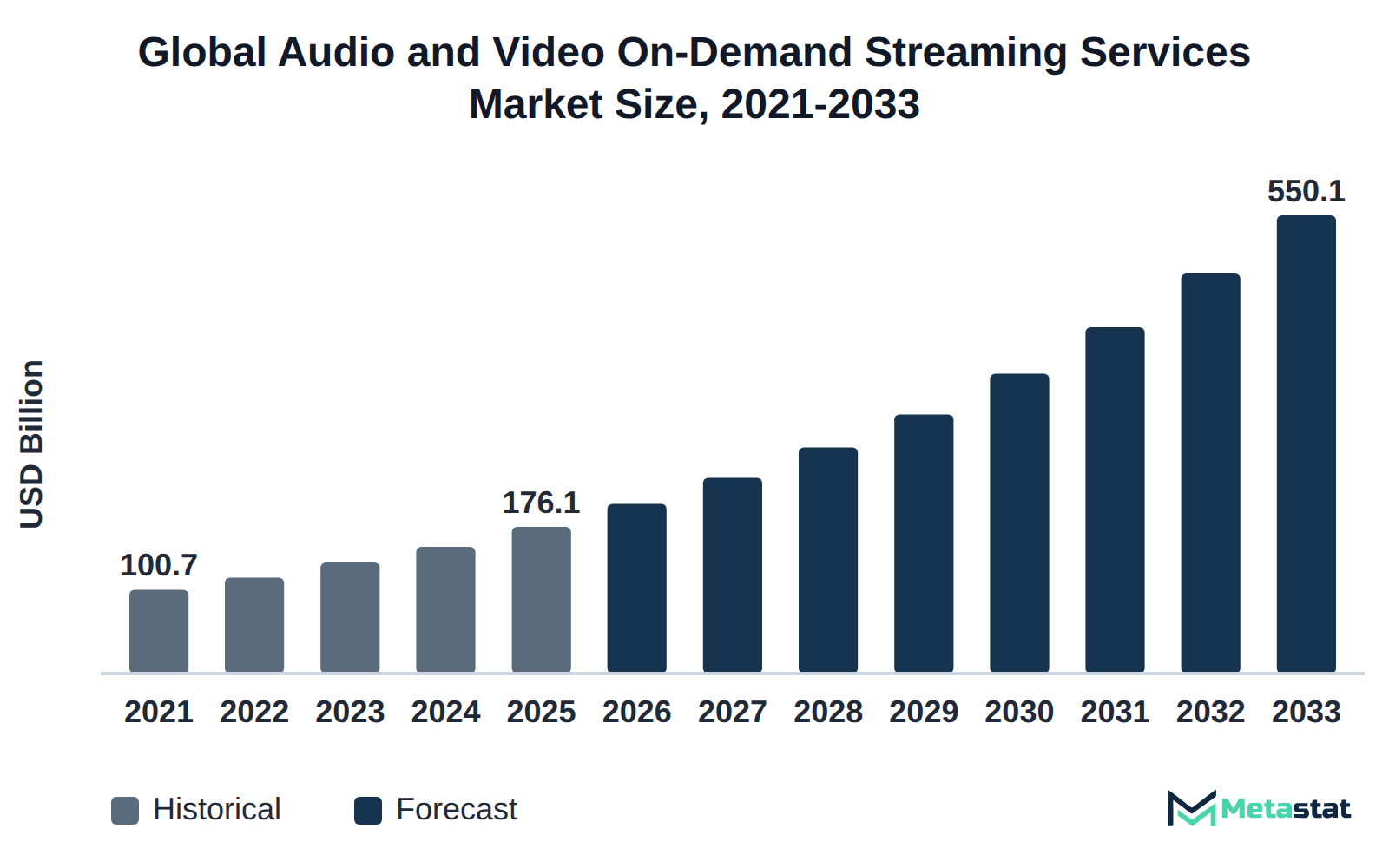
Market Valuation: Valued at $176.1 Billion in 2025, projected to reach $550.1 Billion by 2033 at a 15.3% CAGR.
Dominant Segment: The Video-on-Demand (VOD) segment leads the market, driven by consumer interest in diverse programming options and immediate access to content.
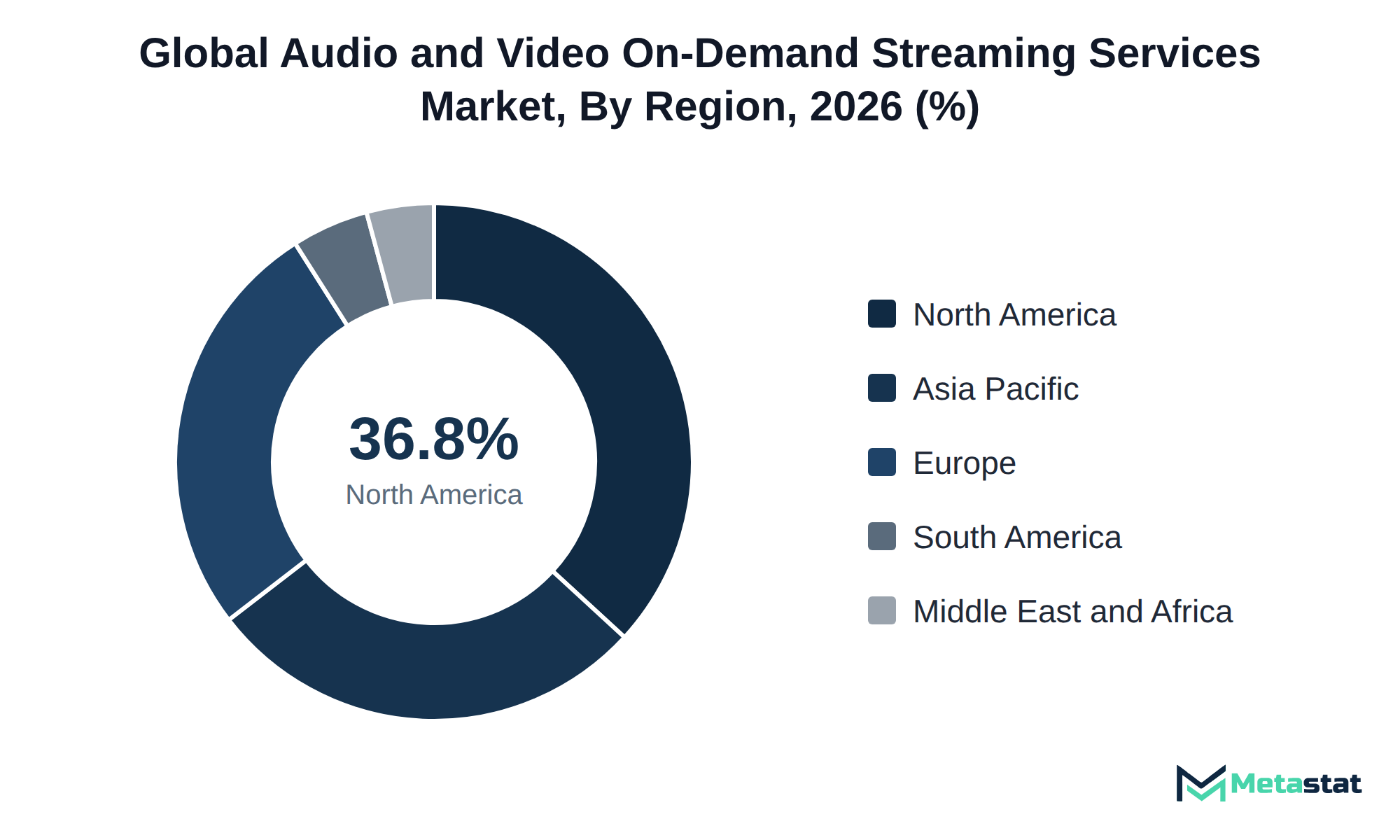
Geographic Lead: North America is the leading region, holding 36.8% of the market in 2025, primarily due to its established infrastructure and high consumer spending on streaming services.
What's Inside: The report provides comprehensive competitive coverage, detailed analyses of market dynamics, and forecasts extending from 2026 to 2033.
Emerging Opportunities: Hybrid subscription and advertising services are projected to grow at a CAGR of 22%, reflecting strong consumer interest in flexible payment options.
AI-Powered Engagement: AI-driven content recommendations are enhancing viewer engagement, with subscription-based services expected to grow significantly as platforms leverage personalization.
Choose Your License
Global Audio and Video On-Demand Streaming Services Market
The global Audio and Video On-Demand Streaming Services market was valued at USD 176.1 billion in 2025 and is projected to reach USD 550.1 billion by 2033, growing at a CAGR of 15.3% over the forecast period.
The Audio and Video On-Demand Streaming Services market encompasses a wide range of streaming content, including video and audio formats, which cater to various consumer preferences. Buyers invest in these services due to increasing demand for accessible entertainment options and flexibility offered by on-demand consumption. Factors influencing this trend include the desire for personalized viewing experiences and convenience of streaming across multiple devices.
Growth in the market is propelled by expanding availability of high-speed internet and proliferation of smart devices, facilitating access to content. The Video-on-Demand (VOD) segment represents the largest share of the market, driven by consumer interest in diverse programming options. North America holds 36.8% of the market in 2025, with the US leading in 2026. This region stands out due to its established infrastructure and high consumer spending on streaming services.
Anticipated growth continues to draw attention from major players in the industry, who seek to enhance their offerings through innovative content and technology. The Audio and Video On-Demand Streaming Services market is expected to benefit from advancements in content delivery and marketing strategies that effectively engage consumers. These developments create opportunities for increased market penetration and revenue generation.
The Audio and Video On-Demand Streaming Services market serves various consumer preferences by providing convenient access to diverse audio and video content. Buyers engage with the market for entertainment, education, and information, driven by a growing demand for on-the-go viewing and listening experiences. The increasing proliferation of smart devices enhances accessibility, prompting consumers to invest in subscription services and ad-supported platforms for high-quality content delivery.
Significant growth in the market is attributed to the rising popularity of Video-on-Demand (VOD) services, which dominate in terms of monetary value. This region benefits from advanced internet infrastructure and a high concentration of content providers, creating a competitive environment that stimulates consumer spending.
One main growth driver is the shift towards hybrid monetization models that combine subscription and advertising. This approach caters to various consumer segments, allowing flexibility in viewing options and pricing. The market's evolution encourages investment in original content and user engagement strategies, further propelling expansion into new demographics and geographic areas.
The increasing adoption of advertising-supported streaming and hybrid subscription models significantly transforms revenue strategies in the Audio and Video On-Demand Streaming Services market. By 2033, advertising-supported services are projected to reach USD 139.2 billion, reflecting a 16.6% compound annual growth rate. This shift towards a dual-revenue approach allows platforms to cater to a broader audience, particularly users who prefer lower-cost or free access to content. The proliferation of these models aligns with consumer demand for flexibility and affordability, influencing platform growth strategies.
In particular, hybrid subscription and advertising services exhibit a compelling 22% growth, illustrating a strategic opportunity for platforms to diversify income sources. This approach enables platforms to enhance user engagement while balancing subscription fees with advertising revenues. An expanded user base drives advertising revenue and strengthens relationships with advertisers seeking targeted reach. The financial implications of this strategy position platforms favorably in a competitive landscape, enhancing their overall market share within the growing Audio and Video On-Demand Streaming Services market.
Pricing strategies in the Audio and Video On-Demand Streaming Services market have evolved significantly due to the increasing reliance on AI-driven content recommendations and personalization features. Subscription-based services, a major segment in the market, are projected to grow from USD 101.4 billion in 2026 to USD 232 billion by 2033, reflecting a compound annual growth rate of 12.5%. This growth illustrates how platforms leverage AI technology to curate personalized viewing experiences, influencing potential subscribers' purchasing decisions.
Buyers expect flexible pricing models that provide value while accommodating their individual preferences. AI algorithms analyze user behavior to suggest tailored content, enhancing engagement and satisfaction. This level of personalization strengthens customer loyalty and enhances the perceived value of subscription services, allowing platforms to implement tiered pricing based on user engagement and content consumption patterns. The integration of AI into pricing strategies is essential for differentiating offerings in a competitive landscape, ultimately driving revenue growth for service providers.
Connected televisions (CTVs) have changed the way consumers access audio and video content, enhancing the streaming experience. In 2026, the revenue generated from Smart TVs is projected to reach USD 165.8 billion by 2033, demonstrating a significant growth trajectory. This rise reflects a shift in consumer behavior toward larger screens that deliver superior audio-visual quality compared to traditional devices. Many viewers prefer the immersive experience that CTVs offer, leading to increased demand for services that cater specifically to this platform.
Mobile-first consumption has emerged as another characteristic of the market, particularly among younger demographics. Streaming services that prioritize mobile accessibility capture a larger share of the audience, with smartphones becoming essential devices for content consumption. In the forecast period, smartphones are expected to generate revenue of USD 220.9 billion from 2026 to 2033. This trend signals a need for streaming services to optimize content for mobile devices while maintaining high-quality experiences to address the distinct preferences of mobile-first consumers.
Collectively, the adoption of CTVs and mobile-first consumption shapes viewer preferences within the Audio and Video On-Demand Streaming Services market. Providers adapt their offerings to accommodate these shifting consumption patterns, ensuring that they remain competitive and relevant in a changing environment.
Content licensing costs and exclusive streaming rights play a significant role in shaping subscription pricing within the Audio and Video On-Demand Streaming Services market. Rising competition among platforms for high-quality content drives these costs upward, compelling service providers to adjust their pricing strategies. For instance, video-on-demand services, which hold a substantial market share, are projected to increase from USD 162.5 billion in 2026 to USD 440.8 billion by 2033, reflecting a compound annual growth rate (CAGR) of 15.3%. This growth illustrates the escalating demand for exclusive content and its impact on pricing.
Exclusive streaming rights to popular shows and movies significantly increase operational costs for providers. Consequently, firms often pass these costs onto consumers through higher subscription fees, leading to a more competitive pricing landscape. For example, subscription-based services are anticipated to grow from USD 101.4 billion in 2026 to USD 232 billion by 2033, demonstrating how increased content acquisition expenses influence pricing structures. Overall, the relationship between content licensing and exclusive rights shapes the market's economic dynamics, with stakeholders needing to navigate these complexities to maintain market share while appealing to budget-conscious consumers.
Rapid growth in smartphone penetration significantly influences the audio and video on-demand streaming services market. Consumers increasingly leverage smartphones to access streaming services, driven by a shift in viewing habits toward mobile platforms. This change reflects a broader trend where convenience and portability play essential roles in content consumption. The rising number of smartphone users leads to heightened demand for video-on-demand (VOD) and audio-on-demand (AOD) services.
Increased mobile device usage enhances content accessibility, attracting diverse age groups and demographics. A significant portion of consumers, particularly younger audiences, gravitates toward mobile streaming, promoting a shift from traditional viewing methods. This change in behavior enhances market growth by increasing subscription numbers and advertising revenues.
Advancements in content delivery network (CDN) technology significantly enhance the efficiency of streaming services. These improvements enable faster data transfer and reduce latency, ensuring a high-quality viewing experience for users. The integration of more robust CDN solutions supports high-definition video streaming and facilitates the delivery of large audio files to a diverse range of devices. With increased demand for high-quality content, service providers focus on employing state-of-the-art CDN technologies to maintain competitive advantages.
Adaptations in CDN architecture allow providers to distribute bandwidth more effectively, leading to cost savings and better resource utilization. These developments particularly impact the Audio and Video On-Demand Streaming Services market, with customers expecting high-quality content available instantly. Enhanced streaming capabilities result in increased consumer satisfaction, driving subscriptions and overall market growth. Investment in CDN infrastructure remains crucial for service providers to meet escalating demands and compete effectively in the dynamic streaming sector.
Pricing structures within the Audio and Video On-Demand Streaming Services market present challenges for consumers, particularly in segments including subscription-based services. High subscription fees deter potential customers, leading to slower uptake in areas with lower disposable incomes. Budget-conscious buyers, including students and individuals in developing regions, prioritize affordability over extensive content libraries, impacting their decisions regarding service subscriptions.
This price sensitivity influences market dynamics, with consumers seeking alternatives or delaying subscriptions. The emergence of free or low-cost alternatives complicates adoption rates among certain demographics. In regions where income disparity remains pronounced, the high cost of premium services restricts access for a significant portion of the population, affecting overall market growth.
Consequently, these pricing challenges necessitate strategic adjustments from service providers to capture a broader audience, ensuring a more inclusive approach that addresses varying consumer needs while supporting long-term market sustainability.
Hybrid subscription and advertising services represent a significant growth opportunity within the market. This segment is projected to experience a compound annual growth rate (CAGR) of 22% due to strong consumer interest in flexible payment options. The ability of consumers to access premium content through subscription models while enjoying free content supported by advertisements encourages wider audience engagement. Rising acceptance of diverse monetization strategies allows service providers to capture varying consumer preferences more effectively.
Companies focusing on hybrid models leverage this trend to expand their subscriber base and increase overall revenue. Service providers enhance market presence and improve competitive positioning. The adoption of hybrid monetization strategies contributes to the overall growth of the Audio and Video On-Demand Streaming Services market, reflecting a shift in consumer behavior toward more accessible and varied content offerings.
The Global Audio and Video On-Demand Streaming Services market is segmented based on Service Type, Content Type, Monetization Model, and Access Device.
This segment serves a diverse audience seeking immediate access to movies, television shows, and other video content on demand. Key drivers fueling growth include increasing smartphone penetration, which enhances viewer accessibility, and the evolving consumer preference for binge-watching platforms. VOD distinguishes itself from the Audio-on-Demand (AOD) segment through its higher revenue potential, attributed to substantial expenses involved in content licensing and production. In contrast to AOD, which covers audio services including music and podcasts, VOD experiences faster growth due to its broad appeal and increasing investment in original programming from major players. This dynamic contributes to the evolving landscape of the Audio and Video On-Demand Streaming Services market.
Audio-on-Demand (AOD) segment is estimated to reach USD 109.3 billion by 2033, at a CAGR of 15% during the forecast period. This segment caters to listeners seeking diverse audio content, including music, podcasts, and audiobooks. The growing trend of mobile consumption drives demand, with users increasingly favoring platforms that offer convenient access to audio formats during daily activities, including commuting or exercising. This segment displays a slightly higher growth rate compared to other service types within the market, supported by technological advancements that enhance audio streaming quality and accessibility. The rise of podcasting, in particular, has expanded the audience base, attracting advertisers and content creators aiming to engage with specific demographics. The preference for audio content over video, particularly among certain consumer groups, further differentiates this segment from Video-on-Demand (VOD), which focuses primarily on visual entertainment.
Movies and Films segment is valued at USD 52.9 billion in 2026 and is projected to reach USD 132.9 billion by 2033, at a CAGR of 14.1% during the forecast period. This segment caters to a diverse audience seeking entertainment through cinematic experiences and storytelling. Viewers ranging from casual consumers to film enthusiasts engage with this content across various platforms. The growing interest in exclusive releases and original films from streaming services significantly fuels this segment. Differing from other segments, Movies and Films exhibit a stronger demand trajectory compared to Music and Podcasts, evidenced by the higher CAGR of 14.1%. The segment benefits from substantial investments in production and distribution, enhancing content quality and accessibility. This competitive environment drives innovative strategies, positioning the segment for continued expansion within the market.
The Television Shows and Web Series segment is estimated to reach USD 151.9 billion by 2033, at a CAGR of 14.4% during the forecast period. This segment serves viewers seeking engaging visual content, including dramas, comedies, and reality shows. The rising demand for original programming from streaming platforms drives growth within this segment, reflecting shifting consumer preferences towards binge-watching and personalized viewing experiences. In contrast to other content types, including Movies and Films, which grow at a CAGR of 14.1%, this segment shows a slightly stronger growth rate, indicating its increasing importance to the overall market. The competitive landscape remains robust, with various platforms investing heavily in exclusive series to attract subscribers and enhance viewer retention. The Television Shows and Web Series segment significantly contributes to revenue generation and subscriber growth for various streaming services in the market.
Music segment is expected to reach USD 72.8 billion by 2033. This segment serves diverse audiences, including casual listeners and dedicated music enthusiasts. The rise in streaming services with extensive music libraries drives growth, appealing to younger demographics who prefer on-demand access. Increased smartphone adoption supports this trend, with users seeking music streaming apps for convenience. In comparison to other segments, the growth in music services is expected to be more accelerated, reflecting a competitive edge over categories like television series, which experience slower growth rates. The anticipated CAGR for music aligns with broader trends in consumer preferences for personalized and immediate access to content, reflecting the increasing adaptation of subscription-based and advertising-supported service models in the market.
Podcasts and Talk Audio segment is projected to grow at a CAGR of 16.4% during the forecast period. This segment serves users seeking diverse audio experiences, including storytelling, interviews, and educational content. The rising popularity of podcasts among millennials and Generation Z drives demand significantly. Increased accessibility through smartphones and smart speakers enhances consumption across various demographics. Unlike other content types, this segment exhibits faster growth compared to Movies and Films, which has a CAGR of 14.1%. The emphasis on on-demand listening formats allows consumers to engage with content anytime, generating a distinct appeal that differentiates it from traditional media. Advertisers recognize the value of podcasts, leading to a shift in monetization strategies that prioritize ad-supported models, further supporting growth in the market.
Audiobooks comprise a unique segment focused on delivering spoken word content through digital platforms. This format appeals to diverse audiences, including commuters, students, and individuals seeking an alternative to traditional reading. Increasing smartphone penetration and the rising popularity of multitasking lifestyles drive demand for audiobooks, allowing consumers to engage with literature while performing other activities. A distinct characteristic of this segment is its competitive pricing, often lower than video content, which attracts a broader range of buyers. Audiobooks typically exhibit growth traits that differ from other content types, creating a dedicated listener base that values convenience and accessibility. Unlike segments including Movies and Films, which incur higher production costs, audiobooks maintain lower barriers to entry, enabling various independent publishers and authors to enter the market.
News and Current Affairs content serves to inform audiences about current events, trends, and critical issues impacting society. This content attracts viewers seeking timely information, including news enthusiasts and professionals who rely on up-to-date developments for decision-making. The growing demand for immediate access to news increases engagement with streaming services, driven by technological advances in mobile access and the proliferation of smart devices. While other content types experience varied growth rates, the News and Current Affairs segment distinguishes itself through its unique viewer base, focusing on accuracy and timely reporting. This segment operates under different pricing structures than entertainment-focused content, presenting unique challenges and opportunities in the market.
Sports Replays and Highlights focus on delivering condensed and curated versions of sporting events, allowing viewers quick access to key moments and highlights. This segment appeals to sports enthusiasts and casual viewers seeking to stay updated without watching full games. Increasing digital engagement among sports fans drives demand for this content, reflecting a broader trend within the market toward shorter, more digestible viewing experiences. Unlike traditional full-length broadcasts, this segment offers a more flexible viewing option, appealing to audiences with time constraints. The growing popularity of mobile viewing and social media sharing fuels its expansion, providing opportunities for platforms to reach wider audiences. Sports Replays and Highlights stand out in the market due to their unique ability to cater to consumer lifestyles, differentiating themselves from longer-format content segments.
Educational and Instructional Content encompasses a diverse range of learning materials designed to enhance knowledge and skills through digital platforms. This segment appeals primarily to students, educators, and lifelong learners seeking accessible and flexible learning solutions. Increased adoption of online learning environments significantly drives growth in this segment, fueled by rising demand for remote education and professional development resources. Unlike other segments, Educational and Instructional Content features lower price points, making it more accessible to a broader audience. This contrasts with segments like Movies and Films or Television Shows, which generally command higher prices. The focus on interactive and engaging formats in educational content distinguishes it from traditional entertainment offerings, enhancing user experience and retention. The growing trend toward personalized learning experiences further supports the market, creating opportunities for innovative content delivery methods.
User-Generated Video Content includes videos created by users that are shared across various platforms, enabling community engagement and creative expression. This segment appeals to younger demographics, including Gen Z and Millennials, who are keen on participatory culture and authentic content. The segment thrives on the growing accessibility of high-quality recording devices and user-friendly editing tools, significantly influencing its rapid adoption. Social media platforms play an important role in promoting user-generated content, allowing creators to reach broader audiences without significant investment. Compared to other content types, User-Generated Video Content often experiences more volatility in popularity and engagement, influenced by trends and viral phenomena. Unlike traditional content forms, this segment operates at lower production costs, attracting a diverse range of creators, from amateur enthusiasts to professional influencers. The broad appeal of User-Generated Video Content enhances its relevance within the Audio and Video On-Demand Streaming Services market.
This sub-segment encompasses a range of content types that target specific audiences, including faith-based programming and niche shows that appeal to distinct viewer preferences. Demand for such content arises from consumers seeking personalized entertainment options that reflect their values and interests. The growth of streaming platforms supports the inclusion of diverse programming, enabling niche audiences to access content not typically available through mainstream channels. This segment differs from broader categories like Movies and Films or Television Shows and Web Series, which often cater to more extensive viewer bases and mainstream themes. While mainstream segments experience higher demand and revenue potential, this sub-segment attracts dedicated viewers willing to engage with content that connects on a personal level. Such unique programming enhances viewer loyalty and contributes to the overall diversification of the Audio and Video On-Demand Streaming Services market.
This segment targets consumers seeking continuous access to a diverse range of video and audio content through monthly or annual payments. The increasing inclination toward convenience and ad-free experiences drives growth in this segment, particularly among younger demographics who prioritize flexibility in content consumption. Unlike the advertising-supported services, which face challenges due to ad fatigue, subscription-based services present a more stable revenue model, appealing to users willing to invest in a smooth experience. In terms of growth rate, this segment exhibits slower progress compared to advertising-supported services, which are expected to grow at a CAGR of 16.6% during the same period, highlighting shifting preferences within the Audio and Video On-Demand Streaming Services market.
This segment appeals to budget-conscious consumers seeking access to content without subscription fees. Advertisers benefit from targeted advertising opportunities, leveraging user data to reach specific demographics effectively. Rising demand for free or low-cost content drives growth in this segment, particularly among younger audiences and those in emerging markets. This segment differs from Subscription-Based Services, which grow at a CAGR of 12.5%. The lower price point of Advertising-Supported Services attracts a wider audience, leading to increased adoption and engagement. The market’s evolving advertising strategies and enhanced targeting capabilities will continue to shape this segment’s trajectory.
Transactional and Pay-Per-View Services segment is expected to reach USD 50.8 billion by 2033. This service model allows consumers to access specific content on a pay-per-view basis, appealing to users who prefer flexibility over subscription commitments. Frequent demand arises from special events, including sports broadcasts or exclusive film releases, driving consumer engagement. This segment experiences a different dynamic compared to Subscription-Based Services, which generally exhibit slower growth with a CAGR of 12.5%. Transactional and Pay-Per-View Services is anticipated to grow at a faster pace, driven by users seeking on-demand access to premium content without ongoing commitments. The market's evolving content landscape increases competition among service providers, enabling diverse offerings that enhance user choice and boost revenue potential.
Hybrid Subscription and Advertising Services segment is projected to grow at a CAGR of 22% during the forecast period. This segment combines subscription-based access with advertising revenue, attracting users who prefer lower upfront costs in exchange for viewing ads. This model appeals to a wide audience seeking diverse content options. Demand is driven by the increasing propensity to consume content at minimal costs while still accessing high-quality programming. The segment differentiates itself through a faster growth trajectory compared to subscription-based services, which is projected to grow at a CAGR of 12.5%. The market for Hybrid Subscription and Advertising Services faces competition from both fully subscription-based and fully ad-supported models, influencing pricing strategies and content availability.
The smartphones segment is valued at USD 85.6 billion in 2026 and is projected to reach USD 220.9 billion by 2033, at a CAGR of 14.5% during the forecast period. This segment serves individuals who prefer accessing audio and video content on mobile devices, leveraging the convenience and portability of smartphones. Key factors driving growth in this segment include the increasing penetration of smartphones and the rising demand for on-the-go entertainment. Compared to other access devices, smartphones offer greater accessibility, appealing to a wider range of users. In contrast, segments like Smart TVs, which are projected to grow at a CAGR of 17%, target a more specific audience focused on larger screen experiences. The growth trajectory of smartphones indicates robust demand within the Audio and Video On-Demand Streaming Services market, highlighting their importance in shaping viewing habits and content consumption patterns.
The Smart TVs segment is estimated to reach USD 165.8 billion by 2033, at a CAGR of 17% during the forecast period. This segment primarily serves consumers who engage with video and audio content through large-screen devices, emphasizing a home entertainment experience. Rising consumer preference for high-definition content and cinematic experiences significantly drives demand within this segment. Compared to other access devices, Smart TVs exhibit faster growth due to their ability to integrate streaming services directly into the television, eliminating the need for additional devices. The increasing availability of exclusive content on Smart TV platforms contributes to this growth, positioning it favorably against smartphones and desktop computers, which grow at CAGRs of 14.5% and 12.4% respectively. The market experiences a shift towards Smart TV adoption, reflecting changing viewing habits and preferences for on-demand streaming services.
Streaming Media Players and Set-Top Boxes segment is expected to reach USD 44.7 billion by 2033. This segment serves consumers who prefer to access streaming content on their televisions rather than through mobile devices or computers. Growth in this segment is driven by increasing adoption of smart televisions and media players that facilitate direct access to streaming services. Technological advancements enhance user experience and content delivery speed. Compared to other access devices, including smartphones, which are projected to reach USD 220.9 billion by 2033, the growth rate for Streaming Media Players and Set-Top Boxes is slower, reflecting a more mature phase of adoption in specific demographics. This segment plays a unique role in providing an immersive viewing experience for home entertainment.
Desktop and Laptop Computers segment is projected to grow at a CAGR of 12.4% during the forecast period. This segment supports users who prefer larger screens for viewing content, including movies, television shows, and web series, particularly in home and professional environments. A key driver for this segment involves the increasing demand for high-quality viewing experiences, along with the rise of remote work and online learning, which have led to higher consumption of audio and video content through this access device. Compared to other access devices, Desktop and Laptop Computers offer superior processing power and functionality, catering to a segment of users seeking enhanced interactivity and multitasking capabilities. While the segment experiences steady growth, it does not match the rapid expansion projected for Smartphones, which leads in user adoption and convenience.
Tablets serve as portable devices for accessing audio and video on-demand content, appealing to a broad audience that values mobility and versatility. Users leverage tablets for various entertainment purposes, including streaming movies, music, and podcasts. The growing demand for high-resolution screens and improved battery life drives interest in this access device. Unlike smartphones, which hold a larger market share, tablets provide a more immersive viewing experience, positioning themselves as a preferred choice for users seeking larger displays for prolonged viewing. While the growth rate within this segment does not match that of smartphones, the unique advantages offered by tablets attract a dedicated customer base, contributing to the overall expansion of the market.
Smart Speakers serve intelligent devices enabling users to access audio and video on-demand content through voice commands. These devices appeal to tech-savvy consumers looking for convenient, hands-free experiences in their homes. The growing popularity of smart home ecosystems drives adoption, with consumers increasingly integrating smart speakers with other connected devices. Compared to other access devices, Smart Speakers offer a unique advantage through their integration with various streaming services and features including voice recognition. This segment benefits from advancements in AI technology, enhancing user interactions and expanding the types of content accessible through voice commands. Unlike traditional devices, Smart Speakers gain traction among younger demographics seeking innovative ways to consume audio and video content, contributing to the ongoing evolution of the Audio and Video On-Demand Streaming Services market.
Gaming Consoles function as specialized devices designed for playing video games but increasingly operate as multifunctional entertainment systems. Users leverage these devices to access audio and video on-demand streaming services, creating a unique segment within the market that appeals primarily to gamers and entertainment enthusiasts. A significant driver of this segment's growth stems from the rising popularity of gaming content, which encourages manufacturers to include streaming capabilities. This segment experiences different dynamics compared to other access devices, including smartphones or smart TVs, which cater to broader multimedia consumption. The integration of streaming services into gaming consoles enhances user experience, allowing consumers to enjoy diverse content types seamlessly. While Gaming Consoles do not exhibit the same rapid growth rates as smartphones, they capture a dedicated audience willing to invest in premium devices that facilitate both gaming and streaming experiences.
In-Vehicle Infotainment Systems provide multimedia content and connectivity for passengers while traveling, enhancing entertainment and information access. Vehicle manufacturers and consumers prioritize this technology to improve driving experiences, especially during long journeys. The growing demand for effective integration of audio and video services in vehicles drives this segment forward. Establishing partnerships between automotive manufacturers and streaming service providers becomes crucial in delivering compelling content to consumers. This segment typically experiences slower growth compared to other access devices, primarily due to higher costs associated with vehicle integration and the initial investment required for installation. In-Vehicle Infotainment Systems differ from devices like smartphones and smart TVs, focusing on delivering content tailored specifically for in-car environments, which affects pricing strategies and target audiences.
Wearable Devices include various technologies including smartwatches and fitness trackers that facilitate access to audio and video content on demand. These devices appeal to health-conscious users and tech enthusiasts who value convenience and mobility. Increasing consumer interest in health monitoring and fitness tracking drives demand for content tailored to these platforms, allowing for effective integration of entertainment and lifestyle management. This sub-segment differentiates itself from others by focusing on a narrower user base that emphasizes mobility and health-related functionalities. In comparison to larger access devices, Wearable Devices experience slower growth due to limitations in screen size and battery life, which impact content consumption compared to more traditional devices like smartphones or smart TVs. The growing trend of health and fitness awareness further influences adoption, making wearable devices an important part of the broader audio and video on-demand streaming services market.
Based on geography, the Global Audio and Video On-Demand Streaming Services market is divided into North America, Europe, Asia-Pacific, South America, Middle East, and Africa.
Demand in North America is driven by a significant population that favors streaming entertainment. The United States, Canada, and Mexico stand out due to their high purchasing power, which supports substantial investments in audio and video content. Rapid advancements in internet infrastructure enhance user experience, allowing easy access to various streaming platforms. North America holds a 36.8% share of the global market in 2025. Enhanced competition among key players promotes service innovation, ensuring diverse offerings to consumers. By the end of 2033, North America is projected to reach USD 186.1 billion, reflecting a strong growth trajectory. The audio and video on-demand streaming services market benefits from a trend towards personalized content consumption and the increasing relevance of mobile devices.
In Europe, the market benefits from strong demand driven by a diverse consumer base and a rich cultural landscape. Key countries including Germany, France, and the UK exhibit a robust appetite for high-quality content, prompting increased investments in local productions. The regulatory environment, particularly in France, encourages local content creation, enhancing the appeal of streaming services. With a share of 26.4% of the global market in 2025, Europe demonstrates significant growth potential, driven by an increasing number of subscribers across various platforms. The Audio and Video On-Demand Streaming Services market in this region is projected to evolve, reflecting changing consumer preferences and technological advancements.
The Asia-Pacific region captures 27.7% of the global Audio and Video On-Demand Streaming Services market in 2025. A strong demand for content across diverse demographics fuels growth, particularly among younger consumers who engage with streaming services on their mobile devices. The increasing penetration of high-speed internet and the proliferation of smartphones enhance accessibility to on-demand content, driving consumption patterns. Countries including China and India lead in user adoption rates, reflecting robust infrastructure investments and a shift in entertainment preferences. Regulatory frameworks supporting digital content distribution further stimulate market expansion. The rise of local content production in markets like South Korea contributes to the diversification of offerings, enhancing viewer engagement. Overall, this region presents substantial opportunities for growth within the Audio and Video On-Demand Streaming Services market through innovative service delivery and targeted regional content strategies.
Emerging trends in Brazil and Argentina contribute significantly to the growth of the Audio and Video On-Demand Streaming Services market. Rising internet penetration and mobile device usage drive demand for streaming platforms, attracting a broad audience. The region's unique cultural preferences influence content consumption, with local productions gaining popularity among viewers. Investment in digital infrastructure supports the expansion of streaming services, enhancing accessibility for consumers. A market share of 4.8% highlights the potential for further growth. The market reflects increasing competition among service providers, leading to diverse offerings tailored to local tastes across Brazil, Argentina, and the Rest of South America. This competitive landscape encourages players to innovate, ensuring a steady evolution of the services provided. Overall, the South American market exhibits a dynamic environment poised for advancements in content delivery and consumer engagement.
In the Middle East and Africa, the market experiences growth driven by increasing adoption of smartphones and smart TVs, enabling consumers to access a wide range of content. Countries including Saudi Arabia and the UAE demonstrate a growing interest in video-on-demand services, supported by expanding internet infrastructure and rising disposable incomes. South Africa represents a notable market with a diverse consumer base eager for streaming services, highlighting demand for both local and international content. By 2025, this region captures 4.2% of the global market share, indicating a significant opportunity for service providers to capitalize on the rising trend of audio and video on-demand streaming services.
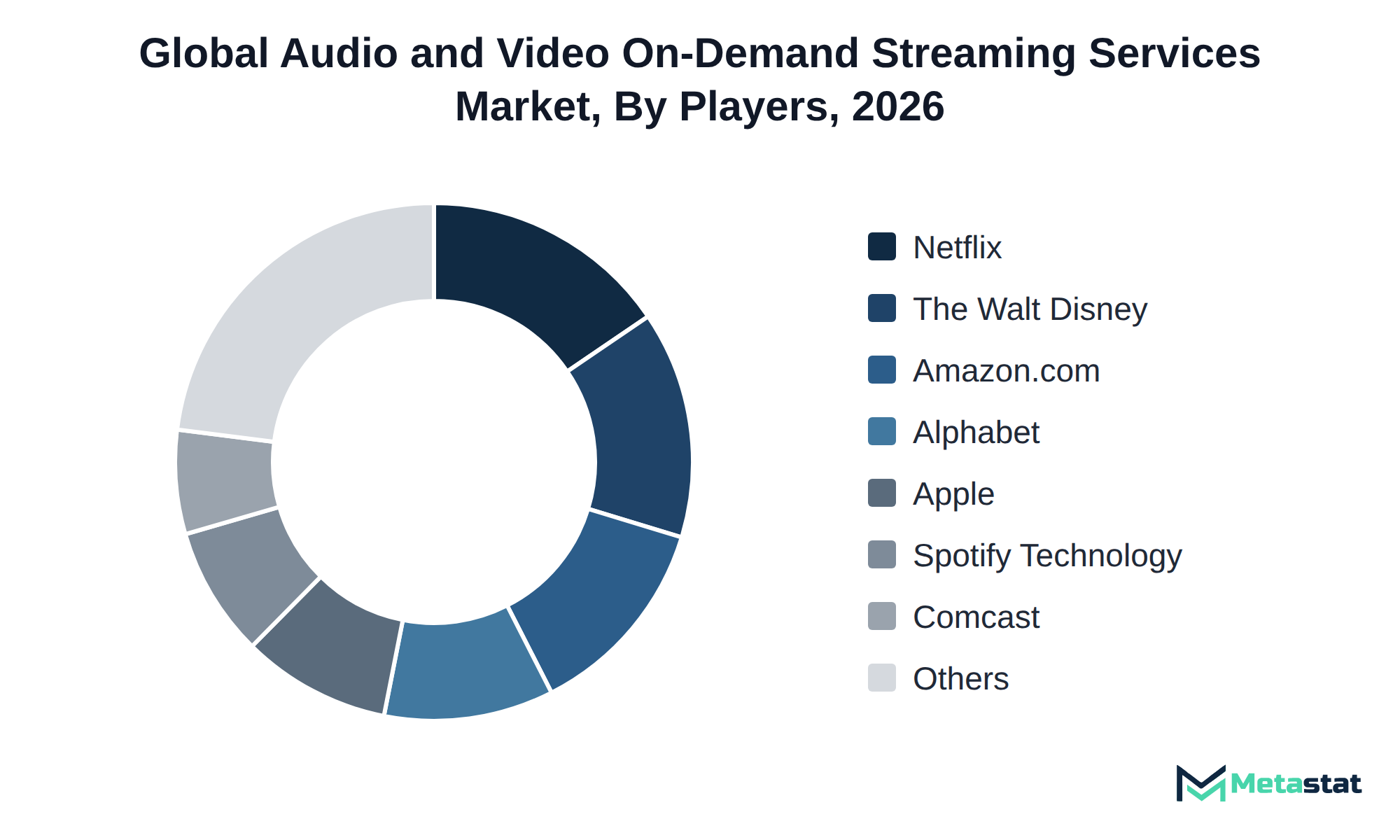
Competition in the Audio and Video On-Demand Streaming Services market divides primarily along service type and monetization models. Video-on-Demand (VOD) services dominate the market, with companies like Netflix, Inc. focusing on subscription-based models that offer extensive content libraries. In contrast, platforms like Spotify Technology S.A. emphasize audio-on-demand offerings, including music and podcasts, leveraging a mix of subscription and advertising-supported services.
Buyers in the market choose services based on content variety, pricing strategies, and device compatibility. Companies including The Walt Disney Company and Amazon.com, Inc. deliver tailored content, enhancing user engagement through exclusive offerings. Price competitiveness remains crucial, particularly among advertising-supported models where companies like Deezer S.A. and iHeartMedia, Inc. vie for listener attention by providing free access with advertisements.
The rising demand for content including movies and television shows further enhances revenue potential, with the segment expected to grow significantly. North America, holding a 36.8% share, will contribute to this expansion, driven by high subscription rates and diverse content offerings. Conversely, risks could impede this growth trajectory. Economic pressures or shifts in consumer preferences towards free ad-supported models slow adoption rates for subscription-based services. The audio-on-demand (AOD) segment, while projected to grow, faces competition in monetization strategies, especially from podcasts and other audio formats. The Audio and Video On-Demand Streaming Services market relies on consistent content innovation and effective monetization strategies to achieve its forecasted growth.
By Service Type: Video-on-Demand (VOD), Audio-on-Demand (AOD)
By Content Type: Movies and Films, Television Shows and Web Series, Music, Podcasts and Talk Audio, Audiobooks, News and Current Affairs, Sports Replays and Highlights, Educational and Instructional Content, User-Generated Video Content, Others (Faith-Based and Niche Programming)
By Monetization Model: Subscription-Based Services, Advertising-Supported Services, Transactional and Pay-Per-View Services, Hybrid Subscription and Advertising Services
By Access Device: Smartphones, Smart TVs, Streaming Media Players and Set-Top Boxes, Desktop and Laptop Computers, Tablets, Smart Speakers, Gaming Consoles, In-Vehicle Infotainment Systems, Others (Wearable Devices)
The report strategically identifies and profiles the key market players and analyses their core competencies in each sub-segment of the Audio and Video On-Demand Streaming Services market.
Report Attributes | Details |
Study Period | 2021-2033 |
Base Year | 2025 |
Estimated Year | 2026 |
Forecast Period | 2026-2033 |
Historical Period | 2021-2025 |
Growth Rate | CAGR 15.3% from 2026 to 2033 |
Revenue Unit | USD billion |
Segmentation | By Service Type, Content Type, Monetization Model, Access Device, and Region |
By Region | North America (By Service Type, Content Type, Monetization Model, Access Device, and Country)
|
Europe (By Service Type, Content Type, Monetization Model, Access Device, and Country)
| |
Asia Pacific (By Service Type, Content Type, Monetization Model, Access Device, and Country)
| |
South America (By Service Type, Content Type, Monetization Model, Access Device, and Country)
| |
Middle East and Africa (By Service Type, Content Type, Monetization Model, Access Device, and Country)
|
Find answers to common questions about this report
The Audio and Video On-Demand Streaming Services market size was valued at USD 176.1 billion in 2025.
The market is projected to grow at a CAGR of 15.3% during the forecast period from 2026 to 2033.
The North America Audio and Video On-Demand Streaming Services market size is estimated to reach USD 186.1 billion by 2033.
Video-on-Demand (VOD) leads the Audio and Video On-Demand Streaming Services market with a projected value of USD 440.8 billion by 2033, significantly surpassing other segments. This segment's growth reflects a compound annual growth rate (CAGR) of 15.3 percent from 2026 to 2033.
Rapid smartphone penetration significantly influences the market, as consumers increasingly leverage mobile platforms for streaming services. hybrid subscription and advertising services present a substantial growth opportunity, reflecting strong consumer interest in flexible payment options.
North America holds the dominant share of the Audio and Video On-Demand Streaming Services market, with a projected value of USD 186.1 billion in 2033, representing 36.8 percent of the total market.
High subscription fees restrain growth in the Audio and Video On-Demand Streaming Services market, particularly in regions with lower disposable incomes. Price sensitivity affects consumer decisions, leading many to seek alternatives or delay subscriptions, which impacts overall market expansion.
Several factors favor adoption in the audio and video on-demand streaming services industry. Increased smartphone penetration enhances content accessibility, attracting diverse demographics. advancements in content delivery network technology improve streaming efficiency and user experience, further driving consumer engagement. The rise of hybrid subscription and advertising services offers flexible payment options, appealing to a broader audience.
The Audio and Video On-Demand Streaming Services market is estimated to reach a valuation of USD 550.1 billion by 2033.
Key players operating in the Audio and Video On-Demand Streaming Services market include Netflix, Inc., Amazon.com, Inc., The Walt Disney Company, Alphabet Inc., Apple Inc., Spotify Technology S.A., and Tencent Holdings Limited.
The analysts below cover Information & Technology research at Metastat Insights.
LEAD ANALYST
Utkarsh Khirodkar is a Lead Market Research Analyst at MetaStat Insight, specializing in market intelligence, technology sector assessments, and competitive strategy.

PRINCIPAL CONSULTANT - ENTERPRISE AI & EMERGING TECHNOLOGIES
Banking & Finance · Electronics and Semiconductor · Energy and Power · Healthcare IT · Information & Technology · Professional Services
Vijay Gunti is a Principal Consultant at MetaStat Insight, bringing over two decades of experience across enterprise digital transformation, technology strategy, and intelligent systems.

LEAD CONSULTANT - COMMUNICATION, TELECOM, AND IT
Electronics and Semiconductor · Information & Technology · Machinery & Equipment · Professional Services
Ravindra Sathe Consultants for Communication, Telecom, and IT at MetaStat Insight. He leads the firm's industry research initiatives across telecommunications infrastructure, digital connectivity, enterprise networking, and emerging information technology domains.
Evaluating secondary resin quality across post-consumer packaging streams requires reliable technical segmentation. MetaStat Insight delivered an objective assessment that distinguished between extrusion-grade flake pricing and optical sorting throughput limitations across Western Europe. The competitive positioning breakdown for licensed depolymerization technology providers answered several questions during our feedstock feasibility audit. Their team clarified regional trade restrictions on mixed plastic scrap quickly when our team submitted follow-up requests.
Evaluating sovereign cloud deployments for core banking platforms demands a clear view of data residency regulations and migration exit strategies. MetaStat Insight delivered an exhaustive review of regional latency tolerances, mainframe decommission milestones, and third-party vendor concentration risk. The regulatory compliance mapping across European and Asian financial jurisdictions gave our team a dependable baseline for multi-cloud infrastructure discussions.
Replacing petrochemical surfactants with bio-based alternatives requires realistic timelines on industrial precision fermentation scaling. The market research broke down commercialization timelines, feedstock sugar price sensitivities, and regional cosmetic ingredient regulatory approvals in Europe and East Asia. That supplier readiness mapping gave our formulations team reliable context when comparing renewable chemical sourcing roadmaps.
Explore related market intelligence reports worth reading alongside this one.
Starting from
$2950