
LEAD ANALYST
Utkarsh Khirodkar is a Lead Market Research Analyst at MetaStat Insight, specializing in market intelligence, technology sector assessments, and competitive strategy.

Brachytherapy Market By Technique (High Dose Rate (HDR) and Low Dose Rate (LDR)), By Application (Prostate Cancer, Gynecological Cancer, Breast Cancer, and Other Cancers), By End User (Hospitals, Specialty Clinics, and Others), Industry Analysis, Size, Share, Growth, Trends, and Forecast, 2024-2031
Report ID
MSI-2734
Published
February, 2026
Pages
253 Pages
Format
Report Details
Choose Your License
Brachytherapy Market Report
The Global Brachytherapy market is estimated to reach $904.2 Million by 2031; growing at a CAGR of 4.7% from 2024 to 2031.
The Global Brachytherapy Market stands as a testament to the advancement in medical technology and the continuous pursuit of innovative solutions in the healthcare industry. Brachytherapy, an integral component of cancer treatment, involves the insertion of radioactive sources directly into or near the tumor, providing localized radiation therapy. This industry encompasses a spectrum of products and services aimed at delivering precise and effective radiation therapy to cancer patients worldwide.
Brachytherapy has emerged as a promising alternative to traditional external beam radiation therapy, offering numerous advantages such as reduced treatment duration, minimized radiation exposure to surrounding healthy tissues, and enhanced treatment outcomes. As technology continues to evolve, the Global Brachytherapy Market witnesses the development of advanced brachytherapy devices, including high-dose rate (HDR) brachytherapy systems, low-dose rate (LDR) brachytherapy systems, and electronic brachytherapy (eBx) systems.
In addition to technological advancements, the market is driven by the increasing incidence of cancer globally, particularly prostate, breast, cervical, and skin cancers. Moreover, rising awareness about the benefits of brachytherapy, coupled with growing healthcare expenditure in developing economies, contributes to the expansion of the market. Furthermore, collaborations between healthcare providers, research institutions, and industry players foster innovation and drive the adoption of brachytherapy for cancer treatment.
The Global Brachytherapy Market is characterized by a diverse competitive landscape, with key players investing in research and development to introduce novel products and improve existing treatment modalities. These companies focus on enhancing the efficacy, safety, and patient comfort associated with brachytherapy procedures. Additionally, strategic initiatives such as mergers, acquisitions, and partnerships enable market players to expand their geographical presence and strengthen their market position.
The Global Brachytherapy Market is poised for significant growth, fueled by ongoing technological advancements, increasing cancer prevalence, and rising demand for minimally invasive treatment options. Emerging trends such as the integration of artificial intelligence (AI) and robotics in brachytherapy procedures hold immense potential for enhancing treatment precision and optimizing patient outcomes. Moreover, the advent of personalized medicine and targeted therapies is expected to revolutionize cancer treatment paradigms, driving the adoption of brachytherapy as an integral component of multimodal therapy approaches.
As the healthcare landscape continues to evolve, the Global Brachytherapy Market remains at the forefront of innovation, offering hope and healing to millions of cancer patients worldwide. With continued investments in research, development, and collaboration, the future of brachytherapy holds promise for improved cancer care and better patient outcomes.
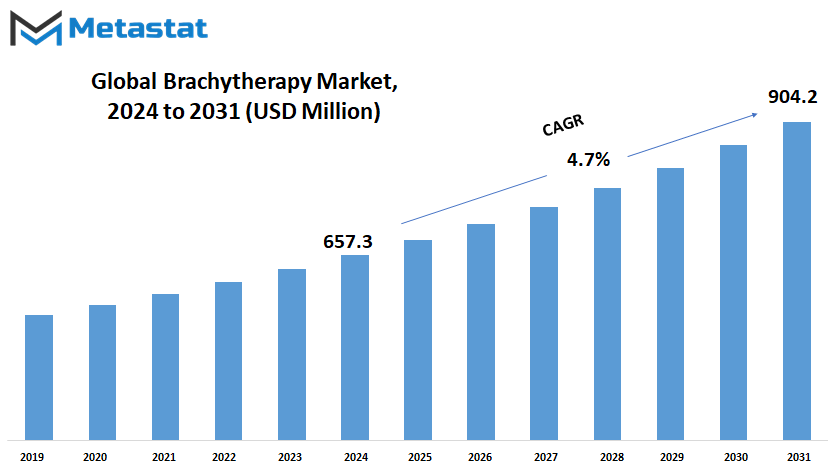
The Global Brachytherapy market is experiencing significant growth due to the rising incidence of cancer worldwide. This surge in demand for effective and targeted cancer treatment options, like brachytherapy, is fueling the market's expansion. Additionally, advancements in brachytherapy equipment and techniques are contributing to improved treatment outcomes and enhanced patient comfort. These factors collectively drive the market forward.
However, challenges persist in the widespread adoption of brachytherapy. High initial setup costs and ongoing maintenance expenses associated with brachytherapy equipment and facilities pose barriers, particularly in healthcare settings with limited resources. Moreover, regulatory complexities and reimbursement challenges in certain regions hinder market growth and limit accessibility to brachytherapy services.
Looking ahead, the development of innovative brachytherapy techniques and devices presents promising opportunities for market expansion and enhanced patient care. Technologies such as image-guided brachytherapy and personalized treatment planning hold the potential to revolutionize cancer treatment, offering tailored solutions and improved outcomes for patients.
In the coming years, the Global Brachytherapy market will likely continue to evolve as technological innovations drive advancements in treatment options. Despite current challenges, the demand for brachytherapy is expected to increase as healthcare providers and patients seek more precise and effective cancer therapies.
Efforts to address cost concerns and regulatory obstacles will be crucial in ensuring the widespread accessibility of brachytherapy services. Additionally, ongoing research and development efforts aimed at refining brachytherapy techniques and devices will further propel market growth and improve patient outcomes.
While the Global Brachytherapy market faces challenges, such as cost constraints and regulatory complexities, the future holds promise for continued growth and innovation. As technology continues to advance and novel treatment approaches emerge, brachytherapy will play an increasingly vital role in the fight against cancer, offering patients effective, targeted, and personalized treatment options.
In the ever-changing landscape of healthcare, one of the most crucial areas of advancement lies in the field of brachytherapy. This specialized form of cancer treatment involves placing radioactive sources directly into or next to the tumor, allowing for targeted radiation therapy with minimal impact on surrounding healthy tissues. As technology continues to advance, the global brachytherapy market is poised for significant growth and innovation.
The global brachytherapy market is segmented by technique, with two main categories: High Dose Rate (HDR) and Low Dose Rate (LDR). In 2019, the HDR brachytherapy segment boasted a value of 363.1 USD million, while the LDR segment reached 142.7 USD million. These figures highlight the substantial investment and demand for both forms of brachytherapy worldwide.
The future of brachytherapy holds great promise. Technological advancements will continue to drive innovation in treatment techniques and equipment, enhancing the effectiveness and accessibility of brachytherapy for patients around the globe. Improved imaging technologies will enable more precise targeting of tumors, minimizing damage to healthy surrounding tissues and reducing side effects for patients.
Additionally, ongoing research and development efforts will lead to the discovery of new radioisotopes and treatment protocols, further expanding the therapeutic options available in brachytherapy. This will not only benefit patients with existing cancers but also open up new avenues for the treatment of previously untreatable conditions.
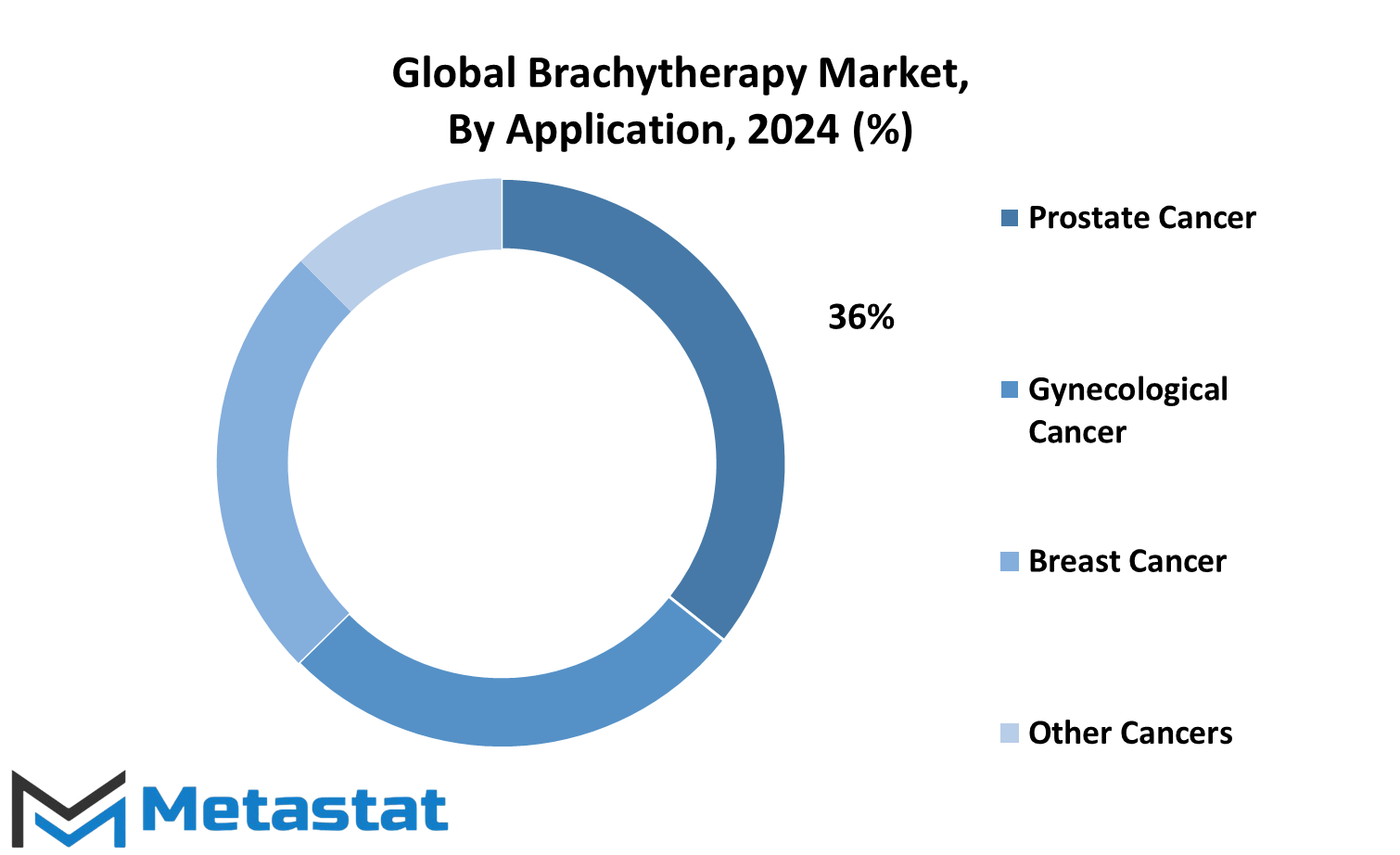
The Global Brachytherapy market is seeing significant growth, and it's anticipated to continue on this trajectory in the future. This market encompasses various applications, including Prostate Cancer, Gynecological Cancer, Breast Cancer, and Other Cancers.
Prostate Cancer, one of the leading cancers affecting men worldwide, is a major segment within the Brachytherapy market. With advancements in medical technology and increased awareness, the demand for brachytherapy as a treatment option for prostate cancer will likely rise. This growth can be attributed to its effectiveness in targeting cancerous cells while minimizing damage to surrounding healthy tissues
Gynecological Cancer, another crucial application area, is expected to contribute significantly to the expansion of the Brachytherapy market. As the medical community continues to explore and develop innovative treatments for gynecological cancers, brachytherapy remains a preferred choice due to its localized approach and reduced side effects compared to traditional radiation therapy.
Breast Cancer, a prevalent cancer among women globally, represents a substantial portion of the Brachytherapy market. With advancements in early detection and personalized medicine, the demand for minimally invasive treatments like brachytherapy is expected to increase. Its ability to precisely target cancerous cells in the breast while preserving healthy tissue makes it an attractive option for both patients and healthcare providers.
The segment of Other Cancers also holds promise for the Brachytherapy market's future growth. As researchers uncover new applications and therapeutic benefits of brachytherapy across various cancer types, the market is poised to expand further. The versatility of brachytherapy in delivering targeted radiation therapy makes it a valuable tool in the fight against cancer, driving its adoption in the treatment of various malignancies.
Brachytherapy, a form of cancer treatment where radioactive sources are placed directly into or near the tumor, has been making significant strides in the medical field. As we peer into the future, the global Brachytherapy market is poised for substantial growth. By dissecting its end users, namely hospitals, specialty clinics, and others, we can gain a clearer understanding of its potential trajectory.
Hospitals, the primary hub for medical treatment, will continue to play a pivotal role in the adoption of Brachytherapy. With their vast infrastructure and resources, hospitals are well-equipped to offer comprehensive cancer care, including Brachytherapy services. As the demand for minimally invasive treatments rises, hospitals will increasingly incorporate Brachytherapy into their oncology departments, ensuring patients have access to advanced treatment options.
Specialty clinics, focused on specific medical areas such as oncology, are also expected to contribute significantly to the growth of the Brachytherapy market. These clinics offer specialized expertise and personalized care, attracting patients seeking targeted cancer treatments like Brachytherapy. With advancements in technology and techniques, specialty clinics will enhance their Brachytherapy offerings, catering to the evolving needs of cancer patients.
The category labeled Others encompasses various healthcare facilities beyond hospitals and specialty clinics. This includes ambulatory surgical centers, cancer treatment centers, and outpatient clinics. While these establishments may not specialize solely in oncology, they will increasingly recognize the value of Brachytherapy as a viable treatment option. As patient preferences shift towards outpatient care and ambulatory procedures, these facilities will integrate Brachytherapy services to meet the demand for convenient and effective cancer treatments.
The global Brachytherapy market, segmented by geography, comprises North America, Europe, Asia-Pacific, South America, and Middle East & Africa. In 2019, the North America Brachytherapy market was valued at 245.0 USD Million. Europe's market, mature and stable in recent years, reached 130.6 USD Million in 2019 and is projected to grow to 183.2 USD Million by 2026.
Looking ahead, the global Brachytherapy market is expected to continue its growth trajectory. By considering the end-user perspective, the market is further divided into hospitals, specialty clinics, and other sectors.
Hospitals play a pivotal role as a primary end user of Brachytherapy treatments. With advancements in medical technology and increasing awareness, hospitals are anticipated to maintain their prominent position in utilizing Brachytherapy for various medical conditions.
Specialty clinics, focusing on specific medical areas, are also significant contributors to the Brachytherapy market. These clinics offer specialized treatments and personalized care, making them an essential component of the healthcare ecosystem.
Additionally, other end-user sectors, encompassing various healthcare facilities and providers, contribute to the widespread adoption of Brachytherapy. As the demand for effective cancer treatment options continues to rise, these diverse end-user segments are poised to drive the growth of the Brachytherapy market globally.
The Brachytherapy market, segmented by end users, is expected to witness sustained growth in the coming years. Hospitals, specialty clinics, and other healthcare facilities will continue to play pivotal roles in shaping the future landscape of Brachytherapy usage, catering to the increasing demand for innovative and effective cancer treatment options worldwide.
The Global Brachytherapy market boasts a diverse array of competitive players driving innovation and advancement in the field. These key players include AngioDynamics Inc., Argon Medical Devices Inc., Becton, Dickinson, and Co., CIVCO Medical Solutions, Eckert & Ziegler BEBIG, Elekta AB (pub), Hologic, Inc., iCAD, Inc., IsoAid, Merit Medical Systems Inc., Siemens AG, Sun Nuclear Corporation, Theragenics Corporation, Varian Medical Systems, Inc, Mayo Foundation, PTW Freiburg GmbH, Best Medical International, and BXTAccelyon Limited.
Each of these companies brings its own expertise and resources to the table, contributing to the dynamic landscape of Brachytherapy. With a focus on research and development, these players are continually pushing the boundaries of what is possible in the field, driving innovation and improving patient outcomes.
In the future, we can expect to see even more competition among these players as the demand for Brachytherapy continues to rise. Advances in technology and medical science will pave the way for new treatment options and techniques, further fueling the competitive spirit among these industry leaders.
Moreover, as the global healthcare landscape evolves, these key players will need to adapt to changing regulations and market dynamics. This may involve strategic partnerships, acquisitions, or diversification of product offerings to maintain a competitive edge.
One area of particular interest is the integration of artificial intelligence (AI) and machine learning into Brachytherapy technology. By leveraging AI algorithms to analyze patient data and optimize treatment plans, these companies can potentially improve treatment efficacy and reduce side effects.
Furthermore, with the increasing emphasis on personalized medicine, we may see a shift towards more targeted and precise Brachytherapy treatments. This could open up new opportunities for innovation and differentiation among the competitive players in the market.
Overall, the Global Brachytherapy market is characterized by intense competition and a drive towards innovation and excellence. With a diverse array of key players vying for market share, the future promises exciting advancements and breakthroughs in the field of Brachytherapy, ultimately benefiting patients worldwide.
Find answers to common questions about this report
Global Brachytherapy market is valued at $657.3 million in 2024.
Global Brachytherapy market is estimated to grow with a CAGR of 4.7% from 2024 to 2031.
Global Brachytherapy market is estimated to reach $904.2 million by 2031.
Top players operating in the Brachytherapy industry includes AngioDynamics Inc., Argon Medical Devices Inc., Becton, Dickinson, and Co., CIVCO Medical Solutions, and Others.
The analysts below cover Medical Devices research at Metastat Insights.
LEAD ANALYST
Utkarsh Khirodkar is a Lead Market Research Analyst at MetaStat Insight, specializing in market intelligence, technology sector assessments, and competitive strategy.

LEAD PRINCIPAL ANALYST, PHARMA AND HEALTHCARE
Food and Beverages · Healthcare · Healthcare IT · Medical Devices
Ajay Devgire is the Lead Healthcare Analyst at MetaStat Insight, leading strategic research and market intelligence initiatives across the global healthcare domain.

SENIOR RESEARCH ANALYST
Biotechnology · Food and Beverages · Medical Devices · Packaging
Snehal Pasalkar is a Research Analyst at MetaStat Insight, operating at the intersection of life sciences research, competitive strategy, and market intelligence.
Our team was tracking whether regional recycling infrastructure could realistically absorb the growing volume of lithium iron phosphate batteries over the next decade. The report did a solid job separating announced hydrometallurgical plant capacity from active, permitted operational throughput. That distinction made the feedstock availability projections and regional recovery rate models far more credible than standard commercial overviews.
Tracking capacity expansion in single-use bioprocessing requires dependable data on raw material availability and cleanroom-grade polymer supply chains. The competitive landscape chapter gave a grounded evaluation of secondary component suppliers across North America and Asia-Pacific rather than simply reprinting press releases. Having that level of supplier benchmarking helped clarify dual-sourcing considerations for our clinical pipeline planning.
When evaluating distributed energy resource management systems, standard research summaries tend to gloss over the operational differences between front-of-the-meter utility deployments and behind-the-meter industrial sites. The MetaStat Insight report addressed those distinctions directly, especially regarding software interoperability standards and grid interconnection backlogs. The five-year market sizing across regional transmission organizations provided actionable context for our grid modernization strategy.
Explore related market intelligence reports worth reading alongside this one.
Starting from
$2950