
LEAD ANALYST
Utkarsh Khirodkar is a Lead Market Research Analyst at MetaStat Insight, specializing in market intelligence, technology sector assessments, and competitive strategy.

Global Cable Management System Market Size, Share, By Product Type (Cable Tray Systems, Cable Ladder Systems, Cable Trunking & Raceway Systems, Conduit Systems, Cable Clips, Clamps & Fasteners, Cable Ties & Bundling Systems, Cable Glands & Cable Entry Systems, Cable Carriers & Energy Chains, Underfloor Cable Management Systems), By Material (Steel, Stainless Steel, Aluminum, PVC/uPVC, Polyamide/Nylon, Polyethylene & Polypropylene, FRP/GRP, Brass), By Installation Channel (Wall & Perimeter Surface-Mounted, Ceiling & Overhead, Underfloor & Floor-Mounted, Concealed & In-Wall, Underground & Buried, Panel & Enclosure-Mounted, Machine, Equipment & Dynamic-Motion Installations), By End-Use Industry (Commercial Buildings, Residential Buildings, Data Centers & Telecommunications, Manufacturing & Industrial Automation, Energy & Utilities, Oil & Gas & Petrochemicals, Transportation Infrastructure, Mining & Metals, Healthcare, Education & Public Facilities), Industry Analysis, Growth, Trends, and Forecast, 2026-2033
Report ID
MSI-5376
Published
September, 2026
Pages
264 Pages
Format
Historical
Base year
Forecast
Forecast period
Report Details
Market Valuation: Valued at $28 Billion in 2025, projected to reach $53 Billion by 2033 at a 8.3% CAGR.
Dominant Segment: Cable Tray Systems lead the market, driven by the increasing demand for effective power distribution and organization within commercial buildings and data centers.
Geographic Lead: The Asia Pacific region is experiencing the fastest growth, fueled by substantial investments in infrastructure modernization and the expansion of data centers.
What's Inside: The report provides comprehensive coverage of market dynamics, competitive landscape, and detailed segmentation by product type, material, installation channel, and end-use industry.
Emerging Regional Demands: Countries in North America and Asia Pacific are investing heavily in infrastructure projects, creating significant opportunities for advanced cable management solutions.
Choose Your License
Global Cable Management System Market
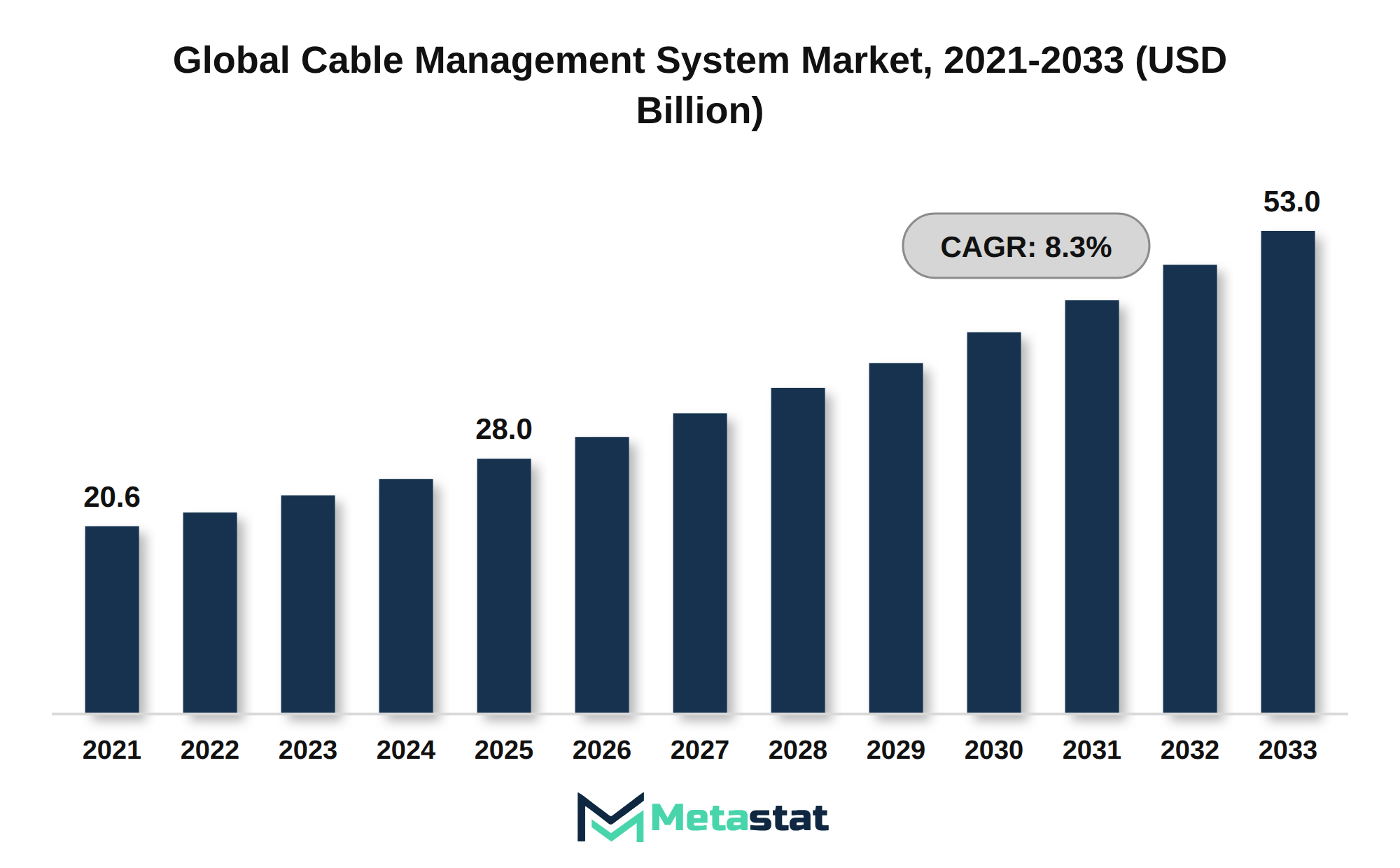
The global Cable Management System market was valued at USD 28 billion in 2025 and is projected to reach USD 53 billion by 2033, growing at a CAGR of 8.3% over the forecast period.
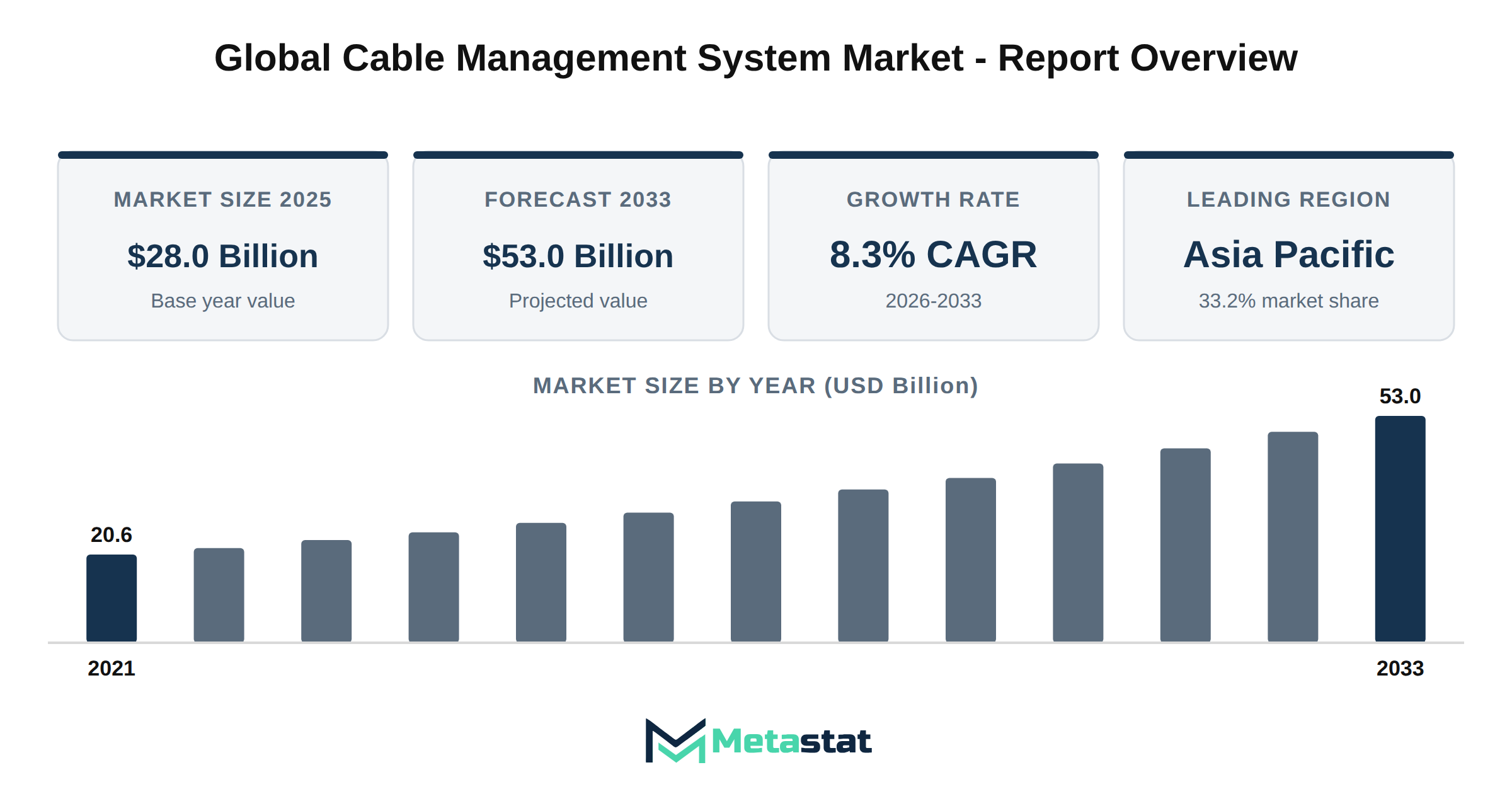
The global Cable Management System market reached USD 28 billion in 2025 and is projected to expand to USD 53 billion by 2033, marking a compound annual growth rate (CAGR) of 8.3%. Historical data indicates growth from USD 20.6 billion in 2021 to USD 25.8 billion in 2024, with a significant jump to USD 28 billion in 2025.
Demand for cable management solutions arises from various industries, including commercial buildings, data centers, and industrial automation. The transition towards electrification in commercial buildings and the expansion of data centers contribute to the increasing need for effective cable routing and management systems. The market benefits from innovations in cable tray, raceway, conduit, and fastening systems, which enhance installation efficiency and reliability.
Smart cable management solutions emerge because a crucial trend, aligning with modern infrastructure requirements. These systems offer enhanced monitoring and control capabilities, addressing the growing complexity of cabling in urban environments. The adoption of tool-free and labor-saving installation methods enhances operational efficiency and reduces installation time, driving market growth.
Industrial automation continues to push the demand for effective cable management solutions, particularly in manufacturing settings where machinery requires intricate cabling systems. Concurrently, the renewable energy sector presents opportunities for cable management systems, driven by investments in sustainable infrastructure.
Transportation infrastructure development necessitates robust cable management solutions to support various transportation systems. Fire-resistant and safety-compliant cable management products ensure adherence to regulatory standards, addressing safety concerns in critical applications.
Sustainable and recyclable materials in cable management systems become increasingly important, reflecting a broader commitment to environmental responsibility. The adoption of materials including steel, aluminum, PVC, and composites varies among manufacturers, influencing product offerings and pricing strategies. Fluctuations in raw material costs impact pricing trends within the market, necessitating strategic adjustments by suppliers.
The Cable Management System market experiences significant growth driven by advancements in technology and increasing demand for efficient cable routing solutions. The expansion of data centers drives a notable increase in demand for cable management systems. These facilities require organized and efficient cable layouts to optimize performance and facilitate maintenance.
Industrial automation contributes to market growth, with manufacturers seeking effective cable management solutions to support machinery and equipment operations. The shift towards electrification in commercial buildings necessitates enhanced cable routing systems to ensure safety and reliability.
Renewable energy infrastructure development creates new opportunities for cable management. The integration of solar and wind energy systems requires specialized cable organization to maintain efficiency and compliance with safety standards. Transportation infrastructure projects fuel demand for cable management systems, addressing the need for reliable cable routing in various applications.
Fire-resistant and safety-compliant cable management solutions have become crucial, ensuring that installations meet regulatory requirements and provide safety in critical environments. The market sees a growing trend toward sustainable and recyclable materials in cable management systems, reflecting increased awareness of environmental impacts and the need for responsible sourcing.
Material adoption trends indicate a significant shift towards steel, aluminum, PVC, and composite materials, driven by their unique properties and applications in various settings. Pricing dynamics and raw material costs play a crucial role in shaping market strategies, influencing the competitive landscape and product offerings.
Global developments in the supply chain for cable management systems affect availability and pricing. Manufacturers adjust to fluctuating costs and demand patterns. The competitive landscape features ongoing product portfolio expansions, highlighting the need for innovation and adaptation to market trends.
Future growth opportunities in the Cable Management System market lie in modular and flexible solutions, addressing the demands of evolving infrastructure needs. High-density cable management solutions for data centers and telecom networks emphasize the market's focus on efficiency and space management.
Cable management solutions tailored for harsh industrial environments support the growing need for durability and reliability in challenging conditions. Investment in digital infrastructure significantly impacts cable management demand, aligning with broader trends in technology and connectivity.
Increasing infrastructure development significantly influences the Cable Management System market. Enhanced capital investments in various sectors, including commercial and industrial facilities, create a rising demand for efficient cable management solutions. The focus on modernizing physical assets, upgrading network capabilities, and expanding digital infrastructures necessitates robust cable management systems to ensure safety and operational efficiency.
Investment in new technologies and digital transformation initiatives stimulates market expansion. Companies adopt automation and advanced solutions to streamline operations and enhance productivity, driving the need for effective cable management systems. This trend is evident in sectors including data centers and telecommunications, where the integration of advanced systems supports business continuity and operational resilience.
Shifting demographic patterns and urbanization contribute to the rising demand for cable management solutions within residential and commercial buildings. An increasing population in urban areas drives the construction of new facilities, which require efficient cable management to support growing electrical demands. Overall, these factors collectively drive the growth of the cable management system market, positioning it for continued expansion through 2033.
Rapid digital transformation initiatives significantly influence the Cable Management System market. Companies increasingly adopt advanced technologies including automation and artificial intelligence to streamline operations and enhance efficiencies. This integration of technology enables businesses to digitize legacy processes, resulting in improved operational performance and reduced costs.
Investment in digital solutions aligns with macro-economic factors that enhance capital investment environments. Growing GDP and venture funding increase the financial resources available for digital initiatives. Enhanced spending power in public-private partnerships accelerates infrastructure growth, creating a robust demand for cable management systems.
Consumer behaviors reflect a shift towards more advanced, connected environments. Urbanization and evolving lifestyles drive the need for sophisticated cable management solutions that support smart buildings and data centers. The increasing complexity of electrical and telecommunications systems necessitates effective cable management strategies, ultimately supporting strengthening demand within the market.
Compliance hurdles create challenges for the Cable Management System market, affecting adoption rates and operational efficiency. Stringent regulations require manufacturers to invest in advanced technologies and processes to meet safety and environmental standards. These compliance requirements impose additional costs, which suppliers pass on to customers, resulting in higher prices for end-users.
Capital investment requirements associated with upgrading facilities and ensuring compliance with legal mandates restrict market entry for smaller players. This situation creates a competitive landscape dominated by established companies with the financial resources to navigate these hurdles. Consequently, reduced competition leads to slower innovation and limits product diversity.
Macroeconomic headwinds, including inflationary pressures and supply chain disruptions, complicate the regulatory landscape. Rising costs of raw materials and logistics create operational challenges for manufacturers, contributing to extended lead times and delivery bottlenecks. This situation hinders the ability of companies to respond swiftly to market demands, affecting the overall growth trajectory of the Cable Management System market.
Geopolitical instability leads to resource scarcity, impacting production capabilities and availability of key materials. External factors create uncertainties that complicate planning and investment in new projects. Buyers become reluctant to commit to long-term projects, resulting in fluctuating demand and affecting the market's stability.
The combination of regulatory compliance hurdles, capital requirements, and external pressures creates significant challenges for the Cable Management System market. Addressing these issues requires strategic planning and investment to ensure that players remain competitive while adapting to an evolving regulatory environment.
Geopolitical fragmentation significantly impacts the Cable Management System market by creating uncertainty in trade relationships and supply chains. Countries engaged in trade conflicts impose tariffs that increase costs for manufacturers and create barriers to international market entry. This situation pressures suppliers to navigate complex customs regulations, disrupting the flow of materials essential for production. Industries relying on imported components face rising expenses due to these tariffs, which inevitably affect pricing strategies and overall profitability.
Technological disruptions introduce challenges in integrating new cable management solutions with existing systems. Companies engaged in research and development adapt to rapid advancements while managing interoperability issues between aging and emerging technologies. Failure to achieve compatibility leads to decreased adoption rates among customers who remain hesitant to invest in solutions that do not guarantee future-proof performance.
The demand for sustainability increases operational pressures within the market. Companies face expectations to meet stringent environmental standards while balancing the costs associated with sustainable practices. Rising input costs, driven by material volatility and compliance overhead, constrain profit margins. Businesses strive to retain competitive pricing. Talent retention pressures due to skill gaps further complicate production processes, impacting innovation and operational efficiency.
Infrastructure gaps and implementation bottlenecks present additional challenges for market participants. Regions lacking modern infrastructure complicate the deployment of advanced cable management systems, pushing costs higher and delaying project timelines. Consequently, investments in retrofitting outdated facilities become essential for meeting evolving market demands and ensuring compliance with increasing regulatory standards.
Cybersecurity risks associated with data vulnerabilities heighten concerns for companies in the market. With increasing reliance on digital solutions, protecting sensitive information remains critical. Vulnerabilities lead to significant financial losses and reputational damage, ultimately impacting customer trust and market positioning. Thus, addressing these risks becomes a priority for suppliers aiming to maintain a competitive edge in the Cable Management System market.
Growing regional demands significantly enhance opportunities within the Cable Management System market. Countries in Asia Pacific and North America are investing heavily in infrastructure modernization, creating a strong need for efficient cable management solutions. This investment leads to heightened demand for advanced products tailored to specific regional requirements, allowing suppliers to capitalize on emerging trends.
Technological disruptions contribute to opportunities by driving innovation in materials and installation techniques. The increasing adoption of automation and smart technologies drives the need for cable management systems that integrate seamlessly with next-generation solutions. This integration enhances operational efficiency and provides significant value to end-use industries including manufacturing and telecommunications.
Sustainability imperatives influence market dynamics, reflecting companies' alignment with environmental, social, and governance (ESG) objectives. A shift towards eco-friendly materials and practices creates demand for cable management systems that prioritize sustainability. The focus on green transformations increases the importance of product features that minimize environmental impact, attracting buyers focused on long-term sustainability goals.
Downstream market diversification enables suppliers to explore niche applications, further expanding their reach. By developing specialized solutions for sectors like healthcare and transportation infrastructure, companies tap into previously underserved markets. This strategy increases revenue potential and enhances competitive positioning in the Cable Management System market.
Strategic consolidation through mergers and acquisitions offers another pathway for growth, allowing companies to enhance their product portfolios and market presence. Collaborative efforts among industry players facilitate broader distribution networks and enhanced service offerings, which ultimately benefit end users. Such strategies align with evolving buying behaviors, where customers seek integrated solutions that provide comprehensive value.
The Global Cable Management System market is segmented based on Product Type, Material, Installation Channel, and End-Use Industry.
Cable Tray Systems segment is valued at USD 5.3 billion in 2026 and is projected to reach USD 8.8 billion by 2033, at a CAGR of 7.6% during the forecast period. Continued growth in infrastructure projects, particularly in commercial buildings and data centers, drives demand for reliable cable management solutions. The push for effective power distribution and organization within facilities fuels interest in cable tray systems, characterized by their ability to support structured cabling and enhance safety by managing cable pathways efficiently.
Technological advancements play a vital role in the evolution of cable tray systems. Innovations in materials, including the introduction of lightweight yet durable options, enhance the functionality and application versatility of these systems. End-users increasingly prefer customizable solutions that accommodate specific project requirements, creating opportunities for manufacturers to offer tailored products that address unique installation challenges.
Regulatory compliance and industry standards further influence the adoption of cable tray systems. Compliance with safety and electrical codes, especially in high-density environments, necessitates the implementation of robust cable management solutions that minimize risks associated with cable mishandling. This factor underscores the importance of manufacturers staying ahead of evolving regulations to maintain market relevance.
While industries shift towards more sustainable practices, demand for environmentally friendly materials within cable management solutions is rising. Manufacturers are responding to this trend by exploring eco-friendly materials that align with sustainability goals, further enhancing market appeal. The Cable Management System market, particularly within the cable tray systems segment, demonstrates significant growth potential driven by technological advancements, regulatory compliance, and sustainability initiatives.
Cable Ladder Systems segment is estimated to reach USD 6.1 billion by 2033, at a CAGR of 7.6% during the forecast period. Factors driving demand for Cable Ladder Systems include the increasing need for efficient cable management in commercial and industrial applications, where reliable and organized cable solutions enhance operational efficiency and safety. Adoption of advanced technologies in the manufacturing of cable management systems contributes to product evolution, enabling manufacturers to introduce innovative designs and materials that meet the evolving demands of end-users.
The segment benefits from the growth of data centers and telecommunications infrastructure, which require robust cable management solutions to support high-capacity data transmission. Regulatory compliance standards in various industries necessitate the use of cable management systems that ensure safety and reliability, further driving demand. The trend of modular construction in buildings has shifted consumption patterns, favoring flexible and adaptable solutions like Cable Ladder Systems, which facilitate easier installation and maintenance.
Market dynamics indicate a growing focus on sustainability and cost-effectiveness, leading manufacturers to explore alternative materials and production processes that reduce environmental impact while maintaining performance standards. Pricing volatility of raw materials, including steel and aluminum, presents challenges that influence profit margins within the segment. Strategic investment opportunities arise through technological advancements and innovation, enabling companies in the market to enhance their product offerings and address specific customer needs effectively.
Cable Trunking & Raceway Systems exhibit significant growth potential within the Cable Management System market, driven by increasing demand for organized and efficient cable management solutions across various industries. This segment benefits from expanding infrastructure projects and technological advancements that require effective cable routing and protection. Investments in data centers and telecommunications stimulate market expansion for these systems.
The segment is expected to reach USD 7 billion by 2033, reflecting a strong trajectory fueled by the rising necessity for compliance with safety regulations and industry standards. An enhanced focus on minimizing installation time and costs, alongside rising awareness of aesthetic and functional benefits, contributes to adoption rates. Various end-use industries, including commercial and residential buildings, actively seek innovative cable management solutions, reinforcing demand.
Technological maturation and next-generation upgrades drive product evolution, enabling manufacturers to introduce advanced materials and designs that enhance performance. Strategies focusing on supply chain resilience and raw material sourcing remain critical, especially with fluctuating prices and potential disruptions. The market for Cable Trunking & Raceway Systems continues to evolve, offering strategic opportunity windows for stakeholders keen on capitalizing on these emerging trends.
Significant investments in infrastructural development drive the demand for conduit systems within the Cable Management System market. Rapid growth in various sectors, including telecommunications and industrial automation, supports the adoption of these systems owing to their ability to efficiently manage and protect electrical wiring and cables.
Conduit systems improve safety and organization, addressing the increasing need for reliable electrical infrastructure. Regulatory compliance standards, including safety and installation guidelines, further enhance the necessity for these products across multiple industries. The conduit systems segment is projected to grow at a CAGR of 7.5% during the forecast period.
Technological advancements, including the development of higher durability materials and innovative designs, stimulate product evolution within this segment. The demand for environmentally sustainable options pushes manufacturers to explore new materials and designs, ensuring long-term viability and competitive edge. Investment in research and development drives the introduction of next-generation conduit systems that meet modern requirements for efficiency and safety.
End-use dynamics, particularly in commercial and industrial sectors, highlight the importance of conduit systems in maintaining operational efficiency. Manufacturers face growing pressures from cost structures and pricing volatility resulting from raw material sourcing becoming increasingly competitive. Strategic opportunity windows arise because companies seek to enhance supply chain resilience and adapt to shifting market conditions.
Strong demand for Cable Clips, Clamps & Fasteners arises from the increasing focus on efficient cable management practices across various industries. The growing need for organized and safe cable installations promotes adoption within commercial and residential buildings. Enhanced safety standards and regulatory compliance in electrical installations further stimulate demand for reliable fastening solutions, contributing to the segment's significance within the broader Cable Management System market.
Technological advancements encourage product evolution, leading to innovative designs and materials that improve functionality and durability. The introduction of next-generation upgrades enhances the performance of cable clips and clamps, facilitating their integration into complex infrastructural projects. This evolution aligns with trends observed in data centers and telecommunications, where efficient cable management is essential for operational effectiveness.
Consumer preferences increasingly shift toward high-quality, aesthetically pleasing cable management solutions. This shift results in heightened competition among manufacturers to deliver products that meet evolving end-user expectations. The supply chain resilience of manufacturers ensures consistent availability of these products, positioning them to capitalize on emerging opportunities within the market.
The cost structures associated with raw material sourcing and production significantly influence pricing strategies. Fluctuations in the prices of materials, including stainless steel and plastic, create pricing volatility that impacts profit margins. Manufacturers focus on optimizing their supply chains to mitigate these risks and maintain competitiveness.
Challenges involving logistical vulnerabilities and substitution risks require strategic responses from industry players. Developing alternative materials and sourcing strategies addresses these challenges, ensuring sustained growth in the Cable Management System market. Continued investment in R&D plays a crucial role in driving innovation and enhancing product offerings to meet future market demands.
Growth in the Cable Ties & Bundling Systems segment is driven by increasing demand for effective organization and management of cables in various applications. Industries including commercial buildings and residential developments emphasize the importance of efficient cable management solutions to enhance safety and functionality. The focus on operational efficiency and aesthetics in installations fuels the adoption of advanced bundling systems, which provide streamlined and tidy cable arrangements.
Technological advancements play a significant role in segment evolution, with innovations improving the design and functionality of cable ties and bundling solutions. Next-generation products incorporate materials that offer enhanced durability and resistance to environmental factors, catering to diverse end-use requirements. Regulatory compliance and safety certifications influence market dynamics, ensuring that products meet stringent industry standards.
Investment in infrastructure and smart building technologies supports the expansion of this segment. The transition towards energy-efficient and connected environments drives demand for sophisticated cable management systems, positioning the segment for growth in the years to come. The Cable Management System market benefits from this positive outlook, reflecting a robust trajectory driven by industries seeking reliable and innovative solutions.
Growing awareness regarding the importance of effective cable management solutions increases demand for Cable Glands & Cable Entry Systems. These systems provide essential protection and control for electrical and data cables, ensuring operational efficiency in various environments. Industries including telecommunications and manufacturing increasingly rely on these solutions to safeguard cables from environmental hazards, contributing to market expansion.
Technological advancements drive the evolution of Cable Glands & Cable Entry Systems, with innovations enhancing product functionality and reliability. The integration of smart technologies within these systems supports real-time monitoring and management, appealing to end-users seeking improved performance. Regulatory compliance standards influence the adoption of advanced cable management solutions, ensuring safety and reliability across applications.
Cost structures associated with Cable Glands & Cable Entry Systems reflect the materials and technologies employed in their manufacture. Pricing volatility in raw materials impacts final product prices, affecting overall market dynamics. Strategic opportunities exist for manufacturers to optimize production processes and mitigate cost pressures, enabling competitive pricing and improved margins in the market.
Supply chain resilience remains a critical factor influencing the availability and distribution of Cable Glands & Cable Entry Systems. Reliable sourcing of raw materials and effective logistics management allows manufacturers to meet growing demand. The presence of disruptive alternatives within the cable management ecosystem highlights the need for continuous innovation and adaptation to maintain market relevance.
Investment in capital improvements ensures the longevity and performance of Cable Glands & Cable Entry Systems. Next-generation upgrades and product evolution cater to diverse applications, including industrial, commercial, and residential sectors. These developments align with broader trends in the Cable Management System market, driving long-term growth and sustainability.
Growth in the Cable Carriers & Energy Chains segment stems from increasing demand for efficient and organized cable management solutions across various industries. Adoption of these systems aligns with the need for enhanced operational efficiency and safety in environments including manufacturing, telecommunications, and data centers. The segment experiences significant expansion catalysts through advancements in technology, facilitating streamlined installations and improved performance capabilities. Enhanced product evolution, including next-generation upgrades, is essential in meeting the dynamic requirements of end-users.
The market faces consumption shifts driven by a growing focus on sustainability and environmental standards, prompting manufacturers to develop more eco-friendly materials and production methods. Regulatory compliance standards around safety and efficiency further influence product development, compelling suppliers to innovate and adapt. Pricing volatility affects margins and competitive positioning within the segment, making cost structures a critical factor.
Supply chain resilience becomes increasingly important, particularly regarding raw material sourcing and logistics vulnerabilities that could disrupt the availability of products. The potential for substitution risks exists, especially with disruptive alternatives emerging in response to market demands. Strategic opportunity windows arise for companies that invest in technological advancements and white-space analysis, identifying gaps in the market that align with evolving customer preferences. Overall, the Cable Management System market benefits from these dynamics, positioning the Cable Carriers & Energy Chains segment for continued relevance and growth.
Growing interest in efficient space utilization within buildings drives demand for Underfloor Cable Management Systems. These systems support the organization and protection of cables in a discreet manner, enhancing aesthetics while ensuring safety and accessibility. Increasing adoption of smart building technologies contributes to the expansion of this segment, driven by integrated systems that require advanced cable management solutions to function optimally.
Technological advancements in cable management solutions lead to continuous product evolution. Innovations in materials and designs enhance performance, durability, and flexibility, appealing to a wide range of end-use industries. The trend towards environmentally friendly materials shapes the development of new products, aligning with sustainability goals across multiple sectors.
Regulatory compliance and industry certifications significantly influence market dynamics, ensuring that products meet safety and performance standards. This compliance builds confidence among consumers and businesses, encouraging broader adoption of Underfloor Cable Management Systems. The ongoing emphasis on safety within commercial and residential building projects reinforces the necessity for compliant cable management solutions.
While end-use dynamics evolve, sectors including data centers and telecommunications display heightened interest in underfloor solutions. The shift towards increased digital connectivity and high-capacity networks necessitates robust and efficient cable management systems, driving further growth in the segment. This trend indicates strong potential within the market for future investments and innovations.
Demand for the Others (J-Hooks, Cable Sleeves, Support Accessories) sub-segment benefits from the increasing focus on efficient cable management solutions across various industries. Adoption of these accessories enhances organizational capabilities in managing and supporting cable infrastructure, aligning with broader trends observed in the Cable Management System market. The versatility of these products in addressing unique installation needs contributes to their appeal among end-users seeking customized solutions.
Technological advancements play a significant role in the evolution of these products, leading to enhanced designs that improve functionality and ease of installation. The integration of innovative materials and manufacturing techniques supports the development of next-generation accessories that meet evolving industry standards. The growing emphasis on regulatory compliance and safety standards drives demand for reliable and certified cable management products, including accessories, among manufacturers and end-users.
Shifts in consumption patterns highlight an increasing preference for sustainable and eco-friendly materials in the manufacturing of cable management accessories. This trend drives procurement strategies among companies, encouraging them to prioritize suppliers who align with sustainability criteria. These dynamics create a competitive landscape where innovation and product differentiation become crucial for success.
The Others (J-Hooks, Cable Sleeves, Support Accessories) sub-segment reflects a responsive approach to changing market demands, leveraging technological innovation and sustainability trends to enhance its value proposition within the overall Cable Management System market.
Valued at USD 8.9 billion in 2026, the steel segment is projected to reach USD 14.7 billion by 2033, at a CAGR of 7.5% during the forecast period. This growth results from increasing demand for durable and strong materials in various end-use industries, particularly in commercial buildings and manufacturing sectors. A rise in infrastructure projects across regions drives expansion within the steel segment, because companies seek effective cable management solutions to ensure safety and efficiency.
Technological advancements in steel production enhance the quality and performance of cable management systems. Innovations in material processing and coating technologies improve corrosion resistance, contributing to increased adoption rates within the market. Shifts towards sustainable construction practices position steel because a preferred material due to its recyclability and longevity.
The demand for steel cable management systems aligns with emerging regulatory compliance standards and certifications that prioritize safety and efficiency. Companies in the market focus on meeting these standards to maintain a competitive edge and secure new business opportunities. This strategic alignment with regulations enhances consumer confidence in steel-based solutions.
Fluctuations in raw material pricing and supply chain vulnerabilities pose challenges to the steel segment. Manufacturers are adopting strategies to mitigate these risks by diversifying their sourcing and enhancing supply chain resilience. Such measures enable firms to maintain consistent production levels and stabilize pricing, ultimately supporting sustained growth in the cable management system market.
Demand for stainless steel products in the Cable Management System market stems from their durability and resistance to corrosion, making them suitable for various environments. Industries including commercial construction, data centers, and manufacturing increasingly adopt stainless steel solutions for their reliability and aesthetic appeal. The heightened focus on sustainability influences this trend, since stainless steel is recyclable and aligns with environmentally-friendly construction practices.
The stainless steel segment is estimated to reach USD 6.6 billion by 2033, at a CAGR of 8.8% during the forecast period. The expansion of data centers and telecommunications infrastructures fuels demand, driven by the requirement for robust cable management systems to maintain efficiency and safety. Regulatory compliance standards regarding fire safety and electrical management increase the need for high-quality materials, including stainless steel, to fulfill stringent guidelines.
Cost structures related to stainless steel products are influenced by raw material sourcing and pricing volatility. The market benefits from a stable supply chain, although fluctuations in raw material prices pose challenges. Strategic opportunity windows exist for manufacturers to innovate through product evolution, enhancing existing solutions and integrating advanced technologies to improve cable management efficiency. Continuous investment in research and development will support growth in the stainless steel segment, because companies seek to differentiate their offerings within the competitive environment.
Demand for aluminum products within the Cable Management System market reflects growing trends in lightweight and corrosion-resistant materials across various applications. The segment is expected to reach USD 6.1 billion by 2033, driven by increased utilization in commercial and industrial sectors, where durability and weight considerations are critical. Industries including telecommunications, data centers, and manufacturing rely heavily on aluminum due to its favorable property profile, including strength-to-weight ratio and resistance to environmental factors.
Technological maturation in aluminum processing facilitates enhancements in product design and performance, aligning with next-gen upgrades in cable management solutions. Adoption of advanced manufacturing techniques lowers production costs and enhances product availability, positively influencing the overall market dynamics. Regulatory compliance standards regarding fire safety and environmental sustainability further increase demand for aluminum products, driven by manufacturers and end-users prioritizing compliant solutions.
End-use dynamics in the Cable Management System market indicate a shift towards integrated solutions that incorporate aluminum components, enhancing efficiency and functionality. With these trends, aluminum is well-positioned to capture an increasing share of the market, reflecting the rising demand for effective cable management solutions across diverse applications and industries.
PVC/uPVC products are gaining traction within the cable management sector owing to their cost-effectiveness and versatility in various applications. This material offers excellent resistance to corrosion and chemicals, making it suitable for many environments. Increasing awareness regarding the importance of safety and compliance with stringent regulatory standards further drives the demand for PVC/uPVC solutions. Technological advancements in manufacturing processes are enhancing the performance characteristics of these materials, ensuring they meet evolving end-user requirements.
The PVC/uPVC segment is projected to grow at a CAGR of 7.3% during the forecast period. A growing focus on efficient cable management in commercial and residential buildings supports this growth, because end-users seek to optimize safety and functionality. Rising urbanization and infrastructure projects are expected to increase the overall demand for cable management systems across various industries. This segment significantly influences the broader dynamics of the Cable Management System market, creating significant opportunities for manufacturers and suppliers.
Emerging applications of Polyamide/Nylon within the Cable Management System market highlight its versatility and durability, essential for modern infrastructure solutions. This material's strength and resistance to environmental factors position it favorably in demanding environments including data centers and industrial facilities. The increasing adoption of innovative construction techniques and advanced materials fuels the demand for Polyamide/Nylon products.
Technological advancements contribute significantly to segment evolution. Enhanced manufacturing processes improve product features, including flexibility and resistance to wear, further attracting buyers. Regulatory compliance standards emphasize the need for reliable and durable materials in construction, influencing purchasing decisions across various end-use industries.
Shifts in consumption patterns indicate a growing preference for lightweight yet robust cable management solutions. Industries focused on energy efficiency and sustainability view Polyamide/Nylon products favorably due to their lightweight characteristics and long lifecycle. These trends enhance market penetration and create strategic opportunity windows for suppliers.
Supply chain resilience remains critical owing to raw material sourcing impacts on pricing and availability. Fluctuations in the cost structure pose challenges. Strategic partnerships with manufacturers mitigate risks associated with logistics vulnerabilities. Continuous investment in product development and innovation strengthens the competitive position of firms supplying Polyamide/Nylon solutions within the market.
Polyethylene and polypropylene materials play a vital role in the Cable Management System market by addressing specific needs for lightweight yet durable solutions. Increasing demand for flexible and corrosion-resistant materials drives their adoption across several applications, particularly where environmental exposure is a concern. The trend towards sustainable building practices further enhances the appeal of polyethylene and polypropylene, because these materials contribute to achieving green building certifications.
Product evolution in this segment focuses on enhancing resistance to temperature extremes and chemical exposure, making polyethylene and polypropylene suitable for diverse environments. Applications in commercial buildings and residential sectors highlight the end-use dynamics, where these materials improve installation efficiency and reduce overall weight. Consumption shifts reflect a growing preference for lightweight materials that facilitate easy handling and installation, resulting in reduced labor costs and installation time.
Regulatory compliance and environmental standards increasingly influence material selection, pushing manufacturers towards the adoption of polyethylene and polypropylene due to their recyclability and reduced environmental impact. This alignment with sustainability initiatives supports the market's expansion potential. Strategic opportunity windows emerge from ongoing technological maturation, prompting innovations that improve performance standards in cable management systems.
Interest in FRP/GRP materials within the Cable Management System market stems from their unique properties, including corrosion resistance and lightweight characteristics. These materials cater to demanding environments including chemical plants, marine applications, and other industrial sectors where traditional materials fail.
Technological maturation plays a critical role in the adoption of FRP/GRP products. Advances in manufacturing techniques enhance the quality and performance of these materials, resulting in increased applications across various industries. The growing trend towards sustainable and environmentally-friendly solutions drives the development of FRP/GRP products.
End-use industries prioritize efficiency and durability, driving demand for reliable cable management solutions. Adoption of FRP/GRP products aligns with these needs, offering long-lasting performance in challenging conditions. The evolution of product designs that integrate these materials supports their uptake in the market.
Regulatory compliance standards increasingly favor materials that minimize environmental impact and enhance safety in installations. This alignment with regulatory frameworks encourages investment in FRP/GRP offerings, boosting their appeal across sectors.
Pricing volatility and margin pressures associated with raw materials influence the market dynamics for FRP/GRP solutions. Fluctuations in the costs of traditional materials prompt manufacturers to explore alternative materials, positioning FRP/GRP because an attractive option for businesses aiming to manage expenses while maintaining quality.
Strategic opportunity windows arise from the need for innovative cable management solutions in various end-use applications. Capital investment in the development of new FRP/GRP products positions manufacturers to leverage emerging opportunities in the Cable Management System market.
In the Cable Management System market, the brass sub-segment experiences increasing attention due to its favorable properties, including corrosion resistance and electrical conductivity. These characteristics position brass because an ideal choice for various applications, including electrical installations and industrial environments. The demand for brass products benefits from the rising emphasis on safety and efficiency in wiring and cable setups.
Technological advancements play a significant role in the evolution of brass products, leading to improved manufacturing processes and enhanced application capabilities. This evolution has spurred innovation, resulting in upgraded designs and functionalities that meet the demands of modern infrastructure projects. Industries including telecommunications and data centers view brass because a reliable option for cable management solutions, driving growth in this sub-segment.
End-use dynamics indicate a steady increase in the adoption of brass within commercial and residential buildings, particularly in areas focused on energy efficiency and safety compliance. Regulatory compliance standards further enhance the use of brass by ensuring that products meet stringent performance requirements. Manufacturers are investing in certification processes to improve product credibility and market acceptance.
Cost structures associated with brass products remain competitive compared to alternatives, contributing to their attractiveness in the market. Pricing volatility arises from fluctuations in raw material availability, yet the benefits of durability and performance often justify the associated costs. This aspect encourages continued investment and development within the brass sub-segment, reinforcing its position because a valuable component within the broader Cable Management System market.
Growing demand for elastomers and specialty composites in various applications influences the Cable Management System market. These materials offer flexibility, durability, and resistance to environmental factors, making them suitable for diverse installation environments. Industries including telecommunications and industrial automation increasingly adopt such materials due to their robust performance characteristics, which enhance operational efficiency and safety.
Technological advancements and evolving product formulations enhance the properties of elastomers and specialty composites, driving their adoption. This shift aligns with the increasing focus on sustainable and efficient solutions within the market. Manufacturers targeting energy efficiency and environmental sustainability contribute to the growing footprint of these materials, reflecting a commitment to eco-friendly practices.
End-use dynamics significantly shape the growth trajectory of the segment. Key sectors, including data centers and telecommunications, require robust cable management solutions that meet stringent compliance standards. This trend highlights the importance of innovative materials that cater to the specific needs of these industries, ensuring reliability and safety in critical applications.
Strategic opportunity windows emerge for companies investing in research and development to advance elastomer and specialty composite technologies. By addressing unique challenges related to heat resistance, mechanical strength, and chemical compatibility, these innovations enhance product offerings and positioning within the Cable Management System market, driving competitive advantage.
Overall, the adoption of elastomers and specialty composites reflects broader trends within the market, emphasizing the need for materials that deliver performance and sustainability. This segment's evolution is critical in meeting the demands of modern infrastructure and technological advancements, supporting long-term growth in the Cable Management System market.
Valued at USD 6 billion in 2026, the Wall & Perimeter Surface-Mounted segment is projected to reach USD 9.6 billion by 2033, at a CAGR of 7.1% during the forecast period. This growth results from increasing demand for effective space management in various constructions, driving the need for reliable and efficient cable management systems. The expansion of commercial and residential buildings contributes significantly to this trend, because contractors and property developers seek to optimize space while adhering to safety regulations.
Technological advancements in installation techniques enhance the appeal of surface-mounted systems, facilitating quicker installations and reducing labor costs. The integration of smart technologies within the cable management systems supports real-time monitoring and management, aligning with the growing trend of automation across industries. Regulatory compliance standards regarding electrical safety and environmental impact stimulate adoption, making proper cable management essential in new constructions.
Shifts in consumption patterns towards sustainable materials are evident within the market, pushing manufacturers to innovate and offer eco-friendly cable management solutions. This sector's resilience against supply chain disruptions has been crucial, ensuring steady availability of products despite global challenges. Overall, these dynamics create a conducive environment for growth within the Wall & Perimeter Surface-Mounted segment of the Cable Management System market.
Increasing focus on effective space utilization in various facilities stimulates significant demand for overhead cable management solutions. These systems provide convenient installation options for cables, minimizing clutter and enhancing safety in spaces with limited floor area.
Ceiling & Overhead segment is estimated to reach USD 9.2 billion by 2033, at a CAGR of 7.4% during the forecast period. This growth results from the rising adoption of smart building technologies, which necessitate advanced cable management solutions to support integrated systems and infrastructure.
Technological advancements in materials and installation techniques enhance the performance and reliability of ceiling and overhead systems. Innovations in modular designs facilitate easier upgrades and adaptations to changing needs within commercial and industrial environments.
End-use dynamics indicate a strong preference for ceiling-mounted solutions among commercial buildings and data centers, where efficient cable organization is crucial for operations. Regulatory compliance further influences market growth, driven by evolving safety standards that require effective cable management to prevent hazards.
Investment in infrastructure development drives demand for these systems in new construction projects. The emphasis on sustainability encourages the adoption of materials that align with environmental regulations, impacting the supply chain and raw material sourcing strategies across the market.
Increasing focus on efficient cable management solutions drives interest in Underfloor & Floor-Mounted systems within the Cable Management System market. The segment's growth reflects rising adoption in various industries, including commercial buildings and data centers, where space optimization and aesthetic considerations influence installation preferences. Technological maturation leads to next-generation upgrades that enhance the functionality and performance of these systems.
Forecasts indicate the Underfloor & Floor-Mounted segment is projected to reach USD 7.1 billion by 2033. Factors contributing to this growth encompass evolving regulatory compliance standards and the demand for customizable solutions that support diverse applications. End-use dynamics shift toward environmentally sustainable practices, prompting manufacturers to emphasize eco-friendly materials and manufacturing processes.
Price volatility and margin pressures impact the supply chain, prompting manufacturers to seek resilient sourcing strategies. The market faces competition from disruptive alternatives, which further encourages innovation in product design and functionality. Strategic opportunity windows arise for firms that leverage advanced technologies and respond adeptly to evolving customer preferences within the Cable Management System market.
Adoption of Concealed & In-Wall systems reflects a growing trend towards space-saving solutions in building design. Such systems enable the efficient organization and concealment of cables, addressing aesthetic considerations in both commercial and residential environments. Increasing awareness of space optimization techniques drives demand for these systems, particularly in urban developments where space is limited.
The Concealed & In-Wall segment is projected to grow at a CAGR of 7.4% during the forecast period. This growth results from a shift towards modern building practices, including a focus on clean lines and uncluttered spaces. Industries involved in commercial building construction, residential renovations, and telecommunications benefit from these efficient solutions, leading to sustained investments in this segment.
The impact of regulatory compliance standards pertaining to safety and wiring specifications further enhances the demand for Concealed & In-Wall systems. Adherence to these regulations ensures that installations meet safety requirements, which is critical for industry stakeholders. Increased scrutiny on electrical installations increases the demand for reliable cable management solutions in the Cable Management System market.
Technological advancements in installation techniques and materials contribute significantly to market growth. Innovations in cable materials and installation methods improve the durability and functionality of Concealed & In-Wall systems. These developments attract investments aimed at enhancing system performance and reducing installation time, impacting overall project efficiency.
While urbanization continues to drive construction activity, the Concealed & In-Wall segment is well positioned to capitalize on emerging opportunities in the market. Increased focus on aesthetic appeal combined with regulatory compliance creates a conducive environment for growth, leading to further evolution of product offerings within the Cable Management System market.
Significant interest in the Underground & Buried channel emerges from various sectors requiring robust and efficient cable management solutions. This segment sees strong demand driven by the need for reliable systems that ensure safety and compliance in subterranean installations. Industries including telecommunications, energy, and utilities prioritize this channel due to the increasing deployment of underground infrastructure and growing investments in urban development.
Technological advancements enhance the appeal of Underground & Buried systems, promoting the adoption of innovative materials and designs that withstand environmental challenges. Enhanced durability and resistance to corrosion contribute to greater lifecycle sustainability, appealing to end-users focused on long-term value.
Increased regulatory compliance standards further stimulate growth in this segment. Adherence to environmental and safety regulations prompts companies to invest in effective cable management solutions that meet stringent codes. Consequently, the market experiences a shift towards advanced products that ensure operational safety while reducing liability risks.
Downstream applications in areas including data centers and industrial facilities heavily influence the demand for Underground & Buried solutions. These environments require extensive cable management systems to maintain optimal operations and ensure streamlined workflows. The evolving landscape of infrastructure development highlights the strategic importance of this segment within the broader Cable Management System market.
In the context of cable management solutions, the Panel & Enclosure-Mounted installation channel reflects a significant shift driven by technological advancements and growing end-use industry requirements. Increasing integration of smart technologies in commercial and industrial applications fuels demand for efficient cable routing and protection solutions. Enhanced regulatory standards regarding safety and efficiency prompt manufacturers to innovate and improve product designs, aligning with contemporary construction practices.
Market dynamics influence the adoption of these products, particularly in sectors including data centers and telecommunications, where reliable performance is critical. Innovations in materials and design enhance the functionality of panel and enclosure-mounted systems, allowing for better space utilization and easier access for maintenance. The emphasis on energy efficiency across various industries boosts demand for effective cable management solutions, promoting adoption of these systems in new constructions and retrofitting projects.
Increasing awareness of safety standards and compliance requirements across industries drives investment in high-quality cable management products. Panel and enclosure-mounted solutions contribute significantly to minimizing the risks associated with unorganized wiring and cable systems, thereby reinforcing operational safety and efficiency. This growing focus on compliance and risk mitigation validates the importance of the cable management system market in contemporary infrastructure development.
Growing applications in machine, equipment, and dynamic-motion installations drive demand for specialized cable management solutions. This segment benefits from advancements in automation and robotics, which necessitate reliable and adaptable cable routing systems. Increased implementation of smart factories and Industry 4.0 principles strengthens the need for efficient power and data connectivity, enhancing overall operational reliability.
Technological maturation in this sub-segment leads to the introduction of next-generation cable management products. Innovations focus on materials and design that improve durability and facilitate easier installation. Enhanced performance standards are crucial for meeting the rigorous requirements of dynamic environments, ensuring safety and compliance with regulatory standards.
End-use dynamics reflect a strong preference for integrated solutions that streamline installation processes and enhance cable organization. The sector experiences a shift toward customizable solutions that address specific operational requirements, catering to unique installation challenges across various industries.
Investment in capital and technology upgrades shapes this sub-segment's landscape. Manufacturers invest in research and development to explore disruptive alternatives that offer improved performance metrics. This strategic focus on innovation creates opportunities for growth within the broader Cable Management System market.
Valued at USD 6.1 billion in 2026, the Commercial Buildings segment is projected to reach USD 9.8 billion by 2033, at a CAGR of 7.1% during the forecast period. Increasing investments in infrastructure and urban development contribute to heightened demand for effective cable management solutions in commercial spaces. These facilities require organized cable systems to support sophisticated electrical and data networks, driving the necessity for reliable management systems that ensure safety and compliance with regulatory standards.
Technological advancements further enhance segment growth. Next-generation upgrades offer improved efficiency and integration with smart building technologies. The evolution of products, focusing on modular designs and easy installation processes, aligns with the growing emphasis on flexible and adaptable infrastructure. Adoption of these innovative solutions reflects a shift towards sustainability and energy efficiency in commercial buildings, meeting both operational and environmental goals.
End-use dynamics within the segment indicate robust consumption shifts, with an increasing preference for integrated cable management solutions that streamline maintenance and reduce operational disruptions. Regulatory compliance standards dictate stringent requirements for cable installations, reinforcing the demand for high-quality systems that guarantee safety and reliability. Suppliers positioned to meet these specifications benefit commercially, gaining a competitive edge in the rapidly expanding Cable Management System market.
Demand for cable management solutions in residential buildings reflects the increasing focus on organized and efficient wiring systems within homes. This trend arises from the growing adoption of smart home technologies, which require robust cable management systems to support complex electrical and data networks.
Residential building designs increasingly emphasize aesthetics alongside functionality, contributing to the preference for neat and unobtrusive cable management solutions. This shift enhances the visual appeal of living spaces while ensuring connectivity and safety.
The Residential Buildings segment is projected to reach USD 6.5 billion by 2033, with a compound annual growth rate (CAGR) of 6.9% during the forecast period. This growth aligns with the overall expansion observed in the Cable Management System market, driven by ongoing investments in residential infrastructure and technology upgrades.
Regulatory compliance and safety standards fuel demand for reliable cable management solutions in residential settings. Adhering to these requirements promotes safety and enhances the overall value of residential properties.
The evolution of product offerings tailored to the unique needs of residential buildings supports market penetration. Manufacturers develop innovative designs that facilitate easier installation and maintenance, catering to the dynamic preferences of homeowners and builders.
Significant growth in the Data Centers & Telecommunications sector drives demand for efficient cable management solutions. Increasing data consumption and the rapid expansion of cloud computing services create a surge in investment in data center infrastructure, resulting in higher adoption of advanced cable management systems. The segment is projected to reach USD 9.5 billion by 2033.
Technological advancements in data transmission and storage lead to the requirement for organized wiring and cable management in these facilities. An enhanced focus on reliability and safety standards plays a critical role in shaping market dynamics. This environment encourages manufacturers to innovate and adapt their product offerings to meet the evolving needs of data centers and telecommunication firms.
Cost pressures related to raw materials and installation influence pricing strategies within the market. Efficient cable management systems enable companies to optimize space and reduce maintenance costs, thus enhancing operational efficiency. This strategic focus on cost reduction supports market growth.
Demand for effective cable management solutions within the manufacturing and industrial automation sector drives significant growth in this segment, projected at a CAGR of 8.9% during the forecast period. This increase correlates with the rapid adoption of automation technologies and smart manufacturing practices, which require advanced cable management systems to organize and protect extensive wiring networks.
Investment in manufacturing infrastructures directly influences demand for reliable cable management solutions. Facilities integrating automation and robotics systems prioritize efficient cable routing and management to prevent disruptions and enhance operational efficiency. Technological maturation in industrial automation increases the need for flexible and scalable cable management systems, enabling upgrades and modifications in existing setups.
Growing regulatory compliance standards regarding workplace safety and equipment maintenance further strengthen the market. Manufacturers focus on adopting solutions that optimize space utilization and contribute to maintaining safe and organized environments. This emphasis on compliance drives demand for cable management systems designed to meet stringent safety regulations.
Valued at USD 6.1 billion in 2026, the segment addresses the complexities involved in modern manufacturing environments where robust and adaptable cable management is critical. Innovations in materials and design lead to significant product evolution, enhancing operational reliability and reducing the risk of downtime, thereby impacting overall productivity in the sector.
The manufacturing and industrial automation segment represents a strategic opportunity window for suppliers and stakeholders within the Cable Management System market. Enhanced supply chain resilience and effective raw material sourcing strategies position manufacturers to capitalize on emerging trends and technological advancements, providing a competitive advantage in this evolving environment.
Infrastructure development within the energy and utilities sector drives demand for advanced cable management solutions. Increased investments in renewable energy projects and modernization of existing facilities necessitate efficient cable organization and routing systems. Regulatory compliance standards regarding safety and efficiency further influence adoption, pushing operators toward solutions that optimize operational workflows.
Technological maturation in cable management systems enables better integration with smart grid technologies and automation processes. These next-generation upgrades improve system reliability and reduce maintenance costs, encouraging wider implementation in energy and utilities applications. While utility providers focus on enhancing service reliability and efficiency, the market for cable management systems continues to expand.
Consumption shifts towards sustainable materials influence product evolution within the market. Manufacturers increasingly prioritize eco-friendly options, aligning with broader environmental goals in the energy sector. This shift not only meets regulatory expectations but addresses consumer demand for sustainable practices.
Strategic opportunity windows emerge because energy producers seek to enhance supply chain resilience. With raw material sourcing becoming more critical, companies explore alternative materials and supply channels to mitigate risks associated with traditional sourcing practices. This adaptability supports competitive positioning in the evolving landscape of the cable management system market.
Overall, the energy and utilities sector represents a vital component of the cable management system market, where ongoing investments and technological developments drive future growth and innovation.
Investment in the Oil & Gas & Petrochemicals sector significantly influences the Cable Management System market. Expanding operations and projects within this industry necessitate efficient cable management solutions to handle complex electrical systems and ensure operational safety. Regulatory compliance and adherence to industry standards drive demand for high-quality cable management products that facilitate safe and organized installations.
Technological advancements in this sector prompt the adoption of next-generation cable management systems. Enhanced durability and resistance to harsh environmental conditions are essential attributes that support growth in this segment. The shift towards automation and digitalization in oil and gas operations increases the need for reliable cable management solutions to support advanced technologies and systems.
Strong competition among suppliers encourages continuous product evolution within the market. Organizations seek innovative cable management solutions that offer better performance and cost efficiency. The expansion of renewable energy initiatives within the oil and gas sector opens strategic opportunity windows for companies focusing on sustainable cable management solutions. This trend is expected to enhance market dynamics and drive further investment in innovative products.
Supply chain resilience remains critical to meeting the demand for cable management solutions in the oil, gas, and petrochemical industries. Fluctuating raw material prices and sourcing challenges necessitate strategic planning and partnerships to ensure a consistent supply of high-quality products. Organizations in this sector leverage strategic investments to fortify their supply chains and enhance competitive positions within the market.
Investment in transportation infrastructure significantly influences the demand for cable management systems. Enhanced urbanization and population growth necessitate robust transportation networks, which drive the requirement for efficient cable management solutions in various public and private projects. Compliance with stringent regulatory standards and safety protocols promotes the adoption of advanced cable management systems to ensure secure and reliable operations within transportation facilities.
Technological advancements contribute to the evolution of cable management products tailored for transportation infrastructure. Innovations including modular designs and materials engineered for durability enable efficient installations and maintenance. These upgrades enhance operational efficiency and reduce long-term costs, positively impacting overall project budgets.
Shifts in consumption patterns reflect the rising need for sustainable practices in construction and infrastructure development. Projects increasingly prioritize environmentally friendly materials, aligning with global efforts to minimize ecological footprints. This trend drives competition among suppliers within the cable management system market, leading to the development of eco-conscious products that meet both performance and sustainability criteria.
Strategic opportunities arise through collaborations and partnerships among industry players. By leveraging each other's strengths, companies enhance product offerings and expand market reach. This approach fosters innovation and growth within the segment, ensuring that the cable management systems align with evolving demands in transportation infrastructure.
Overall, the transportation infrastructure segment remains a dynamic area within the cable management system market. Ongoing investments and technological advancements will continue influencing its development and growth trajectory in the coming years.
In the Mining & Metals sector, the demand for cable management solutions stems from the necessity for efficient and safe cable routing in various mining operations. Increasing investments in mining infrastructure and technology enhancements play a critical role in driving this demand. Within this sector, effective cable management systems contribute to improved safety standards and operational efficiency, addressing the significant challenges posed by harsh environments and heavy machinery use.
Technological advancements in cable management systems lead to the adoption of innovative materials and designs, enhancing product durability and functionality. The need for compliance with safety regulations and environmental standards encourages the industry to upgrade existing systems, promoting the integration of next-generation solutions. These advancements enhance operational stability, ensuring that mining operations effectively manage the complex network of cables required for machinery and telecommunications.
Within the Mining & Metals segment, evolving consumption patterns reflect a growing emphasis on sustainability and energy efficiency. Companies increasingly prioritize solutions that minimize environmental impact while meeting operational demands. This strategic shift presents opportunities for manufacturers of cable management systems to innovate and capture market share within this critical industry. While mining operations focus on enhancing productivity and safety, investments in advanced cable management solutions remain vital to sustaining growth in the Cable Management System market.
Investment in healthcare, education, and public facilities significantly influences the demand for cable management solutions. This sector requires efficient organization of wiring systems to ensure safety and compliance with regulatory standards. Increasing emphasis on technology integration within educational institutions and healthcare facilities drives the need for advanced cable management systems, supporting structured installations that minimize hazards and enhance operational efficiency.
Growing adoption of digital infrastructure in educational and healthcare settings drives demand for robust cable management systems. The shift towards smart technologies necessitates upgrades to existing infrastructures, presenting opportunities for product evolution. Regulatory compliance standards reinforce the importance of implementing effective cable management solutions, ensuring safety and reliability in public facilities.
Market dynamics indicate a progressive shift towards environmentally friendly materials in cable management products within this segment. Demand for sustainable solutions aligns with broader trends in corporate responsibility and environmental awareness. This transition enables manufacturers to explore new materials and enhance product offerings, catering to evolving consumer preferences in the cable management system market.
Investment in public facilities, particularly in emerging economies, creates strategic opportunity windows for suppliers. These developments stimulate growth and expansion, aligning with broader trends in urbanization and infrastructure development. Analyzing consumption shifts within the healthcare and education sectors highlights the critical role of cable management systems in supporting modern facilities and their operational demands. This segment continues to evolve, reflecting the changing needs of its stakeholders.
Demand for cable management solutions in the marine, agriculture, and defense sectors hinges on specific operational requirements and regulatory standards. These industries increasingly focus on innovations that enhance the efficiency and reliability of cable management systems, particularly in harsh environments often encountered in marine and defense applications. Adoption of advanced materials and technologies enables solutions that withstand extreme conditions, contributing to market growth.
Technological advancements play a crucial role in product evolution within this segment. Enhanced designs and materials, including corrosion-resistant alloys and durable plastics, facilitate better performance and longevity of cable management systems. The increasing complexity of projects in agriculture, including automated systems and smart farming technologies, drives the demand for effective cable management solutions tailored to these applications.
Regulatory compliance standards significantly influence purchasing decisions. Industries operating in sensitive environments, including marine and defense, require cable management systems that meet stringent certifications. This necessity creates pressure on suppliers to innovate and maintain high-quality standards, which impacts cost structures and pricing strategies.
Growing investment in infrastructure across the marine and agricultural sectors creates opportunities for market expansion. Projects aimed at enhancing operational efficiency and safety standards necessitate robust cable management systems, leading to increased demand. Supply chain resilience becomes critical, driven by companies seeking reliable sources for high-quality materials and components to support their operations.
Strategic opportunity windows arise from the focus on sustainability and energy efficiency in agriculture and defense applications. While organizations prioritize environmentally friendly solutions, the market for cable management systems that align with these goals is poised for growth. Overall, the cable management system market reflects a dynamic relationship of demands across diverse end-use industries, highlighting the importance of innovation and compliance in driving future success.
Based on geography, the Global Cable Management System market is divided into North America, Europe, Asia-Pacific, South America, Middle East, and Africa.
Significant growth in the North America Cable Management System market is driven by ongoing infrastructure modernization across various sectors, including commercial buildings and data centers. The increasing demand for efficient cable management solutions aligns with the rising focus on energy efficiency and the integration of advanced technologies in construction projects. Technological advancements and the growing adoption of smart building solutions create demand for high-performance cable management systems.
The market in North America is projected to expand at a CAGR of 8.3% during the forecast period, reaching a market size (TAM) of USD 15.8 billion by the end of 2033. The region's market share accounted for 31.3% of the global market in 2025, highlighting its significant role in the overall industry landscape. Key players, including Anixter International, Inc. and Eaton Corporation plc, actively invest in product innovations and regional expansion to capture market opportunities.
Local compliance mandates and regulations influence procurement dynamics, prompting businesses to adopt high-quality cable management solutions that meet industry standards. The rise of localized manufacturing densities and nearshoring initiatives boosts the supply chain's resilience, facilitating quicker response times to market demands. Geopolitical factors and cross-border trade corridors impact the competitive landscape, necessitating strategic approaches from market participants. These dynamics shape operational strategies and influence market positioning.
Energy grid resiliency and local infrastructure readiness contribute to the market's growth potential. The focus on sustainability and energy-efficient solutions drives demand for cable management systems that align with environmental goals. Investment in high-value replacement cycles and incremental growth vectors reinforces the importance of advanced cable management solutions in maintaining operational efficiency.
The Cable Management System market in Europe benefits from a diverse range of applications across various sectors, including commercial, residential, and industrial buildings. Countries including Germany, France, the UK, Italy, and Spain play significant roles in driving market growth. Regulatory frameworks and compliance mandates across these nations influence the adoption of cable management solutions, ensuring that safety and efficiency standards are met.
Investment in infrastructure modernization throughout Europe enhances the demand for cable management systems, particularly within the commercial and industrial sectors. Market players concentrate efforts on developing innovative products that address the specific needs of these industries. Emerging trends in localized manufacturing and nearshoring initiatives improve supply chain efficiency, allowing faster response times to market changes.
Regional competitive landscapes reflect a strong presence of domestic market participants, driving consolidation trends among vendors. The dynamics of localized procurement and cultural nuances affect purchasing behaviors, promoting unique strategies tailored to regional buyers. Consequently, this creates an environment where the Cable Management System market evolves, adapting to the changing demands of various industries.
High-value replacement cycles within aging infrastructure across Europe contribute to incremental growth vectors, particularly in established markets. Investment in energy grid resiliency and local infrastructure readiness enhances the overall market potential, further strengthening the position of Europe in the global cable management landscape. The ability to navigate trade corridors and geopolitical factors ensures sustained market growth and resilience against external disruptions.
The Asia-Pacific region holds a 33.2% share of the Cable Management System market in 2025. The region benefits from a rapidly expanding industrial base, particularly in manufacturing, telecommunications, and data centers, which drive increasing demand for cable management solutions. Countries including China and India experience heightened infrastructure investments, facilitating the modernization of electrical and communication networks. Urbanization in Southeast Asia contributes to the growth of commercial buildings, further supporting the cable management sector.
Technological advancements and a focus on energy efficiency enhance the adoption of innovative cable management products. The growth of e-commerce in Asia-Pacific has led to an increase in logistics and warehousing facilities, creating additional requirements for efficient cable management systems. Local manufacturing densities improve supply chain efficiencies while providing competitive advantages for domestic players, enabling them to respond swiftly to market demands.
Infrastructure modernization efforts across the region emphasize the importance of reliable and efficient cable management systems. The region's investment in renewable energy projects supports demand, particularly for cable management solutions tailored to energy and utilities. Initiatives focused on enhancing energy grid resiliency further highlight the strategic significance of cable management in infrastructure planning and development.
The presence of diverse domestic market participants, including several established and emerging players, influences competitive dynamics in the Cable Management System market. Local procurement dynamics and cultural nuances shape B2B buying behaviors, necessitating tailored strategies for engaging with regional customers. Foreign direct investment flows into the region reflect confidence in the market's growth potential, indicating a favorable landscape for sustained expansion.
The Cable Management System market in South America experiences growth driven by expanding urbanization and increased infrastructure projects. Brazil and Argentina represent key markets, with rising investments in sectors including commercial buildings and telecommunications. The ongoing modernization of infrastructure facilitates higher demand for efficient cable management solutions, particularly in urban areas where construction activity intensifies.
Emerging market front-runners focus on localized manufacturing, enhancing supply chain resilience and reducing lead times. Companies in this region prioritize compliance with local regulations, creating a competitive landscape that supports domestic vendors. The market benefits from a growing trend of nearshoring initiatives that promote regional procurement dynamics, enabling more responsive and agile operations.
In South America, a significant opportunity lies in underpenetrated territories where cable management solutions remain essential for various industries. The market is projected to experience increased activity driven by high-value replacement cycles, further incentivizing investment in advanced cable management systems.
The Cable Management System market in the Middle East and Africa experiences growth driven by increasing infrastructure projects in Saudi Arabia and the UAE. The region's share of the global market reflects an expanding demand for cable management solutions. Countries including South Africa demonstrate rising investments in various sectors, including telecommunications and energy, which are propelling the adoption of cable management systems.
Emerging market front-runners emphasize localized manufacturing and procurement dynamics that support market expansion. The demand for cable management solutions aligns with regional infrastructure modernization efforts, particularly in urban development initiatives. Cultural nuances influence B2B buying behaviors, impacting how companies approach the procurement landscape in distinct markets.
High-value replacement cycles within existing infrastructures create incremental growth opportunities for the market. Supply chain regionalization and nearshoring initiatives contribute to stability in the availability of necessary materials, enhancing competitiveness. Strategic entry barriers persist, yet increasing foreign direct investment flows facilitate geographic expansion opportunities for domestic and international players alike.
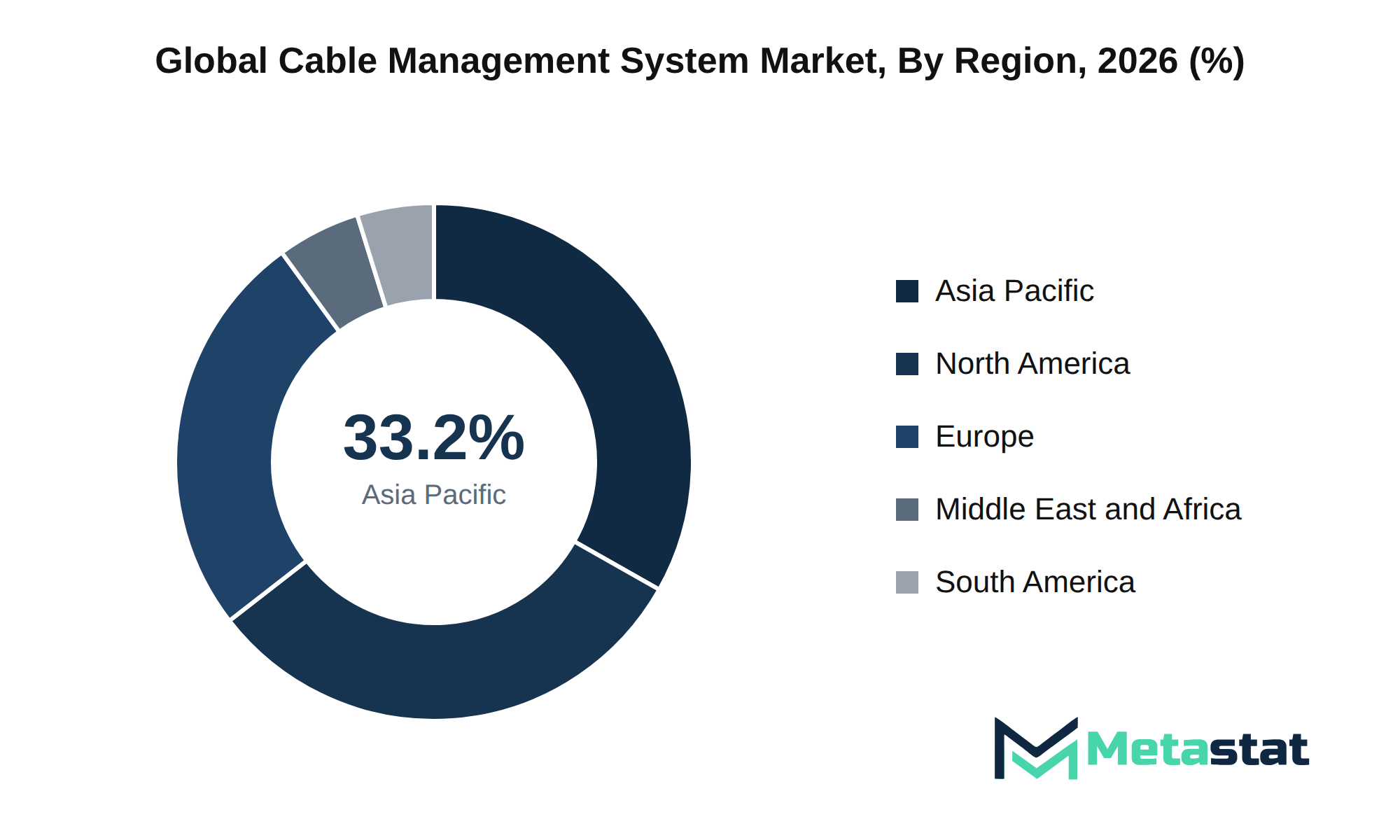
Key players in the Cable Management System market engage in various strategic behaviors to enhance their market presence. Mergers and acquisitions shape the competitive landscape, with companies consolidating resources and technologies. Strategic alliances and joint ventures allow for shared expertise and market access, enabling firms to expand their product offerings and reach. Players including Eaton Corporation plc, Schneider Electric SE, and HellermannTyton Group PLC leverage these strategies to strengthen their market positions.
Product differentiation serves because a critical factor in the Cable Management System market. Companies invest in research and development to create innovative solutions, focusing on proprietary technologies that provide competitive advantages. Players like Panduit Corporation and Legrand S.A. emphasize unique product features and performance capabilities to attract diverse customer segments. The emphasis on intellectual property and technological defensibility enhances brand equity, contributing to customer retention strategies and increasing switching costs.
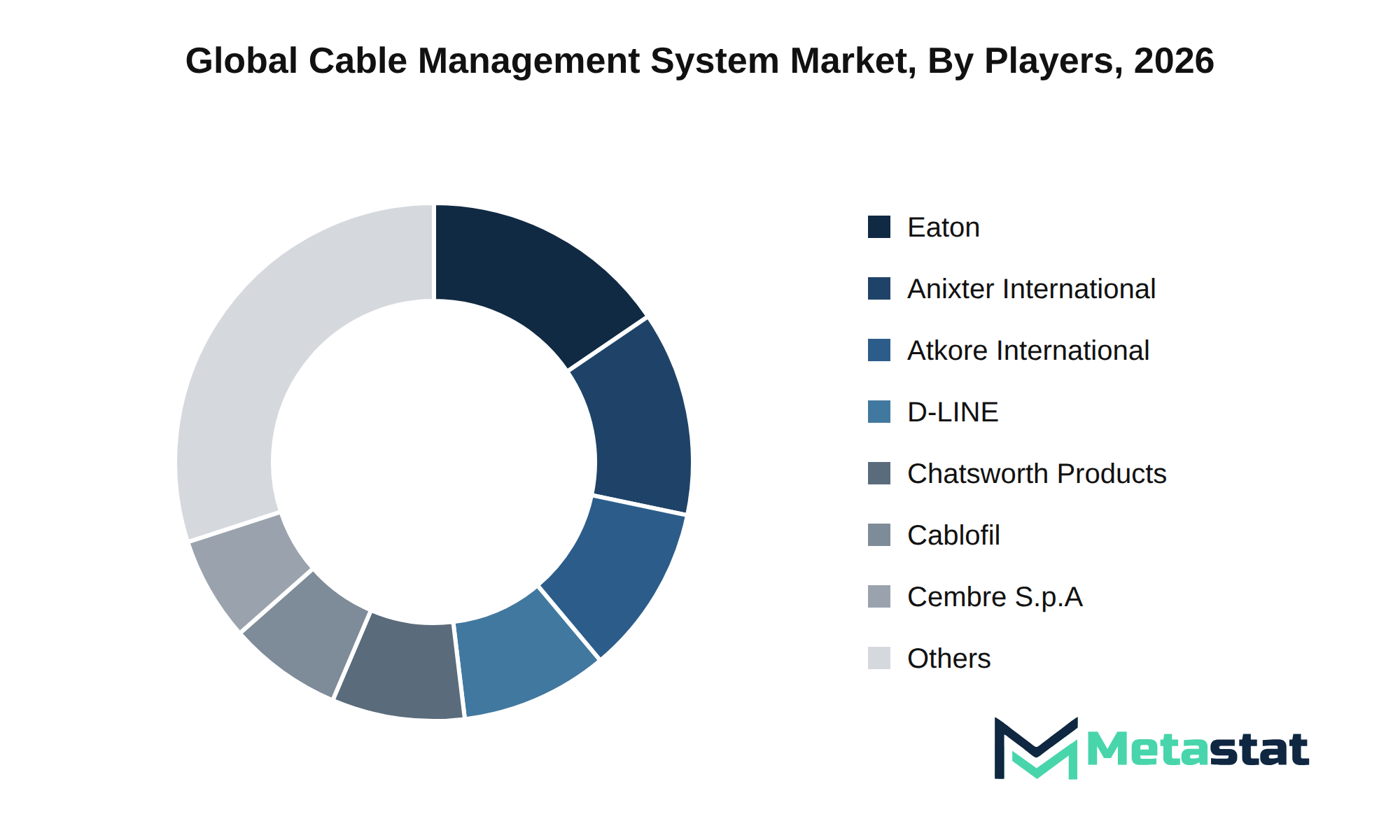
Market size is forecast to rise from USD 28 billion in 2025 to over USD 53 billion by 2033. This growth reflects robust demand for cable management solutions driven by ongoing digital transformation across various industries.
The macroeconomic scenario highlights structural consumption shifts alongside the maturation of core industries, leading to heightened demand for innovative cable management solutions. Next-generation technology integration across sectors including data centers and telecommunications stimulates investment and R&D in cable management systems, expanding opportunities for manufacturers.
Regulatory evolution influences market dynamics, with compliance timelines affecting product development and lifecycle management. Strategic capital allocation towards infrastructure commitments supports market expansion and innovation, creating potential high-growth pockets for businesses that address unmet enterprise needs.
Geopolitical realignments and changes in trade corridors impact global supply chains, requiring adaptability from manufacturers in the cable management system market. These shifts necessitate a focus on defensibility roadmaps and executive-level strategic imperatives to ensure sustained growth and competitiveness.
The report strategically identifies and profiles the key market players and analyses their core competencies in each sub-segment of the Cable Management System market.
Report Attributes | Details |
Study Period | 2021-2033 |
Base Year | 2025 |
Estimated Year | 2026 |
Forecast Period | 2026-2033 |
Historical Period | 2021-2025 |
Growth Rate | CAGR 8.3% from 2026 to 2033 |
Revenue Unit | USD billion |
Segmentation | By Product Type, Material, Installation Channel, End-Use Industry, and Region |
By Region | North America (By Product Type, Material, Installation Channel, End-Use Industry, and Country)
|
Europe (By Product Type, Material, Installation Channel, End-Use Industry, and Country)
| |
Asia Pacific (By Product Type, Material, Installation Channel, End-Use Industry, and Country)
| |
South America (By Product Type, Material, Installation Channel, End-Use Industry, and Country)
| |
Middle East and Africa (By Product Type, Material, Installation Channel, End-Use Industry, and Country)
|
Find answers to common questions about this report
The Cable Management System market size was valued at USD 28 billion in 2025, according to the Metastat Insights study.
The Cable Management System market is projected to grow at a CAGR of 8.3% during the forecast period from 2026 to 2033.
The North America Cable Management System market size is estimated to reach USD 15.8 billion by 2033.
Cable Tray Systems lead the Cable Management System market with a projected value of USD 8.8 billion by 2033, based on its growth trajectory compared to other product types.
Increasing infrastructure development and rapid digital transformation significantly drive the Cable Management System market. Enhanced capital investments in commercial and industrial sectors, along with the growing demand for advanced technologies and smart building solutions, create a robust need for efficient cable management systems.
North America holds the dominant share of the Cable Management System market, with a value of USD 15.8 billion projected for 2033. This region accounts for 31.3 percent of the total market share.
Compliance hurdles, capital investment requirements, and external pressures significantly restrain the Cable Management System market growth. Stringent regulations increase costs for manufacturers, while geopolitical instability creates uncertainties in trade relationships and supply chains, further complicating market dynamics. These factors collectively hinder adoption rates and operational efficiency, impacting overall market performance.
Increasing infrastructure development and rapid digital transformation initiatives significantly favor product adoption in the Cable Management System market. Enhanced capital investments in commercial and industrial sectors drive demand for efficient cable management solutions, while the integration of advanced technologies, including automation and artificial intelligence, improves operational performance and reduces costs.
The Cable Management System market is estimated to reach a valuation of USD 53 billion by 2033.
Key players in the Cable Management System market include Anixter International, Inc., Atkore International Group Inc., CableOrganizer.com, LLC., Eaton Corporation plc, HellermannTyton Group PLC, Legrand S.A., nVent Electric plc, and Panduit Corporation.
The analysts below cover Electronics and Semiconductor research at Metastat Insights.
LEAD ANALYST
Utkarsh Khirodkar is a Lead Market Research Analyst at MetaStat Insight, specializing in market intelligence, technology sector assessments, and competitive strategy.

PRINCIPAL CONSULTANT - ENTERPRISE AI & EMERGING TECHNOLOGIES
Banking & Finance · Electronics and Semiconductor · Energy and Power · Healthcare IT · Information & Technology · Professional Services
Vijay Gunti is a Principal Consultant at MetaStat Insight, bringing over two decades of experience across enterprise digital transformation, technology strategy, and intelligent systems.

PRINCIPAL CONSULTANT - QUALITY SYSTEMS & COMPLIANCE
Electronics and Semiconductor · Machinery & Equipment · Professional Services
Omkar Phadtare is an Industry Consultant at MetaStat Insight, specializing in quality systems, regulatory compliance, and standards benchmarking to drive data-driven market intelligence and strategic industry research.

ENERGY & INFRASTRUCTURE INDUSTRY CONSULTANT
Automotive and Transportation · Electronics and Semiconductor · Energy and Power · Machinery & Equipment
Saurabh Vasant Ganvir consults for Energy & Infrastructure Industry at MetaStat Insight, specializing in renewable energy, solar EPC, and electric vehicle (EV) infrastructure markets.

LEAD CONSULTANT - COMMUNICATION, TELECOM, AND IT
Electronics and Semiconductor · Information & Technology · Machinery & Equipment · Professional Services
Ravindra Sathe Consultants for Communication, Telecom, and IT at MetaStat Insight. He leads the firm's industry research initiatives across telecommunications infrastructure, digital connectivity, enterprise networking, and emerging information technology domains.
Evaluating calorific value requirements and air permit compliance across municipal waste facilities requires localized data. Metastat Insight structured their analysis around operational throughput capacity and feedstock composition variations in Latin America and Eastern Europe. Their competitive mapping of sorting equipment vendors helped clarify technology differences between optical separators and heavy media systems. The study provided an objective baseline during our capital expenditure reviews.
Decarbonizing industrial thermal processes hinges on refrigerant regulations and compressor efficiency limits. Metastat Insights delivered a thorough market analysis that evaluated natural refrigerants like CO2 and hydrocarbons against synthetic low-GWP alternatives. The breakdown of utility incentives and grid capacity constraints across key European manufacturing hubs offered valuable perspective. The follow-up conversation with their sector analysts addressed our specific questions on mechanical vapor recompression systems efficiently.
Assessing 200mm wafer transition schedules and substrate supply bottlenecks requires precise technical intelligence. MetaStat Insight supplied an actionable breakdown comparing planar and trench MOSFET architectures across automotive and industrial drive markets. The regional capacity estimates for Asia-Pacific foundries helped clarify lead-time uncertainties during our strategic planning session. When we needed additional clarification on high-purity raw material sourcing, their analyst team responded with helpful context within twenty-four hours.
Explore related market intelligence reports worth reading alongside this one.
Starting from
$2950
Starting from
$2950