
LEAD ANALYST
Utkarsh Khirodkar is a Lead Market Research Analyst at MetaStat Insight, specializing in market intelligence, technology sector assessments, and competitive strategy.

Global Core Banking Software Market Size, Share, By Component (Deposits, Loans, Enterprise Customer Solutions, Professional Service, Managed Service and Others (Payments Processing, General Ledger and Accounting, Regulatory Reporting)), By Deployment (Cloud and On-premise), By End-user (Retail Banking, Treasury, Corporate Banking, Wealth Management and Others (SME Banking, Microfinance, Development Banking)), By Bank Size (Small Banks, Medium-sized Banks and Large Banks), Industry Analysis, Growth, Trends, and Forecast, 2026-2033
Report ID
MSI-5592
Published
October, 2026
Pages
263 Pages
Format
Historical
Base year
Forecast
Forecast period
Report Details
Market Valuation: Valued at $20.4 Billion in 2025, projected to reach $74.8 Billion by 2033 at a 17.6% CAGR.
Dominant Segment: The Loans segment leads the Core Banking Software market, projected to reach USD 18.5 billion by 2033, driven by increasing consumer spending and the robust demand for credit products.
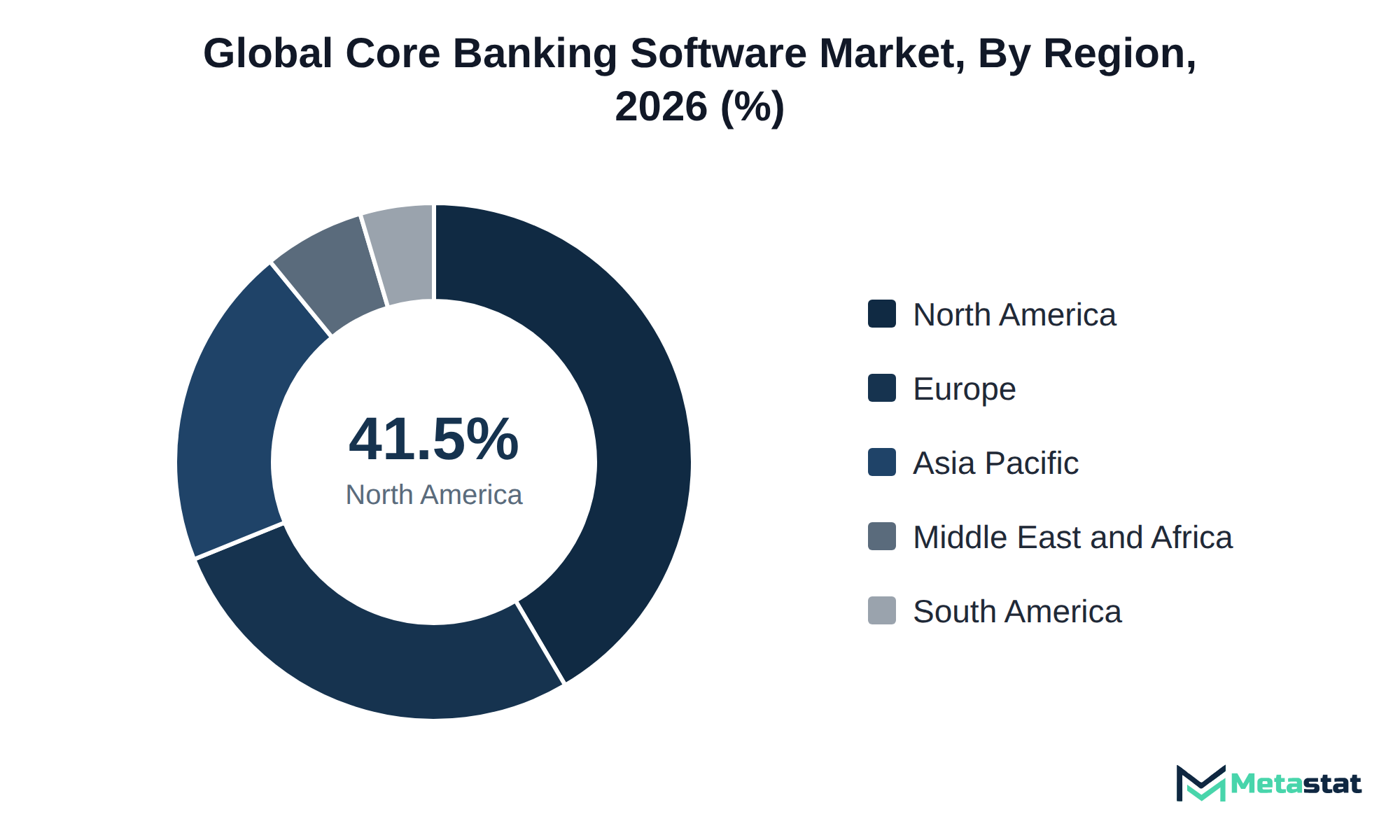
Geographic Lead: North America holds a significant market share of 41.5% in 2025, with the US expected to lead in 2026, due to its advanced banking infrastructure and substantial investments in technology.
What's Inside: This report provides comprehensive coverage of the competitive landscape, detailed segment analyses across components, deployment methods, and end-users, along with a forecast window extending to 2033.
Cloud Growth: The cloud deployment segment is set to grow significantly, from USD 11.4 billion in 2026 to USD 46.9 billion by 2033, reflecting a CAGR of 22.4%, as financial institutions seek enhanced scalability and operational efficiency.
Investment Priorities: Real-time deposit and loan processing capabilities are increasingly prioritized by financial institutions, with the deposits segment expected to grow from USD 5.3 billion in 2026 to USD 15.1 billion by 2033, at a CAGR of 16.0%.
Choose Your License
Global Core Banking Software Market
The global Core Banking Software market was valued at USD 20.4 billion in 2025 and is projected to reach USD 74.8 billion by 2033, growing at a CAGR of 17.6% over the forecast period.
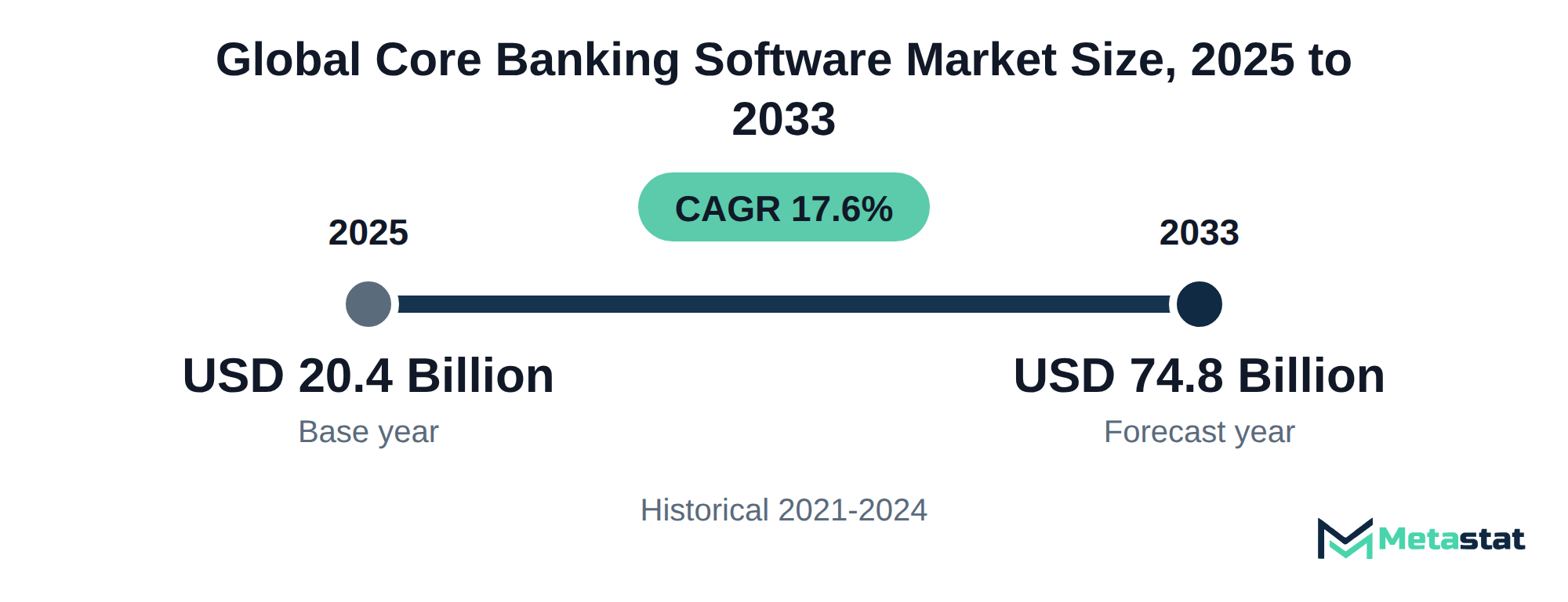
The Core Banking Software market encompasses a range of software solutions designed to facilitate banking operations, including deposits, loans, and customer management. Growing digitalization drives buyers to invest in these solutions to enhance operational efficiency, streamline processes, and improve customer experiences. Financial institutions prioritize upgrades to modern technologies to remain competitive and meet evolving customer expectations.
Significant growth in the market results from the increasing demand for cloud-based solutions, which allow banks to scale operations quickly while reducing costs associated with traditional on-premise systems. Among the segments, Loans represent the most substantial value, contributing significantly to revenue generation. North America holds 41.5% of the market in 2025, with the US leading in 2026, reflecting the region's prominent role in shaping trends within the global banking sector.
Rapid advancements in technology, particularly in artificial intelligence and data analytics, enhance the capabilities of core banking software, making it essential for banks seeking to use data for strategic decision-making. The growing emphasis on customer-centric banking solutions drives demand, with institutions aiming to provide personalized services that cater to the unique needs of their clients. This focus on customer engagement is expected to drive further investment in core banking software.
The Core Banking Software market provides essential solutions for financial institutions, enabling them to manage deposits, loans, and customer relationships effectively. Buyers invest in these technologies to enhance operational efficiency, improve customer experiences, and maintain competitiveness in a changing financial landscape. The ongoing digital transformation within the banking sector drives significant spending on core banking systems, allowing institutions to adapt to changing consumer expectations and regulatory requirements.
Growth in the market is propelled by increased demand for cloud-based solutions, which offer scalability and flexibility. Among the segments, Loans represent the highest value, reflecting the ongoing focus on lending services in financial institutions. This region's strong market share stems from the presence of numerous financial institutions investing heavily in advanced banking technologies to enhance service offerings.
Investment in core banking software is expected to rise significantly, driven by the need for enhanced data security and regulatory compliance. Financial institutions prioritize these aspects to safeguard customer information and ensure adherence to evolving legislative frameworks. The increased adoption of innovative technologies, including artificial intelligence and data analytics, further supports the demand for advanced core banking solutions, driving market expansion.
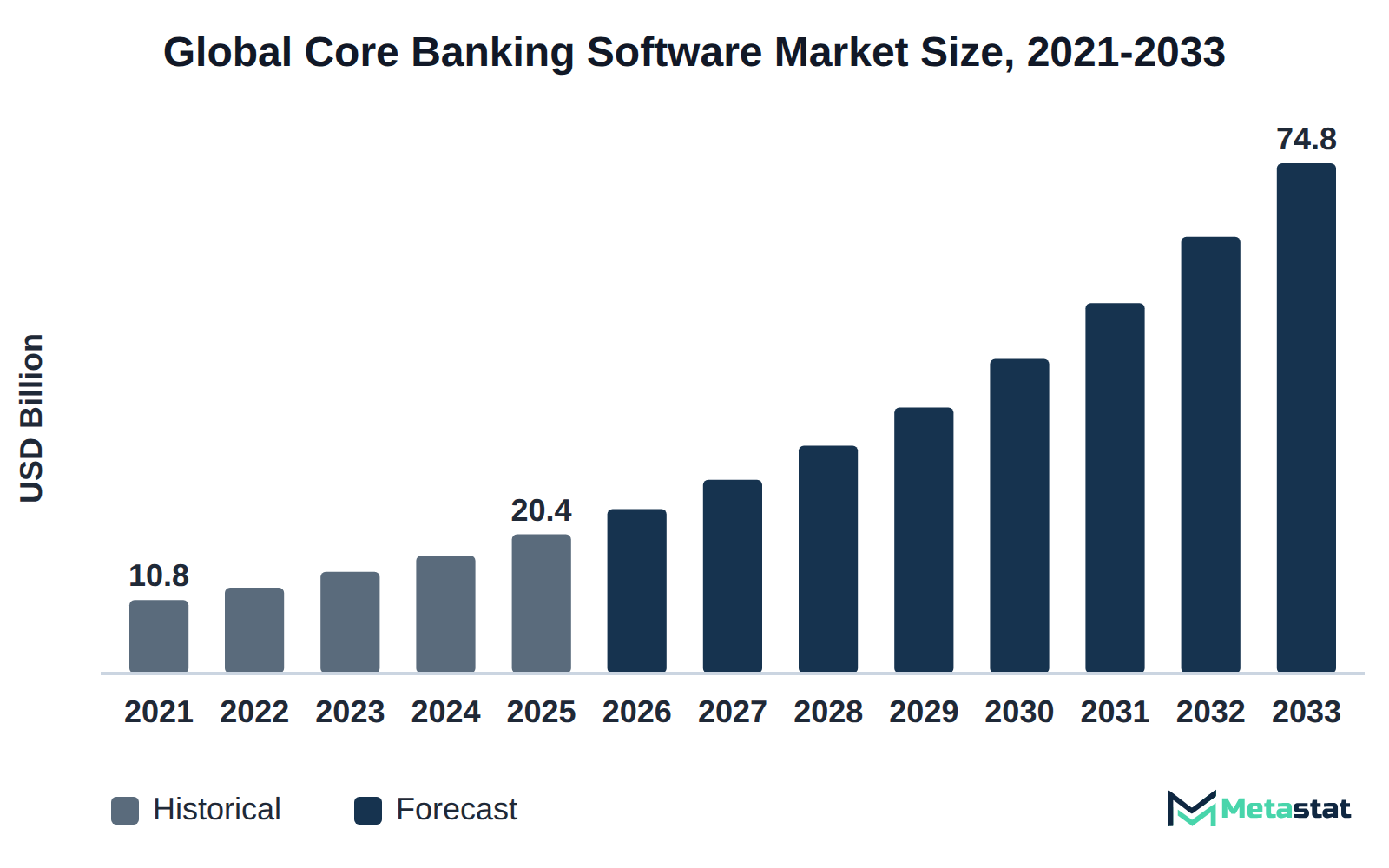
Cloud-native and composable core banking solutions facilitate a gradual transition from legacy systems. This modernization strategy enables financial institutions to implement new functionalities without overhauling existing infrastructures. In the Core Banking Software market, this approach attracts organizations seeking flexibility in deployment and the ability to adapt to changing market conditions.
The cloud segment is set to experience significant growth, with a projected rise from USD 11.4 billion in 2026 to USD 46.9 billion by 2033, reflecting a compound annual growth rate of 22.4%. This shift toward cloud-native architecture allows banks to leverage modern technologies, improving scalability and reducing operational costs associated with traditional on-premise systems. Composable banking systems give a bank the flexibility to meet customer demands swiftly, a key factor in a competitive market.
Investments in cloud-native solutions enable institutions to provide personalized services and integrate with third-party platforms seamlessly. Consequently, organizations adopting these solutions position themselves to capitalize on new revenue streams, improve customer experience, and remain competitive in the evolving financial sector. Phased legacy modernization streamlines operations and supports sustainable growth in the market.
Investment strategies within the Core Banking Software market increasingly prioritize real-time deposit and loan processing capabilities. The transition to real-time processing enhances operational efficiency and customer satisfaction, reflecting a broader trend toward agility in financial services. By 2033, the deposits segment is projected to expand from USD 5.3 billion in 2026 to USD 15.1 billion, illustrating a compound annual growth rate of 16.0%. This growth results from heightened demand for immediate transaction processing, which financial institutions recognize as critical to maintaining competitiveness.
Financial institutions adopt various purchasing strategies for core banking software, often favoring subscription-based models that allow for predictable costs and flexibility in scaling operations. Buyers frequently seek solutions that enable integration with existing systems, thereby reducing the total cost of ownership. The emphasis on real-time processing capabilities drives innovation among software providers, who increasingly offer tailored solutions to meet the specific needs of diverse banking segments.
The market's focus on real-time processing supports enhanced customer engagement and ensures compliance with evolving regulatory requirements. By investing in modern core banking solutions, institutions position themselves to capitalize on emerging growth opportunities, ensuring ongoing relevance and profitability in a rapidly changing financial landscape.
Data residency requirements significantly impact the deployment decisions within the Core Banking Software market. Organizations prioritize compliance with local regulations that dictate where customer data resides. These rules belong to the broader field of data privacy. For instance, in the Asia Pacific region, stringent regulations drive financial institutions to favor on-premise solutions to maintain control over sensitive data. On-premise solutions are expected to reach USD 27.9 billion by 2033. Such figures reflect the growing emphasis on data sovereignty and regulatory compliance among banks.
Medium-sized banks, in particular, show growing interest in adopting these solutions, driven by the need to safeguard customer information while ensuring compliance with regional laws. The market reflects an ongoing shift, with these banks contributing to the anticipated growth in the on-premise segment. This focus on localized data management enhances operational stability and builds customer trust, ultimately leading to a more secure banking environment.
The total cost of replacing core banking software significantly depends on the chosen deployment method. Organizations often face a crucial decision between cloud and on-premise solutions, each with distinct financial implications. This rapid growth indicates a strong market shift toward cloud solutions, driven by scalability and lower initial investment costs.
In contrast, on-premise solutions, while offering more control and customization, entail higher upfront costs and ongoing maintenance expenses. The market anticipates on-premise deployments will reach USD 27.9 billion by 2033, with a CAGR of 11.9%. Organizations evaluate their long-term objectives and operational capabilities when selecting a deployment method to understand the total cost implications fully.
Choosing an appropriate deployment method impacts overall operational efficiency and financial outcomes for institutions in the Core Banking Software market. A well-informed decision leads to substantial cost savings and better alignment with strategic goals.
Financial institutions increasingly adopt cloud deployment options for core banking software due to the need for improved scalability and operational efficiency. Retail banks, medium-sized banks, and large banks drive this trend, seeking enhanced agility and reduced infrastructure costs. The transition to cloud solutions enables quicker deployment of services, facilitating innovative offerings that meet customer demands. This shift towards cloud service adoption supports a significant change in the market, with buyers prioritizing flexibility and cost-effectiveness in their banking operations. The growing preference for cloud solutions transforms how institutions manage their core banking processes, driving investment and competitive strategies within the market.
Financial institutions increasingly use advanced analytics tools to optimize operations in the Core Banking Software market. These tools enable institutions to analyze vast amounts of data, resulting in enhanced decision-making capabilities and improved customer insights. Working with data at this volume falls within the scope of big data analytics. The growing focus on data-driven strategies has fueled demand for solutions that integrate seamlessly with existing core banking software.
Efficient data analysis directly impacts customer engagement and satisfaction, enhancing loyalty among clients. By employing predictive analytics, institutions identify trends and customer behaviors, informing product offerings and marketing campaigns. This capability supports revenue growth through targeted services tailored to specific customer segments.
The integration of advanced analytics tools streamlines compliance processes, enabling institutions to respond swiftly to regulatory changes affecting the market. By automating reporting and risk assessments, institutions reduce operational costs and enhance their competitive position. This evolution drives further investment in core banking software, promoting continuous innovation and adaptation.
High implementation and operational costs challenge small and medium-sized banks seeking to adopt advanced core banking software solutions. These financial institutions operate with constrained budgets, resulting in slower uptake of essential technologies. The substantial investment required for system integration, training, and ongoing maintenance deters many potential buyers, leading to smaller orders and delayed replacements of legacy systems. This cost barrier significantly impacts the ability of smaller banks to remain competitive within the evolving market landscape. Consequently, growth opportunities remain limited for the market, particularly among smaller financial institutions that struggle to justify such investments in software enhancements. Addressing affordability through innovative pricing models or government incentives could enhance adoption rates and promote a more competitive environment, ultimately benefiting the overall market trajectory.
Profitability remains a significant challenge for suppliers of core banking software. High demand for skilled professionals in software development and implementation results in increased talent costs, impacting overall margins. The competitive landscape for skilled workers drives firms to invest heavily in recruitment and retention strategies, diverting resources that could enhance product development or service delivery. Small and medium-sized suppliers often face the brunt of these pressures, while larger organizations leverage their resources to attract top talent more effectively.
In response, many suppliers focus on optimizing their workforce through training and development initiatives, aiming to increase productivity while reducing reliance on external hires. Automation of certain processes allows firms to streamline operations, alleviating the financial burdens associated with talent acquisition. These strategies reflect a proactive approach to addressing the challenges posed by rising labor costs in the core banking software market, ultimately supporting long-term sustainability and competitiveness.
Cloud deployment in the Core Banking Software market presents a significant opportunity for growth, particularly in the coming years. The projected compound annual growth rate (CAGR) of 22.4% from 2026 to 2033 indicates strong demand for cloud solutions. Financial institutions increasingly focus on scalability and flexibility, driving their transition from on-premise systems to cloud-based architectures. This shift enables banks to enhance operational efficiency and reduce costs associated with traditional infrastructure. Smaller banks exhibit a growing interest in cloud solutions, reflecting an under-penetrated segment with substantial potential. The financial benefits of cloud deployment, including lower maintenance costs and improved agility, make it an attractive choice for many types of banking institutions. Strategic investment in cloud technologies is expected to yield significant returns, influencing competitive dynamics within the market.
The Global Core Banking Software market is segmented based on Component, Deployment, End-user, and Bank Size.
This segment targets financial institutions that rely on effective management of deposit accounts, ensuring accurate processing and security. Driven by the growing demand for digital banking solutions, retail banks and credit unions increasingly adopt advanced technology to improve customer experience and operational efficiency. In comparison to other components, including Loans which have a projected CAGR of 17.2%, the Deposits segment exhibits a slightly slower growth rate. However, its consistent demand reflects the essential nature of deposit management in banking operations, highlighting the significance of this segment in the overall Core Banking Software market.
Loans are estimated to reach USD 18.5 billion by 2033, at a CAGR of 17.2% during the forecast period. This segment caters primarily to financial institutions that offer various loan products to consumers and businesses. Demand for loans remains strong, driven by increasing consumer spending and business expansion activities. Unlike other components, including deposits, the loans segment experiences faster growth, reflecting a strong appetite for credit products. The rising adoption of digital lending platforms facilitates streamlined loan origination processes, enhancing customer experience and operational efficiency. Retail banks and corporate lenders focus on this segment, aiming to capture market share in an increasingly competitive landscape. Overall, the loans segment is significant, reflecting the dynamic nature of financial services in the market.
Enterprise Customer Solutions segment is expected to reach USD 9.1 billion by 2033. This segment provides tailored solutions for managing customer relationships and enhancing service delivery in banking. Retail banks, corporate banks, and wealth management institutions apply these solutions to improve customer engagement and streamline operations. The rapid growth of customer expectations and the increasing demand for personalized banking experiences drive the expansion of this segment, with a CAGR of 19.5%. This outpaces several other segments including Loans, which is expected to grow at 17.2%. Technological advancements in data analytics and customer relationship management are crucial for this segment's success. By focusing on personalization and customer satisfaction, the segment distinguishes itself from others, ensuring a competitive edge in the evolving landscape of the Core Banking Software market.
Professional Service segment is projected to grow at a CAGR of 16.4% during the forecast period. This segment encompasses consulting, implementation, and support services for core banking software, catering primarily to financial institutions seeking to enhance operational efficiency. Demand for professional services is driven by the increasing complexity of banking operations and the necessity for expert implementation to ensure integration of new technologies. Compared to other components, including Loans and Deposits, this segment exhibits unique characteristics, focusing on tailored solutions rather than standardized products. As banks expand their digital transformation initiatives, investment in professional services intensifies, reflecting a strategic priority for improved customer experience and operational performance.
Managed Service encompasses a strategic approach that financial institutions employ to enhance operational efficiency and streamline core banking functions. This segment supports banks by outsourcing certain processes, allowing them to focus on core activities while leveraging specialized expertise. Demand for Managed Service arises from the ongoing need for cost reduction and operational optimization in banking operations. Factors including increasing competition and the necessity for rapid technological advancement drive institutions to seek external partnership solutions. Compared to other components, Managed Service provides a unique value proposition by offering flexibility and scalability. This distinguishes it from traditional segments like Deposits and Loans, which focus on specific product offerings and face different market dynamics. The market increasingly integrates these services to adapt to evolving consumer expectations and regulatory requirements.
This segment includes various components including Payments Processing, General Ledger and Accounting, and Regulatory Reporting. These functions serve critical roles for financial institutions, enabling effective transaction management, compliance with regulations, and accurate financial reporting. Regulatory reporting platforms support the compliance side of these functions. Demand for these services primarily stems from increasing regulatory requirements and the necessity for streamlined operations. Adoption of financial reporting solutions significantly influences operational efficiency, especially for banks facing stringent compliance challenges. Unlike other segments, the growth trajectory of this category does not align with faster-growing components like Deposits or Loans, reflecting a more stable demand profile. Financial institutions, particularly those looking to enhance operational robustness, find value in these solutions, ensuring they remain competitive in evolving market dynamics. The focus continues to shift toward integrating advanced technologies, creating an environment that supports ongoing enhancements in financial processes.
This segment is primarily used by retail banks and financial institutions to enhance scalability and streamline operations. Demand for cloud solutions is driven by the increasing need for flexibility in banking services, enabling institutions to respond swiftly to market changes. Compared to on-premise models, cloud deployment provides a more economical alternative, facilitating quicker updates and reducing the burden of in-house infrastructure management. While on-premise solutions exhibit a CAGR of 11.9%, cloud options represent a more rapid growth trajectory, aligning with a broader digital transformation trend across the financial services sector. Adoption of cloud technologies promotes innovation and efficiency among various banking entities, contributing to the expanding landscape of the Core Banking Software market.
This segment caters to banking institutions that prefer to manage their core banking solutions on their own premises, ensuring greater control over data security and compliance. Financial institutions, particularly large banks, apply on-premise solutions for their critical operations, which require stringent security measures and customization. The segment differs from cloud deployment options, which typically offer lower upfront costs and enhanced scalability. Demand for on-premise solutions is driven by regulatory requirements that necessitate data storage within specific jurisdictions. While cloud deployment is experiencing rapid growth, the on-premise segment remains stable due to the continued preference of certain institutions for traditional infrastructure. The increasing focus on cybersecurity contributes to sustained interest in on-premise solutions, with institutions seeking to maintain direct oversight of their systems.
Retail Banking segment is valued at USD 10.4 billion in 2026 and is projected to reach USD 30.5 billion by 2033, at a CAGR of 16.7% during the forecast period. This segment caters to individual customers and small businesses, focusing on retail services including savings and checking accounts, personal loans, and mortgages. A significant driver for this segment involves the growing demand for digital banking solutions, which enhances customer engagement and operational efficiency. Compared to other segments including Corporate Banking, Retail Banking experiences faster growth. The projected CAGR of 16.7% exceeds the growth rates of many competing segments, highlighting its increasing importance within the core banking software market. Financial institutions prioritize updating their core banking systems to meet these rising demands, ensuring they remain competitive and capable of delivering superior customer experiences.
The Treasury segment is estimated to reach USD 9.4 billion by 2033, at a CAGR of 16.9% during the forecast period. This segment serves financial institutions involved in managing liquidity, funding, and financial risk. Demand for treasury management systems reflects the increasing focus on regulatory compliance and risk management practices. Key drivers include the heightened emphasis on financial stability and the optimization of cash flow management. Compared to other segments, the Treasury segment experiences a faster growth trajectory, supported by its strategic importance in financial operations. While banking software components including Loans or Deposits show growth, Treasury solutions are particularly critical for ensuring effective financial management and regulatory adherence in an evolving market environment. The market is expected to see significant advancements in Treasury solutions, driven by ongoing technological innovations and regulatory requirements.
Corporate Banking segment is expected to reach USD 19.8 billion by 2033. This segment serves large corporations and financial institutions by providing tailored solutions for managing loans, credit lines, and treasury services. Key demand drivers include the growth of corporate financing needs and the increasing complexity of financial transactions. Corporate Banking differs from Retail Banking, which focuses on individual consumers, and exhibits a slower growth rate compared to other segments including Wealth Management, which has a CAGR of 19.5%. The focus on sophisticated financial products and regulatory compliance adds to the operational demands within this segment, contributing to its unique challenges and opportunities in the Core Banking Software market. The market is expected to evolve with technological advancements, enhancing the efficiency and capabilities of Corporate Banking solutions.
Wealth Management segment is projected to grow at a CAGR of 19.5% during the forecast period. This segment serves financial institutions focusing on investment management, financial planning, and asset allocation for individual clients and institutions. Key drivers include increasing demand for personalized financial services and growing complexity of investment portfolios. Compared to other segments, Wealth Management experiences higher growth rates due to rising affluent populations and an increase in high-net-worth individuals seeking tailored solutions. Financial institutions providing these services invest in advanced technologies and analytics to enhance client engagement and decision-making processes. The competitive landscape of the Core Banking Software market reflects this trend, with providers focusing on developing specialized solutions for wealth management to capture growing market share and address distinct client needs.
This segment focuses on Others, which encompasses SME Banking, Microfinance, and Development Banking. These institutions apply core banking software to provide tailored financial services to underserved markets and clients, enhancing accessibility and supporting financial inclusion. Demand for effective software solutions in this segment is driven by the increasing emphasis on digitization and the need for efficient management of loan portfolios and customer relationships.
In contrast to larger banking segments, this sub-segment often experiences different growth dynamics, with varying pricing structures reflecting the unique needs of smaller institutions. The affordability of solutions influences adoption, affecting how these entities approach technology investments. The Core Banking Software market increasingly recognizes the importance of accommodating diverse financial service providers, which increases competition in this segment.
Valued at USD 4.6 billion in 2026, this segment is projected to reach USD 15.6 billion by 2033, with a CAGR of 19.1% during the forecast period. Small banks adopt core banking software to enhance service delivery, improve operational efficiency, and manage customer relationships. Increased digitalization drives demand for these solutions while small banks seek to compete with larger institutions. The rising emphasis on regulatory compliance contributes to growth, pushing small banks to adopt advanced technology solutions. This segment experiences faster growth compared to medium-sized banks and large banks due to the unique needs of smaller institutions, which often require tailored solutions to meet specific market demands. The focus on affordability and customized service packages distinguishes this segment, attracting several buyers who prioritize cost-effective solutions that still offer robust functionality.
Medium-sized Banks segment is estimated to reach USD 23.7 billion by 2033, at a CAGR of 18.6% during the forecast period. This segment serves various banking institutions that require robust core banking capabilities to manage customer relationships and financial transactions effectively. Demand for efficient banking solutions drives growth, particularly as medium-sized banks invest in technology to enhance operational efficiency and customer service. Compared to small banks, which grow at a CAGR of 19.1%, medium-sized banks experience slightly slower growth in the market. However, the segment benefits from a larger base of operations, translating to more diverse service offerings and higher transaction volumes. This positioning allows medium-sized banks to adapt to market changes while competing effectively with larger financial institutions.
Large Banks segment is expected to reach USD 35.5 billion by 2033. This segment primarily serves major financial institutions that require robust core banking solutions to manage extensive customer portfolios and complex financial operations. The growing demand for advanced digital banking services significantly drives adoption within this segment. Larger banks focus on scalability and integration of new technologies, ensuring they remain competitive in an evolving landscape. Compared to small and medium-sized banks, the growth rate for Large Banks differs, reflecting a CAGR of 18.6%, which is lower than the 19.1% projected for Small Banks. Investment in innovative solutions impacts operational efficiency, allowing larger institutions to optimize customer service and transaction processing, thereby enhancing overall profitability. The Core Banking Software market aligns with these needs, emphasizing the necessity for continuous technological advancement in support of large financial entities.
Based on geography, the Global Core Banking Software market is divided into North America, Europe, Asia-Pacific, South America, Middle East, and Africa.
Demand for core banking software in North America is driven by a strong emphasis on digital transformation among financial institutions. Significant investment in technology infrastructure enhances operational efficiency and customer experience. The region's regulatory environment, characterized by stringent compliance requirements, further motivates banks to adopt advanced software solutions. The United States, Canada, and Mexico stand out as key markets, with the United States representing a 2025 share of the regional demand. North America is projected to reach USD 28.9 billion by the end of 2033. This growth reflects an increasing trend towards cloud-based solutions, which offer greater flexibility and scalability. In this dynamic market, companies strive to innovate and provide tailored solutions that meet the evolving needs of clients.
The European Core Banking Software market shows significant growth potential, driven by increasing investments in digital banking solutions and the demand for enhanced customer experiences. Nations including Germany, France, and the UK drive the demand, focusing on robust IT infrastructure and regulatory compliance. The rise of fintech companies seeking to meet customer expectations creates further momentum in the market. The European banking sector prioritizes innovation and improved operational efficiency, leading to a projected share of 27.3% of the global market in 2025. Countries like Italy and Spain are expanding their core banking capabilities, creating a competitive environment that influences overall market dynamics. Regulatory frameworks in the region support technological advancements, ensuring compliance while encouraging the adoption of modern banking solutions.
Asia-Pacific accounts for 20.2% of the Core Banking Software market in 2025. The adoption of advanced banking solutions in countries like China, India, and Japan drives demand among financial institutions seeking to enhance service delivery and operational efficiency. The region benefits from a growing middle class and expanding digital financial services, particularly in Southeast Asia, where mobile banking proliferates. Regulatory frameworks supporting the digitalization of financial services create a favorable environment for growth. Investment in cloud infrastructure and innovative technologies facilitates banking experiences and compliance with evolving regulations. Growth in this region is projected to contribute substantially to the overall market expansion, with a value of USD 74.8 billion by 2033.
Strong demand for the Core Banking Software market in South America stems from growing digital banking initiatives and the increasing need for financial institutions to enhance operational efficiency. In Brazil and Argentina, banks focus on modernizing their systems to accommodate evolving consumer preferences and regulatory requirements. Infrastructure challenges, including limited internet connectivity in certain areas, hinder widespread adoption, particularly among smaller banks. The market share for South America stands at 4.6% in 2025, indicating a developing landscape with significant room for growth. Investment in cloud-based solutions represents a key trend, with increased government support for technology-driven banking services. Expansion in the market relies on aligning with regional digital transformation strategies, resulting in improved customer engagement and satisfaction.
The Core Banking Software market in the Middle East and Africa reflects a growing interest in digital banking solutions, driven by increased investments from both private and public sectors. Countries like Saudi Arabia and the UAE focus on advancing their banking infrastructure, enhancing customer experiences through technological adoption. South Africa contributes to the regional dynamics with a strong emphasis on regulatory compliance and innovation within financial services. The share of the global market in 2025 stands at 6.3%, highlighting the region's potential in a changing environment. This environment creates opportunities for core banking software providers to expand their offerings and tailor solutions to meet local consumer demands.
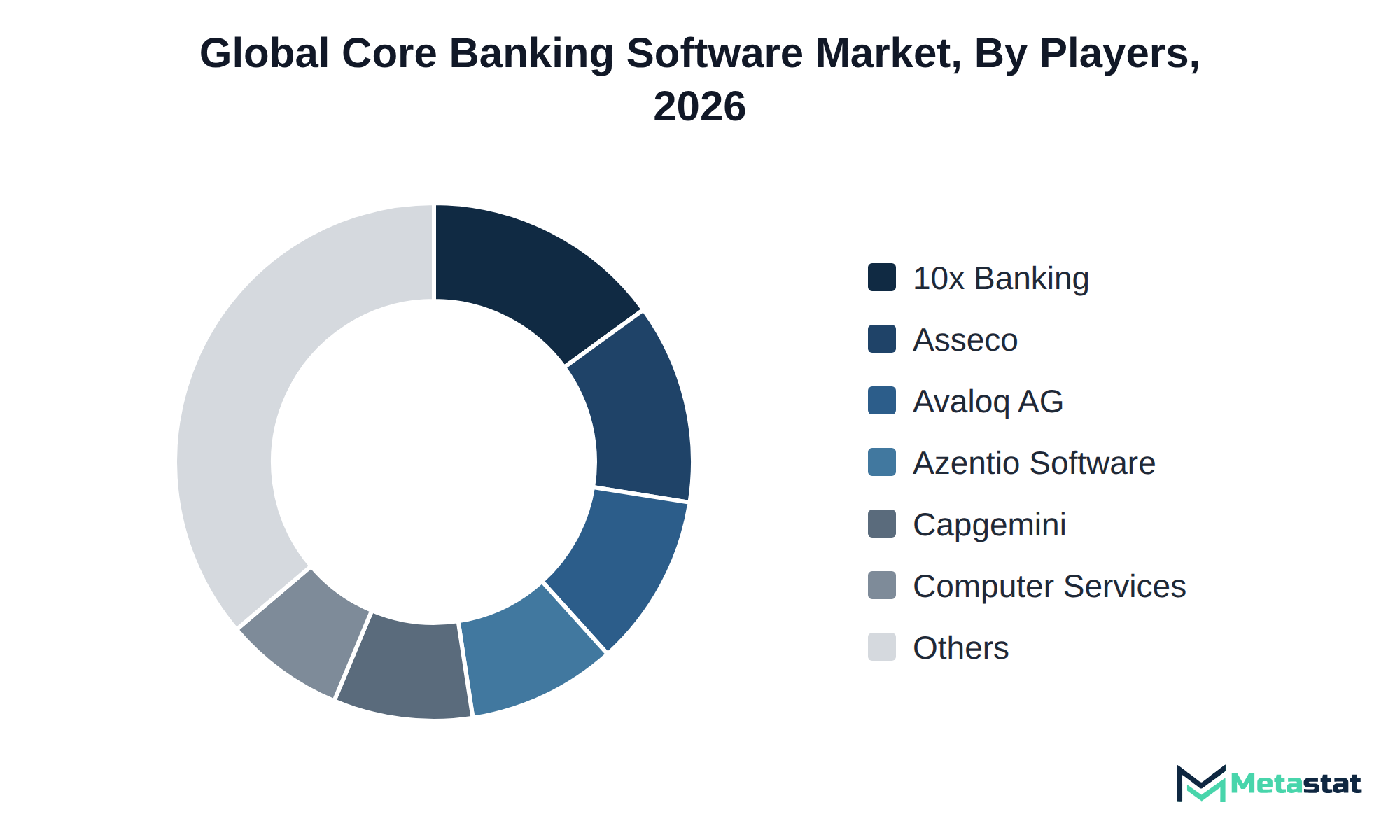
The competitive landscape in the Core Banking Software market is shaped by various strategic behaviors among key players. Companies differentiate themselves through service offerings including traditional banking solutions, cloud-based deployments, and value-added services. Buyers prioritize factors including price, customization, and the robustness of service ecosystems when selecting a provider.
Many companies focus on specific market segments. For instance, 10x Banking emphasizes innovative banking technology, targeting retail banking operations with solutions designed for flexibility and rapid deployment. Finastra specializes in corporate banking solutions and offers services that enhance operational efficiency.
Capgemini provides consulting and integration services aimed at optimizing core banking functions. Temenos Group delivers software specifically designed for wealth management, enhancing client engagement and service delivery. These distinct focuses enable companies to position effectively within the competitive landscape of the market.
Significant growth in the Core Banking Software market will depend on several developments. First, the rapid adoption of cloud-based solutions is anticipated to drive growth. With a projected CAGR of 22.4%, the cloud deployment segment presents opportunities, particularly among small and medium-sized banks seeking to enhance operational efficiency. Second, increasing demand for retail banking solutions, expected to reach USD 30.5 billion by 2033, will further support market expansion. The retail banking segment has shown strong traction, driven by the need for enhanced customer experience and digital transformation.
However, risks exist that could impede progress. Economic downturns affecting banking investments slow the uptake of new technologies. Cybersecurity concerns deter banks from transitioning to newer systems. These factors highlight the need for robust strategies to address potential vulnerabilities while tapping into growth opportunities within the Core Banking Software market.
By Component: Deposits, Loans, Enterprise Customer Solutions, Professional Service, Managed Service, Others (Payments Processing, General Ledger and Accounting, Regulatory Reporting)
By Deployment: Cloud, On-premise
By End-user: Retail Banking, Treasury, Corporate Banking, Wealth Management, Others (SME Banking, Microfinance, Development Banking)
By Bank Size: Small Banks, Medium-sized Banks, Large Banks
The report strategically identifies and profiles the key market players and analyses their core competencies in each sub-segment of the Core Banking Software market.
Report Attributes | Details |
Study Period | 2021-2033 |
Base Year | 2025 |
Estimated Year | 2026 |
Forecast Period | 2026-2033 |
Historical Period | 2021-2025 |
Growth Rate | CAGR 17.6% from 2026 to 2033 |
Revenue Unit | USD billion |
Segmentation | By Component, Deployment, End-user, Bank Size, and Region |
By Region | North America (By Component, Deployment, End-user, Bank Size, and Country)
|
Europe (By Component, Deployment, End-user, Bank Size, and Country)
| |
Asia Pacific (By Component, Deployment, End-user, Bank Size, and Country)
| |
South America (By Component, Deployment, End-user, Bank Size, and Country)
| |
Middle East and Africa (By Component, Deployment, End-user, Bank Size, and Country)
|
Find answers to common questions about this report
The Core Banking Software market size was valued at USD 20.4 billion in 2025.
The market is projected to grow at a CAGR of 17.6% during the forecast period from 2026 to 2033.
The North America Core Banking Software market size is estimated to reach USD 28.9 billion by 2033.
Deposits lead the Core Banking Software market with a projected value of USD 15.1 billion by 2033. This segment surpasses others in terms of growth potential and revenue generation.
Financial institutions increasingly adopt cloud deployment options due to the need for improved scalability and operational efficiency. The growing focus on data-driven strategies has fueled demand for solutions that integrate seamlessly with existing core banking software.
North America holds the dominant share of the Core Banking Software market, with a figure of USD 28.9 billion projected for 2033, representing 41.5 percent of the total market.
High implementation and operational costs challenge small and medium-sized banks seeking to adopt advanced core banking software solutions. This cost barrier significantly impacts their ability to remain competitive within the evolving market landscape.
Several factors favor adoption in the core banking software industry. The focus on scalability and operational efficiency drives financial institutions to transition to cloud deployment options. Enhanced agility and reduced infrastructure costs contribute to the appeal of cloud solutions for a diverse range of banking institutions.
The Core Banking Software market is estimated to reach a valuation of USD 74.8 billion by 2033.
Key players operating in the Core Banking Software market include 10x Banking, Avaloq Group AG, Capgemini, FIS, Finastra, Jack Henry & Associates, Inc., Oracle Corporation, and TATA Consultancy Services.
The analysts below cover Banking & Finance research at Metastat Insights.
LEAD ANALYST
Utkarsh Khirodkar is a Lead Market Research Analyst at MetaStat Insight, specializing in market intelligence, technology sector assessments, and competitive strategy.

PRINCIPAL CONSULTANT - ENTERPRISE AI & EMERGING TECHNOLOGIES
Banking & Finance · Electronics and Semiconductor · Energy and Power · Healthcare IT · Information & Technology · Professional Services
Vijay Gunti is a Principal Consultant at MetaStat Insight, bringing over two decades of experience across enterprise digital transformation, technology strategy, and intelligent systems.
Assessing commercial microgrid software adoption requires looking past top-level installation numbers and examining utility interconnection queues. The research provided verifiable data on average permitting timelines, tariff structures, and battery storage integration costs across regional utility territories. That grounded perspective was valuable for our team when building five-year demand projections for industrial microgrid controllers.
Ambulatory surgical centers have very different purchasing cycles for robotic-assisted surgery platforms than major hospital networks. The MetaStat Insight study focused squarely on capital expenditure depreciation, procedural reimbursement pathways, and surgeon training overhead. That operational clarity made it much simpler to validate multi-year procedure growth forecasts against actual ambulatory center adoption patterns.
When planning edge sensor rollouts across refinery environments, generic IoT reports typically miss the harsh-environment certification bottlenecks. MetaStat Insight gave an objective evaluation of ATEX and Class 1 Division 2 hardware availability, along with realistic five-year maintenance cycle cost projections. The comparison of wireless mesh versus private cellular backhaul helped our team pressure-test network reliability models for remote processing facilities.
Explore related market intelligence reports worth reading alongside this one.