
LEAD ANALYST
Utkarsh Khirodkar is a Lead Market Research Analyst at MetaStat Insight, specializing in market intelligence, technology sector assessments, and competitive strategy.

India Financial Inclusion Market Size, Share, By Financial Service Type (Savings and Deposit Services, Payments and Money Transfer Services, Microcredit and Microfinance Services, Insurance Services, Pension and Social Security Services, Government Benefit Disbursement Services, Digital Financial Services and Financial Literacy and Advisory Services), By Provider Type (Commercial Banks, Regional Rural Banks, Small Finance Banks, Payments Banks, NBFC-Microfinance Institutions and Business Correspondent Network Operators), By Delivery Channel (Bank Branches, Business Correspondent Banking Outlets, Micro-ATMs and Point-of-Sale Terminals, Assisted Digital Banking Kiosks, Mobile Banking Applications, Web-Based Banking Platforms and Common Service Centres), By Customer Segment (Low-Income Households, Rural Households, Urban Informal Workers, Women Borrowers and Entrepreneurs, Farmers and Agricultural Households, Micro and Small Enterprises, Self-Help Groups and Joint Liability Groups and Government Benefit Recipients), Industry Analysis, Growth, Trends, and Forecast, 2026-2033
Report ID
MSI-5834
Published
November, 2026
Pages
307 Pages
Format
Historical
Base year
Forecast
Forecast period
Report Details
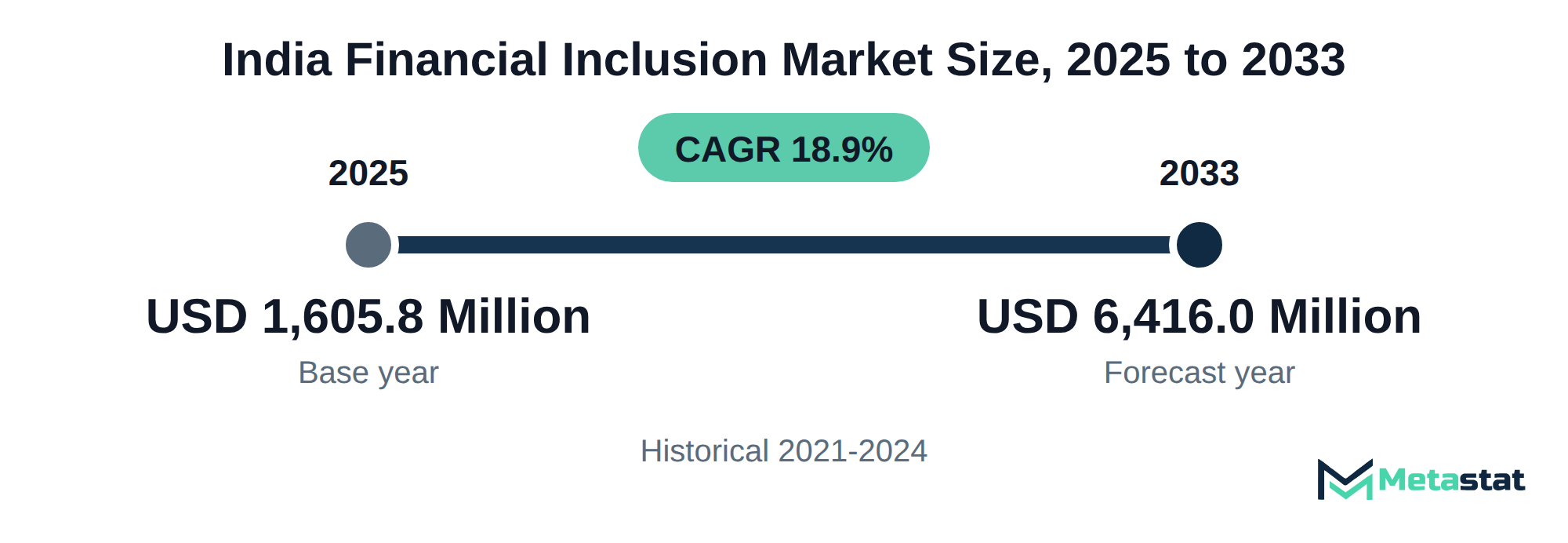
Market Valuation: Valued at $1,605.8 Million in 2025, projected to reach $6,416 Million by 2033 at a 18.9% CAGR.
Dominant Segment: Payments and money transfer services lead the India Financial Inclusion market, driven by a significant shift towards digital transactions and a growing demand for efficient, low-cost transaction methods.
Geographic Lead: Rural areas are experiencing the fastest growth in financial inclusion, fueled by increasing digital literacy and the expansion of mobile banking solutions that enhance accessibility to financial services.
What's Inside: The report provides a comprehensive analysis of the competitive landscape, covering various financial service types, provider types, and delivery channels, along with detailed forecasts from 2026 to 2033.
Customer Segments: The market serves diverse customer segments, including low-income households, rural communities, and small enterprises, focusing on their unique financial needs and the growing adoption of digital solutions.
Choose Your License
India Financial Inclusion Market
The India Financial Inclusion market was valued at USD 1,605.8 million in 2025 and is projected to reach USD 6,416 million by 2033, growing at a CAGR of 18.9% over the forecast period.
The India Financial Inclusion market encompasses a range of financial services aimed at improving access to banking and financial products for underserved populations. This includes services including savings and deposit accounts, payments, money transfers, microcredit, and insurance. Buyers invest in these services due to the growing need for financial stability and the desire to enhance economic participation among low-income and rural households. The expansion of digital banking infrastructure and government initiatives drives investment in this sector.
Growth in the market is driven by increasing awareness and adoption of financial services among various customer segments. The payments and money transfer services segment holds the largest value, reflecting a significant shift towards digital transactions. This trend is pronounced in rural areas, where access to reliable banking services remains limited. The integration of mobile technology into financial services enhances convenience and accessibility, contributing to the market's overall expansion.
Projected growth continues through the forecast period, driven by a combination of technological advancements and supportive regulatory frameworks. The increasing number of fintech companies entering the market enhances competition, leading to innovative solutions that address the specific needs of different customer segments. These developments indicate that the India Financial Inclusion market is expected to experience substantial growth and transformation.
The offerings in the India Financial Inclusion market focus on various services designed to enhance banking accessibility for individuals lacking sufficient financial resources. Buyers invest in these services to gain improved access to savings, credit, and insurance, which assists in achieving financial stability and enhancing economic participation. This market covers financial service types including savings and deposit services, payments, microcredit, and insurance, appealing to a diverse range of customer segments, including low-income households and rural populations.
Significant growth in the market stems from increasing digital literacy and adoption of mobile banking solutions. Payments and money transfer services represent the segment with the highest value, driven by rising demand for efficient and low-cost transaction methods. The region with the largest share in this market is expected to continue its dominance, reflecting ongoing expansion of financial services in urban and rural areas alike.
The increasing awareness of financial products among underserved populations fuels demand. The market's growth trajectory remains supported by government initiatives aimed at promoting financial inclusion, which highlight the essential role of accessible financial services in supporting communities. This trend aligns with broader economic goals by widening financial participation among diverse populations.
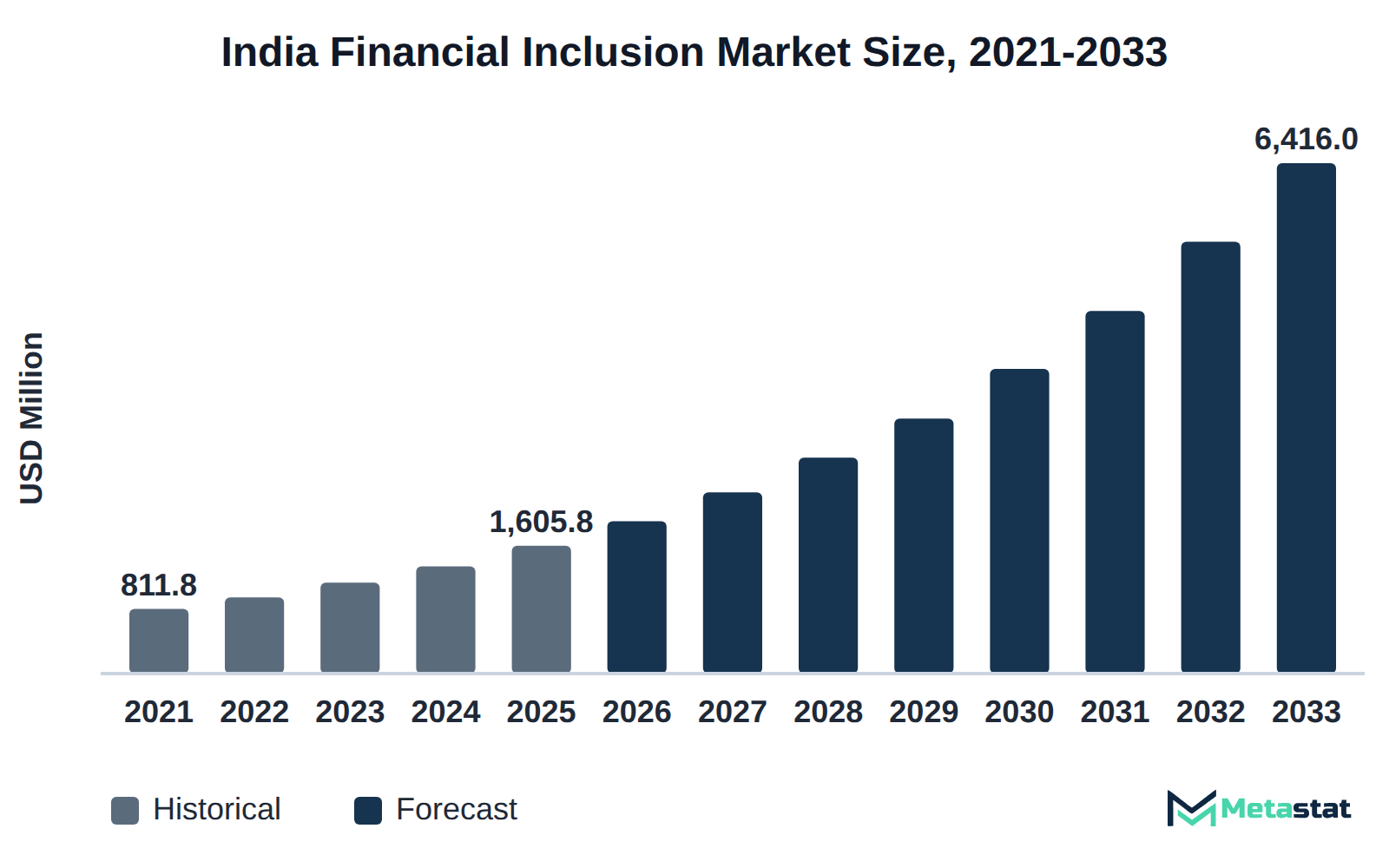
Digital banking adoption expands financial access across India. Innovations in digital banking platforms enable efficient transactions, reducing barriers for low-income households and rural communities. The India Financial Inclusion market benefits significantly from these advancements, with total transaction volumes increasing rapidly. For instance, the Payments and Money Transfer Services segment is projected to reach USD 1,195.9 million by 2033, reflecting a growing reliance on digital solutions.
The emergence of mobile banking applications and point-of-sale terminals has transformed how consumers interact with financial services. These technologies facilitate transactions and enhance customer experiences, particularly for urban informal workers and women borrowers. The market's focus on financial literacy and digital engagement strategies strengthens user confidence, encouraging broader adoption of banking services. As digitization expands, providers that use technology capture a larger share of a growing customer base.
Investment in digital infrastructure and the integration of user-friendly interfaces support the trend toward financial inclusion. Enhanced access to banking services positively impacts economic participation by improving underserved demographics. The India Financial Inclusion market is expected to experience substantial growth, driven by these technological advancements that promote broader access to essential financial services.
Business correspondent networks emerge as a critical component of the India Financial Inclusion market, facilitating access to banking services for underserved populations. These networks use local agents to deliver financial services, eliminating the need for traditional bank branches. With a growth rate of 19.8% CAGR for business correspondent banking outlets, reaching a value of USD 1,117.7 million by 2033, their importance continues to rise.
The pricing models for these services typically involve a revenue-sharing mechanism between banks and correspondents. Banks often pay a fixed fee or a percentage of transaction values to agents for each service provided. This cost structure enables banks to control expenses while expanding their reach. In regions with low-density populations, this model supports the establishment of last-mile banking infrastructure, addressing the challenges of physical accessibility.
Agents earn commissions based on the volume of transactions they facilitate, incentivizing them to engage with their communities actively. By bridging the gap between formal banking institutions and rural populations, business correspondent networks enhance financial literacy and promote inclusivity. Expanding these networks gives banks and financial institutions a strategic opportunity to grow and acquire customers in the India Financial Inclusion market.
Mobile payments and Aadhaar-enabled services significantly enhance access to financial inclusion in India, particularly for low-income households. Government Direct Benefit Transfers (DBTs) leverage these technologies to ensure timely and efficient delivery of subsidies and financial assistance. In 2026, the low-income households segment is expected to reach a value of USD 380.1 million, growing to USD 1,187 million by 2033, reflecting a compound annual growth rate (CAGR) of 17.7%. This upward trajectory indicates strong demand for services that improve the financial experience of underserved groups.
Aadhaar-enabled services provide a unique identity verification method, facilitating access to banking and financial products. These services allow users to participate in the formal financial ecosystem, promoting better financial literacy and management. While the India Financial Inclusion market expands, the integration of mobile payments with government initiatives strengthens the trust between citizens and financial institutions, encouraging further adoption. Consequently, growth in mobile payments, driven by efficiency and user-friendly interfaces, positions financial service providers to capture a larger share of the market.
Digital financial services significantly enhance financial inclusion in rural India by providing accessible and efficient banking solutions. A notable trend involves the increase in adoption of savings and deposit services, projected to grow from USD 418.8 million in 2026 to USD 1,339 million by 2033, reflecting a compound annual growth rate (CAGR) of 18.1%. This growth indicates a shift towards more secure and structured savings options for rural populations, many of whom relied on informal financial avenues.
The introduction of mobile banking applications and business correspondent banking outlets facilitates direct access to financial services. Such channels improve transaction efficiency, enabling users to conduct banking tasks without traveling long distances to physical branches. Financial inclusion technology providers drive innovation and expand service offerings tailored to the needs of rural customers.
For stakeholders in the India Financial Inclusion market, investing in digital financial services presents an opportunity to tap into an underserved demographic. The potential for increased revenue streams exists, largely due to the growing demand for inclusive financial products that cater to low-income and rural households. Building dependable digital infrastructure is likely to position companies favorably in this market.
Rising digital literacy among low-income households significantly influences the adoption of financial services. This demographic increasingly accesses digital platforms to obtain banking, payments, and digital lending services, leading to a notable shift in their financial behaviors. Enhanced understanding of digital tools results in greater engagement with mobile banking applications and digital financial services, driving user growth and expanding transaction volumes. For instance, the increasing reliance on mobile banking facilitates the transition of users from traditional banking methods to digital alternatives. The India Financial Inclusion market experiences a surge in demand as more individuals embrace these technologies, contributing to an anticipated market value growth from USD 1,004.1 million in 2025 to USD 6,416 million by 2033.
The trend extends beyond low-income households; rural and urban informal workers turn to digital solutions for their financial needs, creating new opportunities for service providers. This demographic shift creates a competitive environment that encourages innovation and better service offerings for changing customer preferences, ultimately improving financial inclusion.
Innovative technologies enhance financial inclusion within the country. The introduction of advanced digital platforms facilitates the delivery of various financial services, improving accessibility for underserved populations. The integration of biometric identification and mobile banking applications allows users without traditional banking access to engage with financial products effectively.
The proliferation of internet connectivity supports this technological integration, enabling users in rural and urban areas to access mobile financial services. The impact of these technologies extends across multiple customer segments, including low-income households and rural communities, which previously faced barriers to financial access.
In the India Financial Inclusion market, the rapid growth of technology-driven solutions is expected to enhance competition among service providers, leading to improved offerings and customer satisfaction. Consequently, this technological advancement is projected to contribute significantly to overall market growth during the forecast period.
The lack of adequate infrastructure remains a barrier to the expansion of financial services in rural and underserved areas. Many low-income households experience slower uptake of financial products due to limited access to banking outlets and digital service points. This situation results from inadequate transportation, unreliable internet connectivity, and an insufficient number of physical banking branches. Buyers in these segments face challenges in obtaining essential services, leading to smaller orders and delayed implementation of financial solutions. The India Financial Inclusion market experiences slower growth in regions where infrastructure investments lag behind demand. Consequently, financial service providers encounter significant hurdles in reaching their target audience effectively, which directly impacts potential revenue generation and market penetration.
Compliance costs pose a significant challenge for suppliers in the India Financial Inclusion market. These expenses arise from the stringent regulations governing financial services, necessitating investments in technology, training, and personnel. Suppliers face pressure to maintain profitability while ensuring adherence to these regulatory frameworks, often compromising their ability to expand rapidly. Growing requirements for transparency and accountability further increase operational burdens, straining profit margins.
In response to these challenges, many suppliers adopt advanced compliance management systems to streamline operations. Automation simplifies regulatory reporting processes, reducing human error and operational costs. Partnerships with technology firms provide access to innovative solutions that enhance compliance capabilities. This strategic focus on compliance efficiency is expected to support growth opportunities within the market. By improving compliance frameworks, suppliers position themselves for better market penetration while meeting regulatory demands.
Growth in payments and money transfer services presents a substantial opportunity within the market. With a projected value of USD 1,195.9 million by 2033 and a strong compound annual growth rate (CAGR) of 20%, this segment demonstrates significant potential. Increasing digital adoption among users and the rising demand for efficient transaction methods drive this growth. Urban informal workers and low-income households emerge as primary user groups for these services, seeking accessible and affordable financial solutions. The transition to digital platforms enhances the efficiency of money transfers and payments, supporting financial inclusion for underserved populations. The market evolves, with service providers focusing on innovative solutions that address the specific needs of these customer segments. This focus on payments is expected to lead to greater penetration of financial services across various demographics.
The India Financial Inclusion market is segmented based on Financial Service Type, Provider Type, Delivery Channel, and Customer Segment.
This segment encompasses various savings accounts and term deposits designed for individuals and households seeking to secure their finances. Users include low-income households and rural populations, who access these services to build savings and gain financial stability. Increasing digital literacy among these demographics drives demand for accessible savings solutions. Compared to other sub-segments, including Payments and Money Transfer Services, which exhibits a higher CAGR of 20%, Savings and Deposit Services demonstrates growth through its emphasis on securing funds over transactional services. The evolving regulatory framework supporting financial literacy and inclusion further shapes this segment, enhancing its appeal among underserved customer groups. The market adapts to the changing needs of these users, positioning itself as a core facet of the India Financial Inclusion market.
Payments and Money Transfer Services segment is estimated to reach USD 1,195.9 million by 2033, at a CAGR of 20% during the forecast period. This segment provides critical solutions for individuals and businesses to transfer funds efficiently, promoting financial interconnectivity. The segment serves urban informal workers, rural households, and low-income households who require reliable and cost-effective ways to manage their finances. The increasing reliance on digital transactions and the proliferation of mobile banking solutions drive growth in this segment. Payment services differ from other offerings due to their rapid expansion, reflecting greater demand for quick and convenient solutions compared to savings and deposit services, which exhibit a CAGR of 18.1%. The integration of technology continues to enhance transaction speed and security, supporting the segment's position as a catalyst for broader financial inclusion in the market.
Microcredit and Microfinance Services segment is expected to reach USD 1,249.8 million by 2033. This segment provides small loans and financial services to individuals and small businesses that lack access to traditional banking. Primarily targeting low-income households and entrepreneurs, these services enable borrowers to invest in education, health, and business ventures. Growth in this segment is influenced by increasing demand for credit among underserved populations, particularly in rural areas. The compound annual growth rate (CAGR) for this segment stands at 19.2%, positioned within a competitive landscape that varies across other financial service types. While Payments and Money Transfer Services exhibit a higher CAGR of 20%, microcredit remains vital for enhancing financial stability for economically disadvantaged groups, focusing on supporting entrepreneurship and self-sufficiency. This differentiates it from other segments, highlighting its essential role in achieving broader financial inclusion goals in the India Financial Inclusion market.
Insurance services play a vital role in providing coverage against various risks and uncertainties, ensuring financial security for individuals and families. This segment is projected to grow at a CAGR of 19.2% during the forecast period. Primarily used by low-income households, rural populations, and small business owners, these services offer protection against health issues, accidents, and natural disasters. The increasing awareness of risk management and the push for social security initiatives drive demand within this segment. Unlike other financial services, including payments and money transfer services which experience a higher growth rate of 20%, insurance services grow steadily due to regulatory support and the evolving needs of underserved communities. This growth signals a shift toward inclusive financial planning in the India Financial Inclusion market.
Pension and Social Security Services encompasses a critical financial offering aimed at providing secure income support to individuals, particularly those in their retirement years or facing economic vulnerabilities. This segment serves various demographics, including retirees and low-income groups, who rely on these services for financial stability. Key drivers influencing this segment include the increasing elderly population and government initiatives promoting social security measures. Compared to other financial service segments, including Microcredit and Microfinance Services, which are often characterized by higher growth rates, Pension and Social Security Services experiences slower growth but attracts a different clientele focused on long-term financial security. Enhanced awareness and accessibility of these services significantly improve adoption rates among underserved populations, supporting overall financial inclusion in the market.
Government Benefit Disbursement Services facilitate the direct transfer of financial assistance from government bodies to eligible individuals, ensuring timely access to funds necessary for various needs. This service primarily targets low-income households, rural communities, and marginalized groups who rely on government subsidies and welfare programs for economic support. The expansion of digital platforms and mobile banking has propelled the growth of this segment, enabling efficient and secure transactions. Increasing government initiatives aimed at enhancing financial inclusion further drive demand for these services. Unlike other financial service types, this segment experiences distinctive growth patterns, influenced significantly by policy changes and government regulations, making it crucial for ensuring equitable access to financial resources for underserved populations. The responsiveness of this segment to regulatory frameworks differentiates it from other segments, where market dynamics operate independently of government intervention.
Digital financial services encompass a range of online and mobile offerings that facilitate financial transactions, including payments, transfers, savings, and other financial products. These services cater primarily to tech-savvy users, urban informal workers, and low-income households seeking accessible financial solutions. The rising penetration of smartphones and internet connectivity drives demand, enabling users to bypass traditional banking systems. Unlike microcredit and microfinance services, which rely heavily on in-person interactions, digital financial services offer a more scalable and efficient alternative, addressing the needs of a rapidly growing customer base. The adoption of these services reflects an ongoing trend towards modernization, with an emphasis on enhancing convenience and reducing transaction costs. Improved digital literacy, particularly among younger demographics, supports growth expectations for digital financial services in the India Financial Inclusion market, aligning with broader economic trends and consumer behavior.
Financial literacy and advisory services encompass a range of educational initiatives aimed at equipping individuals with knowledge regarding financial products and services. These services target diverse customer segments, including low-income households, rural residents, and urban informal workers, providing essential guidance on managing finances, budgeting, and investment options. The increasing emphasis on financial literacy in the India Financial Inclusion market is driven by the growing recognition of the importance of informed financial decision-making, which significantly enhances overall participation in financial services.
This sub-segment diverges from others, including payments and money transfer services, which experience rapid growth due to technological adoption. In contrast, financial literacy initiatives often face challenges related to awareness and engagement, affecting their adoption rates. Educational campaigns, partnerships with local organizations, and community outreach efforts play a crucial role in generating interest and promoting the benefits of financial literacy. Individuals become more knowledgeable about managing their finances, and the potential for increased engagement with various financial products and services rises, presenting opportunities for growth within the market.
Commercial Banks segment is valued at USD 476.6 million in 2026 and is projected to reach USD 1,529.6 million by 2033, at a CAGR of 18.1% during the forecast period. This segment primarily serves individuals and small businesses seeking access to traditional banking services, including savings accounts, loans, and mortgages. The growth in this segment is driven by increasing demand for diversified financial products among low-income households and rural populations, who often lack access to formal banking channels. Compared to other provider types, including Regional Rural Banks and Payments Banks, Commercial Banks demonstrate a more significant growth trajectory, reflecting an expanding customer base and enhanced service offerings. Heightened competition among these institutions to attract underserved customers further accelerates the expansion of the India Financial Inclusion market.
Regional Rural Banks segment is estimated to reach USD 463.2 million by 2033, at a CAGR of 17.3% during the forecast period. These banks serve the financial needs of rural populations, focusing on providing accessible banking services tailored for agricultural and rural development. A significant driver for this segment stems from increasing demand for financial products among rural households, who often lack access to traditional banking institutions. Unlike other provider segments, Regional Rural Banks typically experience moderate growth compared to Commercial Banks, which show a higher growth rate at a CAGR of 18.1%. The distinct focus on rural customers allows Regional Rural Banks to address specific needs, including microloans and savings products, which contribute to their market relevance in the India Financial Inclusion market. This specialized approach supports financial inclusion initiatives and encourages greater participation in the economy.
Small Finance Banks segment is expected to reach USD 864.9 million by 2033. This segment provides a range of financial services to underserved populations, including low-income households and small businesses. Demand for accessible credit and financial products drives Small Finance Banks' significant role in expanding financial inclusion in the market. Compared to other provider types, Small Finance Banks focus on serving niche markets that require tailored solutions, differentiating them from larger institutions. Their growth trajectory reflects an anticipated CAGR of 18.1% from 2026 to 2033, indicating robust demand for their services. The unique emphasis on financial products for low-income individuals and small enterprises highlights the importance of this segment in enhancing overall financial health and stability in the India Financial Inclusion market.
Payments Banks segment is projected to grow at a CAGR of 20.1% during the forecast period. This segment provides a range of banking services tailored for individuals and small businesses who lack access to traditional banking. Customers include low-income households and small enterprises, who access these services for transactions and savings. The expansion of digital payment solutions significantly drives growth in this segment, with users seeking convenient and accessible methods for managing financial activities. Compared to other provider types, Payments Banks exhibit higher growth potential due to increasing demand for digital financial solutions. Traditional banks, with a CAGR of 18.1%, experience slower growth due to constraints from existing infrastructure and customer base. A progressive regulatory framework further enhances the operational viability of Payments Banks, facilitating their reach and effectiveness in the India Financial Inclusion market.
NBFC-Microfinance Institutions provide essential financial services aimed at underserved populations, particularly low-income individuals and small businesses. These institutions support access to credit and financial products for those who traditionally lack banking facilities. Demand for microfinance services remains strong, driven by the increasing need for financial inclusion and support for entrepreneurship among low-income households. Unlike other provider types, this segment experiences quicker adoption due to its focus on smaller loan amounts and tailored financial solutions. The lower cost of entry for borrowers and flexibility in loan terms distinguish this segment from commercial banks and small finance banks. The India Financial Inclusion market benefits from the growth of NBFC-Microfinance Institutions, which facilitate financial empowerment and contribute to poverty alleviation efforts.
Business Correspondent Network Operators serve intermediaries that facilitate financial transactions for low-income households and rural populations. This segment provides critical outreach, enabling users to access banking services in areas lacking traditional bank branches. Demand for these services is driven by the increasing need for financial inclusion among underserved communities. Growth in mobile technology and digital platforms further enhances their operational efficiency and reach. Compared to other provider types, this segment exhibits slower growth, owing to the limited infrastructure of commercial banks. The focus on personalized customer service and local knowledge differentiates them, tailoring solutions to meet the specific needs of rural clients. This segment contributes significantly to the India Financial Inclusion market by bridging the service gap for those traditionally excluded from formal financial systems.
Financial Inclusion Technology Providers encompass a vital category within the broader financial services landscape. These providers, including technology firms and platforms, deliver innovative solutions that facilitate access to financial products and services, particularly for underserved populations. They primarily serve low-income households, rural communities, and urban informal workers by enabling digital transactions, account management, and access to financial literacy resources. The demand for these technologies is driven by increasing digitization of financial services and growing emphasis on financial inclusion. Compared to other segments including commercial banks and regional rural banks, which offer traditional banking services, this segment focuses on technological advancements to enhance accessibility and user experience. This emphasis on innovation positions Financial Inclusion Technology Providers as a critical force in shaping the India Financial Inclusion market.
Bank Branches segment is valued at USD 509 million in 2026 and is projected to reach USD 1,286.4 million by 2033, at a CAGR of 14.2% during the forecast period. This channel serves various customer segments, including low-income households and rural populations, facilitating access to essential banking services. The growth of this segment is primarily driven by the increasing push for financial inclusion, coupled with government initiatives aimed at expanding banking infrastructure in underserved regions. Unlike other delivery channels, including Business Correspondent Banking Outlets, which are expected to grow at a CAGR of 19.8%, Bank Branches experience more moderate expansion. The need for a physical presence and face-to-face interaction for financial transactions remains a significant factor, distinguishing this segment from digital banking services that cater to tech-savvy customers.
This segment facilitates access to banking services for underserved populations, especially in rural areas, by serving intermediaries to deliver financial products directly to customers. The growing demand for financial inclusion, particularly among low-income households and rural communities, drives the expansion of this segment. Digitalization initiatives and government policies promoting financial literacy significantly support this growth. Compared to other delivery channels, Business Correspondent Banking Outlets exhibit a faster growth rate, reflecting their critical role in bridging the gap between traditional banking and the needs of unbanked or underbanked individuals. The India Financial Inclusion market benefits from this dynamic, addressing customer requirements while enhancing the overall financial ecosystem.
Micro-ATMs and Point-of-Sale Terminals segment is expected to reach USD 851.4 million by 2033. This segment facilitates transactions for consumers and small businesses, enabling access to banking services in areas where traditional banking infrastructure is lacking. A significant driver of growth stems from the increasing number of small merchants adopting these technologies to enhance payment processing capabilities. Compared to other delivery channels, this segment experiences a higher growth trajectory, with adoption rates driven by the need for convenient payment solutions. The market observes notable participation from various providers, contributing to its expansion. In contrast to bank branches, which grow at a slower pace, Micro-ATMs and Point-of-Sale Terminals appeal to a wider audience, including urban informal workers and low-income households, thus supporting financial inclusion across diverse customer segments.
Assisted Digital Banking Kiosks are anticipated to reach USD 851.4 million by 2033, growing at a CAGR of 17% during the forecast period. These kiosks serve essential access points for financial services, particularly for low-income households and rural populations. They facilitate transactions including deposits, withdrawals, and payments, enabling users to engage with the financial system more effectively. The demand for this segment is driven by increasing smartphone penetration and the push for financial inclusion. Compared to other delivery channels, Assisted Digital Banking Kiosks offer a more personalized service while maintaining lower operational costs. This segment's growth trajectory sets it apart from traditional banking channels, reflecting a shift towards more accessible and user-friendly banking solutions. These kiosks help bridge the gap for underserved communities, promoting greater financial engagement and empowerment.
Mobile banking applications provide a digital platform for users to conduct financial transactions, including transferring money, paying bills, and managing accounts. Widely used by urban informal workers and low-income households, these applications enhance accessibility to financial services. The push towards mobile banking is driven by increasing penetration of smartphones and internet connectivity, enabling users to perform transactions conveniently from their own devices. Differing from other delivery channels, mobile banking applications often experience faster growth due to lower operational costs and user-friendly interfaces, appealing to a broader customer base. Growing demand for digital financial solutions fuels this segment's expansion, positioning it as a key driver in the India Financial Inclusion market.
Web-based banking platforms facilitate online access to banking services, allowing users to perform transactions, manage accounts, and access financial services via the internet. These platforms primarily serve individuals and businesses seeking cost-effective and convenient banking solutions. Increased smartphone penetration and improved internet accessibility in India drive the adoption of web-based banking platforms, particularly among tech-savvy younger generations and urban populations. This segment differs from traditional delivery channels, including bank branches, by offering faster service and lower operational costs. The demand for these platforms is supported by government initiatives to enhance digital financial literacy and promote cashless transactions. Compared to other channels, web-based banking platforms present a more flexible and user-friendly experience, appealing to a broader demographic across the India Financial Inclusion market.
Common Service Centres serve vital access points for financial services, connecting underserved populations with essential banking solutions. These centres facilitate various transactions, including payments, money transfers, and access to government benefits, primarily benefiting low-income households and rural communities. The increasing push for digital financial inclusion drives demand in this segment, with ongoing governmental initiatives enhancing accessibility and reach. Differentiating from other delivery channels, this segment features lower operational costs while offering face-to-face assistance, appealing to customers who prefer in-person interactions over digital solutions. The India Financial Inclusion market evolves, with Common Service Centres playing an integral role in bridging the gap for those lacking traditional banking access.
This segment primarily caters to individuals and families with limited financial resources, offering essential banking services including savings accounts, microloans, and insurance. Increasing financial literacy and the widespread adoption of digital banking solutions drive demand within this segment. Compared to other customer segments, the Low-Income Households segment experiences unique challenges, including lower disposable income and limited access to traditional banking infrastructure, while presenting significant growth potential. The focus on reaching underserved populations differentiates it from segments including Urban Informal Workers, which display different purchasing behavior and service accessibility. The India Financial Inclusion market benefits from targeted initiatives that enhance financial services accessibility for this demographic, further propelling growth during the forecast period.
Rural Households segment is estimated to reach USD 1,089.4 million by 2033, at a CAGR of 18.6% during the forecast period. This segment primarily includes households in rural areas that require access to essential financial services, including savings, loans, and insurance. The increasing focus on financial literacy and access to banking services drives significant growth in this segment. Key players targeting rural households tailor their offerings to meet the specific needs of this demographic, often involving lower-cost financial products and services. Unlike urban segments, rural households exhibit unique characteristics that influence purchase behaviors, including reliance on microcredit and local financial institutions. The demand for microfinance solutions contributes to this segment's rapid growth compared to others, reflecting the increasing emphasis on inclusivity in the India Financial Inclusion market.
The Urban Informal Workers segment is expected to reach USD 733.3 million by 2033. This segment includes individuals engaged in informal employment, often lacking access to traditional banking services. Financial products designed for this group facilitate transactions, savings, and credit, enhancing their economic stability. Demand for services tailored to urban informal workers grows due to rising urbanization and increasing awareness of financial products among this demographic. Compared to other customer segments, this group experiences a higher growth rate driven by advancements in mobile banking technology and increased efforts by financial institutions to reach underserved populations. Factors including affordability and access to technology play crucial roles in shaping the services offered to this segment. The India Financial Inclusion market reflects a strong push to address the financial needs of urban informal workers.
The Women Borrowers and Entrepreneurs segment is projected to grow at a CAGR of 21.3% during the forecast period. This segment focuses on providing financial services to women who seek to establish or expand their businesses. These services, including microcredit, savings accounts, and insurance, enable women to manage their finances effectively. Increasing participation of women in the workforce and entrepreneurial activities drives demand for tailored financial products. Unlike other customer segments, this group benefits from targeted support and outreach programs that address their unique challenges and financial needs. The market recognizes the importance of inclusivity, contributing to a more diverse economic landscape and supporting entrepreneurship among women. While other segments experience varied growth, the Women Borrowers and Entrepreneurs segment stands out due to its robust expansion and commitment to supporting female entrepreneurs.
Farmers and Agricultural Households represent a crucial segment within the financial ecosystem, focusing on delivering financial services tailored to the specific needs of farmers and agricultural workers. These services facilitate access to savings, credit, and insurance, enabling agricultural households to manage their financial activities effectively. Demand for financial inclusion among this segment is driven by the increasing need for liquidity and financial security in the agricultural sector, which faces challenges including unpredictable weather patterns and fluctuating market prices. Farmers and Agricultural Households emphasize the importance of tailored financial products that cater to seasonal income patterns, differing from urban or low-income counterparts who prioritize immediate liquidity over long-term investment. The India Financial Inclusion market acknowledges the significant role of this segment in enhancing overall financial stability, focusing on addressing specific challenges faced by rural agricultural communities.
Micro and Small Enterprises form a significant customer segment within the India Financial Inclusion market, focusing on providing financial access to small business owners and entrepreneurs. These enterprises play a vital role in driving economic growth and employment. Entrepreneurs within this segment often look for tailored financial solutions that support business expansion, operational costs, and investment in technology or inventory. A key demand driver includes the increasing recognition of the importance of small enterprises in economic development, leading to policies that encourage MSME lending and investment. This segment experiences relatively faster growth compared to other segments, driven by stronger entrepreneurial activity and a push from institutions to promote innovation and business sustainability. In contrast to larger enterprises, Micro and Small Enterprises encounter different challenges, including limited access to credit and higher interest rates, highlighting the necessity for specialized financial products in the market.
Self-Help Groups and Joint Liability Groups offer financial support to individuals who lack access to traditional banking services. This segment is significant in assisting low-income individuals by facilitating savings and credit among group members. These groups typically consist of women or individuals engaged in similar economic activities, promoting mutual support and accountability. Demand for these groups is driven by the increasing desire for financial independence and entrepreneurship among underserved communities. Unlike other segments, Self-Help Groups differ in their collaborative approach and community-driven initiatives, which enhance trust and accessibility to financial services. Their growth trajectory is influenced by favorable government policies promoting microfinance, which encourage financial inclusion across various demographics. This segment significantly contributes to the India Financial Inclusion market by enabling participants to improve their economic conditions through collective savings and access to credit.
Government Benefit Recipients represent a significant demographic within the India Financial Inclusion market, focusing on individuals who receive financial assistance from government programs. This segment is primarily used by low-income families and vulnerable populations who depend on these benefits for their daily needs and financial stability. The increased emphasis on social welfare programs drives the demand for financial inclusion services tailored to these recipients. Compared to other customer segments, including Urban Informal Workers and Low-Income Households, Government Benefit Recipients typically experience a slower growth trajectory, reflecting the established nature of these benefits and their integration into existing financial systems. Ongoing policy support aimed at enhancing access to financial services for underserved communities reinforces the importance of this segment within the broader financial landscape. Increased digital transformation of government services enhances accessibility and efficiency for recipients, further supporting their financial inclusion journey.
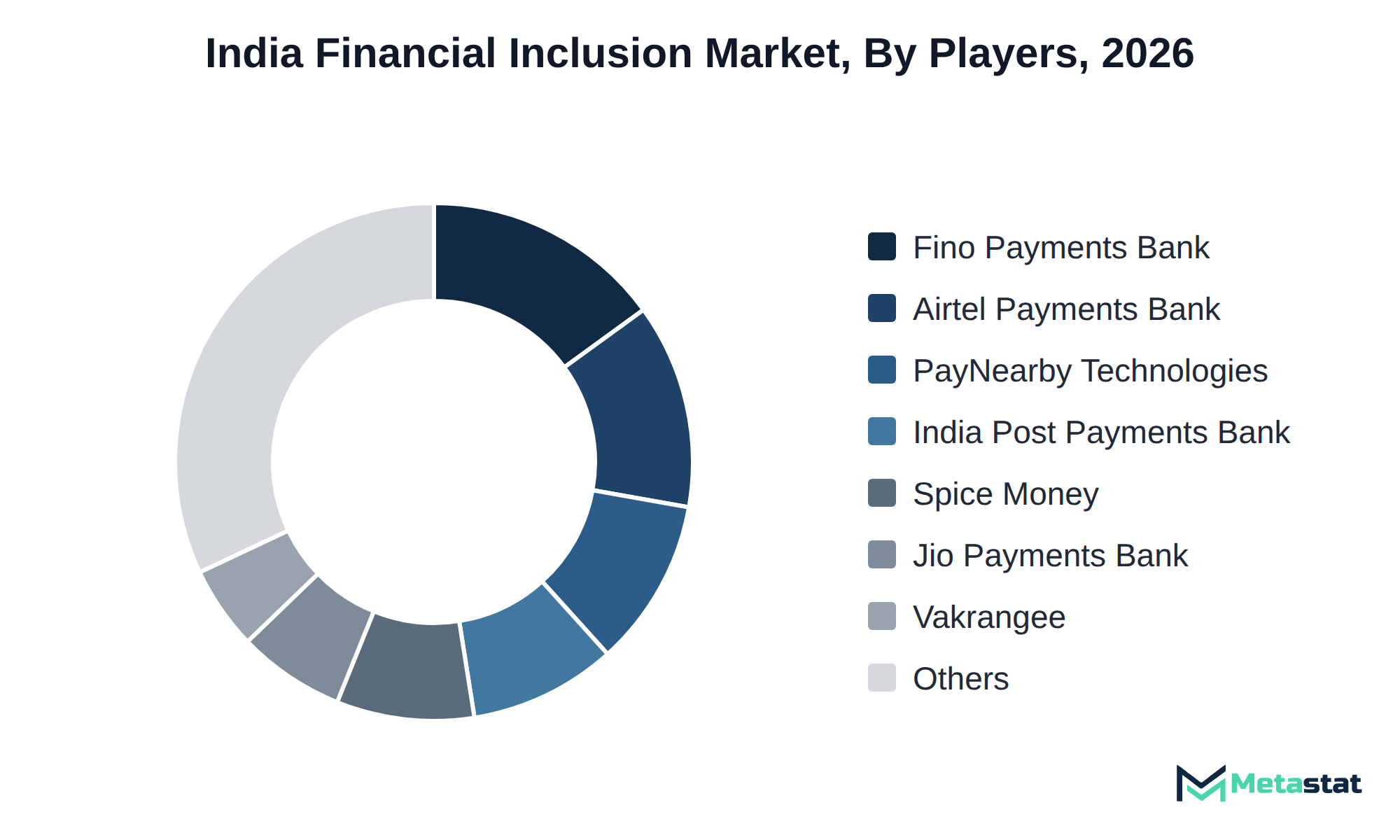
In the India Financial Inclusion market, companies compete across various provider types, including commercial banks and small finance banks. Commercial banks, including Atyati Technologies Private Limited and Fino Payments Bank Limited, focus on providing comprehensive financial services tailored to a diverse customer base.
Service offerings significantly influence buyer choices, emphasizing aspects including price and service quality. For instance, Airtel Payments Bank Limited and India Post Payments Bank Limited concentrate on low-cost payment solutions, appealing to budget-conscious consumers. Meanwhile, Ujjivan Small Finance Bank Limited emphasizes customized financial products, catering to specific customer needs.
This growth relies on several key developments within the India Financial Inclusion market. Increased adoption of digital financial services will be central to growth, particularly within the Payments and Money Transfer Services segment, which is projected to experience a compound annual growth rate (CAGR) of 20%. The expansion of microcredit and microfinance services will support underserved customer segments, driving further market growth. The growing focus on women borrowers and entrepreneurs, with a CAGR of 21.3%, highlights the commitment to inclusive financial solutions, enhancing economic empowerment among marginalized groups.
However, risks exist that could hinder the projected growth. Regulatory challenges and the potential for economic instability impact investment in the sector. Inadequate infrastructure in rural areas could limit the reach of financial services, particularly for low-income households and rural households. Addressing these challenges will be crucial for the market to achieve the anticipated size by 2033.
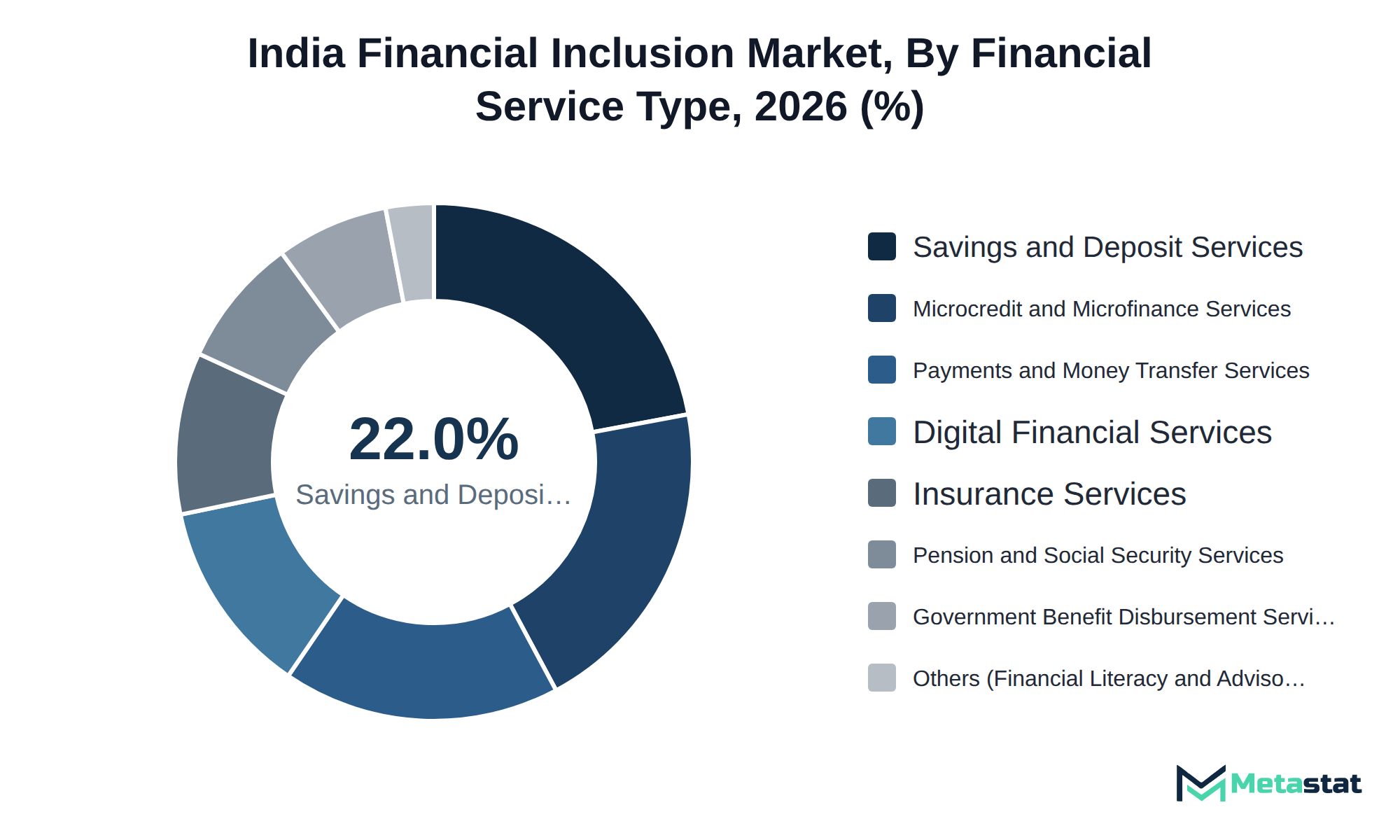
By Financial Service Type: Savings and Deposit Services, Payments and Money Transfer Services, Microcredit and Microfinance Services, Insurance Services, Pension and Social Security Services, Government Benefit Disbursement Services, Digital Financial Services, Others (Financial Literacy and Advisory Services)
By Provider Type: Commercial Banks, Regional Rural Banks, Small Finance Banks, Payments Banks, NBFC-Microfinance Institutions, Business Correspondent Network Operators, Financial Inclusion Technology Providers
By Delivery Channel: Bank Branches, Business Correspondent Banking Outlets, Micro-ATMs and Point-of-Sale Terminals, Assisted Digital Banking Kiosks, Mobile Banking Applications, Web-Based Banking Platforms, Common Service Centres
By Customer Segment: Low-Income Households, Rural Households, Urban Informal Workers, Women Borrowers and Entrepreneurs, Farmers and Agricultural Households, Micro and Small Enterprises, Self-Help Groups and Joint Liability Groups, Government Benefit Recipients
The report strategically identifies and profiles the key market players and analyses their core competencies in each sub-segment of the Financial Inclusion market.
Report Attributes | Details |
Study Period | 2021-2033 |
Base Year | 2025 |
Estimated Year | 2026 |
Forecast Period | 2026-2033 |
Historical Period | 2021-2025 |
Growth Rate | CAGR 18.9% from 2026 to 2033 |
Revenue Unit | USD million |
Segmentation | By Financial Service Type, Provider Type, Delivery Channel, Customer Segment, and Region |
Find answers to common questions about this report
The Financial Inclusion market size was valued at USD 1,605.8 million in 2025.
The market is projected to grow at a CAGR of 18.9% during the forecast period from 2026 to 2033.
Payments and Money Transfer Services leads the Financial Inclusion market with a projected value of USD 1,195.9 million by 2033. This segment surpasses others in terms of growth potential and market size.
Rising digital literacy among low-income households significantly influences the adoption of financial services. Growth in payments and money transfer services presents a substantial opportunity within the market, driven by increasing digital adoption among users and the rising demand for efficient transaction methods.
The lack of adequate infrastructure hinders the expansion of financial services in rural and underserved areas. Compliance costs arising from stringent regulations further challenge suppliers, straining profit margins and limiting rapid expansion.
Rising digital literacy among low-income households and the increasing reliance on mobile banking significantly favor adoption in the India Financial Inclusion market. Enhanced access to digital platforms enables users to transition from traditional banking methods, creating new opportunities for service providers to cater to evolving customer preferences.
The Financial Inclusion market is estimated to reach a valuation of USD 6,416 million by 2033.
Key players operating in the Financial Inclusion market include Atyati Technologies Private Limited, PayNearby Technologies Private Limited, Spice Money Limited, Fino Payments Bank Limited, India Post Payments Bank Limited, Airtel Payments Bank Limited, and Jio Payments Bank Limited.
Microcredit and microfinance services are projected to reach a value of USD 1,249.8 million by 2033, reflecting significant market demand.
Women borrowers and entrepreneurs exhibit the highest growth potential, with a compound annual growth rate of 21.3%.
The analysts below cover Banking & Finance research at Metastat Insights.
LEAD ANALYST
Utkarsh Khirodkar is a Lead Market Research Analyst at MetaStat Insight, specializing in market intelligence, technology sector assessments, and competitive strategy.

PRINCIPAL CONSULTANT - ENTERPRISE AI & EMERGING TECHNOLOGIES
Banking & Finance · Electronics and Semiconductor · Energy and Power · Healthcare IT · Information & Technology · Professional Services
Vijay Gunti is a Principal Consultant at MetaStat Insight, bringing over two decades of experience across enterprise digital transformation, technology strategy, and intelligent systems.
Evaluating sovereign cloud deployments for core banking platforms demands a clear view of data residency regulations and migration exit strategies. MetaStat Insight delivered an exhaustive review of regional latency tolerances, mainframe decommission milestones, and third-party vendor concentration risk. The regulatory compliance mapping across European and Asian financial jurisdictions gave our team a dependable baseline for multi-cloud infrastructure discussions.
Replacing petrochemical surfactants with bio-based alternatives requires realistic timelines on industrial precision fermentation scaling. The market research broke down commercialization timelines, feedstock sugar price sensitivities, and regional cosmetic ingredient regulatory approvals in Europe and East Asia. That supplier readiness mapping gave our formulations team reliable context when comparing renewable chemical sourcing roadmaps.
Tracking ceramic matrix composite adoption in high-bypass aero engines requires strict attention to material qualification cycles and FAA airworthiness testing milestones. The MetaStat Insight team provided a detailed timeline of silicon carbide fiber manufacturing capacity and commercial foundry lead times. Having clear visibility into upstream thermal barrier coating supply helped us stress-test our long-term component procurement strategy.
Explore related market intelligence reports worth reading alongside this one.