
LEAD ANALYST
Utkarsh Khirodkar is a Lead Market Research Analyst at MetaStat Insight, specializing in market intelligence, technology sector assessments, and competitive strategy.

India POS Terminals Market Size, Share, By Product Type (Countertop POS Terminals, Standalone Portable POS Terminals, Mobile POS Card Readers, Unattended POS Terminals and Others (Integrated POS Terminals)), By Deployment Model (On-Premises POS Systems and Cloud-Connected POS Systems), By Payment Acceptance (Contact-Based and Contactless), By End-Use Industry (Retail, Restaurants and Food Services, Hotels and Accommodation, Healthcare, Transportation and Logistics, Fuel Retailing, Entertainment and Recreation and Others (Education, Government Services, Personal Services)), Industry Analysis, Growth, Trends, and Forecast, 2026-2033
Report ID
MSI-5512
Published
October, 2026
Pages
264 Pages
Format
Historical
Base year
Forecast
Forecast period
Report Details
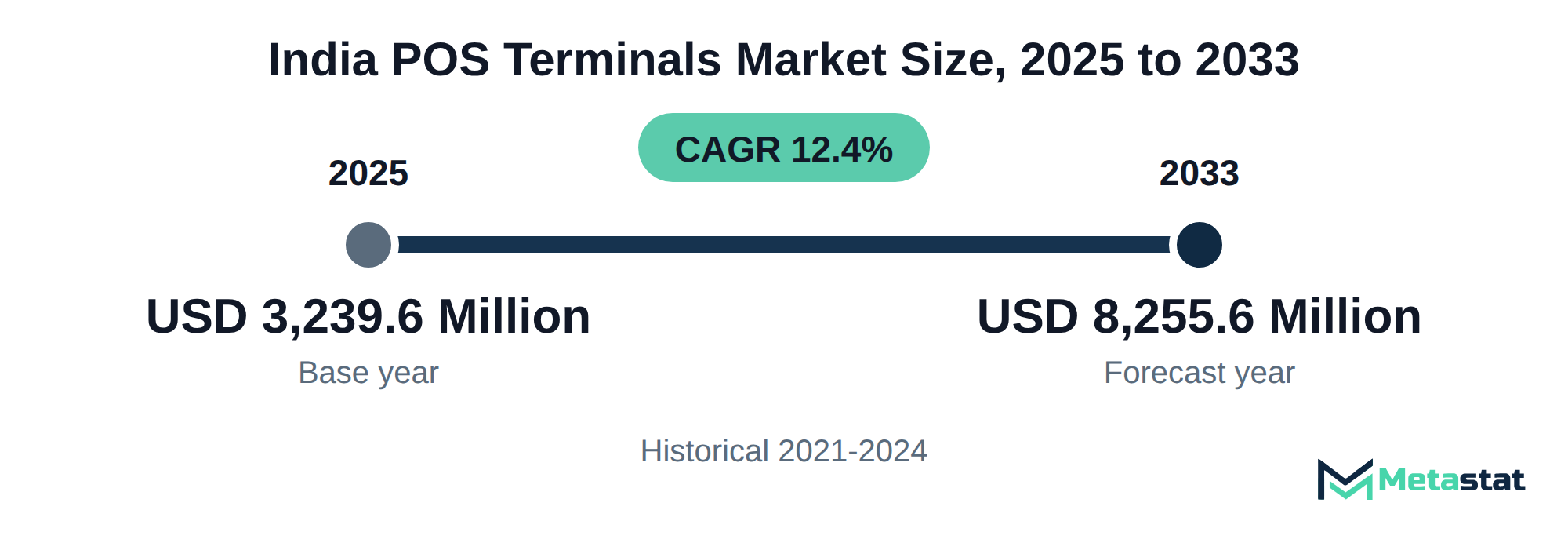
Market Valuation: Valued at $3,239.6 Million in 2025, projected to reach $8,255.6 Million by 2033 at a 12.4% CAGR.
Dominant Segment: Standalone portable POS terminals lead the market, driven by increasing demand for mobility and flexibility in payment processing, particularly in retail and food service sectors.
Geographic Lead: Urban areas in India exhibit the fastest growth in POS terminal adoption, supported by enhanced digital infrastructure and a rising preference for cashless transactions.
What's Inside: The report includes a comprehensive analysis of market dynamics, competitive landscape, and detailed forecasts for various segments, covering product types, deployment models, and end-use industries.
Growing Adoption of Contactless Payments: The contactless payment segment is projected to grow significantly, fueled by consumer preferences for quick and convenient transaction methods, particularly in urban settings.
Integration of Cloud-Connected Systems: Cloud-connected POS systems are anticipated to grow at a CAGR of 17.1%, driven by demand for real-time data access and operational efficiencies across various industries.
Choose Your License
India POS Terminals Market
The India POS Terminals market was valued at USD 3,239.6 million in 2025 and is projected to reach USD 8,255.6 million by 2033, growing at a CAGR of 12.4% over the forecast period.
The India POS Terminals market covers devices that process payments, including countertop systems, portable terminals, and mobile card readers. Buyers invest in these solutions to enhance transaction efficiency and improve customer experience. The increasing adoption of digital payment systems among consumers fuels demand, leading the retail, hospitality, and healthcare sectors to prioritize these technologies in their operations.
Growth in the market is driven by the rapid shift towards contactless payment solutions, which streamline transactions and reduce wait times. Standalone portable POS terminals represent the largest segment in terms of value, catering to businesses that require flexibility in payment processing. The retail sector seeks new payment solutions to meet changing consumer preferences, which adds momentum to the market.
Market expansion is particularly pronounced in urban areas, where technological adoption is more prevalent. This trend is supported by increasing smartphone penetration and the growing preference for cashless transactions. Enhanced connectivity and investment in digital infrastructure contribute to the positive outlook for the India POS Terminals market, enabling businesses to adopt advanced payment systems.
Buyers invest in the India POS Terminals market to enhance transaction efficiency and improve customer experiences. The adoption of advanced payment technologies by various sectors, including retail and hospitality, drives demand for sophisticated payment solutions. Increased consumer preference for effective payment processes has led to a significant rise in the deployment of POS systems across diverse industries.
The rapid growth of the e-commerce sector is a key factor for market expansion. Among the various segments, standalone portable POS terminals represent the largest value, reflecting their widespread use in dynamic retail environments. The growing emphasis on contactless payment methods adds to demand for these terminals, which businesses use to improve operations.
The market has a strong presence across key areas, and certain regions show higher adoption rates because of better infrastructure and digital payment initiatives. The integration of cloud-connected POS systems has emerged as a significant growth driver, enabling businesses to efficiently manage transactions and customer interactions. This trend highlights the evolving nature of payment solutions within the India POS Terminals market.
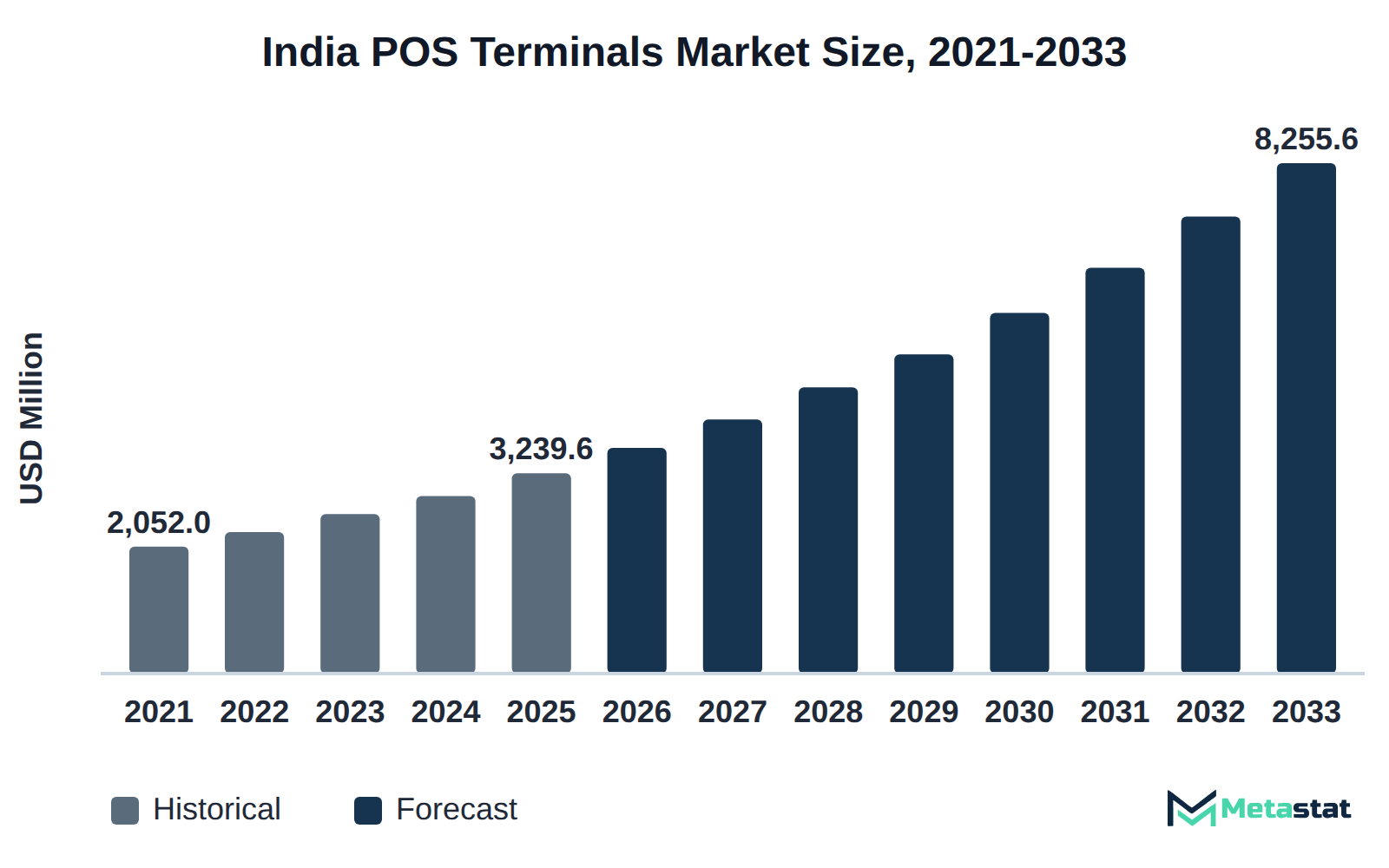
The adoption of Android POS terminals in India is transforming retail checkout processes, offering enhanced functionality and flexibility to merchants. By 2033, the market for standalone portable POS terminals is expected to reach USD 4,067.5 million, reflecting a growth trajectory driven by increasing demand for mobile payment solutions. This technology enables retailers to process transactions anywhere within their establishment, reducing queues and improving customer experiences.
Retailers increasingly prefer integrated checkout solutions that feature Android POS terminals due to their compatibility with various payment methods, including contact-based and contactless options. The anticipated growth in contactless payment acceptance, projected to reach USD 5,823.5 million by 2033, illustrates the shift towards faster and more secure transactions. Retail environments that implement these systems experience operational efficiencies, resulting in significant time and cost savings.
Integrating Android POS terminals into retail checkout systems positions businesses favorably within the competitive environment of the India POS Terminals market. Better transaction capabilities and customer service raise customer satisfaction, which supports repeat business and higher revenue.
The integration of Unified Payments Interface (UPI) and contactless card acceptance has transformed transaction methods within the India POS Terminals market. Adoption of contactless payments is anticipated to reach a value of USD 5,823.5 million by 2033, indicating strong growth driven by consumer preference for convenience and speed. Retailers increasingly prioritize systems that support these payment methods, responding to consumer demand for efficient transactions. Card acceptance at the terminal also depends on card payment processing solutions that route each transaction between the merchant and the issuing bank.
The pricing models for POS terminals incorporating UPI and contactless functionality often reflect the value these features deliver. Providers frequently offer tiered pricing structures, allowing businesses to select options that best suit their transaction volumes and operational needs. This flexibility enhances accessibility for various buyers, from small retailers to large enterprises, enabling them to integrate modern payment solutions without incurring prohibitive costs.
Creating a competitive pricing environment encourages widespread adoption of advanced payment technologies. Accepting UPI and contactless payments helps buyers meet changing consumer expectations and supports higher sales and customer satisfaction in the India POS Terminals market.
Rental costs for POS terminals represent a significant factor for retailers and service providers in the India POS Terminals market. The trend shows that businesses seeking to acquire POS terminals increasingly opt for rental models, similar to hardware-as-a-service arrangements, rather than outright purchases. This shift arises from the flexibility and lower upfront capital requirements associated with rentals. For instance, the rental costs for countertop POS terminals are projected to range from USD 1,131.4 million in 2026 to USD 2,093.6 million by 2033, reflecting a compound annual growth rate (CAGR) of 9.2%. These figures signal an evolving landscape for businesses in search of cost-effective solutions.
Retailers, especially small and medium enterprises, exhibit distinct needs in this rental model. These buyers prioritize affordability and ease of integration into existing systems, allowing them to quickly adapt to payment processing requirements. The ability to access the latest technology without significant financial risk encourages adoption among merchants. Such economic considerations impact overall competition in the market, with firms offering flexible and attractive rental terms strengthening their position. Rental costs and merchant acquisition economics shape the growth and accessibility of POS terminals across India.
Portable POS terminals offer distinct advantages over countertop devices for Indian merchants, particularly in terms of mobility and flexibility. The market for Portable POS terminals, especially Standalone Portable POS Terminals, is projected to reach USD 4,067.5 million by 2033, indicating significant growth potential. This segment caters to merchants who require efficient payment solutions in dynamic environments including markets, events, and outdoor settings, where traditional countertop devices fall short.
In contrast, Countertop POS terminals, while essential in fixed retail locations, lack the adaptability that portable devices provide. The ability to process transactions on the go enhances customer service and leads to increased sales opportunities. Merchants in sectors including retail and food services increasingly recognize the value of portable technology, especially with consumer preferences shifting toward convenience and speed in transactions.
The adoption of Portable POS terminals reflects a broader trend within the India POS Terminals market, where businesses seek to optimize their operations and enhance customer experiences. This shift toward more versatile payment solutions is driving demand for portable devices and changing how transactions are conducted across industries.
Indian retailers increasingly adopt contactless payments at POS terminals, driven by changing consumer preferences and technology advancements. Enhanced convenience and speed in transactions have become critical factors for businesses aiming to improve customer satisfaction and increase sales volumes. The shift towards contactless payments, particularly through mobile wallets and NFC-enabled devices, aligns with the growing trend of digital transactions in the India POS Terminals market. This trend is reflected in the projected increase of contactless payment acceptance, reaching USD 5,823.5 million by 2033, highlighting significant growth potential. The rapid expansion of payment options encourages merchants to upgrade existing systems to meet evolving consumer expectations. Consequently, the market experiences accelerated demand and heightened competition among providers to deliver innovative solutions that enable efficient payment experiences.
Businesses in the restaurant and food services sector exhibit a notable shift in payment preferences, contributing to overall market growth. The expected value for this segment reaches USD 1,606.5 million by 2033, reflecting the importance of adapting to changing consumer behaviors.
Cloud-connected POS systems enhance the capabilities of retail and service environments, driving significant growth in the India POS Terminals market. Increased internet penetration and improved network infrastructure facilitate the adoption of these systems, allowing businesses to access real-time data and analytics. This integration supports operational efficiency and lets retailers manage inventory, sales, and customer interactions through centralized platforms. The trend reflects a shift toward business models that adapt to changing market conditions.
Buyers including retailers and hospitality providers use cloud-connected systems, which reduces demand for traditional on-premises solutions. The projected compound annual growth rate of 17.1% for cloud-connected systems illustrates the substantial transition underway, positioning this segment as a key driver in the market. Investments in cloud technologies contribute to enhanced customer experiences, resulting in a competitive advantage for businesses adapting to digital transformation trends.
The India POS Terminals market encounters significant price sensitivity among buyers, particularly in the retail and hospitality sectors. High upfront costs for advanced POS systems deter smaller businesses from upgrading their equipment, resulting in slower adoption rates. Many small to medium-sized enterprises remain reliant on outdated payment processing systems, which hinders their capacity to offer modern transaction solutions. This persistent reliance leads to smaller order volumes and an overall delay in the replacement of aging terminals, limiting revenue growth for providers. Increased competition among suppliers intensifies the pressure to lower prices. However, profit margins for manufacturers remain constrained due to rising component costs. These dynamics affect the market's growth trajectory, with increasing operational costs challenging investment in new technologies, further slowing the pace of modernization across various end-use industries.
In the face of these challenges, businesses in the healthcare sector experience similar constraints driven by budget limitations. These factors critically impact the overall adoption landscape, making it essential for manufacturers to strategically address pricing models to stimulate demand within the India POS Terminals market.
Profitability in the India POS Terminals market faces challenges due to rising input costs, particularly for components including payment processors and hardware. Suppliers experience increased expenses in sourcing high-quality materials, which impacts their margins. In response, many manufacturers explore cost-effective alternatives, including local sourcing and partnerships with component suppliers to enhance cost efficiency. Several players invest in technology to streamline production processes and reduce operational costs, ensuring competitiveness within the market. This shift lets suppliers manage input costs and maintain their pricing structures in a highly competitive environment. Suppliers emphasize innovation in design and functionality to differentiate their offerings, striving to attract a broader customer base while managing profitability concerns. Ultimately, addressing input cost pressures becomes essential for sustaining growth and capturing market share in the evolving landscape.
Standalone portable POS terminals represent a significant growth opportunity within the India POS Terminals market, projected to reach USD 4,067.5 million by 2033, with a CAGR of 13%. This segment benefits from increasing demand for mobility and flexibility in payment processing, particularly among retailers and service providers. The shift towards portable systems allows businesses to enhance customer engagement through quick transactions and improved service delivery.
Various industries, particularly retail and food services, are increasingly adopting standalone portable terminals for their ability to support diverse payment methods. These systems are instrumental in facilitating contactless payments, a trend that aligns with changing consumer preferences. The market’s expansion reflects a broader transition towards more adaptable payment solutions, addressing the evolving needs of merchants and consumers alike.
Competition intensifies, and suppliers focusing on innovation within portable POS technology stand to gain substantial market share. Integrating advanced features including digital wallets and loyalty programs enhances the value proposition of standalone portable terminals, driving higher adoption rates in the market.
The India POS Terminals market is segmented based on Product Type, Deployment Model, Payment Acceptance, and End-Use Industry.
These systems are widely used in retail environments for in-store payment processing, providing an efficient and secure method for transactions. The growth in this segment is primarily driven by the increasing demand for enhanced customer experience and transaction speed. Compared to other product types, countertop POS terminals exhibit slower growth, with a lower CAGR than standalone portable POS terminals, which is projected at 13%. This slower growth reflects the established nature of countertop systems in retail, while the rise of mobile and portable solutions highlights a shift in consumer preferences toward flexibility and mobility. The transition to digital payment methods further supports the expansion of countertop systems, ensuring their continued relevance in the evolving market.
These terminals allow merchants to process transactions away from a fixed location, enhancing the customer experience through increased mobility. Retailers and food service providers widely adopt this technology to facilitate payments directly at the point of service, significantly improving transaction convenience. The rapid adoption of contactless payments drives this segment, reflecting changing consumer preferences toward faster, hassle-free transactions. Compared to other sub-segments, this segment exhibits a higher growth rate, supported by increasing demand for portable solutions that enhance service delivery. The expected CAGR of 13% surpasses that of Countertop POS Terminals at 9.2%, indicating a strong preference among buyers for flexibility in payment processing.
Mobile POS Card Readers segment is expected to reach USD 976.6 million by 2033. These devices facilitate transactions through mobile devices, enabling merchants to accept payments from customers anywhere. Popular among small businesses, food vendors, and service providers, their portability enhances customer convenience and operational flexibility. Growth in this segment is driven by rising demand for contactless payment solutions, aligning with consumer preferences for quick and efficient transactions. Compared to other sub-segments, including Countertop POS Terminals, which are projected to grow at a CAGR of 9.2%, Mobile POS Card Readers exhibit faster growth, supported by a shift towards mobile payment technologies. This trend reflects an ongoing transformation in the retail and service sectors, which increasingly rely on mobile solutions to improve customer engagement and transaction efficiency. The India POS Terminals market is expected to continue evolving, with Mobile POS Card Readers playing an important role in expanding payment acceptance across diverse environments.
Unattended POS Terminals segment is projected to grow at a CAGR of 16.2% during the forecast period. These terminals function autonomously, allowing customers to complete transactions without direct interaction with a sales associate. Industries including retail and self-service kiosks increasingly adopt unattended POS terminals to streamline operations and enhance the customer experience. The rising preference for automation and contactless payment methods drives this segment's growth, reflecting a shift in consumer behavior and business strategies. Compared to other product types, unattended POS terminals experience a faster growth trajectory due to increasing demand for efficiency and convenience in payment processing. This segment's projected revenue demonstrates its importance in the evolving landscape of the India POS Terminals market, differentiating it from alternatives that do not offer the same level of operational efficiency.
Integrated POS terminals serve multifunctional devices that facilitate payment processing and improve retail operations. These terminals find applications across various industries, including retail, hospitality, and transportation. The adoption of integrated systems stems from the increasing demand for efficient transaction experiences and enhanced operational efficiency. One factor influencing this segment is the rising trend of digital payments, which drives businesses toward adopting solutions that integrate multiple functionalities into a single terminal. Compared to other segments, integrated POS terminals experience slower growth due to higher initial implementation costs; however, they cater to specific customer needs for versatility and advanced features. The India POS Terminals market reflects a shift toward solutions that combine payment acceptance with inventory management and customer engagement capabilities.
On-Premises POS Systems segment is valued at USD 2,397.4 million in 2026 and is projected to reach USD 4,479.5 million by 2033, at a CAGR of 9.3% during the forecast period. These systems serve primarily in retail environments, allowing businesses to manage transactions directly at the point of sale. Demand for On-Premises POS Systems is driven by the increasing requirement for secure and efficient payment processing, particularly in sectors including retail and hospitality. This segment exhibits slower growth compared to Cloud-Connected POS Systems, which are projected to grow at a CAGR of 17.1%. The reliance on traditional systems poses challenges; however, many businesses prefer them for their perceived reliability and control over transaction data. The market continues to adapt, emphasizing the importance of integrating newer technologies while maintaining user familiarity and trust.
Cloud-Connected POS Systems segment is estimated to reach USD 3,776.1 million by 2033, at a CAGR of 17.1% during the forecast period. These systems facilitate integration with various online services, enabling businesses to manage transactions and inventory efficiently. Retailers and service providers increasingly adopt cloud-connected systems for their flexibility and scalability, accommodating different business sizes and types. The growth of this segment is driven by rising demand for real-time data access and analytics, allowing businesses to make informed decisions. Compared to other deployment models, including On-Premises POS Systems, cloud-connected systems demonstrate faster growth due to lower upfront costs and reduced maintenance burdens. The market shows a significant shift towards this segment, reflecting a broader trend of digital transformation across industries.
Contact-Based segment is valued at USD 1,460.9 million in 2026 and is projected to reach USD 2,432.1 million by 2033, at a CAGR of 7.6% during the forecast period. This segment primarily facilitates in-person transactions where customers physically swipe, dip, or insert their payment cards. Retailers and service providers heavily employ Contact-Based terminals to ensure secure payment processing, thereby enhancing customer experience and satisfaction. Increasing urbanization and the rise of consumer spending in the retail and restaurants and food services sectors drive demand for these devices. Compared to the Contactless segment, which is projected to grow at a CAGR of 15%, the Contact-Based segment experiences slower growth due to a growing preference for faster, more convenient payment methods. However, ongoing technological advancements in payment security enable better integration of Contact-Based systems into existing infrastructures, thereby supporting further market expansion.
Contactless payment acceptance is estimated to reach USD 5,823.5 million by 2033, at a CAGR of 15% during the forecast period. This payment method is widely adopted in retail environments, restaurants, and other service sectors, facilitating quick and convenient transactions for consumers. The growing preference for touch-free payment solutions drives demand, particularly in urban areas with higher technological penetration. Compared to contact-based payment systems, which exhibit a CAGR of 7.6%, the contactless segment shows significantly faster growth. Innovations in mobile payment technologies and increasing smartphone penetration further enhance the appeal of contactless payments. This segment caters primarily to tech-savvy consumers who favor convenience, differentiating it from traditional payment methods. The India POS Terminals market evolves, reflecting these consumer trends and technological advancements.
Retail segment is valued at USD 1,771.7 million in 2026 and is projected to reach USD 3,738.1 million by 2033, at a CAGR of 11.3% during the forecast period. These terminals facilitate payment processing and enhance customer experiences in retail environments, where efficiency and speed are critical. Demand growth in this segment is driven by increasing consumer preference for digital payment methods and the need for improved transaction times. Unlike other segments, retail POS terminals benefit from high transaction volumes, translating into significant revenue potential. The retail segment experiences stronger growth compared to other end-use industries, reflecting the ongoing digital transformation among retailers seeking to meet evolving consumer expectations. This transformation positions the segment favorably within the India POS Terminals market.
Restaurants and Food Services segment is estimated to reach USD 1,606.5 million by 2033, at a CAGR of 13.5% during the forecast period. This segment primarily serves eateries and catering services, facilitating efficient transactions and enhancing customer experiences. The rapid adoption of digital payment methods among consumers drives demand for advanced point-of-sale solutions. Compared to other segments, this category exhibits a higher growth rate, influenced by an increasing shift towards contactless payments. The growing preference for convenience in dining experiences significantly impacts this segment, prompting service providers to upgrade their payment systems. These changes position the Restaurants and Food Services segment as a vital contributor to the India POS Terminals market, reflecting broader trends in consumer behavior and technology integration.
The Hotels and Accommodation segment is expected to reach USD 720.7 million by 2033. This segment serves hotels, resorts, and other lodging facilities that rely on efficient payment systems to enhance customer service and improve operations. Growth in this segment is driven by increasing travel and tourism, which boosts demand for more sophisticated payment solutions. Compared to other segments, it exhibits a moderate growth rate, with a CAGR of 14.3% anticipated for healthcare for comparison. The Hotels and Accommodation segment focuses on improving customer experience through advanced technology and efficient transactions, distinguishing it from the retail and food service sectors. The demand for integrated solutions that simplify payment processing positions the segment for expansion, contributing to the overall growth of the India POS Terminals market.
The healthcare segment is projected to grow at a CAGR of 14.3% during the forecast period. This segment primarily serves hospitals, clinics, and other healthcare facilities, facilitating payment processing for medical services and products. Demand for advanced payment solutions in healthcare stems from the emphasis on enhancing patient experience and streamlining billing processes. Healthcare providers require efficient transaction systems to handle increased patient volumes and diverse payment methods. Compared to other segments, including retail or restaurants, healthcare experiences faster growth, driven by technological advancements and the increasing adoption of digital payment solutions. The urgency for secure and reliable payment systems distinguishes this segment, positioning it for significant expansion in the India POS Terminals market.
Transportation and Logistics encompass critical operations that facilitate the movement of goods and services. This segment primarily serves businesses involved in freight transport, warehouse management, and distribution services, integrating payment solutions to streamline transactions. The adoption of advanced payment technologies drives this segment, reflecting a broader trend of digital transformation in logistics. Increasing demand for efficiency and transparency in supply chain management influences operators to upgrade their payment systems. This segment experiences distinct dynamics compared to others in the group, with a stronger focus on technology integration that drives higher investment in modern POS solutions. The emphasis on real-time transaction processing distinguishes it from traditional retail applications, leading to different buyer profiles and payment acceptance preferences.
Fuel retailing involves the sale of fuel products to consumers, typically at gas stations. This segment serves various customers, including individual vehicle owners, commercial fleets, and transportation companies. The segment experiences growth driven by the increasing number of vehicles and rising fuel consumption in India. Advancements in payment technologies enhance customer convenience, prompting more fuel retailers to adopt advanced POS systems. Compared to other segments, fuel retailing features distinctive purchasing patterns and customer behavior, often emphasizing efficiency and speed in transactions. This focus differentiates fuel retailing from industries including retail and hospitality, where customer engagement is often more relational and service-oriented. The rapid expansion of the fuel retail sector highlights the need for integrated payment solutions that simplify transactions and create efficient customer experiences, contributing to overall growth in the India POS Terminals market.
Entertainment and Recreation involves various activities designed for enjoyment and leisure, appealing to diverse customer groups, including families, young adults, and tourists. This segment typically includes cinemas, amusement parks, theaters, and other recreational venues. Demand in this sector is driven by increasing disposable incomes and a growing interest in leisure activities, encouraging consumers to spend more on entertainment experiences. This segment stands out due to its unique consumer base, which often prioritizes the quality and innovation of services over cost. Compared to other segments, including Retail or Healthcare, which have defined growth trajectories, this sector experiences fluctuations driven by seasonal trends and consumer preferences. The India POS Terminals market supports this segment by providing advanced payment solutions that enhance customer convenience and operational efficiency.
This segment focuses on services provided in education, government, and personal services sectors. Various institutions, including schools and administrative offices, use POS terminals for efficient transaction processing and record-keeping. Adoption of these systems is driven by ongoing digital transformation efforts across multiple sectors, leading to enhanced operational efficiency and customer experience. Compared to other segments, this area experiences slower growth due to budget constraints and varying levels of technological readiness among organizations. Integration of advanced payment solutions significantly impacts operational costs, influencing purchasing decisions among public and private entities. With an increasing emphasis on digital payments, growth in this segment is expected to contribute positively to the overall dynamics of the India POS Terminals market.
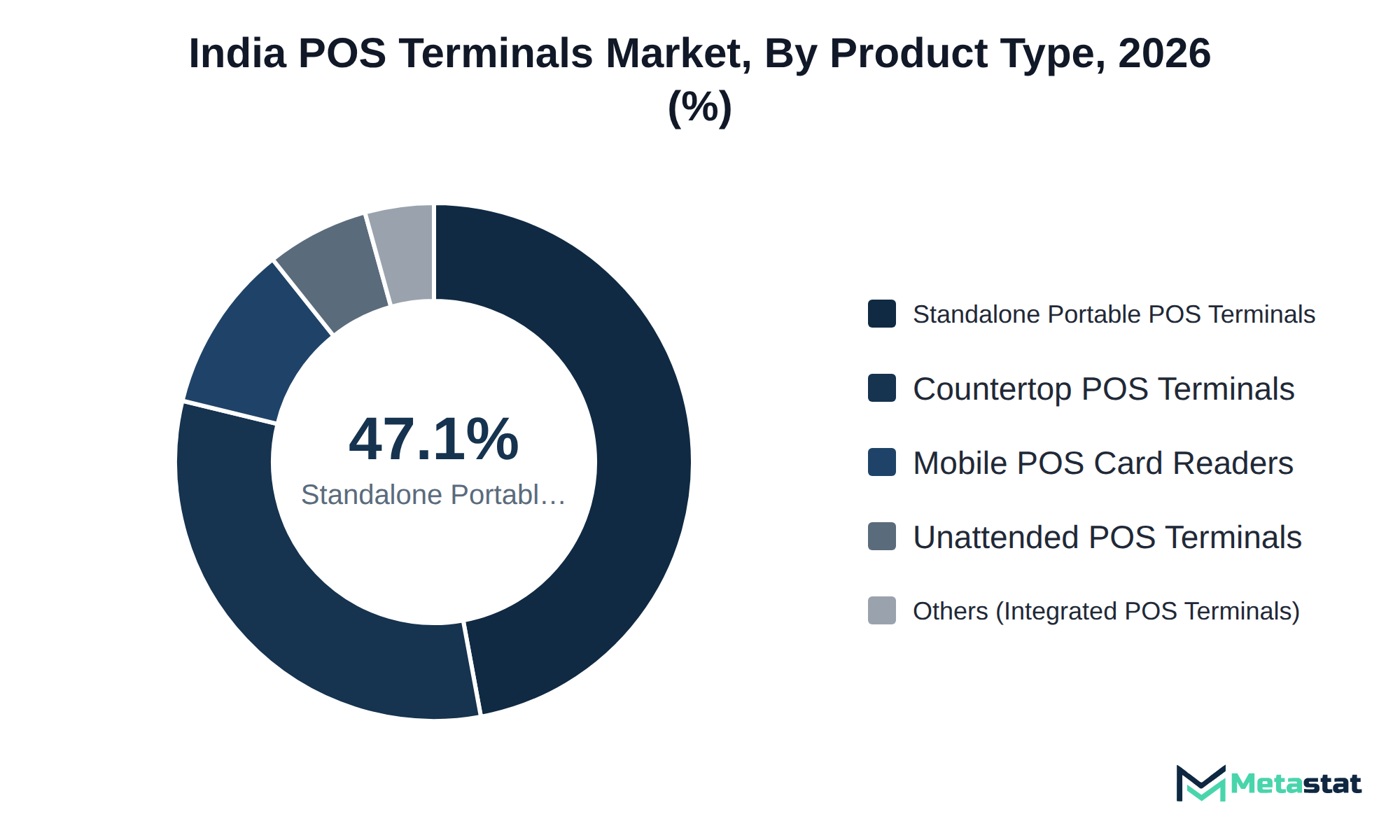
In the India POS Terminals market, companies employ various strategies to differentiate their offerings. Product types including Countertop POS Terminals and Standalone Portable POS Terminals appeal to different segments based on functionality and mobility. Pricing, customization, and service quality are primary factors influencing buyer decisions. Buyers seek integrated solutions that provide a comprehensive ecosystem, enhancing both user experience and operational efficiency.
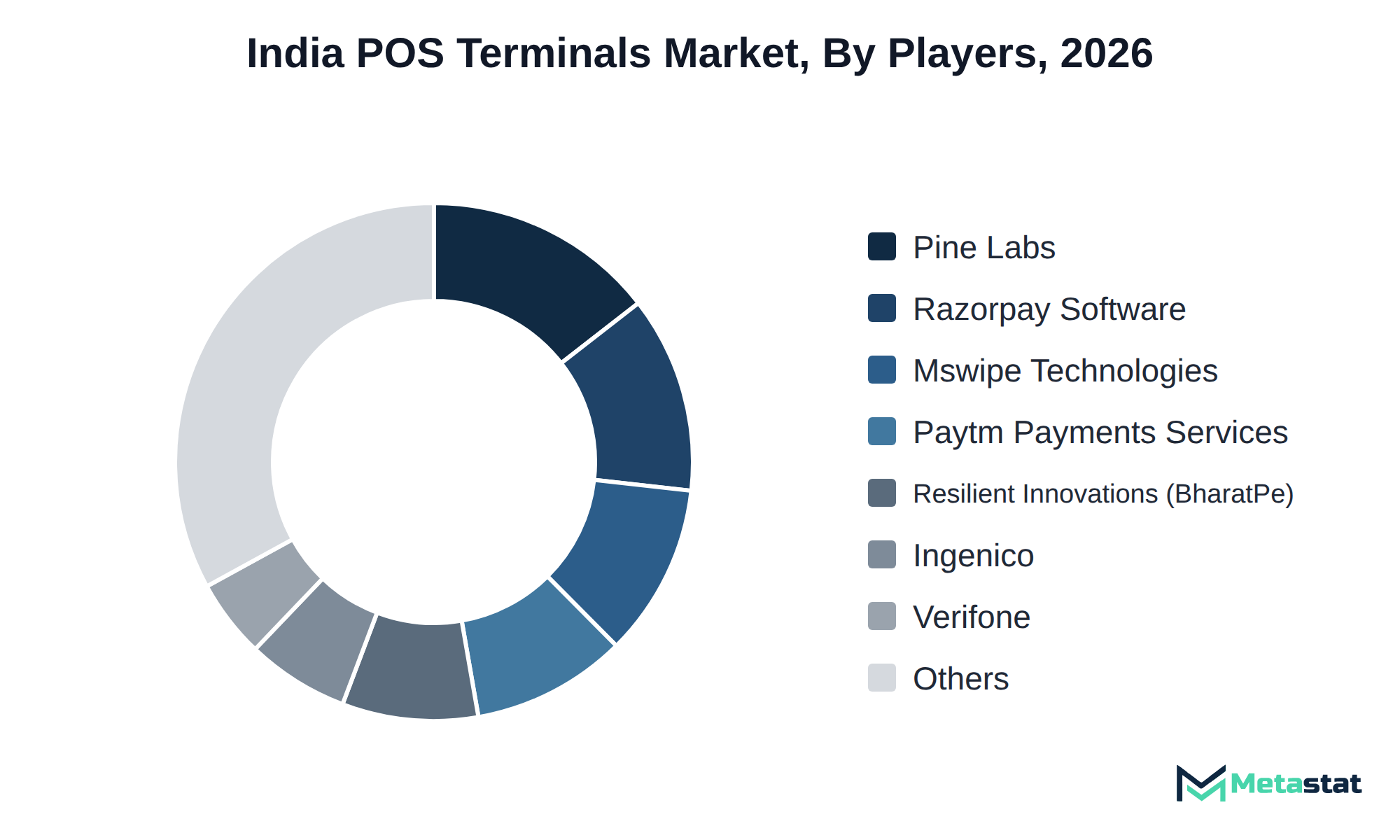
Pine Labs Limited emphasizes innovation in payment solutions, focusing on enhancing customer engagement through advanced technology. Razorpay Software Limited targets online and offline businesses, delivering robust payment processing capabilities tailored to diverse industry needs. Mswipe Technologies Private Limited specializes in portable payment solutions, enabling merchants to accept payments seamlessly in various environments.
To reach this target, several developments occur. A significant driver includes the increasing adoption of Cloud-Connected POS Systems, projected to achieve USD 3,776.1 million by 2033, reflecting a CAGR of 17.1%. This segment appeals particularly to businesses seeking flexible, scalable solutions that enhance operational efficiency. Concurrently, the Contactless payment acceptance segment is anticipated to grow substantially, reaching USD 5,823.5 million by 2033, influenced by consumer preference for faster and safer transactions across various end-use industries, including Retail and Restaurants and Food Services. However, risks persist that could hinder growth. Economic fluctuations and regulatory changes impact investment in new technologies, leading to slower adoption rates. These factors could affect overall market performance, emphasizing the need for stakeholders to monitor conditions closely. The India POS Terminals market presents strong potential, but stakeholders must manage these challenges to reach high growth targets.
By Product Type: Countertop POS Terminals, Standalone Portable POS Terminals, Mobile POS Card Readers, Unattended POS Terminals, Others (Integrated POS Terminals)
By Payment Acceptance: Contact-Based, Contactless
By End-Use Industry: Retail, Restaurants and Food Services, Hotels and Accommodation, Healthcare, Transportation and Logistics, Fuel Retailing, Entertainment and Recreation, Others (Education, Government Services, Personal Services)
The report strategically identifies and profiles the key market players and analyses their core competencies in each sub-segment of the POS Terminals market.
Report Attributes | Details |
Study Period | 2021-2033 |
Base Year | 2025 |
Estimated Year | 2026 |
Forecast Period | 2026-2033 |
Historical Period | 2021-2025 |
Growth Rate | CAGR 12.4% from 2026 to 2033 |
Revenue Unit | USD million |
Segmentation | By Product Type, Deployment Model, Payment Acceptance, End-Use Industry, and Region |
Find answers to common questions about this report
The POS Terminals market size was valued at USD 3,239.6 million in 2025.
The market is projected to grow at a CAGR of 12.4% during the forecast period from 2026 to 2033.
Standalone Portable POS Terminals lead the market with a projected value of USD 4,067.5 million by 2033. This segment outpaces others in growth potential, reflecting a compound annual growth rate of 13%.
Retailers increasingly adopt contactless payment methods due to changes in consumer preferences and technology advancements. The expansion of cloud-connected POS systems enhances operational efficiencies, enabling businesses to manage inventory and customer interactions more effectively.
Price sensitivity among buyers, particularly in the retail and hospitality sectors, restrains market growth due to high upfront costs for advanced POS systems. This leads to slower adoption rates, as many small to medium-sized enterprises remain reliant on outdated payment processing systems.
Factors favoring adoption in the India POS Terminals market include increasing demand for mobility and flexibility in payment processing. Retailers and service providers enhance customer engagement through quick transactions, driving the growth of standalone portable POS terminals, which are projected to reach USD 4,067.5 million by 2033.
The POS Terminals market is estimated to reach a valuation of USD 8,255.6 million by 2033.
Key players operating in the POS Terminals market include Pine Labs Limited, Razorpay Software Limited, Mswipe Technologies Private Limited, Paytm Payments Services Ltd., Ingenico, Verifone, and PAX Global Technology Limited.
Contactless payment acceptance is projected to reach USD 5,823.5 million by 2033, reflecting a compound annual growth rate of 15%.
Standalone portable POS terminals are expected to reach USD 4,067.5 million by 2033, growing at a CAGR of 13%.
The analysts below cover Banking & Finance research at Metastat Insights.
LEAD ANALYST
Utkarsh Khirodkar is a Lead Market Research Analyst at MetaStat Insight, specializing in market intelligence, technology sector assessments, and competitive strategy.

PRINCIPAL CONSULTANT - ENTERPRISE AI & EMERGING TECHNOLOGIES
Banking & Finance · Electronics and Semiconductor · Energy and Power · Healthcare IT · Information & Technology · Professional Services
Vijay Gunti is a Principal Consultant at MetaStat Insight, bringing over two decades of experience across enterprise digital transformation, technology strategy, and intelligent systems.
Tracking maintenance cycle demand for secondary flight display units and terrain collision avoidance systems across regional jet fleets involves complex aftermarket dynamics. MetaStat Insight provided practical analysis separating airline retrofit programs from OEM forward-fit production schedules in North America and Southeast Asia. The supplier matrix highlighted component obsolescence timelines without resorting to vague generalizations. The dataset served as a dependable reference during our annual program review meetings.
Evaluating secondary resin quality across post-consumer packaging streams requires reliable technical segmentation. MetaStat Insight delivered an objective assessment that distinguished between extrusion-grade flake pricing and optical sorting throughput limitations across Western Europe. The competitive positioning breakdown for licensed depolymerization technology providers answered several questions during our feedstock feasibility audit. Their team clarified regional trade restrictions on mixed plastic scrap quickly when our team submitted follow-up requests.
Evaluating sovereign cloud deployments for core banking platforms demands a clear view of data residency regulations and migration exit strategies. MetaStat Insight delivered an exhaustive review of regional latency tolerances, mainframe decommission milestones, and third-party vendor concentration risk. The regulatory compliance mapping across European and Asian financial jurisdictions gave our team a dependable baseline for multi-cloud infrastructure discussions.
Explore related market intelligence reports worth reading alongside this one.