
LEAD ANALYST
Utkarsh Khirodkar is a Lead Market Research Analyst at MetaStat Insight, specializing in market intelligence, technology sector assessments, and competitive strategy.

Global Microinsurance Market Size, Share, By Insurance Type (Life and Funeral, Credit Life, Health and Hospital Cash, Personal Accident and Disability, Agriculture and Livestock, Property and Microenterprise), By Distribution Channel (Banks and Microfinance Institutions, Agents and Brokers, Cooperatives and Community Organizations, Digital Platforms and Mobile Operators, Direct Insurer Sales), By Policy Structure (Group Policies and Individual Policies), By Premium Funding (Unsubsidized Policies, Partially Subsidized Policies, Fully Subsidized Policies), Industry Analysis, Growth, Trends, and Forecast, 2026-2033
Report ID
MSI-5835
Published
November, 2026
Pages
288 Pages
Format
Historical
Base year
Forecast
Forecast period
Report Details
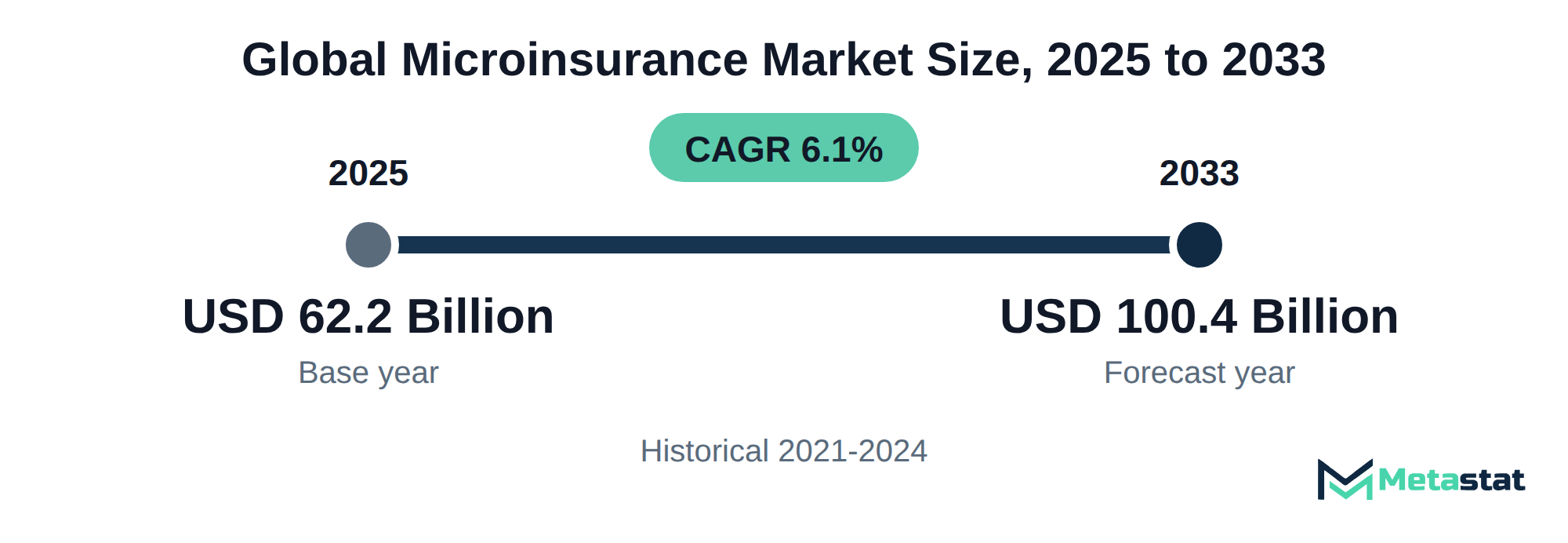
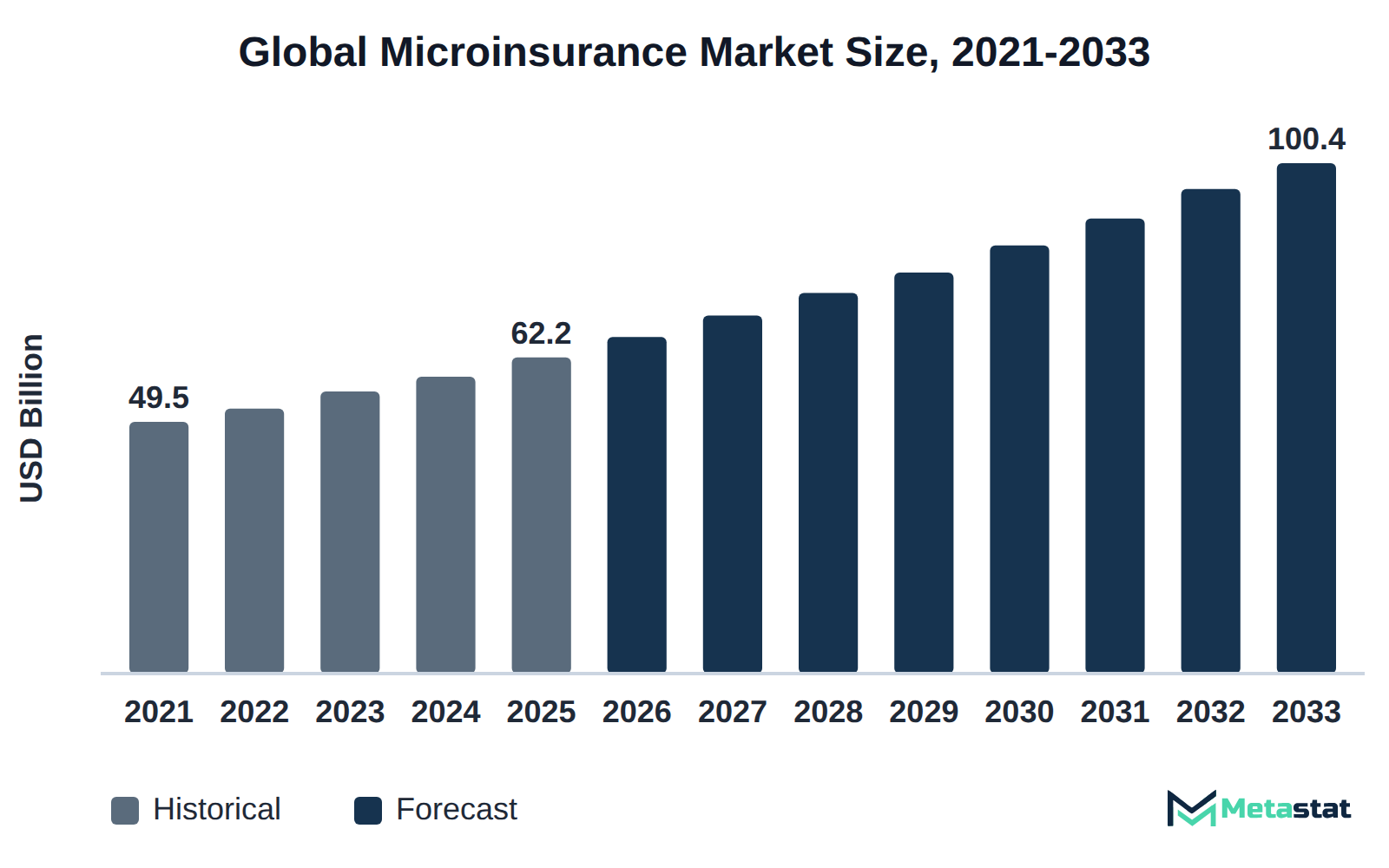
Market Valuation: Valued at $62.2 Billion in 2025, projected to reach $100.4 Billion by 2033 at a 6.1% CAGR.
Dominant Segment: The life and funeral insurance segment leads the microinsurance market, driven by significant demand for basic protection products among low-income households.
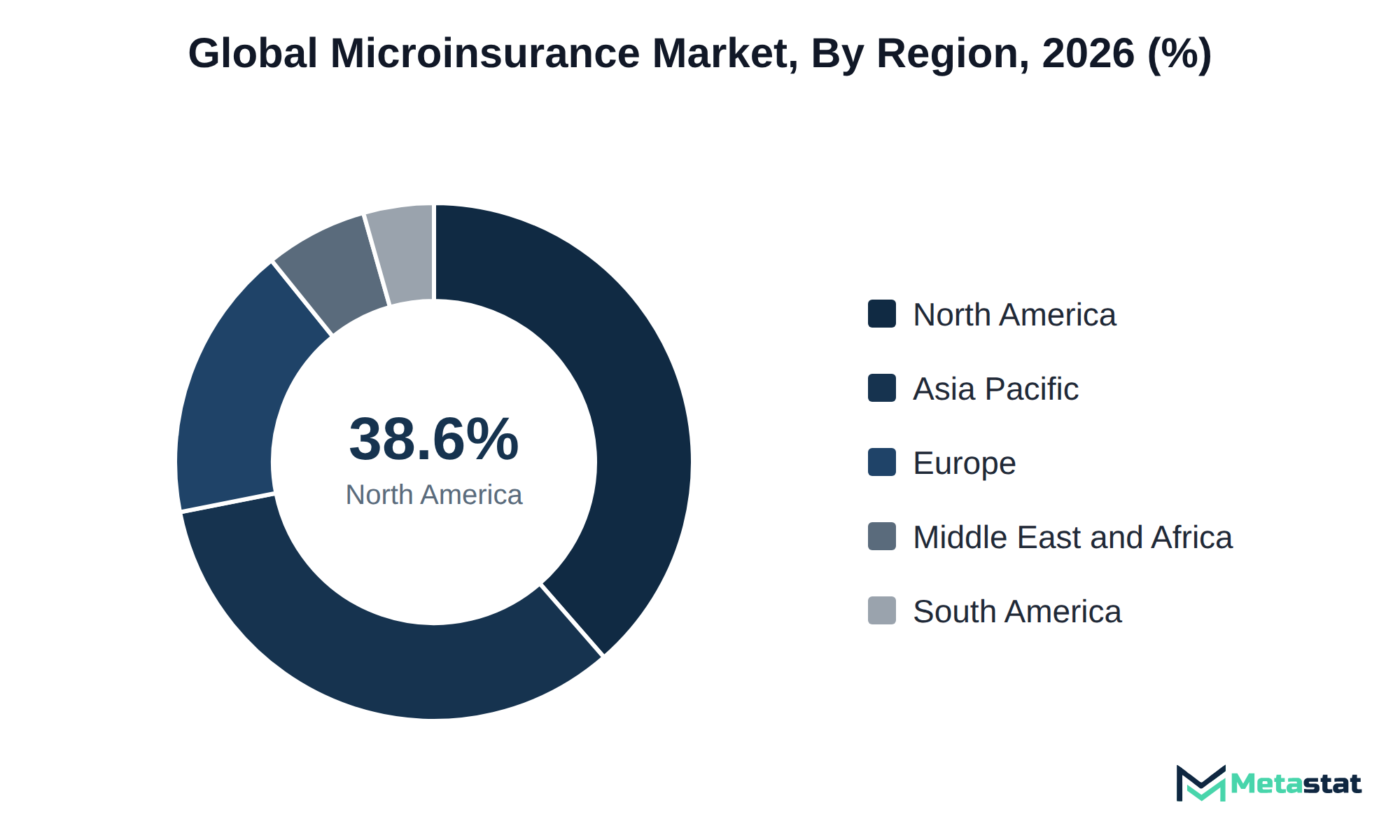
Geographic Lead: North America is the leading region in the microinsurance market, holding 38.6% of the market share in 2025, with the US expected to maintain this position into 2026.
What's Inside: This report provides comprehensive coverage of the microinsurance market, including detailed analyses of various segments, distribution channels, and policy structures, along with a forecast window extending to 2033.
Emerging Trends: The adoption of digital platforms and mobile operators is rapidly growing, with a projected CAGR of 9.7%, reflecting a shift towards more accessible and convenient purchasing options for consumers.
Rising Demand for Health Coverage: The health and hospital cash insurance segment is projected to reach USD 24.3 billion by 2033, highlighting the increasing need for accessible healthcare solutions among underserved populations.
Choose Your License
Global Microinsurance Market
The global Microinsurance market was valued at USD 62.2 billion in 2025 and is projected to reach USD 100.4 billion by 2033, growing at a CAGR of 6.1% over the forecast period.
The Microinsurance market encompasses various types of low-cost insurance products designed to provide coverage for individuals with limited financial resources. Buyers invest in these products due to their affordability and the protection they offer against unexpected risks. This market serves low-income households, small business owners, and agricultural workers who seek financial security and support in times of need.
Growth in the market is driven by increasing awareness of financial protection among underserved populations. The life and funeral insurance segment holds the largest value, reflecting significant demand for basic protection products. North America holds 38.6% of the market in 2025, with the US leading in 2026. The Asia Pacific region follows closely, representing a significant share of the market, supported by a growing population and rising disposable incomes.
Technological advances drive growth in the microinsurance market by making insurance products easier to access through digital platforms. Insurers use insurtech tools to reach potential customers in remote areas, streamlining the purchasing process. This shift improves customer engagement and drives demand for microinsurance solutions, supporting market growth.
The demand for microinsurance products arises from the increasing need for affordable coverage among low-income individuals and small businesses. Buyers invest in these products to mitigate risks associated with health, life, and property, ensuring financial protection in times of uncertainty. The microinsurance market addresses gaps in traditional insurance offerings, providing tailored solutions that cater to the needs of underserved populations.
Growth in the market is driven by rising awareness of insurance benefits and the expansion of distribution channels, particularly through digital platforms and microfinance institutions. Health and Hospital Cash insurance represents the most significant segment, reflecting the growing emphasis on accessible healthcare solutions. North America holds a 38.6% share of the market in 2025, with the US leading in 2026, demonstrating strong demand for tailored insurance products across demographics.
Investment in technology enhances product delivery and customer engagement, further stimulating market expansion. The integration of mobile platforms facilitates greater accessibility, allowing insurance providers to reach a wider audience. This shift supports a more inclusive insurance ecosystem and contributes to the growth of the microinsurance market.
Credit life microinsurance delivered through cooperatives and lenders represents a growing focus within the microinsurance market. This model enhances access to affordable insurance coverage for low-income individuals who often lack traditional financial services. The cooperative structure allows members to collectively manage risks and share resources, creating a sense of community and support.
In 2026, the credit life segment is projected to reach USD 16.2 billion by 2033, reflecting a commitment to improving financial security among underserved populations. Lenders typically offer this insurance alongside loans, ensuring that outstanding debts are covered in the event of the borrower's death. This integration protects the lender's financial interests and provides peace of mind for borrowers.
The commercial consequence of this trend is significant. Positioning credit life microinsurance within cooperatives and lenders addresses the specific needs of vulnerable populations, increasing adoption rates. This shift encourages greater financial inclusion and supports growth in the microinsurance market.
Mobile wallet distribution for microinsurance has gained traction, providing a straightforward purchasing experience for policyholders. This distribution channel enables buyers to access microinsurance products through their mobile devices, supporting the increasing adoption of digital solutions in financial services. By 2033, the segment for digital platforms and mobile operators is projected to grow considerably, with a compound annual growth rate (CAGR) of 9.7%. This growth indicates a shift toward convenience, allowing customers to manage their policies, make payments, and submit claims efficiently.
The microinsurance market benefits from this trend, as mobile wallets facilitate low-cost transactions, attracting a broader range of customers. The integration of mobile wallets with microinsurance policies reduces barriers to entry, encouraging low-income individuals to secure coverage that protects against various risks. Digital platforms enhance customer engagement by enabling easy access to information and support, contributing to higher satisfaction levels.
These developments position mobile wallet distribution as a key component of the microinsurance market, driving inclusivity and expanding the customer base. Consequently, companies focusing on mobile wallet integration in their microinsurance offerings capture new market segments, increasing their competitive advantage and revenue opportunities.
Parametric crop microinsurance addresses the unique risks faced by smallholder farmers, offering a solution tailored to their specific financial vulnerabilities. This segment of the microinsurance market provides coverage against weather-related risks, where traditional insurance often falls short. The market for health and hospital cash microinsurance is projected to reach USD 24.3 billion by 2033, reflecting increasing demand for specialized insurance solutions that meet diverse needs.
Smallholder farmers typically operate on limited financial resources, making them highly susceptible to climate-related impacts. This vulnerability drives demand for parametric crop microinsurance, which pays out predetermined amounts based on objective triggers, including rainfall levels or temperature thresholds. By eliminating lengthy claim processes, this model enhances cash flow for farmers during critical periods, enabling them to recover more swiftly from adverse conditions.
Investing in parametric crop microinsurance significantly improves the resilience of smallholder farmers, supporting agricultural stability and productivity in regions heavily affected by climate change. The ongoing expansion of the microinsurance market supports this trend, creating opportunities for financial institutions and insurers to develop tailored products that address the needs of this essential buyer group.
Streamlining claims settlement procedures represents a significant opportunity for insurers operating in the microinsurance market. Efficient claims processing directly influences customer satisfaction and retention rates. The transition from traditional claims handling to more automated systems enhances responsiveness and reduces processing times.
Group policies in microinsurance are expected to grow from USD 43.6 billion in 2026 to USD 64.5 billion by 2033, reflecting a compound annual growth rate of 5.8%. This shift highlights the increasing reliance on group policies, which often involve multiple claimants under a single framework. Insurers adopt technology-driven solutions to accommodate this growth effectively, focusing on simplified documentation and real-time updates for policyholders.
Implementing improved claims management systems reduces operational costs and increases profitability. A focus on efficiency enhances customer experience and positions insurers to capture a larger market share. With the microinsurance market expanding rapidly, ensuring quick and transparent claims settlements becomes a key differentiator among competitors.
Increasing adoption of group policies represents a significant trend influencing buyer behavior in the microinsurance market. Organizations and cooperatives recognize the advantages of offering policies to their members, resulting in higher participation rates and improved coverage for low-income individuals. The transition to group policies provides a cost-effective solution, allowing members to access insurance products that would otherwise remain unaffordable. This shift leads to enhanced enrollment in microinsurance programs, contributing to a notable rise in policy volume.
The projected growth of group policies highlights an increasing focus on collective coverage, with a forecasted increase from USD 43.6 billion in 2026 to USD 64.5 billion in 2033. The market responds to this demand by offering flexible and accessible options tailored to the needs of various communities, ultimately driving broader acceptance of microinsurance solutions.
Growing awareness of the benefits of shared risk strengthens engagement within communities, creating a more inclusive approach to insurance. This trend reflects a shift in the microinsurance market and opens new opportunities for investment.
Emerging digital platforms enhance the accessibility and distribution of microinsurance products. Insurers use advances in technology to build user-friendly interfaces that support transactions and customer engagement. The growing prevalence of smartphones and internet connectivity among low-income populations drives the expansion of online channels, enabling individuals to purchase policies with ease. This shift toward digital platforms occurs alongside a broader trend of increasing financial literacy among target demographics, which builds confidence in handling insurance products.
Insurers focusing on digital distribution capitalize on reduced operational costs associated with online transactions. The transition from traditional sales methods to digital channels allows for streamlined processes, minimizing the need for physical agents and face-to-face interactions. Policy pricing becomes more competitive, attracting a larger customer base within the microinsurance market. Continued investment in technology and digital marketing strategies is expected to further enhance market penetration, driving growth and increasing the overall adoption of microinsurance solutions.
High costs associated with microinsurance policies hinder adoption among low-income individuals. Premium pricing poses a significant barrier, limiting access to these vital financial products. Potential policyholders often experience challenges in affording even subsidized policies, which leads to slower uptake in underserved communities. This limitation particularly affects the distribution channels, including banks and microfinance institutions, which struggle to draw in customers when pricing remains a concern. The market faces a greater challenge with awareness, where low-income individuals lack understanding of available options, further restricting demand. Financial constraints create a cycle where individuals remain uninsured, intensifying vulnerability to unforeseen risks. Addressing these cost-related constraints represents a crucial step in enabling broader access to microinsurance and enhancing overall market penetration.
Suppliers face significant margin pressure driven by escalating operational costs within the microinsurance market. Increased expenses related to talent acquisition and retention, combined with rising administrative costs, hinder profitability. This situation compels insurers to reevaluate their cost structures and improve efficiency to maintain competitive pricing. In response, many companies focus on automating processes and adopting technology solutions to streamline operations. Emphasizing operational efficiency allows suppliers to offset rising costs while continuing to provide affordable microinsurance products. Collaboration with local partners, including cooperatives and community organizations, enhances distribution and reduces overhead. By optimizing resource allocation and enhancing technological capabilities, suppliers strive to deliver competitive products while effectively addressing margin pressures.
The Health and Hospital Cash insurance segment presents a notable opportunity within the microinsurance landscape, reflecting a projected increase to USD 24.3 billion by 2033. This growth arises from heightened awareness regarding health-related financial risks among low-income populations. Factors contributing to this trend include rising healthcare costs and an increasing number of individuals seeking financial protection against unexpected medical expenses. The market benefits significantly from a growing number of buyers, particularly in regions with underdeveloped healthcare systems, where access to affordable medical services remains limited. The introduction of tailored products designed specifically for this demographic enhances penetration and supports revenue growth. Insurers focusing on innovative solutions in this segment stand to capture a larger share of the market. These solutions also address critical healthcare concerns for vulnerable populations and support long-term growth in the microinsurance market.
The Global Microinsurance market is segmented based on Insurance Type, Distribution Channel, Policy Structure, and Premium Funding.
Life and Funeral segment is valued at USD 17.2 billion in 2026 and is projected to reach USD 25 billion by 2033, at a CAGR of 5.5% during the forecast period. This segment provides essential coverage for individuals seeking financial protection related to life events and funeral expenses, primarily benefiting low-income families and individuals. A significant growth driver stems from increased awareness and the importance of securing financial stability for dependents. Compared to other segments, including Health and Hospital Cash, which anticipates a higher growth rate, Life and Funeral experiences steady demand driven by cultural practices surrounding death and funerals. Its growth aligns with demographic trends, including aging populations, which sustain steady demand. The focus on affordability remains crucial, differentiating the product offerings in the market, particularly in regions with financial constraints.
Credit Life segment is estimated to reach USD 16.2 billion by 2033, at a CAGR of 5.3% during the forecast period. This segment focuses on providing financial protection to borrowers in the event of death, ensuring that outstanding debts are settled. Lenders and financial institutions primarily apply credit life insurance to mitigate the risk associated with lending. The growth of this segment is driven by the increasing number of loans extended, particularly in emerging markets, where access to credit is expanding. Compared to other segments, including Health and Hospital Cash, which has a projected increase to USD 24.3 billion, Credit Life exhibits a slower growth rate. Despite this, its targeted nature appeals to specific buyer groups, including banks and microfinance institutions, enhancing its significance within the market.
Health and Hospital Cash segment is expected to reach USD 24.3 billion by 2033. This segment provides financial support for individuals facing hospitalization or medical emergencies, catering primarily to low-income populations. The increasing frequency of health-related expenses drives demand for such coverage, particularly in regions with inadequate public healthcare systems. Growth in this segment stands out due to its specific focus on cash benefits during hospital stays, differentiating it from other types like Life and Funeral or Credit Life insurance. The projected CAGR of 5.5% reflects a steady adoption rate, driven by efforts to enhance healthcare accessibility and affordability. Unlike other segments, which rely more on institutional sales methods, this segment often engages directly with individual policyholders through community organizations and cooperatives, promoting a more personalized approach to insurance.
Personal Accident and Disability segment is projected to grow at a CAGR of 5.5% during the forecast period. This segment provides coverage for individuals facing injuries or disabilities resulting from accidents, catering primarily to low-income individuals and workers in hazardous occupations. The increasing incidence of accidents in various sectors, including construction and transportation, drives demand for this segment. Unlike other segments, including Life and Funeral, which focus on end-of-life coverage, Personal Accident and Disability addresses immediate and unforeseen events. The expected growth reflects rising awareness of the importance of financial protection against unexpected accidents, while its pricing remains competitive compared to other insurance types. This segment enhances the financial security of those most vulnerable to unforeseen events. The microinsurance market continues to evolve, accommodating diverse needs through specific coverage solutions.
Agriculture and Livestock insurance offers protection to farmers and livestock owners against various risks including natural disasters, disease outbreaks, and market fluctuations. This coverage plays a crucial role for smallholder farmers, enabling them to maintain their livelihoods and ensure food security. Increasing climate variability acts as a significant driver for adoption, compelling farmers to seek reliable financial instruments to mitigate losses. Unlike other segments, Agriculture and Livestock insurance focuses on group policies tailored to the needs of agricultural communities, often with lower premiums due to collective risk-sharing. The unique challenges faced in this sector, including reliance on traditional farming practices and limited access to technology, create specific barriers to wider adoption. While the market evolves, innovative solutions targeting these challenges are expected to enhance participation and drive growth across the microinsurance landscape.
Property and Microenterprise insurance provides vital coverage for individuals and small businesses, protecting against various risks associated with property ownership and enterprise operations. This segment serves low-income populations and micro-entrepreneurs, offering financial security and peace of mind. Demand is driven by the increasing vulnerability of these groups to economic shocks, making affordable insurance essential. Unlike other segments, Property and Microenterprise insurance caters specifically to the unique needs of small businesses, distinguishing it through its target audience and risk factors. Regulatory changes promoting financial inclusion increase interest in this segment, enhancing awareness and accessibility. Competition in the market is intensifying, with emerging players striving to offer innovative solutions tailored to this demographic, ultimately contributing to the evolution of the microinsurance market.
Others (Travel and Other Specialty Covers) includes insurance products tailored for unique risks encountered during travel and other specific needs, offering consumers protection against unforeseen events. This segment caters primarily to individuals seeking assurance while traveling, addressing concerns including trip cancellations, lost luggage, or medical emergencies abroad. Demand for this segment is driven by an increase in global travel and heightened awareness of the risks associated with it. Compared to other segments, this area experiences slower growth due to the niche nature of its coverage and varying buyer demographics. Individuals who travel infrequently prioritize other insurance types with more immediate benefits, resulting in distinct adoption patterns within the microinsurance market. The market remains competitive, with suppliers focusing on enhancing offerings to meet evolving consumer expectations while navigating regulatory complexities specific to travel insurance.
Valued at USD 23.8 billion in 2026, this segment is projected to reach USD 34.3 billion by 2033, at a CAGR of 5.4% during the forecast period. Financial institutions leverage microinsurance to provide affordable protection to low-income individuals, particularly those who do not have access to traditional insurance products. This segment experiences growth driven by increasing demand for financial inclusion and risk mitigation among underserved populations. Compared to other distribution channels, including Agents and Brokers, which have a projected CAGR of 4.6%, Banks and Microfinance Institutions demonstrate a faster growth trajectory. Banks and Microfinance Institutions often offer microinsurance policies bundled with their financial products, creating a unique value proposition that attracts both individual and institutional buyers. The microinsurance market continues to evolve, adapting to the needs of diverse customer bases and enhancing accessibility through innovative distribution methods.
Agents and Brokers segment is estimated to reach USD 21.8 billion by 2033, at a CAGR of 4.6% during the forecast period. This distribution channel, which includes insurance brokerage, facilitates connections between insurance providers and customers, primarily targeting individuals and small businesses seeking accessible insurance options. The increasing focus on personalized service and expertise from agents and brokers enhances customer trust, strengthening engagement in the market. A notable factor driving growth includes the shift towards group policies, which offer cost-effective solutions for communities and organizations. This segment exhibits slower growth compared to others, including Banks and Microfinance Institutions, which show a CAGR of 5.4%. Unlike digital platforms that prioritize quick interactions, Agents and Brokers emphasize relationship-building and tailored advice, appealing to a segment of the population that values personal engagement in insurance decisions.
The Cooperatives and Community Organizations segment is expected to reach USD 12.3 billion by 2033. This segment serves local communities and small groups, offering accessible insurance solutions tailored to their specific needs. Individuals engage with this segment for affordable coverage options, emphasizing mutual support and collective risk-sharing. A driving factor includes the growing recognition of financial inclusion initiatives aimed at underrepresented populations. Cooperatives and Community Organizations typically experience slower growth compared to other distribution channels, emphasizing community engagement rather than rapid scalability. The market reflects a unique pricing structure, distinguishing it from banks and microfinance institutions that often operate with higher premiums. This segment's focus on social welfare enhances resilience in vulnerable communities, aligning with broader goals of the Microinsurance market aimed at reducing financial hardship.
The Digital Platforms and Mobile Operators segment is projected to grow at a CAGR of 9.7% during the forecast period. This segment facilitates the distribution of microinsurance products through innovative technologies, enabling customers to access coverage via mobile devices and online platforms. Consumers in emerging markets frequently access these digital solutions, which provide convenient access to insurance services that are not available through traditional channels. The rapid growth of mobile penetration and internet accessibility drives demand in this segment. Compared to Banks and Microfinance Institutions, which are projected to grow at a CAGR of 5.4%, the Digital Platforms and Mobile Operators segment demonstrates a faster growth trajectory. This accelerated pace reflects shifting consumer preferences toward digital interactions and the expanding role of technology in the microinsurance market.
Direct Insurer Sales involves the distribution of microinsurance products directly from insurance providers to consumers. This method appeals to a wide range of buyers, including individuals seeking affordable options without intermediaries. The segment thrives on increasing consumer awareness and digital engagement, which streamline the purchasing process. Unlike other distribution channels, this segment does not rely on intermediaries, often resulting in lower operational costs and potentially more competitive pricing for consumers. However, the segment faces challenges in reaching underinsured populations, particularly in rural areas, where access to digital platforms remains limited. Compared to other channels, this segment is projected to grow at a moderate pace, driven by evolving technologies that facilitate direct sales and enhance customer experiences in the microinsurance market.
Employer groups and public agencies provide accessible protection for their members and employees through microinsurance. This channel acts as a crucial source of coverage, particularly for low-income individuals who lack traditional insurance access. Growth in this segment is driven by increasing recognition of the importance of providing affordable insurance options to enhance employee benefits and improve economic stability. Compared to other distribution channels, this segment often sees a slower growth rate due to complexities involved in implementing insurance solutions within large organizations. The focus on collective schemes rather than individual policies distinguishes this sub-segment from others, aligning with broader social welfare goals and community support initiatives. The microinsurance market benefits from this approach, facilitating better risk management and financial protection for underserved populations.
This segment provides coverage for groups, including employees or members of organizations, allowing insurers to spread risk across a larger pool. Organizations, employers, and community groups typically use group policies to offer affordable protection to their members. Demand for these policies is driven by the increasing recognition of the benefits associated with collective insurance solutions, including lower premiums and streamlined administrative processes. Compared to individual policies, which are expected to reach USD 35.9 billion by 2033 at a higher CAGR of 6.8%, group policies offer a more economical option, making them attractive for organizations looking to enhance employee benefits without escalating costs. The unique structure of group policies positions this segment favorably within the microinsurance market.
These policies offer protection tailored to individuals, covering specific life circumstances and financial risks. They appeal to consumers seeking personalized coverage options, distinct from broader group policies. Demand for individual policies is driven by increasing awareness of personal financial security risks and the growing trend toward customized insurance products. This segment is expected to experience higher growth compared to other segments, reflecting a shift in consumer preference toward personalized insurance solutions. The market continues to evolve, with technological advancements facilitating easier access to these policies through digital platforms. Technology adds convenience and engagement, which supports adoption of Individual Policies and differentiates them from traditional offerings in the market.
Valued at USD 53.2 billion in 2026, this segment is projected to reach USD 79.4 billion by 2033, at a CAGR of 5.9% during the forecast period. Unsubsidized policies primarily serve individual consumers who seek coverage without external financial assistance. The growing trend of individuals opting for self-funded insurance products drives the demand for unsubsidized policies, reinforcing personal responsibility in risk management. This segment distinguishes itself from others, including partially subsidized policies, which rely on external funding sources, resulting in a slower growth rate of 7% for partially subsidized policies. The absence of subsidies leads to a different pricing structure, often making unsubsidized options more appealing for consumers prioritizing direct ownership of their insurance products. Overall, the dynamics of this segment reflect broader trends within the microinsurance market, emphasizing increased consumer engagement and empowerment.
Partially Subsidized Policies segment is estimated to reach USD 16.5 billion by 2033, at a CAGR of 7% during the forecast period. This segment provides financial protection for individuals who cannot afford the full premium costs of insurance products. Typically used by low-income households, these policies often receive a level of government or organizational support. The increasing focus on financial inclusion drives demand for this segment, allowing access to essential coverage without the burden of high costs. Compared to Fully Subsidized Policies, which primarily target individuals with no income, Partially Subsidized Policies cater to a broader audience with varying financial capabilities. This segment displays higher growth potential than many others, reflecting how much affordability and accessibility matter in the broader microinsurance market.
The Fully Subsidized Policies segment is expected to reach USD 4.4 billion by 2033. This segment serves individuals and families who require insurance coverage without the burden of direct premium payments. The significant growth of this sub-segment is driven by initiatives from governments and non-governmental organizations aiming to enhance financial inclusion. These policies typically cater to low-income households, providing essential protection for health, life, and property risks. Compared to other sub-segments, Fully Subsidized Policies experience slower growth due to limited funding availability and regulatory challenges, yet they play a vital role in ensuring access to essential insurance services. The distinctive attribute of this segment lies in its focus on providing coverage without direct cost to the consumer, differing from Unsubsidized Policies, which require premium payments from policyholders.
Based on geography, the Global Microinsurance market is divided into North America, Europe, Asia-Pacific, South America, Middle East, and Africa.
North America holds a share of 38.6% in the global microinsurance market in 2025. The projected market value of USD 37.6 billion by the end of 2033 reflects ongoing demand driven by various industries, particularly healthcare and financial services. Countries including the United States, Canada, and Mexico display a strong inclination towards life and health microinsurance products, supporting vulnerable populations. Regulatory frameworks in these countries create a conducive environment for market growth, enabling access to affordable insurance solutions for low-income individuals. Rising awareness of financial protection and the need for accessible healthcare services contribute to the robust expansion of the market.
Germany, France, the UK, Italy, Spain, and Russia each contribute to the significant demand within the microinsurance market. The regulatory environment across these countries increasingly encourages innovation within the sector, promoting financial inclusion through various microinsurance products. Demand is driven by low-income individuals seeking accessible protection against unforeseen events. The share of the market in Europe is projected at 17.3% in 2025, with growth primarily supported by group policies and digital distribution channels. Technological advancements, especially in digital platforms, facilitate improved access to microinsurance offerings, enhancing consumer engagement and market penetration. By 2033, the microinsurance market is projected to benefit substantially from rising awareness and adoption of tailored insurance solutions, ultimately creating a more resilient financial ecosystem.
Demand for microinsurance in the Asia-Pacific region significantly stems from increasing awareness among low-income populations regarding the importance of financial protection. Countries like India and China exhibit strong growth, driven by the rising penetration of digital platforms that facilitate access to insurance products. Initiatives by governments to promote financial inclusion further enhance the adoption of microinsurance solutions. The market's projected share stands at 33.3% of the global figure in 2025. In addition, the Health and Hospital Cash segment sees heightened interest due to growing healthcare costs in countries including South Korea. This environment creates a competitive landscape, prompting providers to innovate and tailor their offerings, ensuring broader coverage for underserved communities.
In South America, the microinsurance market reaches a share of 4.4% of the global market in 2025. Key drivers of demand include the agricultural sector, where farmers seek affordable coverage to mitigate risks associated with crop failure and livestock loss. Regulatory frameworks aimed at enhancing financial inclusion play a critical role in market expansion. Countries like Brazil and Argentina exhibit significant initiatives to promote microinsurance adoption among low-income populations. These countries actively encourage the use of microinsurance products to protect against unforeseen events, thereby supporting economic stability. The focus on agriculture and rural communities differentiates this region, emphasizing localized solutions within the broader microinsurance market.
Microinsurance market demand in the Middle East and Africa derives from a growing need for accessible financial protection among low-income populations in countries including Saudi Arabia, UAE, and South Africa. Regulatory frameworks, including initiatives to promote financial inclusion, facilitate the expansion of microinsurance products. The market benefits from the strong presence of cooperatives and community organizations that act as distribution channels, enhancing access to insurance solutions. This region holds a share of 6.4% in the global market in 2025, reflecting the potential for growth driven by increasing awareness. Investments in digital platforms further support market development, enabling broader reach and engagement with underserved populations. The focus on agricultural and health-related microinsurance products aligns with the specific needs of these markets, providing essential coverage for vulnerable groups.
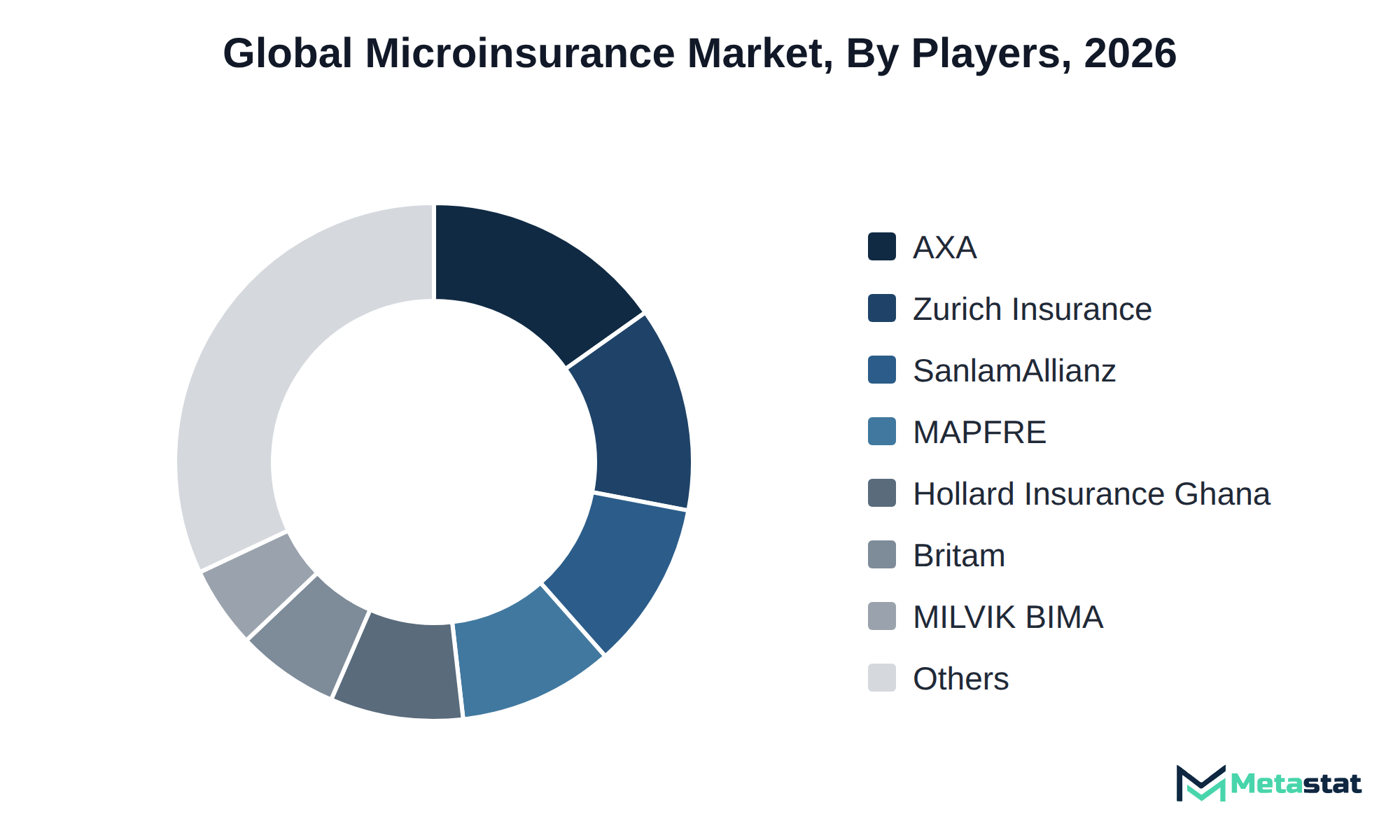
Key players in the microinsurance market differentiate themselves through various strategies, including product offerings tailored to specific buyer needs. Companies including AXA S.A. and Zurich Insurance Group Ltd focus on life and funeral insurance, while firms like MAPFRE S.A. and Prudential BSN Takaful Berhad emphasize health and hospital cash solutions. This diversity in product type caters to distinct consumer requirements and influences purchasing decisions.
Price competitiveness influences consumer choices within the microinsurance market, alongside factors including customization and service quality. Players like HDFC Life Insurance Company Limited and Bajaj Life Insurance Limited strive to deliver affordable options while ensuring robust customer support. The presence of cooperatives and community organizations, including CLIMBS Life and General Insurance Cooperative, offers additional avenues for buyers focused on personalized service and community engagement.
The growth trajectory relies on several key developments across various segments and regions. First, an increase in group policies, particularly through banks and microfinance institutions, will play a critical role. This segment is projected to grow from USD 43.6 billion in 2026 to USD 64.5 billion by 2033, driven by rising demand for affordable insurance solutions. Second, the expansion of digital platforms and mobile operators will facilitate greater access to microinsurance products, enhancing uptake in regions including Asia Pacific, where the market is evolving. A notable risk to achieving the forecast includes potential regulatory challenges that hinder the expansion of microinsurance offerings, particularly in Europe and South America. Regulatory constraints could limit the ability of providers to innovate or reach underserved populations. Sustained growth in the microinsurance market requires addressing these challenges while capitalizing on emerging opportunities across distribution channels and policy structures.
By Insurance Type: Life and Funeral, Credit Life, Health and Hospital Cash, Personal Accident and Disability, Agriculture and Livestock, Property and Microenterprise, Others (Travel and Other Specialty Covers)
By Distribution Channel: Banks and Microfinance Institutions, Agents and Brokers, Cooperatives and Community Organizations, Digital Platforms and Mobile Operators, Direct Insurer Sales, Others (Employer Groups and Public Agencies)
By Policy Structure: Group Policies, Individual Policies
By Premium Funding: Unsubsidized Policies, Partially Subsidized Policies, Fully Subsidized Policies
The report strategically identifies and profiles the key market players and analyses their core competencies in each sub-segment of the Microinsurance market.
Report Attributes | Details |
Study Period | 2021-2033 |
Base Year | 2025 |
Estimated Year | 2026 |
Forecast Period | 2026-2033 |
Historical Period | 2021-2025 |
Growth Rate | CAGR 6.1% from 2026 to 2033 |
Revenue Unit | USD billion |
Segmentation | By Insurance Type, Distribution Channel, Policy Structure, Premium Funding, and Region |
By Region | North America (By Insurance Type, Distribution Channel, Policy Structure, Premium Funding, and Country)
|
Europe (By Insurance Type, Distribution Channel, Policy Structure, Premium Funding, and Country)
| |
Asia Pacific (By Insurance Type, Distribution Channel, Policy Structure, Premium Funding, and Country)
| |
South America (By Insurance Type, Distribution Channel, Policy Structure, Premium Funding, and Country)
| |
Middle East and Africa (By Insurance Type, Distribution Channel, Policy Structure, Premium Funding, and Country)
|
Find answers to common questions about this report
The Microinsurance market size was valued at USD 62.2 billion in 2025.
The market is projected to grow at a CAGR of 6.1% during the forecast period from 2026 to 2033.
The North America Microinsurance market size is projected to reach USD 37.6 billion by 2033.
Life and Funeral insurance leads the Microinsurance market with a projected value of USD 25 billion by 2033. This segment's growth reflects a compound annual growth rate of 5.5 percent.
Increasing adoption of group policies enhances participation rates and improves coverage for low-income individuals. The transition to digital platforms facilitates access to microinsurance products, driving growth and increasing overall adoption.
North America holds the dominant share of the Microinsurance market, with a value of USD 37.6 billion projected for 2033, representing 38.6 percent of the total market.
High costs associated with microinsurance policies hinder adoption among low-income individuals. Premium pricing poses a significant barrier, limiting access to these vital financial products and creating a cycle where individuals remain uninsured.
Growing awareness of health-related financial risks among low-income populations supports adoption in the microinsurance industry. The introduction of tailored products designed for this demographic enhances market penetration, addressing critical healthcare concerns and driving long-term expansion.
The Microinsurance market is estimated to reach a valuation of USD 100.4 billion by 2033.
Key players operating in the Microinsurance industry include AXA S.A., Sanlam, Allianz, Zurich Insurance Group Ltd, MAPFRE S.A., and Prudential BSN Takaful Berhad.
The analysts below cover Banking & Finance research at Metastat Insights.
LEAD ANALYST
Utkarsh Khirodkar is a Lead Market Research Analyst at MetaStat Insight, specializing in market intelligence, technology sector assessments, and competitive strategy.

PRINCIPAL CONSULTANT - ENTERPRISE AI & EMERGING TECHNOLOGIES
Banking & Finance · Electronics and Semiconductor · Energy and Power · Healthcare IT · Information & Technology · Professional Services
Vijay Gunti is a Principal Consultant at MetaStat Insight, bringing over two decades of experience across enterprise digital transformation, technology strategy, and intelligent systems.
Replacing petrochemical surfactants with bio-based alternatives requires realistic timelines on industrial precision fermentation scaling. The market research broke down commercialization timelines, feedstock sugar price sensitivities, and regional cosmetic ingredient regulatory approvals in Europe and East Asia. That supplier readiness mapping gave our formulations team reliable context when comparing renewable chemical sourcing roadmaps.
Tracking ceramic matrix composite adoption in high-bypass aero engines requires strict attention to material qualification cycles and FAA airworthiness testing milestones. The MetaStat Insight team provided a detailed timeline of silicon carbide fiber manufacturing capacity and commercial foundry lead times. Having clear visibility into upstream thermal barrier coating supply helped us stress-test our long-term component procurement strategy.
Transitioning ultra-class mining haul trucks to alternative power requires concrete data on remote hydrogen refueling infrastructure economics. The report evaluated megawatt-scale electrolyzer installation expenses, onsite storage safety mandates, and heavy-duty fuel cell stack degradation under continuous duty cycles. That technical rigor helped our engineers benchmark realistic total operating cost horizons for off-highway fleet decarbonization.
Explore related market intelligence reports worth reading alongside this one.