
LEAD ANALYST
Utkarsh Khirodkar is a Lead Market Research Analyst at MetaStat Insight, specializing in market intelligence, technology sector assessments, and competitive strategy.

India Digital Lending Market Size, Share, By Loan Product Type (Personal Loans, Business Loans, Consumer Purchase and Service Financing, Housing Loans, Vehicle Loans, Education Loans, Gold Loans, Loans Against Property, Agricultural Loans, Microfinance Loans), By Deployment Mode (On-premise, Cloud, Hybrid), By Business Model (Peer-to-Peer (Marketplace) Lending, Balance-Sheet (Direct) Lending, Embedded-Finance / BNPL Lending, Crowdfunding and Revenue-Based Financing), By Technology (AI / Machine-Learning-driven Underwriting, API and Open-Banking Platforms, Blockchain-based Lending, Big-Data Analytics), Industry Analysis, Growth, Trends, and Forecast, 2026-2033
Report ID
MSI-5519
Published
October, 2026
Pages
274 Pages
Format
Historical
Base year
Forecast
Forecast period
Report Details
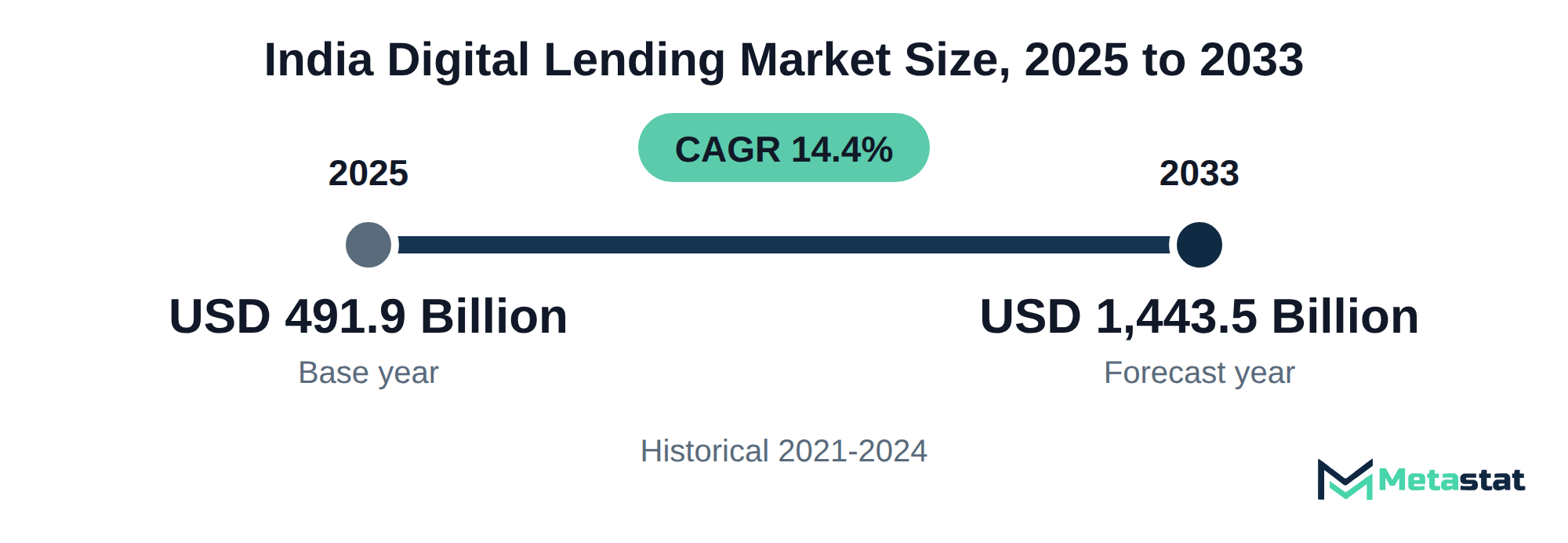
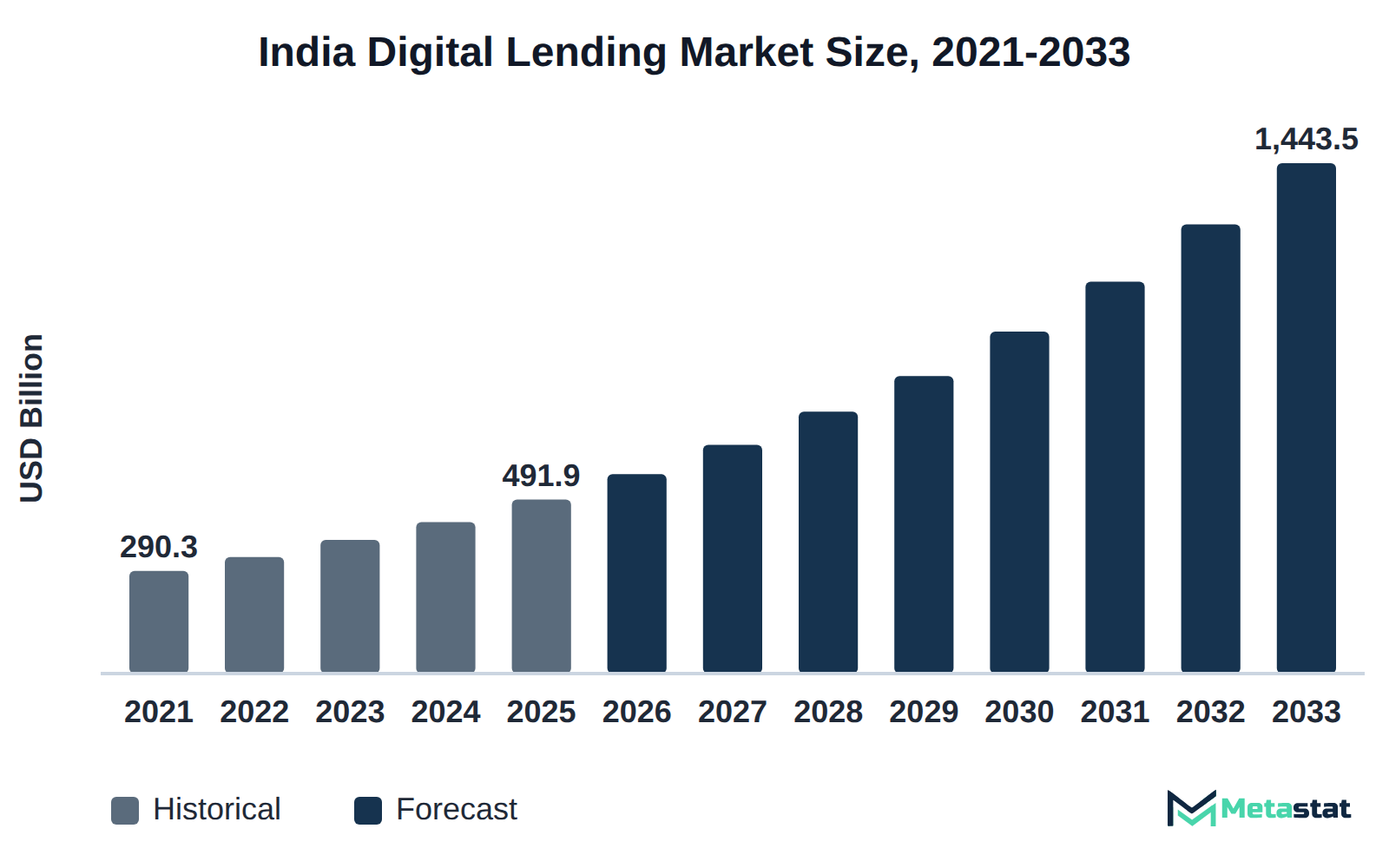
Market Valuation: Valued at $491.9 Billion in 2025, projected to reach $1,443.5 Billion by 2033 at a 14.4% CAGR.
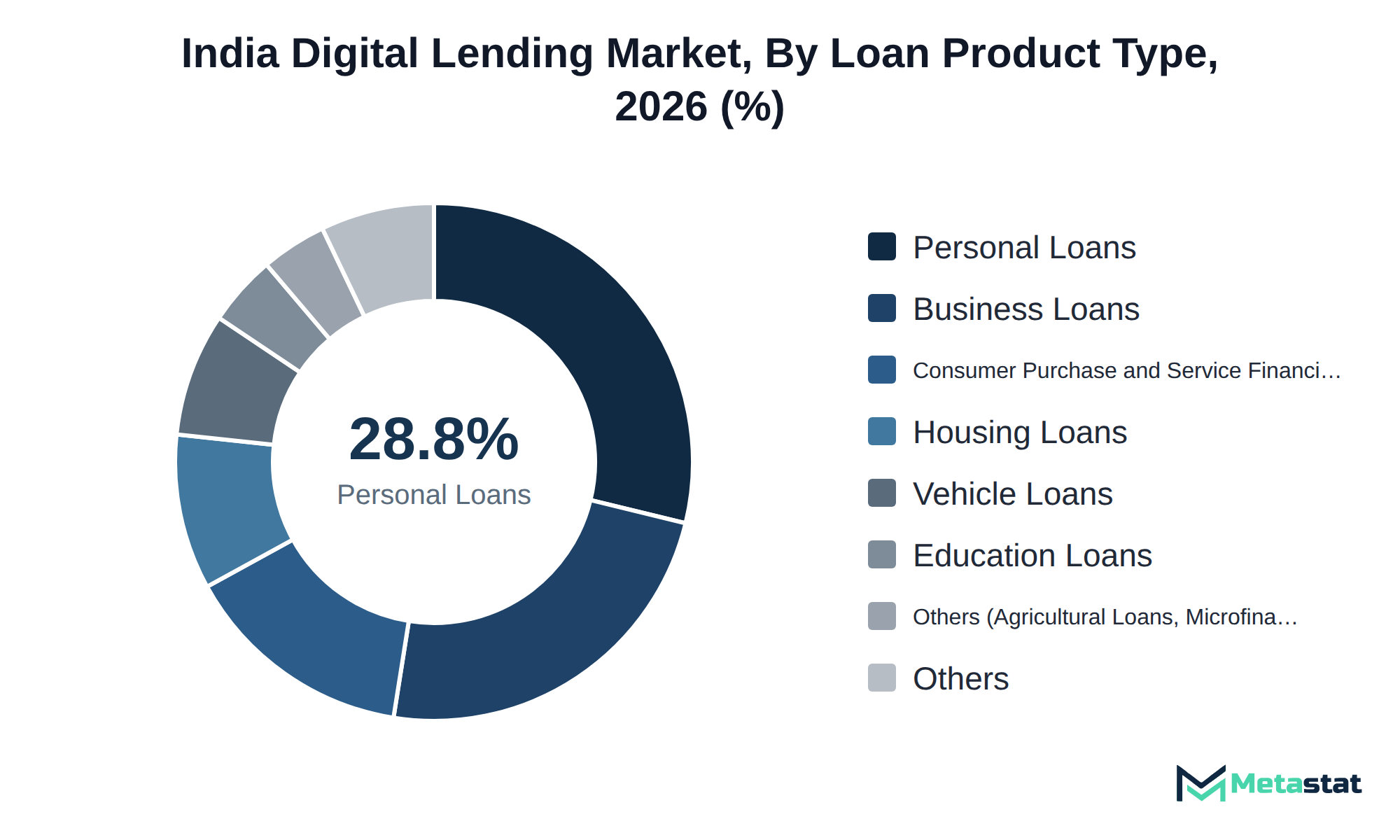
Dominant Segment: Personal loans lead the India Digital Lending market, driven by increasing consumer demand for quick financial solutions and the convenience of digital platforms.
Geographic Lead: India is the primary region driving growth in digital lending, supported by rising internet penetration and smartphone usage, which enhance access to financial services.
What's Inside: The report provides comprehensive coverage of market dynamics, competitive analysis, and detailed forecasts from 2026 to 2033 across various loan product types and deployment modes.
Increased Adoption of AI-Driven Underwri: AI-driven underwriting is rapidly expanding, projected to grow significantly as it enhances credit assessment and risk evaluation, attracting a broader customer base.
Cloud Deployment Adoption: Cloud-based lending solutions are set to dominate the market, reflecting a shift towards scalable and efficient digital services that improve customer experiences.
Choose Your License
India Digital Lending Market
The India Digital Lending market was valued at USD 491.9 billion in 2025 and is projected to reach USD 1,443.5 billion by 2033, growing at a CAGR of 14.4% over the forecast period.
The India Digital Lending market encompasses a range of financial services aimed at providing individuals and businesses with quick and efficient access to loans. This market serves various buyer groups, including consumers seeking personal loans, businesses requiring financing for operations, and individuals looking for specialized lending options. Growth in this sector results from increasing demand for digital financial services, driven by technological advancements and shifting consumer preferences.
One notable segment within the market is personal loans, which is expected to generate significant revenue over the forecast period. The market's expansion is further supported by the growing adoption of cloud-based solutions, enabling lenders to streamline operations and enhance customer experiences. The anticipated increase in digital lending transactions reflects a broader shift towards online financial services, attracting a diverse range of customers.
The market exhibits significant growth potential, largely influenced by rising internet penetration and smartphone usage across the region. This trend facilitates greater accessibility to digital lending platforms, allowing more consumers to engage with financial products. Such developments create opportunities for lenders to expand their reach and capture a larger share of the increasing demand for digital financial solutions.
The India Digital Lending market offers loan products designed to meet the financial needs of individuals and businesses, which drives substantial spending in this sector. Personal loans represent the segment with the highest value, fueling significant interest among consumers seeking quick financial solutions. Buyers invest in digital lending services due to the convenience, speed, and accessibility offered by these platforms, which simplify the borrowing process and enhance overall customer experiences.
Growth within the market is propelled by an increasing reliance on technology-driven solutions, particularly in urban areas where digital financial literacy is rising. The cloud-based deployment mode stands out, attracting numerous users due to its scalability and efficiency. This mode supports many services, facilitates transactions, and allows lenders to expand their customer base significantly.
The market is anticipated to develop strongly, supported by the increasing demand for innovative financial products. With a compound annual growth rate of 14.4%, the market is set to experience continual expansion, driven by ongoing advancements in technologies including AI and machine learning. This transformation enhances the underwriting process, enabling lenders to assess risk more effectively and offer tailored financial solutions.
The integration of AI-powered credit underwriting in the India Digital Lending market transforms traditional lending practices by enhancing risk assessment and decision-making processes. Lenders use alternative data, including social media activity and transaction histories, to better understand borrower profiles. In 2026, AI-driven underwriting stands at USD 190.7 billion and is projected to grow to USD 573.4 billion by 2033, reflecting a compound annual growth rate of 17%.
This technological evolution allows lenders to evaluate creditworthiness more accurately, particularly for individuals with limited credit histories. By incorporating diverse data points, financial institutions expand their customer base, enabling access to financing for underserved populations. This shift strengthens borrower-lender relationships and enhances financial inclusion.
The implications for the market are substantial. Financial institutions that adopt AI technologies position themselves favorably within a competitive landscape, reducing operational costs and improving lending efficiency. Insights derived from alternative data enable lenders to offer tailored products, increasing customer satisfaction and retention while driving revenue growth.
The integration of embedded finance and Buy Now, Pay Later (BNPL) solutions into the India Digital Lending market enhances purchasing flexibility for both consumers and Micro, Small, and Medium Enterprises (MSMEs). This financial innovation supports efficient transactions at the point of sale, allowing buyers to make purchases without upfront costs while managing cash flow effectively. In 2025, embedded finance and BNPL solutions contributed significantly to the overall market growth, driven by a sharp rise in the adoption of these payment structures.
While these financing options gain traction, the segment of Embedded-Finance / BNPL Lending is projected to reach USD 397.5 billion by 2033. This growth reflects the increasing preference among consumers and MSMEs for alternative payment methods that accommodate their financial situations. These solutions enable higher spending at retail and service outlets, which, in turn, translates to increased revenue for retailers and service providers.
As payment models continue to evolve, businesses in the India Digital Lending market use these trends to attract a broader customer base. The rise of BNPL enhances customer loyalty and creates an environment that encourages repeat purchases, further supporting the market's growth trajectory.
The Reserve Bank of India's (RBI) regulations significantly influence fintech loan origination within the India Digital Lending market. These regulations ensure that lenders adhere to guidelines including transparent pricing and fair practices, thereby enhancing consumer protection. Compliance requires fintech firms to invest in technology and operational structures that streamline loan processing and maintain transparency in transactions.
In 2026, the deployment mode of cloud-based lending solutions is anticipated to reach USD 836.2 billion by 2033, reflecting the shift towards digital channels in loan origination. This trend aligns with the RBI's push for digital transformation in financial services, prompting fintech companies to adopt advanced technologies to comply with regulatory standards. The integration of AI and machine-learning-driven underwriting ensures compliance while optimizing the loan approval process.
Adhering to RBI regulations enhances trust among consumers, which is essential for sustained growth in the market. Fintech firms that prioritize compliance are well-positioned to expand their customer base and improve operational efficiency, ultimately driving revenue growth. Stakeholders in the India Digital Lending market must adapt quickly to changing regulations to maintain a competitive edge and fulfill customer expectations.
UPI integration and account aggregator frameworks significantly enhance digital loan disbursement in the India Digital Lending market. The adoption of Unified Payments Interface (UPI), an electronic payment system, facilitates instant transactions, creating an efficient experience for borrowers. This process enables lenders to disburse loans quickly, with real-time fund transfers, improving customer satisfaction and operational efficiency.
The account aggregator framework further supports this transformation by allowing users to share their financial data securely with multiple financial institutions. This capability enables lenders to conduct thorough assessments of borrowers' creditworthiness while reducing the time spent on the verification process. Enhanced data-sharing results in faster loan approvals, which increases overall demand for digital loans. The market is projected to reach USD 1,443.5 billion by 2033, highlighting the impact of these technological advancements on market growth.
Integrating UPI and account aggregator frameworks streamlines loan processing and positions lenders to capture a larger share of the growing consumer base seeking digital financial solutions. The ongoing evolution within the India Digital Lending market indicates a shift towards more efficient and user-friendly lending practices, supporting sustained growth.
The rising trend of personal loans significantly impacts consumer behavior, with individuals increasingly opting for credit to fulfill immediate financial needs. This shift is driven by a growing demographic of younger consumers seeking financial flexibility and quick access to funds. Enhanced awareness of digital lending options and streamlined application processes contribute to this change. For instance, the value of personal loans in the India Digital Lending market is projected to rise from USD 163.9 billion in 2026 to USD 439.5 billion by 2033. This reflects a compound annual growth rate of 15.1%. The increase in personal loan uptake creates a more competitive lending environment, further encouraging innovation and service improvements among lenders. Consequently, the market experiences a notable surge in demand, with borrowers seeking accessible credit solutions tailored to their specific needs.
The transition to cloud services significantly influences the India Digital Lending market. A growing number of financial institutions prioritize the cloud due to its scalability, cost-effectiveness, and efficiency. Cloud deployment allows lenders to offer enhanced customer experiences through faster loan processing and increased accessibility. This model appeals to various buyer groups, including individual consumers seeking quick loans and businesses aiming for efficient capital management.
Technological advancements drive this shift toward cloud platforms, enabling lenders to access advanced analytics and artificial intelligence tools. Financial institutions adopting cloud solutions experience reduced operational costs and streamlined processes, facilitating growth in lending volumes. The market sees substantial demand for cloud-based lending services, aligning with the ongoing digital transformation in the financial sector. Enhanced data security and compliance features offered by cloud service providers support this trend, ensuring institutions meet regulatory standards while efficiently serving customers.
Compliance with regulatory frameworks presents a significant challenge for players in the India Digital Lending market. Financial institutions face extensive requirements, leading to slower uptake of innovative lending solutions. Smaller players, particularly fintech companies, encounter difficulties in aligning their offerings with regulatory expectations, resulting in smaller order sizes and delayed product launches. Such constraints particularly affect peer-to-peer lending models that rely on a robust regulatory environment to gain consumer trust and operational legitimacy.
Compliance adds to operational costs, and organizations allocate resources to meet regulatory demands rather than focusing on customer acquisition or service enhancements. This situation limits the market's potential for growth, resulting in a more cautious approach from businesses, particularly in the segments of embedded finance and BNPL. Regulatory complexities hinder the pace of innovation, posing a challenge for stakeholders aiming to capture the evolving demands of consumers and businesses in the digital lending ecosystem.
Intense competition within the market exerts pressure on profit margins for digital lenders. New entrants aggressively pursue market share, leading to pricing pressures that challenge existing players. Increased marketing expenditures and customer acquisition costs further exacerbate the situation, forcing suppliers to evaluate their operational efficiency and cost structures. To remain competitive, established institutions enhance their service offerings by adopting advanced technologies, including AI-driven underwriting and big data analytics. This transition aims to streamline processes, reduce operational costs, and improve customer experience. Players investing in innovative solutions find differentiation crucial in a crowded landscape. Addressing margin pressures while adopting new technologies facilitates sustainable growth for firms operating in the India Digital Lending market.
Strategic partnerships and collaborations emerge as effective responses to combat competitive pressures. By leveraging shared resources and expertise, players enhance their offerings without incurring significant additional costs. Focus on operational efficiency, innovation, and collaboration helps players keep their foothold in a competitive market.
AI and machine-learning-driven underwriting represent a rapidly expanding segment within the India Digital Lending market. This technology enhances credit assessment and risk evaluation processes, leading to improved loan approval rates. Financial institutions, including those in personal and business loan sectors, adopt this approach to streamline operations and enhance client experience. This technological shift facilitates the expansion of responsible lending practices, thereby attracting a broader customer base seeking efficient loan products. Integrating AI into underwriting processes reduces operational costs and increases approval efficiency, which positions lenders to capture greater market share and meet rising demand for loans.
The India Digital Lending market is segmented based on Loan Product Type, Deployment Mode, Business Model, and Technology.
This segment serves individuals seeking quick access to funds for various personal expenses, including education, medical costs, and travel. An increasing trend towards financial inclusion drives growth in this segment, with more consumers using digital platforms for loan requests. Compared to other loan types, Personal Loans demonstrate faster growth, benefiting from a broader customer base. In contrast, segments like Housing Loans experience slower expansion due to longer approval processes and higher associated costs. The convenience and speed of obtaining personal loans through digital channels significantly enhance their appeal, leading to greater adoption rates among consumers.
Business Loans segment is estimated to reach USD 359.1 billion by 2033, at a CAGR of 15.1% during the forecast period. This category caters to small and medium enterprises, providing them with the necessary capital for operational expenses, expansion, or equipment purchases. Digital MSME lending in India serves a similar need for operational and expansion capital. The increasing focus on entrepreneurship and the growing number of startups in India drives demand within this segment. Unlike personal loans, which serve individual consumers, business loans address the specific financial needs of enterprises. This segment experiences a faster growth trajectory compared to others, including housing loans, which have a CAGR of 12.5%. The demand for business loans reflects the shifting landscape of financing options for businesses in the market.
Consumer Purchase and Service Financing segment is expected to reach USD 226.5 billion by 2033. This segment involves providing loans to consumers for purchasing goods and services, catering to individuals seeking financial support for immediate needs. The growth of this segment is primarily driven by rising consumer demand for convenience in acquiring products, particularly through e-commerce platforms. The increasing adoption of Buy Now, Pay Later (BNPL) options enhances access to financing, supporting growth in the segment. Compared to other loan products, including personal and business loans, this segment demonstrates faster growth due to its appeal among younger consumers who prefer flexible payment options. With a projected compound annual growth rate (CAGR) of 15.1%, it is expected to outpace many traditional lending options, reflecting a significant shift in consumer behavior within the India Digital Lending market.
Housing Loans segment is projected to grow at a CAGR of 12.5% during the forecast period. This segment provides financing for purchasing, constructing, or renovating residential properties, appealing to individual homebuyers and investors. Demand for housing loans is driven by increasing urbanization and rising disposable incomes among the population. The affordability of housing has improved due to government initiatives and lower interest rates, encouraging more borrowers to seek loans for home purchases. Affordable housing finance in India is a closely related area for these borrowers. Compared to other loan products, including personal loans and business loans, housing loans typically involve larger amounts and longer repayment terms, influencing their growth dynamics. The market differentiates this segment through its lower risk profile, attracting lenders while offering competitive rates to borrowers. The segment aligns with broader trends in the India Digital Lending market and contributes to its expansion.
Vehicle Loans serve as a vital option for individuals seeking to finance their vehicle purchases, covering uses from personal cars to commercial vehicles. This segment attracts buyers including individual consumers, small businesses, and fleet operators, reflecting a growing demand for mobility solutions. The increasing affordability of vehicles and enhancements in financing options drive segment growth, particularly in urban areas where vehicle ownership is becoming more prevalent. Compared to other loan product types, Vehicle Loans often face unique challenges including stricter credit assessments and fluctuating interest rates, which impact accessibility. The dynamics of the vehicle market remain closely tied to economic conditions, influencing purchasing power and loan uptake, thereby differentiating it from segments including Personal Loans and Business Loans in terms of consumer profile and financial viability.
Education Loans provide financial support specifically targeted at students pursuing various educational opportunities. This segment attracts borrowers including high school graduates seeking to finance higher education and professionals aiming for advanced degrees. Demand for education loans is driven by rising tuition fees and increased enrollment in educational institutions, highlighting the growing emphasis on education quality. Compared to other segments, including Personal Loans or Business Loans, education loans exhibit slower growth due to a more constrained borrower profile, often dependent on future income potential. Financial institutions focus on innovative lending solutions to address the specific needs of educational financing, enhancing accessibility. The introduction of flexible repayment options is expected to support demand, particularly among younger borrowers entering the workforce with student debt. In the India Digital Lending market, the Education Loans segment helps individuals achieve their academic goals.
Gold Loans provide collateral-based lending options where borrowers pledge their gold assets to secure funds. Individuals and businesses leverage this type of financing for various purposes, including urgent cash needs, business expansion, and personal expenses. Demand for Gold Loans is driven by cultural factors, with gold holding significant value and sentiment among consumers in India. This segment distinguishes itself from others by targeting a diverse buyer base, often with lower income levels, who have limited access to traditional credit or loans. The growth dynamics for Gold Loans differ from segments including Personal Loans, which exhibit a higher growth rate, indicating a preference shift among consumers seeking quick and accessible financial solutions. Adoption of digital platforms for Gold Loans enhances efficiency, attracting a broader audience and facilitating transactions. The India Digital Lending market is expected to continue evolving, reflecting these trends and the increasing importance of Gold Loans in the overall lending framework.
Loans Against Property involves secured lending where borrowers use real estate as collateral. This segment primarily serves individuals and businesses seeking to leverage property assets for cash flow, often for personal expenses or business expansion. Growth within this segment is driven by increasing demand for flexible financing options. Rising real estate values create an attractive collateral base, enhancing lenders' willingness to extend credit. Compared to other loan types, Loans Against Property typically offers lower interest rates, reflecting its secured nature. This differentiation from personal loans features higher interest rates due to unsecured risk. The market continues to evolve, providing essential credit solutions tailored for asset-backed financing needs.
A segment focused on agricultural loans and microfinance loans provides critical financial support to underserved populations, primarily farmers and small business owners in rural areas. This segment caters to individuals and businesses that often lack access to traditional banking services. Demand for this segment is driven by the increasing need for financial inclusion and support for agricultural activities, which are vital to India’s economy. The adoption of technology in lending processes enhances the accessibility of loans to these segments. Compared to other loan types, this segment experiences slower growth due to higher perceived risks associated with lending to rural customers. The India Digital Lending market continues to evolve, addressing these challenges through innovative solutions targeted at improving efficiency and expanding access.
The on-premise segment is valued at USD 162.7 billion in 2026 and is projected to reach USD 269.1 billion by 2033, at a CAGR of 7.4% during the forecast period. This segment primarily serves institutions that require full control over their digital lending infrastructure and data security. Demand arises from organizations prioritizing regulatory compliance and data protection, particularly in sectors including banking and finance. Compared to cloud-based solutions, which experience a higher growth rate at 17.3% CAGR, on-premise solutions offer greater customization but entail significant upfront costs and ongoing maintenance. The slower growth rate reflects the preference for agile cloud solutions among newer market entrants and tech-savvy consumers, indicating a shift in how lending services are delivered in the evolving landscape.
Cloud deployment mode is estimated to reach USD 836.2 billion by 2033, at a CAGR of 17.3% during the forecast period. This segment primarily serves financial institutions and consumers seeking efficient and scalable digital lending solutions. Adoption continues to rise due to reduced infrastructure costs and improved data security, appealing to lenders looking to enhance their service offerings. Differentiating from on-premise and hybrid deployment modes, cloud solutions offer greater flexibility and lower upfront investments. While on-premise solutions show slower growth at a CAGR of 7.4%, cloud-based systems enable faster innovation in technology integration, particularly with advancements in AI and machine learning. This dynamic positions cloud deployment as a critical driver in the India Digital Lending market, enhancing competitiveness and expanding service reach.
Hybrid deployment mode is projected to reach USD 338.2 billion by 2033. This approach combines on-premise and cloud-based solutions, catering to financial institutions seeking flexibility in their lending operations. Businesses leveraging hybrid deployments include traditional banks and fintech firms aiming to streamline processes while maintaining control over sensitive data. A significant demand driver for this segment arises from the increasing need for scalable solutions aligning with evolving consumer behaviors and preferences. The hybrid mode distinguishes itself from purely on-premise or cloud models, featuring advantages in cost-effectiveness and adaptability. This segment's projected growth aligns with the overall expansion of the India Digital Lending market, influenced by technological advancements and changing regulatory landscapes.
Peer-to-Peer (Marketplace) Lending segment is valued at USD 16.6 billion in 2026 and is projected to reach USD 31.5 billion by 2033, at a CAGR of 9.6% during the forecast period. This model facilitates direct lending between individuals without intermediaries, appealing primarily to consumers and small businesses seeking flexible financing options. Increasing demand for personalized loan solutions drives this segment, particularly among tech-savvy borrowers who prefer digital platforms for transactions. Compared to other business models in the market, including Balance-Sheet Lending, which is expected to reach USD 987.2 billion by 2033, Peer-to-Peer Lending exhibits slower growth. The focus on trust and transparency creates a unique selling proposition, enabling borrowers and lenders to engage directly while facing fewer regulatory hurdles. This dynamic results in a distinct operational framework that differentiates it from traditional lending avenues.
Balance-Sheet (Direct) Lending segment is estimated to reach USD 987.2 billion by 2033, at a CAGR of 13.1% during the forecast period. This segment primarily provides financing options for individuals and businesses seeking direct loans from lenders, which include banks and financial institutions. Demand for this segment arises from borrowers requiring immediate liquidity for personal or operational needs. Competitive interest rates and streamlined application processes drive growth, attracting borrowers who prefer direct lending over alternative financing methods. Compared to Peer-to-Peer (Marketplace) Lending, which demonstrates a slower growth rate with a CAGR of 9.6%, Balance-Sheet (Direct) Lending indicates more robust expansion due to significant backing from financial institutions. This backing provides assurance to borrowers, enhancing confidence and stability in financial transactions, ultimately contributing to the increasing adoption of Balance-Sheet (Direct) Lending within the India Digital Lending market.
This business model provides consumers with the flexibility to make purchases while paying over time, catering to a growing demand for convenient payment solutions. E-commerce platforms and retailers widely adopt this model to enhance customer experience and increase sales conversions. Growth in this segment is driven by the increasing adoption of digital payments and the rising number of online shoppers. The segment's expansion rate, with a CAGR of 18.8%, surpasses other lending models, reflecting its appeal to both consumers and businesses. While Balance-Sheet Lending targets larger loan amounts, Embedded-Finance / BNPL Lending focuses more on smaller, manageable payments, positioning itself as a more accessible option for everyday purchases. The India Digital Lending market continues to evolve, indicating a shift in consumer preferences toward flexible financing solutions.
Crowdfunding and Revenue-Based Financing segment is projected to grow at a CAGR of 18.8% during the forecast period. This model typically serves startups and small businesses seeking alternative funding sources without the complexities of traditional financing. The rapid growth in this segment is driven by an increasing number of entrepreneurs looking for flexible financing options alongside the rise of digital platforms that facilitate crowdfunding efforts. Compared to other business models, including Balance-Sheet (Direct) Lending, which is estimated to reach USD 987.2 billion by 2033, Crowdfunding and Revenue-Based Financing offers more accessible funding routes with potentially lower barriers of entry for borrowers. Innovation in technology platforms supporting this financing method enhances connectivity between investors and businesses, further propelling growth in the India Digital Lending market.
This segment employs advanced algorithms and data analytics to assess borrower creditworthiness and streamline the underwriting process. Financial institutions and digital lending platforms leverage this technology to improve decision-making efficiency and reduce risk exposure. The growing demand for quicker loan approvals acts as a significant driver for this segment, leading to increased adoption among lenders. Compared to other technology segments, this sub-segment exhibits a faster growth rate, reflecting a greater emphasis on automation and data-driven lending solutions. In contrast, segments like Big-Data Analytics experience a slower growth trajectory. Rising competition within the India Digital Lending market further increases the importance of AI and machine-learning technologies, compelling lenders to innovate and optimize their underwriting processes.
API and Open-Banking Platforms segment is estimated to reach USD 420.8 billion by 2033, at a CAGR of 15.6% during the forecast period. This segment allows lenders to apply API technology to facilitate integration with financial institutions, enhancing data access and transaction efficiency. Banks, fintech companies, and other financial service providers leverage these platforms to offer innovative lending solutions that cater to the evolving needs of customers. Growth in this segment is driven by increasing demand for digitized financial services and the push for improved customer experiences. Compared to other technology segments, the API and Open-Banking Platforms segment demonstrates a higher growth trajectory, influenced by rapid advancements in technology and an expanding digital ecosystem. This segment’s flexibility and scalability provide distinct advantages over traditional lending methods, reinforcing its significance in the evolving digital lending market in India.
Blockchain-based Lending segment is expected to reach USD 66.8 billion by 2033. This segment employs decentralized technology to facilitate financial transactions, promoting transparency and security. Businesses and individuals seeking innovative lending solutions apply blockchain technology to streamline operations and reduce fraud risk. The increasing demand for secure and efficient lending processes drives adoption, with heightened interest in cryptocurrencies and smart contracts. Compared to other segments, blockchain-based lending exhibits a distinctive growth trajectory, emphasizing technological advancements over traditional lending practices. The adoption of blockchain solutions reflects a response to evolving market needs, positioning this segment for substantial expansion in the coming years. In the India Digital Lending market, the integration of blockchain technology marks a significant shift toward modernized financing methods, enhancing accessibility and operational efficiency.
Big-Data Analytics segment is projected to grow at a CAGR of 9.6% during the forecast period. This segment employs advanced data analysis techniques to derive insights from large datasets, appealing primarily to financial institutions and lenders seeking to optimize their operations and decision-making processes. Demand for sophisticated data analytics tools arises from the increasing need for effective risk assessment and customer profiling. This segment differs from others due to its focus on data-driven strategies, which require ongoing investment in technology and skills. Competing segments including AI / Machine-Learning-driven Underwriting, with a CAGR of 17%, grow at a faster rate due to their broader applications in automation and efficiency enhancements. In the India Digital Lending market, leveraging Big-Data Analytics enables lenders to enhance customer experiences and streamline loan approval processes.
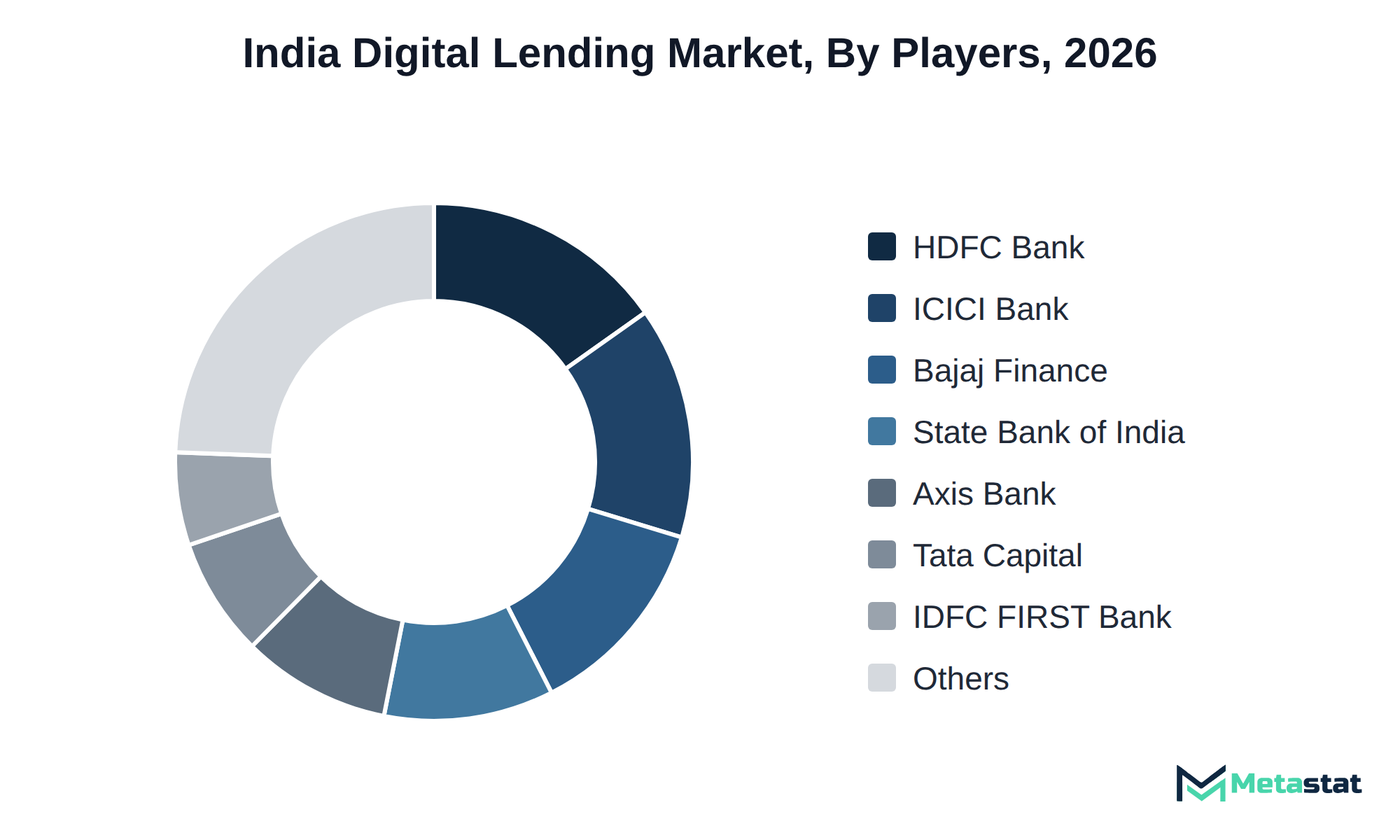
Companies within the India Digital Lending market engage in various competitive strategies, focusing on different business models and loan products. The landscape includes players offering personal loans, business loans, and embedded-finance solutions, among other offerings. Buyers evaluate options based on price, customization, and service quality.
Bajaj Finance Limited emphasizes personal loans and consumer finance products, catering to individual borrowers seeking quick and accessible funding. HDFC Bank Limited and ICICI Bank Limited focus on a mix of personal and business loans, leveraging their extensive banking networks to attract diverse clientele. Newer entrants like KrazyBee Services Limited (KreditBee) target younger consumers with streamlined digital lending options, enhancing convenience and speed in loan disbursement.
Achieving this growth relies on several key developments within the India Digital Lending market. The transition towards cloud deployment, anticipated to reach USD 836.2 billion by 2033 at a CAGR of 17.3%, will enhance operational efficiency for digital lending providers across various segments. Advancements in AI and machine-learning-driven underwriting will facilitate faster and more accurate lending decisions, supporting market penetration. However, regulatory challenges and compliance requirements pose a risk that could inhibit market expansion. Stricter regulations slow the growth trajectory, particularly affecting smaller players unable to adapt swiftly. Addressing these risks, along with maintaining customer trust, will be essential for reaching the projected market size effectively.
By Loan Product Type: Personal Loans, Business Loans, Consumer Purchase and Service Financing, Housing Loans, Vehicle Loans, Education Loans, Gold Loans, Loans Against Property, Others (Agricultural Loans, Microfinance Loans)
By Deployment Mode: On-premise, Cloud, Hybrid
By Business Model: Peer-to-Peer (Marketplace) Lending, Balance-Sheet (Direct) Lending, Embedded-Finance / BNPL Lending, Crowdfunding and Revenue-Based Financing
By Technology: AI / Machine-Learning-driven Underwriting, API and Open-Banking Platforms, Blockchain-based Lending, Big-Data Analytics
The report strategically identifies and profiles the key market players and analyses their core competencies in each sub-segment of the Digital Lending market.
Report Attributes | Details |
Study Period | 2021-2033 |
Base Year | 2025 |
Estimated Year | 2026 |
Forecast Period | 2026-2033 |
Historical Period | 2021-2025 |
Growth Rate | CAGR 14.4% from 2026 to 2033 |
Revenue Unit | USD billion |
Segmentation | By Loan Product Type, Deployment Mode, Business Model, Technology, and Region |
Find answers to common questions about this report
The Digital Lending market size was valued at USD 491.9 billion in 2025.
The market is projected to grow at a CAGR of 14.4% during the forecast period from 2026 to 2033.
Personal Loans lead the Digital Lending market with a projected value of USD 439.5 billion by 2033, reflecting the highest growth potential among the segments.
The rising trend of personal loans significantly impacts consumer behavior, driven by a growing demographic of younger consumers seeking financial flexibility and quick access to funds. The transition to cloud-based solutions enhances customer experiences through faster loan processing and increased accessibility, supporting demand for efficient lending services.
Compliance with regulatory frameworks presents a significant challenge, leading to slower uptake of innovative lending solutions. This situation limits the market's potential for growth, resulting in a cautious approach from businesses, particularly in emerging segments.
The rising trend of personal loans, driven by younger consumers seeking financial flexibility, significantly influences adoption in the India Digital Lending market. the transition to cloud-based solutions enhances customer experiences, enabling faster loan processing and appealing to various buyer groups.
The Digital Lending market is estimated to reach a valuation of USD 1,443.5 billion by 2033.
Key players operating in the Digital Lending industry include Bajaj Finance Limited, HDFC Bank Limited, ICICI Bank Limited, State Bank of India, Axis Bank Limited, Tata Capital Limited, IDFC FIRST Bank Limited, and Kotak Mahindra Bank Limited.
The projected value of personal loans in the India Digital Lending market is expected to rise from USD 163.9 billion in 2026 to USD 439.5 billion by 2033, reflecting a compound annual growth rate of 15.1 percent.
Cloud deployment allows lenders to offer enhanced customer experiences through faster loan processing and increased accessibility. Financial institutions adopting cloud solutions experience reduced operational costs and streamlined processes.
The analysts below cover Banking & Finance research at Metastat Insights.
LEAD ANALYST
Utkarsh Khirodkar is a Lead Market Research Analyst at MetaStat Insight, specializing in market intelligence, technology sector assessments, and competitive strategy.

PRINCIPAL CONSULTANT - ENTERPRISE AI & EMERGING TECHNOLOGIES
Banking & Finance · Electronics and Semiconductor · Energy and Power · Healthcare IT · Information & Technology · Professional Services
Vijay Gunti is a Principal Consultant at MetaStat Insight, bringing over two decades of experience across enterprise digital transformation, technology strategy, and intelligent systems.
Assessing commercial microgrid software adoption requires looking past top-level installation numbers and examining utility interconnection queues. The research provided verifiable data on average permitting timelines, tariff structures, and battery storage integration costs across regional utility territories. That grounded perspective was valuable for our team when building five-year demand projections for industrial microgrid controllers.
Ambulatory surgical centers have very different purchasing cycles for robotic-assisted surgery platforms than major hospital networks. The MetaStat Insight study focused squarely on capital expenditure depreciation, procedural reimbursement pathways, and surgeon training overhead. That operational clarity made it much simpler to validate multi-year procedure growth forecasts against actual ambulatory center adoption patterns.
When planning edge sensor rollouts across refinery environments, generic IoT reports typically miss the harsh-environment certification bottlenecks. MetaStat Insight gave an objective evaluation of ATEX and Class 1 Division 2 hardware availability, along with realistic five-year maintenance cycle cost projections. The comparison of wireless mesh versus private cellular backhaul helped our team pressure-test network reliability models for remote processing facilities.
Explore related market intelligence reports worth reading alongside this one.