
LEAD ANALYST
Utkarsh Khirodkar is a Lead Market Research Analyst at MetaStat Insight, specializing in market intelligence, technology sector assessments, and competitive strategy.

Global Direct-to-Device (D2D) Market Size, Share, By Service Type (Messaging Services, Voice Services, Data and Broadband Services, and IoT and M2M Connectivity Services), By Connectivity Technology (4G LTE Direct-to-Cell, 5G NR-NTN, IoT-NTN (NB-IoT / LTE-M NTN), and Proprietary MSS Direct-to-Device), By Satellite Orbit (Low Earth Orbit (LEO), Geostationary Earth Orbit (GEO), Medium Earth Orbit (MEO), and Multi-Orbit), By End-use Sector (Consumer, Automotive, Agriculture, Energy and Utilities, Maritime, Logistics and Supply Chain, Government, and Defense and Public Safety), Industry Analysis, Growth, Trends, and Forecast, 2026-2033
Report ID
MSI-5304
Published
September, 2026
Pages
276 Pages
Format
Historical
Base year
Forecast
Forecast period
Report Details
Market Valuation: Valued at $581.8 Million in 2025, projected to reach $5,299 Million by 2033 at a 31.8% CAGR.
Dominant Segment: The Voice Services segment leads the market, projected to reach USD 923.6 million by 2033, driven by advancements in communication technology and increasing smartphone penetration.
Geographic Lead: The Asia Pacific region is expected to grow the fastest due to significant investments in telecommunications infrastructure and the rollout of 5G networks.
What's Inside: The report provides a comprehensive analysis of the Direct-to-Device market, including competitive coverage, market segmentation by service type and technology, and a detailed forecast from 2026 to 2033.
Emerging Demands: Growing demands in sectors such as automotive and agriculture, fueled by the adoption of IoT and smart devices, present substantial opportunities for market expansion.
Choose Your License
Global Direct-to-Device (D2D) Market
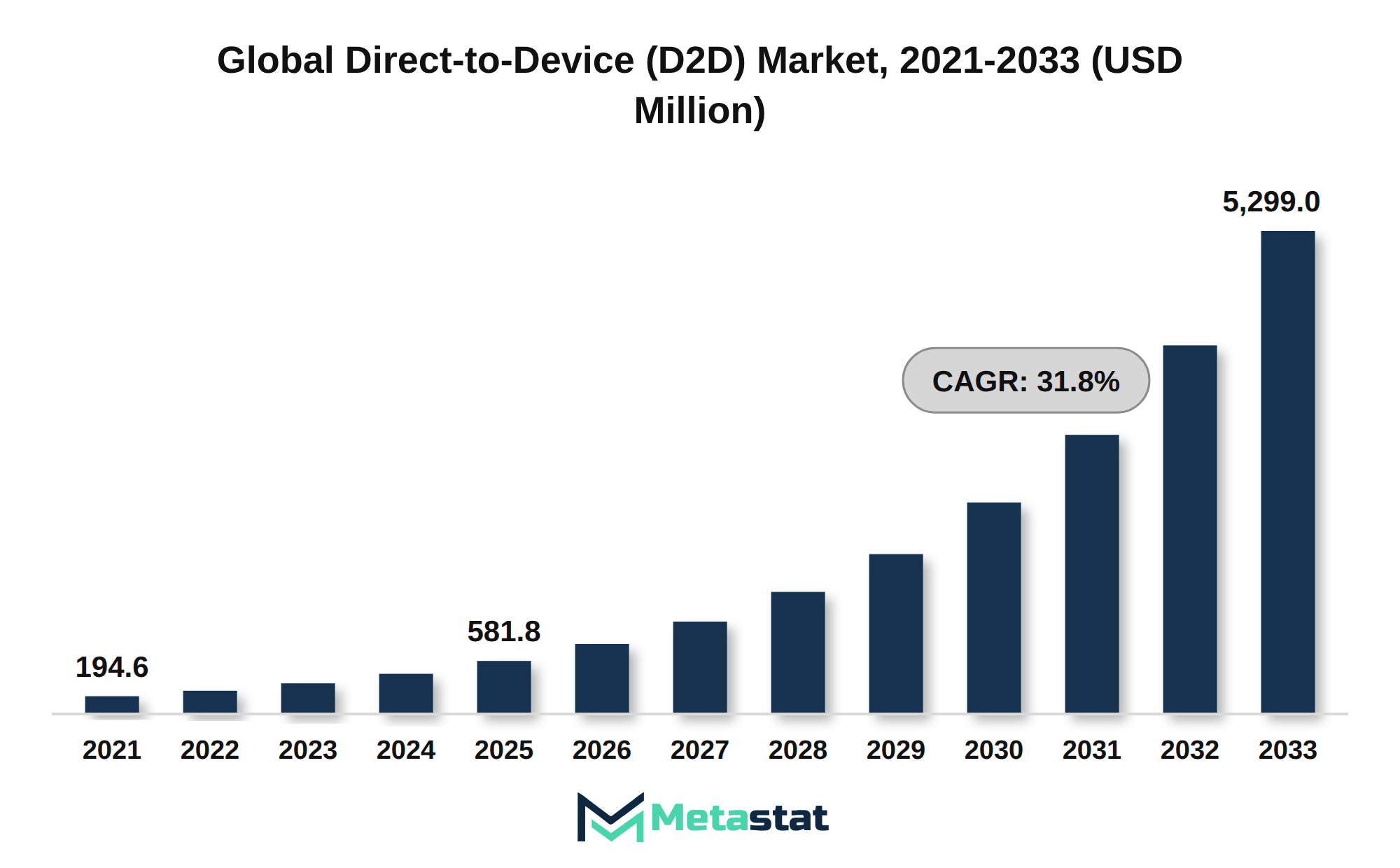
The global Direct-to-Device (D2D) market was valued at USD 581.8 million in 2025 and is projected to reach USD 5,299 million by 2033, growing at a CAGR of 31.8% over the forecast period.
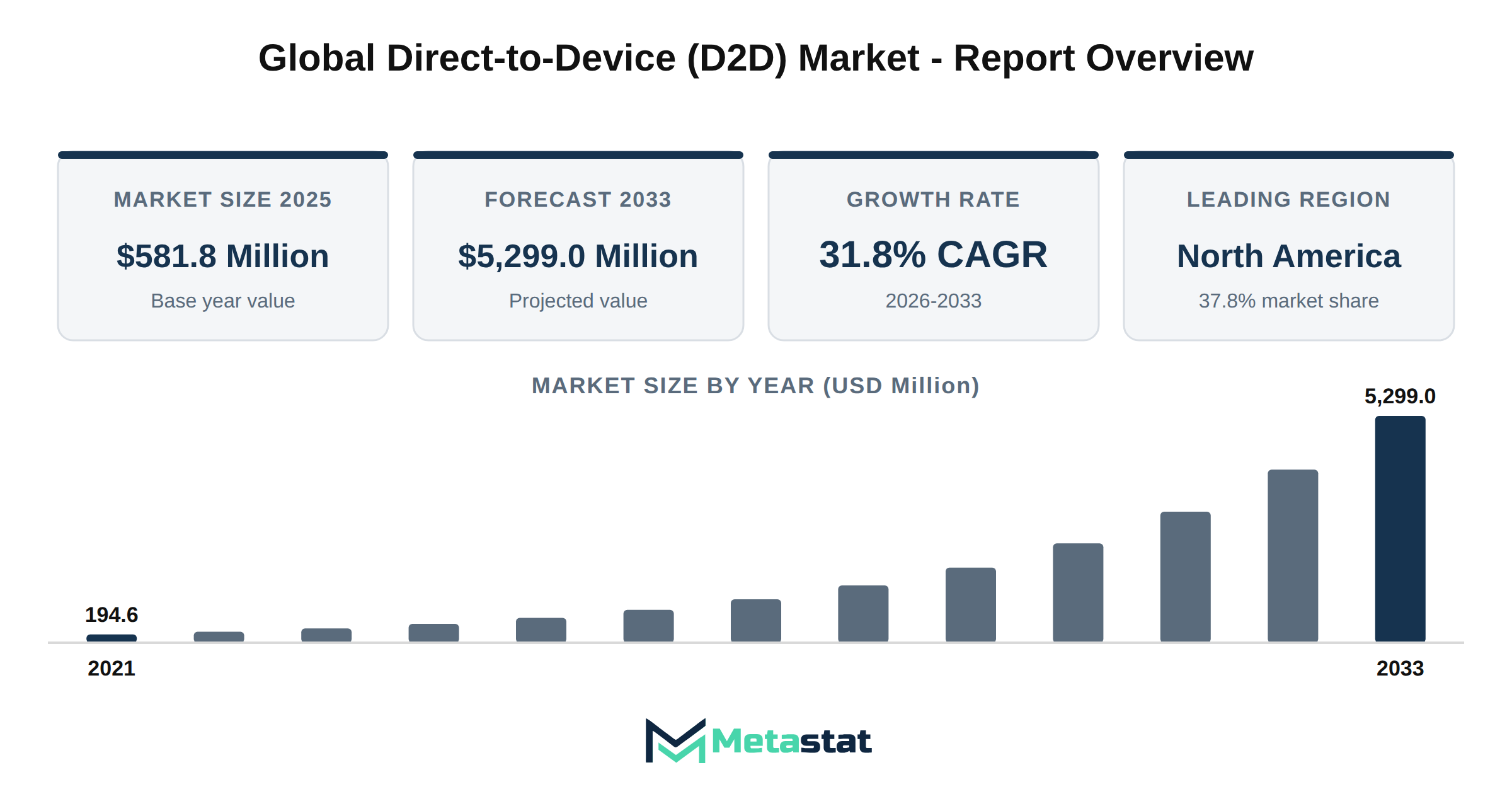
The Direct-to-Device (D2D) market is poised for substantial growth, with a projected value of USD 5,299 million by 2033, expanding from USD 581.8 million in 2025. This significant increase reflects a compound annual growth rate (CAGR) of 31.8%. Historical data indicates a steady rise in market value, starting from USD 194.6 million in 2021 and reaching USD 440.2 million in 2024.
Adoption of direct-to-device connectivity across mobile networks is accelerating, driven by increasing demand for effective communication solutions. The expansion of satellite direct-to-cell services enhances connectivity options, particularly in remote and underserved regions. Deployment of 5G NR-NTN technologies supports the evolution of direct-to-device services, providing enhanced performance and lower latency.
Growing demand for terrestrial and satellite connectivity highlights the importance of strong communication networks. Messaging, voice, and broadband services evolve to meet consumer expectations, enabling diverse applications across various sectors. Low Earth Orbit (LEO) satellite constellations significantly contribute to the growth of D2D connectivity, facilitating enhanced coverage and service offerings.
Telecom operators are increasingly partnering with satellite network providers to expand service capabilities and reach. Integration of satellite connectivity features into smartphones by original equipment manufacturers (OEMs) opens new avenues for usage in everyday devices. Opportunities in the Internet of Things (IoT) and machine-to-machine (M2M) networks continue to emerge, creating innovative solutions for various applications.
Direct-to-device connectivity is essential in emergency communication and public safety applications, ensuring reliable services during critical situations. The automotive sector experiences heightened adoption of satellite direct-to-device connectivity, enabling advanced features and services for vehicles. Agriculture and industrial sectors demonstrate growing demand for satellite-connected devices, facilitating operational efficiencies and data collection.
Investment in satellite direct-to-device infrastructure and constellations is essential for meeting future market needs. Competitive dynamics among satellite and telecom providers will shape the market landscape, influencing pricing and service monetization models. Strategic multi-orbit approaches facilitate comprehensive connectivity solutions, catering to diverse user requirements.
Advancements in chipset and modem technology support the development of satellite-enabled devices, enhancing performance and connectivity options. Direct-to-device network coverage expansion strategies focus on increasing access to underserved regions, ensuring equitable service availability. Commercialization of voice and broadband over satellite direct-to-device services presents significant growth opportunities in the market.
Overall, the Direct-to-Device (D2D) market is positioned for significant growth, driven by technological advancements and increasing demand across various sectors.
Direct-to-device connectivity adoption across mobile networks is accelerating, driven by the growing demand for real-time communication and data transfer. Enterprises increasingly require reliable and effective connectivity solutions, and mobile operators are responding by integrating D2D capabilities into their offerings, enhancing service quality and customer satisfaction.
Satellite direct-to-cell deployment trends highlight a significant shift towards hybrid connectivity solutions. This trend facilitates a transition between terrestrial and satellite networks, allowing users to maintain connectivity in remote areas where traditional services fall short.
Expansion of 5G NR-NTN in direct-to-device services significantly enhances the performance and reliability of mobile communications. This technology provides higher data rates and reduced latency, supporting a diverse range of applications, from IoT to enhanced mobile broadband.
Demand for terrestrial and satellite connectivity continues to rise, particularly in underserved regions. Users in remote locations increasingly rely on D2D solutions for reliable communication, enabling access to critical services and information.
The evolution of direct-to-device messaging, voice, and broadband services reflects changing consumer preferences and technological advancements. Service providers are expanding their offerings to include integrated solutions that enhance user experience and engagement.
Low Earth Orbit (LEO) satellite constellations are driving growth in D2D connectivity by providing low-latency, high-bandwidth solutions. The deployment of these satellites enhances global coverage and supports innovative applications across various sectors.
Telecom operator partnerships with satellite network providers are essential for expanding D2D capabilities. These collaborations enable operators to leverage satellite infrastructure and deliver enhanced services to their customers, further enhancing market competitiveness.
Smartphone OEM integration of satellite connectivity features is becoming a critical differentiator in the market. Manufacturers increasingly embed satellite capabilities into devices, catering to consumer demand for versatile and reliable communication options.
Opportunities for IoT and M2M in direct-to-device networks are expanding, driven by the need for interconnected devices across various industries. The integration of D2D capabilities into IoT solutions enables real-time data exchange and enhances operational efficiency.
Direct-to-device connectivity for remote and underserved regions addresses significant market gaps. Enhanced connectivity solutions provide communities with access to essential services and information that improve quality of life.
Emergency communication and public safety applications for D2D solutions are critical for ensuring reliable communication during crises. The ability to maintain connectivity in challenging environments supports first responders and enhances public safety initiatives.
Automotive adoption of satellite direct-to-device connectivity is on the rise, with manufacturers integrating these features into vehicles. This connectivity supports advanced navigation, vehicle-to-vehicle communication, and enhanced safety features.
Agriculture and industrial demand for satellite-connected devices is increasing, driven by the need for real-time monitoring and data collection. These applications enhance operational efficiency and enable better resource management.
Spectrum allocation and regulatory developments for D2D services play a crucial role in shaping market dynamics. Governments are adapting regulations to facilitate the deployment of innovative connectivity solutions while ensuring fair competition.
Progress in 3GPP NTN standardization and interoperability enhances integration across networks. This standardization encourages collaboration among service providers and accelerates the adoption of D2D technologies.
Network capacity and latency optimization in D2D connectivity are critical to delivering high-quality services. Providers continuously invest in infrastructure improvements to meet growing user demands and enhance service reliability.
Direct-to-device pricing and service monetization models are evolving, driven by providers seeking to optimize their revenue streams. Competitive pricing strategies and innovative service packages attract a broader customer base and drive market growth.
Investment in satellite D2D infrastructure and constellations is essential for meeting future connectivity demands. Increased funding supports the development of advanced satellite technologies and expanded network coverage.
Competitive dynamics among satellite and telecom D2D providers are intensifying. Companies are focusing on innovation, strategic partnerships, and service differentiation to capture market share and enhance their competitive positions.
Multi-orbit strategies for direct-to-device connectivity provide flexibility and enhance coverage options for users. By leveraging multiple satellite orbits, providers optimize service delivery and address varying customer needs.
Chipset and modem innovation for satellite-enabled devices drive advancements in performance and functionality. These technological improvements facilitate the development of more efficient and reliable D2D solutions.
Direct-to-device network coverage expansion strategies are essential for meeting growing demand. Providers are actively pursuing initiatives to enhance their reach, ensuring that users have access to reliable connectivity regardless of location.
Commercialization of voice and broadband over satellite D2D solutions is gaining traction, with providers introducing new offerings to meet user needs. This commercialization supports the growth of a diverse range of applications across various sectors.
Future growth opportunities in global direct-to-device connectivity are significant, driven by advancements in technology and increasing demand for reliable communication solutions. The market is positioned for continued expansion, with various sectors set to benefit from enhanced connectivity options.
The Direct-to-Device (D2D) market experiences significant growth due to macro-economic factors, particularly rising GDP and increased venture funding. Strong economic performance creates favorable conditions for capital investment, which enhances infrastructure development and technology adoption. Investments in digital transformation initiatives improve operational efficiency and competitiveness across various industries.
Interest rates play a crucial role in shaping the capital investment environment. Lower interest rates boost borrowing capacity, enabling companies to invest in advanced technologies and services integral to the D2D market. This investment drives innovation and enhances the overall connectivity framework, promoting the adoption of messaging, voice, and data services.
Demographic shifts and evolving consumer behaviors contribute to the market's growth. Urbanization and changes in lifestyle increase the demand for reliable connectivity solutions, which the D2D market provides. Companies focusing on consumer preferences allocate resources to develop solutions that meet the needs of a diverse customer base, ensuring competitive differentiation.
The combination of these macro-economic factors influences supply chain resilience and market access, positioning the D2D market for sustained growth through 2033. Investment in technology, driven by favorable economic conditions, supports the expansion of direct-to-device connectivity, enhancing service delivery and customer satisfaction across various sectors.
The integration of advanced technologies significantly influences the growth trajectory of the Direct-to-Device (D2D) market. Organizations increasingly prioritize automation, artificial intelligence, and software adoption to enhance operational efficiency and improve processes. These technological advancements facilitate improved connectivity and enable communication across platforms, capturing the interest of various sectors including consumer electronics, automotive, and agriculture.
Investment in digital transformation actively supports the expansion of the market. Companies that embrace digital technologies create new avenues for service delivery while enhancing customer experiences. The push for digitizing legacy processes creates demand for innovative D2D solutions, which enable businesses to remain competitive in changing environments. While more firms adopt these technologies, the market is expected to experience accelerated growth, reaching a value of USD 5,299 million by 2033.
Integration of Internet of Things (IoT) applications contributes to this momentum, driven by the proliferation of connected devices that enhance the relevance of D2D services within multiple industries, driving demand for reliable and efficient connectivity solutions. This focus on technological integration not only boosts operational productivity but enhances customer engagement, strengthening the market's position in the broader technological landscape.
Compliance hurdles present significant challenges for the Direct-to-Device (D2D) market, impacting its growth trajectory. Stringent regulatory frameworks create barriers to entry, particularly for new market entrants seeking to implement innovative technologies. Adherence to evolving regulations drives up operational costs, compelling existing players to divert resources towards compliance instead of innovation.
Macroeconomic headwinds contribute to market constraints. High inflation rates increase operational expenses, including workforce overhead, which directly affects profit margins. Market players face constant pressure to optimize costs while maintaining quality, leading to potential service limitations.
Resource scarcity impacts supply chain reliability, creating deployment bottlenecks that delay project timelines. The necessity for skilled labor further exacerbates these challenges, driven by talent shortages in the technology and telecommunications sectors that hinder the overall capacity to meet growing demand. This talent gap restricts operational efficiency and slows down the integration of new services, particularly in emerging applications.
Data security and privacy concerns continue to deter potential adopters from fully embracing D2D solutions. Increasing incidents of cyber threats contribute to apprehension among consumers and businesses regarding the safety of their data. This hesitation slows adoption rates within the market, impacting overall revenue growth.
Market fragmentation complicates the competitive landscape, leading to varying levels of service quality and customer experience across different regions. Cultural barriers and regional adoption resistors further hinder widespread acceptance of D2D solutions, restricting growth potential in key areas. The cumulative effect of these restraints presents a challenging environment for market participants aiming to capitalize on emerging opportunities.
Geopolitical fragmentation significantly impacts the Direct-to-Device (D2D) market, creating uncertainties that affect investment and operational strategies. Trade deficits and tariff friction complicate international supply chains, leading to increased costs for manufacturers and reduced competitiveness. These conditions challenge companies navigating complex market dynamics, particularly those reliant on cross-border trade for the procurement of components and technologies.
Technological disruptions stemming from geopolitical issues create obstacles for research and development initiatives. Companies face difficulties integrating new technologies due to varying standards and regulations across regions. The resulting interoperability friction complicates the deployment of D2D solutions, ultimately affecting market growth and customer adoption rates.
Logistical disruptions further exacerbate existing challenges within supply chains, resulting in increased lead times and heightened costs for suppliers. The instability of feedstock and essential components creates volatility in pricing, pressuring profit margins for key players in the Direct-to-Device (D2D) market. This financial strain necessitates strategic adaptations and limits investment in innovation.
Environmental considerations and tightening global regulatory standards add complexity to compliance frameworks, increasing operational overhead. Companies navigate evolving legal liabilities associated with sustainability demands and environmental impacts. This reality forces organizations to balance compliance with the need for profitability, resulting in further challenges within the market.
Talent retention pressures and workforce skill gaps hinder the advancement of automation technologies, which are essential for enhancing productivity and efficiency. Ongoing shifts in downstream demands create a highly competitive environment where companies remain agile to adapt to consumer preferences and market saturation. These factors present significant hurdles for sustained growth and profitability in the Direct-to-Device (D2D) market.
The Direct-to-Device (D2D) market is positioned to benefit from emerging regional demands across diverse sectors. High growth rates in the Asia Pacific region, driven by increasing digitalization and infrastructure modernization, present significant opportunities for market players. Countries within this region are investing heavily in telecommunications infrastructure, enhancing connectivity and enabling advanced D2D services.
Technological disruptions, including the rollout of 5G networks and advancements in IoT connectivity, facilitate the integration of D2D solutions across various applications. This integration supports industries including automotive and agriculture, which increasingly rely on robust connectivity for operational efficiency. The expanding use of D2D technologies in these sectors drives revenue growth, enhancing overall market attractiveness.
Digital transformation initiatives across industries create a shift toward more agile and responsive supply chains, creating further demand for D2D solutions. Businesses are adapting to evolving buying behaviors, favoring digital procurement processes that streamline operations and improve service delivery. This transformation significantly influences market dynamics, encouraging greater investment in D2D capabilities.
Sustainability imperatives drive a shift toward greener technologies, encouraging companies to seek out eco-friendly D2D solutions. This alignment with environmental, social, and governance (ESG) principles enhances corporate reputations while meeting consumer expectations for sustainability. The focus on green transformations opens new avenues for product integration, enabling innovative offerings that appeal to eco-conscious consumers.
Strategic consolidation through mergers and acquisitions among key players facilitates the development of comprehensive service offerings, allowing firms to capture a larger share of the market. This trend emphasizes the importance of value-chain optimization, where companies leverage synergies to enhance operational efficiency and reduce costs.
The Direct-to-Device (D2D) market is set to capitalize on these opportunities, driven by niche application growth and expanding market reach. A robust focus on asset life-cycle extensions and maintenance upgrades further supports the sustainability of D2D solutions, enabling firms to meet growing demands while maximizing operational yield.
The Global Direct-to-Device (D2D) market is segmented based on Service Type, Connectivity Technology, Satellite Orbit, and End-use Sector.
Valued at USD 302.9 million in 2026, the Messaging Services segment is projected to reach USD 1,686.1 million by 2033, reflecting a CAGR of 27.8% during the forecast period. Strong demand drivers include the increasing reliance on real-time communication across various sectors, contributing to the segment's growth. Adoption of messaging services receives support from the rapid expansion of mobile network infrastructure, enabling connectivity and enhanced user experiences.
Technological maturation plays a critical role in the evolution of messaging services. Advances in encryption and security protocols drive user trust and engagement, leading to wider acceptance among consumers and businesses. Integration of messaging services with next-generation applications, including customer support and automated responses, enhances their appeal across diverse end-use sectors.
Downstream applications expand owing to industries recognizing the efficiency gains from messaging services. Sectors including Automotive, Consumer, and Energy increasingly leverage these capabilities to streamline operations and improve customer engagement. Regulatory compliance, including adherence to data protection standards, influences how businesses implement messaging solutions, affecting their operational strategies.
Pricing volatility and margin pressures present challenges within the segment. Competition among service providers intensifies, influencing pricing strategies and potentially impacting profitability. Companies navigate these challenges by focusing on service differentiation and user experience enhancements.
Investment in messaging services remains robust, with stakeholders identifying strategic opportunity windows for growth. The demand for innovative solutions aligns with evolving consumer preferences, leading to an agile market environment. Overall, the Messaging Services segment within the Direct-to-Device (D2D) market demonstrates significant potential, driven by technological advancements and shifting end-user dynamics.
Rapid advancements in communication technology drive demand for voice services in the Direct-to-Device (D2D) market. These advancements enable effective communication across various sectors, including consumer, automotive, and energy. Increased smartphone penetration and the proliferation of Internet of Things (IoT) devices support adoption, creating an environment where voice services thrive.
Voice services segment is estimated to reach USD 923.6 million by 2033, at a CAGR of 33.7% during the forecast period. The segment benefits from the rising need for real-time communication solutions, pushing enterprises to enhance customer engagement through voice applications. Businesses recognize the importance of integrating voice capabilities into their operations, leading to greater efficiency and improved user experiences.
Technological maturation significantly impacts the segment's growth, with next-generation upgrades enhancing voice clarity and reliability. Cloud-based voice solutions and Artificial Intelligence (AI) integrations optimize service performance while reducing operational costs. These innovations position voice services because essential components of modern business strategies.
Regulatory compliance standards influence market dynamics, with policies creating secure communication channels. Organizations prioritize adherence to data protection regulations, driving investments in voice solutions that ensure compliance while delivering high-quality services. This emphasis on regulatory compliance opens strategic opportunity windows for market players, enabling targeted investments and partnerships.
Growth in the Data and Broadband Services segment stems from increasing demand for high-speed connectivity and reliable data exchange. The proliferation of smart devices, coupled with the rising need for efficient data handling in various sectors, drives this demand. This segment is projected to reach USD 1,640.6 million by 2033, reflecting significant investment in technology and infrastructure to enhance capabilities.
Competition among service providers drives innovation and technological maturation. Enhanced connectivity options and growing applications in sectors including automotive and consumer electronics contribute to the expansion of the market. Increased regulatory support for broadband access in underserved areas provides additional catalysts for growth.
Cost structures within this segment are influenced by advancements in technology and economies of scale. Fluctuations in pricing due to competitive dynamics impact profit margins, prompting companies to innovate continuously. Strategic opportunities arise from evolving consumer preferences and the demand for integrated solutions across industries.
The market's resilience lies in its ability to adapt to changing requirements and capitalize on new trends. Companies focusing on next-gen upgrades and product evolution will likely secure a competitive edge. The Data and Broadband Services segment remains a vital component of the Direct-to-Device (D2D) market, with substantial growth anticipated throughout the forecast period.
Significant demand for IoT and M2M Connectivity Services emerges from the increasing adoption of smart devices and automation across various sectors. This segment is projected to grow at a CAGR of 32.2% during the forecast period. Industries including automotive, agriculture, and energy heavily rely on IoT and M2M solutions for operational efficiency and real-time data access. The push for enhanced connectivity, driven by the need for effective communication between devices, positions this segment favorably in the market.
Technological advancements play a crucial role in shaping the segment's trajectory. Enhanced network capabilities and the rollout of 5G technology enable faster data transmission and support a broader range of applications. Advancements drive innovation in IoT and M2M solutions, leading to more sophisticated products that cater to diverse end-user needs. The integration of artificial intelligence into connectivity services improves decision-making processes and operational efficiencies.
Regulatory compliance standards and policy frameworks surrounding data privacy and connectivity influence market dynamics. Organizations face pressures to ensure their IoT solutions meet these standards, impacting product development and service offerings. This aspect creates strategic opportunity windows for providers that excel in compliance and secure connectivity solutions. The evolving landscape necessitates ongoing investment to align with regulatory requirements while enhancing service capabilities.
Cost structures and pricing strategies within the segment remain critical factors. The introduction of competitive pricing models helps attract a broader customer base while ensuring profitability for service providers. Innovation in service delivery and reduced operational costs contribute to better margins in a highly competitive environment. The increased focus on sustainability and energy efficiency in IoT applications further drives market expansion, creating new avenues for revenue generation.
Overall, the IoT and M2M Connectivity Services segment is expected to contribute significantly to the growth of the Direct-to-Device (D2D) market, driven by technological maturation, increased demand, and evolving regulatory landscapes. With a positive growth outlook, stakeholders remain attuned to market trends and adapt strategies to maximize opportunities within this dynamic sector.
Valued at USD 288.6 million in 2026, the 4G LTE Direct-to-Cell segment is projected to reach USD 1,455.1 million by 2033, with a CAGR of 26% during the forecast period. Demand for this segment stems from its ability to provide reliable and high-speed mobile connectivity, meeting the needs of both consumers and businesses. Increasing reliance on mobile applications across various industries drives the adoption of 4G LTE technology, particularly in regions with robust telecom infrastructure.
Technological maturation enhances the capabilities of 4G LTE Direct-to-Cell services. Ongoing upgrades and enhancements in network infrastructure facilitate improved data transmission rates and lower latency, contributing to a higher uptake. The evolution of products that leverage 4G LTE connectivity supports diverse applications, ranging from consumer electronics to industrial automation.
End-use sectors, particularly automotive and energy, exhibit significant interest in integrating 4G LTE Direct-to-Cell capabilities into their operations. These sectors seek solutions that enhance operational efficiency and enable real-time data transfer, driving investment into this segment. Regulatory compliance standards supporting the deployment of high-speed connectivity solutions further stimulate market growth.
Pricing volatility remains a factor influencing market dynamics, where shifts in raw material costs and service provider competition impact margins. Strategic opportunity windows arise for players in the market to innovate, offering tailored solutions that meet specific industry needs. Overall, the 4G LTE Direct-to-Cell segment represents a significant opportunity within the broader Direct-to-Device (D2D) market, with strong growth potential driven by technological advancements and evolving consumer demands.
Strong demand for ultra-reliable low-latency communication drives the growth of the 5G NR-NTN segment within the Direct-to-Device (D2D) market. This segment is expected to enhance connectivity across various applications, including critical communications in industries like automotive and healthcare. The increasing proliferation of connected devices increases the need for advanced data transmission capabilities, pushing organizations to seek advanced connectivity options. The expansion of IoT applications significantly influences the demand for 5G NR-NTN, driven by industries leveraging the technology to enable real-time data processing and analytics.
Investment in 5G infrastructure significantly contributes to the segment's growth, with telecommunications providers collaborating to enhance network capabilities. Regulatory frameworks supporting the adoption of next-generation technology further stimulate the segment's progress. The anticipated increase in mobile broadband traffic necessitates the deployment of 5G NR-NTN solutions, ultimately projected to reach USD 1,770.9 million by 2033, at a CAGR of 40.6% during the forecast period. This growth highlights the segment's critical position in the overall D2D landscape.
Growth in the IoT-NTN (NB-IoT / LTE-M NTN) segment contributes significantly to the overall Direct-to-Device (D2D) market. Increasing connection demands across various industries, alongside the rise of smart devices, drives substantial demand for these technologies. The adoption of IoT-NTN technologies enhances connectivity options for a wide range of applications, including smart cities, agriculture, and industrial automation.
Investment in advanced infrastructure and the maturation of satellite communication technologies act because key expansion catalysts for this segment. Enhanced coverage capabilities and reduced latency have positioned IoT-NTN because an attractive option for service providers aiming to meet the growing connectivity demands in remote locations and urban centers alike.
The segment is projected to reach USD 1,427 million by 2033, with anticipated penetration across various end-use sectors, including consumer, automotive, and energy utilities. This growth aligns with broader market trends indicative of increasing reliance on advanced communication technologies, which further highlights the strategic importance of the IoT-NTN segment within the Direct-to-Device (D2D) market.
Significant advancements in proprietary Mobile Satellite Services (MSS) directly connected to devices fuel growth within the Direct-to-Device (D2D) market. This segment is projected to grow at a CAGR of 25.7% during the forecast period. Increasing demand for reliable connectivity in remote and underserved areas drives interest in proprietary MSS solutions. Specific applications in sectors including maritime, agriculture, and emergency response further enhance market traction, illustrating the segment's adaptability across diverse end-use dynamics.
Technological maturation enables next-generation upgrades that enhance market potential, with product evolution aligning closely with consumer expectations for reliability and efficiency. Innovations in satellite technology improve user experience, significantly impacting consumption shifts toward proprietary MSS Direct-to-Device solutions. Regulatory compliance standards continue to evolve, influencing technology development and adoption across the market.
Pricing volatility remains a critical factor, driven by suppliers navigating cost structures and market pressures. Strategic opportunity windows appear for companies focusing on resiliency in supply chains and raw material sourcing, mitigating risks associated with logistics vulnerabilities. Disruptive alternatives do not currently threaten the proprietary MSS segment, allowing it to maintain a competitive edge through continuous advancement and investment in new technologies.
Growth in the Low Earth Orbit (LEO) segment is attributed to the increasing demand for global connectivity across various sectors. The push for improvements in satellite technology fuels adoption among telecommunications and IoT applications, where low-latency and high-speed data transfer becomes essential. This segment is valued at USD 479.5 million in 2026 and is projected to reach USD 3,625.6 million by 2033, at a CAGR of 33.5% during the forecast period.
Expansion catalysts include advancements in satellite manufacturing and deployment strategies, which significantly enhance service delivery capabilities. While companies focus on developing next-gen satellite solutions, competitive pressures drive continuous innovation and cost reduction efforts. This competitive environment creates ample opportunities for strategic partnerships and collaborations within the Direct-to-Device (D2D) market.
Downstream applications across industries including automotive, agriculture, and logistics benefit from LEO connectivity. The capacity to provide real-time data and communication creates new operational efficiencies and enables smart technologies to thrive. Regulatory compliance standards regarding satellite operations motivate companies to invest in LEO solutions, thus supporting market growth.
Investments in LEO satellite technology reflect a commitment to addressing the increasing demand for reliable and scalable connectivity solutions. While firms navigate evolving consumer requirements and technological advancements, the segment's potential becomes increasingly evident, positioning it because a critical component of the Direct-to-Device (D2D) market.
Valued at USD 919.9 million by 2033, the Geostationary Earth Orbit (GEO) segment experiences a compound annual growth rate (CAGR) of 27% during the forecast period. Increasing adoption of satellite communications across various sectors drives demand for GEO services, particularly in telecommunications and broadcasting. Businesses seek reliable and consistent connectivity solutions for applications including direct-to-device communication, enhancing operational efficiency and customer engagement.
Technological advancements in satellite technology contribute significantly to market expansion, enabling improved performance and reduced latency. Next-generation upgrades in satellite infrastructure facilitate enhanced data transfer capabilities, prompting investment in the GEO segment. The evolving landscape of regulatory compliance standards supports the integration of satellite services within existing communication frameworks, ensuring effective interoperability.
Emerging application areas including remote monitoring, disaster recovery, and maritime services stimulate interest in GEO solutions. The increasing demand for reliable connectivity in these sectors drives competition among service providers, further driving innovation. Companies explore partnerships and collaborations to leverage GEO capabilities, enhancing service offerings in the Direct-to-Device (D2D) market.
Cost structures associated with launching and maintaining GEO satellites present challenges, influencing pricing strategies within the segment. Pricing volatility arises from fluctuating operational costs and advancements in technology, impacting profit margins for providers. Ongoing investments in research and development position companies to address these challenges effectively, ensuring sustainability of market growth.
Demand for Medium Earth Orbit (MEO) services is driven by the increasing need for reliable communication technology across various industries, including telecommunications and satellite services. This segment supports low-latency applications, which are critical for sectors requiring real-time data transmission. Anticipated technological maturation in satellite systems enhances operational efficiencies, attracting significant investment into the sector.
With an expected value of USD 307.9 million by 2033, the MEO segment reflects the growing adoption of satellite solutions for diverse applications including remote monitoring, navigation, and environmental tracking. Integration of advanced technology facilitates improved service offerings, allowing businesses to expand their operational capabilities. Regulatory compliance standards influence market growth, ensuring that providers meet necessary safety and performance benchmarks.
Investment in the MEO segment emphasizes strategic opportunity windows, where companies focus on enhancing connectivity solutions. This investment drives innovation in satellite technology and downstream application development, positioning the market for growth. Pricing volatility in the sector, driven by fluctuating demand and technological advancements, presents challenges that require careful management of cost structures and margin pressures.
Continued advancements in Medium Earth Orbit (MEO) capabilities are expected to reshape the competitive environment, allowing for the development of disruptive alternatives that challenge traditional communication methods. Companies operating in the Direct-to-Device (D2D) market prioritize resilience within their supply chains, addressing potential vulnerabilities in raw material sourcing and logistics. This proactive approach enables firms to maintain a competitive edge in a changing technological environment.
Rapid growth in the Multi-Orbit segment reflects advancements in satellite technology and the increasing demand for reliable communication networks across diverse applications. This segment is projected to grow at a CAGR of 32.5% during the forecast period. The integration of multiple satellite orbits enhances coverage and connectivity, addressing the needs of various industries including telecommunications, transportation, and logistics.
Technological maturation drives adoption. Innovations in satellite design and deployment streamline operations and reduce costs, making multi-orbit solutions accessible to a broader range of users. Industry players are investing in next-generation upgrades, improving latency and bandwidth, which increases the attractiveness of these services.
End-use dynamics significantly influence growth. The rising demand for uninterrupted connectivity in sectors including automotive and energy fuels interest in multi-orbit solutions. Regulatory compliance standards encourage operators to explore advanced technologies, leading to increased competition and investment in the Direct-to-Device (D2D) market.
Operators seek to enhance the robustness of their offerings, while consumption shifts towards services that provide greater reliability and lower latency. The need for strategic opportunity windows encourages companies to innovate and expand their service portfolios. Overall, the Multi-Orbit segment's growth trajectory reflects a combination of technological advancements, evolving consumer demands, and regulatory support.
Valued at USD 244.3 million in 2026, the Consumer segment experiences strong growth driven by increasing demand for connectivity and digital services. Rising smartphone penetration and the growing reliance on mobile internet contribute significantly to this trend. Consumers increasingly seek reliable communication experiences, enhancing the need for dependable voice, messaging, and data services in the Direct-to-Device (D2D) market. The segment is projected to reach USD 1,546.2 million by 2033, at a CAGR of 30.2% during the forecast period.
Technological advancements in connectivity, including the deployment of 5G networks, facilitate faster and more reliable services, further enhancing consumer adoption. Enhanced mobile broadband capabilities drive the demand for multimedia content, applications, and services. Shifts in consumer behavior, including the growing preference for mobile applications over traditional modes of communication, support segment expansion. The market is expected to see a significant increase in consumer-driven innovations, focusing on improving user experience and service delivery.
Regulatory compliance standards and policies supporting telecommunications infrastructure development play a crucial role in shaping the market landscape. Investments in next-gen connectivity solutions and the evolution of products tailored for consumer needs create strategic opportunities for industry players. A robust competitive environment among key providers in the Direct-to-Device (D2D) market encourages innovation and pricing strategies, allowing firms to adapt to emerging consumer demands and preferences.
Accelerated investment in connected vehicle technologies drives growth in the automotive end-use sector. Increasing consumer demand for advanced driver assistance systems (ADAS) and in-vehicle connectivity drives the adoption of Direct-to-Device (D2D) technologies. Original Equipment Manufacturers (OEMs) focus on enhancing user experience through effective connectivity, which is crucial for integrating infotainment and navigation systems.
The automotive segment is estimated to reach USD 834.1 million by 2033, at a CAGR of 33.7% during the forecast period. This expansion results from technological advancements in vehicle-to-everything (V2X) communication, allowing vehicles to interact with infrastructure and other vehicles. Enhanced safety features and real-time data exchange contribute to consumer interest in smart vehicles, creating a competitive environment among manufacturers.
Regulatory compliance regarding safety and emissions standards influences the market dynamics, driven by government encouragement of the adoption of innovative technologies. Investments in electric and autonomous vehicles further stimulate demand for D2D solutions, enabling data-intensive applications including remote diagnostics and over-the-air updates. The growing emphasis on sustainability and efficiency in the automotive sector reinforces the relevance of Direct-to-Device (D2D) solutions in meeting consumer expectations and regulatory requirements.
Technological advancements in farming equipment drive demand for the Direct-to-Device (D2D) market in the agriculture sector. Automation and precision agriculture techniques enhance productivity, resulting in an increased reliance on connectivity solutions. Wireless communication technologies facilitate real-time data exchange between devices, enhancing decision-making processes for farmers.
Increased investment in smart farming technologies supports market expansion, allowing for efficient monitoring of crops and livestock. Adoption of Internet of Things (IoT) devices provides critical insights into environmental conditions, enabling growers to optimize resources. This shift towards data-driven agriculture leads to a stronger focus on sustainability and improved yield.
Regulatory compliance regarding environmental standards influences the integration of D2D solutions within the agricultural landscape. Compliance with these standards enhances operational efficiency and positions farmers to meet consumer demand for sustainably sourced products. Consequently, this regulatory pressure drives innovation within the market.
Valued at USD 597.2 million by 2033, the agriculture segment demonstrates significant growth potential. The combination of increasing regulatory demands, technological advancements, and growing consumer interest in sustainable practices positions the agriculture sector because a vital component of the overall market.
Investment in smart grid technologies and renewable energy sources drives demand for services in the Energy and Utilities segment. This segment is projected to grow at a CAGR of 32.5% during the forecast period. The transition towards sustainable energy systems and the increasing need for efficient energy management contribute to this growth. Organizations seek enhanced connectivity solutions to monitor and control energy consumption, leading to increased adoption of Direct-to-Device (D2D) technology.
Integration of IoT devices within the Energy and Utilities sector enables real-time data analytics and remote management. The shift towards automation and digitalization in power generation, transmission, and distribution enhances operational efficiency. Utilities strive to reduce operational costs while the demand for data and broadband services increases, focusing on improving the reliability and performance of energy systems.
Emerging regulatory compliance standards related to environmental sustainability further support market expansion. These regulations prompt companies to invest in D2D connectivity solutions that facilitate compliance monitoring and reporting. Evolving energy consumption patterns create growing pressure for utilities to adapt their infrastructure, highlighting the significance of advanced communication technologies.
Investments in next-generation upgrades, including 5G NR-NTN, significantly enhance connectivity and service delivery in this sector. With increased deployment of renewable energy sources, the need for reliable communication links becomes critical for ensuring grid stability and efficiency. Evolving dynamics in the Direct-to-Device (D2D) market reflect the energy sector's commitment to leveraging technology for operational excellence.
Increasing focus on connectivity in the maritime sector drives growth in the Direct-to-Device (D2D) market. Demand arises from the need for reliable communication channels for navigation, safety, and operational efficiency during maritime operations. Enhanced capabilities in satellite communication technology drive adoption, enabling vessels to maintain connections even in remote areas.
Investment in next-generation upgrades, including high-throughput satellites, increasingly supports enhancements in service offerings. Maritime operations experience shifts in consumption patterns, with greater reliance on data services for real-time analytics, monitoring, and decision-making. Regulatory compliance standards and certifications surrounding safety and environmental impacts influence maritime connectivity requirements, reflecting a commitment to operational integrity.
Increasing pressure on pricing and margins, driven by competitive dynamics, necessitates strategic considerations within the segment. Effective management of cost structures through technological advancements and strategic partnerships enhances value propositions for service providers. Opportunities for growth exist in underdeveloped regions and markets, where maritime connectivity remains limited, allowing for significant capital investment and deployment of innovative solutions.
The maritime segment of the market demonstrates resilience, adapting to evolving industry standards and consumer demands while addressing the inherent challenges of maritime logistics and operations.
Investment in the Logistics and Supply Chain segment of the Direct-to-Device (D2D) market highlights the critical role of connectivity in optimizing operations and enhancing visibility. Primary demand drivers for this segment include the increasing need for real-time tracking and monitoring of assets, coupled with the growth of e-commerce and global trade. These dynamics prompt companies to adopt innovative solutions that streamline processes and improve efficiency.
The expansion of this segment is driven by advancements in wireless technologies, particularly 5G and IoT, which enable effective communication and data transfer. Organizations recognize the necessity of integrating next-generation technologies to respond swiftly to market changes and customer demands. Enhanced data analytics capabilities enable businesses to make informed decisions, thus improving operational agility.
Technological maturation shapes the evolution of products within this segment, leading to the development of more sophisticated applications tailored for logistics management. Enhanced connectivity solutions support the integration of automated systems and artificial intelligence, which improve decision-making and operational efficiency.
Shifts in consumption patterns, driven by the rise of on-demand services, compel logistics providers to enhance their offerings. Regulatory compliance standards and certifications further influence operational practices, ensuring that companies adhere to industry regulations while maintaining high service quality. The market continues to evolve against a backdrop of cost structures impacted by pricing volatility and margin pressures, compelling firms to seek cost-effective solutions.
Supply chain resilience remains a focal point, prompting companies to assess raw material sourcing and identify vulnerabilities within their logistics frameworks. Substitution risks and the emergence of disruptive alternatives challenge traditional practices, urging firms to innovate and adapt. Strategic opportunity windows arise from organizations investing in technologies that enhance supply chain effectiveness, contributing to an increasingly competitive market.
Capital investment outlook remains positive, with stakeholders keen on funding initiatives that leverage technological advancements while addressing logistics vulnerabilities. While the Direct-to-Device (D2D) market evolves, the Logistics and Supply Chain segment is positioned for significant growth, driven by the ongoing demand for efficiency and enhanced operational capabilities.
In the Government, Defense and Public Safety segment, increasing demand for secure and reliable communication solutions drives growth. Agencies require advanced connectivity to support various operations, including emergency response, surveillance, and disaster management. Enhanced data transmission capabilities enable real-time information sharing, which is crucial for effective decision-making in critical situations. The implementation of next-generation technologies, including 5G, significantly impacts performance by providing lower latency and higher bandwidth, essential for mission-critical applications.
Investment in advanced satellite systems is important for expanding coverage and ensuring connectivity in remote or challenging environments. This expansion facilitates greater operational efficiency and improves safety protocols, aligning with regulatory compliance standards and enhancing overall mission effectiveness. Technological maturation supports ongoing upgrades, ensuring systems remain competitive and responsive to emerging threats and operational needs.
Downstream applications increasingly focus on integration with other technologies, creating a more comprehensive approach to public safety and defense operations. The evolving landscape highlights strategic opportunity windows, particularly in areas requiring enhanced data analytics and integration with existing infrastructure. Stakeholders consider these dynamics while navigating the complexities of the Direct-to-Device (D2D) market and capitalizing on growth potential.
Demand for Direct-to-Device (D2D) solutions in mining, construction, and remote industrial operations is influenced by the need for enhanced communication and data transfer capabilities in challenging environments. Factors including the increasing complexity of projects and the requirement for real-time monitoring drive the adoption of advanced connectivity solutions. These sectors rely on reliable data transmission for operational efficiency, safety monitoring, and equipment management, highlighting the critical role of D2D services.
Technological maturation contributes to the segment's expansion by introducing next-generation upgrades that enhance service capabilities. The evolution of products, including more robust connectivity options and improved user interfaces, supports the integration of D2D solutions into existing workflows. End-use dynamics reflect a shift towards more digitalized and automated processes. Companies in these sectors prioritize investment in technology to gain competitive advantages.
Regulatory compliance standards and certifications increasingly shape the market, driven by organizations adopting D2D technologies to meet safety and operational requirements. This trend encourages investment in compliant solutions, creating a more resilient supply chain and mitigating risks related to logistics vulnerabilities. Strategic opportunity windows arise because companies recognize the value of D2D technologies in enhancing operational resilience, influencing capital investment outlooks in these sectors.
Based on geography, the Global Direct-to-Device (D2D) market is divided into North America, Europe, Asia-Pacific, South America, Middle East, and Africa.
North America exhibits strong growth dynamics in the Direct-to-Device (D2D) market, with a projected CAGR of 31.8% during the forecast period, targeting a market size of USD 1,850.4 million by 2033. This growth stems from increased demand for advanced connectivity solutions across various sectors, particularly in the United States, Canada, and Mexico. Enhanced infrastructure and modernization initiatives play a significant role in enabling the adoption of D2D technologies, driving investments in messaging, voice, and data services.
Regional players are actively investing in localized manufacturing capabilities, streamlining supply chains to enhance responsiveness to market demands. The consumer sector is a significant contributor, with expectations for growth driven by rising connectivity needs. The automotive sector's transition towards connected vehicles further fuels the market's expansion, aligning with broader trends in smart technology adoption.
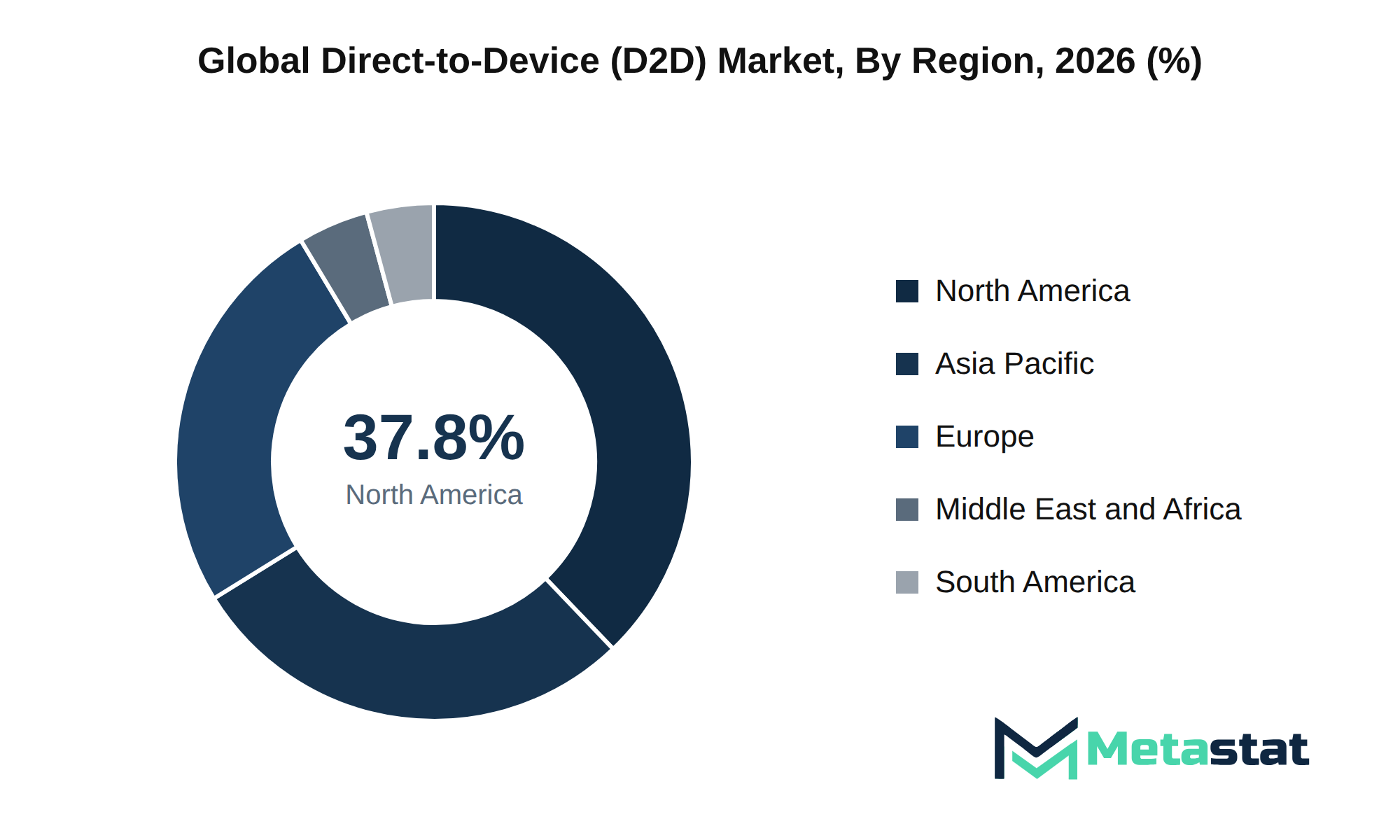
North America holds the largest share of the global D2D market in 2025. The competitive landscape features prominent players like SpaceX (Starlink), Viasat, and Iridium Communications, who are intensifying their efforts to capture significant market segments. A focus on innovation and maintaining regulatory compliance will be critical in sustaining momentum and driving further growth within this region.
Europe represents a significant portion of the Direct-to-Device (D2D) market, accounting for 25.2% of the global market share in 2025. This market is characterized by strong demand across multiple sectors, including automotive, agriculture, and consumer services, driven by technological advancements and increasing connectivity needs.
The region's competitive landscape features established players including Germany, France, the UK, Italy, and Spain, alongside emerging markets like Russia and other parts of Europe. Technological investments in 5G infrastructure and IoT connectivity enhance adoption rates, improving service offerings in messaging, voice, and broadband services. This focus on connectivity supports an environment conducive to market growth.
Infrastructure modernization initiatives play a crucial role in enabling the expansion of the D2D market. Upgrades to energy grids and telecommunications networks support the deployment of innovative services, allowing integration of various technologies. Local compliance mandates and regulatory frameworks ensure that market participants adhere to specific operational standards, creating a competitive yet stable market environment.
The commitment to enhancing localized procurement dynamics strengthens the market. Domestic players increasingly invest in manufacturing and service delivery capabilities closer to their customer bases, driving efficiency and responsiveness. These strategies contribute positively to market growth, improving the overall competitive positioning of regional participants.
With ongoing geopolitical fragmentation and nearshoring initiatives, supply chain regionalization has become a critical factor. The D2D market in Europe benefits from these trends, allowing manufacturers to adapt quickly to changing market conditions while ensuring compliance with local regulations. Such adaptability positions the region favorably for sustained growth in the coming years.
The Asia-Pacific region presents significant growth potential within the Direct-to-Device (D2D) market, driven by increasing demand for connectivity solutions across various sectors. Countries including China, Japan, India, South Korea, and Australia lead in technology adoption, facilitating advancements in IoT and M2M connectivity services. The region's younger population and rapid urbanization contribute to the demand for innovative communication technologies, including messaging and voice services.
Infrastructure modernization is critical in supporting market expansion. Investments in telecommunications infrastructure, particularly in rural and underserved areas, enhance connectivity and user access to D2D services. Southeast Asia and the Rest of Asia Pacific represent underpenetrated territories, where localized manufacturing and supply chain regionalization efforts are gaining momentum. These areas develop, presenting opportunities for vendors to expand their market presence.
Domestic vendors play a vital role in shaping the competitive landscape. Local market leaders focus on strategic collaborations and partnerships to enhance their offerings and capture a larger market share. This trend drives growth while addressing unique regional purchasing behaviors and cultural nuances affecting procurement dynamics.
The region's energy grid resiliency and local infrastructure readiness influence the market's growth trajectory. Geographic regulatory frameworks and local compliance mandates affect market entry dynamics, requiring foreign players to adapt their strategies. Continued foreign direct investment flows into the region are expected to strengthen the market, particularly because geopolitical considerations shape trade corridors.
With a projected market share of 28.3% in 2025, Asia-Pacific's direct contribution to the global D2D market increases the importance of understanding its evolving landscape. Focusing on emerging market front-runners and high-value replacement cycles enables stakeholders to capitalize on growth opportunities throughout the forecast period.
In South America, the Direct-to-Device (D2D) market is positioned to grow gradually, with a market share projected for 2025. Brazil and Argentina serve because the primary markets within the region, benefiting from the increasing demand for enhanced connectivity solutions, particularly in urban areas. Regional players are focusing on expanding their service offerings to capitalize on the emerging consumer base.
Investment in telecommunications infrastructure modernization drives market expansion. Governments in Brazil and Argentina prioritize the development of high-speed internet connections, which supports the adoption of D2D technologies across various sectors, including agriculture and automotive.
Key factors influencing growth include localized procurement dynamics and the presence of domestic market participants. Companies actively invest in technology upgrades, enhancing service delivery and operational efficiency. These investments stimulate competition, leading to better pricing strategies and improved service quality.
While the Direct-to-Device (D2D) market develops in South America, regional supply chain adjustments, including nearshoring initiatives, emerge. These adjustments facilitate quicker service deployment and align with local demand trends, ultimately supporting growth in underpenetrated territories.
The Direct-to-Device (D2D) market in the Middle East and Africa demonstrates considerable growth potential, fueled by increasing demand for connectivity solutions across various sectors. Countries like Saudi Arabia and the UAE invest significantly in infrastructure modernization, enhancing access to advanced communication technologies. South Africa, with its growing reliance on digital solutions, contributes to the market's expansion.
Factors influencing growth include rising mobile device penetration and a shift towards IoT and M2M connectivity services. Emerging technologies and localized manufacturing densities support the development of tailored solutions, aligning with regional needs and capabilities. This adaptation increases market share within the broader global context.
High-value replacement cycles contribute to sustained growth within established sectors, while incremental growth vectors emerge from sectors including automotive and energy. A focus on localized procurement dynamics strengthens relationships between suppliers and domestic buyers, accelerating market penetration.
Geopolitical dynamics and cross-border trade corridors shape the competitive landscape, allowing domestic players to strengthen positions against international competitors. Investments in energy grid resiliency and local infrastructure readiness enhance the operational environment for Direct-to-Device (D2D) solutions, ensuring alignment with regulatory frameworks and compliance mandates.
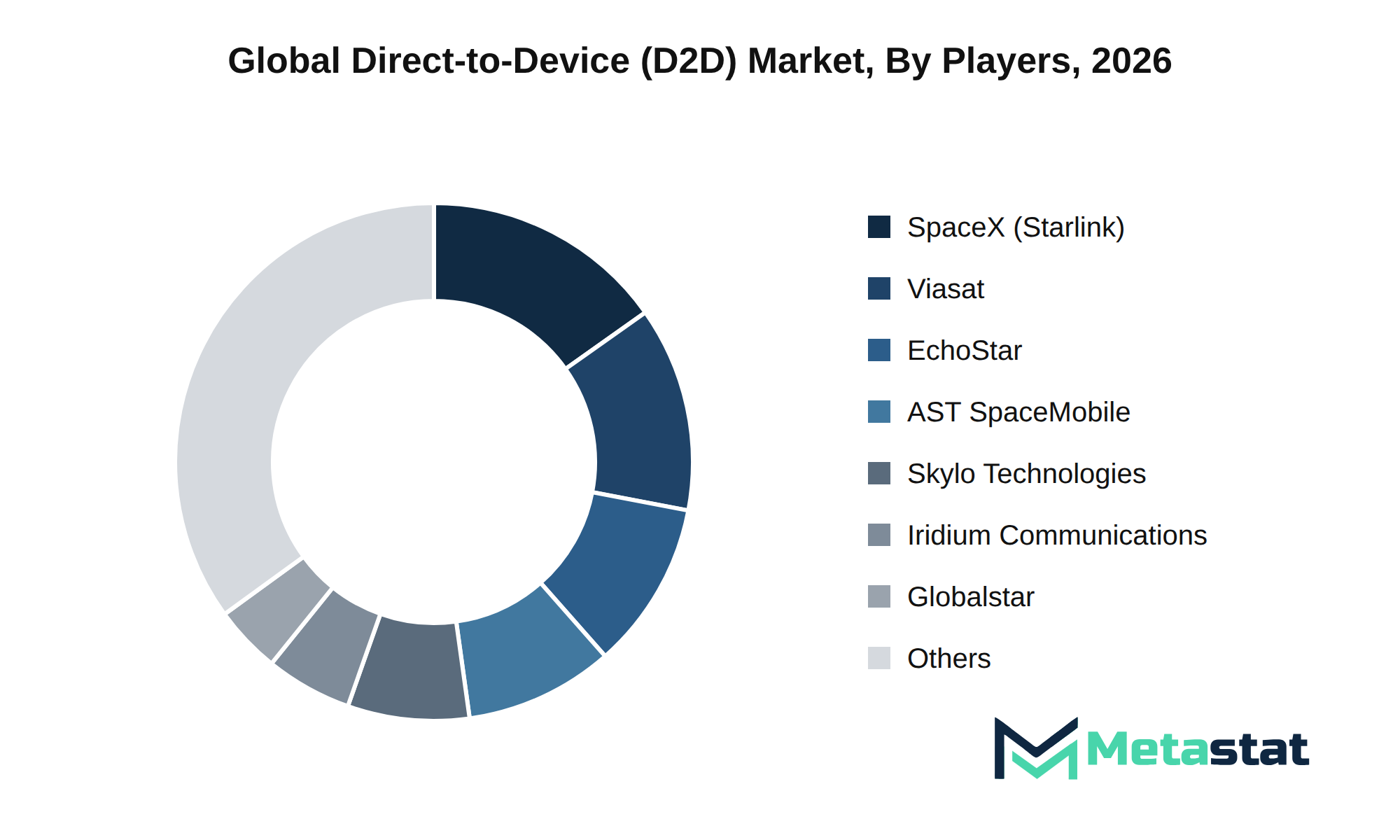
The Direct-to-Device (D2D) market experiences significant activity with various players pursuing distinct strategic initiatives. Companies including SpaceX (Starlink) and Viasat, Inc. leverage their advanced technological capabilities to provide high-performance connectivity solutions. Strategic alliances and partnerships are prevalent, allowing firms like AST SpaceMobile, Inc. and Lynk Global, Inc. to enhance their market positions through collaborative efforts. This dynamic creates a competitive environment where differentiation in service offerings is crucial.
Intellectual property portfolios play an essential role in the competition, with companies like Samsung Electronics Co., Ltd. and MediaTek Inc. focusing on proprietary technologies to create defensive moats against potential entrants. The market experiences ongoing research and development efforts aimed at advancing connectivity technologies, exemplified by players including Ericsson and Verizon Communications Inc. These investments support innovation and contribute to maintaining a competitive edge.
The threat of new entrants remains a pertinent consideration, driven by startups like OQ Technology and Sateliot exploring niche segments within the D2D landscape. However, established firms benefit from their brand equity dynamics and customer retention strategies, which help mitigate potential disruptions. With ongoing industry restructuring and strategic growth vectors, the market is poised for continued evolution, influenced by both legacy players and emerging challengers.
Market size is forecast to rise from USD 581.8 million in 2025 to over USD 5,299 million by 2033. This expansion reflects a strong 31.8% compound annual growth rate (CAGR), driven by several macroeconomic factors. The evolution of technology, particularly advancements in connectivity and data services, fuels growth within the Direct-to-Device (D2D) market. Industries increasingly adopting next-generation technologies generate rising demand for enhanced communication solutions, enabling applications across various sectors including automotive, agriculture, and energy.
The market experiences fluctuations due to economic cycles impacting downstream demand. Global economic conditions, including inflation and supply chain disruptions, influence investment strategies and operational capacities across industries. Regulatory developments significantly affect market dynamics. Compliance milestones establish new operational frameworks, compelling businesses to adapt strategies and technologies that align with evolving policies.
Geopolitical realignments impact trade corridors, influencing supply chains and strategic capital allocation. Companies explore emerging white-space opportunities and unmet enterprise needs to identify high-growth pockets. The integration of innovative solutions enhances competitiveness, leading to the development of defensibility roadmaps that align with future growth objectives.
Overall, the Direct-to-Device (D2D) market is positioned for significant growth, driven by technological advancements, strategic investments, and an ongoing commitment to innovation. Organizations adapting swiftly to these changing dynamics will enhance their competitive advantage and ensure long-term profitability.
The report strategically identifies and profiles the key market players and analyses their core competencies in each sub-segment of the Direct-to-Device (D2D) market.
Report Attributes | Details |
Study Period | 2021-2033 |
Base Year | 2025 |
Estimated Year | 2026 |
Forecast Period | 2026-2033 |
Historical Period | 2021-2025 |
Growth Rate | CAGR 31.8% from 2026 to 2033 |
Revenue Unit | USD million |
Segmentation | By Service Type, Connectivity Technology, Satellite Orbit, End-use Sector, and Region |
By Region | North America (By Service Type, Connectivity Technology, Satellite Orbit, End-use Sector, and Country)
|
Europe (By Service Type, Connectivity Technology, Satellite Orbit, End-use Sector, and Country)
| |
Asia Pacific (By Service Type, Connectivity Technology, Satellite Orbit, End-use Sector, and Country)
| |
South America (By Service Type, Connectivity Technology, Satellite Orbit, End-use Sector, and Country)
| |
Middle East and Africa (By Service Type, Connectivity Technology, Satellite Orbit, End-use Sector, and Country)
|
Find answers to common questions about this report
The Direct-to-Device (D2D) market size was valued at USD 581.8 million in 2025, according to the Metastat Insights study.
The Direct-to-Device (D2D) market is projected to grow at a CAGR of 31.8% during the forecast period from 2026 to 2033.
The North America Direct-to-Device (D2D) market size is estimated to reach USD 1,850.4 million by 2033.
Messaging Services leads the Direct-to-Device (D2D) market with a projected value of USD 1,686.1 million by 2033, based on its significant growth rate compared to other service types.
The Direct-to-Device (D2D) market experiences growth driven by rising GDP, increased venture funding, and favorable interest rates that enhance investment in advanced technologies. Demographic shifts and evolving consumer behaviors further increase demand for reliable connectivity solutions, positioning the market for sustained expansion through 2033.
North America holds the dominant share of the Direct-to-Device (D2D) market, with a projected value of USD 1,850.4 million by 2033, representing 37.8 percent of the total market.
Compliance hurdles, high inflation rates, and resource scarcity significantly restrain the Direct-to-Device (D2D) market growth. Stringent regulations increase operational costs, while inflation raises expenses that affect profit margins. Talent shortages hinder the capacity to meet growing demand, further complicating market dynamics.
Significant factors favoring product adoption in the Direct-to-Device (D2D) market include rising GDP, increased venture funding, and demographic shifts toward urbanization. These elements create favorable conditions for investment in advanced technologies, enhancing operational efficiency and driving demand for reliable connectivity solutions across various industries.
The Direct-to-Device (D2D) market is estimated to reach a valuation of USD 5,299 million by 2033.
Key players operating in the Direct-to-Device (D2D) market include SpaceX (Starlink), AST SpaceMobile, Inc., Viasat, Inc., Skylo Technologies, Inc., Iridium Communications Inc., and Globalstar, Inc.
The analysts below cover Electronics and Semiconductor research at Metastat Insights.
LEAD ANALYST
Utkarsh Khirodkar is a Lead Market Research Analyst at MetaStat Insight, specializing in market intelligence, technology sector assessments, and competitive strategy.

PRINCIPAL CONSULTANT - ENTERPRISE AI & EMERGING TECHNOLOGIES
Banking & Finance · Electronics and Semiconductor · Energy and Power · Healthcare IT · Information & Technology · Professional Services
Vijay Gunti is a Principal Consultant at MetaStat Insight, bringing over two decades of experience across enterprise digital transformation, technology strategy, and intelligent systems.

PRINCIPAL CONSULTANT - QUALITY SYSTEMS & COMPLIANCE
Electronics and Semiconductor · Machinery & Equipment · Professional Services
Omkar Phadtare is an Industry Consultant at MetaStat Insight, specializing in quality systems, regulatory compliance, and standards benchmarking to drive data-driven market intelligence and strategic industry research.

ENERGY & INFRASTRUCTURE INDUSTRY CONSULTANT
Automotive and Transportation · Electronics and Semiconductor · Energy and Power · Machinery & Equipment
Saurabh Vasant Ganvir consults for Energy & Infrastructure Industry at MetaStat Insight, specializing in renewable energy, solar EPC, and electric vehicle (EV) infrastructure markets.

LEAD CONSULTANT - COMMUNICATION, TELECOM, AND IT
Electronics and Semiconductor · Information & Technology · Machinery & Equipment · Professional Services
Ravindra Sathe Consultants for Communication, Telecom, and IT at MetaStat Insight. He leads the firm's industry research initiatives across telecommunications infrastructure, digital connectivity, enterprise networking, and emerging information technology domains.
Ambulatory surgical centers have very different purchasing cycles for robotic-assisted surgery platforms than major hospital networks. The MetaStat Insight study focused squarely on capital expenditure depreciation, procedural reimbursement pathways, and surgeon training overhead. That operational clarity made it much simpler to validate multi-year procedure growth forecasts against actual ambulatory center adoption patterns.
When planning edge sensor rollouts across refinery environments, generic IoT reports typically miss the harsh-environment certification bottlenecks. MetaStat Insight gave an objective evaluation of ATEX and Class 1 Division 2 hardware availability, along with realistic five-year maintenance cycle cost projections. The comparison of wireless mesh versus private cellular backhaul helped our team pressure-test network reliability models for remote processing facilities.
In the biological seed treatment space, registration timelines vary drastically between the European Union, Brazil, and North America. The MetaStat Insight research handled these cross-border regulatory barriers with genuine nuance, mapping commercialization pathways alongside historical field adoption rates. The segmentation between microbial strains and biochemical active ingredients was particularly well structured.
Explore related market intelligence reports worth reading alongside this one.
Starting from
$2950