
LEAD ANALYST
Utkarsh Khirodkar is a Lead Market Research Analyst at MetaStat Insight, specializing in market intelligence, technology sector assessments, and competitive strategy.

Global Dual Energy X-Ray Absorptiometry (DEXA) Market Size, Share, By Product (Axial DEXA and Peripheral DEXA), By Application (Osteoporosis, Osteopenia, Fracture Management, Body Composition Analysis, Cystic Fibrosis, Rheumatoid Arthritis, and Others), By End-Use (Hospitals, Diagnostic Imaging Centers, Orthopedic Centers, and Others), Industry Analysis, Growth, Trends, and Forecast, 2026-2033
Report ID
MSI-4693
Published
April, 2026
Updated
Pages
314 Pages
Format
Report Details
Choose Your License
Dual Energy X-Ray Absorptiometry (DEXA) Market
Global Dual Energy X-Ray Absorptiometry (DEXA) market size is valued at USD 713.3 million in 2025 and projected to grow at a CAGR of 8.1% during the forecast period, reaching USD 1,329.3 million by 2033.
North America holds 34.9% in 2025 with US leading the market share in 2025.
Axial DEXA segment account for a market share of 68.2% in 2025.
Key trends driving growth: Rising prevalence of osteoporosis and aging population increase demand for accurate bone density assessment technologies, along with growing adoption of preventive healthcare and routine screening programs supports wider utilization of DEXA systems.
Opportunities include integration of advanced software analytics and AI enhances precision in body composition analysis and expands clinical applications beyond bone health.
Key insight: Rising global osteoporosis burden and demand for accurate, low-radiation bone density diagnostics are accelerating adoption of DEXA systems across clinical and preventive healthcare settings.
The Global Dual-Energy X-Ray Absorptiometry (DEXA) market is expanding steadily with rising focus on early diagnosis of bone-related disorders and preventive healthcare. Increasing osteoporosis cases, aging population trends, and the need for precise bone density measurement tools in clinical settings are supporting market adoption. Healthcare systems are prioritizing diagnostic accuracy, encouraging the use of advanced imaging technologies. The market is gaining traction through improved scanning capabilities, reduced radiation exposure, and enhanced software integration for better clinical interpretation.
In addition to bone density assessment, application scope is widening toward body composition evaluation, supporting wellness, sports science, and metabolic health assessment. Segment diversification is strengthening demand across clinical and non-clinical environments. The Global Dual-Energy X-Ray Absorptiometry (DEXA) market is evolving with digital reporting systems, cloud-based data storage, and AI-supported diagnostics. These advancements are improving workflow efficiency and enabling healthcare providers to deliver accurate and timely assessments.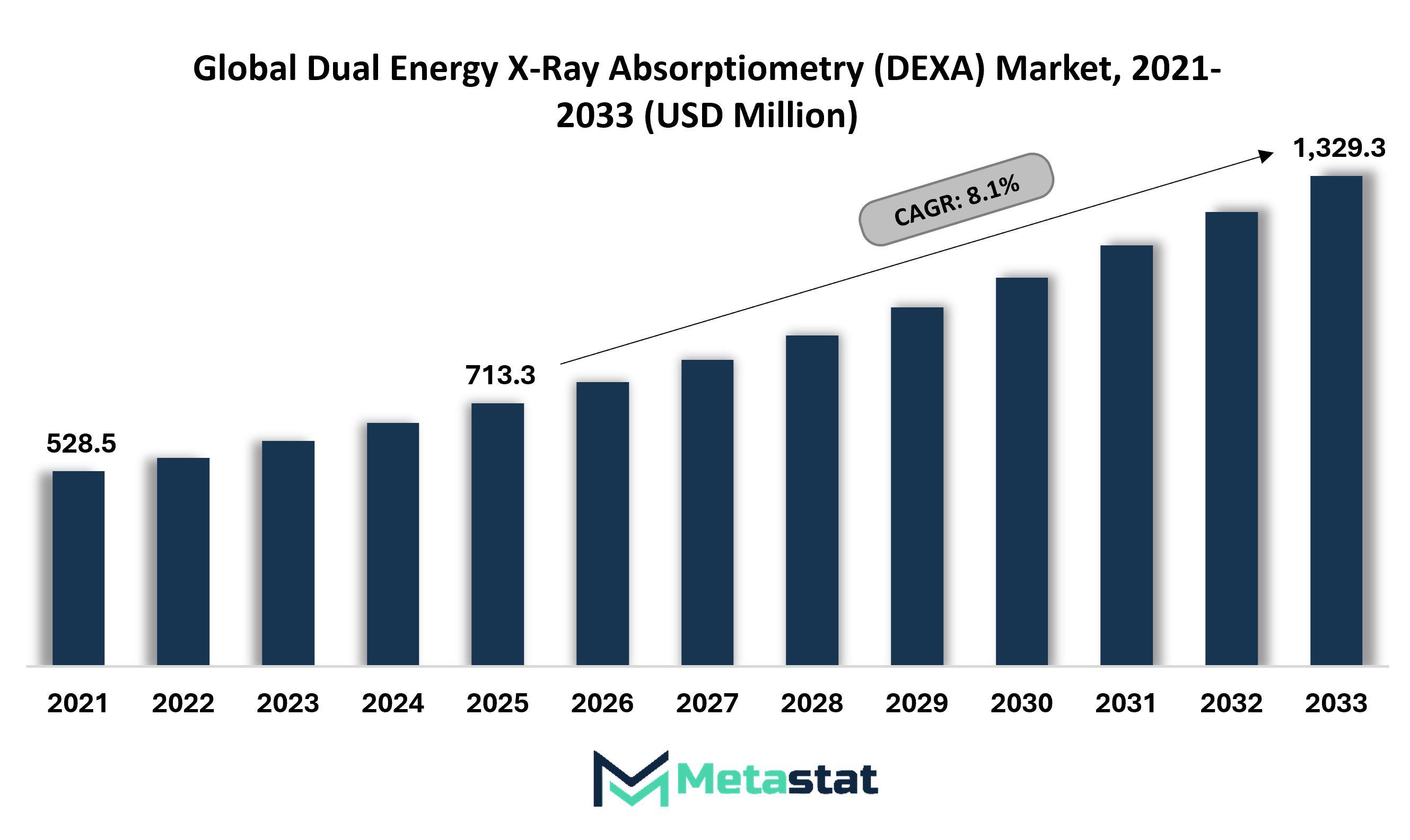
Rising prevalence of osteoporosis and aging population increase demand for accurate bone density assessment technologies.
The Global Dual-Energy X-Ray Absorptiometry (DEXA) Market reflects strong expansion, supported by increasing osteoporosis cases linked to aging demographics. Healthcare systems are focusing on early diagnosis to reduce fracture risks and long-term treatment costs. Rising need for precise bone density measurement tools will support consistent adoption of advanced scanning technologies across hospitals and diagnostic facilities.
Growing adoption of preventive healthcare and routine screening programs supports wider utilization of DEXA systems.
The Global Dual-Energy X-Ray Absorptiometry (DEXA) Market benefits from growing emphasis on preventive healthcare practices. Routine health screenings and wellness programs are gaining importance among urban populations. Medical institutions are encouraging early detection methods, leading to higher installation of DEXA systems. Future healthcare models will continue promoting regular monitoring, strengthening demand across regions.
High equipment cost and limited accessibility in developing regions restrict widespread adoption.
The Global Dual-Energy X-Ray Absorptiometry (DEXA) Market faces barriers from high initial investment and maintenance costs associated with advanced imaging systems. Smaller healthcare centers in developing regions face financial constraints, reducing adoption rates. Limited infrastructure and uneven distribution of diagnostic facilities will continue creating accessibility gaps, slowing uniform market penetration.
Availability of alternative imaging modalities and diagnostic techniques reduces exclusive reliance on DEXA.
The Global Dual-Energy X-Ray Absorptiometry (DEXA) Market faces competition from other diagnostic technologies offering bone assessment and imaging solutions. Techniques such as ultrasound-based screening and quantitative computed tomography provide alternative options. Healthcare providers will prefer cost-effective or multipurpose imaging systems, influencing purchasing patterns and reducing dependence on DEXA systems in certain clinical settings.
Integration of advanced software analytics and AI enhances precision in body composition analysis and expands clinical applications beyond bone health.
The Global Dual-Energy X-Ray Absorptiometry (DEXA) Market will witness expansion through the integration of artificial intelligence and advanced analytics tools. Enhanced software capabilities will improve accuracy in body composition measurement, supporting applications in wellness, obesity management, and metabolic research. Future developments will create broader clinical value, positioning DEXA systems beyond traditional bone density assessment functions.
The Global Dual-Energy X-Ray Absorptiometry (DEXA) market is segmented by Product, Application, End-Use, and Region.
Axial DEXA segment is valued at USD 525.1 million in 2026 and is projected to reach USD 952.4 million by 2033, at a CAGR of 8.9% during the forecast period.
Axial DEXA in the Dual-Energy X-Ray Absorptiometry (DEXA) Market shows strong adoption owing to precise bone density measurement at spine and hip sites. Healthcare infrastructure expansion and rising screening awareness support future demand. Technological improvements in imaging accuracy and reduced scan time will strengthen clinical preference and long-term utilization patterns.
Peripheral DEXA segment is valued at USD 245.2 million in 2026 and is projected to reach USD 376.8 million by 2033, at a CAGR of 6.3% during the forecast period.
Peripheral DEXA in the Dual-Energy X-Ray Absorptiometry (DEXA) Market offers cost-effective screening for extremities such as the wrist and heel. Increasing deployment in primary care settings and mobile units improves accessibility. Future expansion will be supported by demand for quick assessments, especially in remote locations with limited access to advanced imaging facilities.
Osteoporosis segment is projected to reach USD 500.5 million by 2033, at a CAGR of 8.5% during the forecast period.
The osteoporosis application dominates the Dual-Energy X-Ray Absorptiometry (DEXA) Market owing to the rising aging population and increasing awareness of fracture risk. Preventive healthcare strategies and early diagnosis initiatives will accelerate demand. Government screening programs and physician recommendations will continue expanding diagnostic volumes across developed and emerging healthcare systems.
Osteopenia segment is projected to reach USD 205.1 million by 2033, at a CAGR of 6.7% during the forecast period.
Osteopenia diagnosis in the Dual-Energy X-Ray Absorptiometry (DEXA) Market is gaining importance with rising focus on early-stage bone loss detection. Preventive treatment planning and lifestyle modification awareness support adoption. Future demand will increase with growing emphasis on reducing progression toward severe bone conditions and minimizing long-term healthcare burden.
Fracture Management segment is projected to reach USD 137.6 million by 2033, at a CAGR of 6.9% during the forecast period.
The fracture management application in the Dual-Energy X-Ray Absorptiometry (DEXA) Market supports treatment planning through bone strength assessment. Rising incidence of trauma injuries and age-related fractures contributes to demand. Integration with orthopedic care pathways and rehabilitation monitoring will enhance clinical value and expand usage across healthcare facilities.
Body Composition Analysis segment is projected to reach USD 245 million by 2033, at a CAGR of 11.2% during the forecast period.
Body composition analysis in the Dual-Energy X-Ray Absorptiometry (DEXA) Market is gaining traction in wellness, obesity management, and sports science. Accurate measurement of fat mass, lean mass, and bone density supports personalized health programs. Future expansion will be propelled by preventive healthcare trends and rising interest in metabolic health monitoring.
Cystic Fibrosis segment is projected to reach USD 59.3 million by 2033, at a CAGR of 5.1% during the forecast period.
The cystic fibrosis application in the Dual-Energy X-Ray Absorptiometry (DEXA) Market addresses bone health complications associated with chronic disease conditions. Increasing clinical focus on comprehensive patient management supports adoption. Advancements in diagnostic protocols will strengthen monitoring frequency and improve long-term treatment outcomes in specialized care settings.
Rheumatoid Arthritis segment is projected to reach USD 84.1 million by 2033, at a CAGR of 5.7% during the forecast period.
The rheumatoid arthritis segment in the Dual-Energy X-Ray Absorptiometry (DEXA) Market highlights the need for bone density monitoring owing to inflammation-related bone loss. Rising incidence of autoimmune disorders supports demand expansion. Integration with rheumatology treatment frameworks will enhance disease management and encourage routine screening practices.
Others segment is projected to reach USD 97.7 million by 2033, at a CAGR of 8.3% during the forecast period.
Other applications in the Dual-Energy X-Ray Absorptiometry (DEXA) Market include metabolic disorders and pediatric assessments. Expanding research activities and broader diagnostic use cases contribute to market expansion. Future developments in clinical guidelines will support adoption across diverse medical conditions, strengthening overall market penetration.
Hospitals segment is projected to reach USD 604.0 million by 2033.
Hospitals represent a major segment in the Dual-Energy X-Ray Absorptiometry (DEXA) Market owing to the availability of advanced diagnostic infrastructure. High patient volume and multidisciplinary care support consistent usage. Future expansion will be influenced by integration of imaging technologies within comprehensive diagnostic and treatment pathways.
Diagnostic Imaging Centers segment is projected to reach USD 416.7 million by 2033.
Diagnostic imaging centers in the Dual-Energy X-Ray Absorptiometry (DEXA) Market offer specialized and high-throughput scanning services. Increasing preference for outpatient diagnostics supports segment expansion. Technological upgrades and improved service efficiency will attract patient flow and strengthen their role in preventive healthcare delivery systems.
Orthopedic Centers segment is projected to reach USD 211.6 million by 2033.
Orthopedic centers in the Dual-Energy X-Ray Absorptiometry (DEXA) Market focus on bone health evaluation and fracture risk assessment. Rising demand for targeted orthopedic care supports adoption. Future expansion will align with advancements in musculoskeletal treatment planning and rehabilitation monitoring practices.
Others segment is projected to reach USD 96.9 million by 2033.
Other end-use segments in the Dual-Energy X-Ray Absorptiometry (DEXA) Market include research institutes and specialty clinics. Growing clinical research and niche diagnostic requirements support segment expansion. Future opportunities will emerge from collaborations between healthcare providers and research organizations for advanced diagnostic applications.
Based on geography, the Global Dual Energy X-Ray Absorptiometry (DEXA) market is divided into North America, Europe, Asia-Pacific, South America, Middle East, and Africa.
North America benefits from advanced healthcare infrastructure and widespread screening programs, supporting strong adoption in the Dual-Energy X-Ray Absorptiometry (DEXA) market.
Europe represents a mature and clinically established region in the Dual-Energy X-Ray Absorptiometry (DEXA) market, supported by advanced healthcare infrastructure, strong diagnostic imaging networks, and rising focus on osteoporosis screening. Countries such as Germany, the UK, France, Italy, and Spain are witnessing steady adoption of DEXA systems across hospitals, diagnostic imaging centers, orthopedic clinics, and preventive healthcare facilities.
Asia-Pacific presents strong opportunities, supported by increasing healthcare investments and rising awareness of bone health. Increasing adoption of diagnostic technologies in emerging economies is expanding the Dual-Energy X-Ray Absorptiometry (DEXA) market footprint.
Across the Middle East, Africa, and South America, the market is developing steadily through improved healthcare access, infrastructure development, and rising focus on early diagnosis of chronic conditions.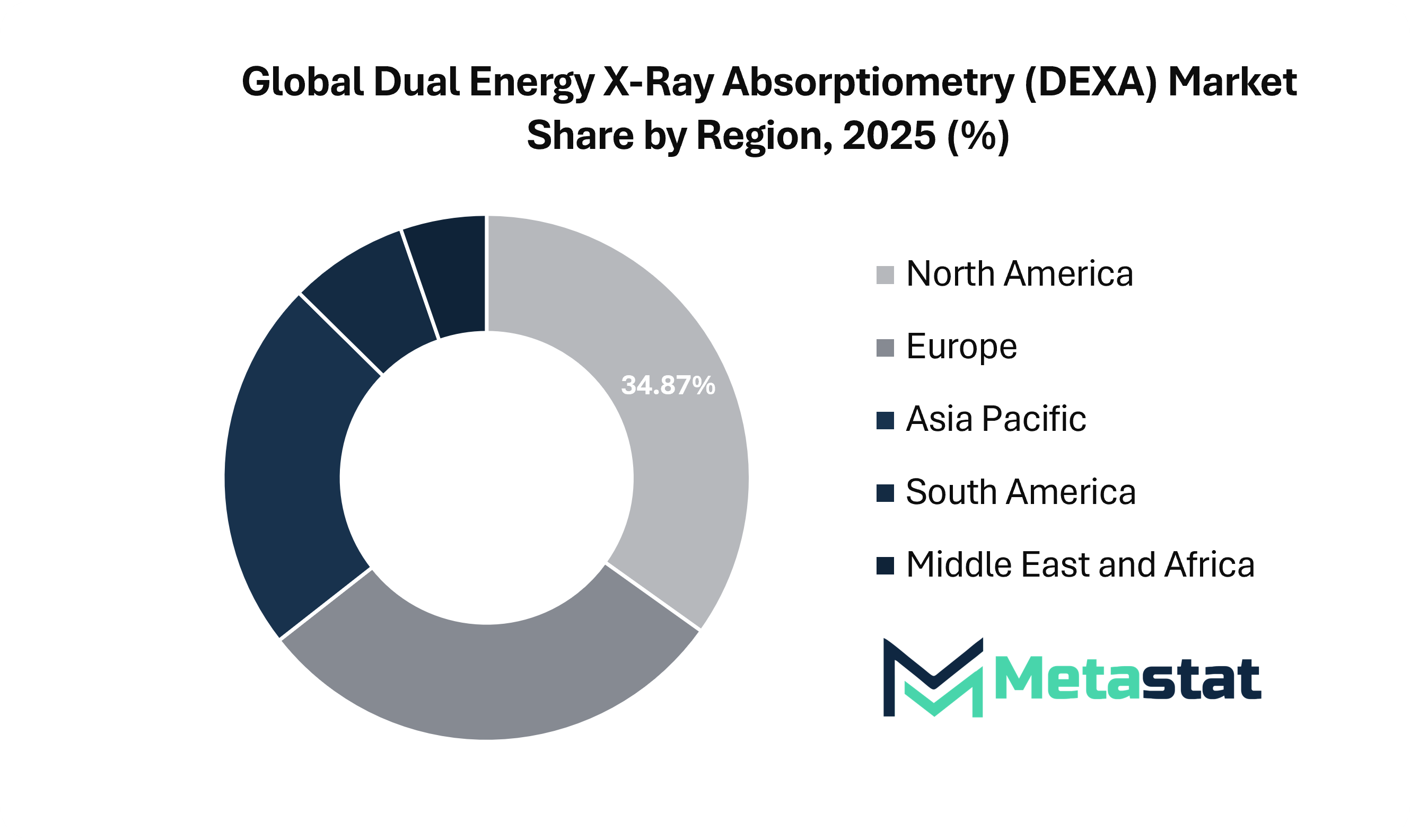
The Global Dual-Energy X-Ray Absorptiometry (DEXA) Market displays consistent growth, propelled by the rising need for accurate bone health evaluation and early diagnosis of conditions such as osteoporosis. The aging population, along with rising focus on preventive healthcare, will continue supporting demand for DEXA systems across hospitals, diagnostic centers, and specialized clinics. These systems are widely valued for delivering precise bone mineral density measurements, helping clinicians make timely and informed patient care decisions.
A clear trend shaping the market is the integration of advanced imaging technologies that improve both speed and accuracy. Healthcare providers are adopting systems that offer better image clarity while lowering radiation exposure, supporting safer repeated use. Digital connectivity and software enhancements are enabling easier data storage and analysis, improving workflow within diagnostic facilities. These improvements will strengthen adoption across developed and emerging regions.
The competitive landscape includes a mix of established global companies and emerging players working to expand their presence through innovation and strategic partnerships. Companies including Hologic, Inc., GE HealthCare Technologies Inc., and FUJIFILM Corporation continue to focus on product development and global expansion. Other participants such as OSTEOSYS Co., Ltd., Diagnostic Medical Systems Group SA, YOZMA BMTech Co., Ltd., and Trivitron Healthcare Private Limited are contributing to market growth by offering cost-effective and accessible solutions. Firms such as Medical Econet GmbH, Mednova Medical Technology Co., Ltd., Medonica Co., Ltd., and L’Accessorio Nucleare S.r.l. are also strengthening their position through technological improvements and regional outreach.
In addition, service providers such as RadNet, Inc., SimonMed Imaging, I-MED Radiology Network, Nuffield Health, Quest Diagnostics Incorporated, RAYUS Radiology, Akumin Inc., and Envision Radiology are playing a critical role in expanding access to diagnostic services. Their growing networks and patient-focused approaches will support higher screening rates and improved awareness of bone health.
Market size is forecast to rise from USD 713.3 million in 2025 to over USD 1,329.3 million by 2033.
The Global Dual-Energy X-Ray Absorptiometry (DEXA) market is expected to maintain its growth trajectory with increasing integration of digital technologies and expansion of diagnostic applications. Healthcare systems are likely to emphasize early disease detection, strengthening demand for reliable imaging solutions.
This research report categorizes the Dual Energy X-Ray Absorptiometry (DEXA) market based on key segments and regions, forecasts revenue growth, and analyses trends in each submarket. The report analyses the key growth drivers, opportunities, and challenges influencing the Dual Energy X-Ray Absorptiometry (DEXA) market. Recent market developments and competitive strategies such as expansion, product launch, partnership, merger, and acquisition have been included to draw the competitive landscape in the market.
The report strategically identifies and profiles the key market players and analyses their core competencies in each sub-segment of the Dual Energy X-Ray Absorptiometry (DEXA) market.
|
Report Attributes |
Details |
|
Study Period |
2021-2033 |
|
Base Year |
2025 |
|
Estimated Year |
2026 |
|
Forecast Period |
2026-2033 |
|
Historical Period |
2021-2025 |
|
Growth Rate |
CAGR 8.1% from 2026 to 2033 |
|
Revenue Unit |
USD million |
|
Sales Volume Unit |
Units |
|
Segmentation |
By Product, Application, End-Use and Region |
|
By Region |
North America (By Product, Application, End-Use, and Country)
|
|
Europe (By Product, Application, End-Use, and Country)
|
|
|
Asia Pacific (By Product, Application, End-Use, and Country)
|
|
|
South America (By Product, Application, End-Use, and Country)
|
|
|
Middle East and Africa (By Product, Application, End-Use, and Country)
|
Find answers to common questions about this report
Top players operating in the Dual Energy X-Ray Absorptiometry (DEXA) industry include Hologic, Inc., GE HealthCare Technologies Inc., FUJIFILM Corporation, OSTEOSYS Co., Ltd., Diagnostic Medical Systems Group SA, and YOZMA BMTech Co., Ltd.
Global Dual Energy X-Ray Absorptiometry (DEXA) market is estimated to reach USD 1,329.3 million by 2033.
High equipment cost and limited accessibility in developing regions restrict widespread adoption. will hamper the market growth within the forecast period.
The Global Dual Energy X-Ray Absorptiometry (DEXA) market is expected to grow at a CAGR of 8.1% over the forecast period (2026-2033).
North America region dominates the market.
Rising prevalence of osteoporosis and aging population increase demand for accurate bone density assessment technologies. and Growing adoption of preventive healthcare and routine screening programs supports wider utilization of DEXA systems. are key driving factors, boosting the market.
The Metastat Insights analysis shows that the North America Dual Energy X-Ray Absorptiometry (DEXA) market size is estimated to be USD 444.0 million by 2033.
The Metastat Insights study shows that the Global Dual Energy X-Ray Absorptiometry (DEXA) market size was USD 713.3 million in 2025.
The analysts below cover Medical Devices research at Metastat Insights.
LEAD ANALYST
Utkarsh Khirodkar is a Lead Market Research Analyst at MetaStat Insight, specializing in market intelligence, technology sector assessments, and competitive strategy.

LEAD PRINCIPAL ANALYST, PHARMA AND HEALTHCARE
Food and Beverages · Healthcare · Healthcare IT · Medical Devices
Ajay Devgire is the Lead Healthcare Analyst at MetaStat Insight, leading strategic research and market intelligence initiatives across the global healthcare domain.

SENIOR RESEARCH ANALYST
Biotechnology · Food and Beverages · Medical Devices · Packaging
Snehal Pasalkar is a Research Analyst at MetaStat Insight, operating at the intersection of life sciences research, competitive strategy, and market intelligence.
Last Updated: August, 2026
Integrating zero-trust access controls across legacy electronic health record systems involves complex compliance overhead. Team produced an analysis that clearly separated identity governance and administration tools from privileged access management platforms. Their evaluation of HIPAA and GDPR compliance features across cloud native solutions gave our architecture group clear baseline criteria. The custom data request regarding biometric authentication adoption in hospital networks was returned promptly with clear documentation.
Evaluating calorific value requirements and air permit compliance across municipal waste facilities requires localized data. Metastat Insight structured their analysis around operational throughput capacity and feedstock composition variations in Latin America and Eastern Europe. Their competitive mapping of sorting equipment vendors helped clarify technology differences between optical separators and heavy media systems. The study provided an objective baseline during our capital expenditure reviews.
Decarbonizing industrial thermal processes hinges on refrigerant regulations and compressor efficiency limits. Metastat Insights delivered a thorough market analysis that evaluated natural refrigerants like CO2 and hydrocarbons against synthetic low-GWP alternatives. The breakdown of utility incentives and grid capacity constraints across key European manufacturing hubs offered valuable perspective. The follow-up conversation with their sector analysts addressed our specific questions on mechanical vapor recompression systems efficiently.
Explore related market intelligence reports worth reading alongside this one.
Starting from
$2950