
LEAD ANALYST
Utkarsh Khirodkar is a Lead Market Research Analyst at MetaStat Insight, specializing in market intelligence, technology sector assessments, and competitive strategy.

Europe Cybersecurity Market Size, Share, By Offering Type (Hardware, Software, Professional Services and Managed Security Services), By Security Function (Network Security, Identity and Access Management, Endpoint Security, Cloud Security, Application Security, Data and Email Security, Security Operations and Threat Management, Governance, Risk and Compliance), By End-Use Industry (Banking, Financial Services and Insurance, IT and Telecommunications, Government and Defence, Manufacturing, Healthcare and Life Sciences, Retail and E-commerce, Energy and Utilities, Transportation and Logistics, Households and Others), By Region (Germany, France, UK, Italy, Spain, Russia and Rest of the Europe), Industry Analysis, Growth, Trends, and Forecast, 2026-2033
Report ID
MSI-5600
Published
October, 2026
Pages
286 Pages
Format
Historical
Base year
Forecast
Forecast period
Report Details
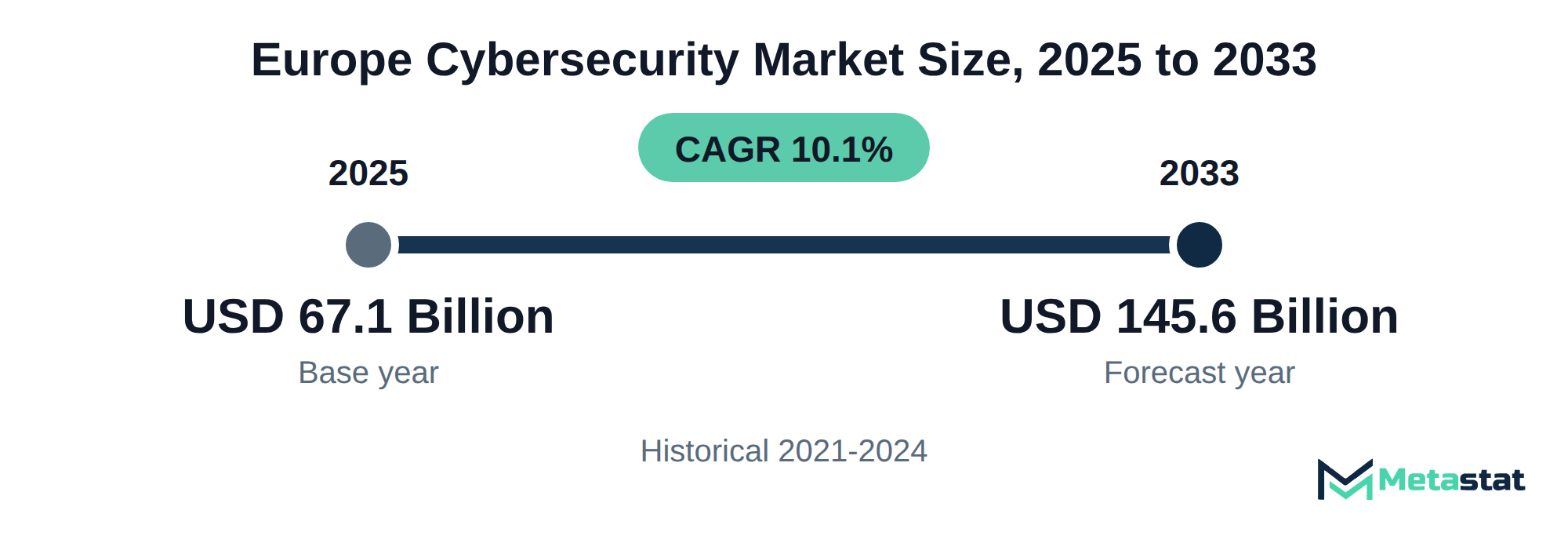
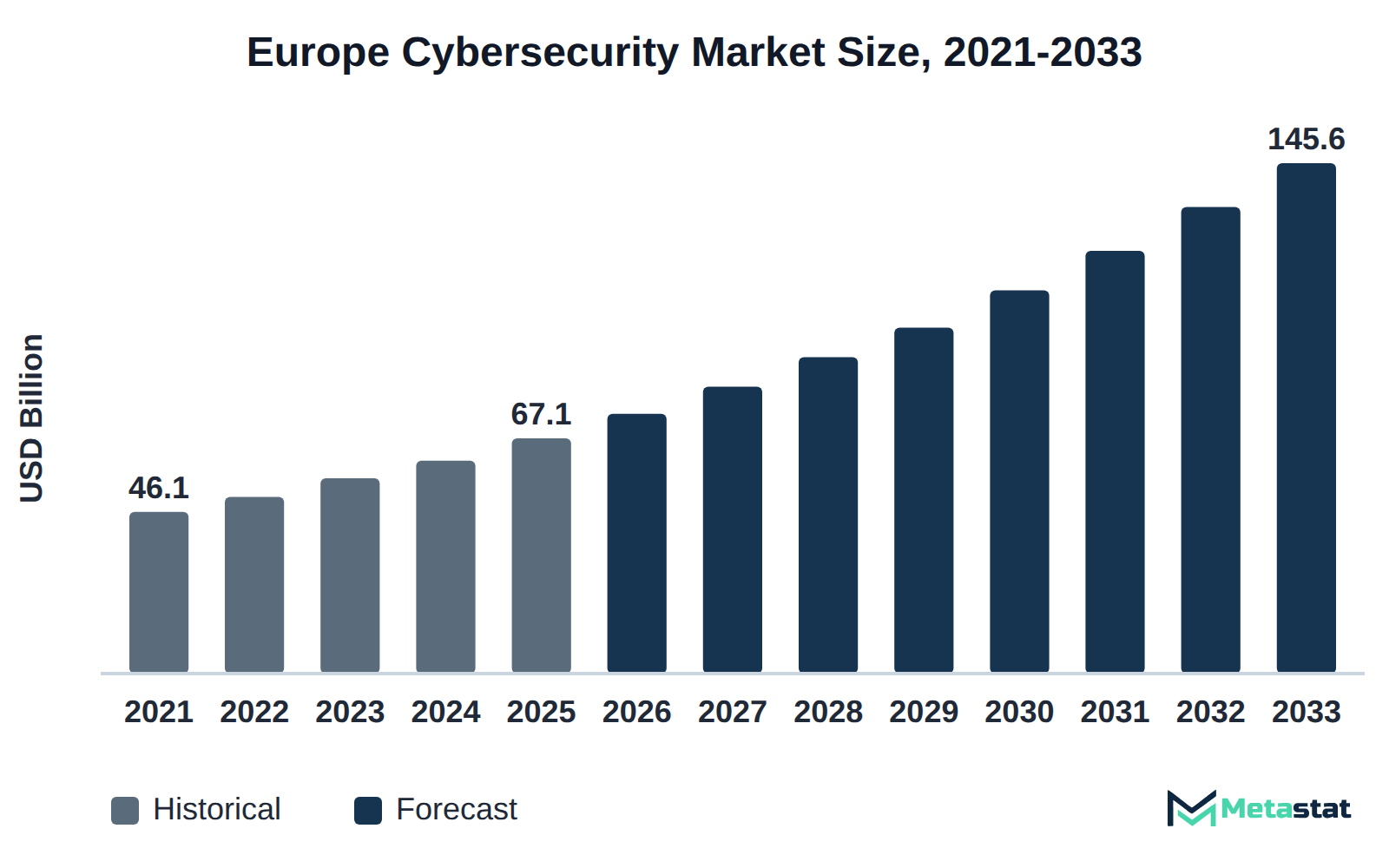
Market Valuation: Valued at $67.1 Billion in 2025, projected to reach $145.6 Billion by 2033 at a 10.1% CAGR.
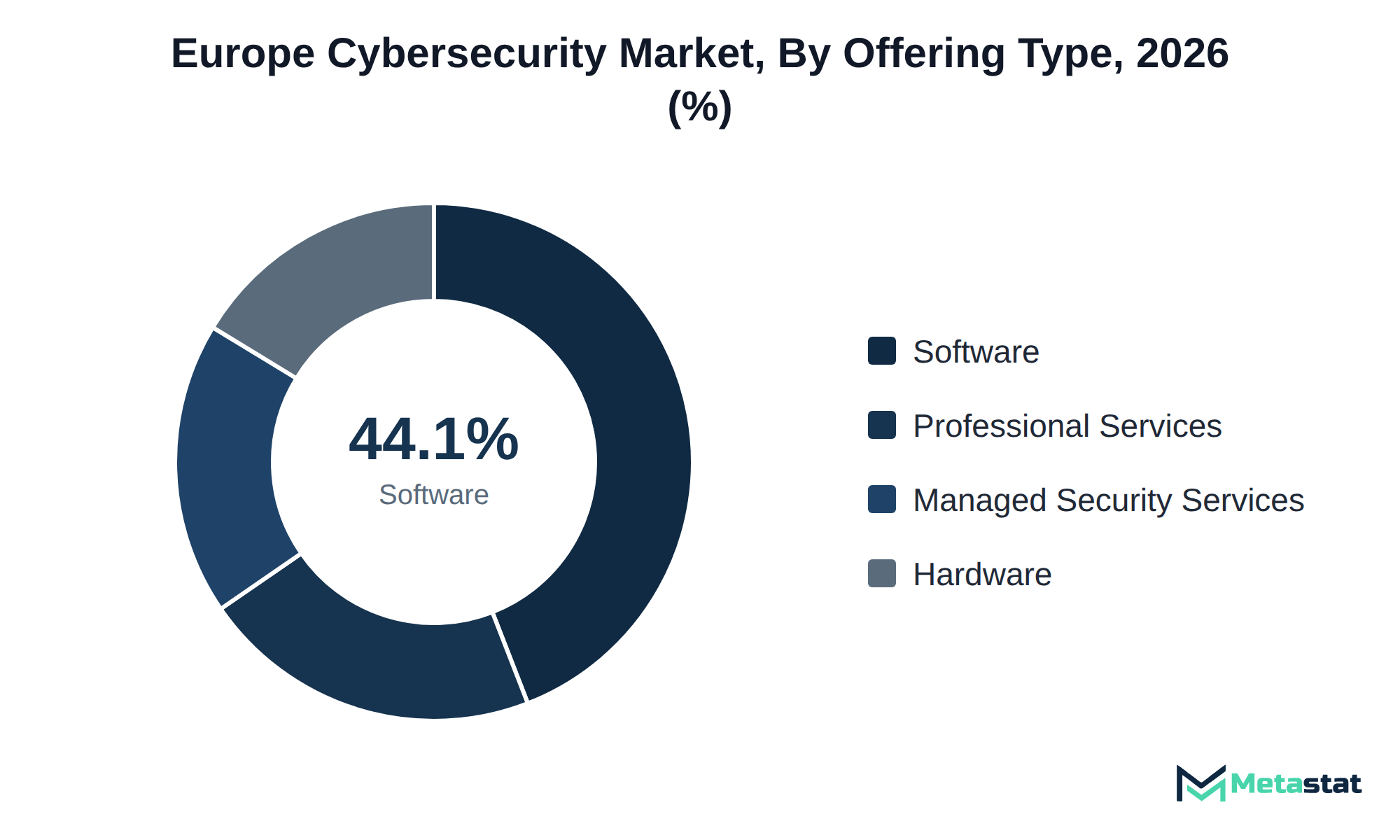
Dominant Segment: The software segment leads the Europe Cybersecurity market, projected to reach USD 62.8 billion by 2033, driven by increasing regulatory compliance and the need for advanced threat detection capabilities.
Geographic Lead: Germany holds the largest share of the market, reflecting its strong commitment to enhancing cybersecurity infrastructure and compliance with regulations.
What's Inside: The report provides a comprehensive analysis of the Europe Cybersecurity market, including segmentation by offering type, security function, and end-use industry, along with insights into competitive dynamics and growth trends.
Growth Drivers: Key growth drivers include the rising adoption of cloud services and the increasing sophistication of cyber threats, prompting organizations to invest in robust cybersecurity frameworks.
Regulatory Impact: The NIS2 Directive and DORA are transforming cybersecurity investments into recurring compliance spending, particularly impacting the Banking, Financial Services, and Insurance sector.
Choose Your License
Europe Cybersecurity Market
The Europe Cybersecurity market was valued at USD 67.1 billion in 2025 and is projected to reach USD 145.6 billion by 2033, growing at a CAGR of 10.1% over the forecast period.
The Europe Cybersecurity market encompasses a range of products and services designed to protect networks, devices, and sensitive data from cyber threats. Buyers invest in cybersecurity solutions to mitigate risks associated with data breaches, financial losses, and reputational damage. The market serves various industries, including banking, financial services, insurance, IT, telecommunications, and government sectors, driven by the increasing frequency and sophistication of cyberattacks. Organizations prioritize protecting their digital assets, resulting in sustained demand for advanced security measures.
Growth is fueled by rising demand for cybersecurity frameworks that counter evolving cyber threats. The software segment stands out as the most valuable, reflecting substantial investment in security solutions that enhance operational resilience. Germany holds the largest share in the Europe Cybersecurity market, illustrating the country's commitment to strengthening its cybersecurity infrastructure and addressing regulatory requirements. This focus on security enables businesses to maintain compliance and protect sensitive information effectively.
Among the various growth drivers, the increasing adoption of cloud services stands out prominently. Organizations migrating their operations to the cloud increase the need for cloud security solutions. This shift drives investments in cybersecurity, as businesses seek to safeguard their data and applications in cloud environments. The ongoing demand for innovative security solutions positions the market for sustained growth, enabling organizations to adapt to the dynamic threat landscape.
Europe's cybersecurity landscape spans hardware, software, professional services, and managed security services. Buyers invest in these solutions to safeguard their digital assets and maintain operational continuity amid a rising tide of cyber threats. Key industries, including banking, financial services, and telecommunications, drive demand because they need security measures to protect sensitive information and comply with regulatory requirements.
Growth in the market is propelled by several factors, with the increasing sophistication of cyber threats standing out prominently. The software segment holds the highest value, reflecting its essential role in providing comprehensive security solutions. Germany leads the regional distribution of cybersecurity expenditure, followed closely by France and the UK, indicating a concentrated focus on enhancing security measures within these countries.
Investment in cybersecurity is further influenced by the growing reliance on digital infrastructure across various sectors. Organizations increasingly adopt cloud services and remote work models, driving the demand for advanced security technologies. Strong cybersecurity postures protect against vulnerabilities and preserve the integrity of sensitive data.
The NIS2 Directive and the Digital Operational Resilience Act (DORA) significantly influence cybersecurity investments in Europe. These regulations transform cybersecurity controls into recurring compliance spending, compelling organizations to strengthen their security frameworks. By 2033, the Banking, Financial Services and Insurance sector is projected to grow from USD 16.5 billion in 2026 to USD 32.6 billion, reflecting the growing need for cybersecurity measures driven by regulatory compliance.
Organizations across various sectors prioritize alignment with these regulations to avoid penalties and ensure operational resilience. The compliance requirements outlined in NIS2 and DORA lead to increased demand for cybersecurity solutions, particularly in the Financial Services sector. These regulations enforce stringent standards that necessitate continuous investment in cybersecurity infrastructure. Organizations investing in cybersecurity tools and services enhance their defenses while navigating complex regulatory environments.
This shift towards compliance-oriented cybersecurity spending reshapes the Europe Cybersecurity market, creating opportunities for vendors offering compliance solutions, including regulatory technology. The transition from one-time investments to ongoing compliance expenditures enhances revenue predictability for cybersecurity suppliers, creating a sustainable business model for technology providers in the region.
Passwordless authentication solutions are gaining traction among businesses seeking enhanced security and streamlined user experiences. Adoption is rising because businesses need stronger identity governance and face more cyber threats that exploit traditional authentication methods. In the Europe Cybersecurity market, the Identity and Access Management segment is projected to reach USD 29.5 billion by 2033, reflecting a compound annual growth rate of 11.1%. This growth indicates a significant shift towards innovative authentication methods that address security concerns while improving user satisfaction.
Buyers increasingly prefer subscription-based pricing models that offer flexibility and scalability. Such models allow organizations to adapt to varying user needs and evolving cybersecurity challenges. Vendors often provide tiered pricing structures based on features, user count, or service levels, enabling companies to select suitable options based on their specific requirements.
This shift towards subscription and tiered pricing influences purchasing decisions in the market, encouraging companies to invest in solutions that deliver both security and operational efficiency. By prioritizing passwordless authentication, businesses strengthen their security posture while optimizing costs, ultimately driving growth in the Europe Cybersecurity market.
The increasing emphasis on cloud sovereignty among European nations significantly influences managed security service procurement. Organizations across varied sectors, particularly those within the government and defense industry, prioritize data sovereignty to comply with regional regulations and maintain control over sensitive data.
Cloud sovereignty necessitates that service providers demonstrate compliance with local regulations, ensuring that data remains within national borders. Buyers increasingly evaluate managed security service providers based on their ability to offer localized solutions. This requirement leads to a growing preference for partnerships with regional players who possess the infrastructure and expertise to meet these specific demands. The focus on sovereignty enhances data protection and drives strong competition among service providers in the Europe Cybersecurity market.
The shift towards cloud sovereignty positions organizations to enhance their security posture while building trust among stakeholders. This approach supports long-term growth in managed security services and shows why local compliance matters in service procurement decisions.
European enterprises face various overlapping compliance obligations, necessitating specific cybersecurity controls to ensure adherence. Identity and access management (IAM) systems are central components of these compliance frameworks. IAM solutions facilitate the secure management of user identities and access privileges, significantly mitigating risks associated with unauthorized access to sensitive information.
This growth highlights the increasing importance of IAM solutions in helping organizations navigate complex regulations including the General Data Protection Regulation (GDPR) and the Payment Card Industry Data Security Standard (PCI DSS).
By investing in IAM controls, enterprises enhance their security posture, efficiently manage compliance requirements, and streamline audits. Implementing IAM solutions reduces the risk of data breaches and builds customer and stakeholder confidence in data protection measures. Organizations prioritize compliance amid stringent regulations, driving demand for effective IAM systems in the Europe Cybersecurity market.
Organizations across Europe are increasing investments in cybersecurity due to heightened awareness regarding cyber threats. The surge in high-profile breaches and data leaks has prompted businesses to prioritize protective measures, leading to a more aggressive purchasing approach. Enterprises, particularly in sectors like Banking, Financial Services and Insurance, are moving to strengthen their cybersecurity frameworks in response to these challenges. This shift has resulted in an accelerated demand for comprehensive cybersecurity solutions, contributing to an anticipated increase in market value. Enhanced regulatory scrutiny further supports the trend toward increased spending on cybersecurity solutions, ensuring organizations remain compliant and secure in an evolving threat landscape.
Growing investment in cybersecurity solutions supports overall demand, positioning the market for sustained growth driven by necessity.
Innovative technologies greatly influence the Europe Cybersecurity market through the development of advanced solutions that address evolving threats. The shift towards artificial intelligence and machine learning enables enhanced threat detection and response capabilities, allowing organizations to identify suspicious activities more effectively. These technologies automate various security tasks, increasing operational efficiency and reducing response time to incidents.
The integration of automation within security protocols facilitates proactive measures, enabling businesses to anticipate potential threats rather than merely reacting to them. Organizations increasingly adopt cloud-based security solutions, driving demand for scalable and adaptable cybersecurity offerings, reflecting a broader trend toward digital transformation across industries. This trend particularly impacts sectors including banking and finance, which are highly sensitive to cyber risks.
Continuous technological advancements drive investments in cybersecurity solutions, prompting firms to enhance their defenses against sophisticated cyber threats. The emphasis on security measures creates growth opportunities as businesses adopt innovative technologies to mitigate risks.
High costs associated with advanced cybersecurity solutions impact adoption among small to medium-sized enterprises (SMEs) throughout Europe. Many SMEs prioritize budget constraints over comprehensive cybersecurity measures, resulting in slower uptake of necessary technologies. This situation leads to smaller orders for cybersecurity offerings, with businesses opting for basic solutions rather than investing in effective security frameworks. Rising operational costs contribute to delayed replacement cycles for outdated security systems, further exacerbating vulnerabilities. Financial limitations hinder organizations from adequately securing their systems and data against evolving threats, creating challenges for the Europe Cybersecurity market. Consequently, market growth experiences pressure, limiting overall competitiveness in the region.
Rising talent costs present a challenge for suppliers in the Europe Cybersecurity market. The ongoing demand for skilled professionals, combined with increasing competition among firms for top talent, drives up operational expenses. This situation particularly affects service providers relying on highly trained personnel to deliver cybersecurity solutions and maintain client relationships.
In response, suppliers implement various strategies to manage costs effectively. Automation of certain services and the adoption of artificial intelligence in cybersecurity processes enhance operational efficiency. By doing so, firms optimize workforce utilization, minimizing the burden of high labor costs while ensuring effective service delivery. Several suppliers focus on developing training programs to cultivate in-house talent, reducing reliance on external recruitment.
This strategic shift allows suppliers to maintain competitive pricing while sustaining profitability, ultimately benefiting the growth trajectory of the market. Addressing talent cost pressures effectively remains critical for service providers seeking to thrive in the competitive environment.
The banking, financial services, and insurance sector presents significant growth opportunities within the Europe Cybersecurity market. This segment is projected to expand from USD 16.5 billion in 2026 to USD 32.6 billion by 2033, achieving a compound annual growth rate (CAGR) of 10.3%. The increase in cyber threats directed at financial institutions drives the demand for advanced cybersecurity solutions tailored to protect sensitive financial data. Financial service providers are investing heavily in technologies that enhance security and ensure compliance with evolving regulations.
Investment in identity and access management solutions represents a critical area of focus. These solutions facilitate secure access to sensitive information, ultimately protecting businesses from data breaches. Strong demand for such offerings reinforces the importance of cybersecurity investments among financial institutions, which face heightened scrutiny regarding data protection practices. Enhanced security measures within this sector contribute to overall market growth, creating a more resilient cybersecurity landscape across Europe.
The Europe Cybersecurity market is segmented based on Offering Type, Security Function, End-Use Industry, and Region.
Hardware segment is valued at USD 11.8 billion in 2026 and is projected to reach USD 18 billion by 2033, at a CAGR of 6.3% during the forecast period. This segment comprises physical devices used to secure networks and systems, catering primarily to enterprises across various industries. Organizations focus on hardware solutions for their ability to provide robust protection against cyber threats, particularly in sectors like Banking, Financial Services and Insurance, which see significant investment. Demand for hardware security is driven by increasing regulatory requirements and the urgent need for enhanced security measures. Compared to other segments, including software, which exhibits a higher CAGR of 9.8%, hardware growth remains steadier due to its essential nature and long-term investment requirements. However, the higher upfront costs associated with hardware delay adoption for smaller enterprises, contrasting with more flexible software solutions that offer scalable options.
Software is estimated to reach USD 62.8 billion by 2033, at a CAGR of 9.8% during the forecast period. This segment includes various applications that enhance security measures for organizations, focusing on protecting sensitive information, ensuring compliance, and managing risks associated with cyber threats. Key users encompass enterprises across multiple sectors, with a strong emphasis on banking, financial services, and insurance. Demand drivers include increasing regulatory compliance requirements and the necessity for advanced threat detection capabilities. Compared to other segments, software exhibits a faster growth trajectory, supported by technological advancements that facilitate integration and automation. Managed security services, by contrast, experience a CAGR of 14.1%, indicating a distinct growth pattern driven by service-based approaches to cybersecurity. Software solutions are gaining importance as organizations confront diverse security challenges.
The Professional Services segment is expected to reach USD 29.5 billion by 2033. This segment includes advisory, consulting, and implementation services tailored to enhance organizational cybersecurity postures. Financial institutions, government bodies, and large enterprises frequently engage these services to address complex security challenges. The growing frequency of cyber threats drives demand for enhanced security frameworks and risk management strategies. In this context, the Professional Services segment differentiates itself with a higher growth rate compared to hardware offerings, reflected in a CAGR of 14.1%. Organizations increasingly prioritize expert guidance to navigate the intricacies of cybersecurity regulations and threat landscapes, reinforcing the significance of this segment in the overall Europe Cybersecurity market.
Managed Security Services segment is projected to grow at a CAGR of 14.1% during the forecast period. This segment encompasses services that provide ongoing monitoring and management of security systems and operations. Various organizations, particularly large enterprises and those in regulated industries, adopt managed security services to enhance their security posture while optimizing resource allocation. The increasing frequency of cyber threats drives demand for these services, compelling businesses to adopt more proactive security measures. Compared to other segments, this category exhibits faster growth, with a significant focus on integrating advanced technologies including AI and machine learning to detect and respond to threats in real-time. The evolving threat landscape and stringent regulatory requirements further fuel the urgency for effective security solutions, reinforcing its position within the Europe Cybersecurity market.
Network Security segment is valued at USD 14.1 billion in 2026 and is projected to reach USD 23.9 billion by 2033, at a CAGR of 7.9% during the forecast period. This segment safeguards network infrastructures from unauthorized access and various cyber threats. Intrusion detection and prevention systems are among the tools used to identify and block such threats. Enterprises across sectors, including finance and healthcare, heavily invest in network security to protect sensitive information. Growing concerns regarding data breaches and compliance requirements significantly drive demand for these solutions. Compared to other segments, Network Security experiences relatively slower growth, with a CAGR of 7.9% compared to the higher growth rates seen in Identity and Access Management at 11.1%. Continuous advancements in threat detection technologies enhance the effectiveness of network security solutions, ensuring robust protection against evolving cyber threats.
This segment is essential in safeguarding user identities and managing access to sensitive information and systems. Consumer identity and access management is a related area that focuses on customer-facing identities. Organizations from various sectors, including banking, government, and healthcare, adopt these solutions to enhance security and compliance with regulations. The increasing frequency of cyber threats drives demand for advanced identity management solutions, particularly among enterprises focused on protecting sensitive data. This segment experiences faster growth than Network Security, which shows a CAGR of 7.9%. The ongoing digital transformation requires robust identity management strategies, further distinguishing it from other segments with slower growth trajectories. Enhanced regulatory requirements around data protection continue to fuel investments in this area.
Endpoint Security segment is expected to reach USD 18 billion by 2033. This segment focuses on protecting endpoints, including laptops, desktops, and mobile devices, from security threats. Centralized device oversight is a related need, addressed by unified endpoint management. Organizations across various industries increasingly rely on endpoint security solutions to safeguard sensitive data and ensure compliance with regulations. Key demand drivers for this segment include the rising number of remote workers and the escalating sophistication of cyber threats targeting endpoints. With a CAGR of 10.4%, this segment shows significant growth compared to others in the Security Function category, including Network Security, which has a CAGR of 7.9%. This growth reflects a heightened focus on protecting devices within corporate networks, differentiating it from other segments that do not address endpoint vulnerabilities specifically. The Europe Cybersecurity market sees significant investment in this area, driven by the urgent need for comprehensive security measures against evolving threats.
Cloud Security segment is projected to grow at a CAGR of 12.6% during the forecast period. This segment focuses on protecting cloud computing environments, including data stored in cloud services, applications, and infrastructure. Organizations across various sectors, including IT, telecommunications, and finance, adopt these solutions to ensure data security and regulatory compliance. Increasing instances of data breaches and regulatory pressures drive demand for robust cloud security measures. Compared to other segments, Cloud Security experiences faster growth due to the rapid shift towards cloud-based services among businesses. This transition reflects a significant change in operational practices, leading to heightened investments in cloud-centric cybersecurity solutions. The market shows strong potential for technological advancements, with a growing emphasis on automation and artificial intelligence enhancing cloud security protocols.
Application Security encompasses the practices and tools designed to protect applications from external threats throughout their lifecycle. Organizations apply these solutions to ensure that software withstands potential attacks, safeguarding sensitive data and maintaining user trust. This segment benefits from the increasing prioritization of digital security across various industries, driven by the rise in application vulnerabilities. Buyers in sectors including finance, healthcare, and e-commerce emphasize the need for robust application security measures. These sectors face unique regulatory pressures, driving investment in security solutions tailored to their specific compliance requirements. Unlike other segments, Application Security emphasizes proactive measures to prevent breaches rather than simply responding to incidents, distinguishing its approach and aligning it with broader trends within the Europe Cybersecurity market.
Data and Email Security encompasses strategies and tools designed to protect sensitive data and manage email communications. This segment is critical for various organizations, particularly in sectors including healthcare, finance, and government, which face stringent regulatory requirements regarding data protection. A growing emphasis on compliance with regulations including the General Data Protection Regulation (GDPR) drives demand for robust data and email security solutions. The increasing sophistication of phishing attacks and data breaches further heightens the urgency for enhanced protective measures. Compared to other segments, including Endpoint Security, Data and Email Security experiences slower growth, with organizations prioritizing immediate endpoint protection against evolving threats. Despite this, the segment remains vital for maintaining organizational integrity and trust among consumers in the Europe Cybersecurity market.
Security Operations and Threat Management focuses on identifying, monitoring, and responding to security threats across various systems and networks. This segment is essential for organizations requiring real-time threat detection and incident response capabilities. Organizations without in-house teams can obtain this capability through a SOC as a service model. Industries including IT and telecommunications, government, and defense heavily rely on these services to protect sensitive data and maintain operational integrity. The escalating frequency of cyberattacks and the complexity of security threats drive demand for advanced solutions. This segment exhibits higher growth compared to traditional cybersecurity measures, with an increasing emphasis on proactive threat management strategies. Its distinct position within the broader security function group reflects the urgent need for advanced operational security capabilities, diverging from other segments that focus primarily on user authentication and access control mechanisms.
Governance, Risk and Compliance includes frameworks and practices ensuring that organizations adhere to laws, regulations, and policies. This segment serves businesses across various industries, particularly those in highly regulated sectors including finance and healthcare. Increasing regulatory pressures drive demand for compliance solutions, compelling organizations to invest significantly in governance practices. The focus on risk management and compliance ensures robust operational frameworks to protect sensitive data while minimizing exposure to legal penalties. Compared to other security functions, this segment experiences slower growth due to the complexity of regulatory environments and the need for tailored solutions. Organizations invest in Governance, Risk and Compliance solutions to strengthen their resilience against potential breaches, enhancing their overall cybersecurity posture. The Europe Cybersecurity market's emphasis on compliance standards highlights the critical intersection between risk management and regulatory requirements.
Organizations in this sector prioritize cybersecurity to protect sensitive financial data, comply with regulations, and mitigate risks associated with cyber threats. The increasing frequency of cyber attacks, particularly targeting financial institutions, drives significant investment in advanced security solutions. This sector experiences strong growth, fueled by the continuous evolution of threats and the demand for compliance with stringent regulations. The segment stands out due to its focus on deploying sophisticated technologies, including artificial intelligence and machine learning, to enhance security measures, further distinguishing it from slower-growing sectors that do not face the same level of regulatory scrutiny.
IT and Telecommunications segment is estimated to reach USD 23.8 billion by 2033, at a CAGR of 9.5% during the forecast period. This segment serves various organizations in managing their digital infrastructures and safeguarding sensitive data against cyber threats. The increasing reliance on technology and digital solutions drives demand for advanced security measures, particularly due to the rise in sophisticated cyberattacks targeting these sectors. Unlike other segments, this one reflects a balanced growth trajectory, benefiting from ongoing digital transformation initiatives across industries. The rapid evolution of technology necessitates continuous upgrades and investments in cybersecurity solutions, which differentiates this segment from others with slower growth rates. Overall, the heightened focus on data protection and compliance standards advances the market, ensuring that IT and Telecommunications companies remain leaders in cybersecurity investments.
The Government and Defence segment is expected to reach USD 21.4 billion by 2033. This segment serves critical functions for national security, public safety, and governance, often requiring robust cybersecurity measures to protect sensitive information and infrastructure. Key drivers include increasing cyber threats targeting government entities and a heightened focus on regulatory compliance, pushing agencies to adopt advanced security solutions. Compared to other segments, the Government and Defence sector experiences a higher growth rate due to its unique requirements and funding sources. The anticipated CAGR of 10.3% reflects a stronger demand trajectory relative to other industries in the Europe Cybersecurity market, where private sector growth does not match the urgency seen within governmental frameworks.
The manufacturing segment is projected to grow at a CAGR of 10.6% during the forecast period. This segment predominantly serves industries engaged in producing goods, requiring robust cybersecurity measures to protect sensitive data, operational technologies, and intellectual property. Increased adoption of smart manufacturing technologies drives demand for cybersecurity solutions, ensuring the integrity and security of connected devices and systems. Unlike other segments, the manufacturing sector faces unique challenges related to industrial control systems and operational technology, which necessitate specialized OT and industrial cybersecurity solutions. The urgency for protecting against ransomware and other cyber threats further influences investment strategies in this area. In comparison with the banking and financial services sector, which grows faster at a CAGR of 10.3%, the manufacturing segment benefits from a growing emphasis on secure industrial operations, positioning it favorably within the Europe cybersecurity market.
Healthcare and Life Sciences focuses on the protection of sensitive patient data, compliance with regulations, and safeguarding medical devices. Hospitals, clinics, and pharmaceutical companies employ cybersecurity solutions to ensure data integrity and confidentiality, essential for maintaining trust and regulatory compliance. The segment experiences growth driven by increasing cyber threats targeting healthcare institutions and the rising adoption of digital health technologies. This sector encounters unique challenges related to stringent regulatory requirements, impacting the speed of technology adoption. Unlike segments including Banking, Financial Services, and Insurance, which have rapid growth rates, Healthcare and Life Sciences experience slower adoption due to the complexity of existing systems and the critical nature of healthcare operations, necessitating careful integration of cybersecurity measures. The Europe Cybersecurity market reflects the ongoing prioritization of healthcare data security and compliance.
Retail and E-commerce involves the sale of goods and services through online platforms, serving both consumers and businesses. This segment relies heavily on cybersecurity to protect sensitive customer data and financial transactions from cyber threats. Growing online shopping trends, driven by increased internet penetration and changing consumer behavior, significantly influence this segment. Retailers face challenges related to data breaches, which damage customer trust and incur substantial financial losses. Compared to other segments, Retail and E-commerce requires distinct security measures, particularly focusing on protecting payment systems and personal information. This sub-segment's growth dynamics differ from the Banking, Financial Services, and Insurance segment, which faces more stringent regulatory requirements. The Europe Cybersecurity market is adapting to enhance security solutions tailored to the unique demands of Retail and E-commerce.
Energy and Utilities involves the provision and management of energy resources, including electricity, water, and oil. Companies in this sector seek robust cybersecurity measures to safeguard their operational technology and critical infrastructure from cyber threats. Energy cybersecurity is a specialized area within critical infrastructure protection. The demand for enhanced security solutions stems from increasing cyberattacks targeting utilities, aiming to disrupt services and exploit vulnerabilities. Stringent regulations requiring compliance with security standards drive investment in advanced cybersecurity measures. Compared to other segments, Energy and Utilities faces unique challenges due to its reliance on industrial control systems, which differ from typical IT environments. Maintaining operational continuity while ensuring compliance with regulations influences spending priorities within this segment. The Europe Cybersecurity market experiences heightened focus on protecting critical infrastructure, with energy providers investing in integrated solutions to counter evolving threats.
Transportation and Logistics involves the crucial task of managing the movement of goods and services. This sector relies on cybersecurity to protect sensitive data, ensure compliance with regulations, and maintain operational continuity against cyber threats. Organizations within this segment, including shipping companies and freight forwarders, increasingly adopt security measures due to rising incidents of cyberattacks targeting supply chains. The growing number of sophisticated threats significantly impacts the demand for advanced cybersecurity solutions tailored specifically for the unique challenges faced by this industry. Unlike other segments, including Banking, Financial Services and Insurance, which experience rapid growth driven by stringent regulatory requirements, Transportation and Logistics emphasizes the need for robust security protocols to safeguard operations and customer trust. This focus on protecting logistics infrastructure highlights the unique position of this segment in the Europe Cybersecurity market.
Households entail individuals and families protecting personal information and digital assets from cyber threats through cybersecurity solutions. This segment caters to consumers looking to secure their online activities, including internet banking, social media, and personal communications. A rising demand for enhanced online security drives growth in this area, driven by increasing cases of cybercrime targeting personal data. Unlike larger organizational segments, households focus on cost-effective solutions, reflecting affordability and user-friendly interfaces. Comparatively, the market sees a distinct pricing structure in these solutions, with household products typically priced lower than enterprise-level cybersecurity offerings. This unique positioning within the Europe Cybersecurity market highlights the essential role of personal cybersecurity in the broader landscape, supporting growth in tailored products specifically designed for consumer protection.
This segment focuses on various industries including education, professional services, and hospitality, which require specialized cybersecurity solutions. Educational institutions safeguard sensitive student data and ensure compliance with regulations, while professional services protect client information and intellectual property. In hospitality, securing customer data and payment information remains critical. Drivers for this segment include heightened awareness of cyber threats and increasing regulatory requirements. Unlike other segments, purchasing decisions hinge on specific compliance needs rather than solely on cost. Education and hospitality typically experience slower growth compared to more robust segments like IT and telecommunications, reflecting unique challenges in cybersecurity adoption. The Europe Cybersecurity market sees varied priorities across its sub-segments, with educational institutions emphasizing compliance and professional services focusing on data protection and privacy issues.
Germany segment is valued at USD 16.1 billion in 2026 and is projected to reach USD 31 billion by 2033, at a CAGR of 9.8% during the forecast period. This segment serves various industries, including banking, financial services, and government, focusing on safeguarding sensitive data and ensuring compliance with regulations. The growing demand for cybersecurity measures in response to rising cyber threats drives this segment's growth. Compared to other segments, including IT and Telecommunications, which has a CAGR of 9.5%, Germany's segment shows a robust expansion rate. The emphasis on regulatory compliance and the increasing frequency of cybersecurity incidents drive investments in this sector. Various industries recognize the necessity of tailored solutions, further increasing the market's breadth. This focus on localized solutions distinguishes the Germany segment within the Europe Cybersecurity market, reflecting a unique evolution in response to specific regional challenges.
France segment is estimated to reach USD 23.6 billion by 2033, at a CAGR of 10.7% during the forecast period. The increasing focus on digital transformation and data protection drives demand for cybersecurity solutions across various industries, particularly in financial services and government sectors. Organizations in these sectors prioritize safeguarding sensitive information from cyber threats, leveraging advanced technologies to enhance their security posture. The competitive landscape includes a diverse range of players, including established firms and emerging startups, all striving to capture market share. Compared to other regions, the market in France exhibits significant growth potential, fueled by heightened regulatory requirements and growing awareness surrounding cybersecurity risks. This segment emphasizes identity and access management, reflecting a strategic shift toward comprehensive security frameworks that address evolving threats. Adoption rates are expected to remain high throughout the forecast period, positioning France as a key player in the cybersecurity market.
The UK segment is expected to reach USD 27.7 billion by 2033. This market primarily serves financial institutions, government entities, and various enterprises to safeguard sensitive data and ensure compliance with regulations. The increasing frequency of cyber threats drives demand for advanced cybersecurity solutions, significantly impacting growth. UK cybersecurity solutions exhibit a higher rate of growth compared to other European regions, reflecting a CAGR of 9.8% from 2026 to 2033. The emphasis on identity and access management, projected to reach USD 29.5 billion by 2033, highlights the segment's focus on protecting user identities and securing access to critical systems. In the context of the Europe Cybersecurity market, this segment stands out for its robust regulatory framework, which influences purchasing decisions and encourages investment in innovative security technologies.
Italy is projected to grow at a CAGR of 10.4% during the forecast period. This segment includes various cybersecurity solutions tailored for organizations to safeguard data and network integrity. Key users include enterprises in finance, manufacturing, and public sectors that require robust security frameworks to protect sensitive information against cyber threats. Increased reliance on digital transformation initiatives drives demand for advanced cybersecurity measures. Compared to other segments, including Banking, Financial Services and Insurance, which is forecasted to reach USD 32.6 billion by 2033, the Italy segment focuses on enhancing system resilience and regulatory compliance within diverse industries. This tailored approach distinguishes it from broader cybersecurity offerings targeting other markets. Investment in innovative technologies and solutions will further support growth, reflecting ongoing trends in the Europe cybersecurity market.
Spain focuses on enhancing cybersecurity measures across various sectors, addressing the growing challenges posed by cyber threats. The segment serves industries including finance, healthcare, and telecommunications, where robust security protocols are crucial for protecting sensitive information. Demand within this segment is driven by increasing regulations surrounding data protection and the rising sophistication of cyber attacks. Spain's market experiences unique dynamics influenced by local compliance requirements and the emphasis on digital transformation initiatives. This segment displays distinct characteristics in growth potential and pricing strategies, setting it apart from neighboring countries in the Europe Cybersecurity market.
The cybersecurity landscape in Russia reflects a growing emphasis on robust protection against cyber threats. Organizations across various sectors invest in cybersecurity solutions to safeguard sensitive information and ensure compliance with emerging regulations. The demand for cybersecurity is driven by an increasing frequency of cyber attacks, highlighting the urgency for enhanced security measures. In this market, public sector entities and businesses prioritize network security, identity management, and cloud security, adapting to evolving threats and technology trends. Compared to other regions, the Russian market experiences different dynamics due to varying regulatory environments and levels of investment. The emphasis on cybersecurity within the Europe Cybersecurity market aligns with global trends, with organizations recognizing the importance of securing digital assets.
This segment encompasses various countries in Europe outside the major markets, providing a range of cybersecurity solutions tailored to meet the needs of diverse industries. Companies in manufacturing, healthcare, and retail sectors apply these solutions to protect sensitive data and maintain operational integrity. Growing cyber threats and an increasing emphasis on data protection drive demand for cybersecurity services in this segment. Unlike larger markets, this segment experiences slower growth due to varied levels of investment in cybersecurity infrastructure and technology adoption. Small to medium-sized enterprises in these regions often face budget constraints, impacting their ability to implement advanced cybersecurity measures. The Europe Cybersecurity market continues to evolve, addressing unique challenges specific to these countries and enhancing the overall security posture across the continent.
Companies operating in the Europe Cybersecurity market compete across various dimensions, including service type, pricing strategies, and the level of customization offered. The market features a mix of software, hardware, and professional services, with many firms specializing in specific areas including network security, identity and access management, and cloud security.
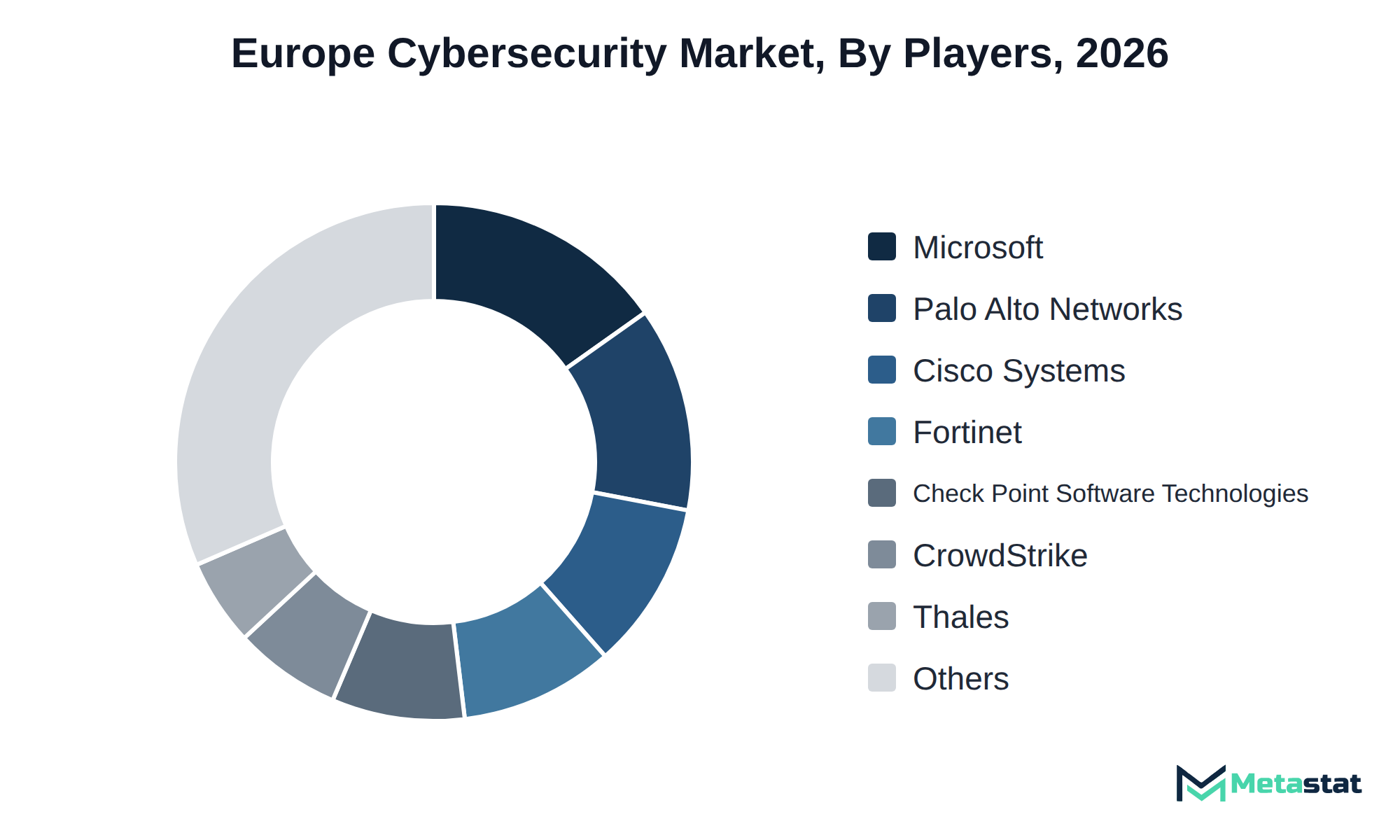
Buyers prioritize factors including certification, service quality, and technological integration when selecting cybersecurity solutions. For instance, Microsoft Corporation focuses on software solutions, emphasizing integrated security across its platforms. Fortinet, Inc. specializes in providing advanced network security solutions, addressing the growing demand for comprehensive protection against cyber threats. Trend Micro Incorporated concentrates on endpoint security and threat detection, ensuring robust defenses for enterprises transitioning to cloud environments.
This growth relies on significant advancements in several key areas within the Europe Cybersecurity market. First, the rise in demand for software solutions reflects a trend toward increasing digital threats and the need for robust cybersecurity measures, with projections reaching USD 62.8 billion by 2033. Second, strong growth in managed security services, driven by organizations seeking comprehensive protection, will contribute substantially to market expansion. Third, the banking, financial services, and insurance sector is poised for notable growth. Revenue is expected to double from USD 16.5 billion in 2026 to USD 32.6 billion by 2033, highlighting the need for enhanced security measures in this highly regulated industry. Potential risks, including regulatory changes or heightened competition among key players, could impede growth. Economic uncertainties slow investment in cybersecurity technologies, affecting the overall market trajectory. Addressing these challenges will be essential for the Europe Cybersecurity market to achieve its projected size by 2033.
By Offering Type: Hardware, Software, Professional Services, Managed Security Services
By Security Function: Network Security, Identity and Access Management, Endpoint Security, Cloud Security, Application Security, Data and Email Security, Security Operations and Threat Management, Governance, Risk and Compliance
By End-Use Industry: Banking, Financial Services and Insurance, IT and Telecommunications, Government and Defence, Manufacturing, Healthcare and Life Sciences, Retail and E-commerce, Energy and Utilities, Transportation and Logistics, Households, Others (Education, Professional Services, Hospitality)
By Region: Germany, France, UK, Italy, Spain, Russia, Rest of the Europe
The report strategically identifies and profiles the key market players and analyses their core competencies in each sub-segment of the Cybersecurity market.
Report Attributes | Details |
Study Period | 2021-2033 |
Base Year | 2025 |
Estimated Year | 2026 |
Forecast Period | 2026-2033 |
Historical Period | 2021-2025 |
Growth Rate | CAGR 10.1% from 2026 to 2033 |
Revenue Unit | USD billion |
Segmentation | By Offering Type, Security Function, End-Use Industry, Region, and Region |
Find answers to common questions about this report
The Cybersecurity market size was valued at USD 67.1 billion in 2025.
The market is projected to grow at a CAGR of 10.1% during the forecast period from 2026 to 2033.
The leading segment in the Cybersecurity market is Software, projected to reach USD 62.8 billion by 2033. This segment surpasses others in terms of revenue potential, reflecting strong demand for software solutions in cybersecurity.
Heightened awareness regarding cyber threats drives organizations to increase investments in cybersecurity solutions. The rise in regulatory scrutiny further compels businesses to enhance their security measures and ensure compliance.
High costs associated with advanced cybersecurity solutions impact adoption among small to medium-sized enterprises throughout Europe. Rising talent costs further challenge suppliers, driving up operational expenses and limiting competitiveness in the region.
Investment in advanced cybersecurity solutions is influenced by the increasing frequency of cyber threats, particularly in the banking, financial services, and insurance sectors. Organizations prioritize comprehensive security measures to protect sensitive data, ensuring compliance with evolving regulations. These factors create significant growth opportunities in the market.
The Cybersecurity market is estimated to reach a valuation of USD 145.6 billion by 2033.
Key players operating in the Cybersecurity market include Microsoft Corporation, Palo Alto Networks, Inc., Cisco Systems, Inc., Fortinet, Inc., Check Point Software Technologies Ltd., CrowdStrike Holdings, Inc., and IBM Corporation.
Heightened awareness regarding cyber threats and the surge in high-profile breaches drive demand for cybersecurity solutions in Europe. Organizations prioritize protective measures to secure sensitive data, particularly in sectors like Banking, Financial Services and Insurance.
The banking, financial services, and insurance sector is projected to expand from USD 16.5 billion in 2026 to USD 32.6 billion by 2033, achieving a compound annual growth rate (CAGR) of 10.3%.
The analysts below cover Information & Technology research at Metastat Insights.
LEAD ANALYST
Utkarsh Khirodkar is a Lead Market Research Analyst at MetaStat Insight, specializing in market intelligence, technology sector assessments, and competitive strategy.

PRINCIPAL CONSULTANT - ENTERPRISE AI & EMERGING TECHNOLOGIES
Banking & Finance · Electronics and Semiconductor · Energy and Power · Healthcare IT · Information & Technology · Professional Services
Vijay Gunti is a Principal Consultant at MetaStat Insight, bringing over two decades of experience across enterprise digital transformation, technology strategy, and intelligent systems.

LEAD CONSULTANT - COMMUNICATION, TELECOM, AND IT
Electronics and Semiconductor · Information & Technology · Machinery & Equipment · Professional Services
Ravindra Sathe Consultants for Communication, Telecom, and IT at MetaStat Insight. He leads the firm's industry research initiatives across telecommunications infrastructure, digital connectivity, enterprise networking, and emerging information technology domains.
Analyzing the transition from natural gas to green hydrogen in iron ore reduction requires realistic infrastructure timelines. Meta stat insight supplied a detailed regional assessment of DRI plant conversion costs and scrap metal availability in North America and Western Europe. Their report carefully examined pellet quality specs and electrical grid access constraints without making oversimplified market assumptions. The research material served as a practical reference during internal technology roadmap discussions.
Integrating zero-trust access controls across legacy electronic health record systems involves complex compliance overhead. Team produced an analysis that clearly separated identity governance and administration tools from privileged access management platforms. Their evaluation of HIPAA and GDPR compliance features across cloud native solutions gave our architecture group clear baseline criteria. The custom data request regarding biometric authentication adoption in hospital networks was returned promptly with clear documentation.
Evaluating calorific value requirements and air permit compliance across municipal waste facilities requires localized data. Metastat Insight structured their analysis around operational throughput capacity and feedstock composition variations in Latin America and Eastern Europe. Their competitive mapping of sorting equipment vendors helped clarify technology differences between optical separators and heavy media systems. The study provided an objective baseline during our capital expenditure reviews.
Explore related market intelligence reports worth reading alongside this one.
Starting from
$2950