
LEAD ANALYST
Utkarsh Khirodkar is a Lead Market Research Analyst at MetaStat Insight, specializing in market intelligence, technology sector assessments, and competitive strategy.

eVisa Market By Platform (Web-based and Mobile Application-Based), By Deployment Mode (Cloud-based and On-premise), By Application (Tourism, Business, Medical, Education, and Other), Industry Analysis, Size, Share, Growth, Trends, and Forecast, 2025-2032
Report ID
MSI-3914
Published
January, 2026
Pages
255 Pages
Format
Report Details
Choose Your License
eVisa Market
The global eVisa market is a specialized segment of the digital travel authorization market that focuses on facilitating global mobility with the help of electronic visa products offered by national governments across the globe. The market is a confluence of technology, security, and international policy and offers a viable digital alternative to traditional visa application systems. Rather than employing conventional paper-based systems, countries will more and more rely on electronic channels to enable individuals to apply for, track, and receive visa authorization over the internet. This business will be no longer an administrative device but will become more and more associated with border security, journey planning, and global mobility management in ways that will re-make the international travel experience.
The global eVisa market will be an interactive, dynamic space between governments and applicants and will be supported by evolving IT infrastructures, cybersecurity controls, and legal frameworks designed to overcome the identity verification and risk assessment hurdles.
Compared to traditional paper-based visa procedures, eVisas will function on encrypted digital media with the capacity to deal with huge volumes of sensitive data in real time. Such systems will be most in favor with governments not only because they work but also because they can link up with biometric databases, AI-driven fraud-detection systems, and international watchlists. When nations make their entry process more efficient, the market will supply them with solutions that minimize bureaucratic drag while still maintaining tight control over people who come in through their borders. The scale of the global eVisa market will move beyond just permission to enter. It will increasingly blur with bigger issues such as geopolitical affiliations, digital sovereignty, and cross-border data transfer agreements. Governments will employ these platforms as foreign policy instruments, easing restrictions selectively to their favorite nations and tightening everywhere else.
And once technology deploys, the infrastructure of the market itself will change, and the software providers, the cyber players, and the regulatory experts will exercise a growing degree of influence over the direction of innovation as well as regulation. And furthermore, the global eVisa market will extend even further to include ancillary services to complement the traveler experience. From instant status notifications on application processing to linkage with digital wallets and travel insurance networks, these systems will become a part of the broader digital ecosystems that are going to define global mobility. Governments will not think of eVisa platforms as an independent service but part of an overall strategy to advance national security, economic competitiveness, and administrative openness.
The future path of the global eVisa market will lead it to newer technology frontiers, where automation, blockchain technology, and AI-driven analytics will revolutionize visa decision-making as well as enforcement. The future will see such systems becoming more predictive in nature, where they not only can authenticate the authenticity of an application but even try to make an estimate of the risk profile of a particular traveler. This vision feature will redefine the very nature of border management from reactive to proactive as threats are foreseen and sequestered before reaching an entry point. Quite simply, the global eVisa market will become an organic extension of how governments respond to movement across borders in a more streamlined online era.
Its influence will be felt far beyond mere convenience, influencing protocols, technologies, and methodologies by which the world is traversed for the remainder of the decades to come. As governments strive ever further along the lines of efficiency, security, and control, this market will prove a vital infrastructure that forms the future of global travel and migration.
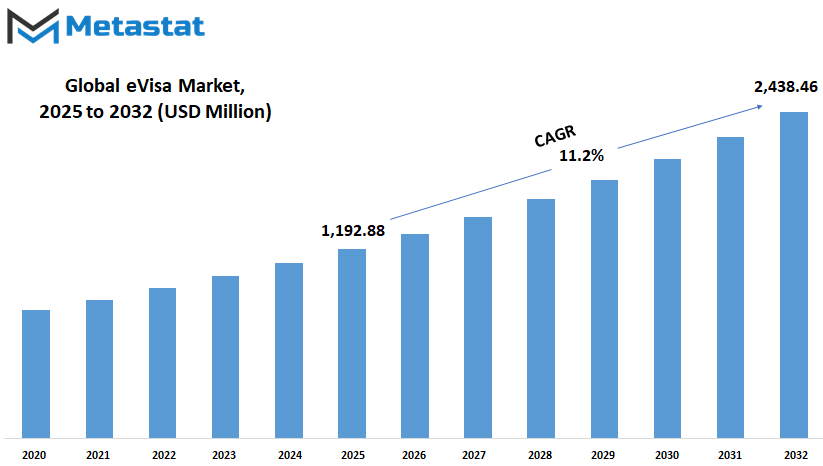
Global eVisa market is estimated to reach $2,438.46 Million by 2032; growing at a CAGR of 11.2% from 2025 to 2032.
The competitive landscape of the global eVisa market is characterized by significant technological innovations and strategic partnerships that enhance service delivery and operational efficiency. Key players such as VFS Global and Tata Consultancy Services are at the forefront of this evolution, employing advanced technologies and collaborative strategies to meet the growing demands of travelers and governments alike.
VFS Global has been instrumental in advancing eVisa services through the integration of innovative online platforms designed to simplify the visa application process. Recently, the company announced a strategic partnership with a leading technology firm aimed at enhancing its eVisa processing capabilities. This collaboration focuses on incorporating artificial intelligence into its systems, which is expected to reduce processing times while improving accuracy. Such innovations not only position VFS Global as a technology leader within the market but also reflect a broader industry trend towards automation and efficiency, crucial for meeting the demands of a rapidly evolving travel landscape.
Tata Consultancy Services (TCS) has also made strides in the eVisa market by leveraging its expertise in digital transformation. TCS's focus on developing secure online platforms and biometric authentication technologies enhances the integrity of visa issuance processes. The company's commitment to improving border security and administrative efficiency aligns with the increasing emphasis on streamlined travel procedures globally. By providing governments with advanced technological solutions, TCS plays a critical role in shaping the future of eVisa systems.
Strategic partnerships have emerged as a vital component of competitive strategies employed by major players in the eVisa market. Companies are increasingly collaborating with government agencies and travel organizations to enhance service delivery and customer experience. These alliances facilitate the sharing of resources and expertise, enabling firms to offer comprehensive solutions that address the complexities of international visa procedures. For instance, partnerships between eVisa providers and travel agencies help streamline the application process for travelers, making it more accessible and user-friendly.
Moreover, competitive differentiation in the eVisa market is shifting from traditional price-based competition to a focus on technological innovation and customer experience. As companies adapt to evolving consumer expectations, the emphasis on digital transformation becomes increasingly evident. This dynamic environment necessitates that firms remain agile and responsive to market needs, leveraging advancements in technology to enhance operational capabilities and improve service delivery.
In summary, the competitive players in the eVisa market are actively shaping the landscape through technological advancements and strategic partnerships. VFS Global and Tata Consultancy Services exemplify how innovation and collaboration can drive efficiency and enhance the overall traveler experience. As the market continues to evolve, these companies will likely play a pivotal role in defining the future of global mobility and border management.
The eVisa market is witnessing significant potential in emerging regions, particularly in the Asia-Pacific and Middle East, where government initiatives are actively promoting tourism through enhanced digital visa systems. The Asia-Pacific region, in particular, has become a focal point for eVisa services, driven by increasing international travel demand and regulatory support that facilitates easier access for travelers. Countries such as India, Australia, and Japan are leading the charge, with India accounting for a substantial share of the market due to its strong government initiatives aimed at boosting inbound tourism.
In the Middle East, nations like the United Arab Emirates and Saudi Arabia are implementing online travel authorization systems as part of broader strategies to enhance tourism and aviation growth. These government initiatives not only simplify the visa application process but also aim to increase visitor arrivals, thereby contributing materially to national GDP. The UAE, for instance, has processed millions of applications annually through integrated smart government portals, showcasing its commitment to modernizing border control and facilitating travel.
However, regional differences in digital infrastructure and adoption rates are crucial to understanding the dynamics of the eVisa market. While countries like the UAE and Singapore are at the forefront of digital transformation, with advanced biometric immigration clearance systems and cloud-enabled processing capabilities, others may still be developing their digital frameworks. This disparity can affect how quickly and effectively different nations can implement eVisa systems, impacting their attractiveness to international travelers. For example, the integration of biometric validation and cloud-based identity verification is essential for reducing processing times and enhancing traveler screening capabilities, which are critical for countries aiming to streamline their immigration processes.
As the global eVisa market evolves, it is important to recognize the role of key players such as VFS Global, which continues to expand its footprint across Asia-Pacific and the Middle East through government visa outsourcing contracts and digital processing infrastructure projects. Their involvement is indicative of the growing trend towards leveraging technology to enhance the efficiency and security of visa processing. Furthermore, the European Travel Information and Authorization System (ETIAS) is set to influence the market landscape by establishing new standards for digital border management, further driving the adoption of eVisa systems across various regions.
In conclusion, the regional analysis of the eVisa market highlights the interplay between government initiatives, digital infrastructure, and market potential. As countries strive to modernize their immigration processes, the eVisa market will continue to expand, shaped by the unique characteristics and needs of each region. This evolution will not only redefine how travelers experience border control but also influence broader economic and tourism strategies on a global scale.
The segmentation of the global eVisa market reveals distinct categories that reflect the varying needs and preferences of travelers. This segmentation is primarily classified by visa type, application platforms, and emerging applications, each contributing to the overall dynamics of the market.
One of the primary classifications is by visa type, which includes tourist, business, student, and medical visas. The tourist visa segment remains dominant, driven by the increasing global travel trends and the simplification of the visa application process. This category appeals to a wide range of demographics, including leisure travelers and business professionals, thus maintaining a robust market presence. In contrast, the student visa segment is gaining momentum, spurred by the globalization of education and a growing number of international student enrollments. This shift indicates a broader trend towards cultural exchange and educational opportunities abroad, highlighting the importance of tailored solutions for this niche market.
Additionally, medical visas are emerging as a vital segment, catering to individuals seeking healthcare services in foreign countries. This category is particularly relevant in light of the growing trend of medical tourism, where patients travel internationally for specialized medical treatments. The business visa segment also plays a crucial role, as companies increasingly send employees abroad for work-related purposes, necessitating efficient visa processes that align with corporate travel needs.
The application of eVisas is significantly influenced by the platforms through which they are accessed, with notable trends emerging in desktop versus mobile usage. As smartphones become ubiquitous, they have emerged as the leading platform for eVisa applications. The convenience and portability of mobile applications allow travelers to submit applications quickly and efficiently, enhancing the overall user experience. Instant notifications and easy access to application updates further contribute to the growing preference for mobile platforms.
While desktop applications are currently considered an emerging segment, they are gaining traction among specific demographics, particularly business travelers who prefer the comprehensive viewing and navigation capabilities offered by larger screens. This trend indicates a gradual shift in platform usage, with both mobile and desktop applications playing key roles in meeting the diverse needs of travelers.
In addition to traditional visa types, the market is witnessing the rise of innovative applications such as digital nomad visas. These visas are designed for individuals who wish to live and work remotely in different countries, reflecting a significant change in travel behavior as remote work becomes more prevalent. This emerging segment not only attracts a new demographic of travelers but also highlights the adaptability of eVisa solutions in catering to evolving global mobility trends.
As the eVisa market continues to evolve, the interplay between these segments will shape the future landscape of international travel. Understanding these dynamics is essential for both suppliers and buyers as they navigate the complexities of visa acquisition and management in an increasingly digital world.
The growth trajectory of the eVisa market is significantly influenced by a confluence of consumer preferences, governmental initiatives, and technological advancements. A notable trend is the increasing consumer preference for digital solutions in visa applications. As travelers seek more convenient and efficient methods for obtaining visas, the demand for online application processes has surged. This shift reflects a broader societal inclination towards digitalization, where users prioritize speed and accessibility over traditional, paper-based methods. The ease of completing applications online not only reduces the time and effort required but also enhances the overall traveler experience, allowing individuals to focus on their travel plans rather than bureaucratic hurdles.
In tandem with changing consumer behavior, governments worldwide are increasingly adopting eVisa systems to modernize their immigration processes. This trend highlights a significant pivot towards efficiency in border management, as electronic visas streamline entry procedures and bolster security measures. By implementing eVisa solutions, governments can expedite the processing of applications, thereby reducing wait times and administrative burdens. This modernization not only facilitates smoother travel experiences but also enhances national security by integrating advanced data verification methods and risk assessment protocols. As countries recognize the myriad benefits of eVisa systems, the adoption rates are expected to rise, creating a more interconnected global travel landscape.
Another critical factor driving growth in the eVisa market is the integration of mobile technology. The proliferation of smartphones has transformed how travelers interact with visa application systems. Mobile applications are becoming essential tools for managing visa processes, offering features such as real-time updates, instant notifications, and user-friendly interfaces. This integration significantly enhances the user experience, enabling travelers to complete their applications on-the-go and access important information with ease. As mobile technology continues to evolve, it is likely to play an increasingly prominent role in shaping the future of the eVisa market, catering to the needs of a tech-savvy traveler demographic.
Furthermore, the convergence of these growth factors—consumer preference for digital solutions, government adoption of eVisa systems, and the integration of mobile technology—creates a robust foundation for the market's expansion. The collective impact of these elements not only fosters an environment conducive to growth but also positions the eVisa market as a crucial component of the broader digital travel ecosystem. As governments and technology providers collaborate to enhance the efficiency and security of visa processing, the eVisa market is poised to thrive, ultimately redefining the travel experience for millions of individuals across the globe.
Recent developments in the eVisa market highlight a trend towards enhanced collaboration between technology firms and visa service providers, aimed at improving efficiency and user experience. VFS Global has announced a strategic partnership with a leading technology firm to bolster its eVisa processing capabilities. This collaboration focuses on integrating artificial intelligence into its systems, which is expected to streamline processing times and enhance accuracy. Such partnerships underscore the industry's shift towards automation and the adoption of advanced technologies to meet the evolving demands of travelers.
Government initiatives are also playing a critical role in the advancement of eVisa systems. Many countries are increasingly embracing electronic visa solutions to modernize their immigration processes. For instance, the Kingdom of Saudi Arabia's Ministry of Tourism has expanded its eVisa program by adding new countries eligible for electronic visa applications. This initiative not only facilitates easier access for international travelers but also reflects a broader governmental push towards enhancing tourism and global mobility. This trend indicates a clear movement towards more efficient border control measures as governments recognize the importance of electronic visas in expediting entry and improving security protocols.
Technological advancements are further transforming the landscape of the eVisa market, particularly in the areas of biometric verification and artificial intelligence integration. The implementation of advanced biometric technologies, such as facial recognition and fingerprint scanning, is becoming increasingly prevalent. These technologies enhance security by ensuring that only authorized individuals can obtain visas, thereby reducing the risk of fraud. The integration of AI-driven analytics is also significant, as it enables governments to assess risk profiles more accurately and efficiently. This proactive approach to border management not only streamlines the visa application process but also enhances overall security by allowing authorities to anticipate and mitigate potential threats before they reach entry points.
As the eVisa market continues to evolve, the interplay between technology, government initiatives, and consumer preferences will shape its future. The growing reliance on digital solutions, coupled with enhanced security measures, is likely to redefine the visa application experience for travelers. The ongoing development of mobile applications for visa management further illustrates this trend, as companies like Tata Consultancy Services work to create seamless user experiences that cater to the needs of modern travelers. This comprehensive approach to eVisa systems will ultimately contribute to a more efficient and secure global travel environment.
Despite the promising growth trajectory of the global eVisa market, several significant restraints could impede its development. One of the most pressing concerns is the increasing threat of cybersecurity breaches and data privacy issues associated with eVisa systems. These platforms are designed to store sensitive information, including passport records, biometric identifiers, payment details, and travel histories. Such centralized databases are prime targets for cyberattacks, raising alarms for governments and travelers alike. As incidents of data breaches become more common, the trust in digital visa systems may wane, potentially leading to decreased adoption rates among travelers who prioritize data security.
Another critical restraint stems from compliance challenges with stringent regulations, particularly the General Data Protection Regulation (GDPR) in Europe, as well as national data localization laws in countries like India and Saudi Arabia. These regulations necessitate that eVisa systems implement robust data protection measures, which can significantly increase the costs and complexity of system implementation. Vendors may find themselves facing delays in cross-border system integration as they navigate the intricacies of these legal frameworks. Consequently, the added compliance burden could slow down the rollout of eVisa platforms in various jurisdictions, limiting their market penetration.
The uneven digital infrastructure across developing countries further complicates the situation, affecting the implementation of eVisa systems. In many regions, particularly in less developed economies, inadequate internet access, outdated immigration systems, and a lack of technical expertise hinder the transition to fully digital processes. Many governments continue to rely on hybrid systems that combine paper-based and digital methods, primarily due to the challenges posed by legacy systems that cannot be easily integrated with new eVisa technologies. This lag in digital readiness not only delays the adoption of eVisa systems but also creates disparities in traveler experiences across different nations.
As governments strive to modernize their immigration processes, they must address these restraints to fully realize the potential of eVisa systems. The interplay between cybersecurity, regulatory compliance, and digital infrastructure readiness will be crucial in shaping the future of the eVisa market. By investing in secure technologies, ensuring compliance with evolving regulations, and enhancing digital capabilities, governments can mitigate these challenges and foster a more robust environment for eVisa adoption. Ultimately, overcoming these barriers will be essential for maximizing the benefits of eVisa systems, including improved border security, streamlined processing, and enhanced global mobility.
The global eVisa market is expected to see steady growth in the years ahead, driven by various factors linked to changes in how people travel and how governments manage security and immigration. One of the main reasons for this growth is the increasing number of people traveling internationally. As more people seek to explore new countries for tourism, education, and work, the need for quick and efficient visa processing is becoming more important. Traditional visa systems are often seen as slow and inconvenient, which is why digital alternatives like eVisas are gaining popularity. Governments around the world are adopting these systems because they help reduce paperwork, improve security, and make the process easier for both the applicant and the immigration officers.
Another key factor pushing this market forward is the rising focus on enhancing border security. Countries want to keep their borders secure while still allowing the smooth movement of genuine travelers. eVisa systems allow for better background checks and quicker decisions compared to manual processes. This technology helps reduce the risk of fraud and unauthorized entry, which makes it very appealing to many nations. Additionally, the growth of online services and digital payment methods has made applying for an eVisa much simpler than before, encouraging more travelers to use this method.
However, there are certain factors that could slow down the growth of the global eVisa market. Concerns over data privacy and cybersecurity might make both travelers and governments cautious. Since eVisa systems rely heavily on online platforms and store sensitive personal information, the risk of cyber-attacks is always present. Any data breach could lead to a loss of trust, which might affect adoption rates. Another challenge is the uneven availability of digital infrastructure in different parts of the world. Some countries may lack the technology or resources needed to fully implement and maintain such systems, which could hold back global growth.
Despite these challenges, there are promising opportunities for this market in the future. The continued progress in technology, including artificial intelligence and automation, could make eVisa systems even more efficient and secure. These advancements would allow faster processing times and a better user experience, encouraging more people to choose digital visas. Governments may also start to offer more flexible and user-friendly eVisa options as competition among tourist destinations grows. These improvements will likely create new chances for market players and help expand the global eVisa market further.
The global eVisa market is expected to see significant changes and advancements in the future as technology continues to shape how people travel and how governments handle border security. One of the main factors that will drive this market forward is the convenience it offers both travelers and immigration authorities. More countries are realizing that by adopting digital solutions, they can streamline visa processes, improve security, and encourage tourism and business visits. This shift is not just about making things easier; it is about creating systems that are smarter, faster, and more reliable for everyone involved.
When looking at how this market is set up, it is important to understand that the global eVisa market by platform is further divided into web-based services and mobile application-based services. Both platforms will continue to play an important role, but their influence will change as user behavior evolves. At present, web-based platforms are widely used because they are often seen as more secure and are already familiar to many government systems. People feel comfortable applying for visas on their computers, filling in forms at their own pace, and uploading necessary documents without feeling rushed. Governments also prefer web-based systems because they offer more control and are easier to integrate with existing databases and security tools.
However, the future will likely see more growth in mobile application-based services within the global eVisa market. This is because smartphones are becoming even more central to daily life. Travelers want solutions that fit into the palm of their hands, and mobile apps make this possible. Mobile apps are already used for tasks like checking in for flights, booking hotels, and managing travel itineraries. Adding eVisa applications to this list is simply a natural next step. Mobile apps can make use of features like biometric scanning and instant notifications, which will help speed up approval times and reduce the chances of errors.
As technology develops, artificial intelligence and automation will play larger roles in both web-based and mobile application-based platforms. These tools will help analyze applications faster, detect fraud more effectively, and offer a smoother experience for applicants. It is also likely that future platforms will focus on offering more personalized services, such as suggesting visa types based on travel history or providing real-time updates on application progress. Overall, the future of the global eVisa market looks promising, with both web-based and mobile solutions continuing to adapt to the needs of modern travelers and governments.
The global eVisa market is expected to grow steadily in the coming years as countries and travelers increasingly prioritize convenience and security. As more governments recognize the benefits of digital transformation, the demand for electronic visa solutions will continue to rise. These systems help reduce the need for paperwork and in-person visits, making travel more efficient for both travelers and immigration authorities. The future of this market looks promising because it will align with broader efforts toward digital governance and border security improvements. Governments are expected to favor these solutions as they help streamline processes and reduce administrative costs.
The global eVisa market is categorized by deployment mode, which includes Cloud-based and On-premise solutions. Cloud-based solutions are likely to gain more popularity in the future because they offer flexibility, easy updates, and lower upfront costs. With cloud systems, agencies can manage applications and data more efficiently while also enhancing security through regular updates and advanced encryption. These solutions allow quick adjustments in response to changing travel regulations, which makes them appealing to governments seeking adaptable systems. Cloud-based platforms are also easier to scale, which benefits countries with fluctuating volumes of visa applications throughout the year.
On the other hand, On-premise solutions still hold value, particularly for nations with strict data control policies. Some countries prefer these systems because they offer more control over sensitive data and allow customization to meet specific security needs. While On-premise solutions might involve higher initial costs and more complex maintenance, they remain a choice for governments prioritizing privacy and independence from third-party providers. In the future, it is expected that both deployment modes will continue to coexist, with cloud systems being more common among smaller or developing nations, and On-premise favored by larger governments with greater resources.
The global eVisa market will likely see advancements in technology that further improve the user experience. Artificial intelligence and automation will help speed up application processing, reduce errors, and detect fraudulent activities more efficiently. Biometric verification and digital identification tools are also expected to become standard features, enhancing the security of these systems. As international travel continues to grow, the demand for faster and more reliable visa processing will only increase.
In the long run, the global eVisa market will play a crucial role in shaping how people move across borders. Governments and service providers will need to balance convenience, security, and privacy as they develop and improve these digital visa systems to meet the needs of a more connected world.
The global eVisa market is expected to see steady growth in the future as more countries and travelers shift towards digital solutions for visa applications. This shift is not only driven by convenience but also by the need for more secure and efficient processing systems. Governments are recognizing how important it is to modernize their visa services to keep up with the growing number of international travelers. People no longer want to go through the long process of visiting embassies or mailing documents. Instead, they prefer quicker, safer, and more transparent options. This is where electronic visas offer real value, and this trend will only strengthen as technology continues to improve.
When looking at the global eVisa market by application, it is clear that tourism holds a large share. The demand for travel has been rising year after year, with people eager to explore new destinations. Tourists appreciate how easy it is to apply for a visa online without the need for complicated paperwork or long wait times. This convenience makes destinations offering eVisa options far more appealing. Along with this, the tourism industry itself benefits because smoother travel procedures encourage more visits, boosting local economies.
Business travel is another important application. Companies rely on their employees being able to travel without unnecessary delays. An efficient eVisa system helps businesses arrange trips faster, which can lead to more opportunities and better global connections. For this reason, many countries are focusing on improving their systems to attract business travelers. A streamlined process saves time and reduces costs, both of which are crucial for companies operating internationally.
Medical travel is also playing a role in the growth of this market. As more people seek medical treatments abroad, whether for affordability or specialized care, having quick access to a visa is essential. An electronic visa makes this much easier, especially for those who may need to travel urgently. This will likely encourage further developments in healthcare tourism and support the growing demand for accessible treatment options.
Education is another area contributing to the future expansion of the global eVisa market. Students from different parts of the world often need to secure visas for their studies. Simplified online applications can ease this process, making certain countries more attractive destinations for education.
Other applications include reasons such as attending cultural events or visiting family. All these uses show that the demand for digital visa solutions will keep growing. As more governments adopt these systems, the global eVisa market will continue to expand, supporting a future where international travel becomes simpler for everyone.
|
Forecast Period |
2025-2032 |
|
Market Size in 2025 |
$1,192.88 Million |
|
Market Size by 2032 |
$2,438.46 Million |
|
Growth Rate from 2025 to 2032 |
11.2% |
|
Base Year |
2024 |
|
Regions Covered |
North America, Europe, Asia-Pacific Green, South America, Middle East & Africa |
The global eVisa market is expected to grow steadily in the future, shaped by technological advancements and the increasing need for efficient and secure travel solutions. As people continue to travel across countries for business, tourism, education, and medical purposes, governments are working to simplify visa processes to encourage more visitors. The eVisa system helps achieve this by providing a fast, paperless, and more transparent method of obtaining travel authorization. Looking ahead, this market will likely become a standard solution for most countries as they recognize its benefits in reducing manual work and improving security through digital verification.
When considering how this market is spread geographically, North America includes the U.S., Canada, and Mexico. These countries are expected to maintain a strong presence in the market because of their ongoing efforts to improve border security while making the process more user-friendly for travelers. In Europe, the key countries are the UK, Germany, France, Italy, along with the Rest of Europe. These nations have been early adopters of digital solutions and will continue to drive innovation in this space to manage the high volume of travelers they receive each year. Asia-Pacific includes India, China, Japan, South Korea, and the Rest of Asia-Pacific. This region will play a crucial role in shaping the future of the global eVisa market. With their large populations, growing economies, and increased outbound and inbound travel, these countries will likely adopt more advanced eVisa systems to handle demand efficiently.
South America, which includes Brazil, Argentina, and the Rest of South America, will also witness growth as more countries there focus on attracting tourists and streamlining travel processes. These efforts will not only support tourism but also promote international business relations. In the Middle East & Africa, the key areas are GCC Countries, Egypt, South Africa, and the Rest of Middle East & Africa. These regions are gradually investing in digital infrastructure to improve their visa services, driven by the desire to boost tourism and support events like international sports tournaments and expos.
As the future unfolds, more countries will recognize the value of digital solutions in transforming traditional visa systems. The global eVisa market will continue to evolve alongside these advancements, helping to make international travel more accessible, safer, and more efficient for everyone. The push towards digital services will not slow down, and this market will likely stand as a clear example of how technology can simplify everyday challenges.

The global eVisa market is expected to grow steadily as countries continue to adopt digital solutions to manage travel and border control. The shift towards electronic visas is being driven by the need for greater efficiency, security, and convenience. Governments around the world are increasingly recognizing the advantages of replacing traditional paper-based visa systems with faster, more secure, and more transparent electronic alternatives. This change not only benefits the authorities but also travelers who now seek easier and quicker processes to obtain travel documents.
In the future, the global eVisa market will likely experience advancements shaped by technology such as artificial intelligence, biometrics, and blockchain. These technologies will make the application process faster and more secure. Travelers will enjoy more user-friendly platforms that will allow them to complete applications from their smartphones or computers without the need to visit embassies or consulates. At the same time, immigration authorities will have access to more reliable data, helping to improve border security and reduce fraud.
Key players operating in the eVisa industry will continue to contribute to this progress through innovation and competition. Companies like VFS Global, Mühlbauer Group, BLS International Services Ltd., Canadian Bank Note Company, Limited (CBN), iVisa, Travisa, Sherpa, Cserve Technologies, G3 Global Services, ItsEasy Passport & Visa Services, 4G Identity Solutions Pvt. Ltd, Securiport LLC, X Infotech, and SITA are expected to play important roles in shaping the future of this market. These companies will focus on making their services more secure and efficient, while also ensuring that they meet the expectations of both governments and travelers.
Looking ahead, the global eVisa market will not only focus on individual travelers but will also expand its services to cover business travel and migration. As international cooperation grows and more countries enter agreements to recognize each other's electronic visa systems, the process will become smoother for those traveling across multiple borders. This will likely lead to a rise in demand for global solutions that offer integrated services for governments and travelers alike.
Furthermore, the convenience of eVisa systems will encourage more people to travel, supporting tourism and business worldwide. The future will likely bring even more collaboration between governments and private companies to ensure that these systems are both secure and user-friendly. This cooperation will help build trust and encourage more widespread adoption of electronic visas, leading to continued growth of the global eVisa market.
Find answers to common questions about this report
Global eVisa market is valued at $1,192.88 million in 2025.
Global eVisa market is estimated to grow with a CAGR of 11.2% from 2025 to 2032.
Global eVisa market is estimated to reach $2,438.46 million by 2032.
Top players operating in the eVisa industry includes VFS Global, Mühlbauer Group, BLS International Services Ltd., and Canadian Bank Note Company.
The key drivers influencing the growth of the eVisa market include the increasing number of international travelers seeking efficient visa processing, the need for enhanced border security, and the convenience of digital solutions. As more people travel for tourism, education, and work, traditional visa systems are viewed as slow, prompting a shift towards eVisas. Governments are adopting these systems to reduce paperwork and improve security, while advancements in online services and digital payments make the application process simpler. Additionally, the growing focus on secure and efficient processing systems further supports the market's expansion.
The regions leading in the eVisa market include North America, Europe, and Asia-Pacific. North America, comprising the U.S., Canada, and Mexico, is expected to maintain a strong presence due to efforts in improving border security while making the process user-friendly. Europe, with key countries like the UK, Germany, and France, has been an early adopter of digital solutions and will continue to drive innovation. Asia-Pacific, including India, China, Japan, and South Korea, is crucial for the market's future, given its large populations and growing economies. The report does not provide specific market shares for these regions.
The major segments within the eVisa market are categorized by platform and deployment mode. The market is divided into web-based services and mobile application-based services, with web-based platforms currently being more widely used due to their perceived security and familiarity among government systems. However, mobile application-based services are expected to see significant growth as smartphones become increasingly central to daily life, offering travelers convenient solutions for visa applications. The report indicates that both platforms will continue to play important roles, but their influence will evolve as user behavior changes. INSUFFICIENT
Emerging trends in the eVisa market include a shift towards digital solutions for visa applications, driven by the increasing number of international travelers and the need for more secure and efficient processing systems. Governments are modernizing their visa services to accommodate the growing demand for convenience, as travelers prefer quicker and safer options over traditional methods. The tourism sector is a significant driver of this trend, as eVisa options make destinations more appealing by simplifying the application process. Additionally, business travel is benefiting from streamlined eVisa systems, which help companies arrange trips more efficiently. Medical travel is also contributing to market growth, as individuals seek quick access to visas for treatments abroad.
The analysts below cover Information & Technology research at Metastat Insights.
LEAD ANALYST
Utkarsh Khirodkar is a Lead Market Research Analyst at MetaStat Insight, specializing in market intelligence, technology sector assessments, and competitive strategy.

PRINCIPAL CONSULTANT - ENTERPRISE AI & EMERGING TECHNOLOGIES
Banking & Finance · Electronics and Semiconductor · Energy and Power · Healthcare IT · Information & Technology · Professional Services
Vijay Gunti is a Principal Consultant at MetaStat Insight, bringing over two decades of experience across enterprise digital transformation, technology strategy, and intelligent systems.

LEAD CONSULTANT - COMMUNICATION, TELECOM, AND IT
Electronics and Semiconductor · Information & Technology · Machinery & Equipment · Professional Services
Ravindra Sathe Consultants for Communication, Telecom, and IT at MetaStat Insight. He leads the firm's industry research initiatives across telecommunications infrastructure, digital connectivity, enterprise networking, and emerging information technology domains.
Our group needed clearer visibility into out-of-autoclave processing timelines for high-temperature thermoplastic composites. MetaStat Insight delivered an objective assessment that contrasted automated fiber placement scrap rates with traditional thermoset prepreg layup cycles. The supplier landscape mapped out primary resin suppliers and tape slitting capacity across France, Germany, and Japan with solid technical accuracy. Their analyst handled our questions on precursor supply risks during an unscheduled inquiry call, providing clear, unembellished context.
Evaluating sensor fusion reliability across harsh operating environments can be tricky without field-validated data. The study on agricultural autonomous guidance systems clearly separated stereo vision setups from automotive-grade solid-state LiDAR. We appreciated the regional infrastructure analysis, specifically around RTK network density across North America and South America. During our follow-up consultation, the MetaStat Insight team walked through tier-two perception software partnerships, giving our engineering leads a practical basis for vendor shortlisting.
Analyzing the transition from natural gas to green hydrogen in iron ore reduction requires realistic infrastructure timelines. Meta stat insight supplied a detailed regional assessment of DRI plant conversion costs and scrap metal availability in North America and Western Europe. Their report carefully examined pellet quality specs and electrical grid access constraints without making oversimplified market assumptions. The research material served as a practical reference during internal technology roadmap discussions.
Explore related market intelligence reports worth reading alongside this one.