
LEAD ANALYST
Utkarsh Khirodkar is a Lead Market Research Analyst at MetaStat Insight, specializing in market intelligence, technology sector assessments, and competitive strategy.

Global Gold-based Brazing Materials Market Size, Share, By Alloy Composition (Gold-Copper Alloys, Gold-Nickel Alloys, Gold-Copper-Nickel Alloys, Gold-Nickel-Palladium Alloys, Gold-Copper-Palladium Alloys, Gold-Copper-Nickel-Palladium Alloys, Gold-Silver Alloys, Active Gold Alloys and Others (Specialty Multi-Element Gold Alloys)), By Product Form (Wire and Rod, Foil and Strip, Sheet, Preforms, Powder, Brazing Paste and Others (Specialty Fabricated Forms)), By End-Use Industry (Aerospace and Defense, Electronics and Semiconductor, Medical Devices, Power Generation and Energy, Industrial Equipment and Machinery, Oil, Gas and Chemical Processing, Jewelry and Watchmaking, Automotive and Transportation and Others (Scientific Instruments, Vacuum Equipment)), Industry Analysis, Growth, Trends, and Forecast, 2026-2033
Report ID
MSI-5443
Published
October, 2026
Pages
252 Pages
Format
Historical
Base year
Forecast
Forecast period
Report Details
Market Valuation: Valued at $90.3 Million in 2025, projected to reach $141.8 Million by 2033 at a 5.8% CAGR.
Dominant Segment: Electronics and Semiconductor is the leading end-use segment, driven by sustained investment in high-precision manufacturing and the need for reliable microjoining solutions in advanced packaging and microelectronic assembly.
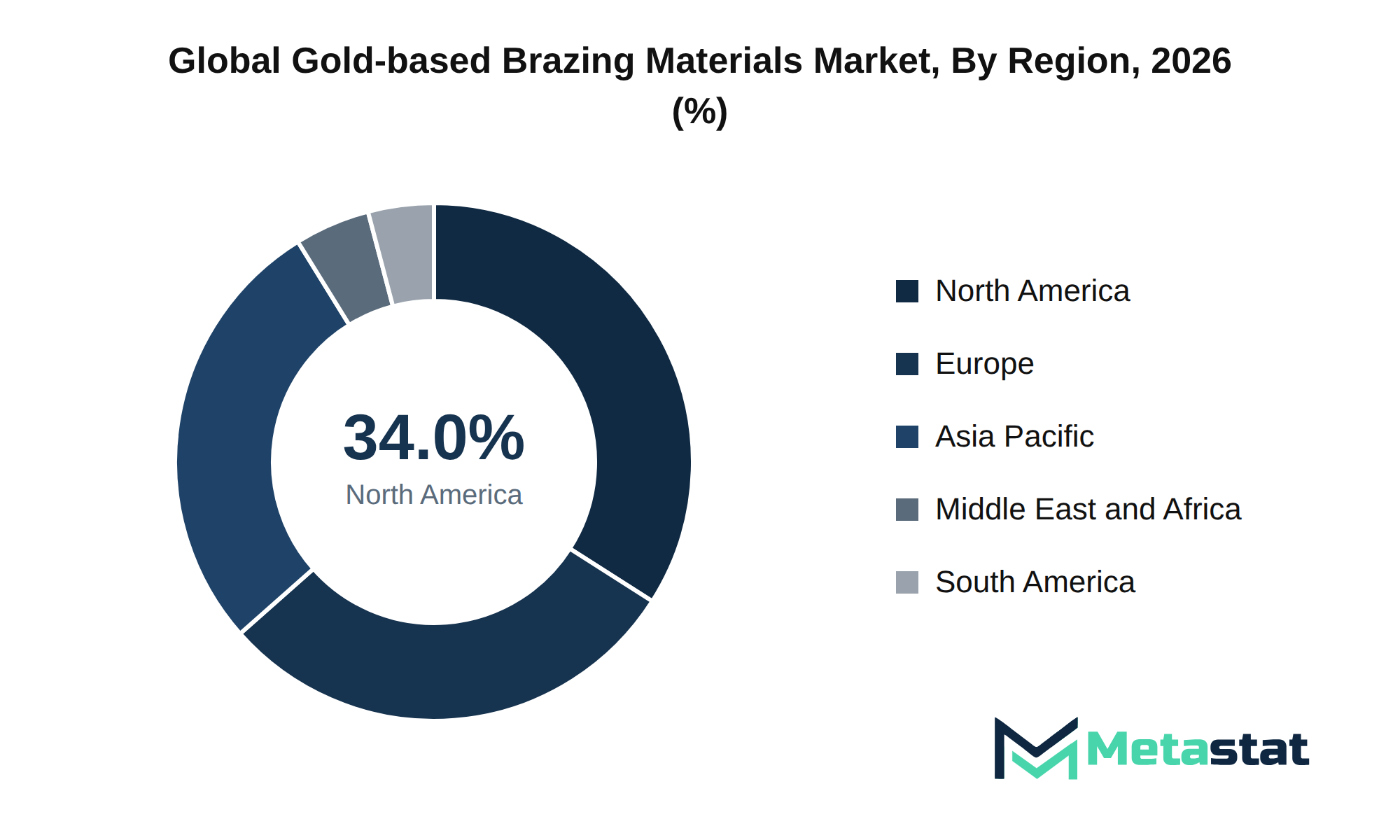
Geographic Lead: North America holds 34.0% of the market in 2025, with the US leading in 2026, supported by ongoing investment in advanced manufacturing capacity and high standards for component reliability.
Product Form Trend: Wire and rod represent the highest-value product form, reflecting strong adoption in industries prioritizing process control and uniformity, while preforms are projected to grow fastest at a CAGR of 6.9% through 2033.
What's Inside: The report provides detailed segmentation by alloy composition, product form, and end-use industry, with market sizing, growth analysis, and forecasts through 2033, along with competitive coverage and regional insights.
Choose Your License
Global Gold-based Brazing Materials Market
The global Gold-based Brazing Materials market was valued at USD 90.3 million in 2025 and is projected to reach USD 141.8 million by 2033, growing at a CAGR of 5.8% over the forecast period.
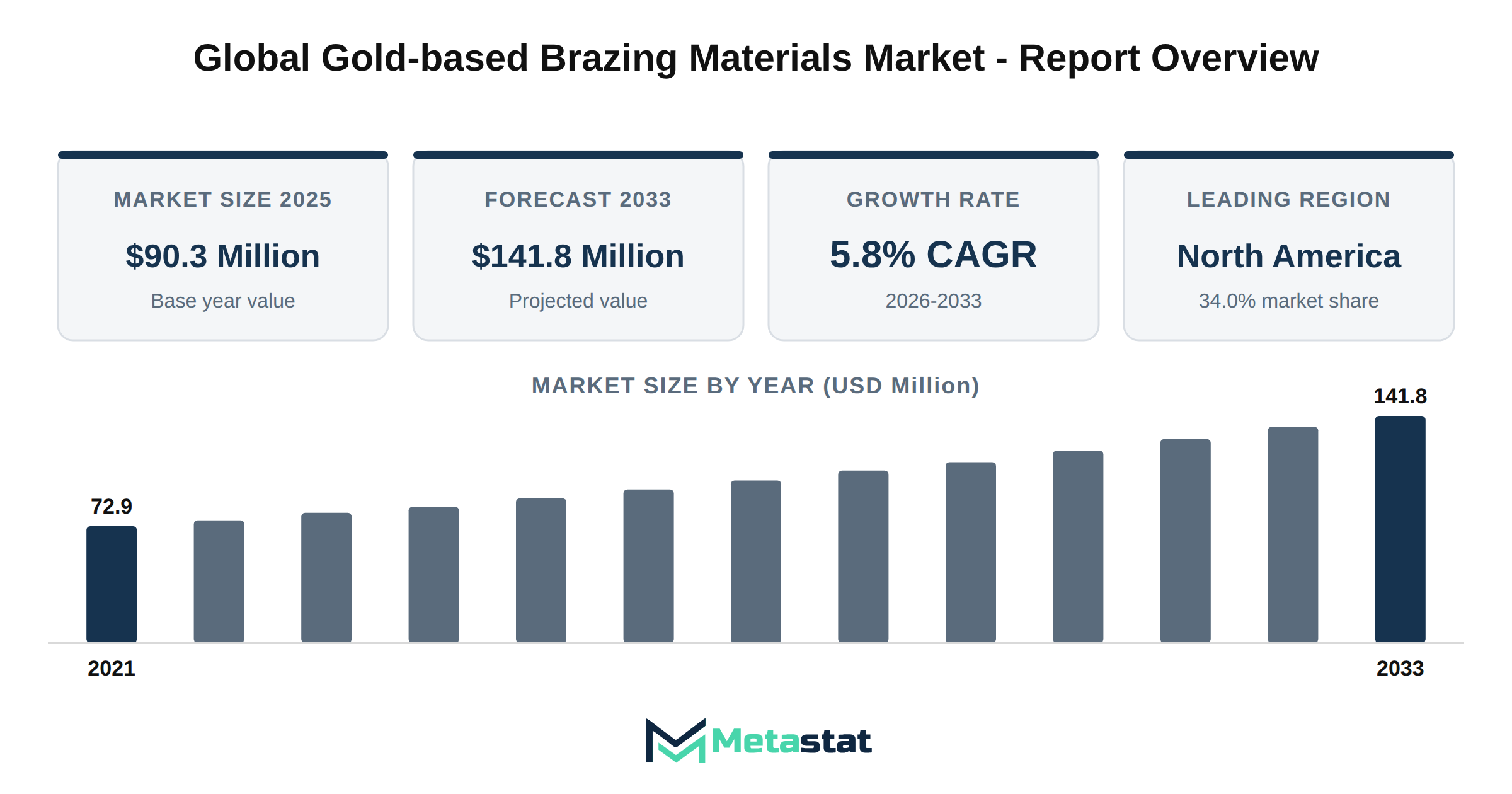
The Gold-based Brazing Materials market covers specialized alloys and fabricated forms engineered for joining applications where corrosion resistance, high-temperature stability, and precision are critical. Buyers in aerospace and defense, electronics, and medical device industries invest in these materials to achieve reliable joints in demanding environments and complex assemblies. The primary spending occurs in sectors where failure of a joint results in costly downtime or safety risks, making gold-based alloys attractive for their consistent performance and longevity.
Demand growth centers on the need for higher reliability in miniaturized and high-value components. Electronics and semiconductor manufacturers drive significant adoption, seeking materials that withstand thermal cycling and maintain conductivity in integrated circuit substrate packages and microelectronic assembly. The segment with the most value is Electronics and Semiconductor, reflecting sustained investment in high-precision manufacturing. North America holds 34.0% of the market in 2025, with the US leading in 2026.
One main growth driver for the Gold-based Brazing Materials market is the expanding use of advanced electronics in aerospace and medical devices, which raises standards for joint quality and durability. This trend steers procurement toward premium alloy compositions and fabricated product forms that meet rigorous specifications, supporting steady volume and value growth throughout the forecast period.
End users across electronics, medical devices, and the broader aerospace materials sector purchase gold-based brazing materials to achieve precise, reliable joints where high temperature stability and corrosion resistance are required. These alloys replace traditional brazing materials in applications where base metals are sensitive to oxidation or where mechanical integrity under thermal cycling is critical. The Gold-based Brazing Materials market addresses requirements for joining miniature, delicate, or dissimilar components in high-value assemblies, so purchasing decisions are driven by the need for performance and reliability rather than lowest cost.
Wire and rod represent the segment with the most value in the market, reflecting high adoption in industries that prioritize process control and uniformity during brazing. Buyers select this product form for its ease of automation and ability to deliver consistent alloy distribution, which improves throughput and quality in complex manufacturing environments. Manufacturers in aerospace parts manufacturing, defense, electronics, and medical device production rely on these materials for mission-critical assemblies where joint failure is not tolerated.
Growth in the market is driven primarily by expanding electronics and semiconductor manufacturing, where demand for reliable microjoining solutions accelerates volume requirements. High standards for component reliability and ongoing investment in advanced manufacturing capacity support sustained demand, positioning the region as a center for adoption. This manufacturing expansion concurrently drives stringent cleanroom contamination controls managed via semiconductor gas purifiers.
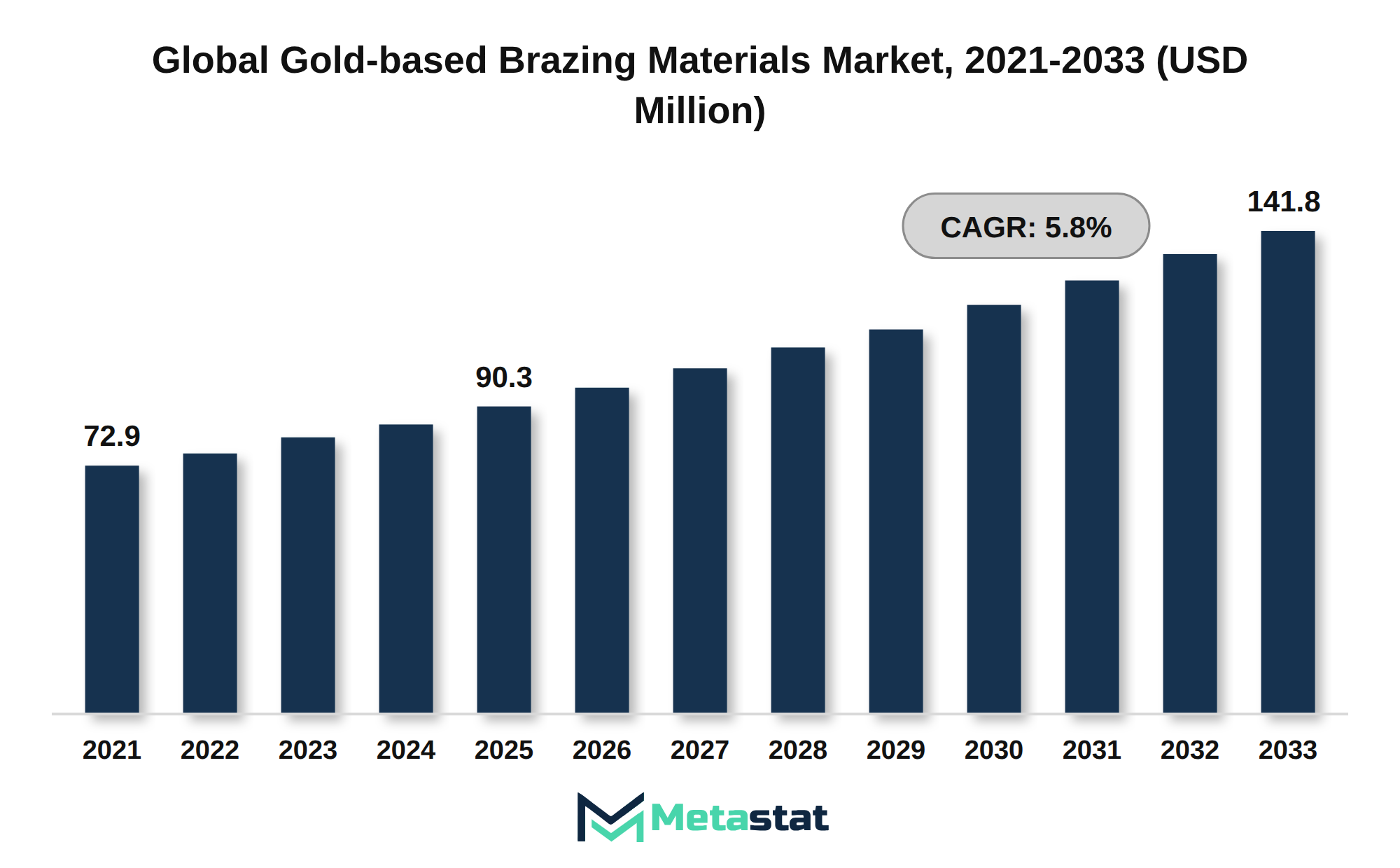
Rapid advances in gold brazing alloy formulations have improved joining reliability in aerospace and semiconductor applications, supporting stronger and more durable joints at ever-smaller scales. Innovation in alloy chemistry, particularly the integration of gold-nickel and gold-copper systems, addresses the need for precise thermal stability and corrosion resistance in environments where even minor joint failure has substantial operational consequences. In the Gold-based Brazing Materials market, the electronics and semiconductor end-use segment is forecast to reach USD 30 million by 2033, reflecting the growing demand for gold brazing alloys that maintain integrity at high frequencies and in microelectronic packaging.
In aerospace manufacturing, gold-nickel alloys deliver enhanced resistance to oxidation and offer better wettability, supporting complex turbine and sensor assembly in micro turbojet engines where conventional silver or copper-based fillers would risk performance degradation. The market’s response includes the development of preforms and foils engineered for tight-tolerance applications, with automated joining processes requiring consistent alloy thickness and repeatable melting profiles. These technical developments enable manufacturers in both industries to streamline high-value production lines and minimize costly defects, even while component geometries shrink and regulatory standards for reliability increase.
Sustained investment in speciality gold alloys and the expansion of product forms, including wire, strip, and preform, support adoption in next-generation aerospace, energy, and high-reliability electronics. The technical trajectory of the Gold-based Brazing Materials market is defined by this capability to address evolving joining challenges, supporting higher operational yields and competitive differentiation for suppliers and buyers alike.
Rising adoption of gold-nickel and active gold brazing materials is reshaping purchasing strategies within the Gold-based Brazing Materials market, particularly among electronics and semiconductor manufacturers. These buyers shift toward gold-nickel alloys to address miniaturization trends and the demand for reliable, oxidation-resistant joints in advanced electronic assemblies. Price sensitivity around these specialized alloys prompts procurement teams to structure contracts around long-term volume commitments rather than spot transactions, seeking stability in supply and cost. For gold-nickel alloys, the market projects a value of USD 25.4 million by 2033. This highlights the commercial importance of this segment in procurement negotiations, as buyers weigh cost predictability against technical performance.
Active gold alloys attract medical device and aerospace manufacturers that require robust metallurgical bonding with ceramics and complex substrates, including medical-grade titanium mesh assemblies. Customized contract models are prevalent, often including technical support, joint development, and qualification testing. In both segments, buyers prioritize not only price but assurance of purity, traceability, and controlled supply. This results in multi-year agreements and preferred supplier relationships. These arrangements support risk mitigation for buyers exposed to volatile gold input costs and ensure reliable access to critical materials. Purchasing models are maturing. Suppliers capable of offering technical collaboration and tailored solutions strengthen their position, influencing both pricing power and customer loyalty.
Medical device and energy sector buyers are driving a distinct profile of demand in the Gold-based Brazing Materials market, with high-temperature joining requirements shaping procurement decisions and technical specifications. In medical device manufacturing, gold-based alloys serve in critical applications where biocompatibility and corrosion resistance are non-negotiable, including cardiac implants and surgical instruments. These buyers often specify gold-copper or gold-nickel systems to ensure joint integrity during automated cycles in medical device cleaning equipment and prolonged in-body deployment. The power generation and energy segment, meanwhile, relies on gold-alloy brazes for joining components in turbines, electronic sensors, and high-efficiency electrical assemblies, where operational temperatures and reliability standards exceed those typical in general industrial equipment.
The projection that the medical devices segment will reach USD 17.7 million by 2033 reflects sustained investment in specialized joining solutions for advanced healthcare applications such as cardiac output monitoring equipment and implantable sensors. In energy, a 5.9% CAGR for power generation and energy indicates that gold-based alloys remain the preferred material when uptime and safety are mission-critical. Buyers in these sectors often accept the higher price point of gold-based brazes in exchange for lower maintenance costs, fewer failures, and extended device life. This focus on technical performance and regulatory compliance supports a differentiated demand curve, encouraging suppliers to innovate in composition and form to stay competitive with these highly specialized requirements.
Gold-based brazing is adjusting to the requirements of high-reliability manufacturing through increased adoption of advanced alloy compositions that improve joint integrity and performance in demanding environments. Manufacturers in the aerospace and defense, electronics, and medical device industries are specifying gold-based alloys for critical assemblies where failure is not tolerated and performance specifications exceed those of traditional silver or copper-based alternatives. The precision and consistency of gold-based brazing alloys, particularly Gold-Nickel-Palladium and Gold-Nickel compositions, are influencing purchasing decisions where vacuum compatibility, thermal stability, and corrosion resistance are essential.
Within the Gold-based Brazing Materials market, the electronics and semiconductor segment is projected to reach USD 30 million by 2033, reflecting sustained demand from component makers seeking reliable interconnects for microelectronic packaging. This shift is driven by the imperative to ensure long-term reliability in miniaturized, high-value products where even minor joint degradation could result in costly failures. Aerospace and defense applications are projected to reach USD 35.3 million by 2033, emphasizing the value placed on repeatable high-strength joints in mission-critical assemblies. These trends demonstrate how suppliers are responding to stricter reliability requirements by delivering alloys and product forms tailored for high-specification manufacturing. This evolution is reinforcing the value proposition of gold-based solutions in sectors where operational continuity and safety are priced above material cost.
Miniaturization trends in electronics manufacturing are raising demand for gold-based brazing alloys that deliver high-precision joints at reduced bond areas. With device designs shrinking and circuit complexity growing, manufacturers require bonding solutions that perform reliably within small form factors, while resisting thermal and operational stresses. This shift drives a move toward advanced gold-based compositions, where consistent wetting and strong electrical conductivity are critical for semiconductor packaging and microelectronic assembly.
Manufacturers in the electronics and semiconductor segments increasingly specify gold-based brazing materials for integrated circuits, sensors, and optoelectronic components, where alternative joining methods compromise reliability or introduce contamination. Demand for these materials pushes alloy suppliers to expand capacity and deliver tighter manufacturing tolerances. Growth in this segment is reflected in a projected 6.8% CAGR for electronics and semiconductor end use, reaching USD 30 million by 2033. The market is therefore closely tied to the innovation pace of high-density electronics production, with device scaling remaining central to competitive strategy.
For many industrial buyers, the high price of gold-based brazing materials constrains procurement volumes and slows adoption, particularly where cost-sensitive applications compete with less expensive alternatives. The premium pricing of these alloys, compared to copper or silver-based competitors, limits their use in sectors with lower margins or where high-reliability joining is not strictly required. Small-to-medium manufacturers in automotive, industrial equipment, and general machinery face tighter budget allocations, resulting in a preference for cheaper joining solutions. This dynamic leads to delayed replacement cycles or smaller order sizes, with adoption of gold-based brazing materials often reserved for only the most critical applications. The market therefore faces headwinds in expanding penetration outside of aerospace, semiconductor, and medical sectors, where the return on investment for high-performance joints more clearly justifies the higher upfront cost.
Price fluctuations in essential alloying metals are forcing suppliers in the Gold-based Brazing Materials market to continually review their procurement and pricing strategies. Volatile costs of nickel, palladium, and other minor metals used in multi-element gold brazing alloys have compressed margins for producers, especially in contracts with fixed pricing or long lead times. This unpredictability disrupts financial forecasting and complicates long-term supply agreements, particularly for suppliers serving aerospace, electronics, and medical device manufacturers that demand stable input quality and delivery schedules. In response, suppliers in the Gold-based Brazing Materials market are diversifying their sourcing networks and entering into strategic purchase agreements to lock in more favorable pricing. Several suppliers have increased their use of recycling and closed-loop material flows to offset exposure to global commodity swings, aiming to stabilize costs and protect profitability. These approaches require investment in traceability systems and supplier relationship management, which introduces new operational complexities while reducing risk exposure.
Medical device manufacturers present a concentrated opportunity for the Gold-based Brazing Materials market, reflecting accelerated demand for high-performance joints in miniaturized and biocompatible components. The medical devices segment is projected to reach USD 17.7 million by 2033, with suppliers addressing this growth by providing wire, rod, and preform products tailored for stringent regulatory and operational requirements. This demand is supported by the sector’s emphasis on reliable, hermetic seals and advanced device miniaturization, which drives manufacturers to select gold-based brazing materials over alternatives. Suppliers with expertise in customized product forms and alloy compositions stand out, meeting complex assembly needs in implantable devices and surgical instruments. The market benefits commercially when medical device buyers shift purchasing preferences toward higher-value, application-specific alloys.
The Global Gold-based Brazing Materials market is segmented based on Alloy Composition, Product Form, and End-Use Industry.
Valued at USD 21.6 million in 2026 and projected to reach USD 30.3 million by 2033, Gold-Copper Alloys are positioned for high-reliability joining in aerospace, electronics, and industrial equipment manufacturing. These alloys deliver robust thermal conductivity and oxidation resistance, making them a preferred choice where precise bonding and long-term durability are critical. In the market, demand for Gold-Copper Alloys reflects the aerospace sector’s preference for alloys that balance mechanical strength with corrosion resistance, supporting both structural and electronic component assembly. With a CAGR of 4.9%, this segment is growing at a slower pace than gold-nickel-palladium alloys, which are forecast at 6.4%, reflecting more conservative uptake resulting from higher price sensitivity among industrial buyers. Gold-Copper Alloys often carry a higher unit price relative to multi-element or silver-containing alternatives, which affects adoption in cost-driven projects and leads to a distinct buyer profile within this segment.
Gold-Nickel Alloys segment is estimated to reach USD 25.4 million by 2033, at a CAGR of 5.3% during the forecast period. This alloy composition serves buyers in electronics and semiconductor manufacturing that require braze joints with high oxidation resistance, excellent wettability, and stable mechanical properties in demanding environments. Device designers in these sectors select gold-nickel alloys for their reliable performance in small, precise assemblies where thermal cycling or high-vacuum conditions prevail. In the Alloy Composition group, the Gold-Nickel Alloys segment delivers a faster CAGR than Gold-Copper Alloys, which are projected at 4.9% for the same period, reflecting a distinct shift toward reliability and performance over cost in critical applications. These alloys are adopted where gold-copper-nickel or active gold variants would not achieve the same strength or oxidation resistance, even at higher input costs. Suppliers differentiate their offer through tight control of nickel content and trace impurities, which directly affect product adoption by high-end electronics manufacturers.
Gold-Copper-Nickel Alloys are expected to reach USD 20.1 million by 2033, supported by their use in applications where both corrosion resistance and mechanical toughness are essential. This segment serves buyers in aerospace, electronics, and precision engineering, who rely on the unique combination of gold’s nobility, copper’s thermal conductivity, and nickel’s strength to achieve reliable, long-lasting joints in devices facing harsh conditions. Demand for these alloys reflects their advantageous balance of performance and cost, especially for parts subjected to repeated thermal cycling or exposure to aggressive environments. Compared with Gold-Copper and Gold-Nickel alloys, Gold-Copper-Nickel Alloys address requirements unmet by binary systems, including joint stability under variable loads and compatibility with a broader range of base metals. Buyers select this composition when application profiles demand a blend of ductility and resistance to both oxidation and creep, setting the segment apart from higher-growth categories like Gold-Nickel-Palladium Alloys while maintaining a steady presence in high-specification manufacturing.
Gold-Nickel-Palladium Alloys segment is projected to grow at a CAGR of 6.4% during the forecast period. These alloys serve high-reliability joining in environments where both corrosion resistance and thermal stability are crucial, particularly in advanced electronics and specialized instrumentation. Buyers select this composition when manufacturing demands biocompatibility, non-magnetic properties, or thermal resistance that exceed the performance of gold-copper and gold-nickel alloys. The segment attracts customers in medical technology and scientific equipment manufacturing, where regulatory requirements and functional reliability are strict. Compared to gold-nickel alloys at 5.3% CAGR, this segment grows faster, reflecting accelerated adoption by buyers with applications that require both enhanced joint integrity and specialized property profiles. Suppliers are adapting formulations to meet these evolving needs, supporting higher-value, precision-driven projects where failure rates have direct commercial and reputational impacts.
Gold-copper-palladium alloys provide a specialty composition for joining where both corrosion resistance and stability at elevated temperatures are required, particularly in environments involving aggressive thermal cycling or exposure to harsh chemicals. Segment buyers include manufacturers in chemical processing, scientific instrumentation, and vacuum technology, who require joints that remain reliable after repeated thermal shock and in corrosive atmospheres. Interest in gold-copper-palladium alloys in the market is influenced by the unique metallurgical benefits palladium introduces - enabling improved wetting and supporting joint longevity under extreme service conditions. Compared to gold-copper or gold-nickel alloys, these grades attract buyers with the most stringent reliability expectations, which supports a premium price positioning. While adoption remains more specialized, the complex material profile aligns with regulatory and end-use compliance for process-critical assemblies. This segment is distinguished within the market by its focus on applications where conventional alloys are insufficient for achieving long-term performance or chemical durability.
Gold-Copper-Nickel-Palladium Alloys combine four precious and base metals to deliver advanced joining solutions for highly regulated and performance-critical industries. Precision electronics, specialized medical devices, and aerospace assemblies are the primary buyers for this segment, drawn by its unique combination of high-temperature stability and resistance to oxidation. Demand in this segment grows in applications where superior joint integrity and minimal contamination are essential, including hermetic sealing and sensor packaging. Compared with Gold-Copper or Gold-Nickel alloys, the inclusion of both nickel and palladium imparts enhanced strength and significantly improves corrosion resistance, making these alloys suitable for environments requiring reliability over decades. This sub-segment serves as a premium solution, often carrying a higher price point than simpler compositions, which restricts adoption to buyers who prioritize performance over cost. Complex manufacturing requirements and the high cost of palladium present adoption barriers for less specialized applications, distinguishing this segment from faster-growing or broader-use alloy types.
Gold-silver alloys deliver unique joining capabilities where electrical conductivity and moderate corrosion resistance are required, appealing to producers of precision electronic components and selected luxury goods. Their adoption in this sub-segment aligns with applications that tolerate lower melting temperatures and benefit from silver’s lower cost relative to gold-only or gold-palladium solutions. Historically, these alloys serve in the assembly of connectors, contacts, and miniature sensors, with buyers prioritizing balance between material cost and performance for less extreme environments. Demand in this sub-segment stands apart from the faster-growing gold-nickel-palladium alloys, which are preferred for high-reliability brazing under aggressive operating conditions. For gold-silver alloys, buyers often come from electronics and jewelry sectors, where this sub-segment offers an alternative to pure gold solutions at a differentiated price point. In a market shaped by continuous pressure on raw material costs, the relative affordability of silver supports stable demand, yet limits penetration into mission-critical aerospace or medical applications where more advanced alloys command higher prices.
Active gold alloys are engineered to promote robust bonding to ceramics and other non-metallic materials through the inclusion of reactive elements, supporting applications that demand reliable joints between diverse substrates. Manufacturers in the electronics, medical device, and aerospace fields rely on this segment for joining ceramic-to-metal seals, sensor packages, and hermetic enclosures where conventional gold-based brazing materials fall short. The segment’s adoption is driven by its ability to deliver high adhesion without the need for additional metallization layers, streamlining assembly for miniaturized or complex designs. Compared to gold-copper or gold-nickel alloys, active gold alloys command a higher per-gram price due to the cost of integrating specialty elements and the technical requirements of their target applications. Pricing sensitivity is a notable adoption barrier, particularly for buyers in volume-driven industries. Continued demand for advanced electronic sensor assemblies and implantable medical components provides active gold alloys with distinct commercial relevance. Regulatory trends in medical and mission-critical electronics further increase the technical requirements, prompting ongoing innovation among suppliers in this segment.
Specialty multi-element gold alloys blend gold with a range of additional elements tailored for unique joint properties in advanced manufacturing. These compositions serve buyers requiring highly specific physical or chemical performance not achieved by standard gold-copper, gold-nickel, or gold-palladium alloys. Buyers in scientific instrumentation, vacuum technologies, or custom microelectronics turn to these alloys when thermal expansion, electrical conductivity, or environmental resistance specifications demand customized solutions. This sub-segment differs by attracting a smaller but highly specialized group of buyers who prioritize compositional precision over cost efficiency. Demand for specialty multi-element gold alloys is shaped by ongoing innovation in scientific and medical device fabrication, where evolving requirements in joint miniaturization and compatibility with exotic materials drive adoption. Compared with the more widely adopted binary or ternary gold alloy segments, this group faces a higher average material cost and longer development cycles, reflecting the complexity of multi-component alloy design. Suppliers focused on this part of the market often invest in R&D and flexible production to accommodate rapid shifts in user specifications.
Wire and rod products are valued at USD 23.5 million in 2026 and are projected to reach USD 33.2 million by 2033, reflecting a CAGR of 5.1% during the forecast period. This form is preferred in high-precision joining applications, with manufacturers in aerospace, electronics, and power generation relying on manual and automated brazing processes that require consistent diameters and reliable flow properties. Demand in this segment reflects the critical performance requirements of end-use components and the reliability of the joints formed using wire and rod. Buyers in this segment often have stringent metallurgical and process specifications, and their selection criteria differ from those for foil, strip, or sheet, which support different assembly methods and geometries. Compared to preforms, wire and rod products are growing at a slower pace, since preforms are forecast to achieve a 6.9% CAGR. Precision control and process flexibility continue to drive their adoption, supporting the segment’s sustained contribution through the end of the forecast period.
Foil and Strip segment is estimated to reach USD 26.3 million by 2033, at a CAGR of 5.2% during the forecast period. This product form is engineered for applications requiring uniform thickness, precise control of filler material, and consistent wetting, making it a preferred choice in electronics packaging and high-precision assemblies. Manufacturers use foil and strip to facilitate automated or semi-automated joining processes, supporting demand for reliability in industries where defect tolerance is low. Compared to Wire and Rod, which is projected to reach USD 33.2 million by 2033 with a CAGR of 5.1%, Foil and Strip is growing at a slightly faster rate, reflecting a shift toward applications where material precision and joint consistency directly impact yield or product qualification. Buyers in this segment are typically high-value electronics and aerospace suppliers, who prioritize tight bonding specifications and process repeatability. This segment is distinguished by higher average pricing and a buyer profile that values process control over raw throughput.
Sheet segment is expected to reach USD 19.2 million by 2033. Supplied in flat, thin formats, gold-based brazing sheets serve critical joining applications for components that require uniformity and precise metal distribution across larger surface areas. These products are frequently selected by manufacturers in electronics and power generation, where controlled bond thickness and minimal distortion are priorities. The sheet form supports fabrication where wire or foil does not provide the necessary dimensional stability, yet it typically involves higher material costs per joint compared to rods or strips. In this market, the sheet segment trails the wire and rod segment on projected value, with buyers tending toward specialized, low-volume, high-value manufacturing rather than bulk production. Advancements in alloy rolling and finishing technologies in recent years have supported more consistent thickness and surface quality, expanding potential applications for gold-based brazing sheets. These improvements enable adoption in sectors with demanding design tolerances and reliability standards.
Preforms segment is projected to grow at a CAGR of 6.9% during the forecast period, outpacing all other product forms tracked in the Gold-based Brazing Materials market. Preforms are engineered shapes - including rings, washers, or custom geometries - specifically designed to fit complex joint configurations and deliver controlled alloy quantities in high-reliability brazing operations. Precision and repeatability in critical sectors drive their adoption, with primary buyers found in advanced electronics, aerospace, and medical device manufacturing, where joint integrity and exact bond dimensions directly affect product performance and yield. In this market, preforms are favored for reducing assembly times and minimizing gold waste compared to manual cutting or bulk forms, despite generally higher unit costs. Unlike wire, rod, or foil segments, preforms eliminate variability by providing ready-to-use solutions, which supports their fast uptake in industries where component miniaturization and process automation are priorities. The demand driver for this segment centers on the need for stricter process control and material efficiency in high-value, regulated end markets.
Powder forms are engineered for applications requiring precise material dosing and superior flow characteristics. Manufacturers in electronics, medical devices, and scientific instrumentation rely on gold-based brazing powders for their ability to create uniform, void-free joints in complex assemblies. The segment draws interest from buyers who demand flexible process integration, including automated or additive manufacturing, where powders enable selective application and repeatable quality. Distinct from wire, rod, foil, or strip, powder format supports intricate component geometries and controlled deposition, catering to industries where fine tolerances or miniaturization are central. Adoption is driven by the trend toward automation in component assembly and the pursuit of consistent joint integrity across high-volume production lines. Compared to other product forms, powder incurs higher per-unit process costs due to stringent purity requirements and advanced milling technologies, reflecting a premium positioning among performance-focused buyers.
Brazing paste delivers a pre-mixed formulation combining gold-based alloy powder and a suitable binder, streamlining application in automated and precision environments. Electronics and semiconductor manufacturers rely on brazing paste for assembling intricate microelectronic components where controlled deposition, reduced waste and repeatable joint quality are essential. This product form is preferred in processes demanding minimal thermal distortion, superior joint reliability, and compatibility with fine-pitch designs. Brazing paste enables high-throughput production and reduces post-braze cleaning steps, features less prominent in alternative forms like wire or foil. Demand is influenced by continued miniaturization trends and the pressure to increase assembly yield in high-value, technologically advanced sectors. Adoption is shaped by the higher price associated with gold content, targeting buyers who prioritize yield consistency and the ability to integrate with automated dispensing systems over material cost savings. Suppliers serving this segment differentiate on paste rheology, purity, and adaptability to customer-specific process variables.
Specialty fabricated forms encompass highly customized geometries and configurations engineered for advanced joining needs where conventional wires, sheets, or strips fail to meet specification or installation requirements. These products find demand among manufacturers in scientific instrumentation, vacuum technology, and custom medical or microelectronic assembly, where the complexity of joint design or the need for a tailored fit drives procurement decisions. In this segment, buyers frequently request non-standard shapes, intricate patterns, or assemblies pre-configured for proprietary processes, which raises unit prices relative to standard formats. Adoption trends in specialty fabricated forms are shaped by the buyer’s pursuit of process efficiency and assembly yield, especially in short-run or prototype applications where design flexibility outweighs cost minimization. While growth rates for tracked product forms like preforms or foil and strip are clearly defined, specialty fabricated forms tend to serve niche requirements, differentiating this segment by its focus on engineering customization rather than volume throughput. The market draws interest from contract manufacturers and OEMs who value bespoke solutions to maintain competitive differentiation.
USD 23.4 million in 2026 and a projected USD 35.3 million by 2033 define the scale of aerospace and defense demand, with a CAGR of 6.1% making this one of the fastest-growing end-use industries tracked in the Gold-based Brazing Materials market. Precision joining of turbine blades, fuel system components, and avionics assemblies drives steady adoption among aircraft OEMs, space system integrators, and military contractors. Product selection in this segment centers on materials with proven high-temperature strength and oxidation resistance, supporting mission-critical reliability where failure risks drive substantial costs. Buyers in this segment prioritize certifications and tight process controls that distinguish it from medical device and electronics sectors, which face different regulatory and performance benchmarks. Higher pricing characterizes purchasing in aerospace and defense due to rigorous material specifications and extended product qualification cycles. Growth in this segment is further supported by sustained investment in next-generation aircraft and satellite programs, enabling technology upgrades and rising output across both commercial and defense supply chains.
This segment addresses specialized joining needs across microelectronic packaging, semiconductor device assembly, and high-frequency circuit production where gold-based brazing materials deliver both electrical conductivity and corrosion resistance. The principal buyers include OEMs and contract manufacturers in consumer electronics, telecommunications, and automotive electronics, who prioritize material purity and process consistency. Surging demand for miniaturized and high-reliability devices underpins sustained volume growth, especially in advanced chip packaging and optoelectronics. Compared to Aerospace and Defense, which advances at a CAGR of 6.1%, Electronics and Semiconductor is the fastest-growing end-use segment tracked in the Gold-based Brazing Materials market. Gold-based alloys in this segment typically command premium prices, reflecting both high gold content and stringent quality requirements specified by electronics manufacturers. Product acceptance in this sector is influenced by reliability standards and the trend toward increased automation in component manufacturing, supporting long-term adoption across global production hubs for electronic devices. Suppliers focused on this segment adapt alloy chemistries and delivery forms to facilitate integration into automated soldering and brazing lines, reinforcing the value proposition for high-performance electronics.
Precision joining for implantable and diagnostic medical equipment drives demand, with manufacturers requiring biocompatible, corrosion-resistant joints that support rigorous sterilization cycles and long-term reliability. Leading medical device OEMs and specialized contract manufacturers use these materials to produce pacemakers, surgical instruments, catheters, and sensor housings, where failure risks are unacceptable. Adoption in this segment is strongly influenced by regulatory requirements for traceability and purity, which raises average pricing relative to other segments in the market. Compared to aerospace and defense or electronics and semiconductor segments, growth in medical devices runs at a moderate pace, with fewer high-volume applications offset by the critical nature of each assembly. Suppliers that provide certificates of trace element content and support rigorous audit trails strengthen their position when serving medical device buyers, who prioritize process control and documentation above cost savings.
Power Generation and Energy segment is projected to grow at a CAGR of 5.9% during the forecast period. Utilities and manufacturers rely on gold-based brazing materials for joining critical components in turbines, heat exchangers, and nuclear power assemblies, where joint integrity at high temperature and resistance to corrosion are mandatory. Demand in this segment rises with global investment in renewable and conventional power capacity intensifying, while regulatory requirements for reliability and safety standardization push end users toward premium joining solutions. This contrasts with the Electronics and Semiconductor segment, which grows faster at 6.8%, reflecting higher volume demand from miniaturization and broader device applications. Stringent operational uptime targets in power plants drive buyers to favor the longevity and thermal stability of gold-based brazing materials, lifting average selling prices above those in sectors with less severe service conditions. Within this segment, the buyer profile is weighted toward asset owners and OEMs seeking lifecycle cost optimization through reduced maintenance and failure risk.
Industrial equipment and machinery manufacturers use gold-based brazing materials predominantly when joining components that demand both high reliability and resistance to corrosive or high-temperature environments. This segment serves sectors including process automation, advanced robotics, and precision tooling, where failure in bonding leads to production losses and increased maintenance intervals. Adoption is driven by the critical requirement for joints that withstand thermal cycling, aggressive chemicals, or frequent mechanical loading. Compared with end-use areas including medical devices or electronics, buyers in industrial equipment favor brazing alloys delivering robust mechanical strength and reduced downtime, even if this entails a higher upfront material cost. Decision-makers in this segment exhibit pronounced sensitivity to total cost of ownership and lifecycle durability, often selecting premium compositions only where competing alternatives including silver- or nickel-based alloys underperform. This cost-performance balance distinguishes industrial equipment buyers, with procurement triggers shaped by production continuity concerns and stable, slower adoption rates rather than the rapid innovation cycles seen in electronics or life sciences.
Joining and repair of piping, valves, pumps, and heat exchangers in oil, gas, and chemical processing facilities rely on gold-based brazing materials for corrosion resistance and reliable seals under aggressive service conditions. Process plant operators and OEMs select these alloys when component integrity drives both regulatory compliance and operational uptime, especially in installations where downtime translates to financial risk and safety exposure. Compared to electronics or aerospace demand, purchase cycles in this segment are influenced less by miniaturization and more by the harshness of chemical environments and the premium placed on failure prevention. Adoption is shaped by the high up-front cost of gold-based alloys relative to standard silver or nickel alternatives, yet buyers in this segment justify the expense for mission-critical assets exposed to chlorides, acids, or high-pressure steam. While other end-use segments including electronics and aerospace are tracked with higher visibility and growth rates, oil, gas, and chemical buyers focus on lifetime value and minimizing unplanned outages, distinguishing their procurement logic from segments driven by volume or weight of joining operations. Suppliers that target this segment differentiate through technical support and documented performance in corrosive service.
Jewelry and watchmaking rely on gold-based brazing materials to produce intricate, visually flawless joints that withstand wear while preserving the luster and value of precious components. High-end manufacturers in this segment demand alloys with high purity and color fidelity to match gold surfaces, supporting both luxury branding and durability expectations. Compared to other end-use industries in the market, buyers in jewelry and watchmaking prioritize aesthetic perfection and resistance to tarnish over cost efficiency or high-temperature performance. This emphasis on appearance and material quality drives a willingness to pay premium prices for specialized brazing alloys, distinguishing the segment from electronics or industrial users who focus on electrical or mechanical reliability. Demand in this segment is influenced by evolving consumer preferences for artisanal craftsmanship and distinctive designs, which increase the adoption of advanced joining techniques. Stringent quality requirements and a low tolerance for visible seams set jewelry and watchmaking apart from other downstream users tracked in the market.
Automotive and transportation manufacturers deploy gold-based brazing materials to join components in electric vehicles, hybrid systems, and advanced safety electronics where reliability at high temperatures is critical. Adoption in this segment is influenced by the migration toward electrified powertrains and vehicle autonomy, which demand more robust joining technologies for sensors and power distribution modules. Automotive buyers place a premium on joint integrity and corrosion resistance, driven by warranty demands and the safety-critical nature of assemblies. This segment differs from other end-use groups tracked in the market, with procurement decisions shaped by both the complexity of component integration and lifecycle cost concerns, rather than only miniaturization or performance in extreme environments. Compared to medical or aerospace uses, volume requirements from automotive buyers emphasize consistent quality at scale, yet price sensitivity remains pronounced, leading to supplier qualification processes that prioritize stable long-term cost alongside technical reliability. The shift toward electric and connected vehicles reinforces the demand for advanced gold-based alloys tailored for automotive electronics packaging.
Precision scientific instruments and high-vacuum equipment manufacturers depend on gold-based brazing alloys to form hermetic, contaminant-free joints that ensure both performance and reliability. Laboratories, research centers, and advanced analytical device makers use these materials where even minute atmospheric intrusion or chemical reactivity disrupts measurement accuracy or operational stability. Adoption in this segment is driven by the increasingly stringent performance and reliability requirements set by users of mass spectrometers, electron microscopes, and vacuum containment systems. The segment stands out for favoring premium alloy grades, reflecting the need for ultra-low contamination and stable long-term seals. Compared to larger segments like electronics or aerospace, purchasing in this category is often project-specific and tied to customization demands, leading to both higher per-unit pricing and a smaller but stable customer base. Evolving scientific research and quantum technology fields support continued demand from institutions investing in next-generation instrumentation and precision laboratory equipment.
This segment aggregates demand from miscellaneous and emerging end-uses not captured by traditional industry categories, drawing usage from scientific instrumentation, vacuum equipment, specialty laboratory components, and other advanced applications where high purity, reliability, and corrosion resistance are required. Purchase decisions in this segment often reflect low volume but high-value requirements, with buyers prioritizing unique alloy specifications tailored to niche research or prototyping environments. Compared to sectors like electronics or aerospace, this segment tends to see less standardized procurement and greater customization, which results in higher per-unit costs for small-batch orders. The market for these specialized applications grows at a pace similar to the overall market, indicating steady, diversified adoption that helps buffer demand volatility in more cyclical end-markets. Shifting research priorities and increased funding in advanced scientific infrastructure support stable expansion, reinforcing the position of this segment in critical, non-traditional technology fields.
Based on geography, the Global Gold-based Brazing Materials market is divided into North America, Europe, Asia-Pacific, South America, Middle East, and Africa.
North America is projected to reach USD 46.6 million by the end of 2033, accounting for 34.00% of the global Gold-based Brazing Materials market in 2025. Demand is sustained by high-value manufacturing across the United States, Canada, and Mexico, where gold-based brazing materials serve critical roles in industries that require high joint integrity under severe conditions. Buyers in this region favor these materials for applications where failure tolerance is minimal, driving premium-priced adoption. Regulatory requirements for material traceability and supply chain transparency in the United States increase demand for certified gold-based brazing alloys, supporting market value growth. Price sensitivity remains lower than in other regions, with buyers prioritizing reliability and compliance, resulting in steady procurement even when gold prices fluctuate. North America's advanced industrial base and commitment to quality standards reinforce its strong position in this segment.
Across Europe, demand for gold-based brazing materials is shaped by advanced manufacturing sectors and stringent requirements in high-reliability applications. The region accounted for 29.4% of global market share in 2025, reflecting the concentration of aerospace, medical device, and precision electronics production in countries including Germany, France, and the UK. Manufacturers in these industries specify gold-based brazing materials where superior corrosion resistance and joint integrity under thermal stress are compulsory for performance and safety, directly influencing specification rates and procurement volumes. Regulatory compliance and the established tradition of high engineering standards in European Union member states reinforce the adoption of gold alloys in mission-critical assemblies. Research and development investment in Germany and France encourages the use of specialty multi-element alloys for new-generation medical and sensing devices, supporting a steady rise in value-added applications. The market in Europe is further influenced by regional sourcing policies that prioritize traceability and material quality for sensitive end uses.
Manufacturers in Asia Pacific accounted for a significant portion of global spending, reflecting the region’s concentration of electronics, precision engineering, and advanced manufacturing clusters. Demand from China, Japan, and South Korea remained strong due to their position in semiconductor fabrication and miniaturized electronic device assembly, where gold-based brazing alloys deliver reliable, corrosion-resistant joints. Growth in India and Southeast Asia resulted from rising foreign direct investment in medical device manufacturing and the expansion of high-value industrial supply chains. End users in these countries prioritized alloys that minimize contamination and support highly automated production, which incentivized suppliers to tailor product forms including foil and strip for streamlined integration with robotics and pick-and-place systems. This focus on process yield and performance supported the region’s robust share and positioned Asia Pacific as the key adopter of material innovations that serve next-generation electronic and medical applications.
In South America, demand is concentrated among high-precision manufacturing sectors serving both domestic and export-focused supply chains. The region reflects steady requirements for advanced joining technologies in Brazil and Argentina. Buyers in these countries often prioritize materials that deliver consistent performance at high temperatures and in corrosive environments, supporting applications across electrical components and technical assemblies. The relatively smaller market presence compared to other regions results from the moderate scale of high-tech and aerospace industries, yet continued investment in sectors including electronics manufacturing and medical technology is expected to support gradual growth. Manufacturers supplying to South America typically address stringent quality specifications, with a particular emphasis on traceability and purity demanded by key buyers in Brazil and Argentina.
Specialty electronics manufacturing and precision component assembly drive much of the regional demand in Saudi Arabia, UAE, and South Africa, where projects in telecommunications and advanced infrastructure require high-reliability joining solutions. Buyers in these countries prioritize gold-based brazing alloys for their performance in hermetic sealing and corrosion resistance, since project specifications often demand materials that ensure uninterrupted function in harsh and variable operating environments. Across the region, local sourcing remains limited, with procurement heavily weighted toward international suppliers offering validated quality and traceable origin. Spending in this region remains relatively concentrated but reflects a high-value demand profile. Stakeholders in the region favor suppliers with proven compliance to international quality standards, which supports market access for global manufacturers serving buyers who require precision and reliability in mission-critical assemblies. Growth in the region is supported by ongoing investment in industrial and infrastructure projects requiring advanced joining technologies.
The market features a supplier field that addresses both specialized and broad industrial requirements, with competition centering on alloy formulation, product form, and application-specific customization. Buyers in sectors including aerospace and defense, electronics, and medical devices select suppliers for their ability to deliver certified, high-reliability materials and the flexibility to tailor products to stringent technical specifications. Price sensitivity influences procurement, particularly in cost-intensive applications, but reliability and consistent performance hold equal importance for mission-critical assemblies.
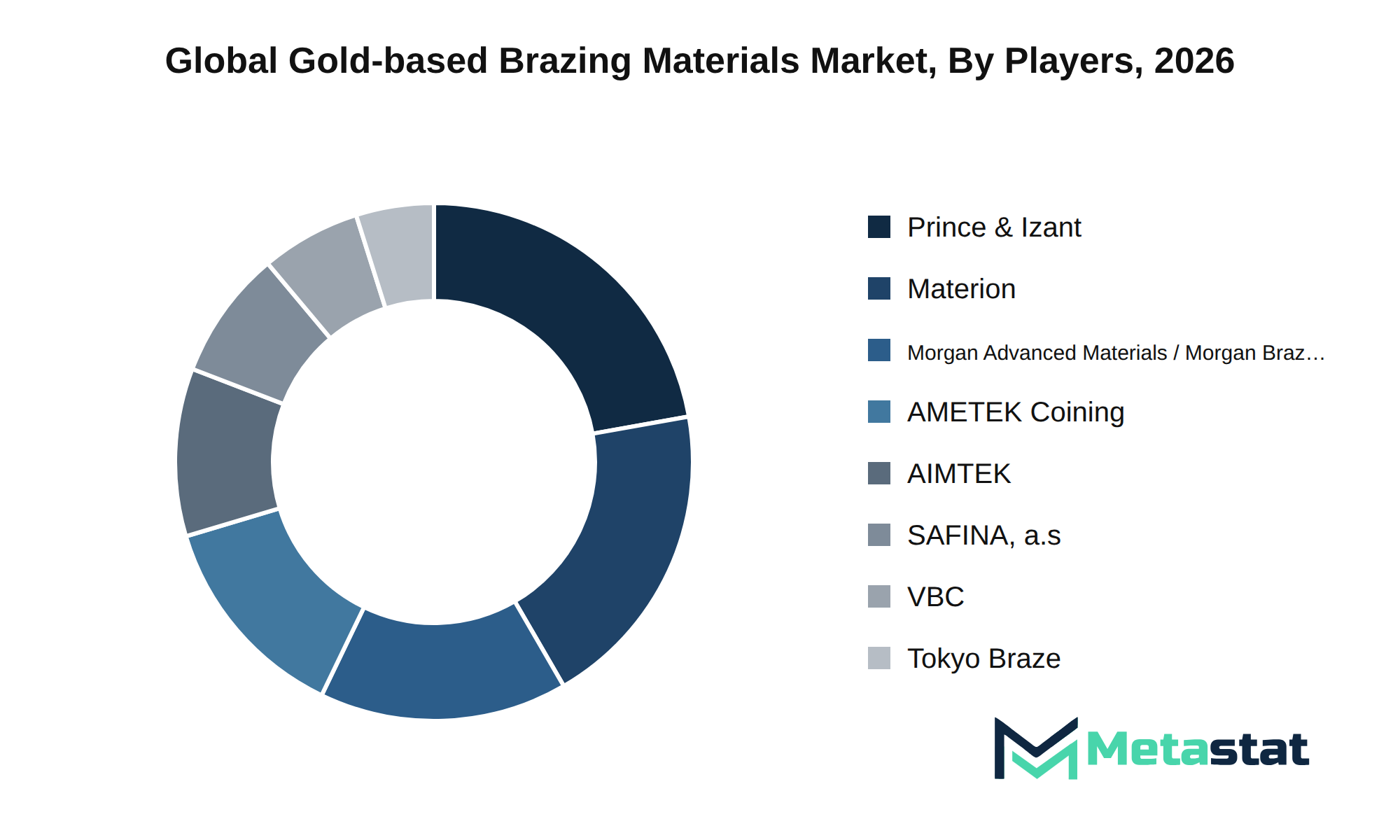
Large established suppliers including Prince & Izant Company and Materion Corporation respond to demand for high-purity alloys by offering a wide portfolio across various product forms, targeting customers requiring scalable supply and robust technical support. Morgan Advanced Materials / Morgan Braze Alloys emphasizes advanced metallurgical expertise for clients needing specialized solutions in demanding joining applications. VBC Group brings focus to the technical advisory and value-added support required by buyers in aerospace and electronics, strengthening client relationships through process guidance alongside product delivery. SAFINA, a.s. and AIMTEK, Inc. differentiate themselves by addressing niche demands and rapid customization cycles, supporting smaller volume orders and application-specific needs. Certification, material provenance, and the ability to respond to evolving technical standards influence supplier selection for many buyers, shaping ongoing investment in alloy development and service offerings.
Achieving this growth depends on continued expansion in high-reliability end-use applications, particularly within the electronics and semiconductor industry, which is projected to reach USD 30 million by 2033. This demand is driven by stricter quality standards for soldering and joining in microelectronic components, where gold-based brazing materials deliver stable performance under elevated temperatures and corrosive environments. North America, with a projected regional value of USD 46.6 million by 2033, supports this outlook through its strong base of aerospace and defense manufacturing, where component reliability is critical and gold-based alloys are specified for mission-critical assemblies.
Adoption of advanced product forms, including preforms and foil and strip, accelerates this trajectory by streamlining precision assembly in sectors requiring complex geometries and reduced process variability. Volatility in raw gold prices could constrain growth by squeezing margins for suppliers and raising end-user costs, particularly in price-sensitive segments or regions with less purchasing power. Sustained investment in process innovation and a favorable demand outlook in technology-driven industries are expected to support demand, while pricing pressures remain the principal risk to the forecast period.
By Alloy Composition: Gold-Copper Alloys, Gold-Nickel Alloys, Gold-Copper-Nickel Alloys, Gold-Nickel-Palladium Alloys, Gold-Copper-Palladium Alloys, Gold-Copper-Nickel-Palladium Alloys, Gold-Silver Alloys, Active Gold Alloys, Others (Specialty Multi-Element Gold Alloys)
By Product Form: Wire and Rod, Foil and Strip, Sheet, Preforms, Powder, Brazing Paste, Others (Specialty Fabricated Forms)
By End-Use Industry: Aerospace and Defense, Electronics and Semiconductor, Medical Devices, Power Generation and Energy, Industrial Equipment and Machinery, Oil, Gas and Chemical Processing, Jewelry and Watchmaking, Automotive and Transportation, Others (Scientific Instruments, Vacuum Equipment), By
The report strategically identifies and profiles the key market players and analyses their core competencies in each sub-segment of the Gold-based Brazing Materials market.
Report Attributes | Details |
Study Period | 2021-2033 |
Base Year | 2025 |
Estimated Year | 2026 |
Forecast Period | 2026-2033 |
Historical Period | 2021-2025 |
Growth Rate | CAGR 5.8% from 2026 to 2033 |
Revenue Unit | USD million |
Segmentation | |
By Region | North America (By Alloy Composition, Product Form, End-Use Industry, and Country)
|
| |
Asia Pacific (By Alloy Composition, Product Form, End-Use Industry, and Country)
| |
| |
Middle East and Africa (By Alloy Composition, Product Form, End-Use Industry, and Country)
|
Find answers to common questions about this report
The Gold-based Brazing Materials market size was valued at USD 90.3 million in 2025.
The market is projected to grow at a CAGR of 5.8% during the forecast period from 2026 to 2033.
The North America Gold-based Brazing Materials market size is estimated to reach USD 46.6 million by 2033.
Wire and Rod leads by product form, reaching USD 33.2 million in 2033, the highest among all type segments. This segment outpaces Foil and Strip, which is projected at USD 26.3 million in 2033.
Miniaturization trends in electronics manufacturing are increasing demand for gold-based brazing alloys that deliver reliable, high-precision joints in compact devices. Accelerated adoption in medical devices is supporting growth, as manufacturers require biocompatible and high-performance joining solutions for miniaturized and regulated components.
North America holds the dominant share with 34 percent of the total market by value. This region leads on a percentage basis compared to Europe at 29.4 percent and Asia Pacific at 27.7 percent.
High prices for gold-based brazing materials restrict adoption in cost-sensitive sectors, where buyers prefer cheaper alternatives. Volatile costs of alloying metals including nickel and palladium reduce supplier margins and complicate long-term supply agreements.
Medical device manufacturers are increasing adoption due to the need for high-performance joints in miniaturized and biocompatible components, with a focus on reliable, hermetic seals. Suppliers able to deliver customized alloy compositions and product forms tailored to stringent regulatory and operational requirements are favored in this industry.
The Gold-based Brazing Materials market is estimated to reach a valuation of USD 141.8 million by 2033.
Companies active in this sector include Prince & Izant Company, AIMTEK, Inc., Morgan Advanced Materials / Morgan Braze Alloys, VBC Group, SAFINA, a.s., Materion Corporation, and AMETEK Coining. These firms manufacture or supply gold-based brazing materials to industrial buyers worldwide.
The analysts below cover Chemicals and Materials research at Metastat Insights.
LEAD ANALYST
Utkarsh Khirodkar is a Lead Market Research Analyst at MetaStat Insight, specializing in market intelligence, technology sector assessments, and competitive strategy.

INDUSTRY CONSULTANT - CHEMICALS & ADVANCED MATERIALS
Chemicals and Materials · Machinery & Equipment · Packaging
Amit Gadhekar Consultant for Chemicals and Materials at MetaStat Insight, directing sector-specific intelligence, research, and strategic consulting across global chemical and processing markets.
Evaluating sovereign cloud deployments for core banking platforms demands a clear view of data residency regulations and migration exit strategies. MetaStat Insight delivered an exhaustive review of regional latency tolerances, mainframe decommission milestones, and third-party vendor concentration risk. The regulatory compliance mapping across European and Asian financial jurisdictions gave our team a dependable baseline for multi-cloud infrastructure discussions.
Replacing petrochemical surfactants with bio-based alternatives requires realistic timelines on industrial precision fermentation scaling. The market research broke down commercialization timelines, feedstock sugar price sensitivities, and regional cosmetic ingredient regulatory approvals in Europe and East Asia. That supplier readiness mapping gave our formulations team reliable context when comparing renewable chemical sourcing roadmaps.
Tracking ceramic matrix composite adoption in high-bypass aero engines requires strict attention to material qualification cycles and FAA airworthiness testing milestones. The MetaStat Insight team provided a detailed timeline of silicon carbide fiber manufacturing capacity and commercial foundry lead times. Having clear visibility into upstream thermal barrier coating supply helped us stress-test our long-term component procurement strategy.
Explore related market intelligence reports worth reading alongside this one.
Starting from
$2950