
LEAD ANALYST
Utkarsh Khirodkar is a Lead Market Research Analyst at MetaStat Insight, specializing in market intelligence, technology sector assessments, and competitive strategy.

Global Speciality Gold Alloys Market Size, Share, By Gold Content (Fineness) (750‰ to Below 875‰, 585‰ to Below 750‰, 916‰ and Above, 875‰ to Below 916‰, 417‰ to Below 585‰, 375‰ to Below 417‰, Below 375‰), By Product Form (Casting Grain & Ingots, Sheet, Strip & Foil, Wire & Rod, Preforms & Blanks, Powders, Pastes, Tubing, Sputtering Targets, Others (Meshes, Evaporation Pellets)), By End-Use Industry (Jewellery & Watchmaking, Electronics & Semiconductors, Dental, Medical Devices (Excluding Dental), Aerospace & Defence, Automotive, Industrial Machinery & Instrumentation, Minting, Others (Decorative Artware)), Industry Analysis, Growth, Trends, and Forecast, 2026-2033
Report ID
MSI-5437
Published
October, 2026
Pages
266 Pages
Format
Historical
Base year
Forecast
Forecast period
Report Details
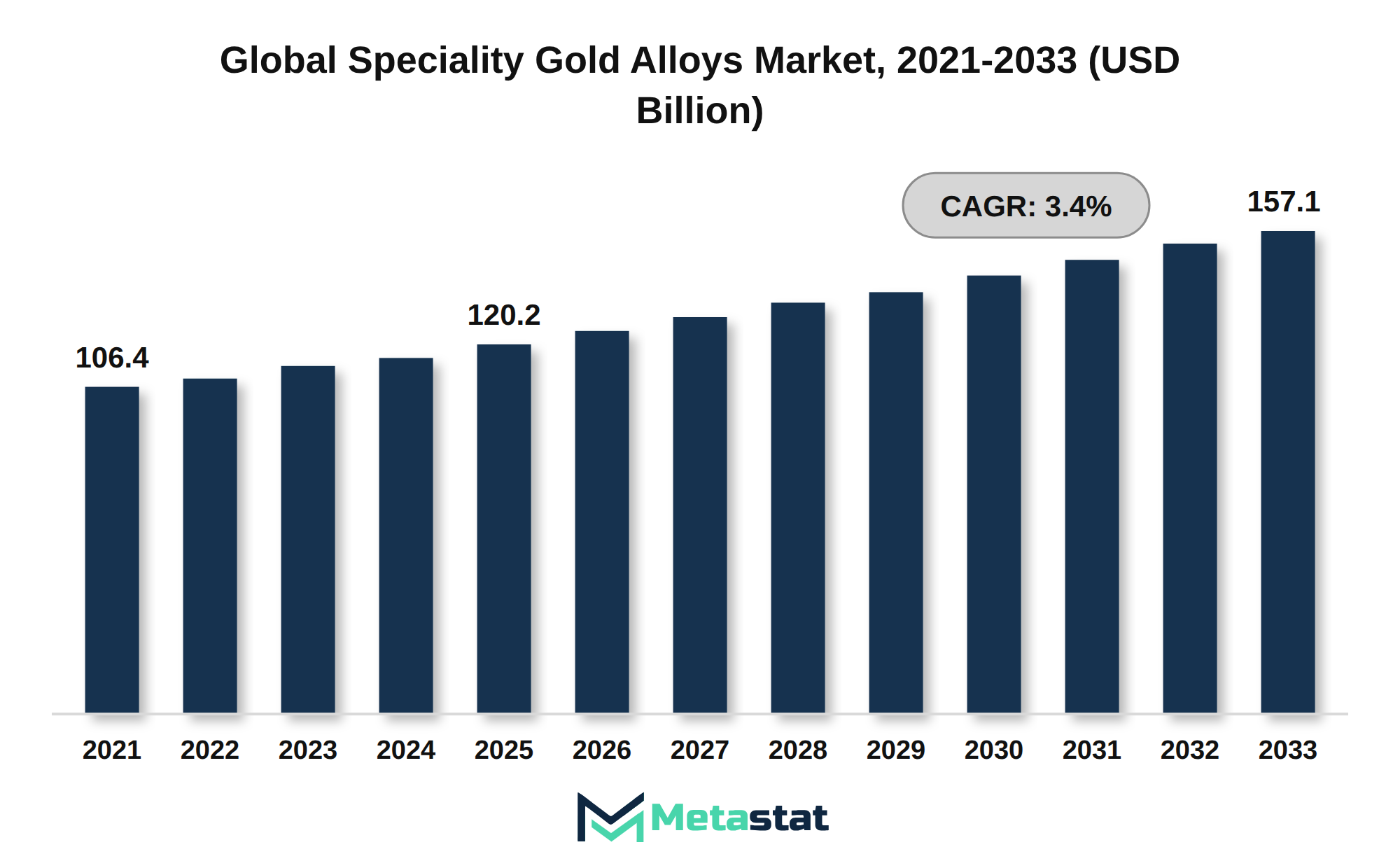
Market Valuation: Valued at $120.2 Billion in 2025, projected to reach $157.1 Billion by 2033 at a 3.4% CAGR.
Dominant Segment: Jewellery and watchmaking account for the largest value among end-use industries, driven by sustained consumer demand and the sector’s reliance on gold alloys for design flexibility and durability.
Geographic Lead: Asia Pacific holds the largest share of the market at 52.7%, supported by strong jewellery manufacturing clusters, high consumer demand, and expanding electronics production.
Fastest-Growing Segment: Medical devices excluding dental applications represent the fastest-growing end-use segment, with a projected compound annual growth rate of 10.4% through 2033 due to increasing demand for biocompatible and reliable materials.
What's Inside: The report provides detailed segmentation by gold content, product form, and end-use industry, with market sizing, growth trends, competitive landscape, and forecasts from 2026 to 2033.
Choose Your License
Global Speciality Gold Alloys Market
The global Speciality Gold Alloys market was valued at USD 120.2 billion in 2025 and is projected to reach USD 157.1 billion by 2033, growing at a CAGR of 3.4% over the forecast period.
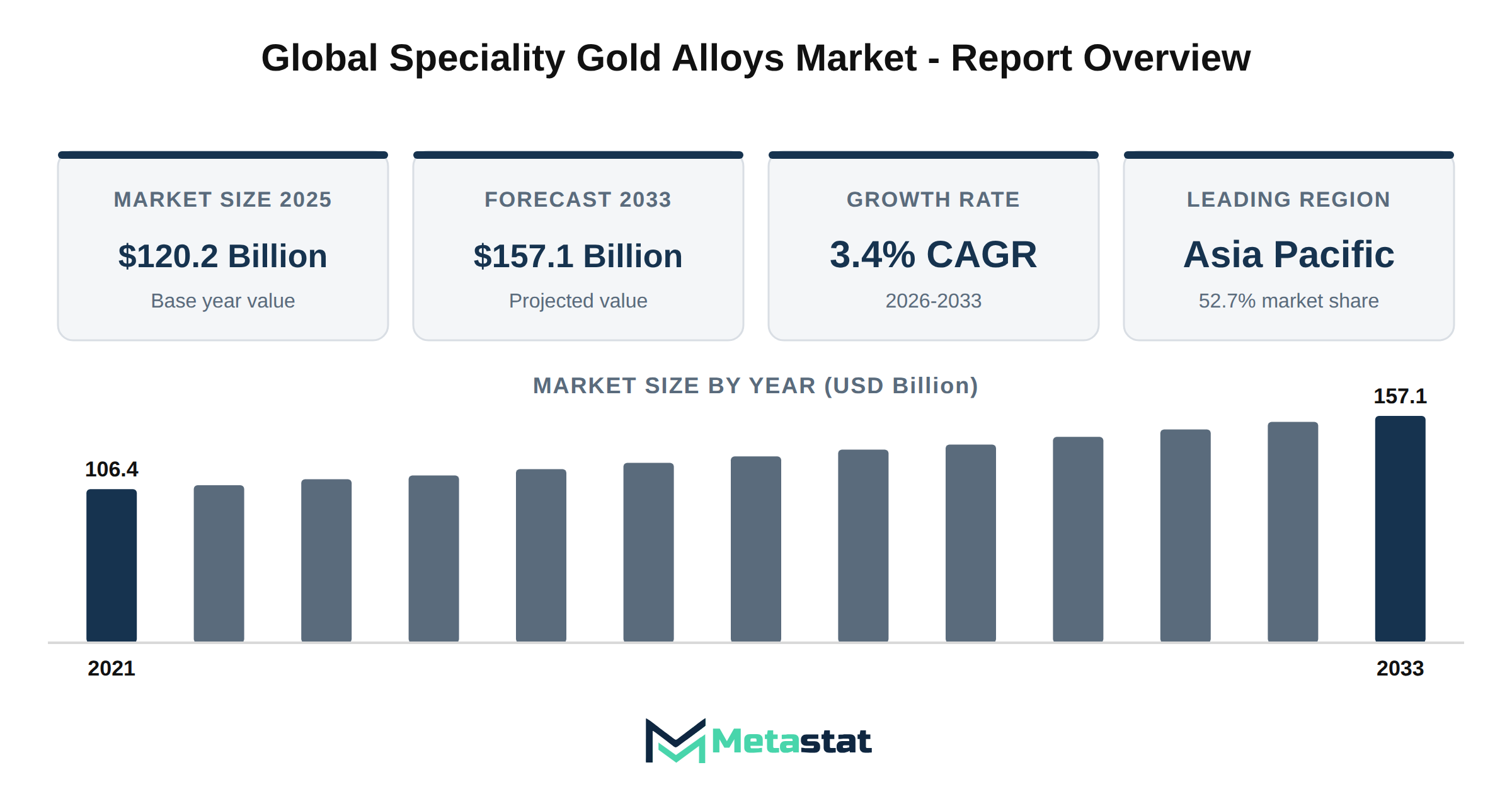
The Speciality Gold Alloys market covers engineered gold-based materials tailored for advanced applications in jewellery, watchmaking, electronics, dental, and medical devices. Buyers in this market include manufacturers seeking precise mechanical, conductive, or aesthetic properties for their products, driving demand for alloys that offer durability, corrosion resistance, and distinct visual appeal. The market serves industries that require high reliability and consistent performance, with demand concentrated among jewellery and watchmaking producers who prioritize both functional and decorative characteristics in their sourcing decisions.
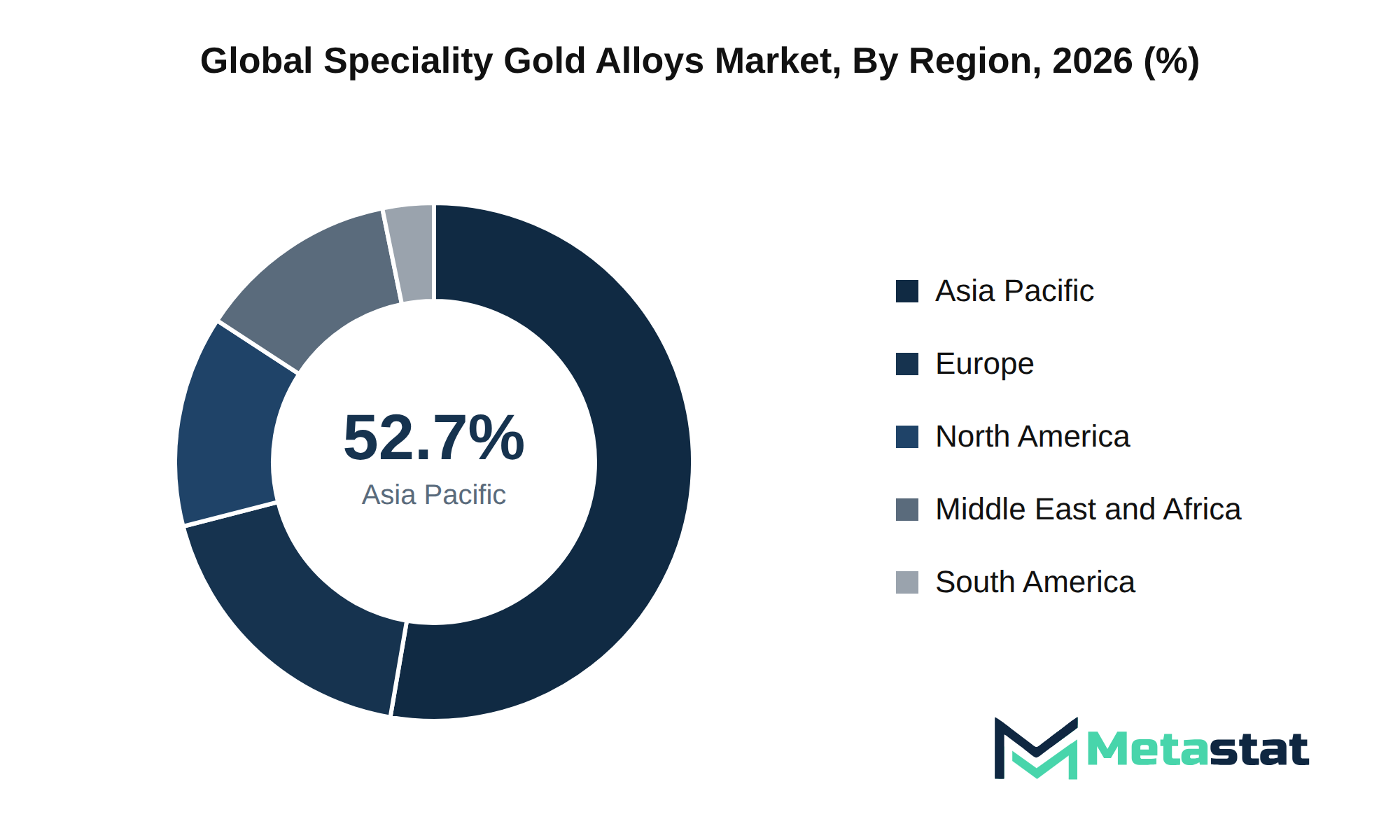
Asia Pacific leads with 52.7% share, driven by strong jewellery manufacturing clusters, high consumer demand for gold products, and expanding electronics production. North America holds 13.2% of the market in 2025, with the US leading in 2026. Europe follows with an 18.3% share, supported by established luxury brands, premier luxury diamond jewelry houses, and precision engineering sectors. Key end-use segments include jewellery and watchmaking, which account for the largest value, reflecting the market’s core focus on finished goods with high gold content and craftsmanship requirements.
Growth in the Speciality Gold Alloys market is primarily driven by rising demand for customized alloy compositions in high-value consumer and industrial products. Manufacturers invest in advanced alloying processes to achieve specific color, strength, and workability profiles, supporting adoption in sectors where product differentiation and quality standards are critical. The ability to tailor properties according to buyer and application requirements strengthens supplier relationships and supports premium pricing strategies.
Buyers invest in speciality gold alloys for their ability to deliver tailored properties required in high-precision manufacturing, luxury goods, and advanced technology sectors. These materials serve demanding specifications in terms of strength, durability, and corrosion resistance, making them essential for applications that standard gold cannot address. Jewellery and watchmaking account for the highest value among end-use industries, reflecting sustained consumer demand and the sector’s reliance on gold alloys for design flexibility and durability.
Asia Pacific holds the largest share of the market, capturing 52.7% of global revenue and reflecting deep-rooted demand from both consumer and industrial segments. This regional distribution highlights a concentration of manufacturing and consumption in Asia Pacific, while Europe and North America remain significant due to advanced production capabilities and established luxury goods markets.
Growth in the Speciality Gold Alloys market is primarily driven by rising adoption across electronics and semiconductor manufacturing, where gold’s conductivity and reliability are valued for critical components. This demand is reinforced by ongoing miniaturization and performance requirements in electronic devices. The combination of established luxury sectors and expanding technological applications ensures that the market continues to attract investment and innovation on a global scale.
Nickel-free white gold formulations are gaining traction within the jewellery and watchmaking sectors, driven by increased consumer demand for hypoallergenic products and evolving global regulations on nickel exposure. Traditional white gold alloys typically incorporate nickel to achieve the desired whiteness and mechanical properties, yet nickel sensitivity and regulatory constraints in key markets, including Europe and North America, are influencing a shift away from these formulations. Jewellery, watchmaking, and high-end body piercing jewelry manufacturers now prioritize palladium-based and alternative nickel-free alloys to align with safety standards and consumer preferences for skin-safe materials.
This trend is particularly pronounced within the "Jewellery & Watchmaking" end-use segment, which is projected to reach USD 133.6 billion by 2033. The segment’s expansion reflects not only the growing market appeal of gold-based adornment but a willingness among manufacturers to invest in differentiated alloy technologies that address consumer health concerns. Market participants concentrate on research to replace nickel without compromising color, luster or workability, particularly in the popular "750‰ to Below 875‰" fineness range, which is expected to grow from USD 40.9 billion in 2026 to USD 53.2 billion in 2033.
Suppliers offering advanced, nickel-free white gold solutions are positioned to capture share in regions with strict nickel regulation, while enhancing their reputational standing with premium buyers worldwide. This product shift supports higher value-add and enables competitive differentiation in a sector where both safety and aesthetics remain decisive for end-user acceptance.
Procurement of gold-tin solder in the Speciality Gold Alloys market is influenced by strict requirements for reliability in semiconductor packaging. Buyers in this segment prioritize alloys with consistent composition, processability, and mechanical stability. Any deviation impacts device yield and long-term performance. The electronics and semiconductors segment is forecast to reach USD 7.9 billion by 2033, reflecting rising demand for fine-pitch, high-density integrated circuit (IC) substrate packaging solutions that depend on gold-tin alloys for their predictable melting point and resistance to oxidation.
Custom contract models dominate large-scale purchases. Buyers often specify alloy composition, lot traceability, and delivery schedules tailored to production cycles. Volume commitments and long-term agreements secure more stable pricing, even in the face of gold price volatility. Suppliers offering value-added services, including technical guidance on reflow profiles and failure analysis, strengthen their position with packaging houses seeking to minimize risk. Spot purchases remain common for prototype runs and specialty lots. Most volume flows through negotiated contracts that guarantee supply continuity and quality assurance audits.
The consequence for suppliers in the Speciality Gold Alloys market is a greater emphasis on traceable production processes and enhanced customer support. Meeting stringent reliability criteria secures repeat business from semiconductor manufacturers and enables price premiums over generic alloys. The shift toward high-reliability applications sustains demand for specialized gold-tin solder and raises barriers to entry for commodity suppliers.
Buyers in the Speciality Gold Alloys market face distinct cost structures tied directly to both metal value and fabrication charges, particularly across segments with high value-added processing. Fabrication charges vary significantly depending on the product form, with casting grain and ingots commanding the largest segment value, projected to reach USD 80.5 billion by 2033. This reflects the scale and complexity of refining, alloying, and shaping these forms, in addition to underlying gold prices. Wire and rod, reaching USD 21.2 billion by 2033, require precision drawing and finishing, which adds significant fabrication overhead to buyers seeking high consistency and specialty grades. For segments including sheet, strip, and foil, projected to reach USD 26.8 billion in 2033, buyers regularly evaluate the trade-off between higher upfront fabrication charges and the consistent material performance necessary for specialized gold-based brazing materials, electronics, and watchmaking applications.
Fabrication charges influence supplier selection and contract structuring, particularly for end users in jewellery and watchmaking, which is projected to account for USD 133.6 billion in 2033. These buyers negotiate on both gold content and processing costs to manage gross margins under fluctuating gold prices. Electronics and semiconductor manufacturers, facing a segment CAGR of 7%, prioritize stable and predictable fabrication charges to maintain cost competitiveness in high-volume production. The structure of these charges in the Speciality Gold Alloys market has contributed to longer supplier relationships and bundling of services to streamline procurement. This dynamic supports supply chain stability but limits rapid switching among suppliers when fabrication charge differentials are modest compared to total contract value.
Higher gold content, or fineness, typically increases the ductility of an alloy, while reducing its hardness. Alloys in the 750‰ to below 875‰ range, which represent a mid-to-high gold content, offer a practical compromise between hardness and formability. In the Speciality Gold Alloys market, this segment is forecast to rise from USD 40.9 billion in 2026 to USD 53.2 billion by 2033, supported by steady demand from jewellery and watchmaking applications. These industries prioritize not only the visual quality of gold but require alloys that are workable for intricate designs and resistant enough to wear. By contrast, gold alloys with lower fineness - including those below 750‰ - tend to introduce more base metals, increasing hardness significantly but limiting the ability to shape or roll the material without risk of cracking or failure. Alloys with a fineness of 916‰ and above are softer, making them easier to form but more prone to scratching and deformation under stress. Purchasers in electronics, dental, and medical device sectors select alloy grades based on the specific balance of hardness and formability required for their components' function and longevity. This calibration of properties directly influences the segmental growth in the market, driving material selection strategies for manufacturers that optimize both product quality and processing efficiency.
Expanding purchasing power and shifting consumer preferences in Asia Pacific are reshaping the Speciality Gold Alloys market. The region, accounting for 52.7% of global revenue in 2025, supports strong expansion in jewellery and watchmaking segments due to increasing demand for luxury and custom-designed products. Urbanization and an expanding middle class in countries including China and India are driving greater investment in high-purity and innovative gold alloys, with both traditional designs and contemporary styles gaining traction. This demand incentivizes suppliers to develop tailored alloys with specific color, hardness, and finishing properties to meet evolving buyer expectations. The market experiences a sustained uplift in volume and value, particularly in segments where design differentiation and product exclusivity drive premium pricing.
High prices for gold restrict the pace of adoption among jewellery and watchmaking manufacturers, particularly in segments with lower profit margins or limited capacity to pass costs to end buyers. The premium cost structure of speciality gold alloys often discourages frequent design updates or material substitutions, resulting in slower cycles of product innovation and replacement. Manufacturers in emerging markets weigh the high input costs against consumer price sensitivity, which suppresses demand for higher-value alloys and leads to smaller batch sizes or reduced order volumes. This effect is pronounced in price-driven product categories, where procurement teams tightly control material spend. The market experiences constrained uptake in these environments, while downstream buyers delay investment in upgraded alloy formulations. In high-growth markets, the full commercial potential of speciality gold alloys remains limited by upstream gold price volatility.
Maintaining tight control over gold alloy purity introduces significant complexity and expense for suppliers. In sectors including electronics, dental, and medical devices, buyers specify narrow tolerances for trace elements and demand consistent performance at micro-scale levels. The market faces frequent requests for alloys with high fineness or bespoke compositions that require advanced refining and testing capabilities. These requirements drive up operational costs, particularly for suppliers without vertically integrated refining or in-house analytical laboratories. To remain competitive, many suppliers invest in automated quality assurance systems and advanced spectroscopic analysis, but these upgrades increase capital and ongoing technical staffing expenses. Margin pressure intensifies when end-use industries prioritize purity and reliability, but remain highly sensitive to price, making it challenging for suppliers to fully pass on additional quality control costs.
Medical devices excluding dental applications represent the fastest-growing end-use segment, with a projected compound annual growth rate of 10.4 percent through 2033. This growth stands out in the market, where most traditional segments expand at a slower pace. Manufacturers supplying precision components for implantable or contact medical devices are driving adoption, prioritizing alloys that deliver biocompatibility, corrosion resistance, and mechanical reliability in regulated healthcare environments. Product lines tailored to these demanding criteria, including gold alloys with controlled trace element profiles, address critical needs for surgical instruments, stents, and electronics within medical devices. Healthcare providers worldwide seek to improve patient outcomes through advanced technology, so suppliers who address these specifications secure opportunities for both volume growth and premium pricing. Suppliers that focus on innovation and regulatory support are positioned to strengthen their presence in this dynamic use case.
The Global Speciality Gold Alloys market is segmented based on Gold Content (Fineness), Product Form, and End-Use Industry.
Valued at USD 40.9 billion in 2026 and projected to reach USD 53.2 billion by 2033, this segment grows at a compound annual rate of 3.8 percent. Gold alloys in the 750‰ to below 875‰ fineness range serve primarily in mid- to high-end jewellery and watchmaking, where a careful balance between gold purity, strength, and cost is critical. Buyers in this segment include luxury brands and regional manufacturers seeking durable yet visually appealing products, particularly in markets where 18-karat and 21-karat standards are preferred. Ongoing demand is driven by evolving consumer preferences for premium gold articles that retain structural integrity through daily wear. Compared with the 585‰ to below 750‰ segment, which grows faster at 4.0 percent, the market for 750‰ to below 875‰ alloys attracts buyers willing to invest in higher purity for perceived value and prestige. This differentiation supports relatively stable demand and pricing in the segment, despite price sensitivity in lower-fineness categories across the market.
585‰ to Below 750‰ segment is estimated to reach USD 35.3 billion by 2033, at a CAGR of 4% during the forecast period. These alloys are typically used in affordable jewellery and watchmaking, where buyers balance cost with aesthetics and product durability. The segment appeals to manufacturers who require a compromise between gold purity and mechanical strength, making it suitable for mass-market pieces exposed to daily wear. Demand is influenced by rising urban middle-class populations in emerging economies, who seek accessible luxury and fashion accessories. The 4% CAGR signals a faster pace than the 750‰ to Below 875‰ segment, which grows at 3.8%, reflecting a stronger shift toward value-focused consumer segments. Lower gold content reduces input costs for producers, enabling competitive pricing and broader market reach. Distinct from higher-fineness grades, this segment draws its growth from buyers who prioritize affordability and volume over premium purity, shaping both supply and brand positioning strategies.
USD 38.1 billion is the projected size of the 916‰ and Above segment by 2033. This fineness level primarily serves luxury jewellery and high-end watchmaking, where buyers demand superior purity and lasting value. The segment attracts clientele seeking premium products, including heritage brands and affluent consumers in established and emerging luxury markets. Distinct from lower-fineness alloys, 916‰ and Above commands a higher price and is less sensitive to minor cost fluctuations compared to segments like the 585‰ to Below 750‰ range. Segment growth is shaped by sustained demand for hallmark gold in South Asia and the Middle East, where cultural and investment preferences favor high-purity gold. Unlike faster-growing lower-fineness segments, the 916‰ and Above category is valued for brand reputation and intrinsic asset value, supporting its position despite a moderate pace of expansion. Premiumization in jewellery and growing interest in investment-grade gold continue to influence purchasing across this segment.
875‰ to Below 916‰ segment is projected to grow at a CAGR of 2.3% during the forecast period. This segment appeals to jewellery manufacturers seeking a balance between material cost, durability, and perceived gold value, with usage most prevalent in mid-range and premium jewellery collections. Compared with the adjacent 750‰ to Below 875‰ and 585‰ to Below 750‰ segments, which grow at 3.8% and 4% respectively, demand for 875‰ to Below 916‰ alloys expands more modestly, indicating slower movement in markets where regulatory standards or consumer expectations support higher gold content but cost pressures remain. Buyers within this fineness band frequently prioritize tradition and hallmarking standards, particularly in Europe and select Asian countries, while managing price sensitivity. The segment is less exposed to the rapid shifts seen in lower-fineness alloys, reflecting its dual appeal to established retailers and custom jewellery houses who favor a blend of longevity and brand reputation. Regulatory requirements related to hallmarking and declarations of gold purity in consumer-facing markets further influence adoption rates in this category.
Lower-fineness gold alloys in the 417‰ to below 585‰ range are primarily selected for cost-sensitive jewellery applications where affordability and accessibility outweigh premium gold content. Mass-market jewellery manufacturers and regional brands account for most of the demand, targeting consumers seeking gold aesthetics at a lower price point. In this segment, demand is influenced by fluctuations in gold prices and consumer purchasing power, particularly in regions where gold jewellery serves both an ornament and an accessible asset. Compared with the higher-fineness segments tracked in the market, these alloys attract buyers less focused on long-term value retention and more on initial acquisition cost. The absence of premium pricing found in higher-fineness segments makes this category sensitive to any regulatory or taxation changes affecting lower gold content alloys. Product innovation in this band typically focuses on surface treatments and colour options to enhance appeal, rather than on physical performance improvements, setting it apart from segments aimed at high-wear or technical applications in the market.
Low-fineness speciality gold alloys in the 375‰ to below 417‰ range serve manufacturers seeking cost-effective solutions for decorative jewellery and fashion accessories. These alloys contain a reduced gold fraction, resulting in lower intrinsic value and supporting broader accessibility for volume-focused producers. Demand in this segment is concentrated among mass-market jewellery makers, particularly those responding to price-sensitive consumer groups in emerging economies. This fineness range is adopted where regulatory requirements for karatage are less stringent or where aesthetic appearance takes precedence over metal content. Compared to higher-fineness segments, these alloys present distinct challenges: lower gold content reduces material costs but heightens the influence of fabrication charges and requires careful alloying to maintain visual appeal and wear resistance. The 375‰ to below 417‰ sub-segment stands out for addressing affordability and higher production volumes, while sacrificing prestige and durability associated with purer alloys.
Gold alloys with fineness below 375‰ feature the lowest gold content in the market and target buyers prioritizing affordability and decorative appearance over intrinsic value. Manufacturers of costume and fashion jewellery rely on this segment to produce pieces that mimic the look of higher-gold-content products but at a substantially reduced cost, supporting broader access to gold-toned accessories for entry-level and price-sensitive consumers. Demand in this category reflects sustained interest from mass-market jewellery brands and retailers aiming to capture volume sales in emerging and youth-driven markets. Compared to higher-fineness segments, alloys below 375‰ carry lower raw material costs and face stricter restrictions regarding hallmarking and regional trade, which limits their adoption in premium or investment-focused applications. This sub-segment is distinctively shaped by regulatory compliance and consumer acceptance, with market activity concentrated among manufacturers serving high-volume, low-margin channels often outside traditional luxury distribution.
Valued at USD 66.1 billion in 2026 and projected to reach USD 80.5 billion by 2033, this segment tracks a compound annual growth rate of 2.8 percent. Casting grain and ingots are foundational materials used primarily by jewellery manufacturers, watchmakers, and industrial producers who require bulk gold alloy for subsequent shaping and fabrication. Demand is largely anchored to the high-volume needs of large-scale jewellery and watchmaking operations, which depend on consistent quality and reliable supply for downstream rolling, drawing, and forming processes. Compared to sheet, strip, and foil (CAGR 2.6 percent), casting grain and ingots grow slightly faster, reflecting steady investment in automated production lines and expanded capacity in Asia Pacific. The segment’s scale and liquidity support price transparency, drawing interest from buyers seeking lower per-unit fabrication charges than finished forms. Bulk buyers in this segment secure supply at scale while balancing input costs against end-consumer demand volatility.
Estimated to reach USD 26.8 billion by 2033, the Sheet, Strip & Foil segment grows at a compound annual rate of 2.6% during the forecast period. These products serve precision manufacturing in electronics, decorative components for luxury consumer goods, and intricate applications within watchmaking where dimensional consistency and malleability are essential. Demand growth in Sheet, Strip & Foil is heavily influenced by advanced electronics assembly and premium watchmaking, which require consistent surface quality and controlled thickness for high-value outputs. Compared to Casting Grain & Ingots, which is projected to reach USD 80.5 billion by 2033 and grows at a 2.8% CAGR, Sheet, Strip & Foil expands at a slightly slower pace. Sheet, Strip & Foil tends to attract buyers prioritizing downstream manufacturability and surface finish over bulk casting efficiency, setting it apart in this segment. Suppliers focus on refining rolling and flattening processes to meet stricter tolerances, reflecting end-user requirements unique to high-precision applications.
Wire & Rod segment is expected to reach USD 21.2 billion by 2033. This segment serves precision manufacturing, often supplying the electronics, dental, and industrial sectors where malleability and strength are critical for connectors, filaments, and orthodontic components. Buyers in these categories include electronics fabricators and medical device assemblers who require consistent alloy properties for demanding applications. Demand in this segment for wire and rod is driven by miniaturization trends in electronics and expanding applications in dental prosthetics, which favor fine, consistent forms. Compared to Casting Grain & Ingots, which is projected to reach USD 80.5 billion by 2033, wire and rod buyers typically operate at smaller volumes but require higher processing precision. The production cost per unit is often higher in this segment due to specialized drawing and finishing processes. In this context, wire and rod offers differentiation through its value-added role in high-specification assemblies rather than bulk commodity supply.
Preforms & Blanks segment is projected to grow at a CAGR of 4.3% during the forecast period. Preforms and blanks are precision-engineered intermediate products tailored for high-value applications that require consistent material properties and dimensional accuracy. This segment primarily serves manufacturers in jewellery, specialized electronic components, and medical devices who demand tight tolerances and efficient downstream fabrication processes. The faster pace of growth relative to other product forms, including Casting Grain & Ingots at 2.8% and Sheet, Strip & Foil at 2.6%, reflects escalating demand for custom-designed components in both this market and adjacent sectors. Product differentiation, enabled by advanced forming and finishing techniques, drives adoption, especially where bespoke geometries or complex assemblies are specified. Higher unit costs differentiate this segment from bulk forms, but buyers justify the premium through reduced waste and improved yield in precision manufacturing. Demand for tailored solutions continues to strengthen with end-use industries shifting toward miniaturized, functionally integrated products. In hybrid microelectronic assemblies, these metallic preforms often interface alongside high-performance metal bonding adhesives to ensure mechanical integrity. In hybrid microelectronic assemblies, these metallic preforms often interface alongside high-performance metal bonding adhesives to ensure mechanical integrity. In hybrid microelectronic assemblies, these metallic preforms often interface alongside high-performance metal bonding adhesives to ensure mechanical integrity.
Powders are primarily selected by manufacturers in electronics, dental materials, and additive manufacturing, where precise control over dispersion and alloying is essential. Technical buyers value the flexibility powders bring to processes including 3D printing, sintering, and the creation of pastes for microelectronic components. Rapid innovation in electronics and dental applications drives this sub-segment’s relevance, with powders providing fine-tuned composition and particle size tailored to advanced manufacturing. Compared to segments like Casting Grain & Ingots or Sheet, Strip & Foil, powders target specialized, high-value processes rather than bulk fabrication. This specialization often commands a higher price per gram, justified by the performance requirements in microfabrication and medical devices. Market demand is shaped by the progress of miniaturization and digital manufacturing trends, setting this sub-segment apart through its focus on enabling precise, next-generation applications for industrial and healthcare buyers. These precision fabrication techniques operate alongside advanced lithography steps enabled by the photomask sector to achieve tight structural tolerances. These precision fabrication techniques operate alongside advanced lithography steps enabled by the photomask sector to achieve tight structural tolerances. These precision fabrication techniques operate alongside advanced lithography steps enabled by the photomask sector to achieve tight structural tolerances.
Pastes serve industrial users requiring fine application and uniform gold distribution, particularly in electronics assembly and microjoining processes. These formulations offer improved workability, allowing for precise deposition during soldering or bonding in semiconductors, connectors, and electronic packages. Demand in this segment is driven by the ongoing miniaturization of electronic components, which pushes manufacturers toward paste forms to achieve reliable, repeatable joins at small scales. Buyers in this area often include electronics assembly houses and component manufacturers, where process efficiency and yield are critical. Compared to other product forms in the market, pastes generally carry a premium due to value-added formulation and packaging requirements, attracting technically specialized buyers rather than bulk consumers. Adoption is influenced by ongoing developments in electronics manufacturing and the increasing complexity of assembly processes, both of which support the need for advanced joining and bonding solutions.
Precision tubing in gold alloys is engineered for applications where biocompatibility, corrosion resistance, and fabrication accuracy matter to the end user. Manufacturers in the medical device sector and high-end electronics industries source this product form for its ability to maintain dimensional tolerances in complex assemblies, addressing requirements in catheters, implantable components, and connectors that demand not only purity but reliability under stress. In contrast to segments like Casting Grain & Ingots or Sheet, Strip & Foil, tubing buyers face a greater emphasis on technical and regulatory compliance, which influences procurement cycles and specification-led purchasing. Demand in this segment is shaped by rising requirements from minimally invasive surgical device producers and suppliers to microelectronic subassemblies, where gold’s inert properties directly support improved product longevity and patient safety. Tubing typically commands a premium price due to the processing complexity and stringent quality benchmarks that differentiate it from bulk or planar forms.
Sputtering targets are engineered components used in physical vapor deposition processes, enabling the formation of thin, uniform gold alloy films on substrates for electronics, optoelectronics, and advanced engineering applications. Buyers primarily include electronics manufacturers, semiconductor fabricators, and research institutions requiring precise, high-purity gold alloy films to meet technology miniaturization and reliability standards. Demand in this segment is driven by the increasing complexity of device architectures and the expansion of semiconductor fabrication across Asia Pacific, which accounts for over half of global Speciality Gold Alloys market share. Compared with larger-volume segments in the Product Form group, sputtering targets serve highly specialized, lower-volume applications and carry a higher price per unit due to stringent purity and performance specifications. Adoption is influenced by ongoing developments in microelectronics and display technology, which increase the technical requirements for gold alloy deposition and favor suppliers with advanced metallurgical capabilities. The segment is differentiated by its technical entry barriers and the need for close collaboration between material producers and end-users in the Speciality Gold Alloys market.
Meshes and evaporation pellets are specialised product forms tailored for industrial users in electronics fabrication, thin-film deposition, and advanced materials research. Buyers in semiconductor manufacturing and precision optics integrate these products where uniformity and purity of gold alloy deposition are critical to device performance. Steady demand for meshes and evaporation pellets is driven by advances in microelectronics and photonics. Unlike casting grain, sheet, or rod, these forms serve technical buyers with strict requirements for particle size, thermal stability, and controlled evaporation rates. Adoption is influenced by the pace of miniaturisation and the shift to high-value, application-specific manufacturing. Compared with segments including Preforms & Blanks, buyers for meshes and evaporation pellets exhibit greater sensitivity to product consistency and trace contamination, reflecting the high stakes of process yield in their end-use industries. Many suppliers refine production processes to deliver batch consistency and traceability, responding to the increasing performance demands from electronics and research sectors.
USD 108.4 billion is the value attributed to jewellery and watchmaking in 2026, with projections reaching USD 133.6 billion by 2033 at a 3% CAGR. This segment supplies manufacturers of fine jewellery and high-end watches, who demand alloys meeting strict standards for color, workability, and durability. In the market, demand is driven by affluent end-consumers in Asia Pacific, Europe, and the Middle East prioritizing luxury, heritage, and investment value. Compared with electronics and semiconductors, which advance at a 7% CAGR, jewellery and watchmaking expands at a steadier pace, reflecting mature consumption patterns and sensitivity to shifts in gold pricing. Higher average unit values distinguish this segment from dental and industrial buyers, with purchases linked to seasonal peaks and cultural events. Within broader oral healthcare, traditional casting alloys coexist with high-growth orthodontic segments such as dental aligners as patient preferences shift. Within broader oral healthcare, traditional casting alloys coexist with high-growth orthodontic segments such as dental aligners as patient preferences shift. Within broader oral healthcare, traditional casting alloys coexist with high-growth orthodontic segments such as dental aligners as patient preferences shift. Regulatory oversight on hallmarking and alloy composition enforces quality, supporting sustained value perception in the market.
Estimated to reach USD 7.9 billion by 2033, electronics and semiconductors stand out for their rapid expansion at a 7% CAGR over the forecast period. These alloys serve manufacturers of integrated circuits, connectors, and microelectronic components who rely on gold’s superior conductivity and corrosion resistance for high-reliability applications. Demand intensifies with miniaturization, 5G infrastructure, and advanced packaging driving stricter requirements for interconnect materials. This segment expands faster than jewellery and watchmaking, propelled by the evolving demands of consumer electronics and telecommunications. Unlike segments serving decorative or traditional uses, buyers in electronics and semiconductors make purchasing decisions driven by electrical performance and process compatibility rather than ornamental value or cost per gram. Continuous technological innovation fuels a shift toward fine-featured and high-purity alloys, setting this segment for electronics and semiconductors apart from slower-growing end-use categories. Adoption of these alloys remains sensitive to shifts in chip design and fabrication standards, supporting higher value growth within this segment.
Dental segment is expected to reach USD 0.7 billion by 2033. Dental applications rely on speciality gold alloys for restorative procedures, prosthetics, and crowns where biocompatibility, corrosion resistance, and workability are critical to patient safety and clinical outcomes. Dental clinics and laboratories are the core buyers, selecting these alloys for their proven track record in minimizing allergic reactions and ensuring long-term stability in the oral environment. Unlike electronics and semiconductors, which track a much faster expansion at a 7% CAGR, dental demand remains comparatively steady, reflecting mature clinical practices and reimbursement structures that limit rapid shifts in material selections. Competition from advanced ceramics and composite substitutes has placed price pressure on the segment, yet the market continues to retain a niche in cases where premium material performance is required. Regulatory requirements for traceability and purity continue to influence procurement choices and keep barriers to entry higher than in lower-value end-uses in this segment.
Projected to grow at a CAGR of 10.4% through 2033, medical devices (excluding dental) utilize speciality gold alloys for critical applications where biocompatibility, corrosion resistance, and non-reactivity are essential. This segment serves manufacturers of implantable devices, surgical equipment, and precision diagnostics where stringent regulatory standards govern material selection to minimize patient risk. Surgeons, hospitals, and device OEMs drive purchasing, prioritizing materials that deliver safety and long-term performance. Unlike jewellery and watchmaking, which records a 3% CAGR, medical devices demonstrate a significantly faster expansion rate, reflecting a shift toward advanced healthcare technologies and rising procedural volumes. Regulatory requirements for traceability and purity intensify demand for high-purity alloy grades, supporting suppliers who invest in process control and patient safety validation. Premium pricing in this segment results from the complex certification process and the high cost of raw materials relative to other end-use industries. Medical device innovation directly influences adoption, making this segment structurally different from others in the market and closely tied to developments in medical device contract manufacturing for certified implants and diagnostic components.
Aerospace and defence applications rely on speciality gold alloys for electronic connectors, high-reliability contacts, and critical avionics systems. OEMs and tier-one suppliers in this segment prioritise alloys that deliver corrosion resistance, low contact resistance, and reliable conductivity under extreme conditions. Demand in this segment is driven by stringent quality and performance standards unique to defence electronics, satellite systems, and aircraft instrumentation, where failure rates carry safety or mission-critical consequences. Product selection differs from other end-use industries, with buyers placing less emphasis on price sensitivity and more on compliance, traceability, and certification. While electronics and semiconductors in the market track the highest forecasted CAGR at 7%, aerospace and defence buyers require stable long-term partnerships, pre-qualification audits, and traceable sourcing, often leading to higher per-unit pricing and more rigorous procurement cycles. Regulatory oversight and export controls further shape supplier engagement in this segment, influencing both sourcing strategies and competitive differentiation.
Automotive applications integrate speciality gold alloys in advanced electrical contacts, sensor components, and connectivity modules that demand high corrosion resistance and reliability under extreme operating conditions. These alloys are sourced by automotive OEMs and Tier 1 suppliers focused on high-end vehicles, electric mobility, and performance models, where consistent conductivity and resistance to wear define material selection. Increased vehicle electrification and integration of sophisticated electronics drive adoption, with gold alloys outperforming alternatives on durability and long-term reliability in harsh environments. The Automotive segment in the Speciality Gold Alloys market differs from others through its sensitivity to raw material cost and strict supply chain requirements, with automotive buyers prioritizing both functional performance and economic feasibility. Unlike electronics and semiconductors, which exhibit the fastest growth in the Speciality Gold Alloys market, automotive demand is shaped by stringent quality standards, life-cycle requirements, and the pressure to optimize material use across mission-critical systems such as the automotive engine management system without compromising on reliability.
Speciality gold alloys serve a critical function in industrial machinery and instrumentation for manufacturers requiring robust corrosion resistance, high electrical conductivity, and thermal stability in precision components. These alloys appear in contact points, connectors, and measurement instrumentation where operational reliability is essential and failure tolerance is low. Demand in this segment is driven by investment in advanced manufacturing and automation, with buyers ranging from process equipment OEMs to precision instrument makers seeking to extend product life cycles and minimize maintenance costs. Compared with segments including jewellery or medical devices, industrial users prioritize technical performance and scalability rather than decorative properties or biocompatibility. The adoption barrier remains price sensitivity, with procurement departments actively benchmarking against substitute metals or lower-fineness alternatives when application tolerances permit. Manufacturers operating in this segment differentiate on metallurgical expertise and application engineering, supporting end users through custom alloy development and technical support. Growth in this segment reflects ongoing industrial modernization and the increasing sophistication of automated and sensor-based equipment.
Minting uses speciality gold alloys to produce coins, commemorative medals, and precious metal tokens for national mints, private refineries, and institutional buyers. This segment demands alloys engineered for durability, consistent appearance, and precise composition, addressing requirements where anti-counterfeiting, aesthetics, and intrinsic value intersect. Minting buyers value traceability and metallurgical integrity, leading to preference for alloys with tightly controlled gold content and minimal variability, setting it apart from segments dominated by ornamental or technical applications. Pricing in the minting segment tends to reflect both the commodity value of gold and premiums for specification compliance, security features, and custom alloy development. Regulatory oversight and authentication standards influence procurement and adoption patterns, while the market sees intermittent spikes in demand tied to commemorations and investor sentiment. Compared to segments including jewellery and medical devices, minting draws institutional and governmental customers whose purchasing decisions respond less to fashion cycles and more to national programs, collector trends, and bullion investment flows. This dynamic adds a layer of cyclicality and specification-driven product development unique to this segment.
Decorative artware created from speciality gold alloys encompasses items including intricate sculptures, bespoke trophies, ornate frames, and luxury homeware. High-net-worth individuals, collectors, galleries, and institutional buyers are primary customers, drawn to these objects for their exclusivity and the metal’s enduring appeal. Demand is influenced by cultural trends, gifting traditions, and the desire for status symbols, which underpins the segment’s resilience to economic volatility that impacts more utilitarian end-uses. Unlike jewellery and watchmaking, where volume and standardized alloys dominate, decorative artware often requires customized compositions or unique finishes, resulting in higher per-item pricing and smaller batch production. Purchases in this segment typically hinge on the perceived artistry and craftsmanship, rather than standardized quality marks or technical specifications. Surges in luxury spending support the broader market, but this segment stands out for its bespoke nature and its focus on aesthetic differentiation rather than technical function, setting it apart from industrial and medical applications.
Based on geography, the Global Speciality Gold Alloys market is divided into North America, Europe, Asia-Pacific, South America, Middle East, and Africa.
North America is projected to reach USD 19.4 billion by the end of 2033, driven by persistent demand from precision manufacturing and high-value-added fabrication sectors. The region’s established industrial infrastructure and advanced technical requirements underpin its significant contribution to global revenue. Suppliers in North America focus on alloy customization to support manufacturers producing specialized components for critical applications, resulting in steady procurement cycles and premium pricing for high-fineness alloys. Mature quality standards in the region influence supplier qualification and end-user trust in material performance across demanding sectors. Dual sourcing strategies, common among North American manufacturers, sustain consistent order volumes and reduce risk exposure to supply disruptions. The region's ability to support high-precision applications in electronics, medical, and industrial domains further distinguishes its profile in this market. This demand runs in parallel with regional consumption of high-purity gold compounds utilized across electroplating and chemical synthesis operations. This demand runs in parallel with regional consumption of high-purity gold compounds utilized across electroplating and chemical synthesis operations. This demand runs in parallel with regional consumption of high-purity gold compounds utilized across electroplating and chemical synthesis operations.
Manufacturers in Germany and Italy have established expertise in gold alloy processing, supporting a mature supply base for both luxury and technical applications. End-use demand in Europe is shaped by the region's legacy in fine jewellery production and a continued focus on product quality and regulatory compliance. With an 18.3% share of global revenues in 2025, buyers in France and the UK prioritise traceability and sustainability, driving adoption of certified alloys across finished goods categories. The market in Europe is influenced by stringent standards on alloy composition and recycled content, creating differentiation among suppliers that demonstrate compliance. This regulatory environment encourages investment in advanced refining and production technologies, raising supplier qualification criteria and shaping partnership dynamics across the value chain. In this context, demand is concentrated in sectors that value provenance and precision engineering.
With an estimated 52.7% share of global demand in 2025, Asia Pacific is the dominant consumption center for the Speciality Gold Alloys market. Growth has been sustained by a combination of strong jewellery production hubs, particularly in China and India, and advanced electronics manufacturing in Japan, South Korea, and Southeast Asia. Large-scale capacity in precious metal refining supports a steady supply chain for both traditional and high-technology applications, giving the region a structural cost advantage. Expansion in urban consumer markets drives frequent design turnovers for jewellery, which increases alloy customization requirements and supports higher volume orders from manufacturers. The market in Asia Pacific benefits from the region’s integration of upstream refining with downstream fabrication, reducing lead times and supporting innovation in alloy compositions tailored for diverse end uses.
South America holds a relatively contained presence shaped by region-specific purchasing patterns. Growth in Brazil is linked to the jewellery sector, where consumer demand for gold alloy products with unique regional designs influences alloy choices and drives a steady flow of orders for mid-range fineness categories. Argentina supports demand through small-scale manufacturing and artisanal goldsmithing, which places value on alloy versatility and adaptability for custom applications. Rest of South America contributes through select industrial and decorative segments, though lower industrialisation compared to other regions limits broader uptake. Limited local refining and processing infrastructure creates reliance on imported alloy forms, affecting cost structure and driving up end-user prices for finished products. In this region, a blend of consumer-driven luxury demand and constrained industrial consumption shapes commercial outcomes, with growth opportunities tied to an expanding middle class and evolving fashion trends.
Jewellery manufacturing in Saudi Arabia and the UAE drives regional demand, reflecting deep-rooted cultural preferences for gold adornments and a high frequency of ceremonial gifting. The presence of established retail and workshop networks in these countries supports steady purchases of casting grain and ingots, particularly for custom and bridal pieces. In South Africa, local refiners and fabricators integrate speciality gold alloys into premium jewellery and investment products, leveraging access to regional gold resources. The Middle East and Africa region reflects a stable but competitive environment shaped by both traditional consumption and a growing appetite for contemporary design. Shifting consumer preferences toward branded collections and hallmarked gold is influencing alloy selection and product specification. The market in this region is further influenced by the continuous development of luxury retail zones and an expanding base of private wealth, which stimulates premiumisation in both product form and gold content.
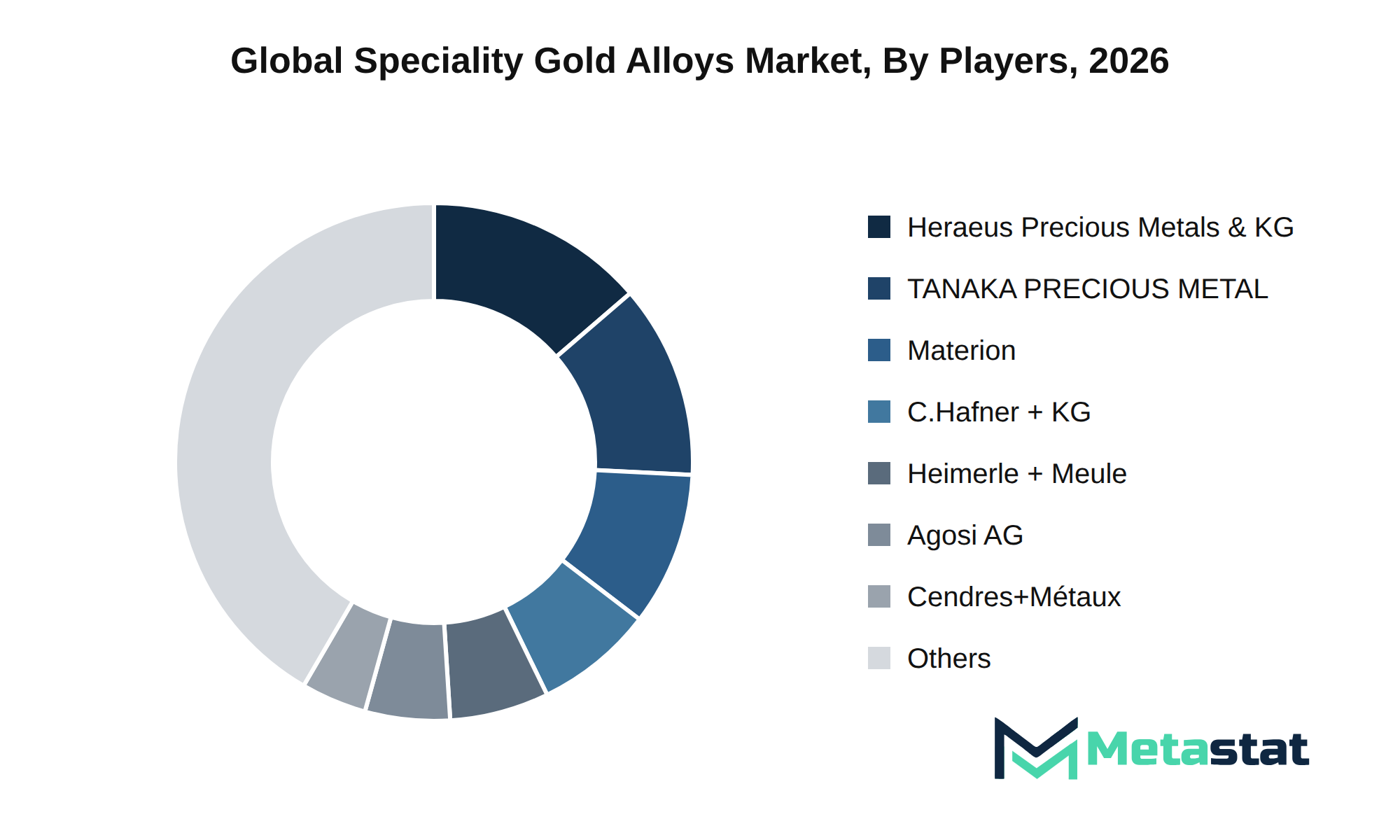
Competition in the Speciality Gold Alloys market is defined by depth of technical expertise, breadth of product lines, and capability to address demanding end-use requirements in jewellery, electronics, medical devices, and precision manufacturing. Buyers in this sector focus on price stability, consistency in alloy quality, and the ability to meet certification standards relevant to their industries. Customization of alloy composition and product form is a key differentiator, particularly for clients in electronics and medical device segments, where exacting tolerances and material purity are crucial.
Larger players including TANAKA PRECIOUS METAL GROUP Co., Ltd. and Heraeus Precious Metals GmbH & Co. KG engage in continuous product development, addressing the specific needs of both high-end jewellery manufacturers and advanced technology sectors. Companies including C.Hafner GmbH + Co. KG provide a diversified offering of casting grain, ingots, and semifinished forms to serve a range of industrial and decorative uses. Materion Corporation and Indium Corporation focus on supplying alloys for electronics and semiconductor applications, where reliability and traceability drive purchasing decisions.
Brand reputation and long-term supply reliability influence procurement, particularly for jewellery and watchmaking clients, which account for the largest end-use segment by revenue. In the growing medical devices and electronics sectors, the market rewards suppliers that deliver both technical support and strict documentation around material origin and performance. Companies including Agosi AG and Cendres+Métaux SA emphasize precise manufacturing controls and compliance with international standards, supporting their positions among demanding industrial customers.
This forecast for the Speciality Gold Alloys market depends most on sustained demand among jewellery and watchmaking buyers, which account for the largest end-use segment. Growth in this sector is driven by demographic shifts and rising disposable incomes in Asia Pacific, a region projected to remain the largest contributor to market value. Suppliers benefit from product innovation in medical devices and electronics, with medical devices (excluding dental) expected to record the fastest growth rate among end-use industries. The ability to supply high-purity and custom alloy compositions supports penetration into advanced electronics and medical applications, influencing both volume and average selling price.
Regulatory changes in key regions, especially around responsible sourcing in Europe and North America, shape supply chain strategies and affect procurement costs for manufacturers. The primary risk to this outlook is volatility in gold prices, which raises input costs for producers and restricts purchasing among industrial and consumer buyers. Any prolonged price increases for raw gold or disruptions in regional supply chains introduce uncertainty for both segment expansion and overall market growth over the forecast period. The market is expected to benefit from ongoing investments in material science and manufacturing technology, provided cost pressures and supply risks are managed effectively.
By Product Form: Casting Grain & Ingots, Sheet, Strip & Foil, Wire & Rod, Preforms & Blanks, Powders, Pastes, Tubing, Sputtering Targets, Others (Meshes, Evaporation Pellets)
By End-Use Industry: Jewellery & Watchmaking, Electronics & Semiconductors, Dental, Medical Devices (Excluding Dental), Aerospace & Defence, Automotive, Industrial Machinery & Instrumentation, Minting, Others (Decorative Artware)
The report strategically identifies and profiles the key market players and analyses their core competencies in each sub-segment of the Speciality Gold Alloys market.
Report Attributes | Details |
Study Period | 2021-2033 |
Base Year | 2025 |
Estimated Year | 2026 |
Forecast Period | 2026-2033 |
Historical Period | 2021-2025 |
Growth Rate | CAGR 3.4% from 2026 to 2033 |
Revenue Unit | USD billion |
Segmentation | |
By Region | North America (By Gold Content (Fineness), Product Form, End-Use Industry, and Country)
|
| |
Asia Pacific (By Gold Content (Fineness), Product Form, End-Use Industry, and Country)
| |
| |
Middle East and Africa (By Gold Content (Fineness), Product Form, End-Use Industry, and Country)
|
Find answers to common questions about this report
The Speciality Gold Alloys market size was valued at USD 120.2 billion in 2025.
The projected CAGR is 3.4% for the forecast period from 2026 to 2033.
The North America Speciality Gold Alloys market size is estimated to reach USD 19.4 billion by 2033.
Casting Grain & Ingots leads by product form, reaching USD 80.5 billion in 2033, the highest among all type segments. This segment outpaces Sheet, Strip & Foil and Wire & Rod in forecast value.
Expanding purchasing power and shifting consumer preferences in Asia Pacific drive growth in jewellery and watchmaking, while rising demand for biocompatible and reliable alloys in medical devices accelerates adoption among manufacturers serving regulated healthcare sectors.
High gold prices restrict adoption among jewellery and watchmaking manufacturers, particularly in segments with lower margins or high price sensitivity. Strict purity requirements increase supplier costs, making it challenging to recover expenses in markets where buyers demand reliability but remain highly price sensitive.
Healthcare providers are increasing adoption due to demand for gold alloys with biocompatibility, corrosion resistance, and mechanical reliability in medical devices. Suppliers who deliver controlled trace element profiles and support regulatory requirements are securing opportunities for volume growth and premium pricing.
The Speciality Gold Alloys market is estimated to reach a valuation of USD 157.1 billion by 2033.
Companies active in the industry include TANAKA PRECIOUS METAL GROUP Co., Ltd., Heraeus Precious Metals GmbH & Co. KG, C.Hafner GmbH + Co. KG, Heimerle + Meule GmbH, Agosi AG, Cendres+Métaux SA, and Materion Corporation.
Medical devices excluding dental applications represent the fastest-growing end-use segment, with a projected compound annual growth rate of 10.4 percent through 2033.
The analysts below cover Chemicals and Materials research at Metastat Insights.
LEAD ANALYST
Utkarsh Khirodkar is a Lead Market Research Analyst at MetaStat Insight, specializing in market intelligence, technology sector assessments, and competitive strategy.

INDUSTRY CONSULTANT - CHEMICALS & ADVANCED MATERIALS
Chemicals and Materials · Machinery & Equipment · Packaging
Amit Gadhekar Consultant for Chemicals and Materials at MetaStat Insight, directing sector-specific intelligence, research, and strategic consulting across global chemical and processing markets.
Integrating zero-trust access controls across legacy electronic health record systems involves complex compliance overhead. Team produced an analysis that clearly separated identity governance and administration tools from privileged access management platforms. Their evaluation of HIPAA and GDPR compliance features across cloud native solutions gave our architecture group clear baseline criteria. The custom data request regarding biometric authentication adoption in hospital networks was returned promptly with clear documentation.
Evaluating calorific value requirements and air permit compliance across municipal waste facilities requires localized data. Metastat Insight structured their analysis around operational throughput capacity and feedstock composition variations in Latin America and Eastern Europe. Their competitive mapping of sorting equipment vendors helped clarify technology differences between optical separators and heavy media systems. The study provided an objective baseline during our capital expenditure reviews.
Decarbonizing industrial thermal processes hinges on refrigerant regulations and compressor efficiency limits. Metastat Insights delivered a thorough market analysis that evaluated natural refrigerants like CO2 and hydrocarbons against synthetic low-GWP alternatives. The breakdown of utility incentives and grid capacity constraints across key European manufacturing hubs offered valuable perspective. The follow-up conversation with their sector analysts addressed our specific questions on mechanical vapor recompression systems efficiently.
Explore related market intelligence reports worth reading alongside this one.
Starting from
$2950