
LEAD ANALYST
Utkarsh Khirodkar is a Lead Market Research Analyst at MetaStat Insight, specializing in market intelligence, technology sector assessments, and competitive strategy.

Global Gold Nanoparticles Market Size, Share, By Product Type (Gold Nanospheres, Gold Nanorods, Gold Nanoshells, Gold Nanostars and NanoUrchins, Gold Nanoplates, Others (Gold Nanocubes, Gold Nanobipyramids, Gold Nanocages, Gold Nanowires)), By Particle Size (Up to 20 nm, Above 20 nm to 50 nm, Above 50 nm to 100 nm, Above 100 nm), By Surface Functionalization (Non-Functionalized Gold Nanoparticles, Chemically Functionalized Gold Nanoparticles and Biomolecule-Conjugated Gold Nanoparticles), By Application (Diagnostic Assays and Sensing, Bioimaging and Microscopy, Drug and Gene Delivery, Photothermal Therapy, Catalysis, Electrical Conduction, Optical and Photonic Devices, Cosmetic Formulation, Others (Radiotherapy Enhancement and Antimicrobial Treatment)), Industry Analysis, Growth, Trends, and Forecast, 2026-2033
Report ID
MSI-5434
Published
October, 2026
Pages
267 Pages
Format
Historical
Base year
Forecast
Forecast period
Report Details
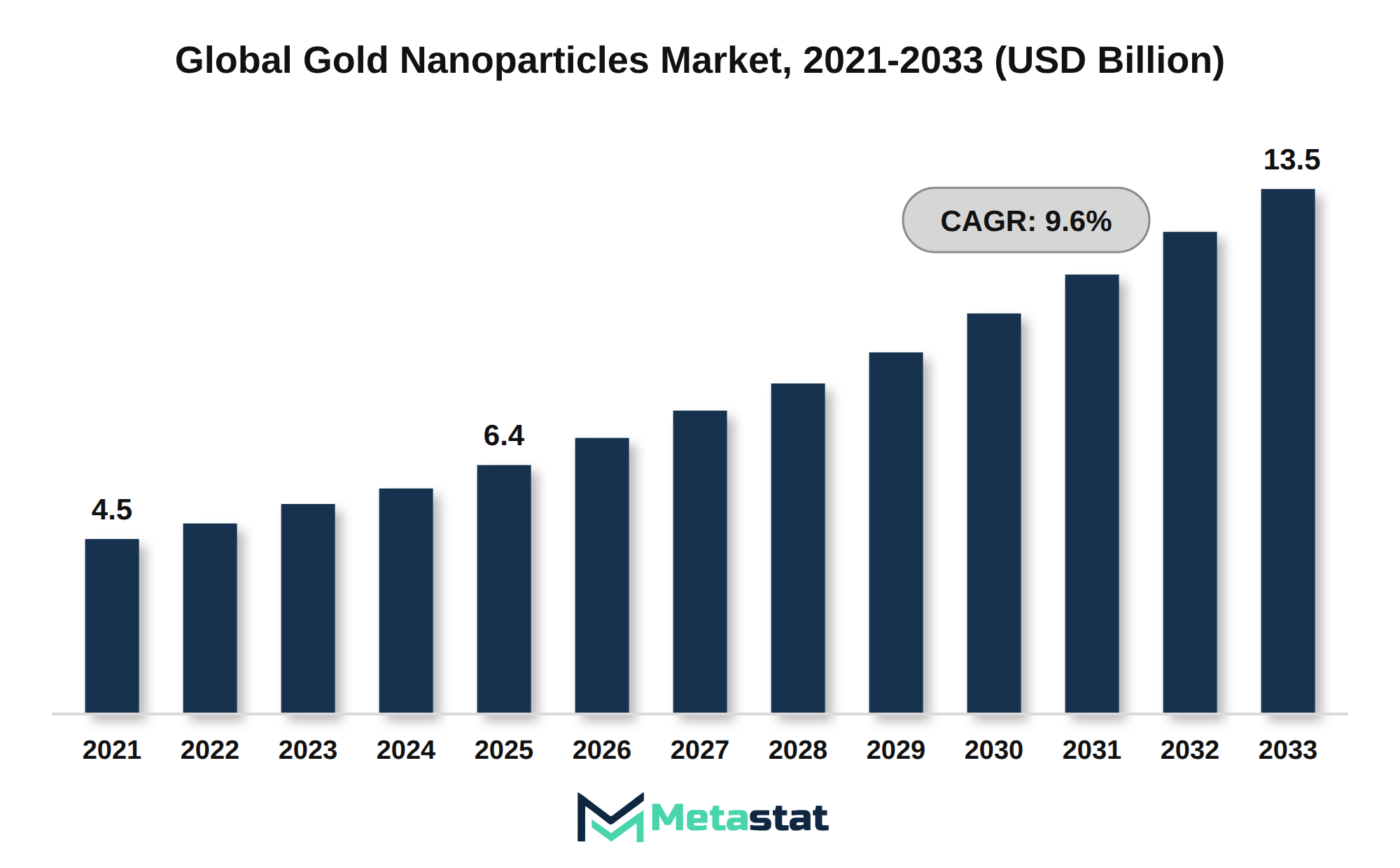
Market Valuation: Valued at $6.4 Billion in 2025, projected to reach $13.5 Billion by 2033 at a 9.6% CAGR.
Dominant Segment: Gold Nanospheres lead, valued at USD 4 billion in 2026 and projected to reach USD 7 billion by 2033, driven by their established use in diagnostic assays and sensing technologies requiring stable, reproducible optical properties.
Geographic Lead: North America holds 35.8% of the market in 2025, reflecting advanced research infrastructure, established healthcare networks, and strong investment in medical technologies.
Fastest-Growing Application: Photothermal therapy is the fastest-growing application, advancing at a CAGR of 12.5% through 2033 as demand rises for minimally invasive cancer treatments using gold nanorods.
What's Inside: This report includes segmentation by product type, particle size, surface functionalization, and application, with market sizing and growth rates to 2033, plus regional analysis and competitive landscape.
Choose Your License
Global Gold Nanoparticles Market
The global Gold Nanoparticles market was valued at USD 6.4 billion in 2025 and is projected to reach USD 13.5 billion by 2033, growing at a CAGR of 9.6% over the forecast period.
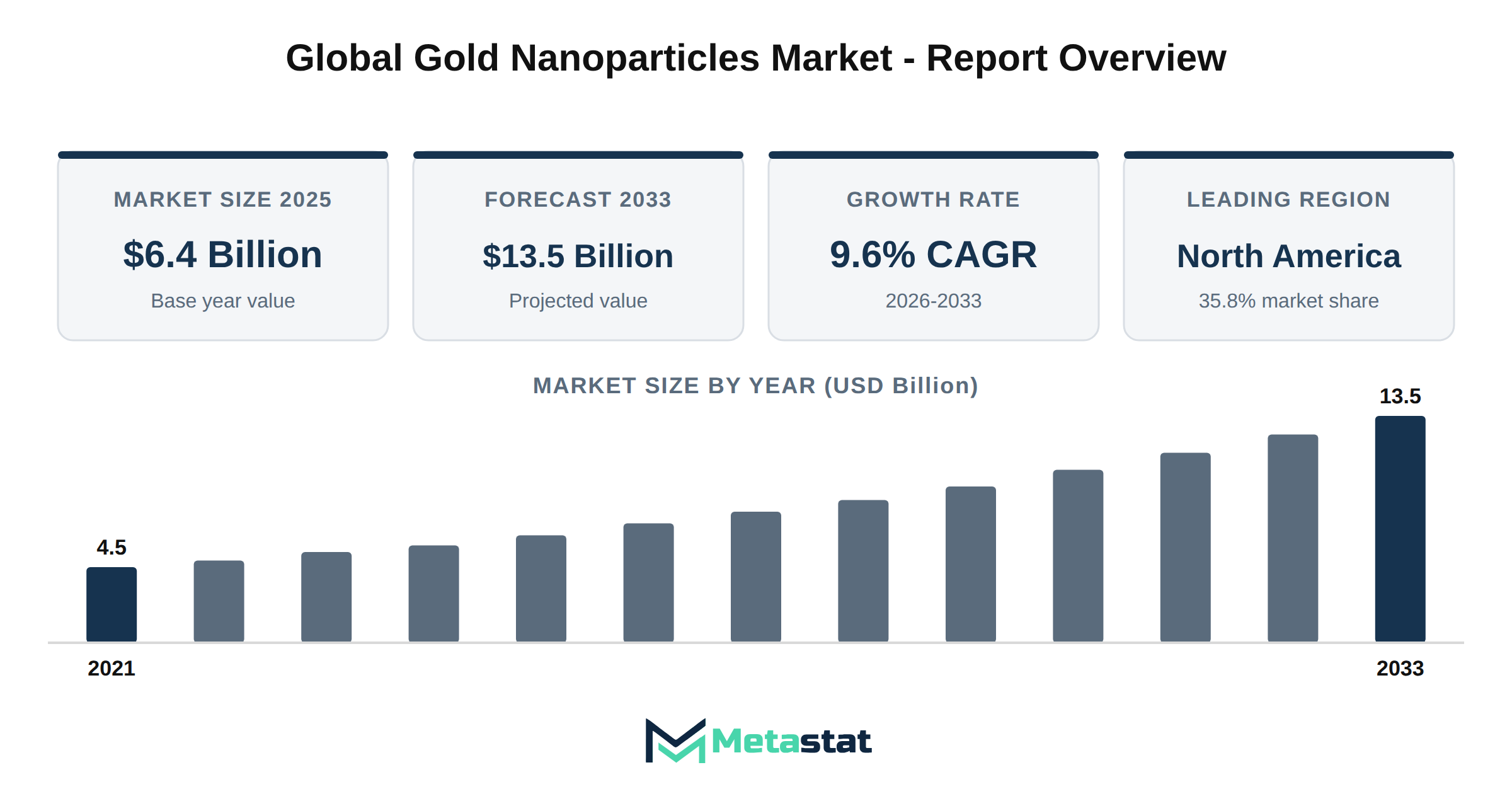
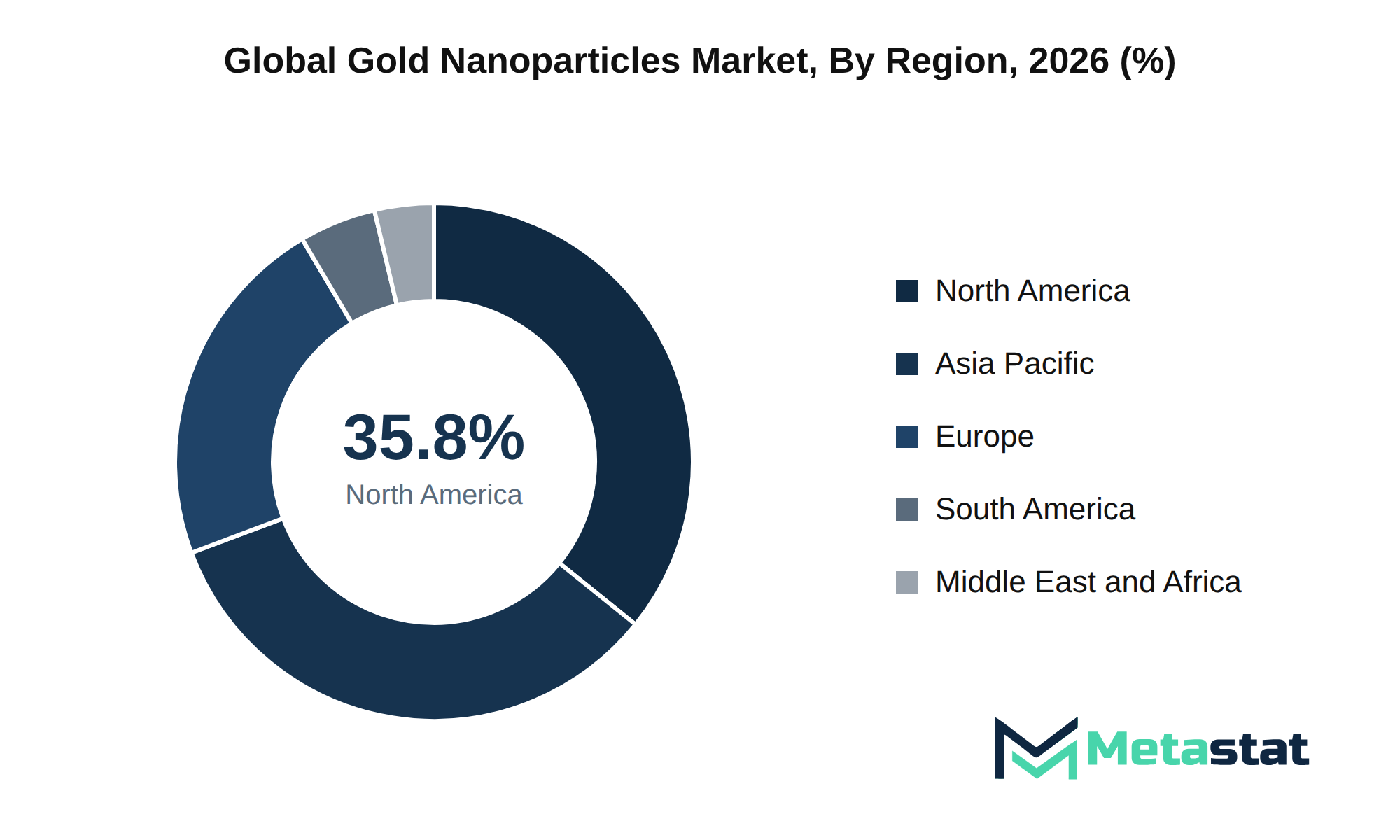
The Gold Nanoparticles market covers engineered nanomaterials produced using gold, primarily replacing traditional colloidal gold and other inorganic nanoparticles in diagnostics, bioimaging, drug delivery, and photothermal therapies. Buyers include diagnostic laboratories, biotechnology firms, and pharmaceutical manufacturers, driven by the demand for enhanced sensitivity and specificity in analytical applications. North America holds 35.8% of the market in 2025, with the US leading in 2026. This regional strength reflects the concentration of advanced research infrastructure, established healthcare networks, and active investment in novel medical technologies.
Gold Nanospheres represent the segment with the most value, supported by their established role in diagnostic assays and sensing technologies. Their spherical morphology enables predictable optical properties and surface modification, making them a preferred choice among research institutions and assay developers seeking reproducibility and scalability. In contrast, alternative shapes including nanorods and nanostars offer distinct optical and functional advantages but currently contribute less to overall value due to limited commercial adoption and higher production complexity.
Demand growth in the Gold Nanoparticles market is driven primarily by the expansion of diagnostic assays and sensing applications across clinical immunodiagnostics, where the superior plasmonic properties of gold nanoparticles enable ultrasensitive detection and quantification of biomolecules. This trend translates into increased purchasing by clinical laboratories and life sciences companies seeking to improve diagnostic accuracy and throughput. Investment in rapid test development and personalized medicine continues to increase the strategic value of these nanoparticles across the healthcare and biotechnology industries.
Buyers in research, diagnostics, and therapeutics invest in the Gold Nanoparticles market to leverage its unique optical and surface properties, which support high-sensitivity assays and targeted drug delivery solutions. These nanoparticles replace conventional materials in precision applications. Stability, biocompatibility, and tunable particle size drive adoption. Advanced healthcare systems, pharmaceutical developers, and academic labs account for the largest share of spending, supported by ongoing innovation in blood collection tubes for liquid biopsy, molecular diagnostics, and personalized medicine.
This regional dominance reflects the concentration of biotechnology firms, strong funding for life sciences, and established clinical research infrastructure. Asia Pacific follows at 33.5%. Rising healthcare investments and expanding R&D activity in China, Japan, and India influence regional demand.
Among product types, Gold Nanospheres account for the highest value, reflecting broad applicability in diagnostics and sensing platforms. Demand for rapid, reliable diagnostic assays drives growth, with sensitivity and reproducibility influencing purchasing decisions in clinical and laboratory environments.
Lateral flow diagnostic technologies are driving a pronounced shift in demand for engineered gold nanoparticles, reflecting a surge in point-of-care and rapid testing solutions across healthcare and life sciences. These applications rely on gold nanoparticles for their strong optical properties, stability, and compatibility with biomolecule conjugation, which underpin sensitive and reliable detection in lateral flow assays. The market is seeing growing orders from diagnostic kit manufacturers seeking batch-to-batch consistency and precise particle size distribution to support the accuracy of test results. These rapid testing results are increasingly transmitted through digital patient engagement solutions to streamline outpatient monitoring and decentralized clinical management.
Diagnostic assays and sensing applications form the largest application segment, with a projected rise from USD 2.6 billion in 2026 to USD 4.7 billion by 2033, supported by a 9.1% CAGR. This sustained growth is linked to the widespread adoption of lateral flow diagnostics in infectious disease screening, pregnancy testing, drug-of-abuse detection, and environmental monitoring. Demand for rapid diagnostics is strengthening procurement of both chemically functionalized and biomolecule-conjugated gold nanoparticles, since these forms provide improved binding efficiency and specificity for biomarkers. Similar high-affinity surface modifications are central to isolating rare cellular targets in circulating tumor cell diagnostics.
Suppliers that prioritize scalable production and advanced surface functionalization capabilities are capturing increased repeat business from established diagnostic brands. The market is experiencing intensified technical requirements from buyers, with traceability, regulatory compliance, and customization emerging to distinguish commercial offerings. This trend is expected to reinforce the relevance of gold nanoparticles in the expanding lateral flow diagnostics sector, supporting premium pricing and long-term development partnerships between material producers and diagnostic innovators.
Purchase decisions for surface functionalized gold nanoparticles in drug delivery are increasingly shaped by the ability to achieve targeted therapeutic outcomes while controlling total acquisition costs. Pharmaceutical and biotechnology companies evaluating in vitro delivery vehicles against standardized tissue culture reagents select functionalized nanoparticles based on the specificity and compatibility of surface modifications, which directly affect the efficiency and safety of drug delivery to intended sites. Chemically functionalized gold nanoparticles are projected to reach USD 5.3 billion by 2033, reflecting their growing adoption in precision medicine applications where customization is a requirement for clinical pipelines.
Buyers often negotiate multi-phase contracts that specify the type and density of functional groups required for conjugation with drugs or biomolecules. These contracts incorporate performance milestones related to targeting efficacy and batch-to-batch consistency, allowing buyers to align payments with validated delivery outcomes. Market participants develop pricing models that account for the complexity of functionalization, demand for specialized reagents, and manufacturing scalability. This individualized approach favors suppliers capable of advanced customization and reliable supply at commercial scale. Higher average transaction values for functionalized products compared to non-functionalized alternatives result from this trend. In therapeutic portfolios, these proprietary carrier modifications offer pharmaceutical developers ways to reformulate active compounds and create differentiated alternatives to conventional branded generics.
Buyers in the market increasingly partner with specialized pharmaceutical CDMO organizations through long-term supply agreements that include technical support and process validation services, helping reduce the risk of regulatory setbacks and delays in clinical development. This shift toward comprehensive, outcome-oriented procurement raises the commercial threshold for suppliers, incentivizing investment in functionalization technology, quality management, and collaborative development with end users.
Synthesis scale-up remains a critical inflection point for buyers in the Gold Nanoparticles market, particularly those in diagnostic assay manufacturing and drug delivery system development. When buyers move from laboratory-scale batches to industrial production, the operational and economic pressures change sharply. Process reproducibility, batch-to-batch consistency, and analytical screening through drug discovery high throughput mass spectrometry become essential for meeting the quality and volume requirements of healthcare, biotechnology, and research buyers. In the case of diagnostic assays and sensing, which is projected to reach USD 4.7 billion by 2033, consistent particle size distribution and surface functionalization are necessary to maintain assay sensitivity and regulatory compliance. Any fluctuation in these parameters during scale-up risks product rejection and lost contracts for suppliers, driving up costs for buyers who rely on dependable performance in high-throughput settings.
Production cost control is a persistent concern for procurement teams. The transition to high-volume manufacturing introduces challenges in raw material sourcing, waste management, and process automation. Buyers in the Gold Nanoparticles market increasingly seek suppliers capable of delivering on-spec materials at a stable price to avoid unplanned cost overruns during product launches or clinical trials. Many procurement teams contract external laboratory services to perform third-party physicochemical validation and biosafety testing on newly scaled batches. Many procurement teams contract external laboratory services to perform third-party physicochemical validation and biosafety testing on newly scaled batches. Cost pressures are compounded by the need for specialized equipment and highly trained technical staff, particularly for chemically functionalized and biomolecule-conjugated nanoparticles. Suppliers meeting these requirements attract long-term partnerships and preferred supplier agreements, strengthening their position in a market where reliability and cost-effectiveness influence purchase decisions more than price alone.
Particle size plays a decisive role in determining the functional performance of gold nanoparticles within target applications. Distinct size ranges support unique optical, catalytic, and biological properties, making the choice of particle size a central factor in product development and end-use selection. In advanced bioimaging facilities, characterization equipment often relies on medical helium to sustain cryogenic superconductivity in MRI instruments while nanoparticles provide complementary optical contrast. In advanced bioimaging facilities, characterization equipment often relies on medical helium to sustain cryogenic superconductivity in MRI instruments while nanoparticles provide complementary optical contrast. In the market, demand for particles up to 20 nm continues to accelerate, with this segment expected to double in value from USD 2.3 billion in 2026 to USD 4.6 billion in 2033, reflecting a CAGR of 10.5%. Buyers in diagnostics, sensing, and bioimaging prioritize smaller particles for their superior dispersibility and enhanced surface-to-volume ratios, which improve sensitivity and enable more precise molecular targeting. Larger particles, including those above 20 nm to 50 nm, are projected to reach USD 5.6 billion by 2033, favored in applications where stability and higher payload are critical, including drug delivery and certain photonic devices.
This differentiation by particle size shapes not only technical feasibility but the commercial attractiveness of formulations and finished products. Suppliers who tailor their offerings to match the evolving size-specific requirements of medical diagnostics or nano-enabled therapies capture greater value and build deeper customer relationships. While the market moves toward application-driven innovation, particle size selection becomes a strategic lever for both differentiation and premium pricing.
Growth in theranostics is accelerating demand for advanced gold nanoparticle formulations, with buyers in oncology and molecular imaging seeking integrated diagnostic and therapeutic capabilities. Research organizations and healthcare facilities increasingly adopt gold nanoparticle-based platforms that deliver real-time imaging and targeted therapy, reducing the timeline between disease detection and intervention. The precise surface engineering options available in the market enable functionalization for selective tumor targeting and efficient drug payload delivery, drawing investment from precision medicine initiatives. This trend has strengthened the clinical value proposition for gold nanoparticles by supporting improved treatment outcomes and streamlined care pathways. The market is benefiting from sustained interest in multimodal agents that drive both higher volume purchasing and premium pricing for innovative product types.
Intensifying regulatory scrutiny on nanomaterial safety restricts adoption among pharmaceutical and clinical diagnostics buyers. Approvals for gold nanoparticle-enabled therapeutics and diagnostics face extended review cycles due to the requirement for robust biocompatibility, toxicity, and environmental impact data. This affects the pace at which healthcare providers and medical device developers integrate new gold nanoparticle-based assays and delivery systems into commercial portfolios. For smaller biotechnology firms, the added compliance workload inflates development timelines and costs, dampening their willingness to commit to large-scale orders or new product launches. Evolving oversight standards lead buyers in regulated markets to delay procurement decisions or opt for established alternatives with clearer compliance pathways. These regulatory hurdles contribute to measured uptake in key segments, limiting top-line growth for suppliers and narrowing the window for rapid market entry. In the near term, sustained regulatory complexity is expected to cap demand growth for new clinical and therapeutic applications.
Fluctuating gold prices exert persistent pressure on supplier margins within the Gold Nanoparticles market. Changes in the cost of gold directly impact profit structure for manufacturers, particularly those with long-term fixed-price contracts or commitments in diagnostics and therapeutics. Suppliers often absorb input cost spikes, narrowing their ability to invest in process optimization or expand capacity. This financial strain prompts several companies to adopt hedging strategies and lean manufacturing principles to stabilize returns, but these measures only partially offset price swings. The market sees heightened competition for affordable raw gold, pushing producers to prioritize efficiency and streamline procurement. Suppliers who fail to contain input costs sacrifice pricing flexibility or risk losing business to rivals with stronger cost controls. This margin compression restricts reinvestment in research or new product development, creating an additional hurdle for innovation.
Photothermal therapy is positioned the fastest-growing application, supported by a forecast CAGR of 12.5 percent through 2033. This segment stands out for its capacity to address emerging needs in minimally invasive cancer treatment, driving uptake among oncology research institutes, specialized hospitals, and biotech innovators. Gold nanorods serve this application with precise light absorption and heat generation capabilities, making them well-suited for targeted tumor ablation. Suppliers focusing on gold nanorod formulations are addressing a market pocket with strong demand, particularly where conventional treatments leave gaps in efficacy or patient safety. Intensifying interest in therapies that combine diagnosis with non-invasive intervention supports robust expansion in this segment. Specialized photothermal protocols create pathways for new entrants and established suppliers to secure higher-margin opportunities in the clinical therapeutics domain.
The Global Gold Nanoparticles market is segmented based on Product Type, Particle Size, Surface Functionalization, and Application.
Valued at USD 4 billion in 2026 and projected to reach USD 7 billion by 2033, this segment advances at a CAGR of 8.4 percent through the forecast period. Nanosphere products are primarily used by manufacturers of diagnostic assays, bioimaging solutions, and environmental sensors that require stable, monodisperse particles for consistent optical performance. Demand is driven by high adoption in quantitative diagnostics and research, where uniformity and ease of surface modification are critical for sensitivity and reproducibility. Compared to gold nanorods, which are projected to grow faster at 11.3 percent CAGR, gold nanospheres reach a broader base of buyers ranging from academic research labs to established IVD companies, reflecting their versatility in established assay formats. Gold nanospheres are recognized for their cost-effective synthesis and compatibility with mass-market diagnostics, which positions them as the entry point for buyers transitioning from traditional colloidal gold. Growth is supported by suppliers focused on scale and supply consistency to meet volume demand in this segment.
Gold Nanorods segment is estimated to reach USD 3 billion by 2033, at a CAGR of 11.3% during the forecast period. Gold nanorods serve advanced biomedical imaging and photothermal therapy applications, favored by researchers and clinical developers for their tunable optical absorption and strong photothermal conversion. Demand from oncology research, particularly for targeted cancer therapies and next-generation diagnostics, is expanding due to gold nanorods providing enhanced sensitivity and precise biological targeting compared to traditional nanospheres. The segment’s growth outpaces gold nanospheres, which hold a lower CAGR of 8.4%, driven by strong interest from life sciences and medical device innovators seeking higher-performance materials for multiplexed sensing and imaging platforms. Higher production complexity and stricter quality requirements for rod-shaped particles differentiate gold nanorods, resulting in premium pricing and a buyer base concentrated in high-value medical and analytical research. Suppliers in the market invest in specialized synthesis and surface modification techniques to capture value from this faster-growing segment, while buyers focus on applications demanding robust photothermal response and functionalization flexibility.
Gold Nanoshells segment is expected to reach USD 1.4 billion by 2033. These nanoparticles feature a dielectric core with a thin gold shell, enabling strong tunable plasmonic resonance and efficient photothermal conversion. Researchers and medical device manufacturers adopt gold nanoshells for targeted cancer therapies and precision imaging, driven by the segment’s ability to enable minimally invasive treatment protocols. Compared to gold nanospheres and nanorods, gold nanoshells offer unique advantages in absorbing near-infrared light, which penetrates biological tissues more effectively. This performance characteristic positions gold nanoshells for specialized applications where conventional gold nanoparticle types cannot achieve the required efficacy. Unlike gold nanorods, which are projected to grow faster in the market with a CAGR of 11.3%, gold nanoshells address buyers prioritizing advanced optical properties over rapid adoption. Pricing reflects this differentiation, with gold nanoshells typically commanding a premium for their advanced engineering and application-specific performance within this segment.
Projected to grow at a CAGR of 12.1% during the forecast period, Gold Nanostars and NanoUrchins are shaped by their unique multi-branched surfaces, which increase their electromagnetic field enhancement. This property supports their use in advanced applications including surface-enhanced Raman scattering (SERS) and photothermal therapy, where heightened sensitivity and strong light-to-heat conversion are critical. Buyers in advanced research laboratories and biotech firms prioritize these nanostructures for developing next-generation biosensors and therapeutic agents targeting oncology and infectious disease diagnostics. This sub-segment outpaces Gold Nanorods and Nanospheres in growth, with its 12.1% CAGR reflecting demand for high-performance plasmonic tools. Superior sensitivity in detection platforms drives adoption, while cost remains higher than for nanospheres, positioning Gold Nanostars and NanoUrchins as a premium choice for applications where precision and enhanced optical properties outweigh budget considerations.
Gold Nanoplates are two-dimensional nanostructures characterized by flat, plate-like morphology that provide distinct plasmonic properties compared to spherical or rod-shaped particles. These structures are most frequently used by research institutions and device manufacturers focused on optical and photonic devices, where their shape supports highly tunable surface plasmon resonance and refined light-matter interactions. In the market, nanoplates appeal to buyers seeking materials for applications requiring precise control over optical properties, especially in surface-enhanced spectroscopies and next-generation biosensors. Demand for Gold Nanoplates differs from faster-growing segments including Gold Nanorods, which advance at a CAGR of 11.3%, and Gold Nanostars, which outpace the average with a CAGR of 12.1%. The specialized optical performance and more complex synthesis processes often position nanoplates at a higher price point, attracting a subset of buyers with advanced technical requirements and greater sensitivity to performance rather than volume pricing.
Gold nanocubes, nanobipyramids, nanocages, and nanowires stand out for their unique shape-controlled properties, which enable applications in catalysis, biosensing, photonic devices, and advanced imaging. Researchers and developers in photonic and sensor manufacturing drive adoption, leveraging the distinct plasmonic and surface area characteristics that differentiate these structures from more common nanospheres and nanorods. The market benefits from the ability of these forms to deliver highly tunable optical responses and enhanced catalytic efficiency, supporting specialized uses where conventional morphologies deliver lower performance. Price sensitivity is higher in this segment, attributed to the complexity of synthesis and the limited scale of production compared to nanospheres, which reach higher volumes and broader commercial adoption. While overall demand is shaped by diagnostics and therapeutic applications, the “Others” segment draws investment from innovation-driven buyers seeking bespoke material properties, despite higher input costs and less mature supply chains.
Valued at USD 2.3 billion in 2026 and projected to reach USD 4.6 billion by 2033, the Up to 20 nm particle size segment advances at a CAGR of 10.5 percent over the forecast period. These ultra-small particles are favored for use in diagnostic assays and sensing technologies, where their high surface area to volume ratio enables sensitive detection and efficient binding with biomolecules. Buyers in clinical diagnostics and molecular biology labs prioritize this segment due to precision requirements for rapid, high-throughput testing platforms. The segment’s faster growth relative to Above 100 nm, which posts a CAGR of 8.1 percent, reflects sustained investment in miniaturized biosensors and next-generation lateral flow devices. Improvements in synthesis reproducibility for particles under 20 nm enable suppliers to address stringent quality specifications in regulated healthcare settings. High purity and consistency in this size range position the segment for applications requiring reliable optical and electronic properties, supporting pricing premiums in the market.
Estimated to reach USD 5.6 billion by 2033 and advancing at a CAGR of 9.8 percent, the Above 20 nm to 50 nm segment stands out for its widespread adoption by users in bioimaging, sensing, and therapy development. Research institutions and diagnostics manufacturers select this particle size for its ability to balance colloidal stability with strong optical properties that facilitate sensitive biological detections and multiplexed imaging. The segment’s demand is strengthened by emerging applications in point-of-care diagnostics and personalized medicine, where intermediate particle sizes improve signal intensity and biocompatibility. Compared to the Up to 20 nm segment, which is projected to grow at a CAGR of 10.5 percent, Above 20 nm to 50 nm advances at a slightly slower pace, reflecting its established role in mature applications rather than rapid expansion in experimental platforms. Pricing remains higher than larger size categories, with this range supporting specialized synthesis protocols and tighter quality requirements. Suppliers in the Gold Nanoparticles market address evolving performance standards by refining shape control and functionalization processes for this size range.
Above 50 nm to 100 nm segment is expected to reach USD 2.6 billion by 2033. This particle size range serves in applications where enhanced scattering, specific surface area, and signal amplification are priorities, including advanced diagnostic assays, microscopy, and certain industrial coatings. Buyers for this segment include diagnostic kit manufacturers and research laboratories seeking improved sensitivity in imaging and detection platforms. In contrast to the "Up to 20 nm" and "Above 20 nm to 50 nm" segments, the 50 nm to 100 nm particles cater to applications requiring larger surface area for conjugation or labeling, yet they advance at a slower pace: no CAGR is provided for this segment, while "Up to 20 nm" is forecast to grow at 10.5% and "Above 20 nm to 50 nm" at 9.8%. Lower relative growth in this segment results from more established adoption in traditional diagnostics, while emerging fields in the market are driving faster expansion in smaller particle categories. Price sensitivity and evolving end-user preferences shape competitive dynamics for suppliers in this segment.
Above 100 nm segment is projected to grow at a CAGR of 8.1% during the forecast period. Buyers in industrial catalysis, electronic inks, and high-throughput filtration processes select these larger particles for their enhanced scattering, conductivity, and robust stability in bulk-phase applications. Compared to smaller particle size segments, these nanoparticles often serve end-users focused on engineering applications where aggregation tolerance and higher payload capacity outweigh the need for precise bio-interactions. This segment is positioned at a slower pace than the Up to 20 nm segment, which advances at 10.5%, reflecting distinct user priorities. Product cost per gram typically trends lower for larger particles, supporting adoption in cost-sensitive manufacturing environments. While biomedicine buyers turn to smaller sizes for cellular uptake and imaging, industrial users drive stable demand for Above 100 nm, particularly in emerging applications for optical coatings and electromagnetic shielding. Growth in this segment reflects ongoing diversification across end-use domains demanding robust, scalable nanomaterials.
Valued at USD 2.5 billion in 2026 and projected to reach USD 4.2 billion by 2033, this segment advances at a CAGR of 7.7 percent during the forecast period. Non-functionalized gold nanoparticles are primarily used by research laboratories and diagnostic kit manufacturers seeking basic colloidal gold for immunoassays, microscopy, and surface-enhanced analytical applications. These particles attract buyers prioritizing ease of integration, low surface reactivity, and cost efficiency over advanced targeting or conjugation features. Growth in this segment is supported by steady demand in routine clinical diagnostics and academic research, where functional modification is not required for the intended application. Compared to chemically functionalized alternatives, non-functionalized gold nanoparticles exhibit slower growth, with the latter projected at a CAGR of 10.1 percent through 2033. Pricing remains a key differentiator, with non-functionalized products purchased by buyers with budget-sensitive procurement cycles who value broad compatibility and scalability. Uptake in this segment is driven by established protocols and affordability, which influence preference over higher-value, specialized offerings.
Estimated to reach USD 5.3 billion by 2033 at a CAGR of 10.1 percent, this segment captures accelerating demand from buyers seeking customized surface properties for targeted applications. Chemically functionalized gold nanoparticles are widely used by biotechnology firms and research laboratories, particularly in advanced diagnostics, biosensing, and drug delivery systems. The market sees these particles increasingly favored for their tunable surface chemistry, which supports precise biomolecule attachment and enhances interaction with specific biological targets. Demand rises with researchers and developers prioritizing platforms that offer selective binding and improved biocompatibility in clinical and analytical settings. Compared to non-functionalized options, this segment achieves a faster growth rate - 10.1 percent versus 7.7 percent CAGR - reflecting higher value addition and greater adoption in specialized assays. Innovations in chemical functionalization drive both application breadth and pricing premiums, especially with buyers seeking solutions that streamline integration into multiplexed diagnostic platforms and emerging therapeutic approaches.
Expected to reach USD 3.9 billion by 2033, biomolecule-conjugated gold nanoparticles are engineered with surface-bound proteins, peptides, antibodies, or nucleic acids to enable targeted bio-recognition in medical and research settings. These nanoparticles deliver diagnostic and therapeutic functions in clinical diagnostics, biosensing, and targeted drug delivery applications, primarily adopted by biotechnology firms, pharmaceutical companies, and advanced medical laboratories. Strong demand in this segment is driven by the push for high-sensitivity diagnostic assays and the rising adoption of precision medicine, with biomolecule conjugation supporting selective binding to biomarkers at the cellular and molecular level. Compared to non-functionalized and chemically functionalized segments, this group appeals to buyers seeking enhanced specificity and biocompatibility for research and commercial diagnostic tools. While the Chemically Functionalized Gold Nanoparticles segment is projected to reach USD 5.3 billion by 2033 at a higher CAGR, biomolecule-conjugated types remain favored in applications where biological recognition and targeting are essential, influencing pricing and procurement strategies in this segment.
This segment serves clinical laboratories, in-vitro diagnostics firms, and researchers who require highly sensitive and specific detection platforms for biomarkers, pathogens, and molecular targets. Expanding use of gold nanoparticles for rapid point-of-care diagnostics and multiplexed biosensor formats drives demand, with healthcare systems and life science industries prioritizing early disease detection and personalized medicine. Compared to Bioimaging and Microscopy, which advances at a CAGR of 8.9%, Diagnostic Assays and Sensing grows at a faster pace, reflecting stronger adoption by healthcare and diagnostics providers. Key buyers value the segment’s enhanced assay performance and lower detection limits, supporting premium pricing and recurring procurement cycles. The segment benefits from regulatory acceptance and growing demand for scalable, robust assay platforms, reinforcing its status as a critical driver of growth.
Estimated to reach USD 1.8 billion by 2033, bioimaging and microscopy applications rely on the unique optical properties of gold nanoparticles to enhance imaging resolution and contrast in cellular and tissue-level research. Biomedical researchers, academic laboratories, and diagnostic device manufacturers are the primary buyers, seeking higher sensitivity and specificity in imaging platforms. Uptake in this segment is driven by the integration of gold nanoparticles into advanced imaging modalities, including electron and fluorescence microscopy, which facilitate detection of molecular targets at subcellular scales. Compared with diagnostic assays and sensing, which is projected at a higher value and a CAGR of 9.1%, bioimaging and microscopy advances at a slightly slower pace with an 8.9% growth rate. This slower trajectory reflects a more specialized buyer group and higher technical requirements for particle purity and dispersibility, which impact unit pricing and purchasing criteria. Regulatory scrutiny over nanoparticle use in clinical settings influences product qualification cycles, shaping supplier portfolios in this segment.
Drug and Gene Delivery segment is expected to reach USD 1.8 billion by 2033. This segment centers on precision delivery of therapeutic molecules, including nucleic acids and small-molecule drugs, to specific cellular targets. Researchers and pharmaceutical developers drive adoption, leveraging the tunable surface chemistry and biocompatibility of gold nanoparticles to address challenges in targeted delivery, intracellular uptake, and reduced off-target effects. Compared to Diagnostic Assays and Sensing, which posts a higher absolute revenue, Drug and Gene Delivery addresses a different buyer group focused on advanced therapeutics and personalized medicine innovations. Regulatory scrutiny remains high, given the clinical translation of nanocarrier-based drugs, shaping both development timelines and cost structures in this segment. Demand is influenced by the expanding pipeline of gene therapies and the pursuit of programmable drug systems. The market sees steady interest in this segment thanks to ongoing breakthroughs in precision medicine, with adoption trends shaped by scientific advances and evolving clinical protocols.
Projected to grow at a CAGR of 12.5% during the forecast period, demand for photothermal therapy applications stands out for its rapid expansion in the Gold Nanoparticles market. Hospitals, oncology clinics, and research institutions deploy these nanoparticles to convert light into localized heat for minimally invasive cancer treatments, especially in cases where conventional therapies have failed or cause high toxicity. Interest is accelerating due to clinical trials adopting gold nanoparticles for improved tumor ablation and reduced damage to healthy tissues, supporting a shift in therapy standards. Among all application segments in the Gold Nanoparticles market, photothermal therapy is the fastest growing, outpacing diagnostic assays and sensing, which advances at a CAGR of 9.1%. This difference reflects the higher adoption rate in precision medicine, where buyers demand advanced nanomaterials for next-generation therapeutic protocols. While cost remains a consideration, the ability to enable targeted therapy with fewer side effects strengthens uptake in both developed and emerging healthcare systems.
Industrial users adopt catalysis applications of gold nanoparticles to accelerate chemical reactions in processes where high selectivity, stability, and efficiency are required. This segment draws interest from chemical manufacturing, environmental engineering, and energy sectors, where gold nanoparticles serve in catalytic roles for oxidation, hydrogenation, and pollutant decomposition. Buyers in this segment typically focus on process innovation and cost reduction through improved catalyst performance. Compared to diagnostic assay or drug delivery applications in the market, catalysis buyers prioritize particle reactivity, size distribution, and surface control over biocompatibility or optical properties. Adoption of gold nanoparticles in catalysis is increasing due to their ability to operate at lower temperatures and enable reactions that conventional catalysts find challenging. Regulatory requirements for cleaner industrial emissions further incentivize investment in advanced catalytic materials, supporting demand for this application.
Electrical conduction applications deploy gold nanoparticles to improve conductivity in printed electronics, flexible circuits, and nano-enabled sensors. Electronics manufacturers, research laboratories, and device engineers use these materials to create conductive inks, pastes, and coatings that deliver stable electrical pathways at the nanoscale. Growth in this segment is driven by the shift toward miniaturized, flexible, and wearable devices, where conventional metal conductors often fall short in processability or reliability. Gold nanoparticles offer superior resistance to oxidation and facilitate low-temperature processing, supporting their adoption in advanced electronic assemblies. Compared to segments like diagnostic assays, buyers in electrical conduction applications prioritize conductivity, thermal stability, and integration with polymers or substrates rather than biocompatibility or surface reactivity. High material cost restricts penetration in cost-sensitive electronics, but demand is strengthened by innovation in additive manufacturing and rapid prototyping. Companies active in the market, including American Elements, Nanopartz, Inc., and Sigma-Aldrich, attract interest from technology developers seeking to leverage unique conductive properties for next-generation devices. Research partnerships and customization requests distinguish purchasing patterns in this segment from others in the market.
Integration of gold nanoparticles into optical and photonic devices enables manipulation of light at the nanoscale for communications, sensors, and advanced imaging components. Researchers and engineers leverage their strong localised surface plasmon resonance and tunable optical absorption to improve sensitivity in photodetectors and enhance efficiency in miniaturised waveguides. Demand in this segment is closely linked to electronics and photonics manufacturers seeking to differentiate consumer and industrial devices with higher precision and lower energy consumption. Among application segments in the Gold Nanoparticles market, optical and photonic devices require stringent particle size uniformity and reproducibility, resulting in higher material and processing costs compared to segments like diagnostic assays. Growth in this segment is driven by rising investments in next-generation optoelectronics and telecommunications infrastructure, which support scalable, high-performance photonic products.
Integration of gold nanoparticles into cosmetic formulation addresses growing demand for advanced skincare and beauty products that claim enhanced efficacy and novel sensory experiences. Cosmetic manufacturers adopt these particles to achieve improved light reflectivity, anti-aging performance, and stability in creams, serums, and sunscreens. Brands in premium skincare and color cosmetics position products with gold nanoparticles to appeal to consumers seeking luxurious and scientifically advanced solutions, reflecting a broader trend in the market toward functional ingredients with perceived value-add. Barriers to wider adoption arise from regulatory scrutiny over safety and the cost differential compared to traditional cosmetic actives, which restricts use to mid- and high-end segments. Compared to diagnostic assays or drug delivery, cosmetic formulation is more sensitive to brand differentiation and marketing narratives rather than clinical performance, which shapes buyer profiles and use cases across the market. This segment sees adoption primarily in regions with high consumer spending and strong cosmetic brand presence, distinguishing it from application areas driven by healthcare or industrial buyers.
Radiotherapy enhancement and antimicrobial treatment represent applications where gold nanoparticles are leveraged to improve therapeutic outcomes and address challenging infections. Hospitals and research centers are primary buyers, seeking advanced materials that support higher efficacy in targeted cancer therapies or antimicrobial interventions. Demand in this sub-segment is influenced by the capacity of gold nanoparticles to function as radiosensitizers, increasing the effectiveness of radiation against tumor cells while minimizing damage to surrounding healthy tissue. In antimicrobial applications, researchers value gold nanoparticles for their potential to disrupt bacterial membranes and overcome resistance, which supports innovation across both healthcare and clinical research. Compared with segments including diagnostic assays or drug and gene delivery, radiotherapy and antimicrobial uses are driven by distinct clinical requirements and tend to attract institutions focused on advanced, experimental treatment modalities. Regulatory encouragement for novel oncological solutions and urgent healthcare needs continue to shape adoption in these specialized areas.
Based on geography, the Global Gold Nanoparticles market is divided into North America, Europe, Asia-Pacific, South America, Middle East, and Africa.
Leading research institutions and biotechnology companies in the United States drive sustained demand for advanced nanomaterials, with gold nanoparticles supporting innovations in molecular diagnostics, point-of-care testing, and targeted therapeutics. High research and development investment and a mature regulatory environment allow rapid integration of new nanoparticle formulations into clinical and laboratory workflows. Canada and Mexico strengthen the region’s supplier ecosystem through specialized manufacturing and distribution capabilities, supporting reliable market access and consistent product quality. With a projected value of USD 4.6 billion by 2033 and a 35.8 percent share of global revenue in 2025, the market in North America benefits from early adoption of next-generation bioanalytical tools and a large base of clinical laboratories seeking scalable, reproducible nanomaterial solutions. These conditions support continued expansion, particularly for applications that require high purity and regulatory compliance.
In Europe, demand for gold nanoparticles is shaped by advanced healthcare systems and a highly active research environment, particularly in Germany, France, and the UK. The region demonstrates strong investment in diagnostics, therapeutic technologies, and material sciences, supporting its position in the global market. Regulatory alignment across member states accelerates product approval processes and supports the integration of nanomaterials in medical and biotechnology applications. Collaboration between academic institutions and industry players in countries including Italy and Spain has resulted in streamlined research-to-commercialization pathways. Pharmaceutical and biotechnology companies increase their sourcing of gold nanoparticles for targeted therapies and novel diagnostic platforms, while the electronics sector leverages these materials for next-generation sensor development. Strategic efforts to comply with evolving European nanomaterial safety regulations influence supplier practices, driving higher standards in product quality and traceability. This regulatory and innovation-focused environment enables the region to expand the development and adoption of precision applications across core industries.
Asia-Pacific demand is concentrated among biotechnology, pharmaceutical, and research organizations in China, Japan, and India. Growth in this region reflects expanding investments in advanced materials R&D and a surge in local nanotechnology manufacturing capabilities. High-volume adoption by diagnostic kit producers and contract research organizations is supported by government-backed research programs and public-private partnerships, particularly in China and South Korea. The region's cost advantage in nanoparticle production and access to a skilled workforce strengthen the supplier base, making Asia-Pacific a preferred sourcing hub for buyers worldwide. The market is influenced by the proliferation of medical device manufacturers and a focus on biosensor innovation, which drives continuous product development and stimulates both domestic and export demand. Rapid urbanization and expanding healthcare infrastructure in Southeast Asia and India further support the growth trajectory across the forecast period.
Brazil and Argentina serve research institutions, diagnostic laboratories, and emerging biotechnology startups that increasingly adopt gold nanoparticles for advanced analytical and biomedical applications. In 2025, South America remains a smaller share of the global market, with buyers focused on leveraging nanomaterial properties to enable rapid diagnostic testing and localized therapeutic innovations. Demand is shaped by the region's investment in life sciences infrastructure, particularly in urban centers where public and private partnerships support translational research and clinical trials. While local production capacity remains limited, importers collaborate with global suppliers, advancing adoption through technology transfer and tailored supply agreements. These dynamics drive uptake in Brazil's metropolitan hubs and Argentina's university-led research communities, supporting growth in specialized healthcare and point-of-care diagnostics without the cost advantages seen in larger markets.
Saudi Arabia and the UAE stand out for their investment in academic research and healthcare innovation, which supports the uptake of advanced nanomaterials in clinical diagnostics and sensor technologies. South Africa’s mining and resource extraction sector increases demand for nanotechnology-enhanced analytical tools, particularly where precise mineral detection and process optimization are priorities. The market in the Middle East and Africa remains niche, but specialized applications in medical diagnostics and mining analysis sustain steady procurement activity. Limited regional manufacturing infrastructure leads many local institutions and industrial buyers to import tailored gold nanoparticle formulations, contributing to higher average input costs compared to other regions. Targeted public and private initiatives to advance nanotechnology research signal a gradual shift toward local capacity building, supporting long-term demand and adaptation of gold nanoparticle-enabled technologies. Healthcare modernization and resource sector technology requirements together influence adoption patterns and commercial strategies in this region.
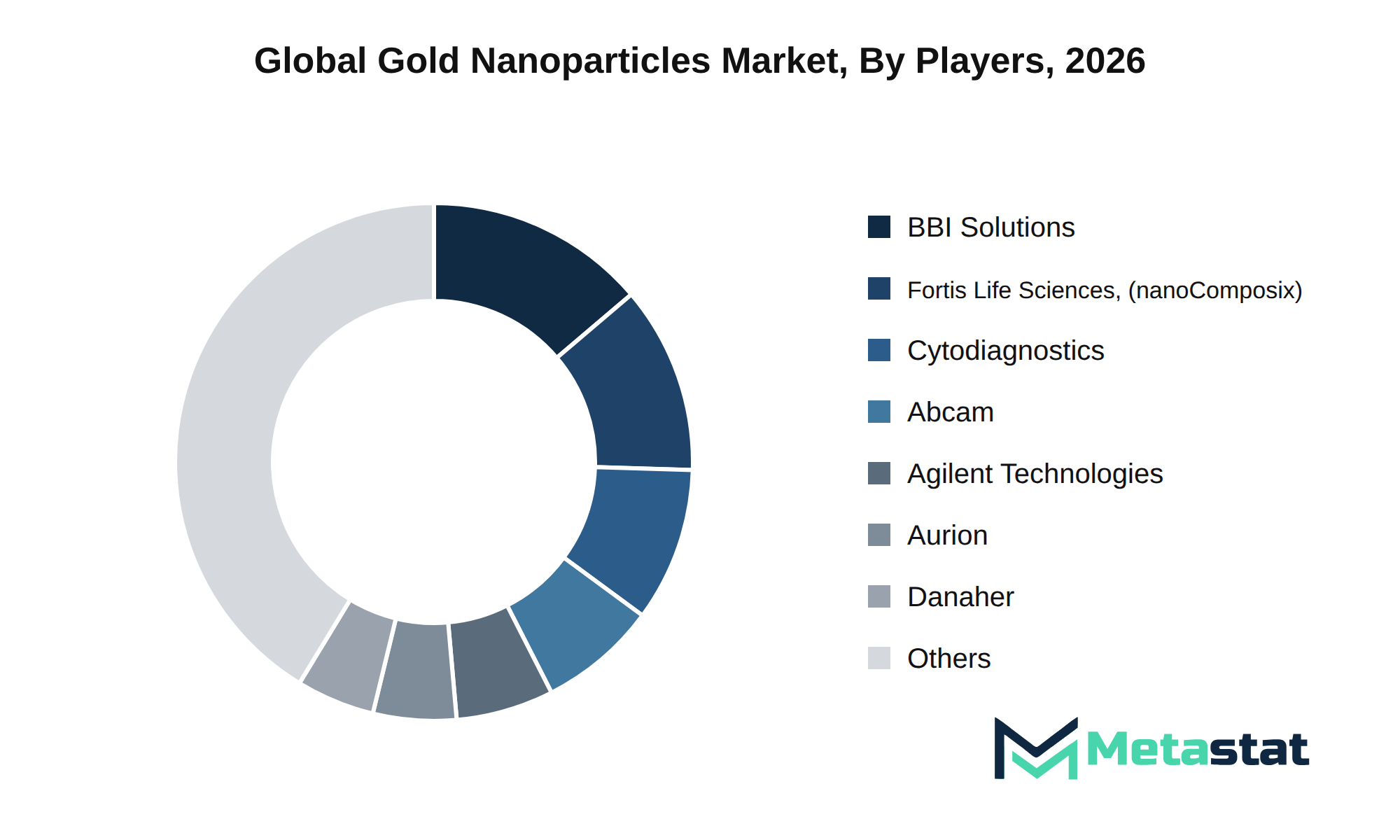
Competition in the Gold Nanoparticles market reflects a mix of product specialization, functionalization capabilities, and application-driven manufacturing. Companies differentiate through the breadth and customization of their gold nanoparticle offerings. Buyers prioritize product type, particle size precision, and surface functionalization tailored to diagnostic, imaging, or therapeutic needs. Pricing pressure intensifies in segments with commodity-like offerings. Advanced applications drive demand for higher-margin, specialized particles and conjugation services.
Suppliers including Abcam Limited and Cytodiagnostics Inc. focus on precision sizing and surface chemistry adaptation to meet research and clinical requirements, supporting adoption in bioimaging and diagnostic assays. Merck KGaA and Sigma-Aldrich serve research institutions and industrial buyers by providing scalable batches and a wide catalog of particle formats. Nanopartz, Inc. and NanoSeedz Ltd. position themselves with high-purity nanoshapes and innovative morphologies, addressing emerging demand in photothermal therapy and advanced sensing. RHP-Technology GmbH emphasizes process innovation, supporting customers seeking material consistency for catalytic and electronic applications.
Buyers weigh suppliers' ability to deliver consistent product quality, batch-to-batch reliability, and technical support. Customization requests, including biomolecule conjugation or chemical functionalization, often determine supplier selection for advanced research and medical diagnostics. Companies investing in expanding functionalization options and maintaining robust technical service stand out in the competitive field.
Achieving this growth depends on advances in healthcare applications, with diagnostic assays and sensing driving sustained demand due to their role in medical diagnostics, supported by increasing investment in point-of-care technologies. Continuous innovation in particle size and surface functionalization - particularly the uptake of chemically functionalized gold nanoparticles - is required to meet the evolving needs in drug and gene delivery, bioimaging, and targeted therapy segments. Expanding adoption in Asia Pacific, which holds a 33.5% revenue share, relies on strengthening local manufacturing capacity and enhancing research infrastructure to support both volume and value growth.
The main risk to the forecast involves raw material price volatility and regulatory shifts affecting gold sourcing and nanoparticle handling, which could constrain supply or raise input costs, particularly for producers in North America and Europe. If these challenges are not addressed, suppliers encounter higher production costs and longer lead times, slowing shipment growth and dampening price competitiveness. Maintaining the projected CAGR of 9.6% therefore hinges on technological innovation, stable regulatory environments, and secure raw material supply chains across major regions and application segments.
By Product Type: Gold Nanospheres, Gold Nanorods, Gold Nanoshells, Gold Nanostars and NanoUrchins, Gold Nanoplates, Others (Gold Nanocubes, Gold Nanobipyramids, Gold Nanocages, Gold Nanowires)
By Surface Functionalization: Non-Functionalized Gold Nanoparticles, Chemically Functionalized Gold Nanoparticles, Biomolecule-Conjugated Gold Nanoparticles
By Application: Diagnostic Assays and Sensing, Bioimaging and Microscopy, Drug and Gene Delivery, Photothermal Therapy, Catalysis, Electrical Conduction, Optical and Photonic Devices, Cosmetic Formulation, Others (Radiotherapy Enhancement, Antimicrobial Treatment)
The report strategically identifies and profiles the key market players and analyses their core competencies in each sub-segment of the Gold Nanoparticles market.
Report Attributes | Details |
Study Period | 2021-2033 |
Base Year | 2025 |
Estimated Year | 2026 |
Forecast Period | 2026-2033 |
Historical Period | 2021-2025 |
Growth Rate | CAGR 9.6% from 2026 to 2033 |
Revenue Unit | USD billion |
Segmentation | |
By Region | North America (By Product Type, Particle Size, Surface Functionalization, Application, and Country)
|
| |
Asia Pacific (By Product Type, Particle Size, Surface Functionalization, Application, and Country)
| |
| |
Middle East and Africa (By Product Type, Particle Size, Surface Functionalization, Application, and Country)
|
Find answers to common questions about this report
The Gold Nanoparticles market size was valued at USD 6.4 billion in 2025.
The projected CAGR is 9.6% for the forecast period from 2026 to 2033.
The North America Gold Nanoparticles market size is estimated to reach USD 4.6 billion by 2033.
Gold Nanospheres lead by value among product types, reaching USD 7.0 billion in 2033. This segment holds the highest revenue compared to Gold Nanorods at USD 3.0 billion and Gold Nanoshells at USD 1.4 billion in 2033.
Growth in theranostics is accelerating demand for advanced gold nanoparticle formulations that integrate diagnostic and therapeutic capabilities, particularly in oncology and molecular imaging. Intensifying interest in minimally invasive cancer treatment is driving rapid expansion in photothermal therapy applications, supported by the adoption of gold nanorod-based platforms.
North America holds the dominant share with 35.8 percent of global revenue. This lead is based on regional share percentages from the most recent data.
Intensifying regulatory scrutiny on nanomaterial safety extends approval timelines and limits adoption in pharmaceutical and clinical diagnostics segments. Fluctuating gold prices compress supplier margins, restricting reinvestment in research and new product development.
Adoption is favored by demand for gold nanoparticles that integrate diagnostics and therapeutics, advanced surface engineering for targeted drug delivery, and strong investment from precision medicine initiatives. Uptake accelerates where buyers seek improved treatment outcomes and streamlined care pathways.
The Gold Nanoparticles market is estimated to reach a valuation of USD 13.5 billion by 2033.
Companies active in this industry include Abcam Limited, Agilent Technologies Inc., American Elements, AMETEK Inc., Aurion, BBI Solutions, and CD Bioparticles. These firms manufacture or supply gold nanoparticles for applications across healthcare, diagnostics, and research.
The analysts below cover Chemicals and Materials research at Metastat Insights.
LEAD ANALYST
Utkarsh Khirodkar is a Lead Market Research Analyst at MetaStat Insight, specializing in market intelligence, technology sector assessments, and competitive strategy.

INDUSTRY CONSULTANT - CHEMICALS & ADVANCED MATERIALS
Chemicals and Materials · Machinery & Equipment · Packaging
Amit Gadhekar Consultant for Chemicals and Materials at MetaStat Insight, directing sector-specific intelligence, research, and strategic consulting across global chemical and processing markets.
Our group needed clearer visibility into out-of-autoclave processing timelines for high-temperature thermoplastic composites. MetaStat Insight delivered an objective assessment that contrasted automated fiber placement scrap rates with traditional thermoset prepreg layup cycles. The supplier landscape mapped out primary resin suppliers and tape slitting capacity across France, Germany, and Japan with solid technical accuracy. Their analyst handled our questions on precursor supply risks during an unscheduled inquiry call, providing clear, unembellished context.
Evaluating sensor fusion reliability across harsh operating environments can be tricky without field-validated data. The study on agricultural autonomous guidance systems clearly separated stereo vision setups from automotive-grade solid-state LiDAR. We appreciated the regional infrastructure analysis, specifically around RTK network density across North America and South America. During our follow-up consultation, the MetaStat Insight team walked through tier-two perception software partnerships, giving our engineering leads a practical basis for vendor shortlisting.
Analyzing the transition from natural gas to green hydrogen in iron ore reduction requires realistic infrastructure timelines. Meta stat insight supplied a detailed regional assessment of DRI plant conversion costs and scrap metal availability in North America and Western Europe. Their report carefully examined pellet quality specs and electrical grid access constraints without making oversimplified market assumptions. The research material served as a practical reference during internal technology roadmap discussions.
Explore related market intelligence reports worth reading alongside this one.
Starting from
$2950