
LEAD ANALYST
Utkarsh Khirodkar is a Lead Market Research Analyst at MetaStat Insight, specializing in market intelligence, technology sector assessments, and competitive strategy.

Global Gold Compounds Market Size, Share, By Product Type (Inorganic Gold Cyanide Compounds, Inorganic Gold Chloride Compounds, Inorganic Gold Sulfite Compounds, Organic Gold Complexes and Others (Gold Bromides, Gold Iodides, Gold Oxides and Hydroxides, Gold Thiosulfates)), By Form (Solid Compounds and Compound Solutions), By Application (Electroplating and Electroless Plating, Chemical Catalysis, Nanoparticle Synthesis, Glass and Ceramic Decoration, Analytical Testing, Pharmaceutical Formulation and Others (Histological Staining, Photographic Toning, Thin Film Deposition)), Industry Analysis, Growth, Trends, and Forecast, 2026-2033
Report ID
MSI-5439
Published
October, 2026
Pages
294 Pages
Format
Historical
Base year
Forecast
Forecast period
Report Details
Market Valuation: Valued at $3,304.2 Million in 2025, projected to reach $5,228.5 Million by 2033 at a 5.9% CAGR.
Dominant Segment: Electroplating and electroless plating holds the largest value share among applications, driven by strong demand from electronics and precision component manufacturers for high-reliability gold finishes.
Fastest Growing Segment: Organic gold complexes are projected to grow at the highest CAGR of 7.7%, fueled by their expanding use in chemical catalysis and pharmaceutical research where advanced functionalities are required.
Geographic Lead: Asia Pacific leads the market with a 47.1% share, supported by its dominance in electronics manufacturing and significant investment in advanced materials.
What's Inside: The report provides detailed segmentation by product type, form, and application, regional analysis, competitive landscape, and market forecasts through 2033.
Choose Your License
Global Gold Compounds Market
The global Gold Compounds market was valued at USD 3,304.2 million in 2025 and is projected to reach USD 5,228.5 million by 2033, growing at a CAGR of 5.9% over the forecast period.
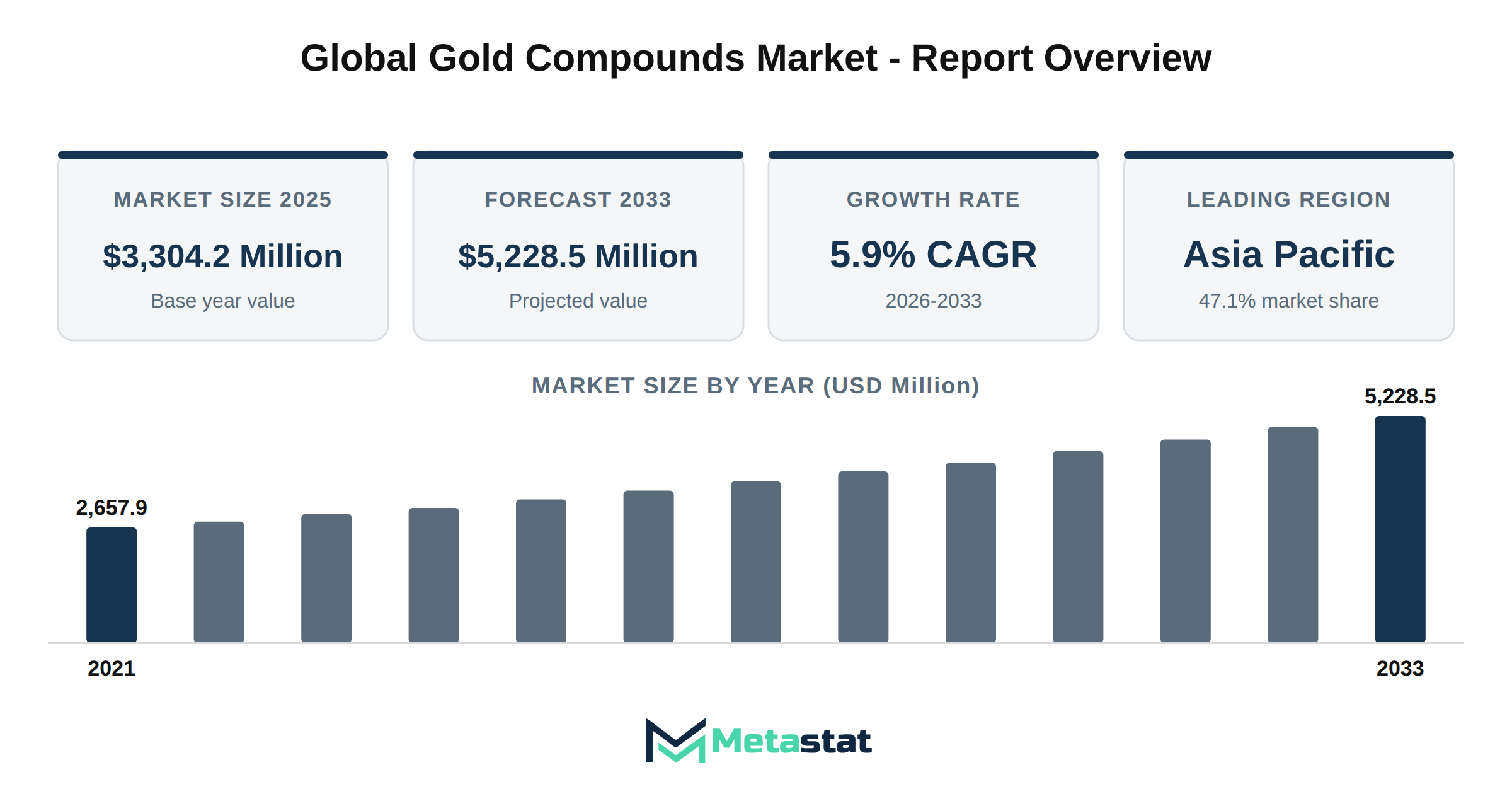
The Gold Compounds market encompasses a range of inorganic and organic gold-based substances, which serve critical functions in advanced manufacturing, electronics, and chemical synthesis. Buyers invest in these compounds to access high-purity materials required for precise applications, including electroplating, catalysis, and nanoparticle synthesis, where reliability and performance are commercially decisive. Product selection depends on the intended use, with inorganic gold cyanide compounds prevailing in electroplating, while organic gold complexes find uptake in specialized catalysis and pharmaceutical research.
Electroplating and electroless plating represent the largest application segment by value, underpinned by demand from producers of electronic connectors, semiconductors, and specialty coating and surface-finishing chemicals for decorative finishes. The consistent expansion of electronics manufacturing, particularly in Asia Pacific, supports the segment’s leading position. Solid compounds account for the highest share by form, reflecting their stability and compatibility with precision manufacturing workflows. The need for materials that deliver consistent results in high-throughput industrial processes drives sustained spending in these categories.
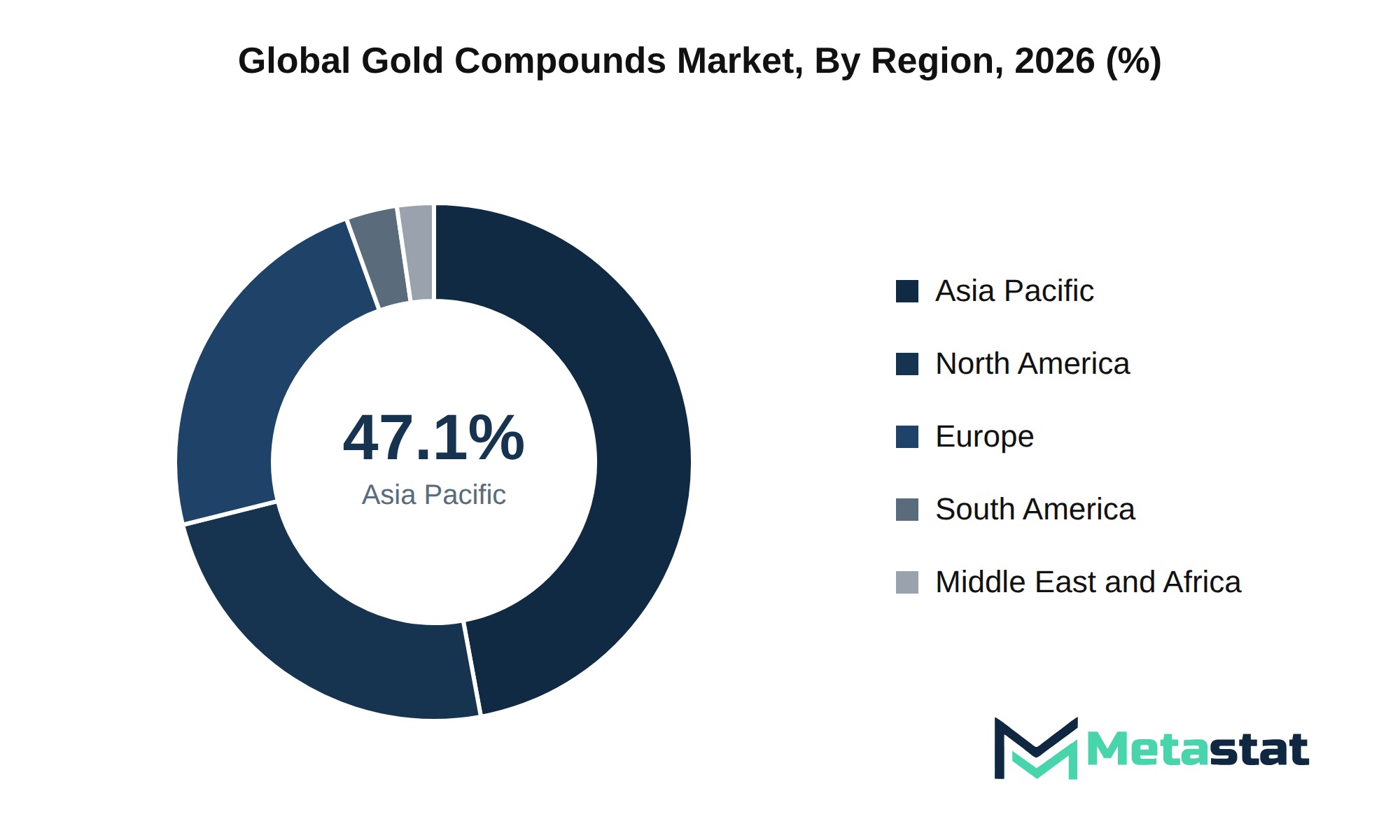
Asia Pacific holds the largest share of the Gold Compounds market, with 47.1%, reflecting the region’s dominance in electronics production and growing investment in advanced materials. North America holds 24.0% of the market in 2025, with the US leading in 2026. Growth is propelled primarily by the increasing use of gold compounds in high-value electronics manufacturing, where product quality and supply reliability contribute directly to operational efficiency and end-product performance.
Buyers seek gold compounds for their unique chemical and physical properties, which support applications in electronics manufacturing, chemical catalysis, and decorative finishing. Precision and reliability remain central to purchase decisions, especially among sectors where gold-based materials enable high-value product differentiation or performance standards that alternatives do not match. These metallic layers often complement high-conductivity substrates such as oxygen free electronic copper across sensitive electrical assemblies.
Within the Gold Compounds market, electroplating and electroless plating holds the largest value share among applications. This segment addresses the stringent needs of electronics, aerospace, and specialty manufacturing, where gold's conductivity, resistance to corrosion, and aesthetic qualities justify premium spending. In aerospace electronics, gold coatings frequently function alongside aerospace fluoropolymers to withstand rigorous thermal and electrical demands. Buyers in these sectors spend on gold compounds when device miniaturization, performance reliability, or luxury branding demand it. Adoption trends in nanoparticle synthesis and pharmaceutical formulation are expanding, but in value terms, electroplating and electroless plating leads the market.
Asia Pacific stands out as the region with the largest share, capturing 47.1% of the market, driven by robust industrialization, electronics production, and growing investment in advanced manufacturing. Demand growth in the market is primarily driven by the expanding use of gold-based solutions in precision electronics and high-reliability manufacturing, where materials innovation and miniaturization continue to increase compound consumption.
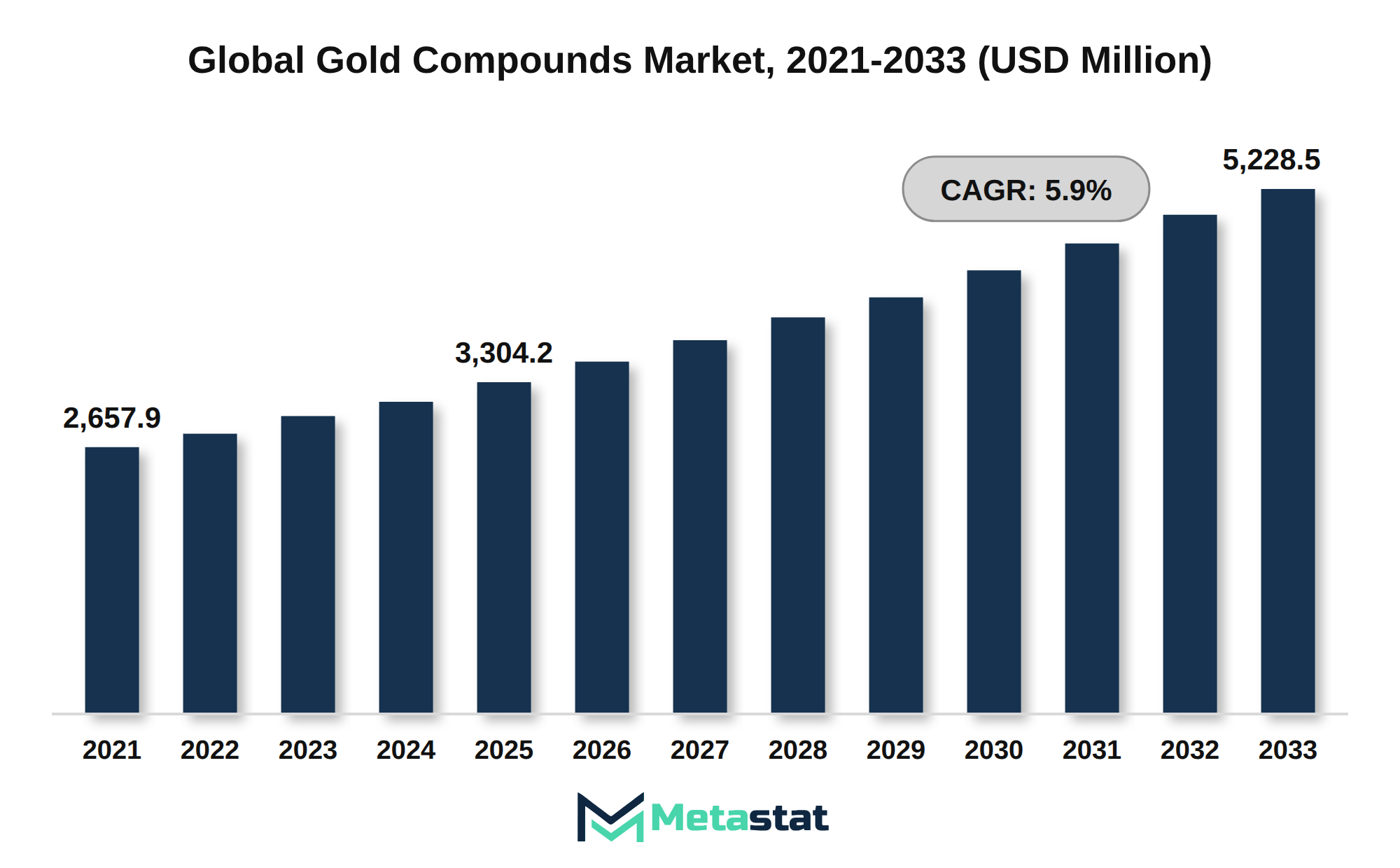
Demand for high-purity gold compounds is expanding in parallel with the semiconductor industry’s push toward advanced miniaturization. Device nodes continue to shrink, and manufacturers require materials with the highest purity to prevent contamination that would compromise circuit integrity. Similar contamination controls drive parallel demand for semiconductor gas purifiers across modern cleanroom deposition environments. Inorganic gold cyanide compounds, a primary choice for semiconductor electroplating, reached USD 1,732.2 million in value in 2026 and are projected to grow at a 4.9% CAGR through 2033. This growth reflects their critical function in forming uniform, ultra-thin gold layers on microelectronic components.
High-purity compound solutions support the precision standards needed for next-generation packaging, including high-power DBC ceramic substrate assemblies and fine-pitch interconnects. The segment’s forecast value of USD 2,014 million by 2033, with a 6.9% CAGR, indicates rising adoption by semiconductor fabrication plants. Miniaturization trends intensify supplier investment in advanced purification processes and analytical controls to meet tighter tolerances. At nanoscales, process yields and reliability become more sensitive to impurities, adding commercial value to gold compounds that exceed conventional quality benchmarks.
This shift toward high-purity solutions influences procurement strategies, with manufacturers prioritizing suppliers that demonstrate robust traceability and batch-to-batch consistency. These requirements drive differentiation on the basis of material quality and technical support. Suppliers able to deliver superior purity capture share among advanced electronics OEMs, reinforcing long-term demand in the context of semiconductor technological advancement. Ongoing evolution of chip architecture and the premium placed on contamination-free deposition materials shape the market environment for high-purity gold compounds. These fine microelectronic geometries originate from precise photolithographic patterning executed with a semiconductor photomask.
Contract negotiations for gold chloride precursors have shifted toward outcome-based pricing and flexible supply agreements, especially for buyers in nanoparticle synthesis and catalysis. Specialty chemical firms and research-driven manufacturers increasingly request lot-specific quotations rather than fixed annual contracts, reflecting the volatility in gold compound costs and advances in custom particle specifications. In this context, buyers secure more favorable terms by bundling purchases for both nanoparticle synthesis and chemical catalysis, increasing their volume leverage across related applications. The Application segment value for Chemical Catalysis is projected to reach USD 334.1 million by 2033, indicating a growing cohort of contract buyers aligning purchases with research pipelines and pilot production timelines.
Procurement teams in sectors focused on advanced materials, electronics, and catalysis align payment schedules with milestone deliveries or performance-based criteria, reducing upfront capital commitments. Gold chloride precursor pricing reflects both underlying gold market fluctuations and the complexity of required purity levels, with highly refined batches for nanoparticle synthesis commanding premium rates. Buyers in the Gold Compounds market who seek process-specific grades for catalytic applications often leverage technical partnerships with suppliers, embedding service agreements and technical support into their purchasing contracts. Industrial catalytic processes frequently combine precious gold precursors with transition metals like molybdenum to optimize chemical selectivity. This tailored approach shifts commercial risk onto suppliers while ensuring security of supply. Suppliers in the Gold Compounds market increasingly accommodate custom contract structures to secure high-value, recurring business from innovation-driven customers.
Buyers in the Gold Compounds market face direct exposure to fluctuations in gold prices, which heavily influence contract negotiations and procurement strategies. Industrial users in sectors including electronics manufacturing and chemical processing frequently manage large-volume purchases of gold cyanide and gold chloride compounds, requiring them to maintain close oversight of precious metal price volatility. Similar bullion indexation challenges confront procurement managers purchasing speciality gold alloys for semiconductor packaging and electronic contacts. Inorganic gold cyanide compounds, which reach USD 2,419.8 million by 2033, are especially sensitive to raw material cost shifts, impacting both short-term pricing and long-term supply agreements for these buyers.
Manufacturers structure pricing formulas based on prevailing gold spot rates, adjusting surcharges or rebates in response to gold price movement. This cost pass-through model preserves supplier margins but transfers most price risk to buyers, particularly those with thin operating margins or commodity-linked end products. Procurement managers in the Gold Compounds market routinely integrate financial hedging tools or indexed contracts to reduce exposure, especially for applications in electroplating and electroless plating, which together account for a significant portion of demand. These practices influence not only contract length and pricing intervals but favor suppliers with robust sourcing capabilities or the ability to offer flexible pricing structures. The commercial impact extends to inventory management and working capital requirements across the value chain.
Gold complexes that exclude cyanide serve a critical role in modern electroplating processes, addressing rising regulatory and environmental pressures targeting cyanide use. Inorganic gold chloride compounds and organic gold complexes have gained adoption for cyanide-free electroplating due to their ability to deliver high-purity gold finishes while reducing hazardous waste. Modern plating facilities often run these formulations alongside specialty immersion plating salts such as sodium stannate to establish durable multi-layer finishes. The market’s segmentation highlights inorganic gold chloride compounds, which are projected to reach USD 1,352.1 million by 2033, supported by their suitability for non-cyanide bath formulations and compatibility with a wide range of substrates. Organic gold complexes, with a forecast CAGR of 7.7%, offer tunable deposition properties and lower toxicity, allowing manufacturers to respond to stricter international standards and customer requirements for sustainable surface finishing.
Rapid expansion in electronics manufacturing and decorative plating applications accelerates demand for these alternatives, particularly where strict workplace safety or end-product compliance is a priority. Suppliers in the market who develop chloride-based or organic formulations secure contracts with industries prioritizing environmental stewardship and occupational health. This shift away from cyanide-based processes translates to higher demand for specialized compounds, enabling premium pricing and long-term supply agreements. Companies operating in the market improve their competitive position by expanding portfolios of cyanide-free products and supporting electronics and jewelry producers in meeting evolving regulatory and consumer expectations.
Electronics manufacturers are scaling production of complex, miniaturized devices, driving higher consumption of specialty gold compounds with precise purity and composition requirements. Smartphones, wearables, and advanced computing hardware increasingly rely on gold-based materials for reliable electrical connectivity, thermal management, and corrosion resistance within compact architectures. This shift toward denser circuitry and smaller components has accelerated replacement cycles for legacy interconnect materials, resulting in greater demand for gold compounds that support fine-pattern electroplating and advanced coatings.
Device designers seek materials that ensure stable performance at nanometer-scale dimensions, supporting growth in this segment. Increased purchasing from electronics firms supports volume growth, while technical specifications for compound purity and particle size drive suppliers to invest in process controls and analytical capabilities. Pricing for high-quality gold compounds remains strong in this segment, reflecting the premium placed on meeting the evolving demands of the electronics supply chain. Sustained innovation and investment in electronics manufacturing across Asia Pacific, North America, and Europe reinforce robust demand through the forecast period.
High acquisition costs for gold compounds restrict replacement cycles among decorative finishing and glass-ceramic buyers. These segments rely on specialized gold-based formulations to achieve premium finishes, but budget constraints slow the adoption of newer or higher-performance compounds. Procurement teams in these industries frequently respond to sustained high input prices by extending the operational life of existing stocks, reducing batch sizes, or delaying non-essential upgrades. This dynamic leads to conservative ordering patterns and smaller volume growth, particularly for applications where aesthetic value drives purchase decisions over functional performance. Uptake slows in these sectors when high per-unit pricing narrows the addressable base of customers willing to invest in advanced or differentiated offerings. Cost-sensitive end users, especially in emerging economies, are especially affected, reducing overall demand expansion in this segment.
Rising volatility in raw material supply chains has intensified cost pressures for suppliers in the Gold Compounds market. Disruptions in sourcing high-purity base metals and specialty reagents have driven procurement costs higher and increased lead times for key intermediates. Suppliers serving the Gold Compounds market report that unpredictable delivery schedules for input chemicals and tightening purity specifications from buyers have forced more frequent renegotiation of supplier agreements, eroding traditional margin buffers. In response, several producers are investing in supplier diversification strategies and backward integration to stabilize input availability and mitigate the impact of cost spikes. These measures support continuity of production but increase operational complexity and require additional working capital. The Gold Compounds market is seeing more contracts shift to variable pricing clauses to reflect input cost swings, which transfers risk but limits predictability for both buyers and suppliers.
Organic gold complexes are positioned to deliver the fastest segment growth, supported by a projected CAGR of 7.7%. This segment captures momentum from rising adoption in chemical catalysis, where gold-based catalysts enable selective reactions for specialty chemicals and environmental applications. Buyers in chemical manufacturing increasingly prioritize high-activity, stable catalysts, shifting procurement toward advanced organometallic gold compounds. Suppliers are refining production of these complexes to meet strict purity and performance specifications, capturing premium pricing and attracting investment in specialized synthesis capabilities. The opportunity for sustained revenue expansion is concentrated within this high-growth application, where the combination of technical requirements and expanding end-use cases drives demand above traditional segments.
The Global Gold Compounds market is segmented based on Product Type, Form, and Application.
These compounds are integral to the electroplating industry, where electronics manufacturers and precision component suppliers rely on gold cyanide for uniform, adherent gold coatings on circuit boards and connectors. Consistent demand for electronic miniaturization and reliability drives adoption in these end uses, with established process compatibility giving inorganic gold cyanide an advantage over chloride and organic gold alternatives. The segment’s 4.9% CAGR is slower than the 6.2% projected for inorganic gold chloride compounds and the 7.7% for organic gold complexes, positioning it as a mature, high-volume choice in the market. Regulatory scrutiny and environmental concerns surrounding cyanide use restrict segment expansion, but persistent demand from large-scale electronics production sustains volume and supports stable pricing compared with more specialized gold compound categories.
Estimated to reach USD 1,352.1 million by 2033 at a CAGR of 6.2%, inorganic gold chloride compounds are gaining traction with buyers in specialty chemical manufacturing and advanced materials research. These compounds act in the role of key intermediates for glass and ceramic decoration and hold a central role in chemical catalysis, where gold ions enable efficient redox transformations. Laboratories, specialty chemical firms, and electronics manufacturers procure these materials for applications that demand high reactivity and solubility compared to other product types in the Gold Compounds market. This segment is set to grow faster than inorganic gold cyanide compounds, which carry a 4.9% CAGR, driven by a shift toward chloride-based formulations in catalysis and analytical testing. Organic gold complexes post the highest growth rate but address a narrower set of applications, while inorganic gold chloride buyers are typically established industrial users responding to evolving technology requirements and regulatory standards. Industrial and scientific users are seeking improved efficiency and compatibility in high-value processes, supporting this shift.
Inorganic Gold Sulfite Compounds segment is expected to reach USD 704.3 million by 2033. These compounds are primarily used by manufacturers in electronics and surface finishing, who require alternatives to cyanide-based or chloride-based gold salts for specialized plating and deposition processes. Buyers include precision electronics firms and decorative finishers, who select gold sulfite compounds for their lower toxicity and specific compatibility with certain substrates. Demand in this segment is shaped by regulatory and environmental trends that encourage a shift away from high-hazard chemistries, making gold sulfite compounds a safer option within the market. Compared with inorganic gold chloride compounds, which project a higher CAGR of 6.2%, sulfite-based variants expand more slowly and tend to attract buyers focused on compliance and workplace safety. This positions the segment distinctly, with adoption tied closely to specific technical and regulatory requirements rather than broad-based volume growth.
Projected to grow at a CAGR of 7.7% during the forecast period, organic gold complexes outpace every other product type in the Gold Compounds market. These compounds serve pharmaceutical, analytical, and catalysis buyers who require advanced functionalities unachievable with inorganic gold precursors. Demand is driven by ongoing innovation in pharmaceuticals, where organic gold complexes support next-generation therapeutic candidate research. End-users in analytical testing and catalysis adopt these compounds to access tunable reactivity or biocompatibility, reflecting a move toward higher-value applications. Compared with inorganic gold cyanide (4.9% CAGR) and gold chloride (6.2% CAGR), organic gold complexes display a faster adoption cycle, supported by a willingness among buyers to pay premium prices for differentiated molecular design and purity. This trend attracts specialty chemical companies and research-focused manufacturers, distinguishing the segment from bulk commodity buyers in other parts of the Gold Compounds market. The segment’s growth reflects the market’s shift toward high-performance, niche applications where technical requirements and intellectual property protection support higher margins.
Gold bromides, iodides, oxides, hydroxides, and thiosulfates are specialty compounds serving highly targeted applications, including histological staining, thin film deposition, and photographic toning. Buyers include advanced research institutions, niche electronics manufacturers, and specialty chemical suppliers seeking unique reactivity profiles or alternative chemistries not provided by cyanide or chloride-based products. Demand in this segment hinges on emerging requirements for gold-based reagents where lower toxicity or distinct optical characteristics deliver an operational benefit. Compared with the high-volume cyanide and chloride sub-segments that serve core manufacturing and plating operations, the Others category addresses use cases defined by precision or regulatory preference. These compounds often command a higher price point due to more complex synthesis routes and limited production scale, differentiating the segment within the broader Gold Compounds market. Shifts in analytical testing standards and growing restrictions on traditional heavy metal formulations support continued interest among innovation-driven buyers in this segment.
Valued at USD 2,246.9 million in 2026, solid compounds are projected to reach USD 3,214.5 million by 2033, reflecting a CAGR of 5.2%. These compounds are primarily adopted by manufacturers in electronics, precision plating, and high-reliability component sectors, where consistent formulation and handling ease are critical. Demand is driven by preference for stable, easily dosed raw materials that streamline quality control in automated plating lines and advanced device fabrication. Compared to compound solutions, which are projected to grow at a CAGR of 6.9%, solid compounds expand at a steadier pace, appealing to buyers focused on long-term cost predictability and minimized waste. Pricing sensitivity influences segment selection, with solid forms favored where storage stability and precise dosing outweigh the flexibility of liquid formulations. Growth in this segment is reinforced by the ongoing shift toward high-volume, high-yield production in electronics and electroplating, supporting consistent procurement of standardized solid gold chemistries.
Compound Solutions segment is estimated to reach USD 2,014 million by 2033, at a CAGR of 6.9% during the forecast period. Buyers in this segment include manufacturers of compound solutions for precision electronics, catalysis, and advanced coatings, where rapid dissolution and uniform deposition are essential. Fast adoption among electronics and chemical processing companies is driven by the demand for adaptable formulations that support high-throughput, automated processes. The Compound Solutions segment stands out for its faster projected growth rate compared to solid compounds, which are forecast to grow at a CAGR of 5.2%. This performance reflects strong demand from sectors prioritizing ease of integration and technical flexibility. Buyers selecting compound solutions are primarily motivated by the simplicity of use and streamlined production, while solid compounds continue to attract segments focused on traditional or bulk applications. These differences in buyer requirements and usage have shaped product development and procurement priorities throughout the forecast period.
Electroplating and Electroless Plating is valued at USD 2,549.9 million in 2026 and is projected to reach USD 3,640.1 million by 2033, at a CAGR of 5.2% during the forecast period. This segment is integral to electronics and precision component manufacturers, who require gold finishes that deliver superior conductivity, corrosion resistance, and reliability. Demand for gold compounds in electroplating reflects widespread use in microelectronic connectors, printed circuit boards, and decorative applications. Rising investment in advanced electronics production across Asia Pacific drives volume growth, supported by a robust supplier base and competitive pricing dynamics. Compared to chemical catalysis, which grows at a faster CAGR of 8.2%, electroplating and electroless plating captures the highest revenue share among application segments in the Gold Compounds market. Price sensitivity remains moderate, with buyers balancing quality specifications against total cost of ownership, while the shift toward environmentally compliant processes influences adoption patterns in this part of the Gold Compounds market.
Estimated to reach USD 334.1 million by 2033, at a CAGR of 8.2%, chemical catalysis is the fastest-growing application in the Gold Compounds market. This segment centers on gold compounds used by chemical manufacturers and research organizations to accelerate complex reactions, particularly in fine chemical synthesis, pharmaceuticals, and specialty materials. Buyers prioritize high catalytic efficiency and select gold compounds where unique selectivity or mild operating conditions are required. The segment’s growth rate outpaces other application categories, including electroplating and nanoparticle synthesis, driven by sustained demand for advanced catalysts. Suppliers in the market respond with tailored compound formulations and tight quality specifications, reflecting the exacting standards of catalyst buyers. Compared to slower-growing decorative or analytical applications, this segment draws investment from organizations seeking higher-value outcomes and improved process economics through catalytic innovation.
Nanoparticle Synthesis segment is expected to reach USD 457.5 million by 2033. This application draws demand from research institutions and advanced materials manufacturers seeking precise control over particle size and composition for electronics, medical diagnostics, and high-performance catalysts. Interest has accelerated due to the ability of gold-based nanomaterials to deliver tunable optical, electrical, and chemical properties, satisfying requirements in sensing and imaging. Buyers in this segment typically demand higher-purity and specialty compounds, which lifts the average price point above that of bulk plating or decorative uses in the market. Compared with Electroplating and Electroless Plating, which holds a much larger revenue share, nanoparticle synthesis serves a more specialized client base and sees moderate growth, with both pricing and technical barriers limiting volume expansion. In the market, this segment’s progress is shaped by the pace of innovation in nanotechnology and the expanding adoption of gold nanoparticles in next-generation diagnostics and electronics.
Growth for glass and ceramic decoration is projected at a 4% CAGR through 2033, reflecting steady demand from manufacturers of luxury tableware, architectural glass, and decorative ceramics. This segment relies on gold compounds for specialty pigments and durable finishes that deliver high optical brilliance, with buyers primarily in the premium ceramics and glassware sectors. Demand is shaped by trends in consumer gifting and high-end interiors, where decorative applications justify premium pricing due to the unique luster and chemical stability provided by gold-based enamels and paints. Compared to chemical catalysis, which is expected to expand at a faster 8.2% CAGR, glass and ceramic decoration sees slower growth, driven more by traditional design cycles than by rapid innovation. In this segment, the emphasis on aesthetic value and long product lifespans leads buyers to be less sensitive to short-term price fluctuations than those in analytical or nanoparticle applications.
Analytical testing uses gold compounds in laboratories and industrial quality control for assays, trace metal analysis, and instrument calibration where high accuracy and stability are required. Buyers in this segment include research institutions, testing laboratories, and quality assurance departments in sectors including pharmaceuticals, electronics, and mining. Demand in this segment is influenced by the increasing complexity of analytical technologies and stricter regulatory guidelines for trace-level detection, which push laboratories to source highly pure gold standards and reagents. Compared with electroplating or catalysis, analytical testing buyers are less price-sensitive but place greater emphasis on lot-to-lot consistency and certification. This segment differs from faster-growing application segments, including chemical catalysis, where an 8.2% CAGR accelerates adoption. In contrast, analytical testing is shaped by method development cycles and regulatory compliance, which support steady but moderate purchasing patterns among institutional and industrial buyers.
Gold-based pharmaceutical formulations are deployed in specialized medical treatments, including therapies for rheumatoid arthritis and investigational oncology agents. Hospitals, specialty clinics, and pharmaceutical companies drive demand, prioritizing products that deliver high stability and precise dosing. The primary demand driver for this segment is the expansion of clinical research focused on metal-based therapeutics, which encourages pharmaceutical firms to adopt gold compounds in drug development pipelines. Strict regulatory scrutiny and the requirement for extensive safety and efficacy data slow adoption compared to other applications in the market. This segment serves buyers with a high threshold for quality and regulatory compliance, resulting in a higher price point than applications including glass decoration or nanoparticle synthesis. Differentiation from other application segments lies in both the end-user profile and the technical standards required, underlining a unique set of challenges and opportunities for suppliers. Innovation in formulation science and regulatory alignment directly influence growth potential for pharmaceutical applications.
Applications including histological staining, photographic toning, and thin film deposition drive this segment’s demand for highly specialized gold compounds. These uses are concentrated in scientific laboratories, medical diagnostics, and advanced imaging facilities, where gold compounds deliver unique properties that cannot be substituted by base metal alternatives. In histology, precision and consistency in tissue staining are critical, while in thin film deposition, uniformity and conductivity requirements are exacting. Demand in these functions reflects low price sensitivity among buyers, who prioritize performance and reliability over cost minimization. This differentiates the segment from larger-volume applications in electroplating or catalysis, which are more exposed to fluctuations in material prices. Since this segment serves technically advanced end-users, adoption patterns are shaped by innovation in research protocols and the introduction of highly pure or tailor-made compounds that meet evolving performance specifications.
Based on geography, the Global Gold Compounds market is divided into North America, Europe, Asia-Pacific, South America, Middle East, and Africa.
Buyers in North America are projected to drive regional revenue to USD 1,169.1 million by the end of 2033, representing a 24.00% share of the Gold Compounds market in 2025. End users in the United States, Canada, and Mexico have increased their focus on advanced electronics manufacturing and precision engineered components, where gold compounds deliver reliability and performance advantages in critical applications. Regulatory protocols for material purity and environmental safety are stringent in these countries, supporting demand for high-grade gold compounds that meet rigorous compliance standards. The region’s capacity for R&D, particularly in the United States, encourages adoption of novel gold-based compounds in emerging high-technology segments, including catalysts and nanomaterials. This environment drives specialized suppliers to strengthen their portfolios and invest in product innovation for downstream users. The market in North America moves steadily toward higher-value applications and customized formulations that address the needs of leading domestic industries.
European demand in the Gold Compounds market is shaped by advanced electronics manufacturing, high-value chemicals, and a strong tradition of scientific research. Germany, France, and the UK sustain high consumption with established industrial users in precision electronics and specialty laboratories. Several market participants in the region reflect robust purchasing power and technical requirements for gold-based intermediates. Buyer expectations for traceable sourcing and stringent purity standards influence both supplier selection and price points. Regulatory frameworks across Europe promote sustainable material handling and waste treatment, encouraging companies to adopt refined recovery and recycling practices. These conditions drive investment in innovative compound formulations and extraction processes, supporting a stable supply chain for end-users seeking reliability and compliance. Intense focus on environmental stewardship and product certification further distinguishes Europe’s approach in the Gold Compounds market.
Manufacturing clusters in China, Japan, and South Korea drive the region's position, with Asia Pacific holding a dominant share of global demand in 2025. High-capacity electronics fabrication and chemical processing in China and Japan create sustained bulk demand, particularly for compounds used in semiconductor and precision engineering applications. Indian buyers in the pharmaceutical and research sectors increase orders driven by ongoing investment in specialty drug development and laboratory infrastructure. Wider access to advanced plating and nanoparticle technologies across Southeast Asia further accelerates purchasing, reflecting a shift toward higher-value production in regional supply chains. These dynamics support continued volume growth, enabled by local sourcing advantages and the presence of major fabricators in core economies.
Demand in South America reflects a combination of industrial and emerging applications, with Brazilian electronics and precision instrument manufacturing providing steady pull for gold-based compounds. Buyers in Brazil and Argentina source specialty chemicals for electronics, plating, and laboratory use, supported by a local ecosystem of small-scale refiners and distributors that address both volume and purity requirements. The region maintains a moderate presence shaped by cost-sensitive procurement and intermittent shifts in local industrial output. Regulatory frameworks in Brazil and Argentina focus on traceability and material sourcing for high-value metals, influencing procurement strategies and supplier qualification. While global suppliers maintain a presence through established supply chains, local players in Rest of South America adapt to fluctuating demand in laboratory testing and decorative applications. Regional demand is expected to remain closely tied to downstream electronics, moderate manufacturing growth, and access to refined gold inputs.
Specialized sectors in Saudi Arabia, the UAE, and South Africa shape regional use of gold compounds, reflecting demand in precision chemicals production and emerging nanotechnology applications. Regional participation remains limited compared to larger global markets. Local buyers prioritize high-purity compounds for electronics, laboratory research, and medical applications, where strict quality standards and traceability influence procurement decisions. Increased investments in research centers and advanced materials facilities support gradual expansion of market uptake, particularly in the UAE and South Africa, where government initiatives encourage high-value chemical manufacturing. Limited regional manufacturing capacity and reliance on imported raw materials affect supply costs, creating opportunities for suppliers with established logistics and technical support. Domestic producers focusing on tailored formulations for industrial and medical end-users position themselves to capture niche demand segments within the market.
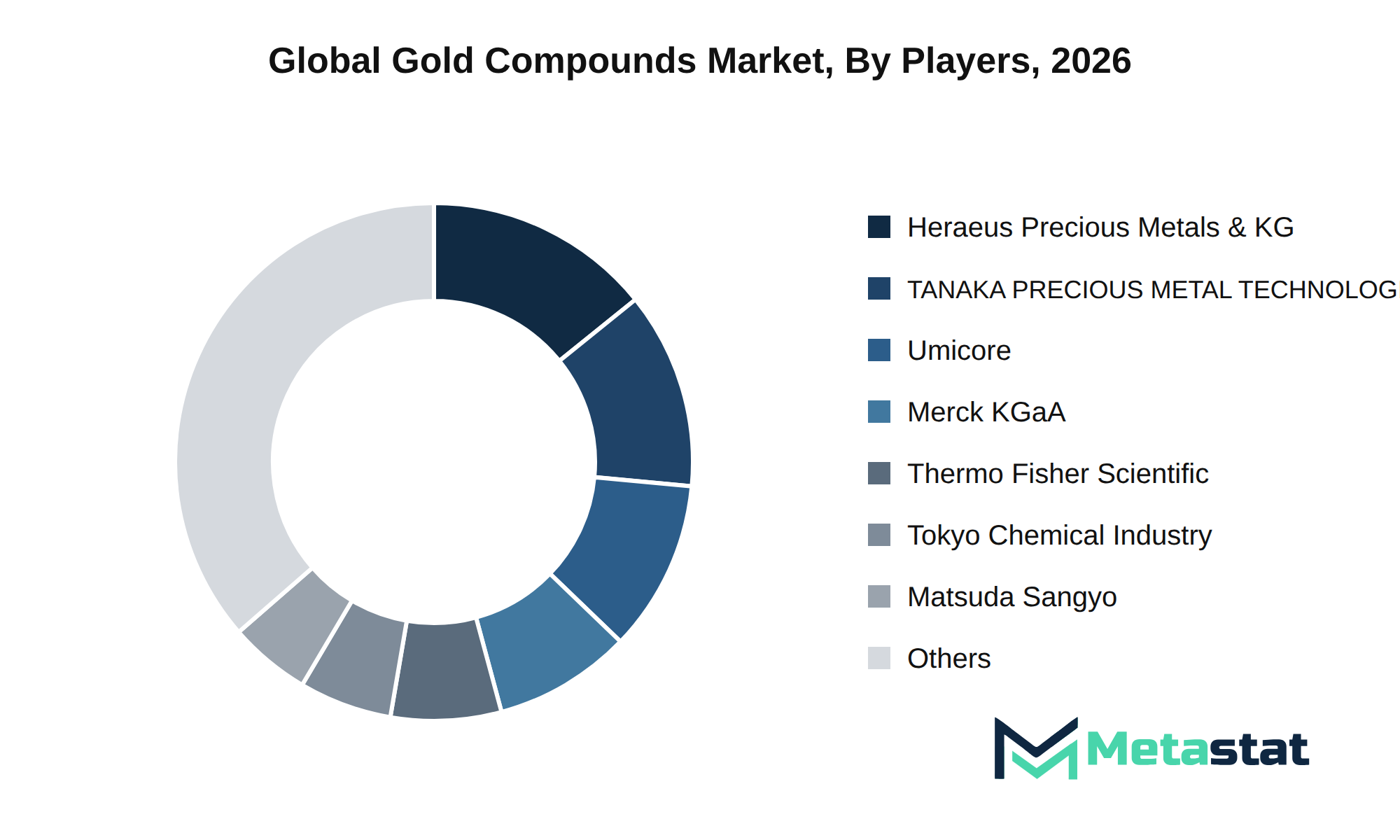
Competition in the Gold Compounds market centers on advanced product portfolios, purity grades, and application expertise. Suppliers differentiate through their ability to address stringent quality requirements in sectors including electronics, catalysis, and nanoparticle synthesis. Buyers typically prioritize purity, consistent supply, and technical support. Price sensitivity influences commodity-grade transactions. Pharmaceutical and electronics manufacturers prioritize certification and traceable sourcing.
Heraeus Precious Metals GmbH & Co. KG emphasizes a comprehensive product range and positions its offering toward high-reliability applications. This approach supports industries where material consistency and technical collaboration drive purchasing. TANAKA PRECIOUS METAL TECHNOLOGIES Co., Ltd. concentrates on innovation in electroplating and catalyst solutions, targeting customers seeking process performance and tailored formulations. Umicore SA/NV focuses on sustainable sourcing and environmentally responsible refining, appealing to buyers with compliance and sustainability mandates. Merck KGaA leverages its established distribution and chemical expertise, providing value for research and specialty applications that require both technical documentation and global reach.
The Gold Compounds market includes both vertically integrated refiners and specialized formulators. Companies including Thermo Fisher Scientific Inc. and American Elements build on their presence in research and laboratory segments. Custom synthesis, batch size flexibility, and after-sales support influence supplier selection. Buyers seek to optimize product performance and regulatory alignment. Strategic attention to application development and end-user technical support shapes competitive positioning, influencing long-term supplier relationships.
Achieving this growth depends on several developments across key segments and regions. The largest contribution comes from electroplating and electroless plating applications, with expanding electronics and semiconductor production in Asia Pacific sustaining high-volume demand. This segment delivers higher annual revenue than any other application, ensuring a stable foundation for market gains. Organic gold complexes, although smaller by revenue than inorganic cyanide or chloride compounds, exhibit the fastest expansion, driven by their adoption in catalysis and emerging nanomaterial synthesis within advanced manufacturing clusters. Suppliers in Asia Pacific continue to scale operations and innovate, reflecting the region’s position in the highest-value contributor with 47.1% share. Outlook depends on uninterrupted access to high-purity gold feedstock and stable upstream pricing, which influence both production costs and downstream investment by manufacturers. The most significant risk to the forecast is a sustained increase in gold prices or supply disruption, which restricts raw material availability and raises input costs, potentially slowing adoption in cost-sensitive segments including glass and ceramic decoration. The market’s trajectory through 2033 is shaped by the combined effects of technology-driven expansion and supply-side volatility.
By Product Type: Inorganic Gold Cyanide Compounds, Inorganic Gold Chloride Compounds, Inorganic Gold Sulfite Compounds, Organic Gold Complexes, Others (Gold Bromides, Gold Iodides, Gold Oxides and Hydroxides, Gold Thiosulfates)
By Form: Solid Compounds, Compound Solutions
By Application: Electroplating and Electroless Plating, Chemical Catalysis, Nanoparticle Synthesis, Glass and Ceramic Decoration, Analytical Testing, Pharmaceutical Formulation, Others (Histological Staining, Photographic Toning, Thin Film Deposition)
The report strategically identifies and profiles the key market players and analyses their core competencies in each sub-segment of the Gold Compounds market.
|
Report Attributes |
Details |
|
Study Period |
2021-2033 |
|
Base Year |
2025 |
|
Estimated Year |
2026 |
|
Forecast Period |
2026-2033 |
|
Historical Period |
2021-2025 |
|
Growth Rate |
CAGR 5.9% from 2026 to 2033 |
|
Revenue Unit |
USD million |
|
Segmentation |
By Product Type, Form, Application, and Region |
|
By Region |
North America (By Product Type, Form, Application, and Country)
|
|
Europe (By Product Type, Form, Application, and Country)
|
|
|
Asia Pacific (By Product Type, Form, Application, and Country)
|
|
|
South America (By Product Type, Form, Application, and Country)
|
|
|
Middle East and Africa (By Product Type, Form, Application, and Country)
|
Find answers to common questions about this report
The Gold Compounds market size was valued at USD 3,304.2 million in 2025.
The projected CAGR is 5.9% for the period from 2026 to 2033.
The North America Gold Compounds market size is estimated to reach USD 1,169.1 million by 2033.
Inorganic Gold Cyanide Compounds lead by value, reaching USD 2,419.8 million in 2033 among product type segments. This segment holds the highest revenue compared to Inorganic Gold Chloride Compounds and other product types.
Electronics manufacturers are increasing purchases of high-purity gold compounds to support miniaturized device production, driving volume and price growth. Rising adoption of organic gold complexes in chemical catalysis is accelerating segment expansion as buyers seek high-activity, stable catalysts for specialty applications.
Asia Pacific holds the dominant share with 47.1 percent of the total, leading all other regions by a significant margin. North America follows with 24 percent.
High acquisition costs for gold compounds restrict replacement cycles and slow adoption among decorative finishing and glass-ceramic buyers. Volatility in raw material supply chains increases cost pressures for suppliers, raising operational complexity and limiting predictability.
Organic gold complexes are favored by buyers in chemical manufacturing due to their ability to enable selective reactions in specialty chemicals and environmental applications. Suppliers are refining production to meet strict purity and performance specifications, supporting adoption in catalysis and attracting investment in advanced synthesis capabilities.
The Gold Compounds market is estimated to reach a valuation of USD 5,228.5 million by 2033.
Companies active in this industry include Heraeus Precious Metals GmbH & Co. KG, TANAKA PRECIOUS METAL TECHNOLOGIES Co., Ltd., Umicore SA/NV, Merck KGaA, Thermo Fisher Scientific Inc., American Elements, and Ascensus Specialties LLC. These firms manufacture or supply gold compounds for applications across electronics, catalysis, pharmaceuticals, and advanced materials.
The analysts below cover Chemicals and Materials research at Metastat Insights.
LEAD ANALYST
Utkarsh Khirodkar is a Lead Market Research Analyst at MetaStat Insight, specializing in market intelligence, technology sector assessments, and competitive strategy.

INDUSTRY CONSULTANT - CHEMICALS & ADVANCED MATERIALS
Chemicals and Materials · Machinery & Equipment · Packaging
Amit Gadhekar Consultant for Chemicals and Materials at MetaStat Insight, directing sector-specific intelligence, research, and strategic consulting across global chemical and processing markets.
Decarbonizing industrial thermal processes hinges on refrigerant regulations and compressor efficiency limits. Metastat Insights delivered a thorough market analysis that evaluated natural refrigerants like CO2 and hydrocarbons against synthetic low-GWP alternatives. The breakdown of utility incentives and grid capacity constraints across key European manufacturing hubs offered valuable perspective. The follow-up conversation with their sector analysts addressed our specific questions on mechanical vapor recompression systems efficiently.
Assessing 200mm wafer transition schedules and substrate supply bottlenecks requires precise technical intelligence. MetaStat Insight supplied an actionable breakdown comparing planar and trench MOSFET architectures across automotive and industrial drive markets. The regional capacity estimates for Asia-Pacific foundries helped clarify lead-time uncertainties during our strategic planning session. When we needed additional clarification on high-purity raw material sourcing, their analyst team responded with helpful context within twenty-four hours.
Tracking maintenance cycle demand for secondary flight display units and terrain collision avoidance systems across regional jet fleets involves complex aftermarket dynamics. MetaStat Insight provided practical analysis separating airline retrofit programs from OEM forward-fit production schedules in North America and Southeast Asia. The supplier matrix highlighted component obsolescence timelines without resorting to vague generalizations. The dataset served as a dependable reference during our annual program review meetings.
Explore related market intelligence reports worth reading alongside this one.
Starting from
$2950