
LEAD ANALYST
Utkarsh Khirodkar is a Lead Market Research Analyst at MetaStat Insight, specializing in market intelligence, technology sector assessments, and competitive strategy.

Global Gold-Based Industrial Materials Market Size, Share, By Product Type (Gold Bonding Wires and Ribbons, Gold Sputtering Targets, Gold Evaporation Materials, Gold-Based Joining Materials, Gold Thick-Film Conductor Pastes and Inks, Gold Electroplating Chemicals, Gold Electrical Contact Materials, Gold Semi-Finished Fabrication Stock, Gold Powders and Nanoparticles and Others (Supported Gold Catalysts, Gold Laboratory Articles)), By Material Composition (Pure Gold Materials, Gold Alloy Materials, Gold Composite Materials and Gold Chemical Compounds), By End-Use Industry (Electronics and Semiconductor Manufacturing, Telecommunications Equipment, Medical and Dental Devices, Aerospace and Defense, Automotive, Energy and Power Equipment, Industrial Machinery and Instrumentation and Others (Chemical Processing, Glass and Ceramics)), Industry Analysis, Growth, Trends, and Forecast, 2026-2033
Report ID
MSI-5442
Published
October, 2026
Pages
298 Pages
Format
Historical
Base year
Forecast
Forecast period
Report Details
Market Valuation: Valued at $22.1 Billion in 2025, projected to reach $29.1 Billion by 2033 at a 3.5% CAGR.
Dominant Segment: Electronics and semiconductor manufacturing is the leading end-use segment by value, driven by sustained demand for gold bonding wires, sputtering targets, and electroplating chemicals in miniaturized, high-density circuits.
Fastest-Growing Product: Gold sputtering targets are projected to reach USD 3.2 billion by 2033, delivering the fastest CAGR among product segments at 5.3%, fueled by demand for thin-film deposition in advanced electronics and optoelectronics manufacturing.
Geographic Lead: Asia Pacific holds a commanding 74% share of the global market, reflecting its concentration of electronics manufacturing hubs and advanced industrial capacity.
Emerging Applications: Gold nanoparticles are increasingly commercialized in diagnostic assays and biosensors, with medical and dental devices projected to account for USD 2.2 billion by 2033, highlighting the growing importance of micro- and nanoscale gold materials.
What's Inside: The report provides detailed segmentation by product type, material composition, and end-use industry, with regional analysis, competitive landscape, and forecasts through 2033.
Choose Your License
Global Gold-Based Industrial Materials Market
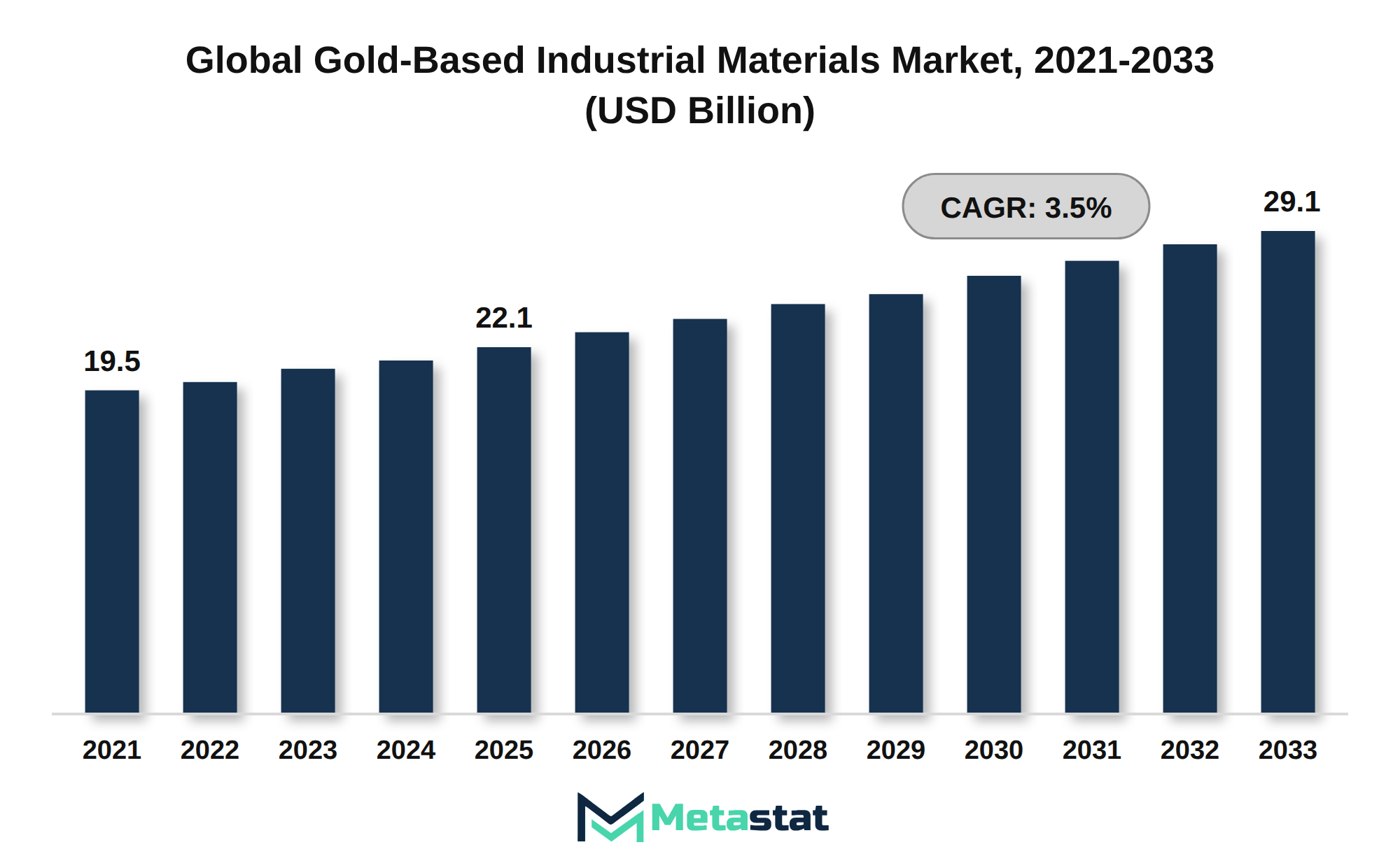
The global Gold-Based Industrial Materials market was valued at USD 22.1 billion in 2025 and is projected to reach USD 29.1 billion by 2033, growing at a CAGR of 3.5% over the forecast period.
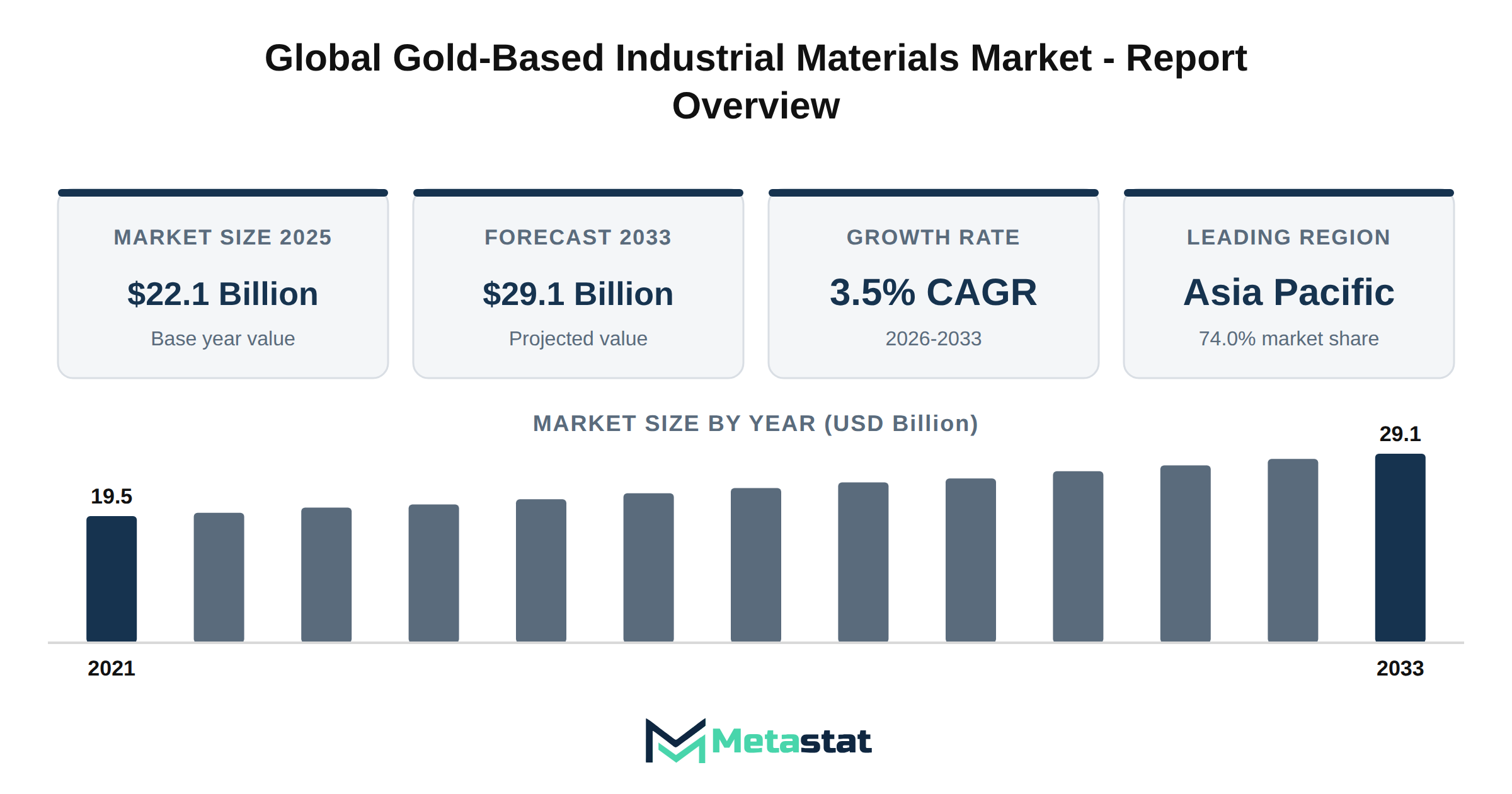
The Gold-Based Industrial Materials market includes pure gold, gold alloys, composites, and chemical compounds engineered for applications in electronics, semiconductors, medical devices, telecommunications, aerospace, and high-reliability industrial sectors. Buyers in these industries prioritize gold-based materials for their conductivity, resistance to corrosion, and reliability in high-precision or mission-critical environments. The bulk of demand originates from electronics and semiconductor manufacturing, where gold bonding wires, sputtering targets, and joining materials drive production efficiency and ensure product longevity.
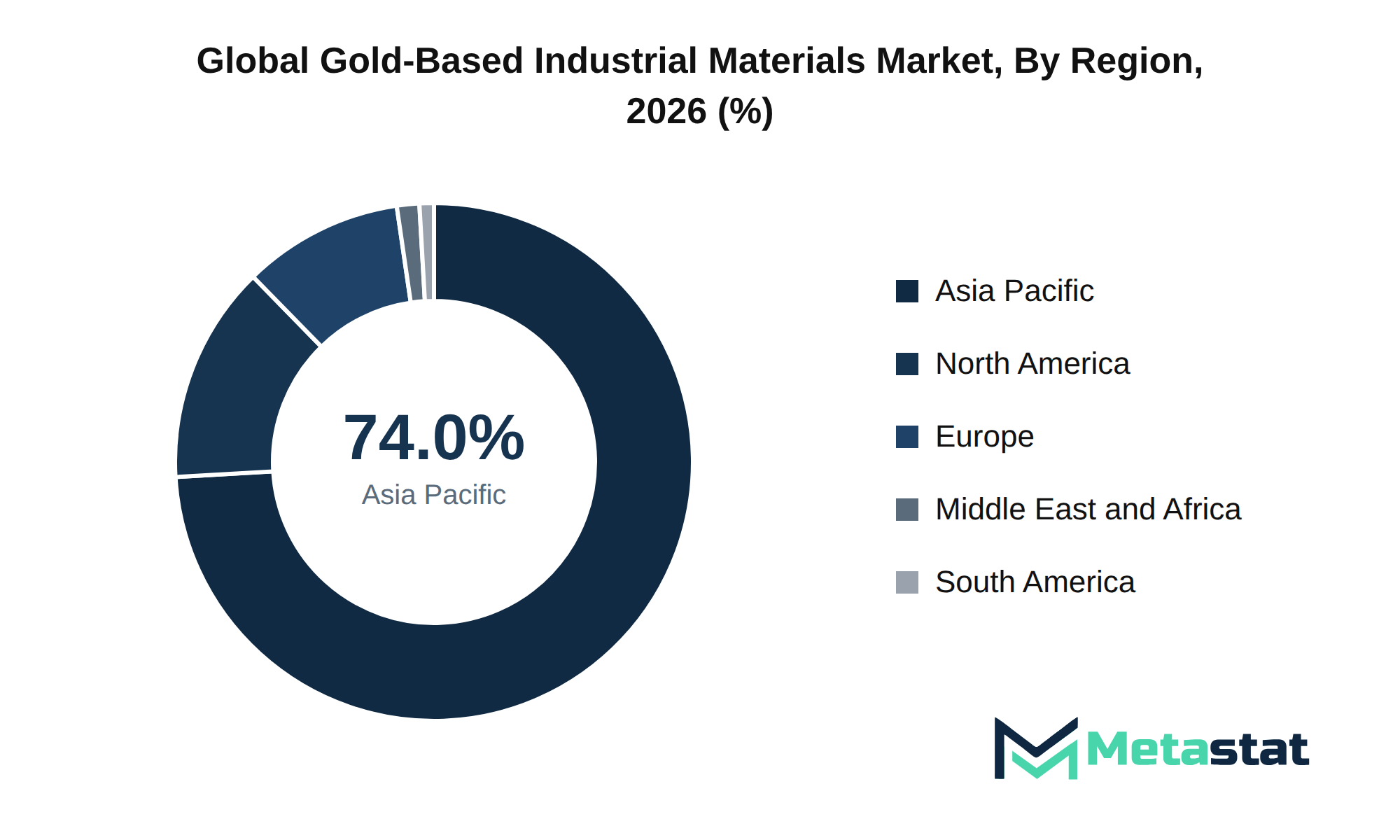
In terms of regional distribution, Asia Pacific dominates with a 74% share, reflecting the region’s concentration of electronics manufacturing hubs and advanced industrial capacity. North America holds 13.6% of the market in 2025, with the US leading in 2026. European buyers account for 10%, while South America and the Middle East and Africa together represent a small proportion of global demand. This regional pattern reflects the geographic concentration of downstream industries that require gold-based inputs, especially in high-tech manufacturing clusters.
Electronics and semiconductor manufacturing is the leading end-use segment by value, supported by ongoing innovation in microelectronics and the expansion of consumer and industrial electronics. The main growth driver for the Gold-Based Industrial Materials market is the rising adoption of advanced electronic components that demand superior reliability and miniaturization, which gold materials provide more effectively than alternatives. Maintaining strict process cleanliness across these advanced microfabrication lines also fuels upstream investments in semiconductor gas purifiers.
High-reliability electronic assemblies, medical device manufacturers, and aerospace suppliers drive spending on gold-based industrial materials alongside dielectric solutions like aerospace fluoropolymers to secure superior conductivity, corrosion resistance, and biocompatibility. Buyers invest in these materials to achieve stable performance in mission-critical environments, where gold’s physical and chemical properties reduce failure rates and extend product lifespans. This preference for performance over cost differentiates gold-based materials from alternatives, anchoring their use in sectors where precision and reliability are not negotiable.
Electronics and semiconductor manufacturing is the largest end-use segment by value, reflecting sustained demand for gold bonding wires, sputtering targets, and electroplating chemicals in miniaturized, high-density circuits. The market covers a range of compositions, including pure gold, alloys, composites, and chemical compounds, tailored to meet the functional demands of each application. Buyers in North America face mature industry standards and established supplier networks, shaping procurement strategies and specification requirements.
Asia Pacific accounts for the largest regional share, at 74%, driven by dense electronics manufacturing clusters, vertically integrated supply chains, and ongoing investment in semiconductor fabrication capacity. This regional expansion has simultaneously accelerated procurement of automated semiconductor gas delivery cabinet infrastructure across new wafer facilities. Rapid technological change in microelectronics increases the need for miniaturization, pushing manufacturers to adopt materials that deliver reliable electrical and thermal performance at ever-smaller scales, supporting market advancement.
Gold bonding wires, long regarded the industry benchmark for advanced chip packaging, are experiencing increased pressure from the adoption of copper and other alternative materials. This shift has intensified within high-density and cost-sensitive packaging applications, where material cost and electrical performance remain critical considerations for device manufacturers. In 2026, the Gold Bonding Wires and Ribbons segment is projected to account for USD 5.4 billion, with growth to USD 6.5 billion by 2033 at a 2.8% CAGR, highlighting continued but moderated expansion compared to other emerging materials.
Device miniaturization and escalating input price volatility have driven several semiconductor packaging firms to substitute pure gold wires with copper or palladium-coated copper options. These alternatives offer reduced raw material costs and improved performance in certain conditions, particularly in consumer electronics and mass-market integrated circuits. However, gold wires still deliver superior corrosion resistance, reliability, and compatibility with fine-pitch devices, ensuring their retention in mission-critical and high-value segments including advanced sensors and medical-grade components.
This competitive tension has reshaped procurement strategies throughout the market. Suppliers have responded with investments in alloy technology and process innovation, aiming to sustain gold’s technical advantages while narrowing the cost gap. The evolution of chip packaging materials is expected to moderate price growth for gold-based inputs while strengthening demand for value-added variants, supporting a differentiated market structure over the forecast period.
Persistent volatility in gold prices has led industrial buyers to intensify thrifting strategies in electroplating applications. In periods marked by sharp cost swings, procurement teams in electronics, semiconductor, and telecommunications manufacturing have shifted toward formulations and process designs that reduce gold loadings without sacrificing product reliability. This shift is particularly pronounced in Asia Pacific, where concentrated manufacturing demand meets significant exposure to spot gold fluctuations due to large purchasing volumes. Buyers in the market increasingly negotiate contracts that feature price adjustment clauses or index-linking to buffer against rapid material cost changes. These contracts limit unplanned cost overruns and provide predictability in budgeting, which is essential for high-volume producers.
Thrifting manifests in two principal ways: adoption of thinner gold layers in electrodeposition and increased use of gold alloy or composite materials, which stretch the performance of gold while controlling procurement costs. The product mix illustrates this trend, with gold alloy materials projected to reach USD 6.1 billion by 2033. This approach attracts sustained interest from both established and emerging manufacturers seeking to remain price-competitive in end-products. For suppliers, this results in heightened pressure to develop and qualify alternative compositions and to provide technical support on process integration. The commercial consequence is a gradual reduction in per-unit spend on pure gold inputs, while the market overall retains growth momentum with adoption broadening in high-reliability sectors.
The commercialization of gold nanoparticles in diagnostic assays and biosensors is accelerating, driven by the rising complexity and performance requirements in medical and dental device manufacturing. Device manufacturers, one of the key end users in the market, prioritize gold nanoparticles for their excellent biocompatibility, signal amplification, and stability in complex biological environments. This preference differs from traditional bulk gold products, reflecting a shift toward advanced material functionality tailored for rapid, high-sensitivity detection.
Medical and dental devices are projected to account for USD 2.2 billion in value by 2033, highlighting the growing role of micro- and nanoscale gold materials in these applications. Manufacturers in this segment increasingly select gold nanoparticles to enable next-generation immunoassays, lateral flow tests, and electrochemical biosensors where detection speed and specificity directly affect patient outcomes and regulatory approvals. Clinical diagnostics are shifting toward point-of-care and personalized testing, driving demand for tailored nanoparticle-enabled assay components and supporting premium pricing and recurring supply contracts for qualified materials suppliers.
This trend has direct commercial consequences for suppliers of gold-based industrial materials. Suppliers that develop high-purity, consistently sized gold nanoparticle products position themselves to secure business from medical device OEMs and diagnostic kit producers. Supplier qualification cycles for biosensor components are lengthy and stringent, which results in durable supplier relationships and higher switching costs. Material innovators benefit from these dynamics through improved margins, repeat orders, and expanded market access while point-of-care diagnostics and biosensor technologies proliferate globally.
Purity directly influences electrical, thermal, and chemical performance in gold-based industrial materials, shaping their suitability for demanding applications. Pure gold materials find extensive use where the highest conductivity and corrosion resistance are required, serving critical roles in microelectronics and semiconductor manufacturing. The market reflects this preference: pure gold materials are projected to grow from USD 11.3 billion in 2026 to USD 14.0 billion by 2033. This segment’s compound annual growth rate of 3.1% highlights ongoing investments in advanced electronics that demand uncompromised material quality.
Higher purity enables finer wire bonding and more reliable connections. Stable operation under thermal and environmental stress is another advantage. Semiconductor and electronics manufacturers prioritize these properties to minimize signal loss and extend product lifespans, particularly in high-performance devices. By contrast, gold alloys and composites introduce additional elements to enhance mechanical strength or reduce costs, but often trade off conductivity or chemical stability. Manufacturers select these alternatives for specific applications where durability or budget constraints outweigh the need for maximum purity.
This distinction in material selection directly impacts supplier strategies, pricing tiers, and product positioning within the market. Buyers in microelectronics and chip fabrication justify premium prices for pure gold materials, reflecting their critical need for reliability and precision. Suppliers respond by refining production processes and quality controls to satisfy the stringent requirements of this segment, while targeting more cost-sensitive industries with alloyed or composite products.
Escalating demand for smaller, more powerful electronic devices is increasing the use of gold-based components at the micro and nano scale. Manufacturers of smartphones, wearables, and advanced sensors are specifying gold-based industrial materials to capitalize on their reliability in fine-pitch interconnections, thin-film circuitry, and high-density packaging. The shift toward compact device architectures is driving higher gold usage per unit, especially in the electronics and semiconductor manufacturing segment, which is projected to reach USD 19.3 billion by 2033. The market is benefiting from application trends that require both greater functional complexity and miniaturized form factors, supporting a higher value share for precision gold materials. Integration of gold in these dense, miniaturized systems reduces failure rates and enables extended device lifecycles, reinforcing its position as the material of choice for critical applications. Sustained investment in portable and multifunctional electronics is expected to accelerate growth in the market through 2033.
Strict internal and customer-driven purity requirements restrict procurement flexibility for electronics and semiconductor manufacturing buyers. Gold-Based Industrial Materials market participants supplying to these industries face extended qualification and documentation cycles, since every batch of pure gold and gold alloy materials demonstrate consistent composition and contaminant control. This scrutiny limits access to alternative suppliers, narrows sourcing options, and extends lead times for volume orders or urgent projects. The result is delayed uptake of new gold-based joining materials and advanced sputtering targets, even when these innovations improve performance or reduce costs. Compliance demands raise operational costs for suppliers serving the Gold-Based Industrial Materials market, particularly in regions with fragmented refining or fabrication infrastructure. These conditions contribute to slower introduction of emerging material grades and restrict the speed at which buyers adopt new gold-based products.
Suppliers in the Gold-Based Industrial Materials market contend with mounting fabrication costs that squeeze operating margins in high-value segments. Gold-based sputtering targets and joining materials require precision manufacturing processes, which increase input cost due to stringent quality standards and specialized equipment investments. This cost pressure intensifies for suppliers serving electronics and semiconductor manufacturing, where demand for ultra-thin coatings and advanced packaging drives up complexity and waste minimization becomes essential. In response, suppliers invest in process automation, advanced recovery systems, and tighter yield controls to limit cost escalation and protect margins. These actions support competitiveness, yet frequent retooling and capital upgrades reduce flexibility and tie up working capital. Suppliers face a challenging balance between maintaining technological advantage and managing profit erosion while fabrication requirements grow more sophisticated.
Gold sputtering targets are projected to reach USD 3.2 billion by 2033, delivering the fastest CAGR among product segments at 5.3 percent. This momentum outpaces growth in gold bonding wires and evaporation materials. Electronic device manufacturers, particularly in advanced display, sensor, and optoelectronic segments, drive this surge by shifting toward thin-film deposition processes requiring high-purity gold targets. The market is seeing a shift in capital expenditure toward sputtering equipment and related consumables, reflecting demand for finer circuit geometries and greater reliability. Suppliers addressing this opportunity with improved target designs and consistent purity capture new revenue streams from high-growth manufacturing clusters in Asia Pacific. Sustained opportunity is projected in gold sputtering targets, with downstream innovation in electronics and photonics expanding addressable applications.
The Global Gold-Based Industrial Materials market is segmented based on Product Type, Material Composition, and End-Use Industry.
Valued at USD 5.4 billion in 2026 and projected to reach USD 6.5 billion by 2033 at a CAGR of 2.8 percent, this segment supplies essential interconnect materials in integrated circuits and microelectronic assemblies. Gold bonding wires and ribbons are critical for semiconductor packaging and advanced electronic modules, supporting applications where reliability and conductivity take priority. Principal buyers include semiconductor manufacturers and contract assemblers in Asia Pacific, which leads global electronics output and accounts for the highest share of demand in this segment. The main driver for this segment stems from miniaturization trends and the integration of complex chips in consumer electronics, which require precise, high-purity wire bonding. Compared to gold sputtering targets, which are projected to grow at a faster 5.3 percent CAGR, gold bonding wires and ribbons expand at a steadier pace, reflecting their established use and slower process substitution. Persistent material cost pressure distinguishes this segment, with wire bonding applications competing against alternatives in cost-sensitive device categories.
Used extensively by electronics and semiconductor manufacturers, these targets enable the creation of thin, uniform gold layers critical for advanced integrated circuits, high-density interconnects, and precision sensor surfaces. Demand stems from the sector’s continuous investment in next-generation fabrication methods and the shift toward high-frequency, miniaturized devices, where the functional advantages of gold - conductivity, chemical stability, and bond reliability - warrant premium spend. Compared to gold bonding wires and ribbons, which grow at 2.8 percent CAGR, gold sputtering targets outpace their peers in adoption, reflecting preference for sputter deposition in sophisticated wafer processing and packaging stages. Pricing remains higher due to purity standards and the need for defect-free target material, yet buyers in high-value electronics and optoelectronics are less price sensitive, prioritizing yield and device reliability. Growth in this segment is reinforced by semiconductor capacity expansion in Asia Pacific, where investment in advanced manufacturing infrastructure continues to accelerate adoption of gold sputtering targets.
Gold Evaporation Materials segment is expected to reach USD 1.9 billion by 2033. These materials serve in thin-film deposition processes critical to fabricating semiconductors, optical coatings, and advanced sensors. Electronics and semiconductor manufacturers value gold evaporation for its precise layer formation, purity, and stable electrical characteristics, which are vital in high-reliability microelectronic devices. Demand is supported by ongoing miniaturization in chips and components, which requires exacting deposition techniques where gold’s properties outperform alternative metals. Compared with Gold Sputtering Targets, which are projected to grow faster at a 5.3% CAGR, Gold Evaporation Materials address buyers prioritizing ultra-thin, defect-free films for niche applications rather than the higher throughput of sputtering lines. Pricing for this segment is shaped by gold’s intrinsic value and the technical requirements of deposition, with end-users absorbing premium costs when performance advantages outweigh alternatives. Microelectronics and specialty optics producers favor this segment when their products depend on uncompromised material integrity.
Gold-Based Joining Materials segment is projected to grow at a CAGR of 4.3% during the forecast period. These materials serve specialized roles in the assembly of high-reliability electronics, medical implants, and aerospace systems where joint integrity and corrosion resistance are non-negotiable. Users select these joining solutions for their ability to maintain conductivity and structural stability under extreme conditions. Heightened adoption in advanced packaging and microelectronic interconnects is reshaping procurement patterns among device manufacturers in the Gold-Based Industrial Materials market. Compared with Gold Bonding Wires and Ribbons, which post a 2.8 percent CAGR, Gold-Based Joining Materials outpace the group and attract buyers seeking improved performance for miniaturized or mission-critical assemblies. While gold content drives higher material costs, users justify the expense due to operating demands that alternatives fail to match. The segment's rapid expansion reflects its importance in applications where failure is not an option.
Gold thick-film conductor pastes and inks are specialty formulations engineered for screen-printing or inkjet deposition onto ceramic, glass, and polymer substrates. Used primarily in hybrid integrated circuits, sensors, and high-frequency RF components, these materials deliver stable conductivity and moisture resistance under harsh operating conditions. Advanced electronics manufacturers, especially in Asia Pacific, drive adoption to meet stringent reliability and miniaturization standards in telecommunications and automotive electronics. The segment stands apart in the Gold-Based Industrial Materials market for its compatibility with scalable, additive manufacturing processes, enabling high-throughput production of printed circuit elements. Unlike segments including gold bonding wires, which are exposed to competitive pressure from lower-cost substitutes, pastes and inks hold an advantage where design flexibility and substrate diversity are critical. Buyers in this segment often prioritize formulation customization and process yield over commodity price, a dynamic that supports differentiated pricing within the broader Gold-Based Industrial Materials market.
Gold electroplating chemicals are formulated for depositing uniform, conductive gold layers onto electronic connectors, semiconductor contacts, and high-frequency device components. Manufacturers in the market rely on these chemicals to achieve highly controlled, thin-film coatings that support miniaturization and enhanced signal integrity. Adoption is concentrated among advanced electronics producers and telecommunications equipment manufacturers, where gold’s corrosion resistance and electrical conductivity are central to product reliability. Heightened demand for denser circuit architectures and shrinking device footprints drives this segment, with buyers seeking process consistency and precision in critical applications. Gold bonding wires and ribbons serve conductive pathways within chip packaging, while gold electroplating chemicals address surface finishing and interconnect protection needs, attracting a different set of process engineers and procurement specialists. This segment is distinguished by its close alignment with high-speed data transfer and low-defect manufacturing priorities, rather than bulk interconnection or structural roles found in other gold-based products.
Gold electrical contact materials are engineered components critical to the reliable operation of precision relays, switches, and connectors in telecommunications, medical imaging, and industrial automation equipment. Electrical and electronics manufacturers select these materials for their resistance to corrosion, consistent conductivity, and low contact resistance, which are essential for long lifespan and minimal signal loss in high-reliability environments. Demand strength in this segment reflects sustained investment by device OEMs seeking to minimize maintenance cycles and guarantee signal integrity in mission-critical systems. Unlike lower-priced segments within the Gold-Based Industrial Materials market - including gold powders and nanoparticles - electrical contact materials command a premium due to their stringent purity requirements and specialized fabrication processes. Unique to this segment is the pressure from alternative alloy solutions that provide cost relief but are less established for applications demanding absolute reliability. In the Gold-Based Industrial Materials market, adoption is concentrated in sectors where downtime risks carry high commercial penalties, driving supplier focus on consistent performance over cost alone.
Semi-finished gold fabrication stock consists of intermediate forms - rod, bar, sheet, tube, and wire - supplied to component manufacturers for precision machining, stamping, or further forming into connectors, contacts, and specialized assemblies. Principal buyers include contract manufacturers and OEMs in electronics and medical device production, who specify semi-finished gold stock for both prototyping and mass fabrication runs where material traceability and batch-to-batch consistency reduce process risk. In this market, demand for this segment is driven by buyers seeking flexibility in inventory and design, unlike the dedicated end-use formats in bonding wires or sputtering targets. Pricing tends to reflect the spot gold price and fabrication margin, creating cost variability not present in segments with more value-added downstream processing. Compared with gold powders or pastes, semi-finished stock primarily attracts precision engineers who require exact dimensions and high purity with minimal surface contamination. This supports downstream adoption in regulated industries with tight tolerance requirements, positioning the segment as a specialized supply channel in this market.
Fine gold powders and nanoparticles serve in a diverse set of applications where enhanced surface area or catalytic reactivity is critical, including advanced electronics, specialized coatings, and chemical catalysis. Buyers include electronics manufacturers seeking high-performance conductive inks and researchers developing next-generation medical sensors, with unique requirements for particle size, dispersion, and purity that differ sharply from those for bulk gold products. In this segment, demand is driven by needs where miniaturization and novel material interfaces define product performance, often commanding a higher per-gram price due to complex production and quality assurance standards. Barriers to broader adoption include the technical expertise and process control required to produce stable, uniform nanoparticle dispersions at scale - a threshold that restricts competition to a limited group of suppliers and increases switching costs for customers who qualify materials for regulated or safety-critical uses.
Supported gold catalysts and gold laboratory articles address specialized niches in research, chemical processing, and analytical testing. Buyers include research institutions, chemical manufacturers, and academic laboratories seeking catalytic materials for fine chemical synthesis and precise analytical tools. Demand in this segment is influenced by the push for greener chemical processes and the selectivity gold catalysts deliver in specialty reactions, which drives adoption in scenarios where other precious metals fall short. Compared to high-volume categories in the market, supported gold catalysts and laboratory articles command higher unit prices due to their tailored compositions and controlled surface properties. Regulatory pressures encouraging lower environmental impact in industrial chemistry support ongoing product development, with adoption often tied to technical performance rather than cost. This segment stands apart for its strong alignment with innovation in applied research and the requirements of end users who prioritize reproducibility, purity, and specialized function over scale or commodity pricing.
Pure Gold Materials segment is valued at USD 11.3 billion in 2026 and is projected to reach USD 14 billion by 2033, at a CAGR of 3.1% during the forecast period. These materials serve in high-reliability electronics, semiconductor manufacturing, and critical medical and dental components where material consistency and inertness are non-negotiable. Buyers in this segment frequently include major electronics manufacturers and medical device companies that prioritize long-term performance and biocompatibility. Demand in this segment is shaped by industries requiring zero contamination risk and minimal electrical resistance, distinguishing it from segments including Gold Alloy Materials, which are expected to reach USD 6.1 billion by 2033 and grow at 3.6% CAGR. While alloys support broader cost-sensitive applications, pure gold commands a premium due to its chemical stability and compatibility with demanding microelectronic and biomedical environments. These properties secure a loyal buyer base and help stabilize pricing in the market despite volatility in global gold supply.
These materials blend gold with elements including silver, copper, or palladium to enhance hardness, wear resistance, and joining characteristics, making them indispensable for high-reliability electronic connectors, precision bonding, and specialized medical and industrial device components. Electronics and semiconductor manufacturers purchase these alloys where pure gold's softness limits performance or where cost containment is critical. Demand is driven by the balance of electrical conductivity and mechanical durability that alloys deliver over pure gold, which reached USD 14 billion by 2033 but grew slower at a 3.1% CAGR. Gold Alloy Materials attract buyers seeking to optimize lifecycle cost and device reliability, especially in connector and switch assemblies. Compared to gold composite materials, which target niche applications and are projected at USD 2.4 billion by 2033, alloys command broader adoption in volume-driven segments.
Gold Composite Materials segment is expected to reach USD 2.4 billion by 2033. These materials combine gold with ceramics, polymers, or other metals to deliver properties not achievable by pure gold or standard alloys. Buyers in advanced electronics and medical device manufacturing select gold composite materials for applications where a tailored balance of conductivity, durability, and thermal stability is essential. Demand in this segment receives support from continued miniaturization and integration in circuit and sensor technologies, where composite structures outperform in environments with weight or size constraints. Compared to Pure Gold Materials, which are projected to reach USD 14 billion by 2033, gold composite materials serve a more specialized base, often prioritizing functional customization over raw material value. The segment’s lower value reflects both its niche focus and the higher cost of processing composites compared to alloys. Gold composites distinguish themselves by enabling performance in emerging device architectures, with buyers seeking materials that bridge the gap between cost efficiency and application-specific reliability.
Projected to grow at a CAGR of 2.9% during the forecast period, gold chemical compounds consist of refined gold salts and organometallic derivatives engineered for use in electroplating baths, specialty catalysts, and precision surface treatments. Demand is driven by buyers in electronics manufacturing, medical diagnostics, and laboratory research seeking highly stable and pure compounds for applications where precise gold deposition or reactivity is critical. This segment attracts attention from research institutes and specialty chemical suppliers, in contrast to pure gold and gold alloy segments, which are favored by high-volume industrial fabricators. Slower growth relative to gold alloy materials, which post a CAGR of 3.6%, reflects more specialized demand and often higher per-unit pricing tied to purity requirements and synthesis complexity. Regulatory scrutiny regarding the environmental impact of gold chemical waste and evolving purity standards influence sourcing decisions, especially for buyers operating in regions with strict environmental compliance frameworks.
Valued at USD 15.1 billion in 2026 and projected to reach USD 19.3 billion by 2033 at a CAGR of 3.6 percent, this segment addresses the material requirements of advanced device manufacturing across consumer electronics, computing, and integrated circuit production. Procurement teams in semiconductor foundries and electronics OEMs select gold-based materials for their conductivity, corrosion resistance, and reliability in wafer fabrication, packaging, and assembly. Demand is driven by the push for miniaturization, higher device integration, and expanding global electronics output, supported by growth in data centers, 5G infrastructure, and automotive electronics. Compared with telecommunications equipment, which is projected to reach USD 2.7 billion by 2033 at a 2.9 percent CAGR, this segment delivers both higher spend and a faster growth rate, reflecting its centrality to device value and performance. The Gold-Based Industrial Materials market benefits from this segment’s volume scale and specification intensity, with suppliers competing on purity, consistency, and technical support for process integration. Regulatory oversight on material traceability and supply chain ethics further influences sourcing strategies in this segment, setting procurement priorities apart from lower-volume industrial buyers in the Gold-Based Industrial Materials market.
Telecommunications Equipment segment is estimated to reach USD 2.7 billion by 2033, at a CAGR of 2.9% during the forecast period. This segment encompasses gold-based components used by OEMs and assembly houses producing network switches, base stations, antennas, and optical transceivers. Gold’s reliability in high-frequency signal transmission and corrosion resistance underpins its adoption in demanding telecom applications, where signal integrity drives material selection for connectors and contacts. Demand is primarily influenced by the rollout of next-generation wireless networks and infrastructure upgrades, particularly in Asia Pacific where regional electronics manufacturing is concentrated. Compared to Electronics and Semiconductor Manufacturing, which expands at a faster CAGR of 3.6%, Telecommunications Equipment shows slower but resilient growth, reflecting a more mature cycle and longer replacement intervals. Price sensitivity is higher for telecom buyers, leading to stringent material optimization and competitive pressure on gold-based component suppliers. Manufacturers address these needs by offering alloys and miniaturized designs tailored for telecom connectors and RF modules, supporting efficient signal performance while managing costs. Suppliers continue to adapt to evolving requirements in telecom infrastructure.
Medical and Dental Devices segment is expected to reach USD 2.2 billion by 2033. Precision surgical instruments, implantable components, and diagnostic equipment draw on gold-based industrial materials for their superior biocompatibility and resistance to corrosion, critical for patient safety and long-term device reliability. Demand is predominantly driven by medical device manufacturers and dental labs focused on high-value restorative and therapeutic solutions. Growth in this segment is slower than in Aerospace and Defense, which has a CAGR of 4.2%, reflecting more stable but less aggressive innovation cycles and a stringent regulatory environment. Compared to Electronics and Semiconductor Manufacturing, where buyers are highly cost-sensitive and price competition is stronger, procurement decisions in the Medical and Dental Devices segment emphasize reliability and compliance with health standards, supporting higher per-unit prices. Adoption in this space is further shaped by evolving global healthcare infrastructure and aging demographics, which stimulate consistent investment in advanced medical technologies, anchoring long-term demand.
Projected to grow at a CAGR of 4.2% during the forecast period, aerospace and defense applications of gold-based industrial materials are driven by the sector’s critical requirements for durability, reliability, and high performance in mission-critical electronic, avionic, and satellite subsystems. Defense contractors and aerospace OEMs rely on gold-based interconnects and coatings to ensure signal integrity and corrosion resistance in harsh operational environments. The market finds particularly strong traction in this segment due to stringent quality standards and a higher willingness to absorb premium input costs, reflecting the non-negotiable nature of component reliability for end users. Compared to electronics and semiconductor manufacturing, which is projected at a 3.6% CAGR, aerospace and defense is expanding at a faster rate, reflecting specialized demand for gold’s unique technical attributes and regulatory compliance requirements. Adoption barriers for this segment stem from strict certification protocols and long qualification cycles, leading suppliers to prioritize process traceability and documentation to secure repeat contracts within this segment.
Automotive applications for gold-based industrial materials revolve around high-reliability connectors, sensor contacts, and advanced electronics integrated into modern vehicles. Automotive manufacturers and tier-one suppliers specify gold-based materials for critical systems where corrosion resistance, consistent conductivity, and longevity under thermal cycling are essential. Expansion of electric and hybrid vehicles drives demand for gold-plated power electronics and control modules, with these platforms requiring low-resistance and durable interconnects. Compared with segments including Electronics and Semiconductor Manufacturing or Aerospace and Defense, automotive uses differ through a stronger sensitivity to cost and lifecycle reliability. While the market benefits from automotive electrification trends, the segment does not match the accelerated growth rates seen in aerospace or the scale of electronics manufacturing, reflecting its position within a specialized, quality-driven buyer group. Regulatory pressures on vehicle electronics safety and emissions further reinforce the adoption of gold-based solutions in mission-critical automotive electronic assemblies across premium and mainstream platforms.
Critical electrical and thermal interfaces in high-reliability turbines, transmission infrastructure, and grid-scale energy management systems rely on advanced gold-based materials for their high conductivity and corrosion resistance. Buyers in this segment are equipment manufacturers and integrators supplying the power generation, transmission, and clean energy sectors, where stable electrical performance and durability under demanding conditions justify the use of premium materials. Demand for gold-based solutions in these applications is influenced by the push for more efficient grid components and renewable energy installations that demand longevity and minimal maintenance. Unlike segments including electronics or telecommunications, which center on miniaturization or high-frequency signal integrity, energy and power equipment buyers typically prioritize long-term operational stability over volume pricing. Adoption depends on demonstrating lifecycle cost savings and regulatory compliance for critical power infrastructure, driving interest in gold-based industrial materials where alternative metals deliver inferior service life or environmental reliability. This segment is shaped by the dynamics of energy transition and investment in resilient grids, setting it apart from higher-volume, cost-sensitive end-users.
Industrial machinery and instrumentation covers the use of gold-based industrial materials in precision equipment, analytical devices, process monitoring tools, and automation systems. Manufacturers in sectors including process control, laboratory instrumentation, and heavy machinery select gold contacts, bonding wires, and electrodes for their anti-corrosive properties and stable electrical conductivity under conditions where reliability is critical. In this segment, adoption is largely driven by the growing sophistication of industrial automation and the requirement for highly dependable sensors and connectors, which demand premium materials to maintain operational uptime and measurement accuracy. This buyer group differs from electronics and semiconductor manufacturers, where purchase triggers include miniaturization and high-frequency performance. Purchasing decisions in industrial machinery focus on lifecycle cost and reliability rather than rapid technology refresh cycles. Pricing remains above segments tied to broader-volume end markets, supporting margins for suppliers focused on specialty industrial applications. OEMs and system integrators working on advanced instrumentation projects continue to engage steadily with gold-based materials, reinforcing the material’s role in critical process environments. Gold’s durability and performance characteristics outweigh cost pressures, resulting in consistently strong demand from this user base.
Glass and ceramics manufacturers and chemical processors use gold-based industrial materials for their unique catalytic, thermal, and chemical stability properties. In glass production, gold compounds enable the creation of specialty colored glass and coatings with high durability, while ceramics applications benefit from gold’s inertness and high-temperature resilience for advanced functional surfaces. Chemical processing facilities require gold catalysts in selective oxidation and reduction reactions where competing metals would degrade or contaminate the process. Compared to core segments including electronics manufacturing, buyers in these industries focus on long-term performance and process reliability over volume or rapid replacement cycles. This sub-segment addresses niche, specification-driven demand, often dictated by technical requirements rather than price sensitivity. Adoption is influenced by regulatory standards governing purity and emissions, especially in chemical processing, which distinguishes it from other end-use sectors.
Based on geography, the Global Gold-Based Industrial Materials market is divided into North America, Europe, Asia-Pacific, South America, Middle East, and Africa.
North America is projected to reach USD 3.8 billion by the end of 2033, representing 13.6 percent of global demand in 2025. Buyers in the United States drive a substantial portion of regional consumption, reflecting sustained investment in advanced manufacturing capabilities that require high-purity and specialty gold materials. Regulatory clarity regarding material origin and traceability in both the United States and Canada shapes supplier qualification processes and cost structures, favoring established vendors able to demonstrate compliance and ethical sourcing. The region further benefits from a concentration of research institutions and technology developers seeking premium materials for prototyping and production of high-performance devices. Price sensitivity remains moderate, with buyers prioritizing reliability and long-term supply stability over short-term cost reductions. Market participants in North America engage in ongoing innovation to meet shifting application standards and customer expectations, reinforcing the region's position within the supply chain.
Europe accounted for 10.00 percent of the global share in 2025, driven by precision engineering and advanced manufacturing enterprises concentrated in Germany, France, the UK, and Italy. Buyers in these countries exhibit sustained demand for gold-based conductor pastes, electroplating chemicals, and high-reliability joining materials, reflecting stringent technical standards in automotive and high-end electronics manufacturing. Regulatory frameworks across the region support consistent material traceability and environmental compliance, shaping supplier qualification criteria for industrial users. The market in Europe is influenced by a preference for materials with established recyclability and low contamination risk, given the region’s focus on sustainability and supply chain integrity. Stakeholders prioritize long-term supplier agreements, especially for applications in next-generation mobility platforms and data infrastructure. This approach underpins steady uptake of premium gold-based products, supporting the region’s position in specialized and value-added segments.
Accounting for 74.0 percent of global demand in 2025, Asia Pacific leads due to its concentration of high-volume electronics and precision manufacturing. China, Japan, South Korea, and Southeast Asia drive extensive consumption, reflecting the density of semiconductor fabrication facilities and advanced electronics assembly in these locations. High purchasing volumes from integrated device manufacturers and packaging houses in the region influence sourcing contracts and encourage supplier capacity expansion. End-user requirements for consistent conductivity, miniaturization, and reliability push suppliers to invest in refining and gold alloy innovation tailored to local specifications. Rapid equipment upgrade cycles and ongoing investments in next-generation manufacturing stimulate demand for both pure gold and alloy-based products. The market in Asia Pacific reflects the combined effects of large-scale industrialization, a robust supplier ecosystem, and technology-focused end users who emphasize performance and long-term reliability in their procurement decisions.
South America remains a modest but stable participant in the Gold-Based Industrial Materials market. In Brazil and Argentina, activity centers on specialized fabrication and repair for mining equipment, laboratory devices, and localized electronics assembly. Buyer interest reflects periodic upgrades across extractive industries and targeted investments in mining automation, resulting in steady but limited procurement of gold bonding wires and joining materials. The high cost of importing advanced materials, combined with fluctuating local currencies, restricts broader adoption and places pressure on margins for regional producers and distributors. Demand trends in Rest of South America depend on mining sector cycles and investment in material testing or process control infrastructure. Despite these constraints, any increase in regional electronics assembly or equipment refurbishment is expected to influence procurement volumes and supplier strategies in South America during the forecast period.
Specialized demand in Saudi Arabia, UAE, and South Africa stems primarily from investments in advanced diagnostic laboratories and precious metal refining capacity. These countries prioritize gold-based industrial materials for precision equipment and analytical tools, with institutional buyers and private labs driving purchases to support research and asset authentication. The region demonstrates modest but stable procurement relative to larger markets, reflecting its specialized focus. Infrastructural investments in the UAE and Saudi Arabia support technology installation for high-purity gold processing and testing, which influences supplier strategies targeting niche buyers. Local buyers favor established gold-based solutions for their reliability in scientific instrumentation and refining, supporting steady offtake. While regional consumption remains limited by comparison, procurement in this area continues to focus on advanced applications that require stringent quality standards, and suppliers position offerings to meet these technical requirements.
Competition in the Gold-Based Industrial Materials market centers on materials innovation, technical compliance, and alignment with high-reliability end-user requirements. Suppliers position their portfolios around differentiated gold-based products, including pure gold, alloys, composites, and chemical compounds. Buyers evaluate suppliers on the consistency of their materials in demanding sectors including electronics and semiconductor manufacturing, with price, certification, and the ability to deliver tailored formulations influencing sourcing decisions.
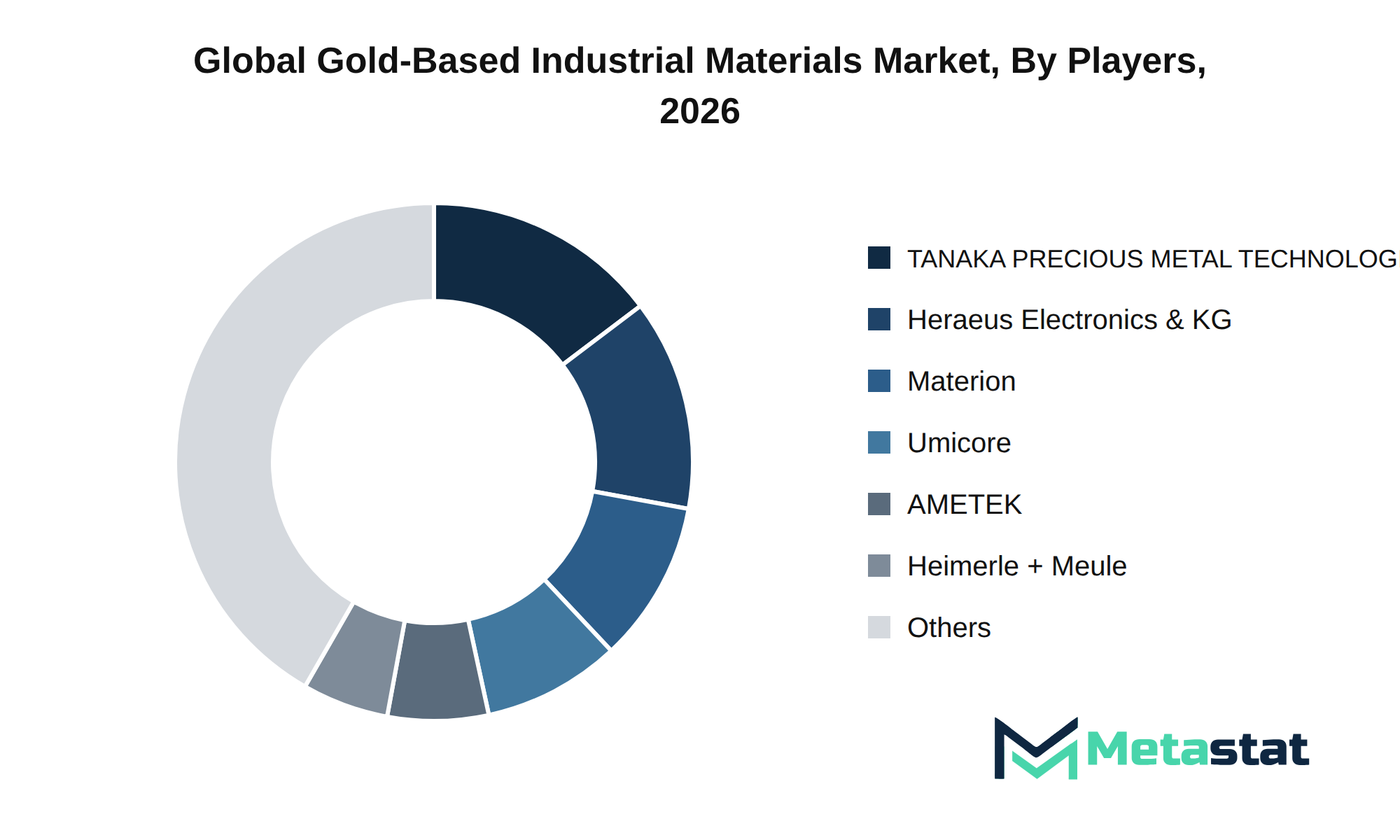
TANAKA PRECIOUS METAL TECHNOLOGIES Co., Ltd. maintains a strong presence through an expansive range of gold bonding wires and joining materials, supporting advanced microelectronics manufacturing. Materion Corporation strengthens its position by serving the gold sputtering targets segment, targeting buyers seeking precision thin-film deposition applications. Heraeus Electronics GmbH & Co. KG focuses on technical support and product customization, appealing to manufacturers in medical device and telecommunications end-uses. Companies including Umicore NV/SA and Sumitomo Metal Mining Co., Ltd. emphasize reliability and adherence to certification standards to win projects from technology integrators.
Strategic differentiation within the Gold-Based Industrial Materials market relies on a broad portfolio, sector specialization, and responsiveness to evolving industry requirements. Customization for specific process technologies, rapid qualification for new device architectures, and proven supply reliability support supplier competitiveness. Buyers show a preference for suppliers able to support both large-volume production and specialty runs, reflecting the dual demand from mass-market electronics and specialized instrumentation.
Achieving this outlook requires sustained growth in electronics and semiconductor manufacturing, where demand is projected to reach USD 19.3 billion by 2033. Expansion in this segment relies on the ongoing miniaturization of components and the push for reliable, high-conductivity materials in advanced chip fabrication, which drives volume and price stability for gold-based inputs. Asia Pacific’s dominance, holding 74% of global share, depends on the region’s manufacturing capacity and investment in next-generation electronics infrastructure. Suppliers strengthen partnerships with device manufacturers and invest in gold alloy and composite formulations to capture more specialized applications, supporting steady growth in this market.
The main risk to this forecast is the potential for volatile gold prices, which raises material costs and impacts the willingness of buyers in cost-sensitive industries to specify gold-based components. If prolonged price surges occur, substitution with alternative materials in applications including telecommunications equipment and industrial machinery could slow adoption and dampen revenue growth across several regions.
By Product Type: Gold Bonding Wires and Ribbons, Gold Sputtering Targets, Gold Evaporation Materials, Gold-Based Joining Materials, Gold Thick-Film Conductor Pastes and Inks, Gold Electroplating Chemicals, Gold Electrical Contact Materials, Gold Semi-Finished Fabrication Stock, Gold Powders and Nanoparticles, Others (Supported Gold Catalysts, Gold Laboratory Articles)
By Material Composition: Pure Gold Materials, Gold Alloy Materials, Gold Composite Materials, Gold Chemical Compounds
By End-Use Industry: Electronics and Semiconductor Manufacturing, Telecommunications Equipment, Medical and Dental Devices, Aerospace and Defense, Automotive, Energy and Power Equipment, Industrial Machinery and Instrumentation, Others (Chemical Processing, Glass and Ceramics)
The report strategically identifies and profiles the key market players and analyses their core competencies in each sub-segment of the Gold-Based Industrial Materials market.
Report Attributes | Details |
Study Period | 2021-2033 |
Base Year | 2025 |
Estimated Year | 2026 |
Forecast Period | 2026-2033 |
Historical Period | 2021-2025 |
Growth Rate | CAGR 3.5% from 2026 to 2033 |
Revenue Unit | USD billion |
Segmentation | |
By Region | North America (By Product Type, Material Composition, End-Use Industry, and Country)
|
| |
Asia Pacific (By Product Type, Material Composition, End-Use Industry, and Country)
| |
| |
Middle East and Africa (By Product Type, Material Composition, End-Use Industry, and Country)
|
Find answers to common questions about this report
The Gold-Based Industrial Materials market size was valued at USD 22.1 billion in 2025.
The projected CAGR is 3.5% for the forecast period from 2026 to 2033.
The North America Gold-Based Industrial Materials market size is estimated to reach USD 3.8 billion by 2033.
Gold Bonding Wires and Ribbons lead by product type, with a value of USD 6.5 billion projected for 2033, the highest among all product segments. This segment outpaces Gold Sputtering Targets, which are projected to reach USD 3.2 billion by 2033.
Rising demand for smaller, more powerful electronic devices is increasing the use of gold-based materials in fine-pitch interconnections and miniaturized systems. Accelerating adoption of thin-film deposition processes in electronics manufacturing is driving rapid growth in gold sputtering targets.
Asia Pacific holds the dominant share with 74.0 percent of the total market, leading all other regions by a substantial margin. North America follows with 13.6 percent.
Strict purity and documentation requirements in electronics and semiconductor manufacturing restrict procurement flexibility and delay adoption of new gold-based products. Mounting fabrication costs and the need for frequent capital upgrades reduce supplier flexibility and squeeze operating margins in high-value segments.
Adoption is favored by the expanding range of applications for gold-based materials in miniaturized and multifunctional electronics, which require higher reliability and denser circuitry. Suppliers capturing demand for advanced sputtering targets and thin-film technologies benefit from downstream innovation in electronics and photonics.
The Gold-Based Industrial Materials market is estimated to reach a valuation of USD 29.1 billion by 2033.
Companies active in this industry include TANAKA PRECIOUS METAL TECHNOLOGIES Co., Ltd., Heraeus Electronics GmbH & Co. KG, Materion Corporation, Umicore NV/SA, Heimerle + Meule GmbH, Tokuriki Honten Co., Ltd., and ISHIFUKU Metal Industry Co., Ltd. These firms manufacture or supply gold-based industrial materials for applications across electronics, automotive, and specialized manufacturing sectors.
The analysts below cover Chemicals and Materials research at Metastat Insights.
LEAD ANALYST
Utkarsh Khirodkar is a Lead Market Research Analyst at MetaStat Insight, specializing in market intelligence, technology sector assessments, and competitive strategy.

INDUSTRY CONSULTANT - CHEMICALS & ADVANCED MATERIALS
Chemicals and Materials · Machinery & Equipment · Packaging
Amit Gadhekar Consultant for Chemicals and Materials at MetaStat Insight, directing sector-specific intelligence, research, and strategic consulting across global chemical and processing markets.
Evaluating secondary resin quality across post-consumer packaging streams requires reliable technical segmentation. MetaStat Insight delivered an objective assessment that distinguished between extrusion-grade flake pricing and optical sorting throughput limitations across Western Europe. The competitive positioning breakdown for licensed depolymerization technology providers answered several questions during our feedstock feasibility audit. Their team clarified regional trade restrictions on mixed plastic scrap quickly when our team submitted follow-up requests.
Evaluating sovereign cloud deployments for core banking platforms demands a clear view of data residency regulations and migration exit strategies. MetaStat Insight delivered an exhaustive review of regional latency tolerances, mainframe decommission milestones, and third-party vendor concentration risk. The regulatory compliance mapping across European and Asian financial jurisdictions gave our team a dependable baseline for multi-cloud infrastructure discussions.
Replacing petrochemical surfactants with bio-based alternatives requires realistic timelines on industrial precision fermentation scaling. The market research broke down commercialization timelines, feedstock sugar price sensitivities, and regional cosmetic ingredient regulatory approvals in Europe and East Asia. That supplier readiness mapping gave our formulations team reliable context when comparing renewable chemical sourcing roadmaps.
Explore related market intelligence reports worth reading alongside this one.
Starting from
$2950