
LEAD ANALYST
Utkarsh Khirodkar is a Lead Market Research Analyst at MetaStat Insight, specializing in market intelligence, technology sector assessments, and competitive strategy.

Hoses Market By Material (Natural Rubber, Nitrile Rubber, PVC, Silicone, Polyurethane, and Others), By Media Type (Water, Oil, Hot Water, Steam, Air, Gas, and Chemical), By Industry (Automotive, Infrastructure, Oil, Gas, Pharmaceuticals, Food, Beverages, Water, Wastewater, Chemicals, Mining, Agriculture, and Others), By Pressure (Low Pressure (Less Than 3000 Psi), Medium Pressure (Between 3000 To 6000), and High Pressure (More Than 6000)), Industry Analysis, Size, Share, Growth, Trends, and Forecast, 2024-2031
Report ID
MSI-2720
Published
February, 2026
Pages
253 Pages
Format
Report Details
Choose Your License
Hoses Market
The Global Hoses market is estimated to reach $24610.8 Million by 2031; growing at a CAGR of 9.5% from 2024 to 2031.
The Global Hoses market plays a crucial role in various industries worldwide. Hoses, a ubiquitous yet vital component, serve as conduits for the transportation of liquids, gases, and semi-fluid substances across diverse applications. This market encapsulates an intricate network of suppliers, manufacturers, and end-users, forming a complex web that underpins the functionality of countless processes.
The Global Hoses market embodies adaptability and innovation. From the construction industry to agriculture, and from healthcare to automotive, hoses find indispensable utility, ensuring the seamless flow of materials essential for diverse operations. The market's essence lies in the versatility of these conduits, which are designed to withstand varying pressures, temperatures, and chemical compositions. This adaptability is paramount, as hoses must cater to the specific demands of each application they serve.
Manufacturers within the Global Hoses market constantly push the boundaries of material science and engineering to enhance the durability and performance of their products. Innovations in materials, such as reinforced polymers and composite blends, enable hoses to meet stringent industry standards while exhibiting resilience in harsh environments. The market, therefore, becomes a crucible for technological advancement, driving the evolution of hose design and manufacturing processes.
Beyond the manufacturing sector, the Global Hoses market influences the economic landscape by fostering a network of suppliers and distributors. Small and large enterprises alike contribute to the market's vibrancy, each specializing in niche applications or catering to specific industries. This decentralized structure ensures a steady supply chain that can quickly adapt to the ever-changing demands of global commerce.
Furthermore, the Global Hoses market is deeply entwined with environmental considerations and regulatory frameworks. As industries face increasing scrutiny regarding their ecological footprint, the market responds by developing hoses that meet stringent environmental standards. The shift towards sustainable materials and manufacturing processes reflects not only a commitment to compliance but also an acknowledgment of the market's role in shaping a more environmentally conscious industrial landscape.
The Global Hoses market is a multifaceted domain that extends far beyond mere conduits for fluid transfer. It serves as a linchpin connecting industries, driving innovation, and navigating the complex interplay of technological, economic, and environmental factors. The resilience and adaptability inherent in the market's fabric ensure its enduring relevance, making it a pivotal force in sustaining the intricate tapestry of global commerce.
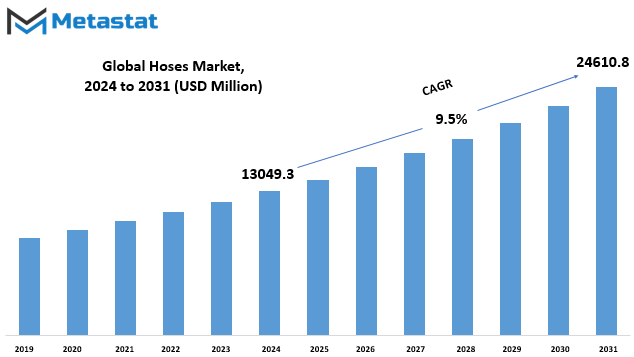
The Global Hoses market experiences significant growth driven by factors such as the expansion of industrial and agricultural activities. Advancements in material technology further contribute to the market's upward trajectory. Despite these positive aspects, challenges emerge in the form of the high cost associated with specialized hoses and increasing environmental concerns. These factors pose potential obstacles to the market's continued growth.
One of the primary drivers propelling the market forward is the increased demand for hoses in tandem with the expansion of industrial and agricultural sectors. As these activities continue to flourish, the need for efficient and advanced hoses becomes paramount. The integration of technological advancements in materials used for hose manufacturing also plays a pivotal role in fostering market growth. Innovations in materials contribute to enhanced durability and performance of hoses, aligning with the evolving requirements of diverse industries.
However, a notable hindrance to the market's expansion arises from the high cost associated with specialized hoses. This cost factor can impede the widespread adoption of advanced hose technologies, especially in sectors where budget constraints are a significant consideration. Moreover, environmental concerns add another layer of challenge to the market dynamics. As sustainability becomes a focal point across industries, there is a growing need for hoses that align with environmentally friendly practices. Failure to address these concerns may hinder the market's growth as environmentally conscious practices gain prominence.
Despite these challenges, the Global Hoses market holds promising opportunities for expansion, particularly in emerging economies. The ongoing economic development in these regions presents lucrative prospects for the market. As industries in emerging economies witness growth and modernization, the demand for hoses is expected to rise. This presents a window of opportunity for market players to tap into these developing markets and establish a strong foothold.
The Global Hoses market experiences growth fueled by the expansion of industrial and agricultural activities, coupled with advancements in material technology. While challenges like the high cost of specialized hoses and environmental concerns exist, the market's potential is underscored by opportunities in emerging economies. Balancing innovation with cost-effectiveness and sustainability will be crucial for stakeholders in navigating the complexities of the market and ensuring sustained growth in the coming years.
In the vast landscape of global markets, one sector that stands out prominently is the hoses market. As we delve into the dynamics of this market, it becomes evident that it is not a monolithic entity but rather a mosaic of various materials and segments, each playing a crucial role in shaping its trajectory.
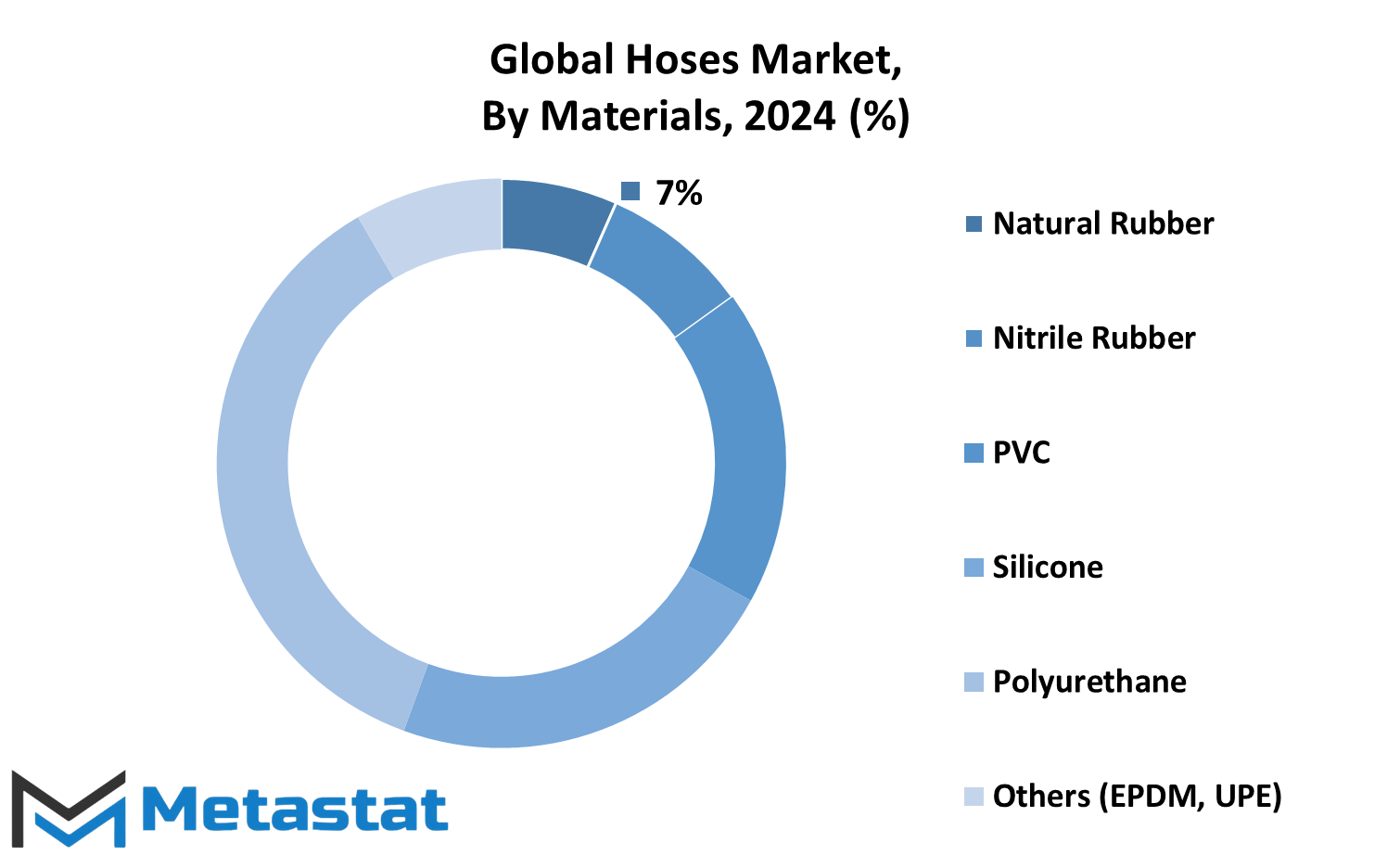
One of the key segmentation factors within the hoses market is the classification by material. This categorization provides insights into the diverse range of materials utilized in hose manufacturing, each with its unique properties and applications.
Natural rubber, with its inherent elasticity and resilience, continues to be a stalwart in the hoses market. Its ability to withstand a wide range of temperatures and resist abrasion makes it indispensable in industries ranging from automotive to construction.
Nitrile rubber, on the other hand, has gained significant traction due to its oil and fuel resistance properties. As industries grapple with the need for hoses that can withstand harsh environments, nitrile rubber emerges as a reliable choice.
PVC, known for its versatility and cost-effectiveness, finds extensive usage in hose manufacturing, especially in applications requiring flexibility and durability. Its wide-ranging chemical compatibility further enhances its appeal across diverse sectors.
Silicone, celebrated for its exceptional temperature resistance and biocompatibility, is carving a niche for itself in specialized industries such as healthcare and food processing. Its inert nature and non-toxic properties make it an ideal choice for applications where hygiene is paramount.
Polyurethane, with its exceptional abrasion resistance and flexibility, is increasingly becoming the material of choice in demanding environments such as construction sites and manufacturing facilities. Its ability to withstand rough handling and extreme conditions positions it as a frontrunner in the hoses market.
Beyond these prominent materials, there exists a category labeled as "Others," encompassing materials like EPDM and UPE. While they may not command the same market share as their counterparts, they nevertheless play a significant role in catering to niche applications where specific properties are paramount.
As we look ahead into the future of the hoses market, we can anticipate further evolution and innovation in materials and manufacturing processes. Advancements in material science and technology will continue to push the boundaries of what is possible, giving rise to hoses that are lighter, stronger, and more resilient than ever before.
The segmentation of the hoses market by material provides a comprehensive understanding of the diverse landscape within this industry. Each material brings its own set of advantages and applications, contributing to the vibrancy and resilience of the global hoses market.
The global hoses market encompasses a variety of products designed for different applications. Categorized by media type, these hoses serve specific purposes. Firstly, there are hoses tailored for transporting water, ensuring a seamless flow for various needs. Another significant category includes hoses built to handle oil, providing a reliable conduit for this essential resource. Additionally, there are hoses specialized for hot water and steam, addressing the unique challenges posed by high temperatures.
Moreover, the market offers hoses designed for the transportation of air and gas. These hoses play a crucial role in various industries, facilitating the movement of these gases efficiently. Furthermore, there are hoses engineered for chemical applications, ensuring the safe transfer of different chemicals without compromising integrity.
The segmentation of the global hoses market based on media type reflects the diverse requirements across industries. Each category serves a distinct purpose, contributing to the smooth operation of various processes. As industries continue to advance, the demand for specialized hoses catering to specific media types remains a pivotal aspect of fluid transportation systems.
The worldwide hoses market is diverse, catering to various industries such as Automotive, Infrastructure, Oil & Gas, Pharmaceuticals, Food & Beverages, Water & Wastewater, Chemicals, Mining, Agriculture, and Others. This broad spectrum of applications highlights the adaptability and significance of hoses in contemporary industrial settings. These hoses play pivotal roles across sectors, facilitating fluid transfer, ensuring operational efficiency, and maintaining safety standards.
In the automotive sector, hoses are integral components, facilitating the transfer of liquids and gases within vehicles. Whether it's fuel lines, coolant hoses, or brake lines, the automotive industry relies on hoses to ensure the smooth functioning of vehicles. Similarly, in infrastructure development, hoses find application in construction projects, contributing to the transportation of water, chemicals, and other essential materials.
The oil and gas industry heavily depends on hoses for the transportation of various fluids within complex extraction and refining processes. Hoses ensure the secure transfer of substances critical to the industry's operations, emphasizing their crucial role in maintaining the integrity of processes and preventing leaks or spills.
The pharmaceutical sector benefits from hoses in various ways, from manufacturing processes to research and development. Hoses aid in the transfer of liquids and chemicals during pharmaceutical production, showcasing their importance in maintaining hygienic and controlled environments.
Food and beverages industry relies on hoses for safe and efficient transfer of liquids, adhering to strict hygiene standards. In this sector, hoses contribute to maintaining the quality and integrity of consumable products throughout the production process.
Water and wastewater management also heavily relies on hoses for the efficient transfer of fluids in treatment plants and distribution systems. Hoses play a vital role in ensuring the seamless movement of water and wastewater, contributing to overall environmental sustainability.
Chemical industries utilize hoses for the secure transfer of various chemicals in manufacturing processes, emphasizing the significance of hoses in maintaining safety standards and preventing environmental hazards.
In mining and agriculture, hoses are essential for the transportation of water, chemicals, and other substances crucial to these industries' operations. Their durability and adaptability make them indispensable in harsh and dynamic environments.
The diverse applications of hoses across these industries underscore their versatile nature, with each sector benefiting from the unique properties and specifications of hoses tailored to their specific needs. As industries continue to advance, the global hoses market remains a dynamic and integral component of modern industrial processes.
The worldwide hoses market is categorized based on pressure into three segments: Low Pressure (less than 3000 Psi), Medium Pressure (between 3000 to 6000), and High Pressure (more than 6000). This classification enables a clearer understanding of the diverse applications and requirements within the global hoses market. The Low Pressure category encompasses situations where the demand for pressure is minimal, falling below 3000 Psi. Meanwhile, the Medium Pressure range covers applications with pressure needs ranging from 3000 to 6000 Psi. In contrast, the High Pressure sector is designated for situations where pressure requirements exceed 6000 Psi.
This pressure-based segmentation not only simplifies the market analysis but also assists stakeholders in identifying suitable hoses for specific use cases. The distinctions in pressure ranges cater to various industries and applications, allowing for a more tailored approach in selecting hoses that align with specific operational needs. As a result, this classification serves as a practical framework for both consumers and industry players to navigate the dynamic landscape of the global hoses market.
The market for hoses is categorized geographically into North America, Europe, and Asia-Pacific. This division helps to analyze and understand the market trends in different regions. The hoses market exhibits variations in demand and preferences across these continents. North America, for instance, has its unique dynamics, influencing the consumption and production patterns of hoses. Meanwhile, Europe presents its own set of factors shaping the market landscape. Asia-Pacific, being a diverse and expansive region, plays a pivotal role in the hoses market with its distinct market conditions.
Geographical segmentation allows a comprehensive examination of the factors impacting the hoses market in each region. It is not merely about identifying geographical locations but rather understanding the local dynamics that influence the demand and supply of hoses. This approach provides valuable insights into the market behavior, allowing businesses to tailor their strategies according to regional requirements.
In North America, the hoses market is subject to factors such as economic conditions, industrial developments, and regulatory frameworks unique to the region. This contributes to a specific market scenario, setting it apart from other regions. Europe, with its diverse economies and regulatory landscapes, similarly shapes a distinctive market for hoses. The Asia-Pacific region, encompassing a wide range of countries with varying economic structures and consumer behaviors, adds a layer of complexity to the global hoses market.
Analyzing the global hoses market through geographical lenses enables a nuanced understanding of market trends. Each region contributes to the overall dynamics of the market in its own way, creating a mosaic of influences that companies need to navigate. This segmentation is not just a demarcation on the map; it is a tool for businesses to decipher the intricate interplay of local factors shaping the demand and supply of hoses in the ever-changing global market.
The Global Hoses market is a dynamic landscape with several key players shaping the industry. Among these influential companies are Gates Corporation, Parker Hannifin Corporation, ContiTech Deutschland GmbH, Colex International Ltd., Danfoss A/S, Kanaflex Corporation USA, Norres Schlauchtechnik Gmbh, Kurt Manufacturing, RYCO Hydraulics, Transfer Oil S.p.A., Kuriyama Of America, Inc., Alfa Gomma S.p.A., Pacific Echo Inc, Semperit AG Holding, Titeflex Corporation, Trelleborg Corporation, Polyhose India Private Limited, Flexaust Inc., Salem-Republic Rubber Company, and Eaton Corporation Plc.
These key players play a crucial role in the Hoses industry, each contributing to the market's vibrancy and competitiveness. Companies like Gates Corporation and Parker Hannifin Corporation are well-known for their innovative solutions and high-quality products, while others like ContiTech Deutschland GmbH and Colex International Ltd. bring diverse expertise to the sector.
Danfoss A/S, Kanaflex Corporation USA, and Norres Schlauchtechnik Gmbh are notable entities that contribute to the diversity of offerings in the Hoses market. Their presence underscores the varied applications and specialized requirements within the industry.
Kurt Manufacturing, RYCO Hydraulics, and Transfer Oil S.p.A. are recognized for their commitment to excellence, ensuring reliability in their products and services. Kuriyama Of America, Inc., Alfa Gomma S.p.A., and Pacific Echo Inc. add further depth to the market with their unique strengths and capabilities.
Semperit AG Holding, Titeflex Corporation, and Trelleborg Corporation are integral players known for their adherence to industry standards and continuous advancements. Polyhose India Private Limited, Flexaust Inc., and Salem-Republic Rubber Company showcase the global nature of the Hoses market, contributing to its widespread reach and impact.
Eaton Corporation Plc stands out as a significant player, providing solutions that cater to diverse sectors and contributing to the overall growth of the Global Hoses market. The collaborative efforts of these key players underscore the interconnected and dynamic nature of the Hoses industry, shaping its trajectory and ensuring its continued evolution.
Find answers to common questions about this report
Global Hoses market is valued at $13049.3 million in 2024.
Global Hoses market is estimated to grow with a CAGR of 9.5% from 2024 to 2031.
Global Hoses market is estimated to reach $24610.8 million by 2031.
Top players operating in the Hoses industry includes Gates Corporation, Parker Hannifin Corporation, ContiTech Deutschland GmbH, Colex International Ltd., and Others.
The analysts below cover Automotive and Transportation research at Metastat Insights.
LEAD ANALYST
Utkarsh Khirodkar is a Lead Market Research Analyst at MetaStat Insight, specializing in market intelligence, technology sector assessments, and competitive strategy.

ENERGY & INFRASTRUCTURE INDUSTRY CONSULTANT
Automotive and Transportation · Electronics and Semiconductor · Energy and Power · Machinery & Equipment
Saurabh Vasant Ganvir consults for Energy & Infrastructure Industry at MetaStat Insight, specializing in renewable energy, solar EPC, and electric vehicle (EV) infrastructure markets.
Assessing 200mm wafer transition schedules and substrate supply bottlenecks requires precise technical intelligence. MetaStat Insight supplied an actionable breakdown comparing planar and trench MOSFET architectures across automotive and industrial drive markets. The regional capacity estimates for Asia-Pacific foundries helped clarify lead-time uncertainties during our strategic planning session. When we needed additional clarification on high-purity raw material sourcing, their analyst team responded with helpful context within twenty-four hours.
Tracking maintenance cycle demand for secondary flight display units and terrain collision avoidance systems across regional jet fleets involves complex aftermarket dynamics. MetaStat Insight provided practical analysis separating airline retrofit programs from OEM forward-fit production schedules in North America and Southeast Asia. The supplier matrix highlighted component obsolescence timelines without resorting to vague generalizations. The dataset served as a dependable reference during our annual program review meetings.
Evaluating secondary resin quality across post-consumer packaging streams requires reliable technical segmentation. MetaStat Insight delivered an objective assessment that distinguished between extrusion-grade flake pricing and optical sorting throughput limitations across Western Europe. The competitive positioning breakdown for licensed depolymerization technology providers answered several questions during our feedstock feasibility audit. Their team clarified regional trade restrictions on mixed plastic scrap quickly when our team submitted follow-up requests.
Explore related market intelligence reports worth reading alongside this one.
Starting from
$2950