
LEAD ANALYST
Utkarsh Khirodkar is a Lead Market Research Analyst at MetaStat Insight, specializing in market intelligence, technology sector assessments, and competitive strategy.

Global In-Wall Smart Switch Market Size, Share, By Product Type (On/Off Switches, Dimmer Switches, Fan Speed Controls, Shutter Controls), By Connectivity Technology (Wi-Fi, Zigbee, Z-Wave, Bluetooth / BLE Mesh, Thread, Proprietary RF), By End-Use Sector (Residential, Commercial, Institutional), By Installation Type (Retrofit / Replacement, New Construction), Industry Analysis, Growth, Trends, and Forecast, 2026-2033
Report ID
MSI-5562
Published
October, 2026
Pages
274 Pages
Format
Historical
Base year
Forecast
Forecast period
Report Details
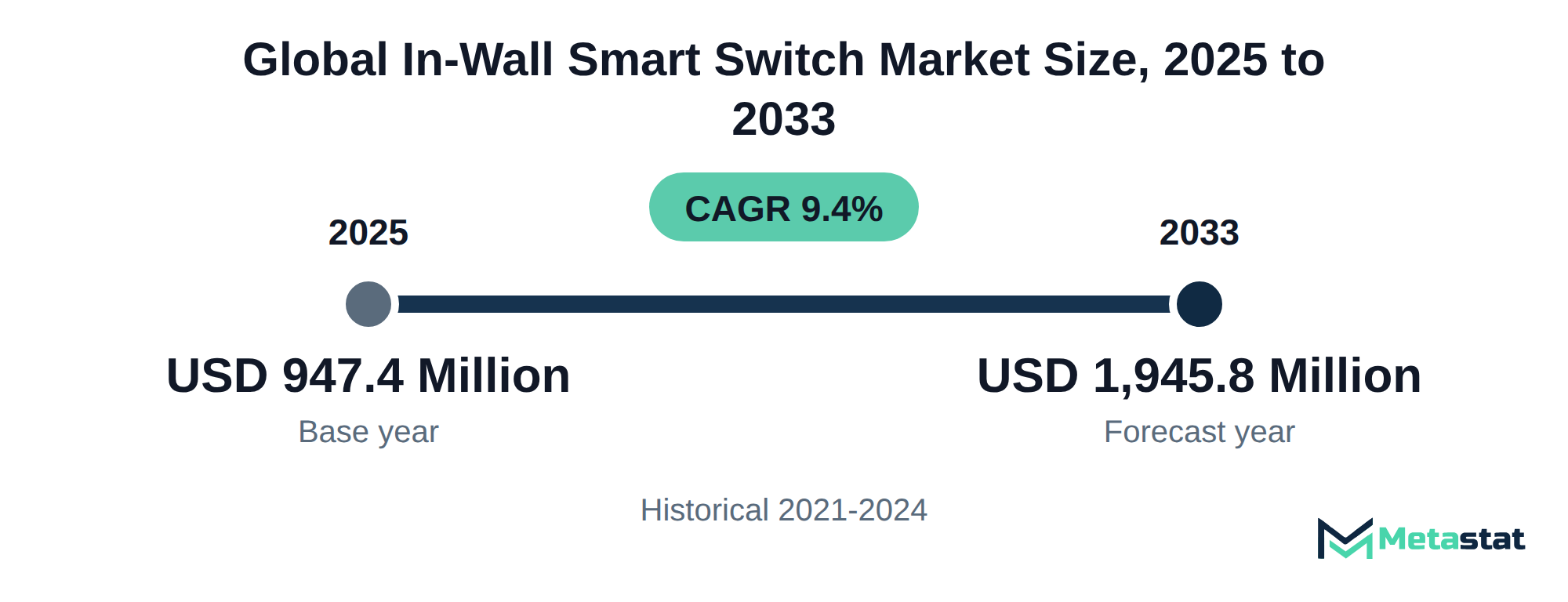
Market Valuation: Valued at $947.4 Million in 2025, projected to reach $1,945.8 Million by 2033 at a 9.4% CAGR.
Dominant Segment: On/Off Switches lead the market, driven by consumer preference for straightforward solutions that enhance energy efficiency and automation in residential and commercial settings.
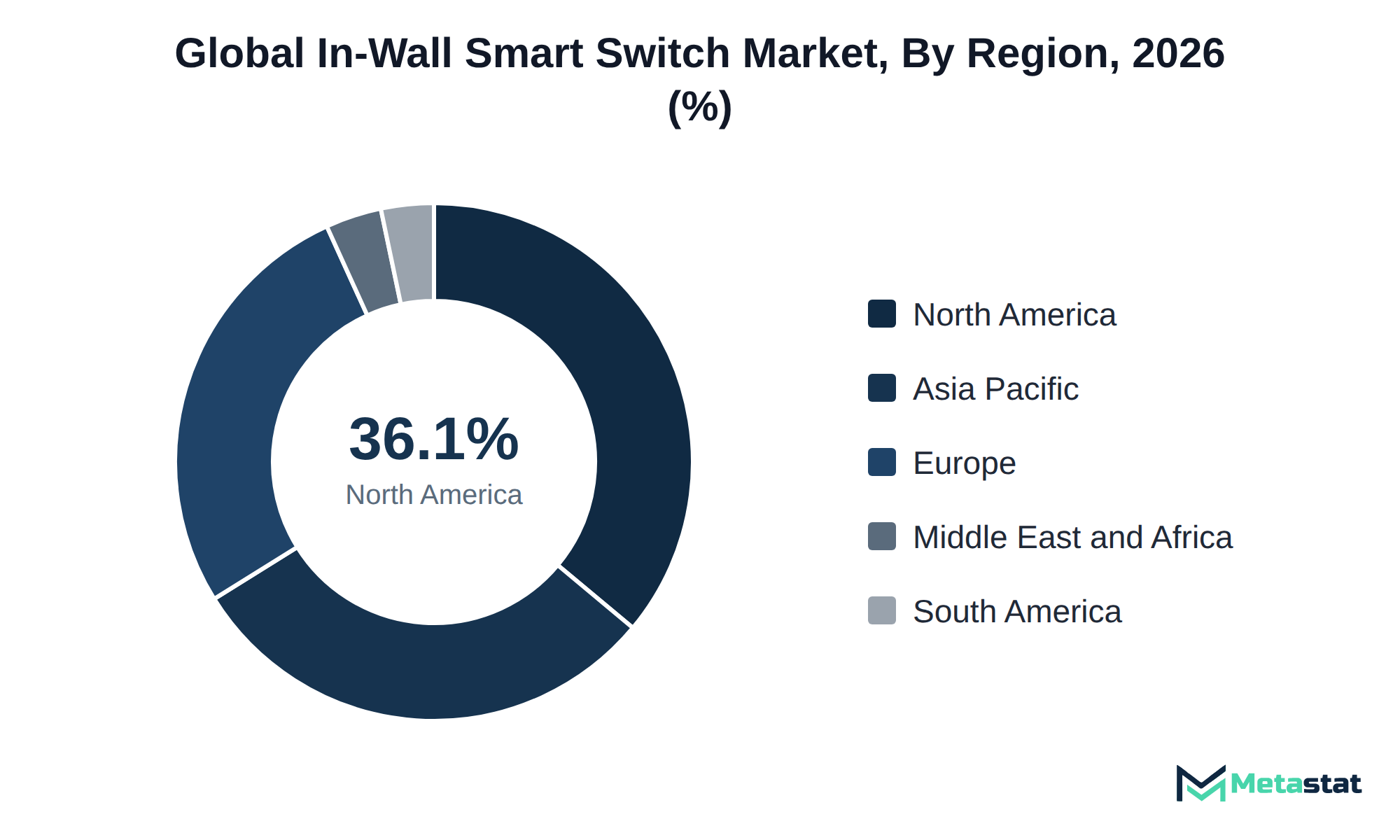
Geographic Lead: North America dominates the market, holding 36.1% in 2025, with the US projected to maintain its leadership in 2026 due to strong consumer interest and infrastructure for smart technologies.
What's Inside: The report provides comprehensive competitive coverage, detailed analyses of market dynamics, and forecasts from 2026 to 2033, ensuring a thorough understanding of the In-Wall Smart Switch market.
Emerging Trends: The adoption of advanced connectivity technologies like Wi-Fi and Zigbee is enhancing product functionality, driving innovation, and expanding integration possibilities within smart home ecosystems.
Price Sensitivity: Price sensitivity remains a significant barrier to adoption, as higher upfront costs deter consumers, particularly in the residential sector, influencing purchasing decisions and market growth.
Choose Your License
Global In-Wall Smart Switch Market
The global In-Wall Smart Switch market was valued at USD 947.4 million in 2025 and is projected to reach USD 1,945.8 million by 2033, growing at a CAGR of 9.4% over the forecast period.
The In-Wall Smart Switch market covers products that improve the functionality and convenience of electrical control systems in residential and commercial environments. Buyers invest in these devices to improve energy efficiency, automate lighting control, and provide remote control options. The growing interest in smart home technology and energy management systems drives demand, with consumers seeking to integrate modern solutions into their living and working spaces.
Growth in the market is propelled by the increasing adoption of smart home devices, particularly in the residential sector. Among the various segments, On/Off Switches represent the highest value, reflecting consumer preference for straightforward solutions that offer essential automation features. North America holds 36.1% of the market in 2025, with the US leading in 2026. This dominance indicates a strong consumer base and infrastructure that supports the integration of smart technologies.
Technological advancements, such as enhanced connectivity options like Wi-Fi and Zigbee, contribute significantly to market expansion. Consumers prioritize convenience and efficiency, driving the demand for innovative solutions. The market's growth trajectory suggests a strong increase in investment and development in the coming years.
The In-Wall Smart Switch market addresses the increasing demand for intelligent and efficient electrical control solutions in both residential and commercial settings. Buyers invest in these products to enhance smart energy management, improve convenience, and integrate with smart home systems. The shift toward automation and smart technology adoption drives spending, with consumers seeking solutions that simplify their daily routines and reduce energy costs.
Growth in the market stems from the rising popularity of energy-efficient solutions and the integration of smart technologies. Dimmer switches stand out, reflecting consumer preference for customizable lighting options. The region's established infrastructure for smart technology adoption contributes to its dominance, while the Asia Pacific region follows closely, driven by rapid urbanization and increasing disposable income.
Technological advancements in connectivity options, including Wi-Fi and Zigbee, support product innovation and expansion in the market. The growing emphasis on sustainable living and energy conservation further drives demand, prompting manufacturers to develop products that align with these consumer priorities. This trend signals a shift toward smart solutions that enhance user experience and contribute to overall energy efficiency.
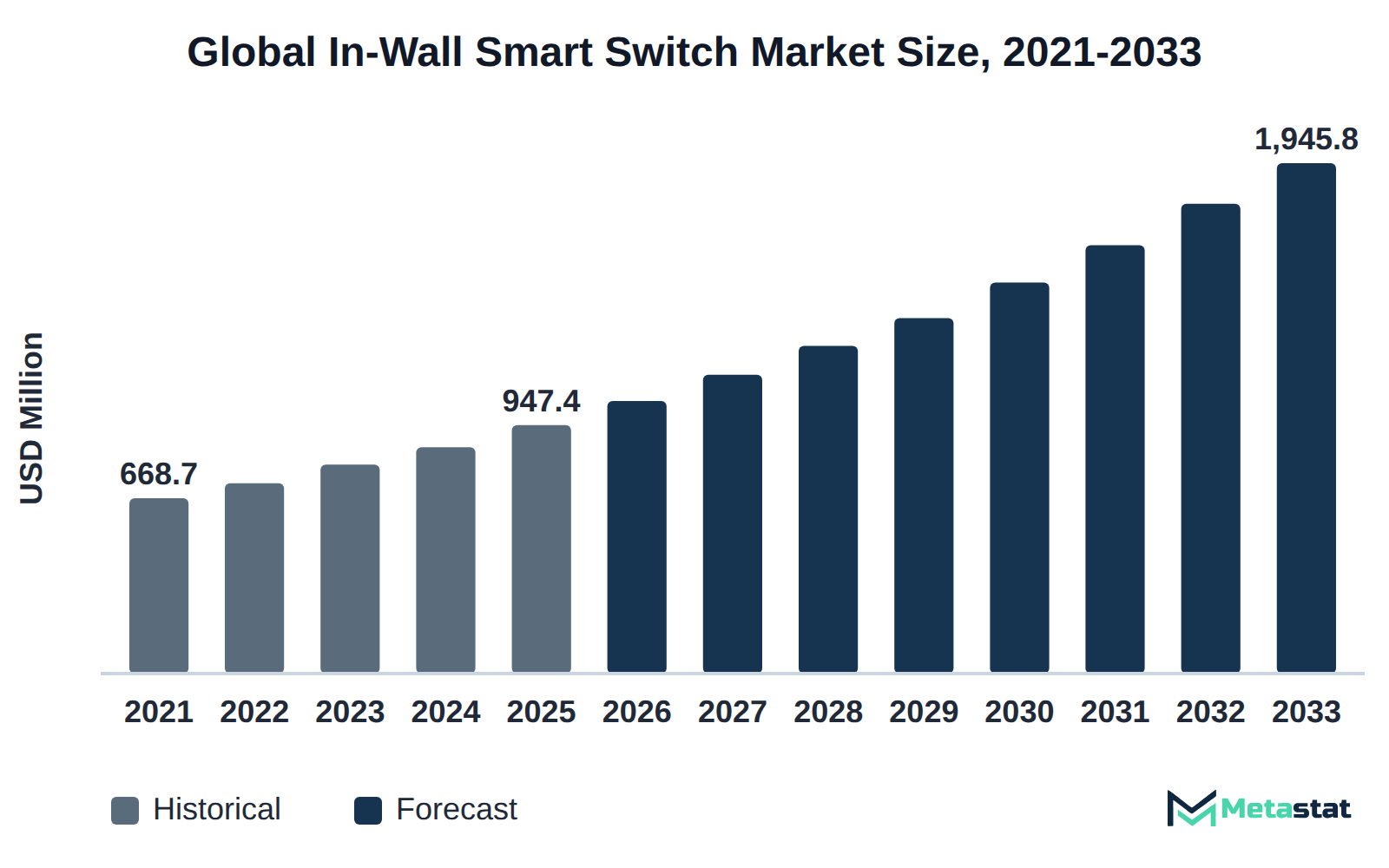
The emergence of the Matter standard represents a significant shift in the In-Wall Smart Switch market, enabling interoperability among devices across various platforms. Matter, a unifying connectivity standard, enhances user experience by allowing smart devices from different manufacturers to communicate effectively. This shift addresses a critical challenge in smart home integration, where compatibility issues often hinder widespread adoption. With the global market projected to reach USD 1,945.8 million by 2033, the introduction of Matter positions manufacturers to capture a larger share of this growing demand.
The transition to Matter aligns with the increasing consumer preference for smart home solutions that provide flexibility and ease of use. By adopting Matter, suppliers streamline product development and reduce the complexities associated with proprietary technologies. This transition supports the rising demand for connectivity technologies, evident in the rapid growth of Wi-Fi-enabled switches, which are expected to increase from USD 433.1 million in 2026 to USD 751.5 million by 2033. Emphasizing Matter in product designs allows manufacturers to attract a broader customer base, thereby enhancing their competitive positioning within the evolving In-Wall Smart Switch market.
LED dimming compatibility significantly influences purchasing decisions for premium In-Wall Smart Switches. This feature attracts buyers prioritizing energy efficiency and performance in their lighting systems. An increasing preference for LED technology among consumers drives demand for switches that provide smooth dimming capabilities without flickering or buzzing. Enhancing the compatibility of In-Wall Smart Switches with LED lighting systems heightens customer satisfaction and loyalty.
The residential end-use sector exhibits notable growth, with a projected value increase from USD 765.2 million in 2026 to USD 1,378.0 million by 2033, reflecting a compound annual growth rate (CAGR) of 8.8%. Homeowners invest in smart home technologies, prioritizing products that integrate easily with their existing lighting. Retailers and manufacturers recognize this trend, adjusting pricing strategies and product offerings to align with consumer expectations.
By offering competitive pricing models and focusing on LED dimming compatibility, companies within the In-Wall Smart Switch market position themselves favorably to capture a larger share of the growing residential market. This approach boosts revenue potential and builds a strong brand reputation as a provider of reliable, high-quality smart home solutions.
Commercial retrofit projects increasingly emphasize local control and scheduling functionalities. This trend stems from the demand for enhanced energy efficiency and user convenience in commercial environments. In the In-Wall Smart Switch market, the residential segment is anticipated to experience significant growth, with a projected value of USD 1,378 million by 2033, illustrating broader acceptance of smart technologies. Energy retrofit projects benefit from local control systems, allowing users to adjust settings quickly, ensuring energy savings and operational efficiency.
The ability to schedule lighting and HVAC systems through smart switches enhances overall management of commercial spaces. This capability supports businesses in reducing overhead costs while improving productivity. Commercial spaces adopt more sophisticated control systems, and the market for smart switches continues to evolve, aligning with the needs of facility managers and property owners.
With the expected growth in the commercial sector, including a projected value of USD 460.6 million by 2033, investing in local control solutions becomes increasingly crucial for stakeholders. Integrating scheduling features meets current user requirements and positions businesses to adapt to future technological advancements and energy regulations.
In-wall smart switches that operate without a neutral wire offer significant convenience for homeowners lacking this wiring configuration. Traditional electrical switches often require a neutral wire to complete the circuit, which complicates installations in older homes or specific construction setups. However, certain models, particularly those designed for wireless connectivity, enable functionality without this wiring, catering to a broader audience.
For instance, dimmer switches in the in-wall smart switch market are projected to reach a value of USD 729.3 million by 2033. This trend reflects growing demand for flexibility in home automation solutions. These switches enhance user control over lighting and contribute to energy efficiency through adjustable brightness settings.
Buyers increasingly seek these innovative solutions, which simplify installation and expand market opportunities. By investing in in-wall smart switches that operate without a neutral wire, consumers modernize their homes without extensive electrical work, aligning with a trend toward easier and more accessible home automation.
Growing interest in home automation drives demand for advanced electrical control solutions. Homeowners increasingly seek systems that enhance convenience and energy efficiency, prompting a shift towards smart devices. The need for effective integration with existing home networks and control systems fuels purchases among this buyer group. This significant growth indicates a strong trend towards replacing traditional switches with smart alternatives. While more consumers recognize the benefits of smart technology, the market experiences an upward trajectory in volume, with an expanding array of features appealing to tech-savvy homeowners.
Emphasis on energy efficiency and cost savings further supports this trend, positioning the market for robust expansion in the coming years.
Connectivity technologies increasingly influence the capabilities of In-Wall Smart Switches, driving interest from various buyer groups. Wi-Fi, Zigbee, and Z-Wave technologies expand the integration possibilities within smart homes, supporting automation solutions that enhance user experience. The growth in demand for integration with various devices fuels innovation among manufacturers, encouraging the development of advanced features including remote access and voice control.
Zigbee and Z-Wave, known for their low power consumption and reliable mesh networking, appeal to buyers focused on energy efficiency and long-range communication. Such attributes align with the growing trend toward sustainable living and energy management. The market sees increasing adoption of Bluetooth and BLE Mesh technologies, enabling localized control and reducing installation complexity, further attracting several buyers interested in cost-effective and efficient solutions.
Continuous advancements in connectivity technologies improve functionality and enhance the overall appeal of In-Wall Smart Switches. This trend shapes the competitive landscape, encouraging manufacturers to differentiate their products through innovative features and capabilities. Enhanced connectivity is expected to support the ongoing expansion of the market.
Price sensitivity significantly limits adoption among buyers in the In-Wall Smart Switch market. Higher upfront costs associated with advanced smart switches discourage potential customers, particularly in the residential sector, from making purchases or replacements. Many consumers prioritize budget constraints, leading to slower uptake of premium offerings. The demand for more cost-effective alternatives results in smaller order volumes for manufacturers, who struggle to justify premium pricing under competitive pressures. Reluctance to invest in higher-priced models delays the replacement cycle of older switches, hindering overall market growth. This price-driven restraint particularly affects segments aiming for high customization or advanced features, which require substantial investment. Manufacturers balance innovation with affordability to capture broader demand across diverse buyer groups.
Cost fluctuations for materials including semiconductors and plastics result in significant challenges for suppliers in the in-wall smart switch market. Rising input costs directly impact profitability, prompting manufacturers to reevaluate pricing strategies. Vendors increasingly explore alternative sourcing options and negotiate bulk purchase agreements to mitigate these effects. Many suppliers invest in research and development to enhance product efficiency and reduce material usage, thereby offsetting rising costs. Suppliers adopt advanced manufacturing technologies to streamline production processes, enhancing operational efficiency. Such strategies aim to sustain competitive pricing while maintaining product quality in the face of fluctuating costs. Suppliers continue to adapt by focusing on innovation and efficiency to manage these market pressures without sacrificing customer satisfaction or product performance.
The residential segment of the In-Wall Smart Switch market presents a significant opportunity for expansion. Dimmer switches, a prominent product type, are projected to achieve a compound annual growth rate (CAGR) of 10.3% through 2033. This growth reflects increasing consumer interest in energy-efficient and customizable lighting solutions. Homeowners prioritize enhanced control over lighting ambiance, driving demand for advanced dimmer switch technologies. The market value for dimmer switches is expected to reach USD 729.3 million by 2033, representing a substantial increase from previous years.
This segment's expansion aligns with broader trends in home automation and smart technology adoption. While consumers seek to enhance their living environments with smart solutions, manufacturers focus on innovative features and user-friendly interfaces. The growth of smart home ecosystems further supports the demand for integrated lighting solutions. Investments in product development targeting this high-growth area stand to yield significant returns, positioning suppliers to capitalize on evolving market dynamics.
The Global In-Wall Smart Switch market is segmented based on Product Type, Connectivity Technology, End-Use Sector, and Installation Type.
On/Off Switches segment is valued at USD 526.9 million in 2026 and is projected to reach USD 912.2 million by 2033, at a CAGR of 8.2% during the forecast period. This segment primarily serves residential and commercial sectors, providing straightforward control over lighting and electrical appliances. The increasing trend toward home automation significantly drives demand, especially among tech-savvy homeowners seeking integrated solutions for convenience and energy efficiency. In contrast to other product types, including Dimmer Switches, which exhibit a higher CAGR of 10.3%, On/Off Switches maintain a steady growth rate. This segment's affordability compared to more complex options attracts a broader consumer base, positioning it favorably within overall market dynamics.
Dimmer Switches segment is estimated to reach USD 729.3 million by 2033, at a CAGR of 10.3% during the forecast period. Used predominantly in residential settings, these switches allow users to adjust lighting levels easily, enhancing ambiance and energy efficiency. The growing trend toward energy-efficient lighting solutions influences demand for dimmer switches, appealing to environmentally conscious consumers. Compared to other product types, dimmer switches exhibit a higher growth rate, driven by increasing interest in smart home technologies and home automation. In contrast, On/Off Switches demonstrate a comparatively lower CAGR of 8.2%. Enhanced features in dimmer switches, including remote control capabilities and integration with smart home systems, contribute to their popularity, positioning them favorably within the market.
Fan Speed Controls segment is expected to reach USD 149.6 million by 2033. This segment allows users to adjust the speed of electric ceiling fans and is primarily used in residential settings, where homeowners seek enhanced comfort and energy efficiency. The growing trend of home automation supports increased adoption among tech-savvy consumers seeking integrated solutions. The segment's growth is anticipated to outpace other product types, with a CAGR of 10.7%, driven by rising consumer interest in smart home technologies. Differing from On/Off Switches and Dimmer Switches, which cater to different functionalities, Fan Speed Controls focus specifically on optimizing airflow, contributing to its unique market position. The rising preference for energy-efficient solutions positions this segment favorably within the broader In-Wall Smart Switch market.
Shutter Controls segment is projected to grow at a CAGR of 10.7% during the forecast period. These devices function to manage the opening and closing of window coverings, serving both residential and commercial sectors. Homeowners apply shutter controls to enhance convenience and energy efficiency by automating the management of natural light and privacy. Increased investments in smart home technologies drive growth within this segment, reflecting a broader trend toward enhanced automation and control in living spaces. The segment differs from others in its group, exhibiting faster growth compared to Fan Speed Controls, which experience lower demand. This growth aligns with increasing consumer interest in integrated smart home solutions that prioritize user convenience, thereby propelling the expansion of the segment in the market.
Others (Combined Light/Fan Controls) integrates multiple functions into a single device, enhancing user convenience in managing both lighting and fan speeds. This segment appeals to residential users seeking streamlined solutions that simplify control over multiple devices from a single location. Demand for combined solutions is driven by growing trends in smart home automation, with homeowners increasingly investing in technologies that offer enhanced functionality and energy efficiency. Compared to other segments, the Others (Combined Light/Fan Controls) segment experiences slower growth due to the more specialized nature of its offerings. Buyers in this segment often exhibit a preference for products that deliver versatile control capabilities, while segments like Dimmer Switches and On/Off Switches demonstrate higher growth potential, reflecting broader consumer adoption. Interest from both residential and commercial sectors supports ongoing innovation and product development within this niche.
Wi-Fi segment is valued at USD 433.1 million in 2026 and is projected to reach USD 751.5 million by 2033, at a CAGR of 8.2% during the forecast period. This connectivity technology enables users to control smart devices remotely via smartphones or tablets, appealing primarily to homeowners and tech-savvy consumers seeking efficiency in their electrical systems. Increasing adoption of smart home technologies drives demand for Wi-Fi-enabled switches, with interests stemming from residential buyers focused on home automation. Compared to other segments, including Zigbee and Z-Wave, which experience slower growth, Wi-Fi stands out due to its widespread availability and ease of integration with existing home networking hardware, making it a preferred choice among users seeking convenience and flexibility. The ongoing trend toward smart living ensures a steady expansion of this segment within the market.
Zigbee segment is estimated to reach USD 344 million by 2033, at a CAGR of 7.4% during the forecast period. This connectivity technology is commonly used in home automation systems, enabling communication between smart devices including lights, sensors, and security systems. The residential sector predominantly drives demand, with homeowners seeking to enhance energy efficiency and convenience. Growing consumer interest in smart home solutions fuels adoption, while the need for interoperability among devices in the ecosystem promotes Zigbee's use. Compared to other segments, Zigbee's growth rate reflects a moderate speed, influenced by competition from protocols like Wi-Fi. Despite having lower projected revenue than Wi-Fi, which shows a CAGR of 8.2%, Zigbee maintains relevance due to its strong performance in low-power applications and mesh networking. It appeals to a specific audience focused on energy-efficient smart home setups.
Z-Wave segment is expected to reach USD 199.3 million by 2033. This technology facilitates communication between smart devices in a home automation system, primarily appealing to residential users who seek enhanced control over their environments. The increasing adoption of smart home technologies fuels demand for Z-Wave, driven by consumer interest in effective connectivity and automation. Compared to other connectivity technologies, Z-Wave offers a unique advantage in its low power consumption and reliable mesh networking capabilities. While Wi-Fi and Bluetooth continue to dominate the market, Z-Wave's dedicated approach to home automation positions it favorably, supporting its growth trajectory. The segment's anticipated CAGR reflects its specific appeal in environments where low power and reliable connectivity are priorities, establishing a competitive edge over segments that prioritize speed over efficiency.
Bluetooth / BLE Mesh segment is projected to grow at a CAGR of 7.4% during the forecast period. This technology facilitates wireless communication between devices, offering enhanced connectivity for smart home systems. Homeowners and businesses increasingly leverage Bluetooth / BLE Mesh for its ability to create a network of interconnected devices, allowing for efficient control and automation. Demand for this segment is driven by the growing popularity of smart home ecosystems, where integration of various devices is a priority. Compared to other connectivity technologies, Bluetooth / BLE Mesh typically offers lower costs and simpler installation, appealing to budget-conscious consumers. Its ease of use and scalability differentiate it from other segments including Wi-Fi, which involves more complex configurations and higher pricing. The market continues to experience an expansion in demand for Bluetooth / BLE Mesh solutions, reflecting a shift toward more user-friendly and accessible smart home technologies.
Thread represents a connectivity technology that enables efficient communication among smart devices in an interconnected environment. This technology serves residential and commercial users aiming for effective home automation and control of in-wall smart switches. The segment benefits from increasing consumer demand for energy-efficient solutions and integration with existing smart home ecosystems. A notable force influencing this segment involves the ongoing push for interoperability among various smart home devices, enhancing user experience. Compared to other connectivity technologies, Thread stands out due to its focus on low power consumption and reliable performance in larger networks. This feature positions it favorably against alternatives, contributing to its growing adoption among tech-savvy consumers and businesses seeking to optimize their smart home capabilities while maintaining operational efficiency.
Proprietary RF technology represents a specialized connectivity option used in various smart electrical applications. This technology finds applications primarily in residential settings where users seek customized and secure control over their lighting and devices. The segment appeals to buyers seeking solutions that offer unique features not present in more common technologies. Demand for proprietary RF technology experiences growth due to its ability to deliver enhanced security and reliability in communication. Unlike mainstream options, proprietary RF solutions present higher costs, influencing purchasing decisions among budget-conscious consumers. The segment's growth trajectory remains distinct, reflecting a unique combination of user preferences and technological advancements in the in-wall smart switch market.
Others (Wired Bus) signifies a category within connectivity technologies designed for smart switches, enabling communication between devices over wired connections. This technology finds applications primarily in institutional and commercial settings, where reliability and low latency are critical. Demand for wired solutions stems from the need for stable connections in environments requiring consistent performance. Unique to this segment, the installation process involves significant infrastructure considerations, differentiating it from wireless technologies that are easier to implement. Despite facing competition from more flexible connectivity options like Wi-Fi and Zigbee, wired bus solutions offer advantages in environments where interference disrupts wireless signals, ensuring dependable operation. The market continues to evolve, accommodating emerging technologies while maintaining a focus on operational stability.
This segment primarily serves homeowners interested in enhancing energy efficiency and convenience through smart technology. Growing awareness of energy consumption and the push for automated home control systems drive demand within this segment. Compared to commercial installations, which are expected to reach USD 460.6 million by 2033 at a CAGR of 10.6%, residential applications exhibit a slower growth rate. This difference reflects diverse priorities in residential versus commercial sectors, with residential buyers focused on affordability and ease of installation.
This segment often serves office buildings, retail spaces, and hospitality establishments, where energy efficiency and user control over lighting systems significantly enhance operational efficiency. Increasing emphasis on energy conservation and smart building technologies drives demand within this segment, particularly among corporate buyers focused on sustainability. Compared to other segments, the commercial sector exhibits a higher growth rate, emphasizing advanced features that contribute to overall building automation. Rising regulatory standards regarding energy efficiency further influence market dynamics, promoting the adoption of smart switches. This sector’s growth trajectory indicates a robust path, distinguishing itself from slower-growing segments within the market.
Institutional segment is expected to reach USD 80.9 million by 2033. This segment serves various institutional clients, including schools, hospitals, and government buildings, focusing on energy efficiency and automation. The demand for smart switches increases due to a growing emphasis on reducing operational costs and enhancing energy management in institutional settings. Compared to other segments, the institutional segment experiences slower growth, attributed to longer decision-making processes and budget constraints faced by these organizations. Adoption of advanced technology and integration of smart devices in these facilities support the segment's expansion, even if growth remains more measured than in residential or commercial sectors. The market reflects a strong interest in sustainable solutions, encouraging institutions to invest in smart technologies that facilitate better control and monitoring of energy usage.
USD 80.9 million is projected for the Others (Industrial Ancillary Spaces) segment by 2033, growing at a CAGR of 12.1% during the forecast period. This segment encompasses various industrial applications where smart switch technology enhances operational efficiency and energy management. Industries including manufacturing and logistics apply these switches to automate and control industrial lighting equipment and other electrical loads, optimizing workspace functionality. Demand for smart solutions in industrial settings drives growth in this segment, further supported by the trend toward energy-efficient technologies. Compared to other end-use sectors, this segment demonstrates a faster growth trajectory, reflecting significant interest from industrial buyers seeking to modernize their facilities. The market continues to evolve with advancements in technology, which further encourages investment in smart solutions for operational improvements.
Valued at USD 709.2 million in 2026, the Retrofit / Replacement segment is projected to reach USD 1,292.4 million by 2033, at a CAGR of 9% during the forecast period. This segment is primarily used in residential buildings to upgrade existing switch systems, enhancing energy efficiency and control over lighting and appliances. Growth in this segment is driven by increasing consumer demand for smart home solutions and the need for energy-efficient systems. Compared to other installation types, Retrofit / Replacement exhibits a moderate growth rate, positioning it as a reliable option for homeowners seeking to modernize their living spaces without extensive renovations. Market dynamics favor this segment, supported by technological advancements and rising consumer awareness regarding energy consumption and automation trends.
New Construction segment is estimated to reach USD 653.4 million by 2033, at a CAGR of 10.2% during the forecast period. This segment primarily involves the installation of In-Wall Smart Switches in newly built residential or commercial spaces. Builders and contractors drive adoption, focusing on integrating modern technology that enhances energy efficiency and convenience. The rapid growth in the construction sector, particularly in urban areas, fuels demand for such installations. Compared to Retrofit / Replacement, which is expected to grow at a CAGR of 9%, New Construction experiences a higher growth rate. Increased consumer interest in smart home technologies and energy-saving solutions significantly influences this segment's trajectory. The enhanced capabilities of smart switches, including remote control and automation, attract buyers looking to modernize new builds, leading to a strong commercial outlook for the market.
Based on geography, the Global In-Wall Smart Switch market is divided into North America, Europe, Asia-Pacific, South America, Middle East, and Africa.
Growth in the North American In-Wall Smart Switch market is driven by increasing demand for smart home solutions among consumers in the United States, Canada, and Mexico. Enhanced connectivity and integration with existing home automation systems contribute significantly to this demand. The region's technological advancements and high disposable income enable consumers to invest in smart home products. The robust construction sector further supports the market through new residential and commercial projects. North America is projected to reach USD 637.8 million by the end of 2033, reflecting a strong market presence, with a 36.1% share of the global market in 2025. End users prioritize features including energy efficiency and convenience, positioning smart switches as essential components of modern electrical installations. The focus on sustainability and energy management strategies within the region drives further growth for the market.
Growth of the In-Wall Smart Switch market in Europe is driven primarily by the increasing adoption of smart home technologies across key countries. Germany, France, the UK, Italy, and Spain exhibit strong demand for energy-efficient and automated solutions in residential and commercial settings. Regulatory frameworks focusing on energy efficiency and sustainability encourage users to invest in advanced electrical solutions. The emerging popularity of dimmer switches and smart controls highlights consumer preferences for enhanced functionality. With a projected market share of 27.1% in 2025, Europe plays a significant role in the global market, positioning itself as a hub for technological advancement in smart electrical devices.
In the Asia-Pacific region, demand for in-wall smart switches is surging as investments in smart home technologies grow. Countries including China and India exhibit significant advancements in urbanization and real estate development, propelling the installation of smart electrical devices. Regulatory initiatives focusing on energy efficiency further stimulate market growth, encouraging both residential and commercial sectors to adopt innovative solutions. By 2025, this region commands a share of 30.1% in the global market, driven by the increasing popularity of residential applications and the expansion of smart infrastructure. The market is projected to continue its upward trajectory, reflecting the region's commitment to integrating advanced technologies.
Brazil and Argentina represent key markets driving demand for the In-Wall Smart Switch market in South America. Growing urbanization and an increasing focus on energy efficiency among consumers support the adoption of smart home technologies in these countries. Infrastructure development, particularly in residential and commercial sectors, enhances the market's potential. The demand for advanced electrical solutions within homes and workplaces generates significant opportunities for manufacturers. With a market share of 3.3% in 2025, the region's contribution is expected to rise with increasing adoption rates. Ongoing investments in smart technology adoption reflect a broader trend toward modernization, benefiting market players positioned to meet evolving consumer preferences.
Growth in the Middle East and Africa for the In-Wall Smart Switch market focuses on rising smart home adoption and energy efficiency initiatives. Countries like Saudi Arabia and the UAE emphasize sustainability in their residential and commercial sectors, driving demand for advanced electrical solutions. South Africa's growing urbanization and infrastructure development support increased investments in smart technologies. The market benefits from government-backed programs aimed at enhancing energy efficiency and reducing carbon footprints across various sectors. With a share of 3.5% in 2025, the region's market opportunities lie primarily within residential and commercial applications, where local consumers seek innovative solutions for energy management and automation. The increasing interest in smart technologies highlights the market's potential for significant expansion in the coming years.
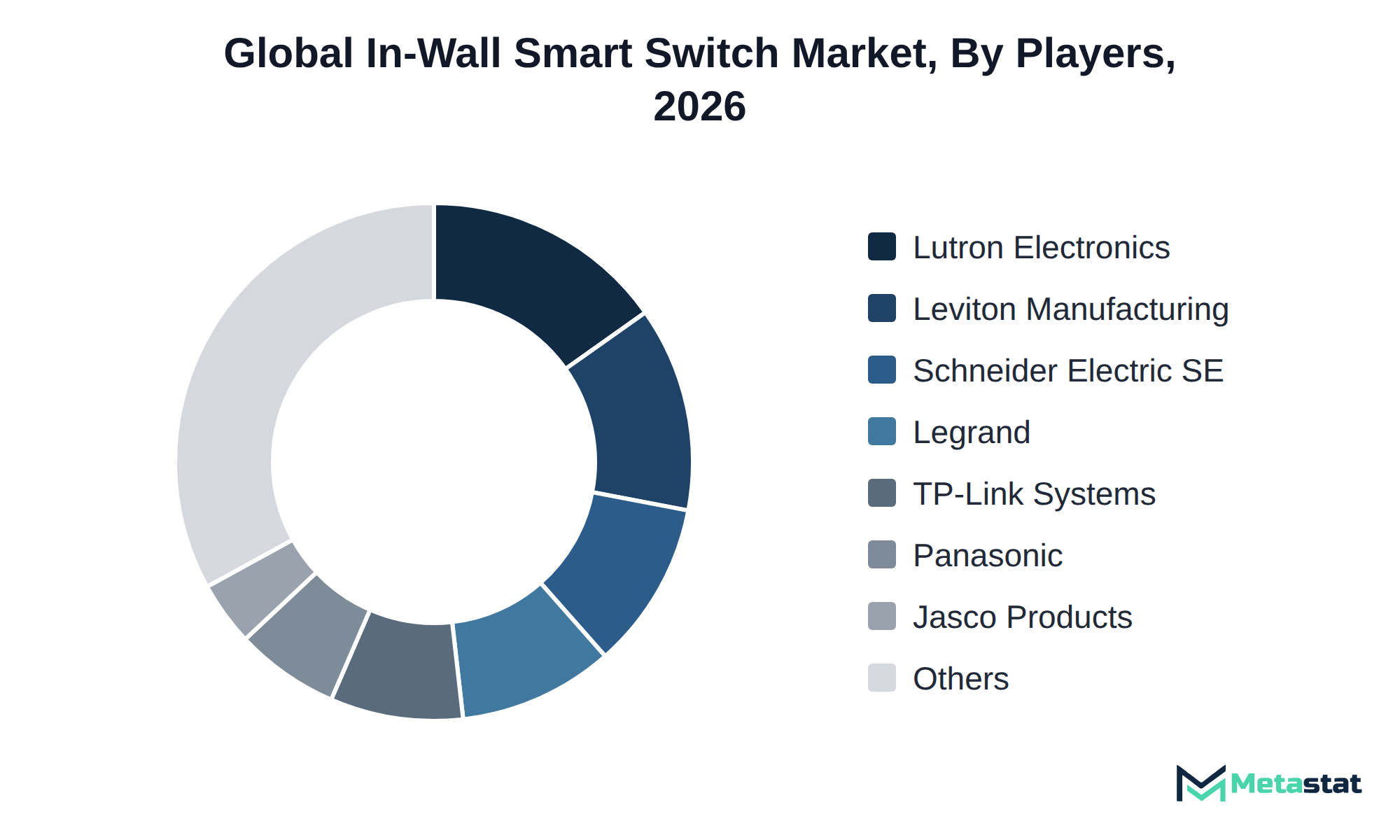
Competition in the In-Wall Smart Switch market centers around several strategic behaviors, including product differentiation, pricing strategies, and customer service. Companies including Lutron Electronics Co., Inc. and Leviton Manufacturing Co., Inc. emphasize product innovation, offering a variety of features including energy-saving capabilities and user-friendly interfaces. Price sensitivity influences buyer decisions, with firms competing on price while maintaining acceptable quality standards.
Specific companies target distinct segments within the market. Schneider Electric SE prioritizes integration with smart home ecosystems, appealing to tech-savvy customers. Meanwhile, Panasonic Holdings Corporation focuses on energy-efficient solutions, attracting buyers interested in sustainability. This varied approach allows companies to capture different consumer preferences and drive growth within the market.
The anticipated growth of the In-Wall Smart Switch market relies on several key developments. First, the adoption of advanced connectivity technologies, particularly Wi-Fi, will drive considerable demand for In-Wall Smart Switches, especially in the residential sector. This segment is projected to grow from USD 765.2 million in 2026 to USD 1,378 million by 2033, reflecting significant consumer interest in smart home innovations.
Secondly, the increasing focus on energy efficiency will enhance the market. Dimmer switches, with a projected value of USD 729.3 million by 2033, represent a growing segment that promotes energy savings while providing homeowners with greater control over lighting. Potential risks include economic downturns that could impact consumer spending and slow adoption rates across the commercial sector, which is anticipated to reach USD 460.6 million by 2033.
Overall, the market is expected to experience growth driven by technological advancements and heightened consumer awareness of energy efficiency, supporting a favorable outlook for the future.
By Product Type: On/Off Switches, Dimmer Switches, Fan Speed Controls, Shutter Controls, Others (Combined Light/Fan Controls)
By Connectivity Technology: Wi-Fi, Zigbee, Z-Wave, Bluetooth / BLE Mesh, Thread, Proprietary RF, Others (Wired Bus)
By End-Use Sector: Residential, Commercial, Institutional, Others (Industrial Ancillary Spaces)
By Installation Type: Retrofit / Replacement, New Construction
The report strategically identifies and profiles the key market players and analyses their core competencies in each sub-segment of the In-Wall Smart Switch market.
Report Attributes | Details |
Study Period | 2021-2033 |
Base Year | 2025 |
Estimated Year | 2026 |
Forecast Period | 2026-2033 |
Historical Period | 2021-2025 |
Growth Rate | CAGR 9.4% from 2026 to 2033 |
Revenue Unit | USD million |
Segmentation | By Product Type, Connectivity Technology, End-Use Sector, Installation Type, and Region |
By Region | North America (By Product Type, Connectivity Technology, End-Use Sector, Installation Type, and Country)
|
Europe (By Product Type, Connectivity Technology, End-Use Sector, Installation Type, and Country)
| |
Asia Pacific (By Product Type, Connectivity Technology, End-Use Sector, Installation Type, and Country)
| |
South America (By Product Type, Connectivity Technology, End-Use Sector, Installation Type, and Country)
| |
Middle East and Africa (By Product Type, Connectivity Technology, End-Use Sector, Installation Type, and Country)
|
Find answers to common questions about this report
The In-Wall Smart Switch market size was valued at USD 947.4 million in 2025.
The market is projected to grow at a CAGR of 9.4% during the forecast period from 2026 to 2033.
The North America In-Wall Smart Switch market size is estimated to reach USD 637.8 million by 2033.
Dimmer Switches lead the In-Wall Smart Switch market with a projected value of USD 729.3 million by 2033, reflecting the highest growth potential among the product types.
Key drivers for the In-Wall Smart Switch market include increasing interest in home automation and the demand for advanced electrical control solutions. The need for integration with existing home networks and control systems fuels purchases among residential buyers, contributing to a projected market value of USD 1,378 million by 2033.
North America holds the dominant share of the In-Wall Smart Switch market, with a projected value of USD 637.8 million in 2033, representing 36.1 percent of the total market.
Price sensitivity significantly limits adoption among buyers. Higher upfront costs associated with advanced smart switches discourage potential customers, leading to slower uptake of premium offerings and delaying the replacement cycle of older switches.
Growing interest in energy-efficient and customizable lighting solutions drives adoption in the In-Wall Smart Switch market. The residential segment, particularly dimmer switches, is projected to expand significantly, reflecting consumer demand for enhanced control and integration within smart home ecosystems.
The In-Wall Smart Switch market is estimated to reach a valuation of USD 1,945.8 million by 2033.
Key players operating in the In-Wall Smart Switch market include Lutron Electronics Co., Inc., Leviton Manufacturing Co., Inc., Schneider Electric SE, TP-Link Systems Inc., Panasonic Holdings Corporation, Jasco Products Company LLC, and GM Modular Pvt. Ltd.
The analysts below cover Electronics and Semiconductor research at Metastat Insights.
LEAD ANALYST
Utkarsh Khirodkar is a Lead Market Research Analyst at MetaStat Insight, specializing in market intelligence, technology sector assessments, and competitive strategy.

PRINCIPAL CONSULTANT - ENTERPRISE AI & EMERGING TECHNOLOGIES
Banking & Finance · Electronics and Semiconductor · Energy and Power · Healthcare IT · Information & Technology · Professional Services
Vijay Gunti is a Principal Consultant at MetaStat Insight, bringing over two decades of experience across enterprise digital transformation, technology strategy, and intelligent systems.

PRINCIPAL CONSULTANT - QUALITY SYSTEMS & COMPLIANCE
Electronics and Semiconductor · Machinery & Equipment · Professional Services
Omkar Phadtare is an Industry Consultant at MetaStat Insight, specializing in quality systems, regulatory compliance, and standards benchmarking to drive data-driven market intelligence and strategic industry research.

ENERGY & INFRASTRUCTURE INDUSTRY CONSULTANT
Automotive and Transportation · Electronics and Semiconductor · Energy and Power · Machinery & Equipment
Saurabh Vasant Ganvir consults for Energy & Infrastructure Industry at MetaStat Insight, specializing in renewable energy, solar EPC, and electric vehicle (EV) infrastructure markets.

LEAD CONSULTANT - COMMUNICATION, TELECOM, AND IT
Electronics and Semiconductor · Information & Technology · Machinery & Equipment · Professional Services
Ravindra Sathe Consultants for Communication, Telecom, and IT at MetaStat Insight. He leads the firm's industry research initiatives across telecommunications infrastructure, digital connectivity, enterprise networking, and emerging information technology domains.
Assessing 200mm wafer transition schedules and substrate supply bottlenecks requires precise technical intelligence. MetaStat Insight supplied an actionable breakdown comparing planar and trench MOSFET architectures across automotive and industrial drive markets. The regional capacity estimates for Asia-Pacific foundries helped clarify lead-time uncertainties during our strategic planning session. When we needed additional clarification on high-purity raw material sourcing, their analyst team responded with helpful context within twenty-four hours.
Tracking maintenance cycle demand for secondary flight display units and terrain collision avoidance systems across regional jet fleets involves complex aftermarket dynamics. MetaStat Insight provided practical analysis separating airline retrofit programs from OEM forward-fit production schedules in North America and Southeast Asia. The supplier matrix highlighted component obsolescence timelines without resorting to vague generalizations. The dataset served as a dependable reference during our annual program review meetings.
Evaluating secondary resin quality across post-consumer packaging streams requires reliable technical segmentation. MetaStat Insight delivered an objective assessment that distinguished between extrusion-grade flake pricing and optical sorting throughput limitations across Western Europe. The competitive positioning breakdown for licensed depolymerization technology providers answered several questions during our feedstock feasibility audit. Their team clarified regional trade restrictions on mixed plastic scrap quickly when our team submitted follow-up requests.
Explore related market intelligence reports worth reading alongside this one.
Starting from
$2950