
LEAD ANALYST
Utkarsh Khirodkar is a Lead Market Research Analyst at MetaStat Insight, specializing in market intelligence, technology sector assessments, and competitive strategy.

India E-bike Market Size, Share, By Propulsion Type (Pedal Assisted, Speed Pedelec, Throttle Assisted), By Battery Type (Lithium-Ion Batteries, Lead-Acid Batteries, Others (Nickel-Based and Alternative Battery Chemistries)), By Motor Type (Hub Motor, Mid-drive Motor), By Battery Capacity (Below 250W, 251W to 450W, 451W to 650W, Above 650W), Industry Analysis, Growth, Trends, and Forecast, 2026-2033
Report ID
MSI-5521
Published
October, 2026
Pages
303 Pages
Format
Historical
Base year
Forecast
Forecast period
Report Details
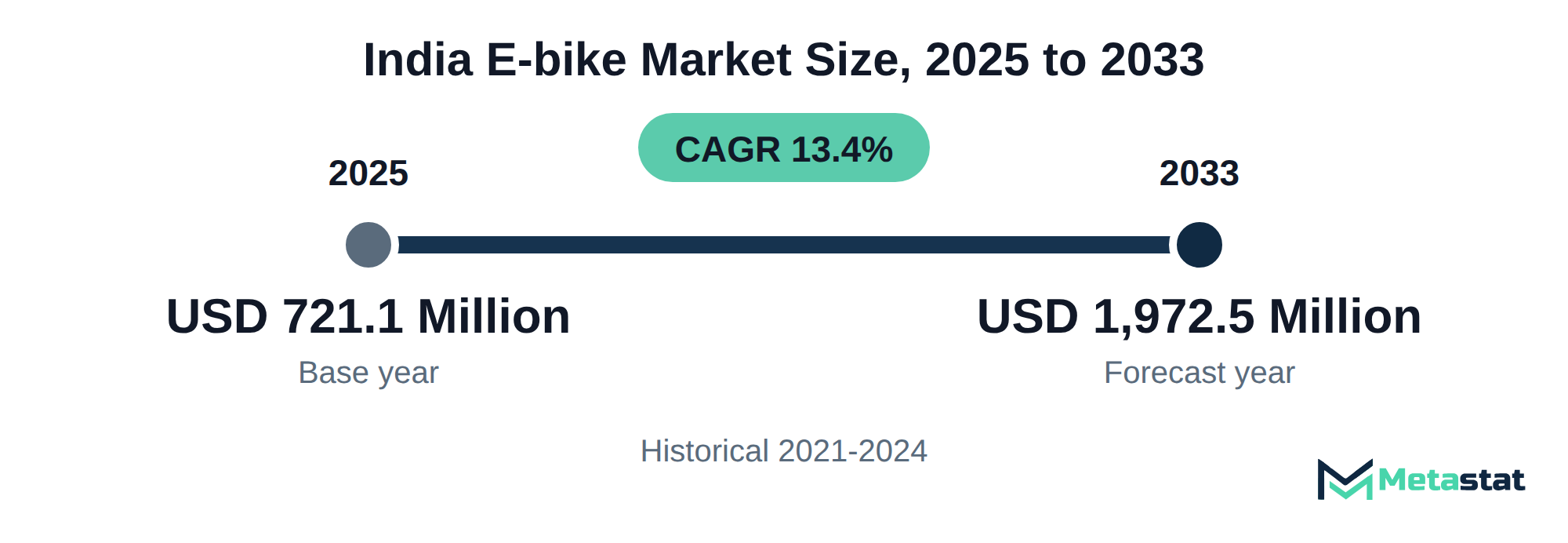
Market Valuation: Valued at $721.1 Million in 2025, projected to reach $1,972.5 Million by 2033 at a 13.4% CAGR.
Dominant Segment: The pedal-assisted e-bike segment is projected to dominate the market, reaching USD 959.2 million by 2033, driven by increasing consumer demand for environmentally friendly transportation solutions.
Geographic Lead: The Asia-Pacific region leads the India E-bike market, supported by rapid urbanization and government incentives promoting electric mobility solutions.
What's Inside: This report provides a comprehensive analysis of the India E-bike market, including competitive coverage, detailed segmentation by propulsion, battery, motor types, and a forecast window extending to 2033.
Battery Technology Advancements: Recent advancements in lithium-ion battery technology enhance e-bike performance and reduce weight, driving consumer interest and adoption in urban mobility.
High Prices Limit Buyer Adoption: High pricing of e-bikes, particularly those with advanced battery technologies, poses a significant barrier to adoption among price-sensitive consumers.
Choose Your License
India E-bike Market
The India E-bike market was valued at USD 721.1 million in 2025 and is projected to reach USD 1,972.5 million by 2033, growing at a CAGR of 13.4% over the forecast period.
The India E-bike market covers electric bicycles designed for personal transportation, with innovation centered on propulsion, battery, and motor types. Buyers invest in this market due to the increasing emphasis on sustainable transportation solutions, rising fuel prices, and urban congestion. This shift in consumer behavior towards eco-friendly options, alongside advancements in battery technology, drives adoption across various demographics.
Growth in the market is fueled by the increasing demand for Pedal Assisted e-bikes, which offer a blend of traditional cycling and electric support, appealing to health-conscious consumers and urban commuters. The segment is projected to dominate the market, contributing significantly to overall revenue. In terms of regional performance, Asia-Pacific exhibits strong potential, outperforming other regions in sales and adoption rates.
One of the key drivers for growth is the escalating awareness of environmental issues, encouraging consumers to seek greener alternatives to conventional transportation. The need for efficient urban mobility solutions supports the upward trajectory of the India E-bike market and gives manufacturers and suppliers room to innovate and expand their offerings.
The India E-bike market addresses various consumer preferences for sustainable and efficient transportation options. Buyers invest in e-bikes due to their advantages in reducing carbon emissions, lower operational costs compared to traditional vehicles, and the convenience they offer in urban environments. This growing focus on eco-friendly solutions fuels interest among individuals, urban commuters, and environmentally conscious buyers seeking alternatives to conventional bicycles and vehicles.
Significant growth in the India E-bike market arises from the increasing adoption of pedal-assisted e-bikes, which combine manual cycling with electric power. This segment holds the highest value within the overall market and appeals to users from casual riders to daily commuters. The Asia-Pacific region holds the largest share of the market, driven by rapid urbanization and government incentives promoting electric mobility solutions.
The expanding infrastructure for charging and battery swapping stations further enhances accessibility and convenience for e-bike users. Higher adoption rates result from this expansion and align with the increasing demand for sustainable transportation options. While consumers prioritize energy-efficient solutions, the market is poised for growth, reflecting a shift in consumer preferences toward greener alternatives.
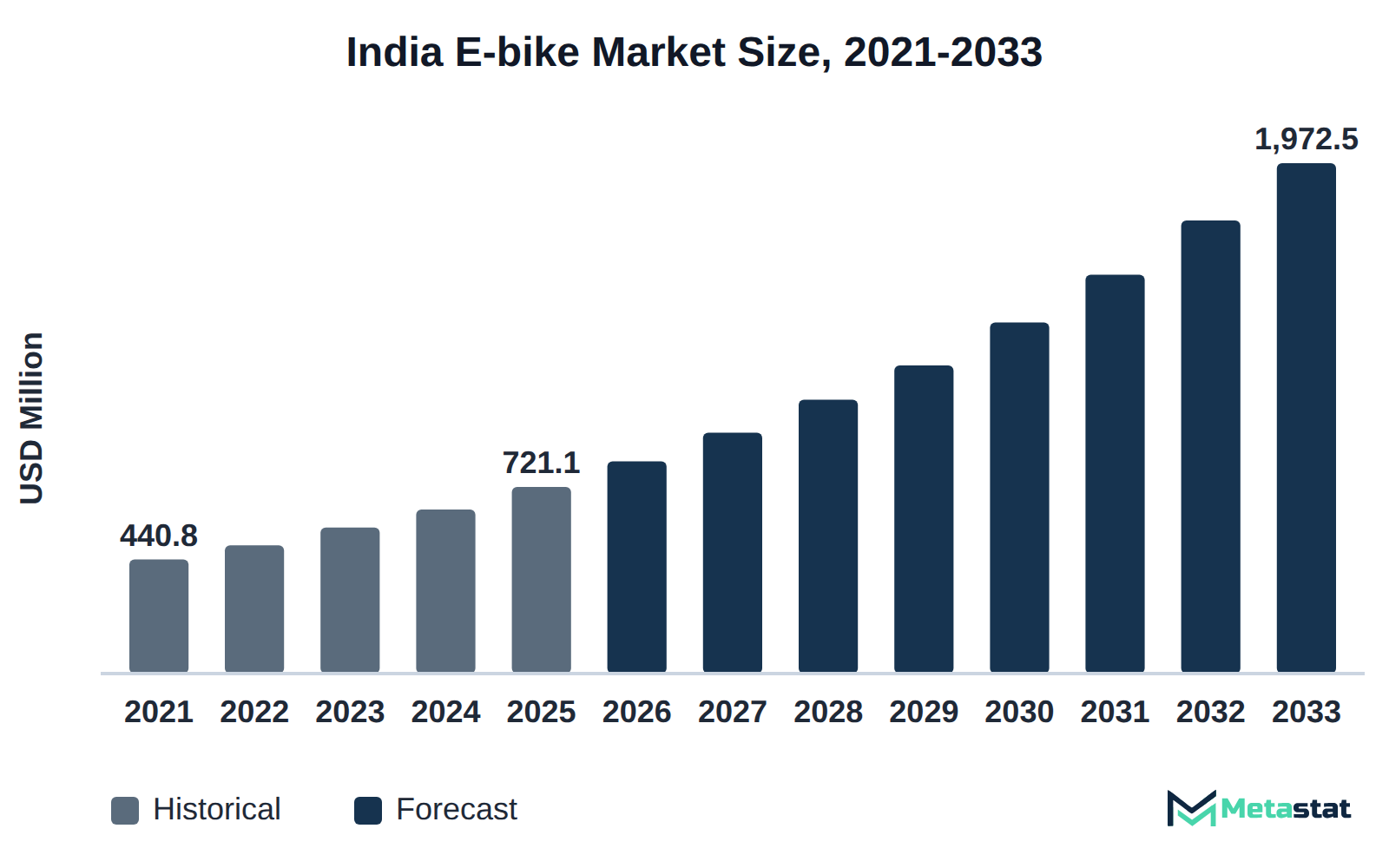
The localization of battery production significantly impacts the India E-bike market, enhancing supply chain efficiency while reducing dependency on imports. The share of lithium-ion batteries, projected to grow from USD 746.5 million in 2026 to USD 1,882.9 million by 2033, illustrates the transition toward localized battery manufacturing. This shift supports manufacturers in mitigating the effects of global supply chain disruptions and fluctuating import duties.
Replacement costs for batteries remain a critical consideration for E-bike users. With lithium-ion batteries dominating the market, their costs shape the overall affordability of E-bikes. While technology advances, consumers increasingly seek longer lifespans and higher capacities in batteries. The emphasis on localized production aligns with the demand for economically viable and sustainable E-bikes. Significant investment in domestic battery manufacturing facilities is expected to drive down replacement costs and enhance product accessibility, boosting overall market penetration.
Cargo e-bike adoption for last-mile delivery fleets is growing significantly in India because of increasing demand for efficient and sustainable logistics solutions. In 2026, the India E-bike market is expected to generate USD 819.8 million, reflecting rising interest among urban logistics providers seeking cost-effective alternatives to traditional delivery vehicles. The transition to cargo e-bikes aligns with environmental regulations and consumer preferences for greener transportation methods. Electric vans and trucks used for delivery belong to the wider commercial electric vehicle industry.
Buyers in this segment typically pursue flexible financing and leasing options. Many firms opt for rental agreements that allow them to access the latest technology without significant upfront costs. This financial flexibility enhances fleet efficiency by enabling businesses to scale operations in response to market changes without heavy capital investment. Several companies negotiate long-term contracts with manufacturers, securing favorable pricing structures and maintenance packages, which further optimize operational costs.
The shift towards cargo e-bikes presents opportunities for suppliers to tailor their offerings to meet specific delivery needs. By understanding buyer preferences regarding payment models, manufacturers devise competitive solutions that streamline the procurement process. The potential for cargo e-bikes to enhance last-mile delivery efficiency reinforces their position as a vital asset in the evolving logistics environment. Last-mile delivery is the final stage of courier, express, and parcel operations, which is where cargo e-bikes serve as alternatives to traditional delivery vehicles.
The preferences of Indian consumers regarding propulsion types indicate a noteworthy trend towards pedal-assisted options. By 2033, the segment for pedal-assisted e-bikes is projected to reach USD 959.2 million, reflecting a compound annual growth rate (CAGR) of 15%. This preference stems from various factors, including a growing emphasis on fitness and environmental sustainability among buyers. Pedal-assisted e-bikes provide an engaging riding experience while offering the convenience of electric support.
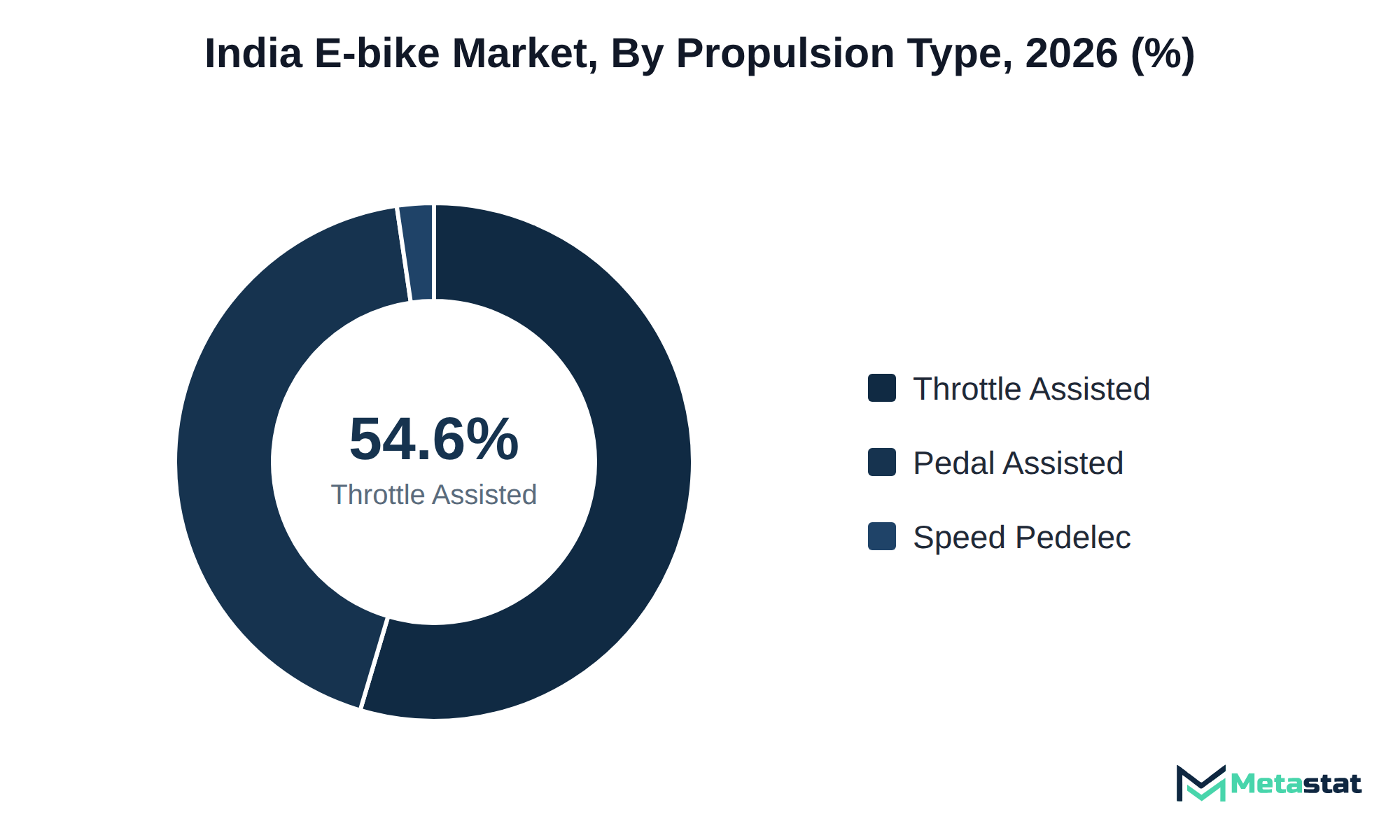
In contrast, throttle-assisted e-bikes attract a different customer segment that prioritizes ease of use. Throttle-assisted models, which allow riders to engage the motor without pedaling, are expected to achieve a significant market value by 2033, estimated at USD 945.8 million. Buyers seeking quick and effortless commuting options favor these models. This distinction in preferences highlights the diverse needs of consumers within the India E-bike market, driving manufacturers to develop tailored offerings.
The clear segmentation between pedal-assisted and throttle-assisted e-bikes continues to shape product development strategies, ultimately influencing market growth. By catering to these distinct buyer preferences, manufacturers strengthen their competitiveness and drive sales in the India E-bike market.
Several factors influence the total cost of owning an E-bike in India, including initial purchase price, maintenance, and battery replacement costs. The battery type significantly impacts ownership expenses. Lithium-ion batteries, preferred for their longevity and efficiency, drive the higher upfront costs, yet they offer lower long-term maintenance compared to alternatives.
Choosing a model with a hub motor or mid-drive motor affects both performance and operational costs. Both motor types sit within the wider electric vehicle drive motors industry. Hub motors, projected to grow from USD 768.9 million in 2026 to USD 1,763 million by 2033, provide a balance of affordability and performance. Mid-drive motors, with a strong CAGR of 22.4%, offer enhanced cycling experience but come at a higher price point. Buyers in the India E-bike market should weigh these factors carefully when calculating the total cost of ownership. That calculation should include future expenses from battery longevity and maintenance needs, not just the initial price.
Growing awareness of environmental issues drives consumer interest in sustainable transportation options. Individuals and businesses seeking eco-friendly alternatives increasingly prefer e-bikes over traditional vehicles. A related shift toward electric mobility is also visible in India's electric two-wheeler (E2W) industry. The rise in urban congestion and air pollution prompts shifts in buyer behavior, focusing on reducing carbon footprints. A significant factor influencing this trend is the projected growth in the India E-bike market, expected to reach USD 1,972.5 million by 2033. This increasing demand reflects both personal and societal shifts towards more sustainable mobility solutions. The transition to e-bikes results in heightened competition among manufacturers, leading to improved product offerings and more attractive pricing, ultimately supporting broader adoption across various demographics.
Improved battery technology enhances performance.
Advancements in battery technology significantly influence the adoption of e-bikes. Shifts toward lithium-ion batteries enhance performance, offering longer ranges and quicker charging times. Manufacturers targeting performance-conscious consumers use these technological innovations to attract buyers seeking high-quality, efficient solutions. The competitive landscape in the India E-bike market sees companies investing in research and development to provide superior battery options, driving overall market growth. Enhanced battery capacities cater to diverse consumer needs, further expanding the potential user base and contributing to increased sales volume.
Recent advancements in battery technology significantly influence the India E-bike market. The growing adoption of lithium-ion batteries offers higher energy density and longer lifespans compared to traditional lead-acid batteries. This shift enhances the performance of e-bikes and reduces overall weight, improving the riding experience for consumers. Battery innovations, including rapid charging capabilities, attract interest from potential buyers seeking convenience and efficiency in urban mobility. Charging performance and battery pack safety in these designs also depend on lithium-ion battery management systems.
The rising availability of alternative battery chemistries contributes to diversification in the market. Suppliers explore nickel-based and other innovative battery solutions, addressing a wider range of consumer needs while promoting sustainability. The cost-effectiveness of these emerging battery technologies encourages manufacturers to adopt them in their product offerings, ultimately driving competitive pricing and expanding the customer base. These advancements strengthen the market's growth trajectory through the forecast period.
High pricing of e-bikes represents a significant restraint within the market, impacting demand among price-sensitive consumers. The high costs for advanced battery technologies, including lithium-ion batteries, contribute to this challenge, particularly for the urban commuter segment seeking affordable transportation alternatives. Many potential buyers find the upfront investment prohibitive, resulting in slower uptake of e-bikes. The evolving nature of battery technologies complicates the purchasing decision, with buyers hesitating to invest in models that become obsolete or less competitive in the near future. This pricing dynamic leads to smaller orders from retail distributors, which in turn affects inventory management and market growth. Consequently, efforts to promote affordability through subsidies or financing options, including buy now pay later programs, are crucial in improving market penetration and addressing consumer concerns. Access to more pricing strategies will support growth in the India E-bike market and encourage greater adoption among various consumer groups.
Suppliers in the India E-bike market face considerable challenges stemming from supply chain disruptions. Fluctuations in raw material prices, particularly for lithium-ion batteries, exert pressure on profit margins. The reliance on imported components raises costs, intensifying competition among manufacturers. Increased demand for sustainable alternatives drives up prices, leading to further strain on suppliers' financial viability. To address these challenges, many suppliers implement cost-reduction strategies, including optimizing the sourcing process and investing in local manufacturing capabilities. These measures enhance operational efficiency and mitigate the impact of rising costs.
Suppliers explore partnerships to secure a more stable supply of critical materials, ensuring better control over production and pricing. Collaborative efforts with battery manufacturers aim to streamline the supply chain and reduce dependence on external sources. Cathode materials are a key upstream input for battery manufacturers, and the lithium-ion battery cathode material industry covers this part of the supply chain. While these strategies evolve, suppliers in the market improve their competitive position despite ongoing supply chain challenges.
The segment for pedal-assisted e-bikes presents significant growth potential within the India E-bike market. Increasing consumer demand for environmentally friendly transportation solutions fuels this growth, appealing especially to urban commuters seeking efficient and sustainable alternatives to traditional vehicles. With urban population growth and rising fuel costs, the appeal of pedal-assisted options becomes more pronounced. These e-bikes combine physical activity with ease of use, addressing the preferences of health-conscious consumers. Manufacturers focusing on this segment build on the growing trend toward personal mobility solutions, strengthening their market presence and helping reduce urban congestion and pollution. This strategy aligns with the broader market trend of sustainable transportation solutions.
The India E-bike market is segmented based on Propulsion Type, Battery Type, Motor Type, and Battery Capacity.
This segment primarily serves urban commuters seeking efficient and environmentally friendly transportation options. Increasing concerns about air pollution and traffic congestion drive demand for pedal-assisted e-bikes, appealing particularly to eco-conscious consumers. Compared to other propulsion types, the Pedal Assisted segment shows a higher growth rate, indicating a preference for enhancing cycling experiences with minimal physical exertion. The segment stands out due to its versatility, catering to recreational users and daily commuters, which differs from the Speed Pedelec and Throttle Assisted categories that cater to distinct performance needs. This growing segment represents a shift towards sustainable commuting solutions in the India E-bike market.
Speed Pedelec segment is estimated to reach USD 67.5 million by 2033, at a CAGR of 19.3% during the forecast period. This segment primarily serves urban commuters seeking faster travel options, enabling quicker journeys in congested areas. The rising emphasis on efficient transportation solutions fuels demand from professionals who prioritize time savings. Unlike other propulsion types, Speed Pedelecs offer higher speeds, positioning them distinctly within the market. The segment experiences growth driven by increasing urbanization and a shift towards eco-friendly transportation alternatives. Competitive pricing strategies in this segment attract a broader range of buyers, distinguishing it from pedal-assisted and throttle-assisted e-bikes, which have slower growth rates. The anticipated increase in Speed Pedelec adoption aligns with the overall growth trajectory of the India E-bike market, reflecting a shift towards innovative mobility solutions.
Throttle Assisted segment is expected to reach USD 945.8 million by 2033. This segment caters primarily to urban commuters seeking convenience in daily travel, offering an effortless riding experience. Demand for Throttle Assisted e-bikes stems from the increasing preference for user-friendly options that require minimal physical effort, attracting consumers who prioritize comfort and ease of use. Compared to Pedal Assisted e-bikes, which are projected to grow at a CAGR of 15%, this segment experiences slower growth, reflecting a more niche appeal among buyers. Fluctuations in pricing and the availability of subsidies for electric vehicles enhance the attractiveness of Throttle Assisted bikes, enabling a competitive edge over alternatives. With the market experiencing a consistent shift towards electrification, this segment aligns with the broader trends driving the India E-bike market, particularly among urban dwellers and leisure riders seeking a blend of practicality and enjoyment in their transportation choices.
This battery type serves primarily in e-bikes, offering efficient energy storage and longer lifespans, making it appealing for both urban commuters and recreational riders. The increasing popularity of eco-friendly transportation options drives demand for Lithium-Ion Batteries, contributing to its projected growth. Compared to Lead-Acid Batteries, which project a maximum value of USD 62.7 million by 2033, Lithium-Ion Batteries present significantly higher growth potential and a more favorable cost-to-performance ratio. The market for Lithium-Ion Batteries is characterized by rapid technological advancements, improving overall e-bike performance and reliability, reflecting the shift towards more sophisticated electric mobility solutions.
Lead-Acid Batteries segment is estimated to reach USD 62.7 million by 2033, at a CAGR of -0.6% during the forecast period. This battery type serves primarily in entry-level e-bikes, catering to cost-sensitive consumers who prioritize affordability over performance. While the lithium-ion battery segment experiences significant growth due to advancements in technology, lead-acid batteries face challenges related to weight and efficiency. The market for lead-acid batteries attracts budget-conscious buyers, resulting in slower adoption compared to lithium-ion batteries, which are expected to reach USD 1,882.9 million by 2033, growing at a CAGR of 14.1%. The declining market share of lead-acid batteries is attributed to rising consumer preferences for lighter, more efficient battery options, impacting their overall growth trajectory.
Valued at USD 26.8 million by 2033, the Others (Nickel-Based and Alternative Battery Chemistries) segment focuses on providing unique battery solutions for electric bicycles. This segment primarily serves niche markets and environmentally conscious consumers seeking alternatives to mainstream lithium-ion battery technologies. Factors including increasing market demand for diverse battery options and environmental considerations drive growth in this segment. Unlike more traditional battery types, which typically exhibit higher growth rates, this segment experiences slower growth due to limited consumer awareness and adoption challenges. While consumers become more informed about the environmental impact of battery production, the segment experiences gradual expansion, differentiating itself from the lithium-ion battery segment, which is projected to grow at a CAGR of 14.1%. Overall, the market evolves towards more sustainable and alternative energy solutions.
Hub Motor segment is valued at USD 768.9 million in 2026 and is projected to reach USD 1,763 million by 2033, at a CAGR of 12.6% during the forecast period. This segment is primarily present in various e-bike models, appealing to urban commuters and recreational riders seeking efficient and convenient transportation solutions. A significant driver for this segment stems from increasing consumer preference for enhanced performance and reliability in e-bikes, which directly benefits from the capabilities of hub motors. Compared to the Mid-drive Motor segment, which experiences a higher CAGR of 22.4%, the Hub Motor segment offers a more stable pricing structure and a broader adoption base among budget-conscious buyers. The evolving technology behind hub motors continues to attract interest, reinforcing its role in shaping the India E-bike market.
Mid-drive Motor segment is estimated to reach USD 209.5 million by 2033, at a CAGR of 22.4% during the forecast period. This motor type, commonly found in performance-oriented e-bikes, appeals to cyclists seeking enhanced torque and efficiency. Urban commuters and recreational riders primarily adopt this segment, drawn by the superior power delivery that mid-drive motors offer compared to hub motors. Factors including rising consumer preference for high-performance e-bikes drive growth in this segment. This growth is more pronounced when contrasting with other propulsion types, with the slower growth of hub motors at a CAGR of 12.6%. The premium pricing associated with mid-drive motors often correlates with advanced features and greater endurance, positioning it as a preferred choice for serious cyclists seeking an exhilarating riding experience. The India E-bike market reflects this trend, indicating a strong shift toward mid-drive technologies.
Valued at USD 190.8 million in 2026, the Below 250W segment is projected to reach USD 343.6 million by 2033, at a CAGR of 8.8% during the forecast period. This segment primarily caters to urban commuters and occasional riders seeking affordable and efficient transportation solutions. Increased interest in eco-friendly travel options drives the demand for e-bikes in this capacity range. Unlike higher-capacity segments, the Below 250W segment attracts budget-conscious consumers, leading to slower growth compared to segments like Above 650W, which experiences a CAGR of 18.9%. The lower pricing of products in this segment appeals to first-time e-bike buyers, while rising fuel costs contribute to a shift towards electric mobility solutions in urban settings. The India E-bike market continues to evolve, with this segment expanding the consumer base.
The 251W to 450W segment is estimated to reach USD 914.8 million by 2033, at a CAGR of 12.9% during the forecast period. This capacity range caters primarily to urban commuters and recreational riders, offering an optimal balance of power and efficiency for everyday use. Increasing urbanization drives demand for this category, which effectively supports short to medium-distance travel without sacrificing performance. Unlike the Below 250W segment, which focuses on low-power applications, the 251W to 450W segment appeals to a broader audience seeking reliable performance. The market for this segment benefits from the trend towards sustainable transportation solutions, enabling riders to embrace eco-friendly alternatives without compromising on speed or capability. Competitive pricing and advancements in battery technology drive further adoption, differentiating this segment from higher-capacity alternatives that often command premium prices.
Valued at USD 527.2 million by 2033, the 451W to 650 W segment provides enhanced performance for consumers seeking e-bikes that support both commuting and recreational activities. This segment attracts buyers prioritizing increased power and efficiency in their e-bikes. Growth in this segment is driven by rising demand for higher capacity e-bikes from urban commuters and leisure riders seeking longer ranges and improved performance. In comparison to other capacity segments, this range demonstrates slower growth, driven by a CAGR of 0% during the forecast period. The segment's positioning allows it to cater to a niche market, differentiating itself from segments with lower capacities that offer greater affordability and accessibility for broader consumer bases. The focus on performance within this capacity range enhances its appeal among enthusiasts, creating a unique market dynamic.
The above 650W segment is projected to grow at a CAGR of 18.9% during the forecast period. This segment caters to consumers seeking high-performance e-bikes suitable for varied terrains and longer distances. Typically preferred by enthusiasts and professional riders, these e-bikes offer superior power and speed compared to their lower-capacity counterparts. The increasing emphasis on performance drives demand within this segment, distinguishing it from others that prioritize affordability or lightweight designs. The higher pricing associated with above 650W models aligns with enhanced features and capabilities, meeting the needs of a niche market willing to invest in advanced technology. While other segments, including those below 250W, attract budget-conscious consumers, the above 650W segment appeals to those prioritizing performance and advanced battery solutions. This targeted approach significantly influences growth patterns, shaping the competitive landscape of the India E-bike market.
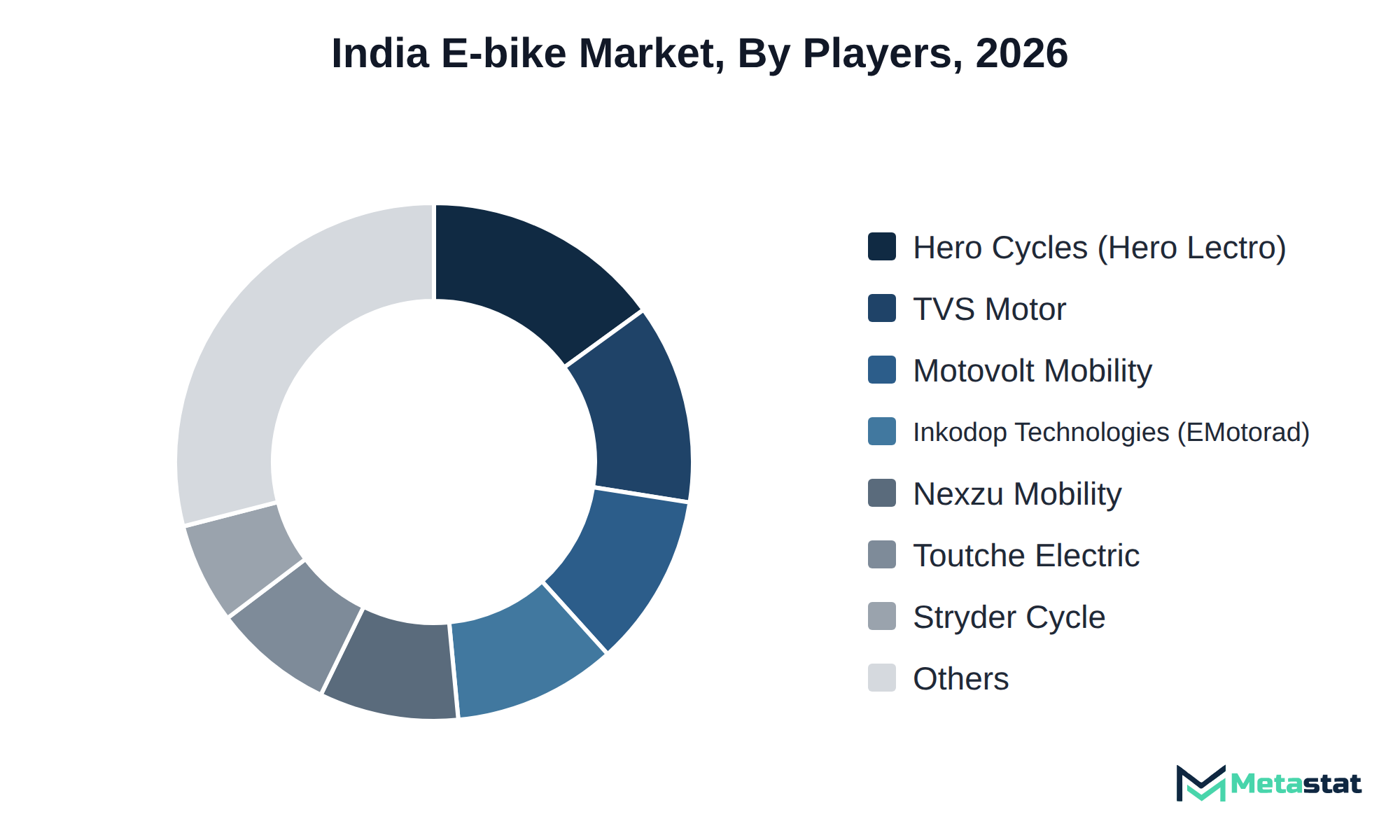
Competition within the India E-bike market exhibits a range of strategies, with companies focusing on distinct areas including product offerings, technology, and consumer engagement. Key players include Inkodop Technologies Private Limited (EMotorad), Hero Cycles Limited (Hero Lectro), and Motovolt Mobility Private Limited, each targeting different consumer segments. For instance, EMotorad emphasizes innovation in design and functionality, while Hero Lectro leverages its established brand reputation to attract buyers seeking reliability.
Consumers in the market prioritize factors including price, certification, and customization options when selecting an E-bike. Companies including Nexzu Mobility and Toutche Electric cater to budget-conscious buyers, while Svitch Bike focuses on premium models with advanced features. The emphasis on service and ecosystem integration significantly shapes purchasing decisions, with brands like TVS Motor Company positioning themselves through extensive service networks.
To achieve this growth, significant developments occur in the India E-bike market. The expansion of the lithium-ion battery segment is critical, driven by increasing demand for sustainable and efficient energy sources. The market anticipates growth in pedal-assisted e-bikes, with a projected compound annual growth rate (CAGR) of 15% from 2026 to 2033, addressing the preferences of eco-conscious consumers. The adoption of hub motors is expected to see a notable rise, with an estimated CAGR of 12.6% during the same forecast period, enhancing performance and user experience.
However, potential risks include regulatory challenges that arise concerning safety standards and environmental regulations. Such challenges could hinder the growth trajectory of the market by affecting production timelines and compliance costs. Demonstrating compliance with safety standards in India typically involves testing, inspection, and certification services. Each segment's performance will heavily influence the overall market growth, and maintaining a favorable regulatory environment will be essential for reaching the forecasted USD 1,972.5 million by 2033.
By Propulsion Type: Pedal Assisted, Speed Pedelec, Throttle Assisted
By Battery Type: Lithium-Ion Batteries, Lead-Acid Batteries, Others (Nickel-Based and Alternative Battery Chemistries)
By Motor Type: Hub Motor, Mid-drive Motor
By Battery Capacity: Below 250W, 251W to 450W, 451W to 650 W, Above 650W
The report strategically identifies and profiles the key market players and analyses their core competencies in each sub-segment of the E-bike market.
Report Attributes | Details |
Study Period | 2021-2033 |
Base Year | 2025 |
Estimated Year | 2026 |
Forecast Period | 2026-2033 |
Historical Period | 2021-2025 |
Growth Rate | CAGR 13.4% from 2026 to 2033 |
Revenue Unit | USD million |
Segmentation | By Propulsion Type, Battery Type, Motor Type, Battery Capacity, and Region |
Find answers to common questions about this report
The E-bike market size was valued at USD 721.1 million in 2025.
The market is projected to grow at a CAGR of 13.4% during the forecast period from 2026 to 2033.
Throttle Assisted leads the E-bike market with a projected value of USD 945.8 million by 2033. This segment surpasses others in terms of revenue potential.
Key drivers for the India E-bike market include growing awareness of environmental issues that increases consumer interest in sustainable transportation options. Improved battery technology enhances performance, attracting performance-conscious consumers seeking high-quality, efficient solutions. Rising urban congestion and air pollution further contribute to the shift towards e-bikes.
High pricing of e-bikes significantly restrains market growth, impacting demand among price-sensitive consumers. High costs for advanced battery technologies, particularly lithium-ion batteries, contribute to this challenge, making e-bikes less accessible for many potential buyers.
Growing awareness of environmental issues and urban congestion drives consumer interest in e-bikes as sustainable transportation options. Advancements in battery technology enhance performance and reduce weight, further encouraging adoption among performance-conscious consumers.
The E-bike market is estimated to reach a valuation of USD 1,972.5 million by 2033.
Key players operating in the E-bike industry include Inkodop Technologies Private Limited (EMotorad), Hero Cycles Limited (Hero Lectro), Motovolt Mobility Private Limited, Nexzu Mobility, Toutche Electric, and TVS Motor Company.
The pedal-assisted e-bike segment is projected to expand from USD 359.9 million in 2026 to USD 959.2 million by 2033, reflecting a compound annual growth rate (CAGR) of 15 percent.
Suppliers face challenges from supply chain disruptions and fluctuations in raw material prices, particularly for lithium-ion batteries, which pressure profit margins and increase costs.
The analysts below cover Automotive and Transportation research at Metastat Insights.
LEAD ANALYST
Utkarsh Khirodkar is a Lead Market Research Analyst at MetaStat Insight, specializing in market intelligence, technology sector assessments, and competitive strategy.

ENERGY & INFRASTRUCTURE INDUSTRY CONSULTANT
Automotive and Transportation · Electronics and Semiconductor · Energy and Power · Machinery & Equipment
Saurabh Vasant Ganvir consults for Energy & Infrastructure Industry at MetaStat Insight, specializing in renewable energy, solar EPC, and electric vehicle (EV) infrastructure markets.
When planning edge sensor rollouts across refinery environments, generic IoT reports typically miss the harsh-environment certification bottlenecks. MetaStat Insight gave an objective evaluation of ATEX and Class 1 Division 2 hardware availability, along with realistic five-year maintenance cycle cost projections. The comparison of wireless mesh versus private cellular backhaul helped our team pressure-test network reliability models for remote processing facilities.
In the biological seed treatment space, registration timelines vary drastically between the European Union, Brazil, and North America. The MetaStat Insight research handled these cross-border regulatory barriers with genuine nuance, mapping commercialization pathways alongside historical field adoption rates. The segmentation between microbial strains and biochemical active ingredients was particularly well structured.
Our team was tracking whether regional recycling infrastructure could realistically absorb the growing volume of lithium iron phosphate batteries over the next decade. The report did a solid job separating announced hydrometallurgical plant capacity from active, permitted operational throughput. That distinction made the feedstock availability projections and regional recovery rate models far more credible than standard commercial overviews.
Explore related market intelligence reports worth reading alongside this one.
Starting from
$2950