
LEAD ANALYST
Utkarsh Khirodkar is a Lead Market Research Analyst at MetaStat Insight, specializing in market intelligence, technology sector assessments, and competitive strategy.

Global Motorized Quadricycle and Tricycle Market Size, Share, By Vehicle Type (Tricycles and Quadricycles), By Powertrain Type (Internal Combustion Engine, Battery Electric, and Others), By Application (Commercial Use and Personal Use), By Vehicle Design (Passenger Vehicles and Cargo Vehicles), Industry Analysis, Growth, Trends, and Forecast, 2026-2033
Report ID
MSI-5642
Published
October, 2026
Pages
257 Pages
Format
Historical
Base year
Forecast
Forecast period
Report Details
Market Valuation: Valued at $8.1 Billion in 2025, projected to reach $17.1 Billion by 2033 at a 9.8% CAGR.
Dominant Segment: The commercial use segment leads the market, driven by rising demand for delivery services and efficient urban mobility solutions.
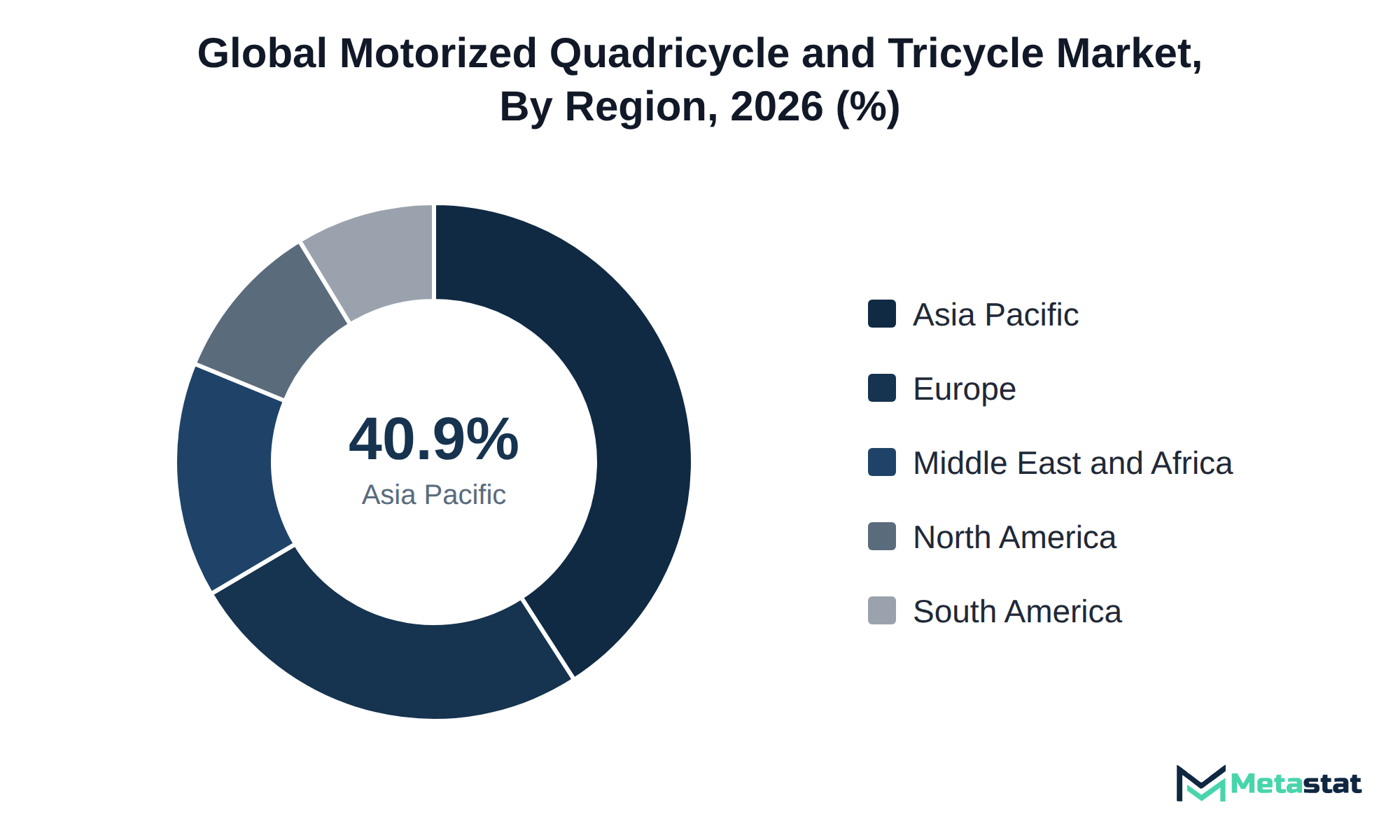
Geographic Lead: Asia Pacific holds the largest market share at 40.9%, supported by rapid urbanization and government initiatives promoting electric vehicle adoption.
What's Inside: The report provides comprehensive coverage of market dynamics, competitive landscape, and detailed forecasts across various segments, including vehicle types and powertrain options.
Growth Drivers: Key growth drivers include the shift toward battery electric vehicles, increasing urbanization, and rising consumer demand for cost-effective and eco-friendly transportation solutions.
Choose Your License
Global Motorized Quadricycle and Tricycle Market
The global Motorized Quadricycle and Tricycle market was valued at USD 8.1 billion in 2025 and is projected to reach USD 17.1 billion by 2033, growing at a CAGR of 9.8% over the forecast period.
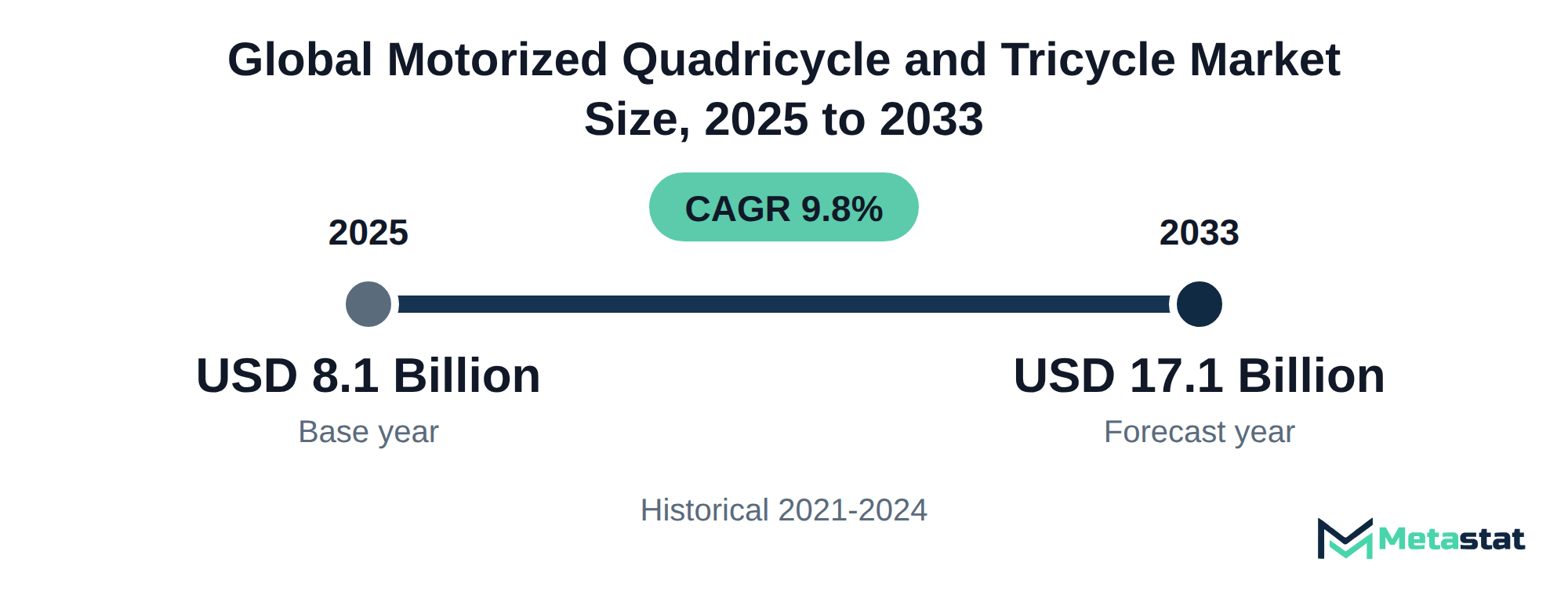
The Motorized Quadricycle and Tricycle market encompasses a range of vehicles designed for both personal and commercial use, appealing to diverse buyer groups. Customers invest in these vehicles for their versatility, fuel efficiency, and growing environmental consciousness. The increasing demand for cost-effective transportation solutions drives significant expenditure in this sector, particularly among urban dwellers and businesses seeking efficient logistics options.
Growth in the market reflects several factors. The commercial use segment emerges with the highest value, driven by rising demand for delivery services and urban mobility solutions. The Asia Pacific region holds the largest market share at 40.9%, surpassing other regions, including Europe and North America. North America holds 10.1% of the market in 2025, with the US leading in 2026. The shift towards battery electric powertrains significantly influences market expansion, aligning with global sustainability objectives.
Investments in infrastructure and advancements in vehicle technology enhance the appeal of motorized quadricycles and tricycles. Manufacturers focus on developing innovative designs that cater to specific consumer needs, resulting in increased competition and market dynamism. Rising competition opens opportunities for growth and strategic partnerships within the market.
The market covers various segments, including tricycles and quadricycles, designed to meet the demands of urban mobility and commercial transportation. Buyers invest in these vehicles due to their efficiency, maneuverability, and lower operational costs compared to traditional vehicles. Increasing urbanization and rising fuel prices trigger demand for cost-effective transportation solutions, further driving expenditure in the Motorized Quadricycle and Tricycle market.
Tricycles represent the largest segment, contributing significantly to overall market value. Asia Pacific holds the largest share, accounting for 40.9% of the market, with strong growth projections. The adoption of battery electric vehicles stands out as a primary growth driver, aligning with global sustainability trends and regulations that promote cleaner transportation options.
Factors including technological advancements and increasing consumer awareness of eco-friendly alternatives facilitate market expansion. The shift towards electric powertrains and the rising popularity of commercial applications further enhance growth opportunities. While the demand for innovative mobility solutions intensifies, the Motorized Quadricycle and Tricycle market is positioned for development in the coming years.
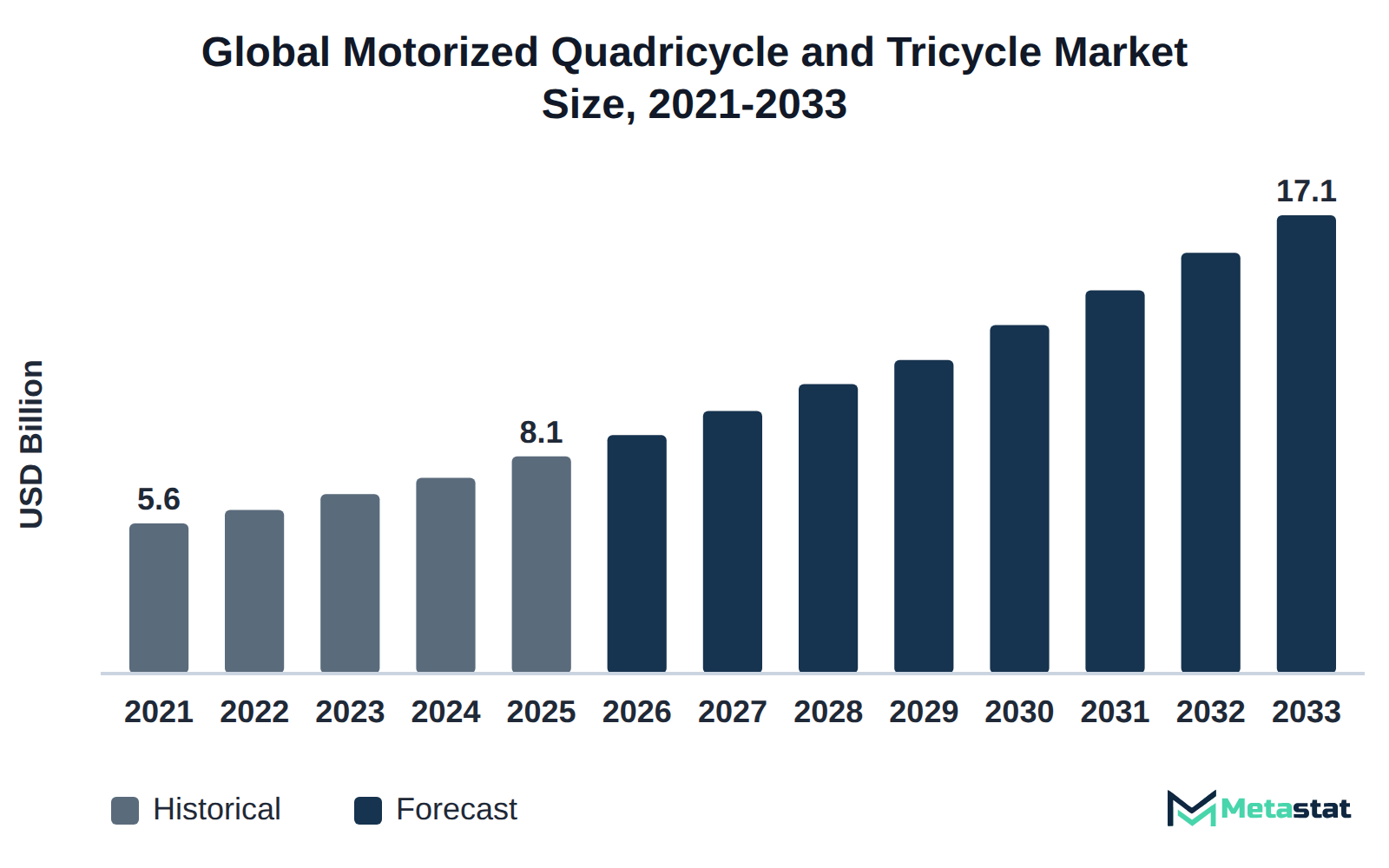
The adoption of battery electric three-wheelers in the Motorized Quadricycle and Tricycle market reflects a significant shift toward sustainable transportation solutions. By 2033, the segment for battery electric vehicles is projected to reach USD 6.1 billion, indicating a compound annual growth rate of 14.3%. This acceleration is driven by increasing demand for eco-friendly transportation options in urban areas, where air quality and traffic congestion present critical challenges.
High-use passenger fleets, especially those operating in commercial applications, benefit greatly from this transition. The operational costs associated with battery electric vehicles, including lower fuel expenses and reduced maintenance requirements, enhance overall fleet economics. Consequently, fleet operators experience increased profitability and efficiency, which drives greater competition within the market.
This shift toward battery electric three-wheelers presents a substantial opportunity for investment in infrastructure and charging networks, including DC fast charging, further supporting the growth of the Motorized Quadricycle and Tricycle market. Cities aim to achieve sustainability targets, and the continued integration of these vehicles into public and private transportation systems is expected to reshape urban mobility.
Cargo tricycles represent a growing solution for last-mile delivery and small-business transport within the Motorized Quadricycle and Tricycle market. The increasing shift towards urbanization and the need for efficient delivery mechanisms have positioned these vehicles as an attractive option for businesses. The commercial use segment is projected to grow from USD 6.6 billion in 2026 to USD 13 billion by 2033, reflecting a compound annual growth rate of 10.3%. This growth highlights the demand from small businesses seeking cost-effective and manageable transport solutions.
Purchasing models for cargo tricycles typically include outright purchases, leasing options, and rental agreements. Small businesses often prefer leasing or rental contracts, which allow for lower upfront costs and flexibility in fleet management. Such arrangements facilitate easier budget management, enabling operators to adapt to market demands without significant financial strain. Financing options, including loans and manufacturer incentives, further enhance the accessibility of these vehicles, encouraging adoption and expansion in the market.
The increase in cargo tricycle utilization positively impacts operational efficiency for small businesses, enhancing last-mile delivery capabilities. Reliable transport solutions drive customer satisfaction and repeat business, promoting sustainable growth within the market.
Light and heavy quadricycles support urban commuting and shared mobility solutions, catering to diverse consumer needs. The Motorized Quadricycle and Tricycle market demonstrates significant growth potential, particularly with the increasing demand for efficient transportation alternatives in densely populated areas.
Light quadricycles, designed for personal use, offer agility and accessibility, making them attractive to urban commuters seeking sustainable alternatives to traditional vehicles. The demand for these vehicles is expected to reach USD 4.1 billion by 2033. Heavy quadricycles, on the other hand, focus on commercial applications, where efficiency and capacity are essential. This segment is on track to achieve USD 13 billion by 2033, driven by the need for cost-effective logistics solutions in urban environments.
The distinct characteristics of light and heavy quadricycles enhance their appeal in urban areas. Their compact size and lower emissions contribute to reduced congestion and improved air quality. The increasing adoption of shared mobility services, including mobility as a service models, further strengthens their relevance, positioning these vehicles as essential components of future urban transport ecosystems within the Motorized Quadricycle and Tricycle market.
Vehicle use and powertrain significantly influence insurance needs for tricycles. Different applications, including commercial versus personal use, require distinct coverage levels. This growth leads to increased exposure to risks associated with higher operational use, necessitating comprehensive motor insurance solutions that account for factors including liability, transportation of goods, and employee safety. In contrast, personal use vehicles typically face lower risk profiles and require less expansive coverage. Insurance providers adapt their offerings to match the needs of each user segment.
Powertrain selection significantly influences insurance requirements for tricycles. The market experiences a growing trend towards battery electric powertrains, which are anticipated to reach a value of USD 6.1 billion by 2033 with a CAGR of 14.3%. Electric vehicles promise lower maintenance costs and enhanced safety features, which lead to reduced insurance premiums. Conversely, traditional internal combustion engine vehicles, projected to grow from USD 6.5 billion in 2026 to USD 10.9 billion by 2033, require higher liability coverage due to their historical association with more accidents and repairs. Understanding how powertrain choices impact risk profiles allows insurers to tailor coverage options in the motorized quadricycle and tricycle market, aligning with users' specific operational demands.
Growth in the commercial sector drives increased spending in the Motorized Quadricycle and Tricycle market. Businesses across logistics, delivery services, and urban transport seek efficient and cost-effective solutions for their operations. The shift towards sustainable transportation options, particularly in urban areas, influences purchasing decisions. Increased emphasis on reducing operational costs and on carbon footprint management encourages companies to invest in these vehicles. This upward trajectory indicates that businesses recognize the operational advantages of integrating motorized quadricycles and tricycles into their fleets. Enhanced fuel efficiency and lower maintenance costs contribute to the appeal of these vehicles, driving demand among commercial buyers. This trend strengthens the market by attracting more investment and broadening adoption.
Shifting regulatory standards accelerate the transition to cleaner technologies within the Motorized Quadricycle and Tricycle market. Manufacturers respond by enhancing vehicle designs to comply with stricter emission regulations, ensuring alignment with environmental goals. This shift addresses regulatory pressures while aligning with consumer preferences for eco-friendly options. The driving force centers on the push for sustainable transport solutions, reflecting a broader commitment to reducing carbon footprints. Adoption of battery electric powertrains gains momentum in response to these standards, positioning manufacturers to capture emerging market opportunities.
Increased investment in research and development enables companies to innovate beyond compliance, driving advancements in performance and efficiency. This proactive approach influences purchasing decisions among environmentally conscious buyers, enhancing market competitiveness. Consequently, the market grows as suppliers use technological advancements to build vehicles that exceed minimum regulatory requirements. Evolving regulatory frameworks connect compliance, innovation, and consumer demand, and these links shape the future of motorized quadricycles and tricycles.
Price sensitivity among consumers significantly impacts adoption in the Motorized Quadricycle and Tricycle market. Rising costs associated with vehicle acquisition and maintenance create barriers for potential buyers in personal use segments, leading to slower uptake of these vehicles. In commercial applications, operators face pressure to maintain budgets while expanding fleets, resulting in smaller orders or delayed replacement cycles. This constraint particularly affects small businesses that rely on affordable mobility solutions, which prioritize cost-effectiveness over advanced features. The higher initial investment required for battery electric options further compounds this issue, restricting market expansion in regions where purchasing power is limited. A substantial portion of potential customers remains hesitant, opting to delay purchases or consider alternative transportation modes due to financial constraints. These pressures slow overall market growth.
Suppliers in the Motorized Quadricycle and Tricycle market face significant challenges due to rising input costs, impacting profit margins and overall competitiveness. The surge in raw material prices for components including batteries and vehicle chassis contributes directly to higher production expenses. Manufacturers respond to this challenge by exploring alternative materials and optimizing production processes to mitigate costs. Strategic partnerships with local suppliers enhance supply chain efficiency and reduce reliance on expensive imports.
In addition, several suppliers invest in technology advancements to enhance production efficiency and reduce waste. These innovations support cost management while maintaining product quality. Persistent inflationary trends in the economy create ongoing challenges, putting pressure on pricing strategies. This environment influences consumer purchasing behavior and overall market demand in the Motorized Quadricycle and Tricycle market, necessitating agile responses from suppliers to sustain profitability.
Battery electric tricycles represent a significant growth opportunity within the Motorized Quadricycle and Tricycle market. This segment is projected to achieve a compound annual growth rate of 14.3% by 2033, making it the fastest-growing category. The increasing focus on sustainability and emission reduction drives consumers and businesses toward electric options. Urban areas with stringent pollution norms present a favorable environment for battery electric vehicles, encouraging adoption among environmentally conscious consumers and commercial operators. This shift aligns with the market's overall transition toward cleaner technologies, enhancing the appeal of battery electric tricycles for personal and commercial use. Addressing this segment requires manufacturers to invest in advanced battery technologies and charging infrastructure to support growing demand. The commitment to renewable energy solutions and electric mobility positions the market for robust expansion in the upcoming years.
The Global Motorized Quadricycle and Tricycle market is segmented based on Vehicle Type, Powertrain Type, Application, and Vehicle Design.
Tricycles segment is valued at USD 7.7 billion in 2026 and is projected to reach USD 14.5 billion by 2033, at a CAGR of 9.4% during the forecast period. These vehicles primarily serve commercial needs, especially in urban logistics and personal transport. Demand for tricycles is driven by the increasing need for efficient last-mile delivery solutions and the rising popularity of personal mobility alternatives. This segment differs from quadricycles in its stronger growth trajectory, attributed to higher adoption rates among small businesses and fleet operators seeking cost-effective transportation solutions. The growth of battery electric tricycles further enhances their appeal, offering a cleaner alternative compared to traditional internal combustion engine options. While tricycles focus on practicality and affordability, quadricycles typically appeal to consumers seeking more versatile or higher-end mobility solutions, reflecting their distinct positioning within the market.
Quadricycles segment is estimated to reach USD 2.6 billion by 2033, at a CAGR of 11.9% during the forecast period. Quadricycles serve primarily for personal and commercial applications, appealing to buyers seeking compact and efficient transportation solutions. The growing emphasis on urban mobility and environmental concerns drives demand for these vehicles, particularly in densely populated areas. Unlike tricycles, quadricycles exhibit faster growth due to their versatility and enhanced comfort features, attracting a broader customer base including delivery services and urban commuters. Competitive pricing and increasing adoption of battery electric models further enhance their appeal, positioning them as a strong alternative for users transitioning from traditional vehicles. The market's overall expansion reflects a shift toward more sustainable transport options.
Internal combustion engine tricycles and quadricycles primarily serve commercial and personal users who require reliable and efficient transportation solutions. Growth in urbanization significantly influences demand, with cities seeking versatile vehicles that navigate traffic congestion. Compared to the Battery Electric segment, which is anticipated to grow at a CAGR of 14.3%, the Internal Combustion Engine segment shows slower growth due to increasing regulatory pressures and a shift toward cleaner technologies. However, affordability and established infrastructure for fuel supply continue to support its presence in the market, appealing to buyers focused on immediate practicality and cost-effectiveness.
Battery electric tricycles and quadricycles serve various applications, primarily urban mobility solutions and environmentally friendly transport options. End users include commercial electric vehicle fleets, delivery services, and individual consumers seeking sustainable alternatives. The demand for battery electric vehicles is driven by increasing environmental awareness, urbanization, and supportive government policies aimed at reducing emissions. Compared to the Internal Combustion Engine segment, which is projected to grow at a CAGR of 7.6%, the battery electric segment demonstrates a faster growth trajectory due to its appeal among environmentally conscious buyers. This segment's competitive edge lies in its potential for lower operating costs and reduced environmental impact, distinguishing it from traditional powertrain options in the market.
The Others (Hybrid and Range-Extended) segment is estimated to reach USD 0.2 billion by 2033. This segment primarily applies in applications where traditional internal combustion engines and fully electric powertrains do not fulfill operational requirements. Buyers in commercial sectors and personal users seek hybrid vehicles to balance efficiency and range. A significant driver for this segment includes increasing environmental regulations, which push manufacturers to develop cleaner alternatives. Compared to other powertrain types, including Internal Combustion Engine and Battery Electric, the Others segment experiences slower growth, reflecting a CAGR of 0.2% through 2033. This slower pace results partly from the established presence of electric and combustion vehicles, leading to less demand for hybrid solutions. The focus on sustainability will likely impact future developments, influencing how hybrid technologies evolve in this market.
This segment serves various industries, including logistics and transportation, where businesses employ motorized quadricycles and tricycles for efficient delivery and urban mobility solutions. Increasing demand for cost-effective and environmentally friendly transportation solutions drives growth, particularly in urban areas. The significant expansion in this segment contrasts with Personal Use, where growth is expected at a CAGR of 8.3%, indicating a faster adoption of commercial applications. Transitioning to battery electric options influences development in this segment, aligning with global trends toward sustainability. The market benefits from investments in urban infrastructure, enhancing the viability of motorized quadricycles and tricycles for commercial applications.
Personal Use segment is estimated to reach USD 4.1 billion by 2033, at a CAGR of 8.3% during the forecast period. This segment serves individuals seeking personal transportation solutions, often in urban environments where convenience and maneuverability are essential. Key drivers include the growing preference for eco-friendly vehicles and rising urban population density, which increases demand for compact and efficient modes of transport. Unlike the Commercial Use segment, which emphasizes utility and cargo capacity, the Personal Use segment focuses on individual mobility, reflecting a different pricing structure and customer base. While the Personal Use segment experiences steady growth, the Commercial Use segment shows a faster CAGR of 10.3%, indicating stronger business-driven demand in the market.
Passenger Vehicles segment is valued at USD 7.1 billion in 2026 and is projected to reach USD 13.1 billion by 2033, at a CAGR of 9.2% during the forecast period. This segment serves primarily individual consumers and small families who prioritize compact and efficient modes of transportation. Increasing urbanization and rising traffic congestion in metropolitan areas drive demand for smaller vehicles that navigate tight spaces. The segment benefits from growing consumer interest in eco-friendly transportation options, aligning with broader trends in sustainability. Compared to other vehicle designs, including cargo vehicles, which prioritize utility over size, passenger vehicles experience relatively higher growth rates, reflecting changing preferences toward more personal and flexible transportation solutions. This upward trajectory positions the segment favorably within the market, encouraging investment and development in innovative designs that cater to evolving consumer needs.
The Cargo Vehicles segment is estimated to reach USD 4 billion by 2033, with a CAGR of 12% during the forecast period. This segment finds extensive use in logistics and courier, express, and parcel delivery services, catering to businesses requiring efficient transportation of goods in urban settings. The increasing demand for sustainable transport solutions significantly influences this segment, particularly in the context of rising e-commerce activities. Unlike personal use vehicles, which focus on individual consumers, cargo vehicles primarily attract commercial buyers seeking cost-effective and practical solutions. Their higher growth rate compared to passenger vehicles highlights shifting priorities toward efficiency and sustainability in transport solutions. Regulatory frameworks promoting electric and low-emission vehicles further enhance the attractiveness of cargo vehicles, positioning them as a vital component in the Motorized Quadricycle and Tricycle market.
Based on geography, the Global Motorized Quadricycle and Tricycle market is divided into North America, Europe, Asia-Pacific, South America, Middle East, and Africa.
North America demonstrates a robust demand for the Motorized Quadricycle and Tricycle market, driven by increasing urbanization and a focus on efficient transportation solutions. The United States, Canada, and Mexico represent key markets, where consumer preferences shift toward smaller, more maneuverable vehicles suitable for densely populated areas. Infrastructure developments, including dedicated lanes for light vehicles, enhance the appeal and usability of these options. North America is projected to reach USD 1.6 billion by the end of 2033, with a market share of 10.1% in 2025. The growing trend toward sustainability further influences buyer decisions, with electric and hybrid models gaining traction among environmentally conscious consumers, contributing to the overall growth of the market.
Demand in Europe for the Motorized Quadricycle and Tricycle market is influenced by urban mobility needs and environmental regulations. Countries like Germany and France focus on sustainable transportation solutions, driving investments in electric-powered vehicles. Infrastructure improvements, including charging stations, support the adoption of battery electric models, enhancing their attractiveness for consumers and businesses. The market holds a significant share of 25.6% globally in 2025, with expected growth fueled by commercial applications and personal use. Rising interest in eco-friendly transport options among consumers boosts demand for electric tricycles and quadricycles. European manufacturers, including Bajaj Auto Limited and Piaggio & C. S.p.A., align production strategies to meet the evolving preferences of buyers, ensuring competitiveness in the market.
Regional demand within Asia-Pacific for the Motorized Quadricycle and Tricycle market reflects rapid urbanization and a growing population, particularly in countries including China and India. The increasing need for efficient urban mobility solutions fuels demand in metropolitan areas. Government initiatives, including supportive policies for electric vehicles, enhance the adoption of battery electric models, contributing to a projected market growth rate of 14.3% within this segment. Infrastructure development in cities supports the integration of these vehicles into public transportation systems, making them an attractive option for both personal and commercial use. The region holds a substantial 40.9% share of the global market in 2025, indicative of its critical role in driving technological advancements and meeting consumer preferences in the Motorized Quadricycle and Tricycle market.
Brazil and Argentina play significant roles in the Motorized Quadricycle and Tricycle market, driven by growing demand for affordable and efficient transportation solutions. Urban centers in these countries experience increasing congestion, pushing consumers and businesses toward compact vehicles that provide maneuverability. The South American market benefits from rising interest in environmentally friendly options, particularly battery electric vehicles, with demand for such models expected to rise substantially. Local manufacturers are enhancing their offerings to align with emerging consumer preferences and regulatory requirements, which further supports growth. South America accounts for 8.7% of the global market in 2025, reflecting the region's potential and future significance.
Growing demand in the Middle East and Africa for the Motorized Quadricycle and Tricycle market stems from increasing urban mobility requirements and rising interest in sustainable transportation solutions. Countries including Saudi Arabia and the UAE focus on enhancing infrastructure, facilitating the adoption of efficient transportation alternatives. In South Africa, local manufacturers are expanding their offerings of quadricycles and tricycles to meet the needs of urban consumers seeking affordable mobility options. This region holds a significant presence within the global market. Commercial applications drive much of this demand, supported by governmental initiatives promoting cleaner transportation. Overall, the region offers suppliers an opportunity to establish a foothold and capture growth potential.
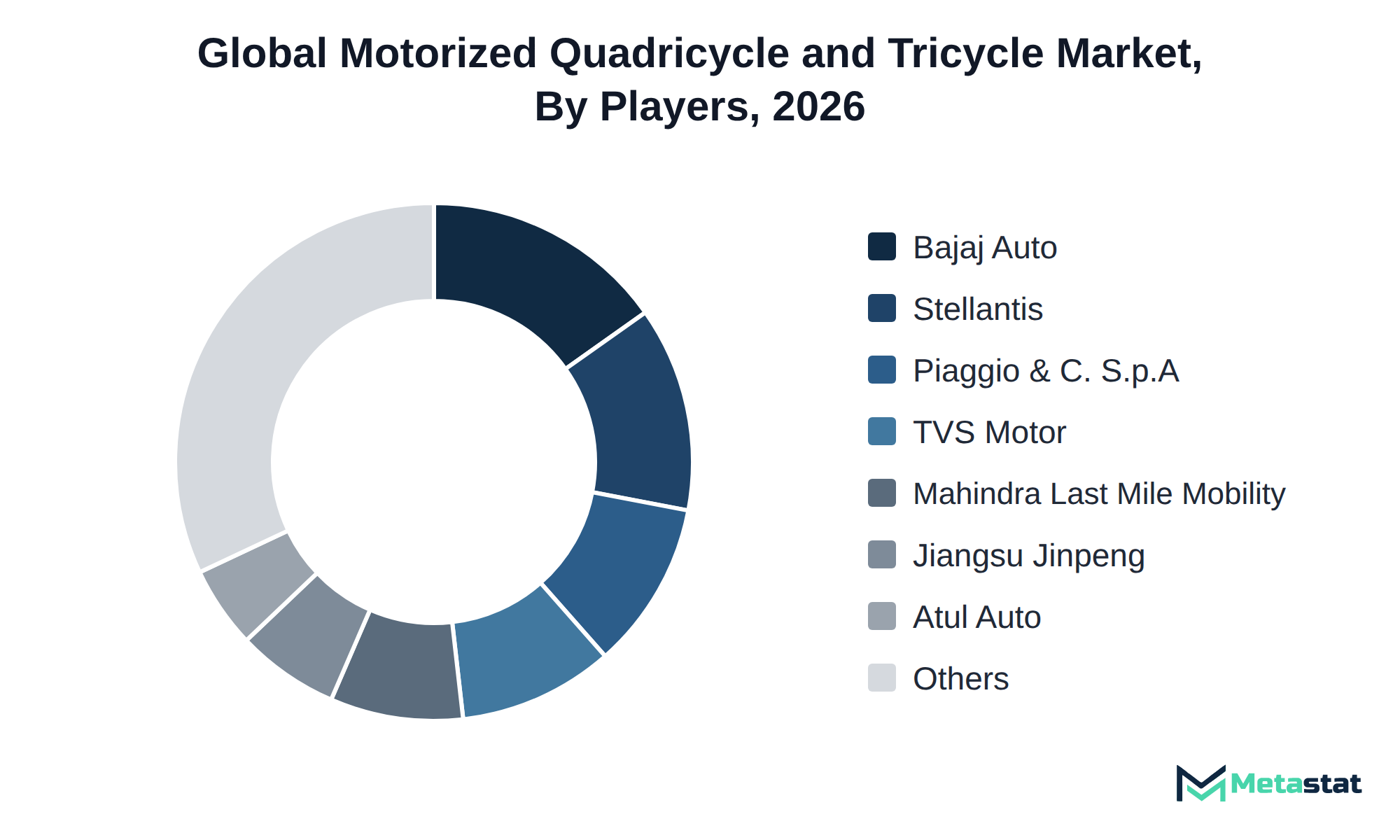
Competition in the Motorized Quadricycle and Tricycle market reflects a variety of strategic positions among key players. Companies segment their offerings based on vehicle type and powertrain technology, targeting distinct buyer segments including commercial and personal users. Price, customization options, and service offerings significantly influence buyer choices, with manufacturers emphasizing features that align with specific consumer needs.
Bajaj Auto Limited and Piaggio & C. S.p.A. focus on internal combustion engine vehicles, promoting their extensive service networks and brand reputation. Mahindra Last Mile Mobility Limited and TVS Motor Company Limited emphasize electric powertrains, capitalizing on the growing demand for sustainable mobility solutions. Companies like AIXAM MEGA and Ligier Group concentrate on passenger vehicles, offering unique designs to appeal to lifestyle buyers in urban settings.
Growth in the Motorized Quadricycle and Tricycle market relies on several key developments across different segments. The increasing adoption of battery electric powertrains, projected to reach USD 6.1 billion by 2033, is essential for driving demand, particularly in regions like Asia Pacific where environmental regulations are tightening. In the vehicle type segment, tricycles are expected to experience significant growth, with revenues rising from USD 7.7 billion in 2026 to USD 14.5 billion by 2033, reflecting strong demand in commercial applications. However, potential risks including fluctuating raw material costs and supply chain disruptions hinder progress in the market. Responding to these challenges will require flexibility in sourcing and manufacturing processes. The combination of these factors ultimately shapes the trajectory of the market, influencing both revenue potential and competitive dynamics.
By Vehicle Type: Tricycles, Quadricycles
By Powertrain Type: Internal Combustion Engine, Battery Electric, Others (Hybrid and Range-Extended)
By Application: Commercial Use, Personal Use
By Vehicle Design: Passenger Vehicles, Cargo Vehicles
The report strategically identifies and profiles the key market players and analyses their core competencies in each sub-segment of the Motorized Quadricycle and Tricycle market.
Report Attributes | Details |
Study Period | 2021-2033 |
Base Year | 2025 |
Estimated Year | 2026 |
Forecast Period | 2026-2033 |
Historical Period | 2021-2025 |
Growth Rate | CAGR 9.8% from 2026 to 2033 |
Revenue Unit | USD billion |
Segmentation | By Vehicle Type, Powertrain Type, Application, Vehicle Design, and Region |
By Region | North America (By Vehicle Type, Powertrain Type, Application, Vehicle Design, and Country)
|
Europe (By Vehicle Type, Powertrain Type, Application, Vehicle Design, and Country)
| |
Asia Pacific (By Vehicle Type, Powertrain Type, Application, Vehicle Design, and Country)
| |
South America (By Vehicle Type, Powertrain Type, Application, Vehicle Design, and Country)
| |
Middle East and Africa (By Vehicle Type, Powertrain Type, Application, Vehicle Design, and Country)
|
Find answers to common questions about this report
The Motorized Quadricycle and Tricycle market size was valued at USD 8.1 billion in 2025.
The market is projected to grow at a CAGR of 9.8% during the forecast period from 2026 to 2033.
The North America Motorized Quadricycle and Tricycle market size is estimated to reach USD 1.6 billion by 2033.
Tricycles lead the Motorized Quadricycle and Tricycle market with a projected value of USD 14.5 billion by 2033, reflecting a compound annual growth rate of 9.4 percent. This segment surpasses quadricycles, which are expected to reach USD 2.6 billion in the same year.
Key drivers for the Motorized Quadricycle and Tricycle market include growth in the commercial sector, where businesses seek efficient and cost-effective solutions. The transition toward sustainable transportation options influences purchasing decisions, leading to investments in vehicles that reduce operational costs and carbon footprints.
Asia Pacific holds the dominant share of the Motorized Quadricycle and Tricycle market, accounting for USD 40.9 billion. This regional share significantly surpasses that of North America, Europe, South America, and the Middle East and Africa.
Price sensitivity among consumers restrains growth in the Motorized Quadricycle and Tricycle market, creating barriers for potential buyers in personal use segments. Rising input costs for manufacturers, driven by surging raw material prices, challenge profitability and competitiveness in the market.
Increased focus on sustainability and emission reduction drives demand for battery electric tricycles, projected to grow at a compound annual growth rate of 14.3 percent by 2033. Urban areas with strict pollution norms create a favorable environment for electric options, encouraging adoption among both consumers and commercial operators.
The Motorized Quadricycle and Tricycle market is estimated to reach a valuation of USD 17.1 billion by 2033.
Key players operating in the Motorized Quadricycle and Tricycle market include Bajaj Auto Limited, Piaggio & C. S.p.A., Mahindra Last Mile Mobility Limited, TVS Motor Company Limited, Atul Auto Limited, and Stellantis N.V.
The analysts below cover Automotive and Transportation research at Metastat Insights.
LEAD ANALYST
Utkarsh Khirodkar is a Lead Market Research Analyst at MetaStat Insight, specializing in market intelligence, technology sector assessments, and competitive strategy.

ENERGY & INFRASTRUCTURE INDUSTRY CONSULTANT
Automotive and Transportation · Electronics and Semiconductor · Energy and Power · Machinery & Equipment
Saurabh Vasant Ganvir consults for Energy & Infrastructure Industry at MetaStat Insight, specializing in renewable energy, solar EPC, and electric vehicle (EV) infrastructure markets.
Scaling antibody-drug conjugate manufacturing hinges on contract manufacturing availability for high-potency active ingredients. The MetaStat Insight analysis looked closely at global cleanroom slot constraints, bioconjugation batch failure rates, and supply chain redundancies between the US, Europe, and India. The supplier capability matrix proved genuinely useful for our team when mapping secondary source options across our clinical pipeline.
Floating offshore wind feasibility relies heavily on specialized installation vessel availability and port crane limits, which most broad renewable energy forecasts ignore. The report delivered a thorough analysis of dry dock capacity, mooring chain supply constraints, and raw material pricing trends for deepwater anchor installations. It served as a solid independent sanity check for our offshore project capital expenditure assumptions.
Assessing commercial microgrid software adoption requires looking past top-level installation numbers and examining utility interconnection queues. The research provided verifiable data on average permitting timelines, tariff structures, and battery storage integration costs across regional utility territories. That grounded perspective was valuable for our team when building five-year demand projections for industrial microgrid controllers.
Explore related market intelligence reports worth reading alongside this one.
Starting from
$2950