
LEAD ANALYST
Utkarsh Khirodkar is a Lead Market Research Analyst at MetaStat Insight, specializing in market intelligence, technology sector assessments, and competitive strategy.

India Life Insurance Market Size, Share, By Product Structure (Non-Linked Participating, Non-Linked Non-Participating and Linked), By Policyholder Type (Individual Policies and Group Policies), By Premium Stage (First-Year Regular Premium, Single Premium and Renewal Premium), By Distribution Channel (Individual Agents, Bancassurance, Direct Sales, Insurance Brokers and Others), Industry Analysis, Growth, Trends, and Forecast, 2026-2033
Report ID
MSI-5601
Published
October, 2026
Pages
263 Pages
Format
Historical
Base year
Forecast
Forecast period
Report Details
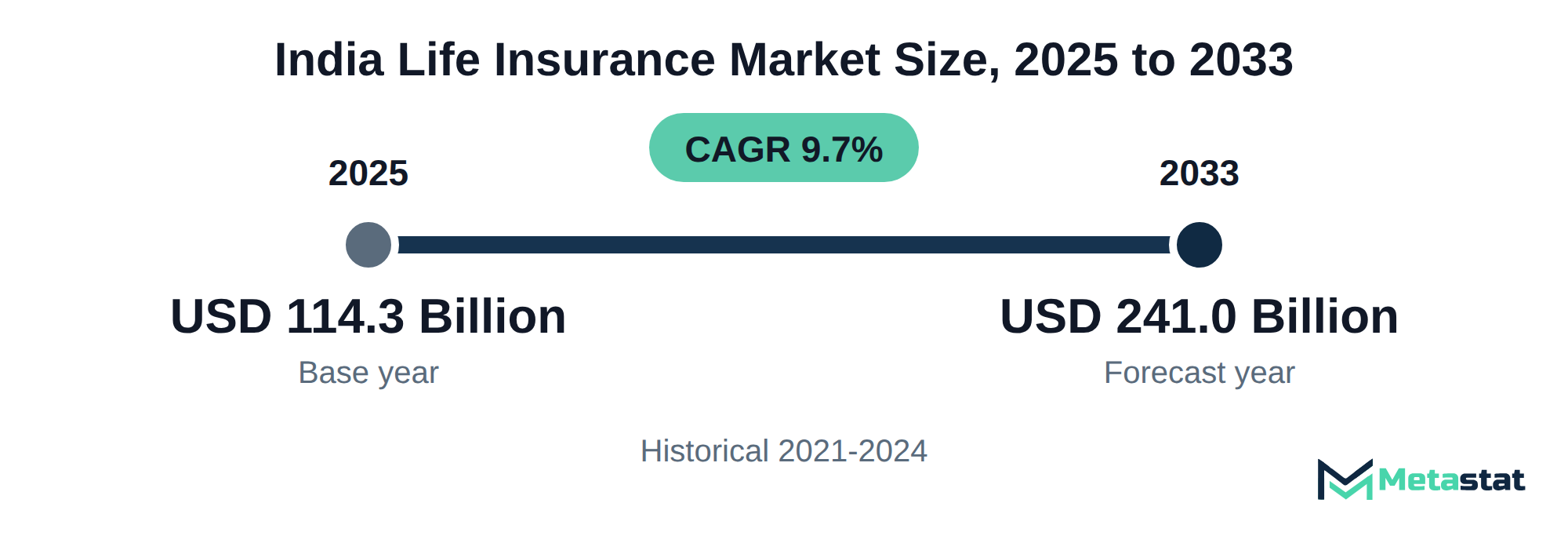
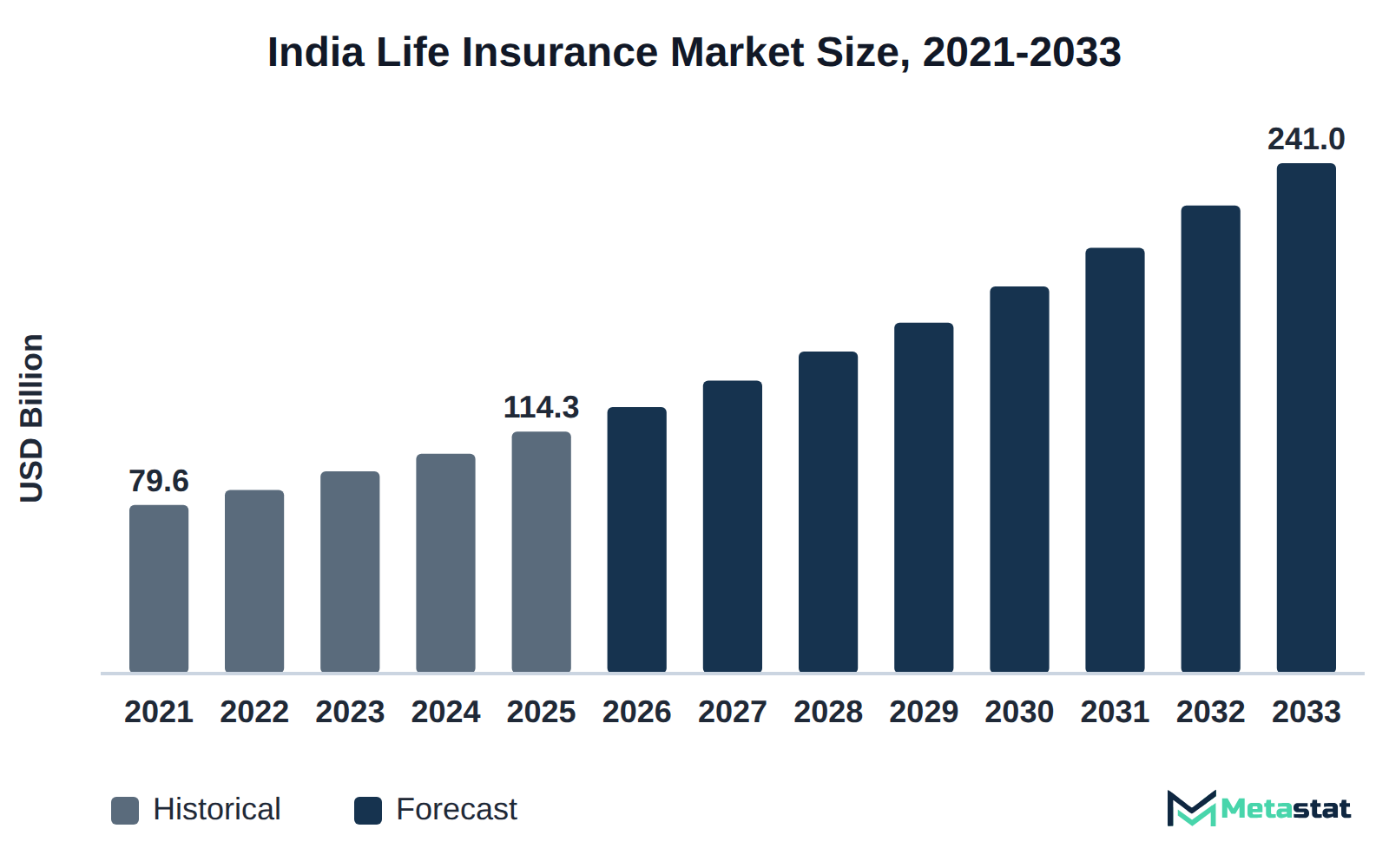
Market Valuation: Valued at $114.3 Billion in 2025, projected to reach $241 Billion by 2033 at a 9.7% CAGR.
Dominant Segment: The Individual Policies segment leads the market, driven by a strong consumer preference for personalized insurance solutions that cater to specific financial needs.
Geographic Lead: India is the fastest-growing region in the life insurance market, supported by a young population and increasing disposable incomes that enhance demand for financial security.
What's Inside: The report includes comprehensive competitive coverage, detailed analyses of market dynamics, and forecasts extending through 2033, providing insights into various segments and distribution channels.
Emerging Growth: The Individual Policies segment is projected to grow significantly, reflecting a robust trend towards personalized insurance as consumers increasingly prioritize financial planning and security.
Digital Transformation: Advancements in digital technologies are enhancing distribution efficiency, allowing insurers to reach broader audiences and improve customer engagement through streamlined processes.
Choose Your License
India Life Insurance Market
The India Life Insurance market was valued at USD 114.3 billion in 2025 and is projected to reach USD 241 billion by 2033, growing at a CAGR of 9.7% over the forecast period.
The India Life Insurance market covers insurance products designed to provide financial security to individuals and families. Buyers invest in life insurance to protect against unforeseen events, secure their financial future, and ensure peace of mind for their loved ones. These offerings serve customer segments that include individual and group policies, which drives demand for full coverage options.
Growth in the market is primarily fueled by increasing awareness of the importance of financial planning and risk management. The individual policies segment holds the largest value, reflecting a strong preference among consumers for personalized insurance solutions. The market is projected to expand strongly, driven by rising disposable incomes and changing consumer attitudes towards insurance products.
Among the various distribution channels, the bancassurance model stands out due to its effective integration with banking services, enhancing accessibility for customers. This approach allows insurance companies to tap into the existing customer base of banks, facilitating smoother transactions and improving overall customer experience. The strategic alignment of banking and insurance services contributes significantly to market growth.
The market consists of various life insurance products tailored to meet the financial protection needs of individuals and their families. Buyers typically invest in these products for security, investment, and tax benefits. Increasing awareness regarding financial planning and the importance of securing life coverage fuels expenditure in the India Life Insurance market. Key buyer groups include individuals looking for personal insurance policies, families seeking coverage for dependents, and businesses investing in group insurance policies for employees.
Growth in the market is driven by several factors, with the rise in disposable incomes among the population playing a significant role. The individual policies segment represents the highest value within the market, reflecting a growing preference for personalized insurance solutions. Compared to other regions, the domestic market sees strong demand, supported by a young population and an expanding middle class. The overall market is projected to experience significant growth, aligning with the increasing trend toward financial awareness and security.
Investment in insurtech and digital platforms enhances distribution and accessibility, further encouraging market expansion. The emphasis on customer-centric products and services, along with innovative distribution channels, strengthens competition among providers. These dynamics create a favorable environment for the India Life Insurance market, positioning it for sustained growth and increasing penetration across various demographic segments.
Term protection gaps significantly affect the India Life Insurance market, indicating an increase in demand for affordable life insurance products that provide adequate coverage for households. The trend towards digital underwriting has emerged as a solution to these gaps, facilitating quicker and more efficient policy issuance. Life insurance policy administration systems software helps insurers manage those policies after issuance. Digital underwriting streamlines the application process by applying technology to assess risk factors, making it easier for consumers to secure life insurance policies that meet their needs.
From 2026 to 2033, the Individual Policies segment is projected to expand from USD 92.1 billion to USD 173.1 billion, reflecting a compound annual growth rate of 9.4%. This growth indicates a shift in consumer preferences towards policies that offer a balance of affordability and coverage. The integration of digital underwriting in the market enhances customer experience, allowing insurers to cater to a wider audience, particularly younger buyers who favor online transactions.
Digital solutions in the underwriting process address existing protection gaps and help market players respond to evolving consumer expectations. By investing in technology, insurers enhance operational efficiency while promoting a greater understanding of household coverage needs, ultimately driving growth in the India Life Insurance market.
In the India Life Insurance market, Guaranteed Savings Plans (GSPs) and Unit Linked Insurance Plans (ULIPs) present distinct contract models that influence buyer purchasing behavior. These product structures offer varying levels of risk and returns, attracting different segments of the consumer base seeking long-term financial security. For these buyers, insurance often forms one part of broader wealth management planning. GSPs focus on guaranteed returns and stability, which appeals to risk-averse individuals. ULIPs offer the potential for higher returns through market-linked investments, catering to those willing to accept more risk in exchange for growth prospects.
The premium stage for First-Year Regular Premium policies is projected to increase from USD 18.9 billion in 2026 to USD 39.2 billion by 2033, highlighting the growing preference for structured payment models that cater to the needs of individual policyholders. This significant growth reflects a shift toward more flexible payment options that align with changing consumer priorities. Buyers in the market increasingly seek products that offer both insurance coverage and investment opportunities, driving insurers to innovate in their offerings.
This competitive dynamic between GSPs and ULIPs highlights the importance of understanding buyer preferences and contract structures within the India Life Insurance market. Insurers that effectively align their product offerings with consumer expectations capture a larger share of the premium market, contributing to overall revenue growth. Changing buyer choices require companies to refine their strategies and communicate the benefits of their insurance products to meet rising demand.
Bancassurance contributes significantly to the profitability of insurers operating in the India Life Insurance market. The integration of banking and insurance services allows customers to purchase life insurance products directly from banks, leveraging their existing relationships with financial institutions. This model simplifies the purchasing process for consumers and optimizes distribution costs for insurers. The bancassurance segment is projected to reach USD 69 billion by 2033, reflecting a compound annual growth rate (CAGR) of 10.8%.
The growing preference for bancassurance stems from its ability to streamline access to life insurance products, particularly among individuals who prefer one-stop financial solutions. Banks, equipped with extensive customer databases and trusted relationships, serve as effective channels for disseminating insurance products. This trend contributes to the expansion of policyholder bases, driving premium collections and enhancing overall profitability for insurers.
Profitability in the market hinges on policy persistency, which refers to the duration customers maintain their policies. Customer loyalty and retention software is one tool insurers can use to support renewals. Individuals purchasing insurance through bancassurance often exhibit higher persistency rates due to the convenience and reassurance provided by their banking institutions. Such stability translates into consistent revenue streams for insurers, reinforcing the importance of bancassurance in shaping a competitive environment within the India Life Insurance market.
Increasing retirement demand significantly influences the adoption of pension and annuity products in the India Life Insurance market. Individuals are increasingly seeking financial security during their retirement years, driving the need for reliable income streams post-employment. This growth indicates a clear trend towards private savings for retirement, with individuals recognizing the limitations of government pensions.
The growing awareness of the importance of financial planning for retirement highlights the role of life insurance products in generating sustainable income. Traditional family support systems evolve and urbanization increases, leading individuals to prefer personal financial solutions, including annuities and pension plans. The emphasis on Individual Policies aligns with changing demographics and economic conditions, ensuring that financial institutions adapt their offerings to meet this rising demand.
With the ongoing expansion of pension and annuity adoption, the market presents substantial opportunities for insurance providers. Pension funds operating alongside insurers also serve the same retirement savings need. Companies that effectively market these products tap into a segment eager for financial independence during retirement, ultimately enhancing their customer base and profitability. As retirement demand shapes product offerings and customer preferences, the India Life Insurance market is set for continued growth.
Increasing consumer awareness significantly influences purchasing behavior in the India Life Insurance market. More individuals recognize the necessity of life insurance products for financial security and long-term personal finance management. This heightened awareness stems from improved access to information and educational initiatives that emphasize the importance of financial protection. Individuals from diverse demographics, particularly younger populations, actively seek insurance products that cater to their specific needs, including individual and group policies. The shift in consumer behavior drives substantial demand, reflected in the anticipated growth of individual policies, projected to reach USD 173.1 billion by 2033, up from USD 92.1 billion in 2026. This growth signifies a robust market trend where consumers prioritize insurance coverage, resulting in increased premium volumes and stronger market dynamics. Financial institutions that respond effectively to this shift gain an advantage.
Significant advancements in digital technologies improve distribution channels in the India Life Insurance market. The integration of digital platforms streamlines customer interactions and enhances the overall purchasing experience. These platforms allow insurers to reach a broader audience while reducing operational costs associated with traditional distribution methods. Insurance brokers and individual agents increasingly use these innovations to connect with clients more effectively, leading to higher conversion rates. The shift towards online sales channels aligns with changing consumer behaviors, where the preference for digital engagement grows stronger. Insurers adopting these technologies position themselves competitively, enabling rapid responses to market demands. Enhanced distribution efficiency boosts market penetration and strengthens customer loyalty, driving sustainable growth in the sector.
The competitive landscape sees a marked shift, with companies prioritizing investments in digital solutions. The increased focus on digital channels supports the overall expansion of the market, allowing insurers to capitalize on new opportunities. This trend indicates a significant phase within the India Life Insurance market, where traditional practices evolve to meet the expectations of a digitally savvy clientele.
Regulatory compliance presents a significant restraint on the India Life Insurance market, particularly affecting individual policyholders. Stringent regulations create a challenging environment for insurers, resulting in more complex product structures and longer approval times for new offerings. Consequently, policyholders experience slower uptake of new plans, driven by concerns regarding product transparency and compliance with regulations. This situation leads to smaller orders from consumers, who prefer established and well-understood products, hindering the introduction of innovative solutions. The evolving regulatory landscape demands continuous adaptation from insurers, diverting resources from product development and marketing initiatives. RegTech solutions can help insurers manage these compliance demands more efficiently. The cumulative effect of regulatory compliance reduces the agility of insurers, limiting their ability to meet diverse consumer needs. The market experiences a slower growth trajectory due to heightened compliance costs and cautious consumer behavior toward unfamiliar insurance offerings.
In the India Life Insurance market, suppliers face significant pricing pressure that affects profitability. Intense competition among insurers leads to aggressive pricing strategies, resulting in reduced margins. Many companies experience challenges in maintaining profitability while offering attractive premiums to attract new customers. This situation arises primarily from the differentiated offerings in a crowded marketplace, driving several insurers to lower prices to gain market share.
To mitigate this pressure, many suppliers explore innovative product designs and enhance customer service. Insurers invest in technology to streamline operations and reduce costs while improving customer experience. Several companies focus on niche segments to provide tailored solutions that justify higher premiums, thereby improving margins. Insurance analytics can help insurers identify which niche segments support such premiums. This strategic pivot enables insurers to balance competitive pricing with sustainable profitability in a challenging market environment.
Individual Policies represent a significant growth segment within the India Life Insurance market, driven by increasing consumer demand for personalized insurance solutions. Consumers increasingly seek tailored coverage options to address their specific financial needs, positioning insurers to enhance offerings and improve customer engagement.
The rising trend of individual policy purchases aligns with broader societal shifts towards financial planning and security. This segment's growth stems from growing awareness of the importance of life insurance, particularly as individuals look to secure their families' financial futures. Insurers that prioritize product development and customer service in this segment stand to gain market share and enhance profitability.
Using technology to streamline the application and underwriting processes further supports the growth of individual policies. Enhancements in digital platforms enable insurers to offer customers more convenient access to products while improving overall customer experiences. This focus on individual policies emphasizes their role in the evolving dynamics of the India Life Insurance market.
The India Life Insurance market is segmented based on Product Structure, Policyholder Type, Premium Stage, and Distribution Channel.
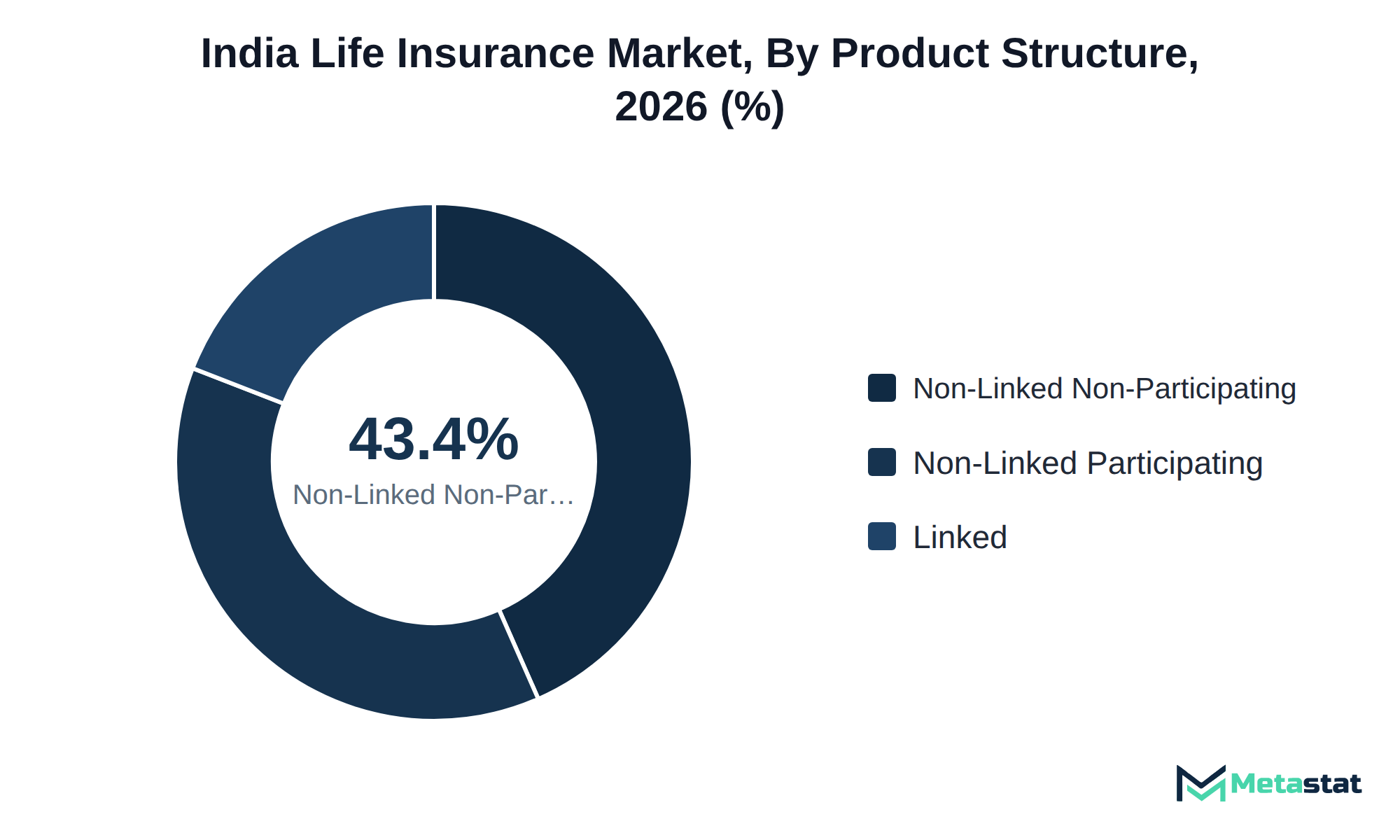
Non-Linked Participating segment is valued at USD 46.3 billion in 2026 and is projected to reach USD 75.9 billion by 2033, at a CAGR of 7.3% during the forecast period. This segment primarily caters to individual policyholders seeking a combination of life coverage and potential returns through profit-sharing. The appeal lies in the security and investment potential it offers, attracting consumers focused on long-term financial planning. The growth of this segment is driven by rising disposable incomes and increasing awareness of the benefits of life insurance. In contrast to Non-Linked Non-Participating products, which exhibit a higher CAGR of 10%, Non-Linked Participating policies provide more engagement with policyholders through participation in profits, positioning them uniquely within the market.
Non-Linked Non-Participating segment is estimated to reach USD 106.7 billion by 2033, at a CAGR of 10% during the forecast period. This segment typically appeals to policyholders seeking guaranteed returns without any market risk, making it attractive to conservative investors. Individuals and families often choose this type of insurance to secure their financial future and provide capital for beneficiaries. Growth in this segment is driven by increasing financial literacy and a strong focus on long-term savings. Compared to other segments, including Linked policies, which show a lower CAGR of 7.3%, Non-Linked Non-Participating products gain traction due to their stability and appeal to risk-averse customers. Competition among insurers to offer innovative products enhances the segment's attractiveness, further strengthening its position in the India Life Insurance market.
Linked products are expected to reach USD 58.4 billion by 2033. This segment serves individual policyholders seeking investment opportunities combined with life insurance coverage. A notable growth driver for this segment involves the increasing preference for investment-linked insurance products, which offer both protection and potential for capital appreciation. Demand stems primarily from individuals looking to secure their financial futures while benefiting from market-linked returns. Compared to other segments, Linked products exhibit a stronger growth trajectory, with a compound annual growth rate (CAGR) of 10% anticipated until 2033, surpassing the growth rates of Non-Linked Participating and Non-Linked Non-Participating products. The unique appeal of this segment lies in its dual functionality, attracting a diverse buyer base that prioritizes both security and investment returns. The India Life Insurance market shows a clear trend toward products that combine traditional insurance with investment options, reinforcing the growing importance of Linked offerings.
This segment typically caters to individual consumers seeking tailored financial protection options that suit their unique life circumstances. The rise of personalized insurance solutions significantly shapes buying patterns, with consumers increasingly looking for coverage that aligns with their financial goals. A notable demand driver centers around the growing awareness of the importance of life insurance in securing family financial stability. Compared to Group Policies, which project a CAGR of 10.5%, Individual Policies exhibit a slightly slower growth trajectory, reflecting distinct purchasing motivations and preferences of individual buyers. Enhanced marketing strategies and distribution channels further influence growth outcomes, ensuring that insurance providers effectively reach potential policyholders.
Group Policies segment is estimated to reach USD 67.9 billion by 2033, at a CAGR of 10.5% during the forecast period. Group policies provide coverage for multiple individuals under a single contract, commonly used by organizations to offer benefits to their employees. Some organizations use benefits administration outsourcing services to manage such employee programs. This segment attracts businesses aiming to enhance employee welfare and retention through financial protection. The growing trend of employee benefits in corporate environments significantly drives demand for group policies, reflecting a strong commitment to workforce well-being. The distinct buyer base targeting corporate clients highlights a strategic difference in focus, resulting in varied purchasing dynamics. The India Life Insurance market recognizes the essential role of group policies in expanding coverage options and catering to diverse customer needs.
This segment serves individuals seeking to secure financial protection for their families through regular premium payments. Increasing awareness of the importance of life insurance and changing societal attitudes towards financial planning drive demand in this segment. Unlike Single Premium products, which require a one-time payment, the First-Year Regular Premium segment attracts customers looking for manageable payment structures over time. This segment's growth rate exceeds that of other premium stages, particularly Group Policies, which have a projected CAGR of 10.5%. Competitive pricing strategies and flexible options available further enhance its appeal, positioning it as a preferred choice among buyers in the growing India Life Insurance market.
Single Premium segment is estimated to reach USD 68.5 billion by 2033, at a CAGR of 8.9% during the forecast period. This segment represents a preferred option for consumers seeking to make a one-time premium payment for life insurance coverage, appealing to individuals looking for long-term financial security without ongoing payment commitments. The growth of this segment is driven by increasing consumer awareness of the benefits of insurance and a shift towards investment-linked products. Compared to other premium stages, Single Premium exhibits a slower growth rate than the First-Year Regular Premium segment, which is projected to expand at a CAGR of 11%. The Single Premium segment's distinct appeal lies in its simplicity and immediate coverage, attracting a different demographic than regular premium products, making it a vital aspect of the India Life Insurance market.
Renewal Premium segment is expected to reach USD 133.3 billion by 2033. This segment is a critical component of the life insurance ecosystem, where policyholders maintain their coverage beyond the initial policy term. Primarily used by individuals seeking long-term financial security, renewal premiums contribute to the overall stability of insurers' revenue streams. Growth in this segment stems from increasing awareness of the importance of life insurance and a growing focus on protecting beneficiaries. Compared to First-Year Regular Premium and Single Premium segments, which experience higher growth rates at CAGRs of 11% and 8.9% respectively, Renewal Premium shows steady but consistent growth, emphasizing its role in maintaining policyholder loyalty and ensuring continuous coverage. The competitive nature of the market drives companies to enhance customer engagement strategies, further enhancing the importance of renewal premium collections for the overall financial performance of insurers.
Individual Agents segment is valued at USD 55.2 billion in 2026 and is projected to reach USD 91.1 billion by 2033, at a CAGR of 7.4% during the forecast period. This segment primarily serves individual policyholders seeking personalized insurance coverage through direct interactions with agents. Factors driving this segment include increasing demand for tailored insurance solutions and the personal touch provided by agents in guiding clients through policy selection. Compared to other distribution channels, Individual Agents experience moderate growth, slower than Bancassurance, which is anticipated to expand at a CAGR of 10.8%. The individual approach of agents often results in higher customer satisfaction, enhancing policy persistency and contributing to the market's overall growth.
This distribution channel combines banking and insurance services, allowing banks to offer insurance products to their customers. Bank customers, including individuals and businesses, seek convenient insurance solutions through their trusted financial institutions. The segment benefits from the growing trend of financial institutions diversifying their service offerings, enhancing customer engagement and retention. Strong growth in this segment is driven by consumer preference for integrated financial services. Compared to other distribution channels, bancassurance demonstrates a faster growth trajectory due to its accessibility and the established trust that banks hold with clients. Individual agents experience slower growth, reflecting changing consumer purchasing preferences. The India Life Insurance market continues to adapt to these evolving consumer needs, making bancassurance a key player in market expansion.
Direct Sales segment is expected to reach USD 61 billion by 2033. This segment caters to consumers seeking insurance policies directly from providers, bypassing intermediaries. Growth in this area is driven by increasing digital engagement among consumers, allowing them to research and purchase policies online. Direct sales appeal particularly to tech-savvy individuals looking for convenience. Compared to other distribution channels, including Individual Agents or Bancassurance, this segment features a streamlined purchasing process that supports a more satisfactory customer experience. The segment's growth trajectory is supported by evolving consumer preferences for direct interactions with companies. This shift contributes to the overall expansion of the India Life Insurance market.
Insurance Brokers segment is projected to grow at a CAGR of 15.8% during the forecast period. This segment serves clients seeking guidance and support in choosing suitable insurance products. The rising complexity of insurance offerings drives demand for intermediaries who navigate these options effectively. Increasing reliance on digital platforms facilitates easier access to information and comparison of policies, further enhancing the role of insurance brokers. Compared to other distribution channels, the Insurance Brokers segment is characterized by its rapid growth, attributed to a higher average commission structure and a more personalized service approach. In contrast, channels like bancassurance, while growing, experience a CAGR of 10.8%. The market's evolution reflects changing consumer behavior, emphasizing the importance of tailored solutions and professional advice.
This sub-segment encompasses various distribution channels, including Non-Bank Corporate Agents, Insurance Marketing Firms, and Web Aggregators. These entities facilitate the sale of life insurance products, targeting both individual and corporate clients seeking flexible solutions. The growth trajectory of this segment is influenced by increasing digital adoption and consumer preference for alternative channels beyond traditional agents and banks. The demands of tech-savvy consumers drive interest in online platforms that offer straightforward access to insurance products. Compared to other distribution channels, this segment exhibits a different pricing structure, appealing particularly to younger buyers who prefer digital interactions. The India Life Insurance market experiences shifts in distribution while traditional methods evolve to meet changing consumer behaviors, driving competition among traditional agents and emerging digital platforms.
In the India Life Insurance market, companies compete through various strategies, including product offerings and distribution channels. The segmentation of the market encompasses diverse products, including Non-Linked Participating, Non-Linked Non-Participating, and Linked insurance products, each appealing to different buyer preferences.
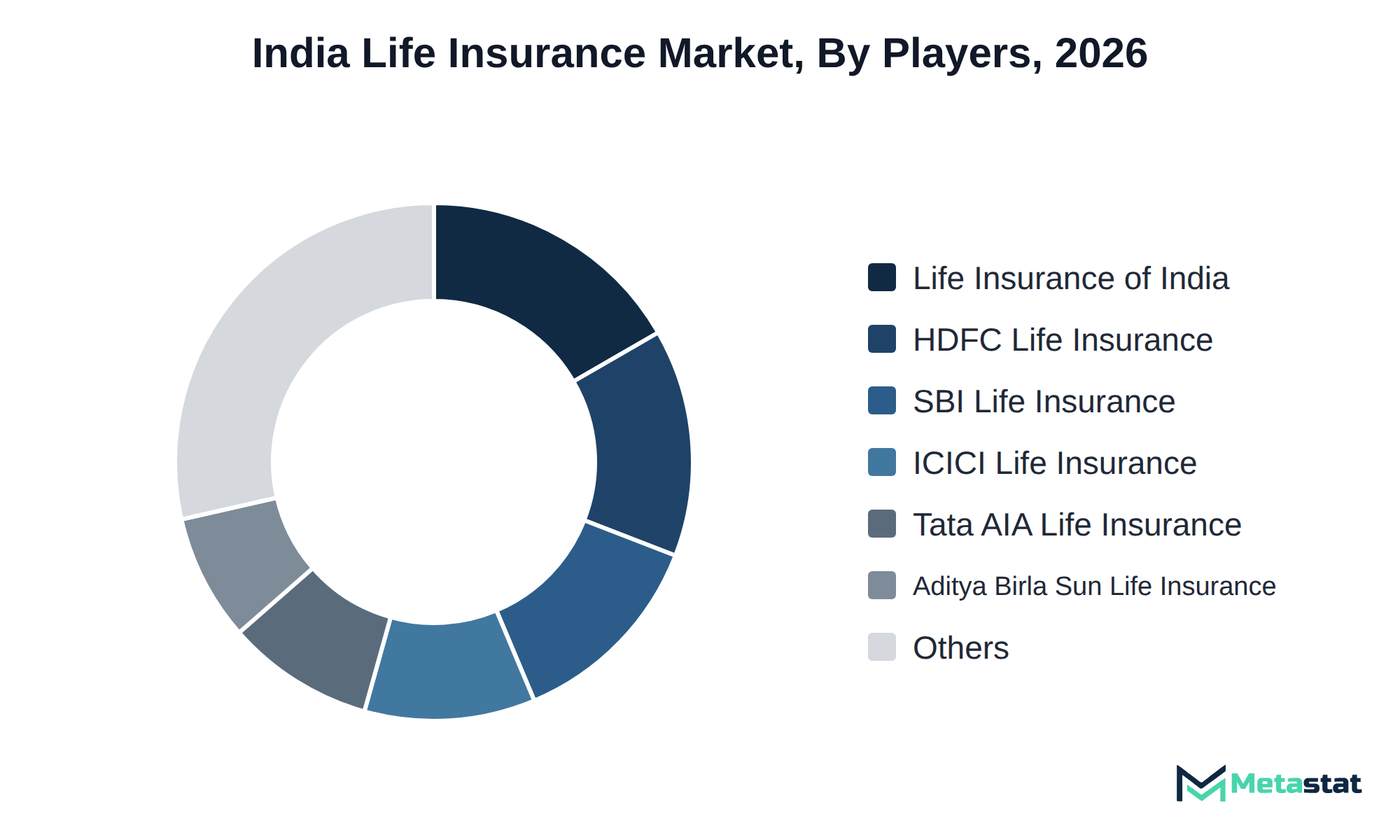
Buyers select policies based on factors including pricing, coverage options, and service quality. Life Insurance Corporation of India focuses on a broad range of non-linked policies, catering to individual and group policyholders. SBI Life Insurance Company Limited emphasizes customized plans to attract the growing individual customer base, while HDFC Life Insurance Company Limited diversifies its services by integrating multiple distribution channels, including bancassurance.
The distribution landscape plays a significant role in shaping competition within the market. Firms like ICICI Life Insurance Limited leverage individual agents and bancassurance to enhance reach, while Tata AIA Life Insurance Company Limited adopts direct sales strategies, capitalizing on digital channels. Companies including Bajaj Life Insurance Limited and Aditya Birla Sun Life Insurance Company Limited emphasize strong customer service to build loyalty among policyholders.
This growth relies on several key developments within the India Life Insurance market. Second, the increasing preference for non-linked non-participating products, which is expected to reach USD 106.7 billion by 2033, significantly contributes to this growth trajectory. Growth in the first-year regular premium segment, anticipated to reach USD 39.2 billion, supports this positive outlook. However, risks exist that could impede this progress. Economic instability or regulatory changes affecting consumer confidence slow adoption rates across the market. The relationship between these factors will ultimately determine whether the market achieves the projected USD 241 billion target by 2033.
By Product Structure: Non-Linked Participating, Non-Linked Non-Participating, Linked
By Policyholder Type: Individual Policies, Group Policies
By Distribution Channel: Individual Agents, Bancassurance, Direct Sales, Insurance Brokers, Others (Non-Bank Corporate Agents, Insurance Marketing Firms, Web Aggregators)
The report strategically identifies and profiles the key market players and analyses their core competencies in each sub-segment of the Life Insurance market.
Report Attributes | Details |
Study Period | 2021-2033 |
Base Year | 2025 |
Estimated Year | 2026 |
Forecast Period | 2026-2033 |
Historical Period | 2021-2025 |
Growth Rate | CAGR 9.7% from 2026 to 2033 |
Revenue Unit | USD billion |
Segmentation | By Product Structure, Policyholder Type, Premium Stage, Distribution Channel, and Region |
Find answers to common questions about this report
The Life Insurance market size was valued at USD 114.3 billion in 2025.
The market is projected to grow at a CAGR of 9.7% during the forecast period from 2026 to 2033.
The leading segment in the Life Insurance market is Non-Linked Non-Participating, with a projected value of USD 106.7 billion by 2033. This segment surpasses others in terms of growth potential and market share.
Increasing consumer awareness significantly influences purchasing behavior, driving demand for personalized insurance solutions. Advancements in digital technologies enhance distribution channels, improving customer interactions and expanding market reach.
Regulatory compliance presents a significant restraint on the India Life Insurance market growth. Stringent regulations create a challenging environment for insurers, resulting in complex product structures and longer approval times. This situation leads to slower uptake of new plans and cautious consumer behavior toward unfamiliar offerings.
Increasing consumer awareness of financial security significantly influences adoption in the India Life Insurance market. Enhanced access to information and educational initiatives drive individuals, particularly younger populations, to seek tailored insurance products that meet their specific needs.
The Life Insurance market is estimated to reach a valuation of USD 241 billion by 2033.
Key players operating in the Life Insurance industry include Life Insurance Corporation of India, SBI Life Insurance Company Limited, HDFC Life Insurance Company Limited, ICICI Life Insurance Limited, Axis Max Life Insurance Limited, Tata AIA Life Insurance Company Limited, and Bajaj Life Insurance Limited.
Individual policies are expected to grow at a CAGR of 9.4%, expanding from USD 92.1 billion in 2026 to USD 173.1 billion by 2033.
The bancassurance channel is projected to grow significantly, with a CAGR of 10.8% through 2033, reaching a value of USD 69 billion.
The analysts below cover Banking & Finance research at Metastat Insights.
LEAD ANALYST
Utkarsh Khirodkar is a Lead Market Research Analyst at MetaStat Insight, specializing in market intelligence, technology sector assessments, and competitive strategy.

PRINCIPAL CONSULTANT - ENTERPRISE AI & EMERGING TECHNOLOGIES
Banking & Finance · Electronics and Semiconductor · Energy and Power · Healthcare IT · Information & Technology · Professional Services
Vijay Gunti is a Principal Consultant at MetaStat Insight, bringing over two decades of experience across enterprise digital transformation, technology strategy, and intelligent systems.
Integrating zero-trust access controls across legacy electronic health record systems involves complex compliance overhead. Team produced an analysis that clearly separated identity governance and administration tools from privileged access management platforms. Their evaluation of HIPAA and GDPR compliance features across cloud native solutions gave our architecture group clear baseline criteria. The custom data request regarding biometric authentication adoption in hospital networks was returned promptly with clear documentation.
Evaluating calorific value requirements and air permit compliance across municipal waste facilities requires localized data. Metastat Insight structured their analysis around operational throughput capacity and feedstock composition variations in Latin America and Eastern Europe. Their competitive mapping of sorting equipment vendors helped clarify technology differences between optical separators and heavy media systems. The study provided an objective baseline during our capital expenditure reviews.
Decarbonizing industrial thermal processes hinges on refrigerant regulations and compressor efficiency limits. Metastat Insights delivered a thorough market analysis that evaluated natural refrigerants like CO2 and hydrocarbons against synthetic low-GWP alternatives. The breakdown of utility incentives and grid capacity constraints across key European manufacturing hubs offered valuable perspective. The follow-up conversation with their sector analysts addressed our specific questions on mechanical vapor recompression systems efficiently.
Explore related market intelligence reports worth reading alongside this one.