
LEAD ANALYST
Utkarsh Khirodkar is a Lead Market Research Analyst at MetaStat Insight, specializing in market intelligence, technology sector assessments, and competitive strategy.

Global Pension Funds Market Size, Share, By Plan Type (Defined Contribution (DC), Defined Benefit (DB), Hybrid and Reserved Fund), By Investment Strategy (Active and Passive), By Sponsor Type (Public-Sector Plans and Private-Sector Plans), By End User (Government, Corporate, and Individuals), Industry Analysis, Growth, Trends, and Forecast, 2026-2033
Report ID
MSI-5311
Published
September, 2026
Pages
307 Pages
Format
Historical
Base year
Forecast
Forecast period
Report Details
Market Valuation: Valued at $73,107.8 Billion in 2025, projected to reach $107,064.3 Billion by 2033 at a 4.8% CAGR.
Dominant Segment: The Defined Contribution (DC) segment leads the market, projected to grow from USD 38,360.3 billion in 2026 to USD 58,489.2 billion by 2033, driven by increasing awareness of retirement savings and the flexibility these plans offer.
Geographic Lead: North America is the leading region, expected to reach USD 45,620.1 billion by 2033, supported by a strong regulatory framework and heightened awareness of retirement planning among individuals.
What's Inside: The report provides a comprehensive analysis of the global Pension Funds market, including detailed segmentation by plan type, investment strategy, sponsor type, and end user, along with competitive coverage and future forecasts.
Investment Strategy Trends: The market shows a significant shift towards passive investment strategies, projected to grow at a CAGR of 7.5%, reflecting increasing investor preference for cost-effective solutions.
Emerging Regional Demands: The report highlights growing demand in the Asia-Pacific region, driven by economic growth and aging populations, creating a favorable environment for pension fund expansion.
Choose Your License
Global Pension Funds Market
The global Pension Funds market was valued at USD 73,107.8 billion in 2025 and is projected to reach USD 107,064.3 billion by 2033, growing at a CAGR of 4.8% over the forecast period.
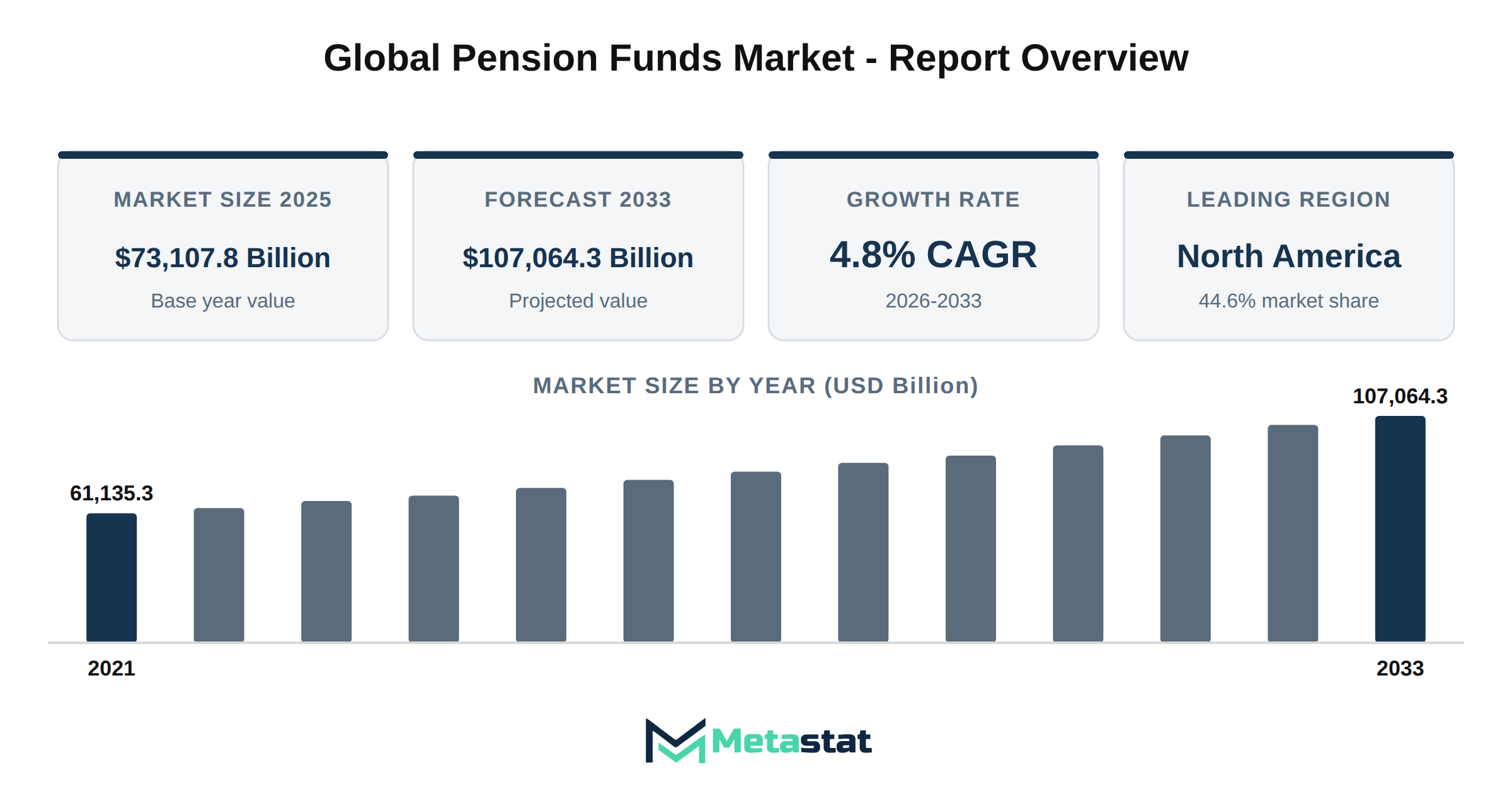
The global Pension Funds market reached a valuation of USD 73,107.8 billion in 2025. A compound annual growth rate (CAGR) of 4.8% is projected, with an anticipated market size of USD 107,064.3 billion by 2033. This growth reflects increasing demand for long-term savings and investment strategies among individuals and corporations, driven by demographic trends and evolving retirement needs.
Defined contribution plans reshape the assets within the global Pension Funds market, accounting for a significant portion of total pension fund assets due to their flexibility and potential for higher returns. The shift from defined benefit plans to defined contribution plans highlights the need for enhanced investment performance and risk management strategies.
Defined benefit pension plans continue to emphasize funding sustainability, balancing obligations to retirees with investment performance. These plans face challenges related to underfunding and market volatility, prompting pension funds to reassess investment strategies and funding approaches.
Public-sector pension funds, representing a substantial portion of the market, hold significant sovereign retirement assets. These funds are crucial in providing financial security to government employees, necessitating robust investment strategies to ensure long-term viability.
Private-sector pension fund growth reflects increasing demand for corporate retirement solutions. Companies enhance their offerings to attract and retain talent, resulting in a competitive environment for pension fund providers.
Active versus passive investment strategies within pension fund portfolios illustrate diverse approaches to managing assets. Active strategies focus on outperforming benchmarks, while passive strategies aim for cost-effectiveness and market alignment, influencing overall fund performance.
Pension fund asset allocation trends indicate a shift towards equities, bonds, and alternative investments. This diversification strategy aims to enhance returns and manage risk in an evolving market, aligning with long-term investment goals.
Rising allocations to private equity, infrastructure, and real assets highlight the appetite for investments that provide potential for higher returns. Pension funds seek exposure to these asset classes to achieve greater diversification and capitalize on emerging opportunities.
The demand for ESG and sustainable investment strategies within pension funds reflects a growing awareness of environmental, social, and governance factors. Investors prioritize sustainability in their investment decisions, impacting asset allocation strategies.
Liability-driven investment strategies in defined benefit pension funds focus on aligning assets with liabilities to manage risk effectively. This approach aims to mitigate funding shortfalls and ensure the ability to meet future obligations.
The global Pension Funds market experiences significant trends driven by changing demographics and economic factors. Long-term asset growth is evident, with an increasing emphasis on defined contribution plans. These plans reshape global pension fund assets, promoting a shift towards individual savings and investment strategies.
Defined benefit pension plans face increasing scrutiny regarding funding sustainability. Regulatory reforms and evolving economic conditions challenge these plans, prompting a reassessment of funding strategies to ensure long-term viability. Public-sector pension funds represent a substantial portion of sovereign retirement assets, with government entities focusing on securing adequate funding to meet future liabilities.
Growth in private-sector pension funds reflects rising corporate retirement demand. Companies actively seek to enhance their pension offerings, driven by competition for talent and the provision of robust retirement solutions. Investment strategies within the market increasingly differentiate between active and passive approaches. Active management continues to play a vital role, while passive strategies gain traction due to their cost-effectiveness.
Asset allocation trends show a diverse approach across equities, bonds, and alternative investments. Rising allocations to private equity, infrastructure, and real assets demonstrate a commitment to achieving higher returns while diversifying risk. Pension fund demand for ESG and sustainable investment strategies intensifies, aligning with broader societal trends toward responsible investing.
Liability-driven investment strategies emerge because a critical approach for defined benefit pension funds. These strategies focus on managing liabilities effectively, ensuring that funds meet their obligations over time. Pension fund de-risking initiatives, buyouts, and risk transfer trends gain momentum, reflecting a proactive approach to mitigating financial exposure.
Interest rates and inflation significantly impact pension fund returns. Fluctuating economic conditions necessitate adaptive investment strategies to safeguard assets and ensure growth. Demographic aging contributes to increasing global pension fund liabilities, necessitating a re-evaluation of funding models and investment strategies.
Regulatory reforms continue to shape the market, influencing funding requirements and governance standards. Pension fund governance and fiduciary standards play a crucial role in risk management, ensuring that funds operate effectively and transparently. Digital transformation and technology adoption advance within pension fund management, enhancing operational efficiency and investment decision-making.
AI and data analytics transform investment strategies, allowing for more informed decision-making and improved outcomes. Pension fund outsourcing rises in prominence, with the growth of OCIO services reflecting a shift towards specialized management solutions. Investment management fees undergo scrutiny, prompting funds to seek cost optimization strategies to enhance returns.
Cross-border pension fund investment opportunities expand, facilitating global portfolio diversification. North America leads in market growth and investment trends, driven by robust economic conditions and a strong regulatory framework. Europe experiences pension fund market reforms, influencing funding dynamics and investment strategies.
Asia Pacific witnesses substantial pension fund expansion, with retirement savings growth driven by increasing awareness and economic development. Emerging market pension funds present long-term investment opportunities, attracting attention from institutional investors seeking to diversify their portfolios. Effective liquidity management and cash flow planning remain essential for maintaining stability within pension funds.
The competitive landscape of pension fund managers and institutional investors evolves, with new players entering the market and established firms adapting to changing conditions. Future growth opportunities within the global Pension Funds market depend on strategic investments and responsive management to navigate the complexities of the investment landscape through 2033.
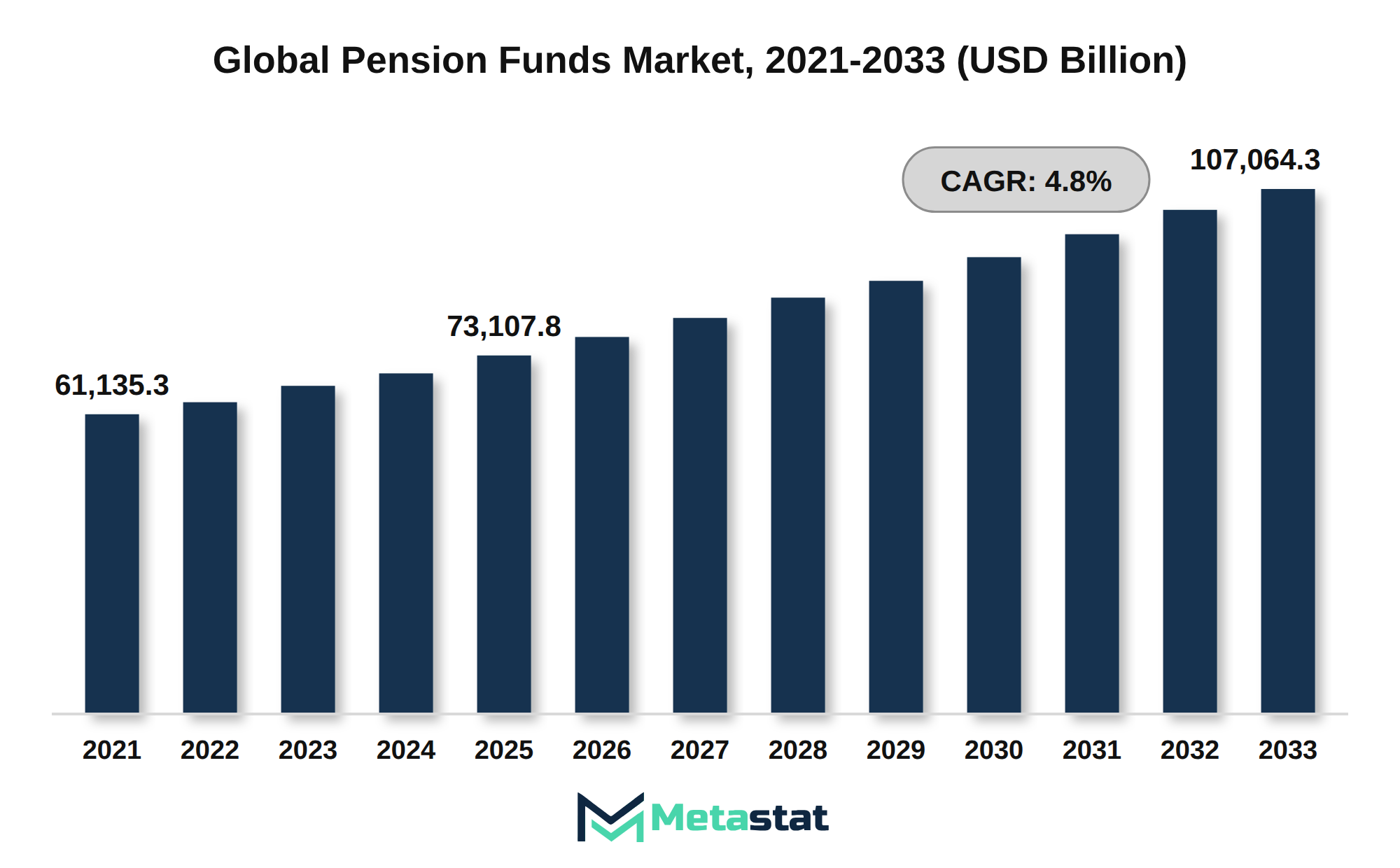
The Pension Funds market benefits significantly from a surge in public and private investment, influenced by favorable macro-economic factors. A robust economic environment, marked by consistent GDP growth and low interest rates, enhances the capital investment landscape. Strengthened public-private spending power enables fund managers to allocate greater resources towards investment vehicles, which boosts overall market value. This trend leads to increased contributions to pension plans, strengthening the financial stability of these funds.
Digital transformation initiatives within financial institutions further support this growth. The adoption of advanced technologies like automation and artificial intelligence optimizes fund management processes, improving operational efficiency and reducing costs. This technological integration results in better asset allocation strategies, which heighten returns for investors. Consequently, enhanced investor confidence attracts further capital inflows into the market.
Shifting demographic patterns, particularly aging populations, play an important role in shaping the demand for pension funds. An increasing number of individuals approaching retirement contributes to growing awareness of the necessity for robust pension strategies. Evolving consumer behaviors reflect a clear shift towards securing long-term financial stability, driving higher demand for pension products. This demographic shift creates immense opportunities for growth within the market.
The Pension Funds market experiences growth fueled by heightened investment in digital transformation initiatives. Organizations increasingly prioritize automation, artificial intelligence, and the adoption of advanced software solutions to enhance operational efficiency and customer engagement. This shift addresses the challenges posed by outdated legacy systems and positions funds to respond more effectively to market demands.
Technological integration within the market leads to improved data management and analysis capabilities. Enhanced analytics enable pension funds to make informed investment decisions, optimize portfolio performance, and manage risks more effectively. The focus on digital solutions aligns with broader macro-economic trends, including GDP growth and public-private investment strategies, driving competitiveness in the market.
The ongoing digital transformation drives the development of innovative financial products and services. Fund managers leverage technology to diversify offerings tailored to shifting demographic patterns and evolving consumer behaviors. The Pension Funds market stands to benefit from these innovations, reflecting enhanced client retention and attraction of new investors.
Investment in digital transformation initiatives represents a critical growth driver within the Pension Funds market. By embracing technology, funds reinforce their operational frameworks and position themselves to capitalize on emerging opportunities in a changing financial environment.
Regulatory tightening presents challenges for the Pension Funds market, affecting compliance and operational agility. Heightened scrutiny surrounding investment strategies and capital allocation increases the burden on fund managers. While regulatory frameworks evolve, meeting these compliance hurdles incurs additional costs, diminishing overall profitability. Fund managers allocate resources toward ensuring compliance, diverting funds from potential investment opportunities, which limits their ability to pursue growth initiatives.
Macroeconomic headwinds, including inflationary pressures, contribute to rising operational costs. Escalating expenses related to regulatory compliance inhibit growth within the market. Geopolitical instability introduces uncertainties that impact investment decisions and asset allocations, further constraining the market's expansion potential. Such factors collectively challenge the financial performance of pension funds, resulting in a need for strategic adaptation and innovation to maintain competitiveness.
Technological obsolescence poses risks for pension funds relying on outdated systems. Insufficient investment in modern technology limits operational efficiency and data security. With rising concerns surrounding data security vulnerabilities and privacy issues, pension funds require robust systems to safeguard sensitive information. Addressing these vulnerabilities strengthens trust and investor confidence in the market, which is essential for attracting new participants.
Market fragmentation complicates strategic planning and investment strategies. Diverse regulatory environments across regions lead to inconsistencies that hinder operational effectiveness. Cultural barriers and regional adoption resistors further exacerbate these challenges, resulting in a fragmented market that impacts growth potential. Addressing these constraints necessitates a comprehensive understanding of local regulations and cultural dynamics, which is critical for successful market navigation.
The Pension Funds market faces significant challenges stemming from geopolitical fragmentation and trade deficits, which impact investment strategies and operational efficiencies. Increased tensions between nations lead to uncertainty in global markets, causing fluctuations in asset valuations and increasing risk exposure for pension funds. Trade deficits create imbalances in supply chains, resulting in rising input costs and pressures on profit margins.
Technological disruptions and interoperability friction further complicate the market. Integrating new technologies into existing frameworks requires substantial investment and skilled personnel, while gaps in interoperability hinder operations across various platforms. These issues contribute to rising compliance overhead and evolving legal liabilities, affecting long-term planning and investment decisions.
Tightening global regulatory standards prompt organizations to allocate resources towards compliance rather than growth initiatives. The increasing complexity of regulatory environments necessitates continuous monitoring and adaptation, diverting attention from core investment strategies. Environmental sustainability demands and decarbonization mandates result in additional costs and operational adjustments that pension funds navigate.
Talent retention pressures emerge, with pension funds striving to attract and retain skilled professionals who manage these evolving challenges. The skills gap within the workforce poses further difficulties, limiting the ability to implement innovative solutions and adapt to changing market conditions. Consequently, the Pension Funds market confronts these multifaceted challenges to sustain growth and secure long-term viability.
The Pension Funds market stands to benefit from emerging regional demands driven by demographic shifts and evolving investor preferences. Rising incomes and an aging population across various regions create increasing pressure on pension funds to deliver adequate retirement solutions. The demand for both defined contribution and defined benefit plans is expanding, particularly in North America and Asia Pacific. The anticipated growth in these regions aligns with the overall market growth, projected to reach USD 107,064.3 billion by 2033, reflecting a compound annual growth rate of 4.8%.
Infrastructure modernization contributes to the development of the Pension Funds market, enhancing operational efficiencies and improving service delivery. Investment in technology upgrades facilitates the management of pension assets, allowing for better data analytics and risk management. Modernization enables funds to respond to market fluctuations and meet the needs of a diverse clientele, including government entities and corporate sectors.
Geographical expansion remains a key opportunity for the market, with pension funds seeking to establish a presence in emerging economies. This move supports diversification of investment portfolios and enhances returns. Regions including South America and the Middle East and Africa exhibit untapped potential, encouraging funds to explore new avenues for growth.
Technological disruptions play a significant role in reshaping the Pension Funds market, allowing for innovative investment strategies and operational improvements. Digital transformation initiatives increase transparency and accessibility for fund participants, building confidence in fund management. The integration of artificial intelligence and big data analytics supports informed decision-making, driving more effective investment strategies.
Sustainability imperatives shape the future of the Pension Funds market, with a growing emphasis on environmental, social, and governance (ESG) factors. Investors increasingly prefer funds with robust sustainability practices, pushing fund managers to adopt green transformations. This trend supports compliance with evolving regulations and aligns with the values of socially conscious investors.
The Pension Funds market faces numerous opportunities fueled by emerging demands, modernization efforts, and technological advancements. These factors create an environment that encourages growth and innovation, positioning the market for continued expansion and success through 2033 and beyond.
The Global Pension Funds market is segmented based on Plan Type, Investment Strategy, Sponsor Type, and End User.
Valued at USD 38,360.3 billion in 2026, the Defined Contribution (DC) segment is projected to reach USD 58,489.2 billion by 2033, reflecting a CAGR of 6.2% during the forecast period. Increasing adoption of defined contribution plans is driven by growing awareness regarding retirement savings and the shift from traditional pension schemes to more flexible contribution structures. This transition enables employees to have greater control over their retirement funds, aligning with the preferences of a more mobile workforce.
Investment strategies within the market highlight a significant trend toward customization and personalization of retirement plans, targeting younger demographics that prioritize individual investment choices. This shift drives further expansion of the DC segment, because plan sponsors and providers enhance their offerings with advanced features like digital tools and financial education resources. Technological advancements streamline the management of retirement funds while improving user experiences.
Regulatory compliance significantly influences market dynamics, with ongoing updates affecting the structure and management of defined contribution plans. Stricter guidelines promote transparency and accountability among plan sponsors, building confidence among participants. While competition intensifies, firms within the pension funds market are compelled to innovate continuously, adapting to changing regulatory landscapes while meeting the evolving needs of their clients.
The performance of the Defined Benefit (DB) segment reflects its role in providing fixed retirement payouts to beneficiaries. This segment is estimated to reach USD 33,703.8 billion by 2033, at a CAGR of 2.7% during the forecast period. Increasing longevity and demographic shifts drive demand for pension funds that guarantee stable income throughout retirement. Public sector entities significantly influence this segment, where governments emphasize the importance of ensuring financial security for retirees.
Investment strategies within the segment focus on balancing risks and returns to meet long-term liabilities. Regulatory requirements on funding levels and investment practices shape the operational landscape, prompting funds to adapt to changing compliance standards. The market's growth trajectory aligns with these regulatory trends, leading to improved management of pension funds and more prudent investment decisions.
Technological advancements in asset management and data analytics enhance decision-making processes for pension fund administrators. Through improved forecasting and risk assessment tools, funds respond effectively to market volatility and ensure sustainability. The evolving competitive environment highlights a growing emphasis on strategic investments that align with environmental, social, and governance (ESG) criteria, which appeals to a more conscious investor base.
Strategic opportunity windows emerge due to market players developing innovative solutions to manage liabilities while maximizing returns. With the increasing need for personalized retirement solutions, funds that cater to specific demographics, including younger workers or underserved populations, stand to capture significant market share. The adaptation to these trends reinforces the relevance of the Defined Benefit segment within the broader Pension Funds market.
Growth in the Hybrid segment of the Pension Funds market derives from a combination of increasing demand for flexible retirement solutions and evolving investment strategies. Significant adoption of hybrid plans reflects a shift towards a balanced approach that incorporates elements of both defined benefit and defined contribution models. This convergence aligns with changing workforce demographics and the need for adaptable financial products that cater to both employers and employees.
Technological maturation enhances the market landscape, enabling better data management and analytics for hybrid plans. Providers leverage advancements in digital platforms to improve customer engagement and streamline administration. Investment strategies focusing on increased customization and personalization create a competitive edge, attracting a broader user base.
Cost structures play a crucial role in shaping hybrid plans, with rising operational costs prompting fund managers to optimize resource allocation. Enhanced regulatory compliance standards further dictate the operational framework, ensuring that plans meet evolving legal requirements. The market demonstrates resilience against pricing volatility, maintaining investor confidence and interest.
Investment in the Hybrid segment is projected to reach USD 8,479.5 billion by 2033. This growth trajectory highlights the potential for expanding market share and increasing profitability for stakeholders. Continuous evaluation of market dynamics and consumer preferences will dictate strategic opportunities, allowing companies to align their offerings with the evolving needs of the Pension Funds market.
Growth in the Reserved Fund segment aligns with broader trends in the Pension Funds market, reflecting a commitment to secure future financial obligations. This segment is projected to grow at a CAGR of 2.6% during the forecast period, highlighting its role in providing stable returns during fluctuating economic conditions.
Demand drivers primarily stem from increasing regulatory requirements for pension reserves, compelling organizations to enhance their funding strategies. Evolving demographic patterns contribute to the adoption of reserved funds, driven by an aging population that necessitates the effective management of long-term liabilities. Institutional investors, particularly in the public sector, show heightened interest in reserved funds due to their ability to navigate market volatility while ensuring compliance with stringent regulations.
Investment strategies focusing on risk mitigation enhance the appeal of reserved funds. Portfolio diversification and allocation to low-risk assets help preserve capital and ensure liquidity, crucial for meeting obligations to beneficiaries. This strategic orientation supports sustained investment in the segment, contributing to overall growth within the market.
Operational efficiencies achieved through advanced fund management technologies further enhance the Reserved Fund segment. Automation and data analytics facilitate better decision-making, enabling fund managers to optimize their investment strategies and improve returns. The integration of next-generation technologies creates a more competitive environment, promoting innovation within the market.
The segment faces challenges related to cost structures and pricing volatility, driven by fluctuating interest rates and economic uncertainties that impact investment returns. Fund managers adapt by employing more dynamic asset allocation strategies, ensuring resilience against market fluctuations. This adaptability emphasizes the segment's importance within the broader Pension Funds market, positioning it for continued growth and development.
Market dynamics in the Others sub-segment of the Pension Funds market reflect unique characteristics driven by a variety of factors. Primary demand drivers include diversification strategies adopted by investors seeking to mitigate risks and enhance returns. Adoption of alternative investment strategies, including real estate and infrastructure, supports growth in this segment. Segment expansion catalysts focus on regulatory shifts that encourage innovation and flexibility in fund management approaches. Technological maturation enables more sophisticated investment analysis and risk management tools, leading to improved efficiency and transparency.
Next-gen upgrades incorporate advanced analytics and artificial intelligence, allowing fund managers to make data-driven decisions. Product evolution focuses on improving offerings that cater to evolving investor preferences and market conditions. Downstream applications highlight the importance of alignment with clients' long-term goals while ensuring compliance with changing regulatory standards. End-use dynamics emphasize the role of tailored solutions for various stakeholder groups, optimizing their pension fund performance.
Consumption shifts indicate a growing preference for sustainable and socially responsible investment options, reflecting changing societal values. Regulatory compliance standards increasingly require funds to demonstrate adherence to environmental, social, and governance (ESG) criteria. This pressure aligns with cost structures and pricing volatility challenges, where funds face margin pressures in a competitive landscape. Strategic opportunity windows emerge from shifts in investor sentiment towards innovative financial products that address specific needs.
White-space analysis identifies potential areas for growth within the Others sub-segment, particularly through the introduction of niche products and services. Capital investment outlook remains positive, driven by investor demand for diversification and lower correlation to traditional asset classes. This environment supports resilience in the supply chain, enabling funds to adapt to fluctuations in market conditions while addressing potential substitution risks with disruptive alternatives.
Valued at USD 50,559.3 billion in 2026, the Active segment is projected to reach USD 63,360.6 billion by 2033, at a CAGR of 3.3% during the forecast period. Growth in this segment reflects increasing interest among institutional investors in actively managed strategies that aim to outperform market benchmarks. Evolving investor preferences for tailored investment solutions drive demand within the Pension Funds market.
Technological advancements in data analytics and portfolio management systems support enhanced decision-making capabilities for asset managers. Innovations in financial technology increase competition among providers, enabling them to attract a broader range of clients seeking higher returns. The market experiences a shift toward more sophisticated investment strategies, resulting in increased allocation toward active management solutions.
Regulatory developments influence investment strategies within the market. Compliance requirements necessitate transparency and accountability, compelling fund managers to adopt advanced risk management and reporting frameworks. This results in a more robust investment environment, encouraging institutional investors to consider active strategies that align with long-term objectives.
Investor education campaigns promoting the benefits of active strategies contribute to a shift in perception. Recognition of the value of active management in volatile market conditions enhances the attractiveness of this segment. Competition intensifies, and the market landscape evolves, presenting opportunities for growth and innovation within the Active segment.
Investment in the Passive segment reflects a strategic shift towards cost-effective solutions within the Pension Funds market. This segment is anticipated to reach USD 43,703.6 billion by 2033, at a CAGR of 7.5% during the forecast period. Increasing investor awareness about the benefits of low-cost investment strategies drives adoption, particularly because fee pressures intensify across the industry. Technological advancements in asset management systems enhance the efficiency and effectiveness of passive strategies, increasing their appeal.
The market experiences heightened interest from institutional investors focused on portfolio diversification while maintaining lower operational costs. Passive investment strategies provide a viable option for entities looking to optimize returns without the complexities associated with active management. The rising trend of retirement funds transitioning towards passive allocations significantly contributes to market expansion.
Regulatory frameworks promoting transparency and standardized reporting within the Pension Funds market support the growth of passive investments. This aligns with shifts in consumer preferences towards managing retirement savings with lower fees and more predictable performance outcomes. Consequently, the Passive segment positions itself favorably to capture greater market share, reflecting evolving investor demands.
Valued at USD 43,751.7 billion in 2026, the Public-Sector Plans segment is projected to reach USD 58,039.5 billion by 2033, at a CAGR of 4.1% during the forecast period. Primary demand drivers for public-sector plans include the increasing need for secure retirement solutions for government employees, driven by aging populations and rising life expectancy. Evolving regulatory frameworks influence funding requirements and investment strategies that directly impact market dynamics.
Adoption of innovative investment strategies, including a shift towards passive investment options, enhances portfolio performance while reducing management costs. This transformation aligns with the broader trend of cost-effective investment solutions favored by public-sector funds. Segment expansion catalysts include increased government funding and improved financial literacy among public-sector employees, leading to heightened awareness of retirement options and benefits.
Technological maturation facilitates the implementation of advanced data analytics and risk management tools, enabling more informed investment decisions. These advancements contribute to better compliance with regulatory standards and provide strategic opportunities to improve asset allocation. Cost structures in public-sector plans heavily depend on administrative costs and investment management fees, which face pressure from competition and regulatory changes.
Pricing volatility associated with investment returns directly affects the financial health of these plans, highlighting the need for robust investment strategies to mitigate risks. The market's growth trajectory depends on the ability to navigate these challenges while capturing opportunities in asset classes that align with long-term liabilities. The combination of these factors will significantly shape the future of the Pension Funds market.
Growth in the Private-Sector Plans segment stems from increasing awareness of retirement planning among employees. Employers recognize the importance of offering competitive retirement benefits to attract and retain talent, driving investment in these plans. This segment is projected to reach USD 49,024.7 billion by 2033, at a CAGR of 5.8% during the forecast period. Regulatory changes encourage private-sector participation in pension funding, enhancing the overall market.
Technological advancements play a vital role in the evolution of the Private-Sector Plans segment. The integration of digital platforms simplifies management and enhances user experience, facilitating greater participation rates. Firms invest in innovative solutions that streamline operations, helping them maintain competitiveness in the Pension Funds market. The shift towards sustainable investment strategies influences the decision-making process of plan sponsors, aligning with broader trends in responsible investing.
Cost structures and pricing volatility, particularly concerning investment management fees, impact the profitability of private-sector pension plans. The search for cost-effective strategies leads to increased adoption of passive investment approaches. Consequently, this trend enhances the overall growth potential of the segment, driven by sponsors seeking to optimize returns while minimizing expenses. Ongoing evaluation of investment performance encourages plan sponsors to adapt their strategies to meet changing market conditions.
Valued at USD 39,969.9 billion in 2026, the Government segment is projected to reach USD 52,654.2 billion by 2033, at a CAGR of 4% during the forecast period. Growing demand for government-sponsored retirement plans arises from increasing life expectancy and an aging population, creating a significant need for substantial pension fund allocations. Government entities focus on ensuring financial security for retirees, driving the expansion of the Government segment within the Pension Funds market.
Adoption of advanced investment strategies and technologies optimizes fund management within this segment. Governance and policy frameworks demand transparency and accountability, pushing governmental authorities to enhance their investment approaches. The trend towards adopting more sustainable investment practices influences the Government segment, with a growing emphasis on responsible investment strategies that align with social and environmental objectives.
Cost structures associated with fund management and regulatory compliance impact the overall profitability of the Government segment. Financial constraints lead to increased scrutiny of fund performance, compelling government entities to pursue higher returns while managing risk effectively. These dynamics create a competitive environment within the market, where government pension funds seek to balance growth, sustainability, and compliance with evolving regulatory standards.
The Government segment's growth trajectory reflects changes in demographic trends, investment strategies, and regulatory landscapes. The Pension Funds market will continue to evolve, adapting to the needs of an aging population and the increasing demand for sustainable investment solutions.
Investment in the Corporate segment reflects a proactive approach by organizations seeking to enhance employee benefits and secure retirement savings. Valued at USD 40,320.4 billion by 2033, at a CAGR of 5.2% during the forecast period, this growth stems from rising employee expectations and competitive market dynamics. Increased awareness of retirement planning and the need for secure investment strategies drive demand for robust pension offerings.
The shift toward defined contribution plans over defined benefit plans aligns with evolving workforce demographics. Companies prioritize flexibility and risk-sharing mechanisms that defined contribution plans provide, ensuring sustainable retirement solutions. This transition contributes to a growing segment within the Pension Funds market, facilitating a more substantial investment base.
Corporate entities prioritize cost-effective solutions while navigating regulatory compliance and market volatility pressures. Investment strategies are essential in ensuring optimal returns on pension funds. Organizations leverage both active and passive investment approaches, balancing risk and reward to maintain competitive advantages. The focus on technology-driven asset management solutions enhances operational efficiency, further propelling growth in the Corporate segment.
Growth in the Individuals segment of the Pension Funds market reflects a significant shift towards personal retirement planning and investment strategies. Increasing concerns about financial security in retirement drive demand for individual pension products. Individuals prioritize having a stable income post-retirement, prompting an uptick in contributions to pension schemes. The segment is expected to reach USD 14,089.7 billion by 2033, signaling growth potential.
Technological advancements influence investment behavior in this segment, with digital platforms facilitating easier access to pension products and enhancing user experience. The proliferation of online tools for financial planning and investment has made it simpler for individuals to manage their retirement savings. This results in a more informed user base actively engaging with their pension options.
Regulatory changes impact the landscape of individual pension funds. Policies promoting retirement savings contribute to greater adoption rates, driven by government encouragement for citizens to participate in pension schemes. These regulations support the segment's expansion, aligning with broader economic trends that emphasize personal financial responsibility.
Increased competition within the market has led to innovative product offerings tailored to individual needs. Providers focus on flexibility and customization, allowing individuals to select plans that align with their financial goals. This evolution enhances customer satisfaction and loyalty, further driving market penetration.
Overall, the Individuals segment demonstrates strong growth potential within the Pension Funds market, driven by shifts in consumer behavior, technological advancements, and supportive regulatory frameworks.
Based on geography, the Global Pension Funds market is divided into North America, Europe, Asia-Pacific, South America, Middle East, and Africa.
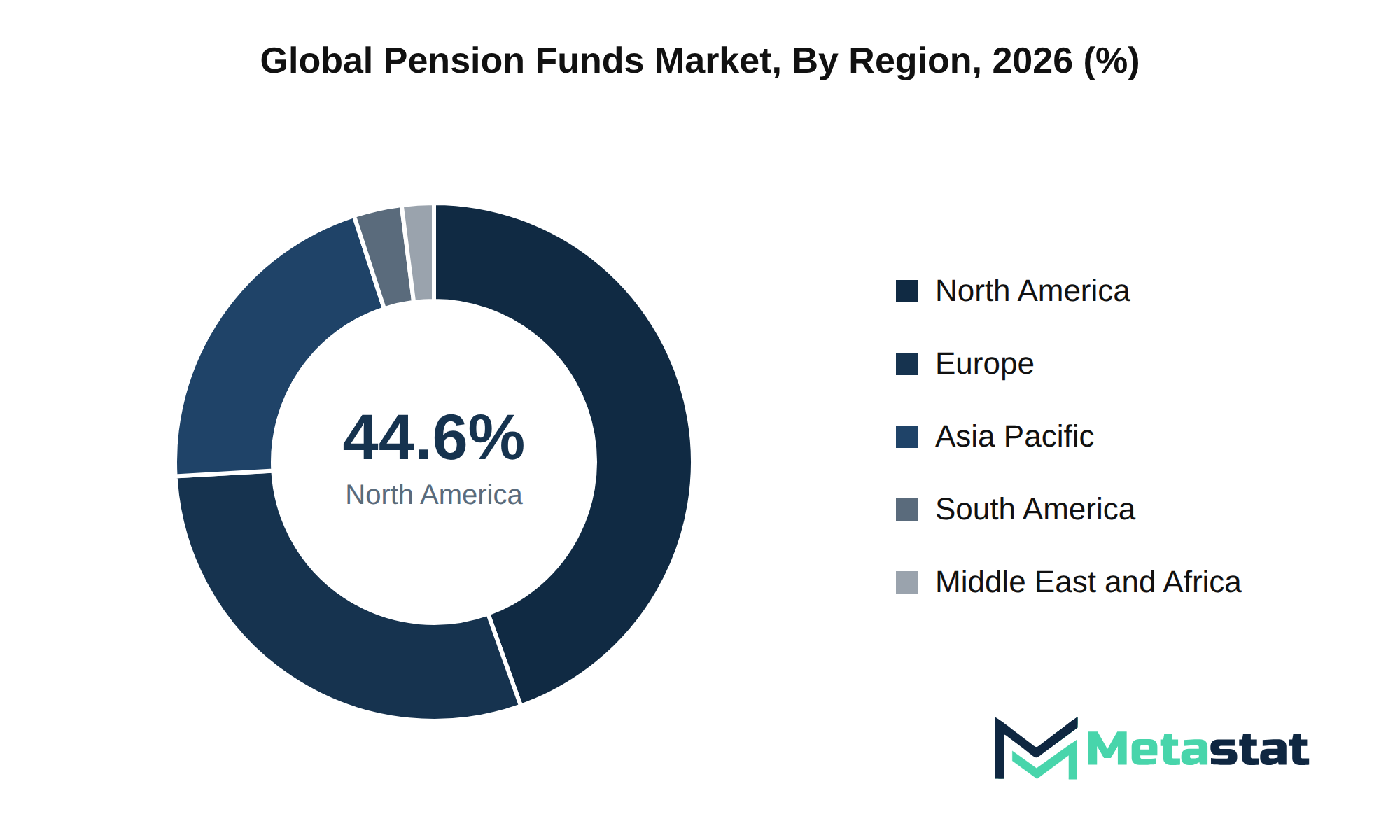
North America contributes 44.6% of the market share in the global Pension Funds market in 2025. This region is set to expand at a CAGR of 4.8% within the forecast period, reaching a market size (TAM) of USD 45,620.1 billion by the end of 2033. Factors driving this growth include a robust regulatory framework aimed at enhancing retirement benefits across various sectors, particularly in the United States, Canada, and Mexico. The increasing awareness of the importance of retirement savings fuels demand for diverse pension fund options.
Investment strategies focusing on both active and passive management demonstrate significant traction, driven by institutional investors seeking to optimize returns while managing risk. The Defined Contribution (DC) plans continue to gain popularity, increasing competition among service providers. The rise in Public-Sector Plans reflects the ongoing commitment of governments to secure financial stability for their employees, driving demand for pension funds in North America.
Emerging segments within the market, including hybrid plans, leverage traditional pension structures with innovative features, appealing to a broader demographic. Infrastructure modernization and localized procurement strategies further support the growth trajectory, enhancing service delivery capabilities for pension fund administrators. With increasing foreign direct investment (FDI) flows into the region, North America presents a favorable environment for pension fund operators looking to capitalize on new opportunities.
The European Pension Funds market occupies a significant position, accounting for 29.6% of the global market in 2025. Growth within this region reflects various factors, including increasing life expectancy, an aging population, and a growing emphasis on retirement planning among individuals. Countries like Germany, France, and the UK lead in asset accumulation, driven by established pension systems and regulatory frameworks that encourage long-term savings.
The competitive landscape in Europe features a mix of domestic and international players, with firms including Caisse de dépôt et placement du Québec and the National Pension Service enhancing their presence. Investment strategies in the region increasingly focus on both Active and Passive approaches, driven by plan sponsors seeking to optimize returns while managing risks. The demand for defined contribution plans continues to rise, indicating a shift in employer and employee preferences towards more flexible retirement solutions.
Infrastructure modernization plays a critical role in shaping the market dynamics in Europe. An emphasis on digital transformation and financial technology adoption enhances service delivery and customer experience. This modernization facilitates better investment options and greater accessibility to pension products for various demographic groups.
Countries including Italy and Spain, while historically characterized by lower pension fund penetration, show signs of increased adoption of pension products. This trend indicates growth opportunities for providers willing to engage with underpenetrated markets. Regulatory compliance and local mandates further influence procurement dynamics in the region, necessitating tailored approaches from market players.
Asia-Pacific holds a share of the global Pension Funds market, comprising 20.9% in 2025. The region demonstrates robust market dynamics driven by increasing economic growth in countries including China, India, and Australia. Aging populations in these territories create greater demand for pension solutions, ensuring a steady influx of investments into various pension schemes.
China's pension reforms continue to attract attention, creating an environment ripe for growth. Government initiatives aimed at expanding retirement savings among its vast population contribute to the rising adoption of Pension Funds. In India, the growing middle class and their increasing awareness of retirement planning further stimulate market expansion.
South Korea's progressive pension policies support the growth of both Defined Contribution and Defined Benefit plans, enhancing the market environment. Meanwhile, Southeast Asia and the Rest of Asia Pacific present underpenetrated territories, offering ample opportunities for investment and development in the Pension Funds market. The ongoing modernization of infrastructure and financial systems in these regions further positions them because emerging market front-runners.
Localized procurement dynamics and cultural nuances influence B2B buying behaviors across Asia-Pacific. Market participants adapt their strategies to cater to regional preferences, ensuring that offerings align with local expectations. Domestic market leaders continue to strengthen their positions, while foreign direct investment flows into the region enhance competitive landscapes.
Overall, the Asia-Pacific Pension Funds market is poised for sustained growth through 2033, driven by increasing investment in retirement solutions, evolving regulations, and demographic changes. The market is expected to experience incremental growth vectors that support its expansion and enhance its significance on the global stage.
The Pension Funds market in South America represents a distinct segment, contributing 3.00% to the global market share in 2025. Brazil and Argentina serve because key players in this region, with evolving needs and demands that shape the market dynamics. The growth trajectory reflects increasing awareness regarding pension planning and investment strategies among individuals and corporations.
Investment strategies within the market lean towards both active and passive management styles, catering to diverse client preferences. Public-sector plans dominate the landscape, driven by government initiatives aimed at enhancing retirement savings and financial security for citizens. Corporate entities follow suit, adopting structured pension plans to attract and retain talent.
Emerging trends in infrastructure modernization and localized procurement are evident, with pension funds seeking to allocate assets into domestic projects. This shift not only supports economic development but aligns with the growing focus on sustainable investment practices.
Continued foreign direct investment flows into South America present growth opportunities for pension funds, allowing for expanded portfolios and diversified asset allocation strategies. Strategic entry barriers remain, influenced by local regulations, compliance mandates, and the competitive landscape formed by domestic market leaders.
Cultural nuances and regional buying behaviors further shape the market, necessitating tailored approaches to meet specific needs. Enhanced resource availability and energy grid resiliency play crucial roles in ensuring the effective operation of pension funds within this territory. The Pension Funds market in South America exhibits incremental growth potential driven by these multifaceted dynamics.
The Pension Funds market in the Middle East and Africa is characterized by a relatively small share of the global market, projected at 2.00% in 2025. Regional dynamics are influenced by demographic shifts and economic development strategies focused on enhancing pension coverage.
Countries including Saudi Arabia and the UAE exhibit strong government initiatives aimed at expanding pension systems and increasing financial literacy among citizens. Efforts to modernize infrastructure and improve the regulatory environment support the establishment of robust pension frameworks, facilitating pension fund growth. South Africa stands out within the region, featuring a mature pension system that offers both defined benefit and defined contribution plans, attracting various institutional investors.
The market's expansion in underpenetrated territories indicates significant potential for growth. Emerging trends in localized procurement and investment strategies reflect a shift toward more sustainable and region-specific solutions. Initiatives related to foreign direct investment (FDI) flowing into the region enhance opportunities for pension fund management and diversification.
Cross-border trade corridors and geopolitical considerations shape the competitive landscape. Localized manufacturing and investment strategies lead to increased engagement within the market, increasing the need for strategic partnerships among domestic and international players.
Overall, the Pension Funds market in the Middle East and Africa demonstrates growth potential driven by evolving regulatory frameworks, local compliance mandates, and increasing awareness of the importance of retirement planning. This evolution is supported by sustained efforts to improve financial environments and attract investment, creating growth opportunities across the region.
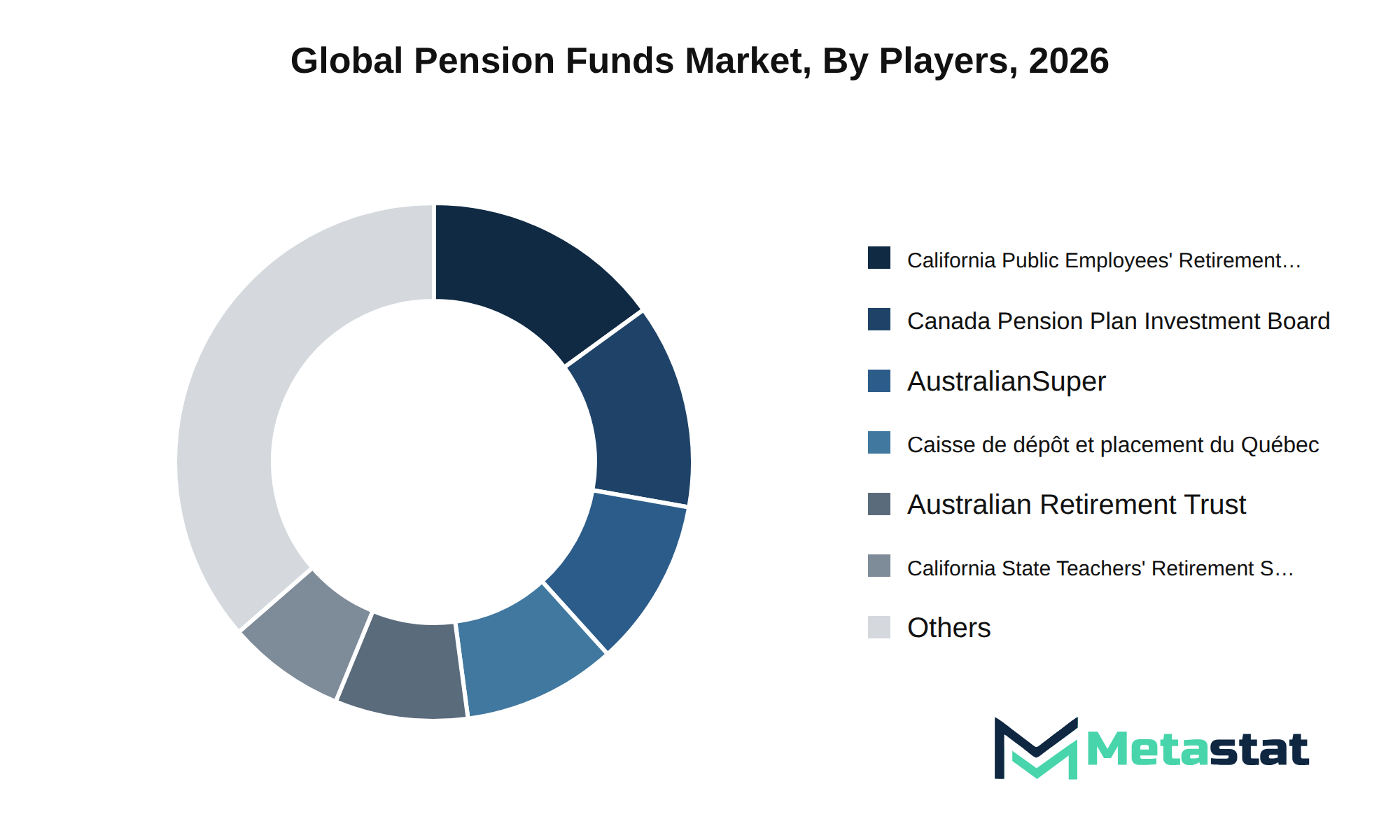
The Pension Funds market experiences significant competition characterized by various strategic behaviors. Players actively engage in mergers and acquisitions to strengthen their market positions and consolidate resources. Strategic alliances and joint ventures emerge, enhancing capabilities and creating cross-industry partnerships.
Companies employ diverse go-to-market strategies and commercial models to differentiate their offerings. Investment in research and development remains a priority, with many organizations focusing on proprietary technology and intellectual property to create competitive advantages. The drive for customer retention leads to heightened brand equity dynamics, influencing switching costs for clients.
Barriers to entry present challenges for new entrants, owing to established players leveraging their market presence and operational scale. Supply chain dominance and procurement leverage play crucial roles in maintaining profitability and securing a competitive edge. The future competitive outlook suggests a continued emphasis on strategic growth vectors to navigate evolving market dynamics.
Market size is forecast to rise from USD 73,107.8 billion in 2025 to over USD 107,064.3 billion by 2033. The base case anticipates sustained growth at a 4.8% CAGR, driven by robust investments in technology and evolving consumer preferences. Downstream demand changes reflect an increasing need for efficient pension fund management solutions, which align with broader economic trends affecting the global supply chain.
The bull case describes a scenario where heightened regulatory compliance and advancements in next-generation technology integration drive the market beyond expectations. Increased infrastructure commitments and strategic capital allocation enhance the operational efficiency of pension funds, creating an environment conducive to growth.
Conversely, the bear case highlights potential challenges including geopolitical realignments and evolving trade corridors that constrain market expansion. Economic cycles and industry maturation could lead to fluctuations in investment strategies, impacting overall demand for pension fund services.
In this context, market participants focus on identifying emerging white-space opportunities and addressing unmet enterprise needs. Strategic imperatives, including defensibility roadmaps, play a critical role in navigating future growth recommendations within the pension funds market.
The report strategically identifies and profiles the key market players and analyses their core competencies in each sub-segment of the Pension Funds market.
Report Attributes | Details |
Study Period | 2021-2033 |
Base Year | 2025 |
Estimated Year | 2026 |
Forecast Period | 2026-2033 |
Historical Period | 2021-2025 |
Growth Rate | CAGR 4.8% from 2026 to 2033 |
Revenue Unit | USD billion |
Segmentation | By Plan Type, Investment Strategy, Sponsor Type, End User, and Region |
By Region | North America (By Plan Type, Investment Strategy, Sponsor Type, End User, and Country)
|
Europe (By Plan Type, Investment Strategy, Sponsor Type, End User, and Country)
| |
Asia Pacific (By Plan Type, Investment Strategy, Sponsor Type, End User, and Country)
| |
South America (By Plan Type, Investment Strategy, Sponsor Type, End User, and Country)
| |
Middle East and Africa (By Plan Type, Investment Strategy, Sponsor Type, End User, and Country)
|
Find answers to common questions about this report
The Pension Funds market size was valued at USD 73,107.8 billion in 2025.
The Pension Funds market is projected to grow at a CAGR of 4.8% during the forecast period from 2026 to 2033.
The North America Pension Funds market size is estimated to reach USD 45,620.1 billion by 2033.
The Defined Contribution (DC) segment leads the Pension Funds market, with a projected value of USD 58,489.2 billion by 2033, compared to the Defined Benefit (DB) segment, which is expected to reach USD 33,703.8 billion in the same year.
Key drivers for the Pension Funds market include increased public and private investment, favorable macro-economic conditions, and the adoption of digital transformation initiatives. These factors enhance operational efficiency, improve asset allocation strategies, and strengthen the financial stability of pension funds, ultimately driving demand for robust pension products.
North America holds the dominant share of the Pension Funds market, with a value of USD 45,620.1 billion projected for 2033, representing 44.6 percent of the total market.
Regulatory tightening and compliance costs present significant challenges for the Pension Funds market, impacting operational agility and profitability. geopolitical instability introduces uncertainties that affect investment decisions, while technological obsolescence limits operational efficiency and data security. These factors collectively constrain market growth potential.
Favorable macro-economic factors, including consistent GDP growth and low interest rates, enhance the capital investment landscape, driving product adoption. shifting demographic patterns, particularly aging populations, increase awareness of the necessity for robust pension strategies, further fueling demand for pension products.
The Pension Funds market is estimated to reach a valuation of USD 107,064.3 billion by 2033.
Key players operating in the Pension Funds market include Australian Retirement Trust, AustralianSuper, California Public Employees' Retirement System, Canada Pension Plan Investment Board, Government Pension Fund Global, Ontario Teachers' Pension Plan Board, and Teacher Retirement System of Texas.
The analysts below cover Banking & Finance research at Metastat Insights.
LEAD ANALYST
Utkarsh Khirodkar is a Lead Market Research Analyst at MetaStat Insight, specializing in market intelligence, technology sector assessments, and competitive strategy.

PRINCIPAL CONSULTANT - ENTERPRISE AI & EMERGING TECHNOLOGIES
Banking & Finance · Electronics and Semiconductor · Energy and Power · Healthcare IT · Information & Technology · Professional Services
Vijay Gunti is a Principal Consultant at MetaStat Insight, bringing over two decades of experience across enterprise digital transformation, technology strategy, and intelligent systems.
Analyzing the transition from natural gas to green hydrogen in iron ore reduction requires realistic infrastructure timelines. Meta stat insight supplied a detailed regional assessment of DRI plant conversion costs and scrap metal availability in North America and Western Europe. Their report carefully examined pellet quality specs and electrical grid access constraints without making oversimplified market assumptions. The research material served as a practical reference during internal technology roadmap discussions.
Integrating zero-trust access controls across legacy electronic health record systems involves complex compliance overhead. Team produced an analysis that clearly separated identity governance and administration tools from privileged access management platforms. Their evaluation of HIPAA and GDPR compliance features across cloud native solutions gave our architecture group clear baseline criteria. The custom data request regarding biometric authentication adoption in hospital networks was returned promptly with clear documentation.
Evaluating calorific value requirements and air permit compliance across municipal waste facilities requires localized data. Metastat Insight structured their analysis around operational throughput capacity and feedstock composition variations in Latin America and Eastern Europe. Their competitive mapping of sorting equipment vendors helped clarify technology differences between optical separators and heavy media systems. The study provided an objective baseline during our capital expenditure reviews.
Explore related market intelligence reports worth reading alongside this one.