
LEAD ANALYST
Utkarsh Khirodkar is a Lead Market Research Analyst at MetaStat Insight, specializing in market intelligence, technology sector assessments, and competitive strategy.

Global Luxury Outdoor Furniture Market Size, Share, By Product Type (Sofas & Seatings, Chairs & Stools, Side Tables & Dining Tables and Others), By Material (Wood, Metal and Others), By End-User (Households, Hotels & Restaurants, Offices and Others), By Distribution Channel (Specialty Stores, Hypermarkets & Supermarkets, Online Stores and Others), Industry Analysis, Growth, Trends, and Forecast, 2026-2033
Report ID
MSI-5326
Published
September, 2026
Updated
Pages
292 Pages
Format
Historical
Base year
Forecast
Forecast period
Report Details
Market Valuation: Valued at $2,010.6 Million in 2025, projected to reach $2,668.9 Million by 2033 at a 3.6% CAGR.
Dominant Segment: The Sofas & Seatings segment leads the Luxury Outdoor Furniture market, driven by rising consumer preferences for stylish and functional outdoor living spaces. This segment is projected to grow from USD 795.6 million in 2026 to USD 984.3 million by 2033.
Geographic Lead: The Asia-Pacific region is expected to witness the fastest growth in the Luxury Outdoor Furniture market, fueled by increasing disposable incomes and a growing emphasis on outdoor living spaces among consumers.
What's Inside: The report provides comprehensive coverage of market dynamics, competitive landscape, and detailed segmentation by product type, material, end-user, and distribution channel, along with forecasts through 2033.
Emerging Trends: Key trends driving market growth include a focus on sustainability, innovation in smart outdoor furniture, and the increasing integration of outdoor spaces in residential and hospitality sectors.
Choose Your License
Global Luxury Outdoor Furniture Market
The global Luxury Outdoor Furniture market was valued at USD 2,010.6 million in 2025 and is projected to reach USD 2,668.9 million by 2033, growing at a CAGR of 3.6% over the forecast period.
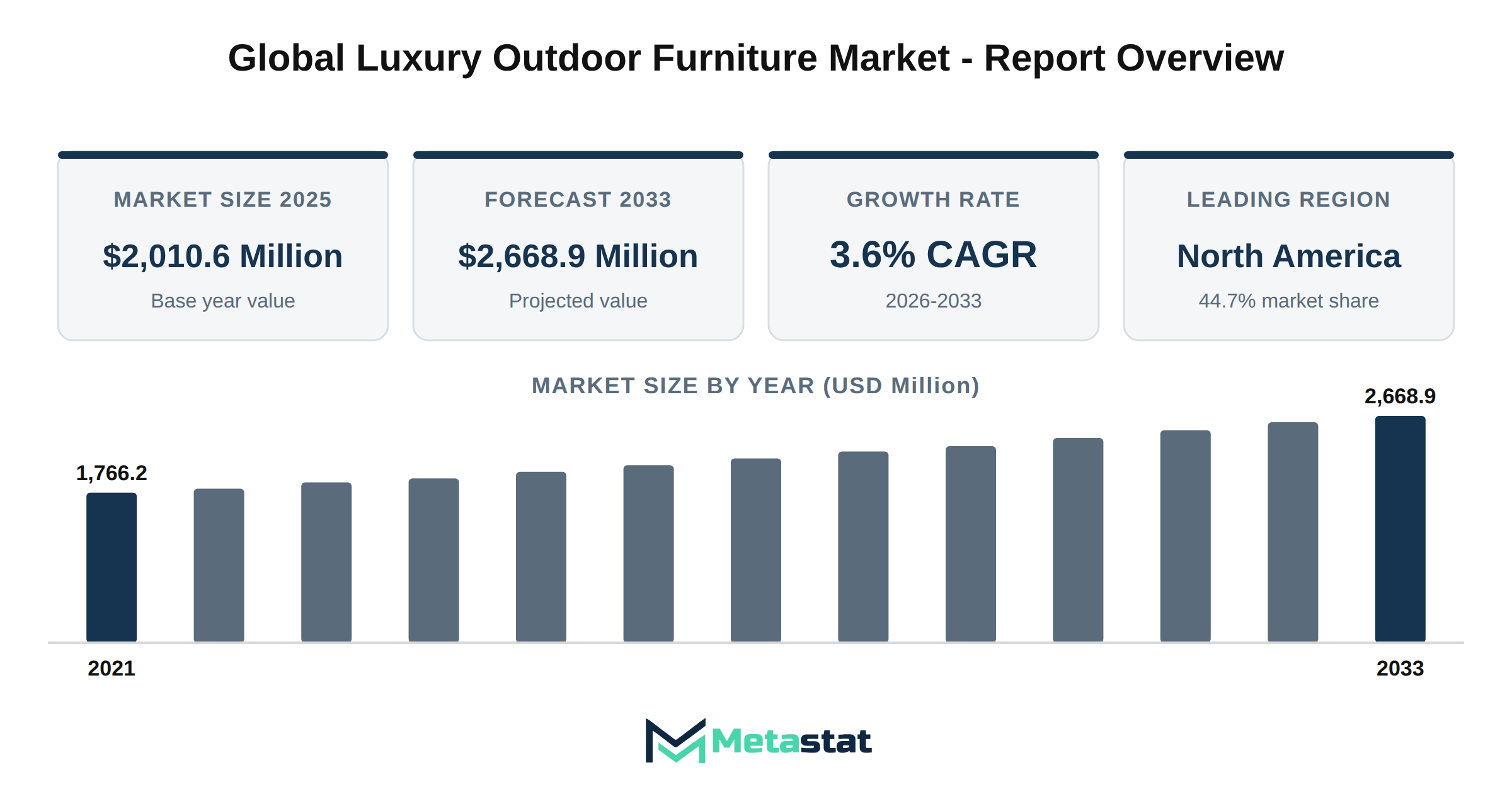
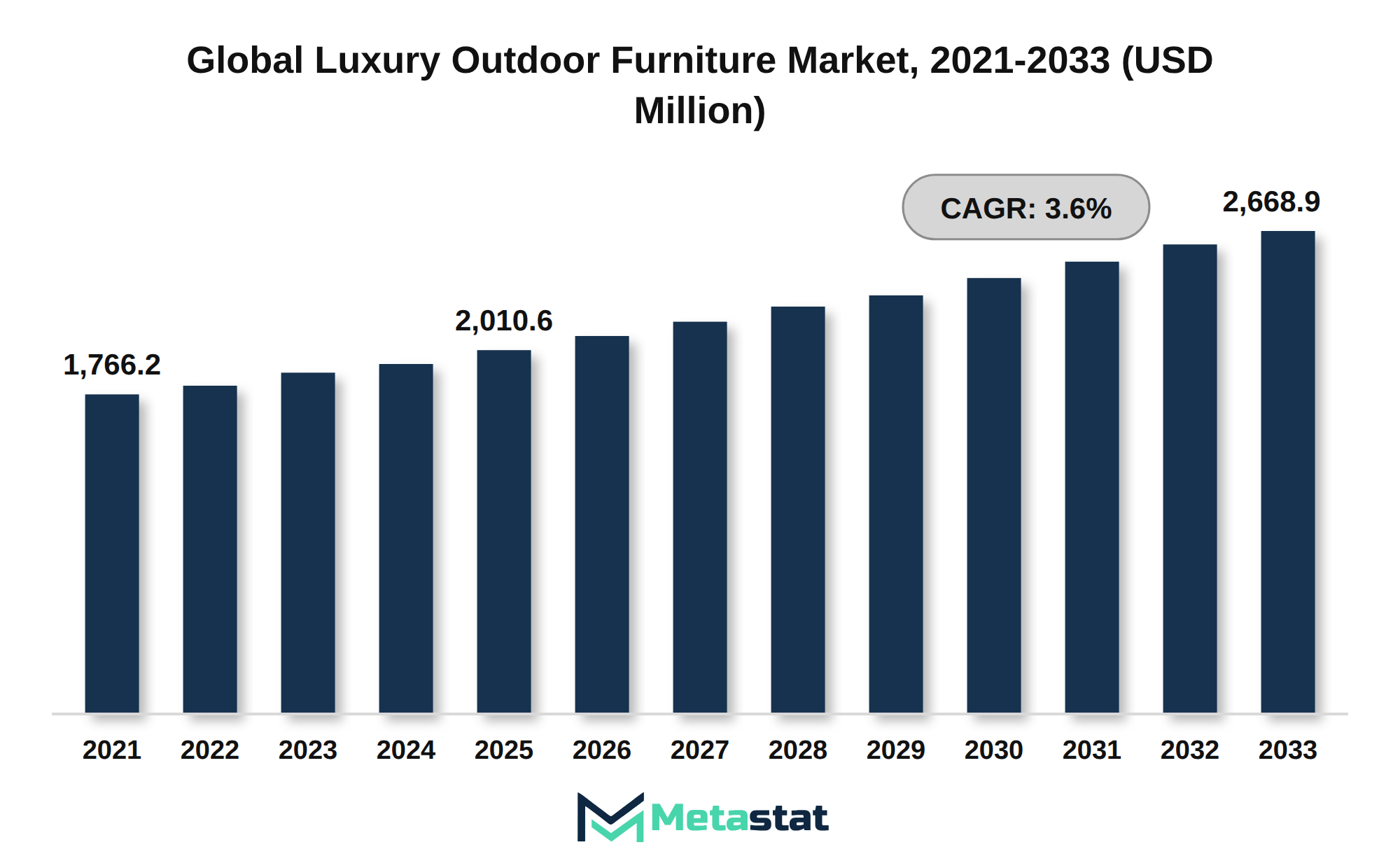
The Luxury Outdoor Furniture market experienced a significant growth trajectory, with a base value of USD 2,010.6 million projected for 2025. By 2033, the market is expected to reach USD 2,668.9 million, reflecting a compound annual growth rate (CAGR) of 3.6%. Historical data shows steady growth from USD 1,766.2 million in 2021 to USD 1,933.8 million in 2024.
Trends in premium outdoor living spaces drive rising demand for luxury outdoor furniture. Affluent consumers prioritize high-end outdoor environments, leading to a surge in demand across residential and hospitality sectors. The market adapts to consumer preferences for unique and stylish designs, encouraging innovation in outdoor furniture aesthetics.
Design trends emphasize sustainability, with many consumers gravitating toward eco-friendly options. The growing adoption of sustainable luxury outdoor furniture reflects a shift in consumer values, influencing purchasing decisions. Weather-resistant materials, including teak, aluminum, and engineered materials, play a significant role in transforming the luxury outdoor furniture landscape.
Innovation in smart and multifunctional outdoor furniture enhances the appeal of premium products. Customization and bespoke design trends further cater to individual consumer tastes, allowing for personalized outdoor spaces. The demand for luxury outdoor furniture from hotels, resorts, and restaurants illustrates the increasing integration of outdoor living spaces within the hospitality sector.
Expansion in high-end residential projects signifies a robust opportunity for luxury outdoor furniture. Growth in online sales channels complements traditional retail, with specialty stores and brand showrooms providing curated experiences for consumers. These diverse distribution channels contribute to the market's overall accessibility.
The Luxury Outdoor Furniture market experiences a dynamic evolution characterized by several key trends influencing premium outdoor living. Rising demand for high-end outdoor living spaces reflects an increasing consumer focus on enhancing outdoor experiences. This trend is evident in both residential and hospitality sectors, where the desire for luxurious outdoor environments drives significant investments in outdoor furniture.
Design trends play a crucial role in shaping consumer preferences within the market. A growing inclination towards innovative and aesthetically pleasing furniture designs caters to discerning customers who prioritize style and functionality. Sustainability remains an important consideration, with an increased focus on eco-friendly materials and manufacturing practices. The adoption of sustainable luxury outdoor furniture has gained traction, aligning with consumer values and environmental awareness.
Weather-resistant materials significantly transform the luxury outdoor furniture landscape. Teak, aluminum, and engineered materials dominate premium outdoor furniture offerings, providing durability and aesthetic appeal. These materials enhance the longevity of products and cater to the evolving preferences of consumers seeking both form and function in their outdoor spaces.
Innovation in smart and multifunctional luxury outdoor furniture continues to reshape the market. The integration of technology into furniture design enhances user experience, appealing to tech-savvy consumers. Customization and bespoke design trends further enhance the market, allowing consumers to tailor furniture to their specific needs and preferences.
Luxury outdoor furniture demand from hotels, resorts, and restaurants remains robust, driven by the hospitality industry's emphasis on creating memorable outdoor environments for guests. The expansion of luxury outdoor furniture within high-end residential projects reflects the growing trend of integrating luxurious outdoor spaces into modern homes. Online sales have gained momentum in the luxury outdoor furniture market, providing consumers with convenient access to a wide range of premium products.
Specialty stores and brand showrooms continue to play a significant role in luxury outdoor furniture sales, offering personalized experiences and expert guidance to consumers. Developments within the supply chain, including raw material sourcing, impact pricing strategies in the luxury outdoor furniture market. Fluctuations in material costs directly influence the pricing of products, necessitating strategic approaches from manufacturers.
Sustainability certifications and eco-friendly manufacturing practices are increasingly important in the luxury outdoor furniture sector, appealing to environmentally conscious consumers. Competitive strategies among leading brands involve designer collaborations that drive innovation and enhance brand prestige. Investment and expansion activity within the industry highlight the market's potential for growth, particularly in regions like North America, Europe, and Asia Pacific.
The Luxury Outdoor Furniture market outlook through 2033 anticipates continued growth, fueled by evolving consumer preferences and a commitment to sustainability. Emerging opportunities in the Middle East luxury outdoor furniture market present avenues for expansion, while hospitality construction significantly drives demand. Outdoor kitchens and entertainment spaces contribute to the increasing need for premium furniture, particularly in villas, terraces, patios, and poolside areas. Direct-to-consumer strategies reshape luxury outdoor furniture retail, offering brands new pathways to connect with consumers. Circular design and recyclable materials are expected to play a critical role in the future growth of the market.
The luxury outdoor furniture market features distinct brand philosophies, specialized engineering, and clear target demographics. Market participants differentiate themselves through proprietary material synthesis, architectural partnerships, and heritage positioning.
Dedon established its market position through proprietary fiber technology. The company develops synthetic weaves capable of withstanding extreme thermal variance and ultraviolet exposure. High-density polyethylene (HDPE) wicker remains central to its visual identity. Collections emphasize organic, sculptural geometries designed for resort-scale environments. Dedon relies on European design collaborations to reinforce its status as an aesthetic pioneer, appealing to buyers who value bold silhouettes and tactile durability.
Gloster Furniture centers its value proposition on high-grade timber cultivation and industrial design. The brand operates its own plantations, securing dedicated access to premium timber. Gloster pairs plantation-grown wood with powder-coated aluminum frames and sling fabrics. Its aesthetic leans toward restrained Scandinavian minimalism. Gloster attracts residential clients and commercial specifiers who require understated, architecturally aligned pieces built to endure intense marine climates.
Brown Jordan maintains substantial authority across North American luxury residential and contract sectors. The brand pioneered lightweight aluminum outdoor seating in the mid-twentieth century. Today, it balances archival classic collections with contemporary modular systems. Brown Jordan leverages heavy-gauge, powder-coated aluminum frames engineered to resist corrosion. Its commercial reputation provides a reliable channel into historic clubs, civic projects, and luxury hospitality destinations.
Pricing dynamics within the luxury outdoor living sector reflect engineering complexity, material rarity, and distribution tiers. Market offerings separate cleanly into entry-premium and bespoke ultra-luxury categories.
The entry-premium segment addresses high-earning residential consumers and boutique commercial spaces. Offerings typically include standardized modular lounge configurations, four-seat dining collections, and performance daybeds. Brands like Restoration Hardware (RH Outdoor) capture major volume in this tier through retail showrooms. Production at this level relies on semi-automated manufacturing, cast aluminum components, and standardized Sunbrella performance fabrics. Lead times remain relatively short, ranging from immediate stock delivery to eight weeks.
The ultra-luxury market serves ultra-high-net-worth individuals, mega-yacht commissions, and flagship hospitality suites. Premier Italian design houses such as Minotti, B&B Italia Outdoor, and Exteta dominate this tier. Complete patio or pool deck installations regularly exceed $100,000. Price tags reflect hand-finished joints, bespoke cast bronzes, marine-grade stainless steel hardware, and rare stone slabs. Products in this bracket function as exterior extensions of high-end interior architecture, carrying extensive customization options and extended manufacturing cycles.
Environmental verification has transitioned from a niche marketing angle to a mandatory commercial baseline for luxury outdoor manufacturers. High-net-worth clients and hospitality procurement committees demand rigorous chain-of-custody documentation.
Sustainably harvested FSC-certified teak serves as the primary benchmark for ethical wood procurement. Discerning clients require proof that slow-grown tropical hardwoods originate from legal, socially responsible plantations. Premium brands publish full traceability audits for their timber. This transparency mitigates reputational exposure for commercial buyers and satisfies strict green building criteria, including LEED and BREEAM certifications.
Material innovation focuses heavily on closed-loop polymers and reclaimed yarns. Manufacturers blend post-consumer plastic polymers into resilient high-density polyethylene (HDPE) wicker without sacrificing tensile strength or UV resistance. Upholstery programs incorporate solution-dyed acrylics woven from recycled textile waste. High-performance textiles, including Batyline mesh and specialized Sunbrella performance fabrics, now feature non-fluorinated water-repellent coatings to comply with tightening global chemical regulations.
The integration of digital architecture into exterior furniture expands functional living spaces across multiple seasons. Ultra-luxury consumers demand seamless operational convenience without visible technical clutter.
Luxury pergolas, modular lounges, and dining systems increasingly incorporate integrated heating filaments and low-voltage illumination. Brands like Kettal partner with technology specialists to embed radiant warming elements beneath stone surfaces and waterproof upholstery. Low-profile LED channels run through aluminum extrusions. These systems interface directly with whole-home automation platforms such as Crestron, Lutron, and Control4, allowing users to orchestrate exterior ambiance through smartphone applications.
Automated exterior systems protect high-value furniture assets from abrupt weather changes. Modern cabanas and automated daybed canopies utilize integrated anemometers and moisture sensors. High wind speeds automatically trigger motorized awnings to retract into secure housings. Rain sensors prompt protective louvered roofs to seal tightly. These predictive systems safeguard delicate fabrics, preventing structural fatigue and mildew formation across expansive outdoor estates.
Commercial hospitality procurement diverges significantly from residential sales. Contract purchases require specialized testing, high cycle durability, and lifecycle cost efficiency.
Resort operators mandate stringent commercial performance benchmarks. Furniture must resist continuous sun exposure, sunscreen oils, chlorine, and airborne ocean salts. Specifiers prioritize frames crafted from powder-coated aluminum, electropolished stainless steel, and reinforced Batyline mesh. Removable, quick-drying reticulated foam cushions wrapped in heavy-duty performance textiles allow rapid turnover after rainstorms. High stackability and transport efficiency also influence contract dining selections.
Boutique hotels and luxury resort chains commission branded furniture packages to establish distinct visual narratives. High-end properties collaborate directly with design brands like Paola Lenti and Roda to produce custom colorways and proprietary silhouettes. These commercial arrangements yield high production volumes for manufacturers while delivering unique brand touchpoints for hospitality guests.
The distribution of luxury outdoor furnishings involves a balance between high-touch retail galleries and privileged architectural trade pipelines.
Interior designers, landscape architects, and procurement agents control a significant share of high-end outdoor spending. Trade-only showrooms in major design centers protect wholesale pricing structures for licensed professionals. European heritage brands, including B&B Italia Outdoor, Minotti, and Exteta, rely heavily on this channel. Trade programs provide designers with comprehensive sample kits, custom CAD files, and project management support.
Restoration Hardware (RH Outdoor) transformed consumer expectations by establishing vast physical galleries displaying exterior collections in fully dressed environments. This consumer-facing direct approach demystifies high-end outdoor design for affluent homeowners. Leading trade brands respond by opening flagship brand spaces. These hybrid showrooms welcome homeowners for aesthetic discovery while routing final purchasing and commission incentives through certified trade partners.
Geographic variations in climate, architecture, and cultural habits generate distinct regional design movements within luxury exterior furnishings.
Southern European and Sunbelt aesthetics highlight relaxed luxury, tactile textures, and earthy palettes. Brands such as Paola Lenti and Roda excel in this category through intricate braided ropes, terracotta tones, and raw natural stone. Deep sectional seating promotes prolonged open-air dining and afternoon social gatherings. Silhouettes remain low and organic, blending naturally into drought-tolerant landscapes and plaster architecture.
Northern European and mountain-modern markets favor functional simplicity and geometric clarity. This regional style prioritizes warm timber, muted grays, and slender metal framing. FSC-certified teak takes center stage, often left untreated to weather into a silver patina over time. Scandinavian-inspired exterior furnishings emphasize compact scales, modular interchangeability, and materials that withstand wet freeze-thaw weather cycles.
Tropical enclaves, private islands, and oceanfront properties demand minimalist profiles constructed with resilient marine-grade finishes. Coastal contemporary designs feature crisp white frames, nautical stainless steel fittings, and bright neutral cushions. The design language is sleek and open, avoiding heavy visual footprints that could obstruct panoramic sea views.
The sharp increase in home-centered lifestyles during the 2020 to 2025 period permanently altered residential budget allocations. Exterior spaces evolved from seasonal amenities into fully furnished, year-round living extensions.
Property owners transitioned from standalone patio sets to complex, zoned spatial planning. Wealthy homeowners now invest in multi-functional exterior rooms featuring full gourmet kitchens, sheltered lounge spaces, open-air work cabanas, and fire feature conversation pits. High-end clients purchase complete furniture programs that mirror the comfort, materiality, and ergonomic support of luxury indoor furnishings.
High-end real estate developers and homeowners treat exterior furnishings as high-return capital improvements. A professionally curated terrace or pool deck significantly increases property valuation and rental yields in prime leisure markets. Consequently, residential buyers display greater willingness to commit five-figure budgets to commercial-grade, long-lasting exterior furnishings.
Mass-market standardization fails to satisfy elite clients seeking architectural cohesion across bespoke residential estates and private yachts.
Leading manufacturers provide custom dimensional adjustments to ensure modular seating aligns precisely with architectural layouts. Clients specify non-standard seat depths, custom backrest heights, and specialized frame dimensions. In addition to physical tailoring, brands offer expansive textile libraries. Customers mix custom RAL powder-coat frame finishes with bespoke weaves to complement unique architectural stonework.
Custom superyacht commissions drive extreme technical innovation in bespoke outdoor design. Luxury maritime platforms require magnetic cushion anchors, non-marking weighted bases, and salt-mist passivation for all metal components. Brands like Exteta and Roda engineer bespoke marine collections that directly influence their standard ultra-luxury residential catalogs.
In the upper price tiers, customer retention depends on proactive lifecycle management, comprehensive warranty coverage, and reliable restoration services.
Premium outdoor manufacturers back their products with multi-year warranties reflecting superior structural integrity. Leading brands offer structural guarantees ranging from five to fifteen years on powder-coated aluminum extrusions, stainless steel joinery, and synthetic HDPE fibers. Fabric manufacturers provide separate five-year warranties against color fading and fiber breakdown under sustained ultraviolet exposure.
Luxury outdoor brands increasingly provide comprehensive after-sales maintenance networks. Dedicated service divisions offer periodic teak cleaning, wood oiling, custom winter storage covers, and off-season storage programs. Brands maintain replacement cushion and hardware inventories for retired collections, allowing clients to refresh their furniture after years of environmental exposure rather than replacing complete suites.
The Global Luxury Outdoor Furniture market is segmented based on Product Type, Material, End-User, and Distribution Channel.
Sofas & Seatings segment is valued at USD 795.6 million in 2026 and is projected to reach USD 984.3 million by 2033, at a CAGR of 3.1% during the forecast period. Growth in this segment stems from rising consumer preferences for outdoor living spaces, which drive demand for stylish and functional furniture solutions. Increased focus on lifestyle and aesthetics enhances the importance of design in the purchasing decisions of consumers, particularly among affluent households and hospitality establishments.
Technological advancements including improved materials and manufacturing processes contribute to greater durability and comfort, appealing to customers seeking high-quality outdoor furniture. Evolving consumer spending habits, driven by a heightened interest in outdoor entertaining and leisure activities, support the expansion of this segment within the Luxury Outdoor Furniture market.
Major end-users, including households, hotels, and restaurants, exhibit a continuous demand for innovative and aesthetically pleasing outdoor seating options. The trend towards outdoor entertainment encourages investments in premium furniture, further enhancing market dynamics. Pricing strategies will play a crucial role in the profitability of this segment, because manufacturers balance quality with affordability to attract a broad consumer base.
The Sofas & Seatings segment benefits from a combination of design trends, technological improvements, and shifting consumer preferences, positioning it favorably within the Luxury Outdoor Furniture market. Continued investment in product development and sustainability initiatives will ensure this segment remains competitive in the coming years.
This segment of the Luxury Outdoor Furniture market is expected to reach USD 793.7 million by 2033, at a CAGR of 4.2% during the forecast period. Key factors driving this growth include an increase in outdoor living trends and a heightened focus on aesthetic and functional outdoor spaces among consumers. Preferences for versatile and stylish outdoor seating options stimulate demand from households and hospitality sectors.
Technological advancements in materials and design contribute to the segment's expansion. Innovation in weather-resistant materials enhances product durability, appealing to consumers seeking long-lasting furniture. The rise of eco-friendly materials in production aligns with sustainability trends, attracting environmentally conscious buyers.
End-user dynamics favor the growth of the Chairs & Stools segment, particularly in the hospitality industry, where outdoor dining experiences gain popularity. Restaurants and hotels invest in high-quality outdoor furniture to enhance their customer offerings. Shifts in consumer behavior toward outdoor leisure activities further increase demand for these products, affirming their growing significance in the overall market.
Pricing volatility, influenced by raw material costs, presents challenges within this segment. Manufacturers face pressure to balance quality and affordability while maintaining profit margins. Strategic investment in supply chain resilience and raw material sourcing mitigates these pressures. Overall, the Chairs & Stools segment represents a vital component of the Luxury Outdoor Furniture market, promising opportunities driven by evolving consumer preferences and market dynamics.
Growing consumer interest in outdoor living spaces drives demand for Side Tables & Dining Tables within the Luxury Outdoor Furniture market. These products enhance outdoor seating areas, adding functionality and aesthetic appeal. Increasing investments in residential and commercial outdoor areas contribute to market expansion, particularly in urban settings where space optimization is essential.
The Side Tables & Dining Tables segment is projected to reach USD 611.4 million by 2033. This growth aligns with rising consumer trends favoring outdoor dining and leisure activities, particularly in warmer climates. Manufacturers focus on innovative designs and materials, targeting both style-conscious consumers and commercial establishments.
Material selection influences market dynamics, with wood and metal being popular choices for their durability and visual appeal. Preferences are shifting towards sustainable materials, prompting producers to invest in eco-friendly options. Technological advancements in manufacturing processes enhance product offerings, enabling customized solutions for consumers.
End-user dynamics indicate a growing interest among households and the hospitality sector, including hotels and restaurants. This trend fuels demand for high-quality, durable, and stylish outdoor furniture. Increased outdoor dining experiences and social gatherings contribute to higher consumption rates, positively impacting the market's growth trajectory.
Demand for the Others (Hanging Chairs, Fire Pit Tables, Garden Carts & Trolleys, etc.) segment aligns with the increasing popularity of outdoor leisure activities and the desire for enhanced outdoor living environments. This trend attracts various consumers, including households, hospitality businesses, and recreational facilities seeking to create inviting outdoor spaces. The segment is projected to grow at a CAGR of 2.9% during the forecast period.
Expansion catalysts include evolving consumer preferences for unique and functional outdoor furniture solutions. Innovative designs and materials significantly influence purchasing decisions, while advancements in production techniques improve product quality and durability. Increasing disposable income, particularly in emerging markets, supports greater investment in outdoor living spaces, contributing to market growth.
The segment's evolution reflects shifts toward eco-friendly materials and sustainable production methods, appealing to environmentally conscious consumers. This focus on sustainability enhances brand loyalty and drives demand across various segments of the Luxury Outdoor Furniture market. While manufacturers adapt to these trends, strategic opportunities arise for companies to differentiate their offerings and capture market share.
Valued at USD 953 million in 2026, the Wood segment of the Luxury Outdoor Furniture market is projected to reach USD 1,145.2 million by 2033, at a CAGR of 2.7% during the forecast period. Demand for wood outdoor furniture arises from consumer preferences for natural materials that offer durability and aesthetic appeal. Increased awareness of environmental sustainability drives consumers towards responsibly sourced wood products. This trend aligns with broader shifts in consumer behavior towards eco-friendly choices, enhancing market growth.
Technological maturation in processing techniques for wood furniture supports product evolution. Advances in wood treatments enhance durability and weather resistance, appealing to consumers in diverse climates. Manufacturers invest in innovation and design to create attractive and functional outdoor furniture, contributing to segment expansion. The rise of outdoor living spaces, coupled with urbanization, creates opportunities for wood product integration in residential and commercial environments.
End-user dynamics indicate a strong presence in households and hospitality sectors. Households, driven by lifestyle changes, increasingly prioritize aesthetics and comfort in outdoor settings. Hotels and restaurants recognize the value of high-quality wood furniture in enhancing customer experiences. This recognition encourages investment in wood products, reflecting a growing trend towards creating inviting outdoor spaces.
Challenges related to raw material sourcing and pricing volatility impact the market. Fluctuations in wood availability due to environmental regulations and market demand affect production costs. Suppliers face margin pressures arising from increased raw material costs. Adapting to these challenges involves developing resilient supply chains and exploring alternative sourcing strategies. Strategic opportunities arise through collaborations with sustainable forestry initiatives, ensuring a continuous supply of eco-friendly materials while meeting consumer preferences.
Demand for metal furniture within the Luxury Outdoor Furniture market increases due to its durability and modern aesthetic appeal. The growth of outdoor living trends influences consumers' preferences toward outdoor metal furniture, which offers weather resistance and ease of maintenance. This segment attracts various end users, including households, hotels, and restaurants, seeking quality and longevity in outdoor furnishings.
The metal segment is projected to reach USD 1,074.5 million by 2033, at a CAGR of 4.5% during the forecast period. Increased investments in outdoor spaces, along with a rise in the number of hospitality projects, drive the demand for stylish and functional metal outdoor furniture. Technological maturation in manufacturing processes enhances design flexibility and quality of metal products, allowing for innovative styles that cater to diverse consumer tastes.
Shifts in consumer consumption patterns toward sustainable and eco-friendly materials create opportunities for metal furniture manufacturers to promote recyclable options. Regulatory compliance standards regarding outdoor furniture safety and sustainability influence manufacturers to adopt advanced materials and processes. These factors contribute to competitive dynamics, pushing companies to innovate while managing cost structures and pricing volatility.
Current trends in the Luxury Outdoor Furniture market reflect a growing preference for diverse materials, particularly in the Others (Plastic, Glass, Leather, etc.) segment. This segment is expected to reach USD 449.2 million by 2033, driven by evolving consumer preferences that prioritize lightweight, durable options. The adoption of these materials is influenced by their versatility and ability to withstand varied weather conditions, appealing to households and commercial entities. Innovations in manufacturing processes have enhanced the aesthetic appeal and durability of plastic and glass materials, positioning them favorably against traditional wood and metal options.
End-user dynamics indicate a shift towards outdoor spaces that emphasize comfort and functionality. Households seek stylish yet practical solutions for outdoor living, while hotels and restaurants opt for materials that offer both design and resilience. The market's growth trajectory reflects strong acceptance of these materials, supported by increased awareness of their sustainable attributes and ease of maintenance. While the Luxury Outdoor Furniture market continues to expand, investments in next-generation materials and design methodologies will likely play a significant role in meeting consumer expectations.
Valued at USD 1,080.5 million in 2026, the Households segment is projected to reach USD 1,312.6 million by 2033, at a CAGR of 2.8% during the forecast period. Increasing interest in outdoor living spaces among consumers drives demand for luxury outdoor furniture tailored for residential use. Homeowners seek durable, aesthetically pleasing options that enhance their outdoor experiences, significantly influencing purchasing decisions.
Segment expansion results from the growing trend of creating outdoor retreats within residential properties. Homeowners invest in furniture that blends functionality with style, leading to an upsurge in the adoption of premium offerings. This trend aligns with broader shifts toward lifestyle improvements and outdoor entertaining, propelling the segment's growth within the luxury outdoor furniture market.
Technological advancements contribute to the evolution of product offerings in the segment. Manufacturers focus on integrating innovative materials and designs that enhance durability and comfort, catering to the specific needs of households. Sustainable practices attract environmentally conscious consumers, further shaping product development and market dynamics.
Regulatory compliance plays a role in shaping the market. Standards related to outdoor furniture safety and environmental impact influence design and manufacturing processes. This compliance ensures that products meet consumer expectations while adhering to industry regulations, impacting cost structures and pricing strategies.
The Households segment within the luxury outdoor furniture market demonstrates strong growth potential, driven by evolving consumer preferences, product innovation, and regulatory considerations. The trajectory of this segment highlights the increasing significance of outdoor spaces in residential settings.
Growth in the Hotels & Restaurants segment aligns with an increasing emphasis on outdoor dining and leisure experiences. Establishments invest in aesthetically pleasing and functional outdoor furniture to enhance guest satisfaction and attract clientele. Rising disposable incomes and changing consumer preferences toward outdoor leisure activities contribute to this trend, particularly in urban areas where outdoor space is limited.
Hotels and restaurants focus on quality and design, driving demand for luxurious outdoor furniture that withstands various weather conditions while maintaining visual appeal. This segment is expected to see product evolution toward eco-friendly materials and smart furniture solutions, aligning with sustainability trends in the hospitality industry. The integration of technology in outdoor setups, including weather-resistant materials and smart furniture, further supports this dynamic.
The Hotels & Restaurants segment is estimated to reach USD 811.9 million by 2033, at a CAGR of 4.8% during the forecast period. This growth reflects the segment's adaptation to consumer preferences, with establishments prioritizing outdoor spaces that enhance guest experiences. Strategic opportunities exist for suppliers to innovate and cater to the evolving needs of the market.
Overall, the Hotels & Restaurants segment within the Luxury Outdoor Furniture market exemplifies growth driven by a combination of aesthetic, functional, and technological factors. The commitment to creating inviting outdoor environments continues to strengthen its position, reflecting a critical area of investment for hospitality businesses.
Growing recognition of the importance of outdoor spaces in office environments drives the demand for luxury outdoor furniture tailored for offices. The integration of outdoor areas within corporate facilities enhances employee satisfaction and productivity, leading to a rising interest among businesses in creating inviting outdoor settings.
The offices segment is expected to reach USD 211.1 million by 2033. Companies increasingly recognize the value of outdoor furniture in creating a collaborative and relaxing atmosphere. This trend aligns with broader shifts in workplace design, emphasizing wellness and employee engagement.
Innovation in materials and designs contributes significantly to market growth. Furniture manufacturers are developing lightweight, durable, and weather-resistant products, enabling offices to seamlessly blend indoor and outdoor environments. The evolution of luxury outdoor furniture reflects changing consumer tastes, emphasizing aesthetics alongside functionality.
While businesses prioritize sustainability, sourcing materials that align with eco-friendly practices becomes essential. Companies that adopt sustainable production processes enhance their competitive edge while appealing to environmentally conscious clients. This trend fosters a positive perception of brands within the luxury outdoor furniture market.
Price volatility and margin pressures influence market dynamics. Manufacturers face fluctuations in material costs, impacting product pricing strategies. Effective cost management and value-driven product offerings play critical roles in maintaining profitability while meeting consumer expectations for quality and design.
Strategic opportunities emerge through partnerships with landscape architects and interior designers, facilitating tailored solutions for office spaces. Collaborating with professionals in these fields creates pathways for innovative concepts and customized installations, driving engagement in the luxury outdoor furniture market.
This segment, comprising educational institutions, healthcare facilities, government and public spaces, and real estate developments, presents a unique opportunity within the Luxury Outdoor Furniture market. Heightened investment in public spaces and the growing recognition of outdoor environments in educational and healthcare settings drive demand for high-quality outdoor furnishings. The increasing focus on creating inviting and functional outdoor areas contributes to this segment's growth.
Particular emphasis on improving aesthetic appeal and functionality in public and communal spaces drives the adoption of luxury outdoor furniture. Enhanced outdoor seating arrangements, dining areas, and recreational spaces align with urban development trends and the increasing need for social interaction in these environments. Regulatory compliance standards surrounding public spaces further encourage investments in sustainable and aesthetically pleasing outdoor furniture solutions.
The Others (Educational Institutions, Healthcare Facilities, Government & Public Spaces, Real Estate Developments) segment is projected to grow at a CAGR of 4.3% during the forecast period. This consistent growth reflects the evolving preferences of end-users toward outdoor spaces that promote wellness and community engagement. Overall, the market benefits from these dynamics, indicating a robust trajectory for outdoor furniture specifically tailored for educational and public environments.
Valued at USD 748.4 million in 2026, the Specialty Stores segment is projected to reach USD 878.3 million by 2033, at a CAGR of 2.3% during the forecast period. This segment experiences growth driven by an increasing consumer preference for curated, high-quality outdoor furniture selections. Specialty stores provide a unique shopping experience, allowing customers to explore a diverse range of luxury outdoor furniture options, creating strong brand loyalty and repeat purchases.
While consumers prioritize outdoor living spaces, the demand for premium outdoor furniture in these retail environments intensifies. Specialty stores often feature exclusive collections from renowned brands, enhancing their appeal to affluent consumers seeking unique products. The market benefits from the personalized service offered by these retailers, further driving consumer confidence and satisfaction.
Technological advancements in retail, including enhanced online presence and e-commerce capabilities, facilitate the expansion of specialty stores into new markets. This adaptation allows retailers to reach a broader customer base, offering convenience alongside their specialized offerings. The Luxury Outdoor Furniture market experiences a shift toward online shopping, with many specialty stores developing user-friendly platforms that present their product range and provide convenient purchasing options.
Pricing volatility remains a significant factor impacting the Specialty Stores segment. Fluctuations in raw material costs and supply chain constraints create margin pressures, necessitating strategic pricing strategies to maintain competitiveness. Retailers often respond by emphasizing the value of their high-quality offerings to justify pricing structures, ensuring alignment with consumer expectations and market conditions.
The incidence of sustainable and eco-friendly products continues to shape consumer preferences within this segment. Specialty stores that focus on environmentally conscious materials and production practices attract a growing demographic concerned with sustainability. This trend is expected to support the long-term growth and evolution of the Luxury Outdoor Furniture market, positioning specialty stores because key players in catering to this emerging consumer demand.
Increasing consumer interest in convenient shopping experiences drives growth within the Hypermarkets & Supermarkets segment of the Luxury Outdoor Furniture market. Retailers expand their outdoor furniture selections, catering to the growing demand for outdoor living products. This segment is projected to experience a compound annual growth rate (CAGR) of 2.1% during the forecast period.
Hypermarkets and supermarkets serve because significant distribution channels, enabling customers to access a range of products in one location. This convenience attracts households seeking quality outdoor furniture for their gardens and patios. Retail strategies focusing on competitive pricing and promotional offers enhance customer engagement and drive sales.
Hypermarkets & Supermarkets segment is estimated to reach USD 429.2 million by 2033, at a CAGR of 2.1% during the forecast period. A diverse product range, including furniture designed for varying outdoor aesthetics, ensures retailers meet the preferences of different consumer demographics. This adaptability strengthens the market's position, supporting continued growth and investment in this distribution channel.
Increasing consumer reliance on digital platforms for purchasing luxury items significantly influences the Online Stores segment within the Luxury Outdoor Furniture market. The segment is expected to reach USD 922.6 million by 2033, reflecting a shift in buying behavior supported by convenience and wider product availability. Consumers favor the ease of online shopping, which allows them to compare prices and products from various brands without geographical limitations.
Technological advancements in e-commerce platforms enhance user experience, contributing to segment growth. Enhanced product visualization through high-quality images and augmented reality applications allows customers to visualize how the furniture integrates into their outdoor spaces. This improvement builds consumer confidence in purchasing decisions, further stimulating demand for luxury outdoor furniture.
Competition among online retailers intensifies because brands invest in digital marketing strategies and user-friendly interfaces. This competitive landscape encourages innovation and diversification in product offerings, enabling consumers to access a broader range of luxury outdoor furniture options. The segment's expansion hinges on increasing investments in logistics and supply chain management, ensuring timely deliveries and high customer satisfaction rates.
Overall, the Online Stores segment is poised for significant growth, driven by evolving consumer preferences, technological advancements, and competitive dynamics within the Luxury Outdoor Furniture market.
Consumer preference for personalized and unique outdoor furniture drives interest in the Others (Brand-Owned Showrooms, Furniture Department Stores, Interior Design Studios & Dealers, Direct Sales, etc.) segment. This segment is projected to grow at a CAGR of 2.9% during the forecast period. The increasing presence of brand-owned showrooms and specialized furniture stores enhances consumer access to luxury outdoor furniture, raising awareness and sparking interest among potential buyers. Strong branding efforts and curated collections in these venues result in higher consumer confidence and increased purchasing decisions.
Trends in outdoor living and design influence purchasing behavior, facilitating shifts towards high-quality, aesthetically pleasing products. The segment benefits from evolving consumer expectations, where outdoor furniture serves not only functional purposes but enhances the overall outdoor experience. Consequently, sales from these channels experience upward momentum, reflecting a broader trend within the Luxury Outdoor Furniture market. Direct sales channels provide manufacturers with an opportunity to engage customers directly, building loyalty and brand recognition.
An increased focus on sustainability and eco-friendly materials presents additional growth opportunities within this segment. Consumers prioritize environmentally responsible products, prompting manufacturers to innovate and adapt their offerings to meet these demands. The retail landscape's responsiveness to emerging trends, including innovative designs and sustainable practices, significantly influences product evolution and market dynamics. Consequently, the Others segment stands poised for continued expansion, reflecting the ongoing evolution of consumer preferences in the Luxury Outdoor Furniture market.
Based on geography, the Global Luxury Outdoor Furniture market is divided into North America, Europe, Asia-Pacific, South America, Middle East, and Africa.
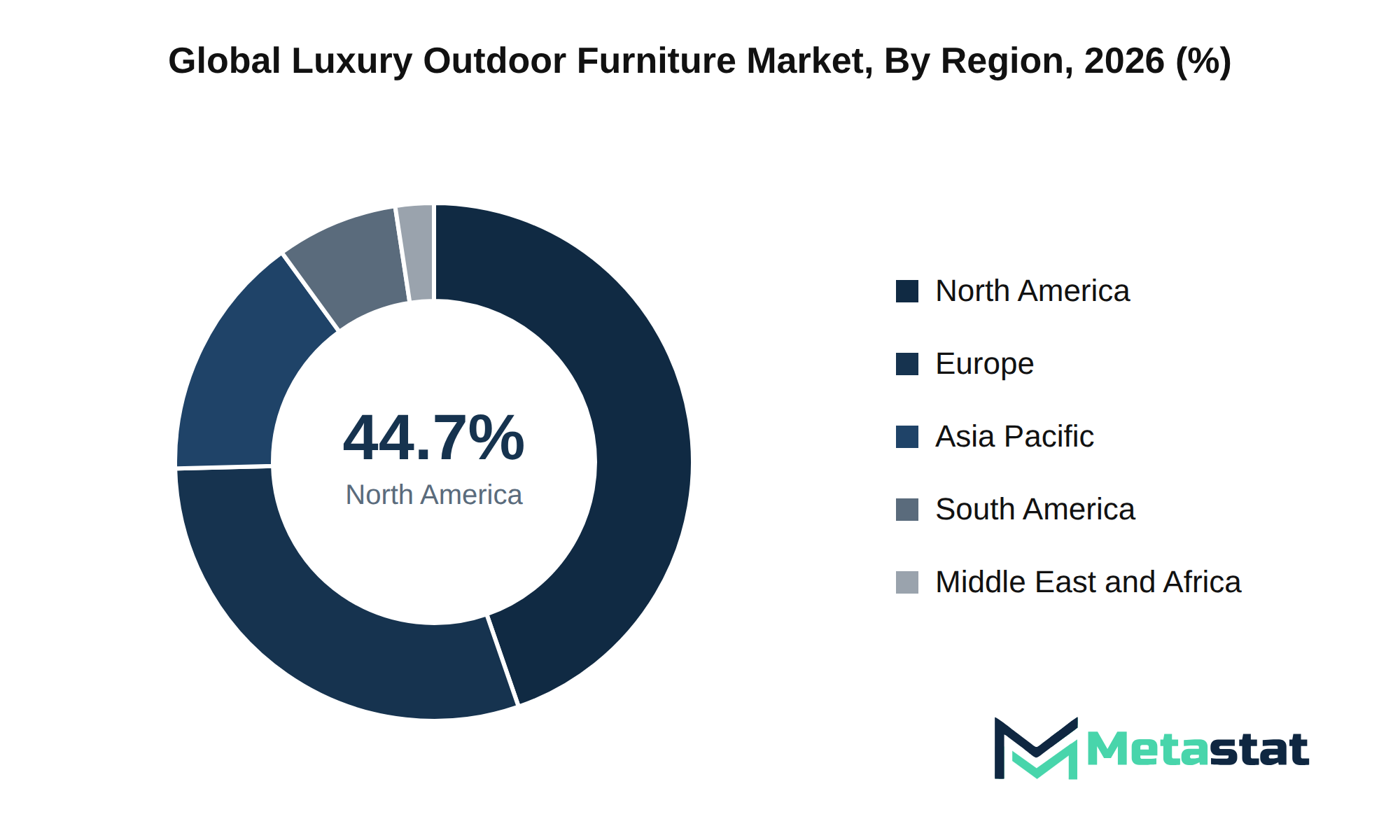
The Luxury Outdoor Furniture market in North America exhibits strong growth, driven by increased consumer interest in outdoor living spaces and premium lifestyle choices. The market is projected to expand at a CAGR of 3.6% within the forecast period, reaching a market size of USD 1,089.5 million by the end of 2033. Countries including the United States, Canada, and Mexico play important roles in shaping the market dynamics, with several market participants contributing to the overall market in 2025.
Consumer preferences in North America lean towards high-quality, durable outdoor furniture that complements upscale residential and commercial spaces. The influence of environmental considerations has resulted in a growing demand for sustainable materials and designs, further enhancing market potential. Emerging trends in outdoor hospitality and residential design stimulate the segment's growth and encourage investment in innovative products.
The market demonstrates significant potential for product diversification, particularly in the Sofas & Seatings and Chairs & Stools segments. With rising disposable incomes, households increasingly prioritize outdoor aesthetics, contributing to higher spending on luxury outdoor furnishings. The focus on enhancing outdoor experiences in the hospitality industry drives demand for tailored solutions, including custom designs and integrated outdoor living spaces.
Regional investments in infrastructure modernization and local manufacturing capabilities strengthen the supply chain, particularly in the United States. Increased focus on localized procurement dynamics helps to capitalize on consumer preferences for domestic products, building trust and brand loyalty. The competitive landscape features a mix of established players and emerging brands, resulting in a dynamic environment ripe for innovation and market penetration.
The Luxury Outdoor Furniture market in Europe accounts for 29.9% in 2025. This region demonstrates strong demand driven by an increasing focus on outdoor living spaces among consumers. The growing trend of outdoor entertainment and leisure activities influences buying behaviors, particularly in countries like Germany, France, and the UK.
High-value replacement cycles for luxury outdoor furniture stimulate market growth. Consumers prioritize durability, aesthetics, and functionality, leading to consistent demand for premium products. The segment for Sofas and Seatings experiences promising growth, fueled by the rise in outdoor hospitality venues and private households enhancing their outdoor spaces.
European countries exhibit diverse procurement dynamics shaped by cultural preferences. For instance, Italy and Spain have distinct tastes for design and craftsmanship, emphasizing local manufacturing capabilities. The competitive landscape includes prominent players focused on innovation and sustainability, which enhances their market positioning.
Infrastructure modernization and localized manufacturing densities contribute to the region's growth. Increased foreign direct investment flows strengthen the supply chain and enable rapid response to changing consumer preferences. This regional focus on sustainability and quality aligns with broader market trends, encouraging investment in luxury outdoor furniture.
The Luxury Outdoor Furniture market in Europe is poised for steady growth driven by cultural influences, infrastructure enhancements, and evolving consumer preferences. The focus on outdoor living continues to shape the competitive landscape, positioning the region because a key player in the global market.
The Luxury Outdoor Furniture market in the Asia-Pacific region presents significant potential due to increasing disposable incomes and evolving consumer preferences for high-quality outdoor living spaces. Countries including China, Japan, and India exhibit robust demand driven by urbanization and a growing middle class that seeks luxury products for outdoor environments. Modern residential designs increasingly incorporate outdoor furniture, further fueling market growth.
Emerging markets within Southeast Asia and Australia highlight a rising trend towards outdoor living, with consumers investing in premium furniture to enhance their outdoor experiences. Regional players are tapping into this demand by offering a diverse range of products tailored to local preferences, thereby driving segment expansion. The combination of evolving lifestyles and a focus on outdoor leisure creates a favorable environment for growth in the market.
Infrastructure modernization and localized manufacturing capabilities strengthen the market's foundation. Countries including South Korea invest in innovative production technologies to meet the rising demand for luxury outdoor furniture. This approach enhances product availability and reduces lead times, positioning manufacturers favorably against global competitors.
With a market share of 15.4% in 2025, the Asia-Pacific region reflects a growing trend towards outdoor living. The competitive landscape features numerous domestic and international players, each vying for market share through strategic collaborations and marketing initiatives. Consumer awareness regarding the benefits of high-quality outdoor furniture is increasing, and the market is projected to experience sustained demand and revenue growth.
The Luxury Outdoor Furniture market in South America demonstrates significant potential for growth, driven primarily by increasing disposable income among consumers. Brazil and Argentina emerge because frontrunners in this region, with a rising trend toward outdoor living spaces and luxurious outdoor furnishings. The demand for high-quality outdoor furniture is expected to intensify.
Investments in infrastructure modernization and improved retail environments contribute to the market's expansion. The growth of e-commerce platforms further facilitates access to luxury outdoor furniture, enabling customers to explore diverse product offerings. Cultural appreciation for outdoor gatherings and leisure activities enhances the appeal of luxury outdoor products.
Local compliance mandates and regulatory frameworks play crucial roles in shaping market dynamics. Domestic market leaders focus on meeting these regulations while addressing consumer preferences for sustainable and eco-friendly materials. This focus aligns with growing environmental consciousness among consumers and supports the broader adoption of luxury outdoor furniture across the region.
The Luxury Outdoor Furniture market in South America reflects a blend of cultural appreciation, economic growth, and infrastructure development, positioning it for substantial expansion in the coming years.
The Luxury Outdoor Furniture market in the Middle East and Africa presents unique dynamics influenced by local cultural preferences and economic conditions. The region's market share stands at 2.4% in 2025, reflecting a growing interest in outdoor living spaces. Increasing disposable incomes in countries including Saudi Arabia and the UAE contribute to rising demand for high-quality outdoor furniture.
Infrastructure modernization enhances market expansion. Urban development projects across the region improve public spaces and private residences, promoting the adoption of luxury outdoor furniture. The hospitality sector, particularly in South Africa, actively seeks to upgrade outdoor amenities to attract tourists and enhance guest experiences.
Emerging market front-runners in luxury outdoor furniture include high-end retailers and local manufacturers that emphasize craftsmanship and sustainability. Regional trade policies and localized manufacturing initiatives support the reduction of import costs, making luxury outdoor furniture more accessible to consumers.
Geopolitical factors influence market dynamics, with ongoing investment in the region attracting foreign brands and encouraging local partnerships. Cultural nuances shape buying behaviors, with consumers increasingly seeking outdoor solutions that reflect personal style and enhance leisure experiences. While the market evolves, competitive strategies focus on quality, customization, and superior service to capture consumer interest.
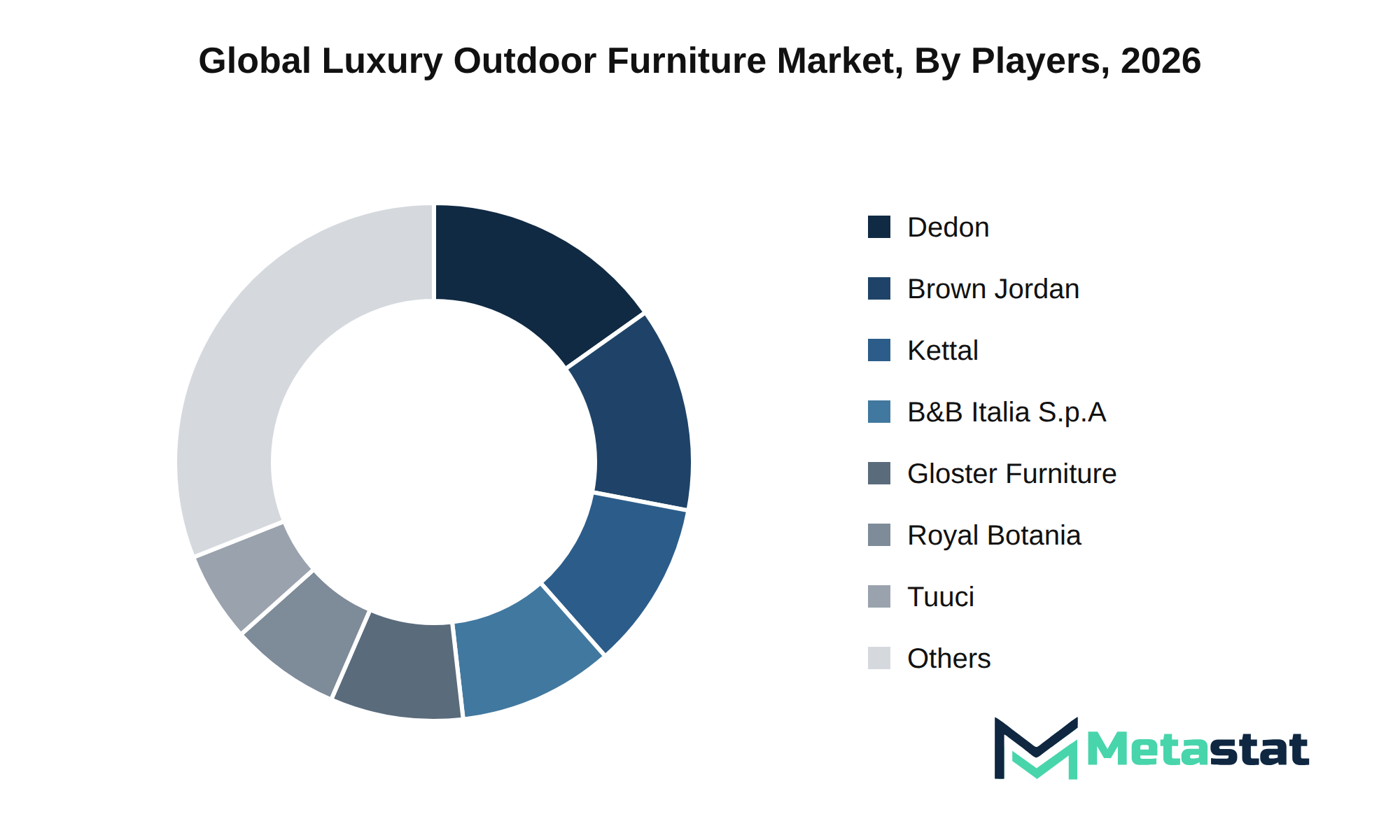
The Luxury Outdoor Furniture market experiences notable activity among key players focusing on strategic consolidation and collaboration. Companies including Brown Jordan, Dedon, and Royal Botania engage in joint ventures, enhancing their market presence and product offerings while leveraging their respective strengths. Partnerships within the sector facilitate access to innovative designs and materials, thus driving differentiation in a competitive environment.
Pricing strategies play a crucial role in shaping market dynamics. Firms like Kettal and Tuuci adopt competitive pricing models while emphasizing premium quality and design, appealing to both luxury consumers and commercial entities. The emphasis on customer retention strategies, including loyalty programs and personalized services, enhances brand equity and strengthens long-term relationships with clients.
The landscape demonstrates a healthy balance between established players and emerging startups. New entrants introduce innovative concepts and sustainable materials, challenging traditional players to adapt. Investment in research and development among companies including Sika Design and B&B Italia supports technological advancements, ensuring a robust response to evolving consumer preferences within the Luxury Outdoor Furniture market.
Market size is forecast to rise from USD 2,010.6 million in 2025 to over USD 2,668.9 million by 2033. The base case presents a growth trajectory from USD 2,010.6 million in 2025 to USD 2,668.9 million by 2033 at a 3.6% CAGR. In a bullish scenario, increased consumer spending and heightened interest in outdoor living spaces accelerate growth, pushing revenues above initial forecasts. Conversely, in a bearish case, economic downturns and rising material costs could suppress demand, leading to slower market expansion.
Macroeconomic factors significantly influence demand dynamics. Inflationary pressures and fluctuating interest rates affect consumer purchasing behavior, with high inflation potentially constraining household budgets and spending on luxury items. In addition, evolving consumer preferences towards sustainable products drive manufacturers to innovate, impacting production cycles and associated costs. New technologies enabling more efficient production processes and product customization are set to reshape market offerings in the luxury outdoor furniture market.
Investment in R&D plays a critical role in introducing next-generation materials and designs. Companies focusing on sustainable materials or multifunctional products are likely to secure a competitive advantage. Regulatory developments surrounding environmental sustainability will require compliance from manufacturers, potentially leading to increased operational costs in the short term but stimulating innovation in the long run.
Geopolitical shifts and changes in trade policies could impact supply chain dynamics. Companies adapt sourcing strategies and logistics to mitigate risks associated with trade tariffs or disruptions. Such adjustments could impact pricing structures and availability of materials, influencing overall market stability.
Strategic capital allocation and infrastructure commitments are essential for future growth. Companies investing in advanced manufacturing technologies and expanding distribution networks will enhance their market presence. Identifying high-growth pockets, particularly in emerging markets or through new distribution channels, presents opportunities for revenue generation. The luxury outdoor furniture market stands poised for growth driven by evolving consumer preferences towards more outdoor engagement and premium-quality offerings.
The report strategically identifies and profiles the key market players and analyses their core competencies in each sub-segment of the Luxury Outdoor Furniture market.
|
Report Attributes |
Details |
|
Study Period |
2021-2033 |
|
Base Year |
2025 |
|
Estimated Year |
2026 |
|
Forecast Period |
2026-2033 |
|
Historical Period |
2021-2025 |
|
Growth Rate |
CAGR 3.6% from 2026 to 2033 |
|
Revenue Unit |
USD million |
|
Segmentation |
By Product Type, Material, End-User, Distribution Channel, and Region |
|
By Region |
North America (By Product Type, Material, End-User, Distribution Channel, and Country)
|
|
Europe (By Product Type, Material, End-User, Distribution Channel, and Country)
|
|
|
Asia Pacific (By Product Type, Material, End-User, Distribution Channel, and Country)
|
|
|
South America (By Product Type, Material, End-User, Distribution Channel, and Country)
|
|
|
Middle East and Africa (By Product Type, Material, End-User, Distribution Channel, and Country)
|
Find answers to common questions about this report
The Luxury Outdoor Furniture market size was valued at USD 2,010.6 million in 2025.
The Luxury Outdoor Furniture market is projected to grow at a CAGR of 3.6% during the forecast period from 2026 to 2033.
The North America Luxury Outdoor Furniture market size is estimated to reach USD 1,089.5 million by 2033.
The segment "Sofas & Seatings" leads the Luxury Outdoor Furniture market with a value of USD 795.6 million in 2026. This segment represents the largest share compared to other product types.
Key drivers for the Luxury Outdoor Furniture market include increased consumer spending on outdoor living spaces and heightened demand for high-quality, aesthetically pleasing furniture. Factors including rising disposable income among affluent consumers and lifestyle changes emphasizing outdoor relaxation and socialization further support market growth.
The Luxury Outdoor Furniture market faces challenges from regulatory compliance and inflationary pressures. Tightened regulations increase operational costs for manufacturers, while inflation raises raw material and labor costs, leading to cautious consumer spending and impacting demand across various market segments.
Increased consumer spending on outdoor living spaces and a growing emphasis on creating inviting environments drive product adoption in the Luxury Outdoor Furniture market. Affluent consumers prioritize high-quality, aesthetically pleasing outdoor furniture, supported by rising disposable incomes and lifestyle changes that favor outdoor relaxation and entertainment.
The Luxury Outdoor Furniture market is estimated to reach a valuation of USD 2,668.9 million by 2033.
Luxury brands offer ten-to-fifteen-year structural frame guarantees, alongside dedicated restoration, seasonal fabric cleaning, and replacement part programs. Mid-market competitors typically provide limited one-to-three-year warranties without specialized after-sales refurbishment or fabric replacement services.
The Middle East, particularly the United Arab Emirates and Saudi Arabia, alongside Asia-Pacific coastal hubs, drives accelerated spending. Sustained investments in prime residential waterfronts, ultra-luxury private villas, and high-profile hospitality developments underpin this regional demand.
Standard lead times for custom luxury exterior orders range from 12 to 24 weeks. Customization options include bespoke RAL frame colors, non-standard modular lengths, specialized stone table tops, and private textile upholstery selections tailored to specific landscape designs.
Luxury exterior design now demands indoor-level comfort paired with technical sophistication. Modern buyers evaluate luxury through circular sustainability credentials, zero-maintenance guarantees, integrated heating and smart lighting, and unified indoor-outdoor architectural flow rather than decorative aesthetics alone.
Sustainably harvested FSC-certified teak and marine-grade 316 stainless steel command the highest price points. Precision-cast bronzes and artisanal, hand-woven synthetic ropes also carry superior profit margins due to high raw material costs and skilled manual assembly requirements.
Minotti, B&B Italia Outdoor, Dedon, Exteta, and Paola Lenti lead this segment. They command price premiums through proprietary weatherproofing technologies, iconic architectural collaborations, handcrafted joinery, and custom textile systems that bridge indoor aesthetics with marine-grade outdoor resilience.
Trade professionals, including interior designers, architects, and procurement agents, represent approximately 60 to 70 percent of ultra-luxury outdoor furniture sales. Direct-to-consumer retail accounts for the remaining 30 to 40 percent, led primarily by high-end vertically integrated showroom operators.
Hospitality buyers prioritize commercial-grade structural testing, low maintenance, rapid fabric drying, and stackability. While residential consumers focus on bespoke comfort and delicate natural materials, commercial specifiers demand UV-stable, high-density polyethylene, powder-coated aluminum, and heavy-duty Batyline mesh engineered to withstand intensive guest turnover.
The analysts below cover Consumer Goods research at Metastat Insights.
LEAD ANALYST
Utkarsh Khirodkar is a Lead Market Research Analyst at MetaStat Insight, specializing in market intelligence, technology sector assessments, and competitive strategy.
Last Updated: October, 2026
In the biological seed treatment space, registration timelines vary drastically between the European Union, Brazil, and North America. The MetaStat Insight research handled these cross-border regulatory barriers with genuine nuance, mapping commercialization pathways alongside historical field adoption rates. The segmentation between microbial strains and biochemical active ingredients was particularly well structured.
Our team was tracking whether regional recycling infrastructure could realistically absorb the growing volume of lithium iron phosphate batteries over the next decade. The report did a solid job separating announced hydrometallurgical plant capacity from active, permitted operational throughput. That distinction made the feedstock availability projections and regional recovery rate models far more credible than standard commercial overviews.
Tracking capacity expansion in single-use bioprocessing requires dependable data on raw material availability and cleanroom-grade polymer supply chains. The competitive landscape chapter gave a grounded evaluation of secondary component suppliers across North America and Asia-Pacific rather than simply reprinting press releases. Having that level of supplier benchmarking helped clarify dual-sourcing considerations for our clinical pipeline planning.
Explore related market intelligence reports worth reading alongside this one.