
LEAD ANALYST
Utkarsh Khirodkar is a Lead Market Research Analyst at MetaStat Insight, specializing in market intelligence, technology sector assessments, and competitive strategy.

Global Medical Thermoplastic Polyurethane Elastomer Market Size, Share, By Type (Polyester-based TPU, Polyether-based TPU and Hybrid TPU), By Application (Medical Devices, Coatings, Adhesives, Films and Other Applications), By End User (Hospitals, Clinics, Research Laboratories, Home Care and Other End Users), Industry Analysis, Growth, Trends, and Forecast, 2026-2033
Report ID
MSI-4548
Published
October, 2026
Pages
274 Pages
Format
Historical
Base year
Forecast
Forecast period
Report Details
Market Valuation: Valued at $1,346.4 Million in 2025, projected to reach $2,645.9 Million by 2033 at a 8.9% CAGR.
Dominant Segment: The medical devices segment leads the market, driven by increasing investment in healthcare technologies and a focus on innovative solutions that enhance patient safety and comfort.
Geographic Lead: Asia Pacific holds the largest market share at 39.1%, fueled by rapid economic growth and expanding healthcare access, positioning it as a key region for market expansion.
What's Inside: The report provides a comprehensive analysis of market dynamics, competitive landscape, and detailed forecasts across various segments, including types, applications, and end users.
Growth Drivers: Rising healthcare expenditure and the increasing prevalence of chronic diseases are significant factors driving the demand for medical thermoplastic polyurethane elastomers in advanced medical applications.
Choose Your License
Global Medical Thermoplastic Polyurethane Elastomer Market
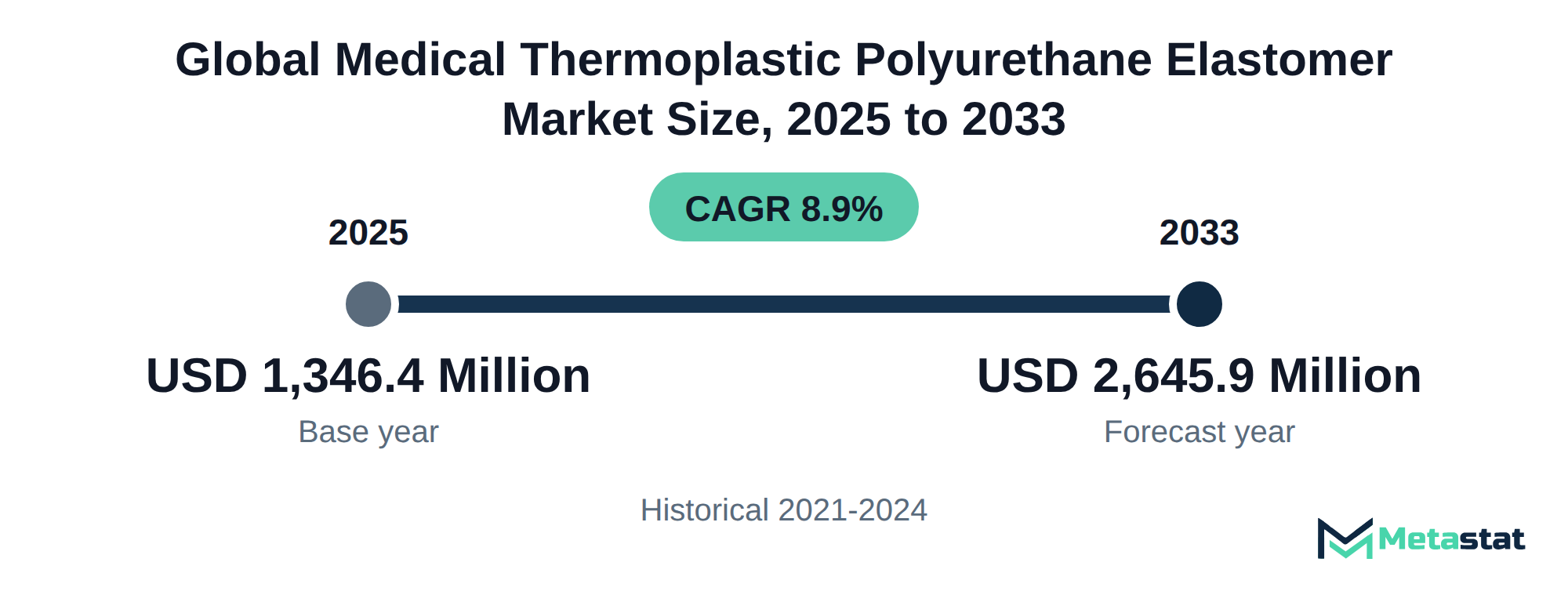
The global Medical Thermoplastic Polyurethane Elastomer market was valued at USD 1,346.4 million in 2025 and is projected to reach USD 2,645.9 million by 2033, growing at a CAGR of 8.9% over the forecast period.
The Medical Thermoplastic Polyurethane Elastomer market includes a variety of products designed for applications in healthcare, particularly in medical devices, coatings, adhesives, and films. Buyers invest in this market due to increasing demand for high-performance materials that provide superior durability, flexibility, and biocompatibility in medical applications. The versatility of thermoplastic polyurethane elastomers enables their use across a wide range of medical products, contributing to enhanced patient outcomes and operational efficiency in healthcare facilities.
Growth in the market is driven by rising demand for advanced medical devices, especially in hospitals and clinics. Among the different segments, medical devices represent the largest value share, reflecting ongoing innovation and expansion of healthcare technologies. North America holds 29.2% of the market in 2025, with the US leading in 2026. This regional dominance results from significant investments in healthcare infrastructure and a strong emphasis on research and development in the medical sector.
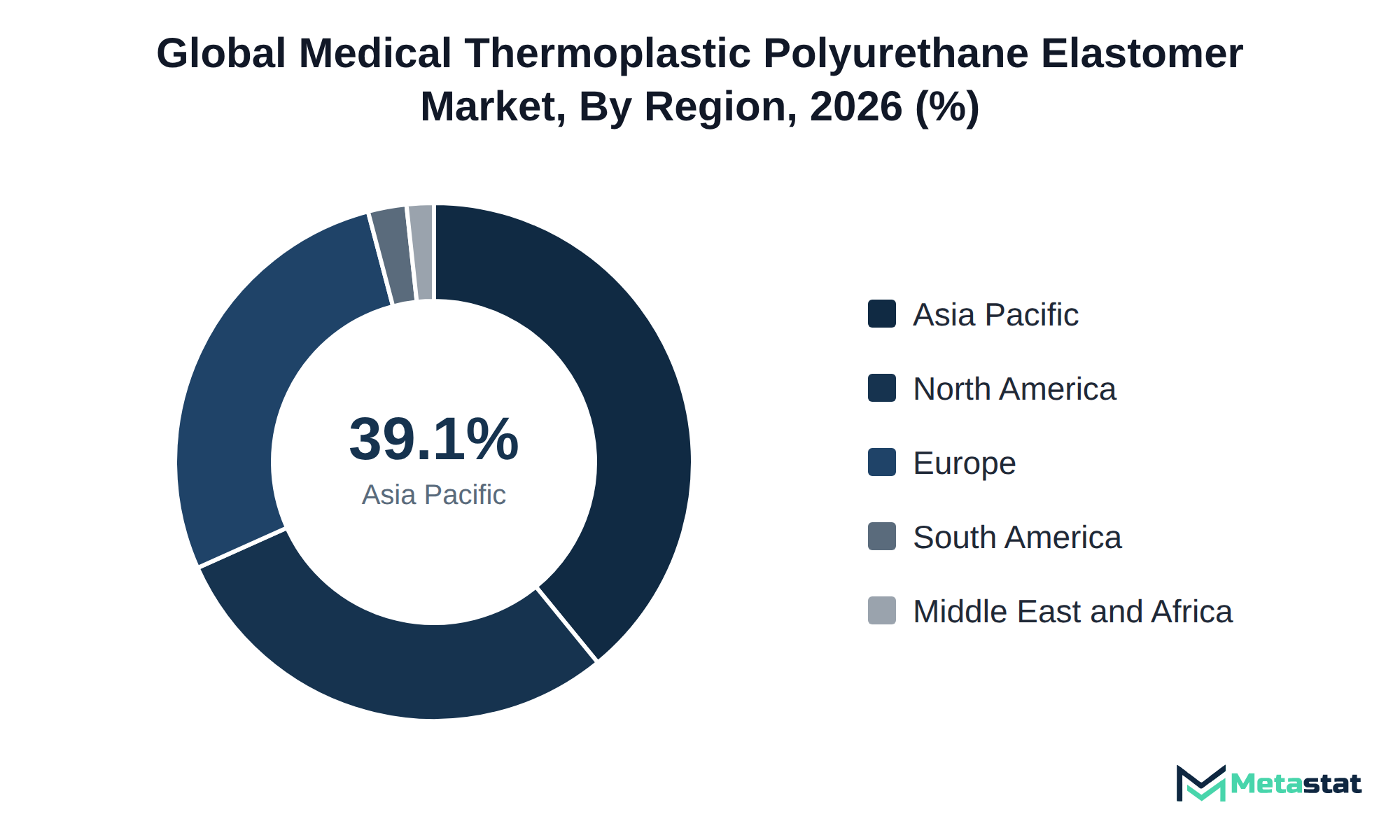
The market is projected to experience growth, driven primarily by the increasing prevalence of chronic diseases and the corresponding need for effective medical treatments. The Asia Pacific region stands out with the largest market share at 39.1%, thanks to rapid economic development and expanding healthcare access. These factors contribute to a favorable environment for the adoption of medical thermoplastic polyurethane elastomers across various applications.
The market encompasses a broad range of applications, significantly influencing spending patterns among healthcare providers. Buyers invest in medical thermoplastic polyurethane elastomer solutions primarily due to increasing demand for high-performance materials that enhance the safety and efficiency of medical devices. These products facilitate advancements in healthcare technology, offering properties including biocompatibility, durability, and flexibility, essential for various medical applications.
Growth within the market is primarily driven by rising adoption of medical devices. The medical devices segment represents the largest share, expected to reach USD 1,578.6 million by 2033, reflecting an increasing focus on innovative healthcare solutions. North America holds 29.2% of the market in 2025, with the US leading in 2026, highlighting the region's important role in driving demand for advanced healthcare materials.
Increased investment in research and development further supports growth within the medical thermoplastic polyurethane elastomer market. Suppliers focus on enhancing their product offerings to cater to the evolving needs of healthcare professionals. This emphasis on innovation ensures that the market remains competitive and responsive to emerging trends and technologies in the medical field.
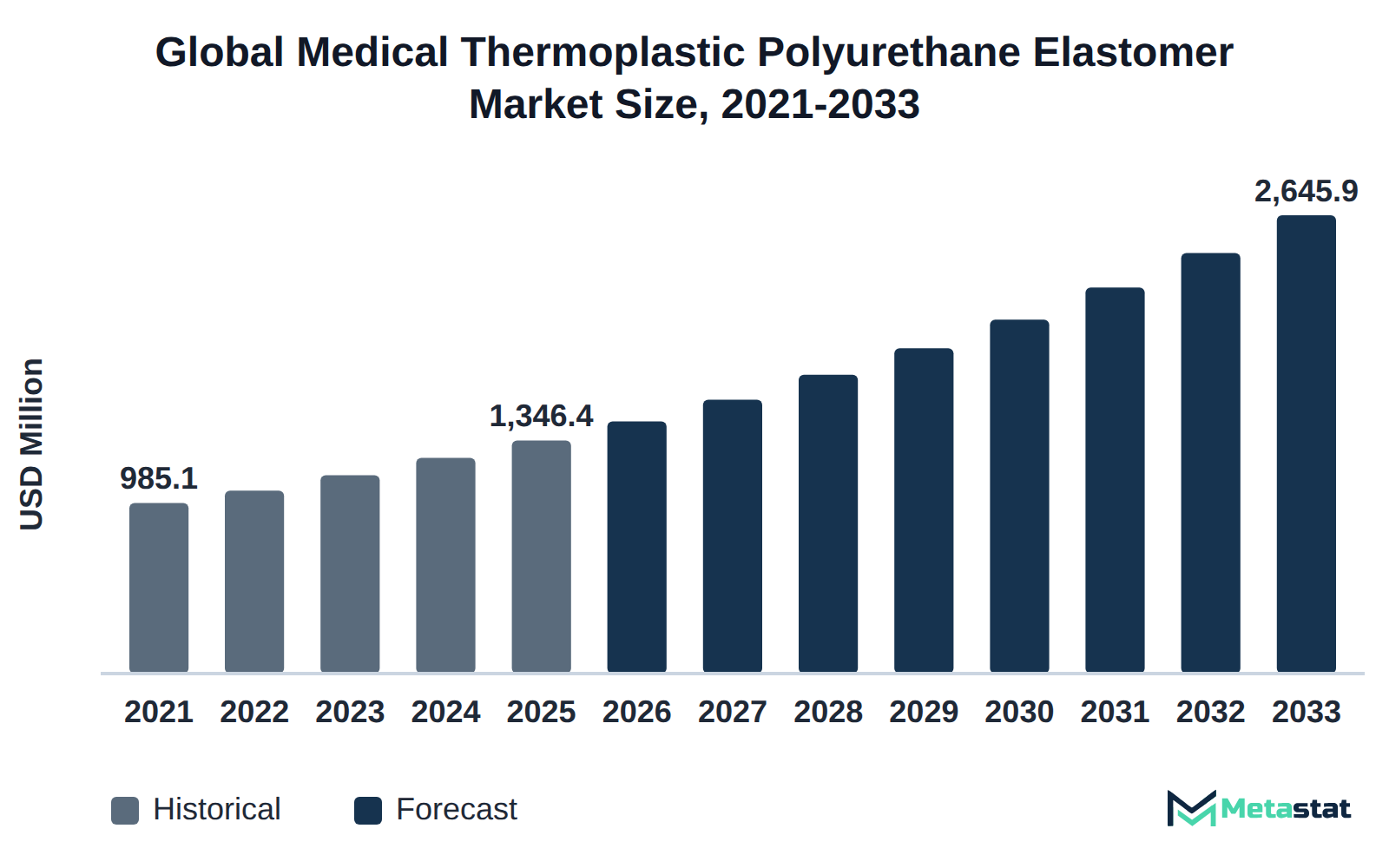
Medical thermoplastic polyurethane elastomer formulations demonstrate significant advantages for applications including thin-wall catheters and kink-resistant tubing. These specialized materials exhibit properties that enhance flexibility, strength, and biocompatibility, which are critical in medical applications. The market for medical devices is projected to reach USD 1,578.6 million by 2033, highlighting the growing need for advanced materials that improve patient outcomes and device performance.
Polyether-based TPU, with a projected value of USD 1,190.1 million by 2033, features low density and high elasticity, making it ideal for thin-wall catheters that require minimal weight without compromising strength. This formulation allows for more comfortable patient experiences and easier handling for healthcare professionals. Kink-resistant tubing benefits from these same properties, ensuring reliable performance during use.
The growing focus on patient-centric design in the medical thermoplastic polyurethane elastomer market drives manufacturers to invest in innovative formulations that meet stringent regulatory standards. Improved material properties lead to enhanced product performance, reducing the risk of device failure and increasing adoption rates among healthcare providers.
Selecting the appropriate grade of Medical Thermoplastic Polyurethane Elastomer requires careful consideration of both sterilization compatibility and biocompatibility. With a projected market value of USD 1,455.4 million in 2026, a focus on these attributes becomes crucial for buyers seeking to ensure product safety and efficacy in medical applications. Grades that exhibit excellent sterilization compatibility, including Polyester-based TPU, serve critical roles in various medical device applications.
Biocompatibility is a key factor in determining the suitability of TPU grades for medical use. The presence of stringent regulatory standards influences purchasing decisions, with manufacturers providing extensive documentation proving the biocompatibility of their chosen materials. The Medical Thermoplastic Polyurethane Elastomer market's shift towards higher-grade materials reflects increasing demand for products that maintain integrity during sterilization processes, thus supporting their use in long-term medical applications.
Understanding these essential criteria aids buyers in making informed decisions and positions suppliers to enhance their offerings, facilitating increased market penetration and revenue growth.
Medical device original equipment manufacturers (OEMs) face unique challenges in securing a reliable supply of medical-grade thermoplastic polyurethane (TPU). Pricing volatility significantly impacts production costs and profitability. In 2025, the market valuation for medical-grade TPU reached USD 1,346.4 million, and projections for 2033 indicate anticipated growth to USD 2,645.9 million, reflecting a compound annual growth rate (CAGR) of 8.9%. This growth presents both opportunities and challenges for OEMs.
Particularly within the medical devices application segment, where the forecasted market value will rise from USD 866.3 million in 2026 to USD 1,578.6 million by 2033, device manufacturers navigate fluctuating raw material costs and supply chain uncertainties. The increasing demand for advanced medical devices pushes OEMs to secure sustainable and cost-effective sources of TPU. The challenge lies in balancing quality and affordability, which directly influences the ability to deliver competitive products in a fast-evolving market.
Understanding the pricing landscape and ensuring supply security will play crucial roles for OEMs in the medical thermoplastic polyurethane elastomer market. Manufacturers that successfully manage these factors enhance their competitive advantage and strengthen their market position.
Medical Thermoplastic Polyurethane Elastomer offers distinct advantages over silicone and PVC, particularly in applications including medical devices. The market for medical TPU is projected to reach USD 1,578.6 million by 2033, demonstrating a significant growth trajectory. This growth stems from TPU's superior properties, including flexibility, durability, and biocompatibility, which enhance its performance in healthcare applications.
In comparison, silicone exhibits good biocompatibility but lacks the mechanical strength and tear resistance of TPU. PVC, while cost-effective, poses limitations related to plasticizers that leach out over time, raising safety concerns in medical applications. The growing preference for safer, high-performance materials in medical devices drives significant demand for TPU alternatives. Manufacturers experience increased adoption rates for medical TPU, reinforcing its position in the market.
The emphasis on patient safety and product efficacy shapes the landscape of the Medical Thermoplastic Polyurethane Elastomer market, creating opportunities for innovation and investment in advanced medical applications. This trend highlights the expanding role of TPU in medical technology, effectively positioning it against traditional materials like silicone and PVC.
Rising healthcare expenditure significantly influences spending patterns among hospitals and clinics, driving investment in advanced medical technologies. This trend results from heightened awareness regarding patient care and improved treatment options. Increased budgets facilitate the adoption of innovative materials, including Medical Thermoplastic Polyurethane Elastomer, which offers superior performance and versatility in medical devices. Anticipated growth in the hospital segment, projected to reach USD 1,336.8 million by 2033, reflects strong demand for high-quality materials that enhance patient outcomes. Hospitals and clinics prioritize efficiency and effectiveness, and the market expands rapidly, supported by ongoing investments in medical technologies.
The growing emphasis on patient-centric care encourages healthcare providers to explore advanced materials that improve device functionality and patient comfort. This shift in focus exemplifies the evolving landscape within healthcare, stimulating further demand for Medical Thermoplastic Polyurethane Elastomer across various applications.
Technological advancements in production processes significantly influence the Medical Thermoplastic Polyurethane Elastomer market. Suppliers increasingly adopt new manufacturing techniques that enhance efficiency, resulting in lower production costs. These innovations allow manufacturers to provide high-quality products at competitive prices, attracting more buyers, particularly within healthcare applications. Hospitals and clinics benefit from reduced material costs, enabling investment in advanced medical devices and equipment. The growing focus on sustainability encourages suppliers to develop eco-friendly manufacturing practices, aligning with the rising demand for environmentally responsible products. Consequently, these suppliers strengthen their market position while meeting the evolving preferences of healthcare providers. The adoption of innovative materials and production methods is expected to drive market growth, offering significant opportunities for suppliers and enhancing the overall value proposition of Medical Thermoplastic Polyurethane Elastomer products.
Price sensitivity among healthcare providers impacts the Medical Thermoplastic Polyurethane Elastomer market. Increased costs associated with medical-grade materials lead to smaller order sizes from hospitals and clinics, particularly when budget constraints tighten. This situation often results in delayed equipment replacements, hindering the adoption of advanced medical technologies. The higher initial investment required for these elastomers deters clinics that prioritize cost-effective solutions in their procurement strategies. The emphasis on maintaining operational budgets affects purchasing decisions, particularly in regions with limited healthcare funding. Price fluctuations in raw materials further complicate the situation, emphasizing the need for predictable pricing models. Consequently, these factors create a challenging environment for suppliers seeking to expand their share in the market, limiting overall growth potential.
Rising material costs pose significant challenges for suppliers in the Medical Thermoplastic Polyurethane Elastomer market. Fluctuations in raw material prices drive up production expenses, impacting overall profitability. These rising costs particularly affect small to medium-sized enterprises, which lack the financial buffers of larger corporations. The increasing demand for sustainable materials intensifies competition for high-quality inputs, driving prices even higher. Suppliers respond by seeking more efficient production methods and investing in alternative raw materials to mitigate cost impacts. Many explore collaborative relationships with raw material providers to ensure stable pricing agreements, while others enhance their product lines to include more cost-effective options. These strategies aim to balance quality and affordability in a highly competitive market environment. Ultimately, responses to cost pressures will shape supplier strategies and influence market dynamics in the coming years.
Rapid growth in the medical devices segment highlights a significant opportunity within the Medical Thermoplastic Polyurethane Elastomer market. This segment is projected to expand from USD 866.3 million in 2026 to USD 1,578.6 million by 2033, reflecting a compound annual growth rate (CAGR) of 8.9%. The rising prevalence of chronic diseases and the increasing requirement for advanced healthcare solutions drive this demand. Hospitals and clinics exhibit a strong focus on adopting innovative medical technologies, further supporting this growth. The shift towards minimally invasive procedures necessitates the use of advanced materials like thermoplastic polyurethane elastomers, enhancing performance and patient outcomes. Manufacturers that pivot towards producing specialized formulations for medical devices effectively tap into this growing market segment while addressing the evolving needs of healthcare providers and patients.
The Global Medical Thermoplastic Polyurethane Elastomer market is segmented based on Type, Application, and End User.
Valued at USD 655 million in 2026, this segment is projected to reach USD 1,137.4 million by 2033, at a CAGR of 8.2% during the forecast period. Polyester-based TPU finds extensive applications in medical devices, providing essential properties including flexibility and durability that cater to the requirements of hospitals and clinics. The segment experiences strong demand driven by advancements in medical technology and increasing healthcare investments, which promote the adoption of innovative medical devices. In comparison to polyether-based TPU, which is anticipated to grow at a CAGR of 9.2%, polyester-based TPU exhibits slightly slower growth due to its specific applications and cost structure. The unique material properties of polyester-based TPU enable it to meet stringent requirements in medical applications, thereby distinguishing it from other TPU types in the market.
Polyether-based TPU segment is estimated to reach USD 1,190.1 million by 2033, at a CAGR of 9.2% during the forecast period. This segment finds extensive use in medical devices, which require flexibility, durability, and biocompatibility. Healthcare providers and device manufacturers drive demand for Polyether-based TPU due to its superior performance characteristics compared to other TPU types. Key applications include components for catheters, surgical instruments, and various medical devices. The growth rate of this segment outpaces that of polyester-based TPU, which has a CAGR of 8.2%. Increasing adoption of advanced medical technologies and devices significantly supports growth, reflecting a broad trend towards improved patient care and treatment. In contrast to other segments, Polyether-based TPU provides enhanced resistance to hydrolysis and chemical exposure, making it particularly suitable for challenging medical environments.
Hybrid TPU segment is expected to reach USD 318.3 million by 2033. This segment finds application in various medical devices, catering primarily to hospitals and clinics. The increasing demand for biocompatible and flexible materials drives growth, with the segment exhibiting a compound annual growth rate (CAGR) of 9.5%. Compared to polyester-based and polyether-based TPUs, hybrid TPU offers distinct characteristics, including enhanced mechanical properties and processing flexibility. Hospitals and clinics prioritize hybrid TPU for its suitability in diverse medical devices, contributing to its rising adoption. In contrast, polyester-based TPU is projected to reach USD 1,137.4 million by 2033, growing at a CAGR of 8.2%, indicating a relatively slower growth trajectory. Competition between these segments influences pricing dynamics, impacting overall market performance.
Applications include the manufacture of various medical devices by hospitals, clinics, and research laboratories. Growth in this segment stems from increased investment in healthcare technologies and rising demand for innovative medical solutions. The segment shows a stronger growth trajectory compared to coatings and adhesives, which experience slower growth rates. A significant driver is the heightened focus on patient safety and comfort, prompting manufacturers to adopt advanced materials that enhance product performance. Regulatory compliance for medical devices requires adherence to stringent standards, influencing product development strategies. Such dynamics establish the medical devices segment as a critical area for investment and innovation, reflecting trends within the Medical Thermoplastic Polyurethane Elastomer market.
Coatings segment is estimated to reach USD 147.1 million by 2033, at a CAGR of 7.5% during the forecast period. This segment finds significant applications in the healthcare sector, particularly for protective layers on medical devices and equipment. Hospitals and clinics frequently use coatings to enhance the durability and performance of their tools. The market experiences growth driven by increasing demand for protective coatings that provide chemical resistance and durability, essential for healthcare applications. Compared to other segments, the coatings segment has a relatively moderate growth rate, influenced by established usage patterns and competitive pricing dynamics, differentiating it from faster-growing segments like medical devices, which are projected to reach USD 1,578.6 million by 2033 at a CAGR of 8.9%. The coatings segment safeguards medical equipment and devices, contributing to improved performance and longevity.
Adhesives segment is expected to reach USD 119.2 million by 2033. This segment finds application in bonding various materials used in medical devices, favored particularly by hospitals and clinics that require reliable and effective adhesion. The growth of this segment is influenced by the increasing demand for advanced medical technologies, which enhances the need for high-performance adhesives. Compared to other applications, the adhesives segment demonstrates a competitive growth rate, supported by a projected CAGR of 9.5%, making it more responsive to market needs than coatings, which exhibit a slower growth at a CAGR of 7.5%. The emphasis on biocompatibility and regulatory compliance drives innovation in adhesive formulations, ensuring they meet the stringent requirements of the healthcare industry.
Films represent a significant application segment, projected to grow at a CAGR of 9.5% during the forecast period. Primarily used in the production of medical packaging and protective barriers for devices, films serve essential functions in maintaining sterility and product integrity. Demand in this segment arises from hospitals and clinics, which prioritize safety and compliance with regulatory standards. The growth of this segment is driven by the increasing focus on innovative healthcare solutions and the rising need for effective packaging materials. Films exhibit a faster growth trajectory compared to coatings, which achieve a CAGR of 7.5%. This heightened demand for films reflects a broader trend in the market toward advanced materials that enhance performance and reliability in medical applications.
Valued at USD 737.5 million in 2026, this segment is projected to reach USD 1,336.8 million by 2033, at a CAGR of 8.9% during the forecast period. Hospitals employ medical thermoplastic polyurethane elastomer for various applications including medical devices, which require biocompatibility and durability. The growing emphasis on advanced healthcare solutions drives demand in this segment, with hospitals investing in innovative technologies to enhance patient care. Compared to other segments, the hospitals segment experiences significant growth, reflecting increasing expenditures in healthcare and the necessity for high-quality materials. The anticipated growth outpaces segments including coatings, which show a CAGR of 7.5%. Factors including technological advancements in medical device manufacturing play a crucial role in shaping this segment, creating opportunities for suppliers within the market.
Clinics segment is estimated to reach USD 718.1 million by 2033, at a CAGR of 9% during the forecast period. This segment focuses on the provision of medical care through outpatient services, including diagnostics and treatment options. Clinics apply medical thermoplastic polyurethane elastomers for various applications including medical devices and coatings. The increasing demand for outpatient care and minimally invasive procedures drives growth in this segment. Compared to hospitals, clinics operate with lower overhead costs, which influences pricing strategies. The growth rate for clinics differentiates this segment from hospitals, which are projected to expand at a CAGR of 8.9%, highlighting a competitive landscape where clinics are expected to gain market share in the coming years. The market evolution reflects a broader trend toward cost-effective and accessible healthcare options.
The Research Laboratories segment is expected to reach USD 177.6 million by 2033. This segment primarily serves research facilities engaged in biological, chemical, and medical studies, employing materials that provide durability and flexibility in experimental applications. The demand for advanced materials within laboratory environments drives growth in this segment, driven by increasing investments in research and development activities across various scientific fields. Compared to other segments, the Research Laboratories segment exhibits slower growth, reflecting a more niche focus on specialized applications, while the Medical Devices segment experiences more robust expansion with projected growth to USD 1,578.6 million by 2033. Overall, the market benefits from a continuous push for innovation, reinforcing the importance of high-quality materials in research settings.
The Home Care segment is projected to grow at a CAGR of 9.5% during the forecast period. This segment primarily serves individuals requiring in-home medical care, including elderly patients and those with chronic illnesses. Increased demand for personalized healthcare solutions significantly drives growth in this segment. The Home Care segment stands out with a higher growth rate compared to segments like Hospitals and Clinics, driven by the rising preference for home-based care solutions. The ongoing shift towards patient-centered care models highlights the need for flexible and adaptable medical technologies. The market benefits from the trend of aging populations and the desire for cost-efficient healthcare alternatives. These factors collectively enhance the prospects for the Home Care segment, positioning it favorably against other segments in the market.
Based on geography, the Global Medical Thermoplastic Polyurethane Elastomer market is divided into North America, Europe, Asia-Pacific, South America, Middle East, and Africa.
North America is a significant player in the Medical Thermoplastic Polyurethane Elastomer market, with a projected value of USD 753.4 million by the end of 2033. Demand within this region is driven by advanced medical infrastructure and a strong focus on innovative medical devices and healthcare solutions. The United States, Canada, and Mexico feature robust healthcare sectors that prioritize high-quality materials for medical applications. Strong investments in healthcare technologies and a growing aging population further support market expansion. Regulatory frameworks ensuring safety and quality in medical devices promote the adoption of thermoplastic polyurethane elastomers across various applications. The region's market share is 29.2% in 2025, reflecting its critical role in the global market.
Europe accounts for 27.6% of the global Medical Thermoplastic Polyurethane Elastomer market in 2025. Demand arises primarily from the medical devices sector, where innovation and advancements in healthcare technology drive growth. Countries including Germany and France prioritize high-quality materials due to rigorous regulatory standards, impacting purchasing decisions. The region's strong focus on healthcare infrastructure supports the expansion of hospitals and clinics, creating a robust demand for medical-grade materials. The market anticipates further growth, particularly in applications within medical devices, driven by increasing investments in healthcare and rising patient populations.
Asia-Pacific represents 39.1% of the Medical Thermoplastic Polyurethane Elastomer market in 2025. The rapid growth of the medical devices sector within this region is a key driver of demand, supported by an expanding healthcare infrastructure in countries like China, India, and Japan. Increasing investments in healthcare and advancements in medical technology support rising adoption rates of these elastomers. Favorable government policies in several countries, aimed at enhancing healthcare access and quality, further increase market potential. The market is anticipated to experience strong growth, attracting investments and driving innovation in medical applications across Asia-Pacific.
Demand for the Medical Thermoplastic Polyurethane Elastomer market in South America arises from a growing healthcare sector, particularly in Brazil and Argentina. Hospitals and clinics drive significant consumption due to increasing investments in healthcare infrastructure and advanced medical technologies. The region's market share stands at 2.4% of the global total in 2025. Rising awareness of innovative medical devices and applications influences the adoption of thermoplastic polyurethane elastomers among healthcare providers. The market benefits from various healthcare initiatives aimed at enhancing patient care and treatment options. Regional players focus on improving product offerings to meet the specific needs of local healthcare systems, positioning themselves strategically for growth in the coming years. Growth potential in South America presents opportunities for further market expansion.
The Middle East and Africa region accounts for 1.7% of the global Medical Thermoplastic Polyurethane Elastomer market in 2025. Demand stems primarily from hospitals and clinics, driven by increased investments in healthcare infrastructure and a growing focus on advanced medical technologies. Countries including Saudi Arabia and the UAE prioritize healthcare initiatives that enhance service delivery and patient care. South Africa experiences rising demand due to expanding healthcare facilities and research laboratories focusing on innovative medical solutions. Regulatory support aimed at improving healthcare access enhances market growth, encouraging greater adoption of thermoplastic polyurethane elastomers in medical applications.
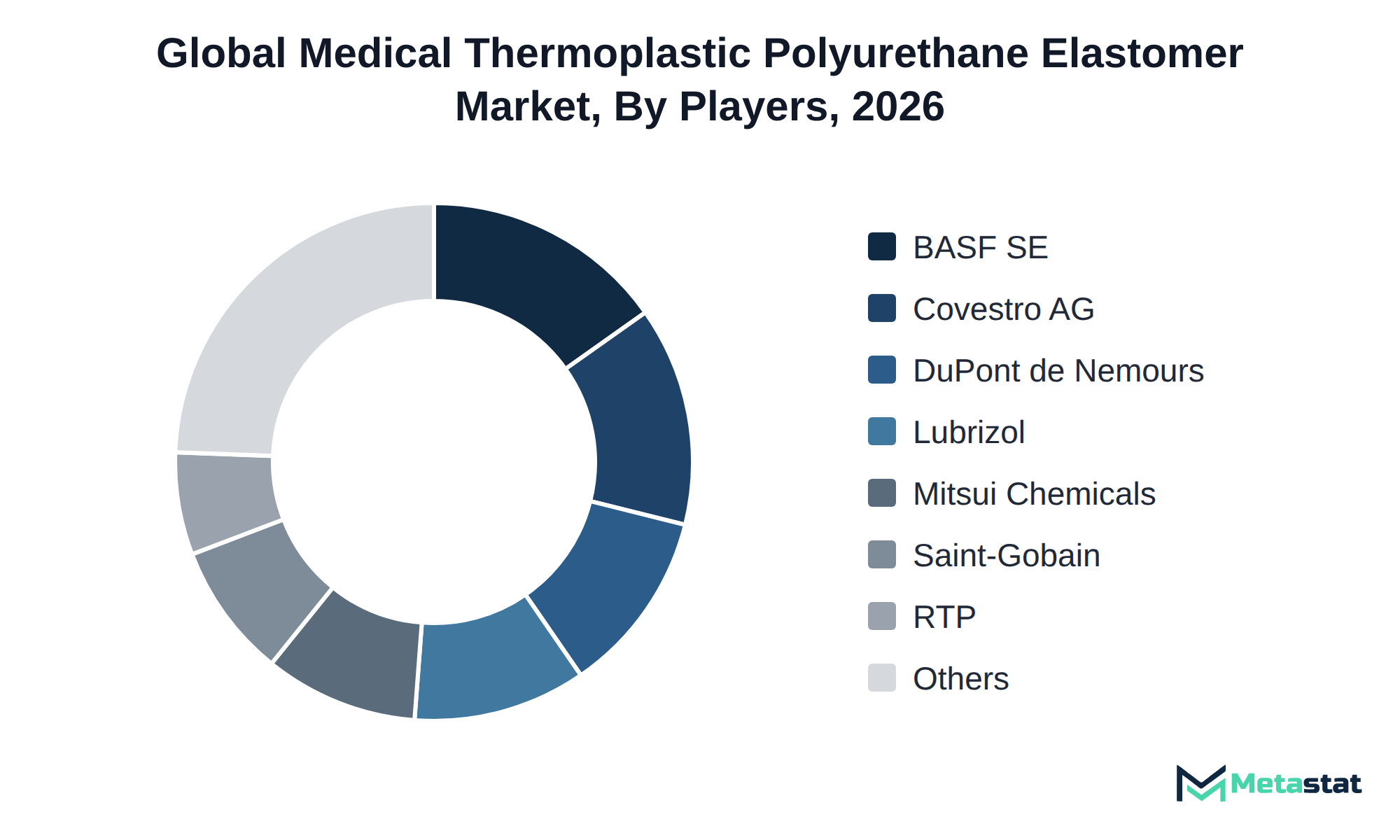
The Medical Thermoplastic Polyurethane Elastomer market features a diverse range of competitors, each specializing in various applications and types of elastomers. Companies differentiate themselves through product offerings, focusing on specific segments including polyester-based, polyether-based, and hybrid thermoplastic polyurethane elastomers. Buyers prioritize factors including price, customization, certification, and overall service when selecting suppliers.
BASF SE emphasizes innovation and sustainability in its portfolio, catering to a broad range of applications. Covestro AG concentrates on developing high-performance materials tailored for medical devices, highlighting its commitment to quality. Lubrizol Corporation invests in advanced formulations that meet stringent regulatory standards, appealing to healthcare providers seeking compliant solutions. DuPont de Nemours Inc. leverages its extensive research capabilities to deliver specialized products, while Mitsui Chemicals Inc. focuses on enhancing product versatility for various applications. Other players, including Saint-Gobain S.A. and RTP Company, reinforce market competition through tailored solutions and customer service initiatives.
This growth relies on several key developments across various segments. A significant factor driving expansion involves the increased adoption of polyether-based TPU in medical devices, expected to reach USD 1,190.1 million by 2033, reflecting a strong compound annual growth rate (CAGR) of 9.2%. Conversely, potential risks including supply chain disruptions could hinder market growth. For instance, challenges in sourcing raw materials in North America, which holds a significant market share of 29.2%, could delay production and delivery timelines. Overall, the Medical Thermoplastic Polyurethane Elastomer market is poised for significant growth, contingent on successful product development and stable supply chains, while being mindful of external risks that could impact the trajectory.
By Application: Medical Devices, Coatings, Adhesives, Films, Other Applications (Medical Packaging, 3D-Printed Models and Prototypes, Elastic Straps and Cuffs, Drug Delivery Components, Prosthetic Cushioning)
By End User: Hospitals, Clinics, Research Laboratories, Home Care, Other End Users (Ambulatory Surgical Centers, Military and Field Hospitals, Long-Term Care Facilities, Medical Device OEMs)
The report strategically identifies and profiles the key market players and analyses their core competencies in each sub-segment of the Medical Thermoplastic Polyurethane Elastomer market.
|
Report Attributes |
Details |
|
Study Period |
2021-2033 |
|
Base Year |
2025 |
|
Estimated Year |
2026 |
|
Forecast Period |
2026-2033 |
|
Historical Period |
2021-2025 |
|
Growth Rate |
CAGR 8.9% from 2026 to 2033 |
|
Revenue Unit |
USD million |
|
Segmentation |
By Type, Application, End User, and Region |
|
By Region |
North America (By Type, Application, End User, and Country)
|
|
Europe (By Type, Application, End User, and Country)
|
|
|
Asia Pacific (By Type, Application, End User, and Country)
|
|
|
South America (By Type, Application, End User, and Country)
|
|
|
Middle East and Africa (By Type, Application, End User, and Country)
|
Find answers to common questions about this report
The Medical Thermoplastic Polyurethane Elastomer market size was valued at USD 1,346.4 million in 2025.
The market is projected to grow at a CAGR of 8.9% during the forecast period from 2026 to 2033.
The North America Medical Thermoplastic Polyurethane Elastomer market size is estimated to reach USD 753.4 million by 2033.
Polyether-based TPU leads the Medical Thermoplastic Polyurethane Elastomer market with a projected value of USD 1,190.1 million by 2033, surpassing other type segments.
Rising healthcare expenditure significantly influences spending patterns among hospitals and clinics, driving investment in advanced medical technologies. Technological advancements in production processes enhance efficiency and reduce costs, attracting more buyers within healthcare applications.
Asia Pacific holds the dominant share of the Medical Thermoplastic Polyurethane Elastomer market, accounting for 39.1 percent. This regional share surpasses that of North America and Europe, which hold 29.2 percent and 27.6 percent, respectively.
Rising material costs restrain the Medical Thermoplastic Polyurethane Elastomer market growth by increasing production expenses and affecting profitability. Price sensitivity among healthcare providers influences purchasing decisions, resulting in smaller order sizes and delayed equipment replacements. These factors limit overall market expansion potential.
Rising healthcare expenditure and a strong focus on patient-centric care favor the adoption of Medical Thermoplastic Polyurethane Elastomer. The rapid growth in the medical devices segment, driven by the need for advanced healthcare solutions and minimally invasive procedures, further supports this trend.
The Medical Thermoplastic Polyurethane Elastomer market is estimated to reach a valuation of USD 2,645.9 million by 2033.
Key players operating in the Medical Thermoplastic Polyurethane Elastomer market include BASF SE, Covestro AG, Lubrizol Corporation, DuPont de Nemours Inc., Mitsui Chemicals Inc., and Saint-Gobain S.A.
The analysts below cover Chemicals and Materials research at Metastat Insights.
LEAD ANALYST
Utkarsh Khirodkar is a Lead Market Research Analyst at MetaStat Insight, specializing in market intelligence, technology sector assessments, and competitive strategy.

INDUSTRY CONSULTANT - CHEMICALS & ADVANCED MATERIALS
Chemicals and Materials · Machinery & Equipment · Packaging
Amit Gadhekar Consultant for Chemicals and Materials at MetaStat Insight, directing sector-specific intelligence, research, and strategic consulting across global chemical and processing markets.
Evaluating secondary resin quality across post-consumer packaging streams requires reliable technical segmentation. MetaStat Insight delivered an objective assessment that distinguished between extrusion-grade flake pricing and optical sorting throughput limitations across Western Europe. The competitive positioning breakdown for licensed depolymerization technology providers answered several questions during our feedstock feasibility audit. Their team clarified regional trade restrictions on mixed plastic scrap quickly when our team submitted follow-up requests.
Evaluating sovereign cloud deployments for core banking platforms demands a clear view of data residency regulations and migration exit strategies. MetaStat Insight delivered an exhaustive review of regional latency tolerances, mainframe decommission milestones, and third-party vendor concentration risk. The regulatory compliance mapping across European and Asian financial jurisdictions gave our team a dependable baseline for multi-cloud infrastructure discussions.
Replacing petrochemical surfactants with bio-based alternatives requires realistic timelines on industrial precision fermentation scaling. The market research broke down commercialization timelines, feedstock sugar price sensitivities, and regional cosmetic ingredient regulatory approvals in Europe and East Asia. That supplier readiness mapping gave our formulations team reliable context when comparing renewable chemical sourcing roadmaps.
Explore related market intelligence reports worth reading alongside this one.