
LEAD ANALYST
Utkarsh Khirodkar is a Lead Market Research Analyst at MetaStat Insight, specializing in market intelligence, technology sector assessments, and competitive strategy.

Global Micro Turbojet Engines Market Size, Share, By Type (Single-shaft, Twin-shaft, Recuperated, High Bypass Ratio, and Low Bypass Ratio), By Application (Target Drones, Unmanned Aerial Vehicles (UAVs), Experimental Aircraft, Personal Jet Projects, Academic Research Aircraft, Missile Propulsion, and Micro-sat Launch Systems), Industry Analysis, Growth, Trends, and Forecast, 2026-2033
Report ID
MSI-4559
Published
February, 2026
Updated
Pages
Pages
Format
Report Details
Choose Your License
Micro Turbojet Engines Market
The Global Micro Turbojet Engines market size was valued at USD 58.01 million in 2025. The market is projected to grow from USD 63.6 million in 2026 to USD 118.4 million by 2033, exhibiting a CAGR of 9.3% during the forecast period.
Global Micro Turbojet Engines market was valued at USD 58.01 million in 2025 and is projected to reach USD 118.4 million by 2033, at a CAGR of 9.3% during the forecast period.
North America accounted for 34.2% of global revenue in 2025, with the U.S. leading regional adoption in 2026.
Single-shaft Turbojet Engines segment accounted for 19% share in 2025, supported by compact architecture and ongoing R&D activity.
Key trends driving growth: Rising demand for lightweight, high-performance propulsion systems in UAV and defense applications. Advancements in miniaturization and materials enabling efficient, compact engine designs.
Key opportunity includes the emerging use of micro turbojets in commercial UAVs and next-generation aerial mobility platforms.
Key insight: The global micro turbojet engines market is expanding through defense-driven demand and UAV innovation, while navigating cost pressures and regulatory barriers, creating opportunities for selective growth in emerging aerial platforms and specialized propulsion applications.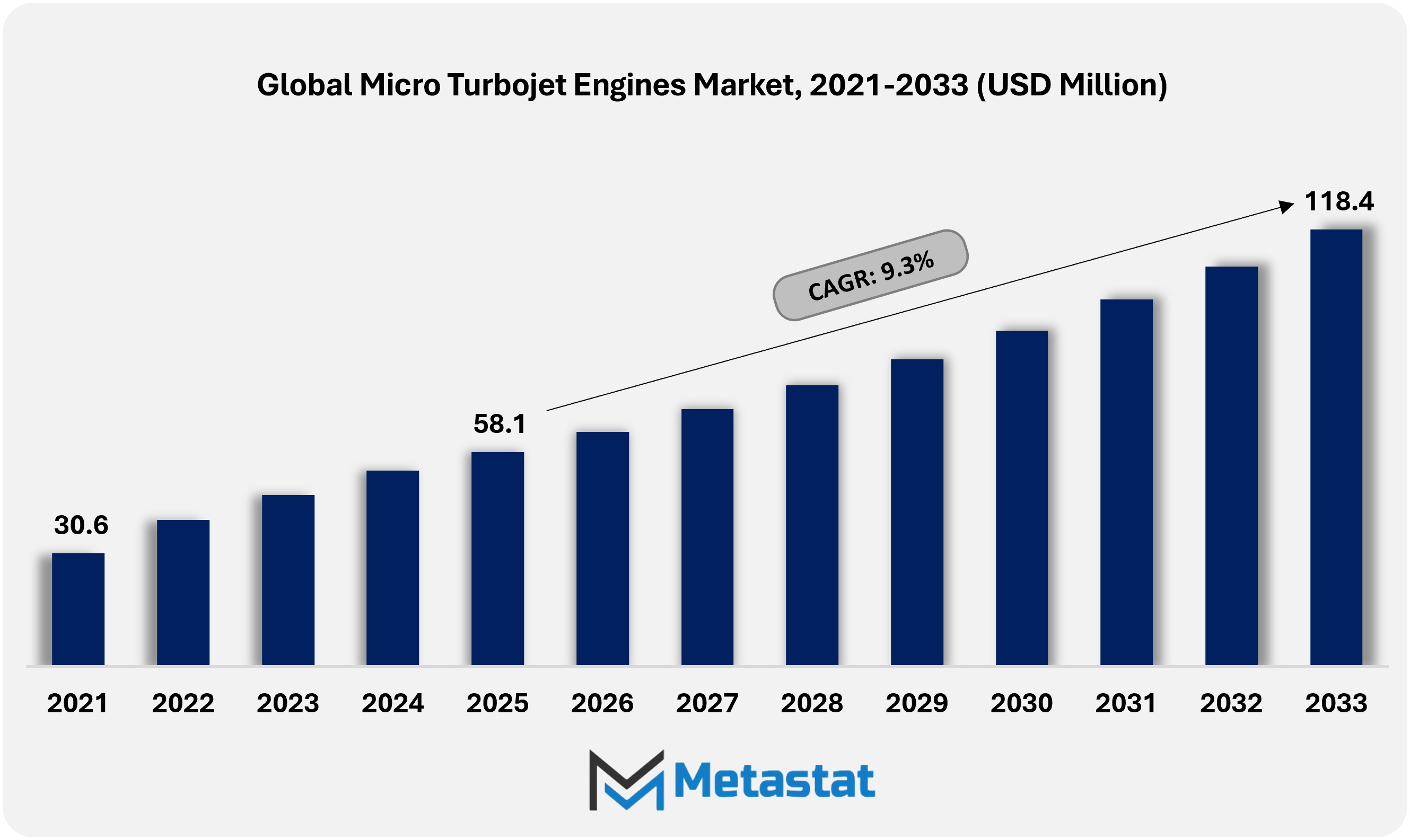
The global micro turbojet engines market is moving beyond current limitations through deeper integration with autonomous flight systems, experimental air platforms, and advanced test environments. The coming years will not limit these engines to propulsion units. These engines will serve as validation tools for thermal management concepts, fuel experimentation, and digital performance modeling within compact aviation architectures.
Future development will focus on lifecycle intelligence rather than output metrics. Manufacturers embed sensor-driven feedback loops that will continuously inform predictive maintenance frameworks, enabling engines to transmit operational stresses, material fatigue and combustion behaviour in real time. This change will redefine how micro turbojet platforms will be evaluated during extended missions and long test cycles, particularly in defence simulation programs and research laboratories.
Micro turbojet engines operate on open Brayton cycle thermodynamics, converting chemical fuel energy into kinetic jet thrust through continuous compression, combustion, and expansion. Because micro-scale architectures possess diminutive air passages, boundary layer friction and low Reynolds numbers present thermodynamic losses rarely encountered in full-scale aviation turbines. To offset scale penalties, modern designs optimize stage aerodynamics to maximize total pressure ratios within single-stage radial compressors. Single-stage centrifugal compressors deliver the pressure ratios required for high power density while keeping mechanical complexity low.
Commercial and defense platforms utilize micro turbojets categorized across distinct thrust classes: * Sub-200 N thrust engines provide compact propulsion for target drones, small reconnaissance loitering munitions, and aerodynamic flight testbeds. * 200 N to 600 N thrust engines support tactical unmanned aerial vehicles (UAVs), tactical decoy systems, and stand-off weapons requiring sustained high-subsonic dash speeds. * 600 N to 1,500 N thrust platforms power heavy aerial targets, advanced counter-UAS interceptors, and high-payload military platforms.
Maintaining safe compressor stall and surge margins is essential during aggressive throttle transients and dynamic maneuvers. As intake distortions occur at high angles of attack or variable flight velocities, the compressor operates closer to its stability boundary. Engine manufacturers engineer aerodynamically tailored diffuser vanes and casing treatments to ensure adequate stall buffers. Turbine inlet temperature (TIT) directly dictates cycle efficiency and thrust-to-weight ratios. In micro turbojets, uncooled axial or radial turbine wheels operate under extreme thermal stresses. Balancing peak TIT with material longevity requires advanced nickel-base superalloys and precise combustor dilution zone profiling to eliminate localized thermal hot spots.
High specific fuel consumption (SFC) remains an inherent operational reality for miniature jet systems. Typical micro turbojet SFC ranges from 1.1 to 1.6 kg/daN/h, driven by parasitic thermal dissipation, tip clearance leakages, and non-intercooled Brayton cycles. Platform designers evaluate these fuel burn metrics to balance internal fuel tank allocation against operational flight ranges and mission endurance targets.
Civil integration of micro turbojets poses complex airworthiness challenges. The Federal Aviation Administration (FAA) and the European Union Aviation Safety Agency (EASA) regulate engines using standards originally conceived for manned aviation, such as FAR Part 33 and CS-E. Because standard micro turbojets are rarely developed as primary powerplants for passenger-carrying civil aircraft, manufacturers seek project-specific airworthiness certifications. EASA Design Organisation Approval (DOA) and Production Organisation Approval (POA) certifications serve as core benchmarks for micro turbojet builders. These accreditations validate that design, quality assurance, and assembly processes follow rigorous aerospace procedural guidelines. For commercial UAV operators, certification often aligns with specific category operational risk assessments (SORA), where propulsion system reliability is verified through demonstrated mean time between failures (MTBF).
Defense systems require propulsion testing under rigorous operational environments: * MIL-STD-810 environmental testing subjects engines to thermal shock, high-vibration profiles, salt fog, explosive atmosphere testing, and sand ingress. * MIL-E-5007 establishes structural safety factors, rotor burst protection thresholds, and containment boundary verifications for military turbojet systems. * Electromagnetic interference (EMI) and power quality verifications validate that on-engine sensors and controllers operate safely near high-powered communication or electronic warfare emitters.
Micro turbojets with military applications are heavily regulated under global trade compliance laws. In the United States, engines engineered for defense payloads or specific thrust-to-weight ratios fall under the International Traffic in Arms Regulations (ITAR) and the U.S. Munitions List (USML). European manufacturers operate under equivalent military export regimes and dual-use regulations. Compliance mandates strict supply chain vetting, end-user verification, and technology transfer restrictions. Consequently, global procurement timelines and aftermarket service logistics hinge directly on intergovernmental export licensing approvals.
PBS Aerospace produces high-reliability micro turbojet systems for defense platforms and high-speed aerial targets. The PBS TJ100 series stands as an industry benchmark in the 1,000 N to 1,300 N category, providing integrated starter-generators and digital engine controls. PBS also produces the TJ150 (delivering up to 1,500 N thrust) and the TJ40-G2 series, addressing both light tactical targets and larger tactical unmanned aircraft. PBS systems are known for rapid pyrotechnic start capabilities and saltwater recovery adaptability for naval recovery exercises.
JetCat focuses on precision micro turbines, spanning from compact 100 N units to high-output systems like the JetCat P400 and P1000-PRO. The company integrates brushless starter-generators, internal fuel pumps, and miniature digital control modules within the engine housing. JetCat engines are widely adopted in experimental flight platforms, aerodynamic research aircraft, and loitering unmanned systems due to their plug-and-play architecture and commercial availability.
AMT Netherlands designs micro turbojets specifically for military target drones, tactical decoys, and high-speed research platforms. The Olympus HP and Titan series deliver reliable single-stage centrifugal compression and high-power density. AMT powerplants focus on high mechanical reliability, sustained maximum throttle operation, and autonomous starting profiles suitable for rail-launched military hardware.
Safran, through its small gas turbine divisions, and Williams International lead high-altitude, high-efficiency compact turbine propulsion for specialized cruise systems and advanced military drones. While Williams International focuses on larger mini-turbofan engines for defense programs, their engineering approaches in rotor design, bearing life, and low-observable propulsion influence broader micro turbojet manufacturing standards globally.
Fuel efficiency in micro turbojets reflects the physical limits of scale. Because micro engines exhibit high specific fuel consumption (SFC), carrying sufficient kerosene, Jet-A, or JP-8 fuel reduces available payload capacity for sensors, electronics, or warheads. System engineers accept this trade-off because micro turbojets provide high-subsonic dash speeds and small cross-sectional areas that piston engines or electric drives cannot match.
Operating costs for micro turbojet platforms reflect distinct maintenance and replacement schedules: * Fuel expenditure: While small jet engines burn fuel at rapid hourly rates, mission profiles are often short, keeping total mission fuel cost moderate. * Specialized turbine lubricants: Engines running fuel-lubricated ceramic bearings use fuel blended with synthetic turbine oil (typically 3% to 5%), adding operational cost. * Scheduled overhauls: Short bearing and hot-section replacement cycles require periodic factory servicing, representing a substantial portion of per-hour operational budgets.
The economic profile of micro turbojets splits between reusable aircraft and one-way attritable platforms: * Reusable target drones and research UAVs amortize engine purchase prices over dozens of flight cycles, emphasizing mean time between overhauls and modular part replacement. * Attritable attack drones and loitering munitions treat the micro turbojet as a single-use expendable component. Procurement teams prioritize low unit flyaway cost over long-term mechanical longevity, shifting demand toward simplified, cost-optimized manufacturing techniques.
Integrating a micro turbojet inside an unmanned airframe demands careful intake and nacelle engineering. Engines require clean, uniform airflow to prevent inlet distortion and compressor surge. S-duct intakes commonly installed on stealthy or low-profile UAVs create internal pressure losses and non-uniform flow vectors. Engineers must match intake recovery geometry to the compressor face to prevent stall events during high-G evasive maneuvers.
Modern UAV integration relies on Full Authority Digital Engine Control (FADEC) to eliminate pilot engine-management burdens. FADEC units dynamically adjust fuel metering valves, monitor exhaust gas temperature, and control stator heating to prevent flameout conditions. Digital engine controls must also interface seamlessly with the autopilot over CAN-bus, RS-422, or Ethernet protocols. Modern micro turbojets increasingly integrate permanent-magnet brushless generators onto the main shaft to generate 500 W to 3 kW of onboard DC electrical power, supplying avionics, flight actuators, and target payloads directly.
Micro turbojets release intense heat plumes, with exhaust gas temperatures frequently reaching 650°C to 800°C. Airframe designers face structural challenges when housing engines inside carbon-fiber or composite airframes, requiring insulated engine bays, heat blankets, and secondary cooling bypass air. Mitigating thermal and acoustic signatures is essential to reduce radar and infrared detection, driving the adoption of recessed nozzles and exhaust air-mixer shrouds.
The operational lifespan of a micro turbojet depends on intended mission architecture. Reusable reconnaissance UAVs and commercial research platforms utilize engines rated for 25 to 50 operating hours between overhauls. In contrast, one-way attack drones, target drones, and counter-UAS interceptors use attritable variants designed for lifespans of 2 to 10 operating hours. These expendable engines omit costly life-extending coatings to minimize initial procurement expense.
Operating at rotational speeds between 50,000 and 120,000 RPM creates significant mechanical stress on miniature bearing assemblies. Micro turbojets primarily employ: * Fuel-lubricated hybrid ceramic ball bearings, which run on a mixture of kerosene and synthetic turbine oil directly tapped from the fuel line. * Self-contained recirculating oil reservoirs with miniature positive displacement pumps, which eliminate the need for fuel-oil pre-mixing but introduce mechanical weight. * Foil air bearings, which represent an emerging alternative that leverages aerodynamic fluid film support, completely removing liquid lubricant systems.
Routine maintenance protocols require regular borescope inspections of the combustion chamber, fuel vaporizer tubes, and turbine nozzle guide vanes. Foreign object damage (FOD) represents a primary maintenance concern, as tiny debris pieces can destroy high-speed compressor wheels. Technicians monitor rotor balance and axial play to identify bearing wear before catastrophic imbalance causes casing containment failure.
Additive manufacturing (DMLS, SLM) is transforming micro turbojet production economics. Direct Metal Laser Sintering and Selective Laser Melting allow engineers to fabricate complex single-piece combustor assemblies with integrated fuel distribution channels. Monolithic 3D printing removes the need for brazed joints, eliminates assembly leaks, and reduces overall engine parts counts by up to 60%. Laser powder bed fusion enables rapid prototyping of aerodynamic blades, allowing custom compressor geometries and internal cooling passages that are impossible to machine using traditional CNC milling or investment casting.
Hybrid-electric propulsion architectures link micro turbojets with battery-electric storage systems. In series hybrid layouts, a micro turbojet runs continuously at its peak thermodynamic efficiency to drive a high-density electrical generator. The generator provides electrical power to distributed electric fans or charges onboard batteries. This architecture delivers both the high energy density of liquid kerosene fuel and the acoustic stealth of low-altitude electric flight.
Research programs are exploring hydrogen blending and synthetic sustainable aviation fuels (SAF) for micro gas turbines. Due to their simple fuel delivery systems, micro turbojets adapt to synthetic bio-kerosenes without major structural changes. Advancements in micro-sensor technology allow closed-loop combustion monitoring, adjusting ignition profiles in real time to match changing fuel energy densities.
Micro turbojets have supported military aerial target training for decades. Systems such as the Meggitt Banshee and platforms powered by PBS or AMT engines simulate anti-ship missiles and high-speed fighter aircraft for air defense radar and missile crews. These turbojet target drones operate at high subsonic speeds (Mach 0.6 to 0.8), reproducing realistic radar cross-sections, thermal emissions, and evasive flight profiles.
The proliferation of tactical drones and reconnaissance UAVs has accelerated the use of micro turbojets in counter-UAS applications: * High-speed interceptors powered by miniature jet engines rapidly climb and close distances against hostile unmanned aircraft. * Jet-powered loitering interceptors provide high dash speeds to neutralize maneuvering aerial targets before they reach sensitive infrastructure. * Compact turbojet footprints enable kinetic interceptor systems to be launched from truck beds, remote canisters, or naval vessels.
In commercial aerospace, micro turbojets power scaled flight research vehicles. Major airframe manufacturers and universities deploy multi-engine subscale prototypes to test novel flying-wing designs, boundary layer ingestion intakes, and active flow control wings. Using micro turbojet platforms delivers real flight-test Reynolds numbers and propulsion-airframe interactions at a fraction of the cost of full-scale wind tunnel or manned flight tests.
The micro turbojet industrial base relies heavily on specialty metallurgy: * Nickel-base superalloys, such as Inconel 713C and Inconel 718, are essential for casting turbine wheels and nozzle guide vanes exposed to extreme exhaust temperatures. * Aerospace-grade titanium alloys provide high strength-to-weight ratios for compressor stages and forward casing components. * Ultra-pure bearing steels and specialized ceramic silicon nitride balls are critical for high-RPM hybrid bearing assemblies. Sourcing constraints or price volatility in nickel, cobalt, and titanium markets directly affect unit production costs and lead times.
Manufacturing micro turbojets requires tight tolerances, often under five microns, for rotor assemblies, dynamic balancing, and air-bearing interfaces. Few specialized manufacturing centers possess the balancing rigs and multi-axis CNC machines needed to mill miniature centrifugal impellers. This specialized production creates supply chain bottlenecks when defense demand surges, requiring engine integrators to maintain buffer inventories of high-wear parts.
Geopolitical conflicts and supply chain vulnerabilities have prompted nations to re-evaluate foreign engine sourcing. Defense ministries in North America, Europe, and Asia-Pacific are funding domestic micro turbojet development programs to secure access to propulsion hardware. Reshoring production capacity helps protect defense manufacturers from foreign export vetoes and international freight disruptions.
Micro turbojets generate distinct acoustic footprints characterized by high-frequency compressor whine and high-velocity shear noise from the exhaust jet plume. In tactical military missions, high-frequency sound attenuates quickly over distance, but near-field acoustic levels remain intense during launch and low-altitude flight. Commercial drone operations in populated areas face local noise objections, driving research into lightweight engine hush kits and tailored acoustic exhaust liners.
Small gas turbine combustors operate with short fluid residence times, making complete combustion challenging: * Nitrogen oxide (NOx) emissions stay moderate due to modest overall pressure ratios, but localized hot zones can increase thermal NOx formation. * Carbon monoxide (CO) and unburned hydrocarbon (UHC) emissions elevate during idle or low-throttle operation when combustor temperatures decline. * Annular combustors with advanced miniature atomizers and fuel vaporization tubes improve fuel-air premixing, lowering soot and greenhouse gas generation across the operating envelope.
Small turbine engines below traditional certified aviation thresholds have historically operated outside strict environmental oversight. However, as uncrewed aerial systems scale across civil logistics, remote sensing, and infrastructure monitoring, environmental agencies are developing small-engine emission baselines. Future civil certification will increasingly require documented emissions testing and acoustic footprint verification during standard flight operational cycles.
Increasing reliance on unmanned aerial vehicles for surveillance, reconnaissance, and tactical operations will increase demand for compact propulsion solutions. Defense modernization programs favor engines offering higher thrust-to-weight ratios. Lightweight turbojet architectures will support extended range, precision missions, and rapid deployment capabilities on military platforms.
Advances in high-temperature alloys, thermal coatings, and precision manufacturing will enable smaller engines with improved fuel efficiency. Miniaturization trends will reduce mechanical losses while maintaining operational balance. Engineering innovations will support continuous thrust generation, enabling broader integration into constrained aerial systems requiring compact propulsion architectures.
Manufacturing micro turbojet engines requires high precision, specialized tooling, and skilled labor. Limited production volumes reduce economies of scale, increasing unit costs. Cost pressures will constrain broad adoption, especially outside defense contracts, slowing entry into price-sensitive commercial aviation use cases.
Stringent global regulations governing unmanned propulsion technologies will restrict cross-border trade. Export controls and licensing necessities will restrict provider flexibility. Compliance costs and approval delays will hamper market expansion, especially impacting engine deployment in regions with strict aerospace safety frameworks.
Commercial drone logistics, high-speed mapping, and advanced air mobility programs will create new demand corridors. Micro turbojet engines will support longer endurance and higher payload capacity. Civil aerospace experiments will open avenues for various programs beyond protection, strengthening long-term market growth.
The Global Micro Turbojet Engines market is mainly classified by Type and Application.
Single-shaft Turbojet Engines segment is valued at USD 12.1 Million in 2026 and is projected to reach USD 21.8 Million by 2033, at a CAGR of 8.8% during the forecast period.
Single-shaft turbojet engines attract attention in the global micro turbojet engine market due to structural simplicity and compact integration capability. Future deployments focus on cost-sensitive aerial platforms that require constant thrust output. Design improvements emphasize thermal stability, material endurance, and operational reliability under extended flight conditions.
Twin-shaft Turbojet Engines segment is valued at USD 32.8 Million in 2026 and is projected to reach USD 61.7 Million by 2033, at a CAGR of 9.4% during the forecast period.
Twin-shaft turbojet engines experience increased relevance due to performance flexibility and refined rotational efficiency. The independent shaft architecture support advanced acceleration control in advanced flight systems. Ongoing innovation prioritizes smooth power delivery, adaptive load management and compatibility with evolving pilot aviation requirements.
Recuperated Turbojet Engines segment is valued at USD 6.5 Million in 2026 and is projected to reach USD 12.3 Million by 2033, at a CAGR of 9.7% during the forecast period.
Recuperated turbojet engines advance through heat recovery optimization and improved fuel-use efficiency. Future development avenues focus on extended operational endurance and reduced thermal losses. Such systems would align with sustainability-focused aerospace research seeking balanced propulsion output with moderate energy consumption.
High Bypass Ratio Micro Turbojets segment is valued at USD 3.2 Million in 2026 and is projected to reach USD 5.6 Million by 2033, at a CAGR of 8.5% during the forecast period.
Higher bypass ratio micro turbojets support quieter propulsion demands and improved efficiency profiles. Future-oriented adoption will occur on specialized platforms where acoustic reduction and controlled thrust delivery remain important. Engineering efforts refine airflow management to support stable performance in compact air designs.
Low Bypass Ratio Micro Turbojets segment is valued at USD 8.9 Million in 2026 and is projected to reach USD 16.8 Million by 2033, at a CAGR of 9.5% during the forecast period.
Low bypass ratio micro turbojets continue to support high-speed experimental concepts that require concentrated thrust. Future relevance will be tied to performance-driven applications emphasizing velocity and responsiveness. The focus of development will be on material flexibility, thermal resistance and precision manufacturing techniques.
Target Drones segment is projected to reach USD 23.3 Million by 2033, at a CAGR of 9% during the forecast period.
Target drone applications expand through increased defense training needs and higher simulation accuracy requirements. The propulsion system supports repeatable flight patterns and controlled manoeuvrability. The global micro turbojet engines market benefits from sustained demand associated with aerial target realism and cost-efficient deployment cycles.
Unmanned Aerial Vehicles (UAVs) segment is projected to reach USD 44.7 Million by 2033, at a CAGR of 9.7% during the forecast period.
UAV integration increases with demand for extended range, higher payload tolerances, and mission adaptability. Micro turbojet propulsion supports advanced surveillance and test missions. Future UAV platforms emphasize propulsion reliability, modular integration, and consistent thrust delivery in diverse environments.
Experimental Aircraft segment is projected to reach USD 8.5 Million by 2033, at a CAGR of 7.7% during the forecast period.
Experimental aircraft programs rely on micro turbojet engines to test aerodynamic concepts and propulsion efficiency. Future-oriented experiments will focus on speed optimization, structural balance and energy efficiency. Such aircraft will remain at the centre of innovation pipelines shaping the next generation of aviation technologies.
Personal Jet Projects segment is projected to reach USD 5.3 Million by 2033, at a CAGR of 8% during the forecast period.
Personal jet projects gradually gain momentum through private innovation initiatives and prototype development. Micro turbojet engines will enable compact propulsion solutions supporting individual aircraft concepts. Future progress will depend on safety validation, regulatory alignment, and propulsion stability under variable flight conditions.
Academic Research Aircraft segment is projected to reach USD 7.7 Million by 2033, at a CAGR of 9.6% during the forecast period.
Academic research aircraft use micro turbojet engines to support controlled test environments and propulsion studies. Academic institutions will emphasize data accuracy, repeatable performance, and experimental flexibility. Research-driven demand will strengthen technical understanding and future aerospace workforce development.
Missile Propulsion (Training/Target Systems) segment is projected to reach USD 18.4 Million by 2033, at a CAGR of 9.5% during the forecast period.
Missile propulsion systems designed for training and target simulation rely on micro turbojet engines for predictable performance. Future systems will focus on controlled speed profiles and safe operational management. Such applications will maintain relevance through defense readiness and simulation-based training programs.
Micro-sat Launch Systems (First-stage booster concepts) segment is projected to reach USD 10.3 Million by 2033, at a CAGR of 9.6% during the forecast period.
Micro-satellite launch concepts explore micro turbojet engines for carrier-stage propulsion and atmospheric acceleration support. Long-term exploration will aim for cost reduction and launch flexibility. The global micro turbojet engine market will be aligned with emerging space-access strategies focused on scalable, lightweight propulsion solutions.
Based on geography, the Global Micro Turbojet Engines market is divided into North America, Europe, Asia Pacific, South America, and Middle East and Africa.
North America Micro Turbojet Engines market is set to expand at a CAGR of 9.3% during the forecast period, reaching USD 34.5 million by 2033.
In North America, continued defense R&D investment will strengthen demand for compact propulsion systems designed for experimental aviation platforms.
The increasing deployment of advanced UAV programs in military and research institutions will drive the adoption of micro turbojet engine technologies in the North American region.
Across the Asia Pacific region, the expansion of indigenous aerospace manufacturing programs will open new avenues for localized micro turbojet engine integration.
In Asia Pacific, increasing government-supported testing facilities for UAVs and light aircraft will create favourable conditions for future propulsion system partnerships.
Middle East, Africa and South America will collectively present selective but strategic demand, which will be shaped by defense modernization initiatives, cross-border technology collaboration and gradual expansion of the experimental aviation ecosystem.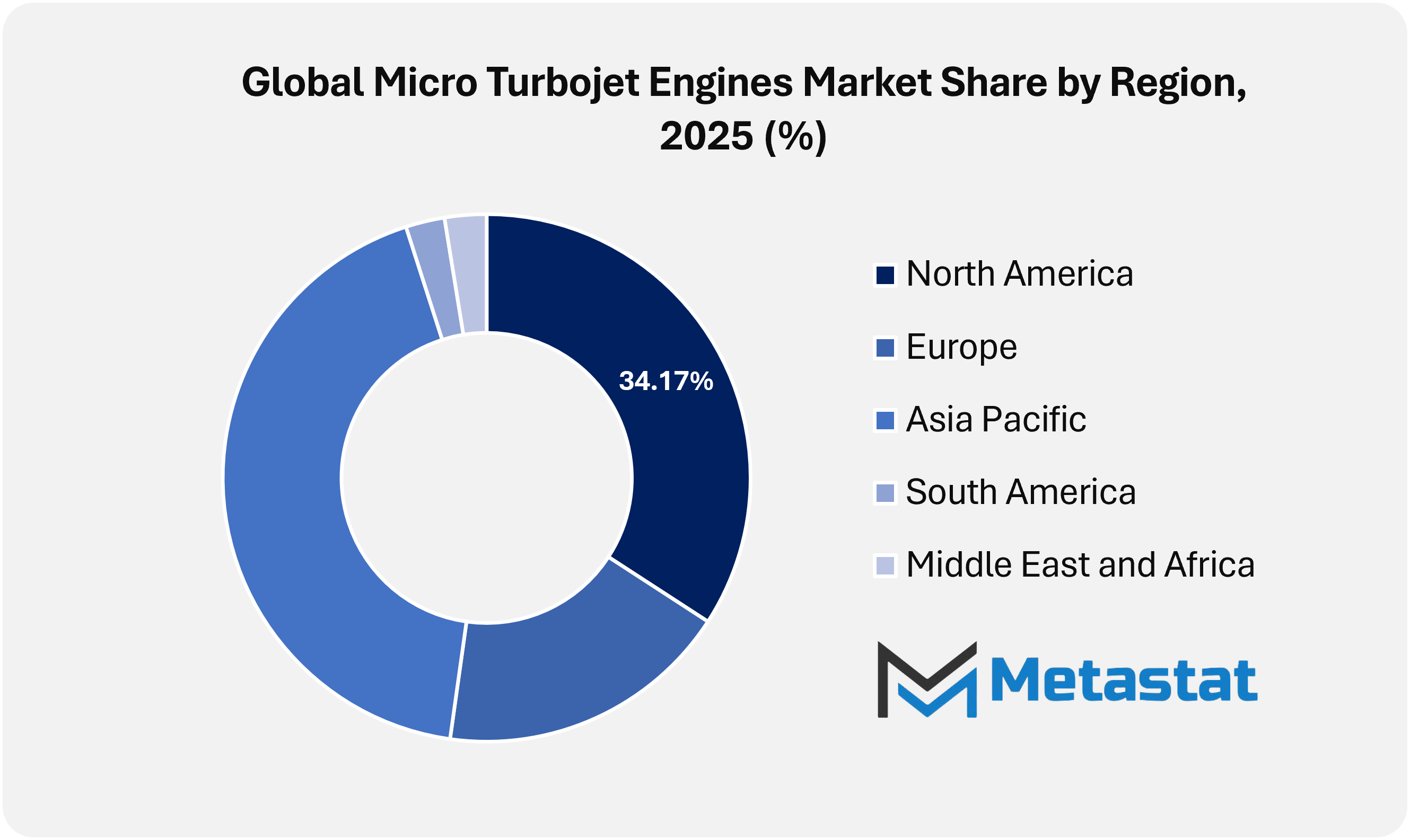
The micro turbojet engines market is gaining momentum, supported by wider adoption of compact propulsion systems across military projects, research aircraft, and unmanned aerial vehicles. These micro turbojets are in high demand because of their compactness, high thrust-to-weight ratio, as well as reliability during harsh operations. This market will grow because of the rise in the number of testing, pilot, and research aircraft projects that require optimal propulsion without requiring massive infrastructure. There are still challenges that need to be addressed in the micro turbojet engines market.
Technology advances in this industry are focused on improving efficiency, reducing vibration, and extending engine life. Research and development in material science, along with technological advancements, will permit micro turbojet engines to function with smoother operations along with greater accuracy. Customization options offered by manufacturers also play a role, as buyers often require engines to have specific thrust ranges or endurance requirements. This trend will motivate companies to invest in research that supports flexible design without increasing production complexity.
Competition within the global micro turbojet engines market remains active, driven by specialized manufacturers with strong technical expertise. Industry players include Jetcat Aviation Technology Co., Ltd., PBS Group, A. S., AMT Netherlands B.V., Frank Turbine, Xi'an Supersonic Aviation Technology Co., Ltd. (SAT), Kratos Defense & Security Solutions, Inc., Jet Central, Kingtec Turbines Co. Ltd., Zicoy Electronica S.L., and Jets Munt S.L. These companies focus on innovation, engine control precision and after-sales support to strengthen long-term relationships with users. Their presence shapes pricing patterns and performance benchmarks across the market.
Regional demand trends show steady growth, supported by defense spending, aerospace education initiatives, and private sector research efforts. Europe and North America will show strong interest, supported by established aerospace ecosystems, while Asia Pacific will show strong interest, supported by manufacturing capability and an expanding technical education base. Local manufacturing involvement and focus on exports will affect the model by which the company grows without compromising quality.
Looking ahead, the global micro turbojet engine market will grow through incremental innovation rather than sudden changes. Buyers will prioritize reliability, predictable maintenance and long operating life over practical features. Manufacturers who balance performance improvements with cost control will have a stronger market position. A balanced approach will support sustained growth while meeting the practical expectations of both institutional and private users.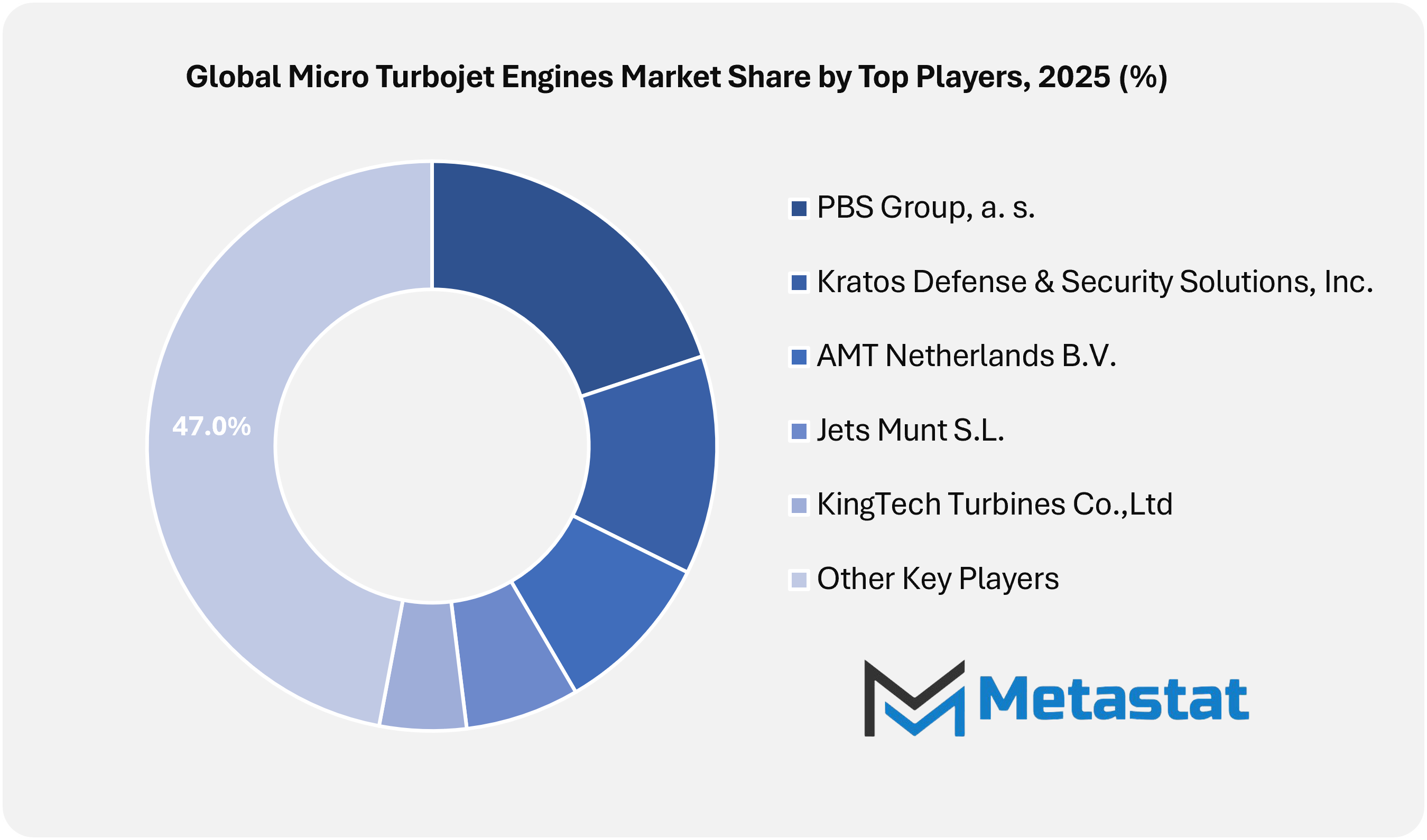
Market size is forecast to rise from USD 58.01 million in 2025 to over USD 118.4 million by 2033.
The global micro turbojet engines market will further expand in education and workforce development. Universities and technical institutions will deploy these engines within propulsion curricula, creating a generation of engineers trained on real-world jet behavior rather than abstract simulations. This academic inclusion will ensure long-term relevance, moving the market beyond transactional demand and into structural aerospace capacity building.
This research report categorizes the Micro Turbojet Engines market based on key segments and regions, forecasts revenue growth, and analyses trends in each submarket. The report analyzes the key growth drivers, opportunities, and challenges influencing the Micro Turbojet Engines market. Recent market developments and competitive strategies such as expansion, product launch, development, partnership, merger, and acquisition have been included to draw the competitive landscape in the market.
The report strategically identifies and profiles the key market players and analyses their core competencies in each sub-segment of the Micro Turbojet Engines market.
|
Report Attributes |
Details |
|
Study Period |
2021-2033 |
|
Base Year |
2025 |
|
Estimated Year |
2026 |
|
Forecast Period |
2026-2033 |
|
Historical Period |
2021-2025 |
|
Growth Rate |
CAGR 9.3% from 2026 to 2033 |
|
Revenue Unit |
USD million |
|
Sales Volume Unit |
Units |
|
Segmentation |
By Type, Application, and Region |
|
By Type |
|
|
By Application |
|
|
By Region |
North America (By Type, Application, and Country)
|
|
Europe (By Type, Application, and Country)
|
|
|
Asia Pacific (By Type, Application, and Country)
|
|
|
South America (By Type, Application, and Country)
|
|
|
Middle East and Africa (By Type, Application, and Country)
|
Find answers to common questions about this report
The Metastat Insights study shows that the Global Micro Turbojet Engines market size was USD 58.01 million in 2025.
The Global Micro Turbojet Engines market is likely to grow at a CAGR of 9.3% over the forecast period (2026-2033).
The Metastat Insight analysis shows that the North America Micro Turbojet Engines market size is estimated to be USD 34.5 million by 2033.
Twin-shaft Turbojet Engines segment led the Global market in 2025.
Rising demand for lightweight, high-performance propulsion systems in UAV and defense applications and Advancements in miniaturization and materials enabling efficient, compact engine designs are key driving factors, boosting the market.
North America holds the dominant market share in 2025.
High production costs due to precision engineering and limited scale of manufacturing will hamper the market growth within the forecast period.
Global Micro Turbojet Engines market is estimated to reach USD 118.4 million by 2033.
Top players operating in the Micro Turbojet Engines industry include JetCat Aviation Technology Co., Ltd., PBS Group, a. s., AMT Netherlands B.V., Frank Turbine, Xi’an Supersonic Aviation Technology Co., Ltd (SAT), and Kratos Defense & Security Solutions, Inc.
Additive manufacturing techniques, such as DMLS and SLM, reduce production costs by consolidating multi-piece assemblies into single 3D-printed parts. 3D printing combustors with internal fuel lines eliminates expensive tooling and brazing. This capability accelerates aerodynamic prototyping and lowers per-unit flyaway costs for high-rate attritable munitions.
High ambient temperatures thin the air, reducing mass flow and available thrust while raising turbine inlet temperatures closer to thermal limits. High altitudes reduce intake air density and internal pressure ratios, increasing the risk of compressor stall or combustor flameout above 8,000 to 10,000 meters.
Standard commercial micro turbojets usually carry lead times of 8 to 16 weeks. Specialized defense-rated engines or high-thrust variants like the PBS TJ150 often require 6 to 12 months. Lead times fluctuate based on raw superalloy availability, precision balancing bottlenecks, and export license processing.
Micro turbojets run effectively on Jet-A, Jet-A1, JP-5, JP-8, standard kerosene, and clean diesel blends. Military operations favor JP-8 and Jet-A for logistics interoperability. Remote civilian expeditions often use standard diesel or commercial kerosene, though heavier fuels require specialized ignition sequences or preheating profiles.
Single-shaft micro turbojets mount the compressor and turbine on one shared shaft, maximizing structural simplicity and operational reliability while reducing maintenance points. Twin-shaft designs introduce independent spools, improving aerodynamic efficiency and pressure ratios, but they require complex concentric shafts, added bearings, and more frequent mechanical inspections.
Typical operating costs range from $150 to $500 per flight hour, depending on engine thrust and platform recovery methods. High specific fuel consumption, synthetic oil additives, and short scheduled overhaul intervals drive costs. Attritable one-way military drones carry higher capital loss per mission rather than recurring maintenance costs.
Civil airworthiness authorities do not typically issue standard type certificates for micro turbojets. Instead, platforms like the PBS TJ100 series operate commercially via manufacturer EASA Design Organisation Approvals (DOA). Commercial drone operators qualify models like the JetCat P400-PRO under operational risk assessments (SORA).
Modern micro turbojets typically achieve thrust-to-weight ratios between 6:1 and 10:1. In contrast, traditional aviation piston engine packages rarely exceed 2:1 when including cooling systems and reduction gearboxes. Micro turbojets provide vastly superior power density, allowing compact, high-speed UAV designs, though piston engines retain better fuel efficiency.
The analysts below cover Aerospace and Defense research at Metastat Insights.
LEAD ANALYST
Utkarsh Khirodkar is a Lead Market Research Analyst at MetaStat Insight, specializing in market intelligence, technology sector assessments, and competitive strategy.
Last Updated: September, 2026
In the biological seed treatment space, registration timelines vary drastically between the European Union, Brazil, and North America. The MetaStat Insight research handled these cross-border regulatory barriers with genuine nuance, mapping commercialization pathways alongside historical field adoption rates. The segmentation between microbial strains and biochemical active ingredients was particularly well structured.
Our team was tracking whether regional recycling infrastructure could realistically absorb the growing volume of lithium iron phosphate batteries over the next decade. The report did a solid job separating announced hydrometallurgical plant capacity from active, permitted operational throughput. That distinction made the feedstock availability projections and regional recovery rate models far more credible than standard commercial overviews.
Tracking capacity expansion in single-use bioprocessing requires dependable data on raw material availability and cleanroom-grade polymer supply chains. The competitive landscape chapter gave a grounded evaluation of secondary component suppliers across North America and Asia-Pacific rather than simply reprinting press releases. Having that level of supplier benchmarking helped clarify dual-sourcing considerations for our clinical pipeline planning.
Explore related market intelligence reports worth reading alongside this one.