
LEAD ANALYST
Utkarsh Khirodkar is a Lead Market Research Analyst at MetaStat Insight, specializing in market intelligence, technology sector assessments, and competitive strategy.

Mining Ground Engaging Tools (GET) Market Size, Share, By Product Type (Bucket Teeth, Cutting Edges, End Bits, Adapters, Blades, Ripper Shanks, and Others (Side Cutters, Wear Plates, and Lip Shrouds), By Material (Steel, Cast Iron, Alloy Steel, Polyurethane, Ceramic, and Carbide-Reinforced Alloys), By Mining Method (Surface Mining, Underground Mining, Quarrying, and Aggregates Operations), By Sales Channel (OEM (Original Equipment Manufacturer), Aftermarket Dealers, Regional Distributors, and Parts Specialists), Industry Analysis, Growth, Trends, and Forecast, 2026-2033
Report ID
MSI-4619
Published
April, 2026
Updated
Pages
320 Pages
Format
Report Details
Choose Your License
Mining Ground Engaging Tools (GET) Market
The Global Mining Ground Engaging Tools (GET) market size was valued at USD 5,638.2 million in 2025 and projected to grow at a CAGR of 6.8% during the forecast period, reaching USD 9,538 million by 2033.
North America held 24.7% of the global market in 2025, with the U.S. leading the regional market.
Bucket Teeth segment accounts for a market share of 35.1% in 2025.
Key trends driving growth include higher overburden removal and production loading volumes in surface mining, along with an increasing focus on uptime and payload optimization that supports premium wear-life and quick-change GET adoption.
Opportunities include smart GET and Wear Monitoring Systems Enabling Predictive Replacement and Inventory Optimization.
Key insight: Rising mineral extraction intensity and increasing equipment efficiency requirements are reshaping the Global Mining Ground Engaging Tools (GET) market toward durability-focused innovation.
The Global Mining Ground Engaging Tools (GET) market within the mining equipment industry is moving beyond conventional discussions centered on volume demand and replacement cycles. Future market development will be shaped by how mining operations redefine productivity at the tool-material interface. Attention is shifting toward how cutting edges, adapters, and wear components interact with variable geology, equipment dynamics, and operator practices, rather than focusing solely on output metrics. GET solutions are increasingly being viewed less as consumables and more as performance variables embedded in mine planning decisions.
Operational strategy will influence future adoption patterns, with mines integrating ground engaging tools into predictive maintenance ecosystems. Sensors, digital twins, and machine learning systems will be used to monitor stress distribution, wear patterns, and breakage risks in real time. GET selection will become more dynamic, adapting to ore hardness, moisture levels, and bench geometry. Suppliers will respond by offering modular designs engineered for fast on-site reconfiguration, reducing equipment idle time and improving shift-level productivity.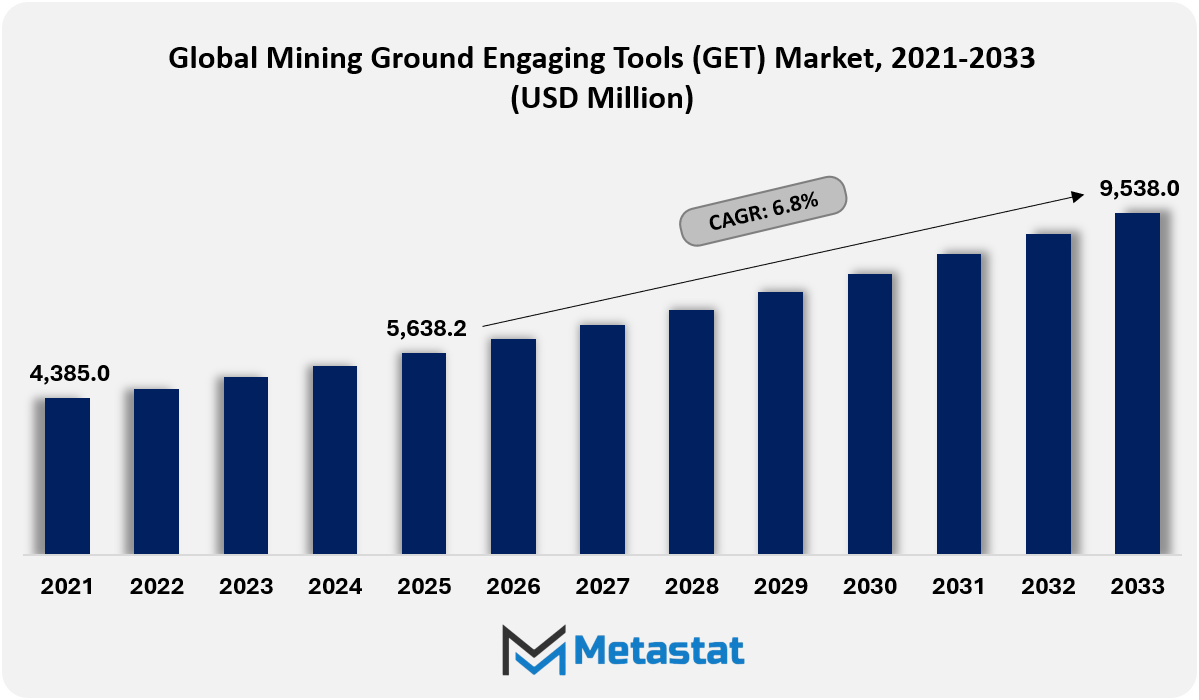
Higher Overburden Removal and Production Loading Volumes in Surface Mining.
Growth in surface mining will increase material movement requirements, driving the need for tools capable of withstanding higher abrasion and impact exposure. Larger loading volumes will accelerate replacement cycles, encouraging engineered designs optimized for durability. Mining planners will prefer solutions that support continuous excavation without disrupting production under aggressive output targets.
Uptime and Payload Optimization Focus Driving Premium Wear-Life and Quick-Change GET Adoption
Operational strategies will increasingly prioritize uptime stability and payload consistency. Premium wear-life configurations will gain preference owing to longer service intervals and lower maintenance frequency. Quick-change systems will support faster tool replacement, allowing fleets to maintain shift productivity targets while controlling downtime costs in high-utilization mining environments.
Alloy Steel and Casting Cost Volatility Impacting Replacement-Part Economics
Fluctuating alloy metal and casting enter costs will stress replacement-component pricing systems. Budget predictability will weaken beneath unstable raw material markets, complicating procurement plans. Mining operations will face tighter fee-gain critiques, especially where frequent tool alternative intersects with slender operating margins and lengthy-time period deliver agreements.
Counterfeit and Low-Grade Aftermarket Parts Increasing Failure Risk and Price Pressure
Unverified aftermarket alternatives will introduce performance uncertainty across mining sites. Premature failures will increase safety exposure and maintenance overhead. Price competition from low-grade parts will compress margins for qualified suppliers, prompting stronger emphasis on traceability, quality assurance, and performance validation within procurement frameworks.
Smart GET and Wear Monitoring Systems Enabling Predictive Replacement and Inventory Optimization
Digitally enabled wear monitoring will transform replacement planning through predictive insights. Sensor-based systems will forecast degradation patterns, reducing unplanned stoppages. Inventory optimization will improve through data-driven stocking strategies, supporting lean operations and aligning equipment availability with real-time ground conditions and projected excavation intensity.
The Global Mining Ground Engaging Tools (GET) market is segmented by Product Type, Material, Operation Type, and Sales Channel.
Bucket Teeth segment is estimated at USD 2,111.1 million in 2026 and is projected to reach USD 3,320.2 million by 2033, at a CAGR of 6.7% during the forecast period.
Future demand for Bucket Teeth will upward thrust through deeper excavation objectives and better productivity expectations throughout the Global Mining Ground Engaging Tools (GET) market. Design refinement will focus on longer product life cycles, managed penetration, and predictable replacement cycles. Advanced metallurgy and precision casting will support operational continuity in abrasive ground situations.
Cutting Edges & End Bits segment is estimated at USD 1,300.4 million in 2026 and is projected to reach USD 2,057.3 million by 2033, at a CAGR of 6.8% during the forecast period.
Cutting Edges and End Bits will benefit from prominence via automation-driven mining equipment requiring constant cutting geometry. Manufacturers will prioritize dimensional balance and uniform hardness to help system-guided operations. Within the Global Mining Ground Engaging Tools (GET) marketplace, overall performance predictability will outline buying decisions across large-scale extraction.
Adapters segment is estimated at USD 853.9 million in 2026 and is projected to reach USD 1,403 million by 2033, at a CAGR of 7.4% during the forecast period.
Adapters will feature as structural connectors assisting modular GET assemblies. Future improvement will emphasize load distribution performance and reduced stress transfer throughout excessive-effect digging. Within the Global Mining Ground Engaging Tools (GET) market, adapter compatibility throughout equipment training will enhance stock planning and reduce downtime during tool transitions.
Blades segment is estimated at USD 596.3 million in 2026 and is projected to reach USD 882.3 million by 2033, at a CAGR of 5.8% during the forecast period.
Blades will experience multiplied usage throughout grading and cloth leveling sports tied to mine enlargement projects. Product evolution will deal with facet retention and deformation resistance under sustained pressure. Market players will put money into precision-cast blade profiles, helping fuel efficiency and consistent surface manipulation at some point of prolonged operational cycles.
Ripper Shanks segment is estimated at USD 474 million in 2026 and is projected to reach USD 764.9 million by 2033, at a CAGR of 7.1% during the forecast period.
Ripper Shanks will guide harder ground penetration linked to useful resource depletion close to surface layers. Structural reinforcement and surprise absorption will form next-generation designs. In the Global Mining Ground Engaging Tools (GET) market, the demand will increase throughout regions pursuing deeper mineral access through mechanical ripping methods.
Others (Side Cutters & Wear Plates, Lip Shrouds) segment is estimated at USD 680 million in 2026 and is projected to reach USD 1,110.2 million by 2033, at a CAGR of 7.3% during the forecast period.
Side Cutters, Wear Plates, and Lip Shrouds will benefit relevance through defensive capabilities, extending core tool lifespan. Future adoption will grow through value-control strategies emphasizing preventive management. Product standardization will help mining operators in search of predictable upkeep schedules and reduced structural damage throughout aggressive digging operations.
Steel segment is projected to reach USD 2,621 million by 2033, at a CAGR of 6.6% during the forecast period.
Steel will hold dominance via balanced power and affordability throughout various mining environments. Ongoing innovation will enhance fatigue resistance without growing cloth complexity. Within the Global Mining Ground Engaging Tools (GET) marketplace, metal-based solutions will stay crucial for operators prioritizing reliability under variable geological situations.
Cast Iron segment is projected to reach USD 1,181.8 million by 2033, at a CAGR of 5.3% during the forecast period.
Cast Iron will preserve selective adoption where vibration dampening and price performance stay essential. Improvements in casting precision will enhance durability boundaries traditionally related with brittle overall performance. Market usage will remain focused on managed programs assisting moderate load requirements and consistent operational cycles.
Alloy Steel segment is projected to reach USD 3,628.2 million by 2033, at a CAGR of 6.9% during the forecast period.
Alloy Steel will aid high-strain applications requiring superior tensile power and put on resistance. Future formulations will target optimized detail composition for thermal balance. In the Global Mining Ground Engaging Tools (GET) marketplace, alloy metal adoption will growth inside operations coping with severe abrasion and impact frequency.
Polyurethane segment is projected to reach USD 401.5 million by 2033, at a CAGR of 7.1% during the forecast period.
Polyurethane will increase within specialized programs emphasizing flexibility and floor safety. Lightweight characteristics will assist noise reduction and managed put on conduct. Mining operators will apply polyurethane components in auxiliary roles supporting gadget durability and reduced metal-to-steel contact during repetitive motion.
Ceramic segment is projected to reach USD 642.9 million by 2033, at a CAGR of 8.4% during the forecast period.
Ceramic substances will serve niche functions requiring notable hardness and chemical balance. Research investment will address fracture resistance boundaries. Long-term adoption will rely upon cost stabilization and hybrid cloth integration, helping excessive-abrasion zones without compromising structural integrity.
Carbide-Reinforced Alloys segment is projected to reach USD 1,062.5 million by 2033, at a CAGR of 7.8% during the forecast period.
Carbide-Reinforced Alloys will enjoy growing adoption because of extended carrier intervals and severe wear tolerance. Material engineering will focus on uniform carbide dispersion. Within the Global Mining Ground Engaging Tools (GET) marketplace, premium pricing will align with lifecycle fee optimization techniques.
Surface Mining segment is projected to reach USD 5,874.4 million by 2033.
Surface Mining will continue driving volume demand via large-scale earthmoving activities. Tool innovation will align with productivity goals and fuel performance dreams throughout expanding open-pit operations.
Underground Mining segment is projected to reach USD 2,264.3 million by 2033.
Underground Mining will emphasize compact but resilient GET designs assisting limited operational spaces. Material performance under consistent friction will continue to be essential. Market increase will mirror extended underground exploration responding to floor aid exhaustion developments.
Quarrying and Aggregates Operations segment is projected to reach USD 1,399.2 million by 2033.
Quarrying and Aggregates Operations will assist regular demand through infrastructure development and creation of material desires. GET products will emphasize speedy substitutes and standardized sizing. Operational efficiency and predictable wear patterns will guide procurement strategies.
OEM (Original Equipment Manufacturer) segment is projected to grow at a CAGR of 6.4% during the forecast period.
OEM channels will be supported through included device-tool compatibility and bundled supply agreements. Manufacturers will provide software specific GET answers, assisting with system performance optimization. Long-term contracts will form stable revenue streams in the Global Mining Ground Engaging Tools (GET) market.
Aftermarket Dealers segment is projected to grow at a CAGR of 6.8% during the forecast period.
Aftermarket Dealers will increase reach through speedy-response supply networks and aggressive pricing fashions. Demand will desire availability and pass-logo compatibility. Dealer knowledge will affect purchaser loyalty through technical steerage and protection aid services.
Regional Distributors and Parts Specialists segment is projected to grow at a CAGR of 7.2% during the forecast period.
Regional Distributors and Parts Specialists will play a strategic position assisting localized mining pastime. Inventory customization and fast logistics will beautify marketplace penetration. Regional knowledge will guide tailor-made services aligned with website-unique floor conditions and regulatory requirements.
Based on geography, the Global Mining Ground Engaging Tools (GET) market is divided into North America, Europe, Asia Pacific, South America, and the Middle East and Africa.
North America Mining Ground Engaging Tools (GET) Market is set to expand at a CAGR of 6.8% within the forecast period, reaching a market size (TAM) of USD 2,113.6 million by the end of 2033.
North America records sustained demand for advanced mining ground engaging tools, driven by large-scale surface mining activity and ongoing fleet modernization across coal, metal, and mineral operations.
North America benefits from high replacement cycles for mining equipment, supporting steady uptake of durable, wear-resistant ground engaging tools across mature mining sites.
Europe maintains steady demand for mining ground engaging tools through quarrying activity, replacement demand across mature fleets, and rising focus on wear life optimization and cost control.
Asia Pacific presents strong opportunities through expanding mineral extraction projects linked to infrastructure development, increasing the need for efficient and cost-optimized ground engaging tools.
Asia Pacific mining operators are showing growing interest in locally manufactured and performance-enhanced ground engaging tools to support high-volume excavation in emerging mining economies.
Across the Middle East, Africa, and South America, the mining ground engaging tools market advances progressively via new mine development, enhancing mechanization tiers, and developing focus on extending system lifestyles underneath abrasive running situations.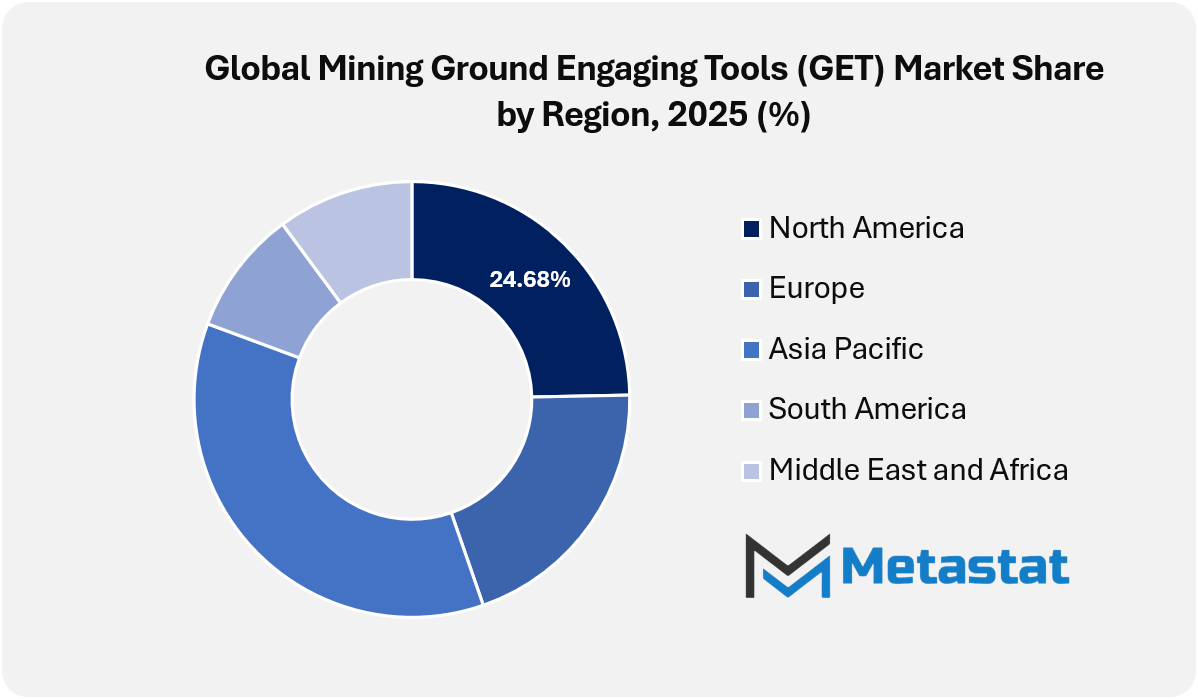
The Global Mining Ground Engaging Tools (GET) market is formed via producers that target sturdiness, performance, and compatibility with heavy mining systems used throughout surface and underground operations. These tools play a direct role in excavation, loading, and material handling, meaning performance and wear life matter significantly to mining operators. Companies active on this market work closely with miners to improve penetration, reduce downtime, and lower operating costs. Innovation here is frequently practical rather than flashy, focused on better alloys, advanced designs, and easy-to-replace structures with a view to supporting everyday mining needs.
Large multinational players such as The Weir Group PLC, Caterpillar Inc., Komatsu Ltd., Sandvik Mining and Rock Solutions, Liebherr Group, Hitachi Construction Machinery Co., Ltd., CNH-related manufacturers, and John Deere carry scale, engineering intensity, and global distribution to the GET market. Strength lies in offering complete solutions that match original equipment specifications, helping operators maintain reliability across fleets. These businesses make investments step by step in research and field trials, ensuring GET products will perform under harsh floor conditions while meeting safety and productivity expectations at big mining sites.
Alongside these leaders, a strong group of specialized manufacturers focuses primarily on wear parts and ground engagement solutions. MTG, Bradken Limited, CR Powered by Epiroc, CR Mining, BYG S.A., Black Cat Wear Parts, Combi Wear Parts, ITR Group, Costex Tractor Parts, and Austin Engineering Ltd. are recognised for superior wear-resistant substances and customized designs. The merchandise frequently serves both original gadget and aftermarket demand, giving miners flexibility and aggressive pricing. Firms such as Metco Joining & Cladding and eiengineering also add value through surface treatment and joining technologies that extend equipment life in abrasive environments.
Regional and area of interest competitors, in addition, beef up the marketplace by addressing neighborhood mining conditions and client needs. Companies such as AMSCO Wear Products, Epiroc Zambia Limited, Ningbo Winner Tiger Machinery CO, LTD, Derwent Industries (Keech Australia), Valley Blades Limited, H and L Tooth Company, Cutting Edges Equipment Parts, Mining Wear Parts (MWP), National GET, Rockland Manufacturing Company, Crushing Mining Spares, Tutt Bryant, Dozco India Pvt. Ltd., Enstruc Wear Solutions, Allied Wear Parts (Pty) Ltd, and Titan Supply contribute through responsive service and tailored services supporting faster deliveries, on-site assistance, and region-specific product development.
Overall, opposition in the Global Mining Ground Engaging Tools marketplace remains extreme, driven by the need for longer put on lifestyles, higher system suit, and cost control. Established brands and focused specialists will continue to push fabric fine and layout efficiency even as increasing aftermarket services. As mining interest adapts to deeper pits and tougher ground situations, GET providers that offer stability, performance, reliability, and customer support will remain significant to operational achievement.
Market size is forecast to rise from USD 5,638.2 million in 2025 to over USD 9,538 million by 2033.
The Global Mining Ground Engaging Tools (GET) market is expected to evolve as a strategic enabler of operational intelligence, influencing how mines plan extraction sequences, manage equipment health, and align technical decisions with long-term operational resilience.
By Product Type:
By Material:
By Mining Method:
By Sales Channel:
This research report categorizes the Mining Ground Engaging Tools (GET) market based on key segments and regions, forecasts revenue growth, and analyses trends in each submarket. The report analyses the key growth drivers, opportunities, and challenges influencing the Mining Ground Engaging Tools (GET) market. Recent market developments and competitive strategies such as expansion, product launch, partnership, merger, and acquisition have been included to draw the competitive landscape in the market.
The report strategically identifies and profiles the key market players and analyses their core competencies in each sub-segment of the Mining Ground Engaging Tools (GET) market.
|
Report Attributes |
Details |
|
Study Period |
2021-2033 |
|
Base Year |
2025 |
|
Estimated Year |
2026 |
|
Forecast Period |
2026-2033 |
|
Historical Period |
2021-2025 |
|
Growth Rate |
CAGR 6.8% from 2026 to 2033 |
|
Revenue Unit |
USD million |
|
Sales Volume Unit |
Thousand Units |
|
Segmentation |
By Product Type, Material, Mining Method, Sales Channel, and Region |
|
By Region |
North America (By Product Type, Material, Mining Method, Sales Channel, and Country)
|
|
Europe (By Product Type, Material, Mining Method, Sales Channel, and Country)
|
|
|
Asia Pacific (By Product Type, Material, Mining Method, Sales Channel, and Country)
|
|
|
South America (By Product Type, Material, Mining Method, Sales Channel, and Country)
|
|
|
Middle East and Africa (By Product Type, Material, Mining Method, Sales Channel, and Country)
|
Find answers to common questions about this report
Top players operating in the Mining Ground Engaging Tools (GET) industry include The Weir Group PLC, Caterpillar Inc., Komatsu Ltd., MTG, AMSCO Wear Products, and Bradken Limited.
Global Mining Ground Engaging Tools (GET) market is estimated to reach USD 9,538 million by 2033.
The Global Mining Ground Engaging Tools (GET) market is likely to grow at a CAGR of 6.8% over the forecast period (2026-2033).
Higher Overburden Removal and Production Loading Volumes in Surface Mining and Uptime and Payload Optimization Focus Driving Premium Wear-Life and Quick-Change GET Adoption are key driving factors, boosting the market.
Asia Pacific region dominates the market.
Alloy Steel and Casting Cost Volatility Impacting Replacement-Part Economics will hamper market growth within the forecast period.
The Metastat Insights analysis shows that the North America Mining Ground Engaging Tools (GET) market size is estimated to be USD 2,113.6 million by 2033.
Bucket Teeth is the leading product type segment in the global market.
The Metastat Insights study shows that the Global Mining Ground Engaging Tools (GET) market size was USD 5,638.2 million in 2025.
The analysts below cover Machinery & Equipment research at Metastat Insights.
LEAD ANALYST
Utkarsh Khirodkar is a Lead Market Research Analyst at MetaStat Insight, specializing in market intelligence, technology sector assessments, and competitive strategy.

INDUSTRY CONSULTANT - CHEMICALS & ADVANCED MATERIALS
Chemicals and Materials · Machinery & Equipment · Packaging
Amit Gadhekar Consultant for Chemicals and Materials at MetaStat Insight, directing sector-specific intelligence, research, and strategic consulting across global chemical and processing markets.

PRINCIPAL CONSULTANT - QUALITY SYSTEMS & COMPLIANCE
Electronics and Semiconductor · Machinery & Equipment · Professional Services
Omkar Phadtare is an Industry Consultant at MetaStat Insight, specializing in quality systems, regulatory compliance, and standards benchmarking to drive data-driven market intelligence and strategic industry research.

ENERGY & INFRASTRUCTURE INDUSTRY CONSULTANT
Automotive and Transportation · Electronics and Semiconductor · Energy and Power · Machinery & Equipment
Saurabh Vasant Ganvir consults for Energy & Infrastructure Industry at MetaStat Insight, specializing in renewable energy, solar EPC, and electric vehicle (EV) infrastructure markets.

LEAD CONSULTANT - COMMUNICATION, TELECOM, AND IT
Electronics and Semiconductor · Information & Technology · Machinery & Equipment · Professional Services
Ravindra Sathe Consultants for Communication, Telecom, and IT at MetaStat Insight. He leads the firm's industry research initiatives across telecommunications infrastructure, digital connectivity, enterprise networking, and emerging information technology domains.
Last Updated: August, 2026
Ambulatory surgical centers have very different purchasing cycles for robotic-assisted surgery platforms than major hospital networks. The MetaStat Insight study focused squarely on capital expenditure depreciation, procedural reimbursement pathways, and surgeon training overhead. That operational clarity made it much simpler to validate multi-year procedure growth forecasts against actual ambulatory center adoption patterns.
When planning edge sensor rollouts across refinery environments, generic IoT reports typically miss the harsh-environment certification bottlenecks. MetaStat Insight gave an objective evaluation of ATEX and Class 1 Division 2 hardware availability, along with realistic five-year maintenance cycle cost projections. The comparison of wireless mesh versus private cellular backhaul helped our team pressure-test network reliability models for remote processing facilities.
In the biological seed treatment space, registration timelines vary drastically between the European Union, Brazil, and North America. The MetaStat Insight research handled these cross-border regulatory barriers with genuine nuance, mapping commercialization pathways alongside historical field adoption rates. The segmentation between microbial strains and biochemical active ingredients was particularly well structured.
Explore related market intelligence reports worth reading alongside this one.
Starting from
$2950