
LEAD ANALYST
Utkarsh Khirodkar is a Lead Market Research Analyst at MetaStat Insight, specializing in market intelligence, technology sector assessments, and competitive strategy.

Needle-free Injection Technology Market Size, Share, By Product Type (Fillable Needle-free Injectors and Prefilled Needle-free Injectors), By Technology (Jet-based Needle-free Injectors, Spring-based Needle-free Injectors, Vibration-Based Needle-Free Injectors, and Others), By Type of Medication (Liquid-based Needle-free Injectors, Powder-based Needle-free Injectors, Projectile -based Needle-free Injectors, and Depot-based Needle-free Injectors), By End User (Hospitals, Clinics, Homecare Settings, Research Laboratories, Pharmaceutical, Biotechnology Companies), Industry Analysis, Growth, Trends, and Forecast, 2026-2033
Report ID
MSI-4663
Published
April, 2026
Pages
313 Pages
Format
Report Details
Choose Your License
Needle-free Injection Technology Market
The Global Needle-free Injection Technology market size was valued at USD 1,736.3 million in 2025 and projected to grow at a CAGR of 7.9% during the forecast period, reaching USD 3,188.2 million by 2033.
North America accounted for 37.6% of the global market in 2025, led by the U.S.
Fillable Needle-free Injectors segment accounts for a market share of 61.0% in 2025.
Key trends driving growth: Needle anxiety reduction and improved adherence, Intradermal targeting with rapid uptake and simplified immunization workflows.
Opportunities include microarray patch platforms supporting thermostability and self-administration for vaccines and selected biologics.
Key insight: Rising demand for pain-free drug delivery accelerates innovation and competitive intensity in the Global Needle-free Injection Technology market.
The global Needle-free Injection Technology market in the medical device industry is expanding beyond traditional vaccination and insulin delivery systems, reshaping how therapeutic drugs are administered across a wide range of care settings. Over the forecast period, healthcare providers will increasingly adopt needle-free systems to support precision dosing in biologics, oncology therapies, and hormone replacement treatments, where patient comfort, adherence, and dosing reliability remain critical to clinical outcomes. Hospitals and ambulatory care centers are also integrating advanced jet injectors with digital tracking interfaces, enabling real-time monitoring of dose accuracy and patient response across routine and specialty applications.
Pharmaceutical companies are aligning product pipelines with delivery systems engineered for high-viscosity formulations, expanding the role of needle-free devices in monoclonal antibodies and long-acting injectables. At the same time, regulatory frameworks are evolving to address combination product requirements, strengthen validation protocols, and reinforce post-market surveillance. Manufacturing ecosystems are also advancing through microfluidic engineering, advanced polymers, and pressure-control mechanisms designed to ensure consistent penetration depth, dosing precision, and reduced tissue trauma across a broader range of therapeutic applications.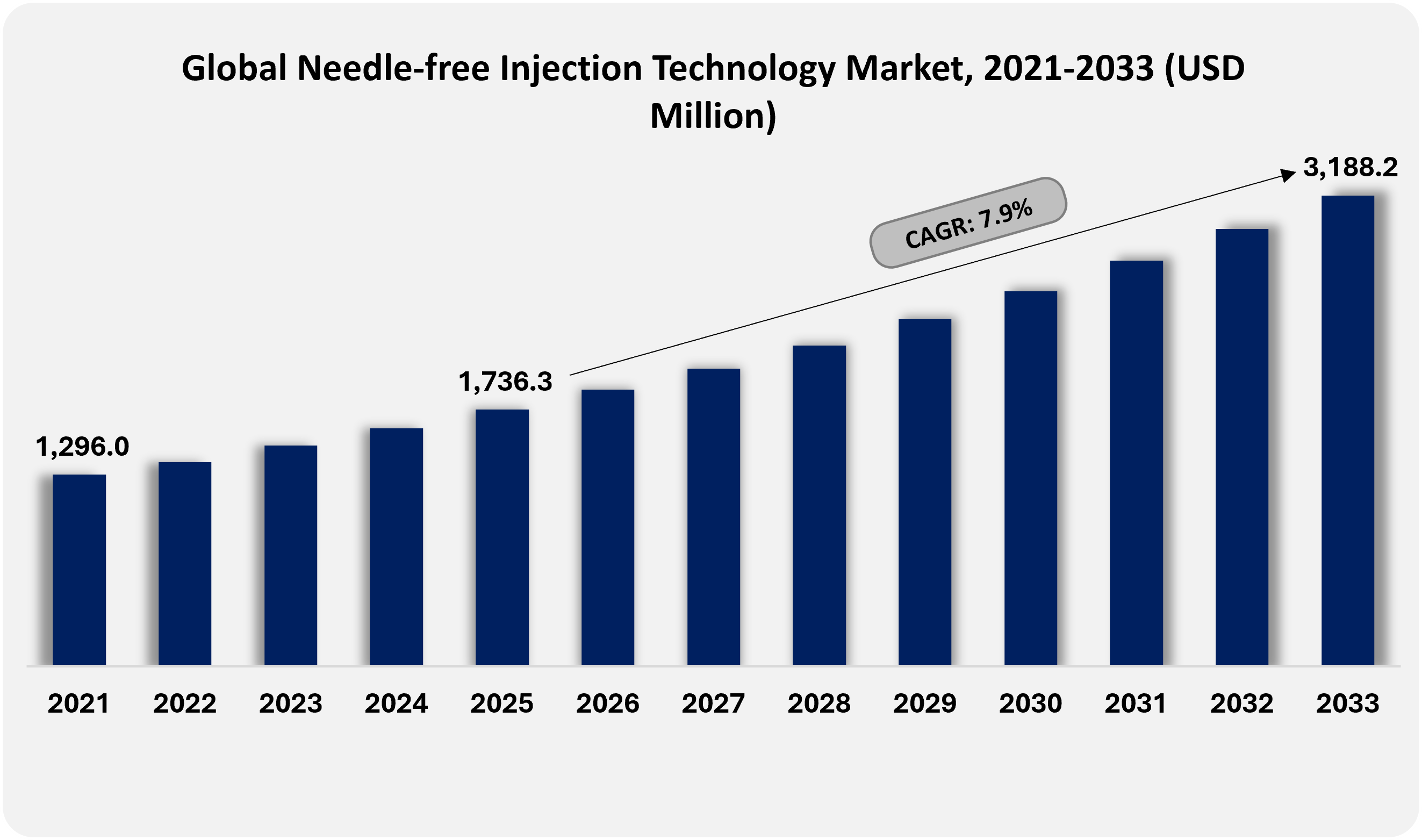
Needle anxiety reduction and improved adherence.
The global Needle-free Injection Technology market will gain momentum through reduced needle-related anxiety, which continues to limit treatment initiation and routine immunization across multiple age groups. Pain-minimized delivery systems improve patient confidence, support better adherence, and strengthen chronic disease management programs, leading to sustained demand across hospitals, clinics, and community healthcare campaigns.
Intradermal targeting with rapid uptake and simplified immunization workflows
The global Needle-free Injection Technology market will expand through intradermal targeting, which enables rapid antigen uptake and improved immune response efficiency. Simplified administration workflows reduce dependence on highly specialized personnel, improve mass vaccination logistics, and enhance throughput in public health initiatives, creating measurable operational benefits across structured immunization programs.
Higher device and consumable cost with training and handling requirements
The global Needle-free Injection Technology market faces pressure from high device acquisition costs and recurring consumable expenses, which continue to influence procurement decisions in cost-sensitive healthcare systems. Additional requirements for technical training, calibration oversight, and safe handling protocols further increase operational expenditure, limiting broader adoption across smaller providers and resource-constrained settings.
Formulation and dose constraints, including viscosity, volume, and payload stability limits
The global Needle-free Injection Technology market also faces formulation constraints related to viscosity thresholds, limited injectable volumes, and payload stability parameters that affect therapeutic compatibility. Complex biologics with sensitive molecular structures often require reformulation, increasing development timelines and regulatory review requirements before large-scale commercial adoption becomes feasible.
Microarray patch platforms supporting thermostability and self-administration for vaccines and selected biologics
The global Needle-free Injection Technology market will create new opportunities through microarray patch innovations designed to improve thermostability and enable simplified self-administration models. Reduced cold-chain dependence strengthens access across remote geographies, while patient-controlled delivery mechanisms support decentralized care pathways and open scalable opportunities for vaccines and selected biologic therapies in preventive healthcare.
The Global Needle-free Injection Technology market is classified based on Product Type, Technology, Type of Medication, and End User.
Fillable Needle-free Injectors segment is estimated at USD 1,141.3 million in 2026 and is projected to reach USD 1,802.6 million by 2033, at a CAGR of 6.7% during the forecast period.
Fillable needle-free injectors will support flexible dosing strategies in the global Needle-free Injection Technology market. Healthcare providers benefit from greater control over volume adjustment, which improves therapeutic precision across chronic treatment applications. Reusable platform designs also support long-term cost efficiency, while future device engineering will focus on durability, safety validation, and simplified sterilization protocols.
Prefilled Needle-free Injectors segment is estimated at USD 730.4 million in 2026 and is projected to reach USD 1,385.6 million by 2033, at a CAGR of 9.6% during the forecast period.
Prefilled needle-free injectors will improve convenience and reduce preparation errors in the global Needle-free Injection Technology market. Pharmaceutical manufacturers are increasingly integrating premeasured formulations to ensure accurate dosing, while large-scale immunization programs benefit from faster administration and improved workflow efficiency. Advanced packaging and tamper-evident designs are also strengthening supply chain security and patient confidence.
Jet-based Needle-free Injectors segment is projected to reach USD 1,659.5 million by 2033, at a CAGR of 7.2% during the forecast period.
Jet-based needle-free injectors will remain central to innovation pipelines within the global Needle-free Injection Technology market. High-pressure streams enable drug delivery through the skin without conventional needles, supporting efficient administration across vaccines and biologics. Future platforms will enhance penetration control, reduce tissue trauma, and improve dosing precision through continued advances in engineering and device design.
Spring-based Needle-free Injectors segment is projected to reach USD 774.4 million by 2033, at a CAGR of 7.5% during the forecast period.
Spring-based needle-free injectors will offer mechanically driven drug delivery solutions across the global Needle-free Injection Technology market. Controlled spring tension supports consistent drug pressure and penetration depth, while compact device formats improve portability and ease of handling. Their mechanical reliability and simplified maintenance requirements are also expected to support adoption across resource-limited healthcare environments.
Vibration-Based Needle-Free Injectors segment is projected to reach USD 325.5 million by 2033, at a CAGR of 10.8% during the forecast period.
Vibration-based needle-free injectors will introduce advanced transdermal dispersion approaches in the global Needle-free Injection Technology market. Oscillation mechanisms may improve skin permeability and drug absorption efficiency, while ongoing research continues to optimize frequency modulation to improve patient comfort and delivery consistency. Future regulatory progress will depend on strong clinical validation of therapeutic performance and repeatability.
Others segment is projected to reach USD 428.8 million by 2033, at a CAGR of 9.5% during the forecast period.
Emerging technologies will intensify competitive dynamics in the global Needle-free Injection Technology market. Gas-powered propulsion systems, microarray patch innovations, and hybrid platforms that combine pressure modulation with digital monitoring are attracting research investment and product development attention. These approaches will advance precision drug delivery while broadening the technology landscape beyond conventional injector formats.
Liquid-based Needle-free Injectors segment is projected to reach USD 2,374.6 million by 2033.
Liquid-based needle-free injectors will remain the primary format for therapeutic deployment in the global Needle-free Injection Technology market. Vaccines and biologic drugs continue to rely heavily on liquid formulations for effective dispersion and dose control. Future development will strengthen compatibility with temperature-sensitive compounds, while improved sealing mechanisms support sterility and extended product shelf life.
Powder-based Needle-free Injectors segment is projected to reach USD 641.2 million by 2033.
Powder-based needle-free injectors will support stable storage and transport across the global Needle-free Injection Technology market. Dry formulations reduce dependence on refrigeration and improve distribution efficiency, particularly in broader immunization and remote-care settings. Advances in particle engineering are also improving absorption efficiency, while moisture-resistant packaging remains essential for preserving formulation integrity.
Projectile/Depot-based Needle-free Injectors segment is projected to reach USD 172.5 million by 2033.
Projectile or depot-based needle-free injectors will support sustained-release therapeutic applications in the global Needle-free Injection Technology market. Controlled implantation beneath the skin can enable gradual drug diffusion, making these systems relevant for chronic disease management where reduced dosing frequency is beneficial. Continued biomedical research is also focused on biodegradable carriers to improve long-term safety and compatibility.
Hospitals and Clinics segment is projected to grow at a CAGR of 7.1% during the forecast period.
Hospitals and clinics will remain the primary adoption centers in the global Needle-free Injection Technology market. Institutional demand is being supported by the need for infection control, workflow efficiency, and reliable drug administration across vaccination programs and specialty treatments. Procurement strategies in these settings will prioritize regulatory compliance, device performance, and long-term cost efficiency.
Homecare Settings segment is projected to grow at a CAGR of 9.8% during the forecast period.
Homecare settings will drive patient-centered growth in the global Needle-free Injection Technology market. Self-administration devices reduce dependence on in-person clinical visits and support treatment continuity across chronic care applications. Ergonomic design improvements and remote monitoring integration are also improving usability, adherence tracking, and therapeutic consistency, particularly among elderly and long-term care populations.
Research Laboratories segment is projected to grow at a CAGR of 7.1% during the forecast period.
Research laboratories will play an important role in product innovation within the global Needle-free Injection Technology market. Experimental drug delivery models continue to undergo performance validation in controlled settings, where preclinical research supports assessment of absorption kinetics, tissue response, and device effectiveness. Collaborative research funding is also accelerating prototype refinement and regulatory pathway preparation.
Pharmaceutical and Biotechnology companies segment is projected to grow at a CAGR of 8% during the forecast period.
Pharmaceutical and biotechnology companies will strengthen commercialization strategies in the global Needle-free Injection Technology market. Investment in combination drug-device systems is expanding treatment portfolios, while manufacturing automation is improving scalability and quality control standards. Strategic partnerships and licensing agreements are also supporting global distribution and stronger competitive positioning.
Based on geography, the Global Needle-free Injection Technology market is divided into North America, Europe, Asia-Pacific, South America, Middle East, and Africa.
North America Needle-free Injection Technology Market is set to expand at a CAGR of 7.9% within the forecast period, reaching a market size (TAM) of USD 1,091.6 million by the end of 2033.
In North America, rising prevalence of persistent diseases inclusive of diabetes and autoimmune disorders is accelerating adoption of needle-free injection technology for frequent drug administration.
In North America, strong regulatory aid and excessive healthcare expenditure are using speedy integration of advanced drug transport systems across hospitals and homecare settings.
In Europe, strong healthcare systems, rising adoption of self-administration therapies, and growing focus on safe and patient-friendly drug delivery are supporting the uptake of needle-free injection technology across hospitals, clinics, and homecare settings.
In Asia Pacific, increasing vaccination programs and developing public fitness investments are growing extensive opportunities for needle-loose injection technology adoption.
In Asia Pacific, growing cognizance on patient comfort and technological advancement in clinical devices is starting new growth avenues for needle-loose injection generation producers.
In Middle East, Africa, and South America, improving healthcare infrastructure and growing awareness about safe injection practices are gradually strengthening demand for needle-loose injection era throughout rising economies.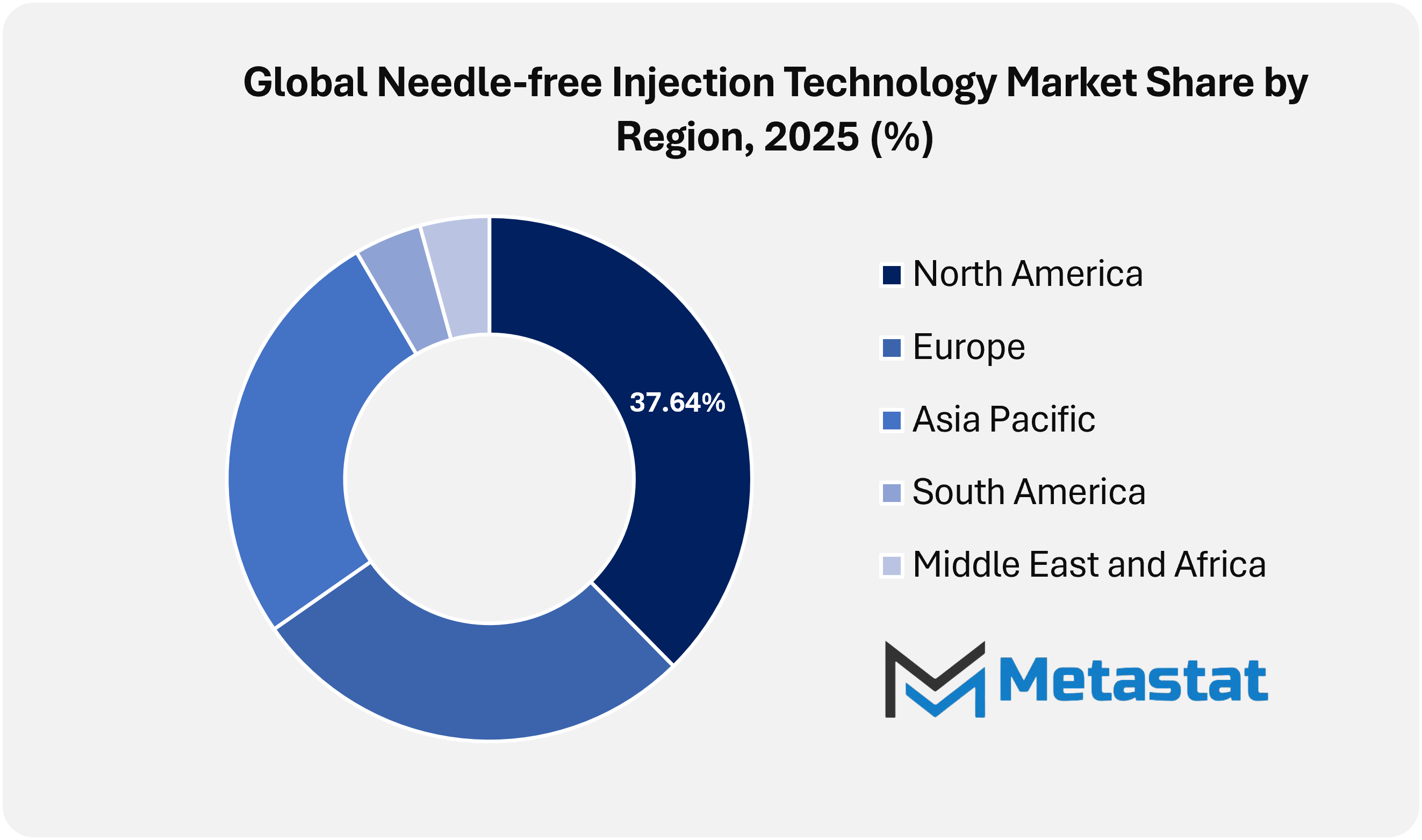
The global needle-free injection technology market is gaining constant interest as healthcare vendors and sufferers look for safer and much less painful drug delivery options. Traditional needles often motive anxiety, soreness, and chance of needle-stick injuries, so that it will preserve to push alternative systems. Needle-loose devices use high-pressure streams, spring-based structures, or micro-projection methods to supply medicinal drug through the pores and skin without a conventional needle. This approach will help improve affected person compliance, especially among kids and people who require common injections for chronic conditions including diabetes or autoimmune problems. As public health programs extend vaccination insurance, these technologies will play a more potent function in mass immunization efforts.
Growth in this market is also connected to the growing consciousness on self-administration and home-based care. Patients will be an increasing number of options for devices which are clean to use, transportable, and designed for minimal education. Needle-loose systems reduce the worry associated with injections and decrease the chances of go-infection. In addition, healthcare systems will gain from reduced clinical waste, seeing that these devices often get rid of the want for sharps disposal. Pharmaceutical agencies are exploring how these shipping platforms can improve drug absorption and effectiveness, to aid similarly product improvement and regulatory approvals within the coming years.
Several established and emerging businesses are shaping the competitive landscape. Key worldwide needle-free injection era enterprise players include PharmaJet, Inc., Crossject SA, Aijex Pharma International Inc., Portal Instruments, Inc., NanoPass Technologies Ltd., NuGen Medical Devices Inc., IntegriMedical, Vaxxas Pty Ltd., Micron Biomedical, Inc., AKRA DERMOJET SAS, Mada Medical Products, Inc., Medical International Technologies (MIT Canada) Inc., Sol-Millennium Medical Group, Antares Pharma, Inc., Teva Pharmaceutical Industries Ltd., MIKA MEDICAL CO, National Medical Products, Inc. (J-Tip), Corium, Inc., and UCB (Zogenix). These companies are making an investment in research, strategic partnerships, and product launches to strengthen their positions.
Looking beforehand, the market will grow as awareness grows approximately the benefits of needle-free structures in both advanced and emerging economies. Governments will likely aid adoption through vaccination drives and safety guidelines aimed toward lowering needle-associated accidents. At the identical time, price and repayment guidelines will have an impact on how quick hospitals and clinics shift to these systems. With ongoing innovation and broader attractiveness, needle-unfastened injection era will become a sensible and depended on alternative in contemporary healthcare transport.
Market size is forecast to rise from USD 1,736.3 million in 2025 to over USD 3,188.2 million by 2033.
Home-primarily based care fashions will advantage momentum, supported by compact, consumer-friendly injectors that reduce tension related to sharps disposal and accidental injuries. Public health packages will adopt massive-scale immunization techniques that reduce move-infection threat and improve operational efficiency all through mass campaigns. In parallel, rising economies will invest in localized manufacturing to beautify deliver resilience and decrease procurement dependency.
This research report categorizes the Needle-free Injection Technology market based on key segments and regions, forecasts revenue growth, and analyses trends in each submarket. The report analyses the key growth drivers, opportunities, and challenges influencing the Needle-free Injection Technology market. Recent market developments and competitive strategies such as expansion, product launch, partnership, merger, and acquisition have been included to draw the competitive landscape in the market.
The report strategically identifies and profiles the key market players and analyses their core competencies in each sub-segment of the Needle-free Injection Technology market.
|
Report Attributes |
Details |
|
Study Period |
2021-2033 |
|
Base Year |
2025 |
|
Estimated Year |
2026 |
|
Forecast Period |
2026-2033 |
|
Historical Period |
2021-2025 |
|
Growth Rate |
CAGR 7.9% from 2026 to 2033 |
|
Revenue Unit |
USD Million |
|
Sales Volume Unit |
Million Units |
|
Segmentation |
By Product Type, Technology, Type of Medication, End User, and Region |
|
By Region |
North America (By Product Type, Technology, Type of Medication, End User, and Country)
|
|
Europe (By Product Type, Technology, Type of Medication, End User, and Country)
|
|
|
Asia Pacific (By Product Type, Technology, Type of Medication, End User, and Country)
|
|
|
South America (By Product Type, Technology, Type of Medication, End User, and Country)
|
|
|
Middle East and Africa (By Product Type, Technology, Type of Medication, End User, and Country)
|
Find answers to common questions about this report
Top players operating in the Needle-free Injection Technology industry include PharmaJet, Inc., Crossject SA, Aijex Pharma International Inc., Portal Instruments, Inc., NanoPass Technologies Ltd., and NuGen Medical Devices Inc.
Global Needle-free Injection Technology market is estimated to reach USD 3,188.2 million by 2033.
North America region dominates the market.
Needle anxiety reduction and improved adherence and Intradermal targeting with rapid uptake and simplified immunization workflows are key driving factors, boosting the market.
Higher device and consumable cost with training and handling requirements will hamper the market growth within the forecast period.
The Fillable Needle-free Injectors is the leading type segment in the Global market.
The Metastat Insights analysis shows that the North America Needle-free Injection Technology market size is estimated to be USD 1,091.6 million by 2033.
The Metastat Insights study shows that the Global Needle-free Injection Technology market size was USD 1,736.3 million in 2025.
The Global Needle-free Injection Technology market will grow at a CAGR of 7.9% over the forecast period (2026-2033).
The analysts below cover Medical Devices research at Metastat Insights.
LEAD ANALYST
Utkarsh Khirodkar is a Lead Market Research Analyst at MetaStat Insight, specializing in market intelligence, technology sector assessments, and competitive strategy.

LEAD PRINCIPAL ANALYST, PHARMA AND HEALTHCARE
Food and Beverages · Healthcare · Healthcare IT · Medical Devices
Ajay Devgire is the Lead Healthcare Analyst at MetaStat Insight, leading strategic research and market intelligence initiatives across the global healthcare domain.

SENIOR RESEARCH ANALYST
Biotechnology · Food and Beverages · Medical Devices · Packaging
Snehal Pasalkar is a Research Analyst at MetaStat Insight, operating at the intersection of life sciences research, competitive strategy, and market intelligence.
Ambulatory surgical centers have very different purchasing cycles for robotic-assisted surgery platforms than major hospital networks. The MetaStat Insight study focused squarely on capital expenditure depreciation, procedural reimbursement pathways, and surgeon training overhead. That operational clarity made it much simpler to validate multi-year procedure growth forecasts against actual ambulatory center adoption patterns.
When planning edge sensor rollouts across refinery environments, generic IoT reports typically miss the harsh-environment certification bottlenecks. MetaStat Insight gave an objective evaluation of ATEX and Class 1 Division 2 hardware availability, along with realistic five-year maintenance cycle cost projections. The comparison of wireless mesh versus private cellular backhaul helped our team pressure-test network reliability models for remote processing facilities.
In the biological seed treatment space, registration timelines vary drastically between the European Union, Brazil, and North America. The MetaStat Insight research handled these cross-border regulatory barriers with genuine nuance, mapping commercialization pathways alongside historical field adoption rates. The segmentation between microbial strains and biochemical active ingredients was particularly well structured.
Explore related market intelligence reports worth reading alongside this one.
Starting from
$2950