
LEAD ANALYST
Utkarsh Khirodkar is a Lead Market Research Analyst at MetaStat Insight, specializing in market intelligence, technology sector assessments, and competitive strategy.

Oral Controlled Release Drug Delivery Technology Market By Drug Release System (Dissolution Controlled Release System, Diffusion Controlled Release System, Osmotically Controlled Release System, Dissolution, Diffusion Controlled Release System, Ion Exchange Resins Controlled Release System, Hydro-dynamically Balanced Drug Delivery System, and Others), By Dosage Form (Solid Dosage Forms, Semisolid, Liquid, and Suspensions), By Solid Dosage Forms Type (Tablets, Capsules, and Other Solid Dosage Forms), Industry Analysis, Size, Share, Growth, Trends, and Forecast, 2024-2031
Report ID
MSI-2907
Published
February, 2026
Pages
255 Pages
Format
Report Details
Choose Your License
Oral Controlled Release Drug Delivery Technology Market
The Global Oral Controlled Release Drug Delivery Technology market is estimated to reach $59043.3 Million by 2031; growing at a CAGR of 7.6% from 2024 to 2031.
The Global Oral Controlled Release Drug Delivery Technology market is at the forefront of pharmaceutical innovation, dictating how, in the near future, medications will be administered to patients across the world. It has focused on developing and applying advanced technologies that would provide a well-timed release of the active pharmaceutical ingredients in the human body. Such developments help the health professional to accurately deal with the dosage and hence increase the recovery prospects of patients while minimizing the potential side effects faced with conventional drug delivery techniques.
In the growing Global Oral Controlled Release Drug Delivery Technology market, a need is realized for better therapeutic efficiency. More often than not, traditional oral drug delivery systems lead to fluctuating plasma drug levels that sometime fall below or rise above optimal therapeutic levels and prove toxic. On the other hand, controlled release formulations keep drug concentrations within the therapeutic window for a longer period and therefore offer a considerable advantage for the treatment of chronic conditions where consistent dosage is important.
This market is boosted by continued research and development in trying to increase the bioavailability of the drugs while at the same time optimizing their release profiles. Oral controlled release technologies have been developed to try to eliminate certain limitations posed by immediate-release dosage forms such as frequent dosing and poor patient compliance. These technologies, by controlling the release rate of a drug into the bloodstream, provide more predictable and sustained therapeutic effects, hence appropriate for the management of long-term diseases like diabetes, hypertension, and psychiatric disorders.
With a large number of pharmaceutical companies working on the development of novel polymers and excipients for the creation of sophisticated drug delivery systems in the Global Oral Controlled Release Drug Delivery Technology market, their main focus is shifting towards this sector. These materials are used for the controlled release of the drug, making it easier to have better control over the pharmacokinetics of the medication. Moreover, it is supposed that nanotechnology is going to further revolutionize this market with tremendous opportunities for the development of more targeted and effective systems for drug delivery.
The market growth is directly associated with the rising demand for patient-centric, healthcare-associated solutions. With increasing awareness in patients and healthcare professionals about the benefits of controlled release formulations, adoption of such technologies would increase in several therapeutic areas. Other variables include easy-to-use dosage forms in development, such as extended-release tablets and capsules, which will add to the growth of this market since they are convenient and promote a patient’s compliance with a prescribed regimen.
In other words, regulatory bodies across the world play an important role in shaping the Global Oral Controlled Release Drug Delivery Technology market. Indeed, the approval process of controlled release formulation is rigorous, time-consuming, and has multi-phase clinical trials to prove its safety and efficacy. However, such regulatory challenges also ensure that only advanced, very effective products make their way into the market, hence driving innovation within the industry.
Looking ahead, the Global Oral Controlled Release Drug Delivery Technology market shall be dynamic and fast growing; as such, many opportunities exist for innovation and growth. Investment by pharmaceutical companies in cutting-edge research and technology will definitely drive sophisticated drug delivery systems in the near future. This will not only help in enhancing the therapeutic efficacy of drugs but also alter the whole concept of health care to provide treatments in a much more effective and personalized way to individual patients.
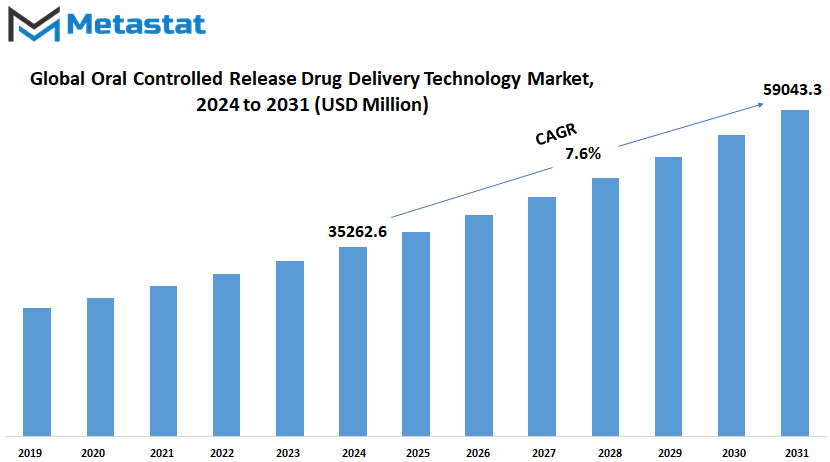
The Global Oral Controlled Release Drug Delivery Technology market has been presented to grow at a remarkable CAGR in the future years. A blend of a few variables is driving the interest for this market. The rising interest in cutting edge medication conveyance frameworks that improve patient consistence and show better restorative results is one of the essential variables steering this market. The new dynamics in health care now demands technologies that can offer uniform and sustained release of the medication for a longer period, resulting in increased treatment efficacy and reduced dosing frequency, notably for treatments of chronic conditions.
Another major driving force for the market is the rising incidence of chronic diseases, such as diabetes, cardiovascular diseases, and cancer. Long-term treatment modalities are called for in these diseases, in which oral controlled release drug delivery systems are better suited, as they are able to maintain a steady drug level within the body and thereby offer relief and improve the quality of life of patients. Also, aging populations around the world raise the demand for such technologies since older adults are more susceptible to continuous medication.
The challenges in the market, however, are not completely absent. The high development and resultant production cost of oral controlled release drug delivery systems could be one such growth constraint. Technologies of this kind require sophisticated manufacturing processes and rigorous testing with regard to safety and efficiency, which raises their cost. In addition, stringent regulatory requirements delay the approval and commercialization of new products, further hampering expansion in the market.
Despite all these issues, the Global Oral Controlled Release Drug Delivery Technology market has huge growth potential in the near future. Pharmaceutical research and development in modern drug delivery technology is likely to yield more efficient and cost-effective drug delivery systems. Besides, increased adoption of personalized medicine demands tailored oral controlled release formulations, which will grow to cater to individual patient needs.
This will likely drive the market forward through investments in healthcare infrastructure in the next couple of years, especially in developing economies. With more people having increased access to healthcare and seeking treatment against various chronic diseases, the demand for advanced drug delivery technologies will possibly increase accordingly. Furthermore, collaborations between pharmaceutical companies and technology providers could bring about developing innovative solutions to bridge the gap of existing offerings in the market.
With the rising prevalence of chronic diseases, advancements in technology, and increasing investments in healthcare, the market for Global Oral Controlled Release Drug Delivery Technology is becoming very prospective. The future of this market seems very bright, with immense opportunities lying ahead for innovation and expansion, even though there are challenges.
The Global Oral Controlled Release Drug Delivery Technology market is poised to grow at a decent growth rate over the next couple of years. In very basic terms, the nature of this market is defined through a range of drug release systems, which, in turn, suggest individual ways of increasing the effectiveness and patient experience of the medication delivery process. This drive toward more efficient and patient-friendly drug delivery is consequently the engenderer of invention, and thus, several types of controlled release systems have been developed.
This market’s major type of system would be the Dissolution Controlled Release System. Such a system will target the rate of dissolution, considering whether a drug is in the body, so that it can release medication slowly throughout time rather than all at once. This can help to maintain a constant level of drug in the blood stream, making it easier and less often to dose and thus improving the compliance of patients with treatment regimens.
Another important system is the Diffusion Controlled Release System, in which the rate of diffusion of a drug through a barrier is controlled. These are mainly used in those medications where the release of the active component needs to be at a constant, definite rate. The system of the Osmotically Controlled Release System uses osmotic pressure to effect the controlled release of drugs, which allows for the delivery of a specific dose at a predetermined time; these features fit medications that must be released in specific parts of the gastrointestinal tract.
The Dissolution and Diffusion Controlled Release System combines both of the detachment and diffusion mechanisms. This hybrid approach allows additional influence toward the manner and timing of drug release for optimal therapeutic outcome, by uniting the virtues of the above-described techniques.
Another latest development in this respect is the Ion Exchange Resins Controlled Release System, wherein the drugs are released through ion exchange processes. The system can prove especially effective with drugs that are susceptible to the gastrointestinal environment, thereby offering protection until it gets to the desired site of action. Moreover, the Hydro-dynamically Balanced Drug Delivery System is designed to stay buoyant in the stomach and facilitate prolonged release of the drug in the upper gastrointestinal tract.
This will be a contributing aspect to the growth of the global oral controlled release drug delivery technology market, as these technologies develop. The current innovations in these areas will probably lead to novel, individually adapted therapies that improve the clinical outcome and set the pace for further advances in the field of controlled release drug delivery systems for other therapeutic classes. In totality, with all these advancements, the future of this market looks bright.

The Global Oral Controlled Release Drug Delivery Technology market is focused on enhancing the delivery of drugs to patients, and the technology is an intrinsic part of the pharmaceutical industry. This generally means allowing the medication to be released from the drug in a controlled way, whereby the drug is released at the correct time and in the proper amount. It can only be assumed that this approach offers many advantages by way of enhanced patient outcomes and reduced side effects, and that treatment will become much more efficient. From a future market perspective, what is envisioned is growth, given technological strides, increased demand for therapies bearing effective results, and the relentless battle against health conditions.
Some of the key segments in this very market include dosage forms, semisolid/liquid dosage forms, and suspensions. The largest market share is occupied by solid dosage forms, which also comprise the maximum number of products, since most pharmaceutical entities are most convenient and stable in this form. Tablets and capsules are the major classes under this category. They are really easy to prepare and have a longer shelf life, so more pharmaceutical companies produce the dosage form. However, semisolid and liquid dosage forms are increasingly popular with advantages in application by themselves. For example, they become easier to swallow for patients who have problems with the swallowing of solids, as in elderly and child patients. Suspensions have a very vital place mainly in drugs not readily absorbed in their solid state. These modifications in dosage forms bring flexibility in drug delivery that may be tailored according to the needs of each patient.
The Global Oral Controlled Release Drug Delivery Technology market is bound to witness huge developments in the near future. Most probably, these developments will come as a result of new drug formulations and delivery mechanisms that give way to newer products which are more effective and more user-friendly for patients. There will be a greater trend toward personalized medicine, which will further accelerate demand for dosage forms tailored to meet the needs of each individual patient. This, in turn, will help optimize treatment outcomes. The second driver for the market will be the growing incidence of various chronic diseases; owing to long-term medication management required for these diseases, the need for controlled release technology assumes importance.
By Solid Dosage Forms Type
The Global Oral Controlled Release Drug Delivery Technology market is much expected to witness a sea-change in the times to come, more so in the domain of solid dosage forms. Among such would be Tablets, Capsules, and Other solid dosage forms, all assuming pivotal roles in changing the very face of drug delivery systems in times to come.
Tablets, for a long time already used by the pharmaceutical industry, will dominate further due to convenience and ability to provide accurate dosage. Tableting technology improvement likely to bring bigger increments in improving the effectiveness of such medication and patient compliance. As demand for personalized medicine increases, tablets are likely to introduce innovations, which could ensure more controlled and personalized drug releases, potentially helping satisfy the different needs of each patient.
Capsules are yet another key component that will see remarkable developments. Capsules’ ability to accommodate a host of drug formulations makes the device very flexible. New and future developments could then be focused on the fine-tuning of the release mechanisms so that drugs are released at optimal times to ensure effective therapeutic outcomes. What started out as a simple capsule would now, through new materials and technologies, take on a sophisticated nature with very significant gains in performance and stability.
This would also include the category of other solid dosage forms, within which a host of novel and emerging technologies would reside. A number of innovations are bound to affect this segment as scientists continue to find newer ways of enhancing drug delivery systems—either in advanced multiparticulate systems or some other such forms that help achieve more controlled and efficient drug release.
The future of the Global Oral Controlled Release Drug Delivery Technology market looks extremely bright. Further research and enhancement in technology will make tablets, capsules, and other solid dosage forms highly effective, thereby enabling more focused and effective treatments. In times ahead, these dosage forms would be crucial in deciding the future of the delivery mechanism; they will end up meeting the requirements of patients and healthcare providers alike.
|
Report Coverage |
Details |
|
Forecast Period |
2024-2031 |
|
Market Size in 2024 |
$35262.6 Million |
|
Market Size by 2031 |
$59043.3 Million |
|
Growth Rate from 2024 to 2031 |
7.6% |
|
Base Year |
2022 |
|
Regions Covered |
North America, Europe, Asia-Pacific Green, South America, Middle East & Africa |
On the global front, the Oral Controlled Release Drug Delivery Technology market has reportedly been developing dynamically, with different geographical regions making varied contributions to its growth. The North American region, including the U.S., Canada, and Mexico, has been at the forefront in this industry. Advanced healthcare infrastructure and huge investments in R&D in these countries support innovation and the adoption of novel technologies. The country that holds a well-developed pharmaceutical industry with a large number of major pharmaceutical corporations is the key player to drive trends in the region. Canada, with its regulatory support, and Mexico, with its developing healthcare sector, have only added to this capability.
It caters to major countries in Europe like the UK, Germany, France, and Italy, and other European countries. Healthcare activity and technological innovation are very strong in the European market. The UK and Germany are countries with many research facilities and a high standard of medicine. France and Italy also play a key role due to their approach toward healthcare research and development of drugs.
The Asia-Pacific region is evolving into a significant factor in the global Oral Controlled Release Drug Delivery Technology market. The key economies in this region are India, China, Japan, and South Korea. Coupled with rapid industrial growth, huge investments in the pharmaceutical sector are made in China, which together with the growing healthcare market of India, propelled by benign changes in regulations, has created an ideal environment for the growth of this market. Advanced technological capabilities combined with strong healthcare systems in Japan and South Korea further support this regional market.
South America, with countries like Brazil and Argentina, slowly builds its role in this market. Investments in healthcare and improved infrastructure are increasing in this region, and this factor should assist the growth in the Oral Controlled Release Drug Delivery Technology sector. As Brazil and Argentina work on developing their healthcare capabilities, they will become more and more influential in the global marketplace.
The Middle East & Africa include a mixed yet promising landscape, with GCC countries, Egypt, South Africa, and other parts of the region. Growing focus on better infrastructure in healthcare and increasing expenditure on healthcare in these regions are driving factors. Specifically, South Africa is improving the pharmaceutical industry, while GCC countries are giving attention to improvements in healthcare, thereby boosting the market.
In the future also, each of these regions is going to further the course of the global Oral Controlled Release Drug Delivery Technology market. While North America and Europe are likely to remain the key innovators, Asia-Pacific will continue to drive growth. South America and Middle East & Africa will register incremental progress as they build their healthcare capabilities. As the healthcare needs of the world progress, so will the market adjust to the regional contributions toward a more intertwined and sophisticated technology of drug delivery.
Development in the Global Oral Controlled Release Drug Delivery Technology market has been fast as the sector changes time after time. This industry is characterized by the development of drug delivery systems that are designed to release medication in a controlled manner over some time. This aims to improve the level of patient compliance and therapeutic outcome by drugs released steadily and predictably.
The oral controlled drug delivery technology market is forecasted to greatly increase over the next few years. As better and more facile ways of drug delivery need to be found, growth will continue to escalate. Companies are therefore heavily investing in research and development that focuses on better patient care through the introduction of new technologies that can be used to enhance the efficacy and safety of oral medications.
Quite a few key players are shaping the future of this market. For example, Croda International Plc is known for its innovative developments in drug delivery solutions based on the use of new materials and technologies. One of the major pharmaceutical companies, Pfizer Inc., continues to conduct research into novel drug delivery systems for the achievement of improved therapeutic results and patient compliance. Other major contributors include Biograil ApS and Evonik Health Care, who introduced specialized drug delivery technologies.
Skyepharma Production and Adare Pharma Solutions are actively involved in developing controlled release formulations targeted at addressing certain medical needs. Other key companies are Alkermes, Coating Place Inc., and Osmotica Pharmaceuticals plc, each offering different technologies and solutions.
Dr. Reddy's Laboratories Ltd. and Mallinckrodt plc bring extensive industry expertise and a diversified portfolio of drug delivery technologies, while Janssen Pharmaceuticals and Catalent, Inc. have deep dedication to the growth and development of controlled release technologies for oral medications, ensuring their effectiveness and safety.
The future for the Global Oral Controlled Release Drug Delivery Technology market does look promising with such key players and other industrialists roped in to develop more sophisticated and patient-friendly drug delivery solutions. Enhanced drug efficacy, reduced side effects, and improved patient compliance are all on course to stimulate this market, given the continuous evolution of technology in this field.
There is a bright future ahead of the Global Oral Controlled Release Drug Delivery Technology market, with a number of key players actively contributing to its growth. Under constant innovation, such companies are sure to propel the market farther ahead in the future and result in newer opportunities and solutions in the drug delivery segment.
By Drug Release System
Find answers to common questions about this report
Global Oral Controlled Release Drug Delivery Technology market is valued at $35262.6 million in 2024.
Global Oral Controlled Release Drug Delivery Technology market is estimated to grow with a CAGR of 7.6% from 2024 to 2031.
Global Oral Controlled Release Drug Delivery Technology market is estimated to reach $59043.3 million by 2031.
Top players operating in the Oral Controlled Release Drug Delivery Technology industry includes Croda International Plc, Pfizer Inc., Biograil ApS, and others.
The analysts below cover Medical Devices research at Metastat Insights.
LEAD ANALYST
Utkarsh Khirodkar is a Lead Market Research Analyst at MetaStat Insight, specializing in market intelligence, technology sector assessments, and competitive strategy.

LEAD PRINCIPAL ANALYST, PHARMA AND HEALTHCARE
Food and Beverages · Healthcare · Healthcare IT · Medical Devices
Ajay Devgire is the Lead Healthcare Analyst at MetaStat Insight, leading strategic research and market intelligence initiatives across the global healthcare domain.

SENIOR RESEARCH ANALYST
Biotechnology · Food and Beverages · Medical Devices · Packaging
Snehal Pasalkar is a Research Analyst at MetaStat Insight, operating at the intersection of life sciences research, competitive strategy, and market intelligence.
Ambulatory surgical centers have very different purchasing cycles for robotic-assisted surgery platforms than major hospital networks. The MetaStat Insight study focused squarely on capital expenditure depreciation, procedural reimbursement pathways, and surgeon training overhead. That operational clarity made it much simpler to validate multi-year procedure growth forecasts against actual ambulatory center adoption patterns.
When planning edge sensor rollouts across refinery environments, generic IoT reports typically miss the harsh-environment certification bottlenecks. MetaStat Insight gave an objective evaluation of ATEX and Class 1 Division 2 hardware availability, along with realistic five-year maintenance cycle cost projections. The comparison of wireless mesh versus private cellular backhaul helped our team pressure-test network reliability models for remote processing facilities.
In the biological seed treatment space, registration timelines vary drastically between the European Union, Brazil, and North America. The MetaStat Insight research handled these cross-border regulatory barriers with genuine nuance, mapping commercialization pathways alongside historical field adoption rates. The segmentation between microbial strains and biochemical active ingredients was particularly well structured.
Explore related market intelligence reports worth reading alongside this one.