
LEAD ANALYST
Utkarsh Khirodkar is a Lead Market Research Analyst at MetaStat Insight, specializing in market intelligence, technology sector assessments, and competitive strategy.

Programmable Controlled Rate Freezer Market By Type (Small Capacity (Medium Capacity (20-30 L) and High Capacity (>30 L)), By Application (Research, Cell, Gene Therapy, Biobank, and Others), Industry Analysis, Size, Share, Growth, Trends, and Forecast, 2023-2030
Report ID
MSI-2517
Published
February, 2026
Pages
258 Pages
Format
Report Details
Choose Your License
Programmable Controlled Rate Freezer Market
The Global Programmable Controlled Rate Freezer market is estimated to reach $78.7 Million by 2030; growing at a CAGR of 5.9% from 2023 to 2030.
The Programmable Controlled Rate Freezer Market stands as a technological cornerstone, revolutionizing the cryopreservation process. This market segment is a testament to the relentless pursuit of innovation in preserving biological samples, such as cells, tissues, and vaccines, at controlled and programmable freezing rates.
A Programmable Controlled Rate Freezer is a specialized equipment designed to freeze biological samples in a controlled manner. Unlike traditional freezers, these advanced devices offer precise temperature management, allowing for programmable freezing rates tailored to the specific requirements of diverse biological materials. The significance of such technology lies in its ability to mitigate cellular damage during the freezing process, ensuring the viability and integrity of biological samples upon thawing.
The importance of Programmable Controlled Rate Freezers is particularly pronounced in fields where maintaining the viability of biological materials is crucial. In laboratories conducting cutting-edge research, the preservation of cell lines, tissues, and other biological specimens is fundamental to the progress of scientific exploration. Similarly, in the pharmaceutical industry, where the development and storage of vaccines and other biologics are paramount, these freezers play a pivotal role in safeguarding the efficacy of these critical substances.
One of the key advantages of Programmable Controlled Rate Freezers is their adaptability to a wide range of applications. Whether it’s preserving embryonic stem cells for regenerative medicine, storing tissue samples for diagnostic purposes, or ensuring the potency of vaccines, these freezers offer a versatile solution. The precision in freezing rates provided by these devices is instrumental in maintaining the structural and functional integrity of diverse biological materials.
The Programmable Controlled Rate Freezer Market is emblematic of the strides made in cryopreservation technology. Its role in preserving the viability of biological samples is indispensable in various scientific and industrial domains. As research continues to advance and new frontiers are explored, the importance of these freezers in maintaining the integrity of biological materials will only grow, cementing their status as a crucial tool in the arsenal of modern laboratories and biotechnological enterprises.
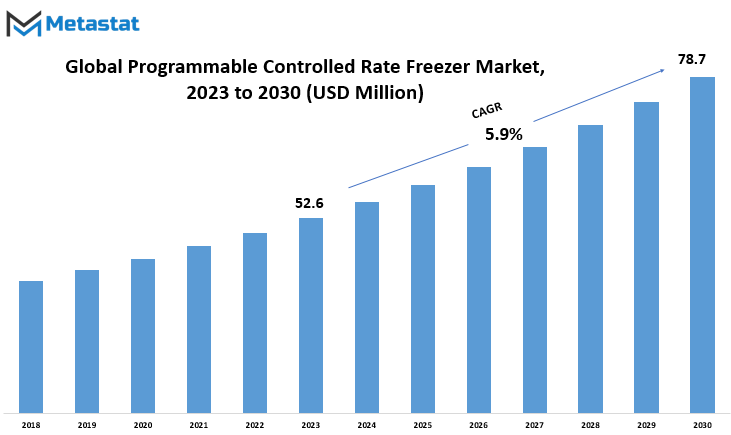
The Programmable Controlled Rate Freezer Market is experiencing notable trends and factors that shape its trajectory. One significant driver is the increasing demand for personalized medicine and advanced therapies, underscoring a shift towards more targeted and individualized healthcare solutions. This demand surge propels the market forward, aligning with the evolving needs of the healthcare landscape.
Furthermore, a growing focus on research and development in the life sciences industry is amplifying the market's expansion. The constant pursuit of innovation and breakthroughs in life sciences necessitates advanced freezing technologies, and programmable controlled rate freezers emerge as crucial tools in this context. Their ability to maintain precise temperature conditions is instrumental in preserving the integrity of biological materials, supporting the robust R&D endeavors in the industry.
However, the market faces certain restraints that warrant consideration. The high cost of equipment and its maintenance poses a challenge to widespread adoption. This financial barrier may hinder smaller entities from accessing these technologies, potentially limiting their participation in advanced therapies and personalized medicine initiatives.
Stringent regulatory requirements for the storage and transportation of biological materials present another restraint. The need for compliance with rigorous standards imposes additional burdens on organizations utilizing programmable controlled rate freezers. Navigating these regulatory landscapes demands substantial resources and attention to detail, contributing to the overall complexities in the market.
The growing adoption of regenerative medicine and cell therapy stands out as a promising avenue. As these fields continue to advance, the demand for precise and controlled freezing technologies becomes paramount. Programmable controlled rate freezers, with their ability to provide tailored freezing conditions, align perfectly with the requirements of regenerative medicine and cell therapy applications.
The Programmable Controlled Rate Freezer Market is propelled by the increasing demand for personalized medicine and advanced therapies, driven by the evolving landscape of healthcare needs. The emphasis on research and development in the life sciences industry further solidifies the market's trajectory. While facing challenges such as high costs and stringent regulations, the market finds opportunities in the growing adoption of regenerative medicine and cell therapy, positioning programmable controlled rate freezers as crucial players in the advancement of these fields.
The Programmable Controlled Rate Freezer Market can be categorized based on its type, with a more detailed breakdown into Small Capacity, Medium Capacity (ranging from 20 to 30 liters), and High Capacity (exceeding 30 liters). When the types of Programmable Controlled Rate Freezers, we find that they can be differentiated based on their capacity. The first category is Small Capacity, which indicates freezers designed for smaller storage needs. Moving on, we have Medium Capacity, specifically ranging between 20 to 30 liters, catering to a mid-range storage requirement. Lastly, the market also offers High-Capacity freezers, designed for those with storage needs surpassing 30 liters.
This segmentation in the Programmable Controlled Rate Freezer Market provides consumers with diverse options, allowing them to choose a freezer that aligns with their specific storage requirements. Whether it's a smaller scale usage or a need for a more substantial freezing capacity, the market addresses a spectrum of needs through these three distinct categories.
The differentiation based on the capacity of Programmable Controlled Rate Freezers ensures that consumers have a range of options to choose from, meeting their specific needs effectively. This segmentation simplifies the decision-making process for individuals or businesses looking to invest in a freezer that aligns with their storage demands.
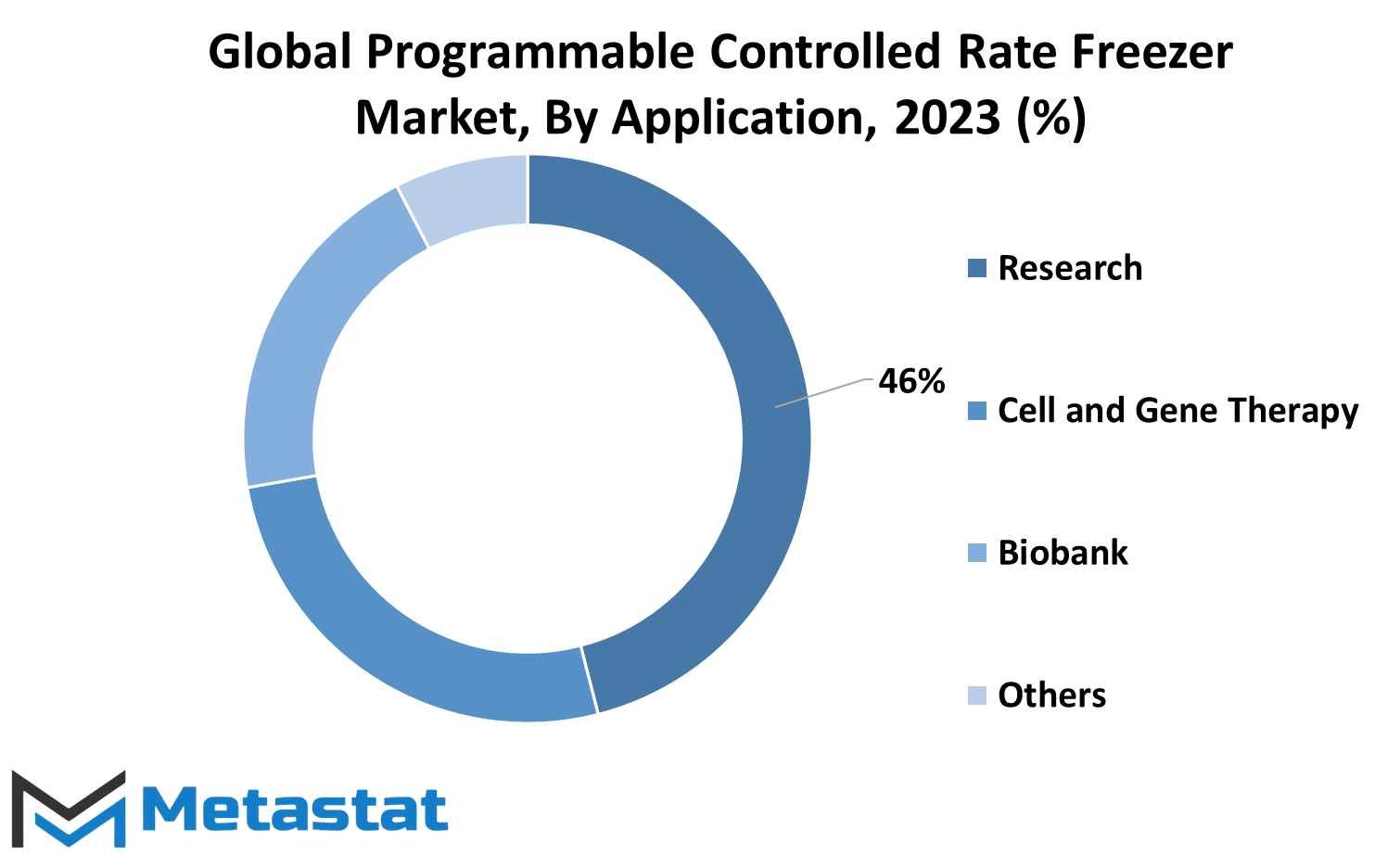
The Programmable Controlled Rate Freezer Market is segmented based on its applications, categorizing it into Research, Cell and Gene Therapy, Biobank, and Others. This classification helps us understand the diverse uses of programmable controlled rate freezers in various fields.
In the Research, programmable controlled rate freezers play a crucial role. Scientists and researchers utilize these freezers to preserve biological samples, ensuring the integrity of their studies. The controlled freezing process helps maintain the quality of samples, contributing to the reliability of research outcomes.
Moving on to Cell and Gene Therapy, the market finds another significant application. In this domain, programmable controlled rate freezers become instrumental in preserving cells and genetic materials used for therapeutic purposes. The precise temperature control offered by these freezers ensures the viability of these sensitive materials, ultimately enhancing the effectiveness of cell and gene therapies.
Biobanks, too, are a key area where programmable controlled rate freezers find application. These facilities, dedicated to storing biological samples for future research, heavily rely on the controlled freezing capabilities of such freezers. The ability to maintain consistent low temperatures is paramount in preserving the diverse range of samples housed in biobanks.
The Others category encompasses additional applications where programmable controlled rate freezers prove valuable. This versatility highlights the adaptability of these freezers to various scientific and medical requirements beyond the explicitly mentioned sectors.
The Programmable Controlled Rate Freezer Market, when viewed through the lens of its applications, showcases its widespread influence in research, cell and gene therapy, biobanking, and other diverse fields. The market's segmentation based on these applications provides a comprehensive understanding of the significant roles played by programmable controlled rate freezers across various scientific domains.
The global Programmable Controlled Rate Freezer market is demarcated based on geography, reflecting the diverse landscape of its reach. This segmentation, grounded in geographical distinctions, allows for a nuanced understanding of market dynamics across different regions.
The market's global division recognizes the varied demands and preferences prevailing in distinct geographical areas. It's a recognition that what resonates in one region may differ significantly from another, necessitating a tailored approach to cater to local needs and market nuances.
This geographical segmentation serves as a practical strategy to navigate the diverse regulatory frameworks, cultural influences, and economic landscapes that characterize different parts of the world. Understanding the unique challenges and opportunities within each geographic segment enables stakeholders to formulate targeted strategies for market penetration and growth.
It acknowledges that the factors influencing the Programmable Controlled Rate Freezer market can vary, whether it be regulatory policies, consumer behaviors, or the overall economic climate. By delineating the market geographically, it becomes feasible to address these varying factors effectively and devise strategies that align with the specific conditions in each region.
Moreover, this geographical segmentation is not just a theoretical exercise; it has tangible implications for businesses operating in the Programmable Controlled Rate Freezer market. It prompts a practical approach to logistics, distribution, and marketing strategies, recognizing the need for adaptability and customization in different regions.
The division of the global Programmable Controlled Rate Freezer market based on geography is a pragmatic acknowledgment of the diverse landscapes within which this market operates. It is a strategic tool that empowers stakeholders to navigate unique challenges and leverage the distinct opportunities that each region presents, fostering a more nuanced and effective approach to market dynamics worldwide.
In the expansive arena of the Programmable Controlled Rate Freezer market, key players hold pivotal roles, steering the industry's trajectory. Among these players, notable entities such as Amuza Inc. and BioLife Solutions stand out. These companies are at the forefront, contributing significantly to the advancements and innovations within the Programmable Controlled Rate Freezer domain.
Amuza Inc., a prominent player in this market, brings its expertise to the forefront, contributing to the development of programmable controlled rate freezing technologies. With a commitment to excellence, Amuza Inc. plays a crucial role in shaping the landscape of controlled rate freezing, aligning with the market's growing demands.
BioLife Solutions, another key player in the Programmable Controlled Rate Freezer industry, brings its unique set of capabilities to the table. The company's focus on providing biopreservation solutions, including controlled rate freezing technologies, underscores its importance in the market. BioLife Solutions' contributions go beyond conventional freezing methods, emphasizing the significance of programmable controlled rate freezers in various applications.
These key players, Amuza Inc. and BioLife Solutions, play integral roles in driving innovation and fostering growth within the Programmable Controlled Rate Freezer market. Their contributions extend beyond individual market shares, encompassing the broader impact on the industry's technological landscape. As pioneers in the field, these companies exemplify the collaborative spirit necessary for propelling the Programmable Controlled Rate Freezer market forward, meeting the diverse needs of industries reliant on precise temperature control and freezing capabilities.
Find answers to common questions about this report
Global Programmable Controlled Rate Freezer market is valued at $52.6 million in 2023.
Global Programmable Controlled Rate Freezer market is estimated to grow with a CAGR of 5.9% from 2023 to 2030.
Global Programmable Controlled Rate Freezer market is estimated to reach $78.7 million by 2030.
Top players operating in the Programmable Controlled Rate Freezer industry includes Amuza Inc., BioLife Solutions, Cryotherm GmbH & Co. KG, Cytiva, Dohmeyer, and others.
The analysts below cover Medical Devices research at Metastat Insights.
LEAD ANALYST
Utkarsh Khirodkar is a Lead Market Research Analyst at MetaStat Insight, specializing in market intelligence, technology sector assessments, and competitive strategy.

LEAD PRINCIPAL ANALYST, PHARMA AND HEALTHCARE
Food and Beverages · Healthcare · Healthcare IT · Medical Devices
Ajay Devgire is the Lead Healthcare Analyst at MetaStat Insight, leading strategic research and market intelligence initiatives across the global healthcare domain.

SENIOR RESEARCH ANALYST
Biotechnology · Food and Beverages · Medical Devices · Packaging
Snehal Pasalkar is a Research Analyst at MetaStat Insight, operating at the intersection of life sciences research, competitive strategy, and market intelligence.
Most industry reports on warehouse automation bundle autonomous mobile robots and fixed conveyor installations into the same top-level numbers, which complicates advisory work. This study split the market cleanly by payload tiers, navigation technology, and fleet management software layers. The regional forecast for Western Europe gave our team defensible adoption benchmarks when evaluating capital allocation for logistics clients, saving us days of secondary data scrubbing.
Analyzing the transition from natural gas to green hydrogen in iron ore reduction requires realistic infrastructure timelines. Meta stat insight supplied a detailed regional assessment of DRI plant conversion costs and scrap metal availability in North America and Western Europe. Their report carefully examined pellet quality specs and electrical grid access constraints without making oversimplified market assumptions. The research material served as a practical reference during internal technology roadmap discussions.
Integrating zero-trust access controls across legacy electronic health record systems involves complex compliance overhead. Team produced an analysis that clearly separated identity governance and administration tools from privileged access management platforms. Their evaluation of HIPAA and GDPR compliance features across cloud native solutions gave our architecture group clear baseline criteria. The custom data request regarding biometric authentication adoption in hospital networks was returned promptly with clear documentation.
Explore related market intelligence reports worth reading alongside this one.
Starting from
$2950